Pramod Aggarwal
Regional Program Leader – South Asia
Agricultural practices and
technologies to enhance
resilience, food security and
productivity
New CCAFS Working Paper
Agricultural practices and technologies to enhance food security,
resilience and productivity in a sustainable manner: Messages to
the SBSTA 44 agriculture workshops
Key messages
• A diverse range of suitable practices and
technologies are already available
• Interventions must be appropriate for agro-
ecological zones and socio-economic
contexts
• Mechanisms for capacity building and
technology transfer are necessary for success
• Funding is required to overcome initial barriers to
implementation and ensure scaling up
• Many agricultural practices provide the
opportunity to achieve environmental,
mitigation, and gender co-benefits
Read the Working Paper
Get key messages from the Info Note
5 practices and technologies for Asia in 5 minutes
An Asia perspective
1. Laser-Assisted Precision Land
Levelling (LLL)
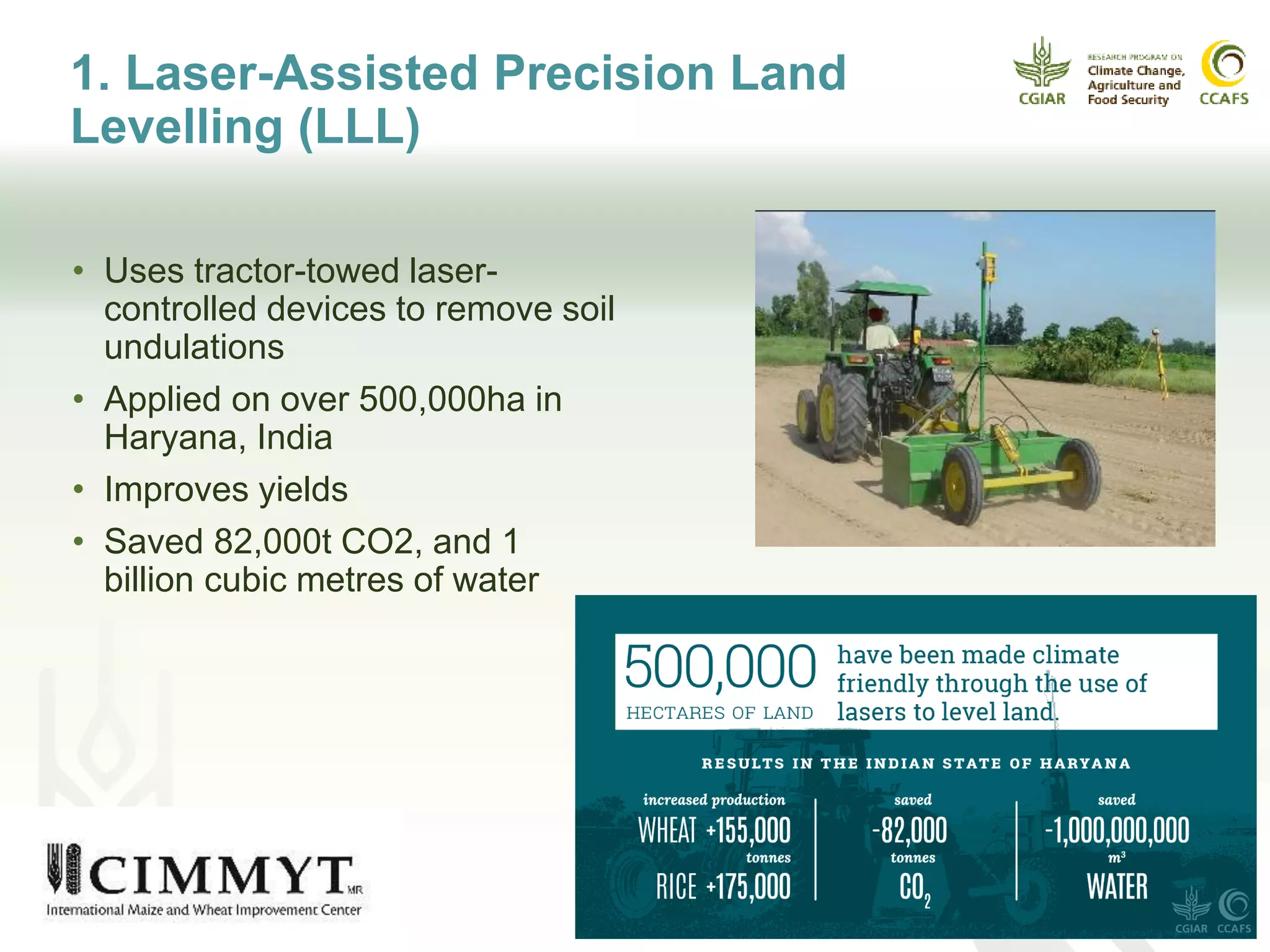
• Uses tractor-towed laser-
controlled devices to remove soil
undulations
• Applied on over 500,000ha in
Haryana, India
• Improves yields
• Saved 82,000t CO2, and 1
billion cubic metres of water
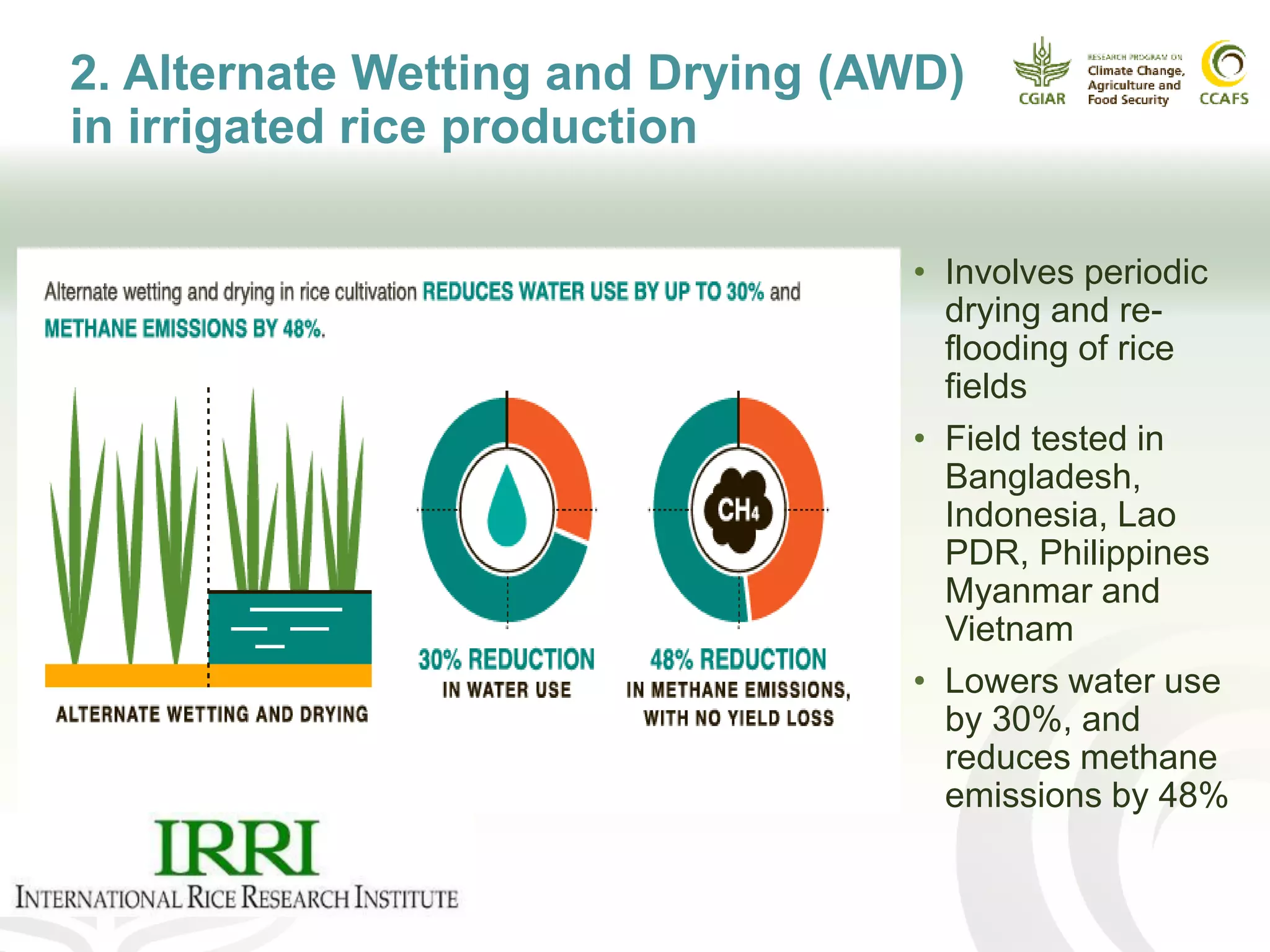
• Involves periodic
drying and re-
flooding of rice
fields
• Field tested in
Bangladesh,
Indonesia, Lao
PDR, Philippines
Myanmar and
Vietnam
• Lowers water use
by 30%, and
reduces methane
emissions by 48%
2. Alternate Wetting and Drying (AWD)
in irrigated rice production
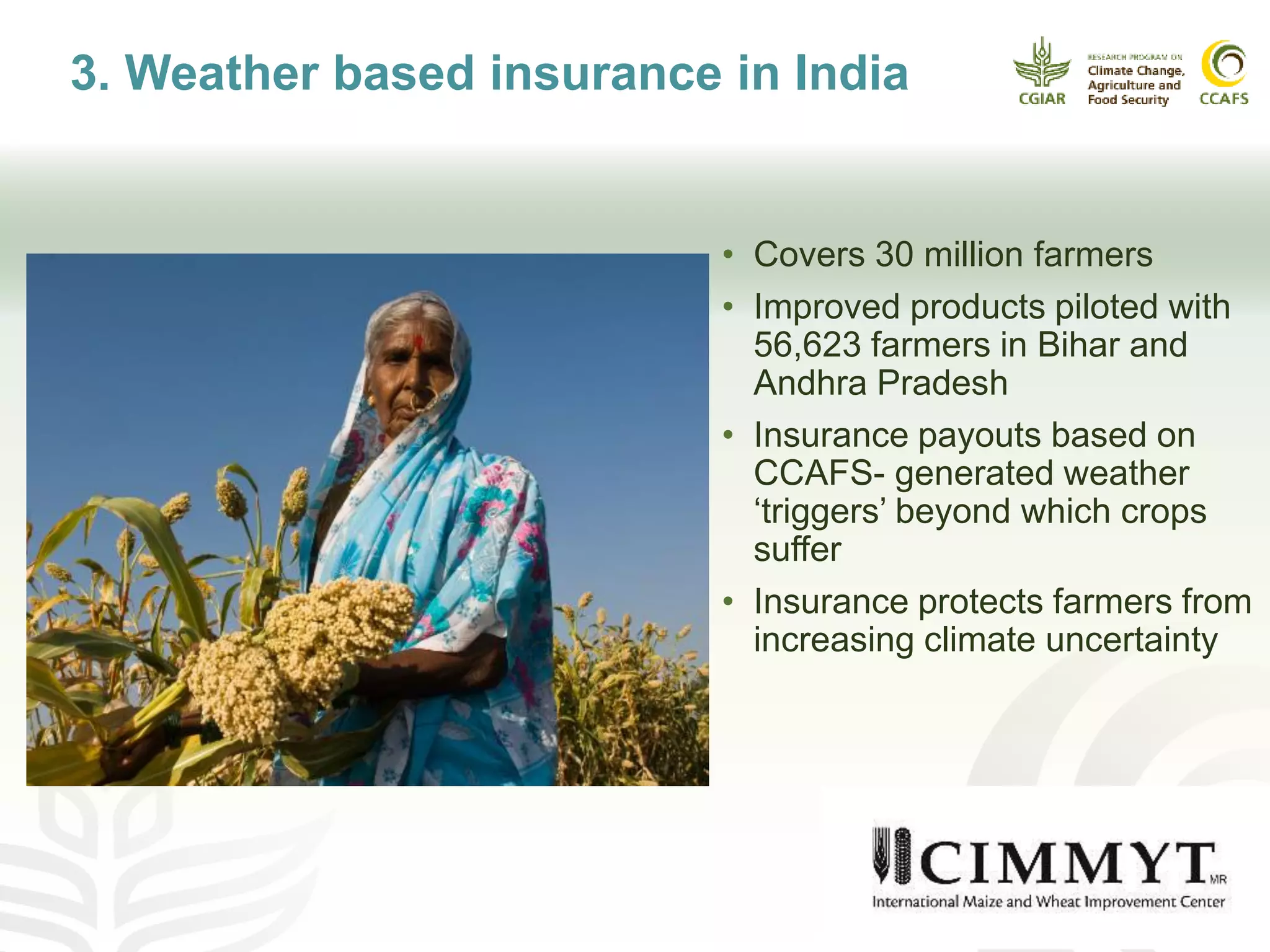
• Covers 30 million farmers
• Improved products piloted with
56,623 farmers in Bihar and
Andhra Pradesh
• Insurance payouts based on
CCAFS- generated weather
‘triggers’ beyond which crops
suffer
• Insurance protects farmers from
increasing climate uncertainty
3. Weather based insurance in India
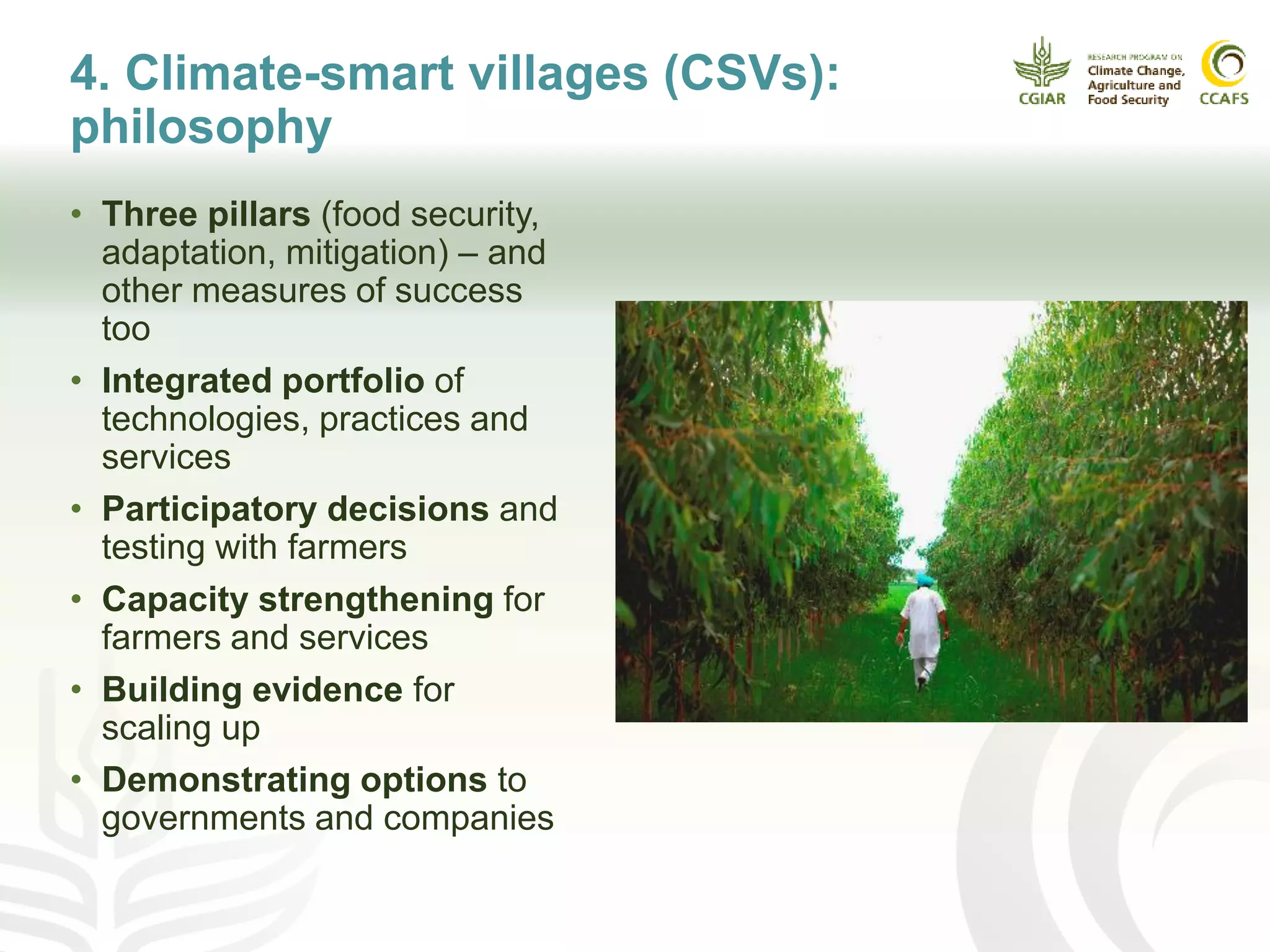
4. Climate-smart villages (CSVs):
philosophy
• Three pillars (food security,
adaptation, mitigation) – and
other measures of success
too
• Integrated portfolio of
technologies, practices and
services
• Participatory decisions and
testing with farmers
• Capacity strengthening for
farmers and services
• Building evidence for
scaling up
• Demonstrating options to
governments and companies
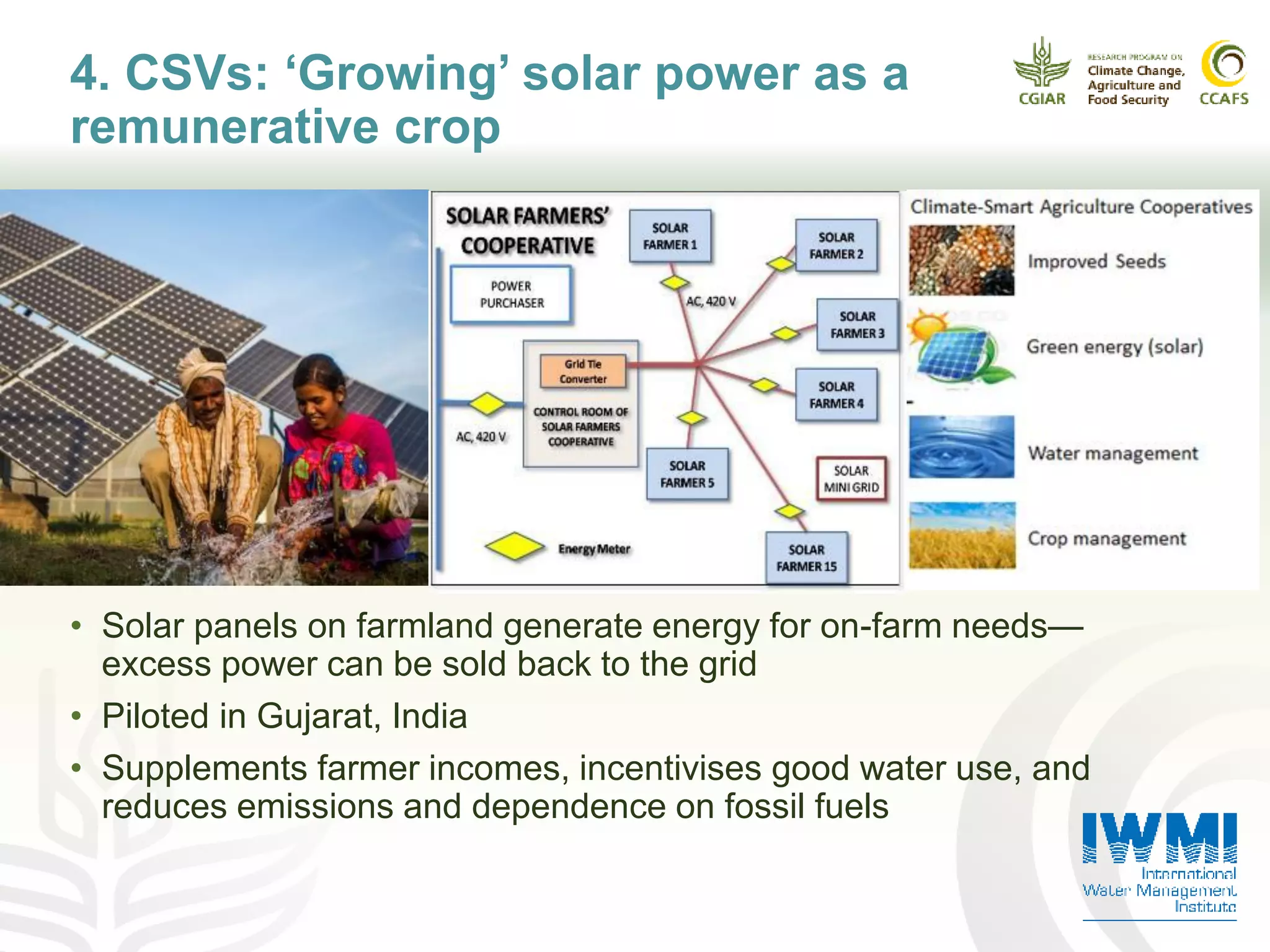
4. CSVs: ‘Growing’ solar power as a
remunerative crop
• Solar panels on farmland generate energy for on-farm needs—
excess power can be sold back to the grid
• Piloted in Gujarat, India
• Supplements farmer incomes, incentivises good water use, and
reduces emissions and dependence on fossil fuels
5. Stress-tolerant rice for Africa and
Asia (STRASA)
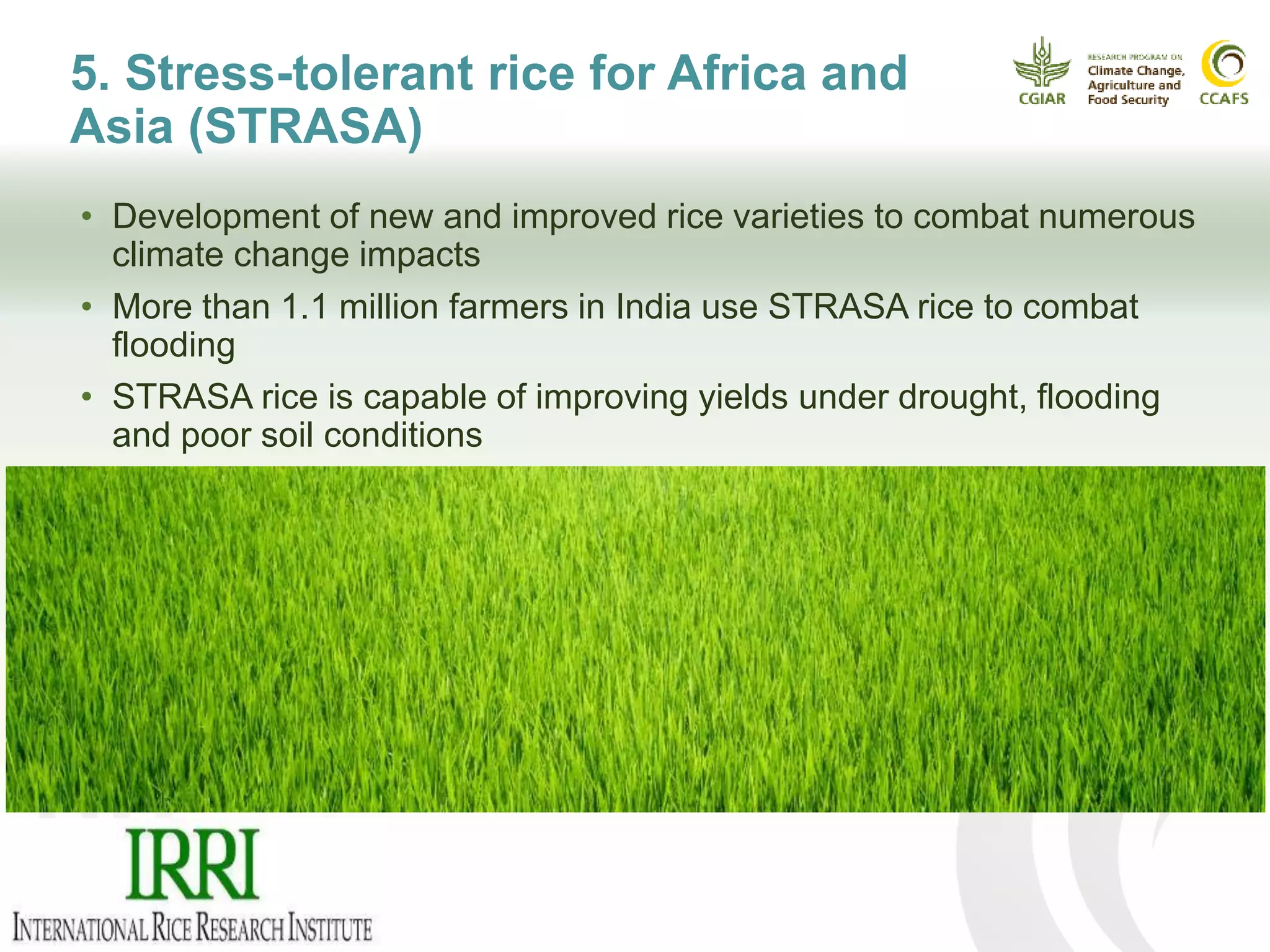
• Development of new and improved rice varieties to combat numerous
climate change impacts
• More than 1.1 million farmers in India use STRASA rice to combat
flooding
• STRASA rice is capable of improving yields under drought, flooding
and poor soil conditions
Thank you
www.ccafs.cgiar.org

Agricultural practices and technologies to enhance resilience, food security and productivity

  • 1.
    Pramod Aggarwal Regional ProgramLeader – South Asia Agricultural practices and technologies to enhance resilience, food security and productivity
  • 2.
    New CCAFS WorkingPaper Agricultural practices and technologies to enhance food security, resilience and productivity in a sustainable manner: Messages to the SBSTA 44 agriculture workshops Key messages • A diverse range of suitable practices and technologies are already available • Interventions must be appropriate for agro- ecological zones and socio-economic contexts • Mechanisms for capacity building and technology transfer are necessary for success • Funding is required to overcome initial barriers to implementation and ensure scaling up • Many agricultural practices provide the opportunity to achieve environmental, mitigation, and gender co-benefits Read the Working Paper Get key messages from the Info Note
  • 3.
    5 practices andtechnologies for Asia in 5 minutes An Asia perspective
  • 4.
    1. Laser-Assisted PrecisionLand Levelling (LLL) • Uses tractor-towed laser- controlled devices to remove soil undulations • Applied on over 500,000ha in Haryana, India • Improves yields • Saved 82,000t CO2, and 1 billion cubic metres of water
  • 5.
    • Involves periodic dryingand re- flooding of rice fields • Field tested in Bangladesh, Indonesia, Lao PDR, Philippines Myanmar and Vietnam • Lowers water use by 30%, and reduces methane emissions by 48% 2. Alternate Wetting and Drying (AWD) in irrigated rice production
  • 6.
    • Covers 30million farmers • Improved products piloted with 56,623 farmers in Bihar and Andhra Pradesh • Insurance payouts based on CCAFS- generated weather ‘triggers’ beyond which crops suffer • Insurance protects farmers from increasing climate uncertainty 3. Weather based insurance in India
  • 7.
    4. Climate-smart villages(CSVs): philosophy • Three pillars (food security, adaptation, mitigation) – and other measures of success too • Integrated portfolio of technologies, practices and services • Participatory decisions and testing with farmers • Capacity strengthening for farmers and services • Building evidence for scaling up • Demonstrating options to governments and companies
  • 8.
    4. CSVs: ‘Growing’solar power as a remunerative crop • Solar panels on farmland generate energy for on-farm needs— excess power can be sold back to the grid • Piloted in Gujarat, India • Supplements farmer incomes, incentivises good water use, and reduces emissions and dependence on fossil fuels
  • 9.
    5. Stress-tolerant ricefor Africa and Asia (STRASA) • Development of new and improved rice varieties to combat numerous climate change impacts • More than 1.1 million farmers in India use STRASA rice to combat flooding • STRASA rice is capable of improving yields under drought, flooding and poor soil conditions
  • 10.