Modeling Concepts ~ IA Summit 2009

Editor's Notes

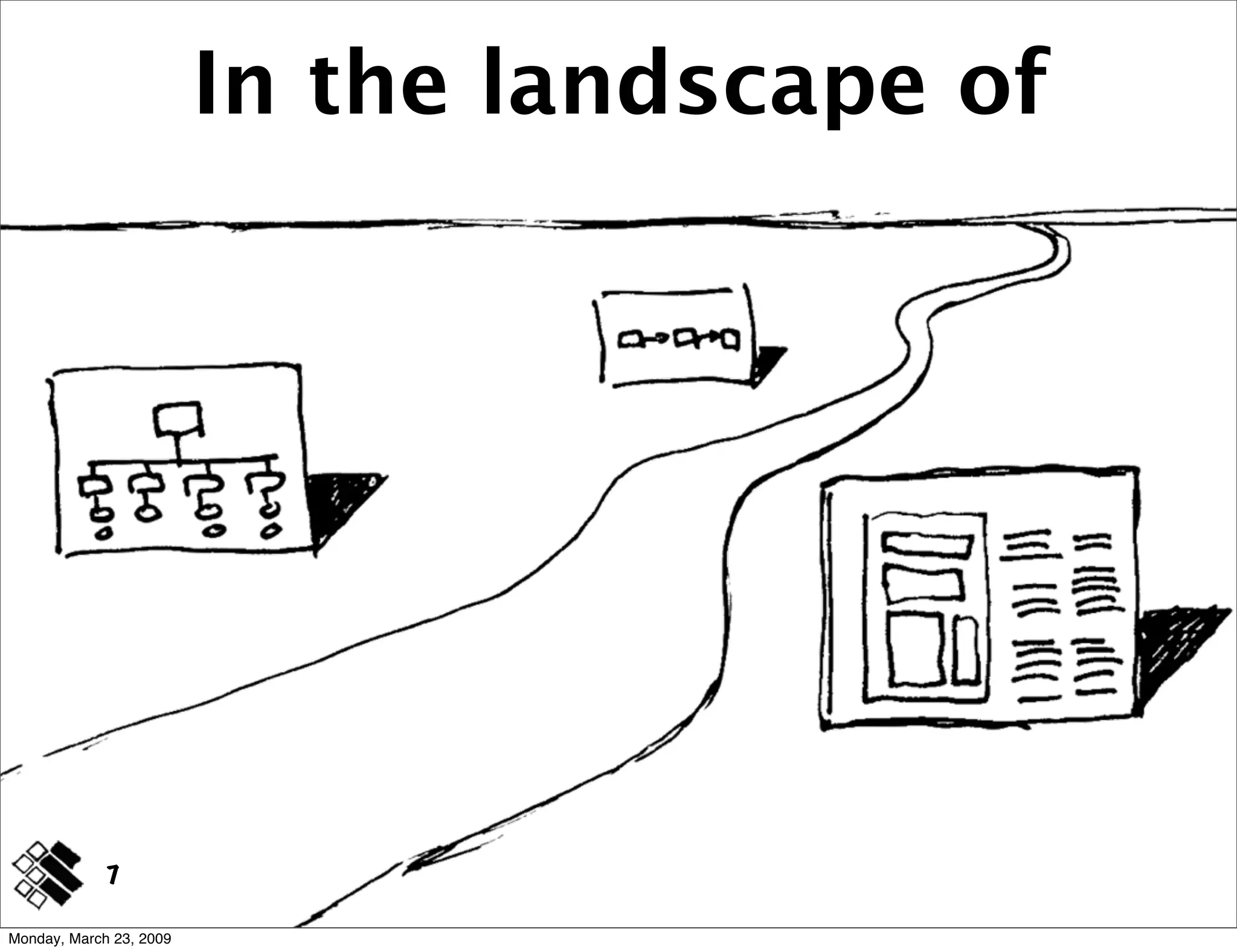
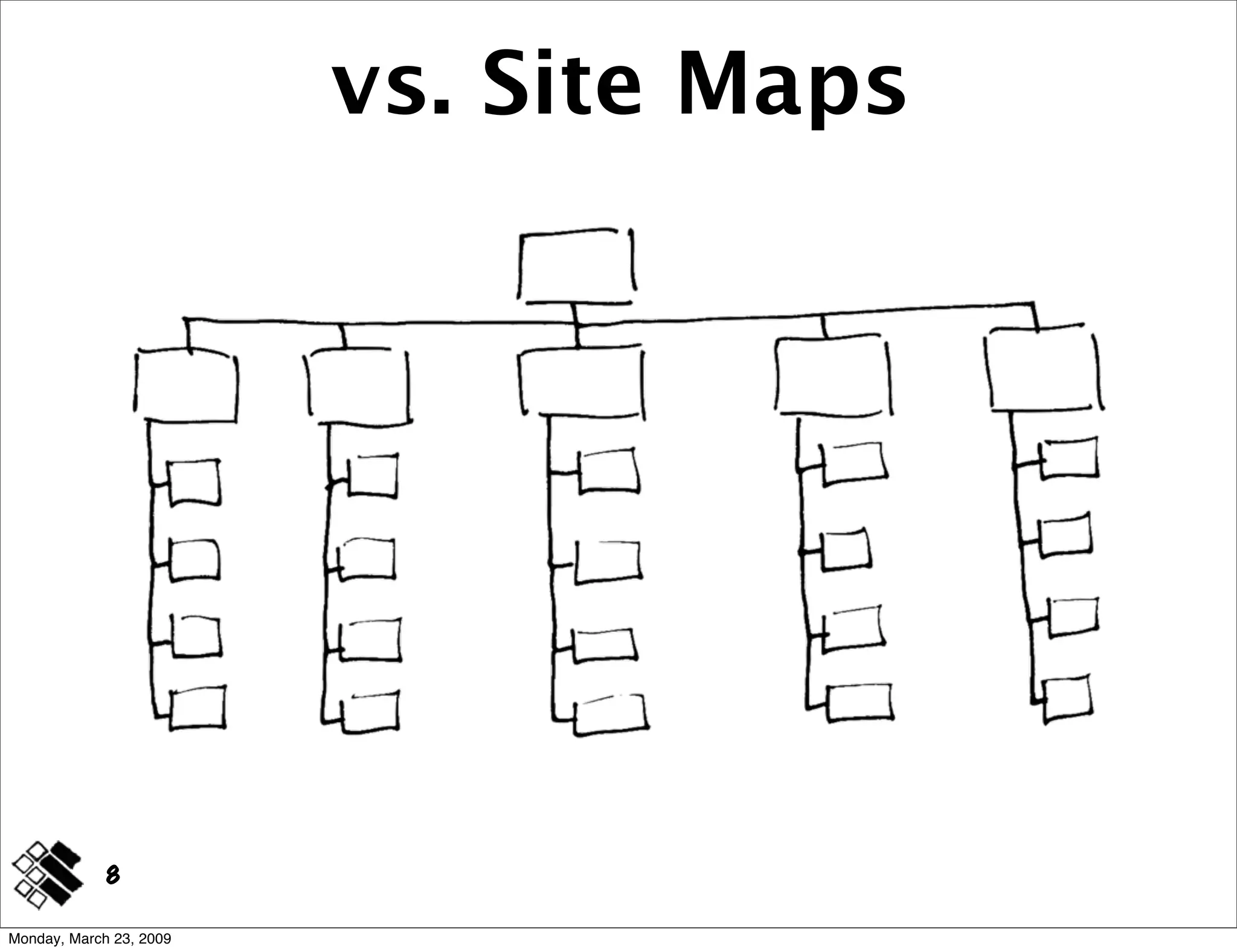
  • #9 •Site maps are about belonging •Site maps tend to represent basic navigation experience
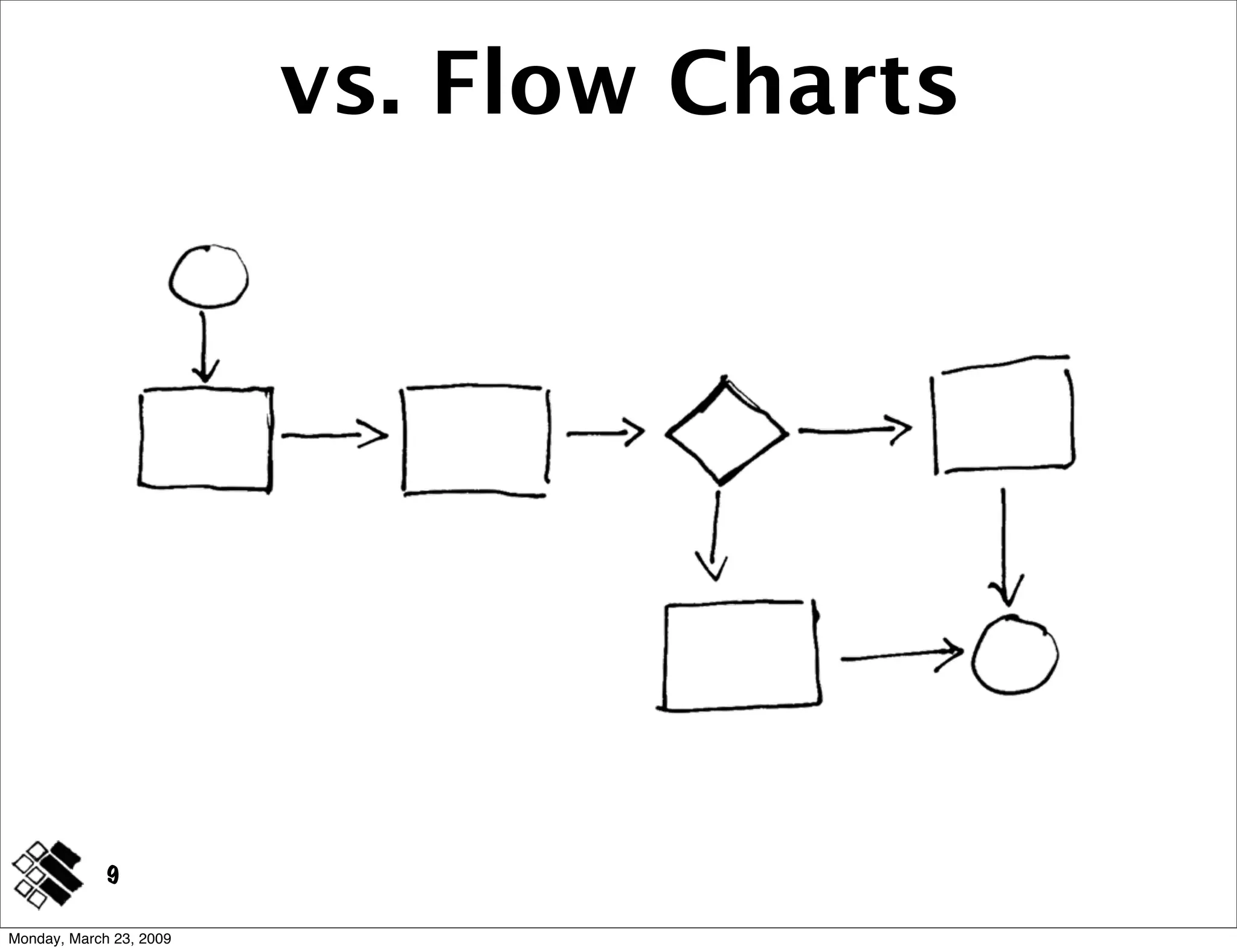
  • #10 •Flows are rigid about cause & effect •Flows focus on activities •Flows have a distinct beginning and end •Flows must show a transformation
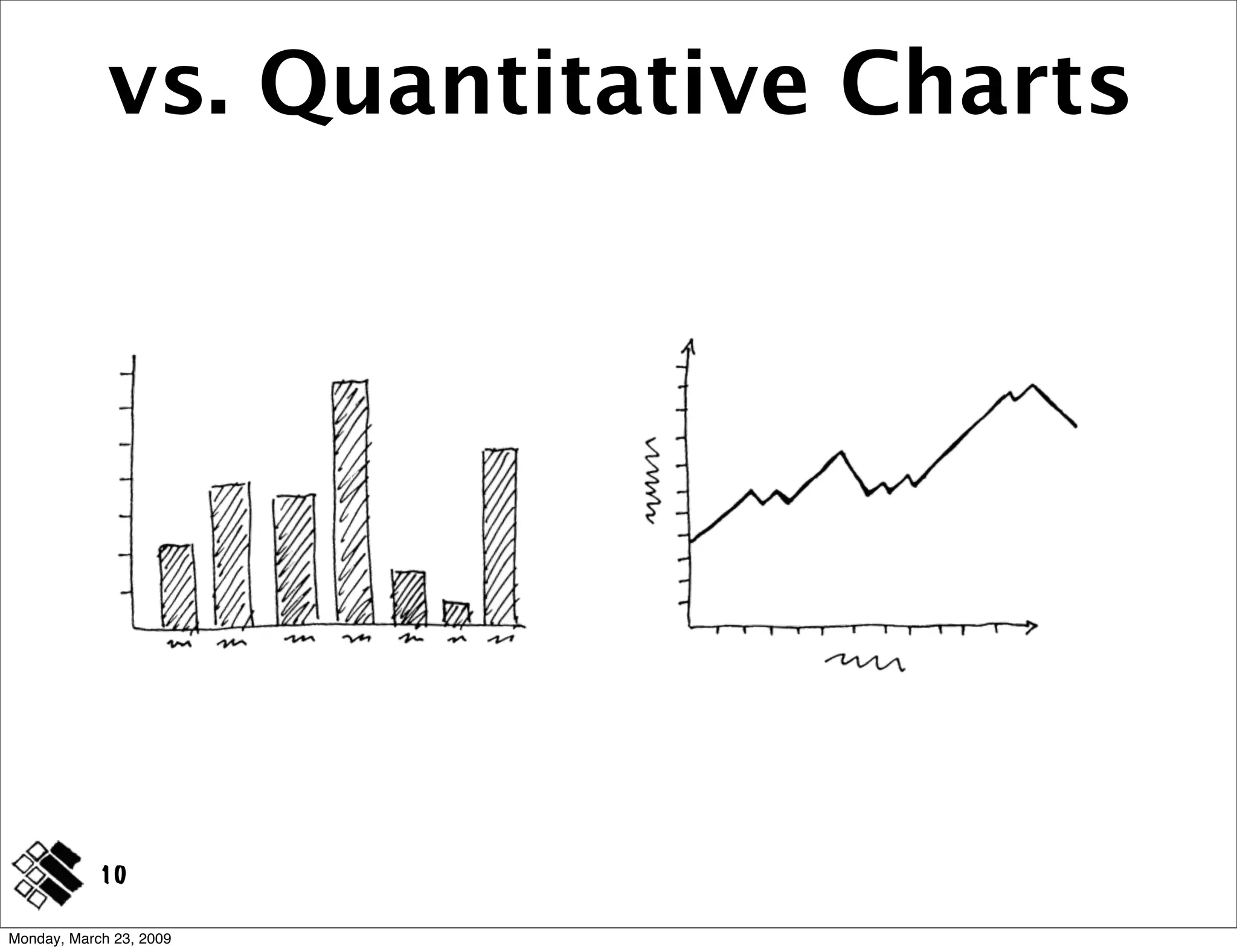
  • #11 •trends over time •comparisons
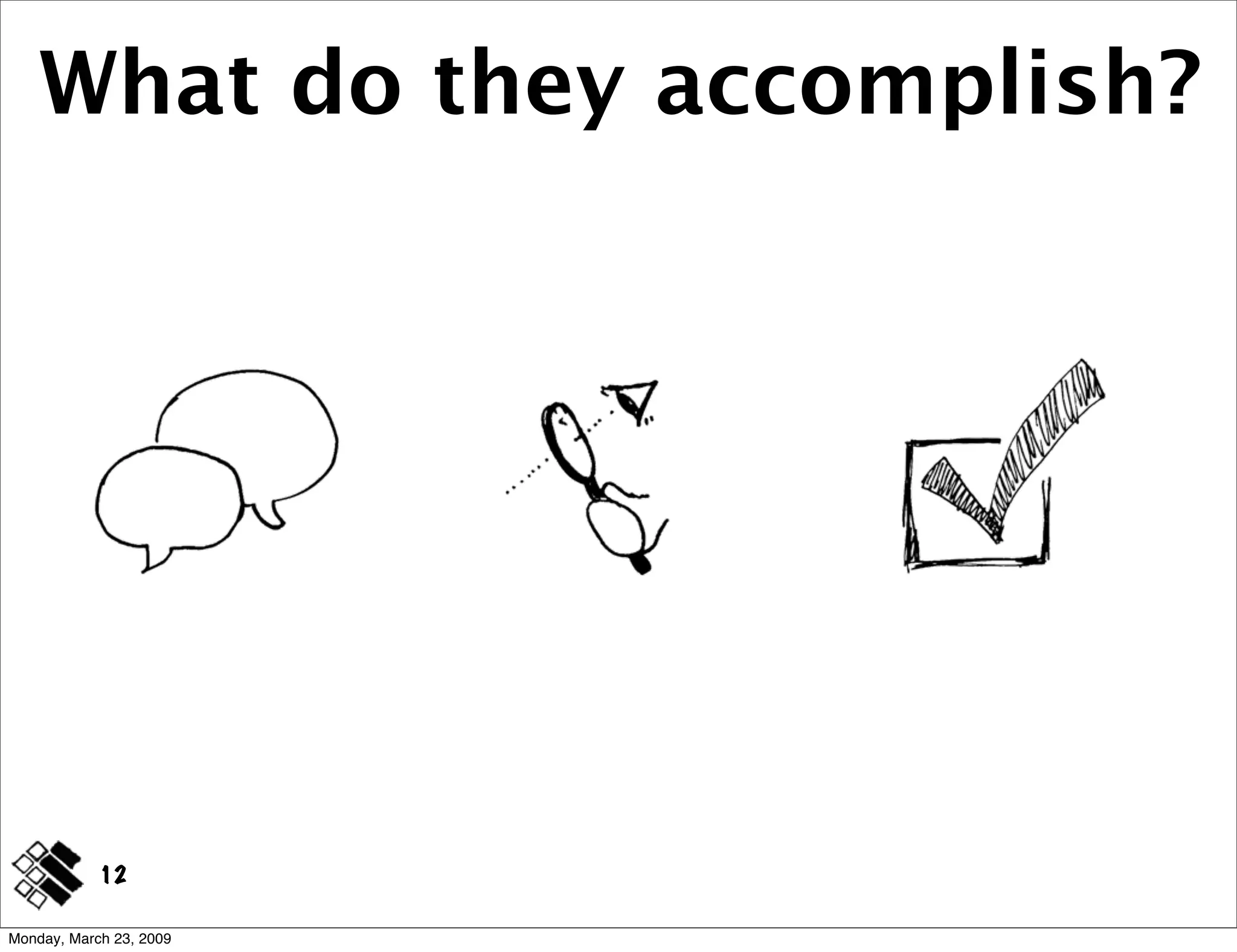
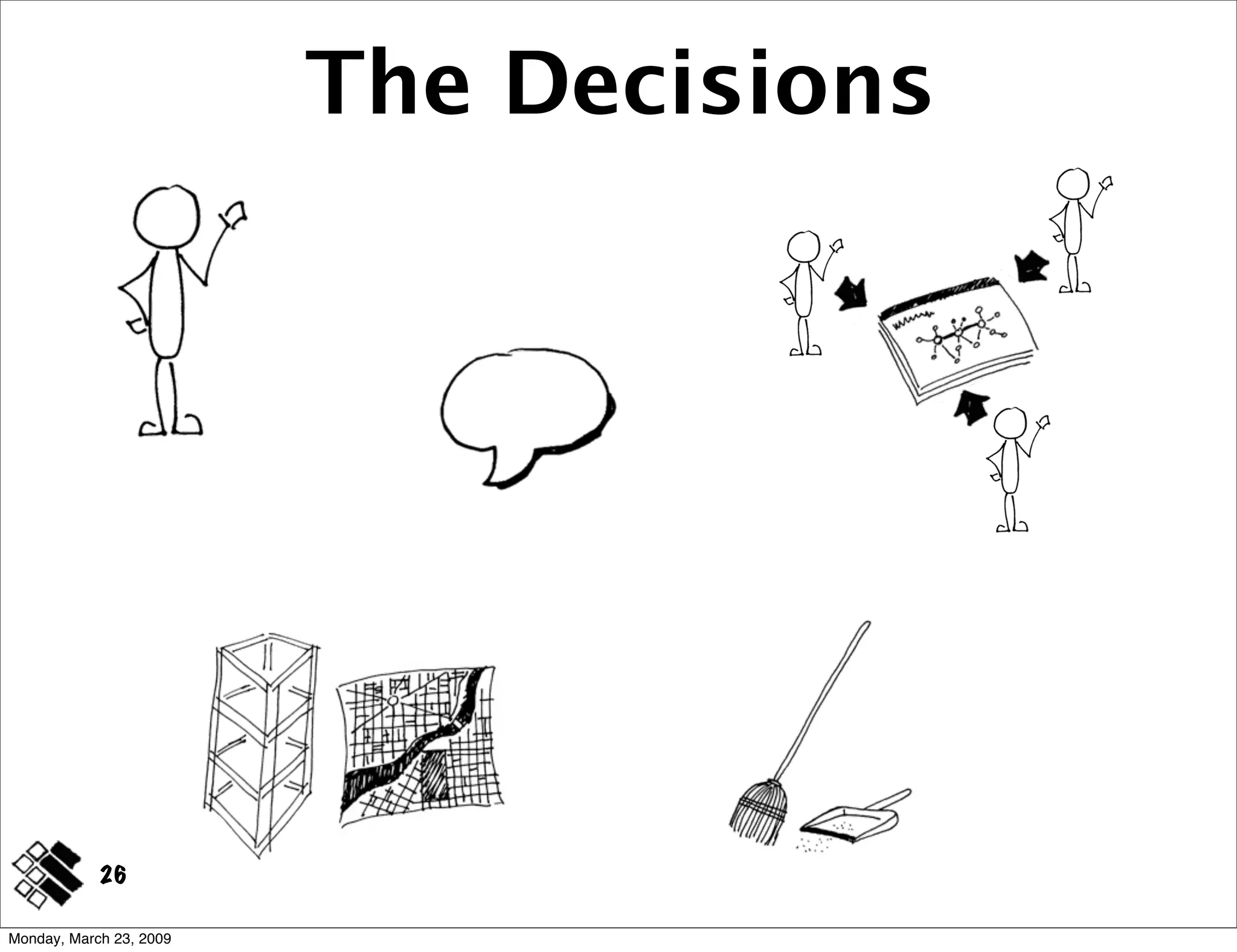
  • #12 •State requirements •Establish design direction ▼Clarify domain or context •Sensemaking •Design synthesis
  • #13 •Discussion ▼Clarification •with stakeholders •with self •Approval
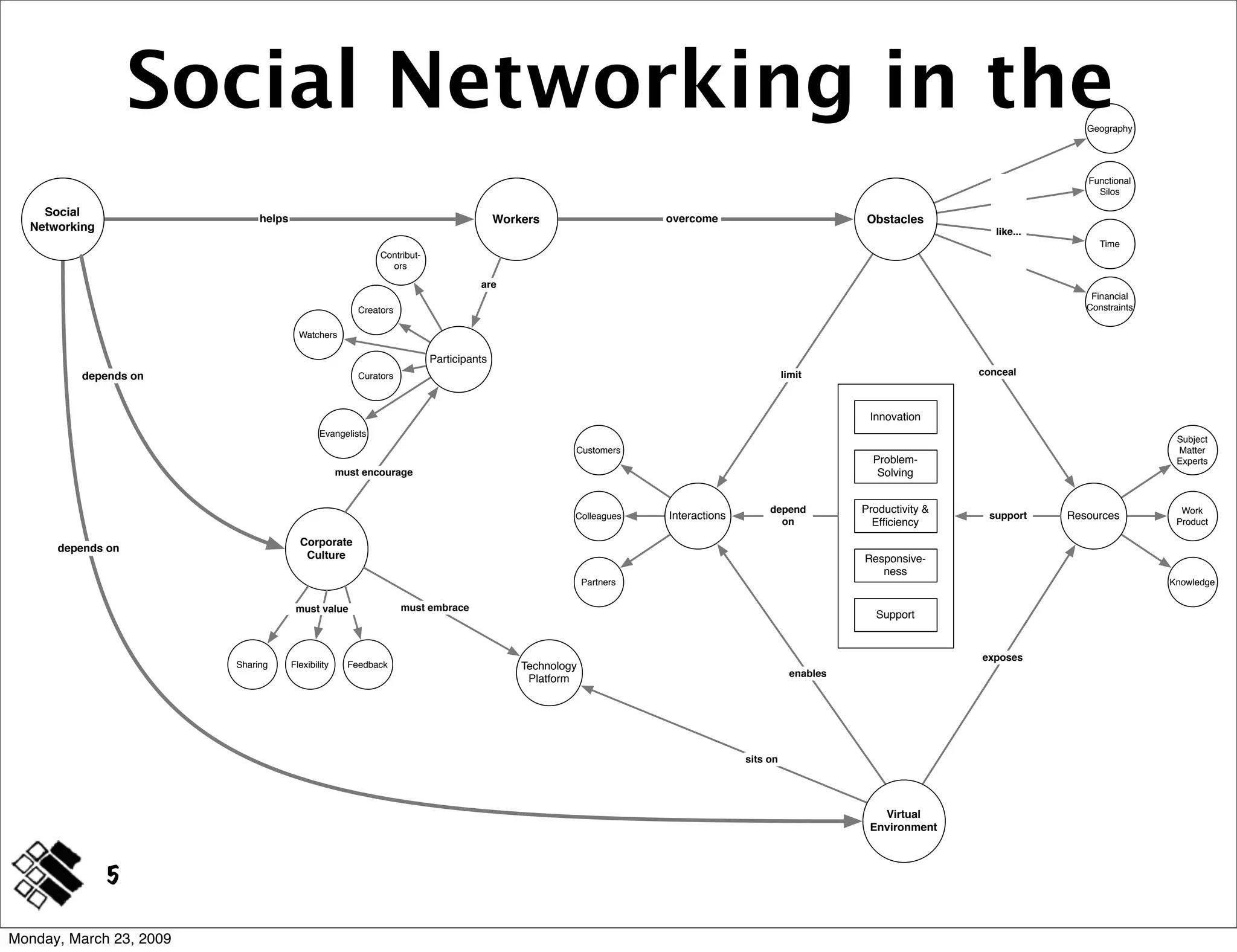
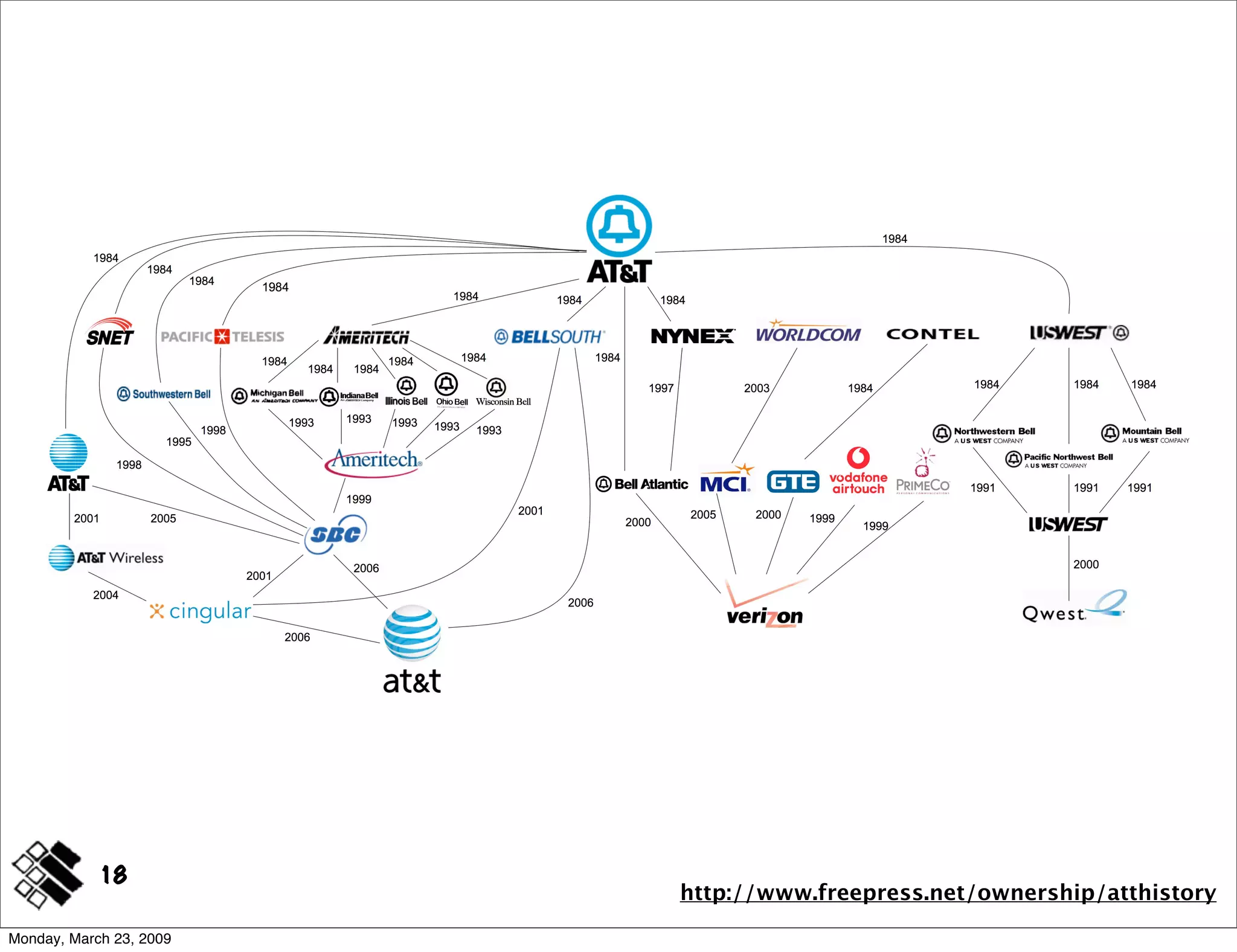
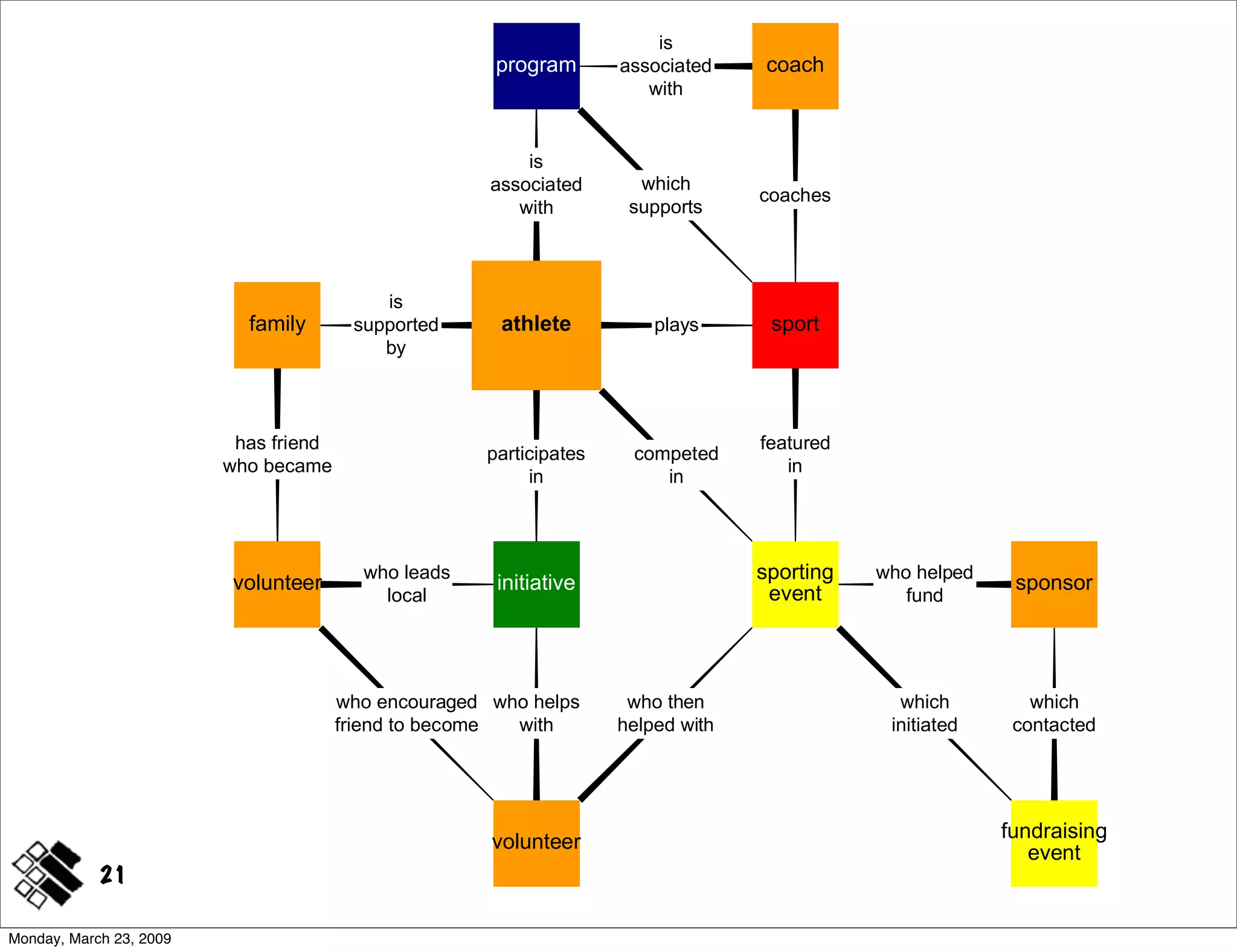
  • #16 •Explicit relationships •Relationships by linking •Concepts = nouns •up to 3 dozen concepts
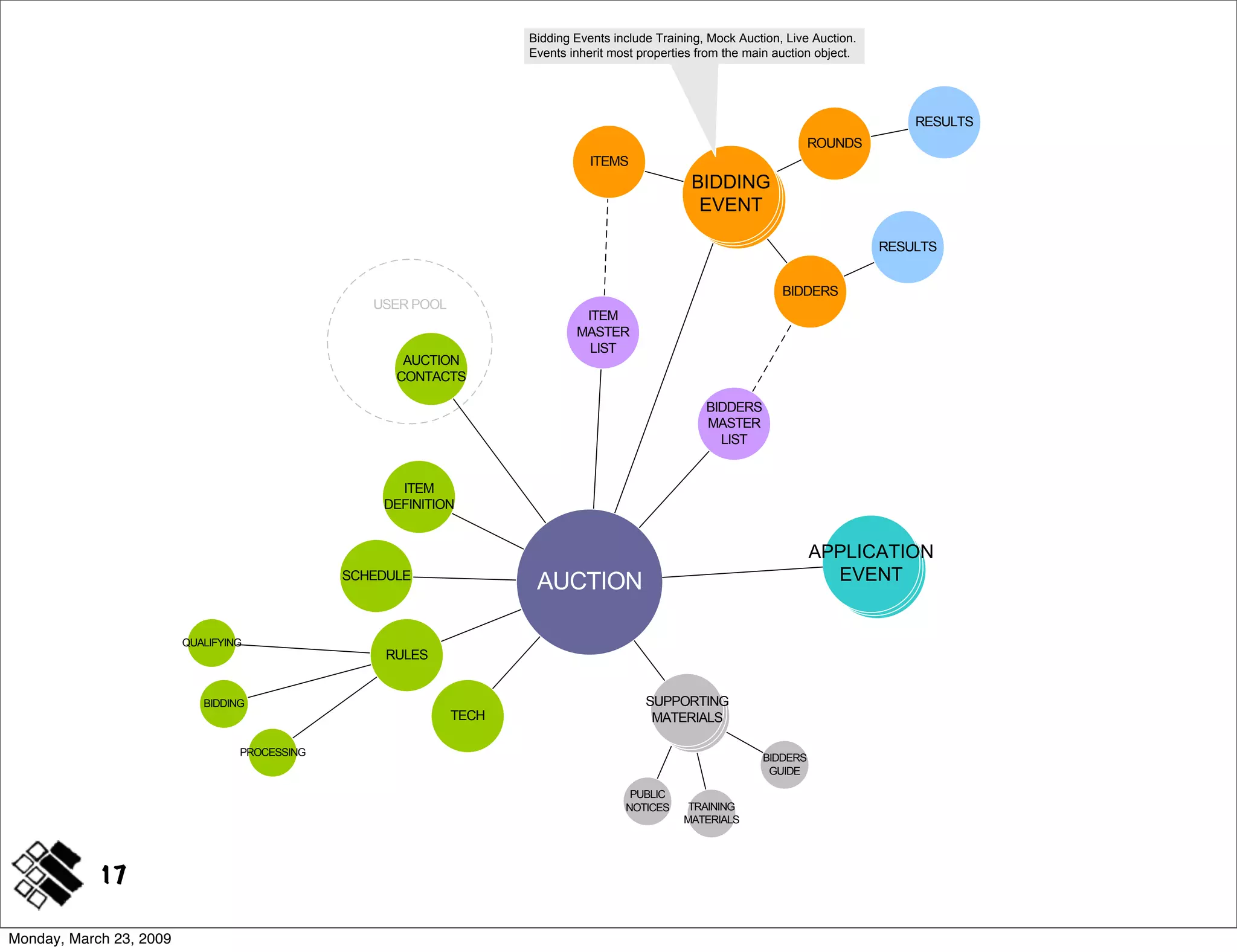
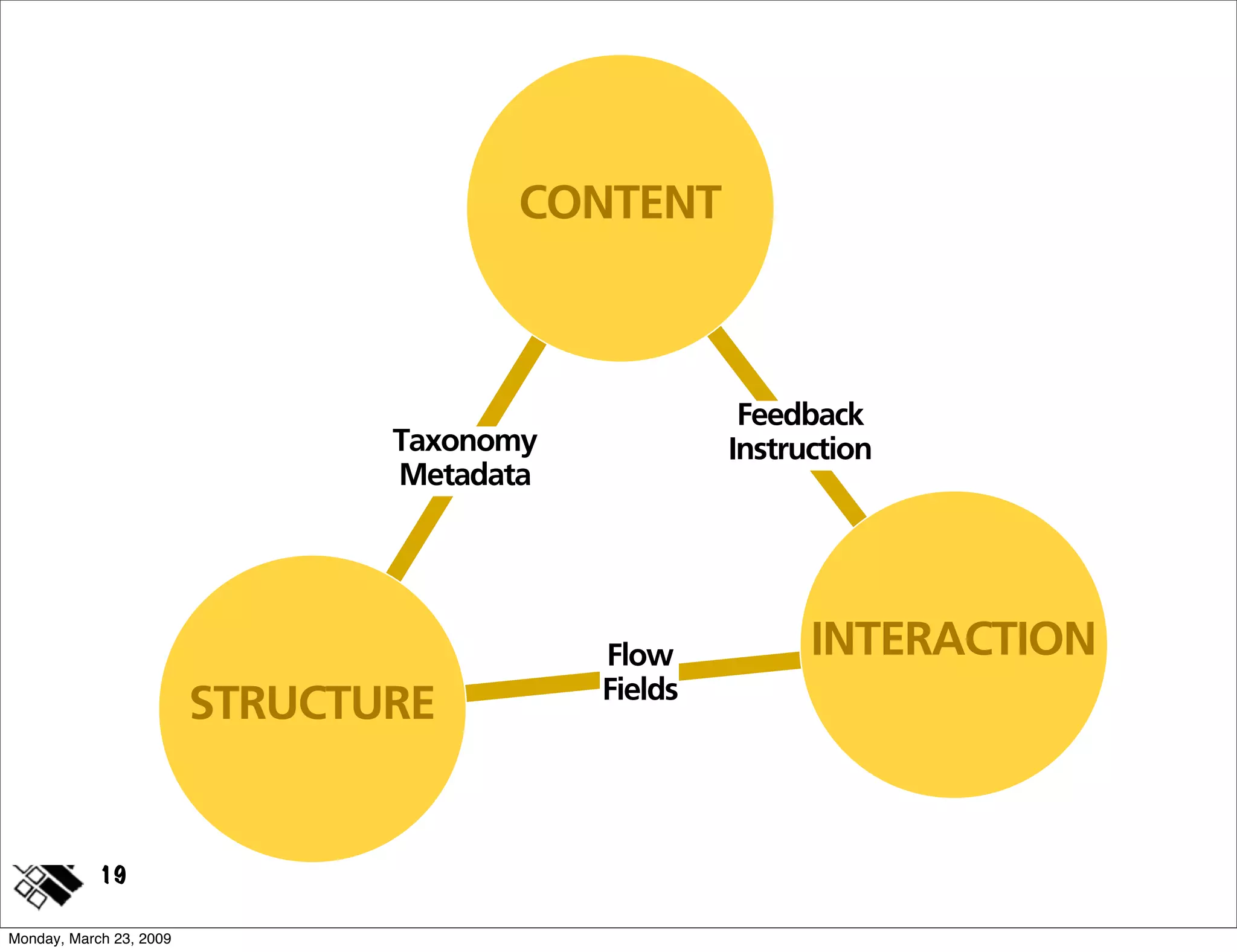
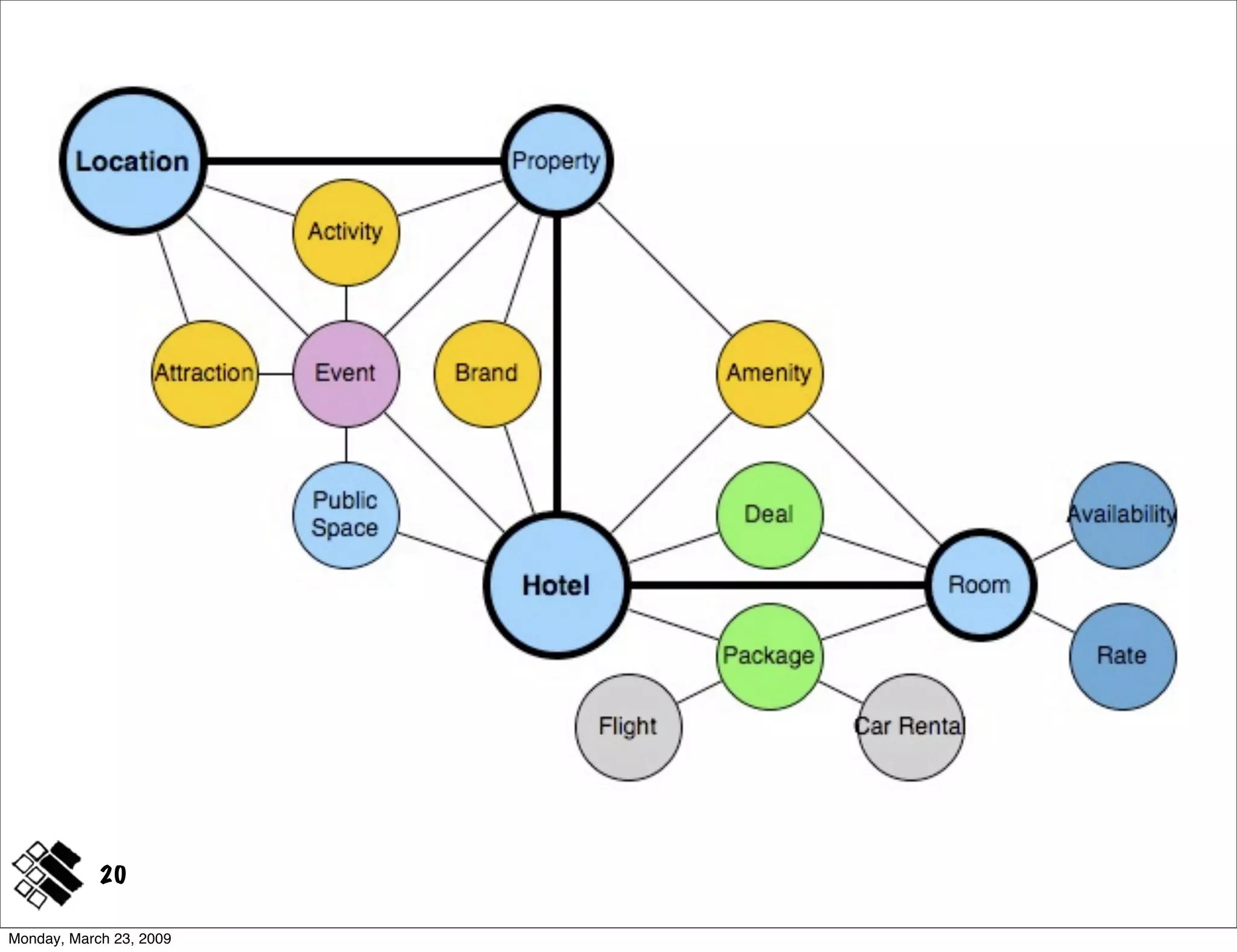
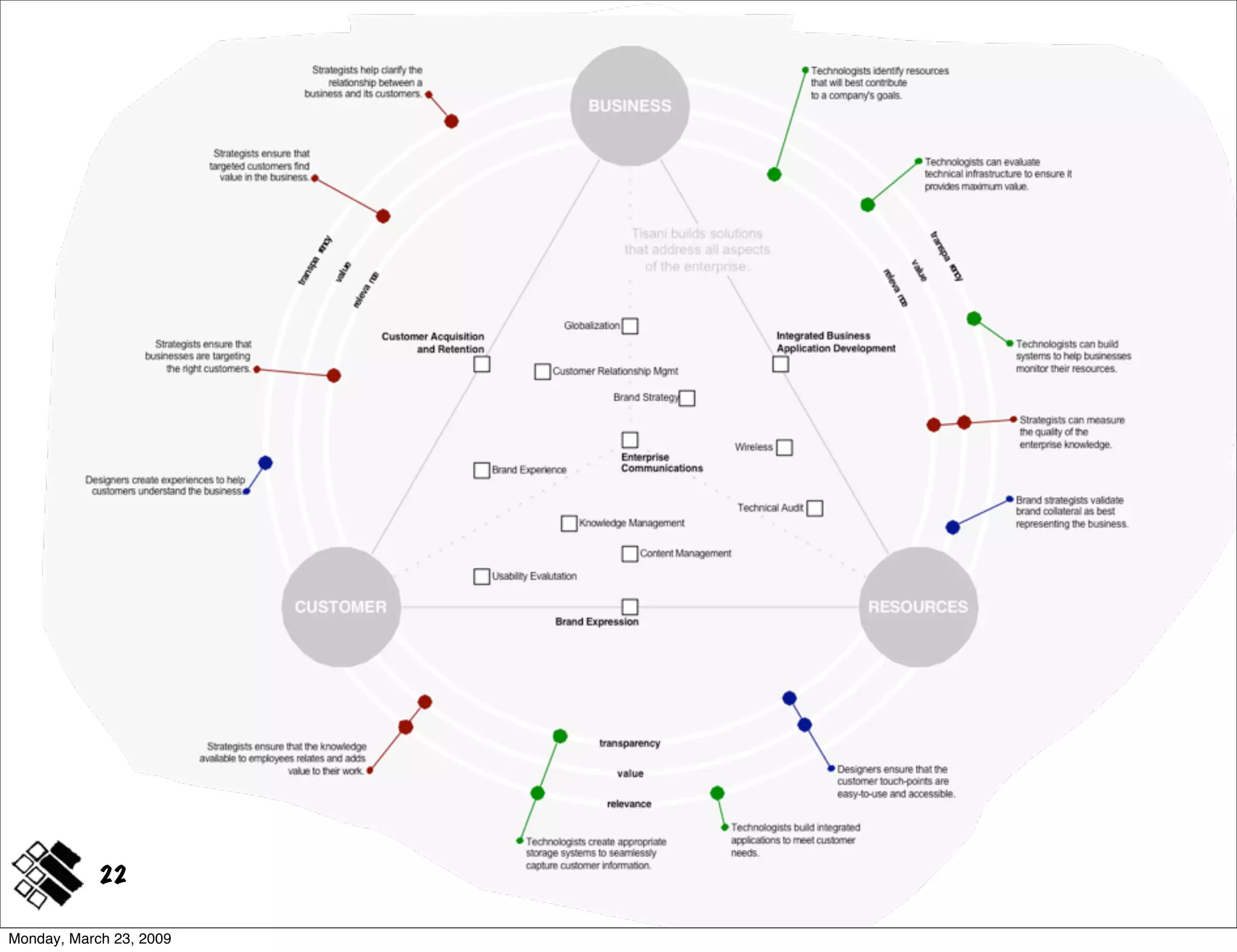
  • #17 •Central core concept •Core diad, triad, or quad •Value proposition backbone •Focus on relationships (eg: user experience model)
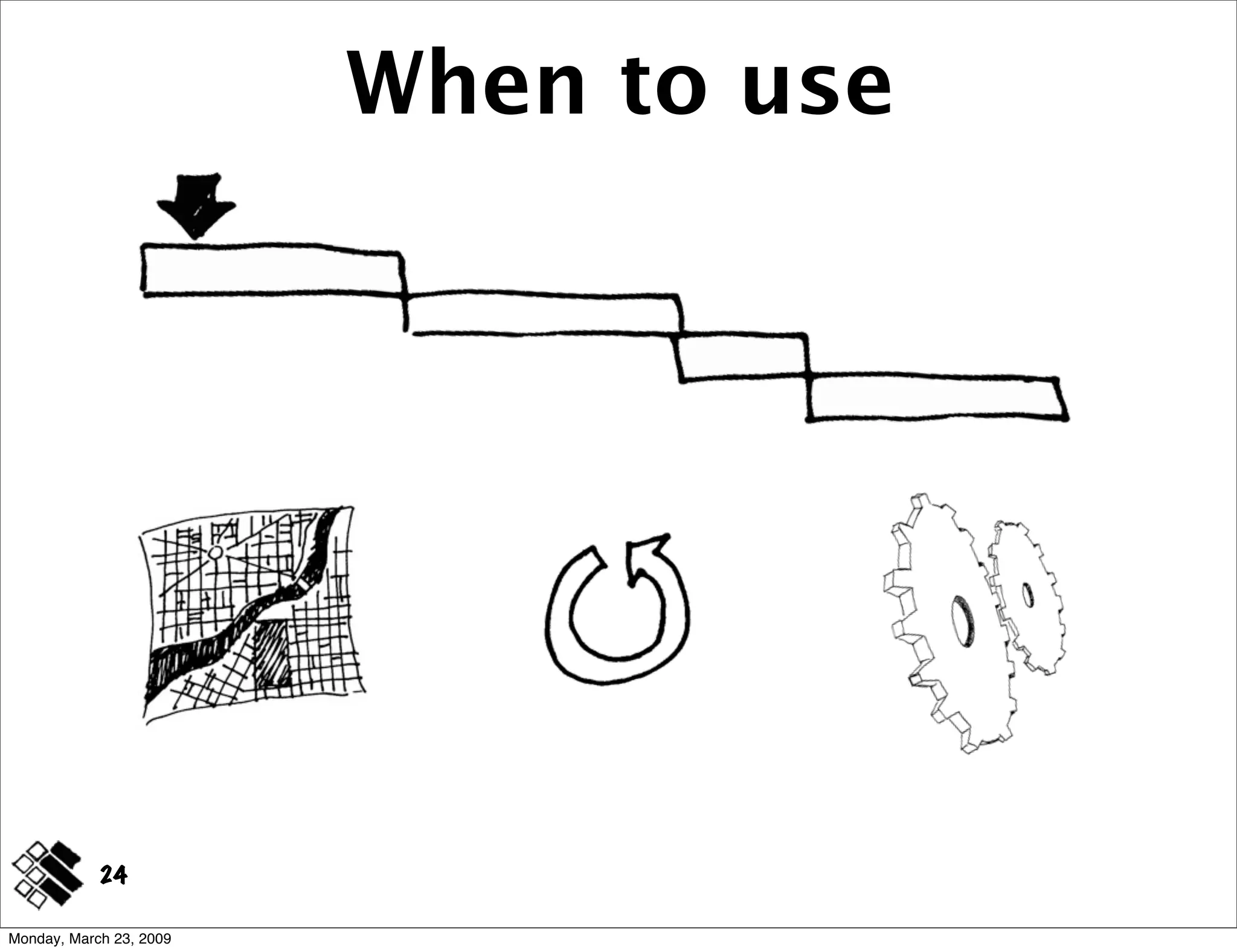
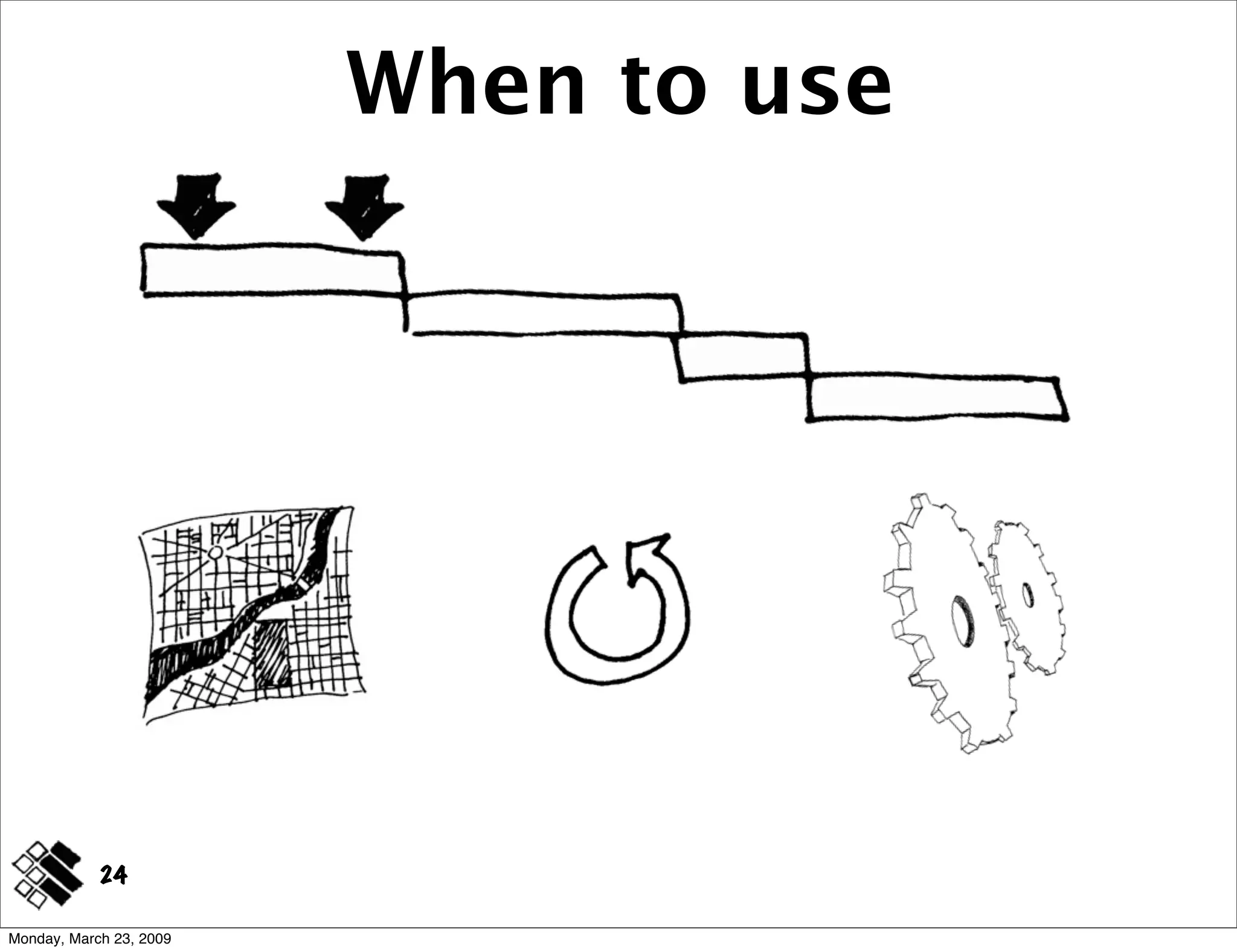
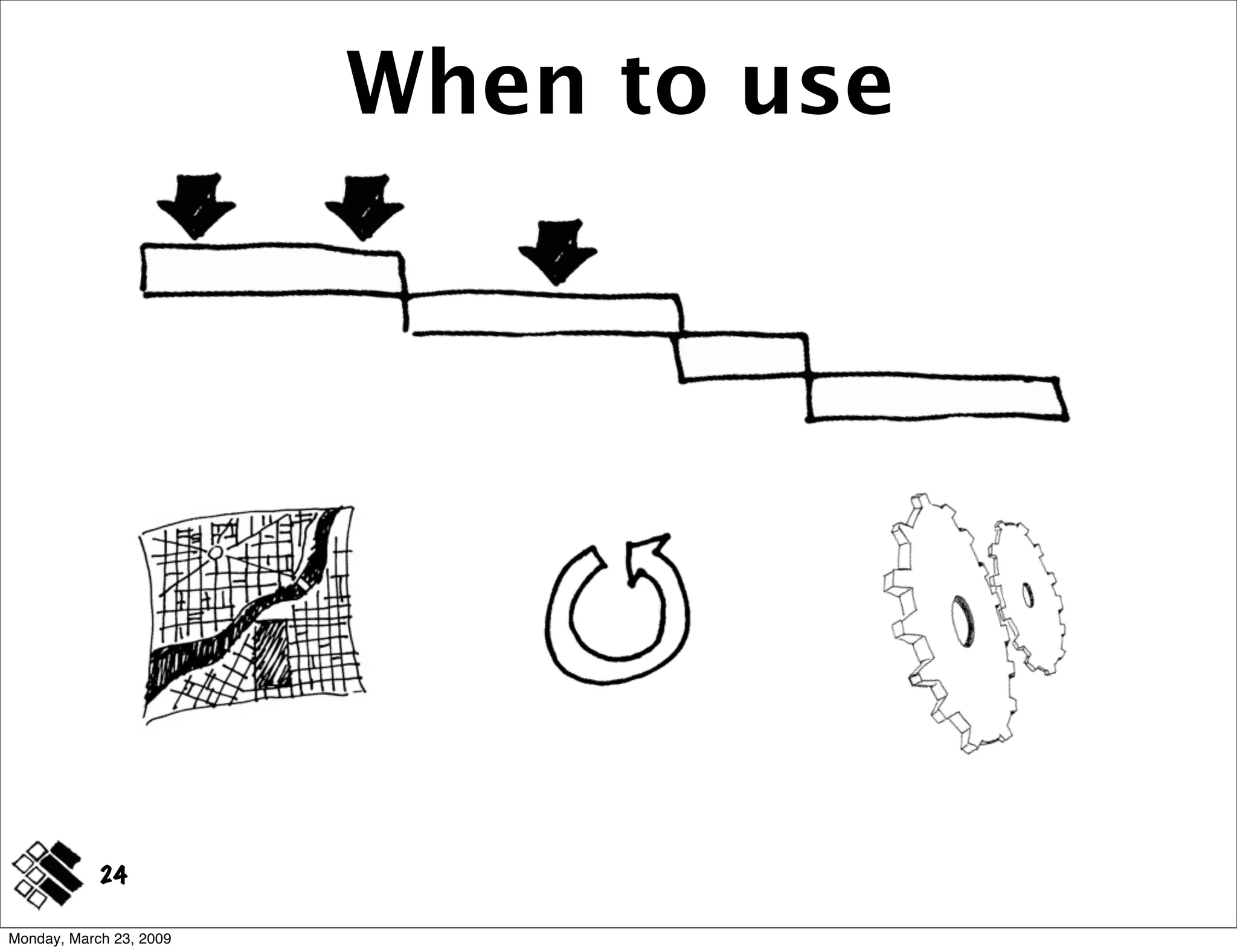
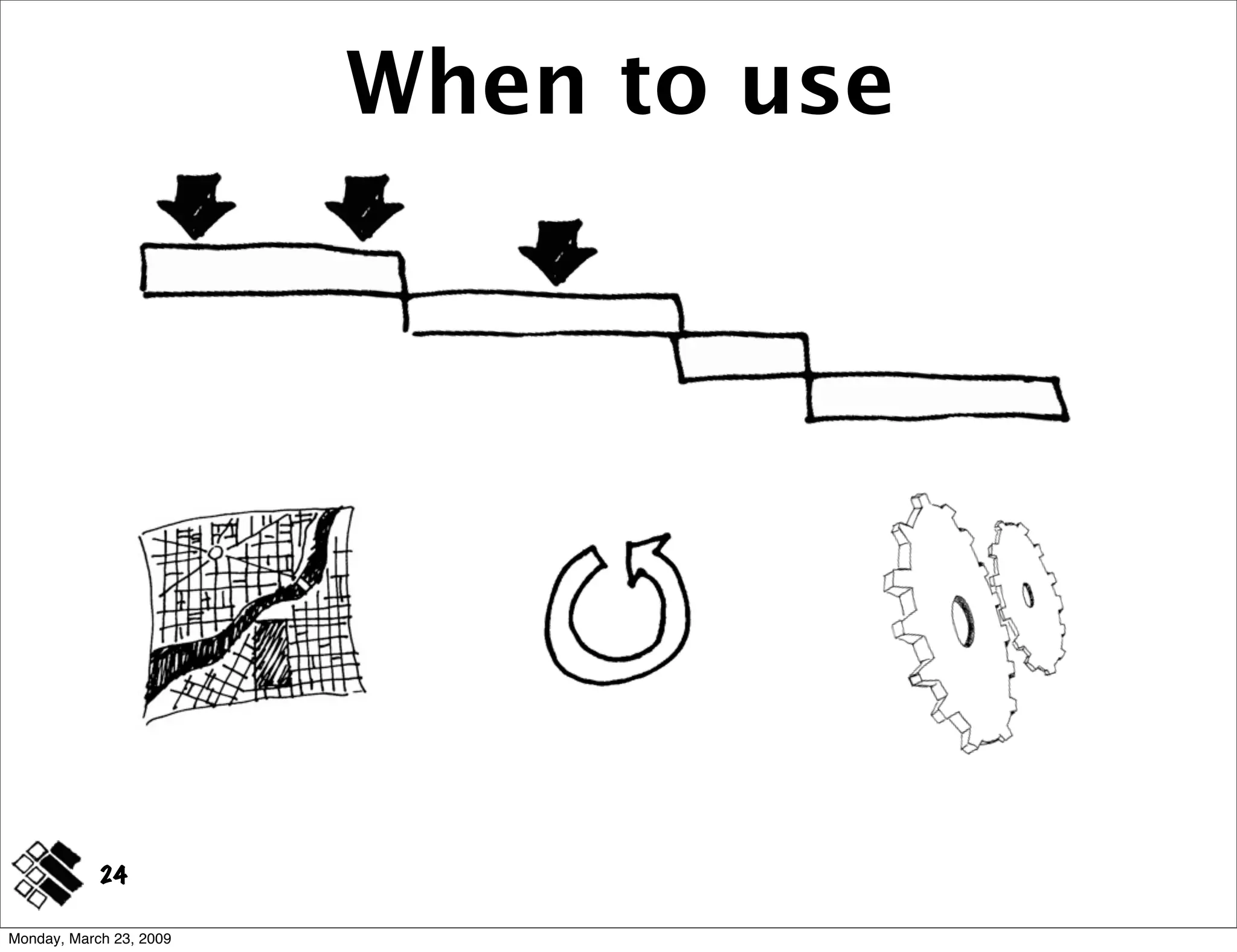
  • #25 •Early in project •Anticipate iteration •Ideal for domain mapping: lightbulb •Operational model: gears
  • #26 •Early in project •Anticipate iteration •Ideal for domain mapping: lightbulb •Operational model: gears
  • #27 •Early in project •Anticipate iteration •Ideal for domain mapping: lightbulb •Operational model: gears
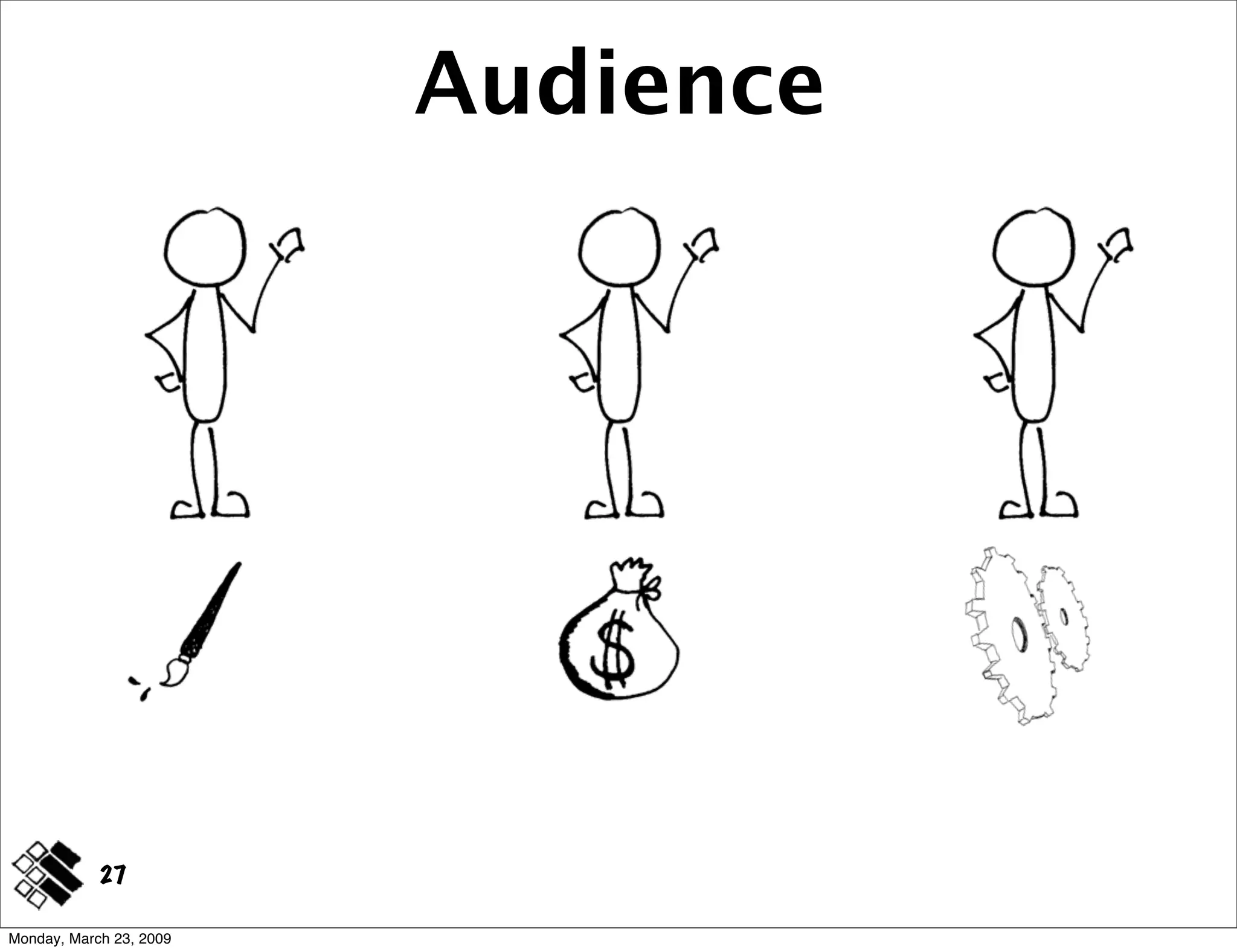
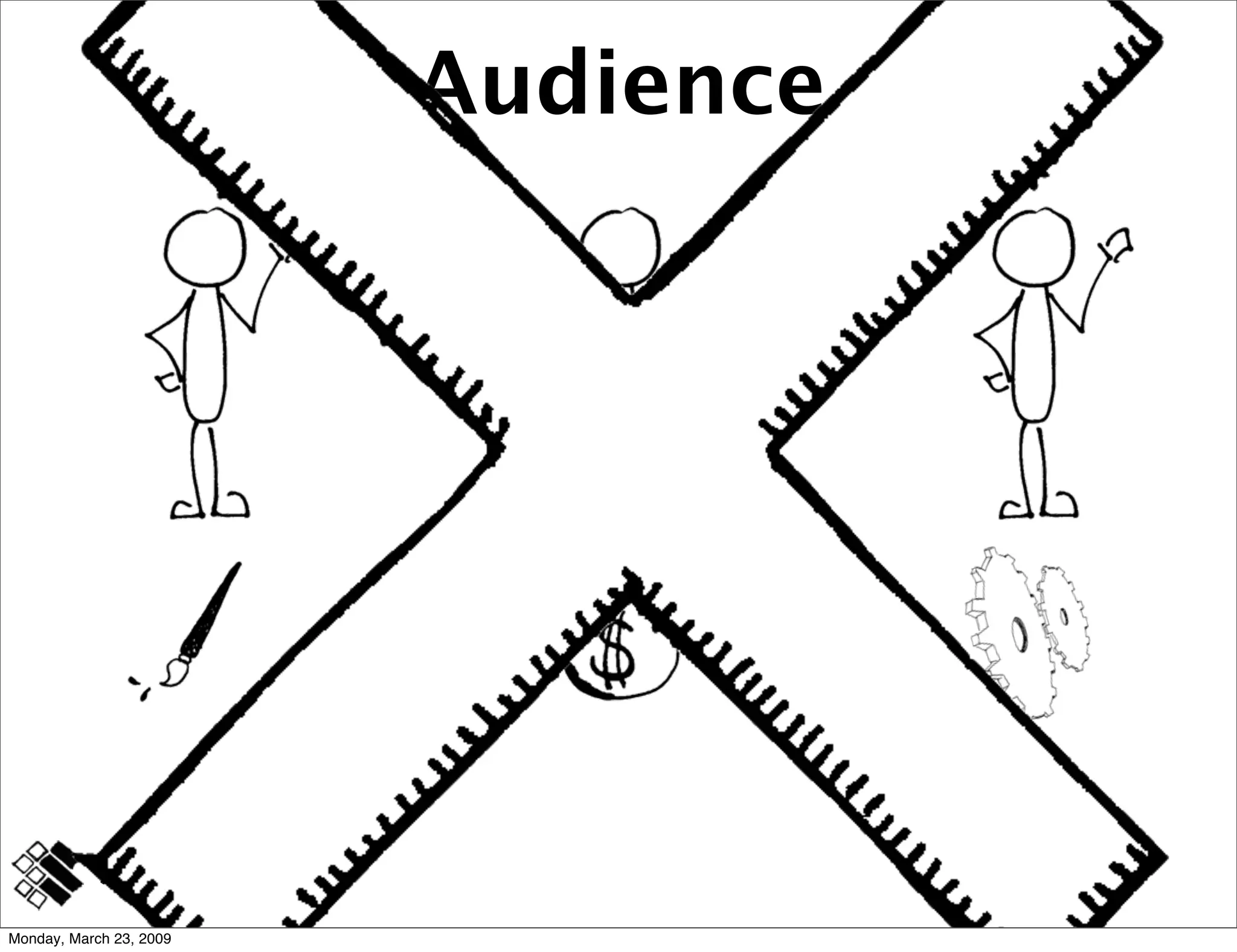
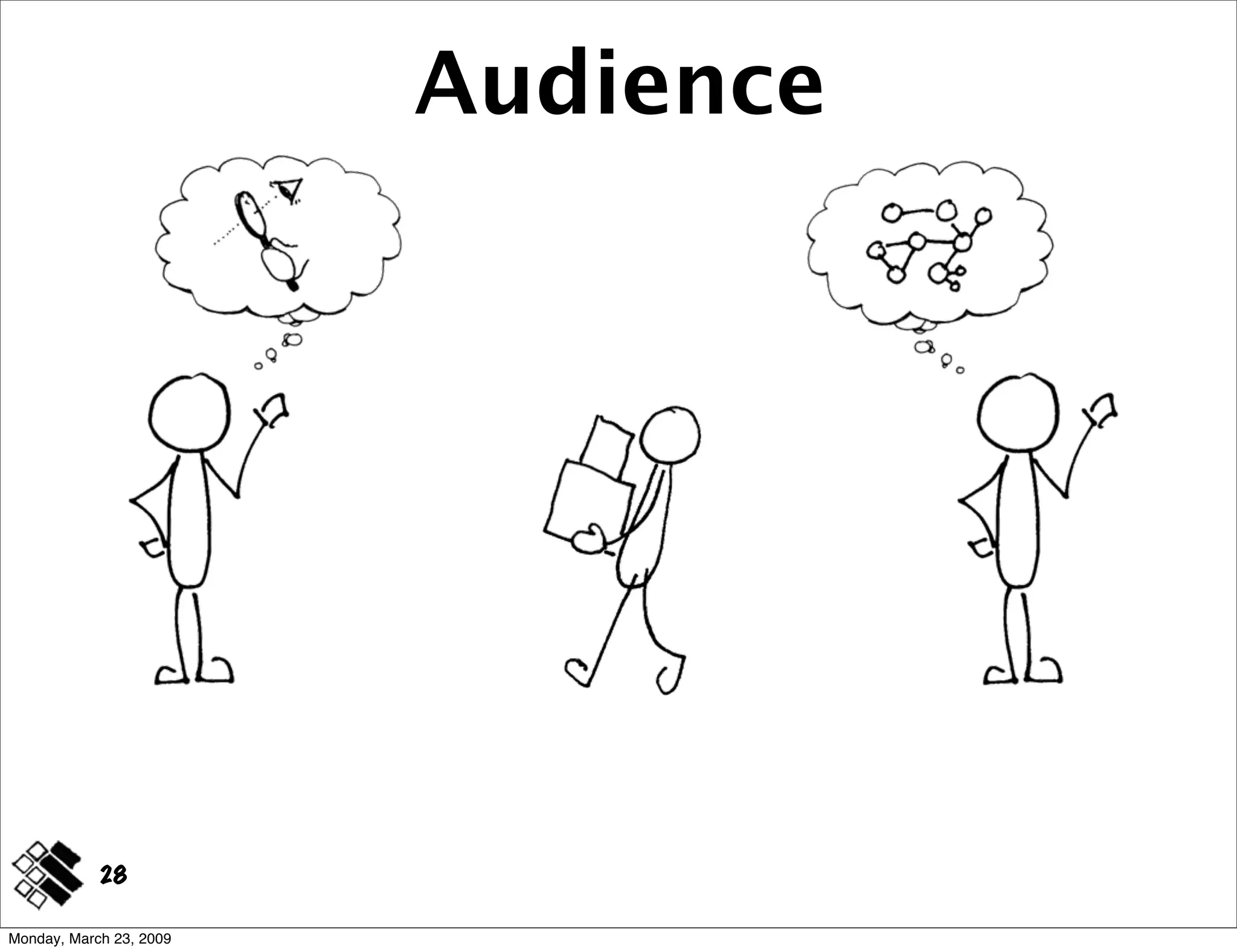
  • #29  ▼ Audience •Trash business/technical distinctionguys with gears/$/paintbrush pointed at them, crossed out ▼Think in terms of characteristics •detail-orientedguy with magnifying glass •eager to contributeguy carrying stuff •able to abstractthought bubble ▼ PurposePurpose: structure, domain •Describe structure of site •Illustrate underlying domain ▼ Message •The domain is more/less complex than we imagined •There are important relationships here not readily apparent • Maintenance • Collaboration
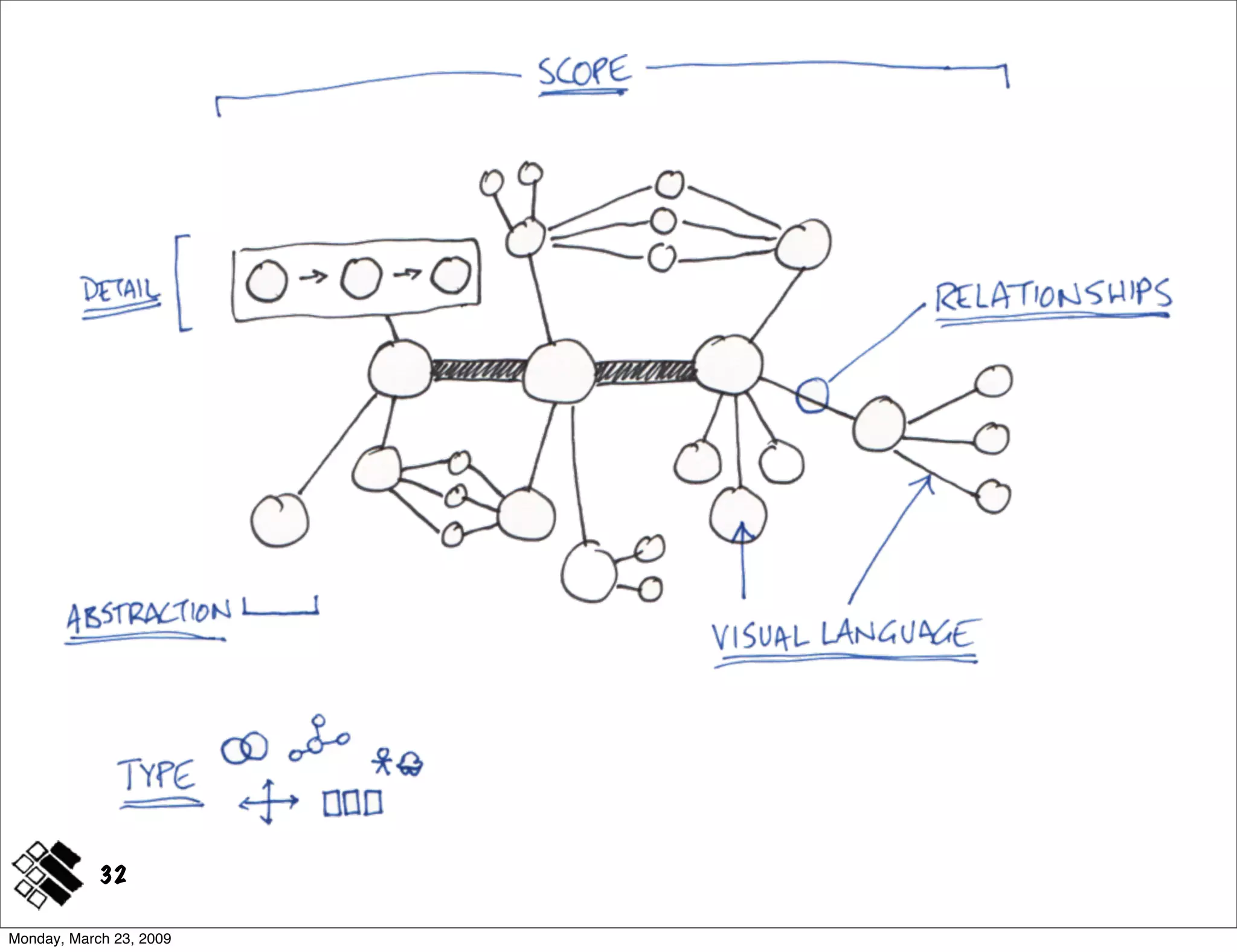
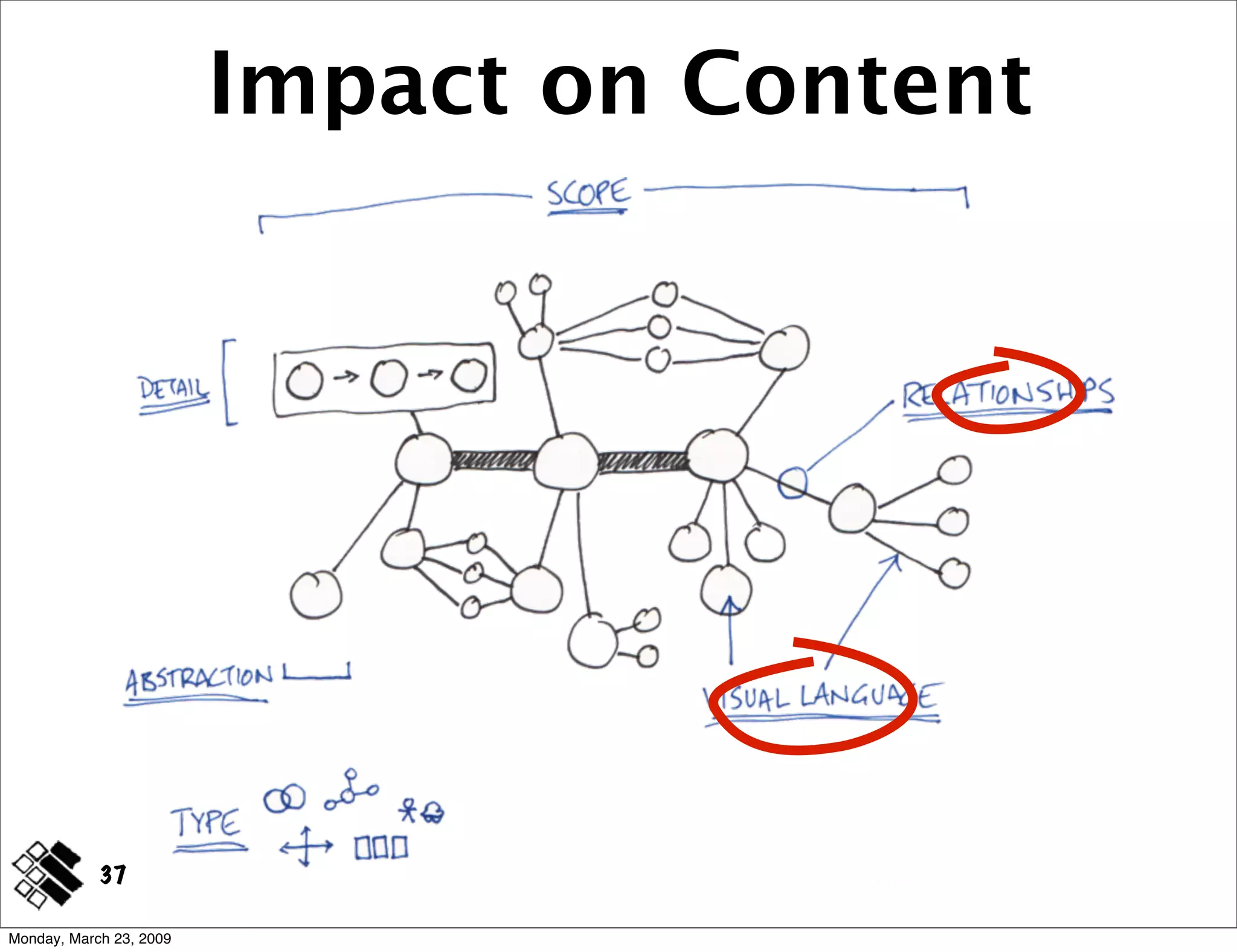
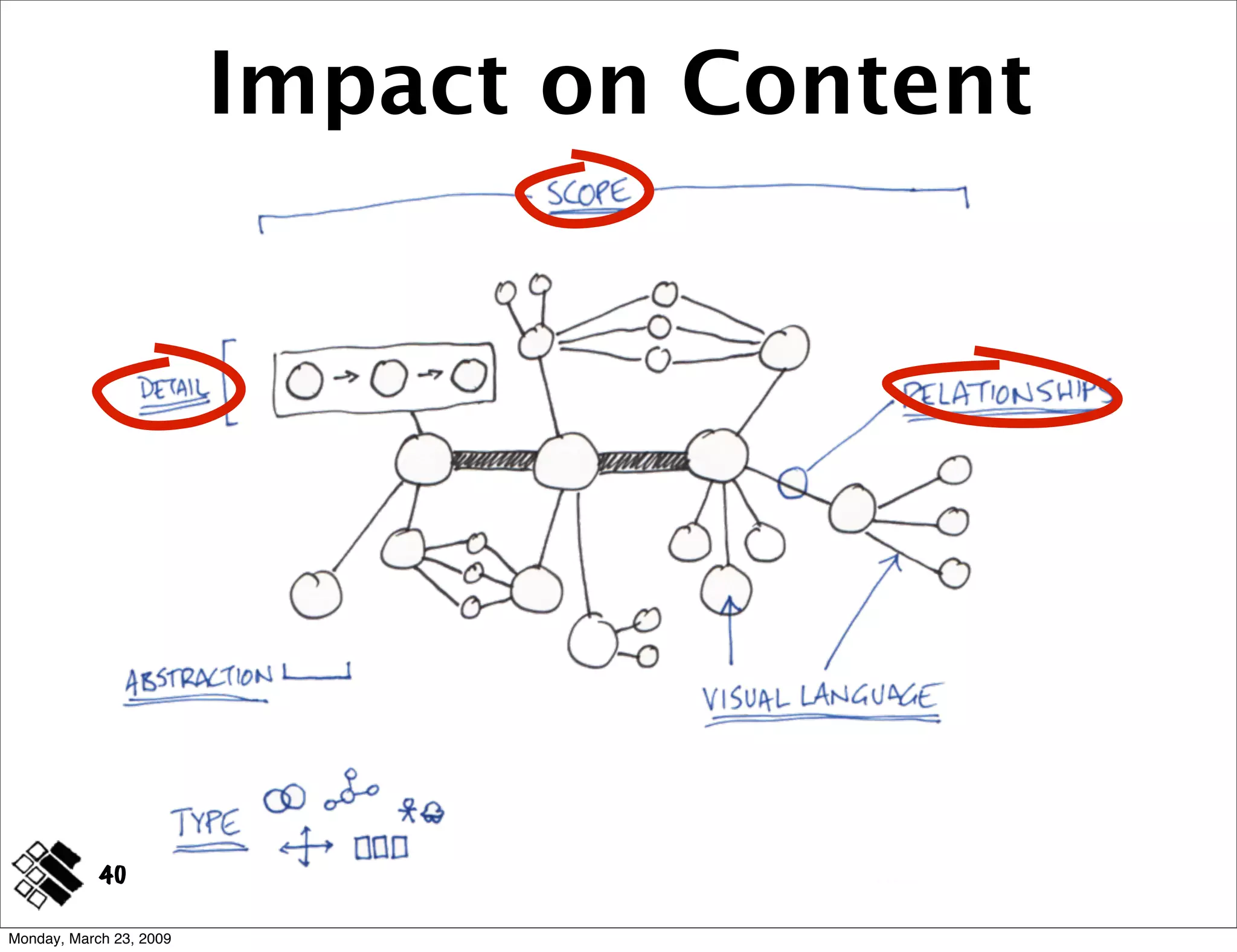
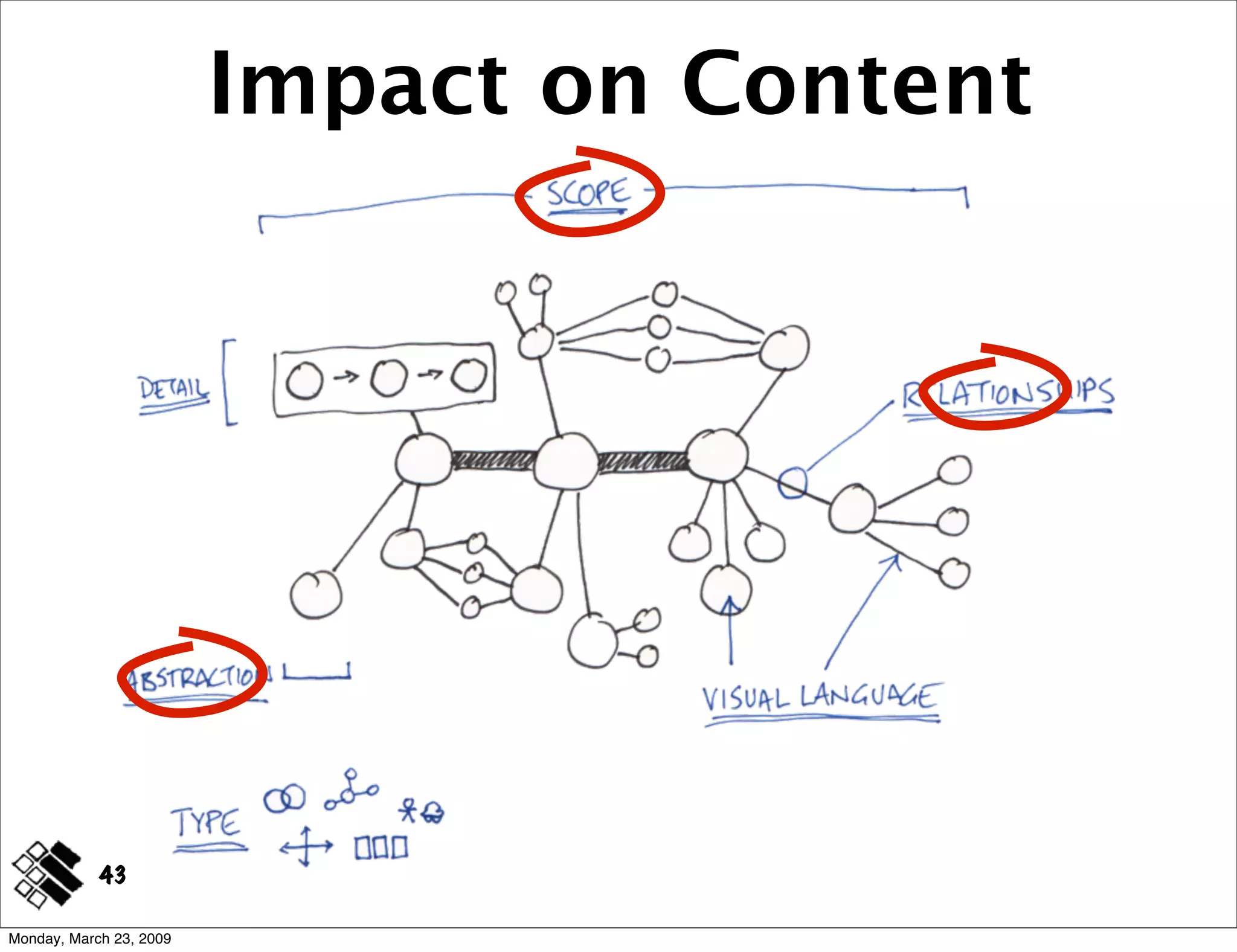
  • #39  ▼ Type: What kind of model should I make? • ▼ Scope: What concepts should I include? •Start with too many or start with what you know •Add as many as you can •Refer to planning decisions to quantify scope •When in doubt, take it out: focus on legibility, show simpler versions initially, add elaboration later • Detail: How much information should I include? ▼ Abstraction: At what level should the concepts be? •To what extent are you going to analyze or synthesize concepts? •Force yourself to identify narrower and/or broader concepts ▼ Relationships: Which aspects of the network should I highlight? •Find compelling relationships: passive voice and belonging are mundane ▼ Visual Language for Concepts •Identify opportunities to imply relationships through placement •Dont' be afraid to repeat concepts as they get further away from the central ideas, but be sure to use consistent visual language to draw the connection ▼ Visual Language for Relationships •Belonging relationships are easily communicated through placement
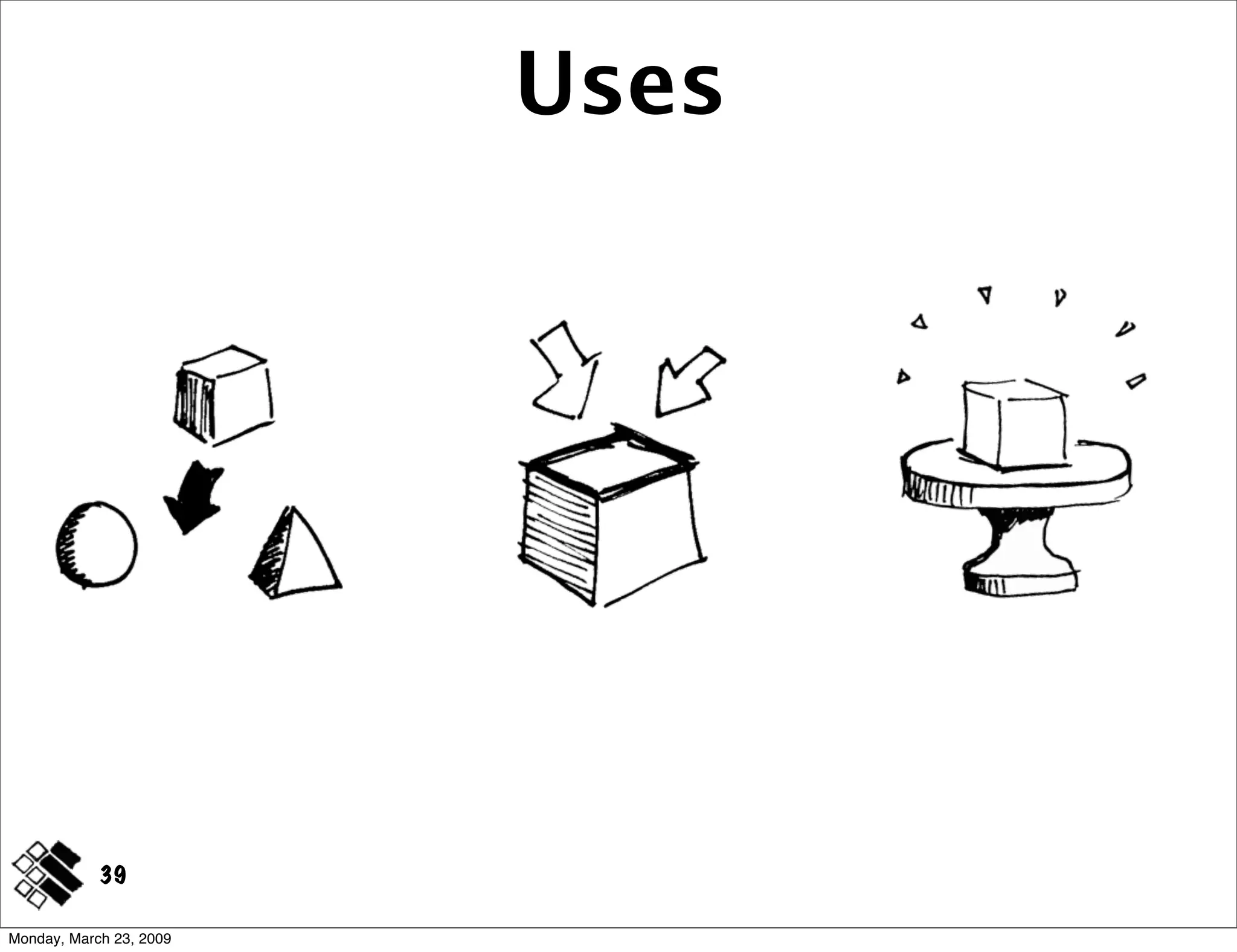
  • #43 ▼Uses •Domain understanding •Requirements definition
  • #44 ▼Impacts •No specialized visual language •No surrounding context/explanation •Not normalized: redundant concepts, redundant/non-existant relationships •Strong emphasis on clarifying unfamiliar items through relationships
  • #46 ▼Uses •Context-setting: Here's where the product fits •Scope-setting: Here's what we're focusing on •Vision-setting: Here's what the product will look like
  • #47 ▼Impacts •Strong emphasis on the product itself -- maybe mentioned explicitly •Lack of detail •Strong emphasis on relating familiar items with unfamiliar items
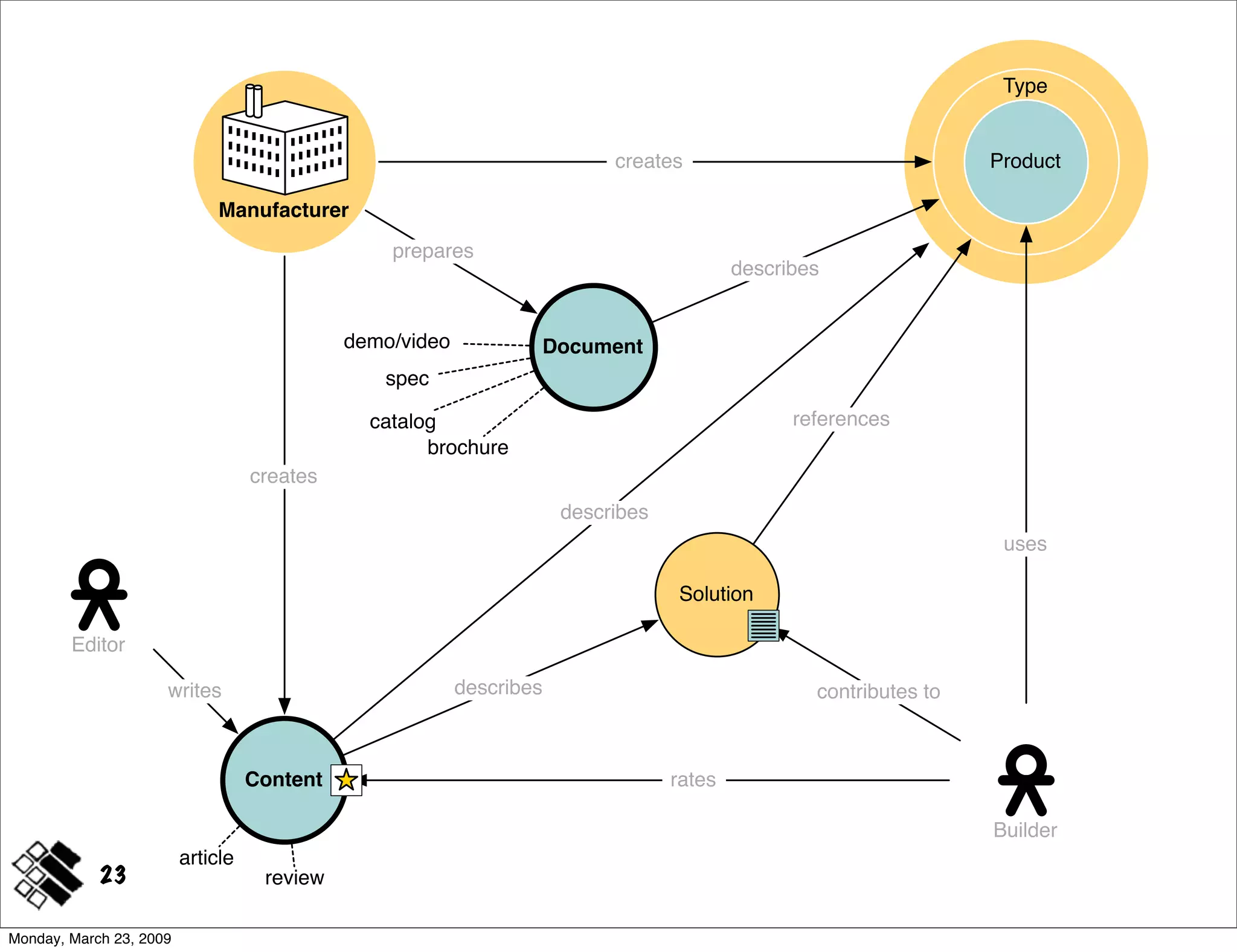
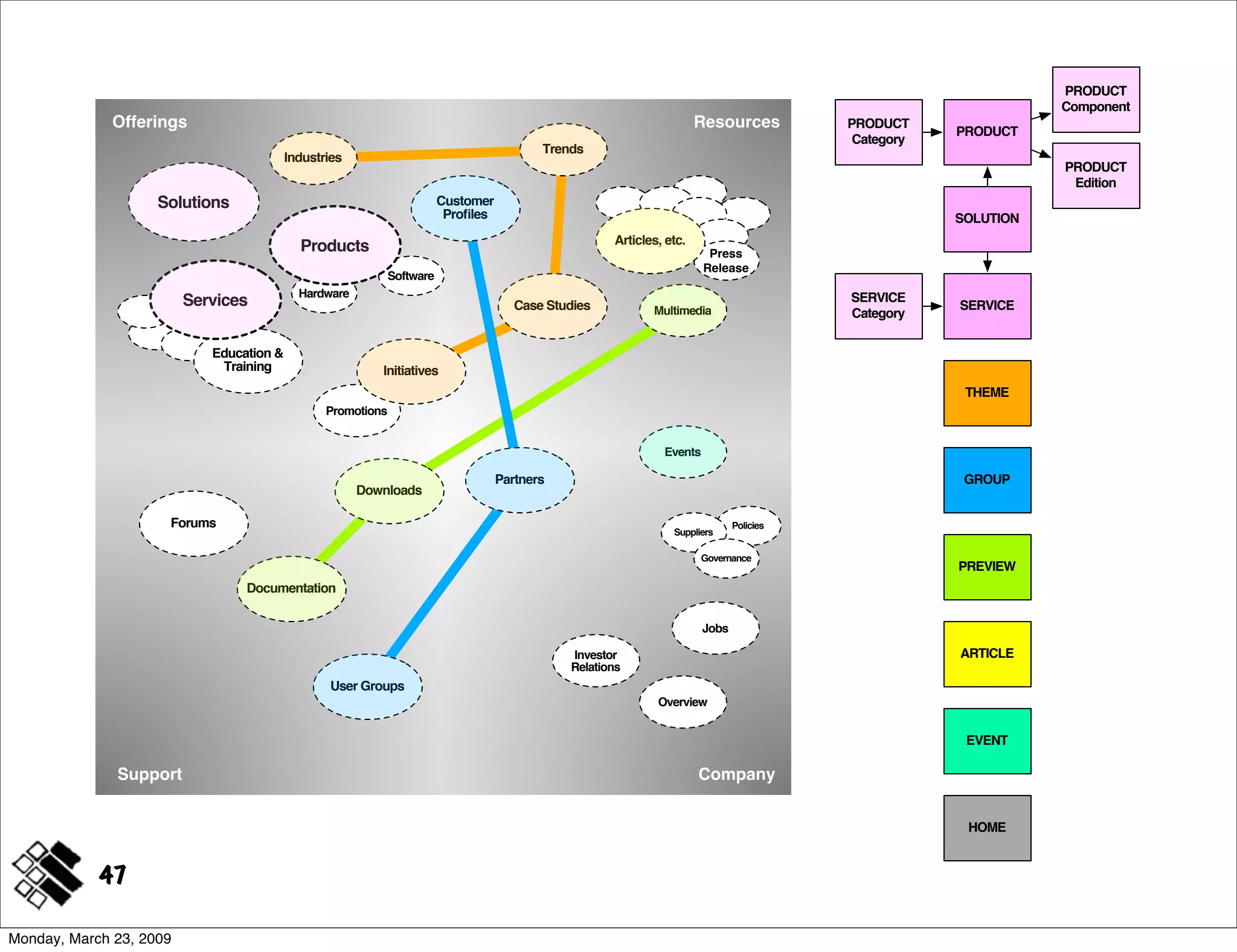
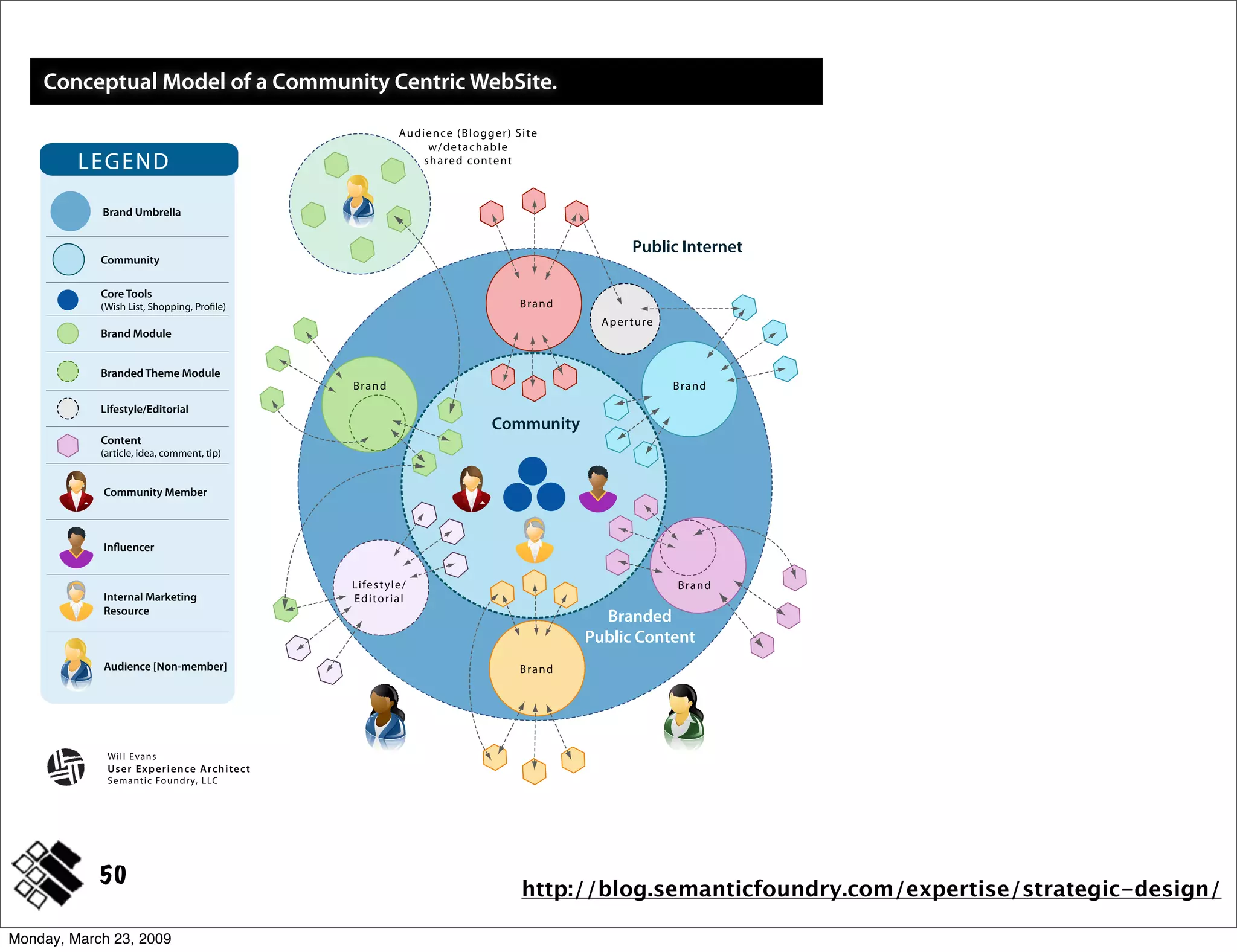
  • #49 ▼Uses •Describe site structure or content strategy •Describe operational structure
  • #50 ▼Impacts •Content/template-focused •Roles incorporated: icons showing different jobs pointing at person •Focused on familiar items only, though expressed differently (press release -> article template) •Relationships describe navigation between templates •Relationships describe ways concepts impact/influence each other (for interactive systems): soccer ball
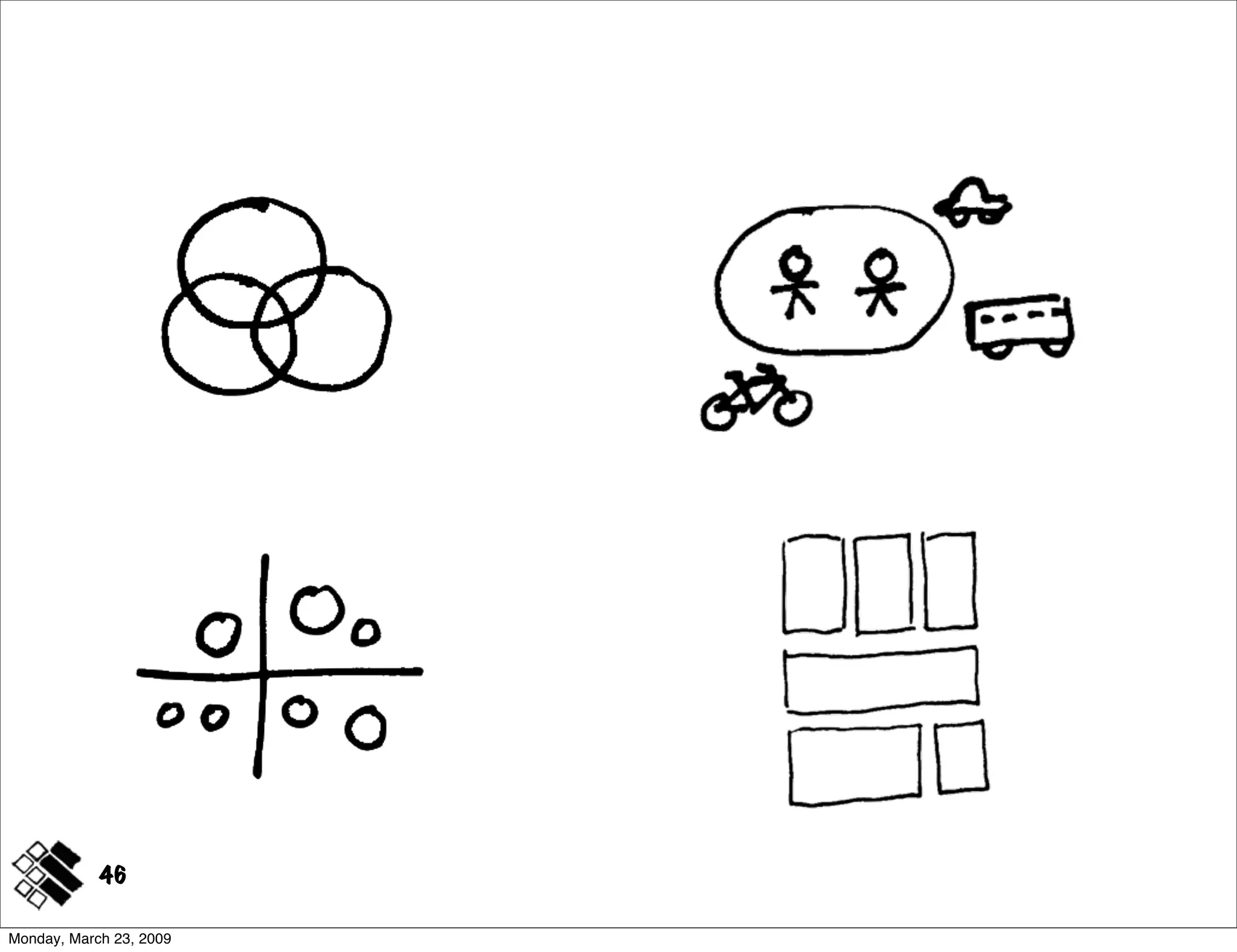
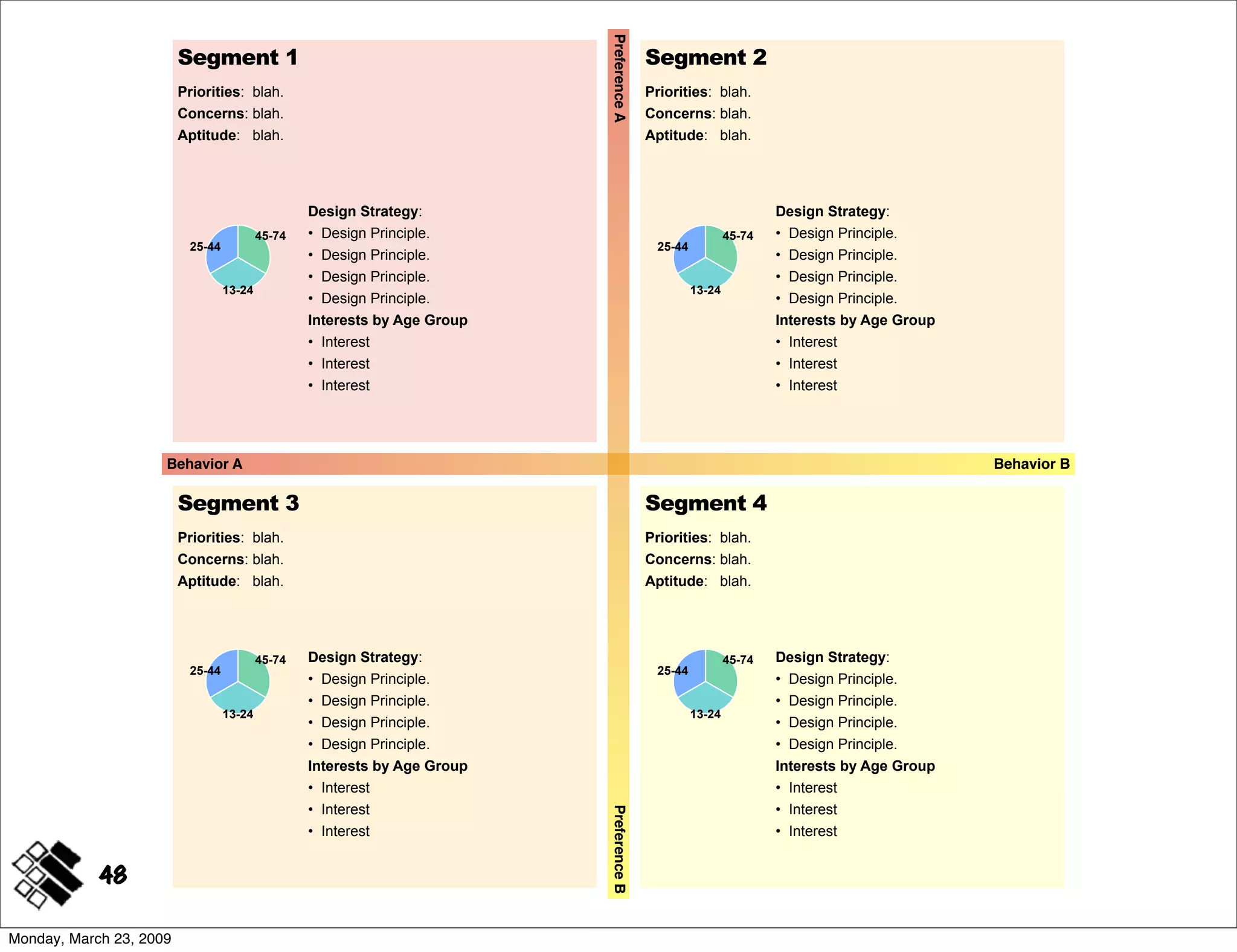
  • #55  ▼ Two-by-two: Concept models in context ▼Characteristics •Relationships implied by comparisons •Relationships driven by criteria ▼Quantities are relative, not absolute •If you start plotting points, you're into quantitative ▼Variations •Adding a third dimension: scale (size of circle) •Four kinds of X in the world ▼When to use 2x2 •Comparing concepts •Key dimensions/criteria are salient •Drive decisions based on criteria
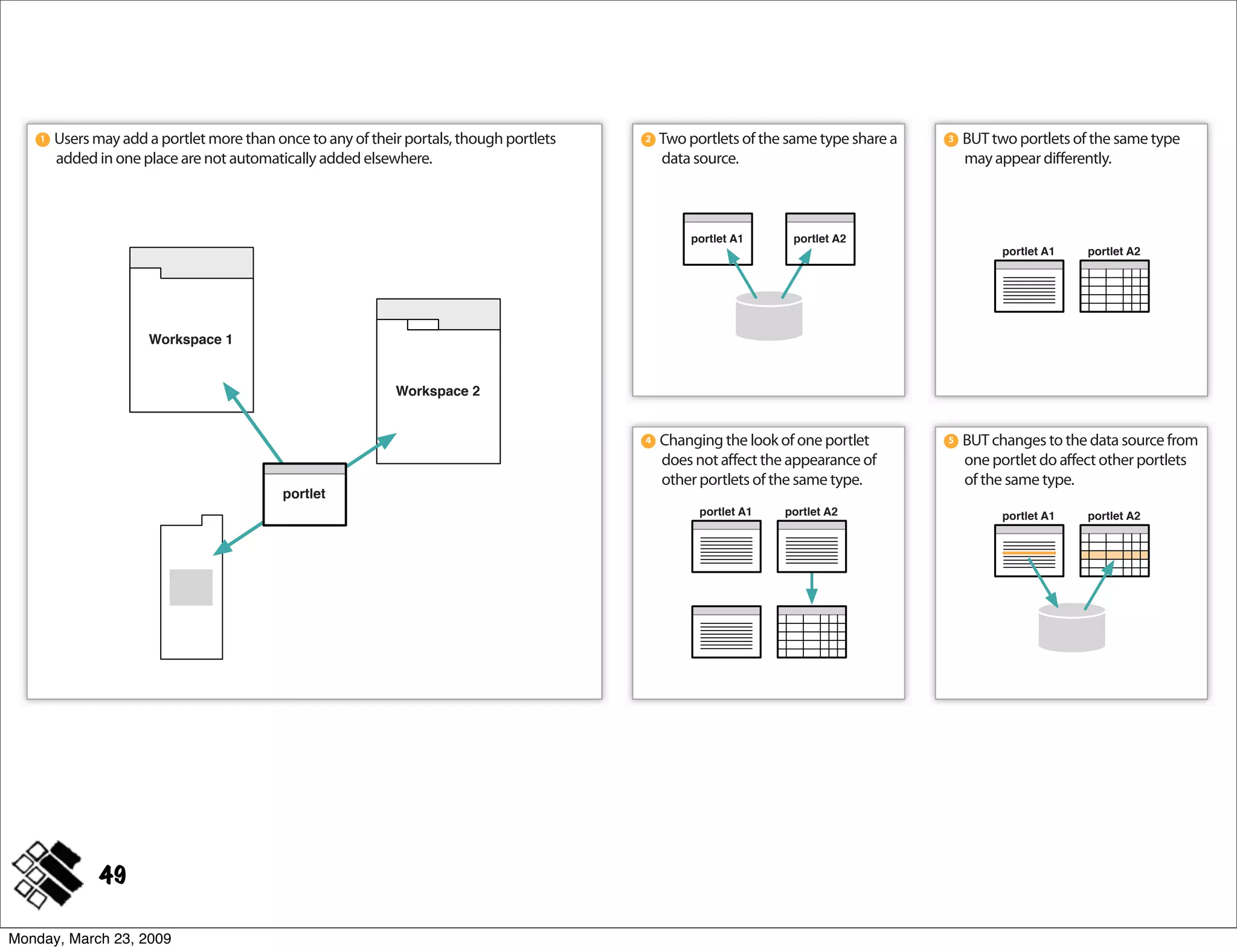
  • #56  ▼ Comics ▼Characteristics •Panel-based •Multiple aspects of a single set of concepts •Usually linear ▼Variations •Non-human comics ▼When to Use Comics •Relationships are narrative •Relationships are relative perspectives on a central idea •Break an idea into component parts
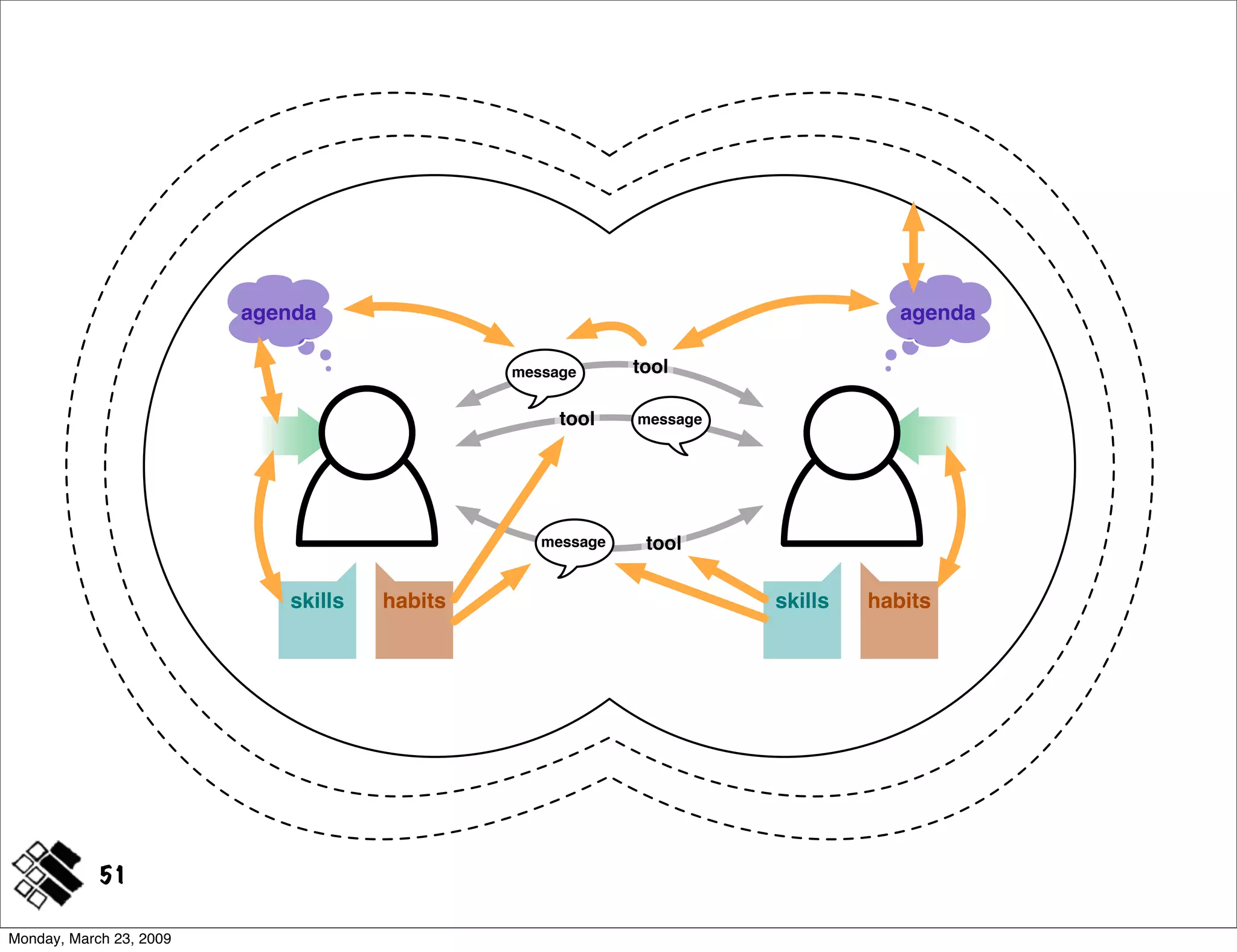
  • #57  ▼ Illustration models ▼Characteristics •Less explicit relationships •Relationships by relative placement (vs. linking) •Less rigid noun-verb distinction •1 dozen concepts ▼When to use illustration models •elaborating on a node model •Relationships are more abstract •Relationships are self-evident or not as crucial