Respiratory System
Made by-
Agraj Garg
Class – X D
Roll No. – 3
What is Respiration?
The act of inhaling and
exhaling air in order to
obtain Oxygen and
eliminate Carbon Dioxide
is called Respiration. It is
process of getting energy
from food.
Types of Respiration
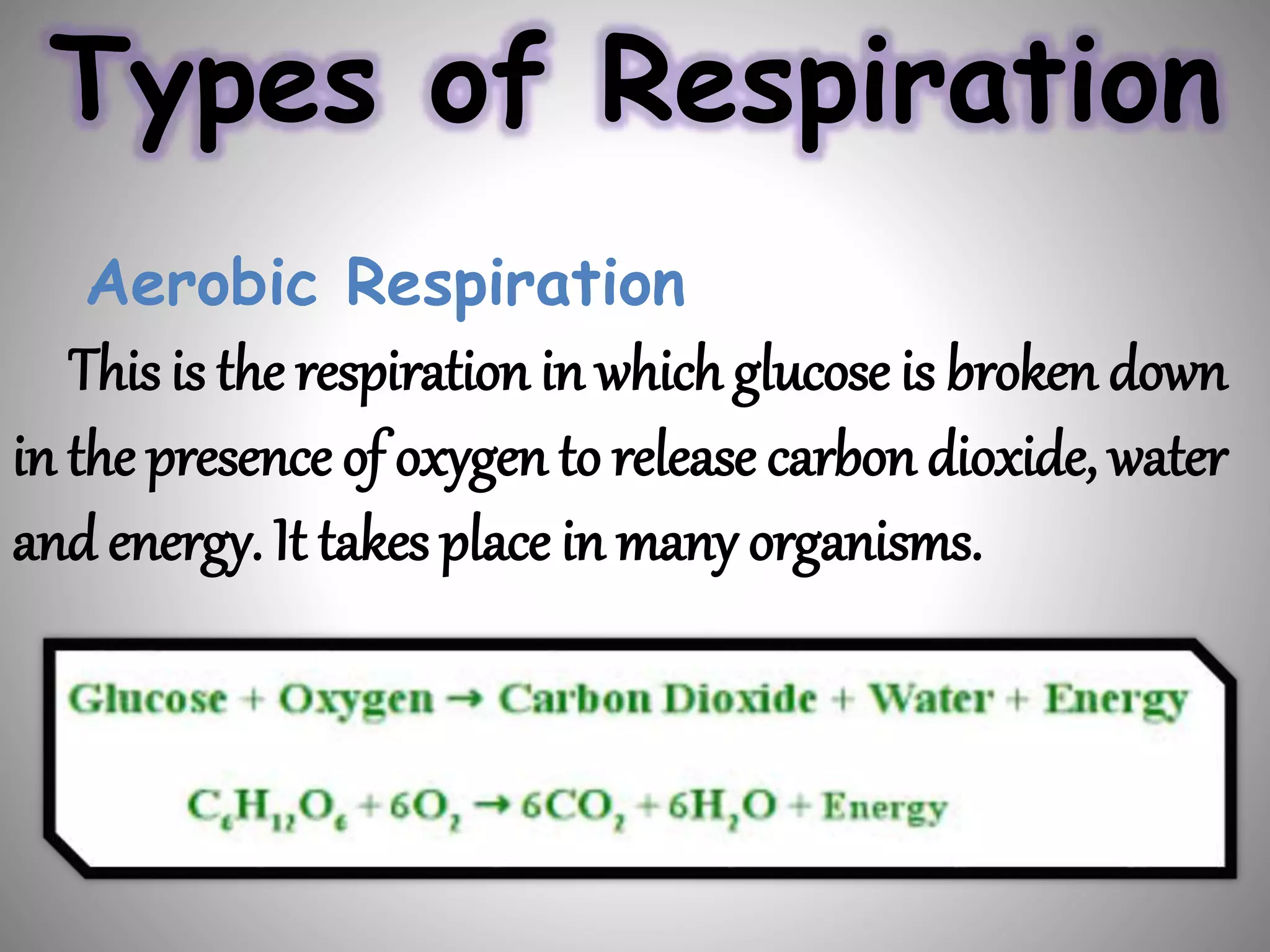
Aerobic Respiration
This is the respiration in which glucose is broken down
in the presence of oxygen to release carbon dioxide, water
and energy. It takes place in many organisms.
Types of Respiration
Anaerobic Respiration
This is the respiration in which glucose is broken down in
the absence of oxygen to release ethanol, carbon dioxide
and energy. It takes place in yeast.
Types of Respiration
Anaerobic Respiration in humans
This is the respiration in our muscle cells in which
glucose is broken down in the lack of oxygen to release
lactic acid and energy.
Difference between Aerobic and
Anaerobic respiration
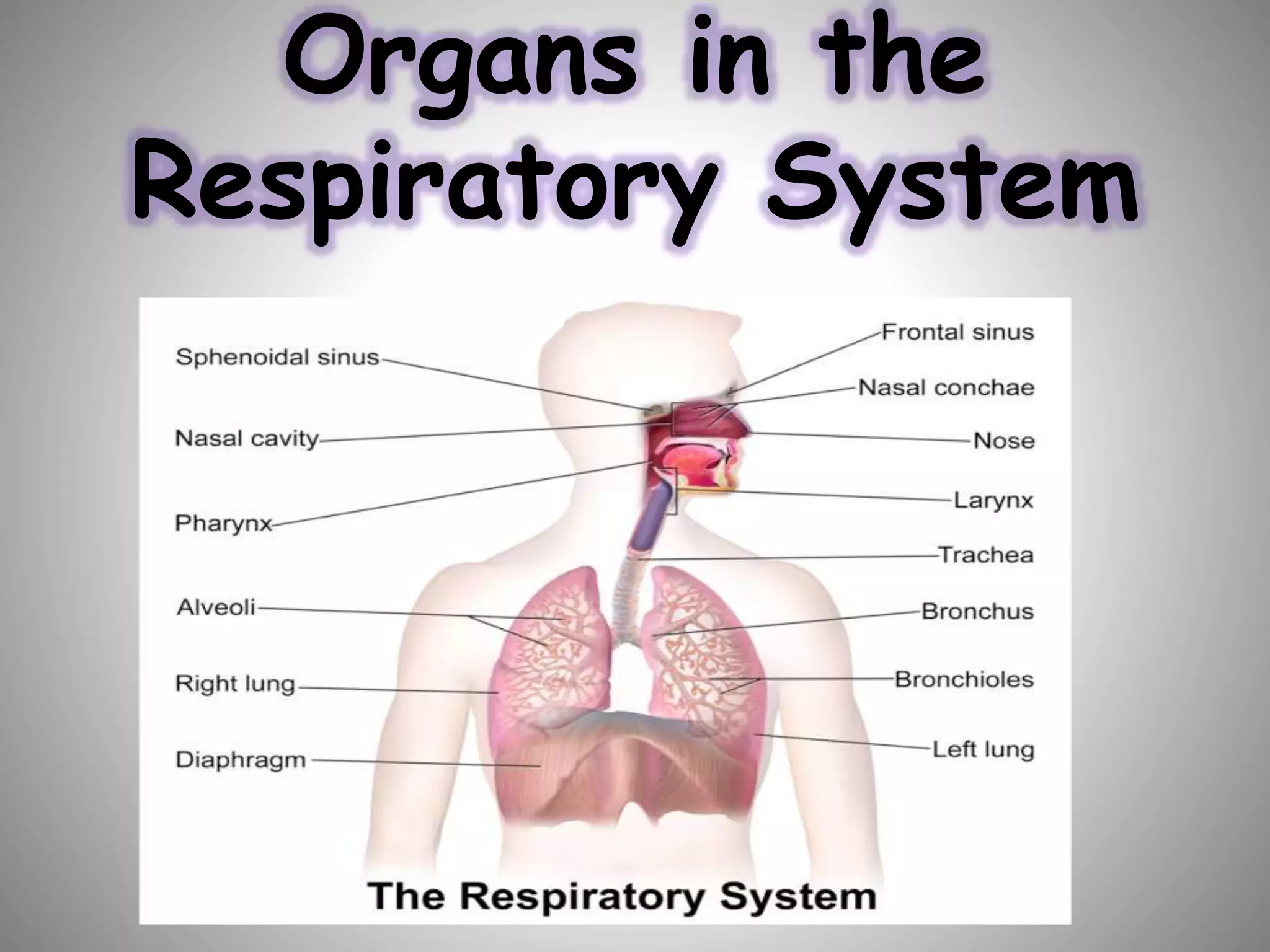
Organs in the
Respiratory System
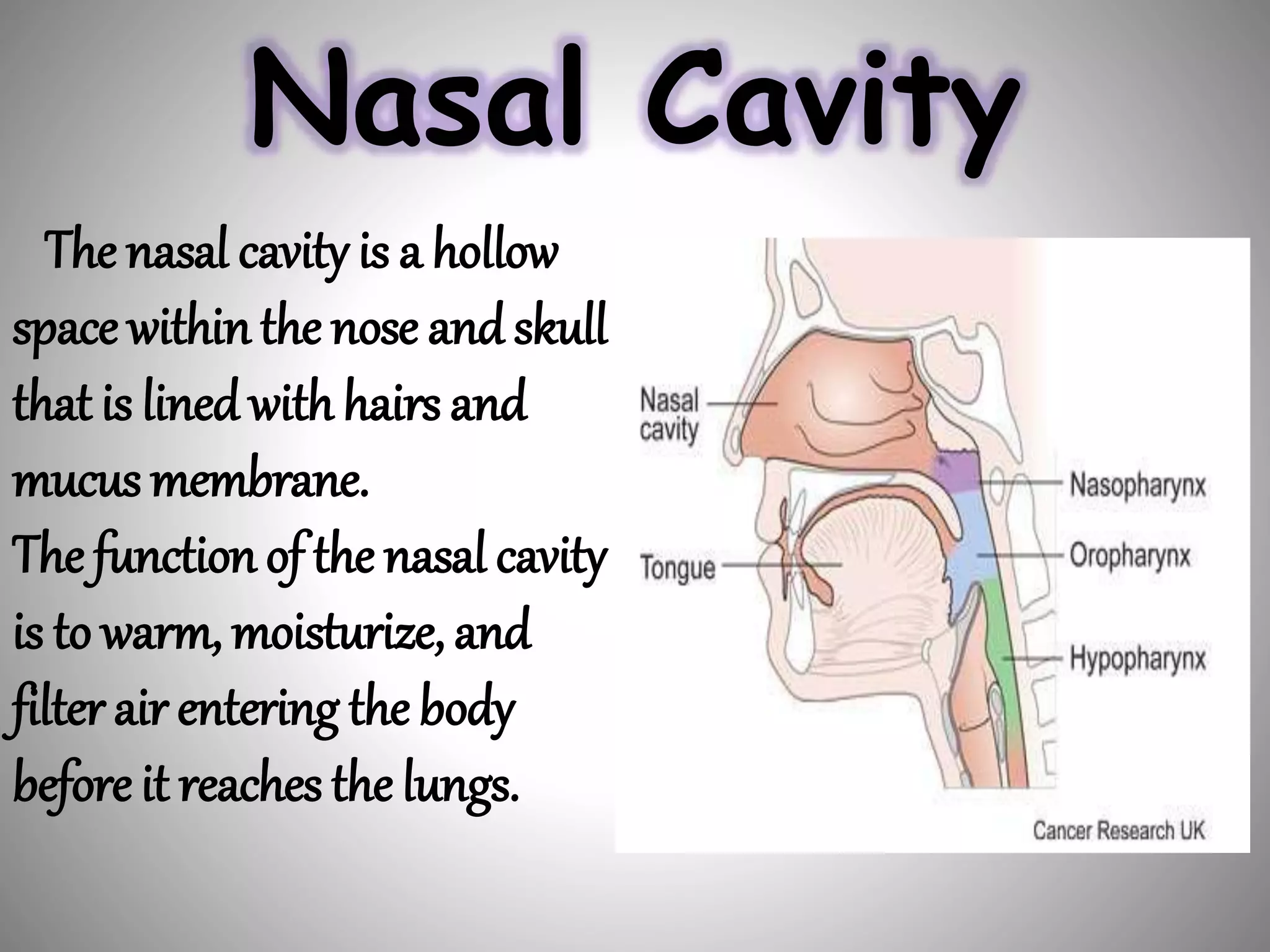
Nasal Cavity
The nasal cavity is a hollow
space withinthe nose andskull
that is linedwith hairs and
mucus membrane.
The function of the nasal cavity
is to warm, moisturize, and
filter air entering the body
before it reaches the lungs.
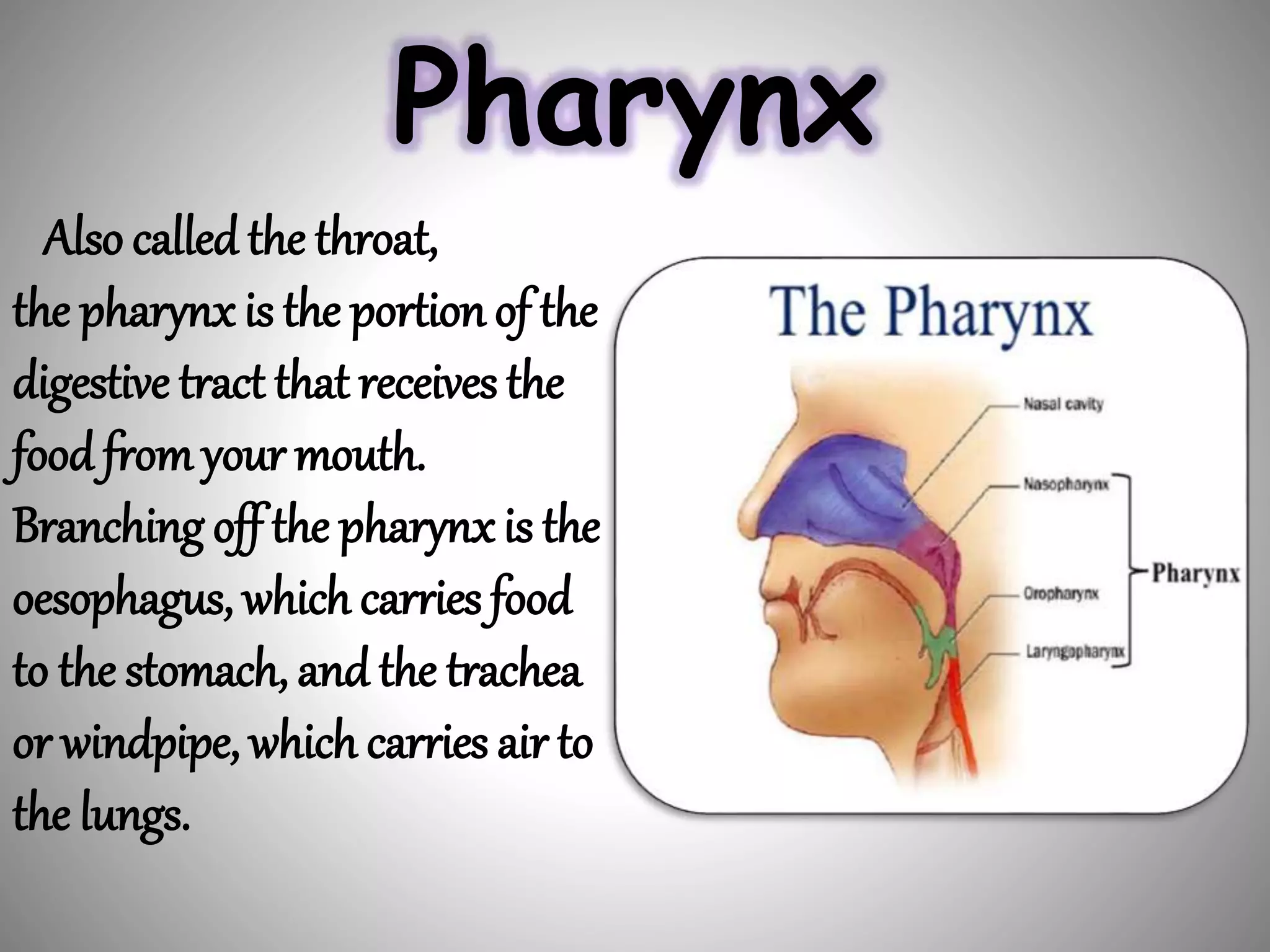
Pharynx
Also called the throat,
the pharynx is the portion of the
digestive tract that receives the
food from your mouth.
Branching off the pharynx is the
oesophagus, which carries food
to the stomach, and the trachea
or windpipe, which carries air to
the lungs.
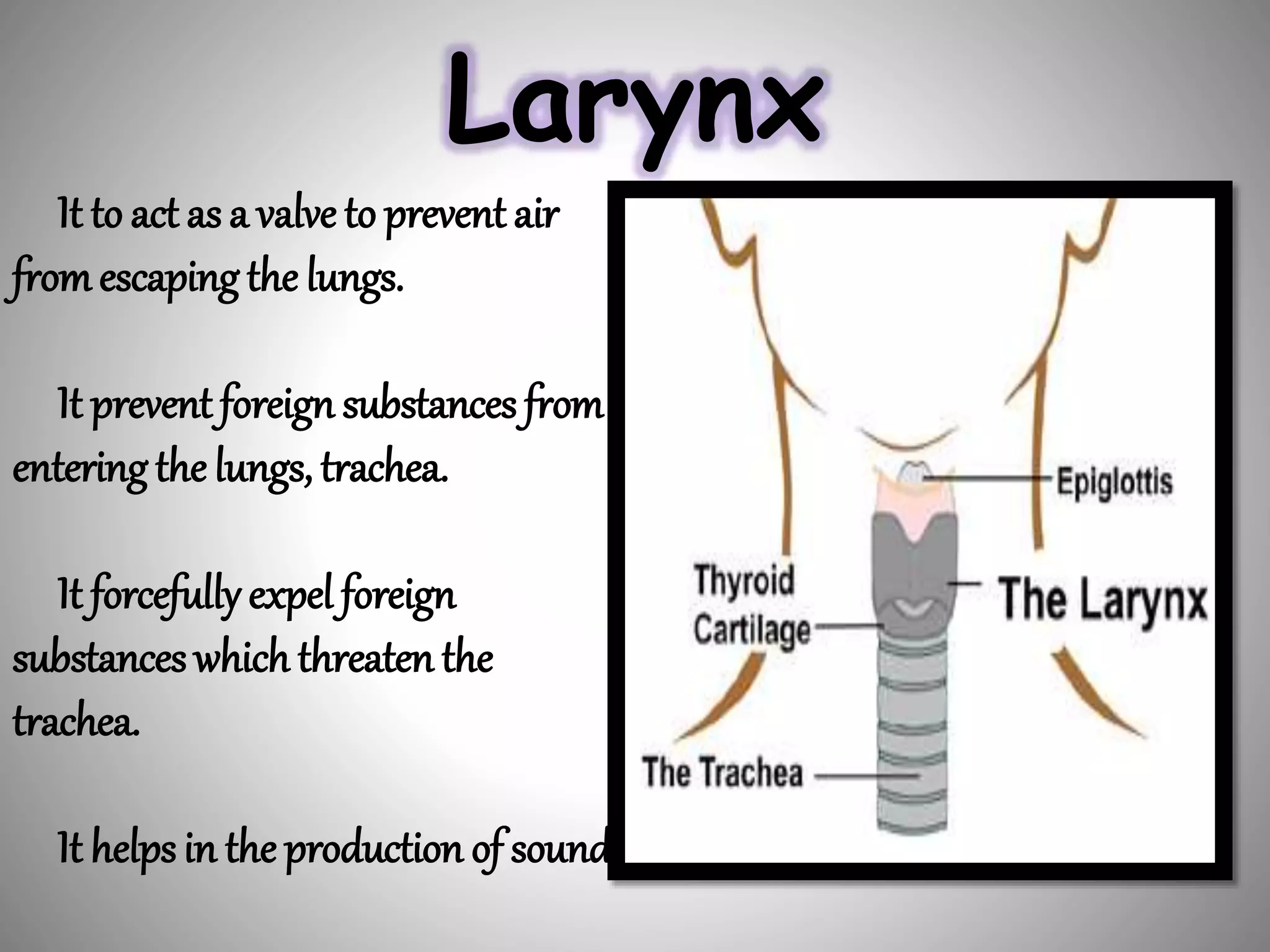
Larynx
It to act as a valve to prevent air
fromescapingthe lungs.
It prevent foreign substances from
enteringthe lungs, trachea.
It forcefully expel foreign
substanceswhich threaten the
trachea.
It helpsin the production of sound
Trachea
The trachea (or windpipe) is a
wide, hollow tube that connects
the larynx (or voice box) to the
bronchi of the lungs. It is an
integral part of the body's
airway andhas the
vital functionof providing air
flow to andfromthe lungs for
respiration.
Bronchi and Bronchioles
The main function of
the bronchi and bronchiole
s is to carry air from the
trachea into the lungs.
Smooth muscle tissue in
their walls helps to regulate
airflow into the lungs.
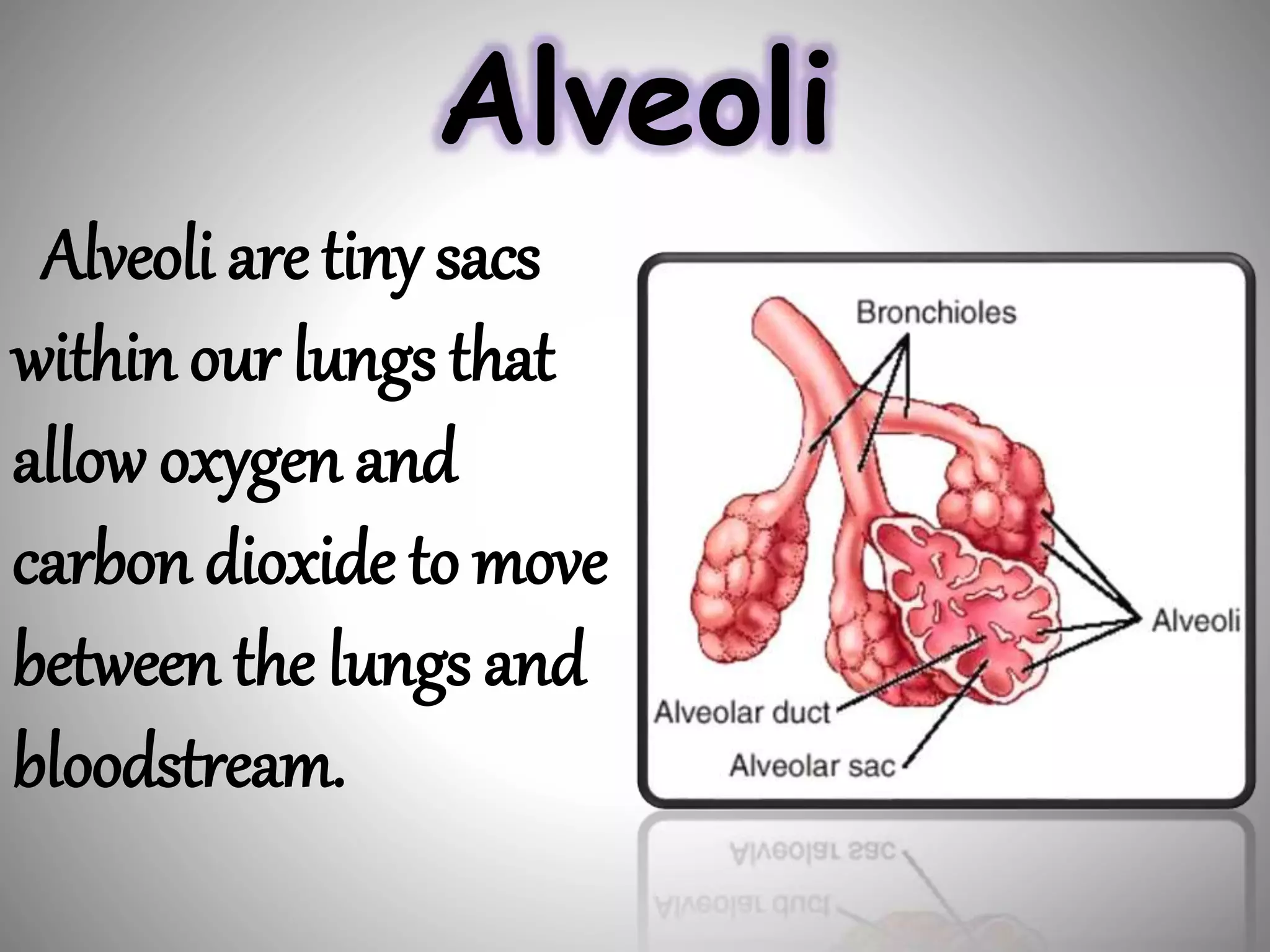
Alveoli
Alveoli are tiny sacs
within our lungs that
allow oxygen and
carbon dioxide to move
between the lungs and
bloodstream.
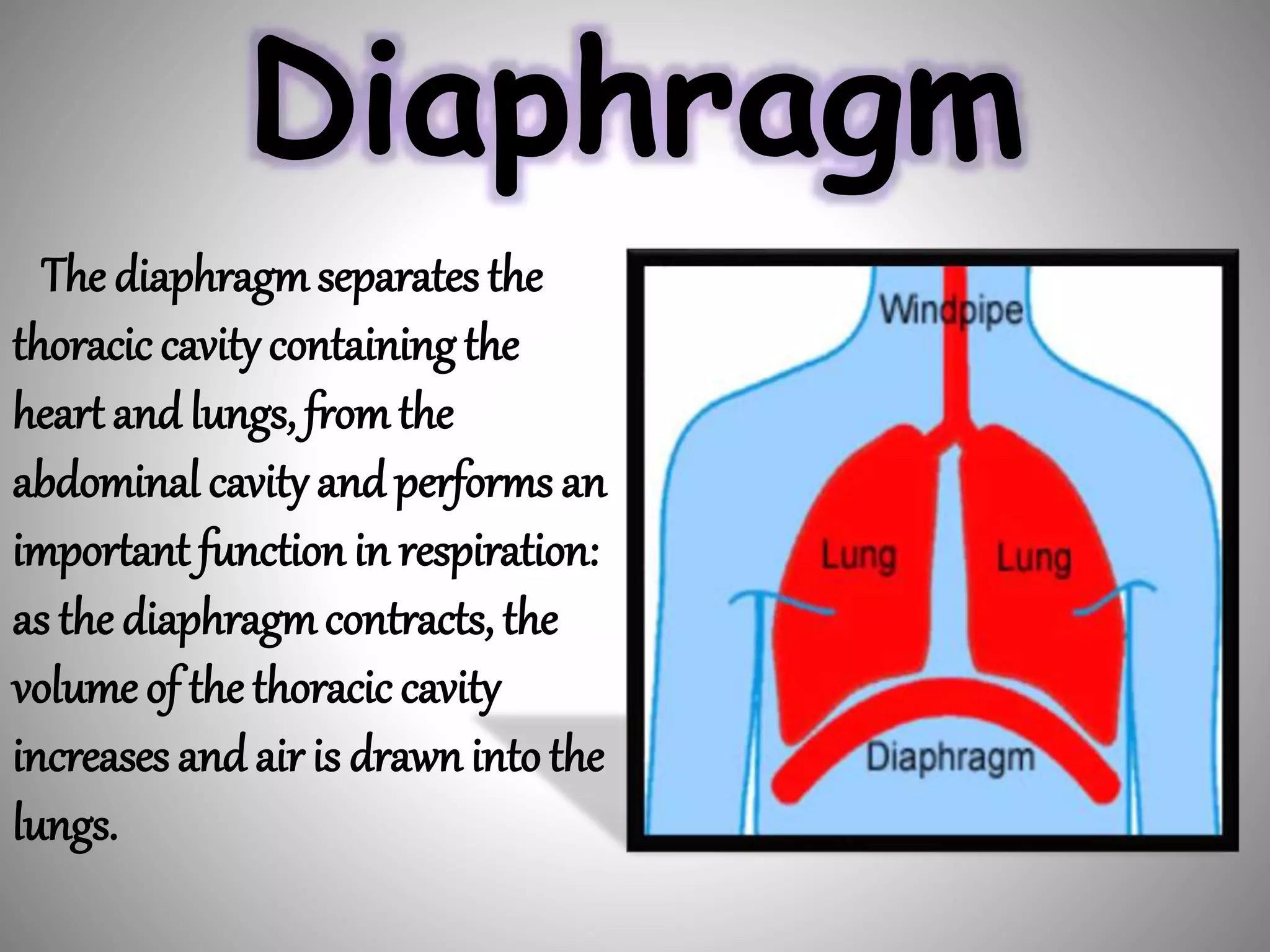
Diaphragm
The diaphragmseparates the
thoracic cavity containingthe
heart and lungs, fromthe
abdominal cavity and performs an
important function in respiration:
as the diaphragmcontracts, the
volume of the thoracic cavity
increases and air is drawn intothe
lungs.
Lungs
The air that comes into the body
throughthe lungs. It contains
oxygen and other gases. In
the lungs, the oxygen is moved
into the bloodstreamand carried
throughthe body. At each cell in
the body, the oxygen cells are
exchangedfor waste gas called
carbon dioxide.
How Respiration works???
So,let'sstartat thebeginning.A personbreathesairin
throughtheirnostrilsor theirmouth. Themouthand
nasalairwayscometogetherat a junctioncalled
thepharynx,whichislocatedat thebackof themouth,
andcontinuesdownthethroatuntilit reachesthelarynx.
Thelarynxismorecommonlyknownas thevoicebox,
andsomepeoplecallit theAdam'sapple.
Theairthenentersthe trachea,whichisthemain
airwaythatrunsfromthelarynxdownto thelungs. The
tracheaisknownto mostpeopleas thewindpipe.Justas
theairreachesthelungs,thetracheasplitsintotwo
smallertubescalledbronchi.
Eachbronchusentersonesideof the lungsandthen
splitsrepeatedlyintoeversmallertubescalled
bronchioles.
And finally,at the ends of the smallest bronchiolesare clusters
of sphericalstructures that looka lotlike bunchesof grapes.These
grape-like structures are called alveoli and are basicallytinyair
sacswithverythinwallsthat serve as the main site of gas
exchange.
The average human lunghas about500million alveoliwitha
combinedinner surface areathat is aboutthe same size as halfof
a full-size tenniscourt.That's 40 timesthe surfaceareaof a
person'sskin!
Whenthe air that the person justbreathedin reachesthese air
sacs,the oxygen in the air passesthrough the air sacwallsinto the
bloodin the capillaries.At the same time,carbon dioxide (a waste
gas) movesfromthecapillariesintothe air sacs.This processis
calledgas exchange.
The oxygen-rich blood in the capillariesthen flowsintolarger
veins,which carryit to the heart.Yourheartpumpsthe oxygen-
richbloodto all yourbody'sorgans.These organscan'tfunction
without an ongoingsupplyof oxygen.
How Respiration works???
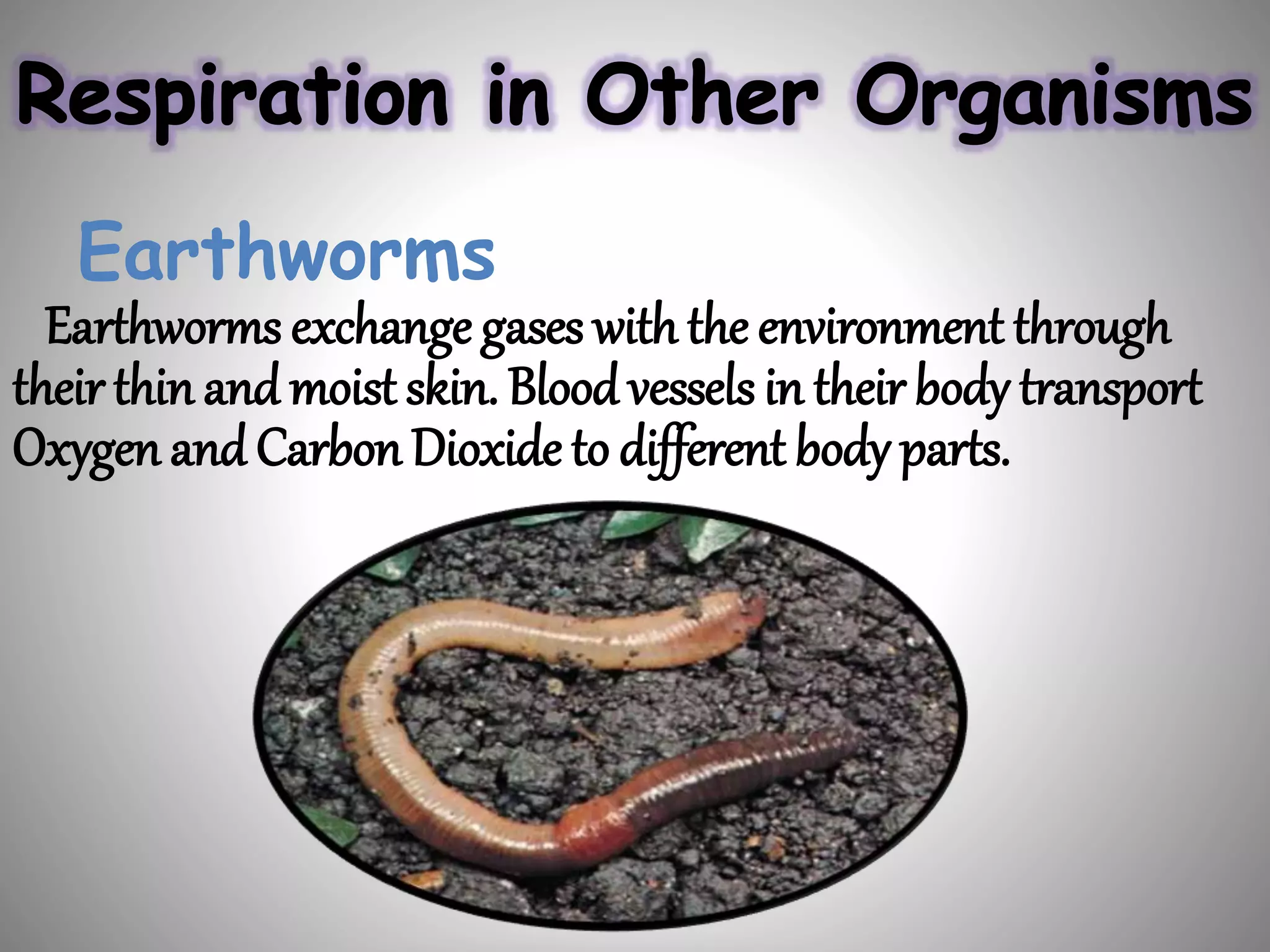
Earthworms
Earthworms exchange gases with the environment through
theirthinandmoist skin. Bloodvessels in their body transport
Oxygen andCarbon Dioxide to different body parts.
Fish
Fishhas specialisedstructures calledthe gills to carry out
exchange of gases with water, the mediumin which they live.
Respiratory System

Respiratory System

  • 1.
    Respiratory System Made by- AgrajGarg Class – X D Roll No. – 3
  • 2.
    What is Respiration? Theact of inhaling and exhaling air in order to obtain Oxygen and eliminate Carbon Dioxide is called Respiration. It is process of getting energy from food.
  • 3.
    Types of Respiration AerobicRespiration This is the respiration in which glucose is broken down in the presence of oxygen to release carbon dioxide, water and energy. It takes place in many organisms.
  • 4.
    Types of Respiration AnaerobicRespiration This is the respiration in which glucose is broken down in the absence of oxygen to release ethanol, carbon dioxide and energy. It takes place in yeast.
  • 5.
    Types of Respiration AnaerobicRespiration in humans This is the respiration in our muscle cells in which glucose is broken down in the lack of oxygen to release lactic acid and energy.
  • 6.
    Difference between Aerobicand Anaerobic respiration
  • 7.
  • 8.
    Nasal Cavity The nasalcavity is a hollow space withinthe nose andskull that is linedwith hairs and mucus membrane. The function of the nasal cavity is to warm, moisturize, and filter air entering the body before it reaches the lungs.
  • 9.
    Pharynx Also called thethroat, the pharynx is the portion of the digestive tract that receives the food from your mouth. Branching off the pharynx is the oesophagus, which carries food to the stomach, and the trachea or windpipe, which carries air to the lungs.
  • 10.
    Larynx It to actas a valve to prevent air fromescapingthe lungs. It prevent foreign substances from enteringthe lungs, trachea. It forcefully expel foreign substanceswhich threaten the trachea. It helpsin the production of sound
  • 11.
    Trachea The trachea (orwindpipe) is a wide, hollow tube that connects the larynx (or voice box) to the bronchi of the lungs. It is an integral part of the body's airway andhas the vital functionof providing air flow to andfromthe lungs for respiration.
  • 12.
    Bronchi and Bronchioles Themain function of the bronchi and bronchiole s is to carry air from the trachea into the lungs. Smooth muscle tissue in their walls helps to regulate airflow into the lungs.
  • 13.
    Alveoli Alveoli are tinysacs within our lungs that allow oxygen and carbon dioxide to move between the lungs and bloodstream.
  • 14.
    Diaphragm The diaphragmseparates the thoraciccavity containingthe heart and lungs, fromthe abdominal cavity and performs an important function in respiration: as the diaphragmcontracts, the volume of the thoracic cavity increases and air is drawn intothe lungs.
  • 15.
    Lungs The air thatcomes into the body throughthe lungs. It contains oxygen and other gases. In the lungs, the oxygen is moved into the bloodstreamand carried throughthe body. At each cell in the body, the oxygen cells are exchangedfor waste gas called carbon dioxide.
  • 16.
    How Respiration works??? So,let'sstartatthebeginning.A personbreathesairin throughtheirnostrilsor theirmouth. Themouthand nasalairwayscometogetherat a junctioncalled thepharynx,whichislocatedat thebackof themouth, andcontinuesdownthethroatuntilit reachesthelarynx. Thelarynxismorecommonlyknownas thevoicebox, andsomepeoplecallit theAdam'sapple. Theairthenentersthe trachea,whichisthemain airwaythatrunsfromthelarynxdownto thelungs. The tracheaisknownto mostpeopleas thewindpipe.Justas theairreachesthelungs,thetracheasplitsintotwo smallertubescalledbronchi. Eachbronchusentersonesideof the lungsandthen splitsrepeatedlyintoeversmallertubescalled bronchioles.
  • 17.
    And finally,at theends of the smallest bronchiolesare clusters of sphericalstructures that looka lotlike bunchesof grapes.These grape-like structures are called alveoli and are basicallytinyair sacswithverythinwallsthat serve as the main site of gas exchange. The average human lunghas about500million alveoliwitha combinedinner surface areathat is aboutthe same size as halfof a full-size tenniscourt.That's 40 timesthe surfaceareaof a person'sskin! Whenthe air that the person justbreathedin reachesthese air sacs,the oxygen in the air passesthrough the air sacwallsinto the bloodin the capillaries.At the same time,carbon dioxide (a waste gas) movesfromthecapillariesintothe air sacs.This processis calledgas exchange. The oxygen-rich blood in the capillariesthen flowsintolarger veins,which carryit to the heart.Yourheartpumpsthe oxygen- richbloodto all yourbody'sorgans.These organscan'tfunction without an ongoingsupplyof oxygen. How Respiration works???
  • 18.
    Earthworms Earthworms exchange gaseswith the environment through theirthinandmoist skin. Bloodvessels in their body transport Oxygen andCarbon Dioxide to different body parts.
  • 19.
    Fish Fishhas specialisedstructures calledthegills to carry out exchange of gases with water, the mediumin which they live.