KPI Focus Workshop
Building a KPI is about collecting
evidence
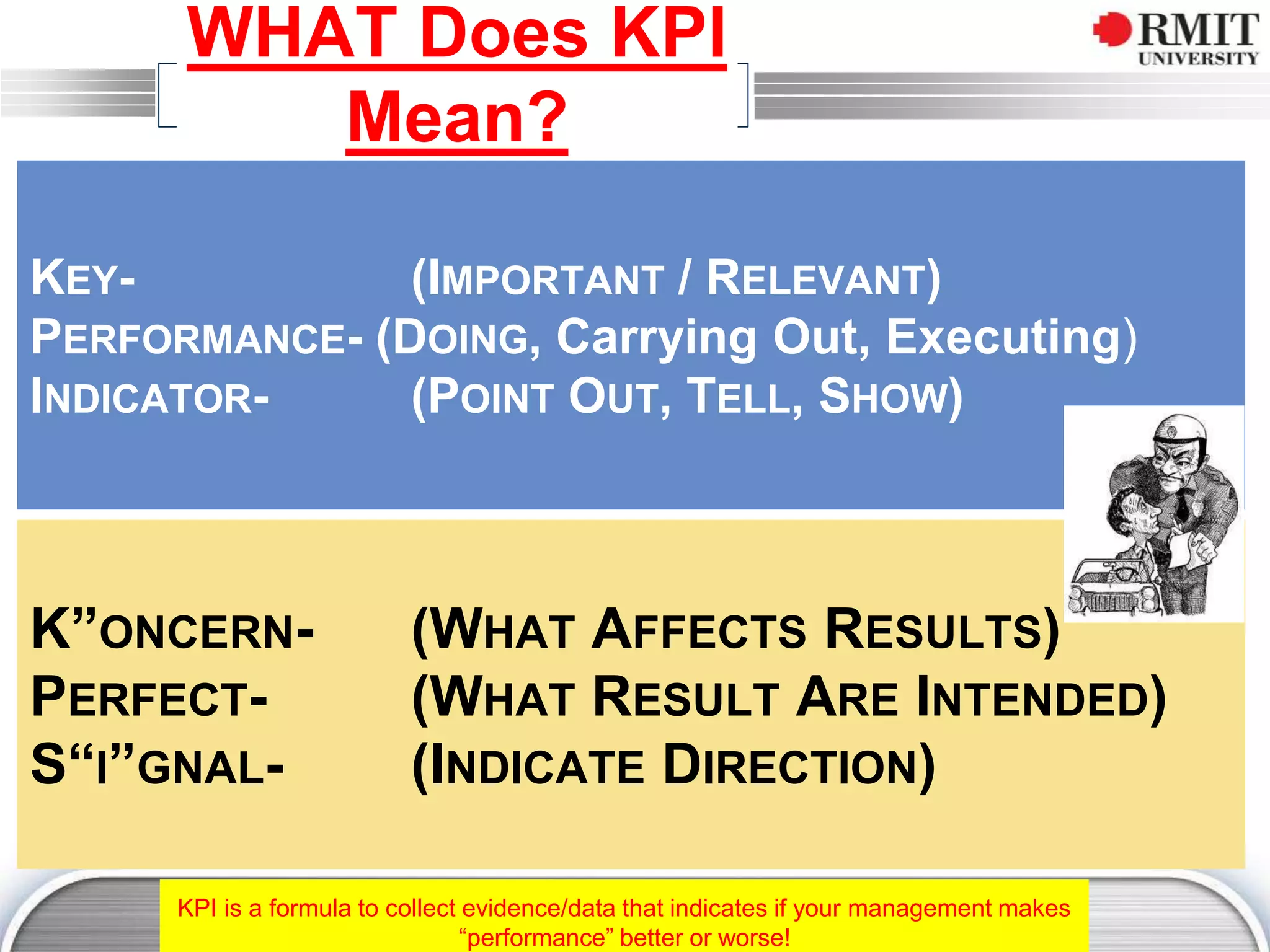
WHAT Does KPI
Mean?
K”ONCERN- (WHAT AFFECTS RESULTS)
PERFECT- (WHAT RESULT ARE INTENDED)
S“I”GNAL- (INDICATE DIRECTION)
KEY- (IMPORTANT / RELEVANT)
PERFORMANCE- (DOING, Carrying Out, Executing)
INDICATOR- (POINT OUT, TELL, SHOW)
KPI is a formula to collect evidence/data that indicates if your management makes
“performance” better or worse!
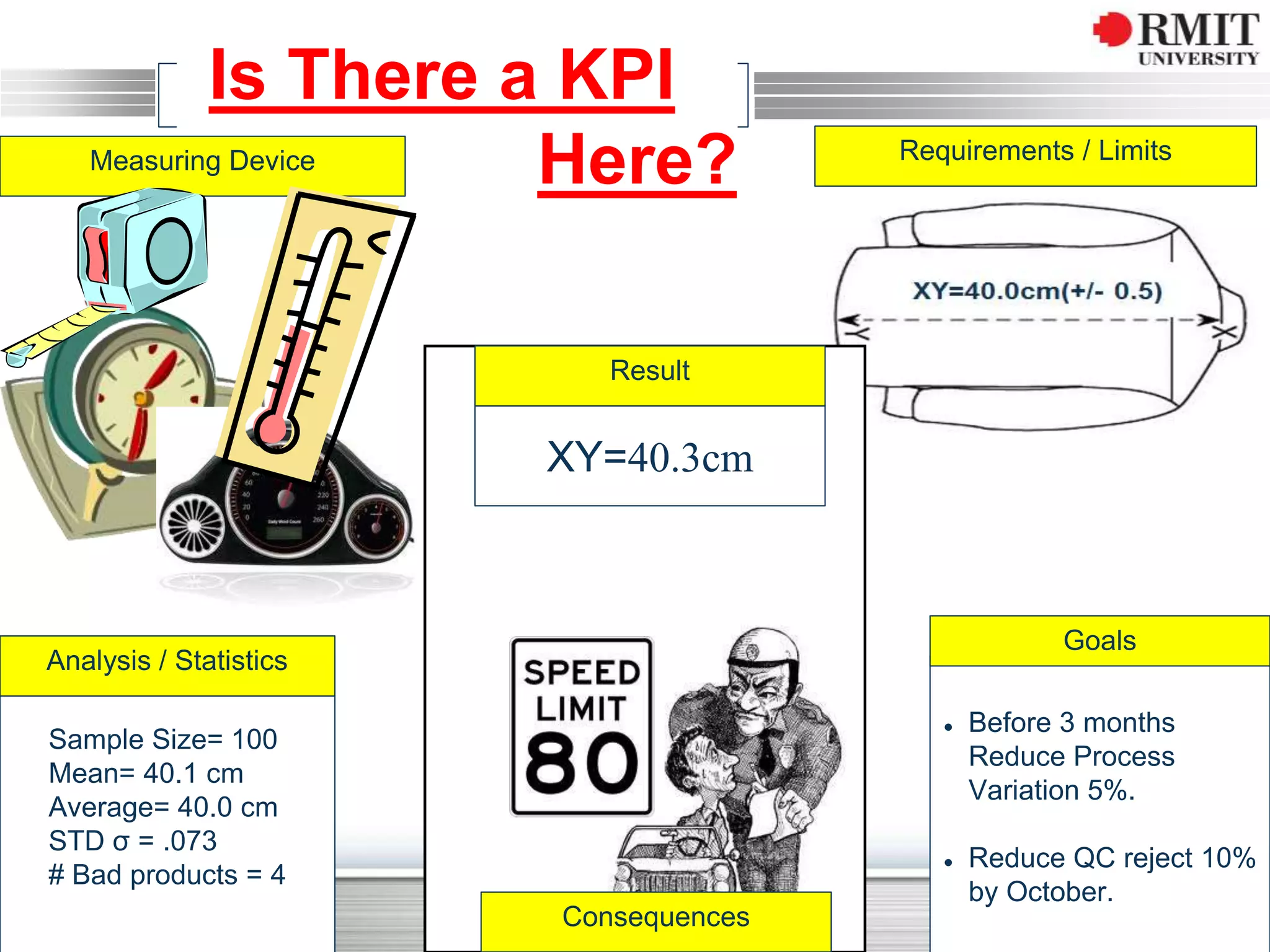
Measuring Device
Sample Size= 100
Mean= 40.1 cm
Average= 40.0 cm
STD σ = .073
# Bad products = 4
● Before 3 months
Reduce Process
Variation 5%.
● Reduce QC reject 10%
by October.
Goals
Is There a KPI
Here? Requirements / Limits
Analysis / Statistics
Result
XY=40.3cm
Consequences
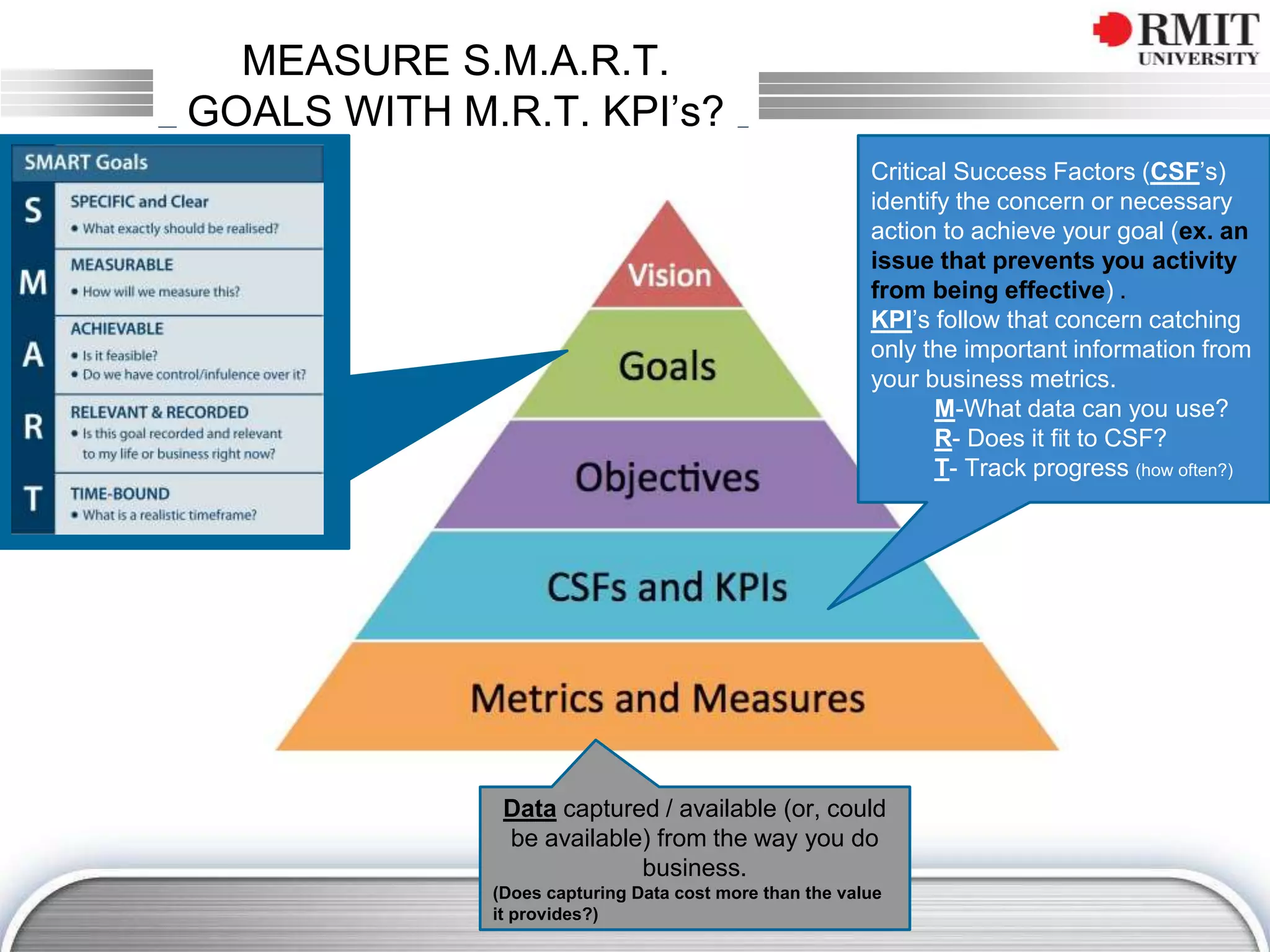
MEASURE S.M.A.R.T.
GOALS WITH M.R.T. KPI’s?
Data captured / available (or, could
be available) from the way you do
business.
(Does capturing Data cost more than the value
it provides?)
Critical Success Factors (CSF’s)
identify the concern or necessary
action to achieve your goal (ex. an
issue that prevents you activity
from being effective) .
KPI’s follow that concern catching
only the important information from
your business metrics.
M-What data can you use?
R- Does it fit to CSF?
T- Track progress (how often?)
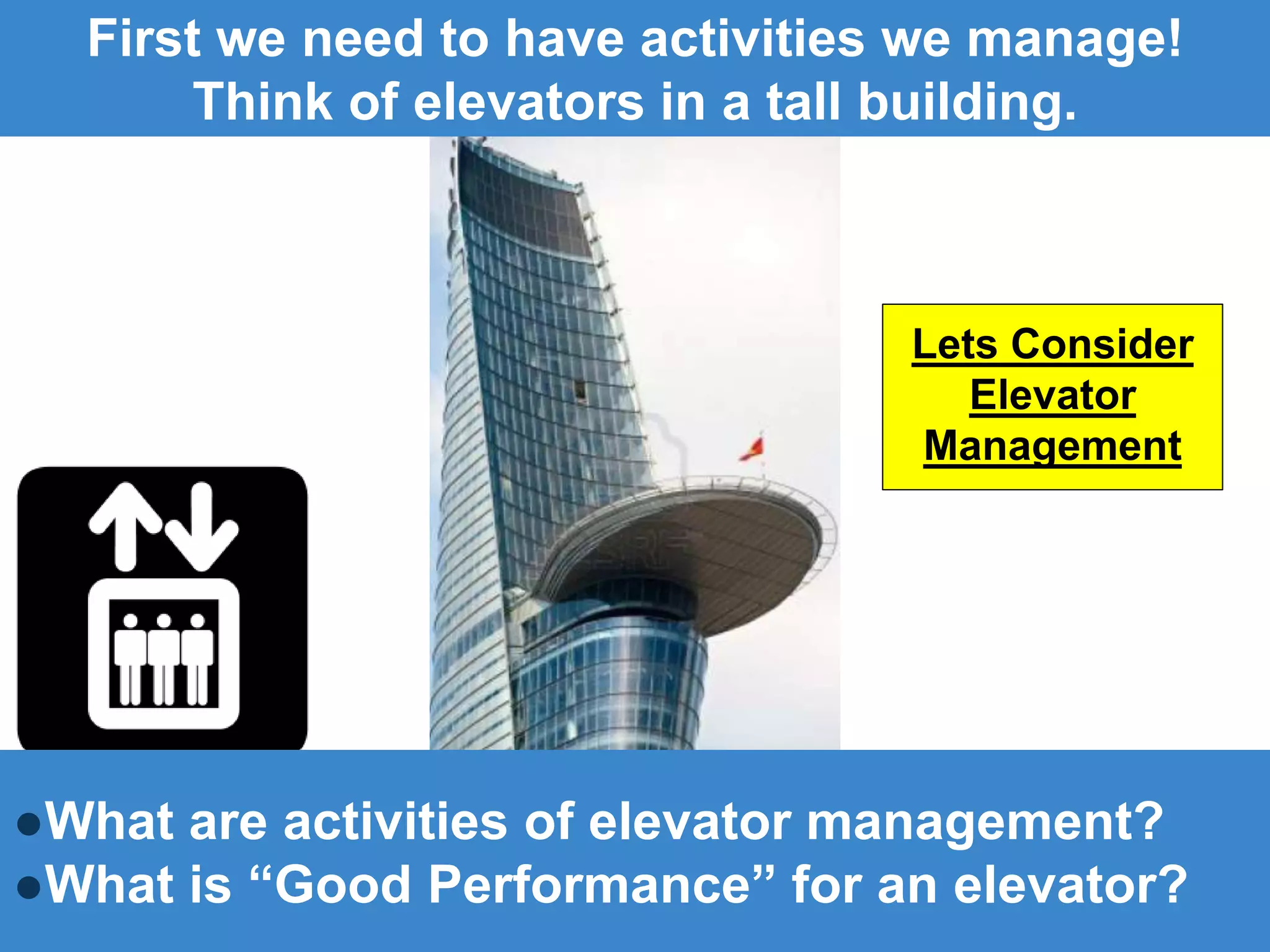
First we need to have activities we manage!
Think of elevators in a tall building.
●What are activities of elevator management?
●What is “Good Performance” for an elevator?
Lets Consider
Elevator
Management
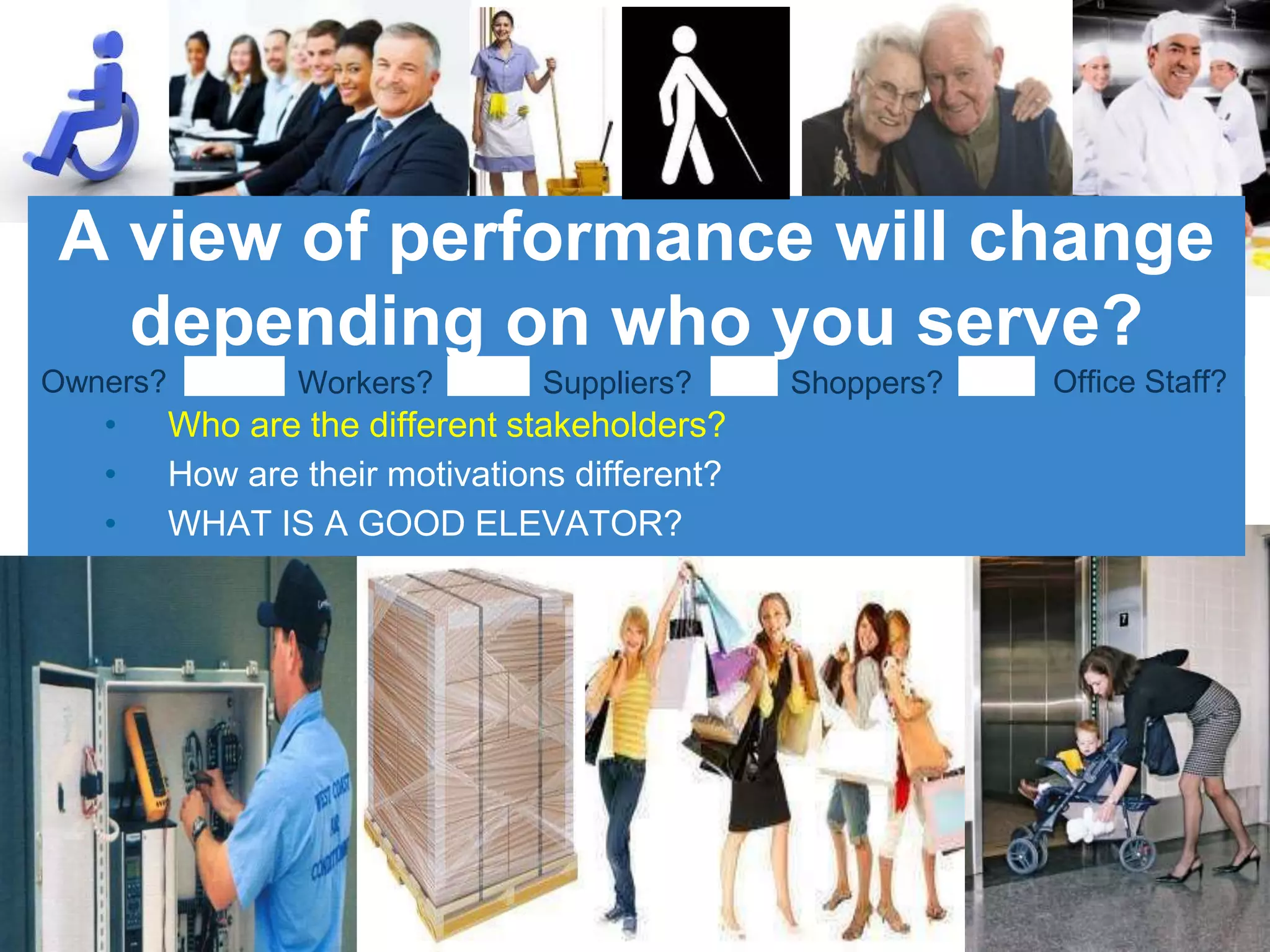
• Who are the different stakeholders?
• How are their motivations different?
• WHAT IS A GOOD ELEVATOR?
Suppliers? Shoppers?Owners? Office Staff?Workers?
A view of performance will change
depending on who you serve?
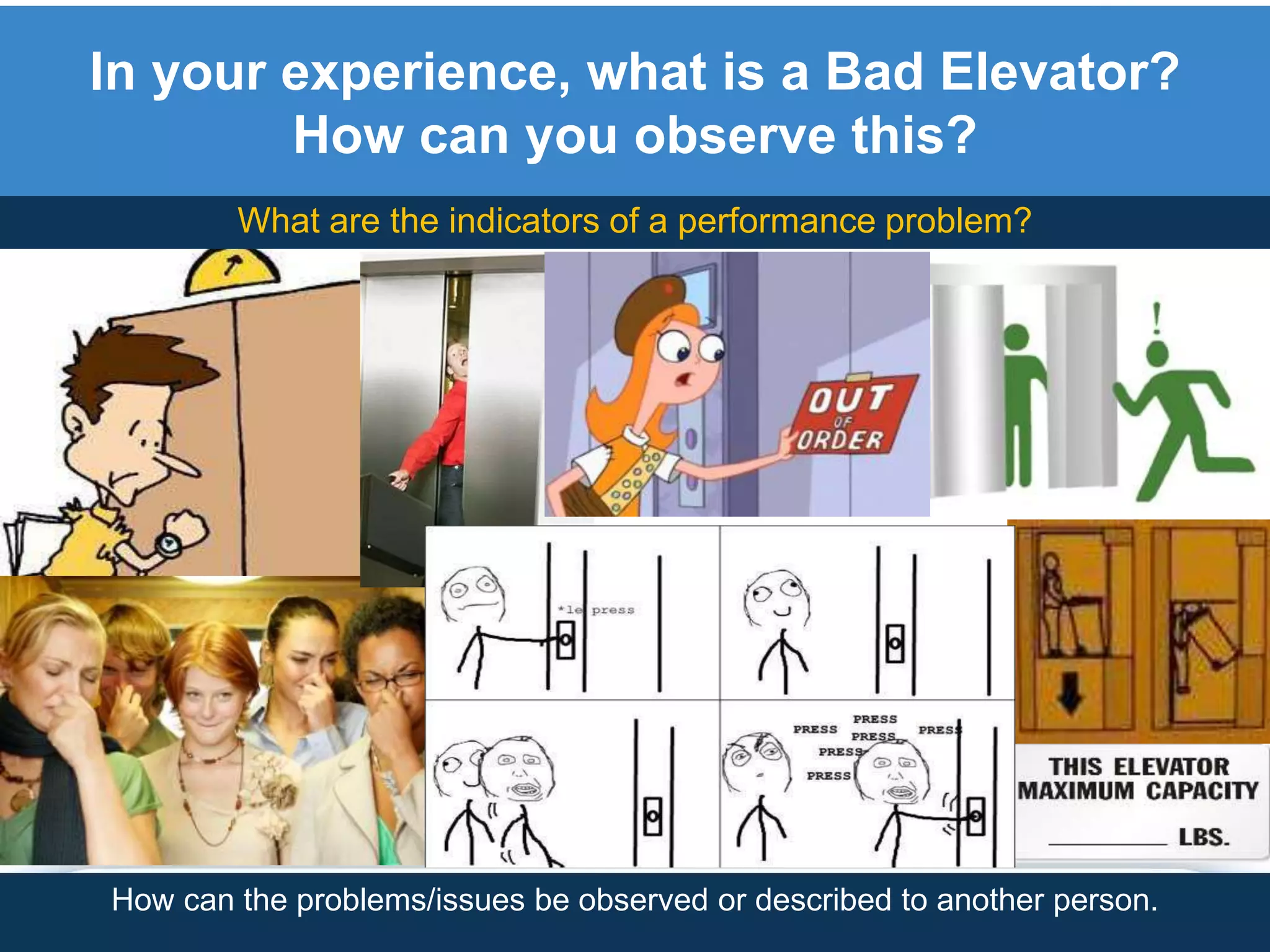
In your experience, what is a Bad Elevator?
How can you observe this?
What are the indicators of a performance problem?
How can the problems/issues be observed or described to another person.
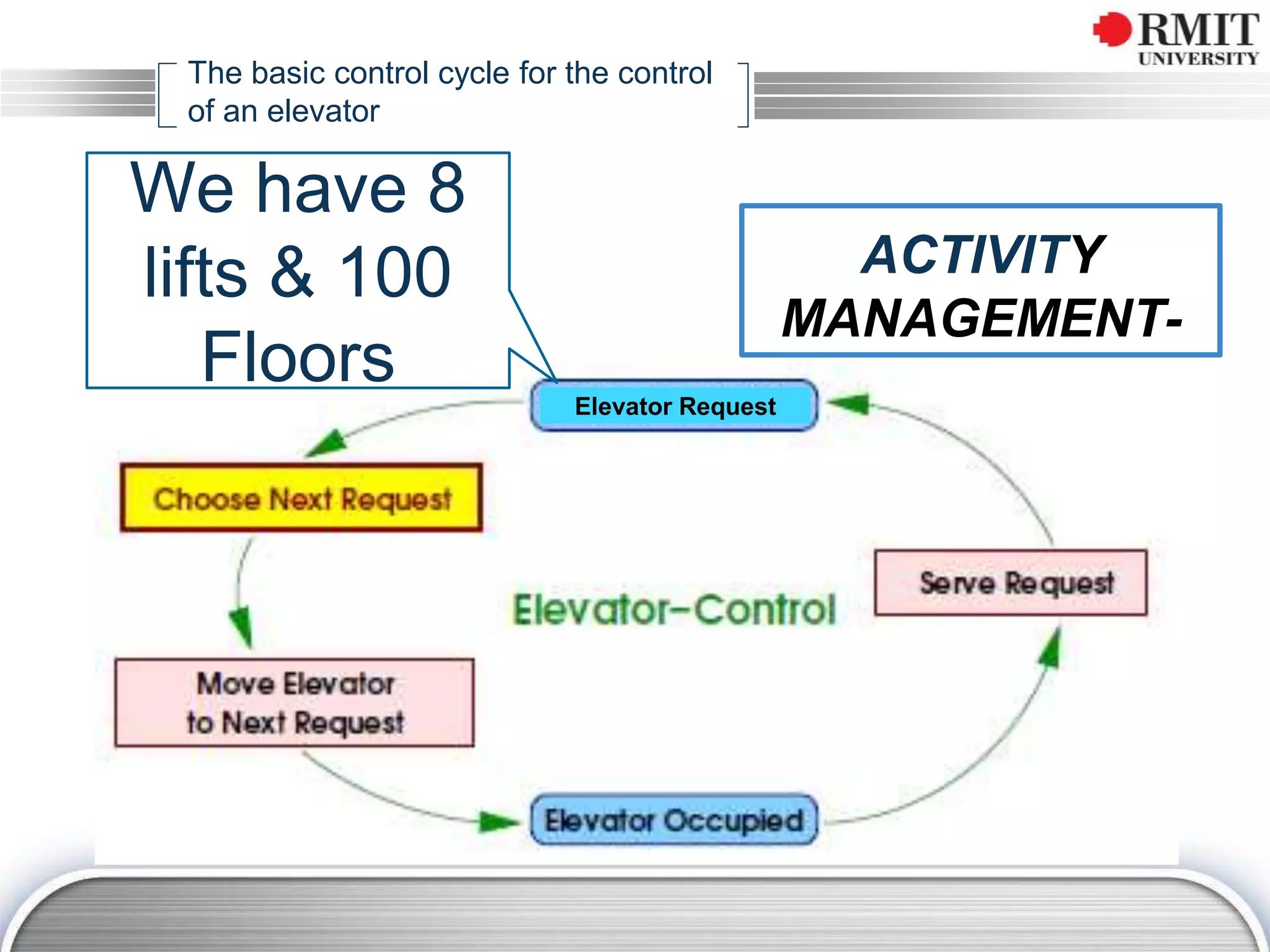
Elevator Request
The basic control cycle for the control
of an elevator
We have 8
lifts & 100
Floors
ACTIVITY
MANAGEMENT-
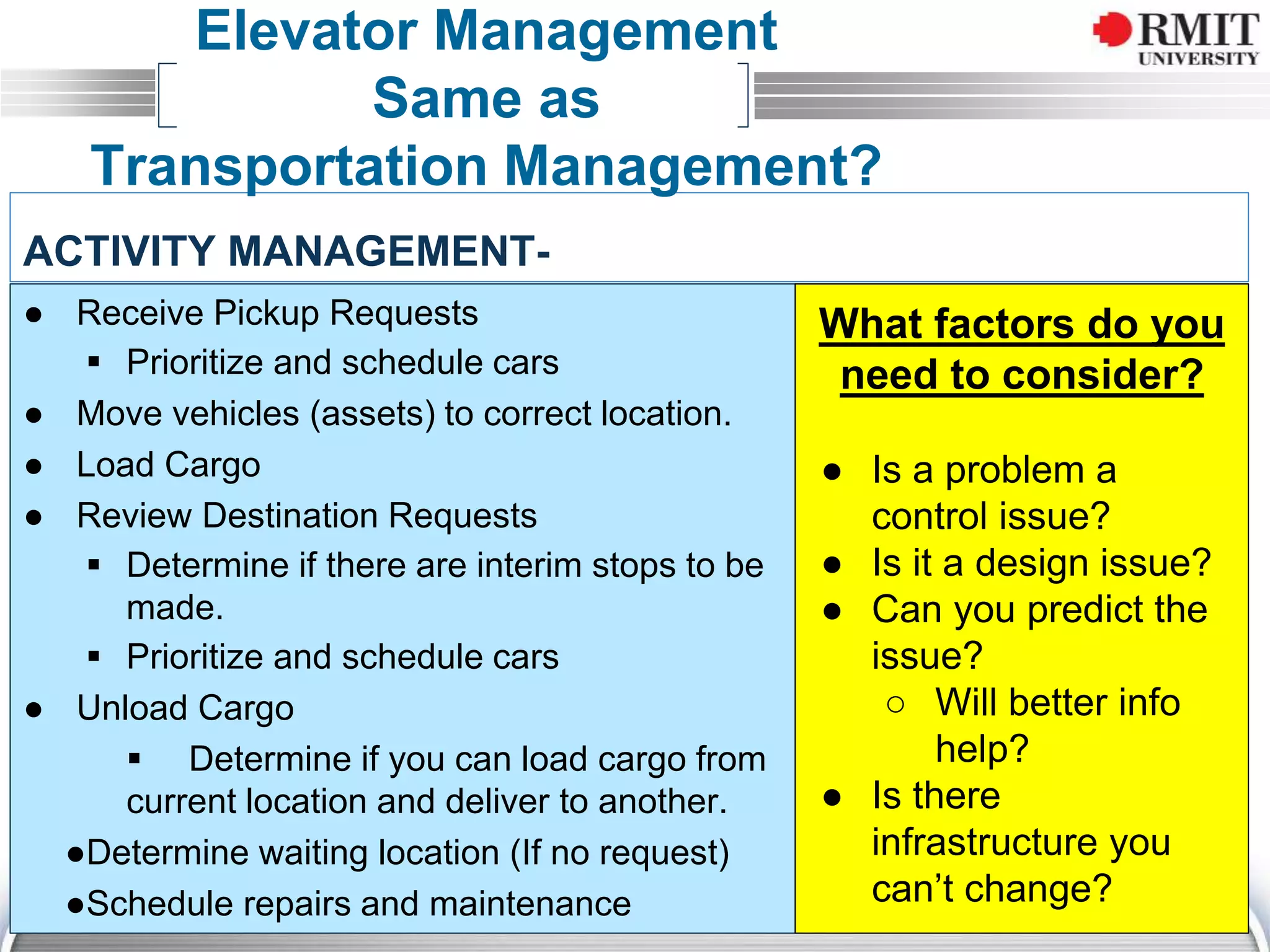
ACTIVITY MANAGEMENT-
● Receive Pickup Requests
 Prioritize and schedule cars
● Move vehicles (assets) to correct location.
● Load Cargo
● Review Destination Requests
 Determine if there are interim stops to be
made.
 Prioritize and schedule cars
● Unload Cargo
 Determine if you can load cargo from
current location and deliver to another.
●Determine waiting location (If no request)
●Schedule repairs and maintenance
Elevator Management
Same as
Transportation Management?
What factors do you
need to consider?
● Is a problem a
control issue?
● Is it a design issue?
● Can you predict the
issue?
○ Will better info
help?
● Is there
infrastructure you
can’t change?
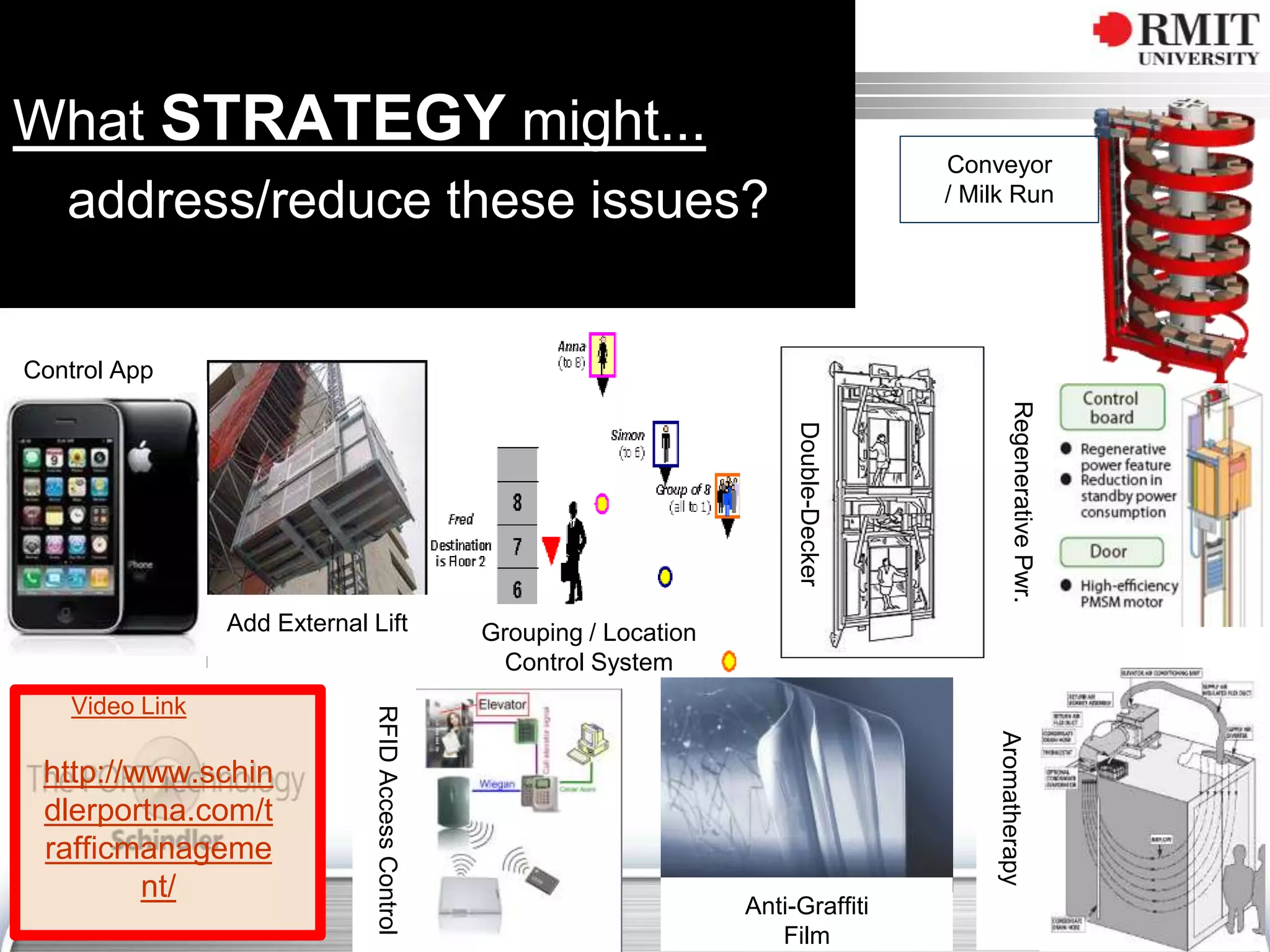
What STRATEGY might...
address/reduce these issues?
Video Link
http://www.schin
dlerportna.com/t
rafficmanageme
nt/
Double-Decker
Control App
Add External Lift Grouping / Location
Control System
Conveyor
/ Milk Run
Aromatherapy
RFIDAccessControl
RegenerativePwr.
Anti-Graffiti
Film
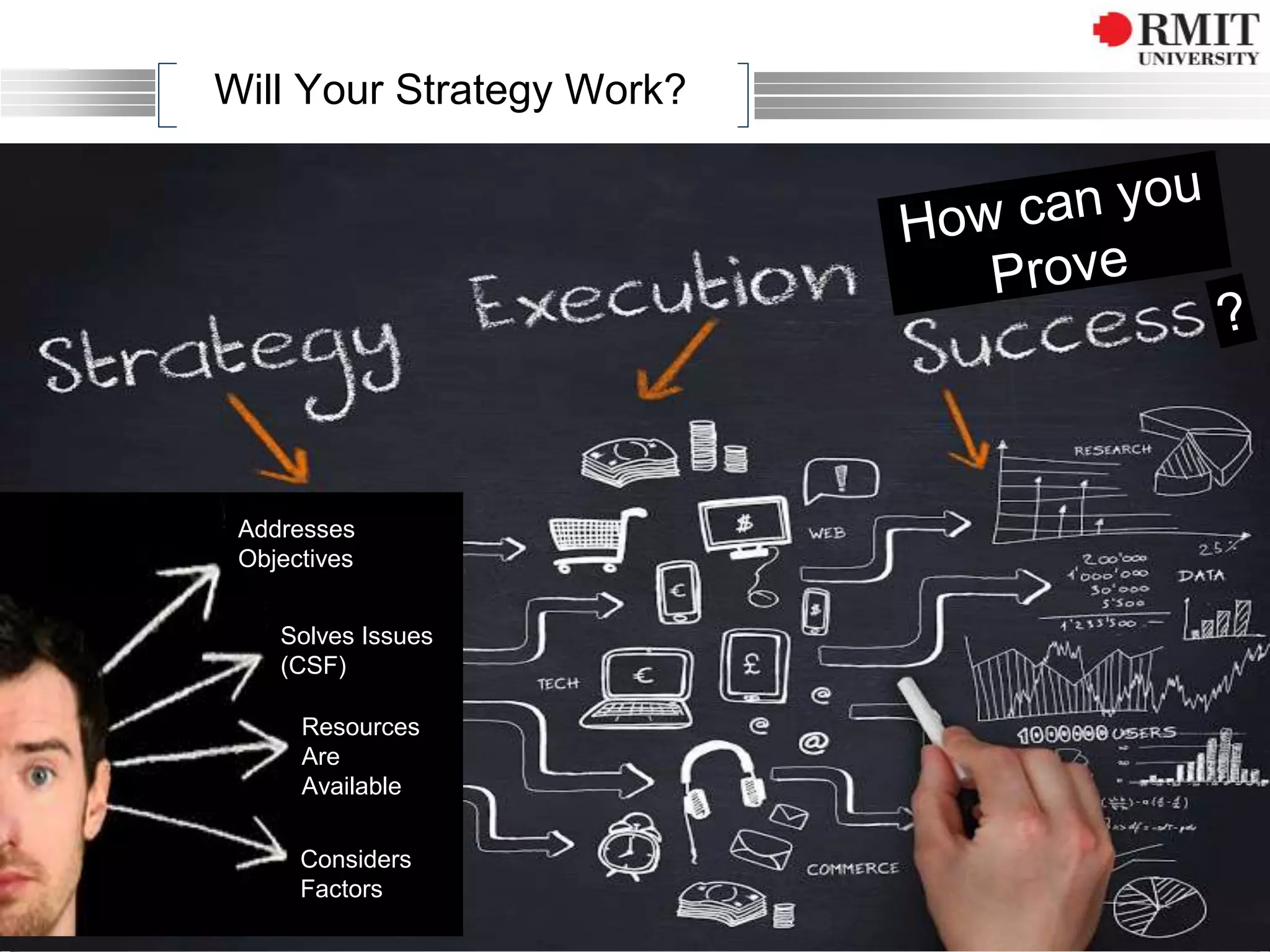
Will Your Strategy Work?
Addresses
Objectives
Solves Issues
(CSF)
Considers
Factors
Resources
Are
Available
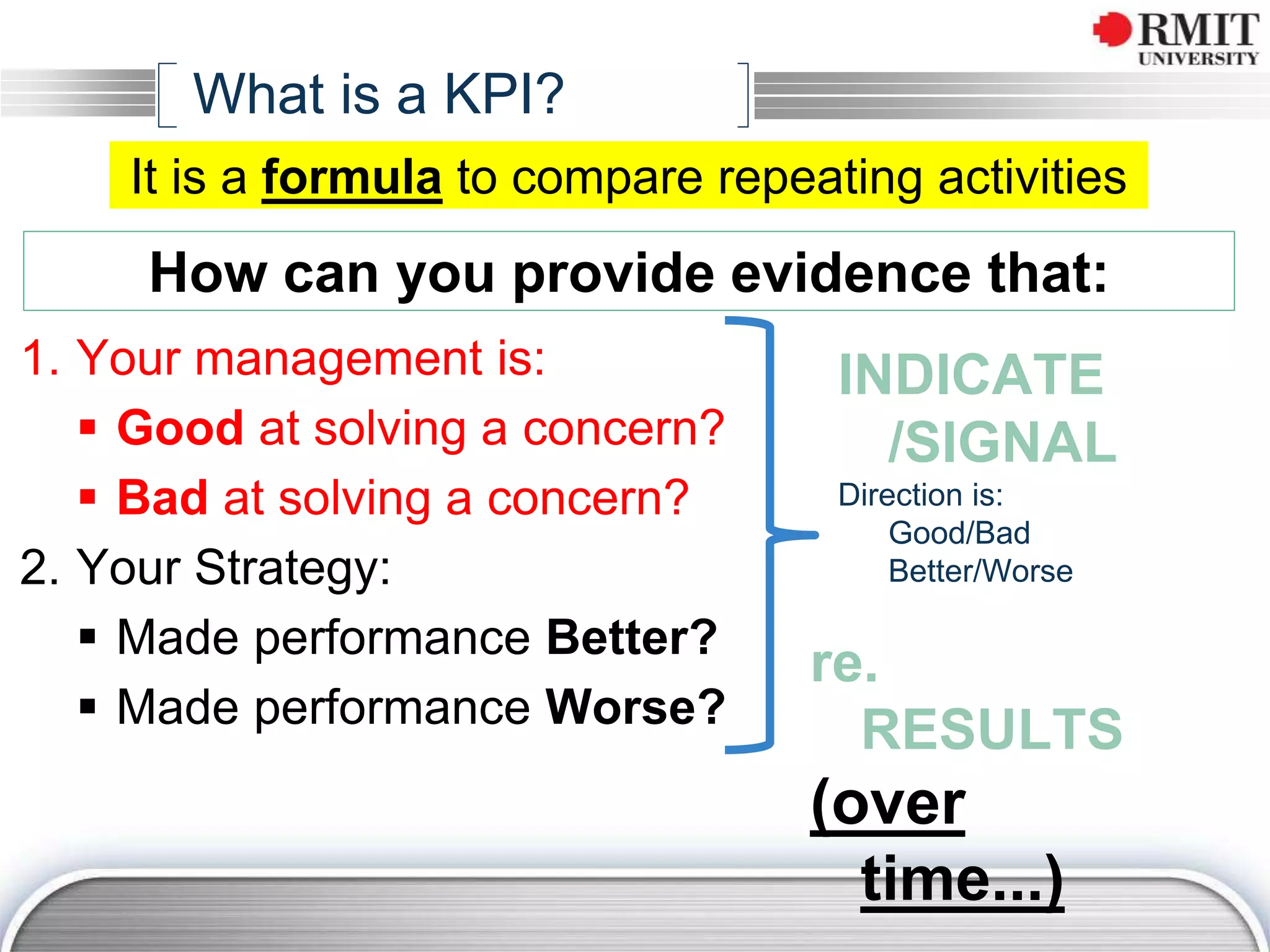
1. Your management is:
 Good at solving a concern?
 Bad at solving a concern?
2. Your Strategy:
 Made performance Better?
 Made performance Worse?
How can you provide evidence that:
INDICATE
/SIGNAL
Direction is:
Good/Bad
Better/Worse
re.
RESULTS
(over
time...)
What is a KPI?
It is a formula to compare repeating activities
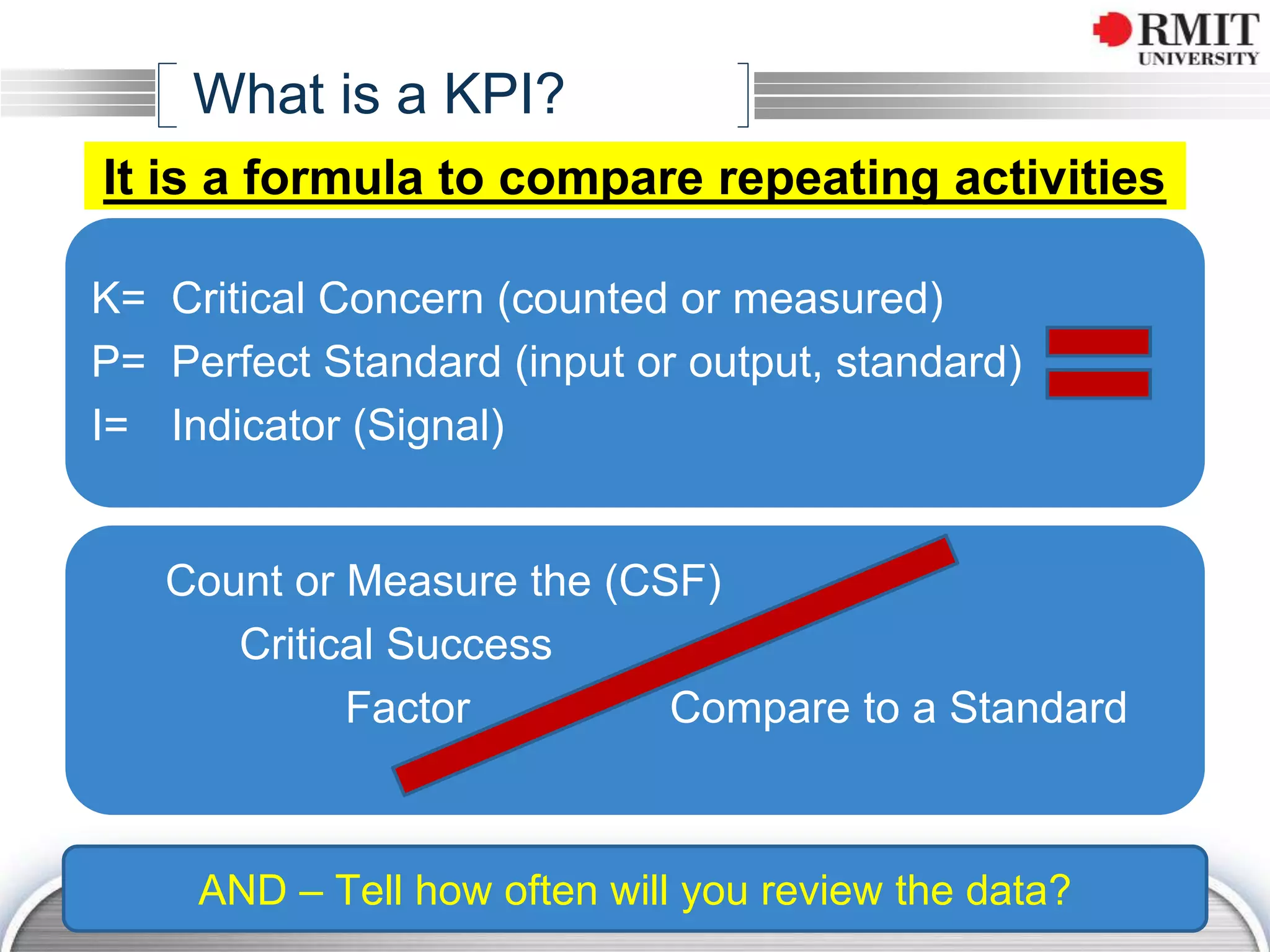
What is a KPI?
K= Critical Concern (counted or measured)
P= Perfect Standard (input or output, standard)
I= Indicator (Signal)
Count or Measure the (CSF)
Critical Success
Factor Compare to a Standard
It is a formula to compare repeating activities
AND – Tell how often will you review the data?
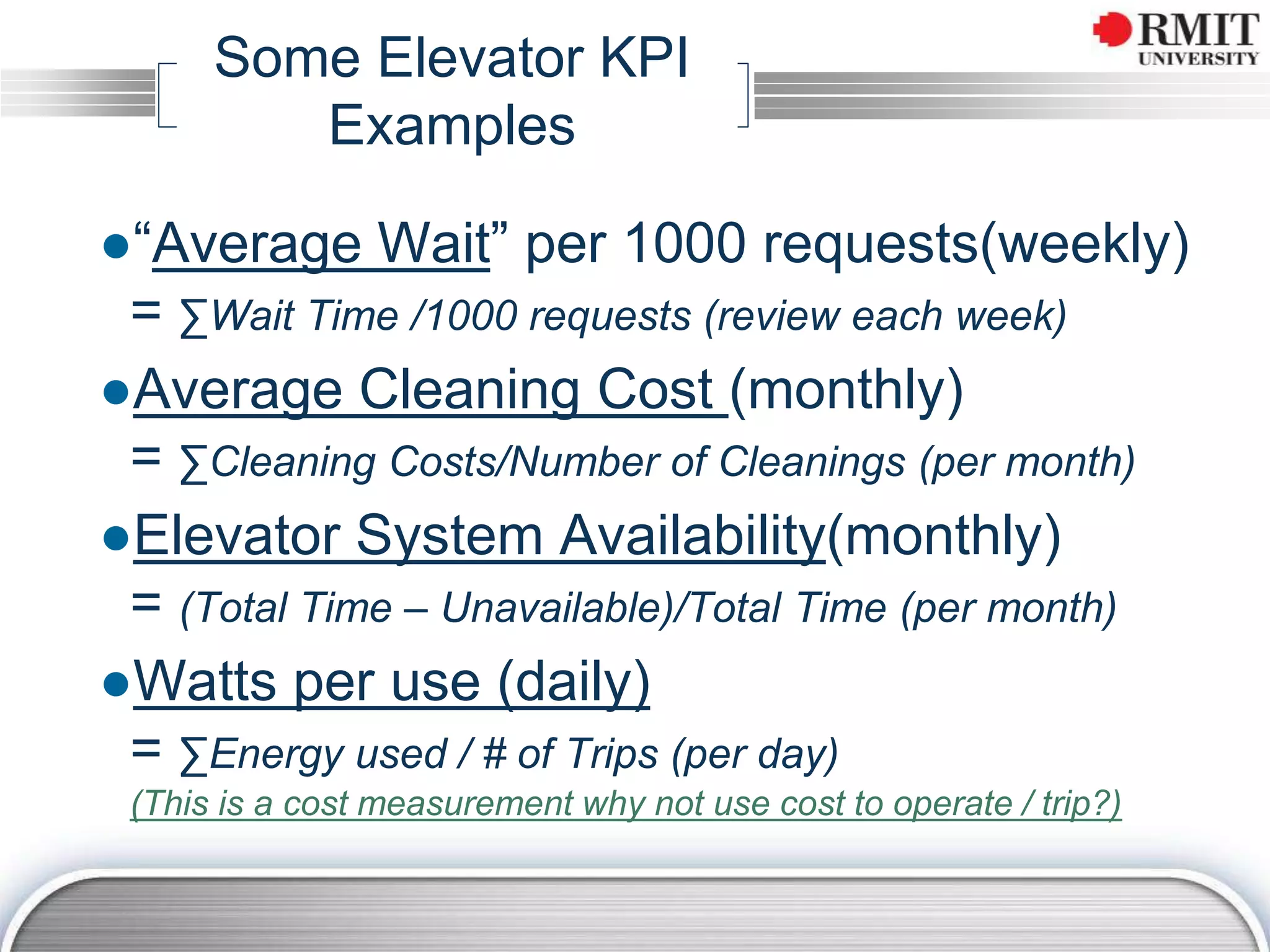
Some Elevator KPI
Examples
●“Average Wait” per 1000 requests(weekly)
= ∑Wait Time /1000 requests (review each week)
●Average Cleaning Cost (monthly)
= ∑Cleaning Costs/Number of Cleanings (per month)
●Elevator System Availability(monthly)
= (Total Time – Unavailable)/Total Time (per month)
●Watts per use (daily)
= ∑Energy used / # of Trips (per day)
(This is a cost measurement why not use cost to operate / trip?)
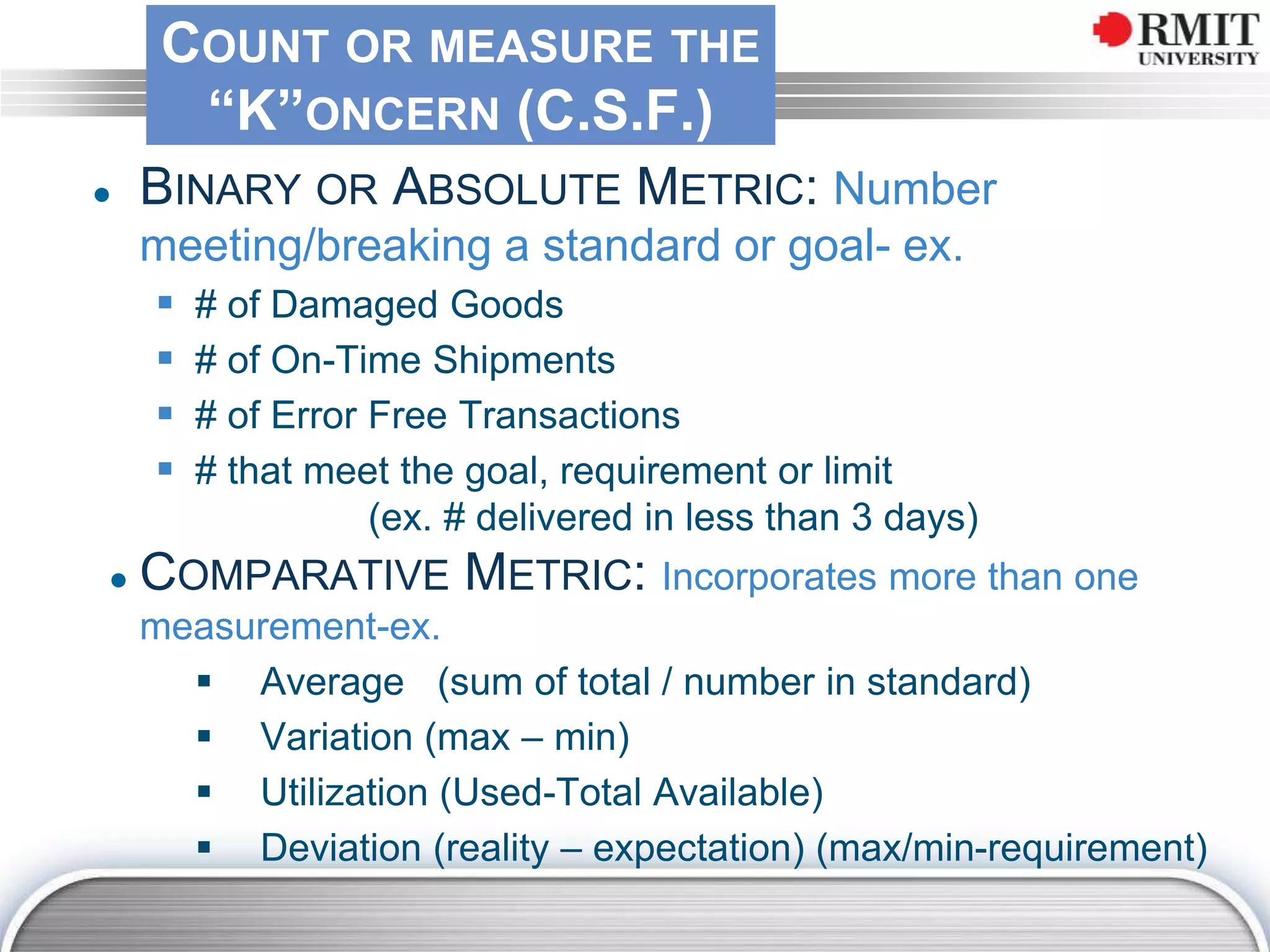
COUNT OR MEASURE THE
“K”ONCERN (C.S.F.)
● BINARY OR ABSOLUTE METRIC: Number
meeting/breaking a standard or goal- ex.
 # of Damaged Goods
 # of On-Time Shipments
 # of Error Free Transactions
 # that meet the goal, requirement or limit
(ex. # delivered in less than 3 days)
● COMPARATIVE METRIC: Incorporates more than one
measurement-ex.
 Average (sum of total / number in standard)
 Variation (max – min)
 Utilization (Used-Total Available)
 Deviation (reality – expectation) (max/min-requirement)
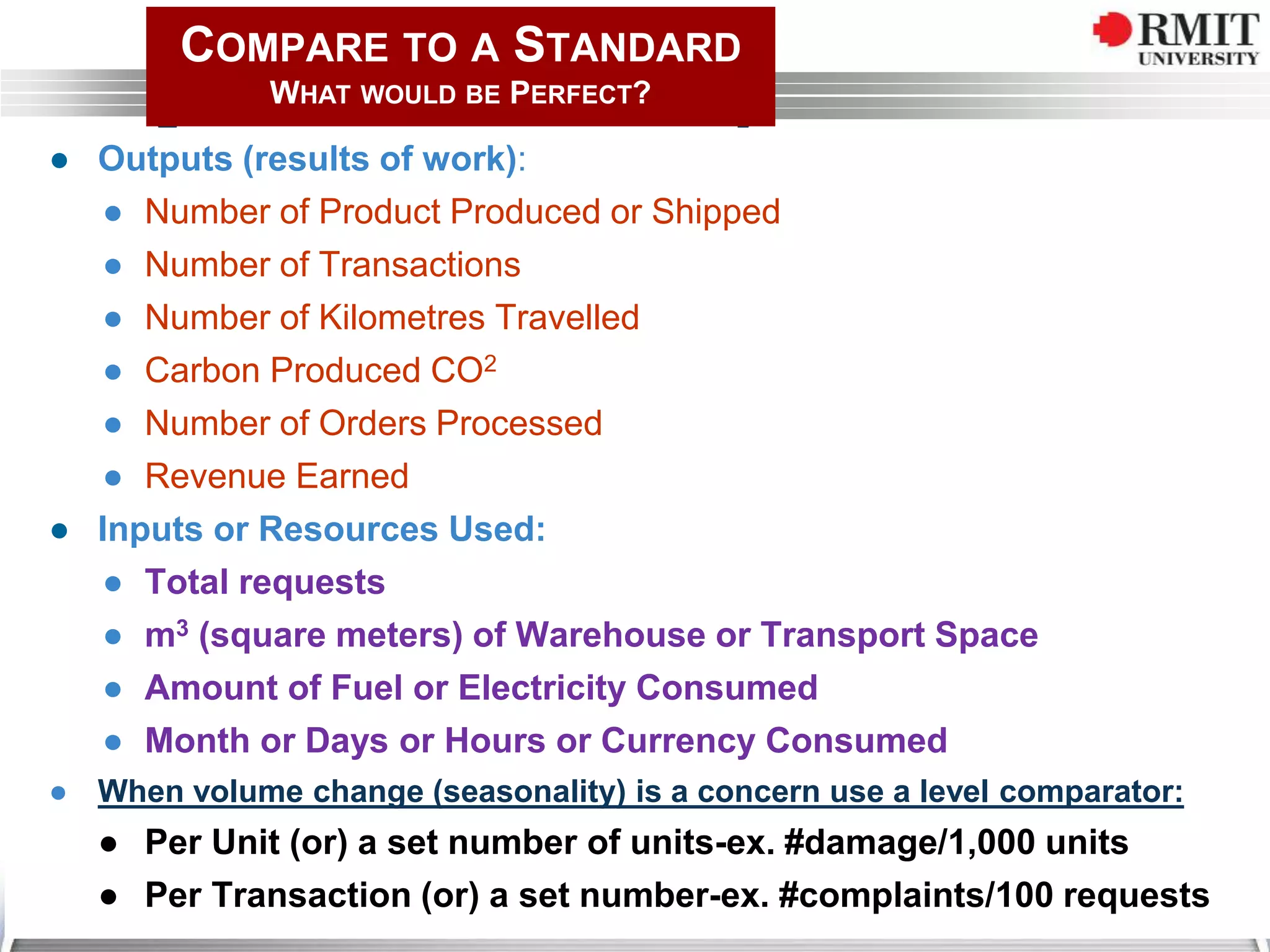
● Outputs (results of work):
● Number of Product Produced or Shipped
● Number of Transactions
● Number of Kilometres Travelled
● Carbon Produced CO2
● Number of Orders Processed
● Revenue Earned
● Inputs or Resources Used:
● Total requests
● m3 (square meters) of Warehouse or Transport Space
● Amount of Fuel or Electricity Consumed
● Month or Days or Hours or Currency Consumed
● When volume change (seasonality) is a concern use a level comparator:
● Per Unit (or) a set number of units-ex. #damage/1,000 units
● Per Transaction (or) a set number-ex. #complaints/100 requests
COMPARE TO A STANDARD
WHAT WOULD BE PERFECT?
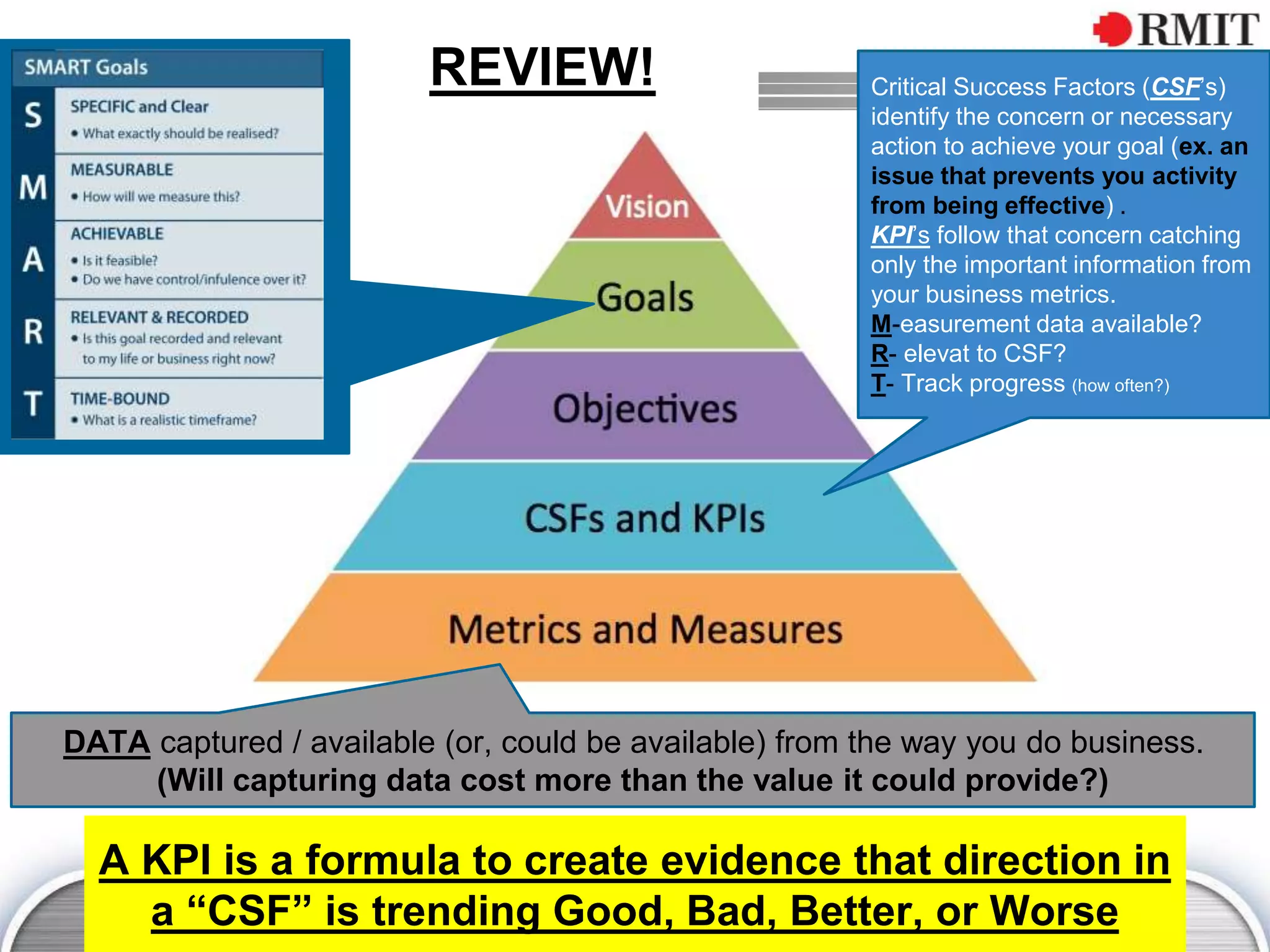
REVIEW!
DATA captured / available (or, could be available) from the way you do business.
(Will capturing data cost more than the value it could provide?)
Critical Success Factors (CSF’s)
identify the concern or necessary
action to achieve your goal (ex. an
issue that prevents you activity
from being effective) .
KPI’s follow that concern catching
only the important information from
your business metrics.
M-easurement data available?
R- elevat to CSF?
T- Track progress (how often?)
A KPI is a formula to create evidence that direction in
a “CSF” is trending Good, Bad, Better, or Worse
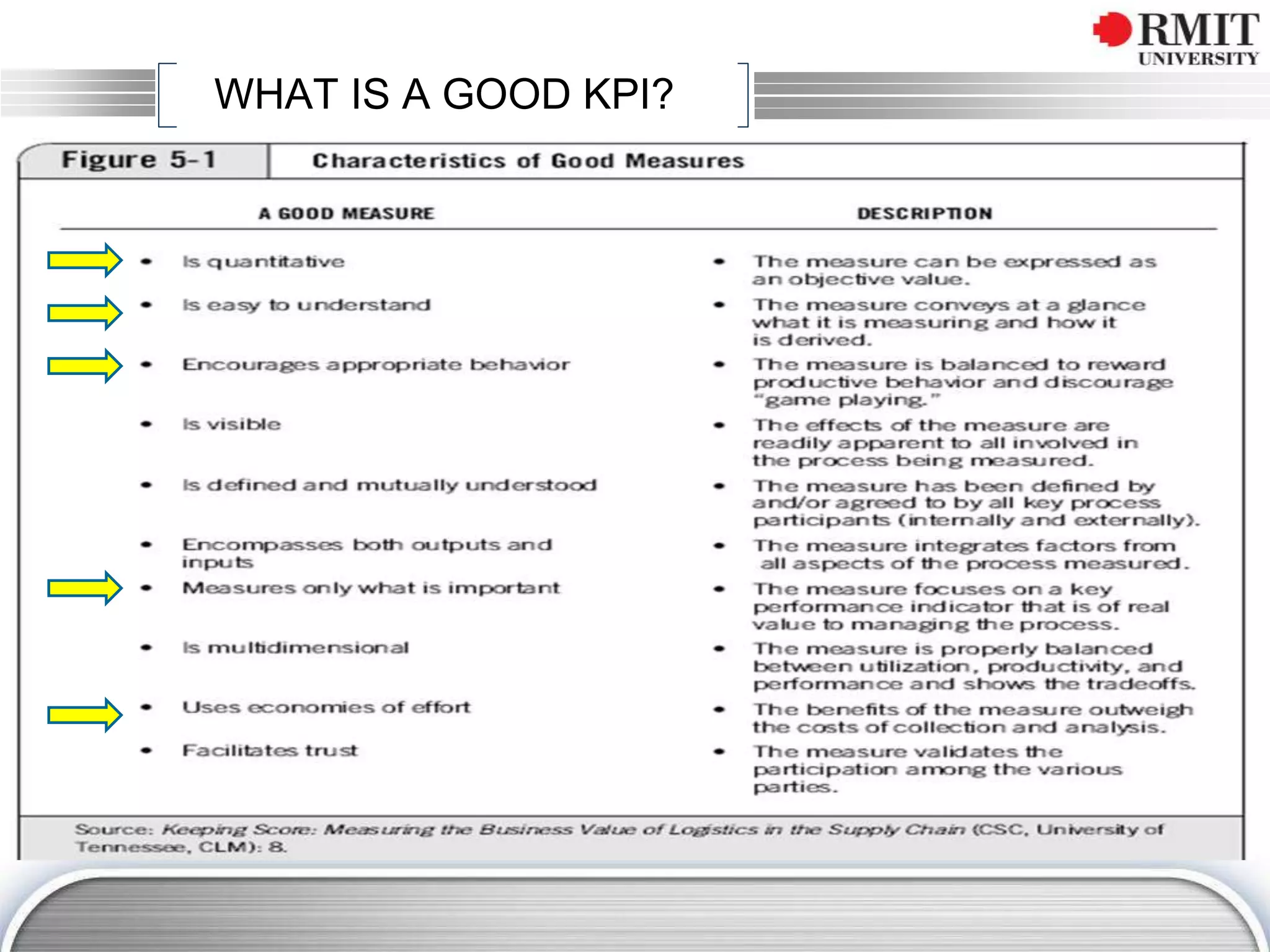
WHAT IS A GOOD KPI?
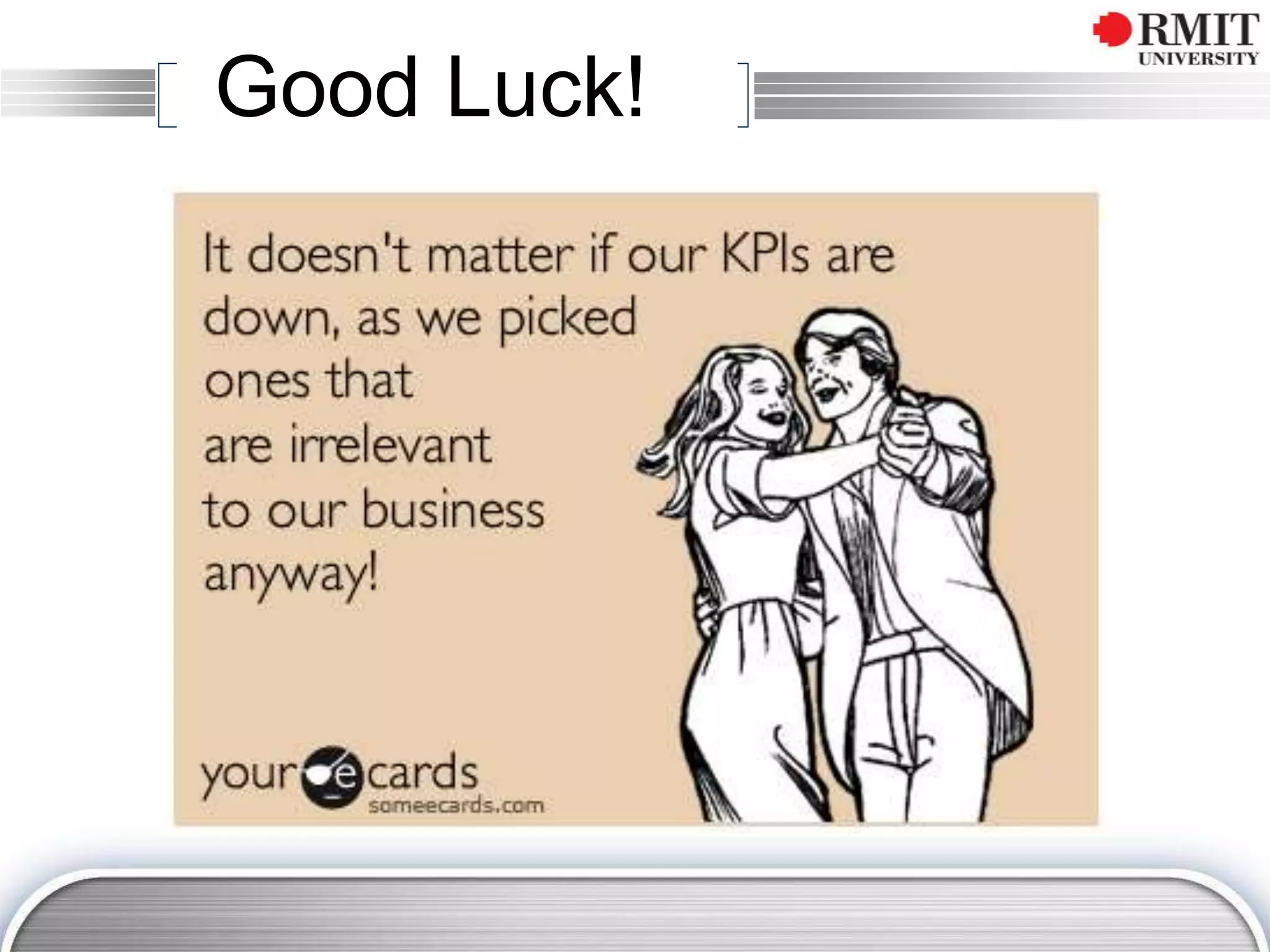
Good Luck!

How to build a Key Performance Indicator (KPI) - Consider Elevator Management

  • 1.
    KPI Focus Workshop Buildinga KPI is about collecting evidence
  • 2.
    WHAT Does KPI Mean? K”ONCERN-(WHAT AFFECTS RESULTS) PERFECT- (WHAT RESULT ARE INTENDED) S“I”GNAL- (INDICATE DIRECTION) KEY- (IMPORTANT / RELEVANT) PERFORMANCE- (DOING, Carrying Out, Executing) INDICATOR- (POINT OUT, TELL, SHOW) KPI is a formula to collect evidence/data that indicates if your management makes “performance” better or worse!
  • 3.
    Measuring Device Sample Size=100 Mean= 40.1 cm Average= 40.0 cm STD σ = .073 # Bad products = 4 ● Before 3 months Reduce Process Variation 5%. ● Reduce QC reject 10% by October. Goals Is There a KPI Here? Requirements / Limits Analysis / Statistics Result XY=40.3cm Consequences
  • 4.
    MEASURE S.M.A.R.T. GOALS WITHM.R.T. KPI’s? Data captured / available (or, could be available) from the way you do business. (Does capturing Data cost more than the value it provides?) Critical Success Factors (CSF’s) identify the concern or necessary action to achieve your goal (ex. an issue that prevents you activity from being effective) . KPI’s follow that concern catching only the important information from your business metrics. M-What data can you use? R- Does it fit to CSF? T- Track progress (how often?)
  • 5.
    First we needto have activities we manage! Think of elevators in a tall building. ●What are activities of elevator management? ●What is “Good Performance” for an elevator? Lets Consider Elevator Management
  • 6.
    • Who arethe different stakeholders? • How are their motivations different? • WHAT IS A GOOD ELEVATOR? Suppliers? Shoppers?Owners? Office Staff?Workers? A view of performance will change depending on who you serve?
  • 7.
    In your experience,what is a Bad Elevator? How can you observe this? What are the indicators of a performance problem? How can the problems/issues be observed or described to another person.
  • 8.
    Elevator Request The basiccontrol cycle for the control of an elevator We have 8 lifts & 100 Floors ACTIVITY MANAGEMENT-
  • 9.
    ACTIVITY MANAGEMENT- ● ReceivePickup Requests  Prioritize and schedule cars ● Move vehicles (assets) to correct location. ● Load Cargo ● Review Destination Requests  Determine if there are interim stops to be made.  Prioritize and schedule cars ● Unload Cargo  Determine if you can load cargo from current location and deliver to another. ●Determine waiting location (If no request) ●Schedule repairs and maintenance Elevator Management Same as Transportation Management? What factors do you need to consider? ● Is a problem a control issue? ● Is it a design issue? ● Can you predict the issue? ○ Will better info help? ● Is there infrastructure you can’t change?
  • 10.
    What STRATEGY might... address/reducethese issues? Video Link http://www.schin dlerportna.com/t rafficmanageme nt/ Double-Decker Control App Add External Lift Grouping / Location Control System Conveyor / Milk Run Aromatherapy RFIDAccessControl RegenerativePwr. Anti-Graffiti Film
  • 11.
    Will Your StrategyWork? Addresses Objectives Solves Issues (CSF) Considers Factors Resources Are Available
  • 12.
    1. Your managementis:  Good at solving a concern?  Bad at solving a concern? 2. Your Strategy:  Made performance Better?  Made performance Worse? How can you provide evidence that: INDICATE /SIGNAL Direction is: Good/Bad Better/Worse re. RESULTS (over time...) What is a KPI? It is a formula to compare repeating activities
  • 13.
    What is aKPI? K= Critical Concern (counted or measured) P= Perfect Standard (input or output, standard) I= Indicator (Signal) Count or Measure the (CSF) Critical Success Factor Compare to a Standard It is a formula to compare repeating activities AND – Tell how often will you review the data?
  • 14.
    Some Elevator KPI Examples ●“AverageWait” per 1000 requests(weekly) = ∑Wait Time /1000 requests (review each week) ●Average Cleaning Cost (monthly) = ∑Cleaning Costs/Number of Cleanings (per month) ●Elevator System Availability(monthly) = (Total Time – Unavailable)/Total Time (per month) ●Watts per use (daily) = ∑Energy used / # of Trips (per day) (This is a cost measurement why not use cost to operate / trip?)
  • 15.
    COUNT OR MEASURETHE “K”ONCERN (C.S.F.) ● BINARY OR ABSOLUTE METRIC: Number meeting/breaking a standard or goal- ex.  # of Damaged Goods  # of On-Time Shipments  # of Error Free Transactions  # that meet the goal, requirement or limit (ex. # delivered in less than 3 days) ● COMPARATIVE METRIC: Incorporates more than one measurement-ex.  Average (sum of total / number in standard)  Variation (max – min)  Utilization (Used-Total Available)  Deviation (reality – expectation) (max/min-requirement)
  • 16.
    ● Outputs (resultsof work): ● Number of Product Produced or Shipped ● Number of Transactions ● Number of Kilometres Travelled ● Carbon Produced CO2 ● Number of Orders Processed ● Revenue Earned ● Inputs or Resources Used: ● Total requests ● m3 (square meters) of Warehouse or Transport Space ● Amount of Fuel or Electricity Consumed ● Month or Days or Hours or Currency Consumed ● When volume change (seasonality) is a concern use a level comparator: ● Per Unit (or) a set number of units-ex. #damage/1,000 units ● Per Transaction (or) a set number-ex. #complaints/100 requests COMPARE TO A STANDARD WHAT WOULD BE PERFECT?
  • 17.
    REVIEW! DATA captured /available (or, could be available) from the way you do business. (Will capturing data cost more than the value it could provide?) Critical Success Factors (CSF’s) identify the concern or necessary action to achieve your goal (ex. an issue that prevents you activity from being effective) . KPI’s follow that concern catching only the important information from your business metrics. M-easurement data available? R- elevat to CSF? T- Track progress (how often?) A KPI is a formula to create evidence that direction in a “CSF” is trending Good, Bad, Better, or Worse
  • 18.
    WHAT IS AGOOD KPI?
  • 19.