Presentation By 
Priyodarshini Dhar 
M.Tech 1st Yr. CST, IIEST Shibpur 
Introduction To
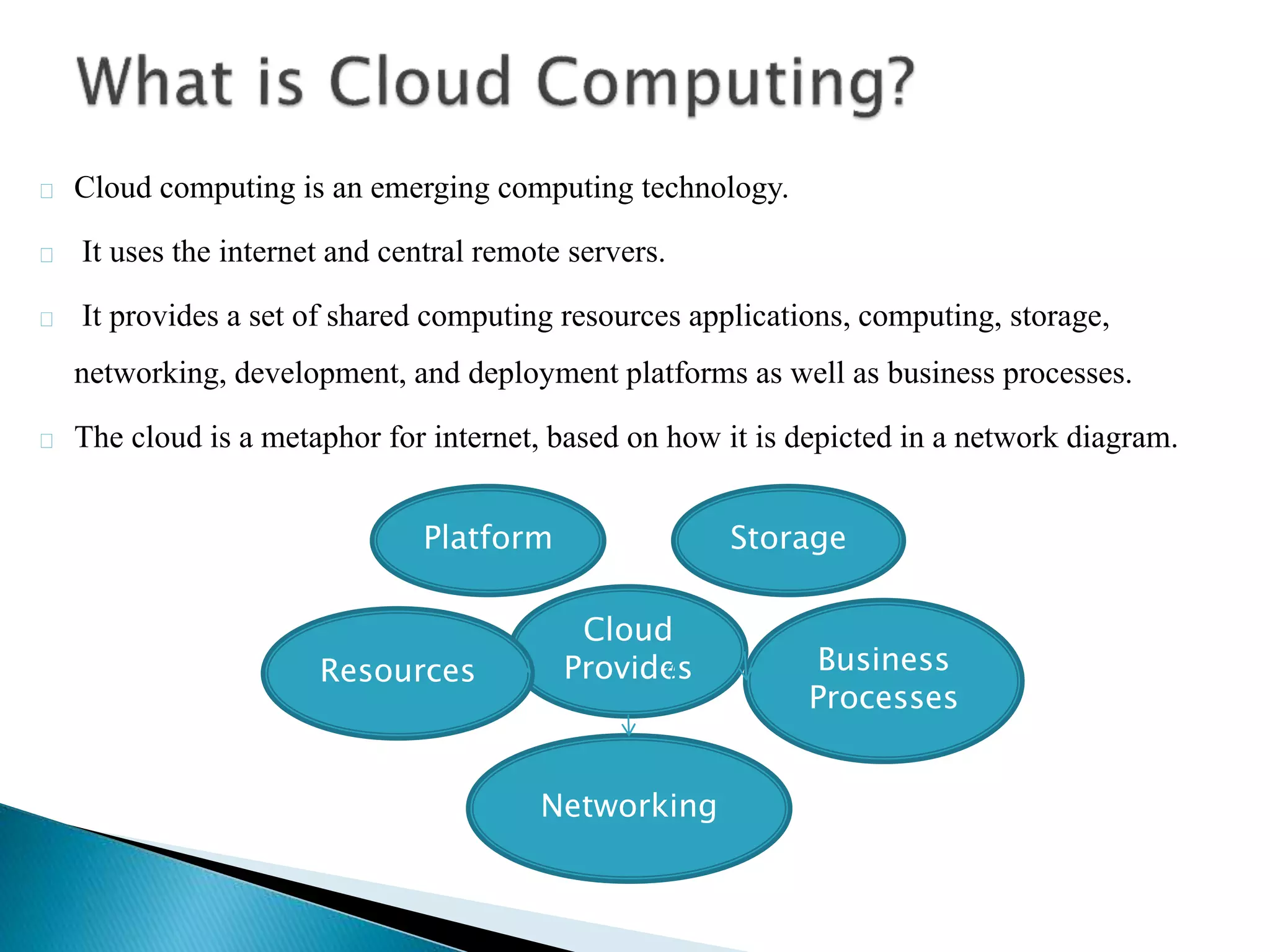
Cloud computing is an emerging computing technology. 
It uses the internet and central remote servers. 
It provides a set of shared computing resources applications, computing, storage, 
networking, development, and deployment platforms as well as business processes. 
The cloud is a metaphor for internet, based on how it is depicted in a network diagram. 
Platform Storage 
Cloud 
Resources Provides 
Business 
Processes 
Networking
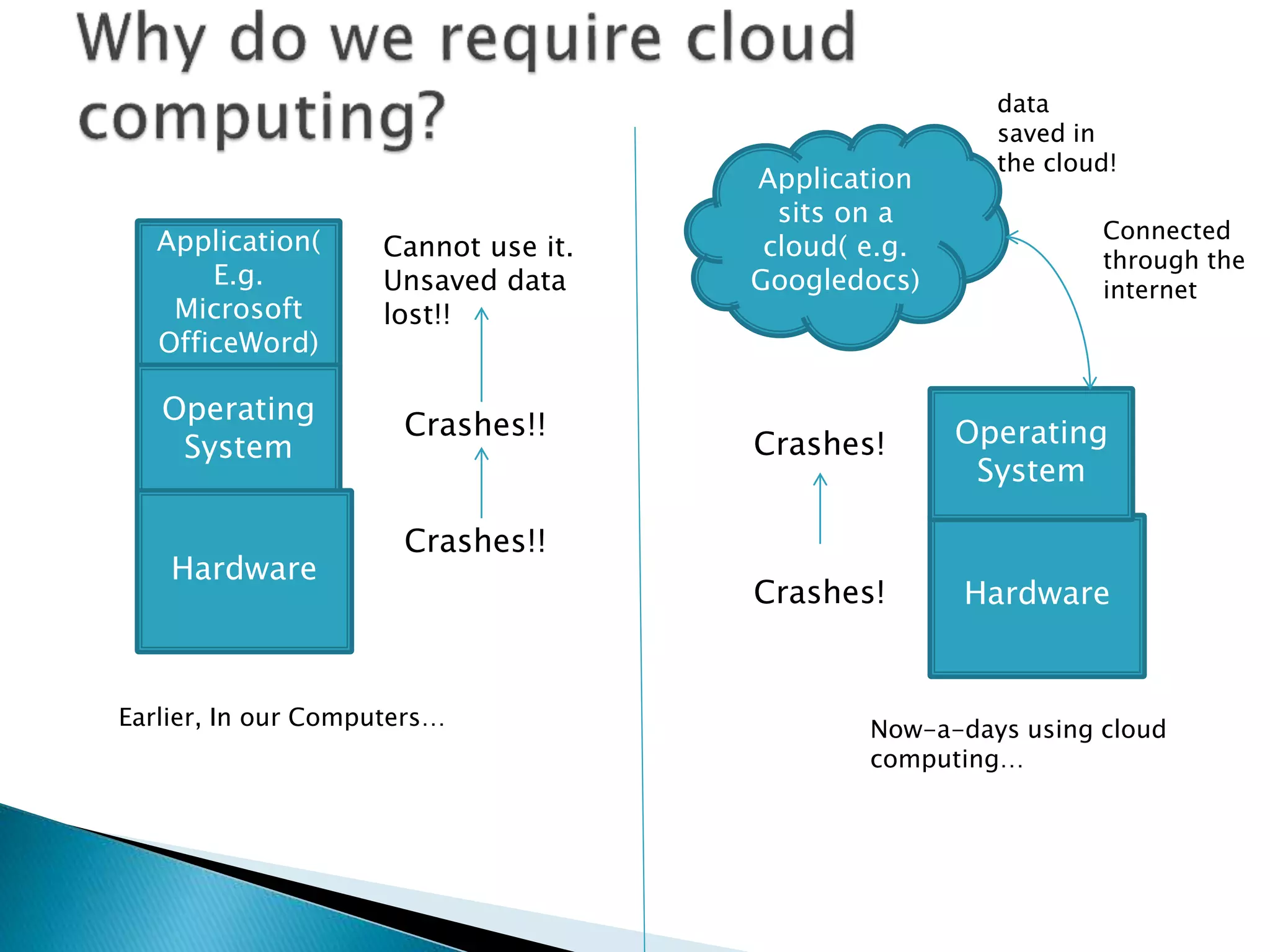
Application( 
E.g. 
Microsoft 
OfficeWord) 
Operating 
System 
Hardware 
Cannot use it. 
Unsaved data 
lost!! 
Crashes!! 
Crashes!! 
Application 
sits on a 
cloud( e.g. 
Googledocs) 
data 
saved in 
the cloud! 
Operating 
System 
Hardware 
Earlier, In our Computers… 
Crashes! 
Crashes! 
Connected 
through the 
internet 
Now-a-days using cloud 
computing…
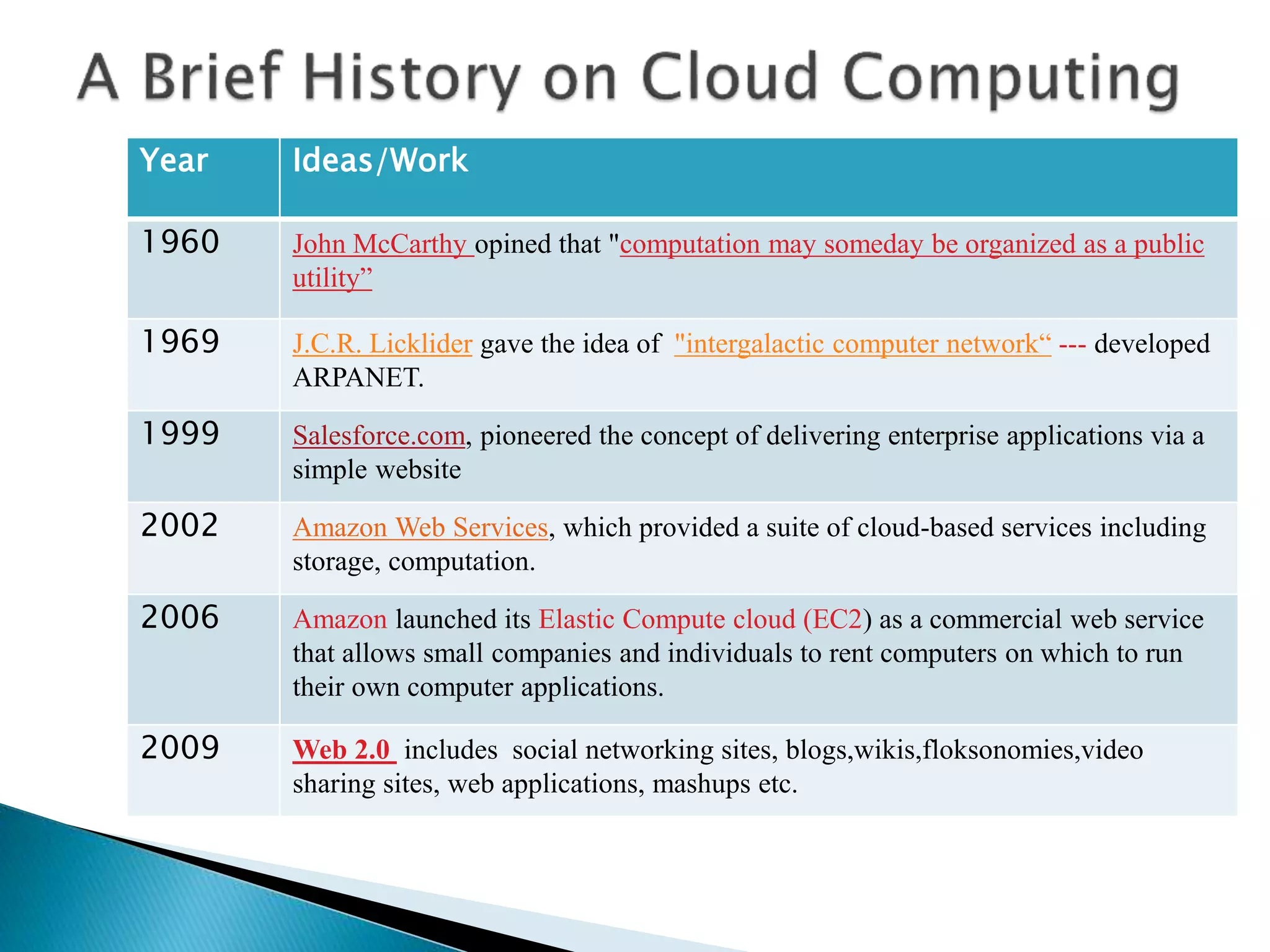
Year Ideas/Work 
1960 John McCarthy opined that "computation may someday be organized as a public 
utility” 
1969 J.C.R. Licklider gave the idea of "intergalactic computer network“ --- developed 
ARPANET. 
1999 Salesforce.com, pioneered the concept of delivering enterprise applications via a 
simple website 
2002 Amazon Web Services, which provided a suite of cloud-based services including 
storage, computation. 
2006 Amazon launched its Elastic Compute cloud (EC2) as a commercial web service 
that allows small companies and individuals to rent computers on which to run 
their own computer applications. 
2009 Web 2.0 includes social networking sites, blogs,wikis,floksonomies,video 
sharing sites, web applications, mashups etc.
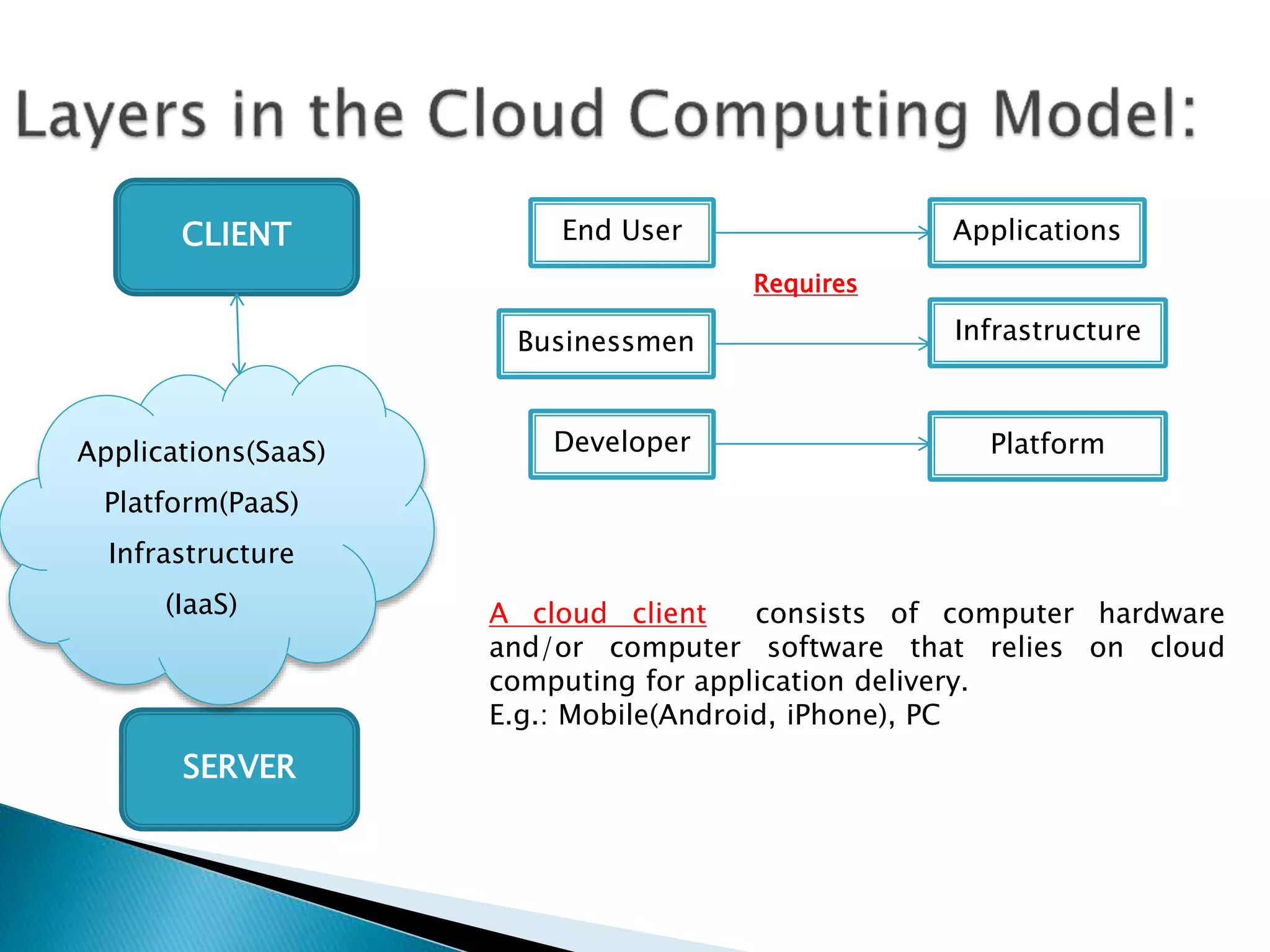
CLIENT 
SERVER 
A cloud client consists of computer hardware 
and/or computer software that relies on cloud 
computing for application delivery. 
E.g.: Mobile(Android, iPhone), PC 
Applications(SaaS) 
Platform(PaaS) 
Infrastructure 
(IaaS) 
End User 
Businessmen 
Developer 
Applications 
Infrastructure 
Platform 
Requires
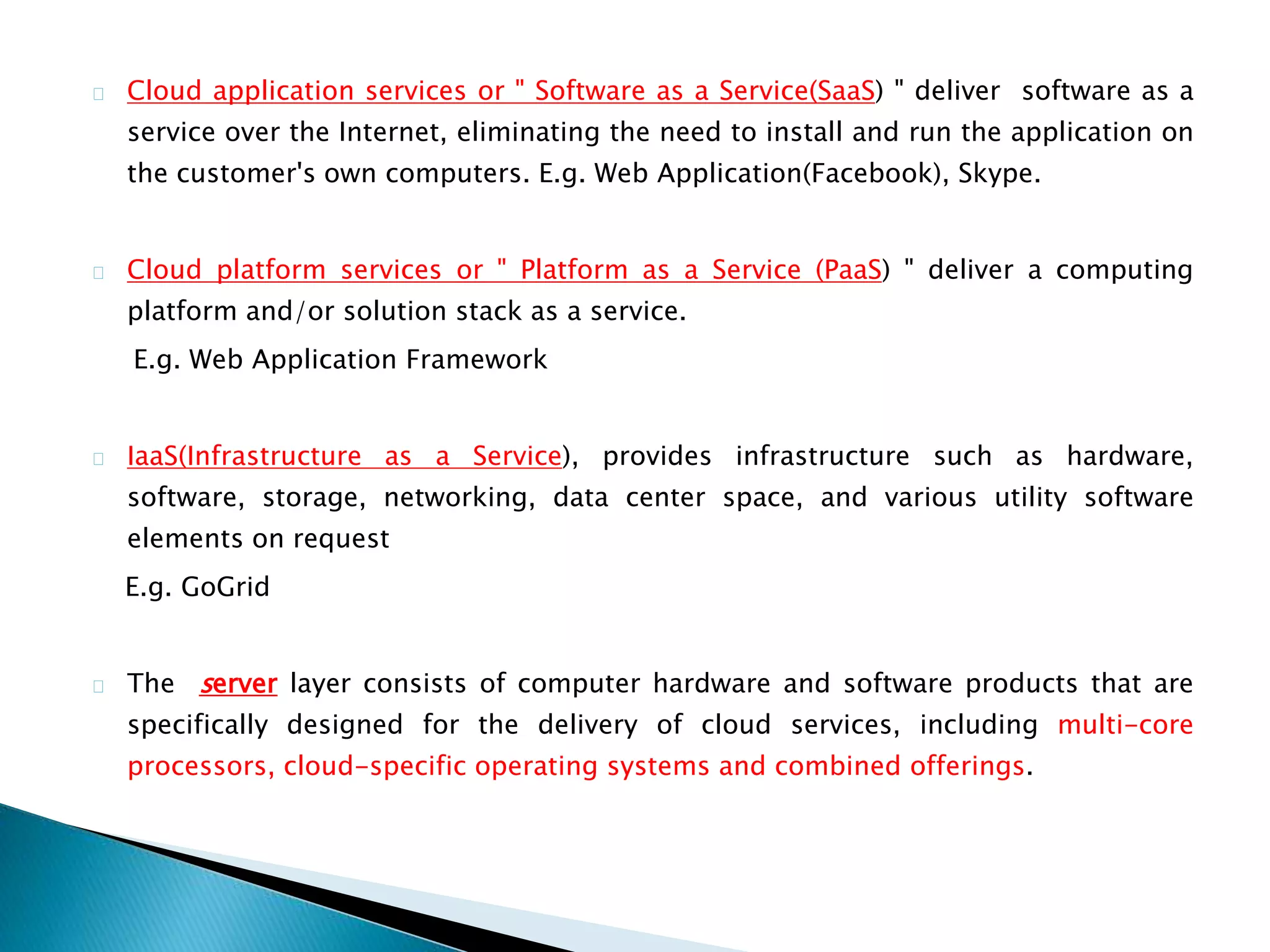
Cloud application services or " Software as a Service(SaaS) " deliver software as a 
service over the Internet, eliminating the need to install and run the application on 
the customer's own computers. E.g. Web Application(Facebook), Skype. 
Cloud platform services or " Platform as a Service (PaaS) " deliver a computing 
platform and/or solution stack as a service. 
E.g. Web Application Framework 
IaaS(Infrastructure as a Service), provides infrastructure such as hardware, 
software, storage, networking, data center space, and various utility software 
elements on request 
E.g. GoGrid 
The server layer consists of computer hardware and software products that are 
specifically designed for the delivery of cloud services, including multi-core 
processors, cloud-specific operating systems and combined offerings.
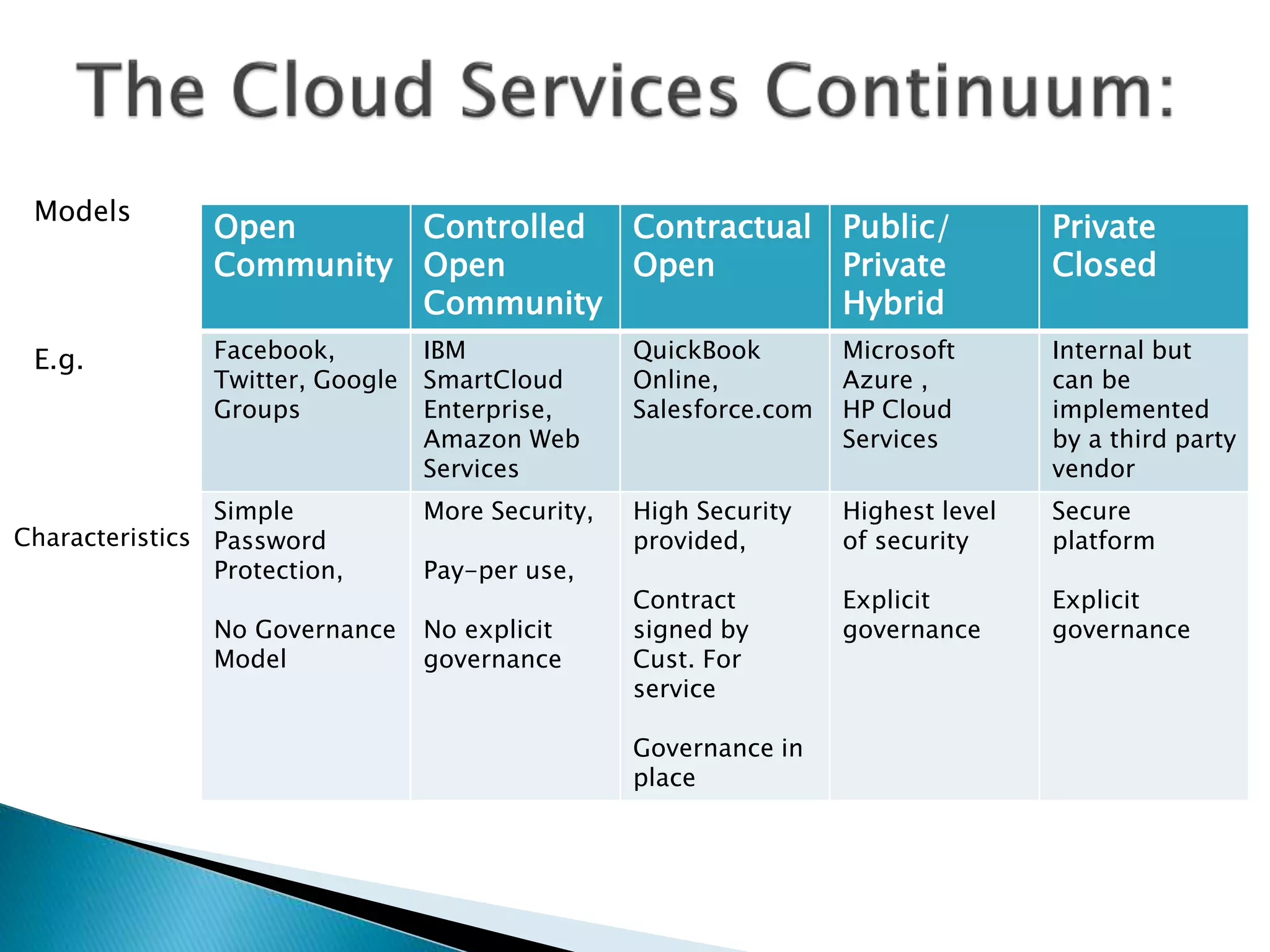
Open 
Community 
Controlled 
Open 
Community 
Contractual 
Open 
Public/ 
Private 
Hybrid 
Private 
Closed 
Facebook, 
Twitter, Google 
Groups 
IBM 
SmartCloud 
Enterprise, 
Amazon Web 
Services 
QuickBook 
Online, 
Salesforce.com 
Microsoft 
Azure , 
HP Cloud 
Services 
Internal but 
can be 
implemented 
by a third party 
vendor 
Simple 
Password 
Protection, 
No Governance 
Model 
More Security, 
Pay-per use, 
No explicit 
governance 
High Security 
provided, 
Contract 
signed by 
Cust. For 
service 
Governance in 
place 
Highest level 
of security 
Explicit 
governance 
Secure 
platform 
Explicit 
governance 
Models 
E.g. 
Characteristics
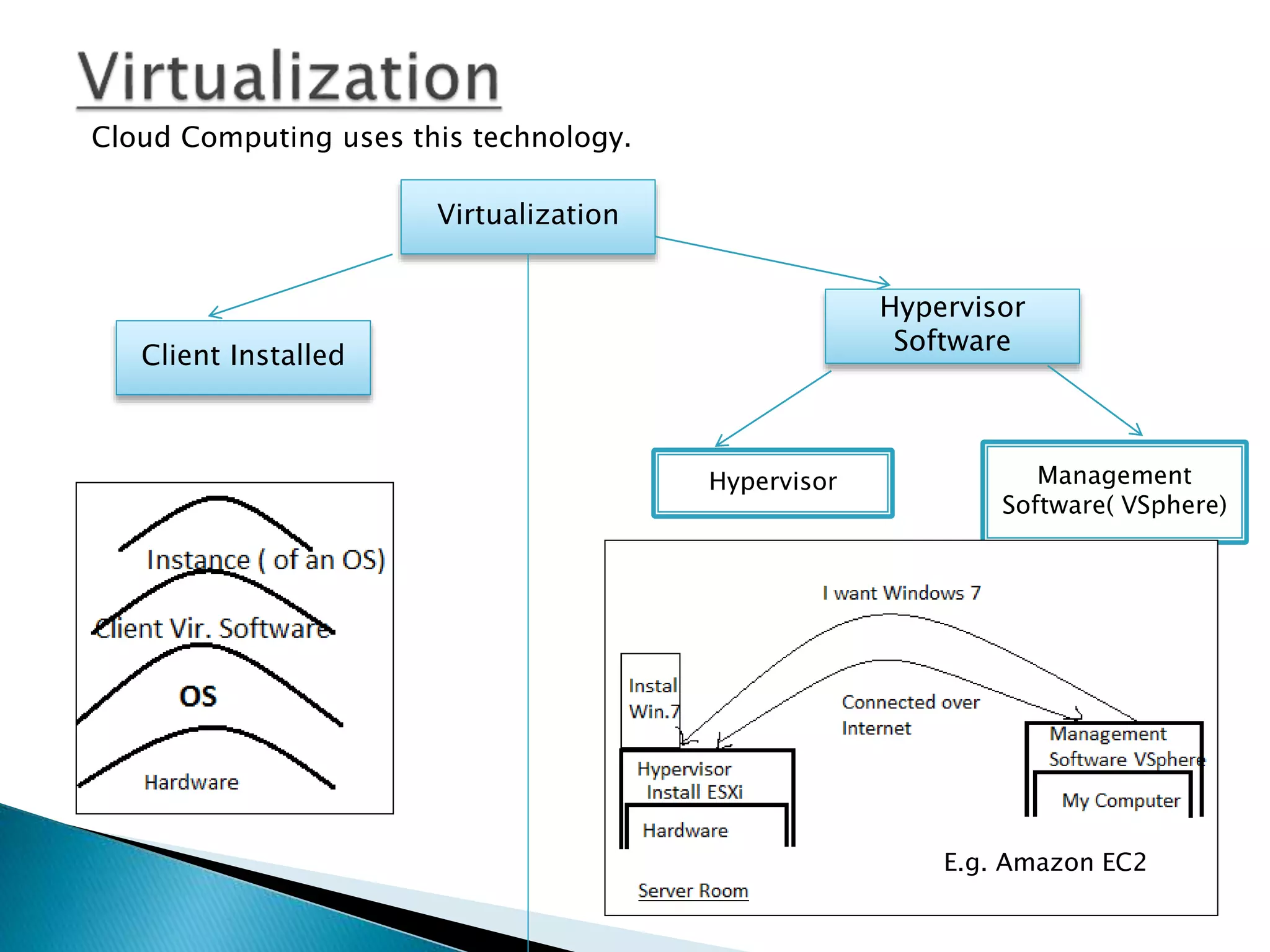
Cloud Computing uses this technology. 
Virtualization 
Client Installed 
Hypervisor 
Software 
Hypervisor Management 
Software( VSphere) 
E.g. Amazon EC2
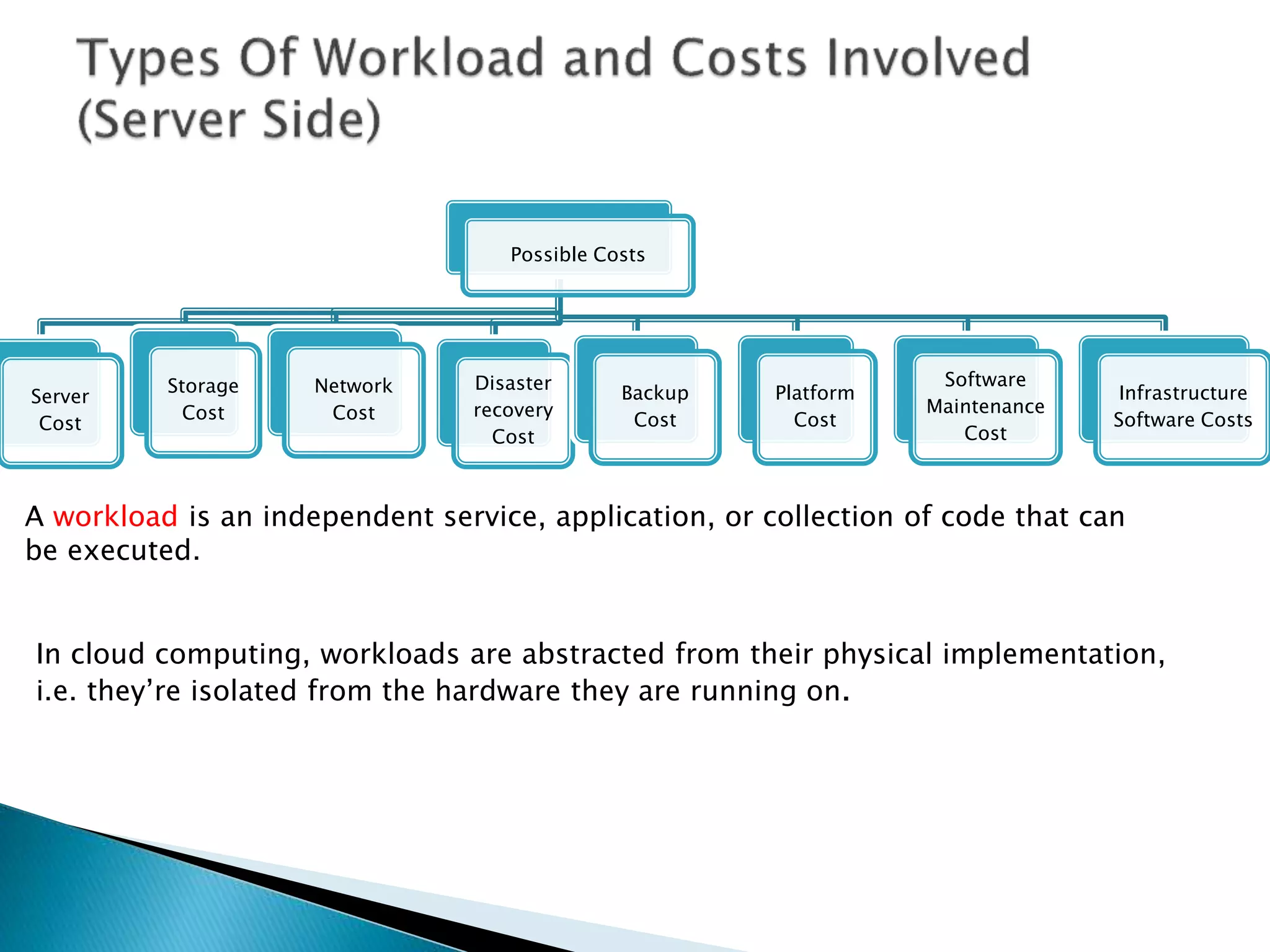
Possible Costs 
Server 
Cost 
Storage 
Cost 
Network 
Cost 
Disaster 
recovery 
Cost 
Backup 
Cost 
Platform 
Cost 
Software 
Maintenance 
Cost 
Infrastructure 
Software Costs 
A workload is an independent service, application, or collection of code that can 
be executed. 
In cloud computing, workloads are abstracted from their physical implementation, 
i.e. they’re isolated from the hardware they are running on.
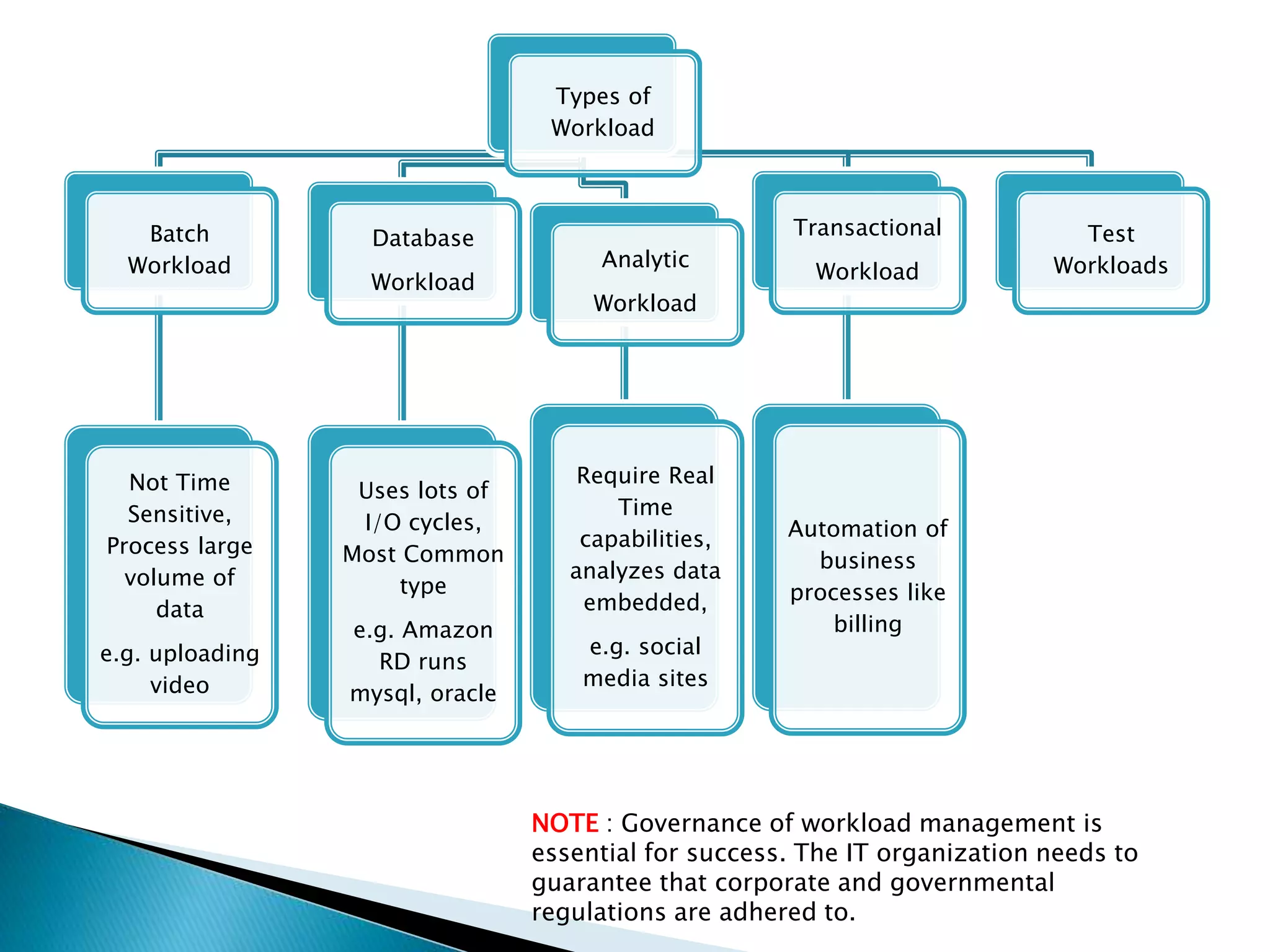
Types of 
Workload 
Batch 
Workload 
Not Time 
Sensitive, 
Process large 
volume of 
data 
e.g. uploading 
video 
Database 
Workload 
Uses lots of 
I/O cycles, 
Most Common 
type 
e.g. Amazon 
RD runs 
mysql, oracle 
Analytic 
Workload 
Require Real 
Time 
capabilities, 
analyzes data 
embedded, 
e.g. social 
media sites 
Transactional 
Workload 
Automation of 
business 
processes like 
billing 
Test 
Workloads 
NOTE : Governance of workload management is 
essential for success. The IT organization needs to 
guarantee that corporate and governmental 
regulations are adhered to.
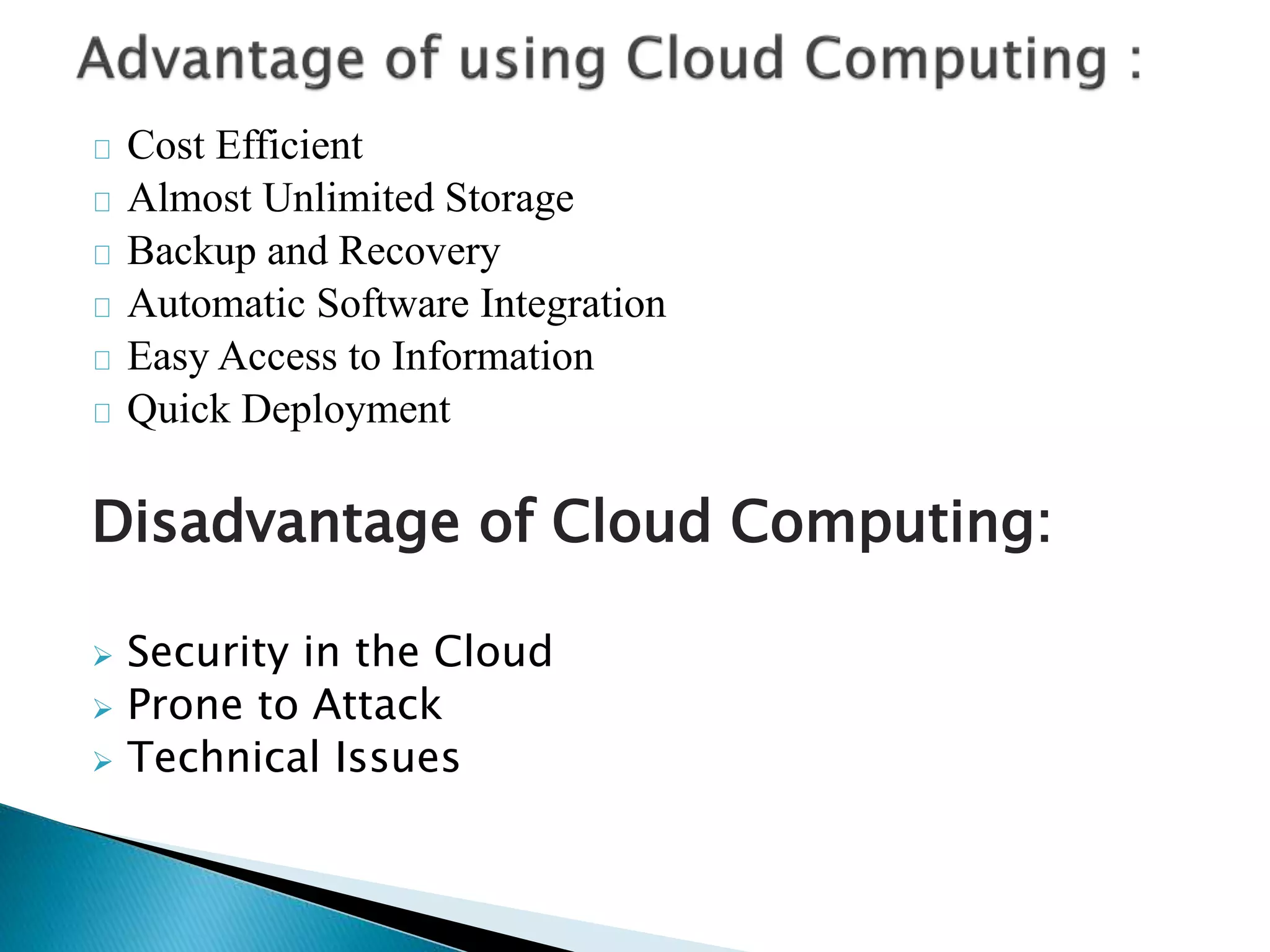
Cost Efficient 
Almost Unlimited Storage 
Backup and Recovery 
Automatic Software Integration 
Easy Access to Information 
Quick Deployment 
Disadvantage of Cloud Computing: 
 Security in the Cloud 
 Prone to Attack 
 Technical Issues
Thank you
John Wiley & Sons, “Cloud Services For Dummies®”, IBM 
Limited Edition. 
Doss Aravind, Nanda Rajeev, “Cloud Computing”.

Introduction to Cloud computing

  • 1.
    Presentation By PriyodarshiniDhar M.Tech 1st Yr. CST, IIEST Shibpur Introduction To
  • 2.
    Cloud computing isan emerging computing technology. It uses the internet and central remote servers. It provides a set of shared computing resources applications, computing, storage, networking, development, and deployment platforms as well as business processes. The cloud is a metaphor for internet, based on how it is depicted in a network diagram. Platform Storage Cloud Resources Provides Business Processes Networking
  • 3.
    Application( E.g. Microsoft OfficeWord) Operating System Hardware Cannot use it. Unsaved data lost!! Crashes!! Crashes!! Application sits on a cloud( e.g. Googledocs) data saved in the cloud! Operating System Hardware Earlier, In our Computers… Crashes! Crashes! Connected through the internet Now-a-days using cloud computing…
  • 4.
    Year Ideas/Work 1960John McCarthy opined that "computation may someday be organized as a public utility” 1969 J.C.R. Licklider gave the idea of "intergalactic computer network“ --- developed ARPANET. 1999 Salesforce.com, pioneered the concept of delivering enterprise applications via a simple website 2002 Amazon Web Services, which provided a suite of cloud-based services including storage, computation. 2006 Amazon launched its Elastic Compute cloud (EC2) as a commercial web service that allows small companies and individuals to rent computers on which to run their own computer applications. 2009 Web 2.0 includes social networking sites, blogs,wikis,floksonomies,video sharing sites, web applications, mashups etc.
  • 5.
    CLIENT SERVER Acloud client consists of computer hardware and/or computer software that relies on cloud computing for application delivery. E.g.: Mobile(Android, iPhone), PC Applications(SaaS) Platform(PaaS) Infrastructure (IaaS) End User Businessmen Developer Applications Infrastructure Platform Requires
  • 6.
    Cloud application servicesor " Software as a Service(SaaS) " deliver software as a service over the Internet, eliminating the need to install and run the application on the customer's own computers. E.g. Web Application(Facebook), Skype. Cloud platform services or " Platform as a Service (PaaS) " deliver a computing platform and/or solution stack as a service. E.g. Web Application Framework IaaS(Infrastructure as a Service), provides infrastructure such as hardware, software, storage, networking, data center space, and various utility software elements on request E.g. GoGrid The server layer consists of computer hardware and software products that are specifically designed for the delivery of cloud services, including multi-core processors, cloud-specific operating systems and combined offerings.
  • 7.
    Open Community Controlled Open Community Contractual Open Public/ Private Hybrid Private Closed Facebook, Twitter, Google Groups IBM SmartCloud Enterprise, Amazon Web Services QuickBook Online, Salesforce.com Microsoft Azure , HP Cloud Services Internal but can be implemented by a third party vendor Simple Password Protection, No Governance Model More Security, Pay-per use, No explicit governance High Security provided, Contract signed by Cust. For service Governance in place Highest level of security Explicit governance Secure platform Explicit governance Models E.g. Characteristics
  • 8.
    Cloud Computing usesthis technology. Virtualization Client Installed Hypervisor Software Hypervisor Management Software( VSphere) E.g. Amazon EC2
  • 9.
    Possible Costs Server Cost Storage Cost Network Cost Disaster recovery Cost Backup Cost Platform Cost Software Maintenance Cost Infrastructure Software Costs A workload is an independent service, application, or collection of code that can be executed. In cloud computing, workloads are abstracted from their physical implementation, i.e. they’re isolated from the hardware they are running on.
  • 10.
    Types of Workload Batch Workload Not Time Sensitive, Process large volume of data e.g. uploading video Database Workload Uses lots of I/O cycles, Most Common type e.g. Amazon RD runs mysql, oracle Analytic Workload Require Real Time capabilities, analyzes data embedded, e.g. social media sites Transactional Workload Automation of business processes like billing Test Workloads NOTE : Governance of workload management is essential for success. The IT organization needs to guarantee that corporate and governmental regulations are adhered to.
  • 11.
    Cost Efficient AlmostUnlimited Storage Backup and Recovery Automatic Software Integration Easy Access to Information Quick Deployment Disadvantage of Cloud Computing:  Security in the Cloud  Prone to Attack  Technical Issues
  • 12.
  • 13.
    John Wiley &Sons, “Cloud Services For Dummies®”, IBM Limited Edition. Doss Aravind, Nanda Rajeev, “Cloud Computing”.