Synthesis of Jungian Typology & Holistic Education:
A Four Quadrant Model
Misty R. Steele, Kamden K. Strunk, Stacey L. Bridges
Oklahoma State University
• Sternberg: Wisdom
• CREATES: Feeling
• Parallel Curriculum: Curriculum of
Connections
• ITP: Emotional Balance
• Medicine Wheel: South, The Mouse
• Sternberg: Creative
• CREATES: Creativity
• Parallel Curriculum: Curriculum of
Identity
• ITP: Spiritual Awareness
• Medicine Wheel: West, The Bear
• Sternberg: Practical
• CREATES: Doing
• Parallel Curriculum: Curriculum of
Practice
• ITP: Physical Health
• Medicine Wheel: East, The Eagle
• Sternberg: Analytic
• CREATES: Thinking
• Parallel Curriculum: Core or Basic
Curriculum
• ITP: Learning & Mental Clarity
• Medicine Wheel: North, The Wolf or
The Buffalo
MIND
Thinking,
Cognitive Domain,
Knowledge
Development
BODY
Doing,
Psychomotor
Domain, Physical
Development
HEART
Feeling,
Affective Domain,
Social & Emotional
Development
SPIRIT
Creating,
Intuitive Domain,
Spiritual
Development
Judgment Function make decisions
PerceptionFunctiontakeininformation
Sensation
Intuition
Thinking Feeling
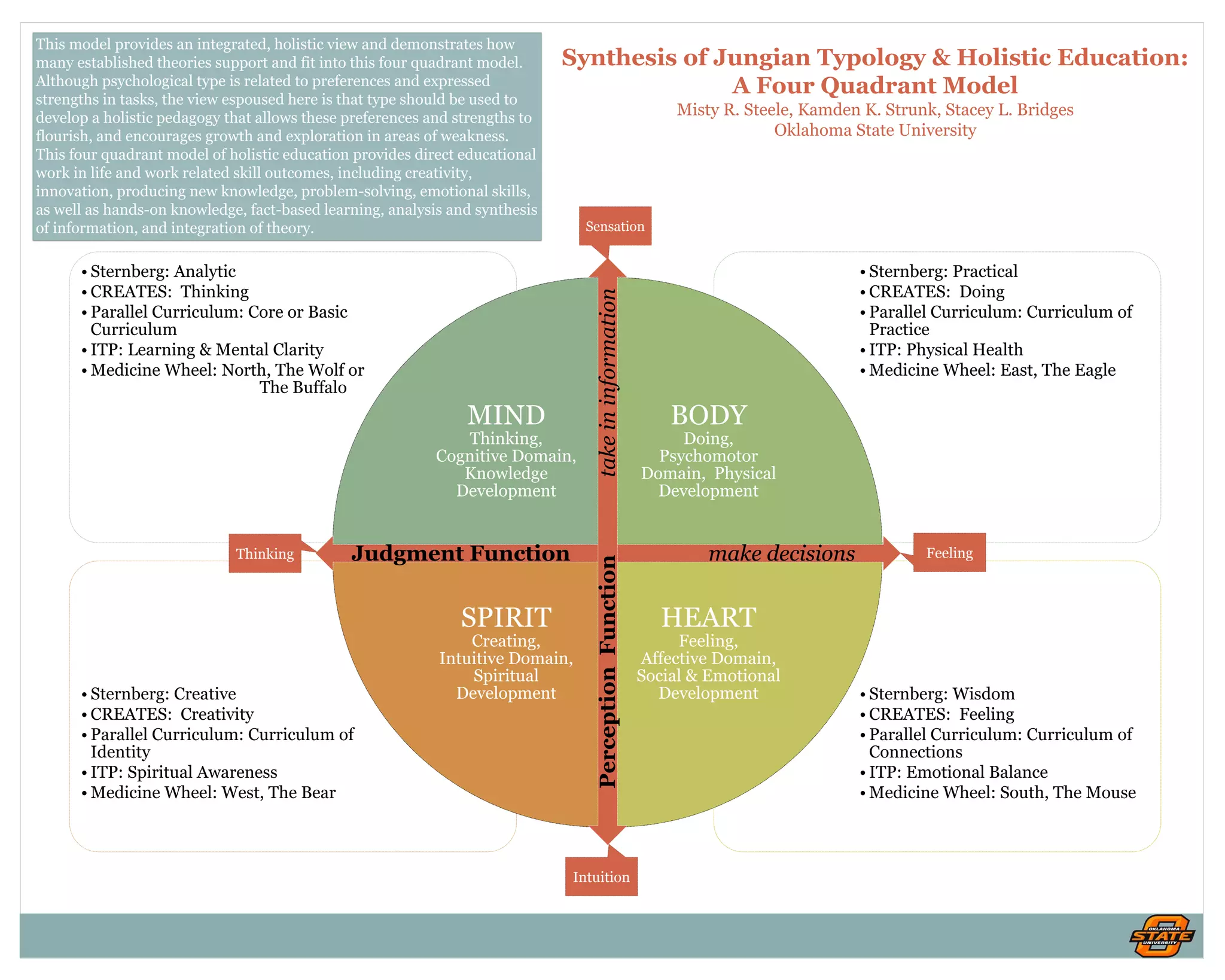
This model provides an integrated, holistic view and demonstrates how
many established theories support and fit into this four quadrant model.
Although psychological type is related to preferences and expressed
strengths in tasks, the view espoused here is that type should be used to
develop a holistic pedagogy that allows these preferences and strengths to
flourish, and encourages growth and exploration in areas of weakness.
This four quadrant model of holistic education provides direct educational
work in life and work related skill outcomes, including creativity,
innovation, producing new knowledge, problem-solving, emotional skills,
as well as hands-on knowledge, fact-based learning, analysis and synthesis
of information, and integration of theory.

Synthesis of Jungian Typology and Holistic Education: A Four Quadrant Model

  • 1.
    Synthesis of JungianTypology & Holistic Education: A Four Quadrant Model Misty R. Steele, Kamden K. Strunk, Stacey L. Bridges Oklahoma State University • Sternberg: Wisdom • CREATES: Feeling • Parallel Curriculum: Curriculum of Connections • ITP: Emotional Balance • Medicine Wheel: South, The Mouse • Sternberg: Creative • CREATES: Creativity • Parallel Curriculum: Curriculum of Identity • ITP: Spiritual Awareness • Medicine Wheel: West, The Bear • Sternberg: Practical • CREATES: Doing • Parallel Curriculum: Curriculum of Practice • ITP: Physical Health • Medicine Wheel: East, The Eagle • Sternberg: Analytic • CREATES: Thinking • Parallel Curriculum: Core or Basic Curriculum • ITP: Learning & Mental Clarity • Medicine Wheel: North, The Wolf or The Buffalo MIND Thinking, Cognitive Domain, Knowledge Development BODY Doing, Psychomotor Domain, Physical Development HEART Feeling, Affective Domain, Social & Emotional Development SPIRIT Creating, Intuitive Domain, Spiritual Development Judgment Function make decisions PerceptionFunctiontakeininformation Sensation Intuition Thinking Feeling This model provides an integrated, holistic view and demonstrates how many established theories support and fit into this four quadrant model. Although psychological type is related to preferences and expressed strengths in tasks, the view espoused here is that type should be used to develop a holistic pedagogy that allows these preferences and strengths to flourish, and encourages growth and exploration in areas of weakness. This four quadrant model of holistic education provides direct educational work in life and work related skill outcomes, including creativity, innovation, producing new knowledge, problem-solving, emotional skills, as well as hands-on knowledge, fact-based learning, analysis and synthesis of information, and integration of theory.