National support for a local IT-development within the educational sector Cainet 2000, Cairo, March 2000 Johan GROTH, Ph.D. (johan.groth@gogab.se)
IT implies changes Analogue vs. digital information  Stand alone computers vs. networks  Local vs. global  Information consumer vs. producer  Text only vs. multimedia  Issues vs. concurrent publication
The Swedish educational system The Swedish school system consists of 1.2 million pupils, 120,000 teachers and 6000 schools  About 20 universities It is goal oriented and decentralized  The government sets goals, disseminates information and may support for projects
National IT initiatives The Swedish University Network (SUNET)  The IT-commission  The National Agency for Education  The National Agency for Higher Education The Foundation for Knowledge and Competence  IT in School (ITiS)
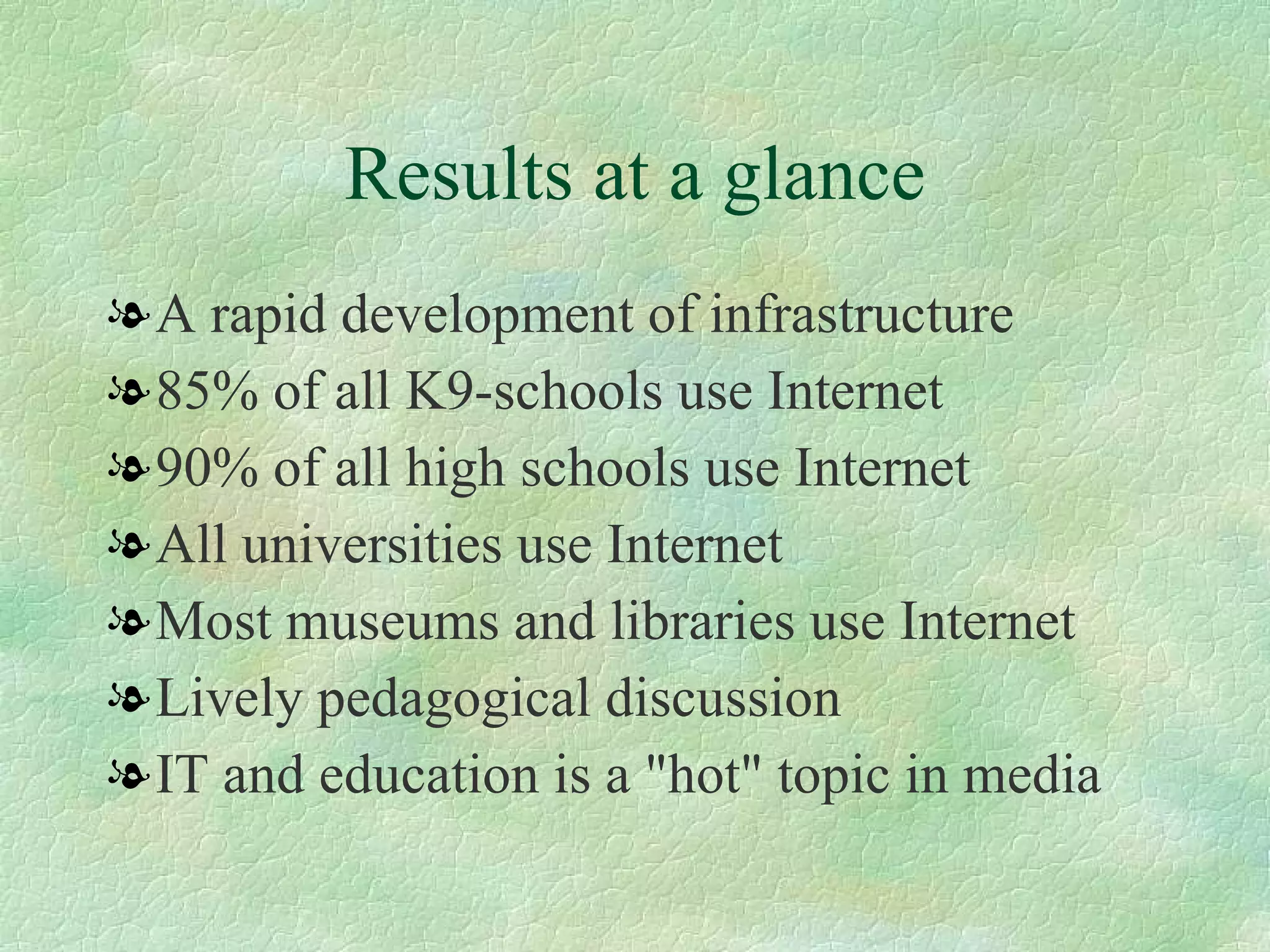
Results at a glance A rapid development of infrastructure  85% of all K9-schools use Internet  90% of all high schools use Internet  All universities use Internet Most museums and libraries use Internet  Lively pedagogical discussion  IT and education is a "hot" topic in media
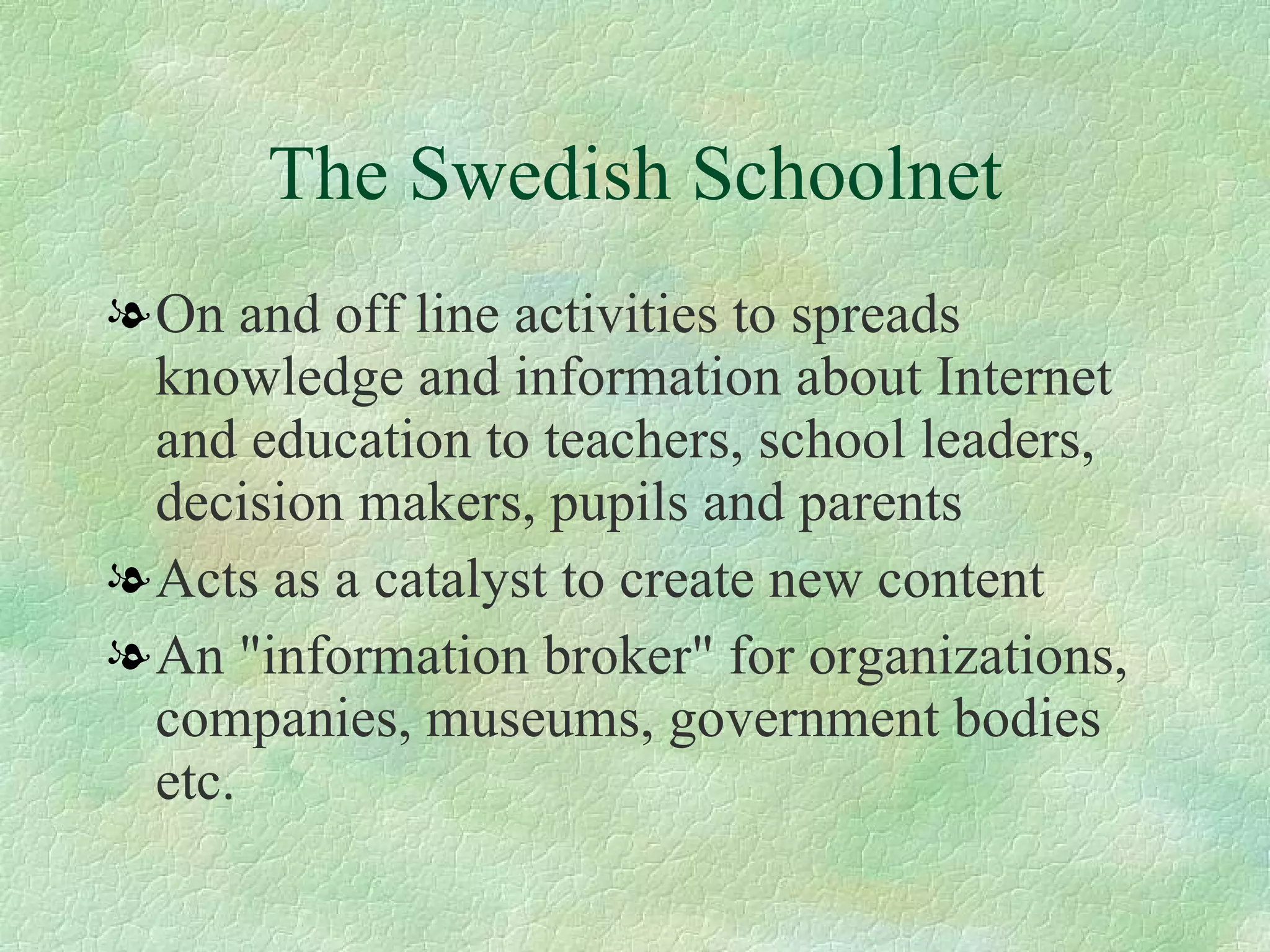
The Swedish Schoolnet On and off line activities to spreads knowledge and information about Internet and education to teachers, school leaders, decision makers, pupils and parents  Acts as a catalyst to create new content  An "information broker" for organizations, companies, museums, government bodies etc.
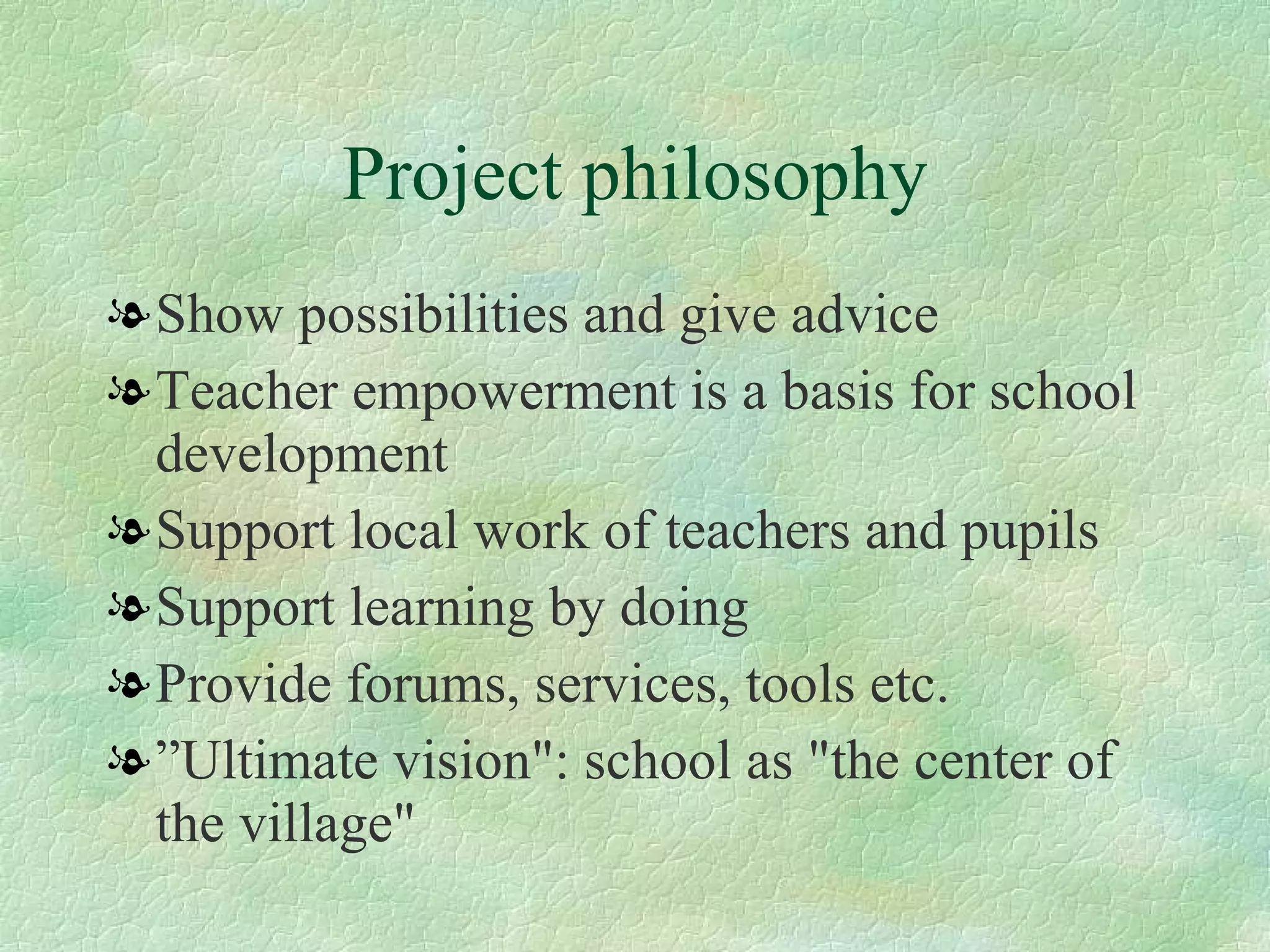
Project philosophy Show possibilities and give advice Teacher empowerment is a basis for school development  Support local work of teachers and pupils  Support learning by doing  Provide forums, services, tools etc. ” Ultimate vision": school as "the center of the village"
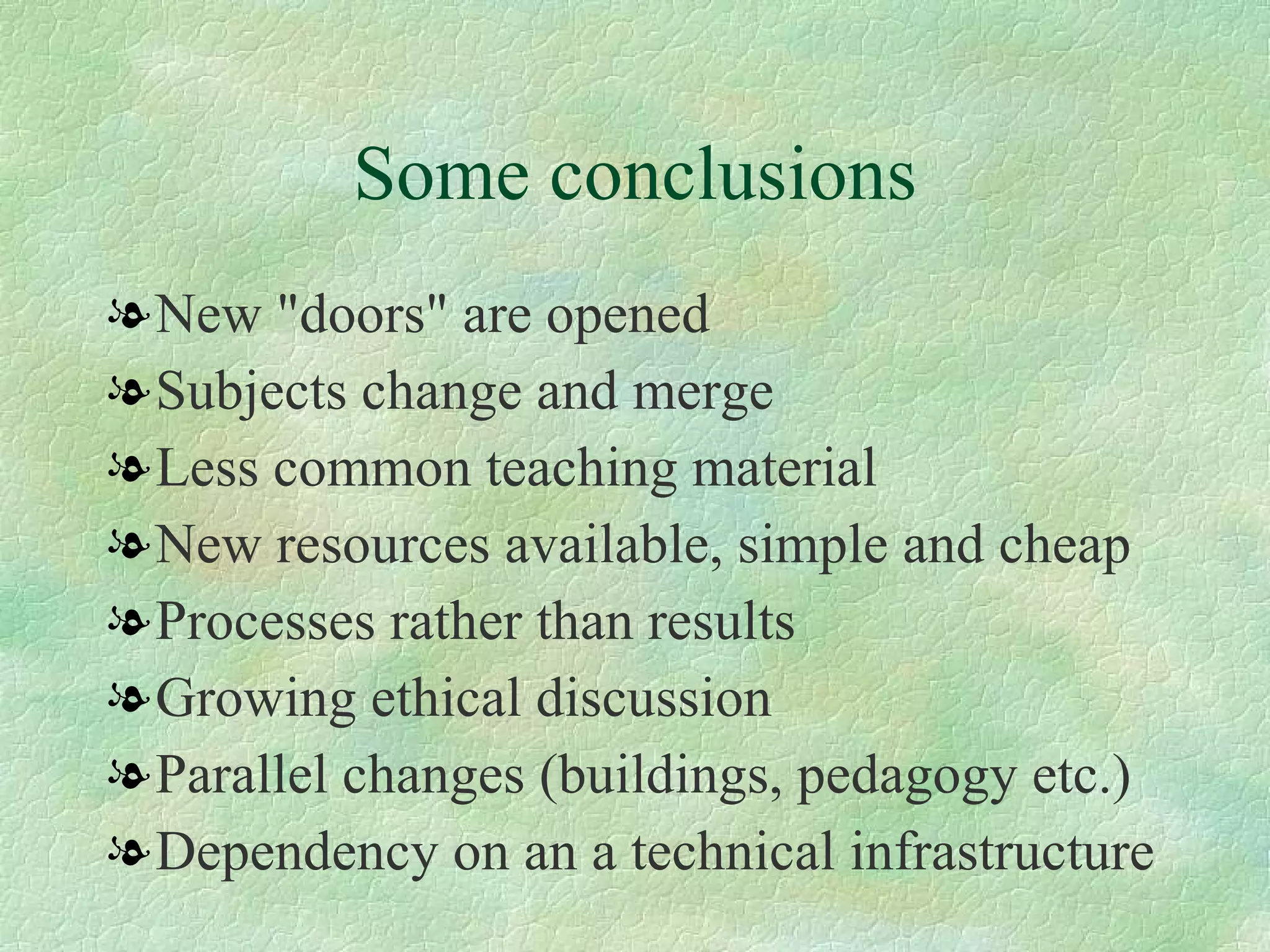
Some conclusions New "doors" are opened  Subjects change and merge  Less common teaching material  New resources available, simple and cheap  Processes rather than results  Growing ethical discussion Parallel changes (buildings, pedagogy etc.)  Dependency on an a technical infrastructure
Competing factors Speed  Acceptance  Scalability NOTE! You may only select two!
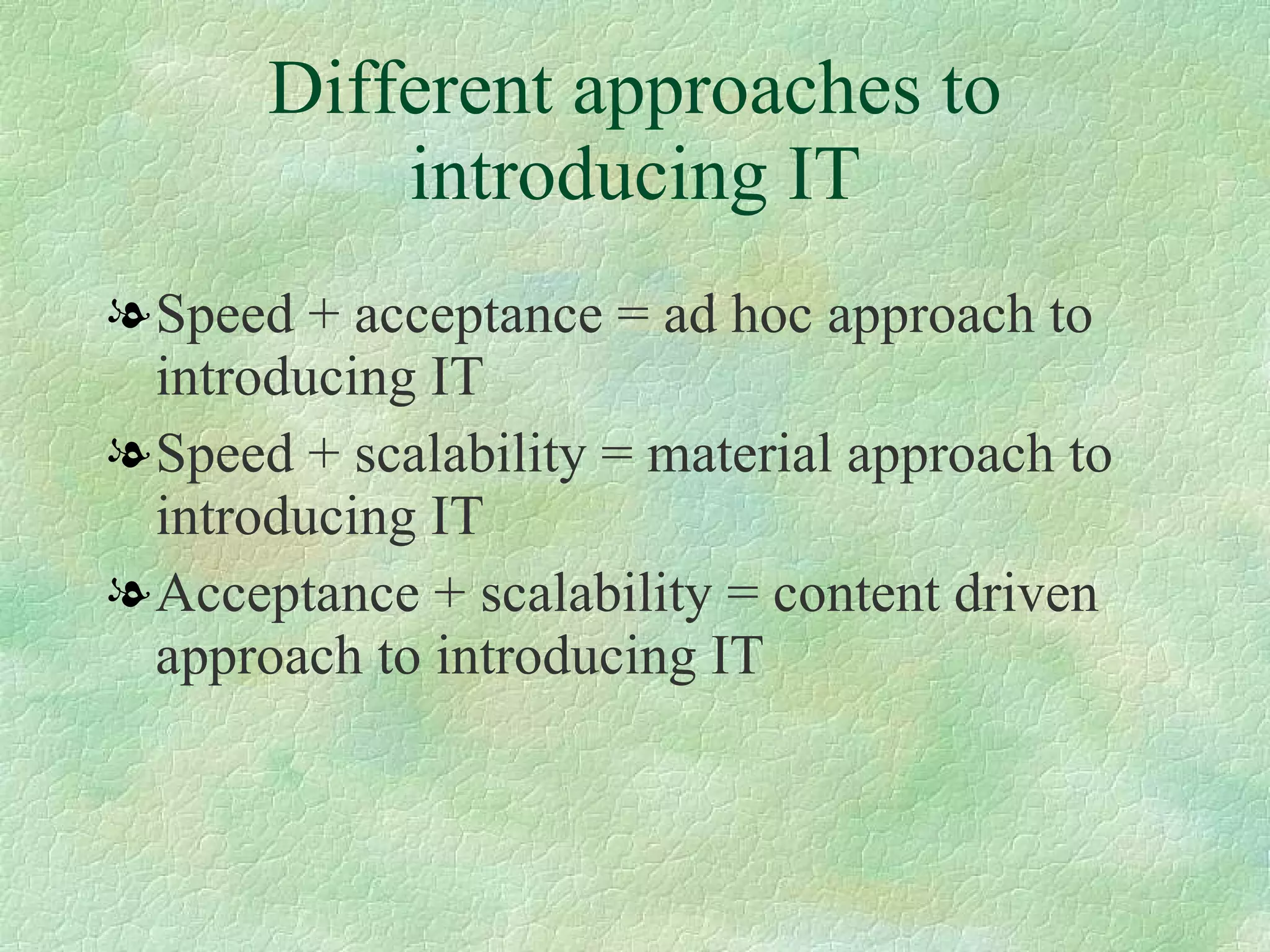
Different approaches to introducing IT Speed + acceptance = ad hoc approach to introducing IT  Speed + scalability = material approach to introducing IT  Acceptance + scalability = content driven approach to introducing IT
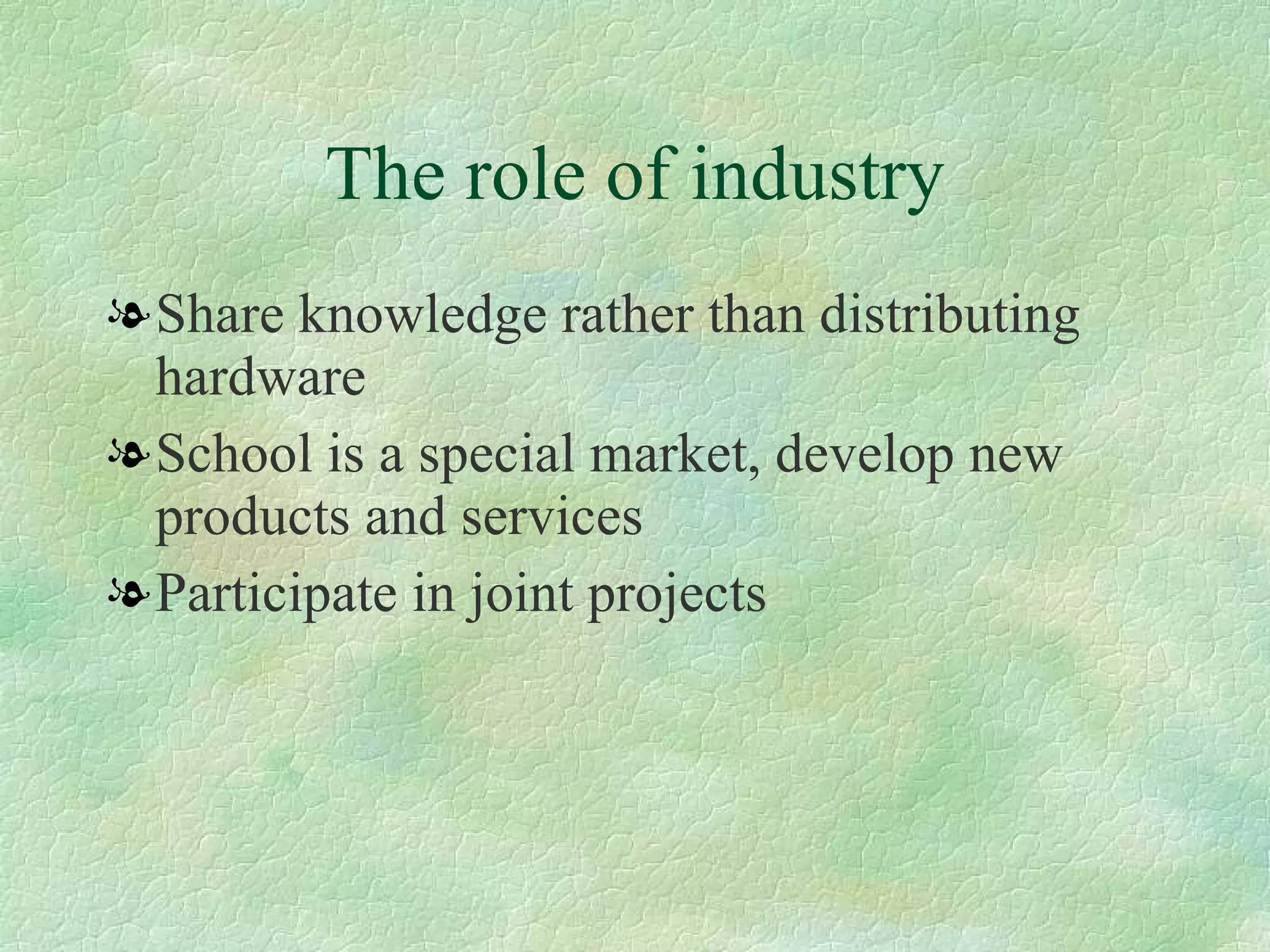
The role of industry Share knowledge rather than distributing hardware  School is a special market, develop new products and services  Participate in joint projects
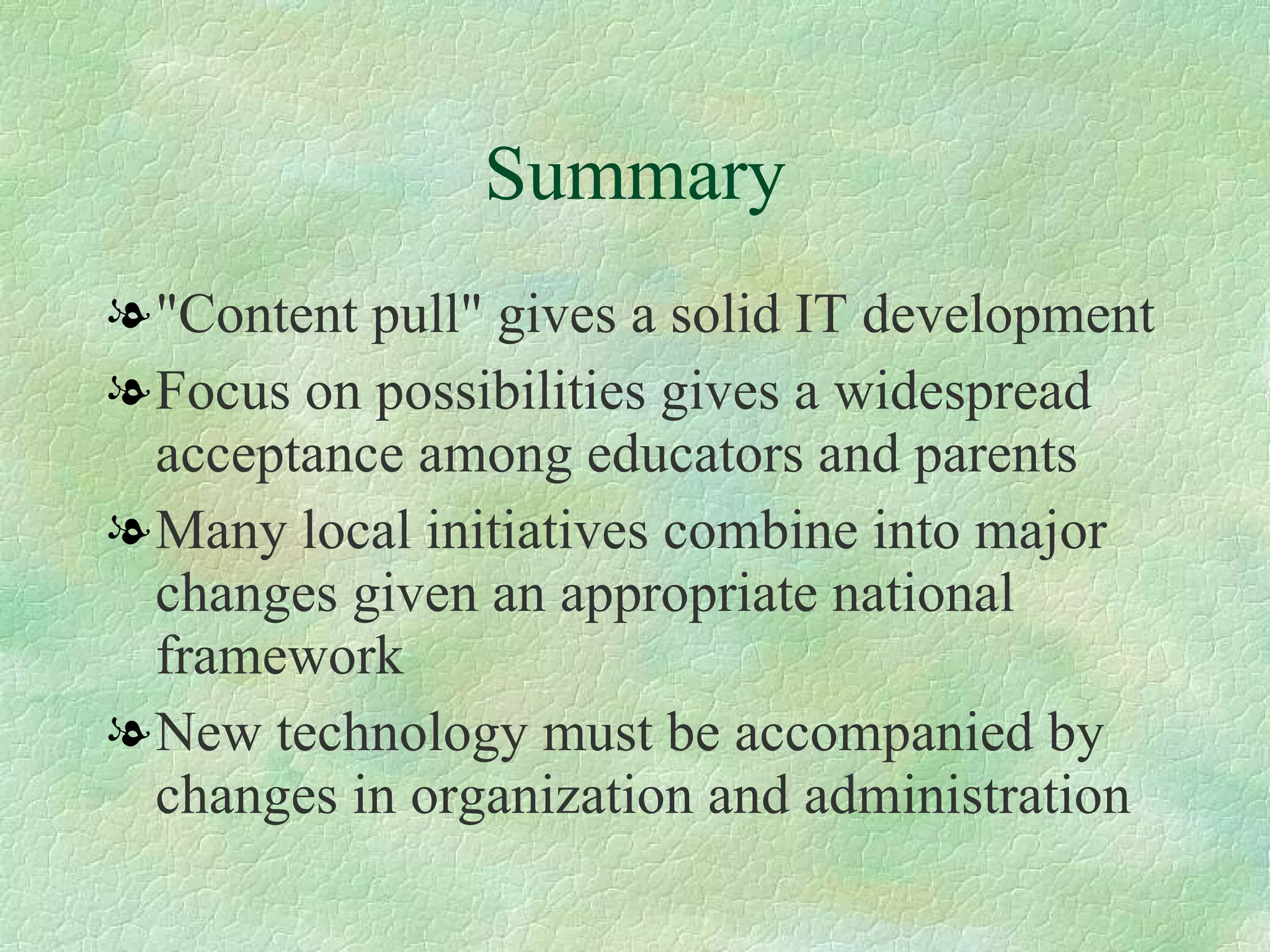
Summary "Content pull" gives a solid IT development  Focus on possibilities gives a widespread acceptance among educators and parents  Many local initiatives combine into major changes given an appropriate national framework  New technology must be accompanied by changes in organization and administration
Invitation to discussion If and how do we formulate a national curriculum in the IT-age? What are the advantages/disadvantages of "personal" teaching material? How is the school system to cope with parents or pupils who choose an "external" teacher?
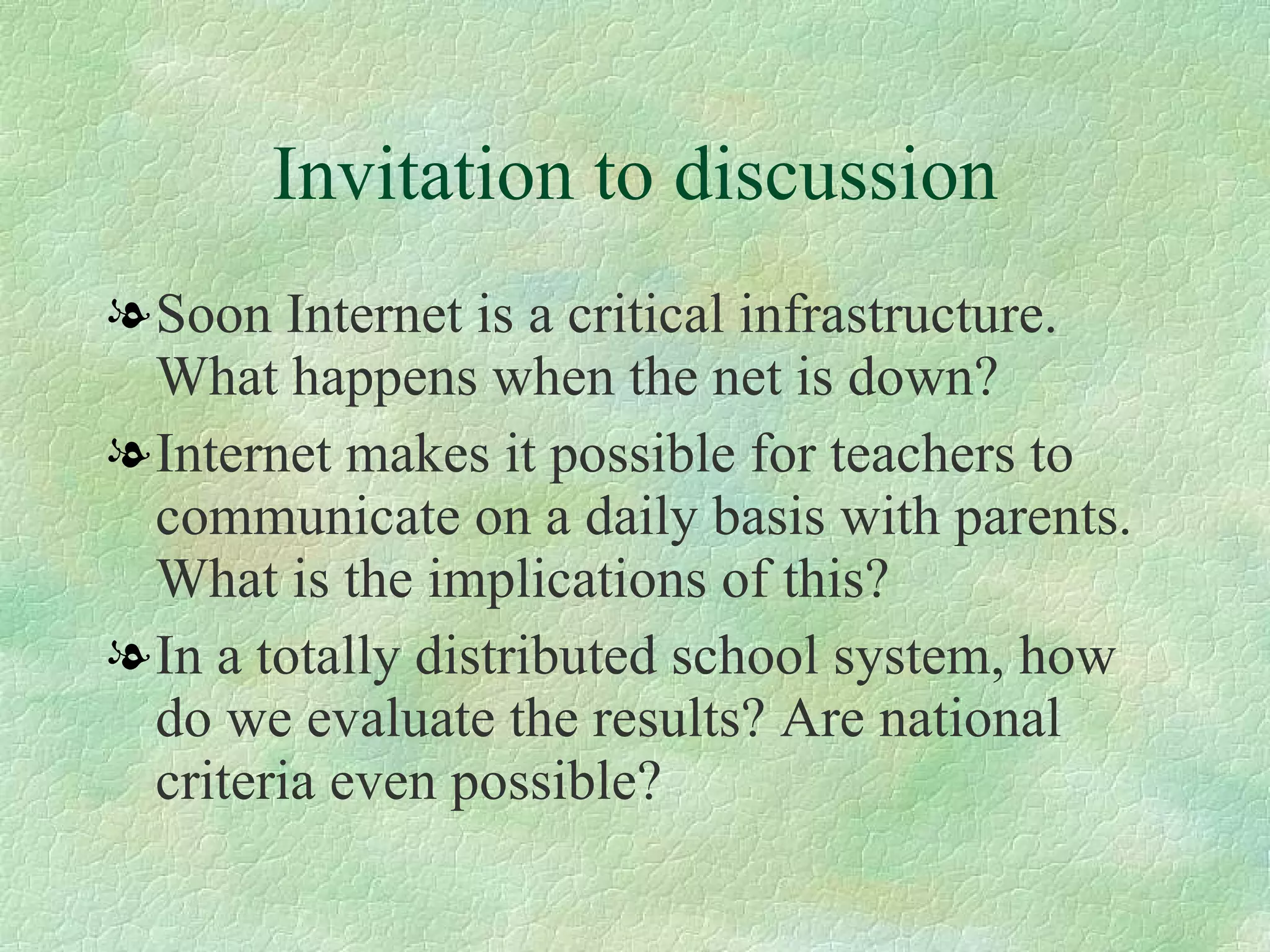
Invitation to discussion Soon Internet is a critical infrastructure. What happens when the net is down? Internet makes it possible for teachers to communicate on a daily basis with parents. What is the implications of this?  In a totally distributed school system, how do we evaluate the results? Are national criteria even possible?
Invitation to discussion How do we assess that computers and IT really deliver?  How do we ensure that IT does not create new barriers to open access in education?  How do we on a national level help the teachers prepare for this brave new world?  What do school politicians on different levels need to know?

National support for a local IT-development within the educational sector

  • 1.
    National support fora local IT-development within the educational sector Cainet 2000, Cairo, March 2000 Johan GROTH, Ph.D. (johan.groth@gogab.se)
  • 2.
    IT implies changesAnalogue vs. digital information Stand alone computers vs. networks Local vs. global Information consumer vs. producer Text only vs. multimedia Issues vs. concurrent publication
  • 3.
    The Swedish educationalsystem The Swedish school system consists of 1.2 million pupils, 120,000 teachers and 6000 schools About 20 universities It is goal oriented and decentralized The government sets goals, disseminates information and may support for projects
  • 4.
    National IT initiativesThe Swedish University Network (SUNET) The IT-commission The National Agency for Education The National Agency for Higher Education The Foundation for Knowledge and Competence IT in School (ITiS)
  • 5.
    Results at aglance A rapid development of infrastructure 85% of all K9-schools use Internet 90% of all high schools use Internet All universities use Internet Most museums and libraries use Internet Lively pedagogical discussion IT and education is a "hot" topic in media
  • 6.
    The Swedish SchoolnetOn and off line activities to spreads knowledge and information about Internet and education to teachers, school leaders, decision makers, pupils and parents Acts as a catalyst to create new content An "information broker" for organizations, companies, museums, government bodies etc.
  • 7.
    Project philosophy Showpossibilities and give advice Teacher empowerment is a basis for school development Support local work of teachers and pupils Support learning by doing Provide forums, services, tools etc. ” Ultimate vision": school as "the center of the village"
  • 8.
    Some conclusions New"doors" are opened Subjects change and merge Less common teaching material New resources available, simple and cheap Processes rather than results Growing ethical discussion Parallel changes (buildings, pedagogy etc.) Dependency on an a technical infrastructure
  • 9.
    Competing factors Speed Acceptance Scalability NOTE! You may only select two!
  • 10.
    Different approaches tointroducing IT Speed + acceptance = ad hoc approach to introducing IT Speed + scalability = material approach to introducing IT Acceptance + scalability = content driven approach to introducing IT
  • 11.
    The role ofindustry Share knowledge rather than distributing hardware School is a special market, develop new products and services Participate in joint projects
  • 12.
    Summary "Content pull"gives a solid IT development Focus on possibilities gives a widespread acceptance among educators and parents Many local initiatives combine into major changes given an appropriate national framework New technology must be accompanied by changes in organization and administration
  • 13.
    Invitation to discussionIf and how do we formulate a national curriculum in the IT-age? What are the advantages/disadvantages of "personal" teaching material? How is the school system to cope with parents or pupils who choose an "external" teacher?
  • 14.
    Invitation to discussionSoon Internet is a critical infrastructure. What happens when the net is down? Internet makes it possible for teachers to communicate on a daily basis with parents. What is the implications of this? In a totally distributed school system, how do we evaluate the results? Are national criteria even possible?
  • 15.
    Invitation to discussionHow do we assess that computers and IT really deliver? How do we ensure that IT does not create new barriers to open access in education? How do we on a national level help the teachers prepare for this brave new world? What do school politicians on different levels need to know?