evolutionary theory:
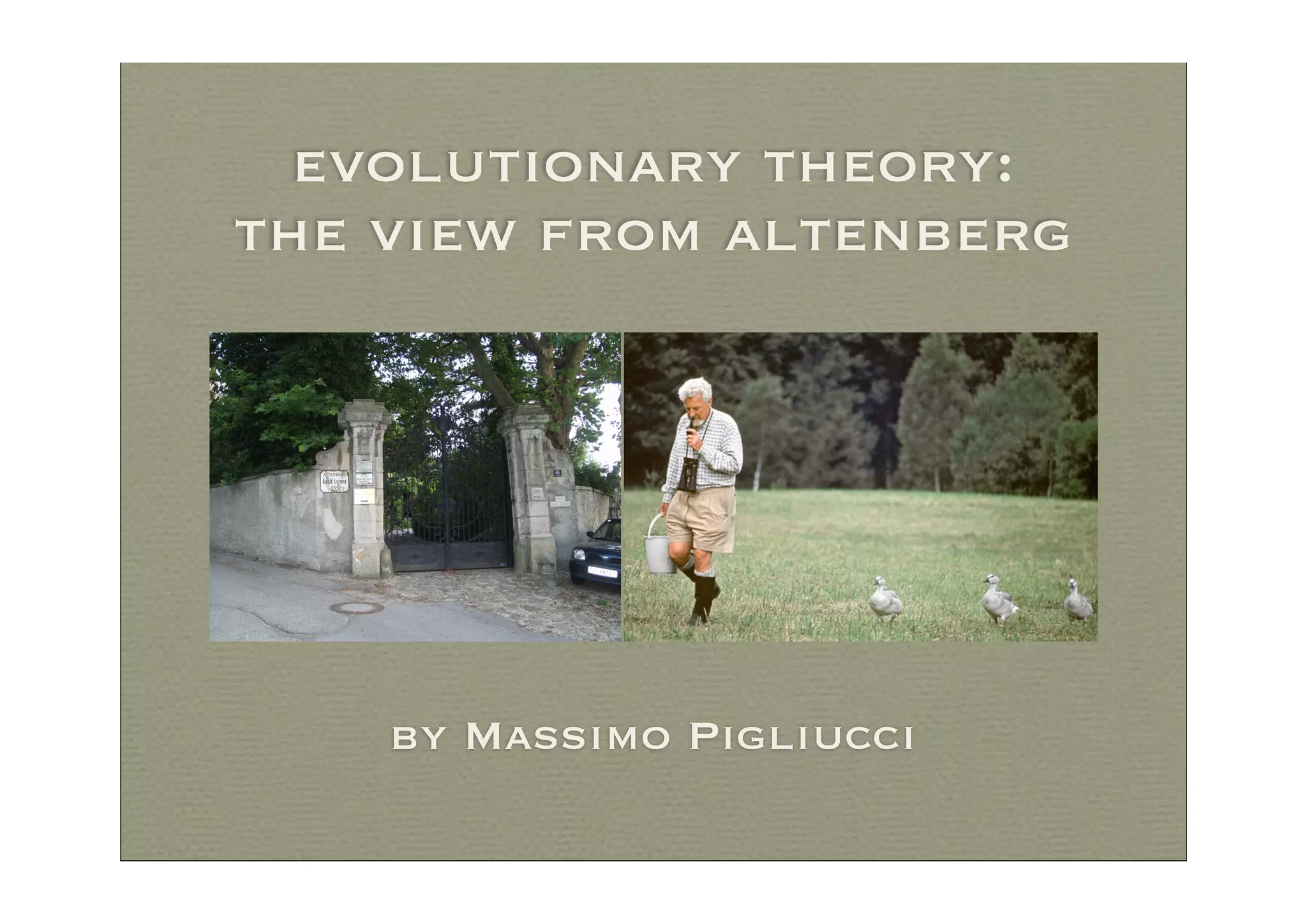
the view from altenberg


    by Massimo Pigliucci
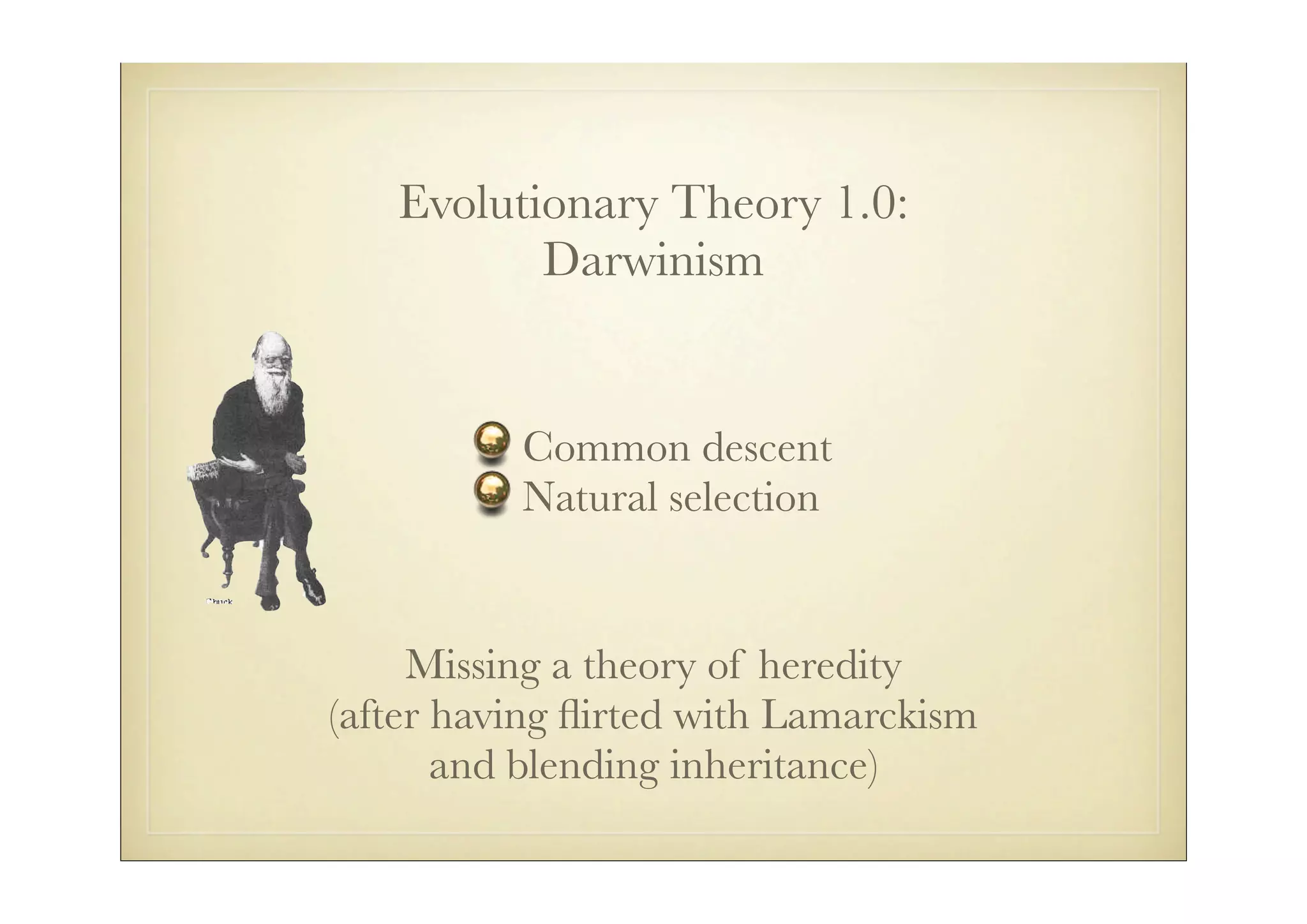
Evolutionary Theory 1.0:
          Darwinism


          Common descent
          Natural selection


     Missing a theory of heredity
(after having flirted with Lamarckism
       and blending inheritance)
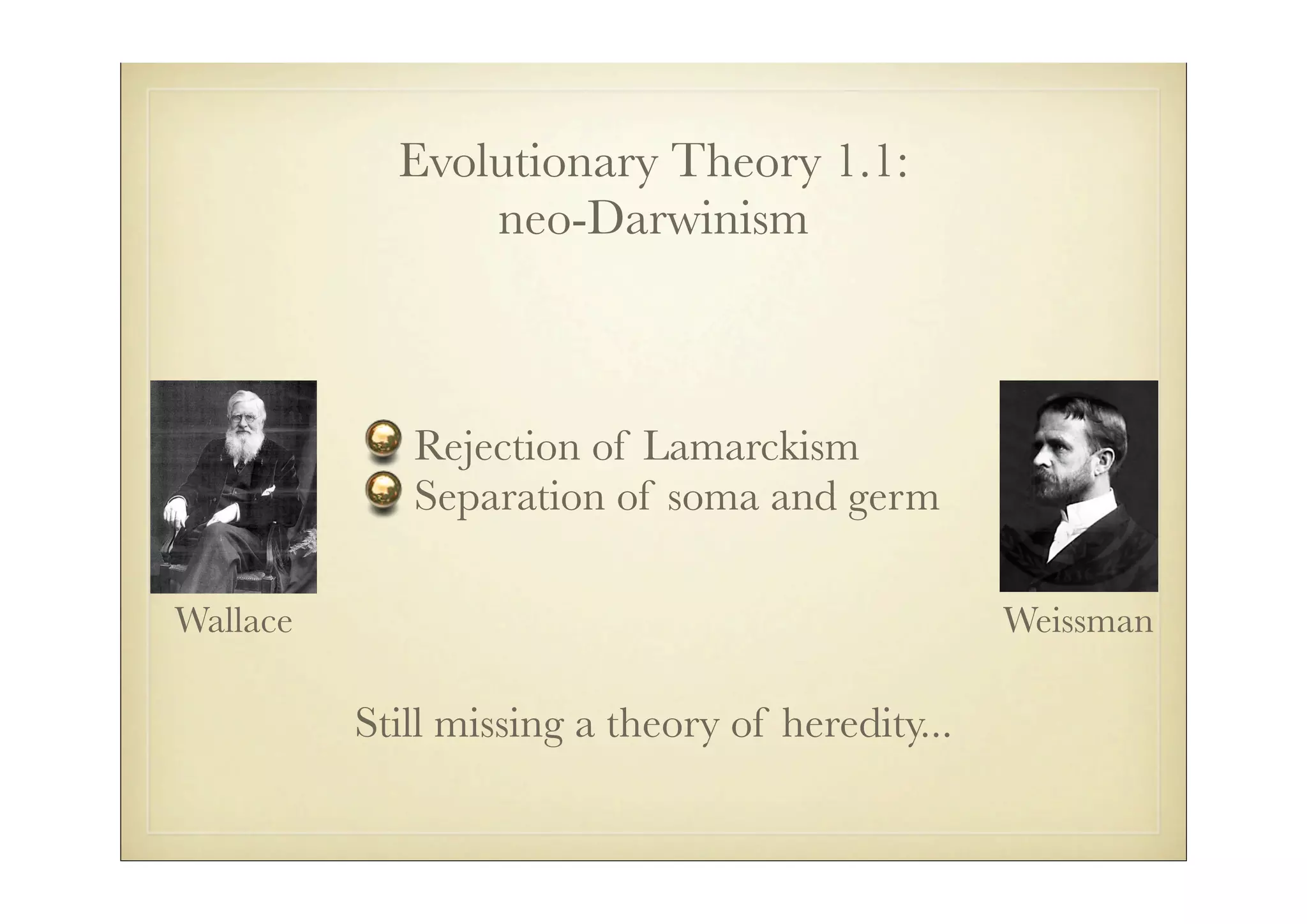
Evolutionary Theory 1.1:
                neo-Darwinism


             Rejection of Lamarckism
             Separation of soma and germ

Wallace                                           Weissman

          Still missing a theory of heredity...
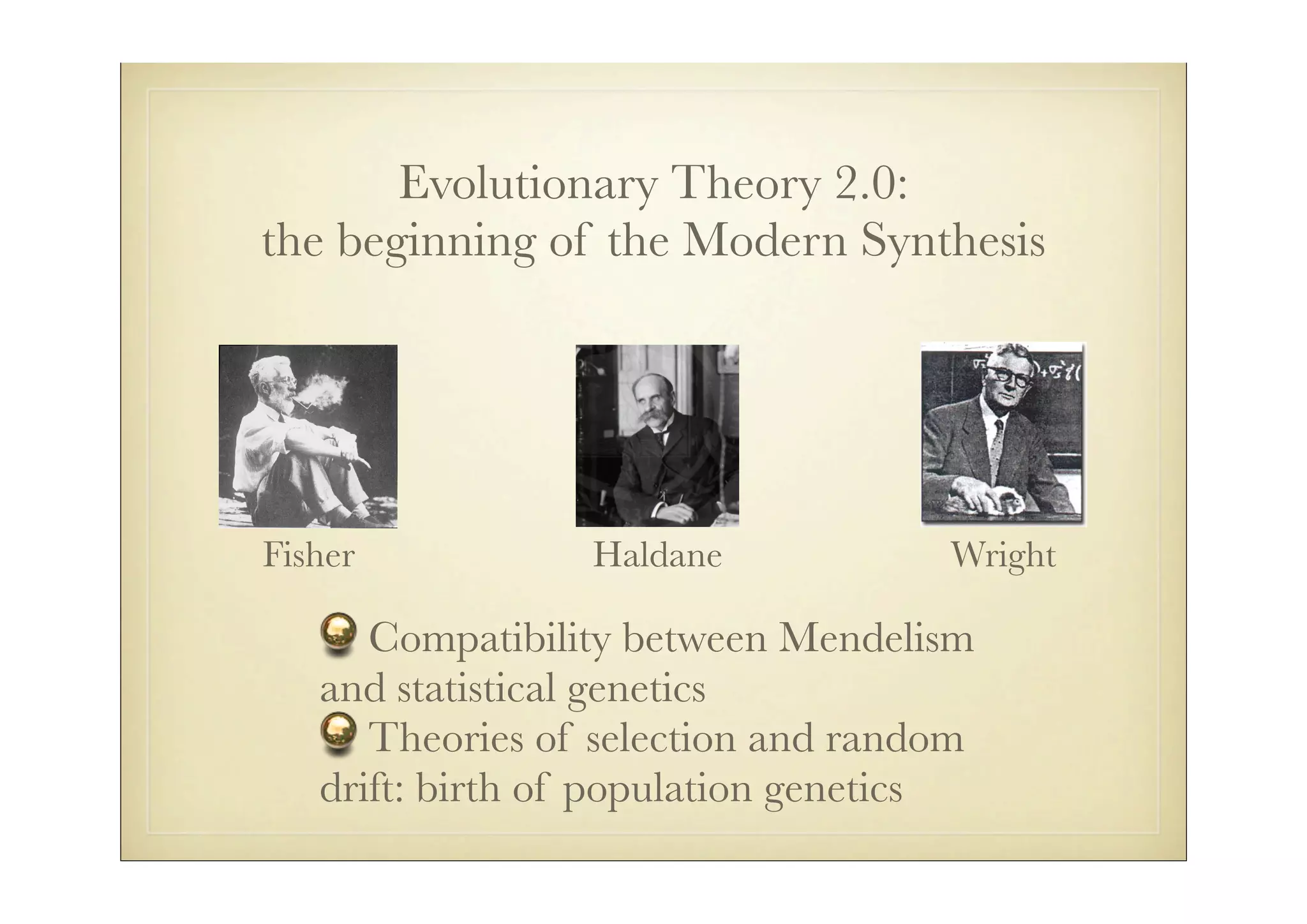
Evolutionary Theory 2.0:
the beginning of the Modern Synthesis


Fisher           Haldane            Wright

      Compatibility between Mendelism
   and statistical genetics
      Theories of selection and random
   drift: birth of population genetics
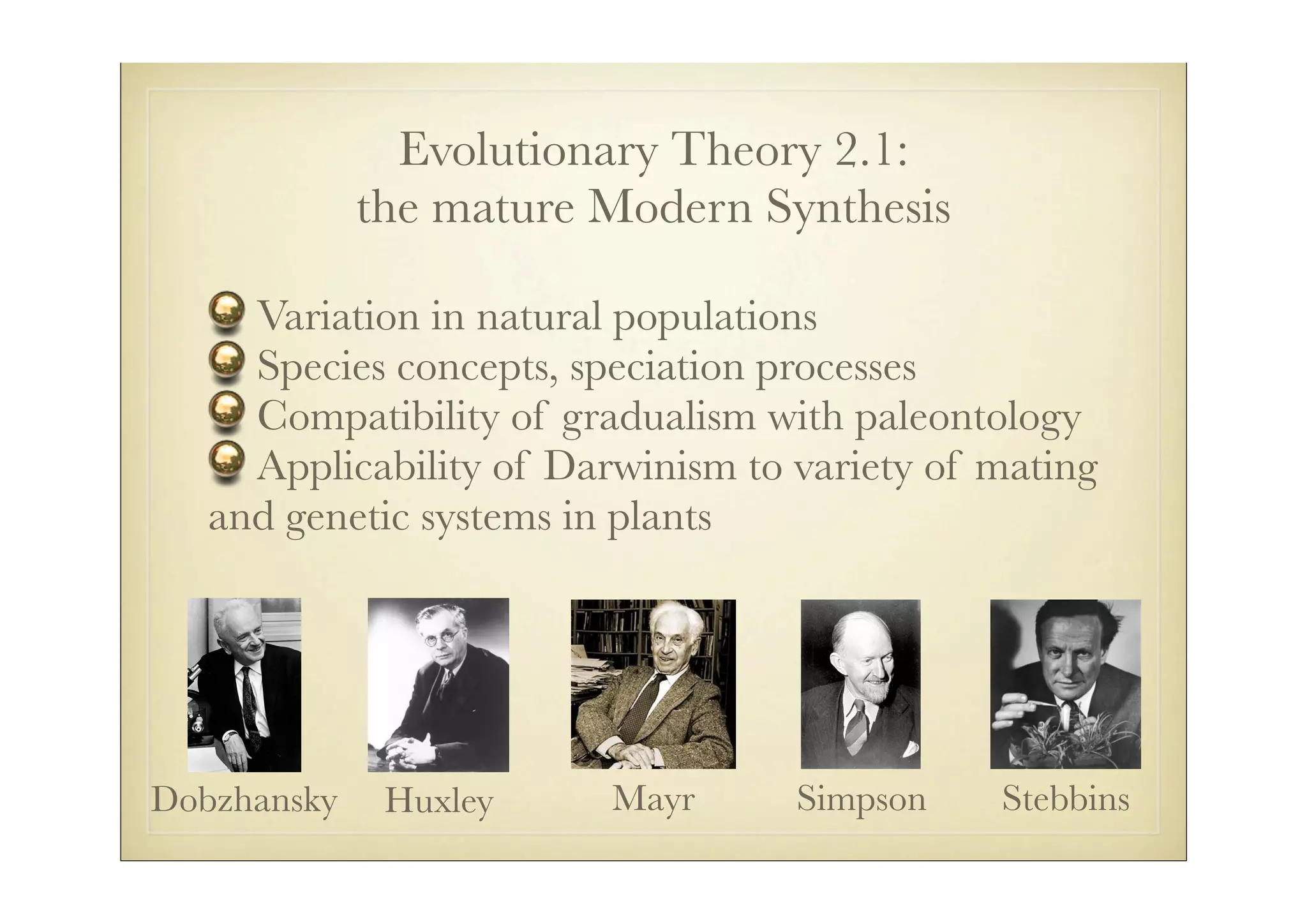
Evolutionary Theory 2.1:
             the mature Modern Synthesis

     Variation in natural populations
     Species concepts, speciation processes
     Compatibility of gradualism with paleontology
     Applicability of Darwinism to variety of mating
   and genetic systems in plants


Dobzhansky    Huxley     Mayr      Simpson    Stebbins
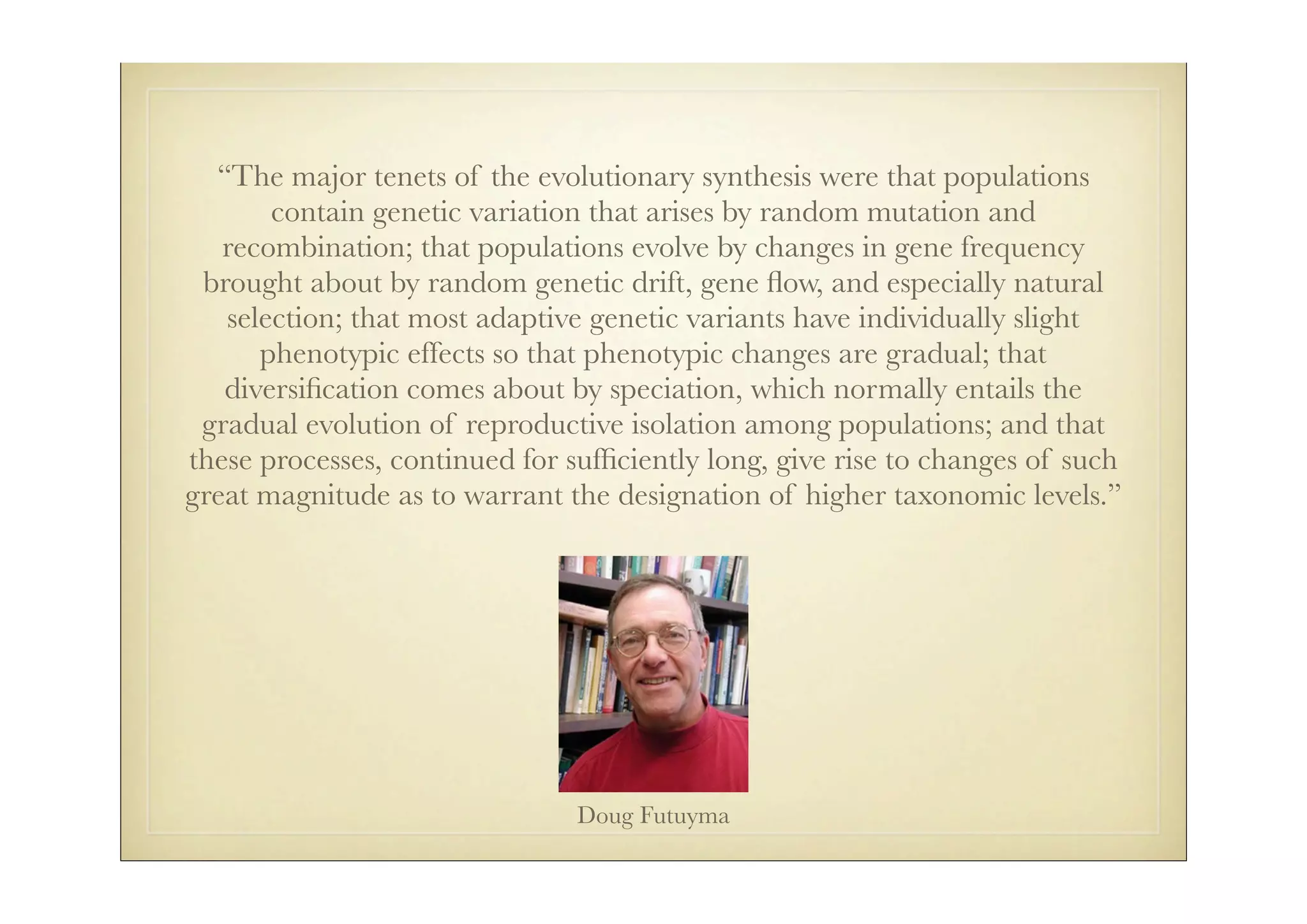
“The major tenets of the evolutionary synthesis were that populations
       contain genetic variation that arises by random mutation and
   recombination; that populations evolve by changes in gene frequency
 brought about by random genetic drift, gene flow, and especially natural
   selection; that most adaptive genetic variants have individually slight
      phenotypic effects so that phenotypic changes are gradual; that
   diversification comes about by speciation, which normally entails the
 gradual evolution of reproductive isolation among populations; and that
these processes, continued for sufficiently long, give rise to changes of such
great magnitude as to warrant the designation of higher taxonomic levels.”


                                Doug Futuyma
Do we need Evolutionary Theory 3.0?
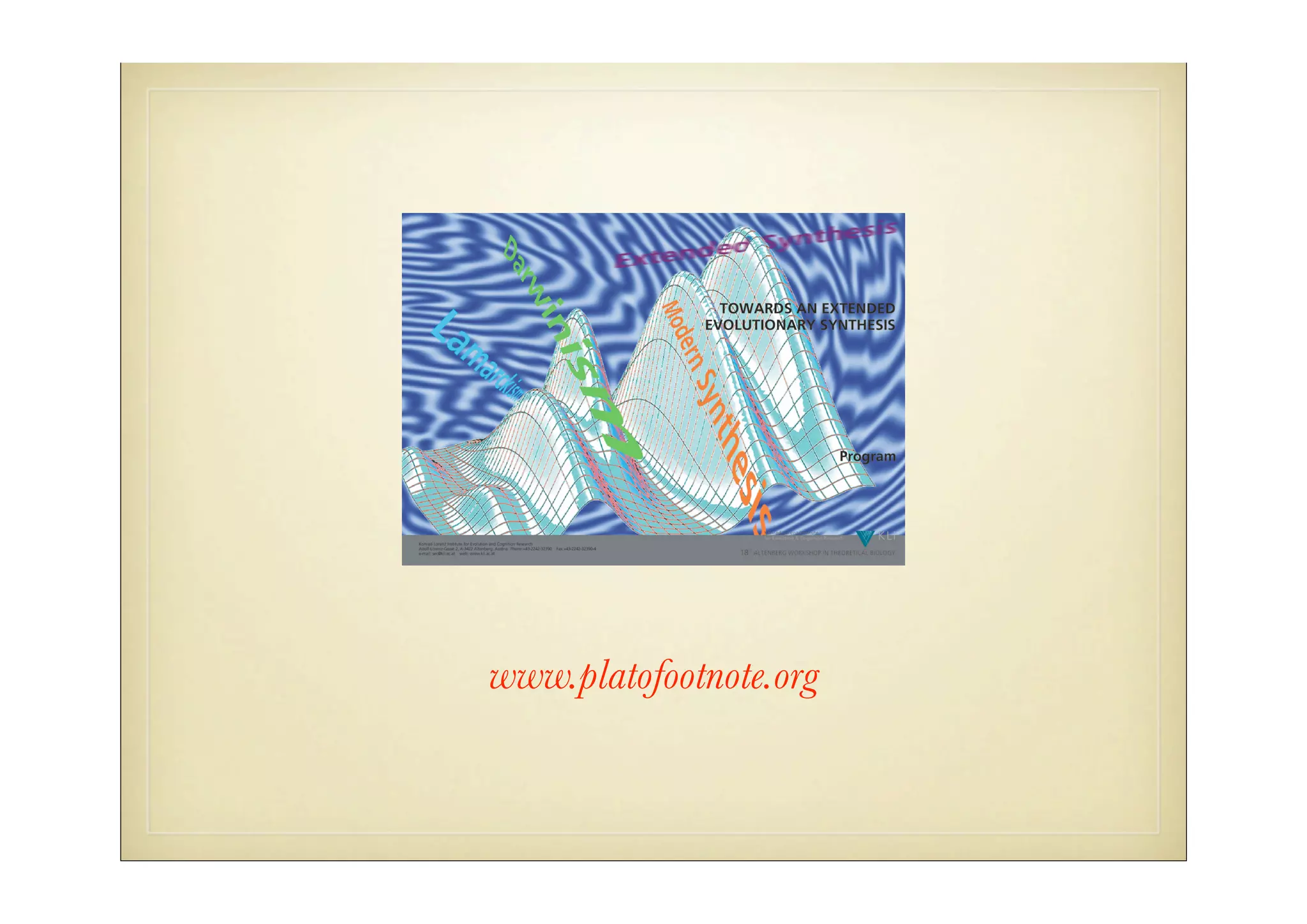
   Toward an Extended Synthesis


“[the Modern Synthesis] is strictly a theory of genes,
   yet the phenomenon that has to be explained in
   evolution is that of the transmutation of form.”
                     (Karl Popper)
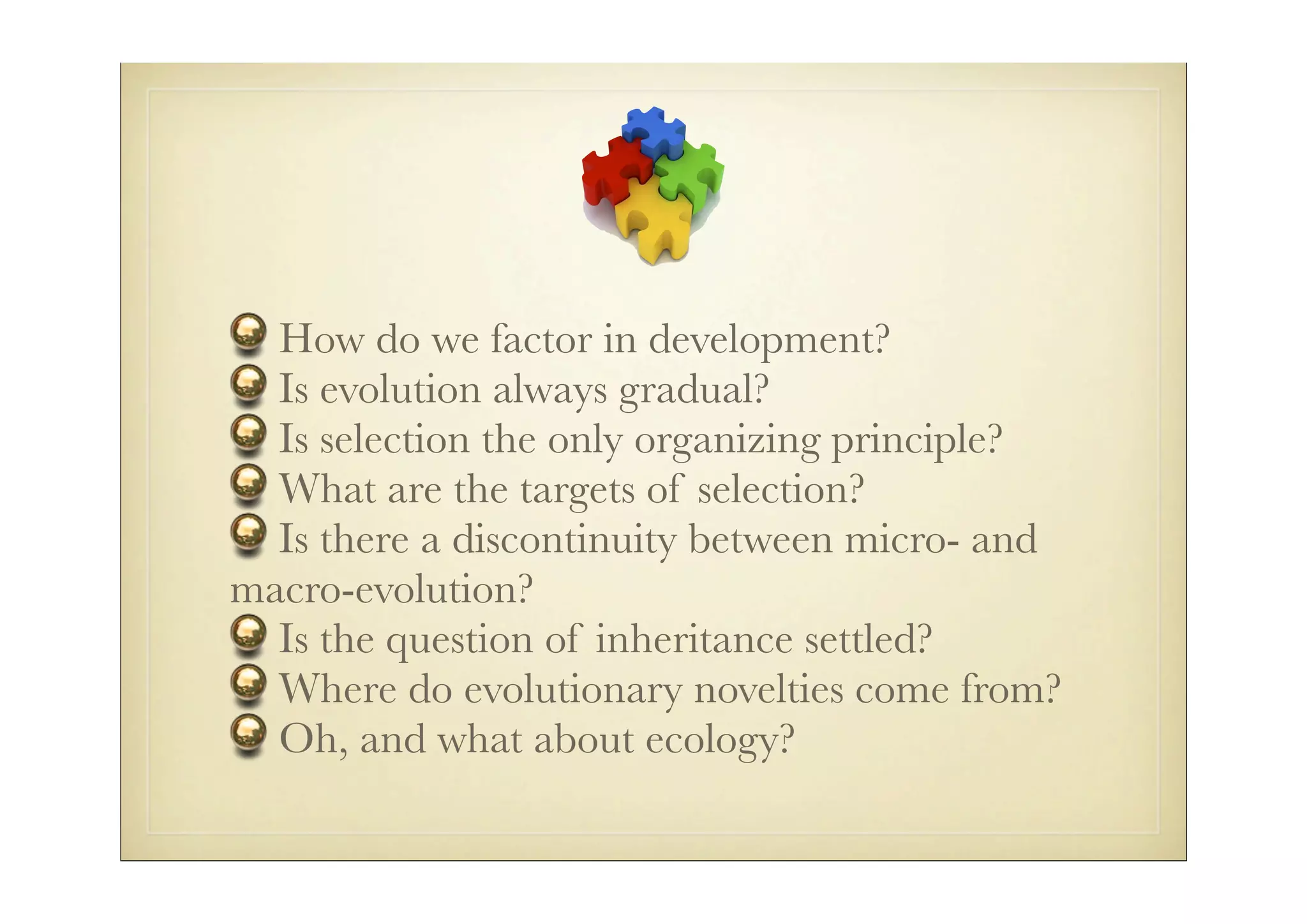
How do we factor in development?
  Is evolution always gradual?
  Is selection the only organizing principle?
  What are the targets of selection?
  Is there a discontinuity between micro- and
macro-evolution?
  Is the question of inheritance settled?
  Where do evolutionary novelties come from?
  Oh, and what about ecology?
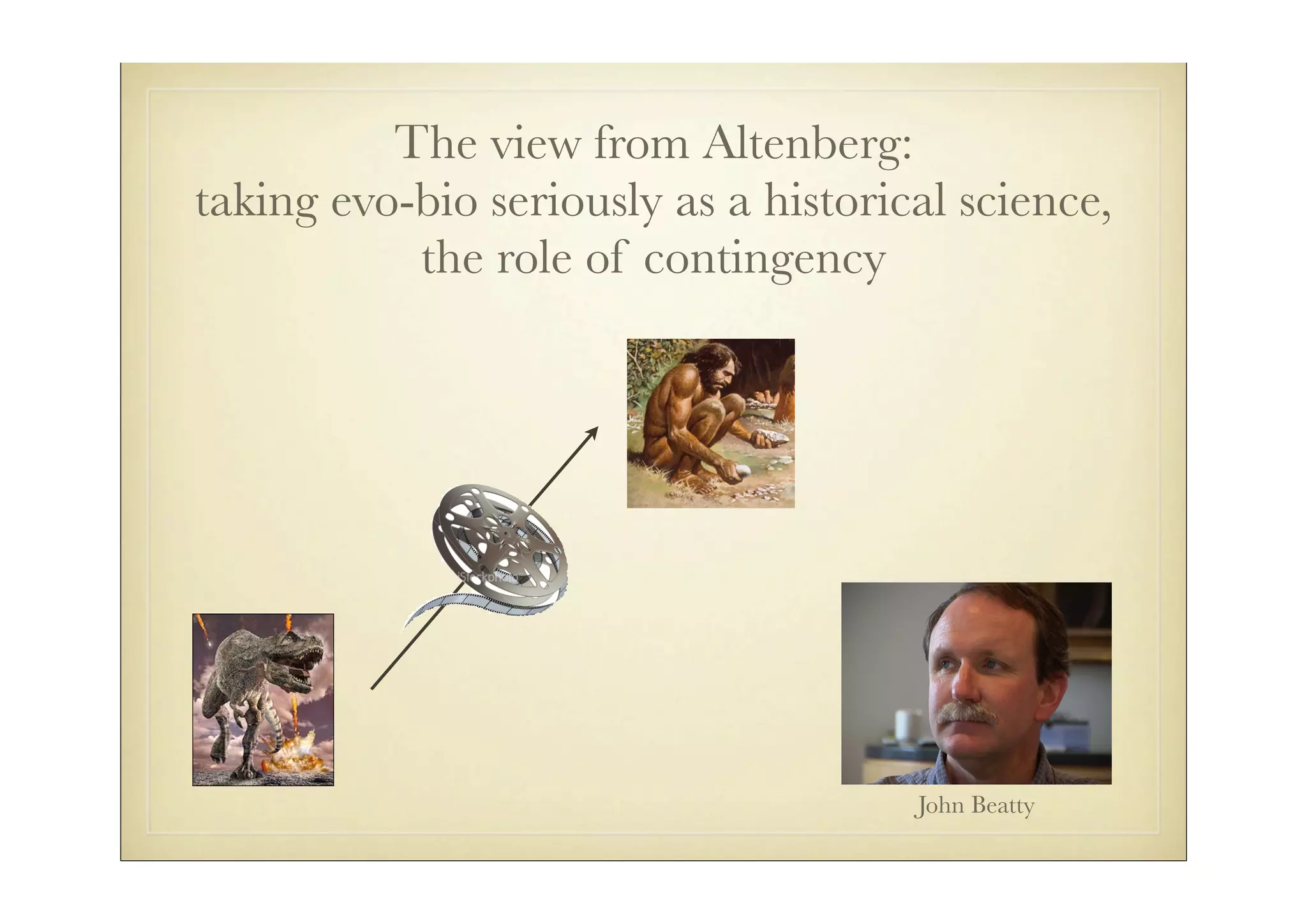
The view from Altenberg:
taking evo-bio seriously as a historical science,
           the role of contingency


                                      John Beatty
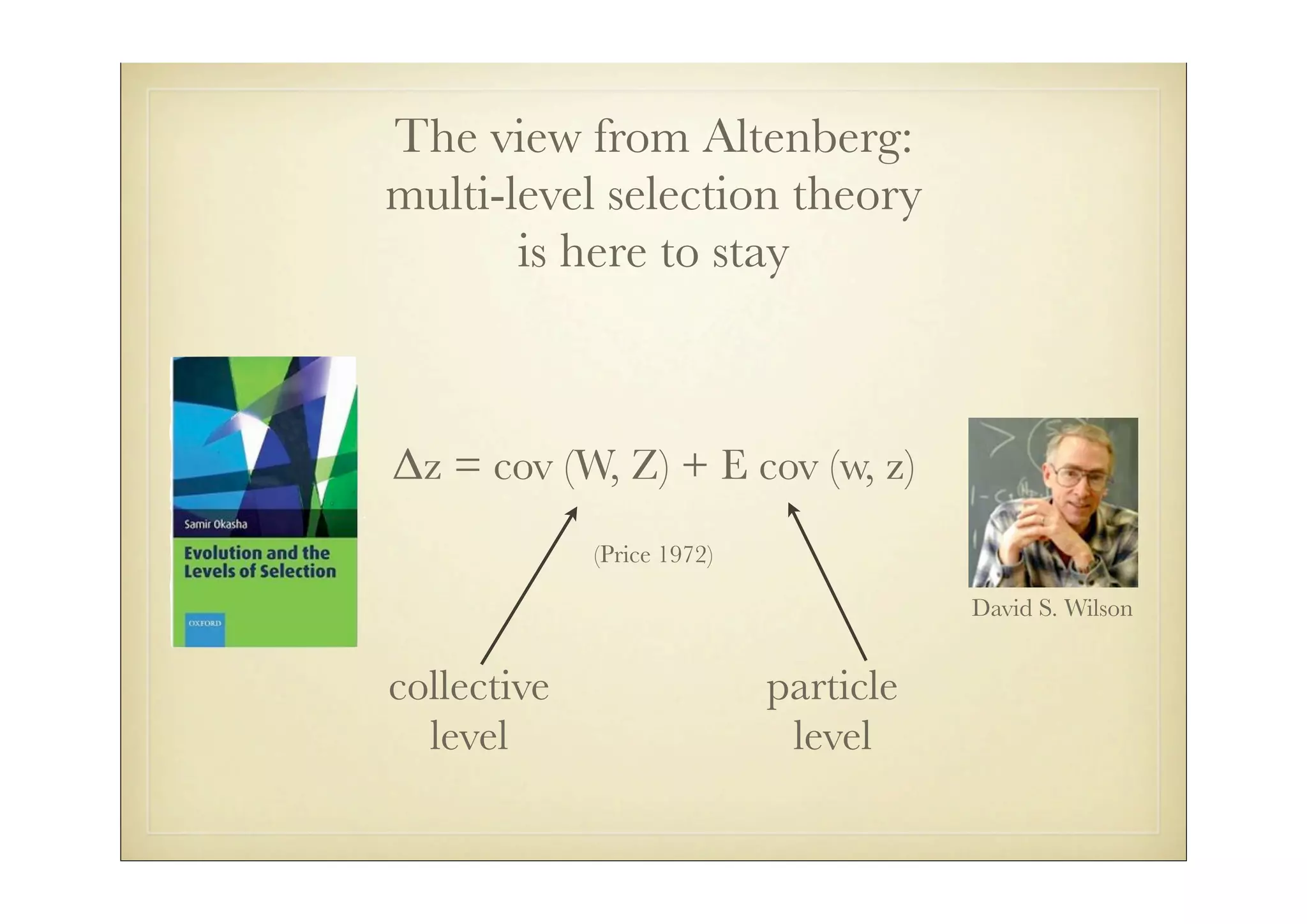
The view from Altenberg:
multi-level selection theory
       is here to stay


!z = cov (W, Z) + E cov (w, z)
             (Price 1972)

                                       David S. Wilson


collective                  particle
  level                      level
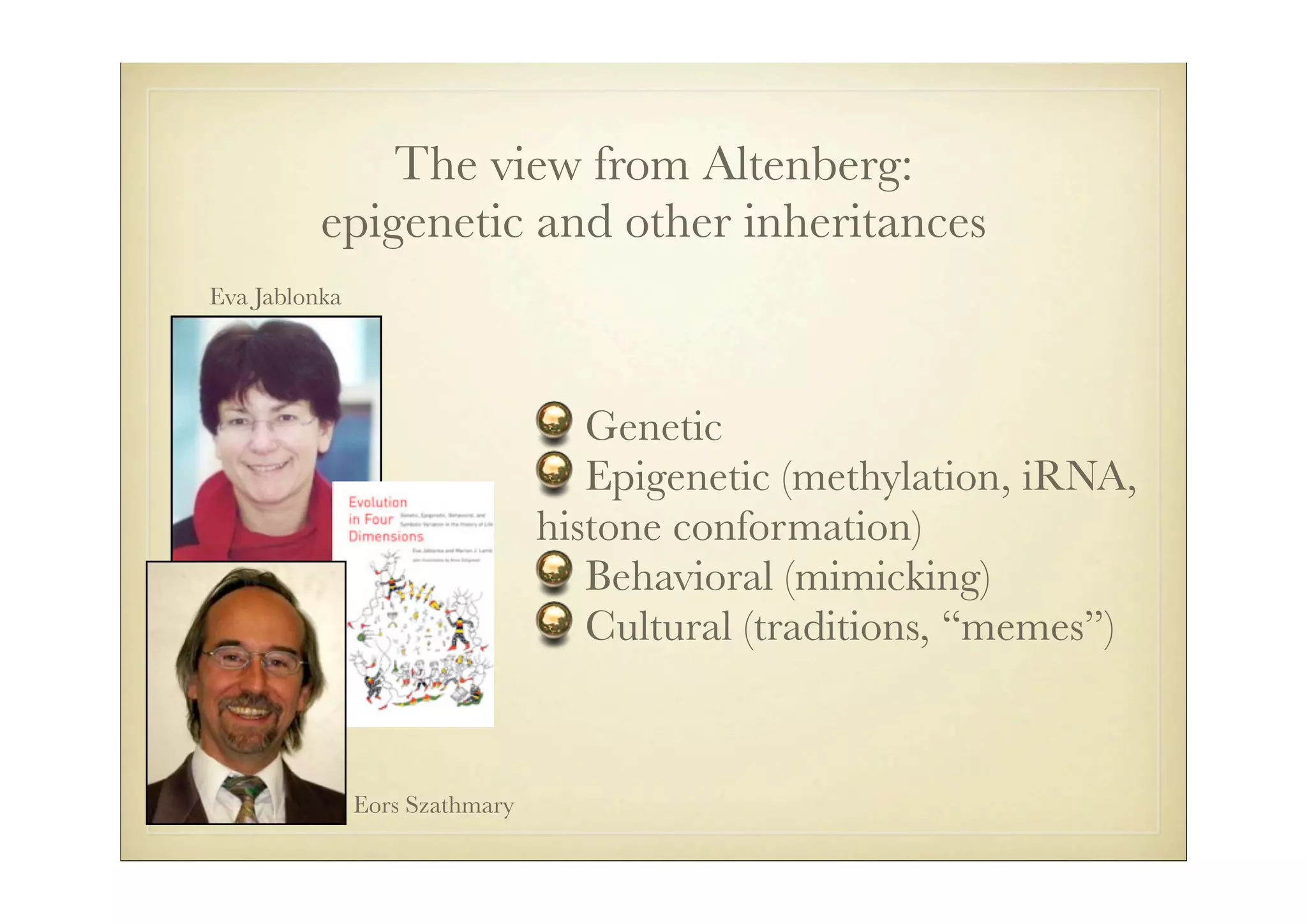
The view from Altenberg:
          epigenetic and other inheritances
Eva Jablonka


                                   Genetic
                                   Epigenetic (methylation, iRNA,
                                histone conformation)
                                   Behavioral (mimicking)
                                   Cultural (traditions, “memes”)


               Eors Szathmary
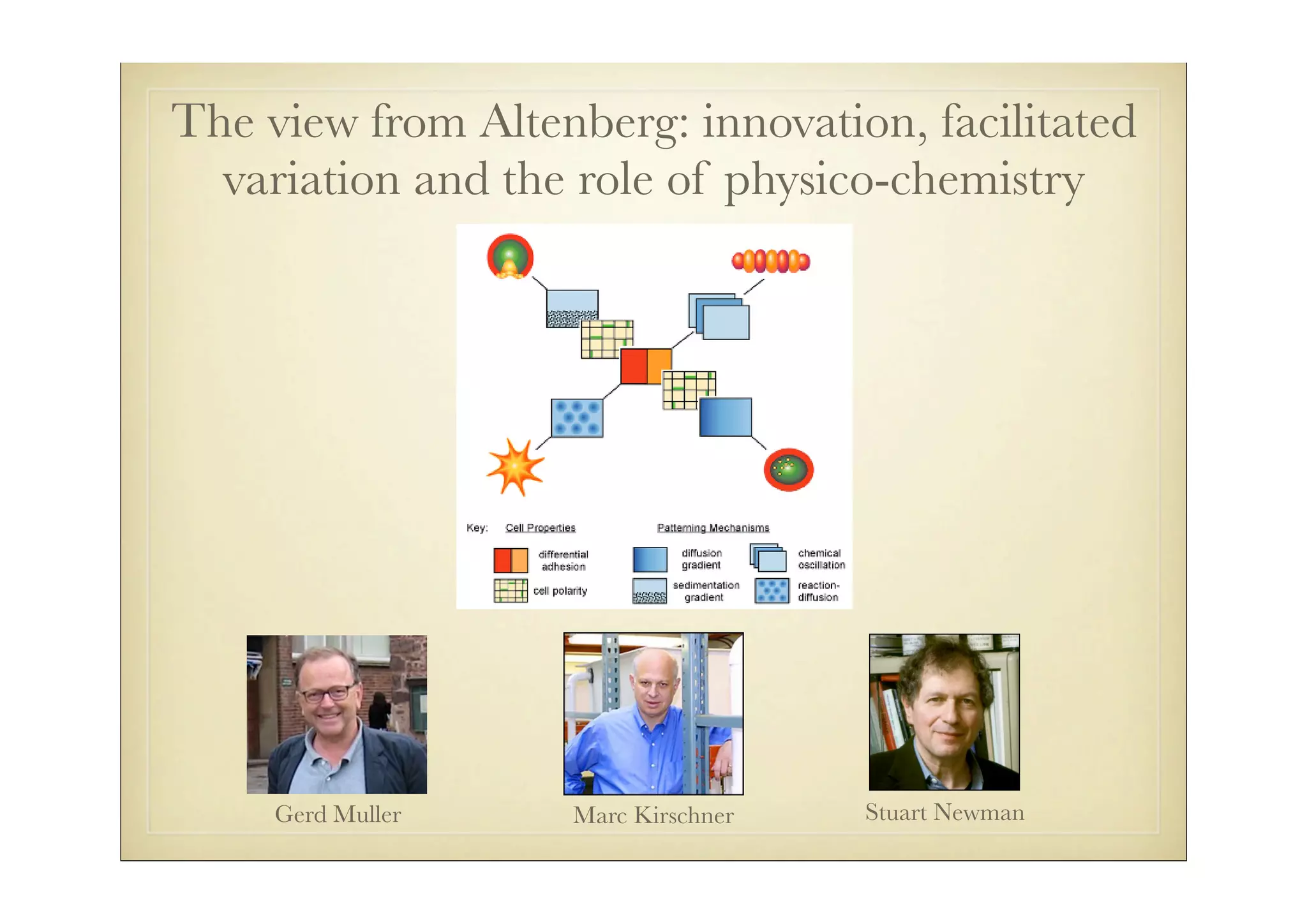
The view from Altenberg: innovation, facilitated
  variation and the role of physico-chemistry


     Gerd Muller   Marc Kirschner   Stuart Newman
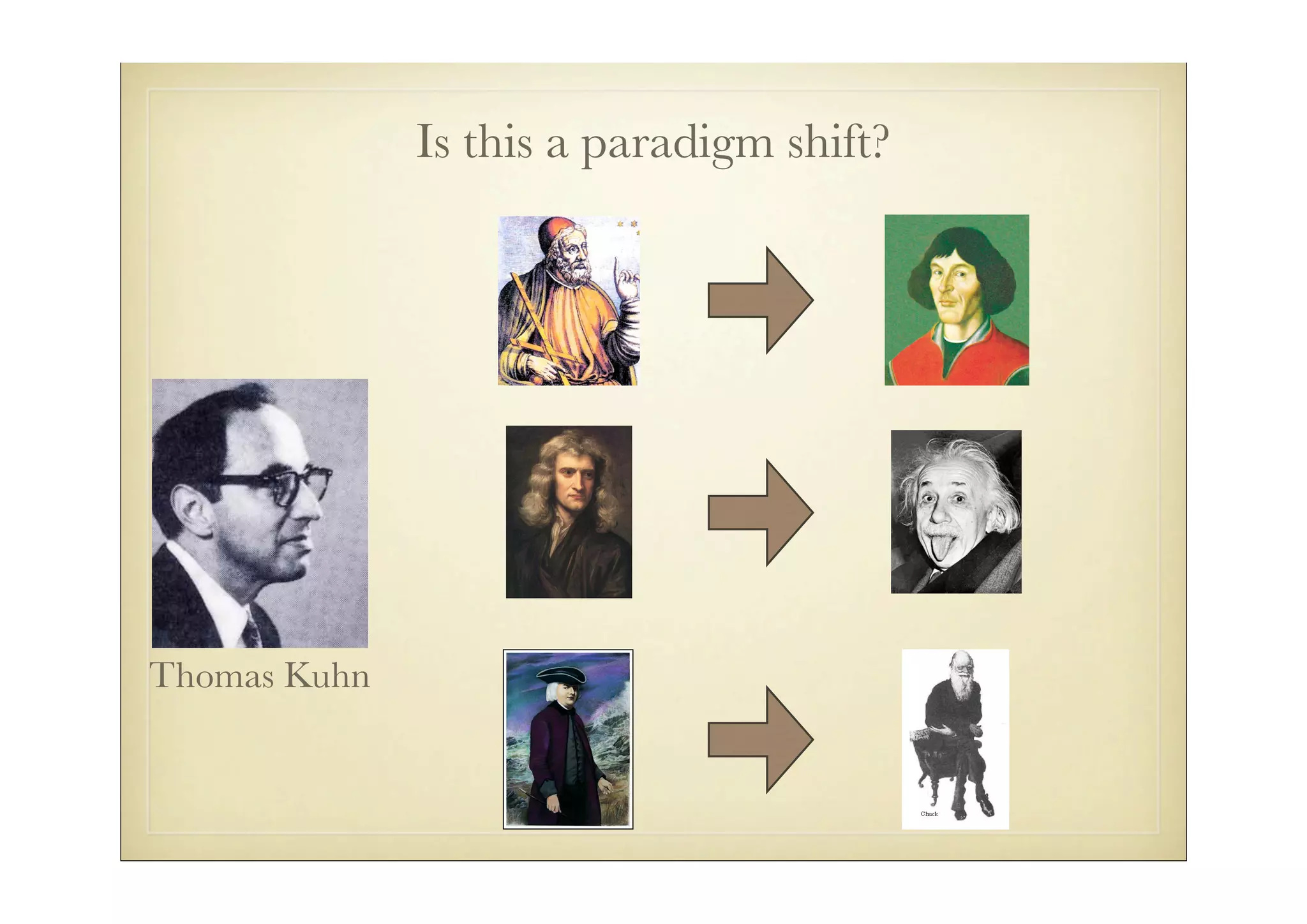
Is this a paradigm shift?


Thomas Kuhn
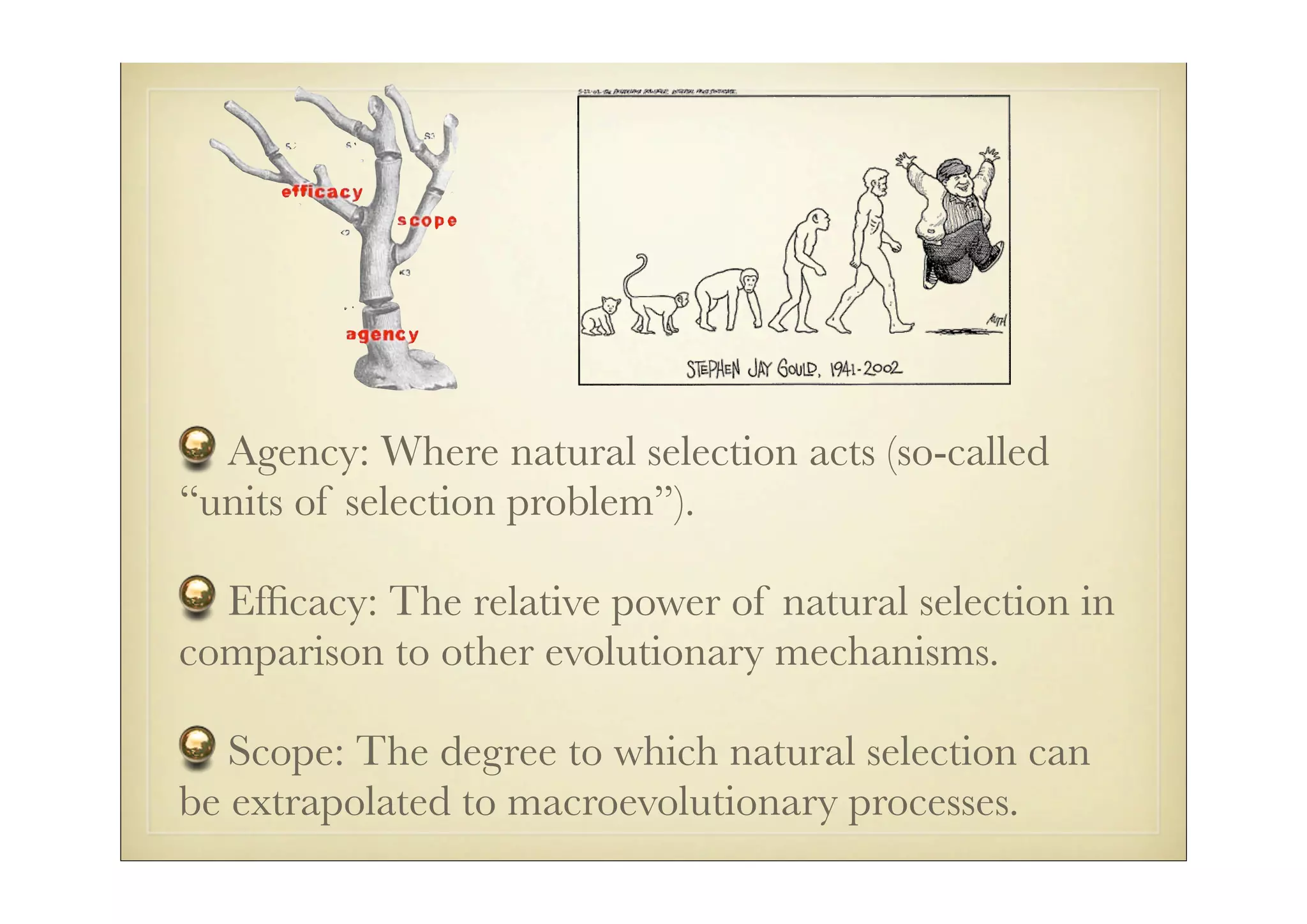
Agency: Where natural selection acts (so-called
“units of selection problem”).

  Efficacy: The relative power of natural selection in
comparison to other evolutionary mechanisms.

   Scope: The degree to which natural selection can
be extrapolated to macroevolutionary processes.
paleonto

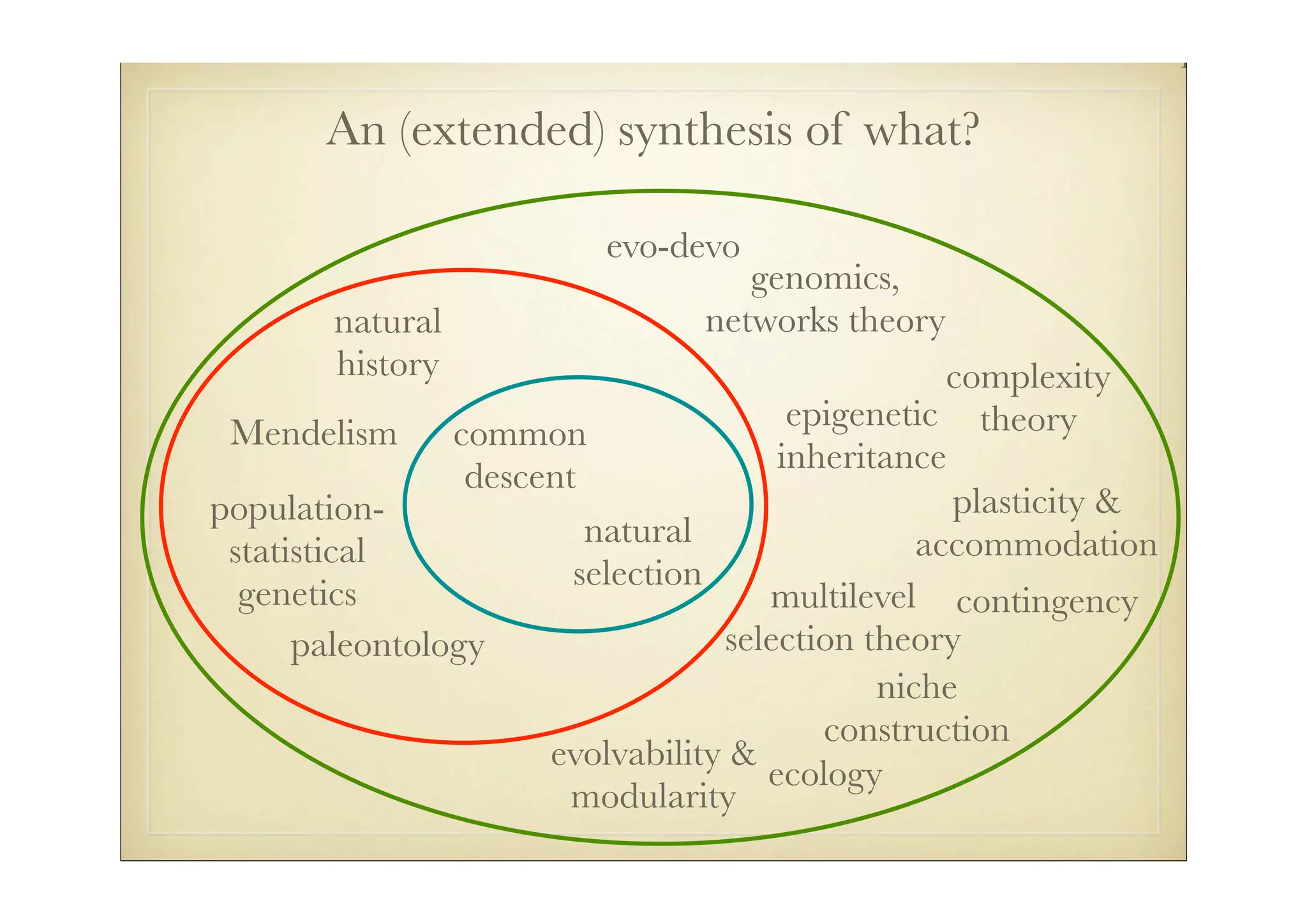
       An (extended) synthesis of what?

                         evo-devo
                                   genomics,
        natural                 networks theory
        history                                   complexity
                                       epigenetic theory
 Mendelism common
                                      inheritance
                 descent
population-                                       plasticity &
                         natural                accommodation
 statistical
                        selection
  genetics                           multilevel contingency
      paleontology                selection theory
                                             niche
                                         construction
                      evolvability &
                                     ecology
                        modularity
www.platofootnote.org

Evolución:"Toward an extended evolutionary synthesis?" Evosynthesis

  • 1.
    evolutionary theory: the viewfrom altenberg by Massimo Pigliucci
  • 4.
    Evolutionary Theory 1.0: Darwinism Common descent Natural selection Missing a theory of heredity (after having flirted with Lamarckism and blending inheritance)
  • 5.
    Evolutionary Theory 1.1: neo-Darwinism Rejection of Lamarckism Separation of soma and germ Wallace Weissman Still missing a theory of heredity...
  • 6.
    Evolutionary Theory 2.0: thebeginning of the Modern Synthesis Fisher Haldane Wright Compatibility between Mendelism and statistical genetics Theories of selection and random drift: birth of population genetics
  • 7.
    Evolutionary Theory 2.1: the mature Modern Synthesis Variation in natural populations Species concepts, speciation processes Compatibility of gradualism with paleontology Applicability of Darwinism to variety of mating and genetic systems in plants Dobzhansky Huxley Mayr Simpson Stebbins
  • 8.
    “The major tenetsof the evolutionary synthesis were that populations contain genetic variation that arises by random mutation and recombination; that populations evolve by changes in gene frequency brought about by random genetic drift, gene flow, and especially natural selection; that most adaptive genetic variants have individually slight phenotypic effects so that phenotypic changes are gradual; that diversification comes about by speciation, which normally entails the gradual evolution of reproductive isolation among populations; and that these processes, continued for sufficiently long, give rise to changes of such great magnitude as to warrant the designation of higher taxonomic levels.” Doug Futuyma
  • 9.
    Do we needEvolutionary Theory 3.0? Toward an Extended Synthesis “[the Modern Synthesis] is strictly a theory of genes, yet the phenomenon that has to be explained in evolution is that of the transmutation of form.” (Karl Popper)
  • 10.
    How do wefactor in development? Is evolution always gradual? Is selection the only organizing principle? What are the targets of selection? Is there a discontinuity between micro- and macro-evolution? Is the question of inheritance settled? Where do evolutionary novelties come from? Oh, and what about ecology?
  • 11.
    The view fromAltenberg: taking evo-bio seriously as a historical science, the role of contingency John Beatty
  • 12.
    The view fromAltenberg: multi-level selection theory is here to stay !z = cov (W, Z) + E cov (w, z) (Price 1972) David S. Wilson collective particle level level
  • 13.
    The view fromAltenberg: epigenetic and other inheritances Eva Jablonka Genetic Epigenetic (methylation, iRNA, histone conformation) Behavioral (mimicking) Cultural (traditions, “memes”) Eors Szathmary
  • 14.
    The view fromAltenberg: innovation, facilitated variation and the role of physico-chemistry Gerd Muller Marc Kirschner Stuart Newman
  • 15.
    Is this aparadigm shift? Thomas Kuhn
  • 16.
    Agency: Where naturalselection acts (so-called “units of selection problem”). Efficacy: The relative power of natural selection in comparison to other evolutionary mechanisms. Scope: The degree to which natural selection can be extrapolated to macroevolutionary processes.
  • 17.
    paleonto An (extended) synthesis of what? evo-devo genomics, natural networks theory history complexity epigenetic theory Mendelism common inheritance descent population- plasticity & natural accommodation statistical selection genetics multilevel contingency paleontology selection theory niche construction evolvability & ecology modularity
  • 18.