The document outlines 22 "laws of branding" that provide guidance on how to build and maintain strong brands. Some of the key laws discussed include contracting your brand focus to strengthen perception, using publicity to promote your brand before relying on advertising, owning a strong name in customers' minds, establishing credibility through leadership and quality, and developing sub-brands and sibling brands to dominate a category long-term. The laws suggest that consistency yet flexibility are important to brands staying relevant over time.
Introduction Most productsand services are bought, not sold. Branding is a more efficient way to sell things It creates a perception of being the best in the market
3.
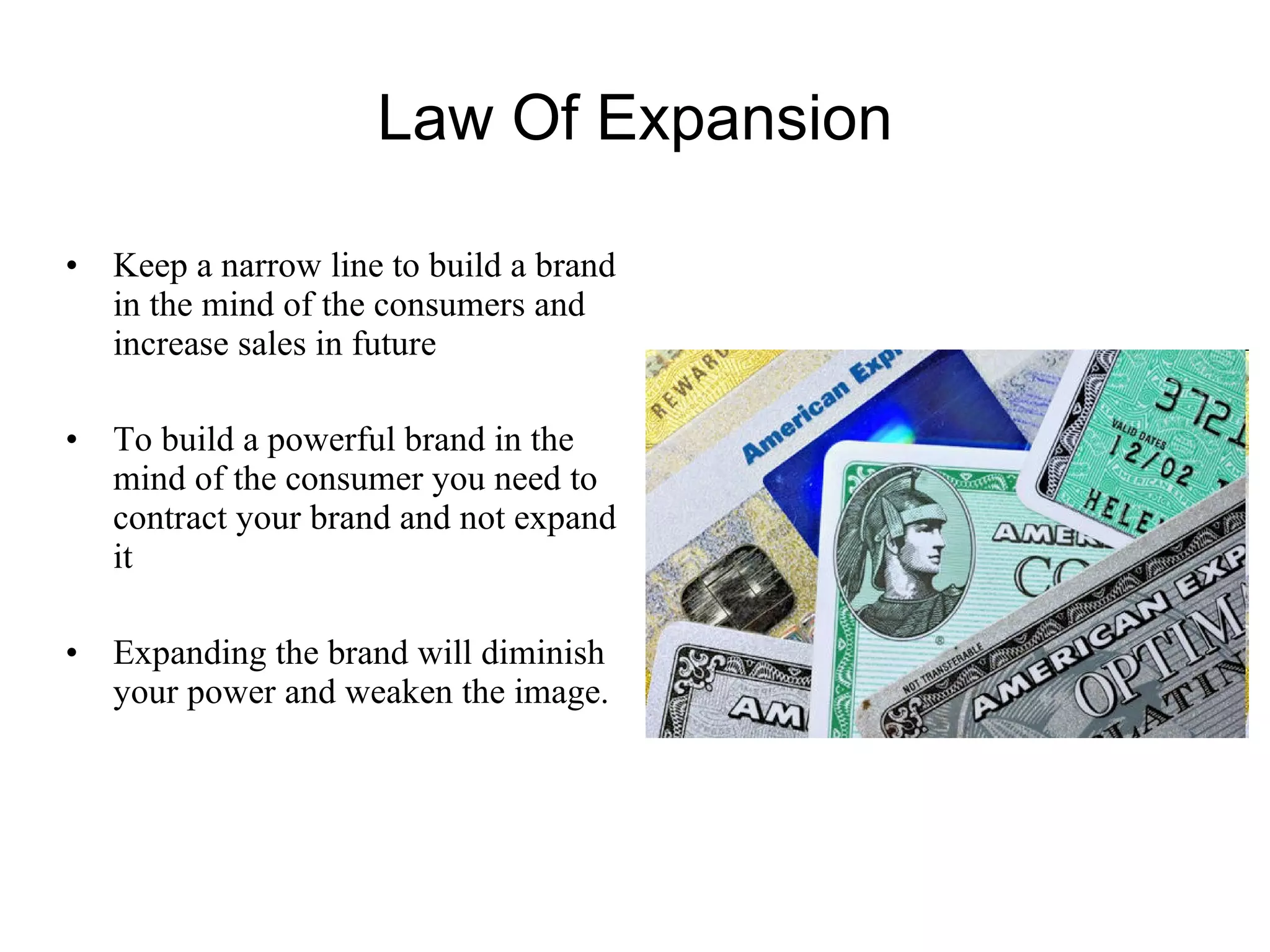
Law Of ExpansionKeep a narrow line to build a brand in the mind of the consumers and increase sales in future To build a powerful brand in the mind of the consumer you need to contract your brand and not expand it Expanding the brand will diminish your power and weaken the image.
4.
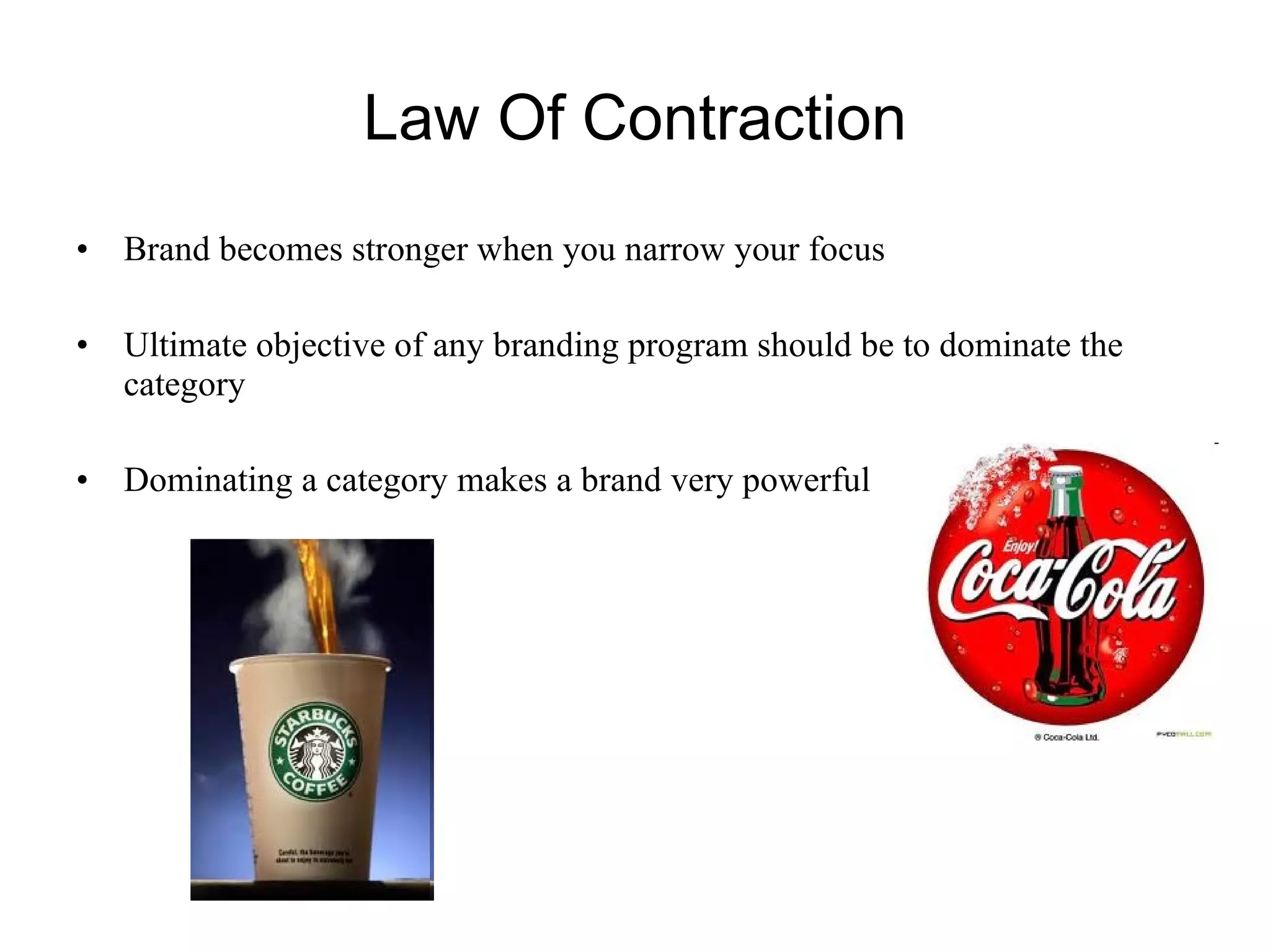
Law Of ContractionBrand becomes stronger when you narrow your focus Ultimate objective of any branding program should be to dominate the category Dominating a category makes a brand very powerful
5.
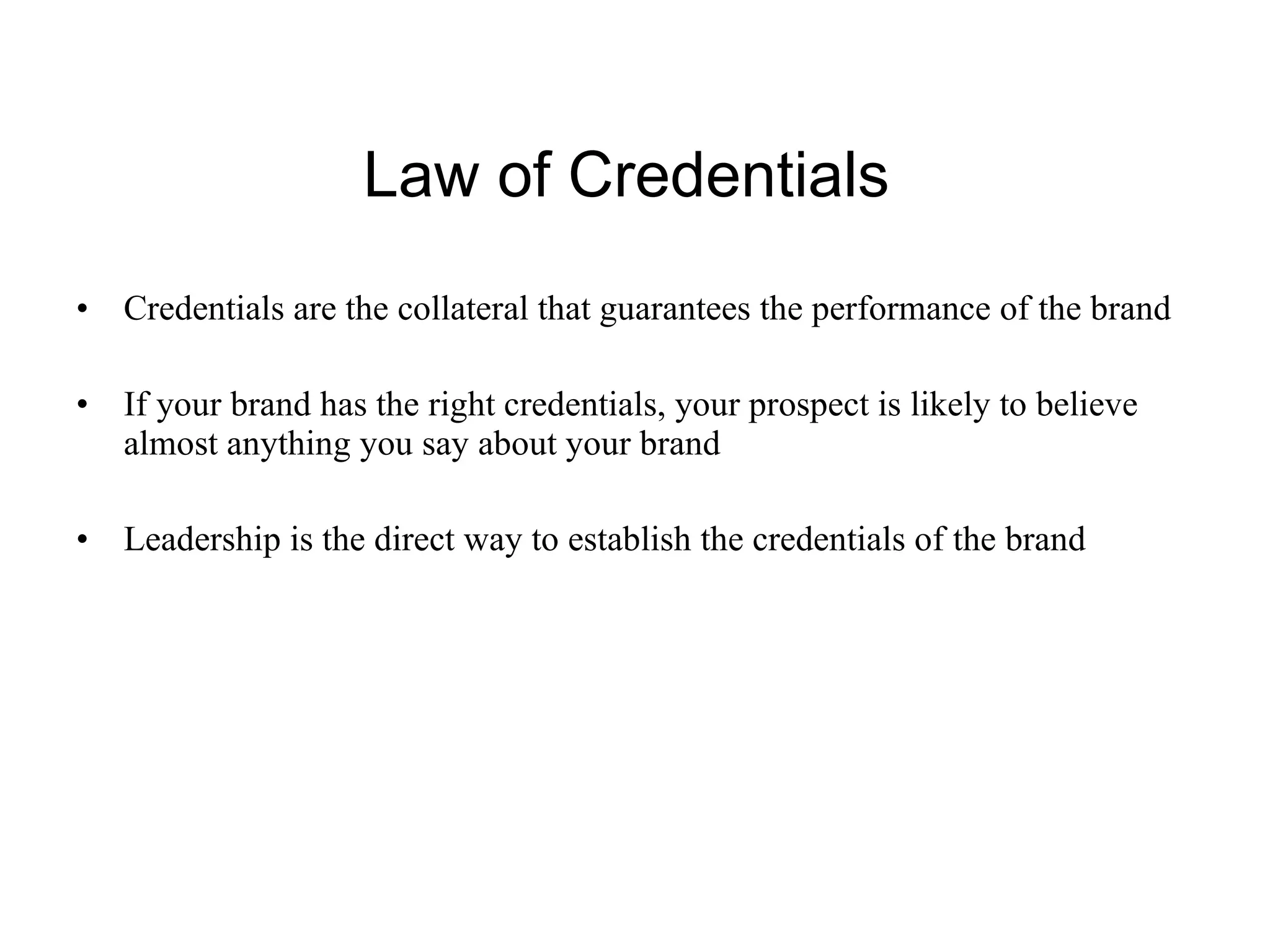
Law Of PublicityThe media wants to talk about what’s new, what’s first, what’s hot and not what’s better Brand strategies should be developed first from a publicity point of view
6.
Law of AdvertisingPublicity is a powerful tool but after sometime a brand outlives its publicity potential Advertising budget is like an insurance that will protect the brand against the looses caused by the competitive attacks Brands have to advertise to defend it position and maintain leadership among the competitors
7.
Law of WordBranding efforts should focus on owning a strong name in the prospect’s mind Once a brand owns a word its almost impossible for a competitor to take the word away from the brand
8.
Law of Credentials Credentials are the collateral that guarantees the performance of the brand If your brand has the right credentials, your prospect is likely to believe almost anything you say about your brand Leadership is the direct way to establish the credentials of the brand
9.
Law of QualityIf you want to build a powerful brand , you must build a powerful perception of the quality in the mind of the consumers Become a specialist than a generalist A specialist is generally perceived to know more ,therefore have higher quality than a generalist
10.
Law of CategoryLaunch a brand that creates a perception of being the first , the leader , pioneer / original Promote the new category, make the brand name stand for the category Expand the category by promoting the benefits of the category, not the brand
11.
Law of NameIn a short term brand needs a unique idea or concept to survive. Needs to own a word in the minds of the consumers. What really counts is the product itself and the benefits that it provides the prospect
Law of FellowshipIn order to build the category , brands should welcome healthy competition It brings more customers into the category
14.
Law of GenericFind regular word take, out of context and connote the primary attribute of your brand.
15.
Law Of CompanyBrand name should take precedence over company names If company name is used as a brand name customers see these names as brands Brand should be focus of attention, use the company name in a decidedly secondary way
16.
Law of Sub-brands The essence of the brand attribute you can own in the mind, sub brand takes the brand in the opposite direction What a manufacturer see as a mega brand, the consumer sees as a brand
17.
Law of Siblings A family of brands should be developed that will assure company’s control of a market for many decades The key to this approach is to make each sibling have unique individual brand identity Sibling strategy can be used to dominate the category over the long term
18.
Law of ShapeA horizontal shape will provide the maximum impact for your logo Law of Colour Red is a retail colour used to attract attention. Blue is the corporate colour used to communicate stability Select a colour that is opposite of your major competitors
19.
Law of Borders A brand should have no borders The consumer value the brand based on their origin Law of Consistency Brands should not change their essential characteristics Markets may change but brands shouldn’t Limitations combined with consistency is what builds a brand
20.
Law of ChangeBrand can be changed , but only infrequently and carefully If you want to change your brand first look into the minds of the consumer Law of Mortality No brand will live forever. Euthanasia is often the best solution Understand the nature of the brand and let the old brand have a natural death
21.
Conclusion Brands shouldnot blindly follow the trends , instead understand how to build , strengthen and maintain the brand