This document compares three re-sampling methods - linear, cubic spline, and Berger's - for spectral analysis of RR-interval series data from heart rate variability studies. For artificially generated uniformly and non-uniformly sampled test signals, the linear and cubic spline methods introduced phase shifting and lowered the frequencies, while Berger's method accurately reproduced the inherent frequencies except for some amplitude distortion. Similar trends were observed for real RR-interval series. The document concludes that Berger's interpolation provides the best re-sampling method as it significantly reduces spectral distortion compared to linear and cubic spline methods.
![B S Saini, Dilbag Singh & Vinod Kumar
Signal Processing: An International Journal (SPIJ), Volume (7) : Issue (1) : 2013 16
Comparison of Re-sampling Methods in the Spectral Analysis of
RR-interval Series Data
B S Saini sainibss@gmail.com
Electronics and Communication Engineering Department
Dr. B. R. Ambedkar National Institute of Technology
Jalandhar – 144 011, Punjab, India
Dilbag Singh singhd@nitj.ac.in
Instrumentation and Control Engineering Department
Dr. B. R. Ambedkar National Institute of Technology
Jalandhar – 144 011, Punjab, India
Vinod Kumar vinodfee@iitr.ernet.in
Electrical Engineering Department
Indian Institute of Technology
Roorkee-247667 (UA), India
Abstract
The heart rate variability (HRV), refers to the beat-to-beat alterations in heart rate, is analyzed
using RR-interval (RRI) series derived from the ECG signal as an interval between successive
QRS complexes. For deciphering the true HRV spectrum using FFT, the RRI series should be re-
sampled. But re-sampling often induces a noticeable distortion in the HRV power spectral
estimates. Thus, the re-sampling operation should be accurate enough in reproducing the finest
variation in the given signal. This paper compared three most widely used interpolation
techniques: linear, cubicspline, and Berger’s, as re-sampling methods, in an attempt to propose
an optimal method of interpolation for HRV analysis. The linear and cubicspline methods based
PSD estimates, for artificially generated non-uniformly sampled RRI series, introduce linear
phase shifting, and thus lower the HRV frequencies. On the contrary, Berger’s method efficiently
reproduced the inherent frequencies in the underlying signal except some amplitude distortion.
Further, similar trends in PSD estimates were obtained for real RRI series as well. Thus, it was
concluded that at the expense of some increase in computational complexity, the spectral
distortion has been significantly reduced using the Berger’s interpolation based re-sampling
method as compared to the linear and cubicspline methods.
Keywords: HRV, Interpolation, Re-sampling, Distortion, Phase-shift.
1. INTRODUCTION
The analysis of variations in instantaneous heart rate time series using normal-to-normal inter-
beat intervals or RR-interval (RRI) of the heart is known heart rate variability (HRV). In recent
years, the growing number of reports has shown that the analysis of HRV is a valid non-invasive
tool capable of providing adequate information on autonomic modulation of the sinoatrial node in
normal subjects and in patients with a variety of cardiac and non-cardiac diseases [1]-[5]. The
availability of this tool to explore the changing dynamics of individual cardiovascular regulation
profiles might lead to a deeper understanding of the role of the neural mechanisms in
cardiovascular medicine, and help improve the efficiency of targeted medical treatment. With
regard to this, the spectral analysis of HRV has gained an increasing attention and varieties of
techniques have been proposed for its assessment. This analysis allows the estimation of
location and strength of major oscillatory components of heart rate, which contribute to the signal
variance, and it is now largely utilized in HRV studies [6]. Although theoretical properties and
application methods of classical approach such as discrete Fourier transform (DFT), based on the](https://image.slidesharecdn.com/spij-50-160104151949/75/Comparison-of-Re-sampling-Methods-in-the-Spectral-Analysis-of-RR-interval-Series-Data-1-2048.jpg)
![B S Saini, Dilbag Singh & Vinod Kumar
Signal Processing: An International Journal (SPIJ), Volume (7) : Issue (1) : 2013 17
computation of periodogram, are extensively discussed in many books and articles on spectral
analysis of time series [7], but yet there are several problems which are still encountered in
practical analysis without definite guidelines to solve them.
The power spectrum of RRI fluctuations obtained using FFT [8]-[10] presents two principal
components: a low-frequency (LF) component around 0.1 Hz (0.04−0.15 Hz), whose changes in
power have been related to the sympathetic activity [1], [9], [11] and a high-frequency (HF)
component, in synchrony with respiration rate (0.15−0.4 Hz), which is considered to be an
expression of the respiration disturbances mediated by the vagal activity [10], [11]. A portion of
the spectral power is also concentrated in a very low-frequency (VLF) band (from 0.001 to about
0.04 Hz), which is probably due to slow mechanisms of regulation such as humoral and
thermoregulatory factors [1]. Further, for the accurate assessment of an HRV signal there are
three main prerequisites that need to be taken care of (1) re-sampling frequency; (2) segment
length; and most importantly (3) type of interpolation method used for re-sampling the RRI series.
Out of these three, the first condition i.e. value of re-sampling frequency, has now almost got
standardized to 4 Hz [12], secondly the segment length of 256 samples has also now become a
standard [13]-[15]. But for the third requirement, after an extensive literature survey on ECG
spectral estimation it has been observed that there is lot of inconsistency in the selection of an
interpolating method for re-sampling the RRI series and also an adequate justification about
which interpolating method is most suitable in HRV studies is usually lacking, and most of the
studies are silent on this particular approach. Thus, to analyze the frequency domain measures
of HRV using non-parametric techniques, there is an urgent need to optimize the interpolation
method used for re-sampling the RRI time series.
Moreover, in general the re-sampling operation has been used for variety of purposes in many
signal and image processing applications. When re-sampling a biomedical image or data, using
interpolation, to a new set of coordinates there is often a significant loss in image or signal quality
and it is reflected in terms of distortion in the spectral estmates. To preserve the signal quality,
the interpolating function used for re-sampling (the RRI series) should be such that which induces
the least distortion in the spectral estimates [16]. In spite of the fact that several interpolating
functions have been used for re-sampling the discrete data but the functions which were most
commonly used for re-sampling the RRI series are: linear interpolation [9], [10], [12]-[15], [17],
[18], parabolic interpolation [19], [20], spline interpolation [18], [21]-[23], and Berger’s method of
interpolation [21], [24], [25]. The choice of an interpolating function to be used for re-sampling
depends upon the task being performed. Its choice becomes more critical when the re-sampling
process is used prior to further signal processing.
In this paper, to determine which interpolating method would provide the best re-sampling
operation for RRI series, three methods were compared: A) linear, B) cubicspline, and C)
Berger’s. Moreover, such comparative performance evaluation has not yet been reported in the
literature and no such systematic experiments were published earlier which could infer that how
and in what sense, these interpolation based re-sampling methods affects HRV metric
calculations. Consequently, a need was felt to carry out a thorough comparative study to
demonstrate the most suitable interpolation based re-sampling method for RRI time series. This
study was conceived to analyze the effect of various interpolations based re-sampling methods in
HRV quantification. The focus has been on the selection of an appropriate interpolating function
for the true representation of HRV. We selected for this study an artificially simulated, uniformly
and non-uniformly sampled test signals for the predefined set of frequency components in the
autonomic range (0 to 0.5 Hz) [1], owing to their completely known characteristics and nature.
Here uniformly sampled test signals are generated at a uniform sampling interval of 250 msec (for
FFT based spectral estimation of evenly sampled data) and non- uniformly sampled test signals
are generated at a sampling instants of actual RRI records (for FFT based spectral estimation of
unevenly sampled data after an interpolation based re-sampling), from a sine wave. The
emphasis is on the comparison of spectra keeping in view the smoothness and accuracy of
spectral estimates. After the validation of results on test as well as on real signals it has been
found that the spectral estimates obtained using Berger’s interpolation based FFT method are](https://image.slidesharecdn.com/spij-50-160104151949/75/Comparison-of-Re-sampling-Methods-in-the-Spectral-Analysis-of-RR-interval-Series-Data-2-2048.jpg)
![B S Saini, Dilbag Singh & Vinod Kumar
Signal Processing: An International Journal (SPIJ), Volume (7) : Issue (1) : 2013 18
more accurate in terms of reproduction of spectral peaks, resolution, smoothness and relative
magnitudes of each spectral component, as compared to that of linear and cubicspline
interpolation based PSD estimates.
2. RE-SAMPLING
Re-sampling is the process of transforming a discrete signal which is defined at one set of
coordinate locations to a new set of coordinate points. It can be divided conceptually into two
processes; interpolation of the discrete signal to a continuous signal and then sampling the
interpolated signal. Frequently, re-sampling is used to increase the number of points in the signal
to improve its behaviour for analysis. This process of filling in points between the data points is
often thought of as interpolation. However, more accurately, the process of interpolation is fitting
a continuous function to the discrete points in the signal. This continuous function can then be
sampled at whatever points are necessary. In implementing re-sampling, interpolation and
sampling are often combined so that the signal is interpolated at only those points which will be
sampled.
Re-sampling to a larger matrix is often used prior to HRV signal processing in order to make the
analysis more certain about the frequency variations in the signal. Increasing the matrix size by
re-sampling cannot increase the resolution of the signal or the information in the signal. (Signal
processing can only reduce the information in the signal.) The purpose of the re-sampling is to
reduce the high-frequency artifacts in the signal analysis.
2.1.Interpolation and Sampling
A signal can be exactly reconstructed from samples if the signal is band limited and sampling is
done at a frequency above the Nyquist frequency. But, however, that unlike the continuous
signal, the sampled signal is not band limited. Sampling can be viewed as replicating the
frequency spectrum at multiples of two pi times the sampling frequency. Interpolation, in contrast,
is the opposite of sampling. It produces a continuous signal from a discrete signal. In order to
reproduce a band limited function from a set of samples, the interpolating function should be an
ideal low-pass filter. An ideal low-pass filter removes the replicates of the frequency spectrum
introduced by the sampling. This suggests that the interpolating function which should be used for
re-sampling is an ideal low-pass filter [26].
There are, however, practical considerations which make this theoretical re-sampling technique
difficult in the context of HRV signal processing. First, the HRV signal which is to be analyzed is
of finite extent. Therefore, this theoretical description which assumes that the signals are of
infinite extent is only an approximation; and there will be variations from the theoretical results.
Second, because of the computational burden in handling the RRI records, the filtering usually
take place by convolving with the finite impulse response filters of short duration. For these
reasons, an exact interpolation cannot be performed on heart rate series; and consideration must
be given to tradeoffs between the accuracy and computational efficiency.
3. METHODS USED
The theory of three interpolation based re-sampling methods and the FFT method of power
spectrum estimation that are implemented in this study are discussed below.
3.1.Interpolation Based Re-sampling Methods
The interpolation is a method of constructing new data points within the range of a discrete set of
known data points. In order to convert the real RRIs into new values which are evenly spaced in
time, the different interpolation functions that we used are as follows:
3.1.1 Berger’s Method of Interpolation
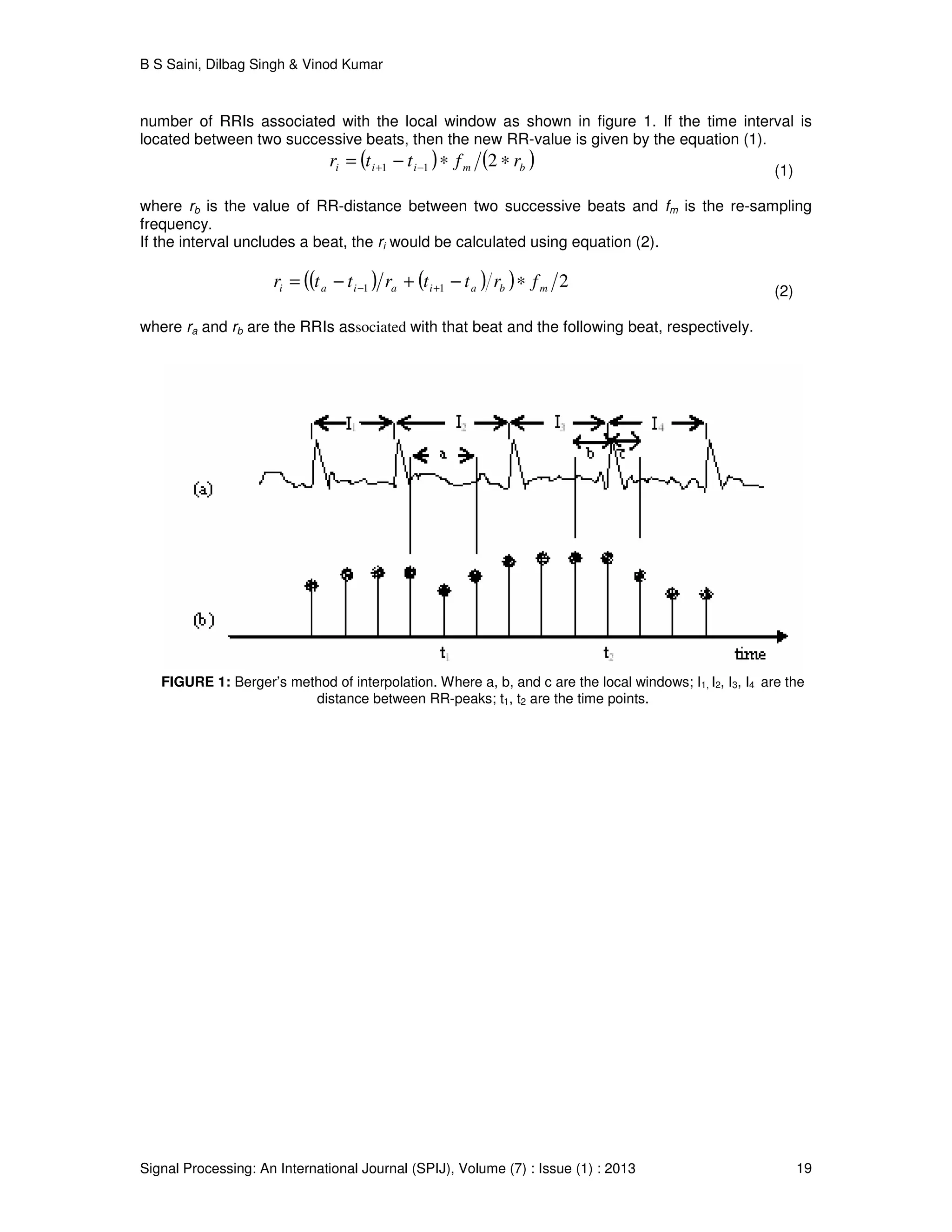
In this method a local window is defined over each point ti as the time interval extends from the
previous sample to the next [24], [25]. Thus assigning each ti a new RR-value coinciding with the](https://image.slidesharecdn.com/spij-50-160104151949/75/Comparison-of-Re-sampling-Methods-in-the-Spectral-Analysis-of-RR-interval-Series-Data-3-2048.jpg)
![B S Saini, Dilbag Singh & Vinod Kumar
Signal Processing: An International Journal (SPIJ), Volume (7) : Issue (1) : 2013 20
3.1.2 Linear Interpolation
Linear interpolation also known by lerping - is a method of curve fitting using linear polynomials. It
is one of the simplest methods of interpolation. With this method the new sequence of values
which are evenly spaced in time are derived at each time instant ti according to the re-sampling
frequency of 4 Hz [25]. For each ti its new associated RR-value is calculated using equation (3).
( ) ( ) ( )( )ababaiai ttrrttrr −−∗−+= (3)
where ta and tb are the times associated with the beats before and after time ti. ra and rb are their
associated RR-values and ri’s are the new evenly spaced RR-values.
3.1.3 Cubicspline Interpolation
The basic idea behind cubicspline interpolation is based on the concept of drawing smooth
curves through a number of data points. This spline consists of weights attached to a flat surface
at the points to be interpolated. A flexible strip is then made to bend across each of these
weights, resulting in a smooth curve. In mathematical spline, the weights are the coefficients of
cubic polynomials used to interpolate the data. These coefficients bend the line so that it passes
through each of the data points without any break in continuity. It uses the low degree
polynomials in each of the intervals and chooses the polynomial pieces such that they fit together
smoothly. Mathematically it can be expressed by the piece-wise function of the form given by
equation (4) [21]-[23].
( )
( )
( )
( )
<≤
<≤
<≤
=
−− nnn xxxifxs
xxxifxs
xxxifxs
xS
11
322
211
(4)
where si is the third degree polynomial defined using equation (5)
( ) ( ) ( ) ( ) iiiiiiii dxxcxxbxxaxs +−+−+−=
23
(5)
for i = 1, 2,…, 1−n
The first and second derivatives of these 1−n equations are fundamental to this process, and
they are defined using equations (6) and (7).
( ) ( ) ( ) iiiii cxxbxxaxs +−+−=′ 23 2
(6)
( ) ( ) iiii bxxaxs 26 +−=′′
(7)
for i = 1, 2…, 1−n
After solving the above defined generalized equations from (4)–(7), we get the new RR-values
which are evenly spaced in time.
3.2.FFT Based Method
The FFT based technique has been used on Hann windowed data for the power spectrum
estimation of the uniformly and non-uniformly sampled simulated test signal. The power spectrum
which is computed using FFT is variance normalized [12]-[15] and is represented as amplitude
spectral density functions defined using equation (8).](https://image.slidesharecdn.com/spij-50-160104151949/75/Comparison-of-Re-sampling-Methods-in-the-Spectral-Analysis-of-RR-interval-Series-Data-5-2048.jpg)
![B S Saini, Dilbag Singh & Vinod Kumar
Signal Processing: An International Journal (SPIJ), Volume (7) : Issue (1) : 2013 21
( ) ( ) ( )fkXfkXfkX R ∆+∆=∆ 2
1
2
(8)
( )fkX R ∆ and ( )fkX ∆1 are the real and imaginary parts of complex spectrum ( )fkX ∆ , computed
according to equation (9) [14], [15].
( ) ( )∑
−
=
−
=
1
0
)/2(1 N
n
Njkn
enx
N
kX π
(9)
4. POWER SPECTRAL ANALYSIS
The power spectral analysis of HRV provides an estimation of the variability, distributed as a
function of frequency. In this paper, spectral analysis was first performed on uniformly sampled
and non-uniformly sampled test signals generated using a sine wave model, in order to have
control over the frequency variations, instead of on an actual data. Later on, the analysis was
performed on actual RRI series data as well.
4.1.Generation of Test Signals
In order to induce desired frequency variations, uniformly sampled test signal x1(n), and non-
uniformly sampled test signals x11(n), x12(n), x13(n), and x14(n) are generated for fixed set of
frequency components: f1=0.008 Hz, f2=0.09 Hz, f3=0.13 Hz, f4=0.25 Hz, and f5=0.4 Hz
respectively in the autonomic range from 0 Hz-0.5 Hz, using a sine wave equation (10). For the
generation of non-uniformly sampled test signals, actual RRI records of four healthy subjects
have been used as sampling instants and the procedure that is adopted for acquiring the RRI
data from healthy volunteers is as follows: The ECG data of standard Lead-II were obtained for
the duration of 15 minutes, from selected healthy subjects using BIOPAC
®
MP100 system in a
quiet room, in comfortable light and temperature levels. To achieve the good signal quality, the
subjects were made to rest in supine position for 10 minutes prior to recording, so that the subject
may stabilize to the laboratory environment. The recorded signals were A/D converted at 500 Hz
sampling frequency, 12-bit resolution, and then stored and processed on an Intel PIV-processor.
The recognition of the QRS complexes in the ECG and the detection of R-wave were performed
by means of the software developed by our group [27]-[29]. Finally the RRI series is derived from
R-waves of ECG records.
( ) ( ) ( ) ( ) ( )[ ]tnftnftnftnftnfAxn ∆+∆+∆+∆+∆= 54321 2sin2sin2sin2sin2sin πππππ
(10)
where sampling frequency Hz
t
fs 41 =
∆
= , amplitude A=2, and n is the time-index.
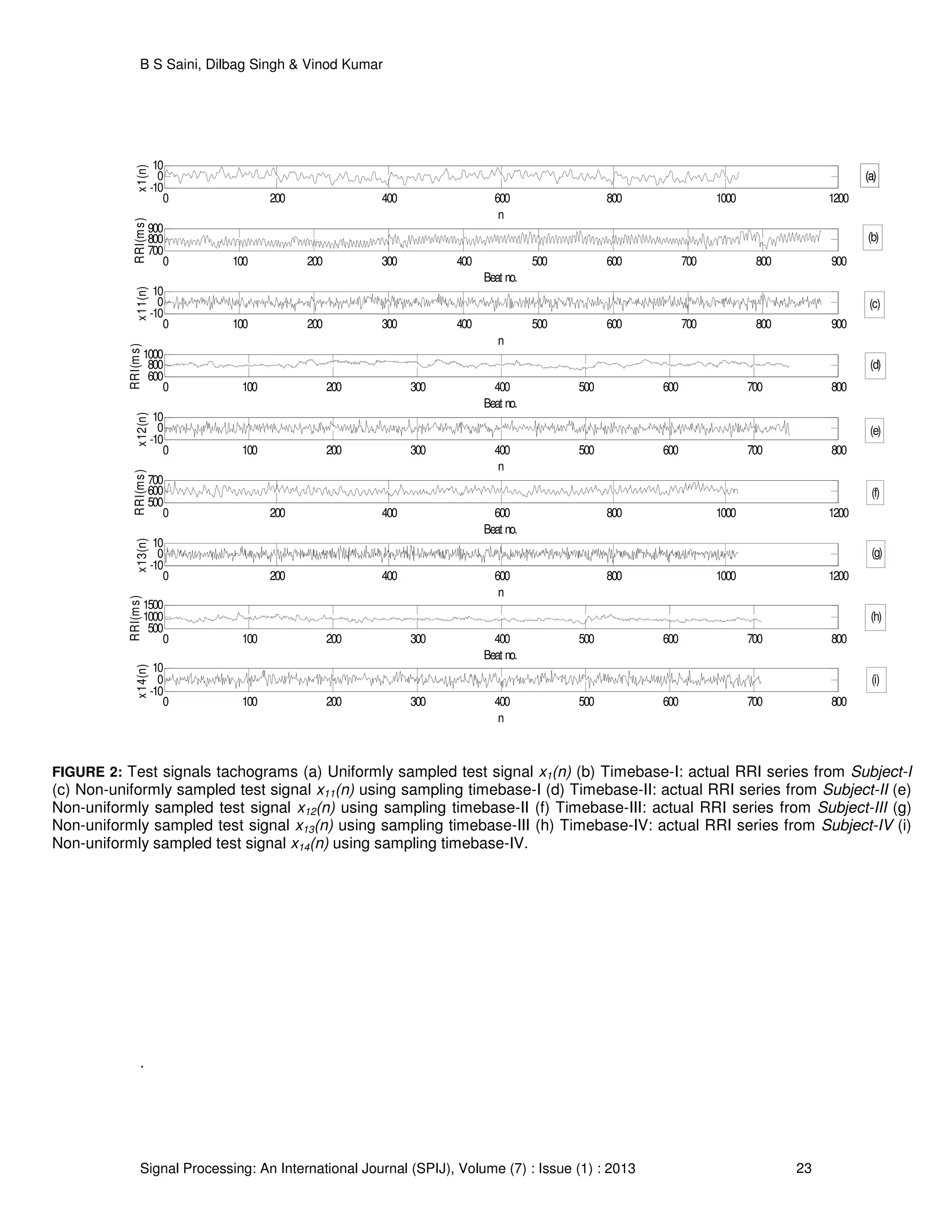
• Uniformly sampled test signal x1(n) is shown in figure 2(a).
• Non-uniformly sampled test signals from x11(n) to x14(n) are generated, by using the sampling
instants of RRIs series shown in figures 2(b), (d), (f), and (h), using equation (10) shown in
figures 2(c), (e), (g), and (i) respectively.
4.2.Spectral Estimation Results for Test Signals x1(n) and x11(n) to x14(n)
The results in the form of comparative analysis between an idealized FFT based power spectrum
of evenly sampled data (without any re-sampling) i.e. for signal x1(n), and an FFT based power
spectrum of non-uniformly sampled data i.e. for signals x11(n) to x14(n), after re-sampling are as
follows:
4.2.1 PSD Estimation of Uniformly Sampled Test Signal x1(n) Using FFT Method Without
Re-sampling (idealized case)
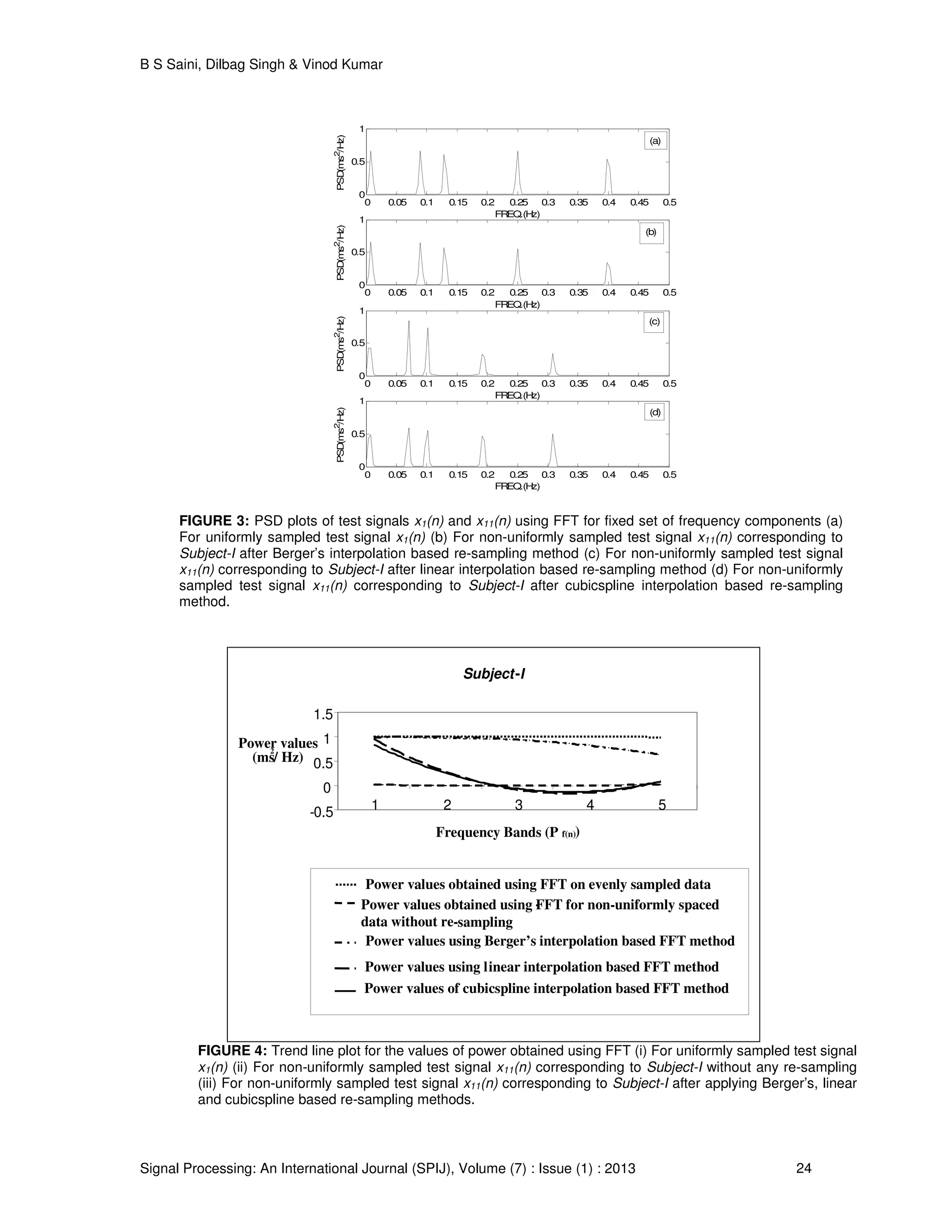
The FFT- based PSD plot of signal x1(n) is shown in figure 3(a). Its power spectrum shows
five distinct spectral peaks at exactly the f1, f2, f3, f4, and f5 frequency locations, as given in test
signal. The power values of frequencies in the pre-selected frequency bands are given in table 1,](https://image.slidesharecdn.com/spij-50-160104151949/75/Comparison-of-Re-sampling-Methods-in-the-Spectral-Analysis-of-RR-interval-Series-Data-6-2048.jpg)
![B S Saini, Dilbag Singh & Vinod Kumar
Signal Processing: An International Journal (SPIJ), Volume (7) : Issue (1) : 2013 22
which maintains approximately same magnitude in the entire power spectrum. The trend followed
by these values of power in the PSD plot is shown by drawing a dotted black coloured trend line
as in figure 4. The shape of this line is straight which signifies that all the frequencies have been
resolved with equal strength and representing a high spectral resolution and accuracy.
4.2.2 PSD Estimation of Non-uniformly Sampled Test signal x11(n) Using Re-sampling
Based FFT Method
The spectra obtained by using standard techniques of spectral analysis, such as FFT, may be
distorted if the input data are not evenly sampled over time [30], [31]. This is due to the fact that
when sampling is a function of beats, rather than seconds, the sampling rate will lack
interindividual and intertask consistency due to differences in heart rate. In this part of work, when
power spectrum estimation of raw RRI has been done using FFT without any re-sampling, then it
has been observed that there is almost zero power contained in the spectral peaks at all the five
preselected frequency bands corresponding to the five fixed set of frequency components. These
values of power are given in table 1 and are also shown by plotting](https://image.slidesharecdn.com/spij-50-160104151949/75/Comparison-of-Re-sampling-Methods-in-the-Spectral-Analysis-of-RR-interval-Series-Data-7-2048.jpg)
![B S Saini, Dilbag Singh & Vinod Kumar
Signal Processing: An International Journal (SPIJ), Volume (7) : Issue (1) : 2013 25
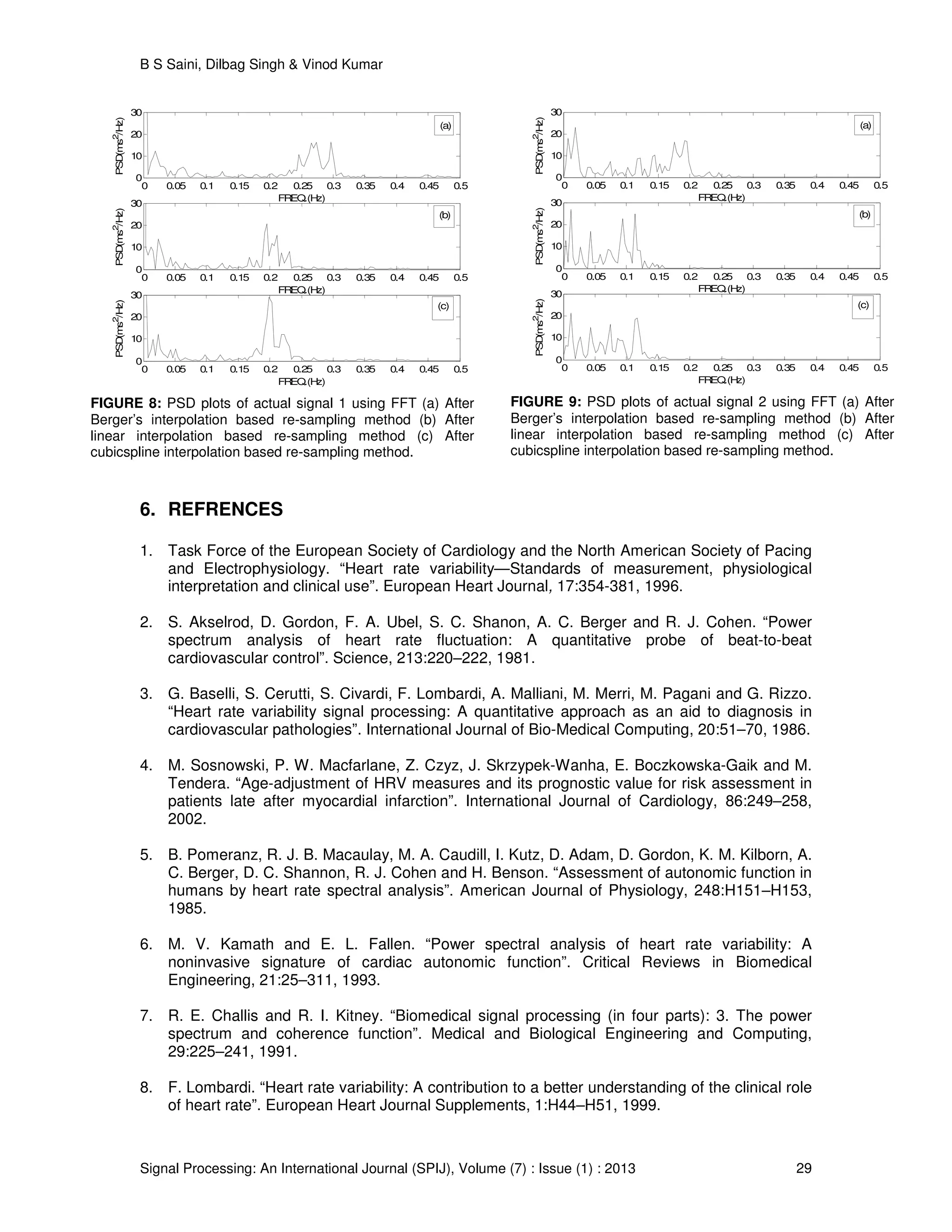
TABLE 1: Power values of test signals for fixed set of frequency components.
Pf 1 =0.000 Hz-0.01563 Hz, Pf 2 =0.08203 Hz-0.09766 Hz, Pf 3 =0.1211 Hz-0.1367 Hz, Pf 4 =0.2422 Hz-0.2578
Hz,
Pf 5 =0.3906 Hz-0.4064 Hz
a trend line in figure 4. This represents a very high spectral distortion and is the case of total
spectral smearing. This justifies the need of re-sampling the RRI series prior to HRV analysis.
Thus, to avoid spectral distortions, RRI series were transformed into evenly sampled signals
using interpolation. This interpolation based re-sampling of the RRI data using equal intervals,
before spectral estimation, has also been recommended in the literature [32], [33]. The results in
the form of PSD estimates using FFT after three interpolations based re-sampling methods are as
follows:
Subjects Estimation Technique Pf1
(ms
2
/Hz)
Pf2
(ms
2
/Hz)
Pf3
(ms
2
/Hz)
Pf4
(ms
2
/Hz)
Pf5
(ms
2
/Hz)
For signal
x1(n)
Spectral estimation using FFT on evenly
sampled data (idealized case)
0.9981 0.9985 0.9948 0.9986 0.9883
Subject-I
(For signal
x11(n))
Spectralestimationusingre-samplingbasedFFTmethod(fornon-uniformlysampled
data)
Re-sampling
methods
No re-sampling 0.0009 0.0010 0.0001 0.0021 0.0026
Berger 0.9944 0.9718 0.9416 0.8350 0.6242
Linear 0.9412 0.0189 0.0162 0.0060 0.0018
Cubicspline 1.0254 0.0117 0.0015 0.0002 0.0002
Subject-II
(For signal
x12(n))
Re-sampling
methods
No re-sampling 0.0019 0.0021 0.0001 0.0006 0.0009
Berger 1.0056 0.9860 0.9507 0.8318 0.6033
Linear 0.9537 0.2224 0.0404 0.0110 0.0002
Cubicspline 1.0037 0.0807 0.0161 0.0062 0.0003
Subject-III
(For signal
x13(n))
Re-sampling
methods
No re-sampling 0.0011 0.0001 0.0016 0.0003 0.0005
Berger 1.0002 0.9840 0.9698 0.8760 0.7175
Linear 0.9989 0.9372 0.0133 0.5643 0.0004
Cubicspline 1.0256 0.7300 0.0026 0.7495 0.0001
Subject-IV
(For signal
x14(n))
Re-sampling
methods
No re-sampling 0.0002 0.0009 0.0021 0.0016 0.0013
Berger 1.0231 0.9801 0.9232 0.7701 0.5465
Linear 1.0147 0.9625 0.4230 0.1667 0.0280
Cubicspline 0.9597 0.9168 0.8167 0.4846 0.1732](https://image.slidesharecdn.com/spij-50-160104151949/75/Comparison-of-Re-sampling-Methods-in-the-Spectral-Analysis-of-RR-interval-Series-Data-10-2048.jpg)