Patient Navigation Across the ContinuumLinda Fleisher, PhD, MPHAssistant Vice PresidentOffice of Health & Communications DisparitiesBonnie J. Miller, RN, BSN, OCN, FAAMAAdministrative Director, Women’s Cancer CenterFox Chase Cancer Center
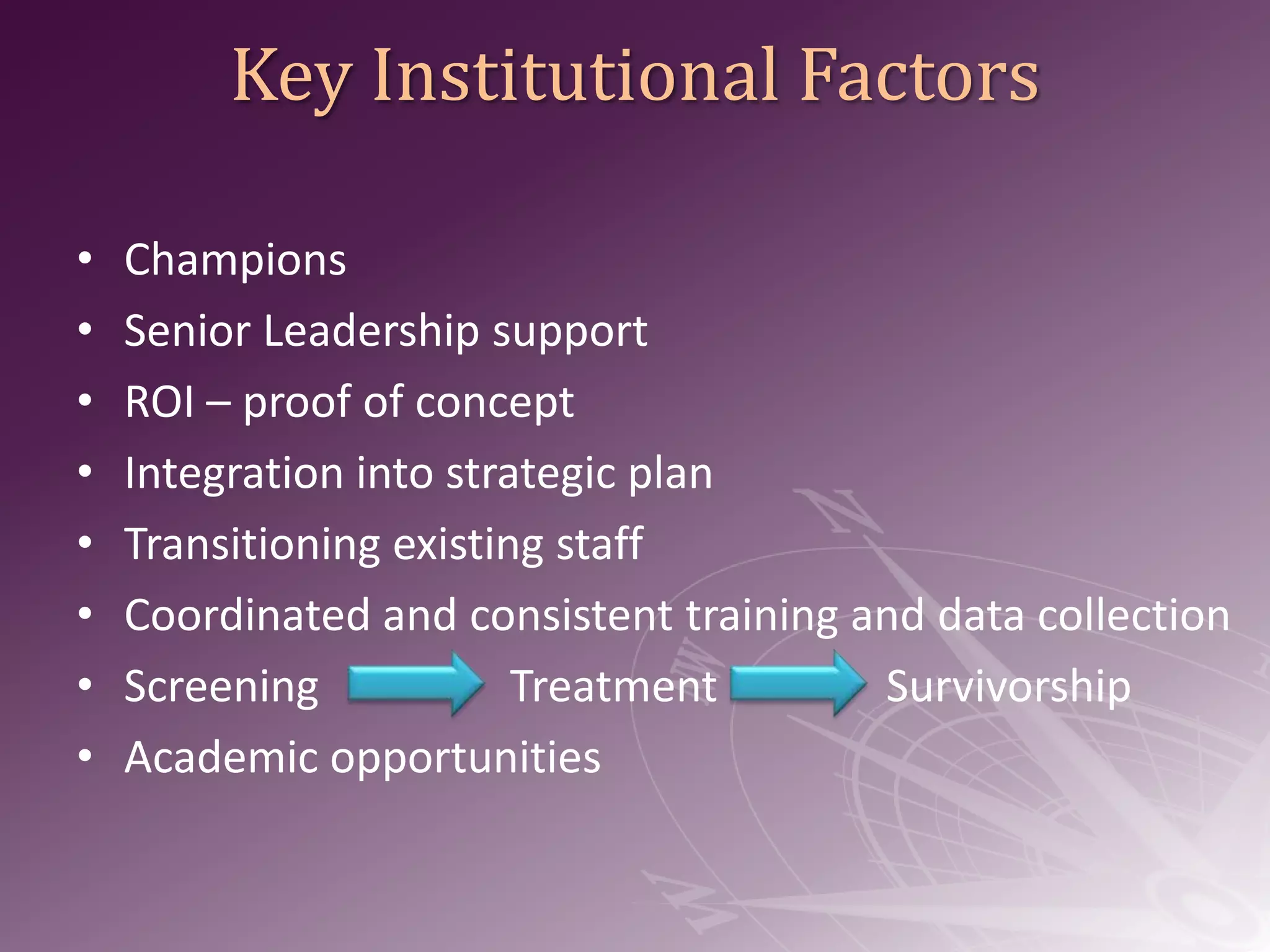
ObjectivesDiscuss the roles of various types of navigators and our approach integrating both community and nurse navigatorsDescribe the strategies to identify and address barriers across the continuum of careDescribe the institutional structures and resources that support our model that support the implementation and sustainability
2
Distinguished Honors & Accomplishments Extraordinary Contributions to Basic Science-Philadelphia Chromosome, Hepatitis-B, “Two Hit Theory,” SCID mouse, and Protein TraffickingInternational Recognition- 2 Nobel Prizes, 7-NAS, Pontifical Society, 3-ACS Gold Medals, 4-BMS Prizes, Kyoto AwardDiscovery of Hepatitis B and Vaccine Development by Baruch Blumberg, Nobel Prize, 1976Knudson’s “Two Hit” Theory by Alfred Knudson, Kyoto Prize for Basic Science, 2004, and the Lasker Award 1998
Distinguished Honors & Accomplishments The First Multidisciplinary Cancer Prevention Research Facility in the World- March, 2000Clinical Recognition for Excellence-Esophageal Cancer, Ovarian Cancer, and Innovative Radiation- (3-D Conformal and IMRT)32 out of 80 Physicians were selected as Top Doctors-Philadelphia Magazine (April 2007)Magnet Award for Nursing Excellence-ANA- 2000, 2004, 2009Fox Chase Cancer Center Ranked Top as “America’s Best Hospitals” in the Tri-state area, and 11th in the Nation- U.S. News & World Report’s (July 2007)
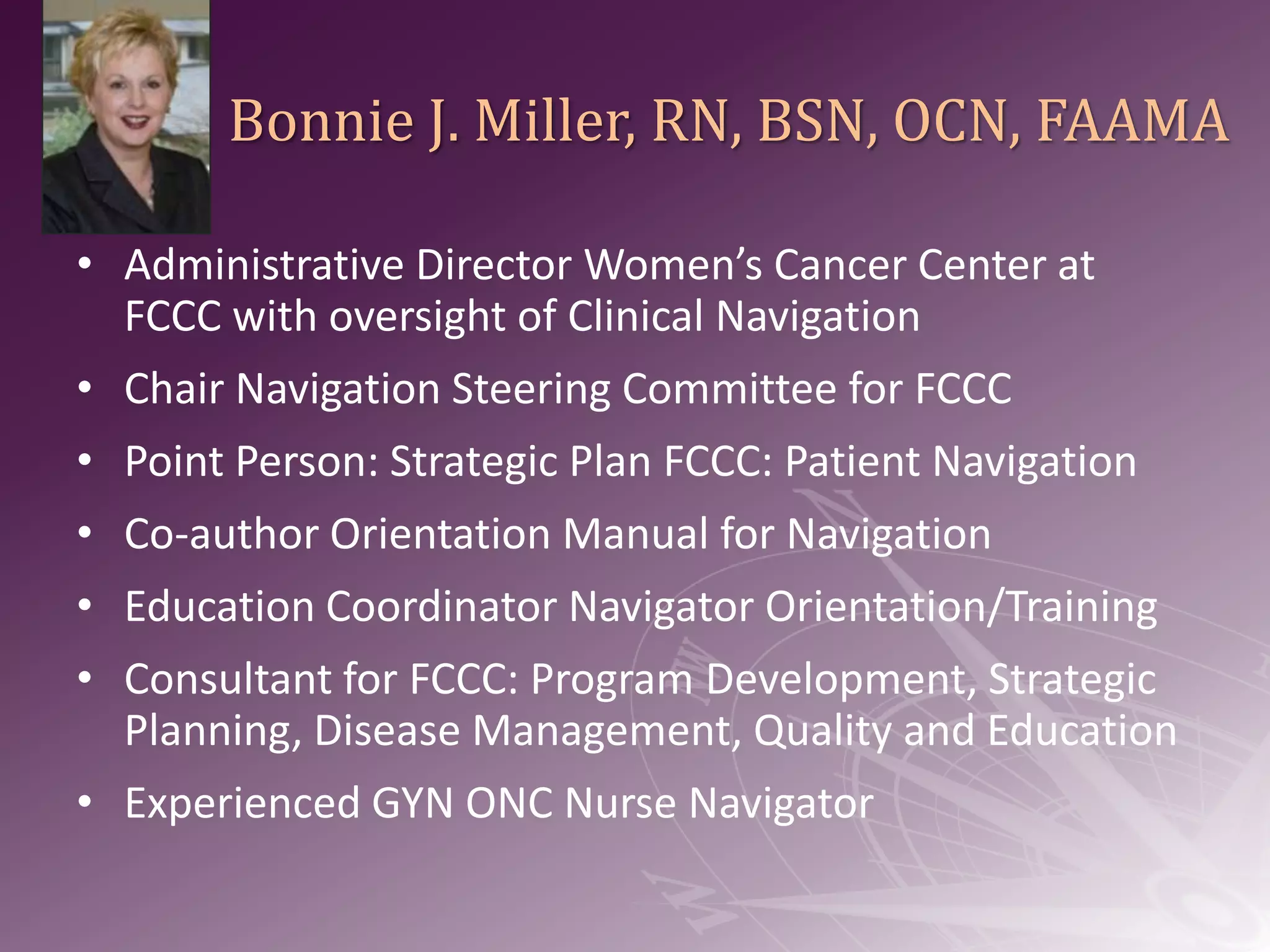
Bonnie J. Miller, RN, BSN, OCN, FAAMAAdministrative Director Women’s Cancer Center at FCCC with oversight of Clinical NavigationChair Navigation Steering Committee for FCCCPoint Person: Strategic Plan FCCC: Patient NavigationCo-author Orientation Manual for NavigationEducation Coordinator Navigator Orientation/Training Consultant for FCCC: Program Development, Strategic Planning, Disease Management, Quality and EducationExperienced GYN ONC Nurse Navigator
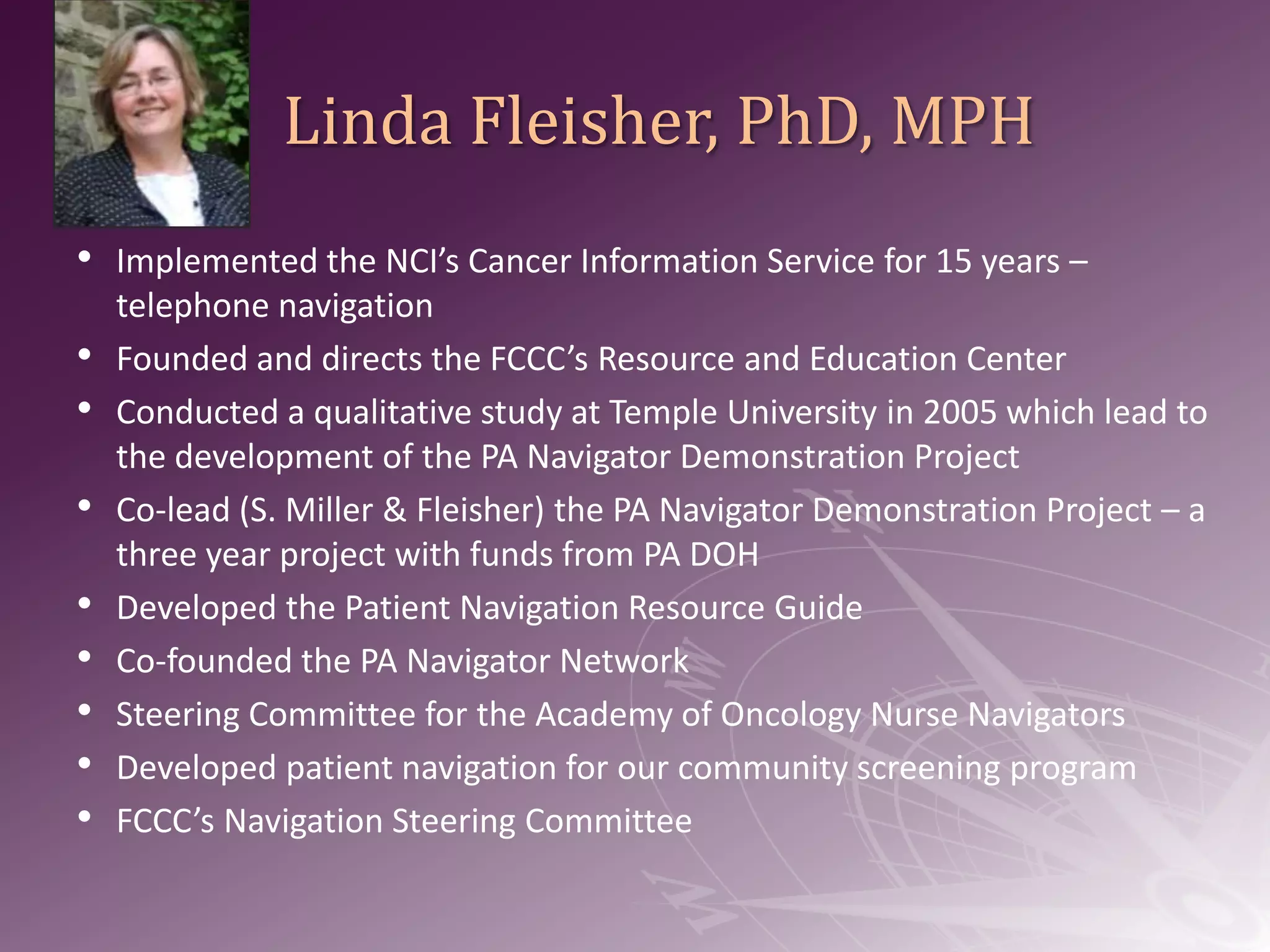
Linda Fleisher, PhD, MPHImplemented the NCI’s Cancer Information Service for 15 years – telephone navigation
Founded and directs the FCCC’s Resource and Education Center
Conducted a qualitative study at Temple University in 2005 which lead to the development of the PA Navigator Demonstration Project
Co-lead (S. Miller & Fleisher) the PA Navigator Demonstration Project – a three year project with funds from PA DOH
Developed the Patient Navigation Resource Guide
Co-founded the PA Navigator Network
Steering Committee for the Academy of Oncology Nurse Navigators
Developed patient navigation for our community screening program
FCCC’s Navigation Steering CommitteeNavigation is…			a noun and …						a verb
One Size Does Not Fit All
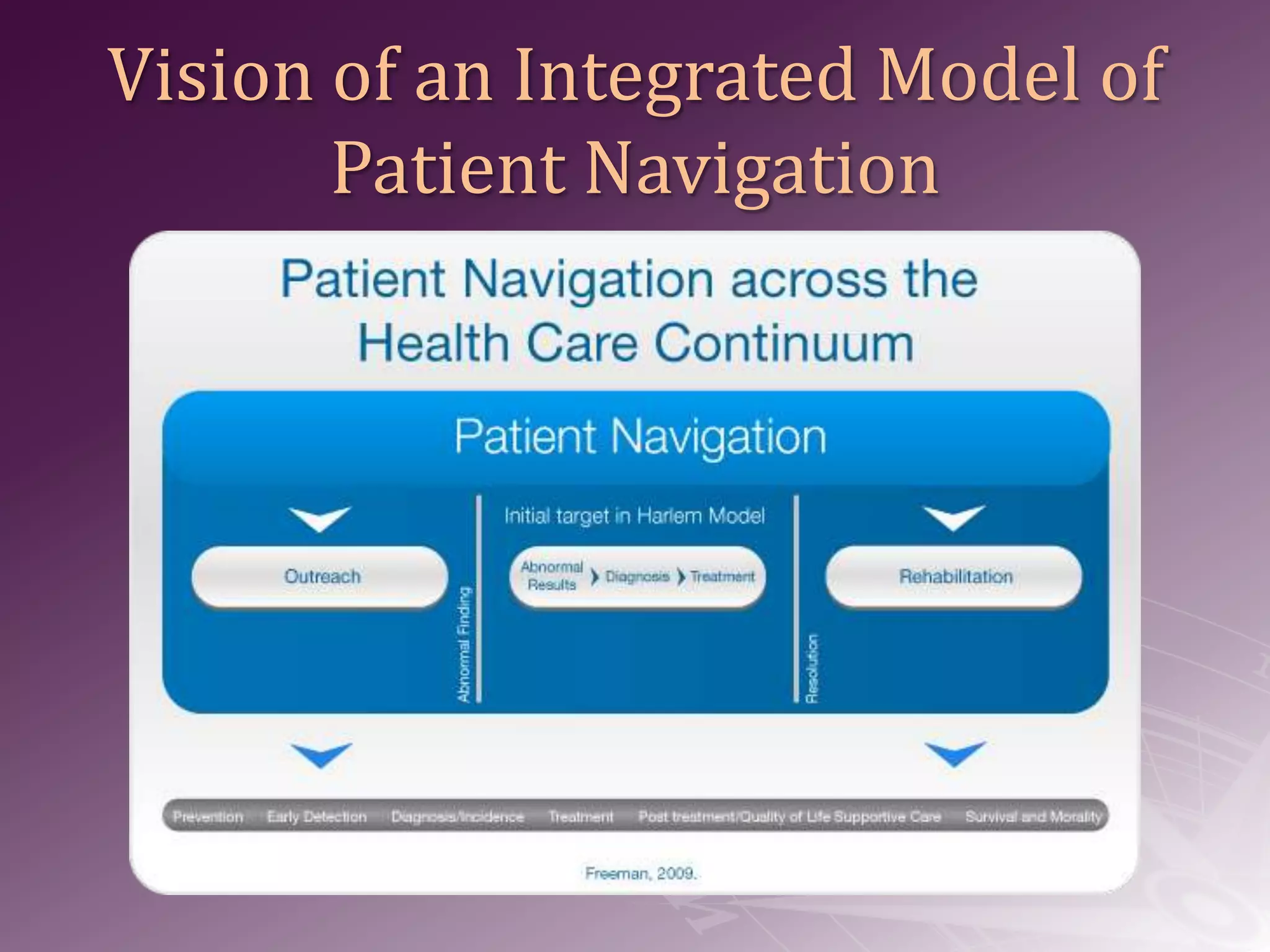
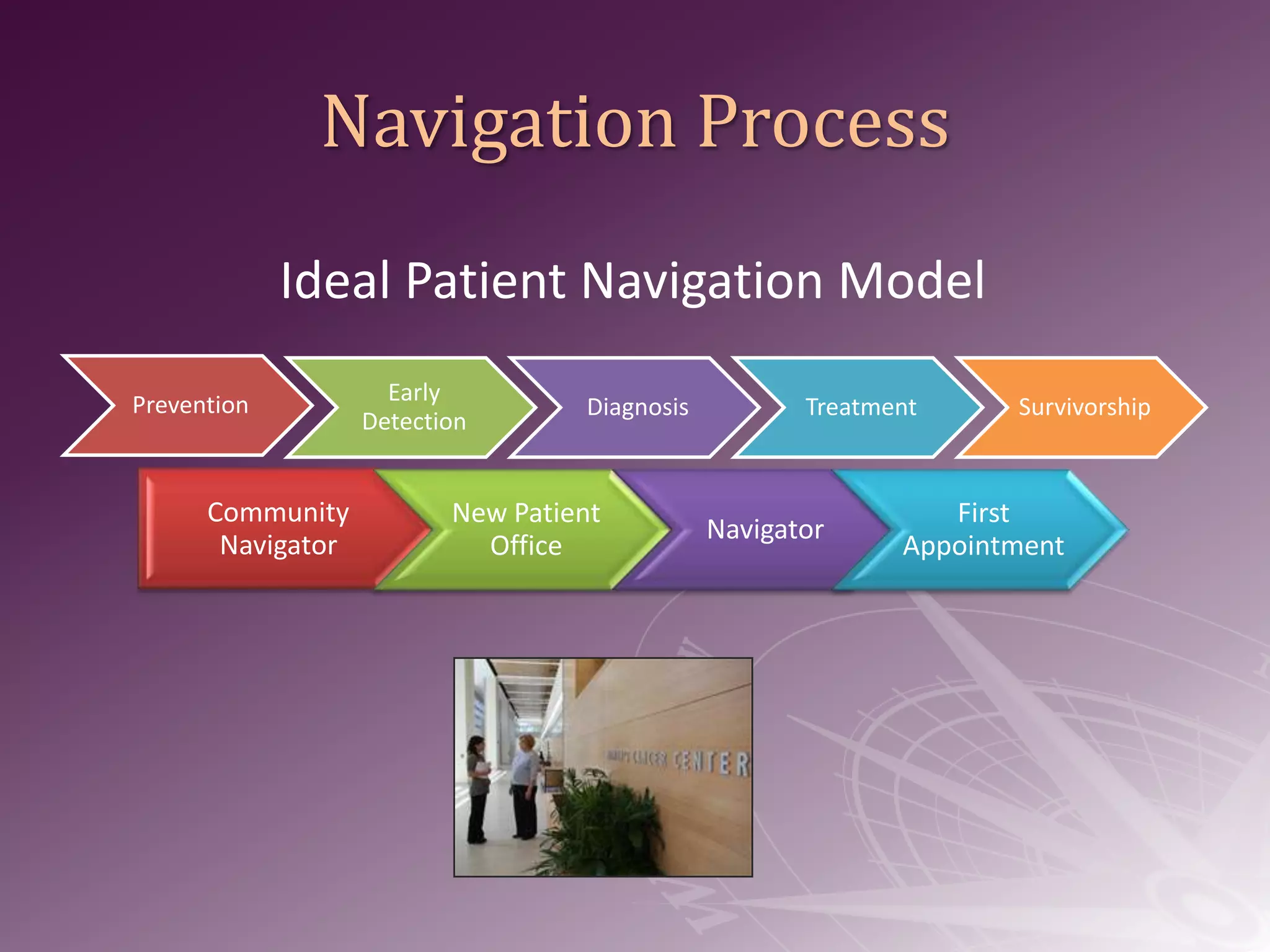
Vision of an Integrated Model of Patient Navigation
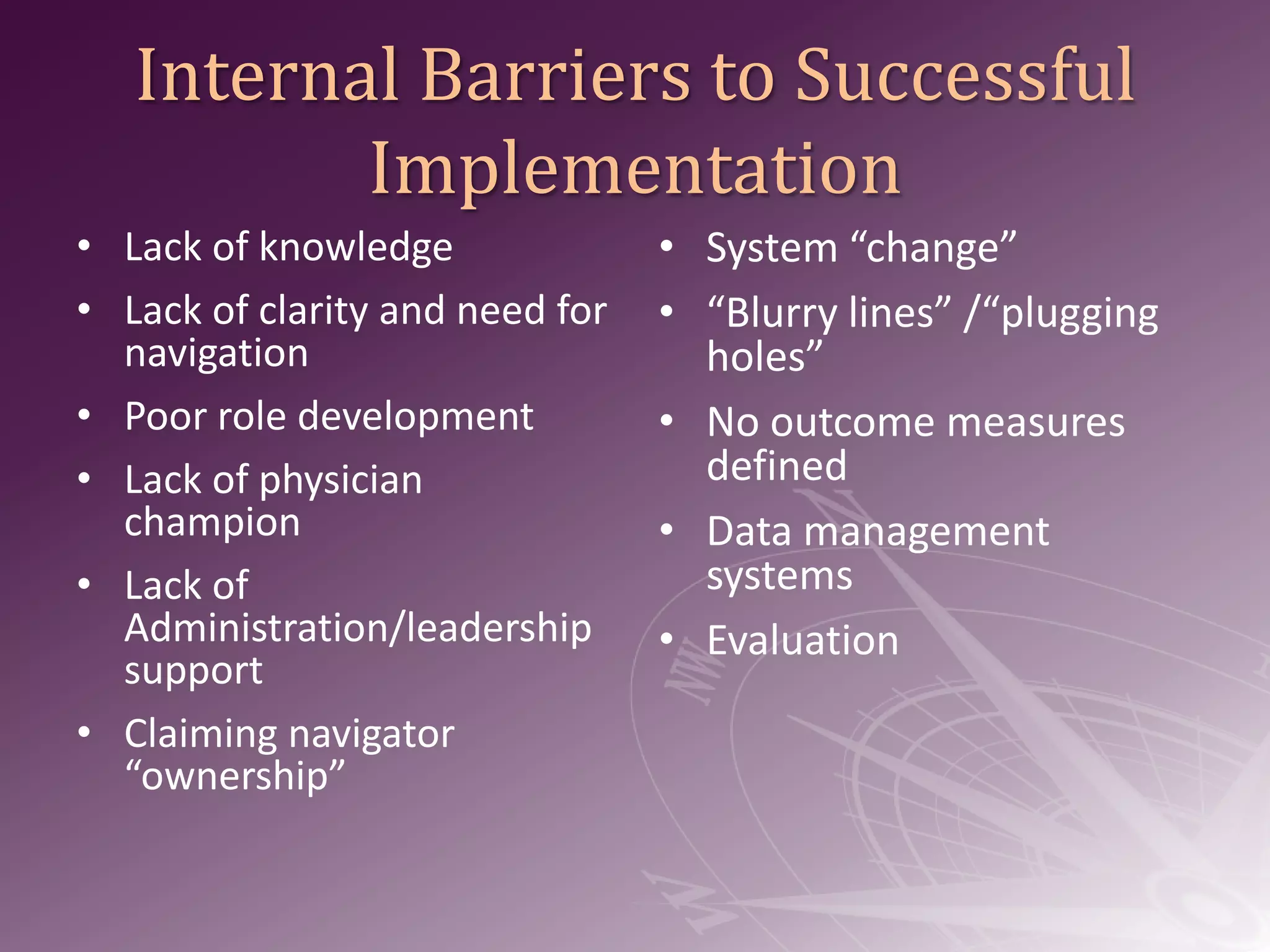
Internal Barriers to Successful ImplementationLack of knowledgeLack of clarity and need for navigationPoor role developmentLack of physician championLack of Administration/leadership supportClaiming navigator “ownership”System “change”“Blurry lines” /“plugging holes”No outcome measures definedData management systemsEvaluation
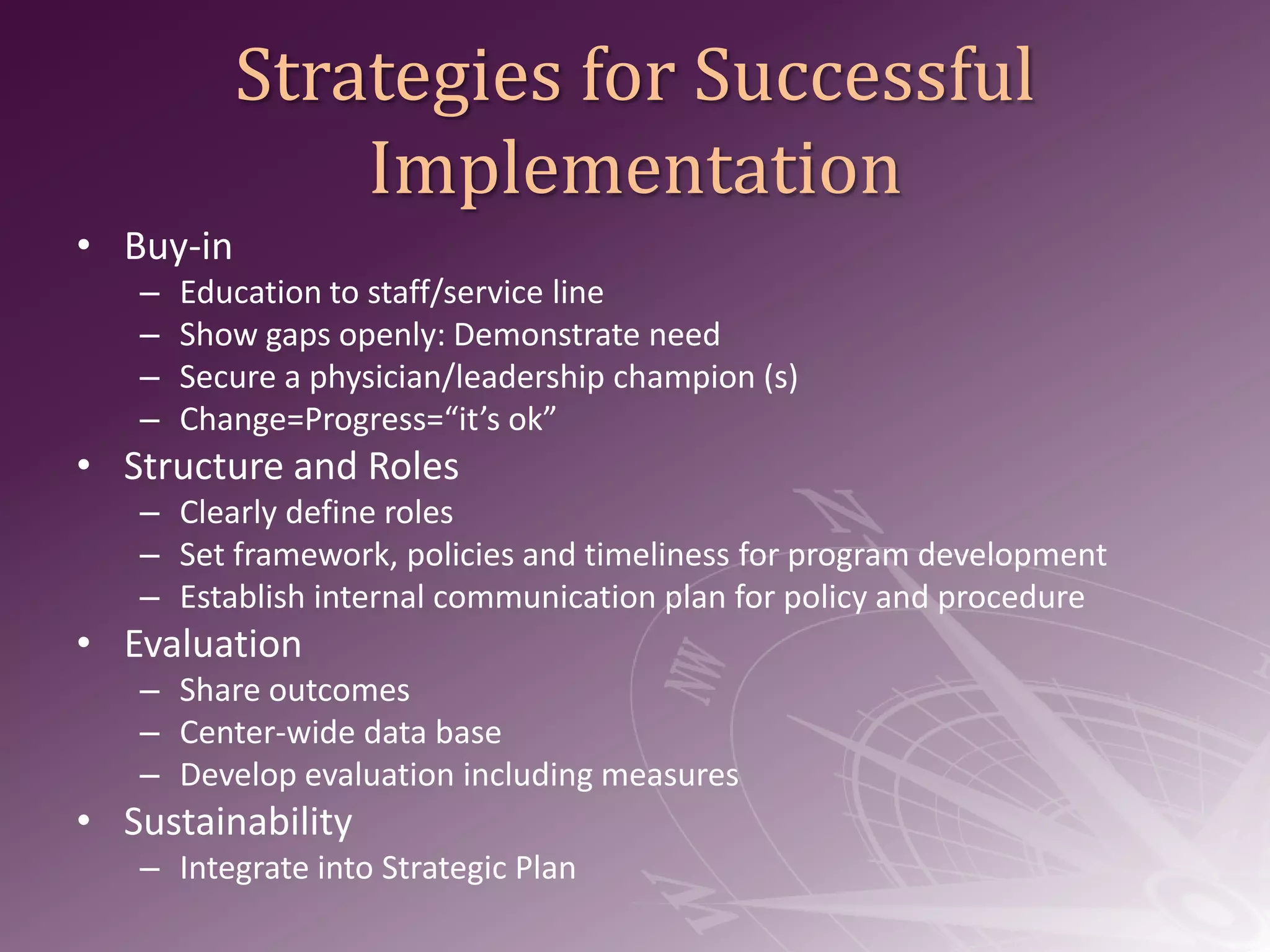
Strategies for Successful ImplementationBuy-inEducation to staff/service line
Show gaps openly: Demonstrate need
Secure a physician/leadership champion (s)
Change=Progress=“it’s ok”Structure and RolesClearly define roles
Set framework, policies and timeliness for program development
Establish internal communication plan for policy and procedureEvaluationShare outcomes
Center-wide data base
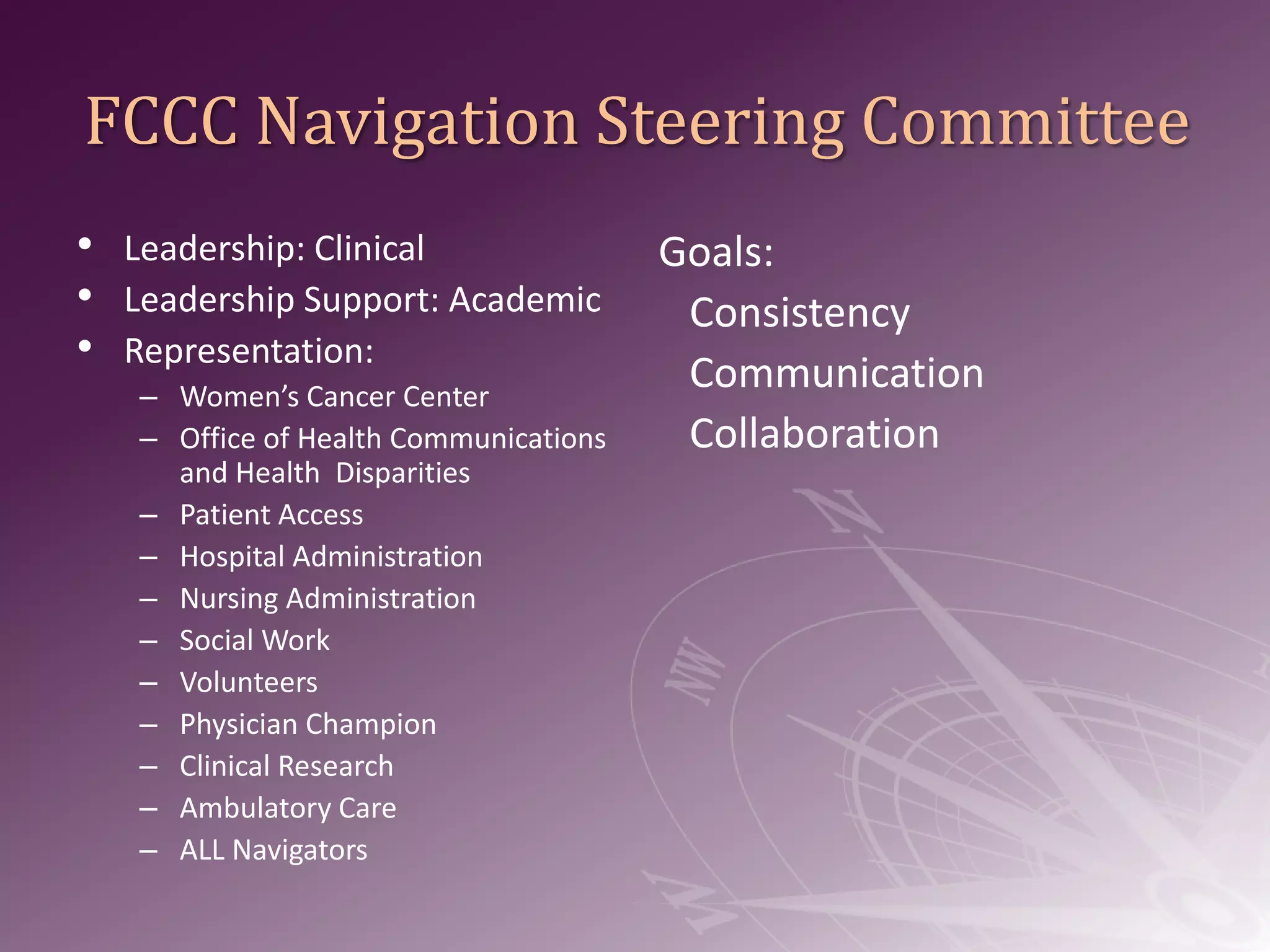
Develop evaluation including measuresSustainabilityIntegrate into Strategic PlanFCCC Navigation Steering CommitteeLeadership: ClinicalLeadership Support: AcademicRepresentation:Women’s Cancer Center
Office of Health Communications and Health  Disparities
Patient Access
Hospital Administration
Nursing Administration
Social Work
Volunteers
Physician Champion
Clinical Research
Ambulatory Care
ALL NavigatorsGoals:   Consistency   Communication   Collaboration
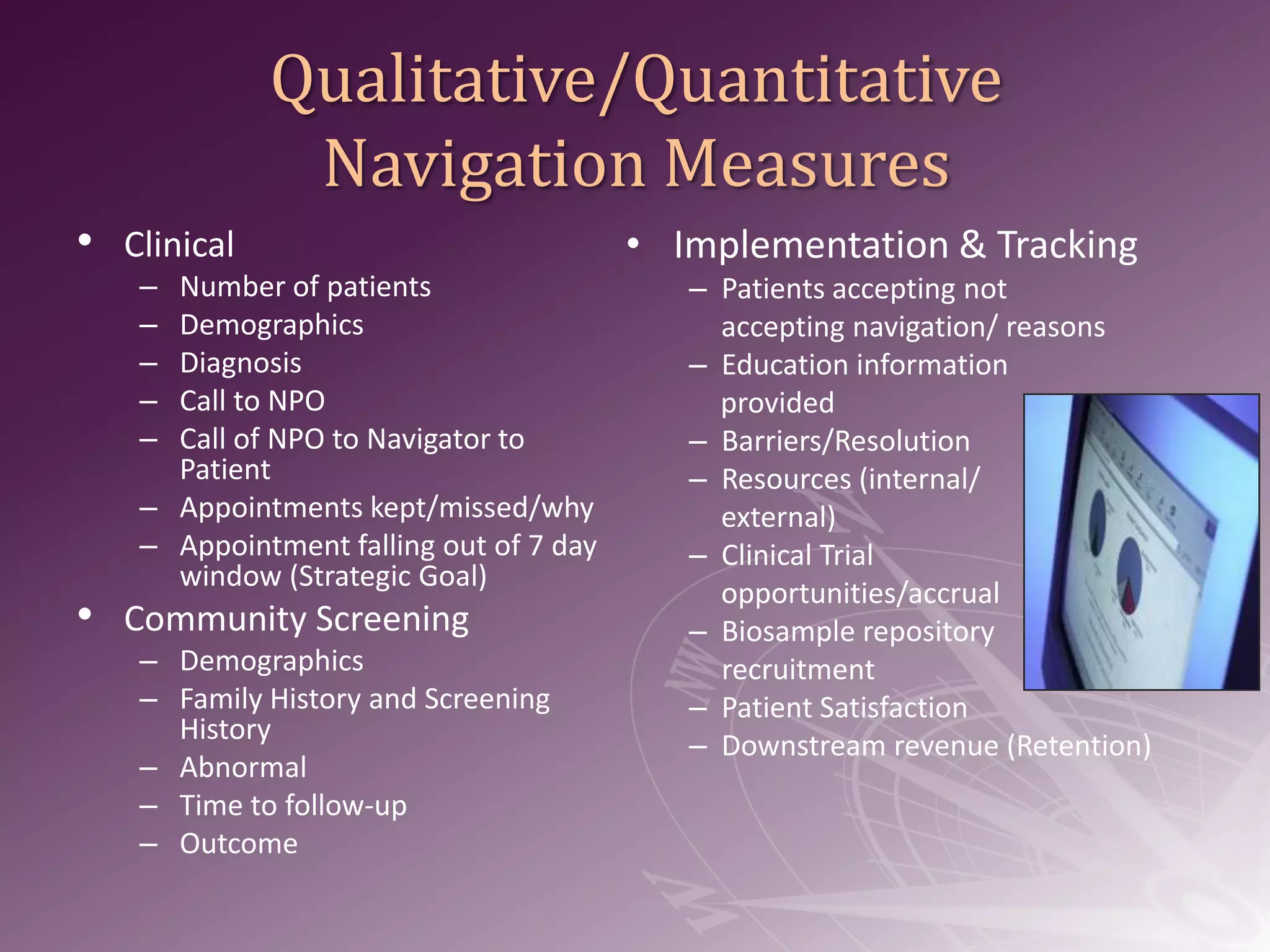
Qualitative/Quantitative Navigation MeasuresImplementation & TrackingPatients accepting not accepting navigation/ reasonsEducation information providedBarriers/ResolutionResources (internal/external)Clinical Trial opportunities/accrualBiosample repository recruitmentPatient SatisfactionDownstream revenue (Retention)  ClinicalNumber of patients
Demographics
Diagnosis
Call to NPO
Call of NPO to Navigator to Patient
Appointments kept/missed/why
Appointment falling out of 7 day window (Strategic Goal)Community ScreeningDemographics
Family History and Screening History
Abnormal
Time to follow-up
OutcomeClinical Navigation
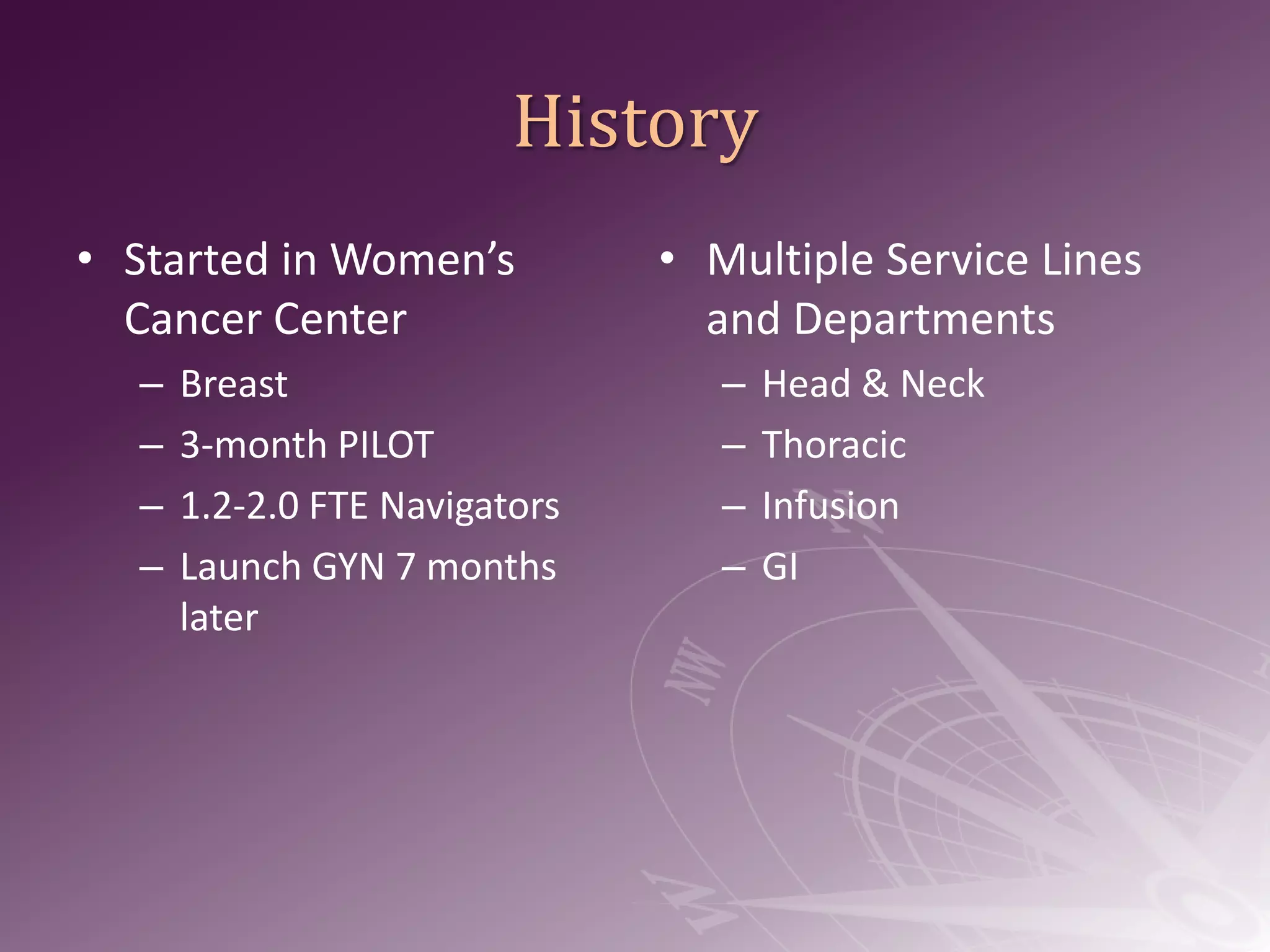
HistoryStarted in Women’s Cancer Center	Breast
3-month PILOT

Patient Navigation Across the Continuum

  • 1.
    Patient Navigation Acrossthe ContinuumLinda Fleisher, PhD, MPHAssistant Vice PresidentOffice of Health & Communications DisparitiesBonnie J. Miller, RN, BSN, OCN, FAAMAAdministrative Director, Women’s Cancer CenterFox Chase Cancer Center
  • 2.
    ObjectivesDiscuss the rolesof various types of navigators and our approach integrating both community and nurse navigatorsDescribe the strategies to identify and address barriers across the continuum of careDescribe the institutional structures and resources that support our model that support the implementation and sustainability
  • 3.
  • 4.
    Distinguished Honors &Accomplishments Extraordinary Contributions to Basic Science-Philadelphia Chromosome, Hepatitis-B, “Two Hit Theory,” SCID mouse, and Protein TraffickingInternational Recognition- 2 Nobel Prizes, 7-NAS, Pontifical Society, 3-ACS Gold Medals, 4-BMS Prizes, Kyoto AwardDiscovery of Hepatitis B and Vaccine Development by Baruch Blumberg, Nobel Prize, 1976Knudson’s “Two Hit” Theory by Alfred Knudson, Kyoto Prize for Basic Science, 2004, and the Lasker Award 1998
  • 5.
    Distinguished Honors &Accomplishments The First Multidisciplinary Cancer Prevention Research Facility in the World- March, 2000Clinical Recognition for Excellence-Esophageal Cancer, Ovarian Cancer, and Innovative Radiation- (3-D Conformal and IMRT)32 out of 80 Physicians were selected as Top Doctors-Philadelphia Magazine (April 2007)Magnet Award for Nursing Excellence-ANA- 2000, 2004, 2009Fox Chase Cancer Center Ranked Top as “America’s Best Hospitals” in the Tri-state area, and 11th in the Nation- U.S. News & World Report’s (July 2007)
  • 6.
    Bonnie J. Miller,RN, BSN, OCN, FAAMAAdministrative Director Women’s Cancer Center at FCCC with oversight of Clinical NavigationChair Navigation Steering Committee for FCCCPoint Person: Strategic Plan FCCC: Patient NavigationCo-author Orientation Manual for NavigationEducation Coordinator Navigator Orientation/Training Consultant for FCCC: Program Development, Strategic Planning, Disease Management, Quality and EducationExperienced GYN ONC Nurse Navigator
  • 7.
    Linda Fleisher, PhD,MPHImplemented the NCI’s Cancer Information Service for 15 years – telephone navigation
  • 8.
    Founded and directsthe FCCC’s Resource and Education Center
  • 9.
    Conducted a qualitativestudy at Temple University in 2005 which lead to the development of the PA Navigator Demonstration Project
  • 10.
    Co-lead (S. Miller& Fleisher) the PA Navigator Demonstration Project – a three year project with funds from PA DOH
  • 11.
    Developed the PatientNavigation Resource Guide
  • 12.
    Co-founded the PANavigator Network
  • 13.
    Steering Committee forthe Academy of Oncology Nurse Navigators
  • 14.
    Developed patient navigationfor our community screening program
  • 15.
    FCCC’s Navigation SteeringCommitteeNavigation is… a noun and … a verb
  • 16.
    One Size DoesNot Fit All
  • 17.
    Vision of anIntegrated Model of Patient Navigation
  • 18.
    Internal Barriers toSuccessful ImplementationLack of knowledgeLack of clarity and need for navigationPoor role developmentLack of physician championLack of Administration/leadership supportClaiming navigator “ownership”System “change”“Blurry lines” /“plugging holes”No outcome measures definedData management systemsEvaluation
  • 19.
    Strategies for SuccessfulImplementationBuy-inEducation to staff/service line
  • 20.
    Show gaps openly:Demonstrate need
  • 21.
  • 22.
  • 23.
    Set framework, policiesand timeliness for program development
  • 24.
    Establish internal communicationplan for policy and procedureEvaluationShare outcomes
  • 25.
  • 26.
    Develop evaluation includingmeasuresSustainabilityIntegrate into Strategic PlanFCCC Navigation Steering CommitteeLeadership: ClinicalLeadership Support: AcademicRepresentation:Women’s Cancer Center
  • 27.
    Office of HealthCommunications and Health Disparities
  • 28.
  • 29.
  • 30.
  • 31.
  • 32.
  • 33.
  • 34.
  • 35.
  • 36.
    ALL NavigatorsGoals: Consistency Communication Collaboration
  • 37.
    Qualitative/Quantitative Navigation MeasuresImplementation& TrackingPatients accepting not accepting navigation/ reasonsEducation information providedBarriers/ResolutionResources (internal/external)Clinical Trial opportunities/accrualBiosample repository recruitmentPatient SatisfactionDownstream revenue (Retention) ClinicalNumber of patients
  • 38.
  • 39.
  • 40.
  • 41.
    Call of NPOto Navigator to Patient
  • 42.
  • 43.
    Appointment falling outof 7 day window (Strategic Goal)Community ScreeningDemographics
  • 44.
    Family History andScreening History
  • 45.
  • 46.
  • 47.
  • 48.
    HistoryStarted in Women’sCancer Center Breast
  • 49.
  • 50.
  • 51.
    Launch GYN 7months laterMultiple Service Lines and DepartmentsHead & Neck
  • 52.
  • 53.
  • 54.
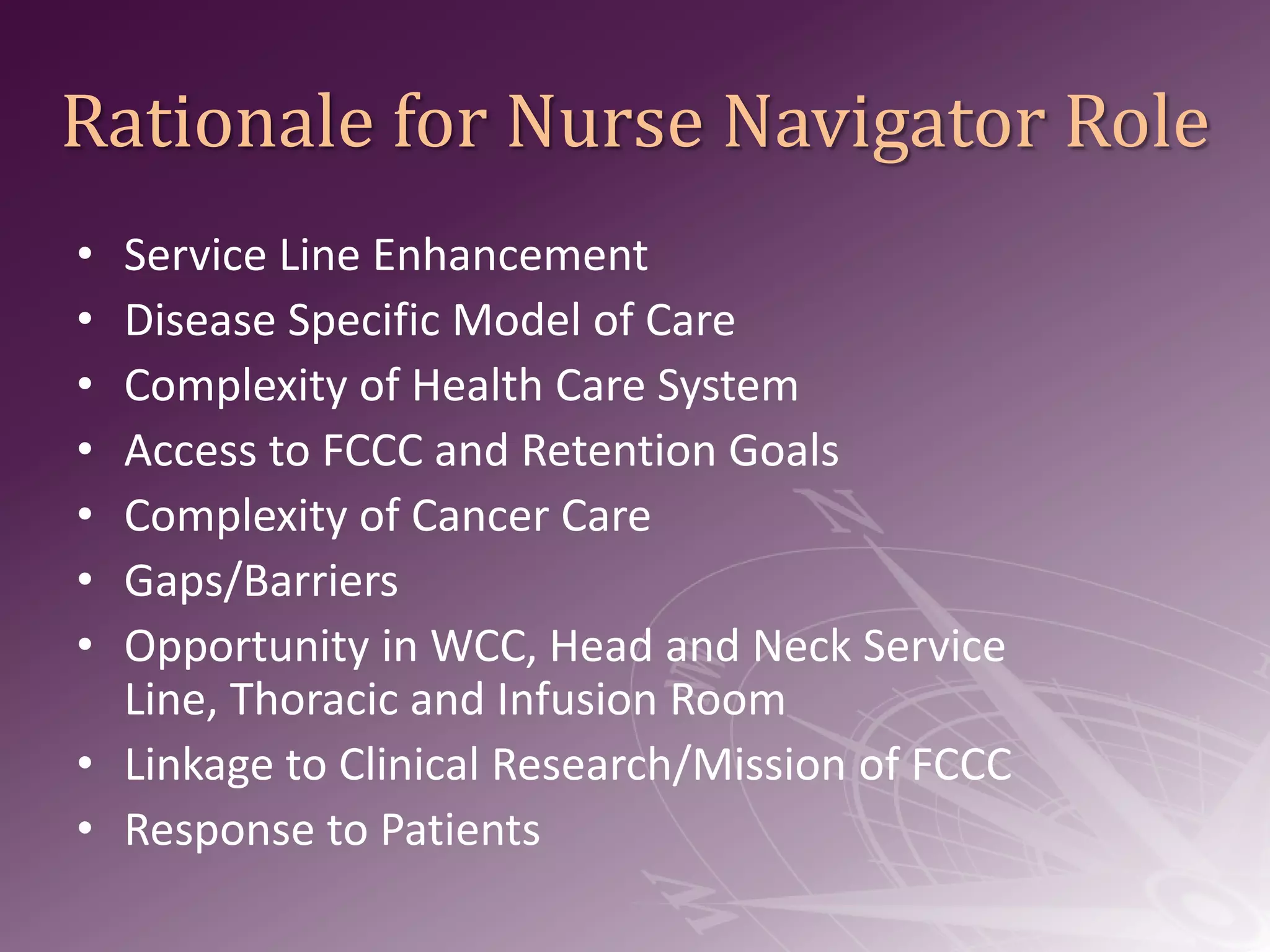
    GIRationale for NurseNavigator RoleService Line EnhancementDisease Specific Model of CareComplexity of Health Care SystemAccess to FCCC and Retention GoalsComplexity of Cancer CareGaps/BarriersOpportunity in WCC, Head and Neck Service Line, Thoracic and Infusion RoomLinkage to Clinical Research/Mission of FCCCResponse to Patients
  • 55.
    Key Institutional FactorsChampionsSeniorLeadership supportROI – proof of conceptIntegration into strategic planTransitioning existing staff Coordinated and consistent training and data collectionScreening Treatment SurvivorshipAcademic opportunities
  • 56.
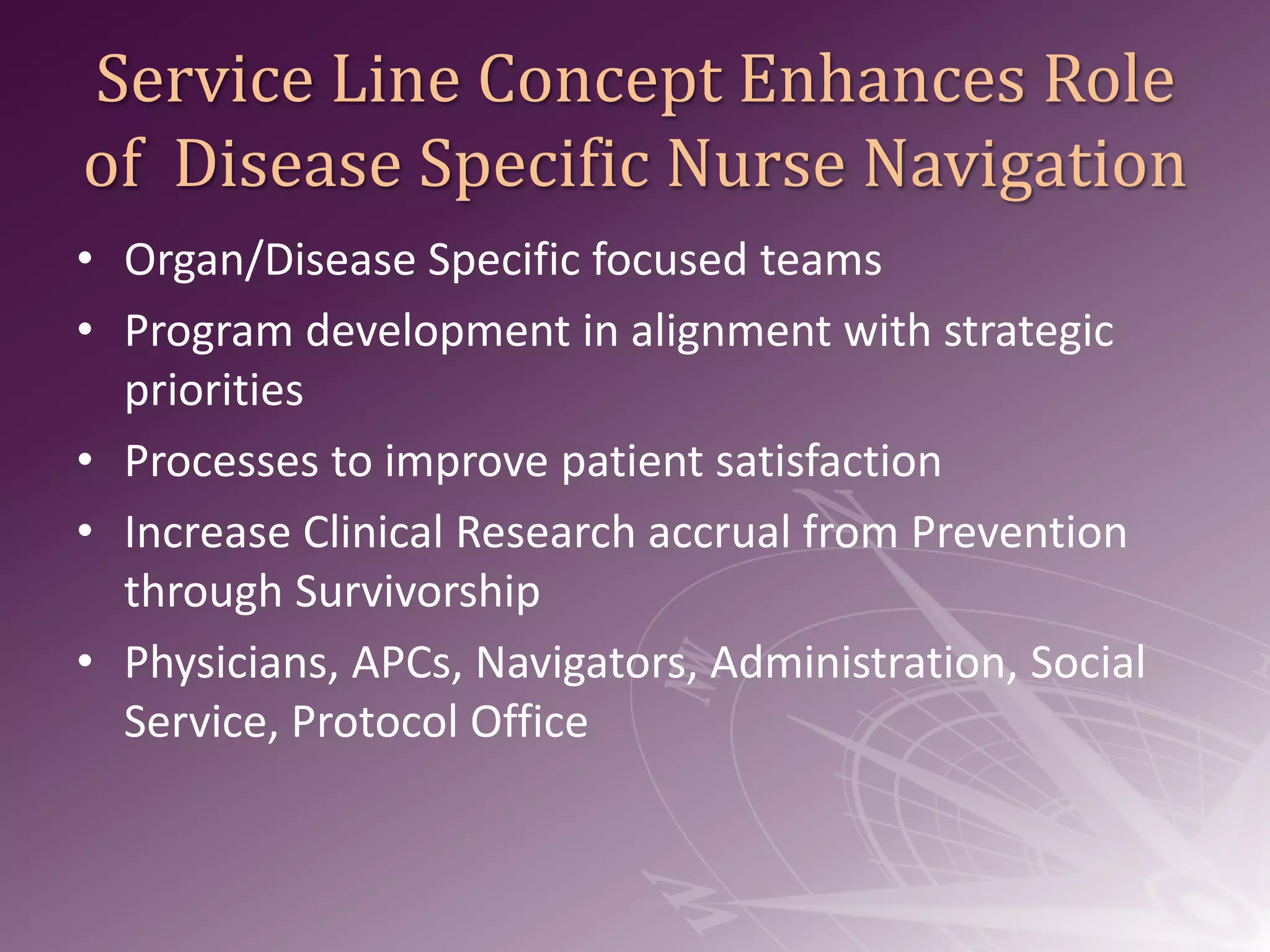
    Service Line ConceptEnhances Role of Disease Specific Nurse NavigationOrgan/Disease Specific focused teamsProgram development in alignment with strategic prioritiesProcesses to improve patient satisfactionIncrease Clinical Research accrual from Prevention through SurvivorshipPhysicians, APCs, Navigators, Administration, Social Service, Protocol Office
  • 57.
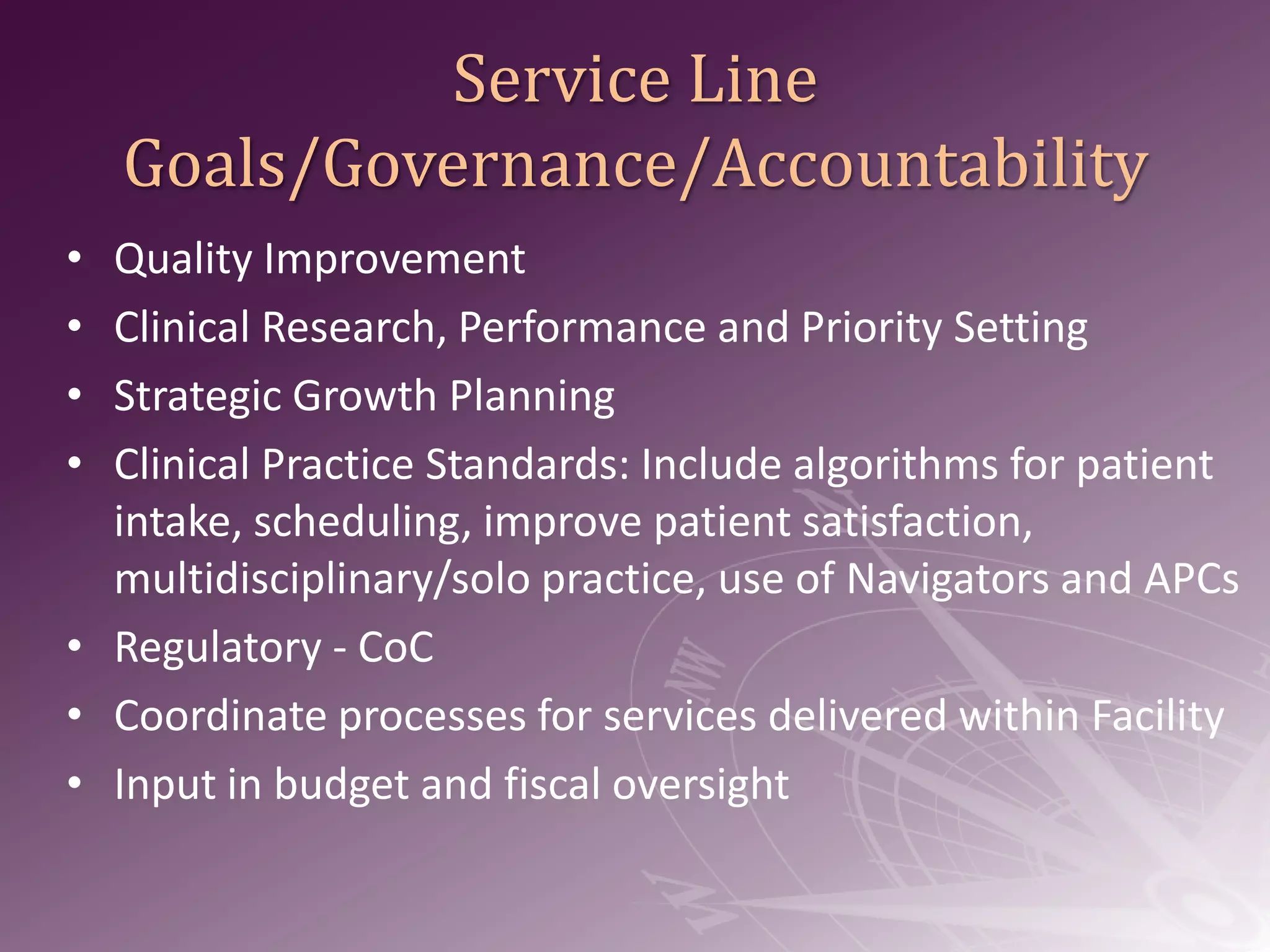
    Service Line Goals/Governance/AccountabilityQualityImprovementClinical Research, Performance and Priority SettingStrategic Growth PlanningClinical Practice Standards: Include algorithms for patient intake, scheduling, improve patient satisfaction, multidisciplinary/solo practice, use of Navigators and APCsRegulatory - CoCCoordinate processes for services delivered within FacilityInput in budget and fiscal oversight
  • 58.
  • 59.
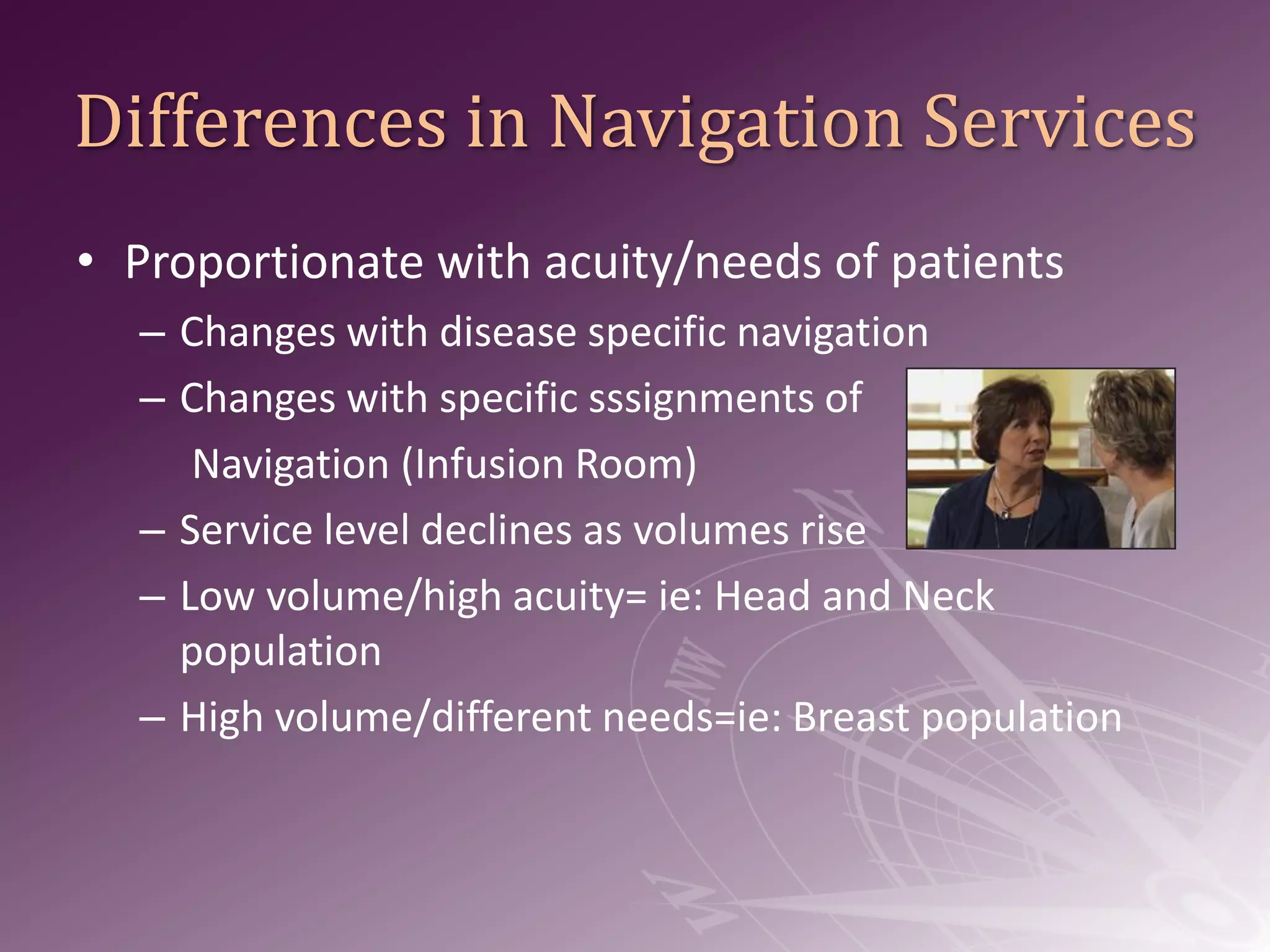
    Differences in NavigationServicesProportionate with acuity/needs of patientsChanges with disease specific navigationChanges with specific sssignments of Navigation (Infusion Room)Service level declines as volumes riseLow volume/high acuity= ie: Head and Neck populationHigh volume/different needs=ie: Breast population
  • 60.
    Focused Areas ofData CaptureImproved coordination of high-quality careEnhanced access to services for patientsRemoval of barriers to careImproved outcomesImproved sharing of resourcesEnhanced relationships with the communityIncreased patient satisfactionIncreased referrals of patients to the system
  • 61.
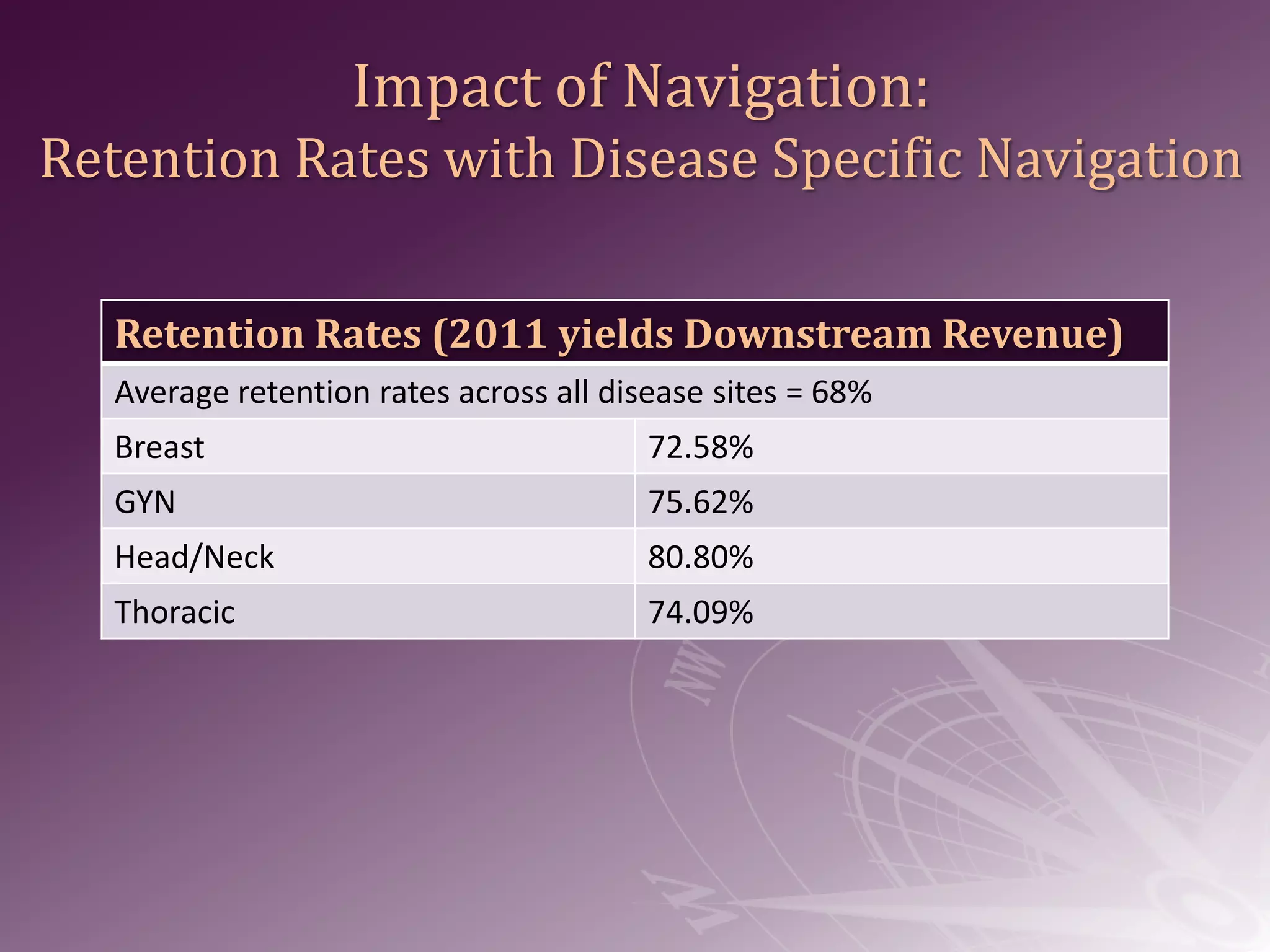
    Impact of Navigation:Retention Rates with Disease Specific Navigation
  • 62.
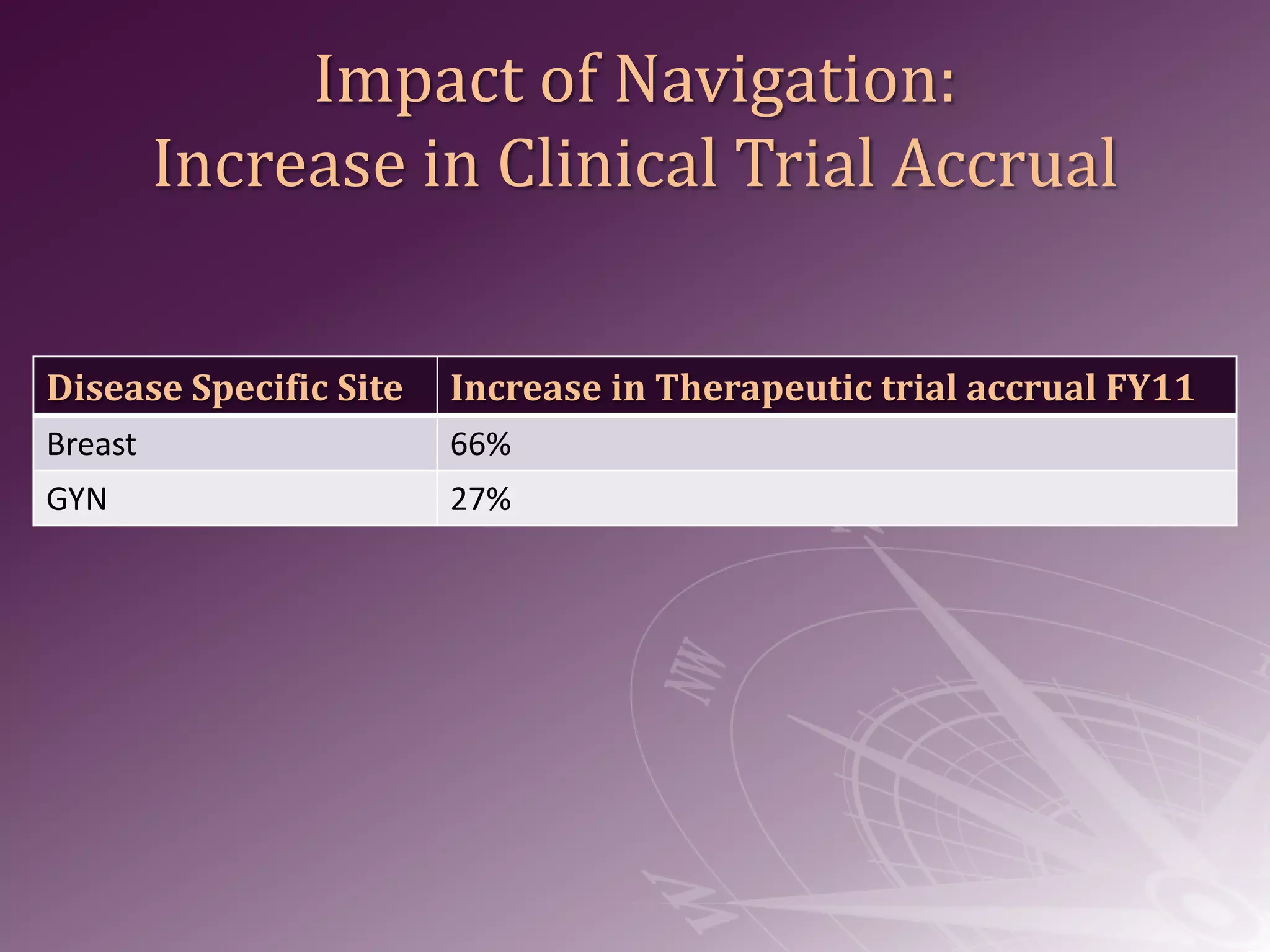
    Impact of Navigation:Increase in Clinical Trial Accrual
  • 63.
  • 64.
  • 65.
  • 66.
    Links with currentsystems at FCCC
  • 67.
  • 68.
    Less Time andEffort from Navigations
  • 69.
    Reports Built in(Updated Daily)
  • 70.
  • 71.
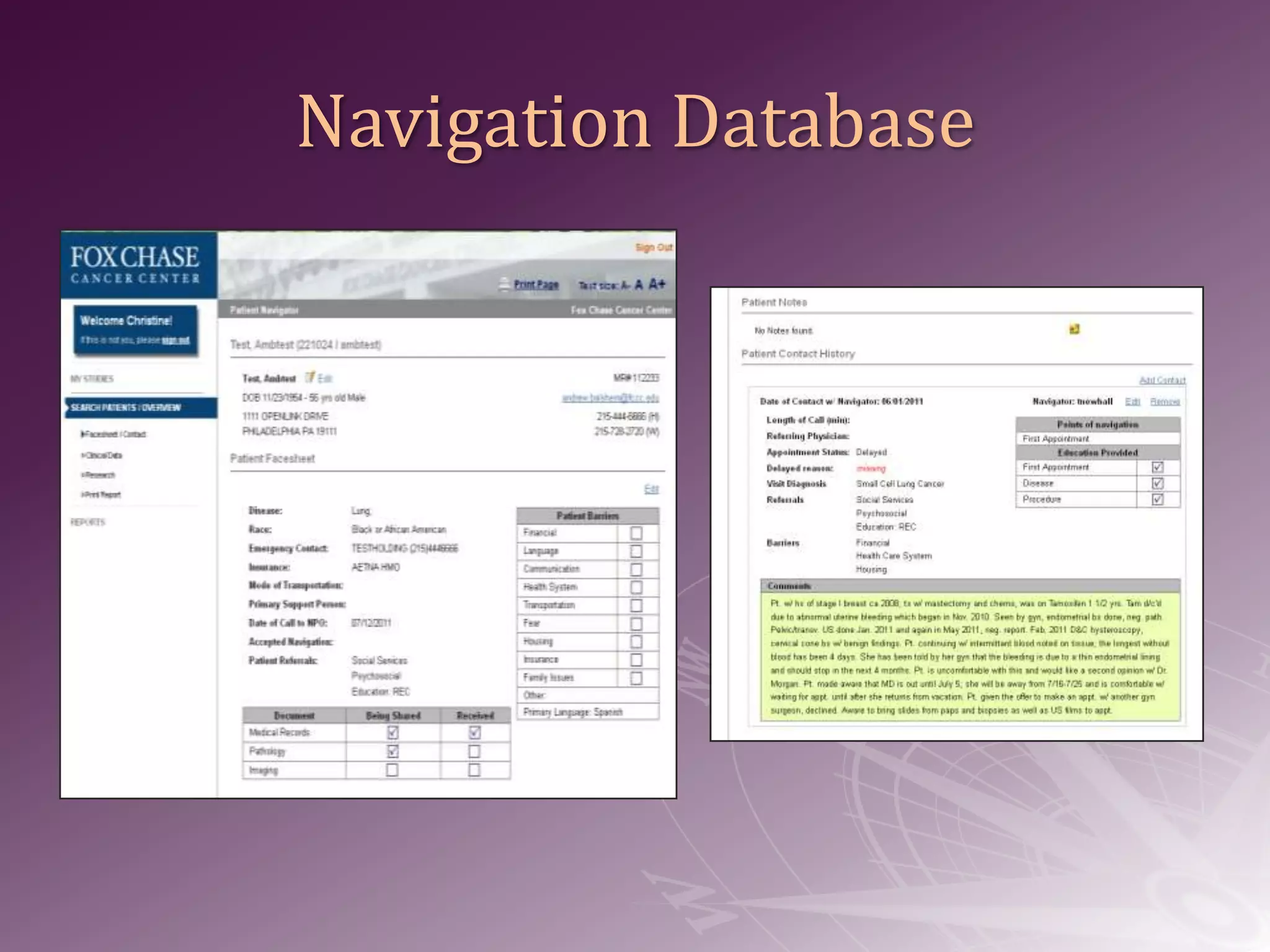
    Integrated into currentsystem: “We created something pretty good!”Navigation Database
  • 72.
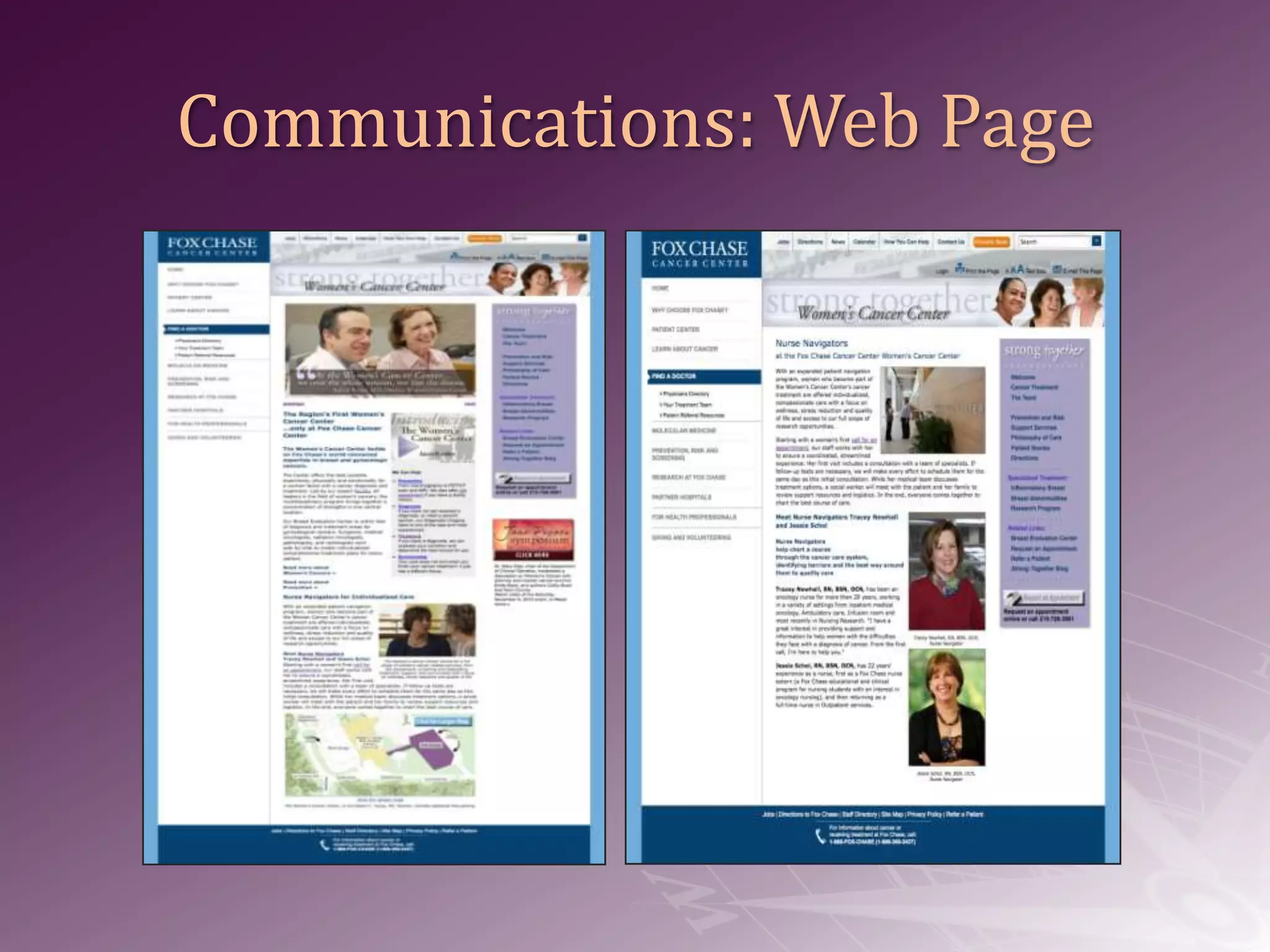
    Internal/External Marketing/EducationCenter wideNavigation Steering CommitteePresentation to Management TeamService Line Meeting FormatPhysician ChampionsCommunity Advisory CommitteePresentation to Partner OrganizationsConsistency in messaging….External: Website, Print Materials, Commercial, Webisodes
  • 73.
  • 74.
  • 75.
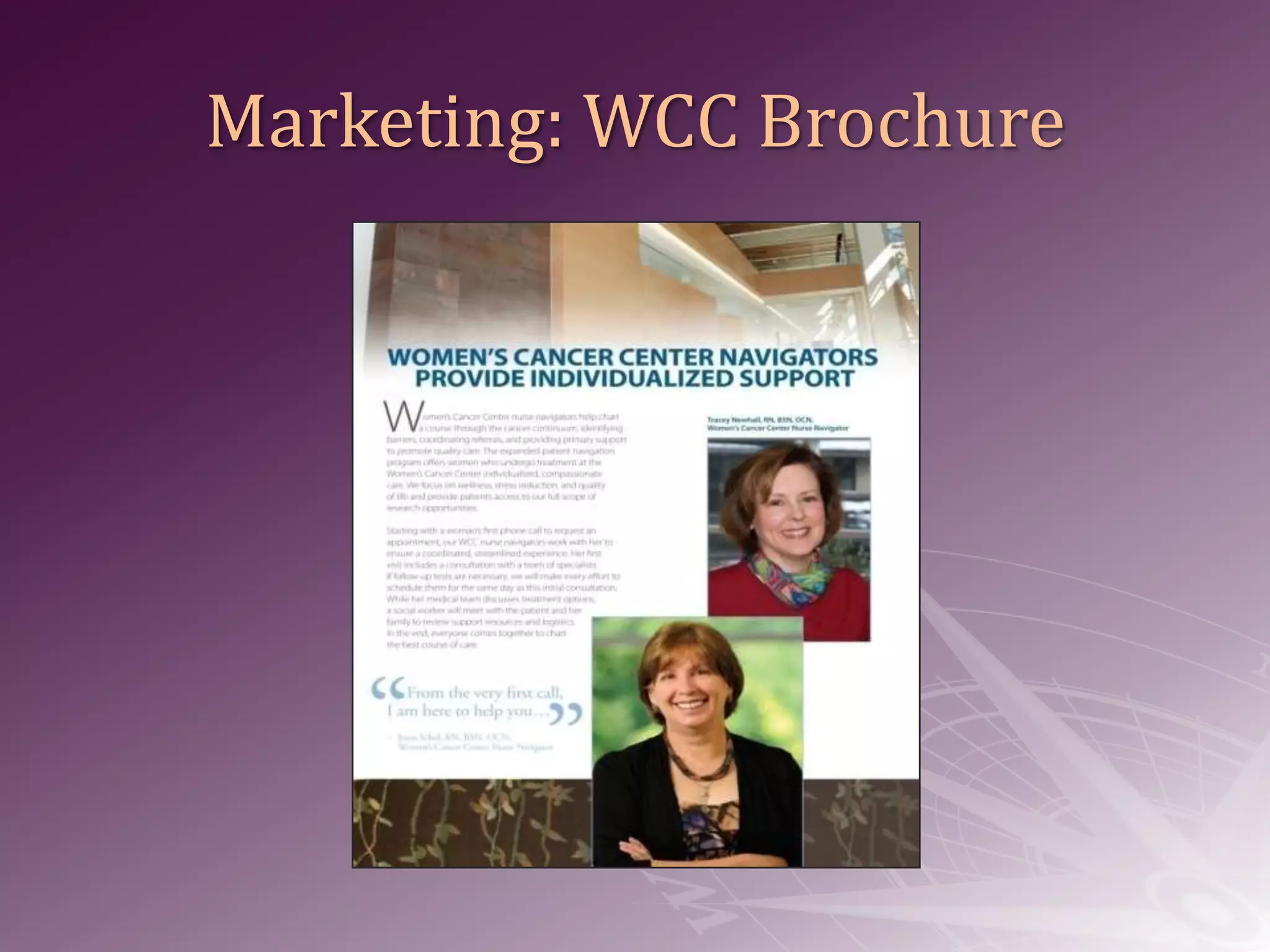
    Women’s Cancer CenterCommercial Featuring Navigators
  • 76.
    Next StepsExpand navigatorsrole in researchBiospecimen collection
  • 77.
    Clinical trials (esp.underrepresented groups)Develop and conduct systematic patient satisfaction and impact evaluationExpand Navigator role in Service Line DesignContinued education about the role & scope of navigationGrant/Research OpportunitiesEver Changing…Ever Evolving….Patient Focused
  • 78.
  • 79.
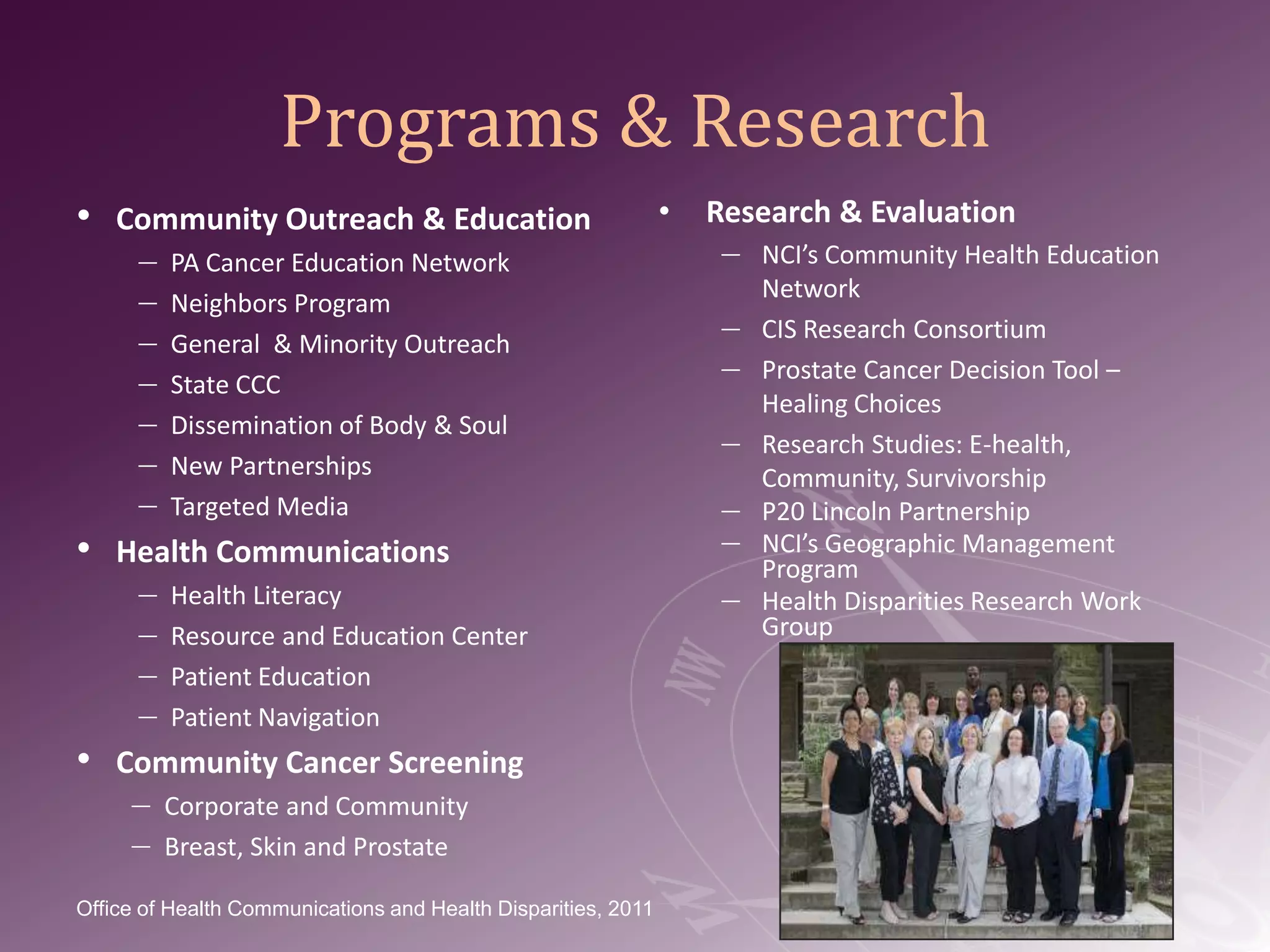
    Programs & ResearchCommunityOutreach & Education
  • 80.
  • 81.
  • 82.
    General &Minority Outreach
  • 83.
  • 84.
  • 85.
  • 86.
  • 87.
  • 88.
  • 89.
  • 90.
  • 91.
  • 92.
  • 93.
  • 94.
    Breast, Skin andProstateResearch & EvaluationNCI’s Community Health Education Network
  • 95.
  • 96.
    Prostate Cancer DecisionTool –Healing Choices
  • 97.
    Research Studies: E-health,Community, Survivorship
  • 98.
  • 99.
  • 100.
    Health Disparities ResearchWork GroupOffice of Health Communications and Health Disparities, 2011
  • 101.
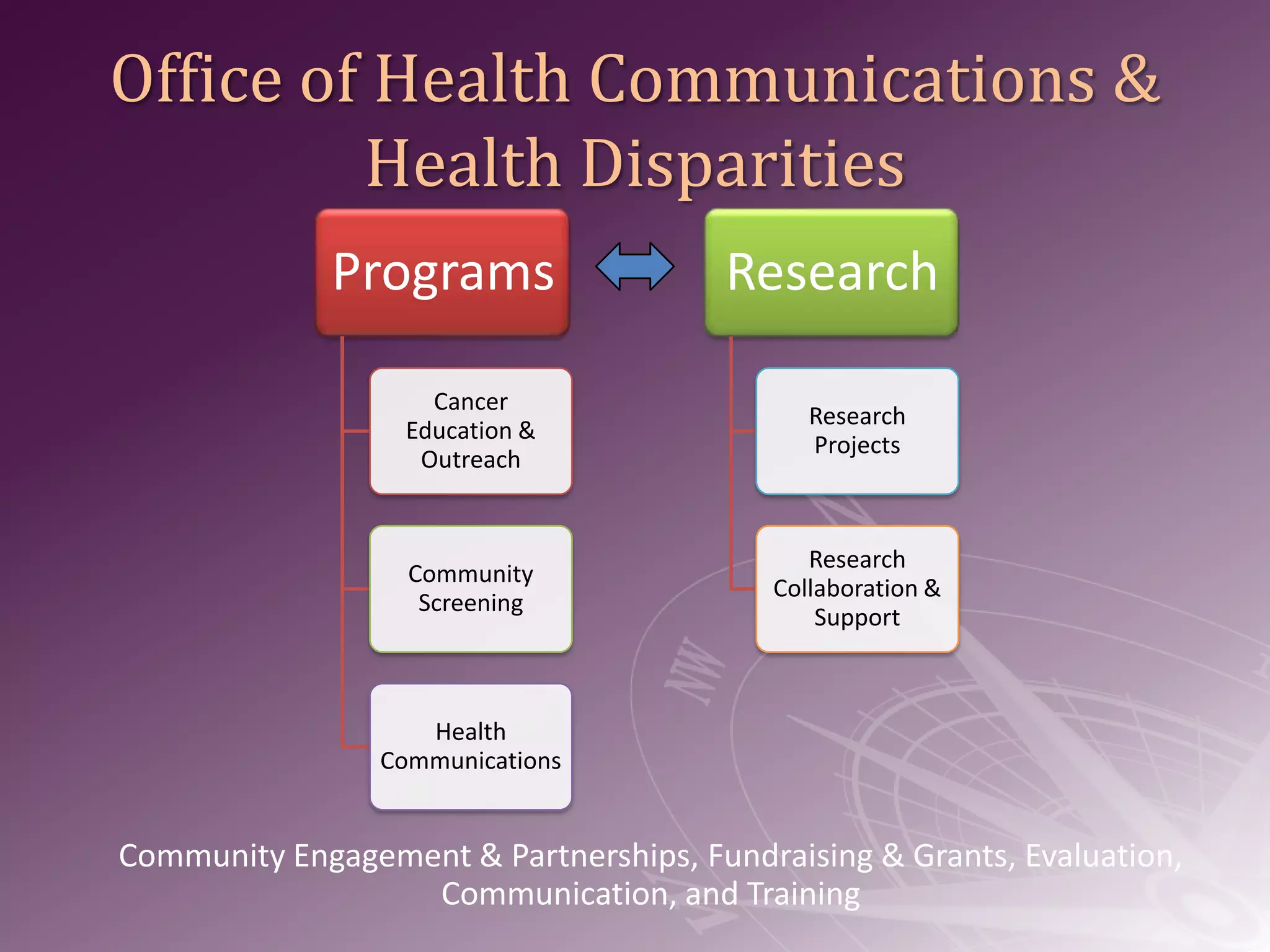
    Office of HealthCommunications & Health DisparitiesCommunity Engagement & Partnerships, Fundraising & Grants, Evaluation, Communication, and Training
  • 102.
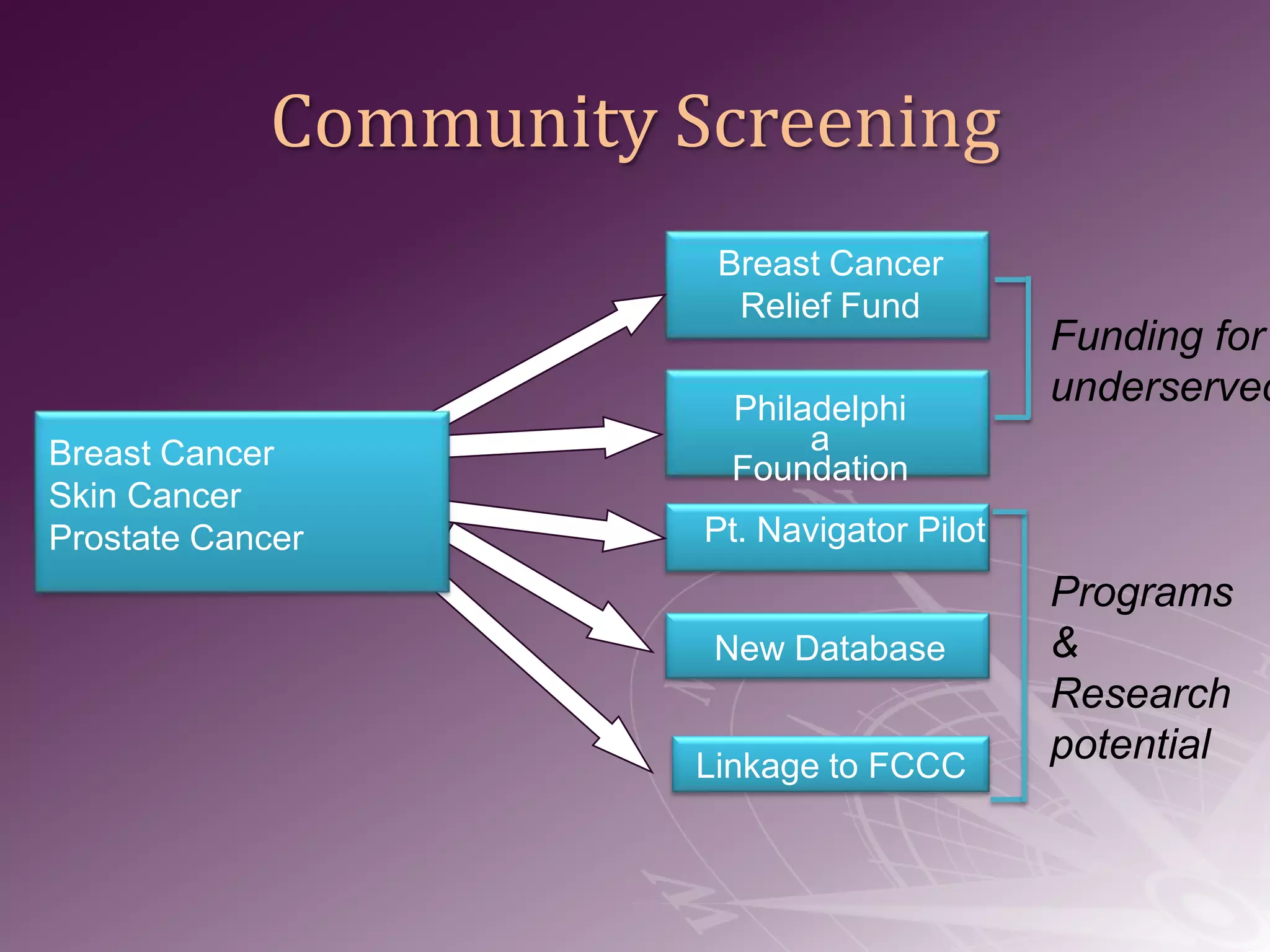
    Breast CancerSkin CancerProstateCancerBreast CancerRelief FundFunding for underservedPhiladelphiaFoundationPt. Navigator PilotPrograms & ResearchpotentialNew DatabaseLinkage to FCCCCommunity Screening
  • 103.
    In the News….MobileMammography on 6ABC News
  • 104.
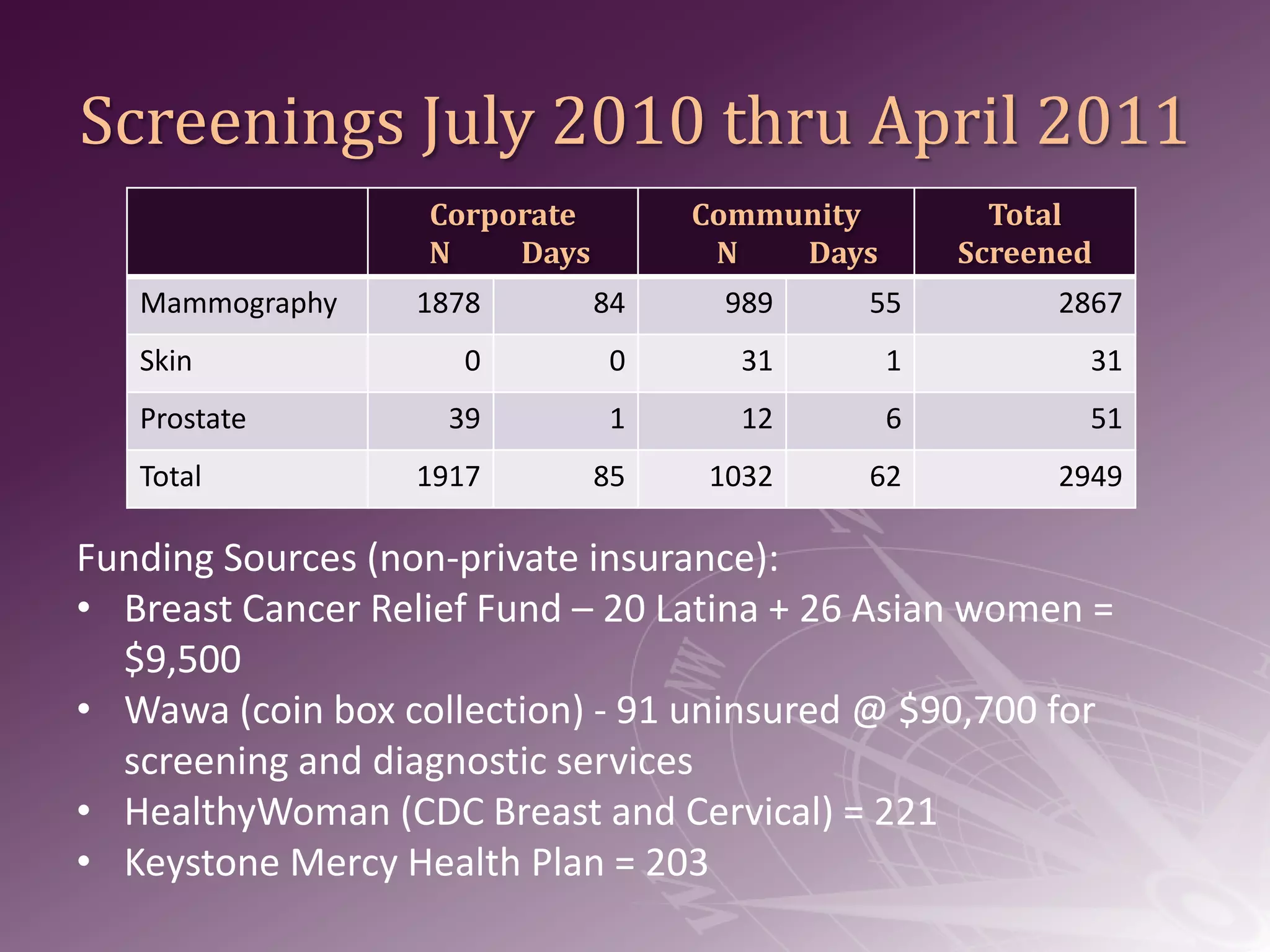
    Screenings July 2010thru April 2011Funding Sources (non-private insurance):Breast Cancer Relief Fund – 20 Latina + 26 Asian women = $9,500Wawa (coin box collection) - 91 uninsured @ $90,700 for screening and diagnostic servicesHealthyWoman (CDC Breast and Cervical) = 221Keystone Mercy Health Plan = 203
  • 105.
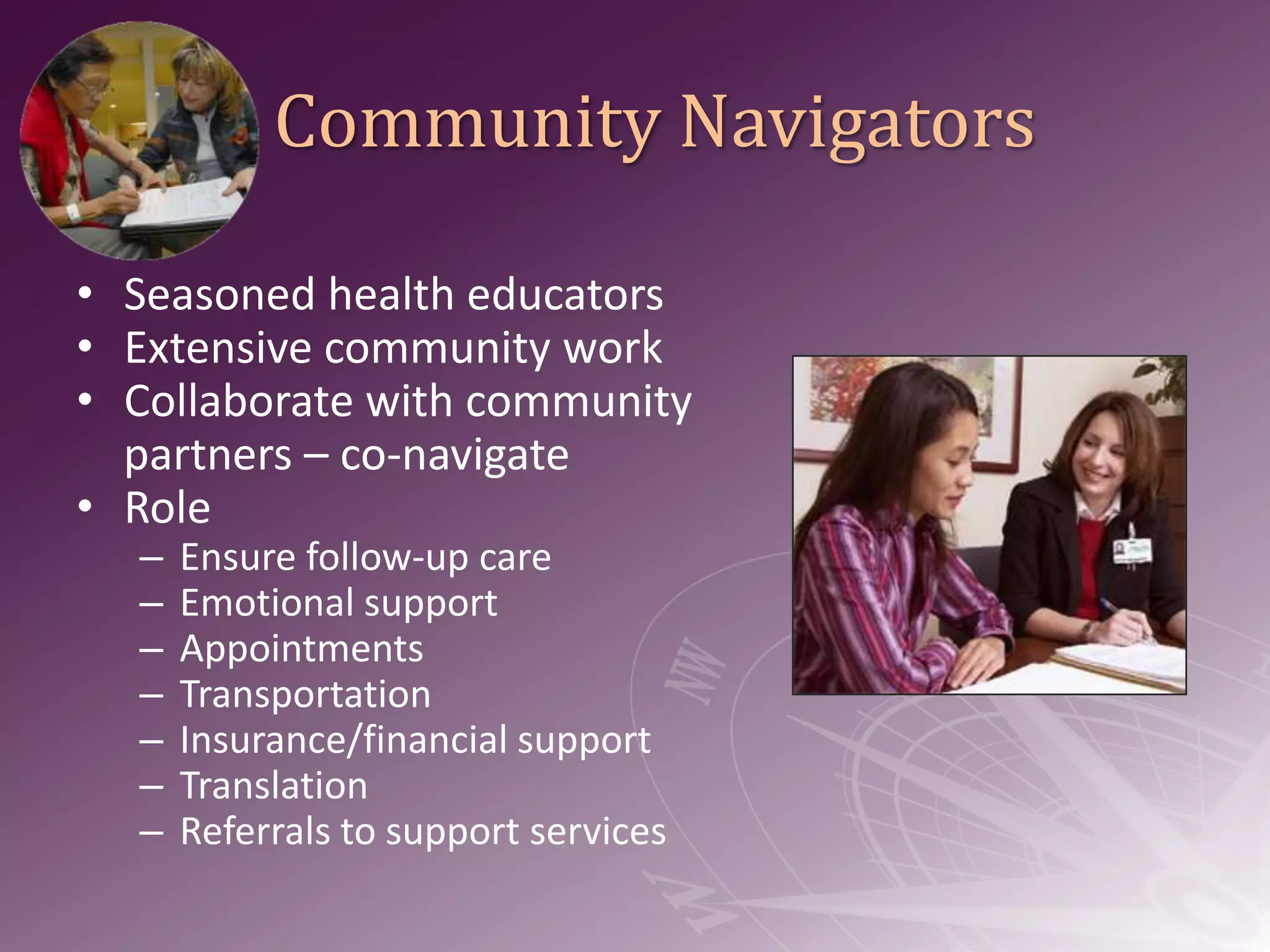
    Community NavigatorsSeasoned healtheducatorsExtensive community workCollaborate with community partners – co-navigateRoleEnsure follow-up care
  • 106.
  • 107.
  • 108.
  • 109.
  • 110.
  • 111.
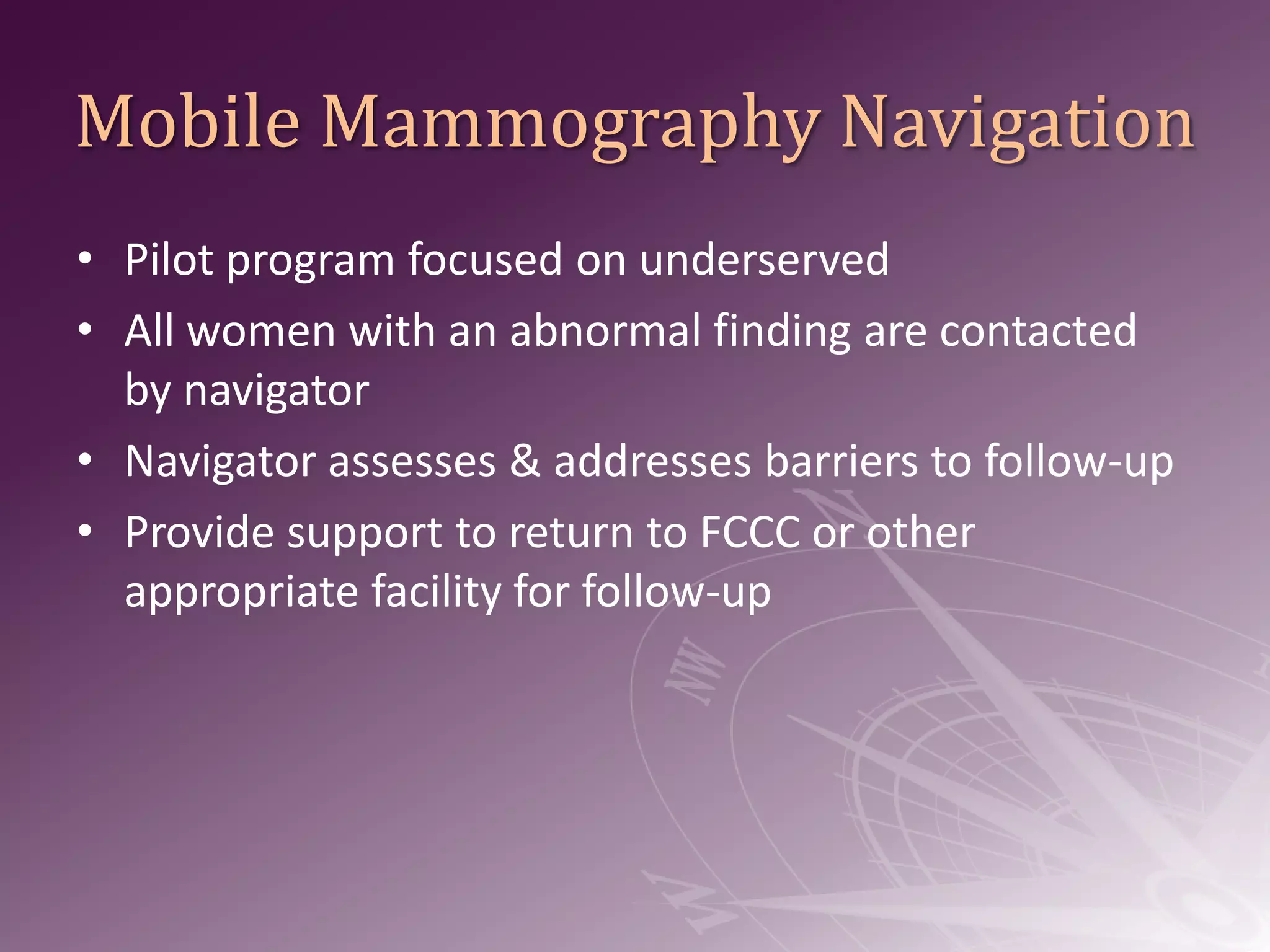
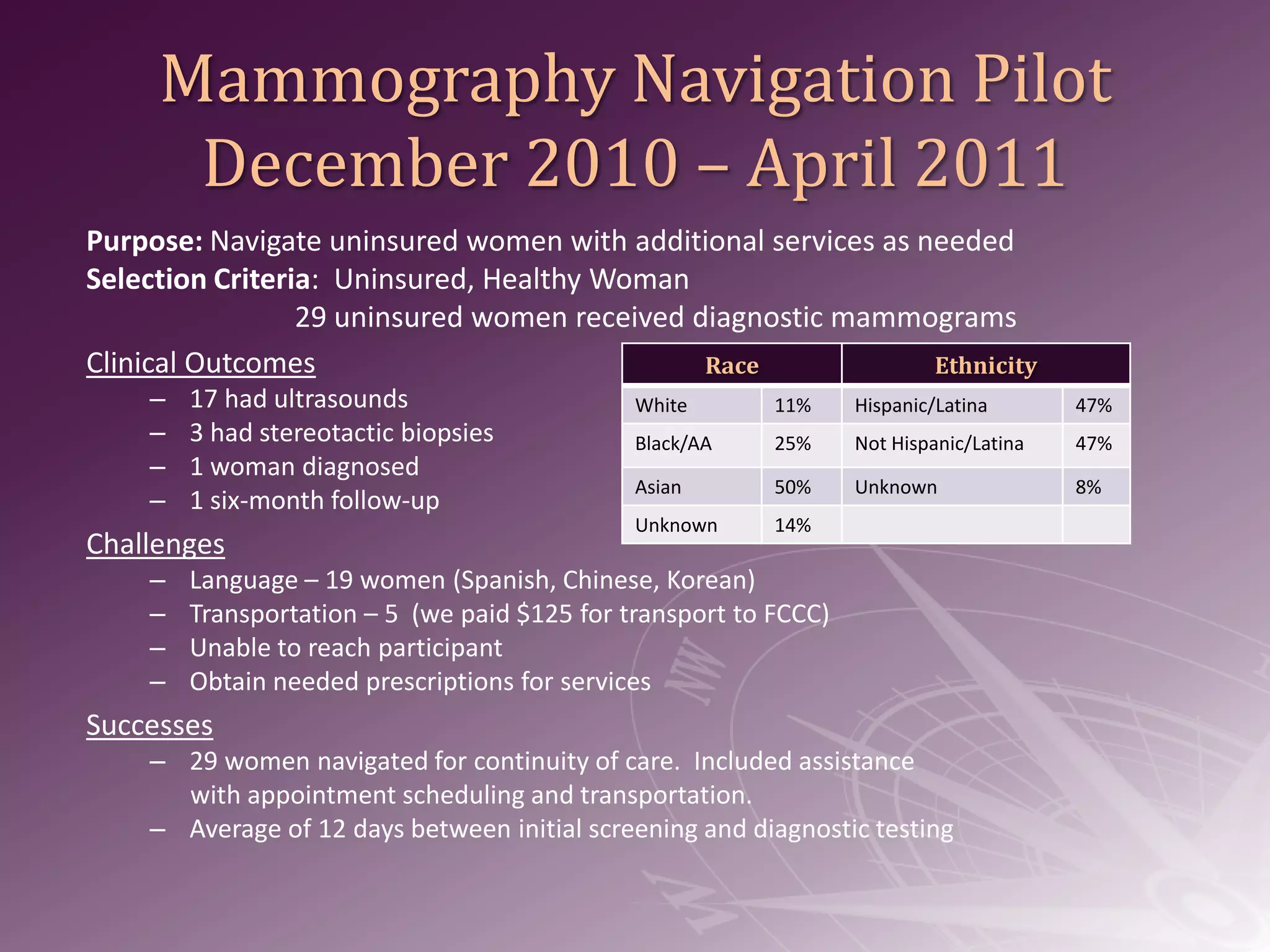
    Referrals to supportservicesMobile Mammography NavigationPilot program focused on underservedAll women with an abnormal finding are contacted by navigatorNavigator assesses & addresses barriers to follow-upProvide support to return to FCCC or other appropriate facility for follow-up
  • 112.
    Mammography Navigation PilotDecember2010 – April 2011Purpose: Navigate uninsured women with additional services as neededSelection Criteria: Uninsured, Healthy Woman29 uninsured women received diagnostic mammograms Clinical Outcomes17 had ultrasounds3 had stereotactic biopsies1 woman diagnosed1 six-month follow-upChallengesLanguage – 19 women (Spanish, Chinese, Korean)Transportation – 5 (we paid $125 for transport to FCCC)Unable to reach participantObtain needed prescriptions for servicesSuccesses29 women navigated for continuity of care. Included assistance with appointment scheduling and transportation. Average of 12 days between initial screening and diagnostic testing
  • 113.
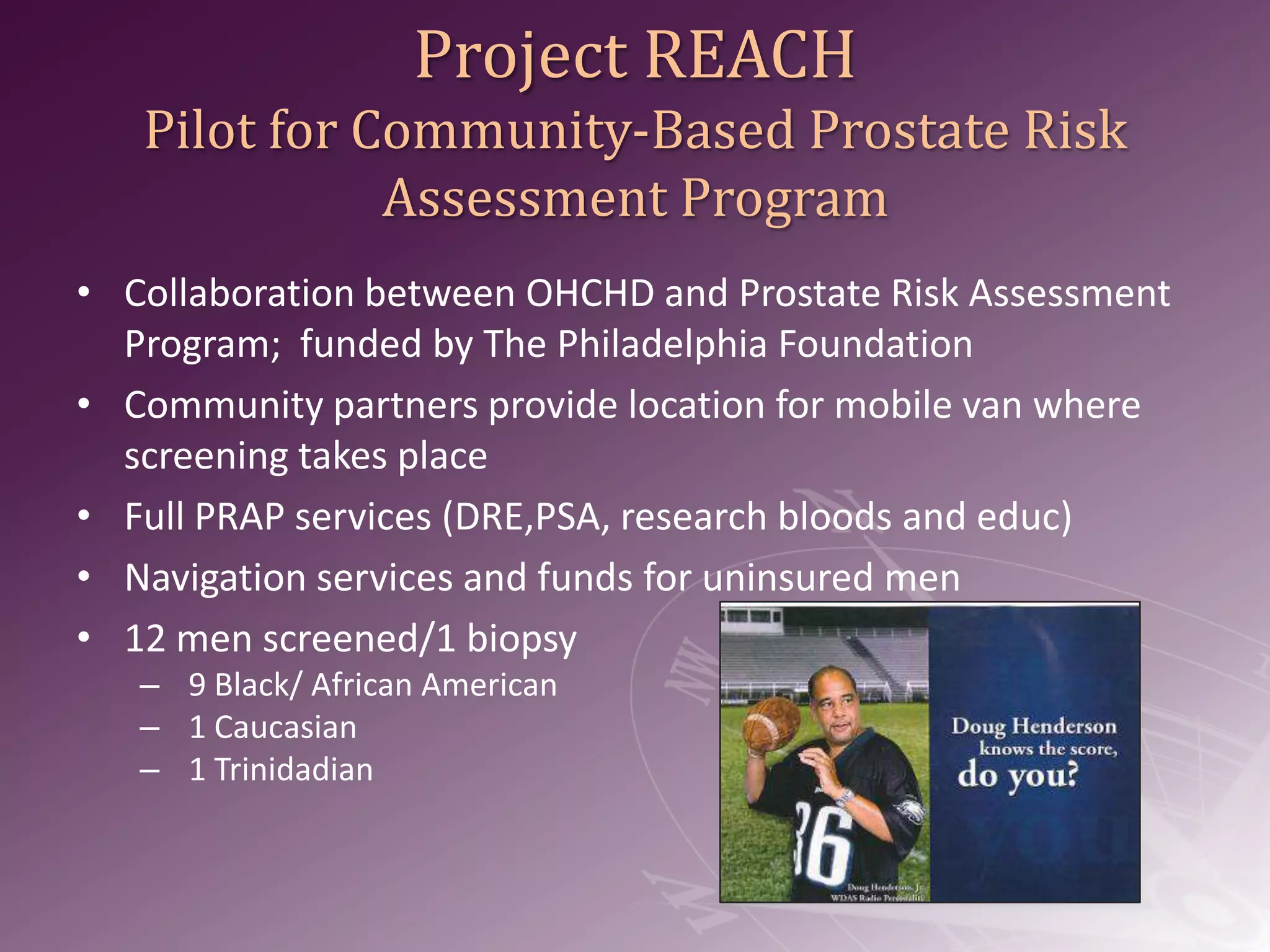
    Project REACHPilot forCommunity-Based Prostate Risk Assessment ProgramCollaboration between OHCHD and Prostate Risk Assessment Program; funded by The Philadelphia FoundationCommunity partners provide location for mobile van where screening takes placeFull PRAP services (DRE,PSA, research bloods and educ)Navigation services and funds for uninsured men12 men screened/1 biopsy9 Black/ African American
  • 114.
  • 115.
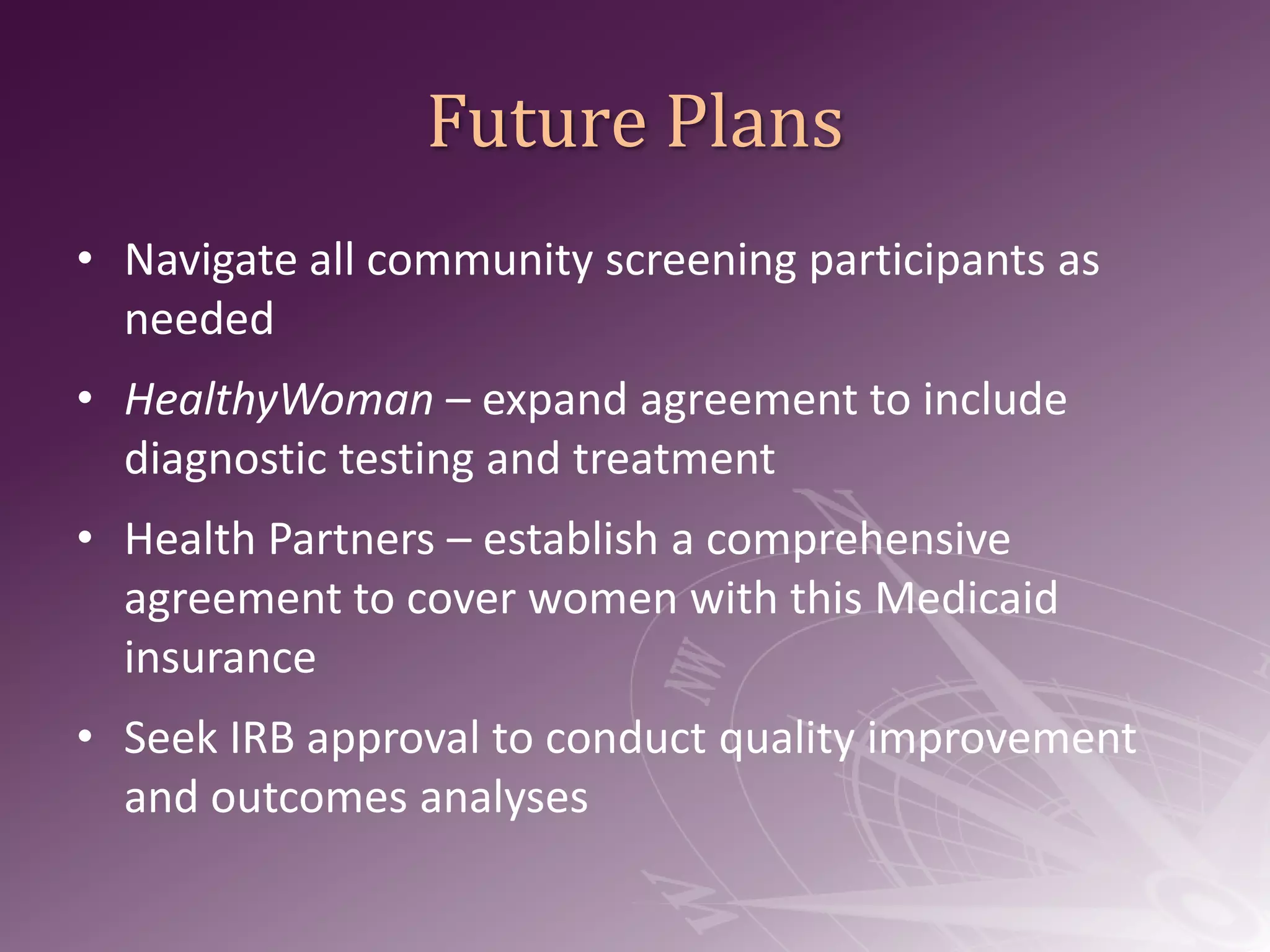
    1 Trinidadian Future PlansNavigate all community screening participants as needed HealthyWoman – expand agreement to include diagnostic testing and treatment Health Partners – establish a comprehensive agreement to cover women with this Medicaid insuranceSeek IRB approval to conduct quality improvement and outcomes analyses
  • 116.
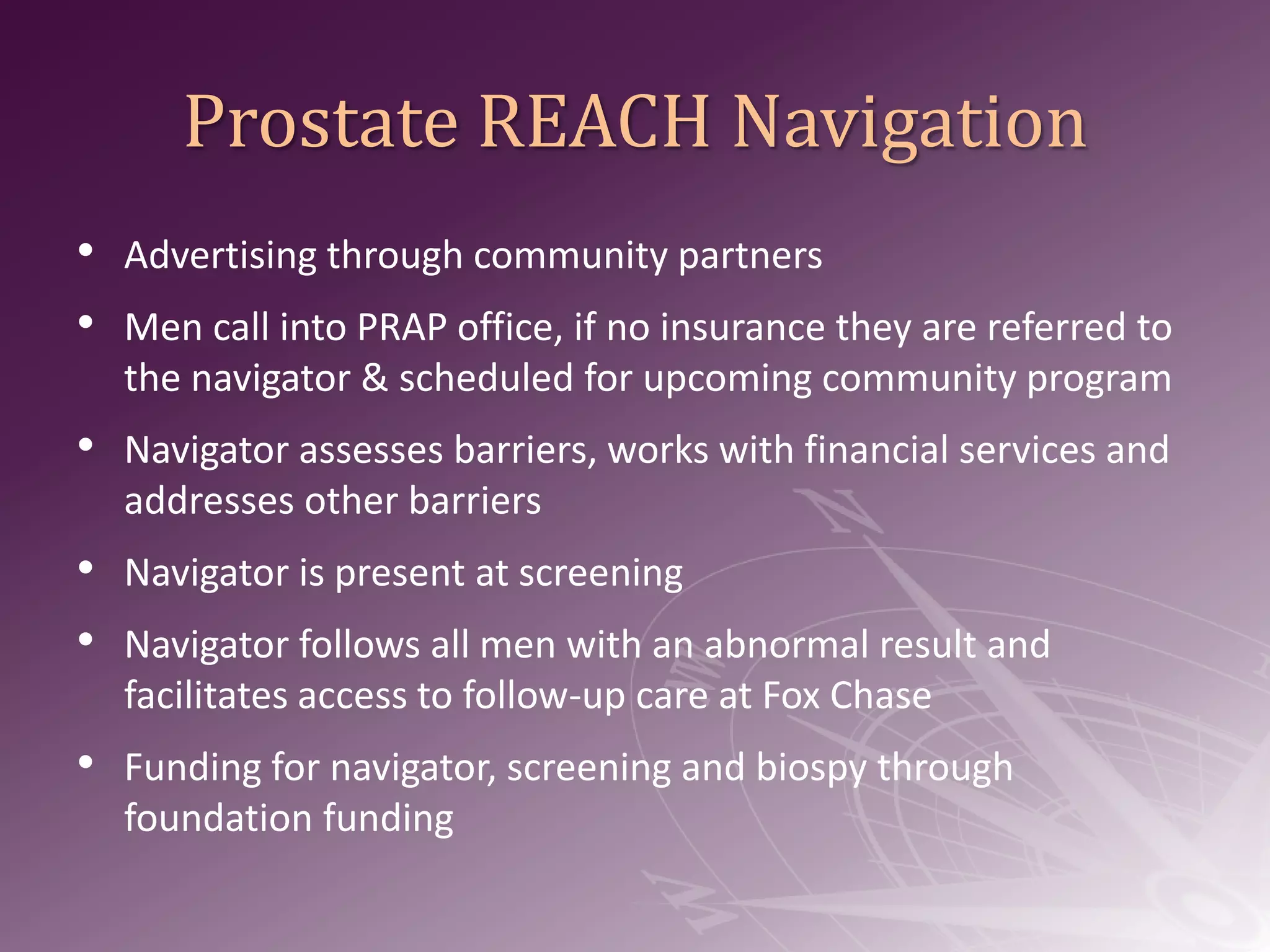
    Prostate REACH NavigationAdvertisingthrough community partnersMen call into PRAP office, if no insurance they are referred to the navigator & scheduled for upcoming community programNavigator assesses barriers, works with financial services and addresses other barriersNavigator is present at screeningNavigator follows all men with an abnormal result and facilitates access to follow-up care at Fox ChaseFunding for navigator, screening and biospy through foundation funding
  • 117.
  • 118.
  • 119.
  • 120.
    ROI – proofof concept
  • 121.
  • 122.
    Steering Committee acrossall domainsStaffingTransitioning existing staff
  • 123.
    Coordinated and consistenttraining and data collection
  • 124.
    Coordination across allnavigatorsPromotion & MarketingEvaluationConsistent data collection – with a goal to evaluation and researchLessons Learned: The Five CsCommittee OversightInfrastructure across domains – Steering CommitteeCenter wide component of Strategic PlanAlignment with Strategic Goals for Center (Enhancing Patient Experience)Coordination across all navigatorsAll one “Team”Comprehensive Education, Promotion & MarketingConsistent data collection All NavigatorsGoal to evaluation and research
  • 125.
    Contact InfoBonnie J.Miller, RN, BSN, OCN, FAAMAFox Chase Cancer CenterWomen’s Cancer Center333 Cottman AvenuePhiladelphia, Pa. 19111Bonnie.Miller@fccc.edu215-728-7036 (Office)215-728-3100 (Adm Office)Linda Fleisher, PhD, MPHFox Chase Cancer CenterOffice of Health Communications and Health Disparities510 Township Line RoadCheltenham, PA 19012Linda.Fleisher@fccc.edu 215-728-3690 (Office)

Editor's Notes

  • #38 Corporate 65%Community =