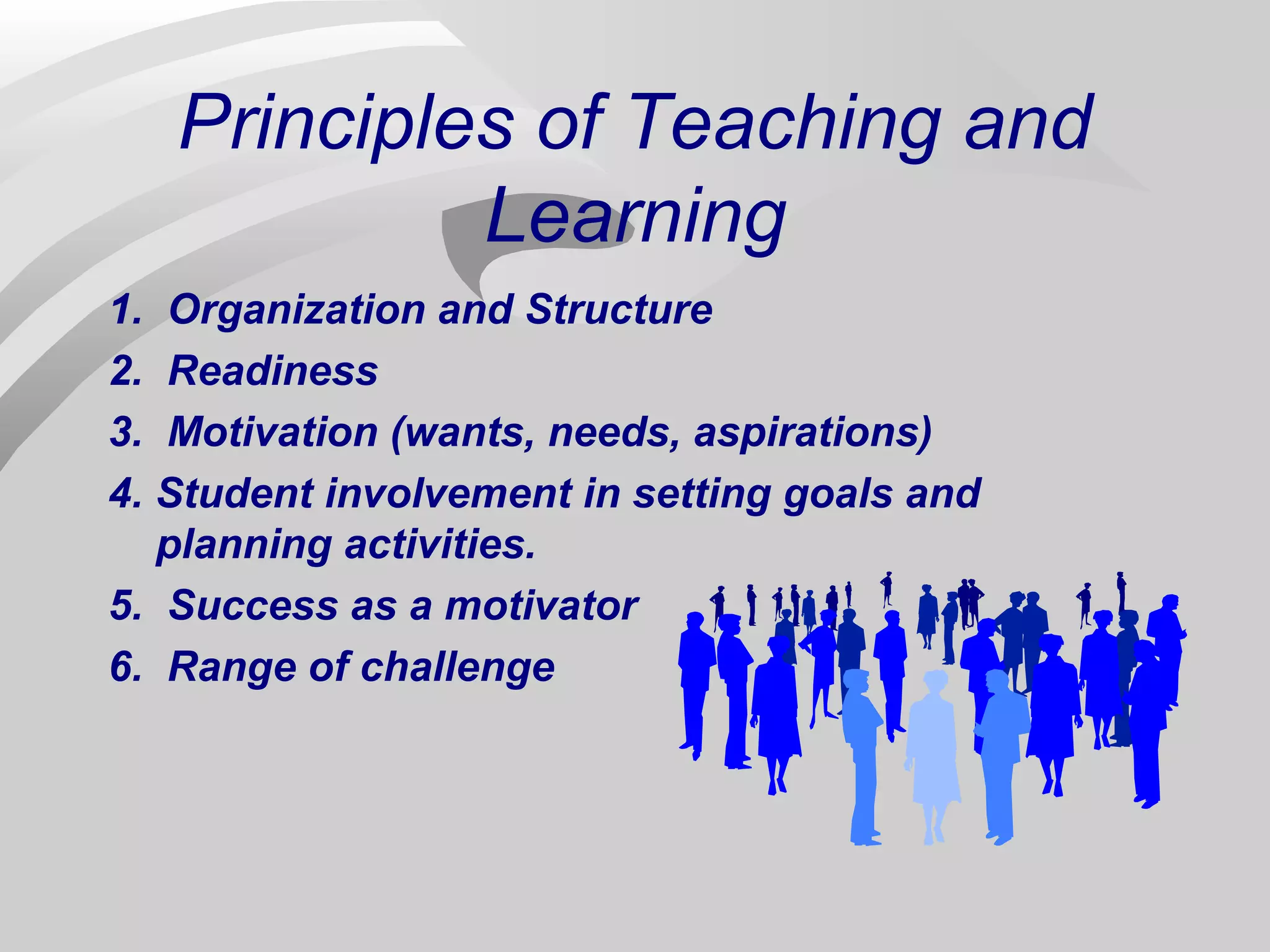
Principles of Teaching and 
Learning 
1. Organization and Structure 
2. Readiness 
3. Motivation (wants, needs, aspirations) 
4. Student involvement in setting goals and 
planning activities. 
5. Success as a motivator 
6. Range of challenge
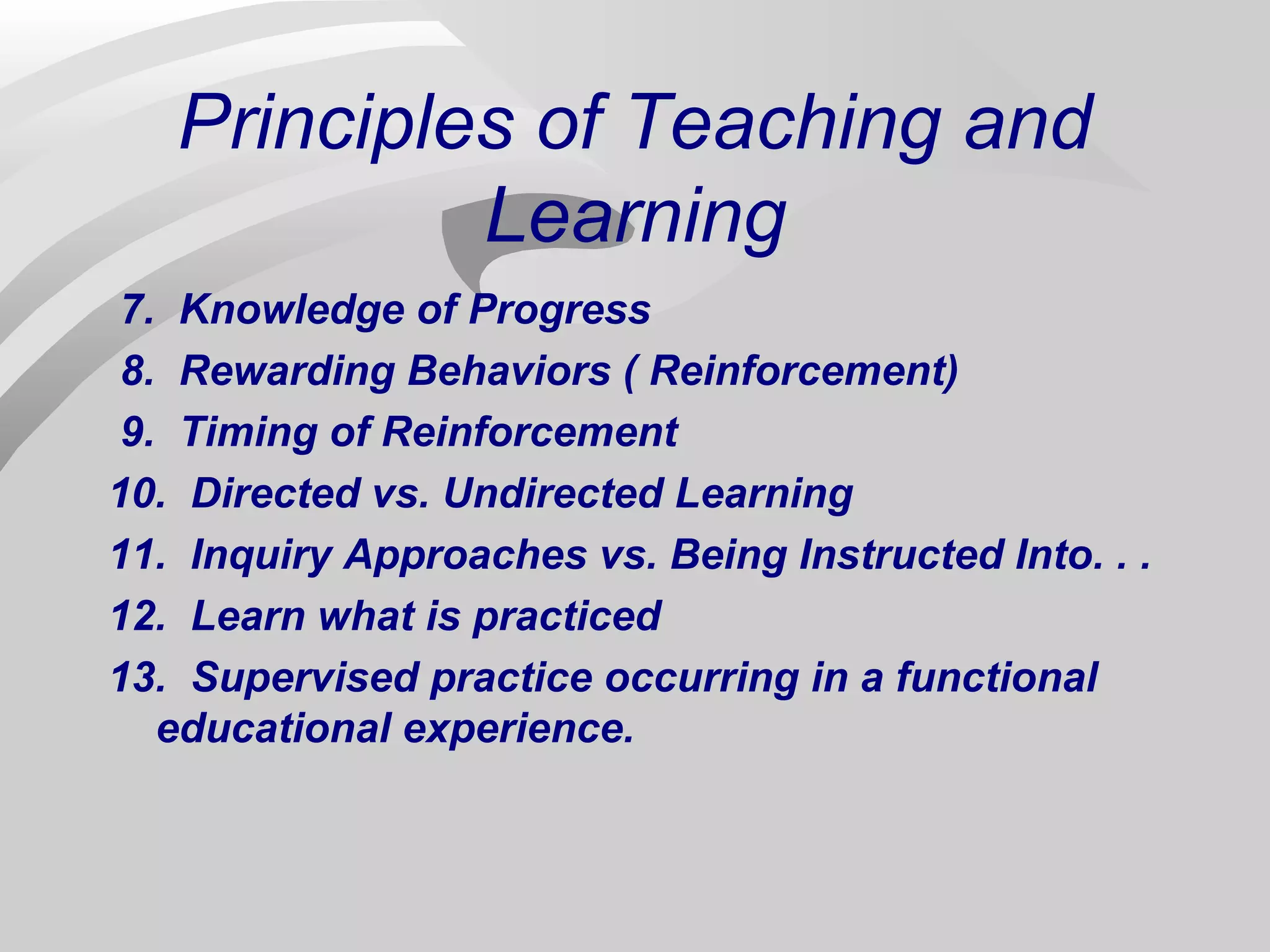
Principles of Teaching and 
Learning 
7. Knowledge of Progress 
8. Rewarding Behaviors ( Reinforcement) 
9. Timing of Reinforcement 
10. Directed vs. Undirected Learning 
11. Inquiry Approaches vs. Being Instructed Into. . . 
12. Learn what is practiced 
13. Supervised practice occurring in a functional 
educational experience.
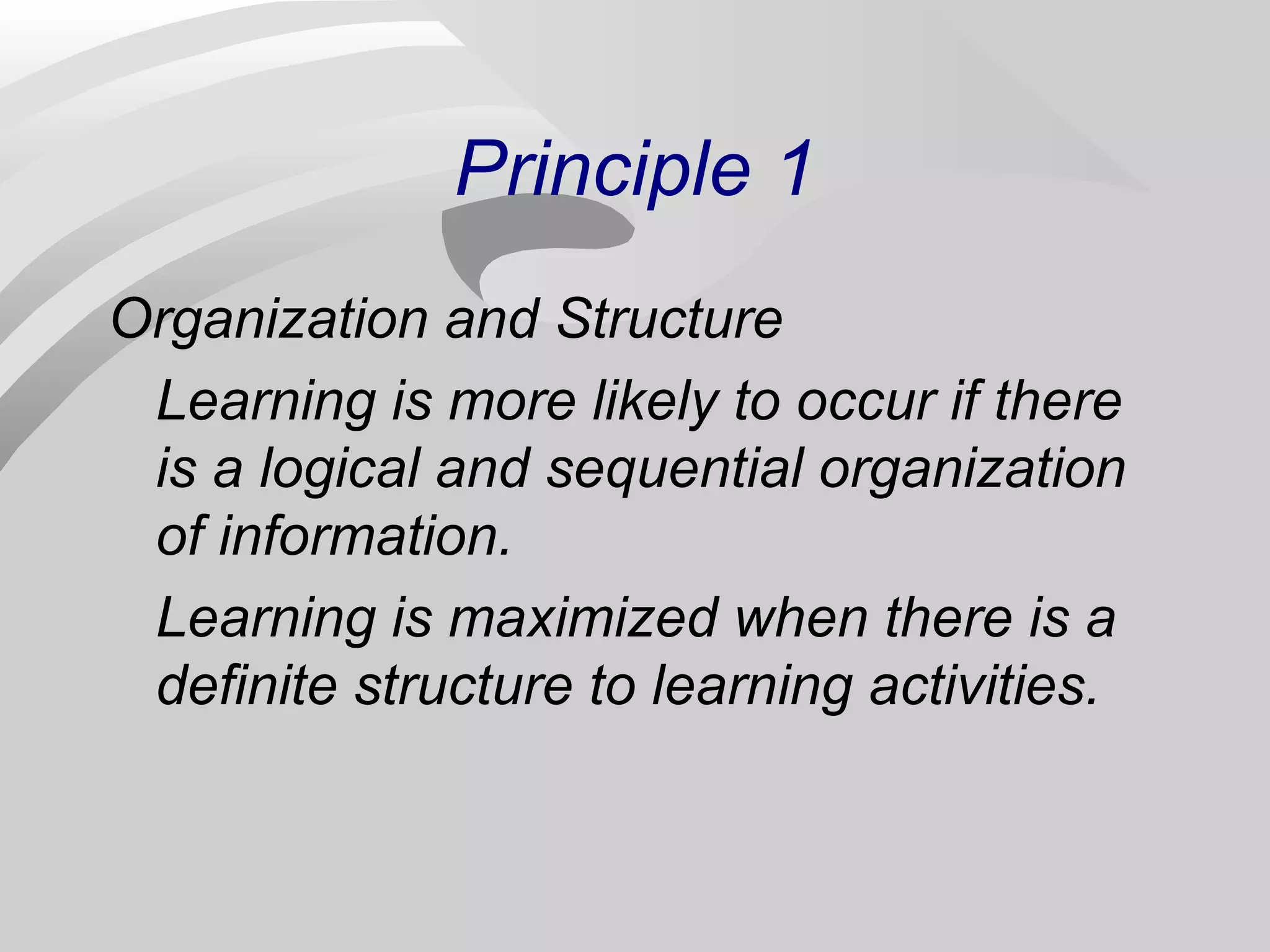
Principle 1 
Organization and Structure 
Learning is more likely to occur if there 
is a logical and sequential organization 
of information. 
Learning is maximized when there is a 
definite structure to learning activities.
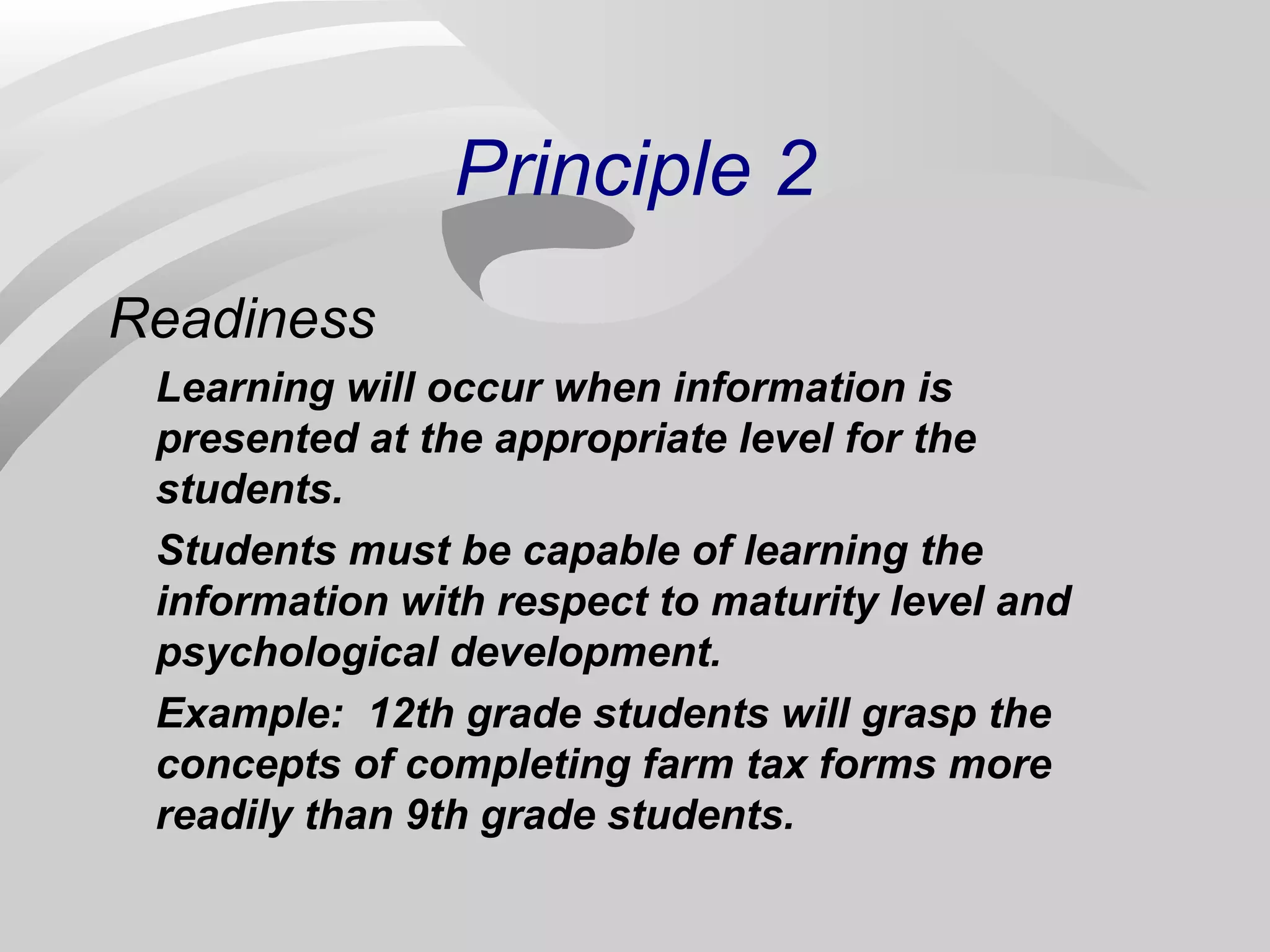
Principle 2 
Readiness 
Learning will occur when information is 
presented at the appropriate level for the 
students. 
Students must be capable of learning the 
information with respect to maturity level and 
psychological development. 
Example: 12th grade students will grasp the 
concepts of completing farm tax forms more 
readily than 9th grade students.
Principle 3 
Wants, Needs, and Aspirations 
Learning occurs more easily when the content 
matches the wants, needs, or aspirations of the 
students. 
Relate the information taught to how it affects the 
students or how it will help them accomplish their 
goals. 
Students must see the relevance of the 
information to themselves.
Principle 4 
Student Involvement 
Learning occurs more rapidly when students 
have participated in the development of goals 
and/or planning the learning activities. 
Referred to as receiving their “buy-in”. Two 
options: Teacher can tell the students why the 
information is important to them, or the students 
can develop reasons why they should learn the 
information. Which is more likely to result in 
student motivation?
Principle 5 
Success as a Motivator 
Students who have experienced success in a 
learning activity will be more motivated to 
attempt to learn new information. 
Major problem in education: By the time 
students reach high school they have been “told” 
(by teachers, grades, other students, etc.) that 
they cannot learn! We have to overcome this 
stigma! 
Critical to provide opportunities for students to 
be successful. This does not mean we should 
“water down” our content!
Principle 6 
Appropriate Range of Challenge 
Students will learn if they believe the learning 
activity is possible, but not necessarily assured. 
We must keep instruction within this range! 
If learning activities are too easy (assured), 
students will not take the activity seriously. 
If learning activities are too difficult, students 
give up before attempting the activity.
Principle 7 
Knowledge of Progress 
Learning occurs at a more rapid pace if students 
have a knowledge of their progress. 
Implies that learning must be monitored closely 
by the teacher and feedback must be provided to 
the students. 
Remember: You can practice ERROR just as 
easily as you can practice the correct way to do 
something.
Principle 8 
Rewarding Behaviors (Reinforcement) 
Behaviors that are rewarded are more likely to be 
repeated (or not repeated if the reward is 
negative). 
Praise is a powerful learning tool, provided that it 
is genuine. Can be overused, however. 
Rewards come in a variety of forms: grades, 
praise, privileges, responsibilities, 
acknowledgements.
Principle 9 
Timing of Reinforcement 
Rewards (either positive or negative) that occur 
more closely to the behavior exhibited are more 
likely to achieve the desired result. 
Students need feedback on their performance as 
soon as possible. 
This includes returning graded assignments and 
exams promptly--before the students have had 
time to forget the instruction on the topic.
Principle 10 
Directed vs. Undirected Learning 
To maximize learning, activities must be directed 
by the teacher and not allowed to occur “on their 
own.” 
Does not imply that the teacher is the sole source 
of information--only that the teacher provides 
clear directions. 
In most cases, it is not effective to establish small 
groups of students and expect them to “figure 
out” how to accomplish the activity.
Principle 11 
Inquiry Approach vs. Being Instructed in: 
Students learn more completely if they are 
expected to “look up” the information rather than 
being told the answer. 
This is not what they necessarily prefer, but the 
question is not of preference but of effectiveness. 
Most of us can relate to this principle. We 
remember the things we have had to look up 
ourselves rather than those were were told. 
Requires more active involvement in learning.
Principle 12 
Learn what is practiced 
For many educational activities, students do not 
commit the learning to memory until they have 
had the opportunity to practice the activity a 
number of times. 
Reason teachers assign homework. 
True for hands-on activities (arc welding, 
grafting, landscape designs), but also for mental 
activities such as calculating feed rations, 
selecting an appropriate variety of seed, livestock 
judging, writing an essay.
Principle 13 
Supervised practice in a functional 
educational setting 
Learning occurs best when practice is as close 
as possible to real-world settings. 
Simulations are good learning activities, but 
cannot replace real-world experiences. 
Underlying theory for supervised agricultural 
experience programs for students.
Which principles of learning 
are most important to you? 
Select 3 principles of learning that will 
form the basis of your philosophy of 
teaching.

Principles of teaching

  • 1.
    Principles of Teachingand Learning 1. Organization and Structure 2. Readiness 3. Motivation (wants, needs, aspirations) 4. Student involvement in setting goals and planning activities. 5. Success as a motivator 6. Range of challenge
  • 2.
    Principles of Teachingand Learning 7. Knowledge of Progress 8. Rewarding Behaviors ( Reinforcement) 9. Timing of Reinforcement 10. Directed vs. Undirected Learning 11. Inquiry Approaches vs. Being Instructed Into. . . 12. Learn what is practiced 13. Supervised practice occurring in a functional educational experience.
  • 3.
    Principle 1 Organizationand Structure Learning is more likely to occur if there is a logical and sequential organization of information. Learning is maximized when there is a definite structure to learning activities.
  • 4.
    Principle 2 Readiness Learning will occur when information is presented at the appropriate level for the students. Students must be capable of learning the information with respect to maturity level and psychological development. Example: 12th grade students will grasp the concepts of completing farm tax forms more readily than 9th grade students.
  • 5.
    Principle 3 Wants,Needs, and Aspirations Learning occurs more easily when the content matches the wants, needs, or aspirations of the students. Relate the information taught to how it affects the students or how it will help them accomplish their goals. Students must see the relevance of the information to themselves.
  • 6.
    Principle 4 StudentInvolvement Learning occurs more rapidly when students have participated in the development of goals and/or planning the learning activities. Referred to as receiving their “buy-in”. Two options: Teacher can tell the students why the information is important to them, or the students can develop reasons why they should learn the information. Which is more likely to result in student motivation?
  • 7.
    Principle 5 Successas a Motivator Students who have experienced success in a learning activity will be more motivated to attempt to learn new information. Major problem in education: By the time students reach high school they have been “told” (by teachers, grades, other students, etc.) that they cannot learn! We have to overcome this stigma! Critical to provide opportunities for students to be successful. This does not mean we should “water down” our content!
  • 8.
    Principle 6 AppropriateRange of Challenge Students will learn if they believe the learning activity is possible, but not necessarily assured. We must keep instruction within this range! If learning activities are too easy (assured), students will not take the activity seriously. If learning activities are too difficult, students give up before attempting the activity.
  • 9.
    Principle 7 Knowledgeof Progress Learning occurs at a more rapid pace if students have a knowledge of their progress. Implies that learning must be monitored closely by the teacher and feedback must be provided to the students. Remember: You can practice ERROR just as easily as you can practice the correct way to do something.
  • 10.
    Principle 8 RewardingBehaviors (Reinforcement) Behaviors that are rewarded are more likely to be repeated (or not repeated if the reward is negative). Praise is a powerful learning tool, provided that it is genuine. Can be overused, however. Rewards come in a variety of forms: grades, praise, privileges, responsibilities, acknowledgements.
  • 11.
    Principle 9 Timingof Reinforcement Rewards (either positive or negative) that occur more closely to the behavior exhibited are more likely to achieve the desired result. Students need feedback on their performance as soon as possible. This includes returning graded assignments and exams promptly--before the students have had time to forget the instruction on the topic.
  • 12.
    Principle 10 Directedvs. Undirected Learning To maximize learning, activities must be directed by the teacher and not allowed to occur “on their own.” Does not imply that the teacher is the sole source of information--only that the teacher provides clear directions. In most cases, it is not effective to establish small groups of students and expect them to “figure out” how to accomplish the activity.
  • 13.
    Principle 11 InquiryApproach vs. Being Instructed in: Students learn more completely if they are expected to “look up” the information rather than being told the answer. This is not what they necessarily prefer, but the question is not of preference but of effectiveness. Most of us can relate to this principle. We remember the things we have had to look up ourselves rather than those were were told. Requires more active involvement in learning.
  • 14.
    Principle 12 Learnwhat is practiced For many educational activities, students do not commit the learning to memory until they have had the opportunity to practice the activity a number of times. Reason teachers assign homework. True for hands-on activities (arc welding, grafting, landscape designs), but also for mental activities such as calculating feed rations, selecting an appropriate variety of seed, livestock judging, writing an essay.
  • 15.
    Principle 13 Supervisedpractice in a functional educational setting Learning occurs best when practice is as close as possible to real-world settings. Simulations are good learning activities, but cannot replace real-world experiences. Underlying theory for supervised agricultural experience programs for students.
  • 16.
    Which principles oflearning are most important to you? Select 3 principles of learning that will form the basis of your philosophy of teaching.