Establishing an Effective
EPMO
Developed by: Wael Genina – Projects & Planning Manager
1.
EPMO Development Paradigm
EPMO Implementation Plan
2.
Executive summary
Requirements
3.
4.
Executive
Summery
 Develop Implementation plan with phases
 Identify requirements
 Propose Implementation time frame
Objectives
The purpose of this presentation is to give a brief on how to create a successful
EPMO that fit with the company strategy and objectives.
Executive Summary
Create EPMO
Overview on EPMO Components
Create EPMO
Collaboration & Knowledge
Management
Business Strategy Alignment
Methodology & Process Consistency
Professional / Organizational
Development
Resource Management
Project / Program / Portfolio Visibility and Coordination: (e.g. Issues, Risks, Schedule,
Cost, Quality, etc.)
Phase
1
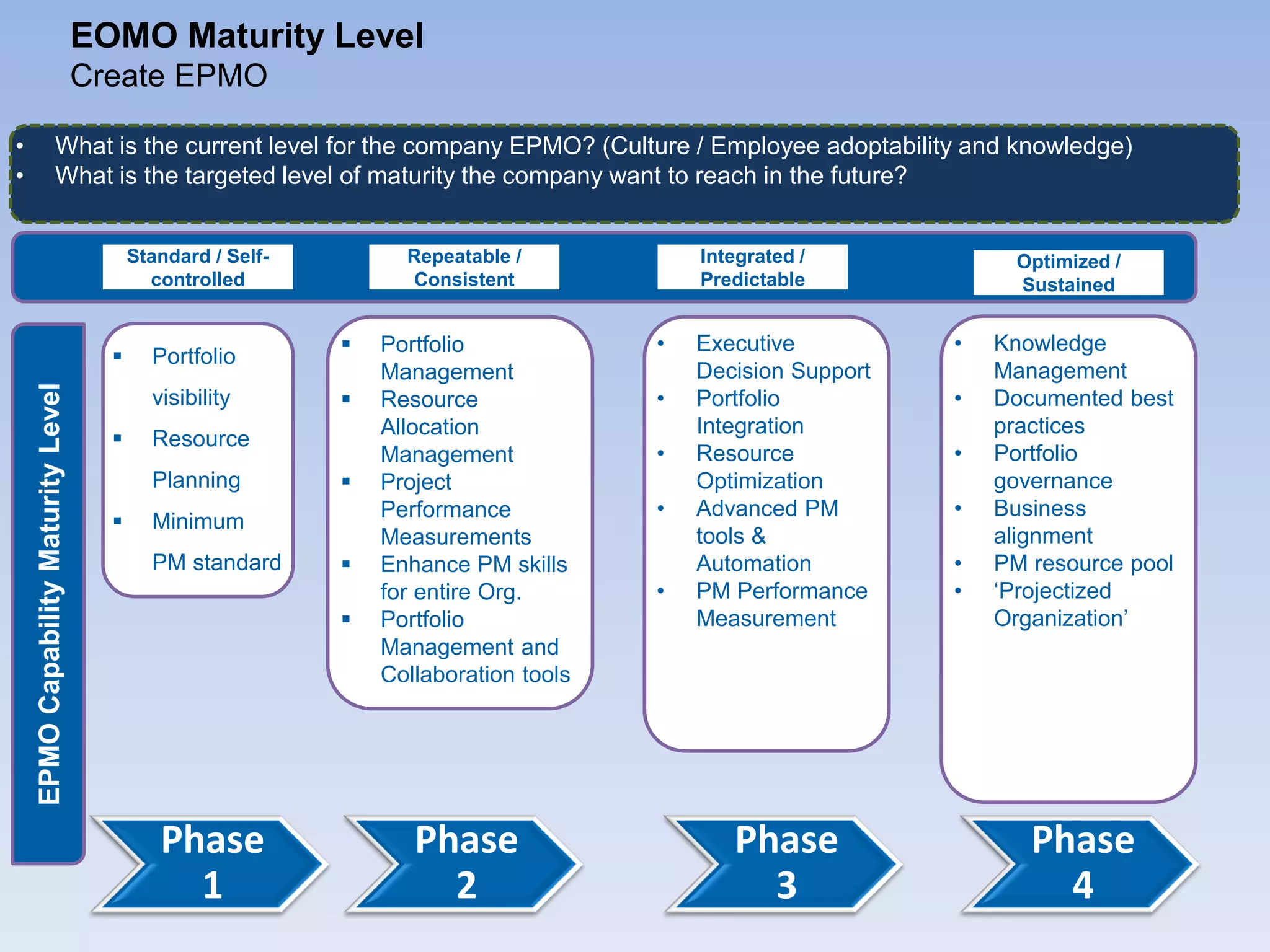
EPMOCapabilityMaturityLevel
• Knowledge
Management
• Documented best
practices
• Portfolio
governance
• Business
alignment
• PM resource pool
• ‘Projectized
Organization’
• Executive
Decision Support
• Portfolio
Integration
• Resource
Optimization
• Advanced PM
tools &
Automation
• PM Performance
Measurement
 Portfolio
Management
 Resource
Allocation
Management
 Project
Performance
Measurements
 Enhance PM skills
for entire Org.
 Portfolio
Management and
Collaboration tools
 Portfolio
visibility
 Resource
Planning
 Minimum
PM standard
Standard / Self-
controlled
Repeatable /
Consistent
Integrated /
Predictable
Optimized /
Sustained
Phase
2
Phase
3
Phase
4
EOMO Maturity Level
Create EPMO
• What is the current level for the company EPMO? (Culture / Employee adoptability and knowledge)
• What is the targeted level of maturity the company want to reach in the future?
Range of services provided
by EPMO
Support Directive
• Project Administrative
Support
• PMO standard,
Methodology, Processes
• Project Consulting
Mentoring
• PM Coaching and training
• Project Reporting
• PM tools, templates
• Project Audit
• Cost / Schedule Controls
• Business Case & Benefit Realization
Mentoring
• Portfolio management – more mature
prioritization and approval process
• Resource Management (Dept / Division)
• Asset Management
• Integration of Application Portfolio
Management and
EOMO Maturity Level
Create EPMO.
Understand
how project
performing
and status
• How to deliver
your project
• what process
• what is the
project life cycle
“One Stop Shop” for view of key project indicators
Provide broader insight to investments and improve value to organization
Common processes / methodology for project delivery
Ability to determine skills gaps and training focus for
project leadership
Support improved adoption of Project management through an
organization
EOMO Value Proposition
Create EPMO
Quantify PMO benefits by
establishing and meeting goals
i
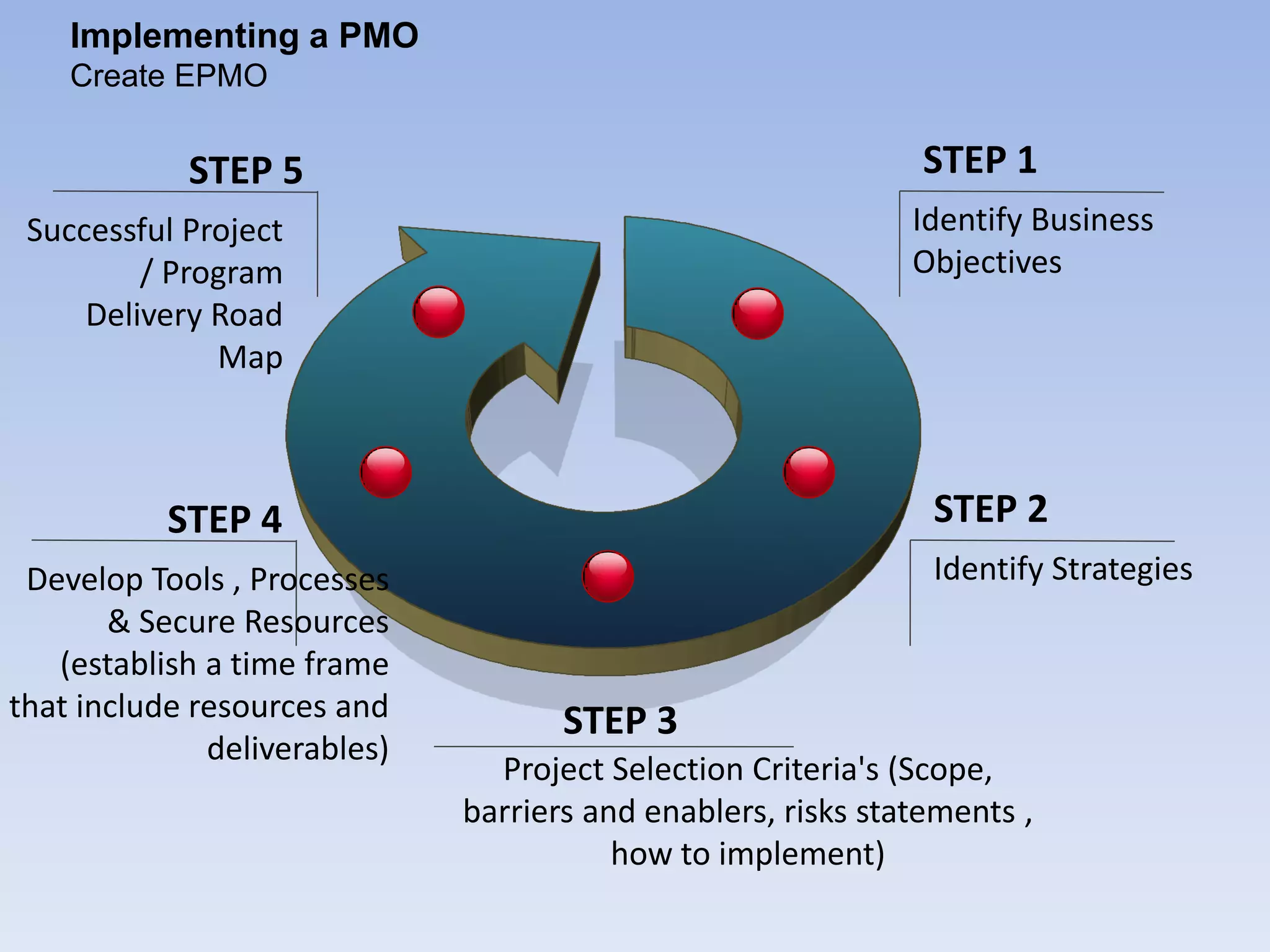
Identify Business
Objectives
STEP 1
Identify Strategies
STEP 2
Project Selection Criteria's (Scope,
barriers and enablers, risks statements ,
how to implement)
STEP 3
Develop Tools , Processes
& Secure Resources
(establish a time frame
that include resources and
deliverables)
STEP 4
Successful Project
/ Program
Delivery Road
Map
STEP 5
Implementing a PMO
Create EPMO
Current State Assessment
• Where are we today?
• What assets do we have today?
• What skills do we have today?
• What services and processes are
being delivered today?
• Who is your customer?
Future State Vision
Define Key EPMO Responsibilities:
1. Reporting
2. Informed Governance (monitoring
progress)
3. Project Prioritization / Approval
4. Process, Methodology, best practices
and training
5. Financial management
6. Define clients and suppliers
7. Define organization (staff, roles,
responsibilities, skills, position in
org.)
8. Define products and services
Implementing a PMO
Create EPMO
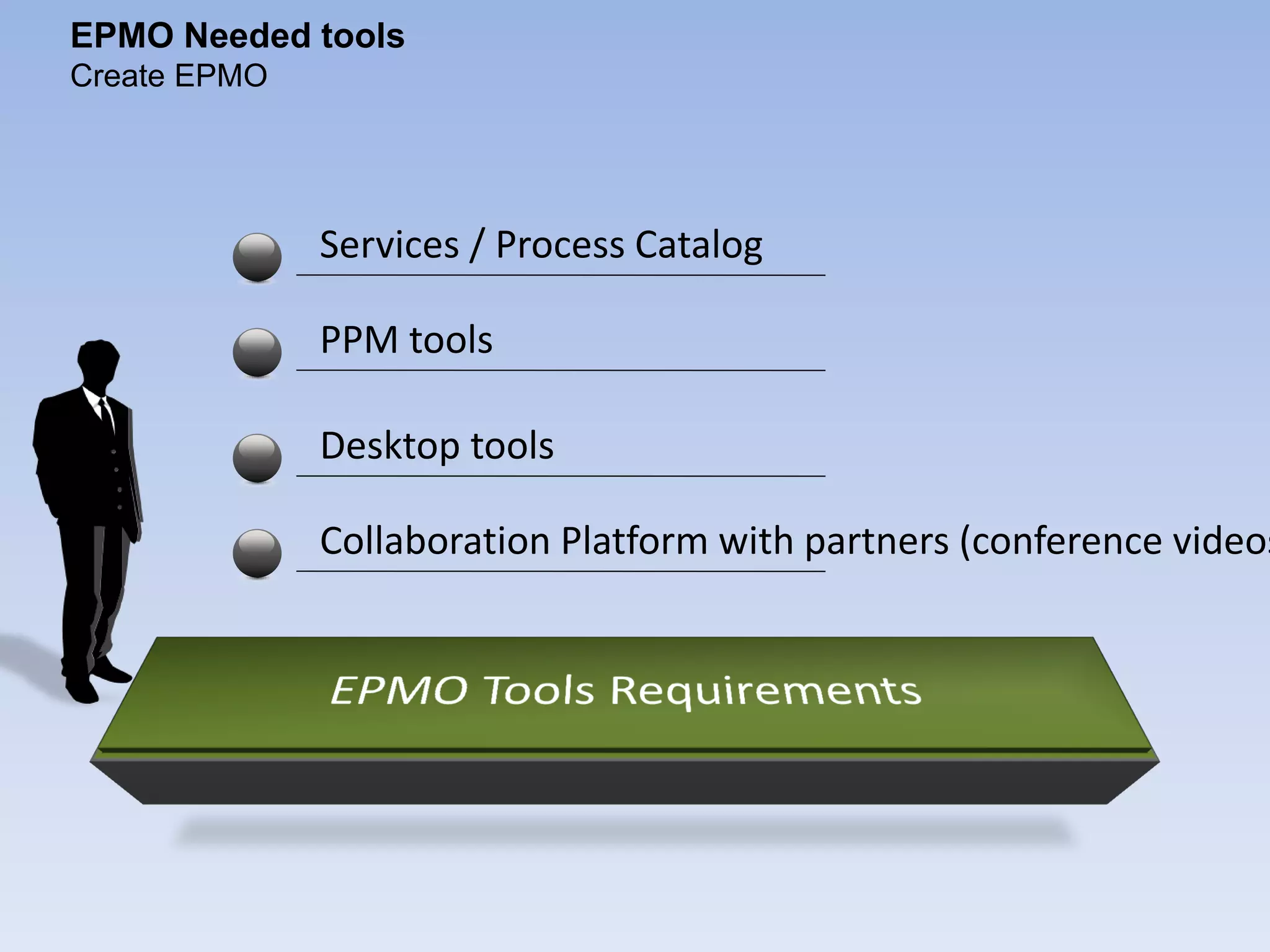
Services / Process Catalog
PPM tools
Desktop tools
Collaboration Platform with partners (conference videos
EPMO Needed tools
Create EPMO
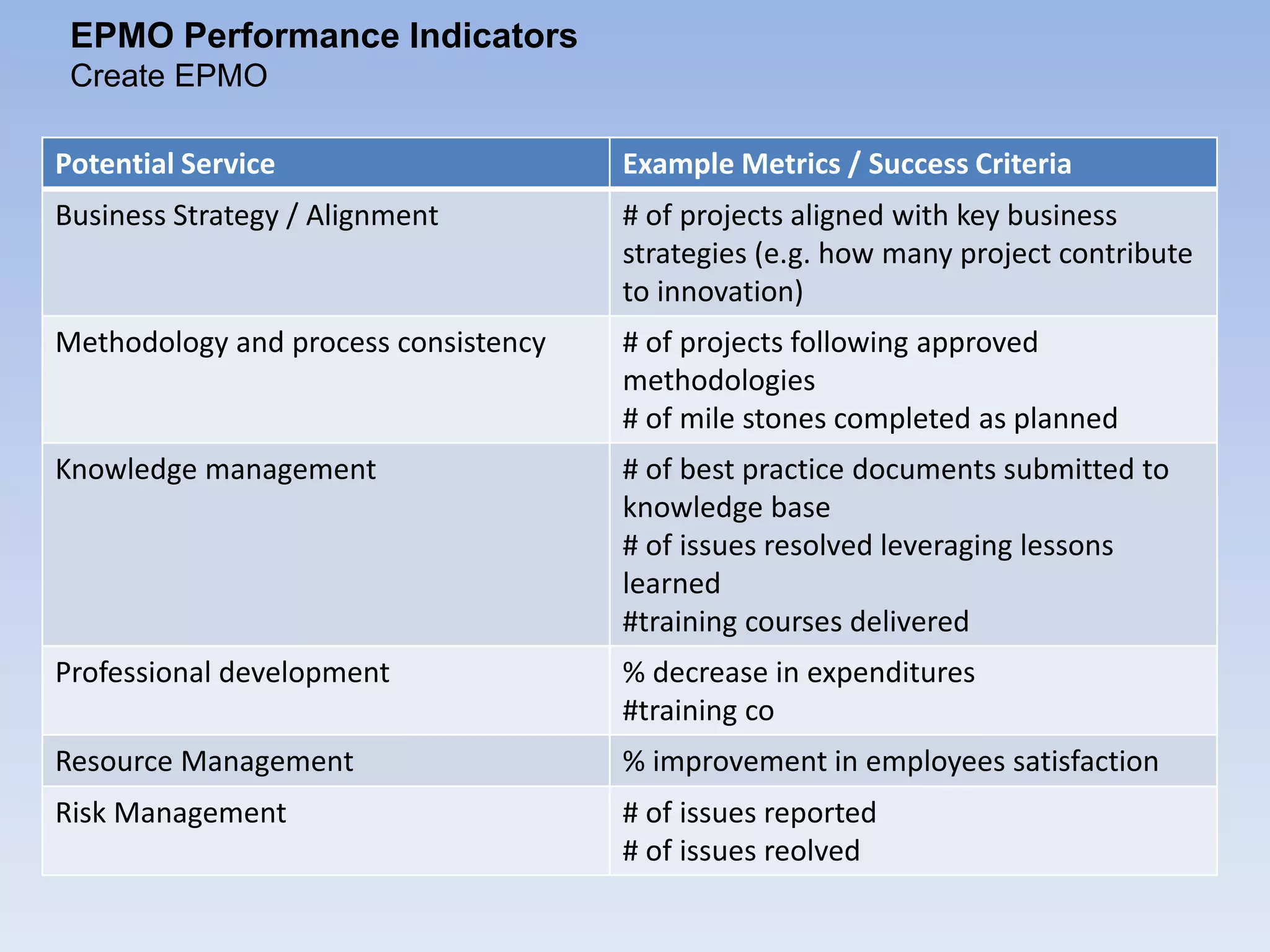
Potential Service Example Metrics / Success Criteria
Business Strategy / Alignment # of projects aligned with key business
strategies (e.g. how many project contribute
to innovation)
Methodology and process consistency # of projects following approved
methodologies
# of mile stones completed as planned
Knowledge management # of best practice documents submitted to
knowledge base
# of issues resolved leveraging lessons
learned
#training courses delivered
Professional development % decrease in expenditures
#training co
Resource Management % improvement in employees satisfaction
Risk Management # of issues reported
# of issues reolved
EPMO Performance Indicators
Create EPMO
Thank You

Establishing an effective EPMO

  • 1.
    Establishing an Effective EPMO Developedby: Wael Genina – Projects & Planning Manager
  • 2.
    1. EPMO Development Paradigm EPMOImplementation Plan 2. Executive summary Requirements 3. 4.
  • 3.
    Executive Summery  Develop Implementationplan with phases  Identify requirements  Propose Implementation time frame Objectives The purpose of this presentation is to give a brief on how to create a successful EPMO that fit with the company strategy and objectives. Executive Summary Create EPMO
  • 4.
    Overview on EPMOComponents Create EPMO Collaboration & Knowledge Management Business Strategy Alignment Methodology & Process Consistency Professional / Organizational Development Resource Management Project / Program / Portfolio Visibility and Coordination: (e.g. Issues, Risks, Schedule, Cost, Quality, etc.)
  • 5.
    Phase 1 EPMOCapabilityMaturityLevel • Knowledge Management • Documentedbest practices • Portfolio governance • Business alignment • PM resource pool • ‘Projectized Organization’ • Executive Decision Support • Portfolio Integration • Resource Optimization • Advanced PM tools & Automation • PM Performance Measurement  Portfolio Management  Resource Allocation Management  Project Performance Measurements  Enhance PM skills for entire Org.  Portfolio Management and Collaboration tools  Portfolio visibility  Resource Planning  Minimum PM standard Standard / Self- controlled Repeatable / Consistent Integrated / Predictable Optimized / Sustained Phase 2 Phase 3 Phase 4 EOMO Maturity Level Create EPMO • What is the current level for the company EPMO? (Culture / Employee adoptability and knowledge) • What is the targeted level of maturity the company want to reach in the future?
  • 6.
    Range of servicesprovided by EPMO Support Directive • Project Administrative Support • PMO standard, Methodology, Processes • Project Consulting Mentoring • PM Coaching and training • Project Reporting • PM tools, templates • Project Audit • Cost / Schedule Controls • Business Case & Benefit Realization Mentoring • Portfolio management – more mature prioritization and approval process • Resource Management (Dept / Division) • Asset Management • Integration of Application Portfolio Management and EOMO Maturity Level Create EPMO. Understand how project performing and status • How to deliver your project • what process • what is the project life cycle
  • 7.
    “One Stop Shop”for view of key project indicators Provide broader insight to investments and improve value to organization Common processes / methodology for project delivery Ability to determine skills gaps and training focus for project leadership Support improved adoption of Project management through an organization EOMO Value Proposition Create EPMO Quantify PMO benefits by establishing and meeting goals i
  • 8.
    Identify Business Objectives STEP 1 IdentifyStrategies STEP 2 Project Selection Criteria's (Scope, barriers and enablers, risks statements , how to implement) STEP 3 Develop Tools , Processes & Secure Resources (establish a time frame that include resources and deliverables) STEP 4 Successful Project / Program Delivery Road Map STEP 5 Implementing a PMO Create EPMO
  • 9.
    Current State Assessment •Where are we today? • What assets do we have today? • What skills do we have today? • What services and processes are being delivered today? • Who is your customer? Future State Vision Define Key EPMO Responsibilities: 1. Reporting 2. Informed Governance (monitoring progress) 3. Project Prioritization / Approval 4. Process, Methodology, best practices and training 5. Financial management 6. Define clients and suppliers 7. Define organization (staff, roles, responsibilities, skills, position in org.) 8. Define products and services Implementing a PMO Create EPMO
  • 10.
    Services / ProcessCatalog PPM tools Desktop tools Collaboration Platform with partners (conference videos EPMO Needed tools Create EPMO
  • 11.
    Potential Service ExampleMetrics / Success Criteria Business Strategy / Alignment # of projects aligned with key business strategies (e.g. how many project contribute to innovation) Methodology and process consistency # of projects following approved methodologies # of mile stones completed as planned Knowledge management # of best practice documents submitted to knowledge base # of issues resolved leveraging lessons learned #training courses delivered Professional development % decrease in expenditures #training co Resource Management % improvement in employees satisfaction Risk Management # of issues reported # of issues reolved EPMO Performance Indicators Create EPMO
  • 12.