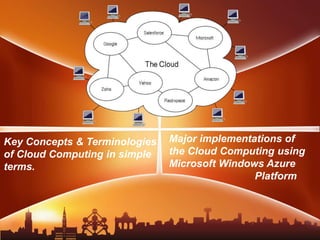
Cloud ComputingArchitecture For the cloud, we're all inVasu Jain | vasu.jain@live.inMicrosoft Most Valuable Professional
Major implementations of the Cloud Computing using Microsoft Windows Azure   			  PlatformKey Concepts & Terminologies of Cloud Computing in simple terms.
Major Implementations of the Cloud Computing
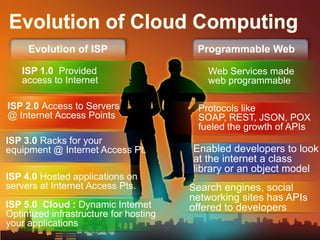
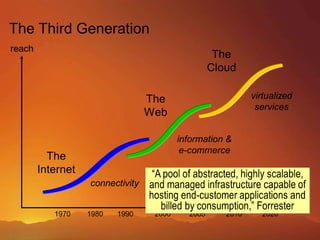
Evolution of Cloud Computing Evolution of ISP Programmable Web ISP 5.0  Cloud : Dynamic Internet Optimized infrastructure for hosting your applicationsISP 1.0  Provided access to InternetWeb Services made web programmableProtocols like SOAP, REST, JSON, POX fueled the growth of APIsISP 2.0 Access to Servers @ Internet Access PointsEnabled developers to look at the internet a class library or an object model ISP 3.0 Racks for your equipment @ Internet Access Pt.Search engines, social networking sites has APIs offered to developers ISP 4.0 Hosted applications on servers at Internet Access Pts.
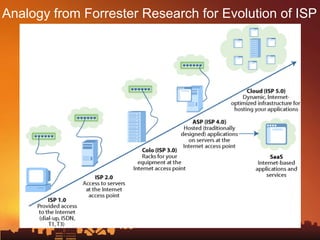
Analogy from Forrester Researchfor Evolution of ISP
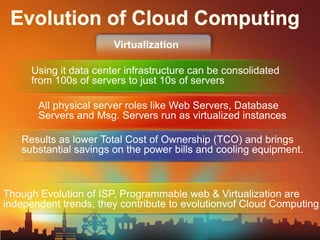
Evolution of Cloud Computing Virtualization Using it data center infrastructure can be consolidated from 100s of servers to just 10s of servers All physical server roles like Web Servers, Database Servers and Msg. Servers run as virtualized instances Results as lower Total Cost of Ownership (TCO) and brings substantial savings on the power bills and cooling equipment. Though Evolution of ISP, Programmable web & Virtualization are independent trends, they contribute to evolutionvofCloud Computing.
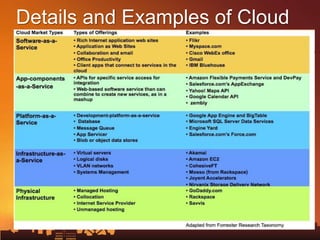
Details and Examples of Cloud
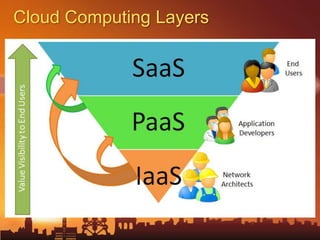
Cloud Computing Layers
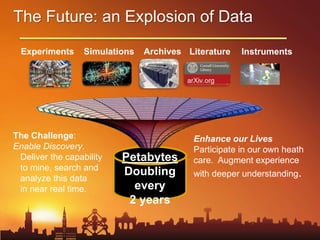
The Future: an Explosion of DataArchivesExperimentsSimulationsLiteratureInstrumentsThe Challenge: Enable Discovery.   Deliver the capability  to mine, search and  analyze this data   in near real time.Enhance our LivesParticipate in our own heath care.  Augment experience with deeper understanding. PetabytesDoubling every 2 years
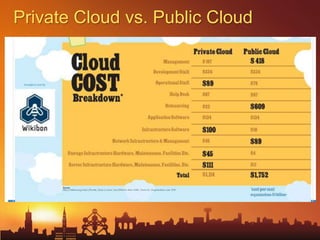
Private Cloud vs. Public Cloud
Unified Communications And CollaborationBusiness IntelligenceEnterprise Content ManagementWebsite and Security FrameworkBusiness Data CatalogOpen XML File FormatsExtensible UIWorkflowSearchSecured, Well-Managed Infrastructure
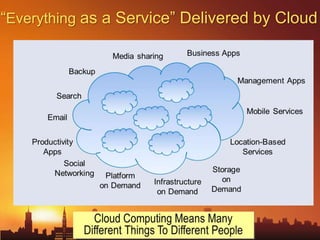
“Everything as a Service” Delivered by Cloud
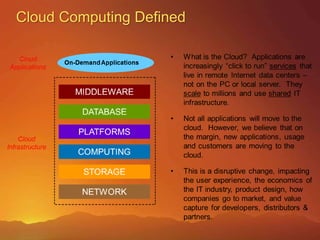
Cloud Computing DefinedUnified Communications And CollaborationBusiness IntelligenceEnterprise Content ManagementWebsite and Security FrameworkBusiness Data CatalogOpen XML File FormatsExtensible UIWorkflowSearchSecured, Well-Managed Infrastructure
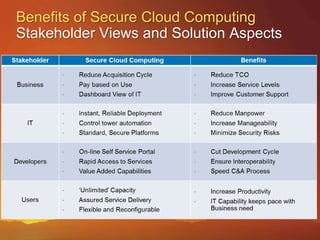
Benefits of Secure Cloud ComputingStakeholder Views and Solution AspectsUnified Communications And CollaborationBusiness IntelligenceEnterprise Content ManagementWebsite and Security FrameworkBusiness Data CatalogOpen XML File FormatsExtensible UIWorkflowSearchSecured, Well-Managed Infrastructure
Contact Me: I blog at : www.WindowsVJ.comI Tweet at : @vasujainI read Mails at: vasu@windowsvj.com
Thank You

Cloud Computing Architecture

  • 1.
    Cloud ComputingArchitecture Forthe cloud, we're all inVasu Jain | vasu.jain@live.inMicrosoft Most Valuable Professional
  • 2.
    Major implementations ofthe Cloud Computing using Microsoft Windows Azure PlatformKey Concepts & Terminologies of Cloud Computing in simple terms.
  • 3.
    Major Implementations ofthe Cloud Computing
  • 4.
    Evolution of CloudComputing Evolution of ISP Programmable Web ISP 5.0 Cloud : Dynamic Internet Optimized infrastructure for hosting your applicationsISP 1.0 Provided access to InternetWeb Services made web programmableProtocols like SOAP, REST, JSON, POX fueled the growth of APIsISP 2.0 Access to Servers @ Internet Access PointsEnabled developers to look at the internet a class library or an object model ISP 3.0 Racks for your equipment @ Internet Access Pt.Search engines, social networking sites has APIs offered to developers ISP 4.0 Hosted applications on servers at Internet Access Pts.
  • 5.
    Analogy from ForresterResearchfor Evolution of ISP
  • 6.
    Evolution of CloudComputing Virtualization Using it data center infrastructure can be consolidated from 100s of servers to just 10s of servers All physical server roles like Web Servers, Database Servers and Msg. Servers run as virtualized instances Results as lower Total Cost of Ownership (TCO) and brings substantial savings on the power bills and cooling equipment. Though Evolution of ISP, Programmable web & Virtualization are independent trends, they contribute to evolutionvofCloud Computing.
  • 7.
  • 8.
  • 9.
    The Future: anExplosion of DataArchivesExperimentsSimulationsLiteratureInstrumentsThe Challenge: Enable Discovery. Deliver the capability to mine, search and analyze this data in near real time.Enhance our LivesParticipate in our own heath care. Augment experience with deeper understanding. PetabytesDoubling every 2 years
  • 10.
    Private Cloud vs.Public Cloud
  • 11.
    Unified Communications AndCollaborationBusiness IntelligenceEnterprise Content ManagementWebsite and Security FrameworkBusiness Data CatalogOpen XML File FormatsExtensible UIWorkflowSearchSecured, Well-Managed Infrastructure
  • 12.
    “Everything as aService” Delivered by Cloud
  • 13.
    Cloud Computing DefinedUnifiedCommunications And CollaborationBusiness IntelligenceEnterprise Content ManagementWebsite and Security FrameworkBusiness Data CatalogOpen XML File FormatsExtensible UIWorkflowSearchSecured, Well-Managed Infrastructure
  • 14.
    Benefits of SecureCloud ComputingStakeholder Views and Solution AspectsUnified Communications And CollaborationBusiness IntelligenceEnterprise Content ManagementWebsite and Security FrameworkBusiness Data CatalogOpen XML File FormatsExtensible UIWorkflowSearchSecured, Well-Managed Infrastructure
  • 15.
    Contact Me: Iblog at : www.WindowsVJ.comI Tweet at : @vasujainI read Mails at: vasu@windowsvj.com
  • 16.

Editor's Notes

  • #4 From the initial days of offering basic internet connectivity to offering software as a service, the ISPs have come a long way. ISP 1.0 was all about providing internet access to their customers. ISP 2.0 was the phase where ISPs offered hosting capabilities. The next step was co-location through which the ISPs started leasing out the rack space and bandwidth. By this, companies could host their servers running custom, Line of Business (LoB) applications that could be accessed over the web by its employees, trading partners and customers. ISP 3.0 was offering applications on subscription resulting in the Application Service Provider (ASP) model. The latest Software as a Service or SaaS, is a mature ASP model. The next logical step for ISPs would to embrace the Cloud. Web Services made the web programmable. They enabled the developers to look at the internet a class library or an object model. Protocols like Simple Object Access Protocol (SOAP), Representational State Transfer (REST), JavaScript Object Notation (JSON) and Plain Old XML (POX) fueled the growth of APIs on the web. Today every popular search engine, social networking site and syndication portal has APIs offered to developers.
  • #5 From the initial days of offering basic internet connectivity to offering software as a service, the ISPs have come a long way. ISP 1.0 was all about providing internet access to their customers. ISP 2.0 was the phase where ISPs offered hosting capabilities. The next step was co-location through which the ISPs started leasing out the rack space and bandwidth. By this, companies could host their servers running custom, Line of Business (LoB) applications that could be accessed over the web by its employees, trading partners and customers. ISP 3.0 was offering applications on subscription resulting in the Application Service Provider (ASP) model. ISP 4.0 The latest Software as a Service or SaaS, is a mature ASP model. ISP 5.0 The next logical step for ISPs would to embrace the Cloud.
  • #6 Through Virtualization, the data center infrastructure can be consolidated from hundreds of servers to just tens of servers. All the physical server roles like Web Servers, Database Servers and Messaging Servers run as virtualized instances. This results in lower Total Cost of Ownership (TCO) and brings substantial savings on the power bills and reduced cost of cooling equipment. Though the evolution of ISP, programmable web and virtualization are independent trends, they contribute to the evolution of Cloud Computing.