

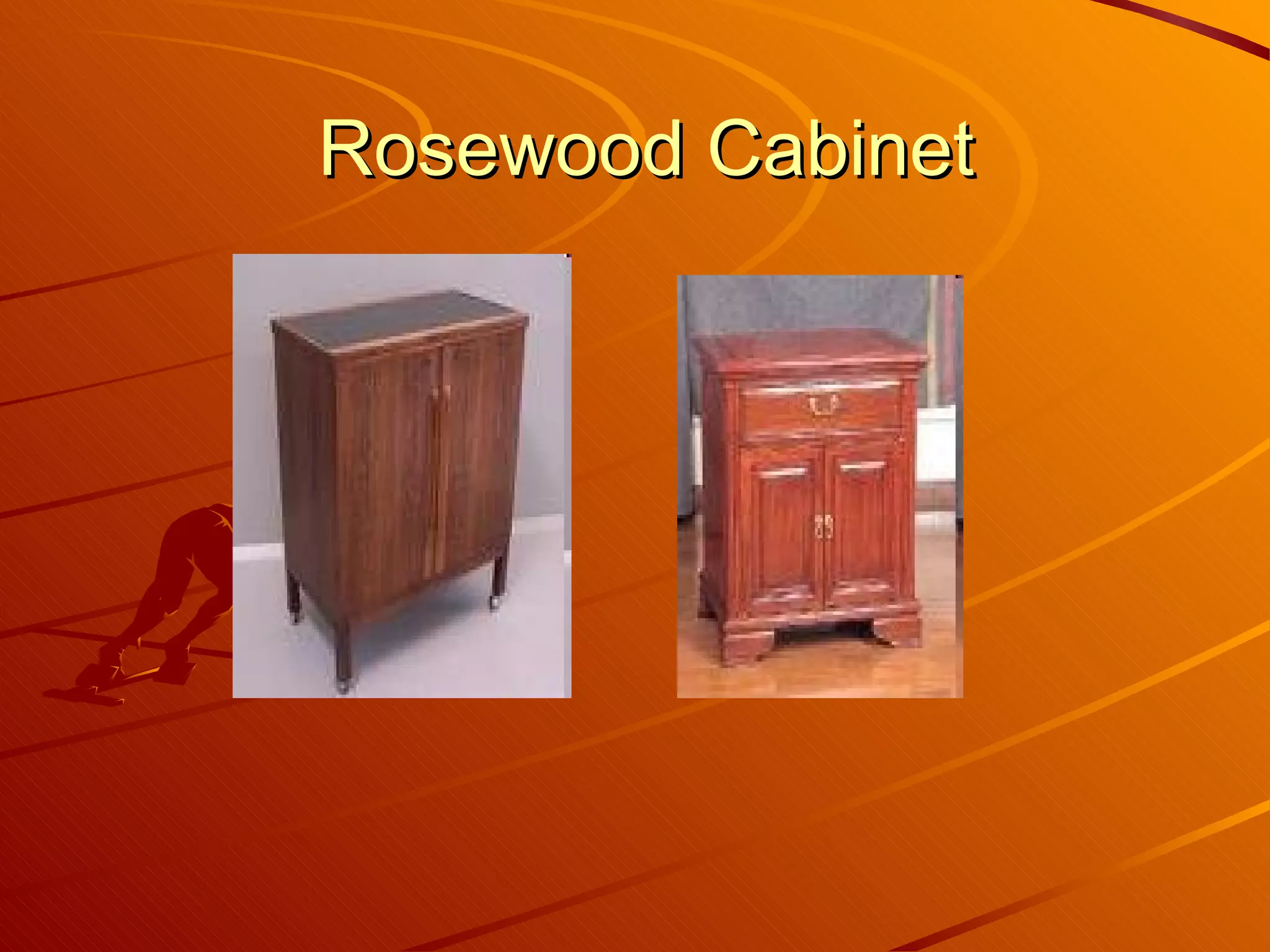
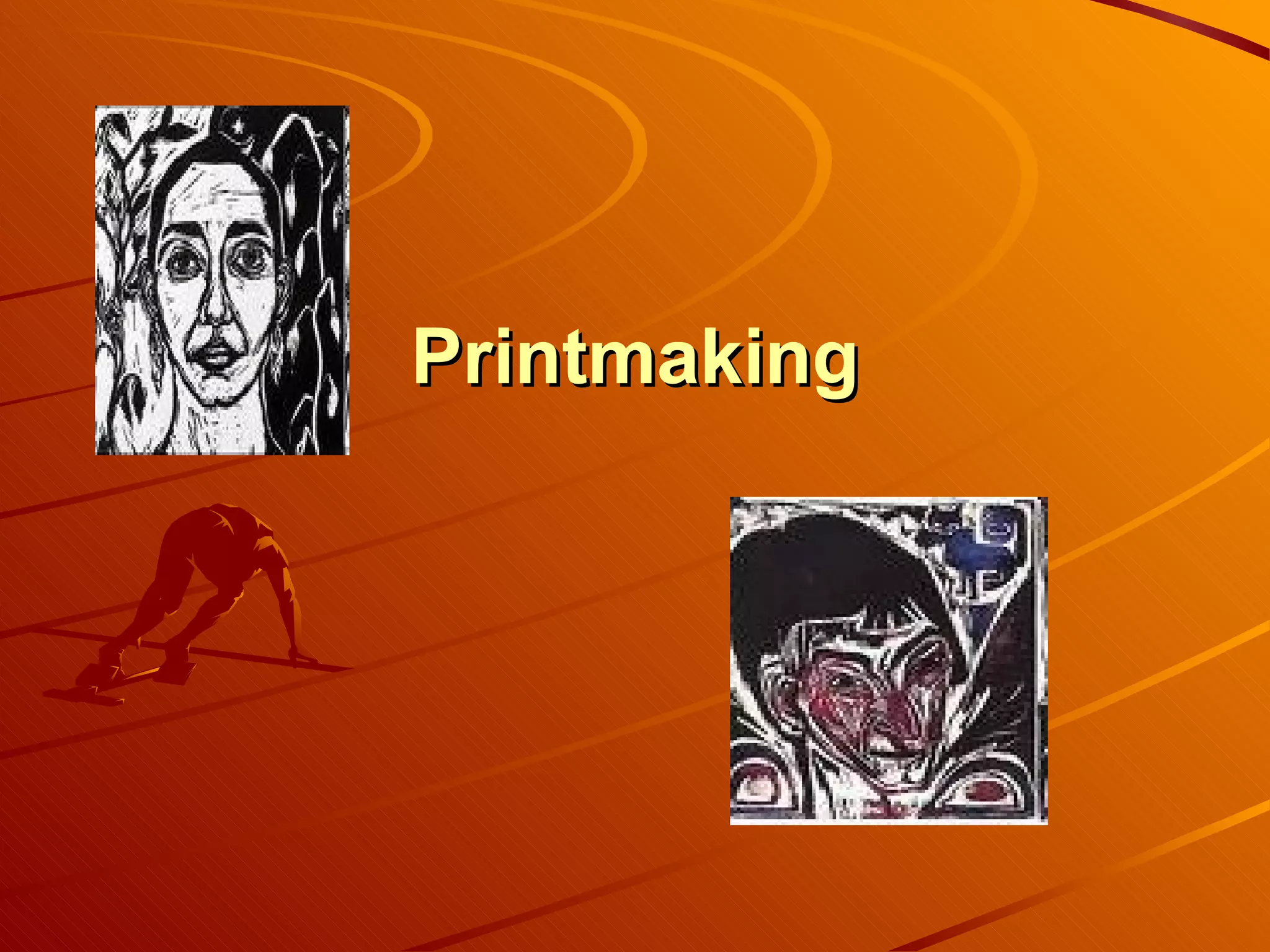
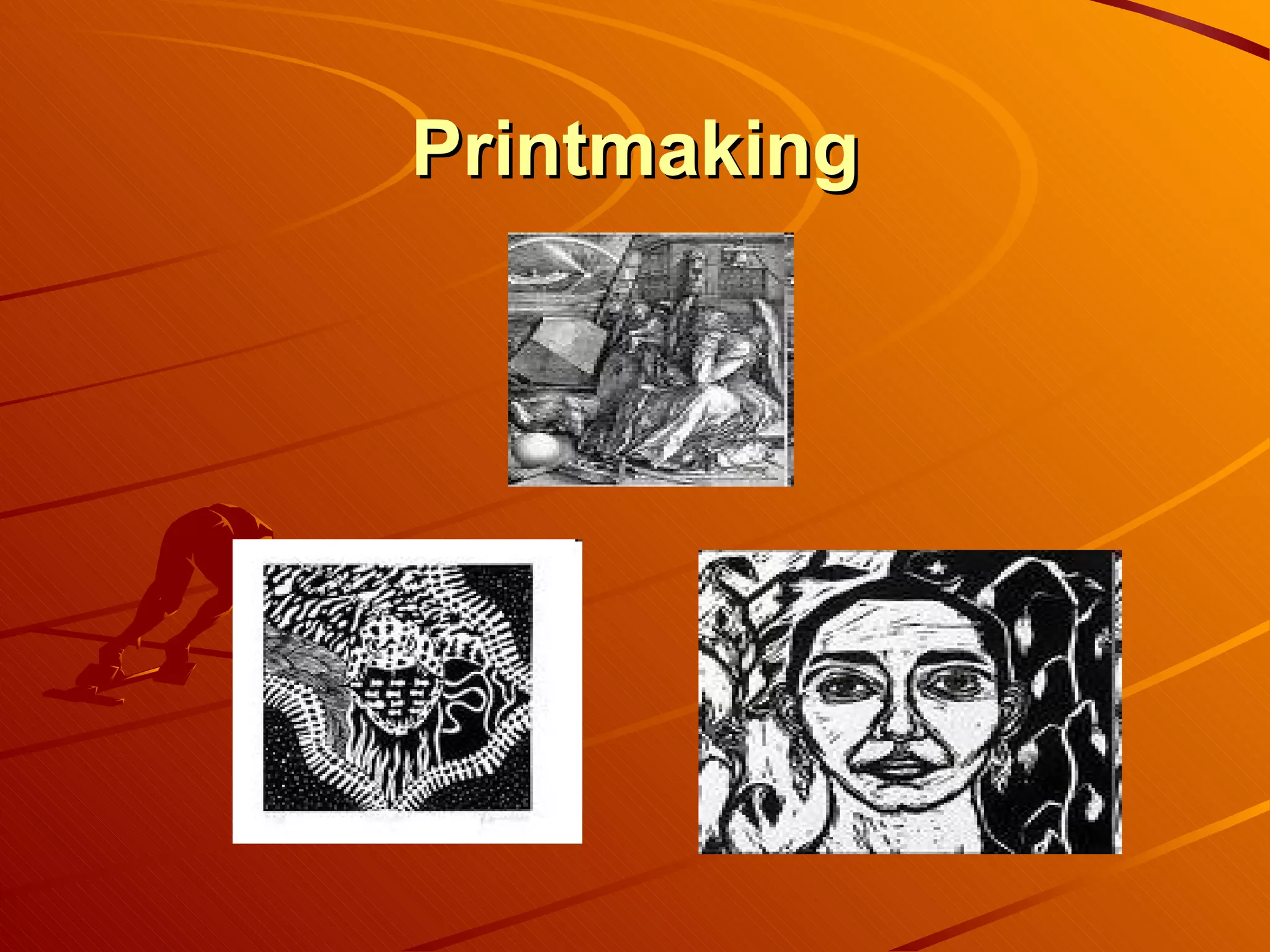
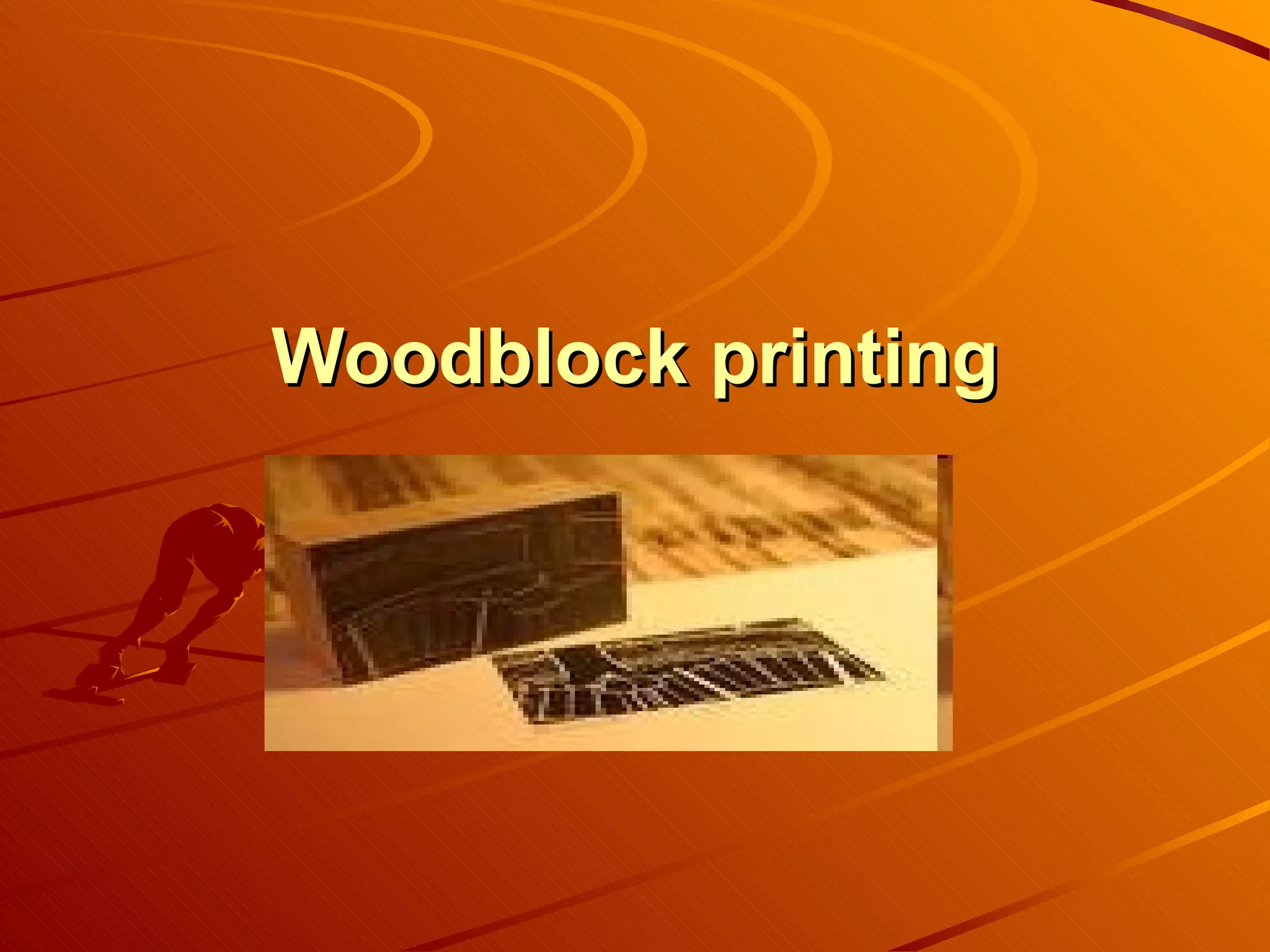
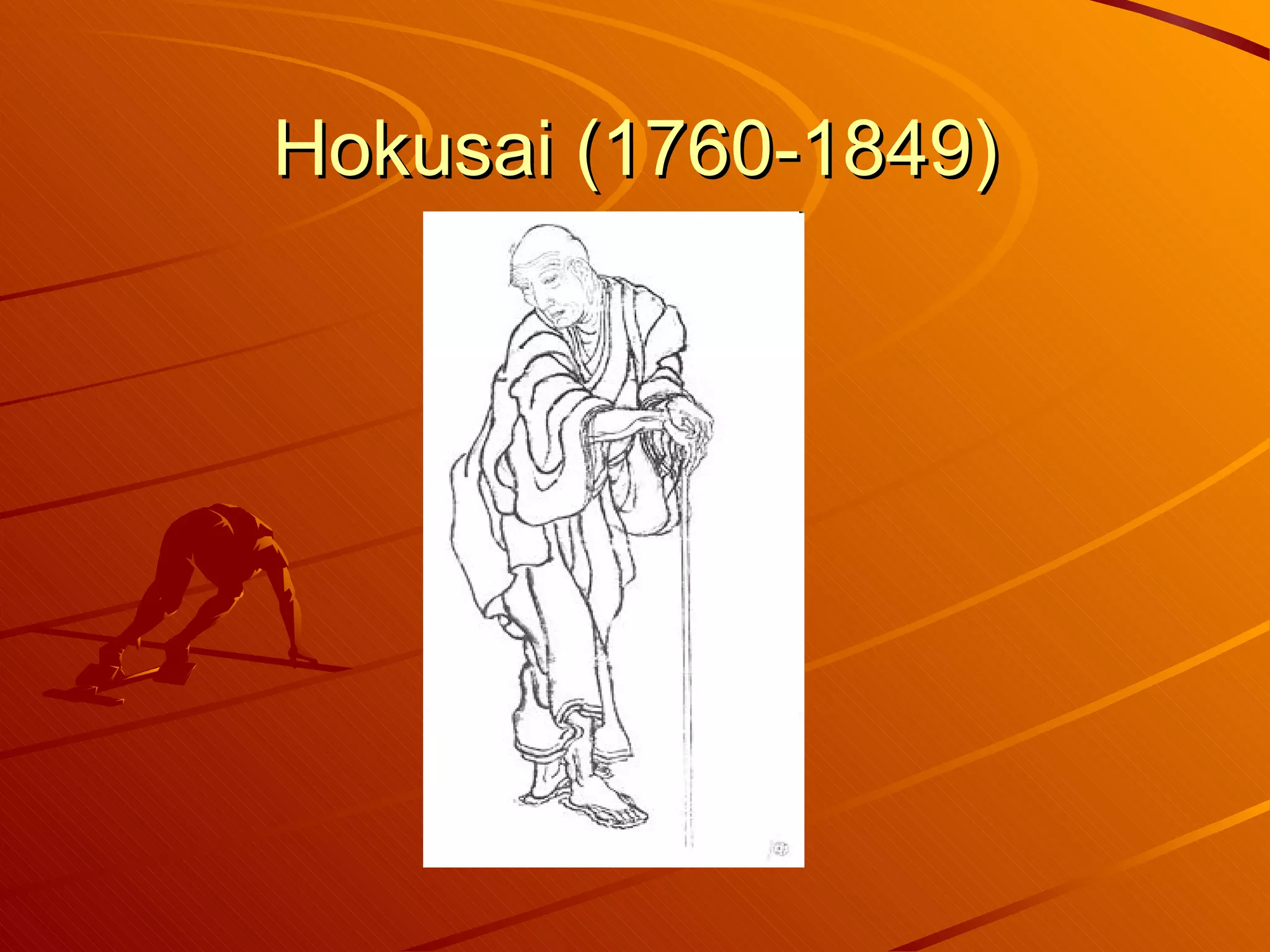
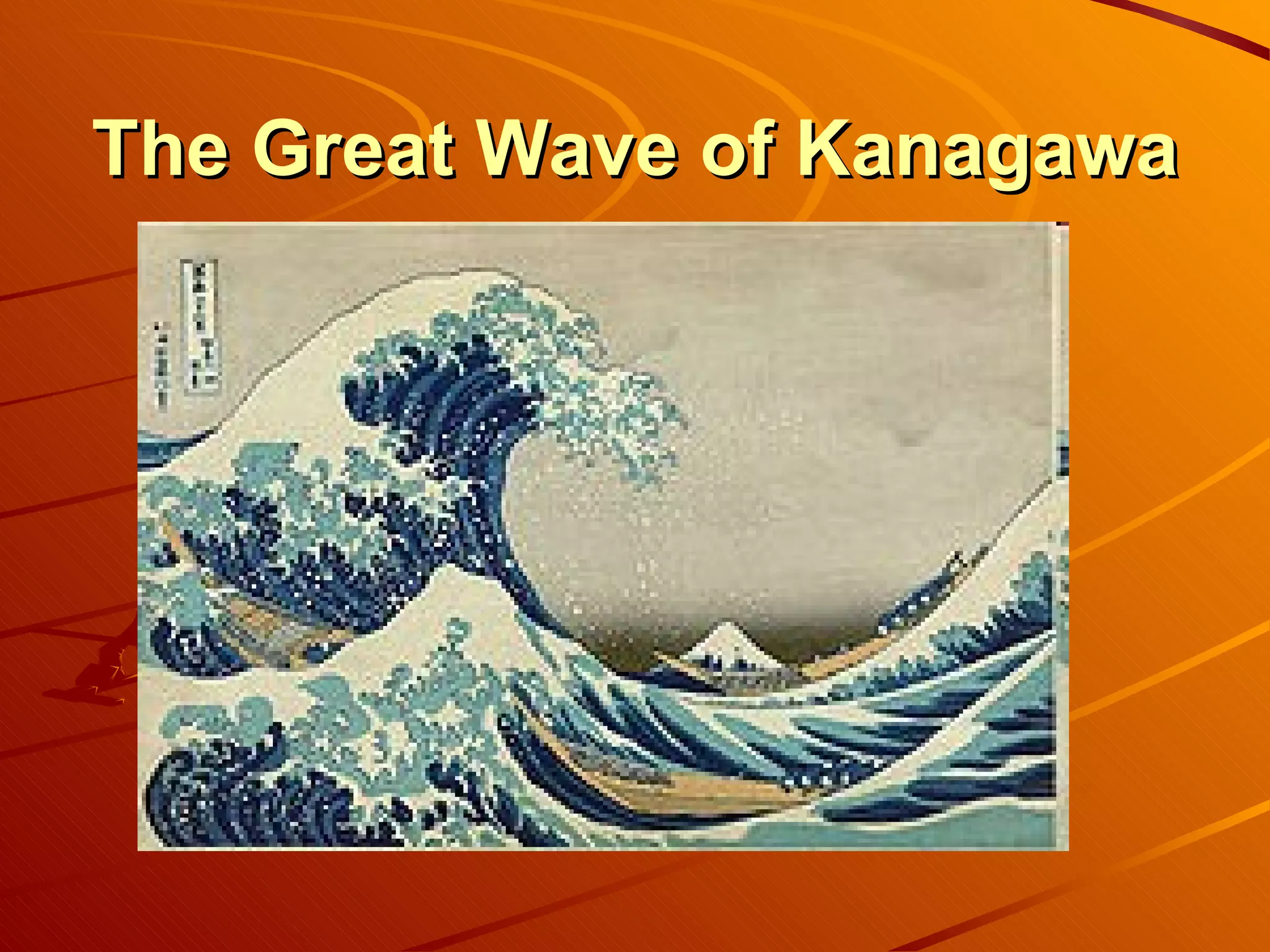
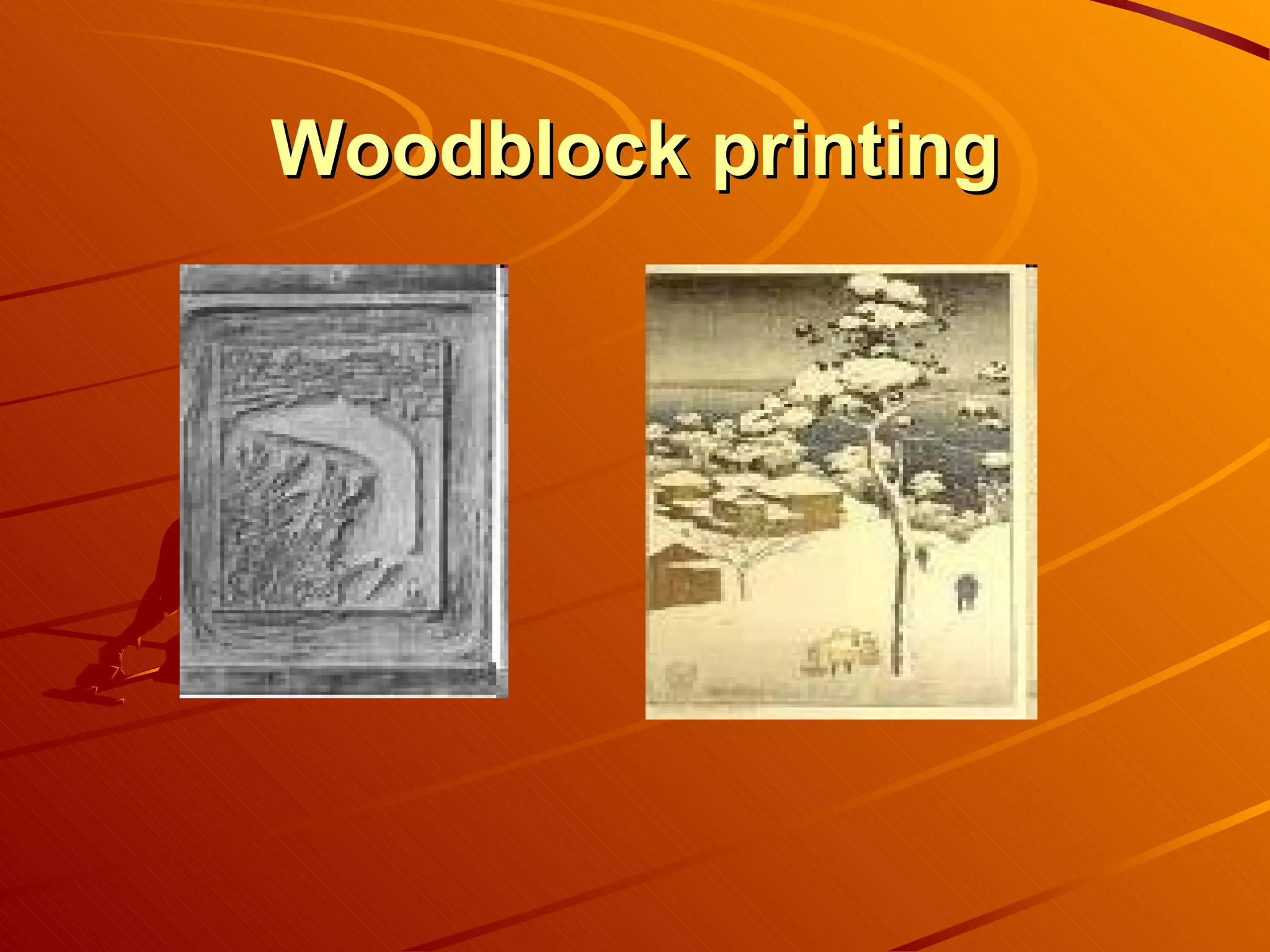

Asian landscape paintings are traditionally displayed and viewed during ceremonial tea parties, hung on walls to immerse guests in natural scenery. Afterward, the paintings are rolled up and stored in rosewood cabinets. Printmaking originated in China over 2,000 years ago and was later adopted in Japan and other Western countries. Woodblock printing involves carving images into wood blocks, inking the surfaces, and pressing them onto paper. This technique grew popular in 16th century Japan, and artists like Hokusai produced famous works, including The Great Wave of Kanagawa, which was widely appreciated in Europe for its freshness and simple style.


