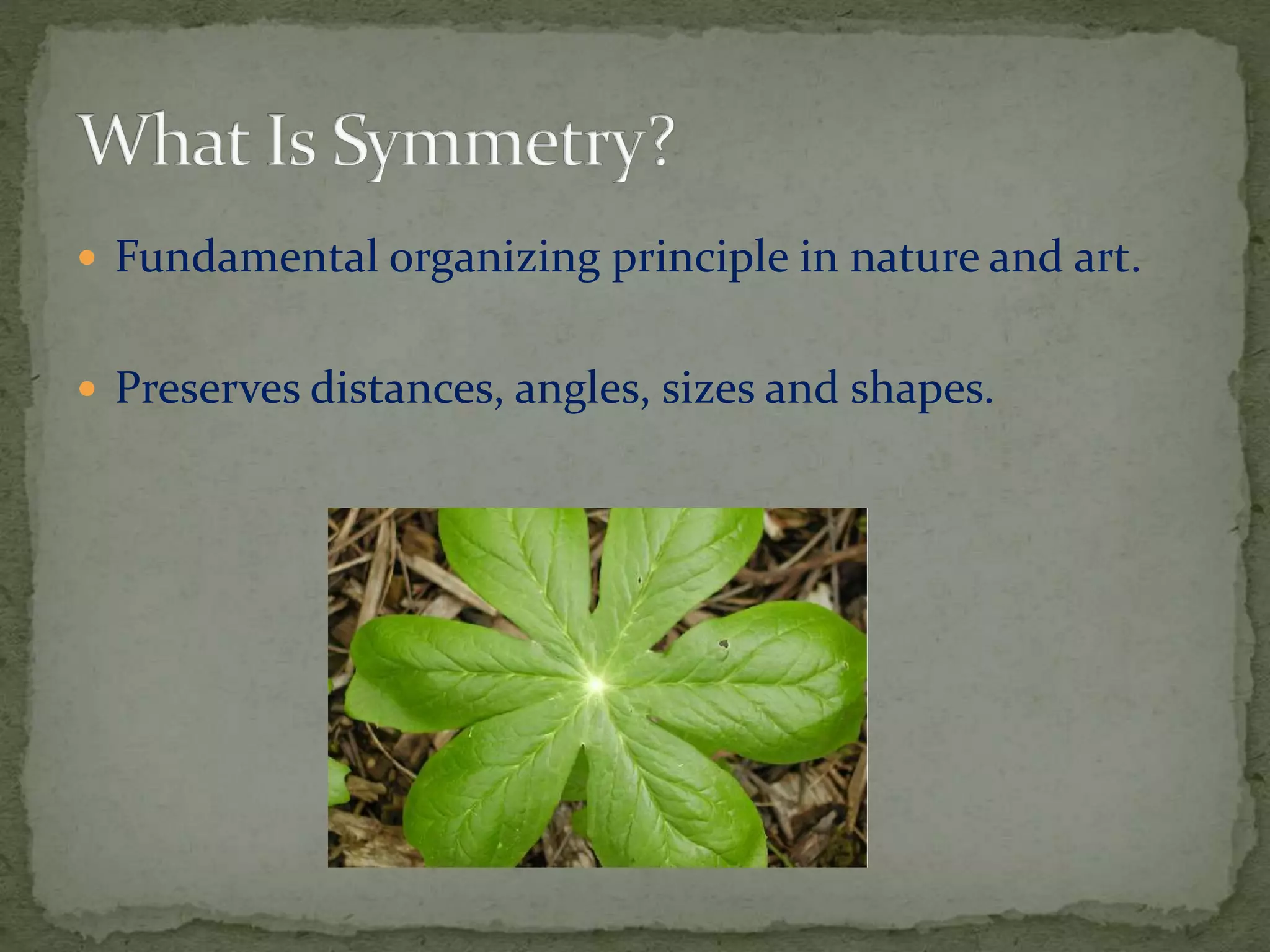
 Fundamental organizing principle in nature and art. 
 Preserves distances, angles, sizes and shapes.
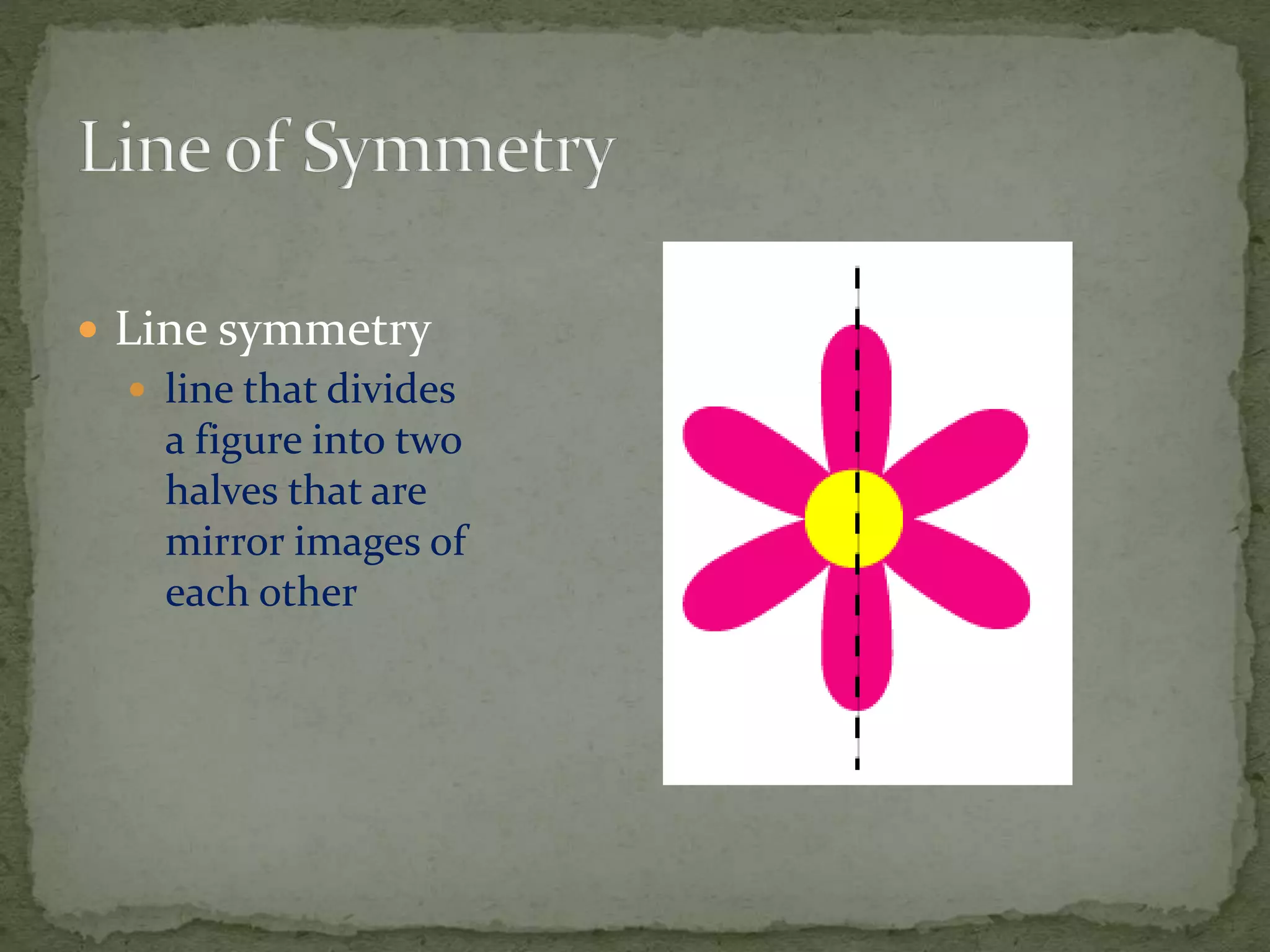
 Line symmetry 
 line that divides 
a figure into two 
halves that are 
mirror images of 
each other
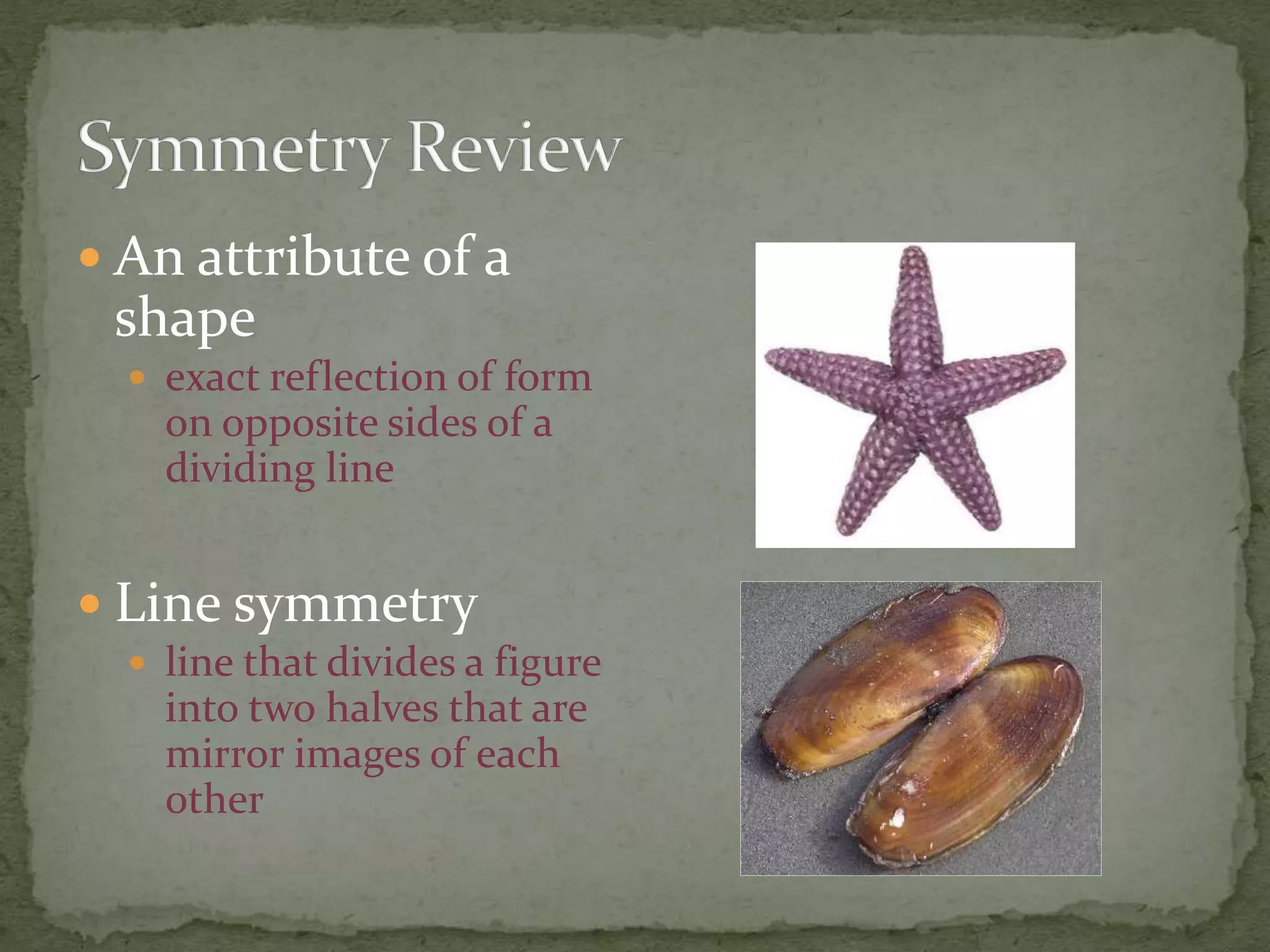
 An attribute of a 
shape 
 exact reflection of form 
on opposite sides of a 
dividing line 
 Line symmetry 
 line that divides a figure 
into two halves that are 
mirror images of each 
other
 Sort the letters of the alphabet into groups according 
to their symmetries 
 Divide letters into two categories: 
 symmetrical 
 not symmetrical
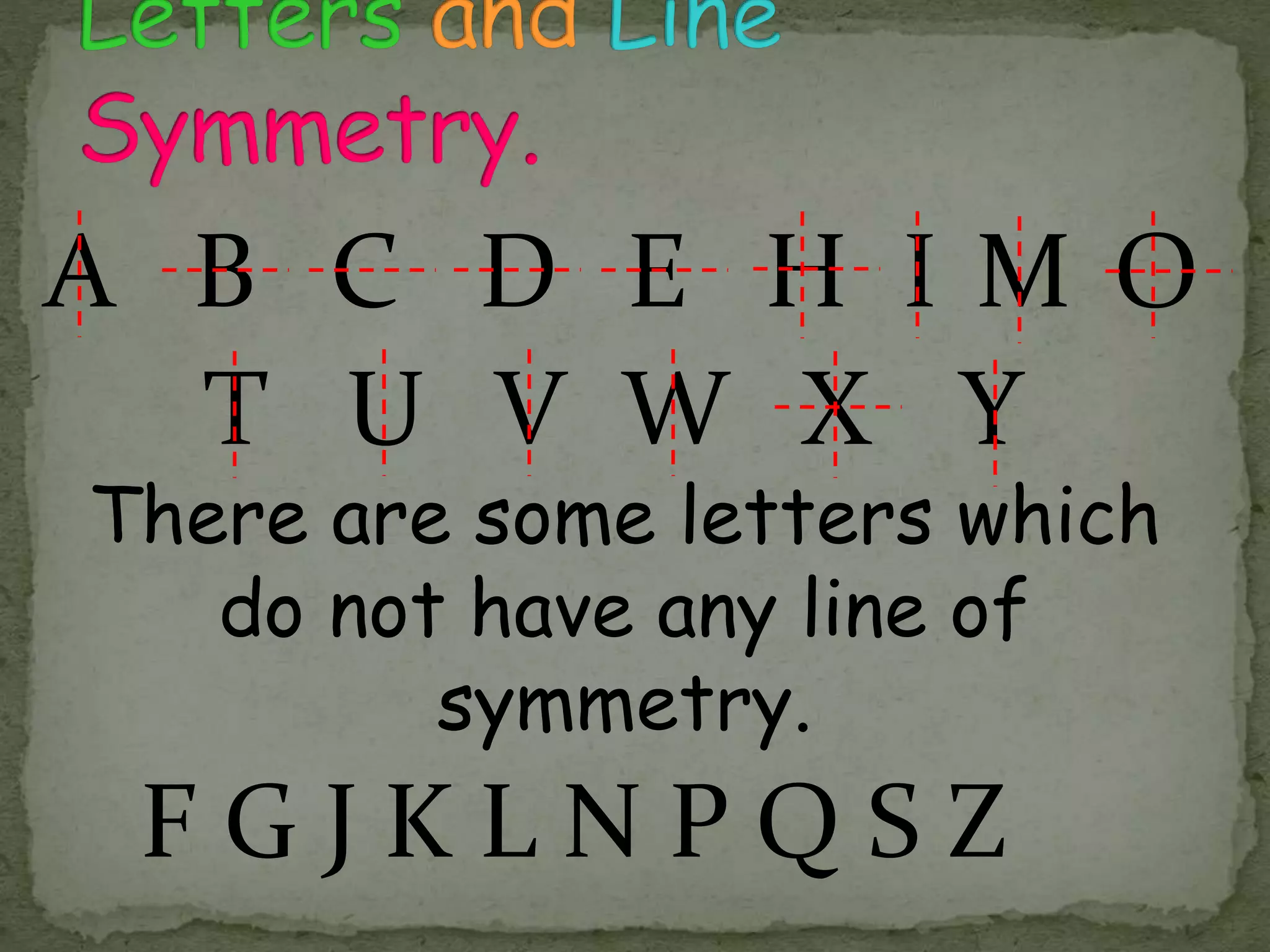
A B C D E 
H I M O 
T U V W X Y 
There are some letters which 
do not have any line of 
symmetry. 
F G J K L N P Q S Z
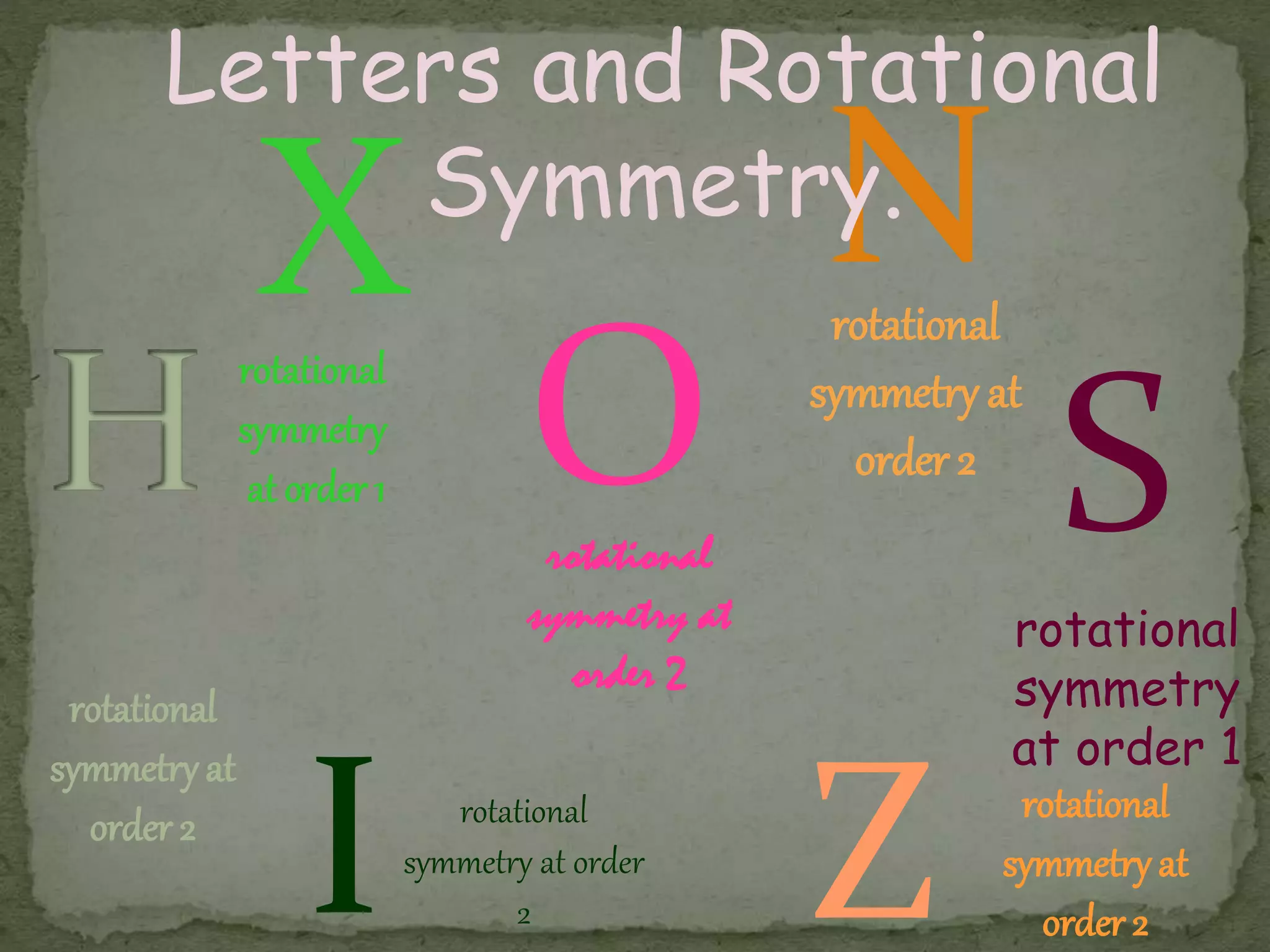
Letters and Rotational 
N 
S 
X 
I 
O 
Z 
rotational 
symmetry 
at order 1 
rotational 
symmetry at 
order 2 
rotational 
symmetry at 
order 2 
rotational 
symmetry at 
order 2 
rotational 
symmetry at order 
2 
rotational 
symmetry at 
order 2 
rotational 
symmetry 
at order 1 
Symmetry.
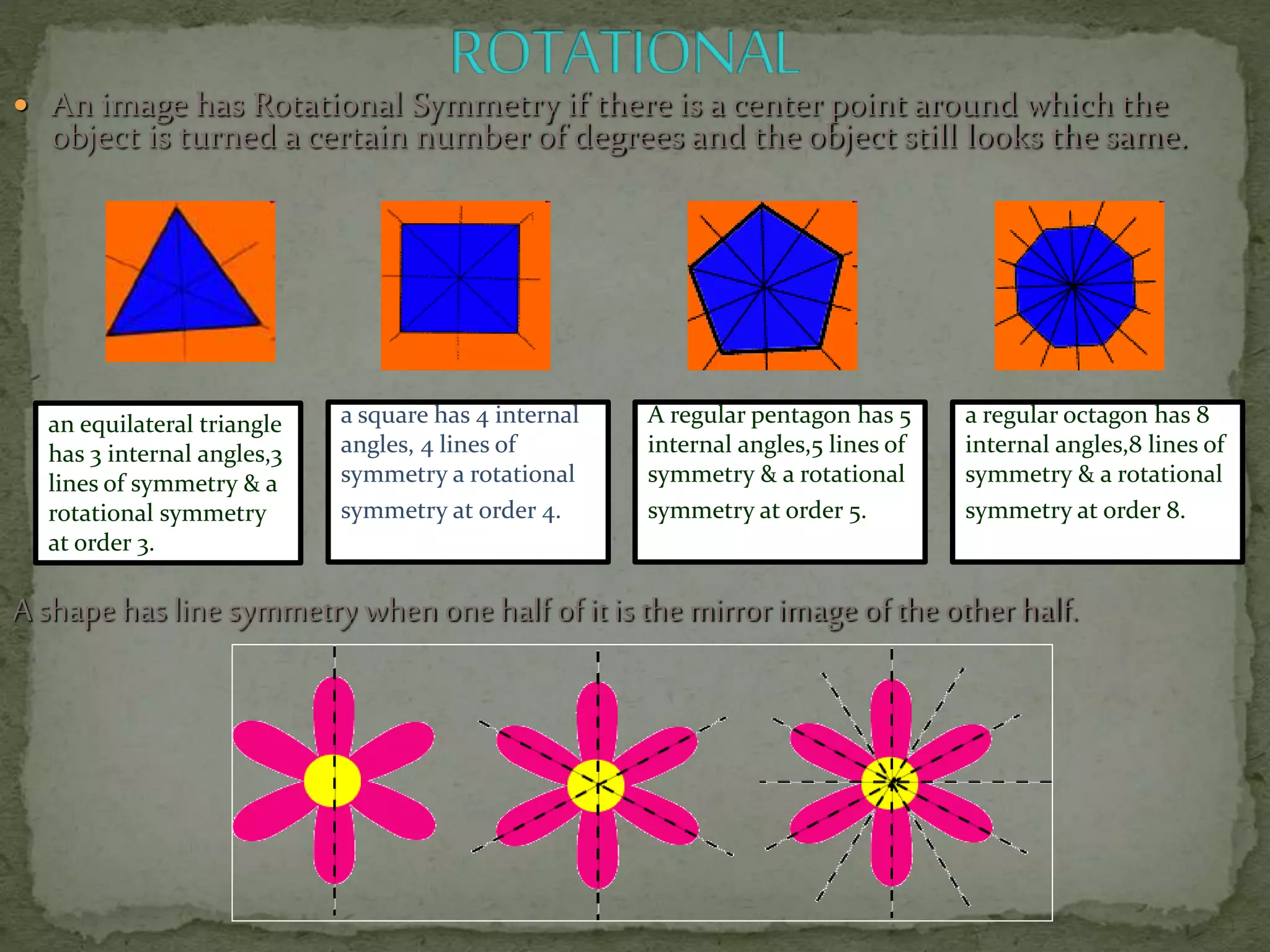
 An image has Rotational Symmetry if there is a center point around which the 
object is turned a certain number of degrees and the object still looks the same. 
an equilateral triangle 
has 3 internal angles,3 
lines of symmetry & a 
rotational symmetry 
at order 3. 
a square has 4 internal 
angles, 4 lines of 
symmetry a rotational 
symmetry at order 4. 
A regular pentagon has 5 
internal angles,5 lines of 
symmetry & a rotational 
symmetry at order 5. 
a regular octagon has 8 
internal angles,8 lines of 
symmetry & a rotational 
symmetry at order 8. 
A shape has line symmetry when one half of it is the mirror image of the other half.
Common Errors 
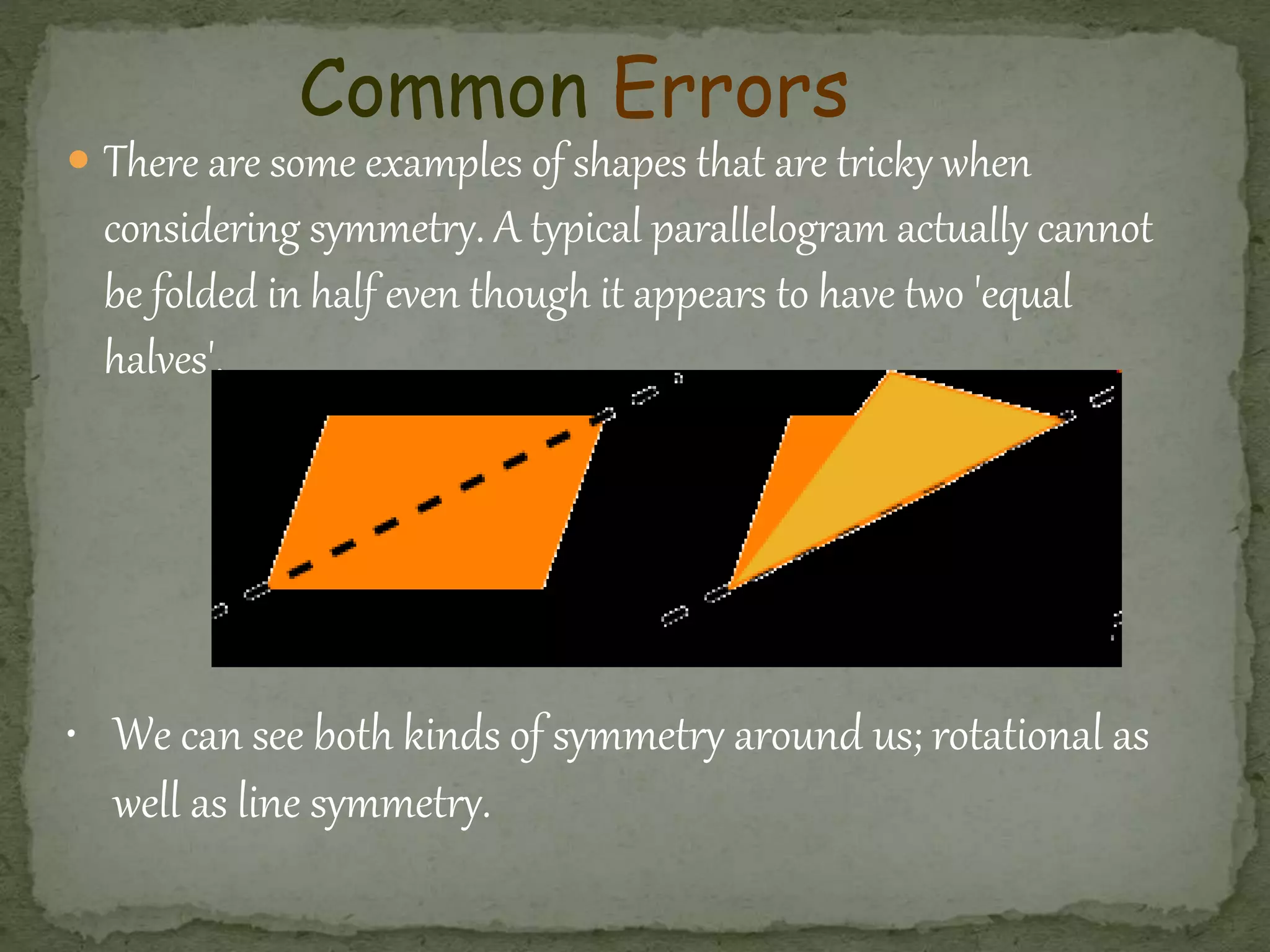
 There are some examples of shapes that are tricky when 
considering symmetry. A typical parallelogram actually cannot 
be folded in half even though it appears to have two 'equal 
halves'. 
• We can see both kinds of symmetry around us; rotational as 
well as line symmetry.
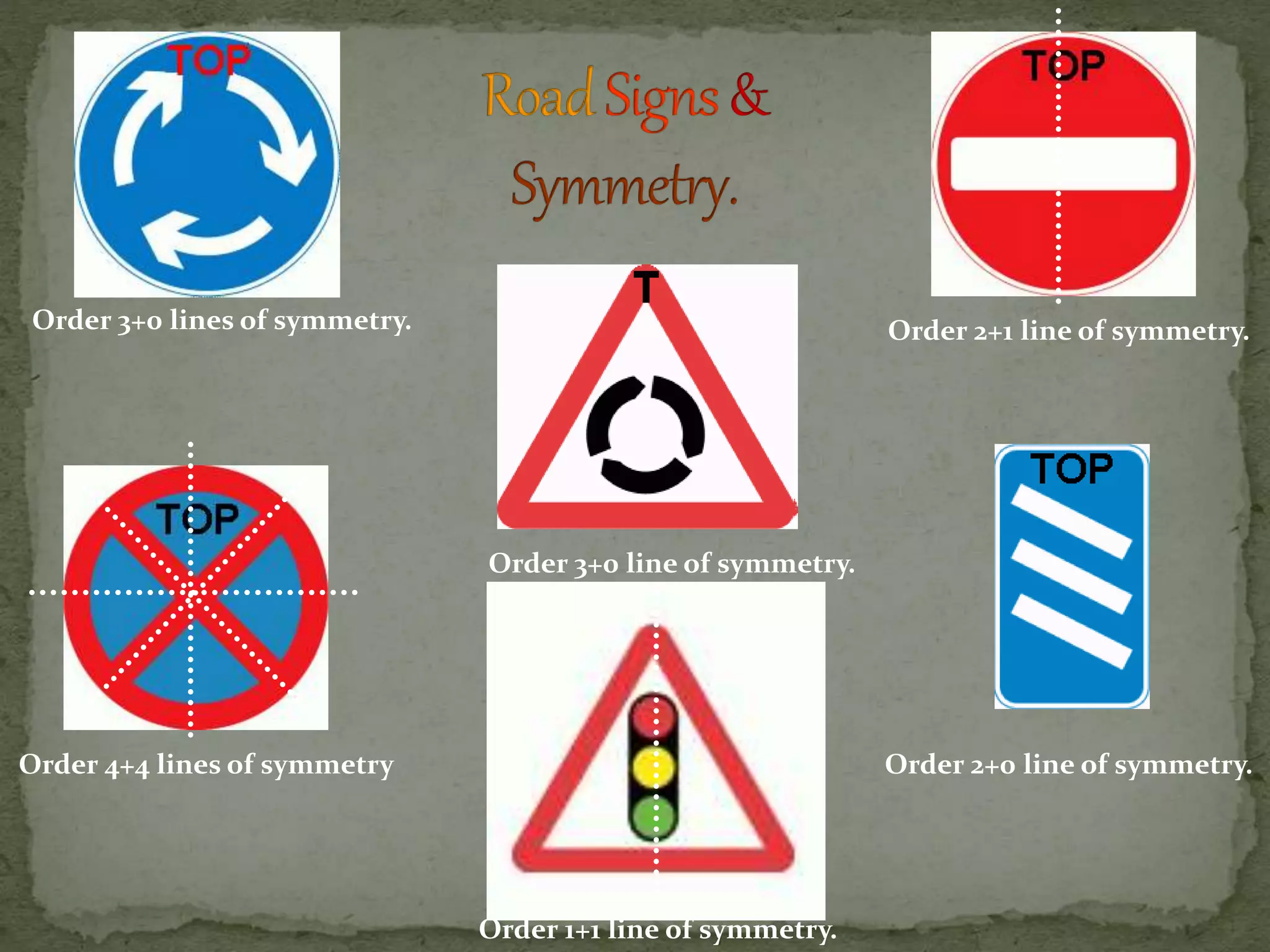
Order 3+0 lines of symmetry. Order 2+1 line of symmetry. 
Order 4+4 lines of symmetry 
Order 3+0 line of symmetry. 
Order 2+0 line of symmetry. 
Order 1+1 line of symmetry.
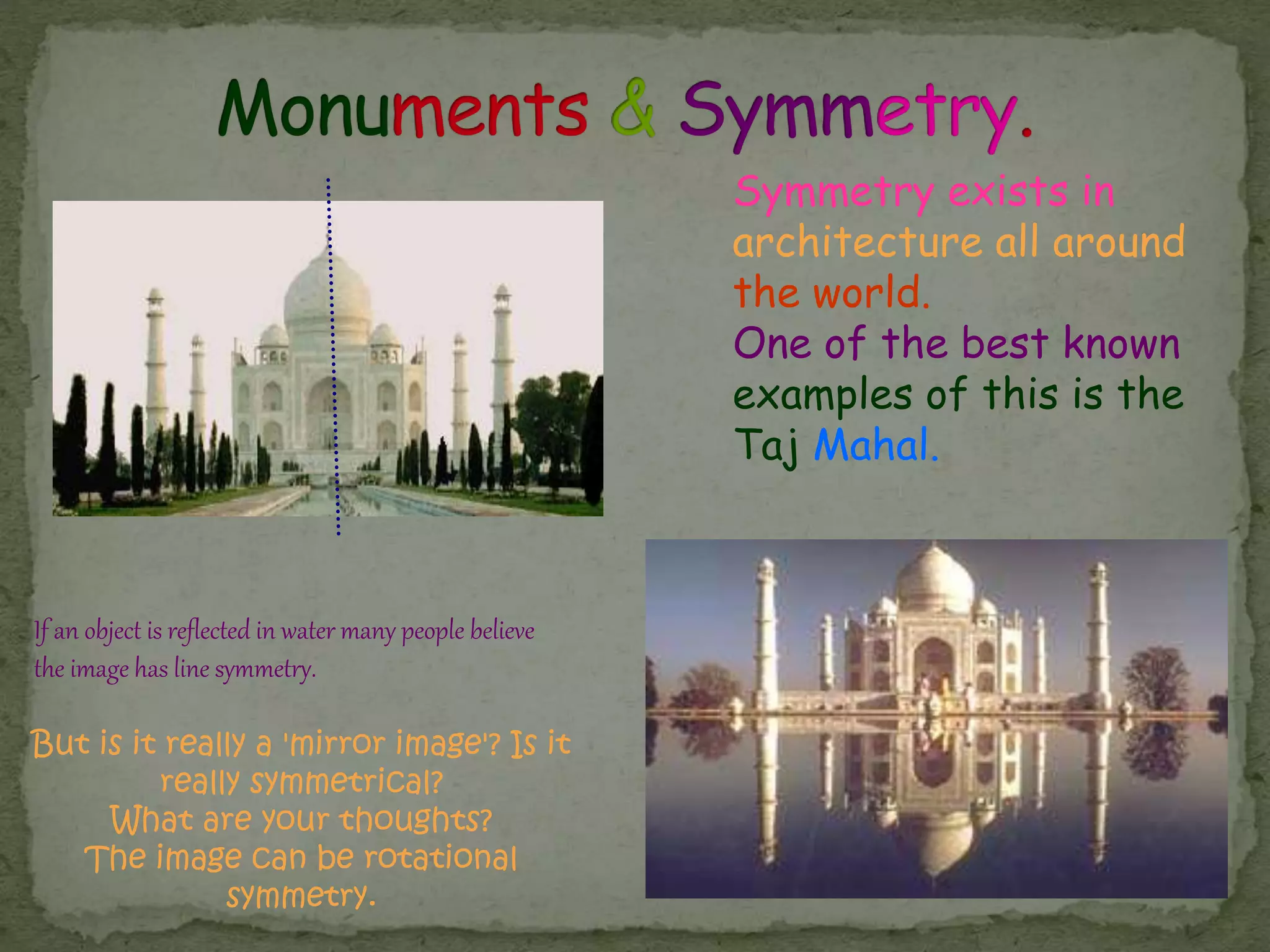
Symmetry exists in 
architecture all around 
the world. 
One of the best known 
examples of this is the 
Taj Mahal. 
If an object is reflected in water many people believe 
the image has line symmetry. 
But is it really a 'mirror image'? Is it 
really symmetrical? 
What are your thoughts? 
The image can be rotational 
symmetry.
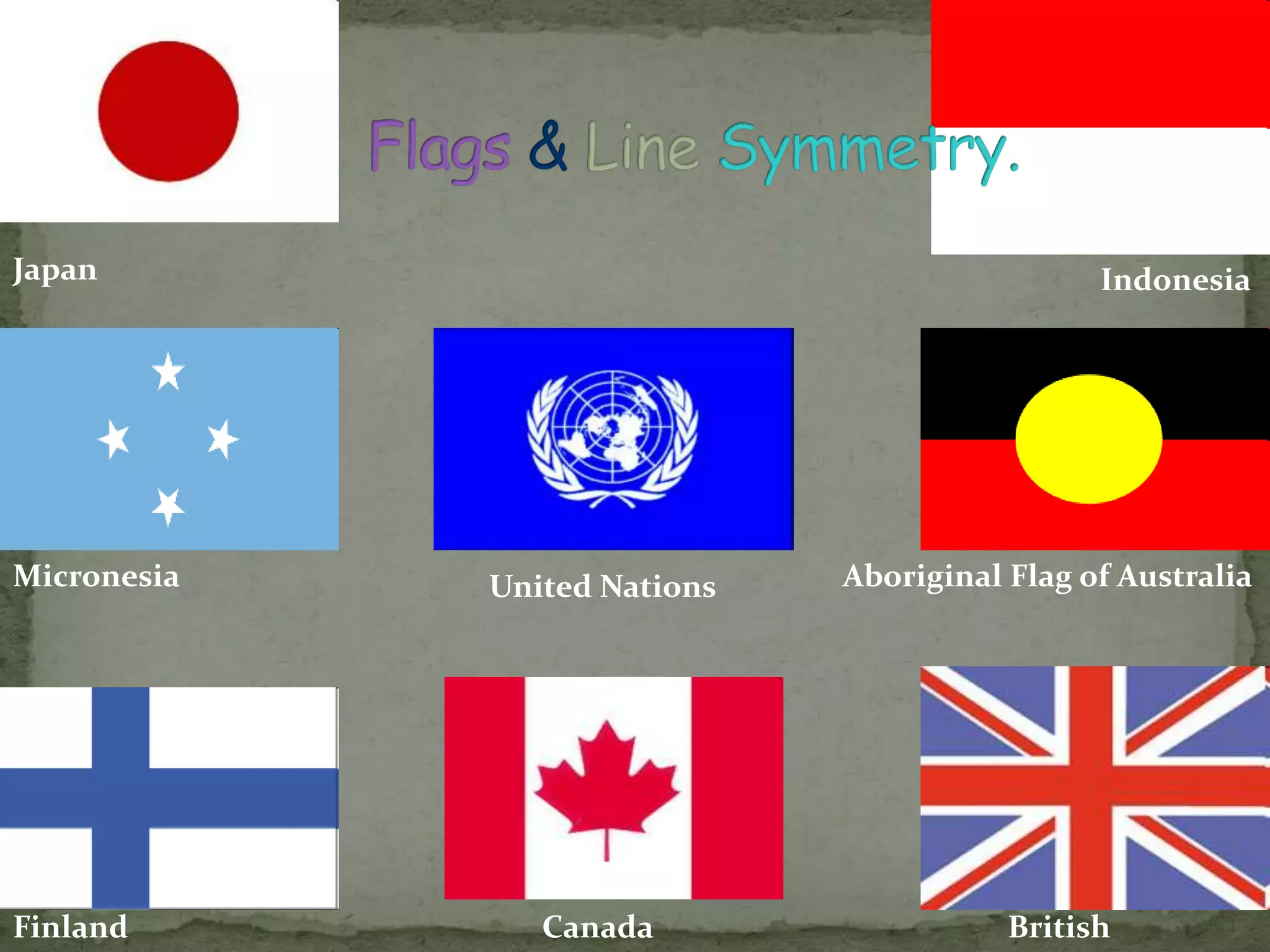
Japan Indonesia 
Micronesia United Nations Aboriginal Flag of Australia 
Finland 
Canada British
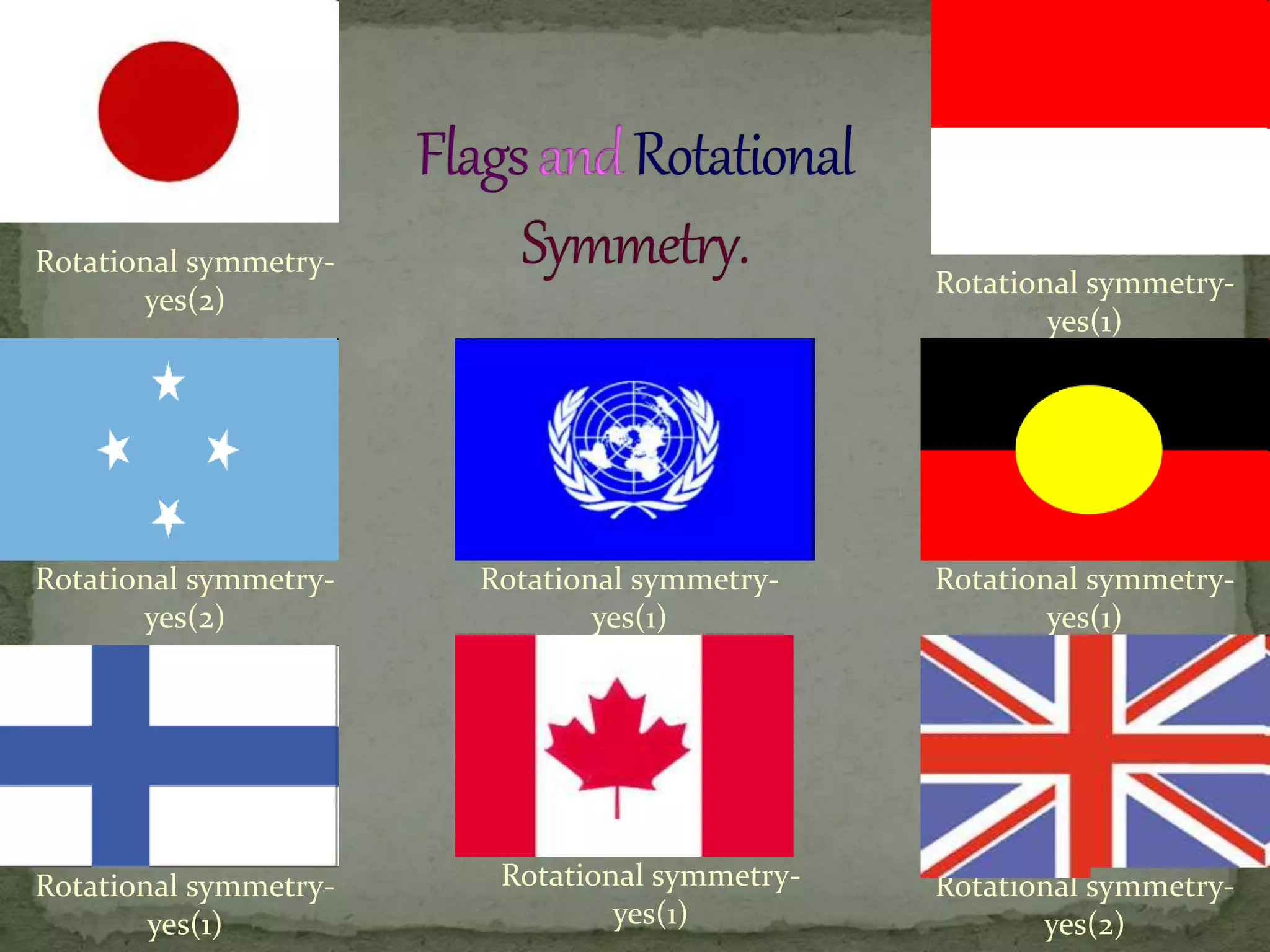
Rotational symmetry-yes( 
2) 
Rotational symmetry-yes( 
2) 
Rotational symmetry-yes( 
1) 
Rotational symmetry-yes( 
1) 
Rotational symmetry-yes( 
1) 
Rotational symmetry-yes( 
2) 
Rotational symmetry-yes( 
1) 
Rotational symmetry-yes( 
1)
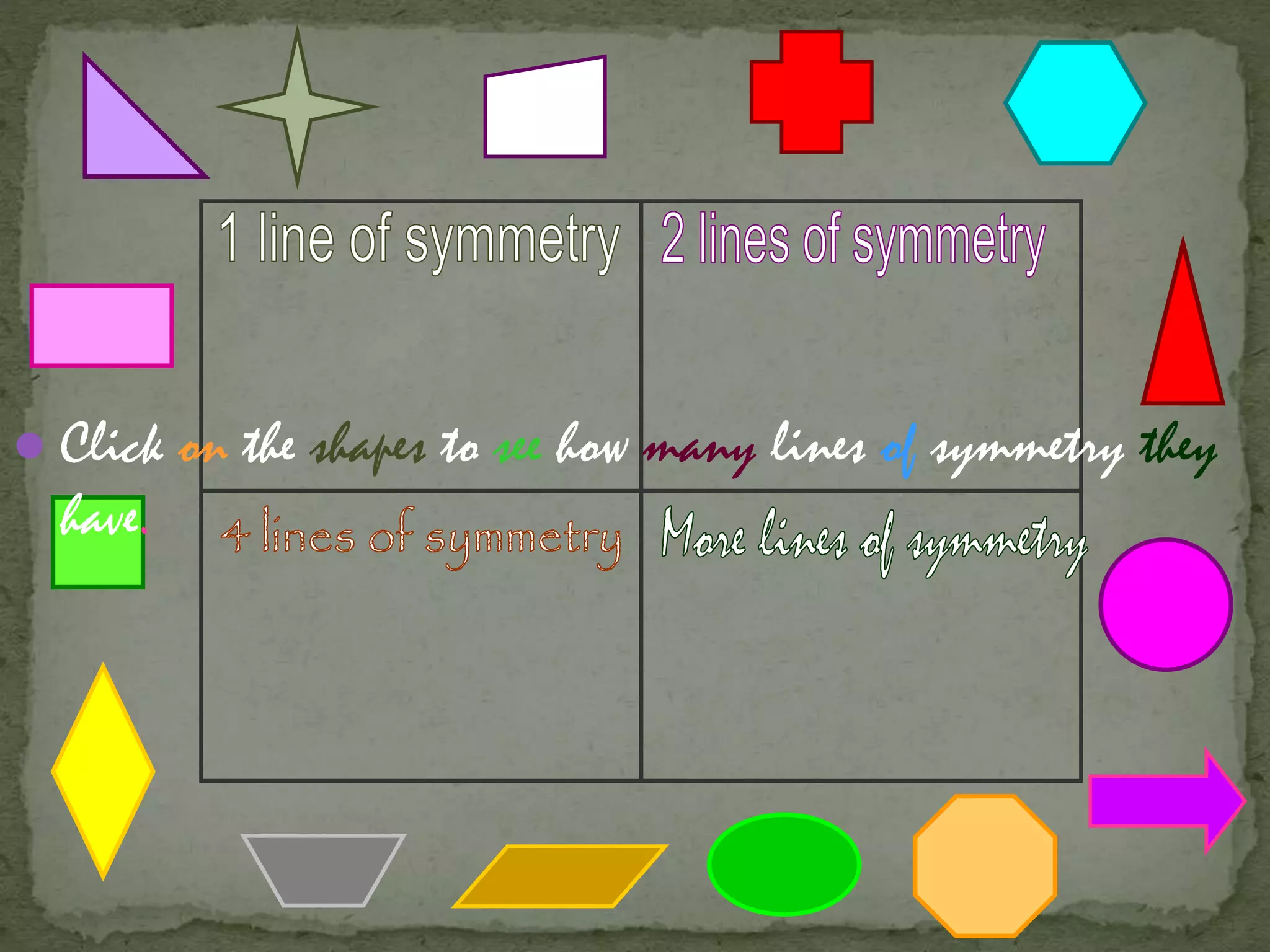
 Click on the shapes to see how many lines of symmetry they 
have.
Symmetry

Symmetry

  • 3.
     Fundamental organizingprinciple in nature and art.  Preserves distances, angles, sizes and shapes.
  • 4.
     Line symmetry  line that divides a figure into two halves that are mirror images of each other
  • 5.
     An attributeof a shape  exact reflection of form on opposite sides of a dividing line  Line symmetry  line that divides a figure into two halves that are mirror images of each other
  • 6.
     Sort theletters of the alphabet into groups according to their symmetries  Divide letters into two categories:  symmetrical  not symmetrical
  • 7.
    A B CD E H I M O T U V W X Y There are some letters which do not have any line of symmetry. F G J K L N P Q S Z
  • 8.
    Letters and Rotational N S X I O Z rotational symmetry at order 1 rotational symmetry at order 2 rotational symmetry at order 2 rotational symmetry at order 2 rotational symmetry at order 2 rotational symmetry at order 2 rotational symmetry at order 1 Symmetry.
  • 9.
     An imagehas Rotational Symmetry if there is a center point around which the object is turned a certain number of degrees and the object still looks the same. an equilateral triangle has 3 internal angles,3 lines of symmetry & a rotational symmetry at order 3. a square has 4 internal angles, 4 lines of symmetry a rotational symmetry at order 4. A regular pentagon has 5 internal angles,5 lines of symmetry & a rotational symmetry at order 5. a regular octagon has 8 internal angles,8 lines of symmetry & a rotational symmetry at order 8. A shape has line symmetry when one half of it is the mirror image of the other half.
  • 10.
    Common Errors There are some examples of shapes that are tricky when considering symmetry. A typical parallelogram actually cannot be folded in half even though it appears to have two 'equal halves'. • We can see both kinds of symmetry around us; rotational as well as line symmetry.
  • 11.
    Order 3+0 linesof symmetry. Order 2+1 line of symmetry. Order 4+4 lines of symmetry Order 3+0 line of symmetry. Order 2+0 line of symmetry. Order 1+1 line of symmetry.
  • 12.
    Symmetry exists in architecture all around the world. One of the best known examples of this is the Taj Mahal. If an object is reflected in water many people believe the image has line symmetry. But is it really a 'mirror image'? Is it really symmetrical? What are your thoughts? The image can be rotational symmetry.
  • 13.
    Japan Indonesia MicronesiaUnited Nations Aboriginal Flag of Australia Finland Canada British
  • 14.
    Rotational symmetry-yes( 2) Rotational symmetry-yes( 2) Rotational symmetry-yes( 1) Rotational symmetry-yes( 1) Rotational symmetry-yes( 1) Rotational symmetry-yes( 2) Rotational symmetry-yes( 1) Rotational symmetry-yes( 1)
  • 15.
     Click onthe shapes to see how many lines of symmetry they have.