project
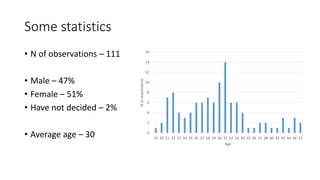
Some statistics
• N of observations – 111
• Male – 47%
• Female – 51%
• Have not decided – 2%
• Average age – 30 0
2
4
6
8
10
12
14
16
19 20 21 22 23 24 25 26 27 28 29 30 31 32 33 34 35 36 37 38 40 42 43 44 46 55
Nofrespondents
Age
Part 1. Gains and losses
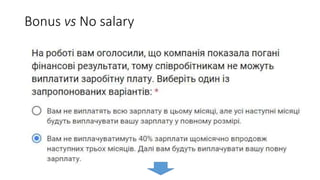
Bonus vs No salary
Bonus vs No salary
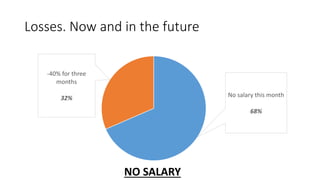
Losses. Now and in the future
No salary this month
68%
-40% for three
months
32%
NO SALARY
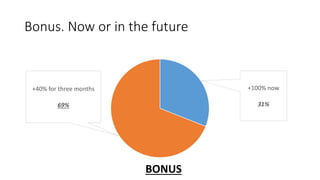
Bonus. Now or in the future
+100% now
31%
+40% for three months
69%
BONUS
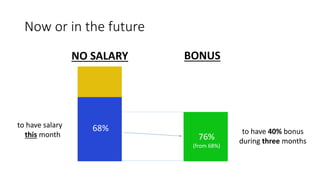
Now or in the future
NO SALARY BONUS
68%to have salary
this month to have 40% bonus
during three months76%
(from 68%)
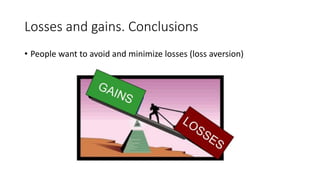
Losses and gains. Conclusions
• People want to avoid and minimize losses (loss aversion)
Losses and gains. Conclusions
• People are ready to wait to increase gains
Losses and gains. Conclusions
• People are not consistent in there time preferences, they switch
depending on the domain of gain or losses
Losses and gains. Conclusions
• It is possible to continue the research with different periods (time
discounting effect)
Part 2. Confirmation bias
Assumption. People tend to confirm their existing beliefs
65%
35%
Yes No
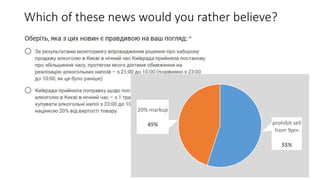
Which of these news would you rather believe?
prohibit sell
from 9pm
55%
20% markup
45%
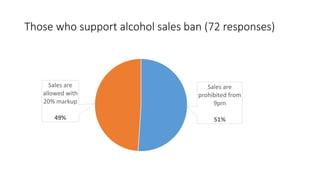
Those who support alcohol sales ban (72 responses)
Sales are
prohibited from
9pm
51%
Sales are
allowed with
20% markup
49%
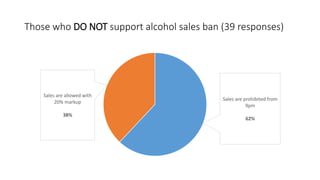
Those who DO NOT support alcohol sales ban (39 responses)
Sales are prohibited from
9pm
62%
Sales are allowed with
20% markup
38%
Confirmation bias. Conclusions
• We could not confirm the confirmation bias in out research
Confirmation bias. Conclusions
• More accuracy in question wording
Part 3. What do numbers in news tell us?
Expenses on education
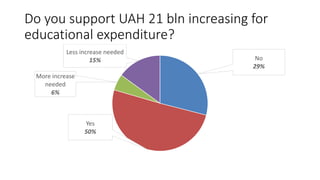
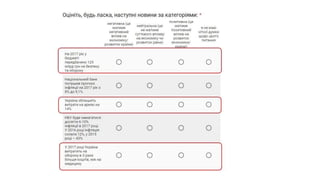
Do you support UAH 21 bln increasing for
educational expenditure?
No
29%
Yes
50%
More increase
needed
6%
Less increase needed
15%
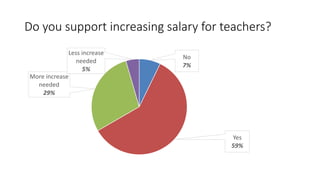
Do you support increasing salary for teachers?
No
7%
Yes
59%
More increase
needed
29%
Less increase
needed
5%
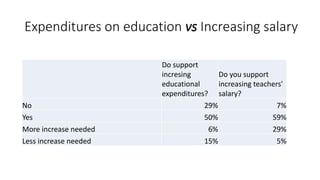
Expenditures on education vs Increasing salary
Do support
incresing
educational
expenditures?
Do you support
increasing teachers'
salary?
No 29% 7%
Yes 50% 59%
More increase needed 6% 29%
Less increase needed 15% 5%
Expenditures on education vs Increasing salary
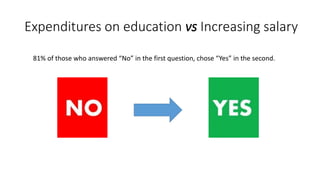
81% of those who answered “No” in the first question, chose “Yes” in the second.
What do numbers in news tell us?
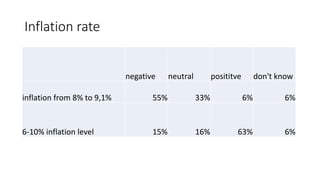
Inflation rate
negative neutral posititve don't know
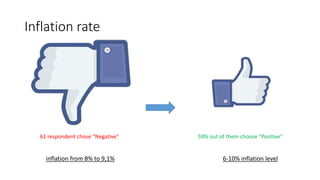
inflation from 8% to 9,1% 55% 33% 6% 6%
6-10% inflation level 15% 16% 63% 6%
inflation from 8% to 9,1% 6-10% inflation level
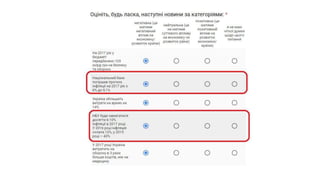
61 respondent chose “Negative” 59% out of them choose “Positive”
Inflation rate
What do numbers in news tell us?
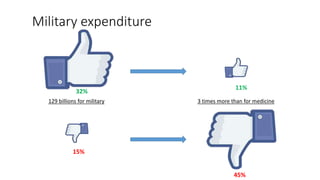
Military expenditure
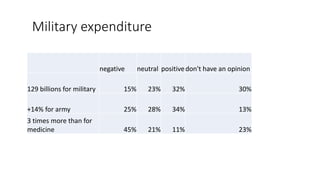
negative neutral positivedon't have an opinion
129 billions for military 15% 23% 32% 30%
+14% for army 25% 28% 34% 13%
3 times more than for
medicine 45% 21% 11% 23%
Military expenditure
129 billions for military 3 times more than for medicine
32%
11%
15%
45%
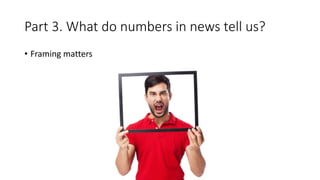
Part 3. What do numbers in news tell us?
• Framing matters
Part 3. What do numbers in news tell us?
• Details matters
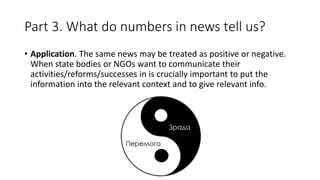
Part 3. What do numbers in news tell us?
• Application. The same news may be treated as positive or negative.

When state bodies or NGOs want to communicate their
activities/reforms/successes in is crucially important to put the
information into the relevant context and to give relevant info.
ZZ Project - Zaika & Zaiets - beh econ

ZZ Project - Zaika & Zaiets - beh econ

  • 1.
  • 2.
    Some statistics • Nof observations – 111 • Male – 47% • Female – 51% • Have not decided – 2% • Average age – 30 0 2 4 6 8 10 12 14 16 19 20 21 22 23 24 25 26 27 28 29 30 31 32 33 34 35 36 37 38 40 42 43 44 46 55 Nofrespondents Age
  • 3.
    Part 1. Gainsand losses
  • 4.
  • 5.
  • 6.
    Losses. Now andin the future No salary this month 68% -40% for three months 32% NO SALARY
  • 7.
    Bonus. Now orin the future +100% now 31% +40% for three months 69% BONUS
  • 8.
    Now or inthe future NO SALARY BONUS 68%to have salary this month to have 40% bonus during three months76% (from 68%)
  • 9.
    Losses and gains.Conclusions • People want to avoid and minimize losses (loss aversion)
  • 10.
    Losses and gains.Conclusions • People are ready to wait to increase gains
  • 11.
    Losses and gains.Conclusions • People are not consistent in there time preferences, they switch depending on the domain of gain or losses
  • 12.
    Losses and gains.Conclusions • It is possible to continue the research with different periods (time discounting effect)
  • 13.
  • 14.
    Assumption. People tendto confirm their existing beliefs 65% 35% Yes No
  • 15.
    Which of thesenews would you rather believe? prohibit sell from 9pm 55% 20% markup 45%
  • 16.
    Those who supportalcohol sales ban (72 responses) Sales are prohibited from 9pm 51% Sales are allowed with 20% markup 49%
  • 17.
    Those who DONOT support alcohol sales ban (39 responses) Sales are prohibited from 9pm 62% Sales are allowed with 20% markup 38%
  • 18.
    Confirmation bias. Conclusions •We could not confirm the confirmation bias in out research
  • 19.
    Confirmation bias. Conclusions •More accuracy in question wording
  • 20.
    Part 3. Whatdo numbers in news tell us?
  • 21.
  • 23.
    Do you supportUAH 21 bln increasing for educational expenditure? No 29% Yes 50% More increase needed 6% Less increase needed 15%
  • 24.
    Do you supportincreasing salary for teachers? No 7% Yes 59% More increase needed 29% Less increase needed 5%
  • 25.
    Expenditures on educationvs Increasing salary Do support incresing educational expenditures? Do you support increasing teachers' salary? No 29% 7% Yes 50% 59% More increase needed 6% 29% Less increase needed 15% 5%
  • 26.
    Expenditures on educationvs Increasing salary 81% of those who answered “No” in the first question, chose “Yes” in the second.
  • 27.
    What do numbersin news tell us?
  • 29.
    Inflation rate negative neutralposititve don't know inflation from 8% to 9,1% 55% 33% 6% 6% 6-10% inflation level 15% 16% 63% 6%
  • 30.
    inflation from 8%to 9,1% 6-10% inflation level 61 respondent chose “Negative” 59% out of them choose “Positive” Inflation rate
  • 31.
    What do numbersin news tell us?
  • 34.
    Military expenditure negative neutralpositivedon't have an opinion 129 billions for military 15% 23% 32% 30% +14% for army 25% 28% 34% 13% 3 times more than for medicine 45% 21% 11% 23%
  • 35.
    Military expenditure 129 billionsfor military 3 times more than for medicine 32% 11% 15% 45%
  • 36.
    Part 3. Whatdo numbers in news tell us? • Framing matters
  • 37.
    Part 3. Whatdo numbers in news tell us? • Details matters
  • 38.
    Part 3. Whatdo numbers in news tell us? • Application. The same news may be treated as positive or negative. When state bodies or NGOs want to communicate their activities/reforms/successes in is crucially important to put the information into the relevant context and to give relevant info.