

Domestic Detox
“Pollution is Personal”
Toxic chemicals are used in the production of
everyday household items. Eventually these
ingredients are absorbed by our bodies and can
lead to health problems.
Learn how to lessen your exposure to toxins in your
home and reduce your body burden, starting with
a few simple steps!
plasticalbatross.org
Outline
• Introductions
• Overview
• Steps Toward a Toxin-Free Future
1. Get Informed
2. Simplify Your Shopping List
3. Get Involved
• Discussion/Questions/How-To
Introductions
Why am I here?
Why are you here?
What motivates you?
• Health
• Finance
• Children
• Environment
• Political/Social Justice
Overview
Synthetic chemicals in our lives.
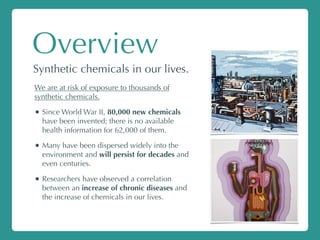
We are at risk of exposure to thousands of
synthetic chemicals.
• Since World War II, 80,000 new chemicals
have been invented; there is no available
health information for 62,000 of them.
• Many have been dispersed widely into the
environment and will persist for decades and
even centuries.
• Researchers have observed a correlation
between an increase of chronic diseases and
the increase of chemicals in our lives.
Overview
Synthetic chemicals in our lives.
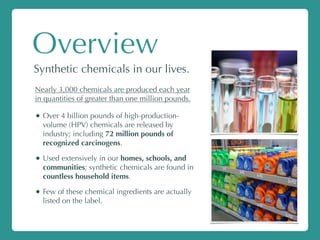
Nearly 3,000 chemicals are produced each year
in quantities of greater than one million pounds.
• Over 4 billion pounds of high-production-
volume (HPV) chemicals are released by
industry; including 72 million pounds of
recognized carcinogens.
• Used extensively in our homes, schools, and
communities; synthetic chemicals are found in
countless household items.
• Few of these chemical ingredients are actually
listed on the label.
Overview
Synthetic chemicals in our lives.
Americans assume that chemicals for consumer
use are tested for safety — but they are NOT.
• Less than 20 percent of chemicals have been
tested for toxicity; rarely are they studied for
interactivity with other chemicals.
• Companies are not required to disclose
chemical ingredients, due to trade secret laws.
• Failure to assess chemicals for health hazards
represents a grave lapse of stewardship by the
chemical industry and by the federal
government.
Overview
Synthetic chemicals in our bodies.
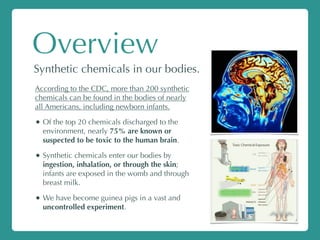
According to the CDC, more than 200 synthetic
chemicals can be found in the bodies of nearly
all Americans, including newborn infants.
• Of the top 20 chemicals discharged to the
environment, nearly 75% are known or
suspected to be toxic to the human brain.
• Synthetic chemicals enter our bodies by
ingestion, inhalation, or through the skin;
infants are exposed in the womb and through
breast milk.
• We have become guinea pigs in a vast and
uncontrolled experiment.
Overview
Synthetic chemicals in our bodies.
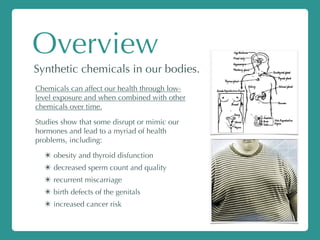
Chemicals can affect our health through low-
level exposure and when combined with other
chemicals over time.
Studies show that some disrupt or mimic our
hormones and lead to a myriad of health
problems, including:
✴ obesity and thyroid disfunction
✴ decreased sperm count and quality
✴ recurrent miscarriage
✴ birth defects of the genitals
✴ increased cancer risk
Overview
Synthetic chemicals in our bodies.
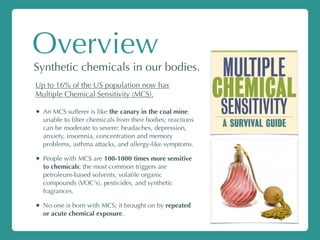
Up to 16% of the US population now has
Multiple Chemical Sensitivity (MCS).
• An MCS sufferer is like the canary in the coal mine;
unable to filter chemicals from their bodies; reactions
can be moderate to severe: headaches, depression,
anxiety, insomnia, concentration and memory
problems, asthma attacks, and allergy-like symptoms.
• People with MCS are 100-1000 times more sensitive
to chemicals; the most common triggers are
petroleum-based solvents, volatile organic
compounds (VOC's), pesticides, and synthetic
fragrances.
• No one is born with MCS; it brought on by repeated
or acute chemical exposure.
Overview
How did this happen? What can
we do?
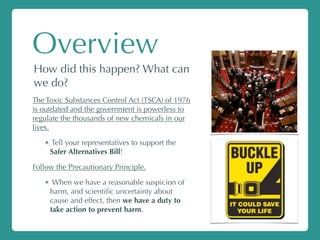
The Toxic Substances Control Act (TSCA) of 1976
is outdated and the government is powerless to
regulate the thousands of new chemicals in our
lives.
✴ Tell your representatives to support the
Safer Alternatives Bill!
Follow the Precautionary Principle.
✴ When we have a reasonable suspicion of
harm, and scientific uncertainty about
cause and effect, then we have a duty to
take action to prevent harm.
Overview
Learn more about this research.
• EPA. Chemical Hazard Data Availability Study:
What Do We Really Know About the Safety of
High Production Volume Chemicals?
Washington, DC: Office of Pollution Prevention
and Toxics, 1998.
• EPA. Toxic Release Inventory (TRI) Program.
Washington, DC, February 21, 2008.
• CDC. Third National Report on Human
Exposure to Environmental Chemicals Atlanta
(GA): CDC, 2005.
• See PlasticAlbatross.org or EWG.org
Mental Health Break
[ storyofstuff.org/cosmetics ]
Steps toward a Toxin-Free Future
Get Informed + Simplify + Get Involved
Start with these 3 steps:
1. Get Informed: Learn about your household
products; who makes them; are the
ingredients fully disclosed?
2. Simplify Your Shopping List: Choose fewer
products with simpler ingredients; no
synthetic chemicals; buy organic & local with
compostable packaging, when possible.
3. Get Involved: Toxic chemicals are used in
schools, offices, and in the homes of people
who don't have a choice or a voice.
Chemical policy need to change. Stay
informed, speak up, and spread the word.
• Look beyond
the label.
• Avoid the
Culture of
Convenience.
• Share your
knowledge.
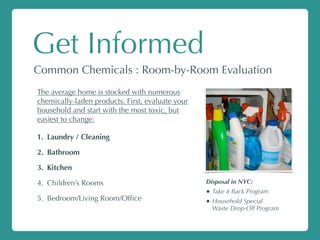
Get Informed
Common Chemicals : Room-by-Room Evaluation
The average home is stocked with numerous
chemically-laden products. First, evaluate your
household and start with the most toxic, but
easiest to change:
1. Laundry / Cleaning
2. Bathroom
3. Kitchen
4. Children’s Rooms
5. Bedroom/Living Room/Office
Disposal in NYC:
• Take it Back Program
• Household Special
Waste Drop-Off Program
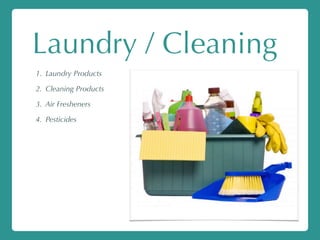
Laundry / Cleaning
1. Laundry Products
2. Cleaning Products
3. Air Fresheners
4. Pesticides
Laundry / Cleaning
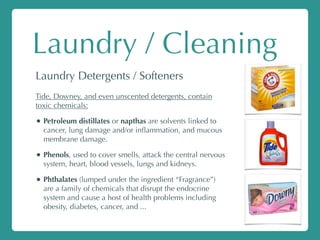
Laundry Detergents / Softeners
Tide, Downey, and even unscented detergents, contain
toxic chemicals:
• Petroleum distillates or napthas are solvents linked to
cancer, lung damage and/or inflammation, and mucous
membrane damage.
• Phenols, used to cover smells, attack the central nervous
system, heart, blood vessels, lungs and kidneys.
• Phthalates (lumped under the ingredient “Fragrance”)
are a family of chemicals that disrupt the endocrine
system and cause a host of health problems including
obesity, diabetes, cancer, and ...
Laundry / Cleaning
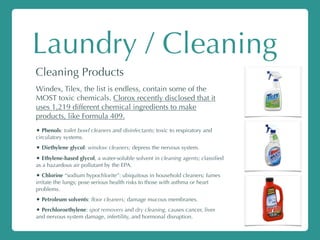
Cleaning Products
Windex, Tilex, the list is endless, contain some of the
MOST toxic chemicals. Clorox recently disclosed that it
uses 1,219 different chemical ingredients to make
products, like Formula 409.
• Phenols: toilet bowl cleaners and disinfectants; toxic to respiratory and
circulatory systems.
• Diethylene glycol: window cleaners; depress the nervous system.
• Ethylene-based glycol, a water-soluble solvent in cleaning agents; classified
as a hazardous air pollutant by the EPA.
• Chlorine “sodium hypochlorite”: ubiquitous in household cleaners; fumes
irritate the lungs; pose serious health risks to those with asthma or heart
problems.
• Petroleum solvents: floor cleaners; damage mucous membranes.
• Perchloroethylene: spot removers and dry cleaning, causes cancer, liver
and nervous system damage, infertility, and hormonal disruption.
Laundry / Cleaning
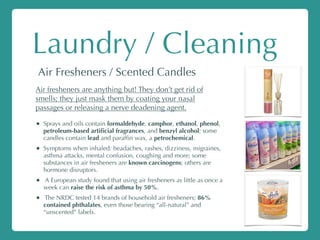
Air Fresheners / Scented Candles
Air fresheners are anything but! They don’t get rid of
smells; they just mask them by coating your nasal
passages or releasing a nerve deadening agent.
• Sprays and oils contain formaldehyde, camphor, ethanol, phenol,
petroleum-based artificial fragrances, and benzyl alcohol; some
candles contain lead and paraffin wax, a petrochemical.
• Symptoms when inhaled: headaches, rashes, dizziness, migraines,
asthma attacks, mental confusion, coughing and more; some
substances in air fresheners are known carcinogens; others are
hormone disruptors.
• A European study found that using air fresheners as little as once a
week can raise the risk of asthma by 50%.
• The NRDC tested 14 brands of household air fresheners; 86%
contained phthalates, even those bearing “all-natural” and
“unscented” labels.
Laundry / Cleaning
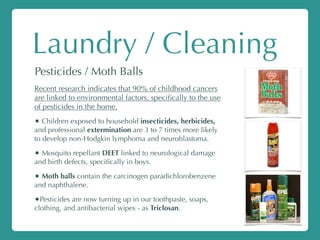
Pesticides / Moth Balls
Recent research indicates that 90% of childhood cancers
are linked to environmental factors, specifically to the use
of pesticides in the home.
• Children exposed to household insecticides, herbicides,
and professional extermination are 3 to 7 times more likely
to develop non-Hodgkin lymphoma and neuroblastoma.
• Mosquito repellant DEET linked to neurological damage
and birth defects, specifically in boys.
• Moth balls contain the carcinogen paradichlorobenzene
and naphthalene.
•Pesticides are now turning up in our toothpaste, soaps,
clothing, and antibacterial wipes - as Triclosan.
Mental Health Break
Bathroom
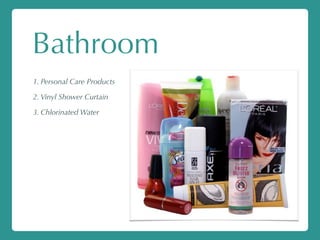
1. Personal Care Products
2. Vinyl Shower Curtain
3. Chlorinated Water
Bathroom
Personal Care Products
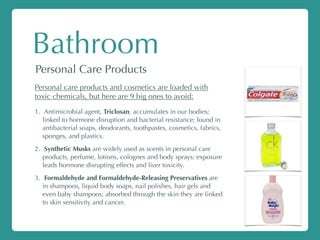
Personal care products and cosmetics are loaded with
toxic chemicals, but here are 9 big ones to avoid:
1. Antimicrobial agent, Triclosan, accumulates in our bodies;
linked to hormone disruption and bacterial resistance; found in
antibacterial soaps, deodorants, toothpastes, cosmetics, fabrics,
sponges, and plastics.
2. Synthetic Musks are widely used as scents in personal care
products, perfume, lotions, colognes and body sprays; exposure
leads hormone disrupting effects and liver toxicity.
3. Formaldehyde and Formaldehyde-Releasing Preservatives are
in shampoos, liquid body soaps, nail polishes, hair gels and
even baby shampoos; absorbed through the skin they are linked
to skin sensitivity and cancer.
Bathroom
Personal Care Products
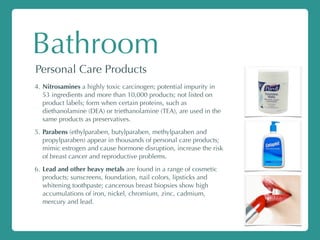
4. Nitrosamines a highly toxic carcinogen; potential impurity in
53 ingredients and more than 10,000 products; not listed on
product labels; form when certain proteins, such as
diethanolamine (DEA) or triethanolamine (TEA), are used in the
same products as preservatives.
5. Parabens (ethylparaben, butylparaben, methylparaben and
propylparaben) appear in thousands of personal care products;
mimic estrogen and cause hormone disruption, increase the risk
of breast cancer and reproductive problems.
6. Lead and other heavy metals are found in a range of cosmetic
products; sunscreens, foundation, nail colors, lipsticks and
whitening toothpaste; cancerous breast biopsies show high
accumulations of iron, nickel, chromium, zinc, cadmium,
mercury and lead.
Bathroom
Personal Care Products
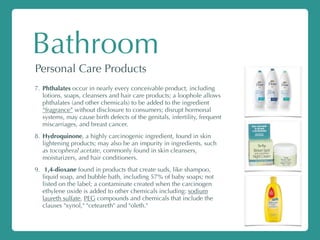
7. Phthalates occur in nearly every conceivable product, including
lotions, soaps, cleansers and hair care products; a loophole allows
phthalates (and other chemicals) to be added to the ingredient
“fragrance” without disclosure to consumers; disrupt hormonal
systems, may cause birth defects of the genitals, infertility, frequent
miscarriages, and breast cancer.
8. Hydroquinone, a highly carcinogenic ingredient, found in skin
lightening products; may also be an impurity in ingredients, such
as tocopheral acetate, commonly found in skin cleansers,
moisturizers, and hair conditioners.
9. 1,4-dioxane found in products that create suds, like shampoo,
liquid soap, and bubble bath, including 57% of baby soaps; not
listed on the label; a contaminate created when the carcinogen
ethylene oxide is added to other chemicals including: sodium
laureth sulfate, PEG compounds and chemicals that include the
clauses "xynol," "ceteareth" and "oleth."
Bathroom
Vinyl Shower Curtain
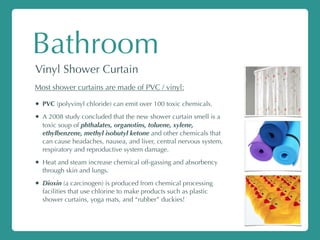
Most shower curtains are made of PVC / vinyl:
• PVC (polyvinyl chloride) can emit over 100 toxic chemicals.
• A 2008 study concluded that the new shower curtain smell is a
toxic soup of phthalates, organotins, toluene, xylene,
ethylbenzene, methyl isobutyl ketone and other chemicals that
can cause headaches, nausea, and liver, central nervous system,
respiratory and reproductive system damage.
• Heat and steam increase chemical off-gassing and absorbency
through skin and lungs.
• Dioxin (a carcinogen) is produced from chemical processing
facilities that use chlorine to make products such as plastic
shower curtains, yoga mats, and “rubber” duckies!
Bathroom
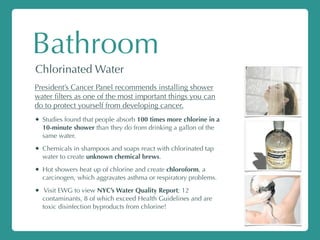
Chlorinated Water
President’s Cancer Panel recommends installing shower
water filters as one of the most important things you can
do to protect yourself from developing cancer.
• Studies found that people absorb 100 times more chlorine in a
10-minute shower than they do from drinking a gallon of the
same water.
• Chemicals in shampoos and soaps react with chlorinated tap
water to create unknown chemical brews.
• Hot showers heat up of chlorine and create chloroform, a
carcinogen, which aggravates asthma or respiratory problems.
• Visit EWG to view NYC’s Water Quality Report; 12
contaminants, 8 of which exceed Health Guidelines and are
toxic disinfection byproducts from chlorine!
Mental Health Break
Kitchen
1. Fake Food
2. Plastics
3. Cooking & Take-Out
Kitchen
Fake Food
Our diet has changed to include numerous synthetic
ingredients and our bodies are not built to process these
chemicals, as evidenced in a dramatic rise in certain
illnesses.
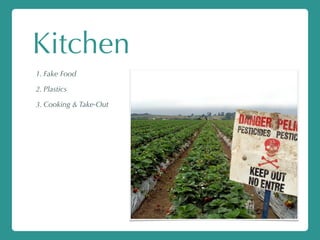
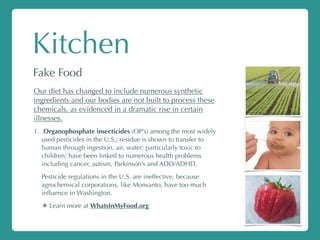
1. Organophosphate insecticides (OP’s) among the most widely
used pesticides in the U.S.; residue is shown to transfer to
human through ingestion, air, water; particularly toxic to
children; have been linked to numerous health problems
including cancer, autism, Parkinson’s and ADD/ADHD.
Pesticide regulations in the U.S. are ineffective, because
agrochemical corporations, like Monsanto, have too much
influence in Washington.
✴ Learn more at WhatsInMyFood.org
Kitchen
Fake Food
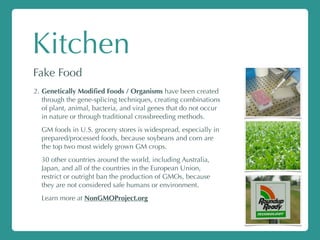
2. Genetically Modified Foods / Organisms have been created
through the gene-splicing techniques, creating combinations
of plant, animal, bacteria, and viral genes that do not occur
in nature or through traditional crossbreeding methods.
GM foods in U.S. grocery stores is widespread, especially in
prepared/processed foods, because soybeans and corn are
the top two most widely grown GM crops.
30 other countries around the world, including Australia,
Japan, and all of the countries in the European Union,
restrict or outright ban the production of GMOs, because
they are not considered safe humans or environment.
Learn more at NonGMOProject.org
Kitchen
Fake Food
3. Natural and artificial growth hormones are injected into
80% of U.S. cattle; 6 most common are a potential risk to
human health and believed to disrupt human hormone
balance, cause developmental problems, interfere with the
reproductive system, and lead to breast, prostate, and colon
cancer.
4. Antibiotics are routinely administered to industrialized farm
animals to increase production and have been linked to the
evolution of drug-resistant pathogens that cause human
disease.
The European countries banned growth-promoting uses of
antibiotics in livestock in 2006 and growth hormones in
1988. US meat imports are banned from Europe and
Canada.
Kitchen
Fake Food
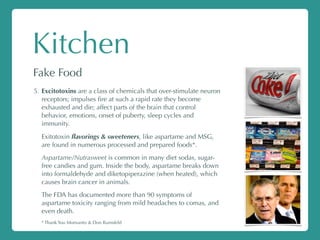
5. Excitotoxins are a class of chemicals that over-stimulate neuron
receptors; impulses fire at such a rapid rate they become
exhausted and die; affect parts of the brain that control
behavior, emotions, onset of puberty, sleep cycles and
immunity.
Exitotoxin flavorings & sweeteners, like aspartame and MSG,
are found in numerous processed and prepared foods*.
Aspartame/Nutrasweet is common in many diet sodas, sugar-
free candies and gum. Inside the body, aspartame breaks down
into formaldehyde and diketopiperazine (when heated), which
causes brain cancer in animals.
The FDA has documented more than 90 symptoms of
aspartame toxicity ranging from mild headaches to comas, and
even death.
* Thank You Monsanto & Don Rumsfeld
Kitchen
Fake Food
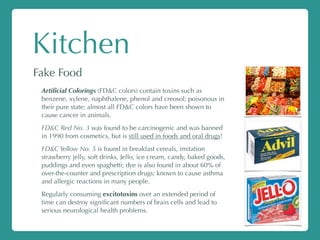
Artificial Colorings (FD&C colors) contain toxins such as
benzene, xylene, naphthalene, phenol and creosol; poisonous in
their pure state; almost all FD&C colors have been shown to
cause cancer in animals.
FD&C Red No. 3 was found to be carcinogenic and was banned
in 1990 from cosmetics, but is still used in foods and oral drugs!
FD&C Yellow No. 5 is found in breakfast cereals, imitation
strawberry jelly, soft drinks, Jello, ice cream, candy, baked goods,
puddings and even spaghetti; dye is also found in about 60% of
over-the-counter and prescription drugs; known to cause asthma
and allergic reactions in many people.
Regularly consuming excitotoxins over an extended period of
time can destroy significant numbers of brain cells and lead to
serious neurological health problems.
Mental Health Break
Kitchen
Plastics have no place.
One of the most toxic, polluting industries they are loaded with
undisclosed synthetic additives and petrochemicals and are
increasing linked to hormone disruption, cancer, obesity,
diabetes, autism, ADD/ADHD.
• Plastic chemicals leach into our food from daily use and
bioaccumulate even greater toxins up our food chain via air,
soil, ground water, and ocean pollution.
• Plastics in the kitchen are viewed as sterile and clean, but
that view needs to change.
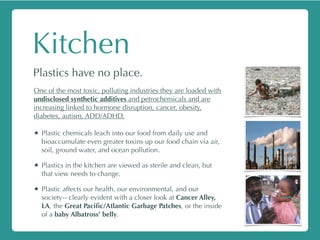
• Plastic affects our health, our environmental, and our
society-- clearly evident with a closer look at Cancer Alley,
LA, the Great Pacific/Atlantic Garbage Patches, or the inside
of a baby Albatross’ belly.
Kitchen
Plastics have no place.
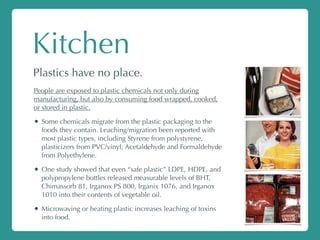
People are exposed to plastic chemicals not only during
manufacturing, but also by consuming food wrapped, cooked,
or stored in plastic.
• Some chemicals migrate from the plastic packaging to the
foods they contain. Leaching/migration been reported with
most plastic types, including Styrene from polystyrene,
plasticizers from PVC/vinyl, Acetaldehyde and Formaldehyde
from Polyethylene.
• One study showed that even “safe plastic” LDPE, HDPE, and
polypropylene bottles released measurable levels of BHT,
Chimassorb 81, Irganox PS 800, Irganix 1076, and Irganox
1010 into their contents of vegetable oil.
• Microwaving or heating plastic increases leaching of toxins
into food.
Kitchen
Plastics have no place.
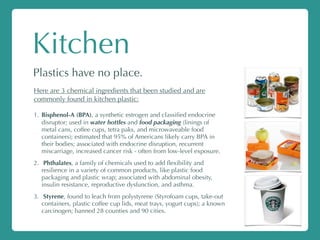
Here are 3 chemical ingredients that been studied and are
commonly found in kitchen plastic:
1. Bisphenol-A (BPA), a synthetic estrogen and classified endocrine
disruptor; used in water bottles and food packaging (linings of
metal cans, coffee cups, tetra paks, and microwaveable food
containers); estimated that 95% of Americans likely carry BPA in
their bodies; associated with endocrine disruption, recurrent
miscarriage, increased cancer risk - often from low-level exposure.
2. Phthalates, a family of chemicals used to add flexibility and
resilience in a variety of common products, like plastic food
packaging and plastic wrap; associated with abdominal obesity,
insulin resistance, reproductive dysfunction, and asthma.
3. Styrene, found to leach from polystyrene (Styrofoam cups, take-out
containers, plastic coffee cup lids, meat trays, yogurt cups); a known
carcinogen; banned 28 counties and 90 cities.
Kitchen
Cooking & Convenience
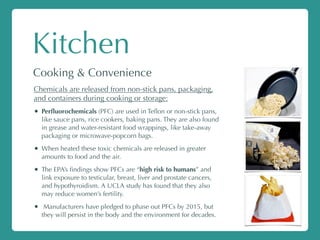
Chemicals are released from non-stick pans, packaging,
and containers during cooking or storage:
• Perfluorochemicals (PFC) are used in Teflon or non-stick pans,
like sauce pans, rice cookers, baking pans. They are also found
in grease and water-resistant food wrappings, like take-away
packaging or microwave-popcorn bags.
• When heated these toxic chemicals are released in greater
amounts to food and the air.
• The EPA’s findings show PFCs are “high risk to humans” and
link exposure to testicular, breast, liver and prostate cancers,
and hypothyroidism. A UCLA study has found that they also
may reduce women’s fertility.
• Manufacturers have pledged to phase out PFCs by 2015, but
they will persist in the body and the environment for decades.
Mental Health Break
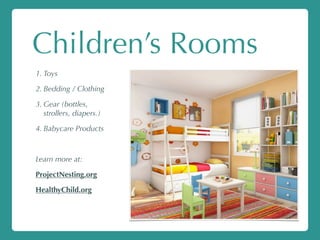
Children’s Rooms
1. Toys
2. Bedding / Clothing
3. Gear (bottles,
strollers, diapers.)
4. Babycare Products
Learn more at:
ProjectNesting.org
HealthyChild.org
Bedroom/Living Room/Office
1. Furniture
2. Bedding / Clothing
3. Computer/ Office
Products & Devices
4. Floor / Wall /
Window coverings
Learn more at:
pollutioninpeople.org
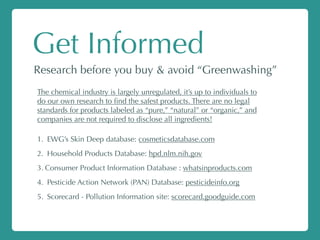
Get Informed
Research before you buy & avoid “Greenwashing”
The chemical industry is largely unregulated, it’s up to individuals to
do our own research to find the safest products. There are no legal
standards for products labeled as “pure,” “natural” or “organic,” and
companies are not required to disclose all ingredients!
1. EWG’s Skin Deep database: cosmeticsdatabase.com
2. Household Products Database: hpd.nlm.nih.gov
3. Consumer Product Information Database : whatsinproducts.com
4. Pesticide Action Network (PAN) Database: pesticideinfo.org
5. Scorecard - Pollution Information site: scorecard.goodguide.com
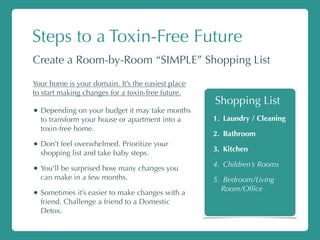
Steps to a Toxin-Free Future
Create a Room-by-Room “SIMPLE” Shopping List
Your home is your domain. It’s the easiest place
to start making changes for a toxin-free future.
• Depending on your budget it may take months
to transform your house or apartment into a
toxin-free home.
• Don’t feel overwhelmed. Prioritize your
shopping list and take baby steps.
• You’ll be surprised how many changes you
can make in a few months.
• Sometimes it’s easier to make changes with a
friend. Challenge a friend to a Domestic
Detox.
1. Laundry / Cleaning
2. Bathroom
3. Kitchen
4. Children’s Rooms
5. Bedroom/Living
Room/Office
Shopping List
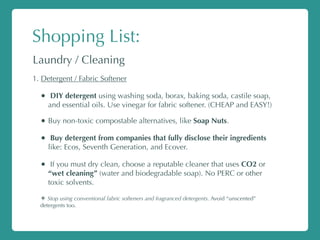
Shopping List:
Laundry / Cleaning
1. Detergent / Fabric Softener
• DIY detergent using washing soda, borax, baking soda, castile soap,
and essential oils. Use vinegar for fabric softener. (CHEAP and EASY!)
• Buy non-toxic compostable alternatives, like Soap Nuts.
• Buy detergent from companies that fully disclose their ingredients
like: Ecos, Seventh Generation, and Ecover.
• If you must dry clean, choose a reputable cleaner that uses CO2 or
“wet cleaning” (water and biodegradable soap). No PERC or other
toxic solvents.
✴ Stop using conventional fabric softeners and fragranced detergents. Avoid “unscented”
detergents too.
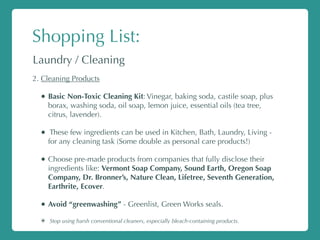
Shopping List:
Laundry / Cleaning
2. Cleaning Products
• Basic Non-Toxic Cleaning Kit: Vinegar, baking soda, castile soap, plus
borax, washing soda, oil soap, lemon juice, essential oils (tea tree,
citrus, lavender).
• These few ingredients can be used in Kitchen, Bath, Laundry, Living -
for any cleaning task (Some double as personal care products!)
• Choose pre-made products from companies that fully disclose their
ingredients like: Vermont Soap Company, Sound Earth, Oregon Soap
Company, Dr. Bronner’s, Nature Clean, Lifetree, Seventh Generation,
Earthrite, Ecover.
• Avoid “greenwashing” - Greenlist, Green Works seals.
✴ Stop using harsh conventional cleaners, especially bleach-containing products.
Shopping List:
Laundry / Cleaning
3. Air Fresheners / Scented Candles
• DIY Potpourri Jars or Sachets: Use any pesticide-free herbs, like
lavender, roses, orange peel, rosemary, thyme and/or essential oils.
• DIY Herbal Mists: Mix water and organic few drops of essential oil in
a spray bottle.
• Candles: Choose 100% Beeswax, Soy or Vegetable Wax with cotton
wicks and 100% essential oil scents.
• Choose pre-made products from companies that fully disclose their
ingredients and avoid “greenwashing” - Greenlist, Green Works seals.
✴ Stop using synthetic fragranced products like Fabreeze, Airwick or any product that contains
“fragrance”.
Shopping List:
Laundry / Cleaning
4. Pesticides / Moth Balls
• Bug Repellent: Essential oils mixed with vodka, jojoba oil, or aloe
vera gel keeps bugs away.
•Ticks: Rose Geranium, Mosquitoes: Pennyroyal, lemon balm, thyme, lavender, Blackflies:
Sassafras, lavender, eucalyptus, pennyroyal, cedar, lemon balm, peppermint, Head Lice:
Tea tree, rosemary, lavender, eucalyptus, rose geranium, Fleas: Orange oil
• Roach Deterrent: Use boric acid, diatomaceous earth, or silica, with
caution.
• Moth Prevention: Cedar chips, Rosemary Oil and Lavender all deter
moths and smell nicer than chemicals.
•Visit BeyondPesticides.org for alternatives to pesticides & herbicides.
✴ Stop using DEET or other pesticide containing foggers, sprays or gels.
Mental Health Break
Shopping List:
Bathroom
1. Personal Care Products
• Simplify! Pare down to your essentials.
• Soap/Shampoo: Castile or vegetable-based soap (JR Liggett, Dr. Bronner’s,
Avalon Organics, Vermont Soap, Oregon Soap)
• Moisturizer: Organic shea butter or coconut oil
• Conditioner: Vinegar!
• Deodorant: Mineral crystal stones, green clay, or baking soda
• Toothpaste: Baking soda, Weleda Salt, or Tom’s of Maine (less-toxic)
• Feminine: Organic Cotton Tampons, Glad Rags
• Choose products that fully disclose with preferably less than 5 familiar,
organic ingredients.
• Visit SkinDeep.org check the rating of your favorite products and phase out
the most toxic.
✴ Stop using products containing “fragrance”.
Shopping List:
Bathroom
2. Cloth Shower Curtain
• Hemp or cotton are great alternatives to toxic, off-gassing vinyl. Get
organic if you can afford it.
• Benefits:
• Easy to keep clean - wash once a month. Hang in sunshine or
spray with tea tree mist or vinegar to keep mold/mildew at bay.
• Last for years with regular care.
• Biodegradable / Compostable / Recyclable
(cut up and use in your garden or for household cleaning cloths)
• Best Price / Quality: Terra Luna Sol [ terralunasol.net ]
Shopping List:
Bathroom
3. Shower Water Filter
• Look for NSF/ANSI Standard 177, which means it’s third-party tested
to effectively remove chlorine.
• Check nsf.org for a list of NSF Certified Shower Filters.
• Best Price / Quality: Culligan WSH-C125
✴ Additional exposure to chlorine occurs through drinking, humidifiers,
cooking, washing dishes, dishwashers, and swimming in chlorinated
pools.
Researchers have found greatly elevated levels of chloroform in
swimmers' blood after leaving the pool.
Shopping List:
Kitchen
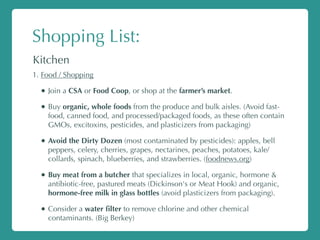
1. Food / Shopping
• Join a CSA or Food Coop, or shop at the farmer’s market.
• Buy organic, whole foods from the produce and bulk aisles. (Avoid fast-
food, canned food, and processed/packaged foods, as these often contain
GMOs, excitoxins, pesticides, and plasticizers from packaging)
• Avoid the Dirty Dozen (most contaminated by pesticides): apples, bell
peppers, celery, cherries, grapes, nectarines, peaches, potatoes, kale/
collards, spinach, blueberries, and strawberries. (foodnews.org)
• Buy meat from a butcher that specializes in local, organic, hormone &
antibiotic-free, pastured meats (Dickinson's or Meat Hook) and organic,
hormone-free milk in glass bottles (avoid plasticizers from packaging).
• Consider a water filter to remove chlorine and other chemical
contaminants. (Big Berkey)
Shopping List:
Kitchen
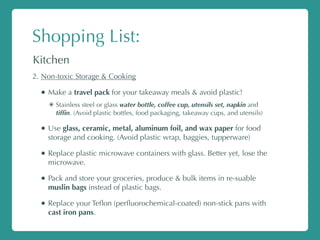
2. Non-toxic Storage & Cooking
• Make a travel pack for your takeaway meals & avoid plastic!
✴ Stainless steel or glass water bottle, coffee cup, utensils set, napkin and
tiffin. (Avoid plastic bottles, food packaging, takeaway cups, and utensils)
• Use glass, ceramic, metal, aluminum foil, and wax paper for food
storage and cooking. (Avoid plastic wrap, baggies, tupperware)
• Replace plastic microwave containers with glass. Better yet, lose the
microwave.
• Pack and store your groceries, produce & bulk items in re-suable
muslin bags instead of plastic bags.
• Replace your Teflon (perfluorochemical-coated) non-stick pans with
cast iron pans.
Shopping List:
Kitchen
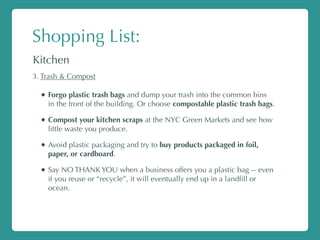
3. Trash & Compost
• Forgo plastic trash bags and dump your trash into the common bins
in the front of the building. Or choose compostable plastic trash bags.
• Compost your kitchen scraps at the NYC Green Markets and see how
little waste you produce.
• Avoid plastic packaging and try to buy products packaged in foil,
paper, or cardboard.
• Say NO THANK YOU when a business offers you a plastic bag -- even
if you reuse or “recycle”, it will eventually end up in a landfill or
ocean.
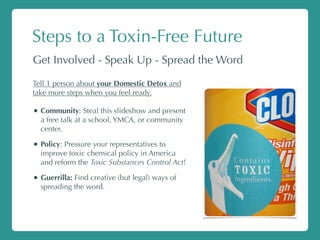
Steps to a Toxin-Free Future
Get Involved - Speak Up - Spread the Word
Tell 1 person about your Domestic Detox and
take more steps when you feel ready.
• Community: Steal this slideshow and present
a free talk at a school, YMCA, or community
center.
• Policy: Pressure your representatives to
improve toxic chemical policy in America
and reform the Toxic Substances Control Act!
• Guerrilla: Find creative (but legal) ways of
spreading the word.
Thank You!
More Info...
Visit PlasticAlbatross.org for additional links to resources,
tips for toxin-free living, and a PDF of this slideshow.
Jenna Spevack
info@plasticalbatross.org
917-743-4678
plasticalbatross.org

Domestic Detox - Pollution is Personal

  • 1.
    Domestic Detox “Pollution isPersonal” Toxic chemicals are used in the production of everyday household items. Eventually these ingredients are absorbed by our bodies and can lead to health problems. Learn how to lessen your exposure to toxins in your home and reduce your body burden, starting with a few simple steps! plasticalbatross.org
  • 2.
    Outline • Introductions • Overview •Steps Toward a Toxin-Free Future 1. Get Informed 2. Simplify Your Shopping List 3. Get Involved • Discussion/Questions/How-To
  • 3.
    Introductions Why am Ihere? Why are you here? What motivates you? • Health • Finance • Children • Environment • Political/Social Justice
  • 4.
    Overview Synthetic chemicals inour lives. We are at risk of exposure to thousands of synthetic chemicals. • Since World War II, 80,000 new chemicals have been invented; there is no available health information for 62,000 of them. • Many have been dispersed widely into the environment and will persist for decades and even centuries. • Researchers have observed a correlation between an increase of chronic diseases and the increase of chemicals in our lives.
  • 5.
    Overview Synthetic chemicals inour lives. Nearly 3,000 chemicals are produced each year in quantities of greater than one million pounds. • Over 4 billion pounds of high-production- volume (HPV) chemicals are released by industry; including 72 million pounds of recognized carcinogens. • Used extensively in our homes, schools, and communities; synthetic chemicals are found in countless household items. • Few of these chemical ingredients are actually listed on the label.
  • 6.
    Overview Synthetic chemicals inour lives. Americans assume that chemicals for consumer use are tested for safety — but they are NOT. • Less than 20 percent of chemicals have been tested for toxicity; rarely are they studied for interactivity with other chemicals. • Companies are not required to disclose chemical ingredients, due to trade secret laws. • Failure to assess chemicals for health hazards represents a grave lapse of stewardship by the chemical industry and by the federal government.
  • 7.
    Overview Synthetic chemicals inour bodies. According to the CDC, more than 200 synthetic chemicals can be found in the bodies of nearly all Americans, including newborn infants. • Of the top 20 chemicals discharged to the environment, nearly 75% are known or suspected to be toxic to the human brain. • Synthetic chemicals enter our bodies by ingestion, inhalation, or through the skin; infants are exposed in the womb and through breast milk. • We have become guinea pigs in a vast and uncontrolled experiment.
  • 8.
    Overview Synthetic chemicals inour bodies. Chemicals can affect our health through low- level exposure and when combined with other chemicals over time. Studies show that some disrupt or mimic our hormones and lead to a myriad of health problems, including: ✴ obesity and thyroid disfunction ✴ decreased sperm count and quality ✴ recurrent miscarriage ✴ birth defects of the genitals ✴ increased cancer risk
  • 9.
    Overview Synthetic chemicals inour bodies. Up to 16% of the US population now has Multiple Chemical Sensitivity (MCS). • An MCS sufferer is like the canary in the coal mine; unable to filter chemicals from their bodies; reactions can be moderate to severe: headaches, depression, anxiety, insomnia, concentration and memory problems, asthma attacks, and allergy-like symptoms. • People with MCS are 100-1000 times more sensitive to chemicals; the most common triggers are petroleum-based solvents, volatile organic compounds (VOC's), pesticides, and synthetic fragrances. • No one is born with MCS; it brought on by repeated or acute chemical exposure.
  • 10.
    Overview How did thishappen? What can we do? The Toxic Substances Control Act (TSCA) of 1976 is outdated and the government is powerless to regulate the thousands of new chemicals in our lives. ✴ Tell your representatives to support the Safer Alternatives Bill! Follow the Precautionary Principle. ✴ When we have a reasonable suspicion of harm, and scientific uncertainty about cause and effect, then we have a duty to take action to prevent harm.
  • 11.
    Overview Learn more aboutthis research. • EPA. Chemical Hazard Data Availability Study: What Do We Really Know About the Safety of High Production Volume Chemicals? Washington, DC: Office of Pollution Prevention and Toxics, 1998. • EPA. Toxic Release Inventory (TRI) Program. Washington, DC, February 21, 2008. • CDC. Third National Report on Human Exposure to Environmental Chemicals Atlanta (GA): CDC, 2005. • See PlasticAlbatross.org or EWG.org
  • 12.
  • 13.
  • 14.
    Steps toward aToxin-Free Future Get Informed + Simplify + Get Involved Start with these 3 steps: 1. Get Informed: Learn about your household products; who makes them; are the ingredients fully disclosed? 2. Simplify Your Shopping List: Choose fewer products with simpler ingredients; no synthetic chemicals; buy organic & local with compostable packaging, when possible. 3. Get Involved: Toxic chemicals are used in schools, offices, and in the homes of people who don't have a choice or a voice. Chemical policy need to change. Stay informed, speak up, and spread the word. • Look beyond the label. • Avoid the Culture of Convenience. • Share your knowledge.
  • 15.
    Get Informed Common Chemicals: Room-by-Room Evaluation The average home is stocked with numerous chemically-laden products. First, evaluate your household and start with the most toxic, but easiest to change: 1. Laundry / Cleaning 2. Bathroom 3. Kitchen 4. Children’s Rooms 5. Bedroom/Living Room/Office Disposal in NYC: • Take it Back Program • Household Special Waste Drop-Off Program
  • 16.
    Laundry / Cleaning 1.Laundry Products 2. Cleaning Products 3. Air Fresheners 4. Pesticides
  • 17.
    Laundry / Cleaning LaundryDetergents / Softeners Tide, Downey, and even unscented detergents, contain toxic chemicals: • Petroleum distillates or napthas are solvents linked to cancer, lung damage and/or inflammation, and mucous membrane damage. • Phenols, used to cover smells, attack the central nervous system, heart, blood vessels, lungs and kidneys. • Phthalates (lumped under the ingredient “Fragrance”) are a family of chemicals that disrupt the endocrine system and cause a host of health problems including obesity, diabetes, cancer, and ...
  • 18.
    Laundry / Cleaning CleaningProducts Windex, Tilex, the list is endless, contain some of the MOST toxic chemicals. Clorox recently disclosed that it uses 1,219 different chemical ingredients to make products, like Formula 409. • Phenols: toilet bowl cleaners and disinfectants; toxic to respiratory and circulatory systems. • Diethylene glycol: window cleaners; depress the nervous system. • Ethylene-based glycol, a water-soluble solvent in cleaning agents; classified as a hazardous air pollutant by the EPA. • Chlorine “sodium hypochlorite”: ubiquitous in household cleaners; fumes irritate the lungs; pose serious health risks to those with asthma or heart problems. • Petroleum solvents: floor cleaners; damage mucous membranes. • Perchloroethylene: spot removers and dry cleaning, causes cancer, liver and nervous system damage, infertility, and hormonal disruption.
  • 19.
    Laundry / Cleaning AirFresheners / Scented Candles Air fresheners are anything but! They don’t get rid of smells; they just mask them by coating your nasal passages or releasing a nerve deadening agent. • Sprays and oils contain formaldehyde, camphor, ethanol, phenol, petroleum-based artificial fragrances, and benzyl alcohol; some candles contain lead and paraffin wax, a petrochemical. • Symptoms when inhaled: headaches, rashes, dizziness, migraines, asthma attacks, mental confusion, coughing and more; some substances in air fresheners are known carcinogens; others are hormone disruptors. • A European study found that using air fresheners as little as once a week can raise the risk of asthma by 50%. • The NRDC tested 14 brands of household air fresheners; 86% contained phthalates, even those bearing “all-natural” and “unscented” labels.
  • 20.
    Laundry / Cleaning Pesticides/ Moth Balls Recent research indicates that 90% of childhood cancers are linked to environmental factors, specifically to the use of pesticides in the home. • Children exposed to household insecticides, herbicides, and professional extermination are 3 to 7 times more likely to develop non-Hodgkin lymphoma and neuroblastoma. • Mosquito repellant DEET linked to neurological damage and birth defects, specifically in boys. • Moth balls contain the carcinogen paradichlorobenzene and naphthalene. •Pesticides are now turning up in our toothpaste, soaps, clothing, and antibacterial wipes - as Triclosan.
  • 21.
  • 22.
    Bathroom 1. Personal CareProducts 2. Vinyl Shower Curtain 3. Chlorinated Water
  • 23.
    Bathroom Personal Care Products Personalcare products and cosmetics are loaded with toxic chemicals, but here are 9 big ones to avoid: 1. Antimicrobial agent, Triclosan, accumulates in our bodies; linked to hormone disruption and bacterial resistance; found in antibacterial soaps, deodorants, toothpastes, cosmetics, fabrics, sponges, and plastics. 2. Synthetic Musks are widely used as scents in personal care products, perfume, lotions, colognes and body sprays; exposure leads hormone disrupting effects and liver toxicity. 3. Formaldehyde and Formaldehyde-Releasing Preservatives are in shampoos, liquid body soaps, nail polishes, hair gels and even baby shampoos; absorbed through the skin they are linked to skin sensitivity and cancer.
  • 24.
    Bathroom Personal Care Products 4.Nitrosamines a highly toxic carcinogen; potential impurity in 53 ingredients and more than 10,000 products; not listed on product labels; form when certain proteins, such as diethanolamine (DEA) or triethanolamine (TEA), are used in the same products as preservatives. 5. Parabens (ethylparaben, butylparaben, methylparaben and propylparaben) appear in thousands of personal care products; mimic estrogen and cause hormone disruption, increase the risk of breast cancer and reproductive problems. 6. Lead and other heavy metals are found in a range of cosmetic products; sunscreens, foundation, nail colors, lipsticks and whitening toothpaste; cancerous breast biopsies show high accumulations of iron, nickel, chromium, zinc, cadmium, mercury and lead.
  • 25.
    Bathroom Personal Care Products 7.Phthalates occur in nearly every conceivable product, including lotions, soaps, cleansers and hair care products; a loophole allows phthalates (and other chemicals) to be added to the ingredient “fragrance” without disclosure to consumers; disrupt hormonal systems, may cause birth defects of the genitals, infertility, frequent miscarriages, and breast cancer. 8. Hydroquinone, a highly carcinogenic ingredient, found in skin lightening products; may also be an impurity in ingredients, such as tocopheral acetate, commonly found in skin cleansers, moisturizers, and hair conditioners. 9. 1,4-dioxane found in products that create suds, like shampoo, liquid soap, and bubble bath, including 57% of baby soaps; not listed on the label; a contaminate created when the carcinogen ethylene oxide is added to other chemicals including: sodium laureth sulfate, PEG compounds and chemicals that include the clauses "xynol," "ceteareth" and "oleth."
  • 26.
    Bathroom Vinyl Shower Curtain Mostshower curtains are made of PVC / vinyl: • PVC (polyvinyl chloride) can emit over 100 toxic chemicals. • A 2008 study concluded that the new shower curtain smell is a toxic soup of phthalates, organotins, toluene, xylene, ethylbenzene, methyl isobutyl ketone and other chemicals that can cause headaches, nausea, and liver, central nervous system, respiratory and reproductive system damage. • Heat and steam increase chemical off-gassing and absorbency through skin and lungs. • Dioxin (a carcinogen) is produced from chemical processing facilities that use chlorine to make products such as plastic shower curtains, yoga mats, and “rubber” duckies!
  • 27.
    Bathroom Chlorinated Water President’s CancerPanel recommends installing shower water filters as one of the most important things you can do to protect yourself from developing cancer. • Studies found that people absorb 100 times more chlorine in a 10-minute shower than they do from drinking a gallon of the same water. • Chemicals in shampoos and soaps react with chlorinated tap water to create unknown chemical brews. • Hot showers heat up of chlorine and create chloroform, a carcinogen, which aggravates asthma or respiratory problems. • Visit EWG to view NYC’s Water Quality Report; 12 contaminants, 8 of which exceed Health Guidelines and are toxic disinfection byproducts from chlorine!
  • 28.
  • 29.
    Kitchen 1. Fake Food 2.Plastics 3. Cooking & Take-Out
  • 30.
    Kitchen Fake Food Our diethas changed to include numerous synthetic ingredients and our bodies are not built to process these chemicals, as evidenced in a dramatic rise in certain illnesses. 1. Organophosphate insecticides (OP’s) among the most widely used pesticides in the U.S.; residue is shown to transfer to human through ingestion, air, water; particularly toxic to children; have been linked to numerous health problems including cancer, autism, Parkinson’s and ADD/ADHD. Pesticide regulations in the U.S. are ineffective, because agrochemical corporations, like Monsanto, have too much influence in Washington. ✴ Learn more at WhatsInMyFood.org
  • 31.
    Kitchen Fake Food 2. GeneticallyModified Foods / Organisms have been created through the gene-splicing techniques, creating combinations of plant, animal, bacteria, and viral genes that do not occur in nature or through traditional crossbreeding methods. GM foods in U.S. grocery stores is widespread, especially in prepared/processed foods, because soybeans and corn are the top two most widely grown GM crops. 30 other countries around the world, including Australia, Japan, and all of the countries in the European Union, restrict or outright ban the production of GMOs, because they are not considered safe humans or environment. Learn more at NonGMOProject.org
  • 32.
    Kitchen Fake Food 3. Naturaland artificial growth hormones are injected into 80% of U.S. cattle; 6 most common are a potential risk to human health and believed to disrupt human hormone balance, cause developmental problems, interfere with the reproductive system, and lead to breast, prostate, and colon cancer. 4. Antibiotics are routinely administered to industrialized farm animals to increase production and have been linked to the evolution of drug-resistant pathogens that cause human disease. The European countries banned growth-promoting uses of antibiotics in livestock in 2006 and growth hormones in 1988. US meat imports are banned from Europe and Canada.
  • 33.
    Kitchen Fake Food 5. Excitotoxinsare a class of chemicals that over-stimulate neuron receptors; impulses fire at such a rapid rate they become exhausted and die; affect parts of the brain that control behavior, emotions, onset of puberty, sleep cycles and immunity. Exitotoxin flavorings & sweeteners, like aspartame and MSG, are found in numerous processed and prepared foods*. Aspartame/Nutrasweet is common in many diet sodas, sugar- free candies and gum. Inside the body, aspartame breaks down into formaldehyde and diketopiperazine (when heated), which causes brain cancer in animals. The FDA has documented more than 90 symptoms of aspartame toxicity ranging from mild headaches to comas, and even death. * Thank You Monsanto & Don Rumsfeld
  • 34.
    Kitchen Fake Food Artificial Colorings(FD&C colors) contain toxins such as benzene, xylene, naphthalene, phenol and creosol; poisonous in their pure state; almost all FD&C colors have been shown to cause cancer in animals. FD&C Red No. 3 was found to be carcinogenic and was banned in 1990 from cosmetics, but is still used in foods and oral drugs! FD&C Yellow No. 5 is found in breakfast cereals, imitation strawberry jelly, soft drinks, Jello, ice cream, candy, baked goods, puddings and even spaghetti; dye is also found in about 60% of over-the-counter and prescription drugs; known to cause asthma and allergic reactions in many people. Regularly consuming excitotoxins over an extended period of time can destroy significant numbers of brain cells and lead to serious neurological health problems.
  • 35.
  • 36.
    Kitchen Plastics have noplace. One of the most toxic, polluting industries they are loaded with undisclosed synthetic additives and petrochemicals and are increasing linked to hormone disruption, cancer, obesity, diabetes, autism, ADD/ADHD. • Plastic chemicals leach into our food from daily use and bioaccumulate even greater toxins up our food chain via air, soil, ground water, and ocean pollution. • Plastics in the kitchen are viewed as sterile and clean, but that view needs to change. • Plastic affects our health, our environmental, and our society-- clearly evident with a closer look at Cancer Alley, LA, the Great Pacific/Atlantic Garbage Patches, or the inside of a baby Albatross’ belly.
  • 37.
    Kitchen Plastics have noplace. People are exposed to plastic chemicals not only during manufacturing, but also by consuming food wrapped, cooked, or stored in plastic. • Some chemicals migrate from the plastic packaging to the foods they contain. Leaching/migration been reported with most plastic types, including Styrene from polystyrene, plasticizers from PVC/vinyl, Acetaldehyde and Formaldehyde from Polyethylene. • One study showed that even “safe plastic” LDPE, HDPE, and polypropylene bottles released measurable levels of BHT, Chimassorb 81, Irganox PS 800, Irganix 1076, and Irganox 1010 into their contents of vegetable oil. • Microwaving or heating plastic increases leaching of toxins into food.
  • 38.
    Kitchen Plastics have noplace. Here are 3 chemical ingredients that been studied and are commonly found in kitchen plastic: 1. Bisphenol-A (BPA), a synthetic estrogen and classified endocrine disruptor; used in water bottles and food packaging (linings of metal cans, coffee cups, tetra paks, and microwaveable food containers); estimated that 95% of Americans likely carry BPA in their bodies; associated with endocrine disruption, recurrent miscarriage, increased cancer risk - often from low-level exposure. 2. Phthalates, a family of chemicals used to add flexibility and resilience in a variety of common products, like plastic food packaging and plastic wrap; associated with abdominal obesity, insulin resistance, reproductive dysfunction, and asthma. 3. Styrene, found to leach from polystyrene (Styrofoam cups, take-out containers, plastic coffee cup lids, meat trays, yogurt cups); a known carcinogen; banned 28 counties and 90 cities.
  • 39.
    Kitchen Cooking & Convenience Chemicalsare released from non-stick pans, packaging, and containers during cooking or storage: • Perfluorochemicals (PFC) are used in Teflon or non-stick pans, like sauce pans, rice cookers, baking pans. They are also found in grease and water-resistant food wrappings, like take-away packaging or microwave-popcorn bags. • When heated these toxic chemicals are released in greater amounts to food and the air. • The EPA’s findings show PFCs are “high risk to humans” and link exposure to testicular, breast, liver and prostate cancers, and hypothyroidism. A UCLA study has found that they also may reduce women’s fertility. • Manufacturers have pledged to phase out PFCs by 2015, but they will persist in the body and the environment for decades.
  • 40.
  • 41.
    Children’s Rooms 1. Toys 2.Bedding / Clothing 3. Gear (bottles, strollers, diapers.) 4. Babycare Products Learn more at: ProjectNesting.org HealthyChild.org
  • 42.
    Bedroom/Living Room/Office 1. Furniture 2.Bedding / Clothing 3. Computer/ Office Products & Devices 4. Floor / Wall / Window coverings Learn more at: pollutioninpeople.org
  • 43.
    Get Informed Research beforeyou buy & avoid “Greenwashing” The chemical industry is largely unregulated, it’s up to individuals to do our own research to find the safest products. There are no legal standards for products labeled as “pure,” “natural” or “organic,” and companies are not required to disclose all ingredients! 1. EWG’s Skin Deep database: cosmeticsdatabase.com 2. Household Products Database: hpd.nlm.nih.gov 3. Consumer Product Information Database : whatsinproducts.com 4. Pesticide Action Network (PAN) Database: pesticideinfo.org 5. Scorecard - Pollution Information site: scorecard.goodguide.com
  • 44.
    Steps to aToxin-Free Future Create a Room-by-Room “SIMPLE” Shopping List Your home is your domain. It’s the easiest place to start making changes for a toxin-free future. • Depending on your budget it may take months to transform your house or apartment into a toxin-free home. • Don’t feel overwhelmed. Prioritize your shopping list and take baby steps. • You’ll be surprised how many changes you can make in a few months. • Sometimes it’s easier to make changes with a friend. Challenge a friend to a Domestic Detox. 1. Laundry / Cleaning 2. Bathroom 3. Kitchen 4. Children’s Rooms 5. Bedroom/Living Room/Office Shopping List
  • 45.
    Shopping List: Laundry /Cleaning 1. Detergent / Fabric Softener • DIY detergent using washing soda, borax, baking soda, castile soap, and essential oils. Use vinegar for fabric softener. (CHEAP and EASY!) • Buy non-toxic compostable alternatives, like Soap Nuts. • Buy detergent from companies that fully disclose their ingredients like: Ecos, Seventh Generation, and Ecover. • If you must dry clean, choose a reputable cleaner that uses CO2 or “wet cleaning” (water and biodegradable soap). No PERC or other toxic solvents. ✴ Stop using conventional fabric softeners and fragranced detergents. Avoid “unscented” detergents too.
  • 46.
    Shopping List: Laundry /Cleaning 2. Cleaning Products • Basic Non-Toxic Cleaning Kit: Vinegar, baking soda, castile soap, plus borax, washing soda, oil soap, lemon juice, essential oils (tea tree, citrus, lavender). • These few ingredients can be used in Kitchen, Bath, Laundry, Living - for any cleaning task (Some double as personal care products!) • Choose pre-made products from companies that fully disclose their ingredients like: Vermont Soap Company, Sound Earth, Oregon Soap Company, Dr. Bronner’s, Nature Clean, Lifetree, Seventh Generation, Earthrite, Ecover. • Avoid “greenwashing” - Greenlist, Green Works seals. ✴ Stop using harsh conventional cleaners, especially bleach-containing products.
  • 47.
    Shopping List: Laundry /Cleaning 3. Air Fresheners / Scented Candles • DIY Potpourri Jars or Sachets: Use any pesticide-free herbs, like lavender, roses, orange peel, rosemary, thyme and/or essential oils. • DIY Herbal Mists: Mix water and organic few drops of essential oil in a spray bottle. • Candles: Choose 100% Beeswax, Soy or Vegetable Wax with cotton wicks and 100% essential oil scents. • Choose pre-made products from companies that fully disclose their ingredients and avoid “greenwashing” - Greenlist, Green Works seals. ✴ Stop using synthetic fragranced products like Fabreeze, Airwick or any product that contains “fragrance”.
  • 48.
    Shopping List: Laundry /Cleaning 4. Pesticides / Moth Balls • Bug Repellent: Essential oils mixed with vodka, jojoba oil, or aloe vera gel keeps bugs away. •Ticks: Rose Geranium, Mosquitoes: Pennyroyal, lemon balm, thyme, lavender, Blackflies: Sassafras, lavender, eucalyptus, pennyroyal, cedar, lemon balm, peppermint, Head Lice: Tea tree, rosemary, lavender, eucalyptus, rose geranium, Fleas: Orange oil • Roach Deterrent: Use boric acid, diatomaceous earth, or silica, with caution. • Moth Prevention: Cedar chips, Rosemary Oil and Lavender all deter moths and smell nicer than chemicals. •Visit BeyondPesticides.org for alternatives to pesticides & herbicides. ✴ Stop using DEET or other pesticide containing foggers, sprays or gels.
  • 49.
  • 50.
    Shopping List: Bathroom 1. PersonalCare Products • Simplify! Pare down to your essentials. • Soap/Shampoo: Castile or vegetable-based soap (JR Liggett, Dr. Bronner’s, Avalon Organics, Vermont Soap, Oregon Soap) • Moisturizer: Organic shea butter or coconut oil • Conditioner: Vinegar! • Deodorant: Mineral crystal stones, green clay, or baking soda • Toothpaste: Baking soda, Weleda Salt, or Tom’s of Maine (less-toxic) • Feminine: Organic Cotton Tampons, Glad Rags • Choose products that fully disclose with preferably less than 5 familiar, organic ingredients. • Visit SkinDeep.org check the rating of your favorite products and phase out the most toxic. ✴ Stop using products containing “fragrance”.
  • 51.
    Shopping List: Bathroom 2. ClothShower Curtain • Hemp or cotton are great alternatives to toxic, off-gassing vinyl. Get organic if you can afford it. • Benefits: • Easy to keep clean - wash once a month. Hang in sunshine or spray with tea tree mist or vinegar to keep mold/mildew at bay. • Last for years with regular care. • Biodegradable / Compostable / Recyclable (cut up and use in your garden or for household cleaning cloths) • Best Price / Quality: Terra Luna Sol [ terralunasol.net ]
  • 52.
    Shopping List: Bathroom 3. ShowerWater Filter • Look for NSF/ANSI Standard 177, which means it’s third-party tested to effectively remove chlorine. • Check nsf.org for a list of NSF Certified Shower Filters. • Best Price / Quality: Culligan WSH-C125 ✴ Additional exposure to chlorine occurs through drinking, humidifiers, cooking, washing dishes, dishwashers, and swimming in chlorinated pools. Researchers have found greatly elevated levels of chloroform in swimmers' blood after leaving the pool.
  • 53.
    Shopping List: Kitchen 1. Food/ Shopping • Join a CSA or Food Coop, or shop at the farmer’s market. • Buy organic, whole foods from the produce and bulk aisles. (Avoid fast- food, canned food, and processed/packaged foods, as these often contain GMOs, excitoxins, pesticides, and plasticizers from packaging) • Avoid the Dirty Dozen (most contaminated by pesticides): apples, bell peppers, celery, cherries, grapes, nectarines, peaches, potatoes, kale/ collards, spinach, blueberries, and strawberries. (foodnews.org) • Buy meat from a butcher that specializes in local, organic, hormone & antibiotic-free, pastured meats (Dickinson's or Meat Hook) and organic, hormone-free milk in glass bottles (avoid plasticizers from packaging). • Consider a water filter to remove chlorine and other chemical contaminants. (Big Berkey)
  • 54.
    Shopping List: Kitchen 2. Non-toxicStorage & Cooking • Make a travel pack for your takeaway meals & avoid plastic! ✴ Stainless steel or glass water bottle, coffee cup, utensils set, napkin and tiffin. (Avoid plastic bottles, food packaging, takeaway cups, and utensils) • Use glass, ceramic, metal, aluminum foil, and wax paper for food storage and cooking. (Avoid plastic wrap, baggies, tupperware) • Replace plastic microwave containers with glass. Better yet, lose the microwave. • Pack and store your groceries, produce & bulk items in re-suable muslin bags instead of plastic bags. • Replace your Teflon (perfluorochemical-coated) non-stick pans with cast iron pans.
  • 55.
    Shopping List: Kitchen 3. Trash& Compost • Forgo plastic trash bags and dump your trash into the common bins in the front of the building. Or choose compostable plastic trash bags. • Compost your kitchen scraps at the NYC Green Markets and see how little waste you produce. • Avoid plastic packaging and try to buy products packaged in foil, paper, or cardboard. • Say NO THANK YOU when a business offers you a plastic bag -- even if you reuse or “recycle”, it will eventually end up in a landfill or ocean.
  • 56.
    Steps to aToxin-Free Future Get Involved - Speak Up - Spread the Word Tell 1 person about your Domestic Detox and take more steps when you feel ready. • Community: Steal this slideshow and present a free talk at a school, YMCA, or community center. • Policy: Pressure your representatives to improve toxic chemical policy in America and reform the Toxic Substances Control Act! • Guerrilla: Find creative (but legal) ways of spreading the word.
  • 57.
    Thank You! More Info... VisitPlasticAlbatross.org for additional links to resources, tips for toxin-free living, and a PDF of this slideshow. Jenna Spevack info@plasticalbatross.org 917-743-4678 plasticalbatross.org