Indoor Pollution
THAT IS WHY WE MUST MOVE ON TO CLEAN ENERGY SUCH AS
SOLAR POWER & DEUTERIUM!
Agape Foundation (Agasoft)
January, 2015
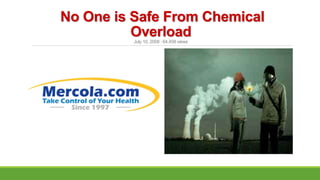
No One is Safe From Chemical
OverloadJuly 10, 2008 | 64,458 views
Even the Conscientious Environmentalist
When Viviane Maraghi took blood tests to find
out how many chemical pollutants were in her
body, she expected the number to be low. An
environmentalist, she carefully monitored
what she ate and the household products and
items she purchased.
Nevertheless, lead, arsenic, mercury, PCBs,
flame retardants, and an array of other chemicals linked to cancer, birth defects and
neurological diseases were all well represented in her bloodstream. She tested positive
for 36 of 68 potentially toxic chemicals, many of which never actually leave the body,
but instead continue to accumulate over time in tissues such as fat or bone.
Even the Conscientious Environmentalist
Dangerous chemicals are in the air you breathe, the water you drink, the food you eat
and the products you use. Over the last 50 years, from 70,000 to 100,000 different
chemicals have been introduced into the world‘s markets with about 1,500 new ones
added each year. Only now are governments beginning to examine the dangers posed
to human health and world ecosystems.
Many western governments are finally initiating new chemical controls as part of the
2006 Strategic Approach to International Chemical Management agreement. Leading
the way is the European Union, with a new program called REACH (Regulation on
Registration, Evaluation, Authorization and Restriction of Chemicals) that requires
industry to prove the safety of their chemicals and consumer products before they reach
the market.
Even the Conscientious Environmentalist
Dr. Mercola's
Comments:
The sheer number of toxic chemicals that you are exposed to on a daily basis is truly
staggering. With some 100,000 different chemicals being used throughout the world,
and 1,500 or so more being added each year – all without any major oversight or testing
for safety until after the fact – is it any wonder that you’re not as healthy as you should
be?
The number of toxic chemicals is so large, addressing them all would be an impossible
mission, but I believe being an informed and vigilant consumer CAN help you keep your
toxic load as low as possible, even if it may be impossible to cut your exposure to zero.
Even the Conscientious Environmentalist
After all, they’re everywhere; in your air, water, soil, food supply, and in a vast majority
of the personal care, household and yard products you use on a regular basis. Today,
they’re even in the circuitry boards of the electronics you surround yourself with. Some
of the sources of toxins you have control over. Others, you don’t.
Keep reading to find out tips on how to limit your exposure to some of the most common
of these health hazards.
The Unsuspected Price Tag of Convenience and
Beauty
Next, there are all those products you use in daily life. From your personal care
products, to household cleaning agents, to plastic food containers and baby bottles…
Many of them contain ingredients that are known to be toxic or cancer-causing.
For more information about which ones you’ll definitely want to avoid, please review the
articles listed under Related Articles below, as I’ve written quite extensively on these
issues before.
The Unsuspected Price Tag of Convenience and Beauty
Something you may not have seen or heard before, however, is this list of the Top
Cancer-Causing Products in the average home, as compiled by the National Cancer
Prevention Coalition, which includes:
 Johnson & Johnson Baby Powder with talc
 Crest Tartar Control toothpaste
 VO5 Hair Conditioner
 Clairol Nice-n-Easy Hair Color
 Cover Girl Replenishing Natural Finish Make Up
 Ajax cleanser
 Lysol disinfectant
 Zud Heavy Duty Cleanser
The Unsuspected Price Tag of Convenience and Beauty
I believe that putting something on your skin can be even
more dangerous to your health than ingesting it directly.
That is why it is important that you decide to create your
own personal care line of products that are 100% Organic &
Natural. Have your own best, most pure skin care product
lines. It should truly be effective and has absolutely no
synthetic ingredients.
Is There Hope?
Is There Hope?
I realize this can get quite overwhelming, but as I stated earlier, I believe you CAN limit
your exposure, and hence your risk of suffering any debilitating effects.
So, instead of feeling overtaken by the enormity and the pervasiveness of the problem,
please focus on the things that you can control right now. That would include
switching to non-toxic and natural alternatives for things that you use on your body, in
your home and around your yard, to start.
Like Viviane Maraghi stated in this article, if her and her son’s test results revealed
toxins in their bloodstream despite the fact that they eat mostly organic and are careful
about the household products they buy, just imagine what your toxic load might be if
you pay no attention at all!
[+] Sources and References
 The Gazette June 20, 2008

Cosmetics Pollution

  • 1.
    Indoor Pollution THAT ISWHY WE MUST MOVE ON TO CLEAN ENERGY SUCH AS SOLAR POWER & DEUTERIUM! Agape Foundation (Agasoft) January, 2015
  • 2.
    No One isSafe From Chemical OverloadJuly 10, 2008 | 64,458 views
  • 3.
    Even the ConscientiousEnvironmentalist When Viviane Maraghi took blood tests to find out how many chemical pollutants were in her body, she expected the number to be low. An environmentalist, she carefully monitored what she ate and the household products and items she purchased. Nevertheless, lead, arsenic, mercury, PCBs, flame retardants, and an array of other chemicals linked to cancer, birth defects and neurological diseases were all well represented in her bloodstream. She tested positive for 36 of 68 potentially toxic chemicals, many of which never actually leave the body, but instead continue to accumulate over time in tissues such as fat or bone.
  • 4.
    Even the ConscientiousEnvironmentalist Dangerous chemicals are in the air you breathe, the water you drink, the food you eat and the products you use. Over the last 50 years, from 70,000 to 100,000 different chemicals have been introduced into the world‘s markets with about 1,500 new ones added each year. Only now are governments beginning to examine the dangers posed to human health and world ecosystems. Many western governments are finally initiating new chemical controls as part of the 2006 Strategic Approach to International Chemical Management agreement. Leading the way is the European Union, with a new program called REACH (Regulation on Registration, Evaluation, Authorization and Restriction of Chemicals) that requires industry to prove the safety of their chemicals and consumer products before they reach the market.
  • 5.
    Even the ConscientiousEnvironmentalist Dr. Mercola's Comments: The sheer number of toxic chemicals that you are exposed to on a daily basis is truly staggering. With some 100,000 different chemicals being used throughout the world, and 1,500 or so more being added each year – all without any major oversight or testing for safety until after the fact – is it any wonder that you’re not as healthy as you should be? The number of toxic chemicals is so large, addressing them all would be an impossible mission, but I believe being an informed and vigilant consumer CAN help you keep your toxic load as low as possible, even if it may be impossible to cut your exposure to zero.
  • 6.
    Even the ConscientiousEnvironmentalist After all, they’re everywhere; in your air, water, soil, food supply, and in a vast majority of the personal care, household and yard products you use on a regular basis. Today, they’re even in the circuitry boards of the electronics you surround yourself with. Some of the sources of toxins you have control over. Others, you don’t. Keep reading to find out tips on how to limit your exposure to some of the most common of these health hazards.
  • 7.
    The Unsuspected PriceTag of Convenience and Beauty Next, there are all those products you use in daily life. From your personal care products, to household cleaning agents, to plastic food containers and baby bottles… Many of them contain ingredients that are known to be toxic or cancer-causing. For more information about which ones you’ll definitely want to avoid, please review the articles listed under Related Articles below, as I’ve written quite extensively on these issues before.
  • 8.
    The Unsuspected PriceTag of Convenience and Beauty Something you may not have seen or heard before, however, is this list of the Top Cancer-Causing Products in the average home, as compiled by the National Cancer Prevention Coalition, which includes:  Johnson & Johnson Baby Powder with talc  Crest Tartar Control toothpaste  VO5 Hair Conditioner  Clairol Nice-n-Easy Hair Color  Cover Girl Replenishing Natural Finish Make Up  Ajax cleanser  Lysol disinfectant  Zud Heavy Duty Cleanser
  • 9.
    The Unsuspected PriceTag of Convenience and Beauty I believe that putting something on your skin can be even more dangerous to your health than ingesting it directly. That is why it is important that you decide to create your own personal care line of products that are 100% Organic & Natural. Have your own best, most pure skin care product lines. It should truly be effective and has absolutely no synthetic ingredients.
  • 10.
    Is There Hope? IsThere Hope? I realize this can get quite overwhelming, but as I stated earlier, I believe you CAN limit your exposure, and hence your risk of suffering any debilitating effects. So, instead of feeling overtaken by the enormity and the pervasiveness of the problem, please focus on the things that you can control right now. That would include switching to non-toxic and natural alternatives for things that you use on your body, in your home and around your yard, to start. Like Viviane Maraghi stated in this article, if her and her son’s test results revealed toxins in their bloodstream despite the fact that they eat mostly organic and are careful about the household products they buy, just imagine what your toxic load might be if you pay no attention at all! [+] Sources and References  The Gazette June 20, 2008