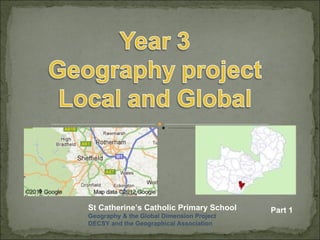
St Catherine’s Catholic Primary School     Part 1
Geography & the Global Dimension Project
DECSY and the Geographical Association
Before we started the topic, we really wanted to get the
 children excited about learning about a new country.

To coincide with the arrival of our Zambian visitors
 from the Niza Trust partner school, we showed the
 children some snap shots of our visit to Zambia in
 May 2011.

On the following slides, are a selection of photographs
 and videos that were shared with the children.
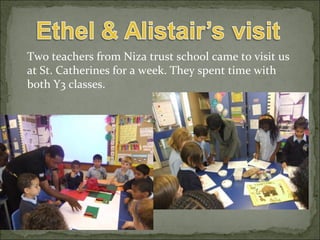
Two teachers from Niza trust school came to visit us
at St. Catherines for a week. They spent time with
both Y3 classes.
“There are lots of                                 “I think Africa
   creatures in                                     is very, very
 Africa” - Sandali                                 hot”- Ofofon.
                           “You have to walk
                            a long way to get
                            water and food”-
                                  Juno.                “It would be very
                                                      dusty and sandy on
                                                          the roads” –
 “I’d love to try                                           Khaliq”.
lots of the fruit
 there”- Khaliq
                                                  “It would be hot
                                                because the animals
                     “They only                      like the hot
                    have a little                 weather”- Hope.
                    rain”- Leojo
* The yellow star indicates the
areas that we intend to make
more of a focus next year.
Please see next slide with whole school key skills grid...
Identify questions to answer and problems to solve.
 Show empathy.


Debate issues of concern.
Recognise their roles and responsibilities as Global Citizens.


Collaborate with others


Communicate their learning in relevant ways for different
audiences
 WALT: identify features within our local environment
 Show the class a map of the Burngreave area.
 Explain that we are going on a local walk to investigate
    what we have in our local area and will be creating our
    own maps.
   Show the key and the route that we were going to follow.
   Modelled adding the key to a map displayed on flipchart.
   Children in pairs completed maps during local walk and
    took photographs of the different amenities.
   Back at school children used keys on their own maps to
    create a large joint visual map with the photos taken .
We picked children to
                                          work in pairs using the
                                          Hat. This was so that we
                                          had a range
                                          of abilities working
                                          together.


We talked to the children about what
they might see as we walked around
their local area. This was a short TTYP
activity.
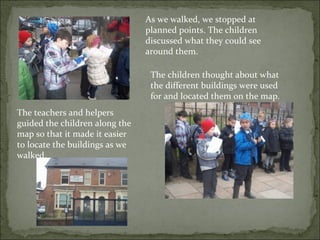
As we walked, we stopped at
                                planned points. The children
                                discussed what they could see
                                around them.

                                 The children thought about what
                                 the different buildings were used
                                 for and located them on the map.
The teachers and helpers
guided the children along the
map so that it made it easier
to locate the buildings as we
walked.
After the walk, we talked about the different places we had seen
on the walk. We had a go at locating on the map we had used
whilst on the walk.
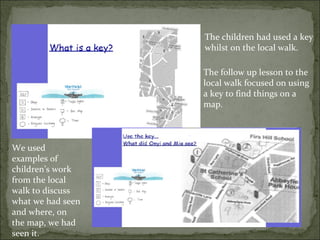
The children had used a key
                   whilst on the local walk.

                   The follow up lesson to the
                   local walk focused on using
                   a key to find things on a
                   map.


We used
examples of
children’s work
from the local
walk to discuss
what we had seen
and where, on
the map, we had
seen it.
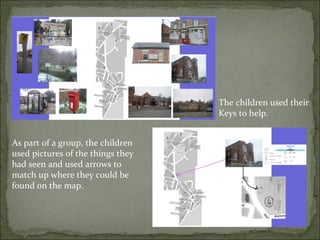
The children used their
                                   Keys to help.


As part of a group, the children
used pictures of the things they
had seen and used arrows to
match up where they could be
found on the map.
The children then had their own map to complete. They
drew a picture of the building they had seen at different
stopping points on the map.

Year 3 Geography: Local & Global

  • 1.
    St Catherine’s CatholicPrimary School Part 1 Geography & the Global Dimension Project DECSY and the Geographical Association
  • 2.
    Before we startedthe topic, we really wanted to get the children excited about learning about a new country. To coincide with the arrival of our Zambian visitors from the Niza Trust partner school, we showed the children some snap shots of our visit to Zambia in May 2011. On the following slides, are a selection of photographs and videos that were shared with the children.
  • 4.
    Two teachers fromNiza trust school came to visit us at St. Catherines for a week. They spent time with both Y3 classes.
  • 11.
    “There are lotsof “I think Africa creatures in is very, very Africa” - Sandali hot”- Ofofon. “You have to walk a long way to get water and food”- Juno. “It would be very dusty and sandy on the roads” – “I’d love to try Khaliq”. lots of the fruit there”- Khaliq “It would be hot because the animals “They only like the hot have a little weather”- Hope. rain”- Leojo
  • 12.
    * The yellowstar indicates the areas that we intend to make more of a focus next year.
  • 13.
    Please see nextslide with whole school key skills grid...
  • 14.
    Identify questions toanswer and problems to solve. Show empathy. Debate issues of concern. Recognise their roles and responsibilities as Global Citizens. Collaborate with others Communicate their learning in relevant ways for different audiences
  • 15.
     WALT: identifyfeatures within our local environment  Show the class a map of the Burngreave area.  Explain that we are going on a local walk to investigate what we have in our local area and will be creating our own maps.  Show the key and the route that we were going to follow.  Modelled adding the key to a map displayed on flipchart.  Children in pairs completed maps during local walk and took photographs of the different amenities.  Back at school children used keys on their own maps to create a large joint visual map with the photos taken .
  • 16.
    We picked childrento work in pairs using the Hat. This was so that we had a range of abilities working together. We talked to the children about what they might see as we walked around their local area. This was a short TTYP activity.
  • 17.
    As we walked,we stopped at planned points. The children discussed what they could see around them. The children thought about what the different buildings were used for and located them on the map. The teachers and helpers guided the children along the map so that it made it easier to locate the buildings as we walked.
  • 18.
    After the walk,we talked about the different places we had seen on the walk. We had a go at locating on the map we had used whilst on the walk.
  • 19.
    The children hadused a key whilst on the local walk. The follow up lesson to the local walk focused on using a key to find things on a map. We used examples of children’s work from the local walk to discuss what we had seen and where, on the map, we had seen it.
  • 20.
    The children usedtheir Keys to help. As part of a group, the children used pictures of the things they had seen and used arrows to match up where they could be found on the map.
  • 21.
    The children thenhad their own map to complete. They drew a picture of the building they had seen at different stopping points on the map.