Download as PDF, PPTX

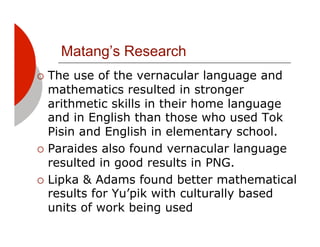
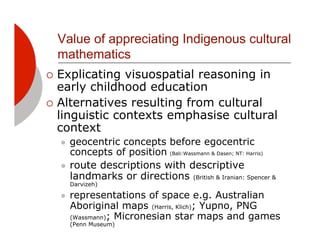
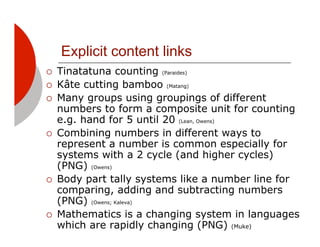
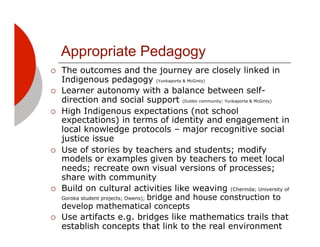
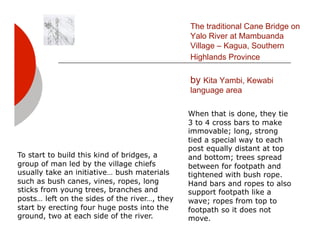
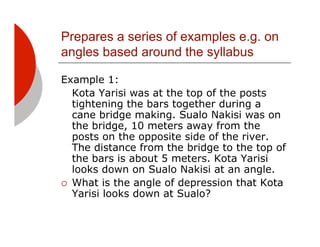
![Constructing Telefol
Traditional Door
Board” (AMITUNG)
Telefomin, Sandaun Province
by Clement Oggi
three different traditional
colours to paint the
designs that have been
carved: maroon called
‘Baagaan’, white called
‘Buuguung’ and black
The height and the width are colour from carbon called
‘Amsiring’.
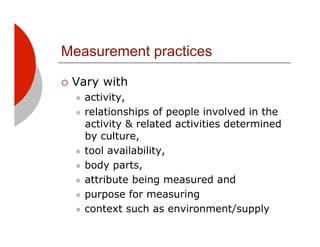
measured using bush ropes. A bush
rope is used to measure around the To make the paint shiny
and bright some grease
waist of the fattest man in the
pig [liquid pig fat] is
village … is used again to measure mixed according to the
the doorway of the door board. The correct proportion with
circle is drawn on the wood for easy the three traditional
carving. Then designs are carved colours.](https://image.slidesharecdn.com/icem4policy-100729133718-phpapp02/85/Policy-and-Practices-Indigenous-Voices-in-Education-19-320.jpg)

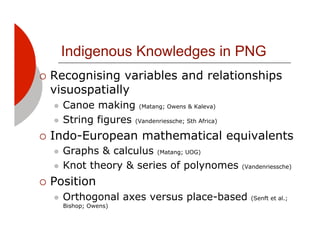
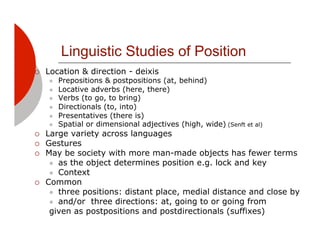
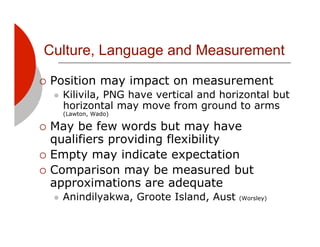
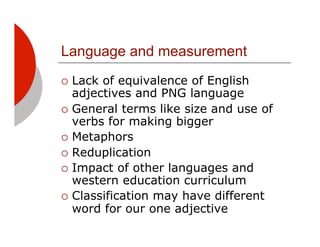
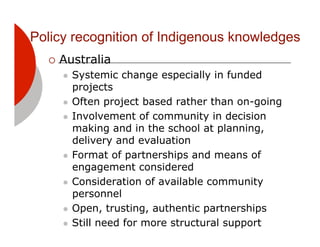
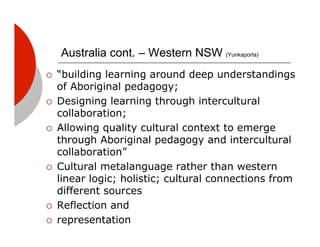
This document discusses indigenous knowledges in Papua New Guinea related to positioning, measurement, and mathematics. It provides examples of indigenous practices for canoe making, string figures, graphs and calculus that demonstrate visuospatial reasoning and parallels to western mathematics. The document also discusses how indigenous languages conceptualize location, direction, and measurement differently than English. It advocates for recognizing and incorporating indigenous knowledges and practices into education through place-based learning, community partnerships, and modifying content and pedagogy to be culturally relevant.


