sag
e to Teachers :
a mes acher
te
the
There are many different ways of teaching
English. Some courses are taught through
grammar; others through topics, a third kind is taught through language
functions. In courses which are based on topics or functions, grammar
is used as required.
In this course students use English to communicate from day one.
The course is based upon language functions in which grammar is
carefully controlled. Students see sentences in diagrams and tables where
they are introduced to parts of speech.
Unlike other courses, this course provides enough time to students
to master and acquire lexicon and structures taught.
The skills of listening, speaking, reading and writing are developed
gradually. Don’t expect your students to acquire these skills from the
first time. Moreover, revision and recycling are integrated into the course
to facilitate learning.
There are twenty units. Each unit is divided into four forty-five-
minute lessons. Four weeks of the course are set aside for revision.
Plan of Student’sBook
Unit Topics Functions Grammar Listening Phonics Reading / Writing
Talking about clothes. Affirmative statements in the Listening to people buying Reading description of
Buying and selling things. present continous tense. clothes. people clothes. (Reading
9 My Clothes Asking about lost items. Negative statements in the / / short o. for gist).
Finding the owner of an present continous tense. Writing sentences about
item. Wh-questions (what) pictures (statements and
Possesive pronouns questions).
Questions with how: Listening to a description of a Reading true story
How + adjectives. missing boy. ( Inferring facts )
Asking for and giving How + adverbs of Short u. Writing sentences.
personal information. frequency and their
10 My Body describing people’s responses.
appearances. Have got for giving
Talking about ailments. physical description
(affirmative and negative
statements).
Asking about prices & How many - How much. Listening to people talk about Reading about traditional
quantities. buying things. souqs & malls.
11 Shopping Long a:/ei/ ( reading actively )
Writing a paragraph about
a shopping centre.
12 Review 9 to 11
13.
Unit Topics Functions Grammar Listening Phonics Reading / Writing
Asking about and describing Reading a paragraph about
daily routines. Prepositions of time. Listening to conversation about the importance of time.
13 Day by Day Asking for & telling the time. Time expressions. daily routines. ( main idea )
In the morning, afternoon, Listening for time. Writing a paragraph.
evening. Matching sentences to
Long e: /i/ pictures.
Talking about food likes
and dislikes. Countable / uncountable Listening for items on a shopping Reading about different food
Talking about food items nouns. list. groups. (scanning for
14 Food you need. Some / any. details)
Describing eating habits. Frequency adverbs (often, Writing a paragraph about
(Talking about Frequency). usually, sometimes, always Long i/ai/ eating habits.
& never).
Listening for countries, nationalities, Reading about the weather
Asking and giving capitals and languages. in Africa. (main idea)
information about countries Where Questions.
15 Countries Listening for months & seasons in Writing a descriptive
and nationalities. different countries. paragraph about the weather
Talking about wheather. Long o/ / in you country.
16 Review 13 to 15
14.
Content
Units Topic Page number
9 My Clothes 1
10 My Body 12
11 Shopping 23
12 Review 33
13 Day by Day 42
14 Food 52
15 Countries 62
16 Review 73
15.
Unit 9
My Clothes
In this unit, you are going to :
G name different clothes.
G describe clothes.
G say the colours.
G ask and say how much things cost.
G write sentences.
1
16.
9
Unit Lesson 1
My clothes
jacket
blouse
dress shirt
pyjamas
headscarf
trousers
skirt
socks
belt
shoes
- What do you wear at home? At school?
sell
Conversation buy
wear
A. Listen and practice. choose
carry
Naif : I like the shoes you’re wearing.
They’re really cool.
Saeed : There are, aren’t they? And they’re so comfortable.
Naif : I love the colour as well. It goes well with your jacket.
It seems you like black.
Saeed : Yes, it’s my favourite colours.
Naif : They look expensive. How much did you
pay for them?
Saeed : Not much, they were on sale.
2
17.
My Clothes 1
Grammar
Present Continuous / Affirmative/ Negative
I’m wearing a blue jacket today. I’m not wearing a dress today.
She is carrying a briefcase. She isn’t carrying a bag.
They are buying a scarf now. They aren’t buying a skirt.
A. What are these people doing? Complete the sentences.
1. 2. 3. 4. 5.
1. He _____________ shoes. 4. Salma ____________ her blouse.
2. Ahmad ___________ T- shirts. 5. The girls ___________ headscarves.
3. They ____________ bags.
In pairs :
B. Tell your partner what each member of your family may be doing now.
Describe what they might be wearing.
Vocabulary
grey
green
A. Listen and practice. red
yellow pink
white
black
blue
B. Look at the picture. Complete the sentences.
Fatima is wearing a blue skirt, a white ______________
and a ______________ headscarf. Her ______________
are black and her bag is ______________.
C. In pairs : Ask your partner to draw a stick figure wearing the clothes you like.
3
18.
9 Lesson 2
Unit
Vocabulary cheap
old long
A. What is it like?
It’s big.
short small
expensive new
R
0S
50
.
B. Match the opposites.
1. big. 2. expensive. 3. old. 4. long.
short new cheap small
Conversation
A. Listen and practice.
Customer : Excuse me. Do you have this belt in black?
Salesman : Yes. What size do you wear?
Customer : I’m not sure. I think I’m a medium.
Salesman : Let’s see… a size 36 black belt. Here you are.
Customer : Thanks. How much is it?
Salesman : It’s for sixty riyals.
Customer : Here you are.
B. Do you buy more clothes than you need?
C. In pairs : Practice the conversation using different items and your size.
4
19.
My Clothes 2
Grammar
Wh- Questions for
description.
What is it like? It’s beautiful.
What size is it ? It’s medium.
What colour are they? They are black.
How much are they? They are 150 riyals.
A. Write questions for these answers.
1. _______________________________ 1. My new skirt and blouse are big.
2. _______________________________ 2. They are 200 riyals.
3. _______________________________ 3. They are sixe 38.
4. _______________________________ 4. It is white.
B. In pairs : Practice buying and selling different items of clothes.
Reading
Find the picture for each paragraph.
A. My brother is at work. He B. My favourite colour is C. My father is going to
is wearing a white thobe pink. I am going to my London , he looks so
and black shoes. aunt’s house for a party. different. He’s wearing a
He wears sun glasses and I’m wearing a pink skirt brown suit, brown shoes
carries a brown briefcase. and blouse. I’m looking and a hat. He is carrying
for my pink shoes and his favourite black
bag but I can’t find them. briefcase.
I think I’ll have to wear my
white sandals instead.
5
20.
9 Lesson 3
Unit
Conversation
.
A. Listen and practice.
Mother :
Is this your shirt, Majid?
Majid :
It’s Khalid’s. Mine is blue.
Mother :
Whose belt is this? It’s too big to be yours.
Majid :
It’s Nasser’s. He always leaves his things
in my room.
Mother : And whose pink shoes are these?
Majid : They’re Noura’s.
Mother : You children must learn to be tidy.
B. Are you a tidy person?
Grammar
Questions with whose Possessive Adjectives Possessive Pronouns
It is my uniform. The uniform is mine.
It is your shirt. The shirt is yours.
Whose ------------------- is this?
It’s his jacket. The jacket is his.
It’s her scarf. The scarf is hers.
They are our blouses. The blouses are ours.
Whose ----------------- are these?
They are their bags. The bags are theirs.
A. Complete these sentences using a suitable possessive pronoun.
1. I’m wearing my new gloves. They are ____________________.
2. She is shortening her old dress. It is _______________________.
3. He is giving his expensive trousers to his brother. They are __________________.
4. They are washing their scarves. They are __________________.
5. You are carrying a nice bag. Is it __________________ ?
B. In groups :
Each student puts a personal object in a bag. One student shows an object and
asks “ Whose --- is this?”. The students reply : “ It’s mine / hers.“Or” “ It’s --- ’s.”.
6
21.
My Clothes 3
Listening
Listen to three people buying clothes. Number the pictures.
Writing
Write five sentences about clothes you like to wear.
______________________________________________________________
______________________________________________________________
______________________________________________________________
______________________________________________________________
______________________________________________________________
______________________________________________________________
7
22.
9 Lesson 4
Unit
Phonics
Short ‘O’ sound
Rule
If a word has only one
Short ‘o’ sounds like the first sound in ox
vowel, the vowel sound is
usually short.
A. Circle where you hear the short ‘o’ sound.
o o o o o o o o o o o o o o o
B. Tick ( ✔ ) the picture that has the short o sound.
C. Circle the word you hear.
1. fog 2. oak 3. tax 4. luck
fig shock fox rock
flag block fax knock
8
23.
My Clothes 4
Grammar Summary
Wh- Questions with verb ‘Be’
is it?
What colour
are they?
is it?
What like?
are they?
is it?
How much
are they?
Present Continuous: Affirmative & Negative
I am
He / She is
We (not) buying clothes.
You are
They
It is eating my hat.
Subject Pronouns Possessive Adjectives Possessive Pronouns
I My Mine
You Your Yours
He His His
she Her Hers
It Its
We Our Ours
They Their Theirs
Describe what the children in the picture are wearing.
Azhar Basim
1. Azhar is wearing a green blouse.
2. ________________________________________
3. ________________________________________
4. ________________________________________
5. ________________________________________ Zahi
Radi
9
24.
My Clothes 4
Listening
You will hear people describing things they have bought. Circle a, b, or c to identify
the item each person has bought.
b b
1. 2.
c a
a
c
a
3. a 4.
b
b
c c
Speaking
In pairs : Take turns.
Students A chooses an item from a display window on page ( 81 ).
Students B guesses the item by asking about its colour , size and price.
Students A : I want to buy ___________________ .
Students B : What colour is it ?
Students A : It’s ___________________________ .
Students B : What size is it ?
Students A : It’s ___________________________ .
Students B : How much is it ?
Students A : It’s ___________________________ .
Students B : You want to buy_________________ .
10
25.
My Clothes 4
Reading
In pairs : Read these advertisements of lost items. Match each description with
a picture.
Lost in front of the A brand-new
City Mall a brown digital video
On 21st of December 2001, leather handbag. camera was left in
a black sports watch was lost Please call 05558842
a taxi on the
in the girls school.
Please contact 05563522 morning of August
Lost an expensive
cellular phone with
the first. Camera
pink case on has important films
Thursday afternoon in it. If found kindly
(6.12.2001) next to phone 05492112
Central Bank.
Call 05329412
Ladies
sunglasses with grey
frames were lost on
the 3rd of August in
or near the
Children’s hospital.
Please call 05348972
1
4 2 9
3 8
5 6
7
11
26.
Unit 10
My Body
In this unit, you are going to :
name some body parts.
describe people.
say what the matter with people is.
write sentences.
12
27.
10 Lesson 1
Unit
My Body
hair
head
ear
nose eye
face mouth
neck
shoulder tooth / teeth
arm stomach
hand leg
knee toes
What colour are your eyes?
What colour is your hair?
Which hand do you use more?
tall
height
Speaking
weight
exercise
In pairs : Describe and draw.
centimetres
1. Student A : Cover picture 1
metres
Student B : Cover picture 2 kilos
2. Student A : Describe picture 2
Student B : Draw.
3. Change roles. Compare drawings.
1 2
e.g. Student A : “It has a big head, four __________________________”
13
28.
My Body 1
Conversation
A. Listen and practice.
Sa’ad : Mahir, how tall are you and
how much do you weigh?
Mahir : Why?
Sa’ad : I want to check with this table.
It shows the right weight for
your height.
Mahir : I’m 150 centimetres and
I weigh 60 kilos.
Sa’ad : Let me see. You’re ten
kilos overweight.
Mahir : May be I need to exercise.
B. Look at the table on page 82. Check your height
and weight.
Is it important to eat healthy food? Why?
Grammar
Questions with How
How tall are you ? I’m 1 metre 35.
How tall is she ? She’s 140 centimetres.
How much do you weight? I’m 45 kilos.
How much does she weight? She’s 40 kilos.
A. Match the questions to the answers.
1. How old are you? He’s 45 kilos.
2. How tall is your sister? I’m twelve.
3. How much does your brother weigh? She is one metre 30.
B. In groups : Find the height and weight of members of your group.
How many have the ideal weight.
14
29.
10
Unit Lesson 2
Conversation
A. Listen and practice.
Sameer : Can you give this bag to my brother, please?
Shaker : Sure. What does he look like?
Sameer : He looks a lot like me, but he’s got curly
brown hair. He’s tall, fair and thin. Oh, and
he’s got a moustache.
Shaker : So he hasn’t got straight hair like
yours and he isn’t short; and you say he
looks a lot like you!!
B. Do you look like any of your family members?
Vocabulary
Word Bank
fat thin beard
curly
dark
young old fat
short tall
fair
has got
moustache
straight
thin
young
A. Look at the box. For each adjective, write its opposite.
short =
fat =
tall =
young =
thin =
B. In groups : Describe a person in your class without saying his / her name. Have
your group members guess who you are talking about.
You : “She’s got short hair and brown eyes. She has got a fair skin. She is tall.”
Group : Is it “ Ruqaiya ? ”
15
30.
My Body 2
Grammar
Question for describing people
He’s tall and thin.
What does he look like? He has got brown eyes.
He hasn’t got black eyes.
A. Complete the descriptions. Number each picture.
1. Adnan is tall.
He _______________ hair. He _______________ black eyes.
He _______________ a beard.
( not have )
2. Omar is short and thin.
He has got ___________ hair.
He has got ___________ moustache.
He ___________________ beard.
3. Wafa is tall and thin.
She has got ____________ skin.
She ___________________ blue eyes.
( not have )
4. Jane is fat and short.
She ___________________ hair
She ___________________ blue eyes.
B. In pairs : Describe your brother / sister.
16
31.
My Body 2
Reading
Shadi is a new student. Most of the boys at school call him Shadi but some call him
Rida.
Shadi finds this strange so he asks a friend, “Why do they call me Rida?”. That’s
because they think you’re Rida who used to be a student here. You have the same
nose and eyes, and even the same curly brown hair. Rida now lives in Kuwait.”
Shadi gets Rida’s address and sends him an e-mail. Rida writes back and sends his
picture. Shadi finds that Rida does not only look like him, but he also has the same
family name, birth date and the same parent’s name. Shadi discovers that Rida is his
twin brother. They were adopted when their parents died in a car accident after they
were born.
Read the statements and mark True (T) or False (F). Underline the place in the story
where you find the information.
1. Some boys do not know that Rida is not at school. ( )
2. Shadi does not understand why the boys call him Rida. ( )
3. Shadi and Rida look like each other. ( )
4. Shadi and Rida are not brothers. ( )
17
32.
10
Unit Lesson 3
Vocabulary
A. What’s the matter ?
matter
feel
better
Sore throat well
Headache
ill
Toothache illness
Earache hurts
Backache
Flu
Cold
Fever
B. Find out who is not at school today. What is the matter with him / her?
1. Huda / a headache
2.
3.
4.
Conversation
A. Listen and practice.
Khalid : Where’s your brother today?
Waleed : He’s not feeling very well.
Khalid : Really ? What’s the matter?
Waleed : He’s got a headache.
Khalid : Oh, that’s too bad. Tell him to take a pain killer.
He’ll feel better soon.
Waleed : I don’t know. He’s got a sore throat and a backache, too.
Khalid : Maybe he’s got the flu. He’d better see a doctor.
B. Do you take medicines without going to the doctor?
18
33.
My Body 3
Grammar
Have got + noun Advice
I have got a headache. Take some aspirin.
I have got a sore throat. Go to the doctor.
What’s the matter? He has got a backache. Stay in bed.
A. Make a sentence about the problem in each picture and give advice.
Then compare with a partner.
B. In pairs : Play picture charade. Take turns acting out the illness on your card and
guessing it.
Listening
• Listen to people talking about health problems.
• What’s wrong with them?
• Write the names of the body parts where they have a problem.
Name Health problem Body part
a. __________________ ____________________ ____________________
b. __________________ ____________________ ____________________
c. __________________ ____________________ ____________________
d. __________________ ____________________ ____________________
Writing
Choose an illness. In your work book, write three to five sentences about it.
Describe what happens to your body. What do you do?
19
34.
10 Lesson 4
Unit
Phonics
Short ‘U’ sound
Rule
If a word has only one
Short ‘u’ sounds like the first sound in up.
vowel, the vowel sound is
usually short.
A. Circle where you hear the short ‘u’ sound.
U U U U U U U U U U U U
U U U U U U U U U U U U
B. Listen and circle the word you hear in each row.
1. cup 2. bird 3. tab 4. rug
cow button tape rat
car ball tub race
C. Write the vowel sound you hear under each picture.
1. 2. 3. 4. 5. 6.
___________ ___________ ___________ ___________ ___________ ___________
20
35.
My Body 4
Grammar Summary
Questions with How
do they
much weigh?
does she
How tall is Waleed?
old are the students?
Have got + noun Advice
I
Take some aspirin.
You
What’s the matter? have Don’t drink cold water.
We a headache.
They Stay in bed.
got a cough.
He the flu.
has
She
Questions for describing people
He / she is tall.
does he / she
They / you / We are thin.
What look like?
He / she has curly hair.
do they / you got
They / you / We have blue eyes.
Choose the correct word.
1. My sister, Samia, doesn’t look like me.
She ( has got - have got ) curly brown hair.
2. I ( has got - have got ) straight, black hair.
3. Her eyes ( is - are ) grey. Mine ( is - are ) black.
4. She is ( tall - heavy ) for her age. She ( is - are ) 160 cm. tall.
5. I look like my father, but she ( doesn’t - don’t ).
21
36.
My Body 4
Listening
A. The police is looking for a missing boy.
Look at the table. Circle the description you hear.
Eye Hair
Height Weight Clothes
colour colour
166 cm. 60 kilos blue black trousers & shirt
154 cm. 50 kilos brown red thobe
130 cm. 40 kilos green brown uniform
B. Look at the pictures. Who is the missing boy ? a. b. c.
Speaking
You and your partner are detectives in a busy shopping centre. You have just seen
two people, shoplifting on the closed circuit TV. Describe them so that your partner
can catch them. Then, listen to your partner’s description of two more people.
22
37.
Unit 11
Shopping
In this unit, you are going to :
name different shops.
ask for and give directions.
read about shopping places.
Write a paragraph.
23
38.
11 Lesson 1
Unit
Shopping
- Why do people go to shopping centres (malls )?
- Name the different shops in the picture? cost
- How many escalators / elevators are there? escalator
elevator
few
mall
Conversation
need
A. Listen and practice.
Salesman : Can I help you?
Boy : Yes, I want to buy a few black pens, please.
Salesman : How many do you need?
Boy : Five, please. How much does each cost?
Salesman : Three riyals each.
Boy : Oh, I’m not sure if I have enough money.
Salesman : How much money do you have?
Boy : I only have fourteen riyals.
Salesman : No problem. You can give me a riyal later. Here you are.
Boy : No, thanks. I’ll just take four.
B. Where are these people? Do you think it’s a good idea to owe money to sales people?
24
39.
Shopping 1
Grammar
How many / How much?
How many pens do you need? I need five pens.
How much money do you have? I have fourteen riyals.
How much does it cost? It costs three riyals.
How much is it? It’s three riyals.
A. Put the words in the box below under the correct column.
juice - shampoo - flowers - milk - pens - toes - boys
water - teeth - cream - trousers - time - shirts - money
How much How many
________________ ________________
________________ ________________
________________ ________________
________________ ________________
________________ ________________
________________ ________________
________________ ________________
B. In pairs : Ask questions about different items, using ‘How much’ and ‘How many’.
How much is
It’s …
your watch ?
How many books
I have …
do you have?
25
40.
11 Lesson 2
Unit
Vocabulary
flower shop bookstore dress shop
supermarket pharmacy furniture shop
- Where can you buy these things? Complete the table.
a. sofas
b. a jacket
c. flowers
d. vitamins
Listening
Listen and write who’s going to buy these items.
How many are they going to buy? Where are they?
Item Name How many Where
Vase
Cough medicine
Milk
26
41.
Shopping 2
Reading
A. Read the paragraphs then correct the wrong statements.
The Souq The Shopping Malls
In olden times, one of the most famous The Country Club Plaza in Kansas City,
places to meet with friends and listen to
USA is the first shopping mall in the world.
poetry was “Souq Okaz”. Today,
A shopping mall is a one-stop shopping
a traditional marketplace is also called
“Souq” in Saudi Arabia. In these souqs centre. There are many different kinds of
there are many small shops in an open area. stores in it. It can also have banks,
You can go from one shop to another on restaurants, and
foot. The shopkeepers are very talkative other services.
and make shopping fun. Bargaining over You can spend a
the price is lot of time in the
a must at the mall, but be careful
souq. If you not to waste your
do not bargain,
time or buy things
you will buy
you do not need!
things for a
higher price.
¿ At the shops in the ‘souq’, prices do not change.
¿ In the past, people liked going to ‘Souq Okaz’.
¿ People can buy everything at a shopping mall.
¿ Country Club Plaza, in Kansas City, is the first shopping mall.
B. Where do you prefer to shop; in malls or souqs?
27
42.
11 Lesson 3
Unit
Vocabulary
A. Write where you can find these items.
magazines jacket toothpaste
flowers
books
Newspaper
belt
milk plants
Book shop Pharmacy Supermarket Flower shop Dress shop
B. In groups : Compare your answers.
- Which shop do you go to more often?
Speaking
A. Give a price for each item.
B. In pairs : Take turns to ask about the prices of the items above.
How much is the What about the
It’s 75 riyals. ...................
perfume ? .................?
28
43.
Shopping 3
Writing
A. Write five more differences between Assalam and Al Bayader shopping centres.
1. There are two shoe shops in Assalam Shopping Centre.
2.
3.
4.
5.
6.
B. Choose one of the shopping centres above and write a paragraph to describe it.
Rules of forming a paragraph
1. Begin each sentence
with a capital letter.
2. End each sentence
with a full stop.
3. Do not start each
sentence on a new line.
29
44.
11 Lesson 4
Unit
Phonics
Long a sound
Long a sounds like the sound in cake , snail .
Rule Rule
When two vowels are together, the first A vowel usually has the long sound when
vowel usually has the long sound. The a consonant and e come after it. The e
second vowel is silent. You can hear the is silent. You can hear the long a sound
long a sound in hair and paid. in snake and tale.
A. Listen to the words. Circle the letters to show where you hear the long a sound.
a a a a a a a a a a a a
B. Listen then circle the word you hear in each row.
1. 2. 3. 4.
plane where dear map
plan wait door maid
pan white day more
C. Here is a story about Jane. In pairs, circle and say the words with the same vowel
sound as Jane.
Jane wanted to bake.
What should she make?
She would bake a cake.
She put it to bake.
Jane ate the cake,
then went to bed because it was late.
D. Write two words that rhyme with cake.
30
45.
Shopping 4
Grammar Summary
How many ... ? / How much ...
books
How many pens
need?
papers do you
want?
money does she
have?
tea
paper
How much
is the pen?
are these pens?
Make questions. ‘How much’ or ‘How many’.
1. A : __________________________________________________ ?
B : I want two shirts.
2. A : __________________________________________________ ?
B : They are sixty-four riyals.
3. A : __________________________________________________ ?
B : They are six riyals each.
4. A : __________________________________________________ ?
B : I need six, please.
Listening
Listen to Alia’a, Samah and Fatima. Write where they want to go. What are they going
to buy?
Name Where What
Samah
Fatima
Alia’a
31
46.
Shopping 4
Speaking
A.Student 1: Your parents are going to Syria. Go to Najd Boutique and buy some
clothes for them. What clothes would you buy for 500 riyals?
Student 2: You are the sales assistant at the boutique. Sell student 1 the clothes
he / she needs.
60
80
65
100 120 35
10 30
20
40 15
B. Student 1: What clothes did you buy ?
How much did you spend?
Reading
A. What would you do in these situations? Discuss your answers.
1. The shop assistant gives you too much change.
a. keep the money.
b. return the money.
2. While shopping, you see a little boy hide some candy in his pocket.
a. talk to the boy.
b. talk to the shop assistant.
3. While shopping, you break a vase.
a. pay the money.
b. don’t tell anybody about it.
4. The shop assistant gave you a pair of shoes in two different sizes.
a. return them angrily.
b. return them politely.
B. Did you ever go through a similar situation? Tell the class about it.
32
12 Lesson 1
Unit
Speaking
In pairs : Find out the names of the pupils in the classroom.
Conversation
Ahmad and Hossam are in the school playground. Hossam is feeling sick.
Complete the conversation.
Ahmad : __________________________________________?
Hossam : __________________________________________ .
Ahmad : Let’s go to the nurse’s clinic.
Nurse : What’s wrong?
Hossam : I feel sick. _______________________________, too.
Nurse : It seems like you’ve got cold. Take this pills.
You’ll feel better soon.
Hossam : Thanks.
Hand Writing
Write the sentence once.
There is no place like home.
34
49.
Lesson 1
Grammar
Choose one of the verbs in the box to complete each sentence. Use the right form of
the verb.
be - wear - carry - have
1. Yasser’s jeans are blue and his T-shirt __________ yellow.
2. Jude __________ jeans and a T-shirt today.
3. Muna __________ got a red coat and a scarf.
4. Sarah’s dress __________ old but her shoes __________ new.
5. Sami’s trousers __________ white but his shoes __________ grey.
6. Muna __________ a black and white bag.
7. __________ this a new jacket?
Reading
A. Read “My Body”
Today, we know more about our bodies and take greater care of them. Here are
some tips to help you look after your body.
• Have a good breakfast every day. • Don’t eat too many sweets.
• Eat fruit and vegetables. • Have milk and yoghurt.
• Sleep early every night. • Exercise three times a week.
• Brush and floss your teeth twice a day. • Drink lots of water.
B. Read the statements and mark with true ( T ) or false ( F ).
1. Sweets are good for your teeth.
2. Sleep for 6-8 hours.
3. Water helps your body.
4. Missing breakfast is bad for your health.
C. Think of two more tips, and discuss them with the class.
35
50.
12 Lesson 2
Unit
Language Functions
Choose the correct response.
1. What size is it? 2. I’ve got a headache.
a. It’s a medium. a. What’s the matter?
b. It’s 1 meter. b. I have a sore throat
c. It’s yellow. c. Take some aspirin.
3. Whose dress is this? 4. How much sugar do you take?
a. It’s beautiful. a. Two, please.
b. It’s mine. b. There are two.
c. It’s black. c. It’s two.
Writing
a. Look at the people in the picture, then work in groups to describe each person.
Al Anwar School
Mr. Khan
Wael
Mr. Quraishi
Mr. Mukhtar
b. Choose one of the people in the picture and write a paragraph, describing his
clothes and appearance.
36
51.
My Body 2
Speaking
In pairs:
Look at the cards on page 85. Ask questions and give advice for the complaints
using the pictures.
e.g.
Students A: What’s the matter?
Students B: I’ve got a backache.
Students A: Lie down and don’t lift anything heavy.
Vocabulary
Circle the correct words completion.
1. In winter, I wear a ______ to keep warm. 2. You hear with your _________
a. shirt. a. stomach.
b. jacket. b. shoulder.
c. blouse. c. ears.
3. We wear _____ to keep our heads warm. 4. Traffic lights are red, yellow and ______
a. belt. a. black.
b. skirt. b. green.
c. scarf c. blue.
5. The opposite of black is usually ______ 6. You kneel on your ________
a. red. a. legs.
b. grey. b. knees.
c. white. c. feet.
7. On a fine day, the sky is usually ______ 8. ________ cover your feet and are
a. grey. worn inside shoes.
b. blue. a. Socks.
c. white. b. Trousers.
c. Sandals.
Dictation
Write the sentences you hear.
1.
2.
3.
37
52.
12 Lesson 3
Unit
Speaking
In pairs:
Practice buying and selling clothes.
Use colours and sizes.
• Students in group A (customers), take
a set of picture cards A.
• Students in group B (sales persons), take
a set of description cards.
Grammar
Look at the pictures and do as shown between brackets.
1. ________________________________________ ( ask how much )
2. ________________________________________ ( ask how many )
3. ________________________________________ ( say what it is like )
4. ________________________________________ ( ask about height )
5. ________________________________________ ( describe the boy’s hair )
Hand Writing
Write the sentence once.
For small beginnings come great things
38
53.
Lesson 3
Conversation
You are at a stationery. You want to buy a new pencil case.
Complete the conversation.
1. Salesperson You
2.
3.
4.
5.
Listening
A. Listen to the conversation and check the right picture.
B. What do they say?
Listen again and tick the sentence you hear, then write who said them.
Let me have a look. Thanks for coming.
I’ve got a backache. Is there anything I can do for you?
Let’s X-ray your back.
39
54.
12 Lesson 4
Unit
Speaking
Ask your partner questions. Circle the answers. Count, then give him/her the results.
1. You see someone with blue hair wearing a yellow jacket and red trousers.
What would you do?
a. smile. b. laugh. c. copy her/him.
2. You are going to a party. What could you wear?
a. a thobe/ a dress. b. a T-shirt. c. a long jacket.
3. You are buying a new jacket. What colour would you buy?
a. black. b. red. c. orange.
4. What kind of clothes do you prefer?
a. cheap. b. expensive. c. beautiful.
5. It is very hot at school. What will you do?
a. wear a cotton uniform. b. take off your jacket. c. do nothing.
Results ❖ 21-30 points. You always wear what you feel like
1. a4 b6 c2 wearing. So, this gets you into trouble.
2. a4 b2 c6 ❖ 11-20 points. You are rather casual. Sometimes,
3. a6 b4 c2 you don’t dress right for the occasion.
4. a4 b2 c6 ❖ 1-10 points. You are very careful about dressing
5. a2 b4 c6 property for the occasion.
B. Discuss the changes you need to make.
40
55.
Lesson 4
Dictation
Write the sentences you hear.
1.
2.
3.
4.
Language Functions
Choose the correct answer.
1. How much is the medicine? 2. Whose glasses are these?
a. It’s 20 riyals. a. They’re new.
b. Take two pills everyday. b. They’re my father’s.
c. It’s a cough medicine. c. They’re 70 riyals each.
3. What does he look like? 4. How many boxes do you want?
a. He’s tall and fair. a. I have got two.
b. He’s my brother. b. There are two.
c. He has a headache. c. I need two.
Writing
Turn to page 16 in your work book.
Look at the picture of Low Cost Department Store. Write a paragraph to describe it.
41
56.
Unit 13
Day by Day
In this unit, you are going to :
ask for and tell the time.
describe daily activities.
write a short descriptive paragraph about daily activities.
42
57.
13 Lesson 1
Unit
My Day
d
e
a
b
c
f
- What time do you do these things?
- How many hours do you sleep?
Conversation
A. Listen and practice. breakfast o’clock
Naser : How do you spend your days, Saud? lunch reach
Saud : Well, on weekdays, I wake up around five dinner weekdays
in the morning, then I pray and have breakfast. go to bed a.m.
Naser : Really? What time do you reach school? evening p.m.
wake up
Saud : I reach school at 7 o’clock.
Naser : When do you get home in the afternoon?
Saud : I get home at about two, have lunch, then I do my homework at five o’clock.
Naser : When do you go to bed?
Saud : I have dinner around eight, then I pray and go to bed.
B. Do you get enough sleep on weekdays? How?
C. Match these sentences with the pictures above.
1. I do my homework at four o’clock.
2. I have lunch with my family after school.
3. I wake up at five o’clock.
4. I go to bed at ten o’clock.
5. I have breakfast at six.
6. I perform my morning prayer.
43
58.
Day by Day1
Vocabulary
A. Listen and repeat.
What time is it?
It’s twelve o’clock.
3-
It’s noon.
It’s five o’clock in
1- the morning.
It’s 5:00 a.m. It’s seven o’clock in
4- the evening.
It’s 7:00 p.m.
It’s nine o’clock in
2- the morning. It’s twelve o’clock at
It’s 9:00 a.m 5- night.
It’s 12 midnight.
B. In pairs : Draw the hands on the clock face. Take turns to ask and answer about the time .
Grammar
Prepositions of time
at 7:00 a.m.
in the morning on Saturday at one o’clock
in the afternoon on Saturday morning at noon
in the evening on Saturdays at midnight
at night
A. Complete the conversation, then practice with your partner.
Samia : Are you busy ____________ Thursday evening?
Wafa’a : Why?
Samia : There’s a talk about ‘Islam Today’ at the King Faisal Centre.
Wafa’a : Is it ____________ 7 o’clock ____________ the evening?
Samia : No, it starts ____________ 6 p.m.
Wafa’a : See you ____________ Thursday evening, then.
B. Make a similar conversation about yourself with your partner.
44
59.
13
Unit Lesson 2
Conversation
Listen and practice.
Ahmad : Hurry up, Faisal!
Faisal : What time is it?
Ahmad : It’s quarter to three. Father is outside
in the car already.
Faisal : It’s that late! I’ll be out in a minute.
- Is it polite to make people wait for you?
Vocabulary
A. What time is it? Listen, repeat and read.
1- 2- 3- 4- 5-
It is half It is a quarter It is a quarter It is half It is a quarter
past five. past two. to nine. past eleven. to six.
It’s 5:30 It’s 2:15 It’s 8:45 It’s 11:30 It’s 5:45
B. In pairs : Ask and answer. Say which picture.
Student 1 : What time is it ?
Student 2 : It’s ...................
Student 1 : It’s picture .......
a. b. c.
45
60.
Day by Day2
Speaking
A. In groups : Ask your group about their daily routine.
Name Name Name Name
What time do you ...?
__________ __________ __________ __________
- pray “Fajr” ____________ ____________ ____________ ____________
- have breakfast ____________ ____________ ____________ ____________
- reach school ____________ ____________ ____________ ____________
- do your homework ____________ ____________ ____________ ____________
- sleep ____________ ____________ ____________ ____________
B. Choose a group member. Say two differences between your schedule and hers.
Reading
Read the paragraph, then answer the questions.
Look around you. Where are you now? There must be a clock around you. Why is that?
It is because time is important. You build your routine around time.
You wake up at a special time every morning and sleep at the same
time every night. During the day, there are things you do that do not
change such as having breakfast, lunch and dinner. It is Islamic to
use time wisely in doing things that please Allah. Time never stops
and never goes back. Use it well, while you have it.
1. This paragraph is about:
- Daily routine. - Time. - Clocks.
2. Why should we use time well?
________________________________________________________________________
3. What did Prophet Mohammed (peace be upon him) say about time?
________________________________________________________________________
46
61.
13 Lesson 3
Unit
Vocabulary
A. Listen and repeat.
B. Complete.
Today is _____________ , yesterday was ____________ , and tomorrow will be ___________ .
C. Complete. Saturday
Days
of the
week
Listening
Listen to Jawahir and Dana talk. They want to study for their maths exam.
Complete the chart.
Day Time Activity
Saturday Qura’an lesson lunch cooking class
Sunday English lesson lunch painting
Monday Qura’an lesson teach sister cooking lesson
Tuesday study for exam homework English lesson
Wednesday maths exam visit a friend reading
47
62.
Day by Day3
Writing
A. Look at the pictures. They describe Huda’s daily routine. Match the pictures to the sentences.
1 2 3
4 5 6
_____ Huda gets up at half past five every morning.
_____ She goes to bed at a quarter to ten at night.
_____ At seven o’clock, she reaches school.
_____ She has breakfast at a quarter past six.
_____ She starts doing her homework at 4 o’clock.
_____ She has lunch at half past two in the afternoon.
B. Use the sentences above in paragraph form to write about Huda’s daily routine.
C. Now write about your daily routine on Thursday. Use the pictures and the paragraph
above as a guide. Remember to use the rules of writing.
Rules of
forming a paragraph
1. Begin each sentence
with a capital letter.
2. End each sentence
with a full stop.
3. Do not start each
sentence on a new line.
48
63.
13 Lesson 4
Unit
Phonics
Long e sound
Long e sounds like the sound in metre, sea, and bee.
Rule Rule
When two vowels are together, the first A vowel usually has the long sound when
vowel usually has the long sound. The a consonant and e come after it. The e
second vowel is silent. You can hear the is silent. You can hear the long e sound
long e sound in seat. in metre.
A. Listen to the words. Circle the letters to show where you hear long e sound.
e e e e e e e e e e e e e e e
B. Listen, then circle the words with the long e sound.
1. 2. 3. 4.
tea leg peel eat
ten leaf pet egg
test let pen end
C. Read the sentences below. Circle the words with the long e sound.
1. My father likes green tea.
2. He likes to eat meat and peas.
3. There is an eagle on the tree.
4. When I sleep, I dream of the sea.
5. The team seems very pleased.
49
64.
Day by Day4
Grammar Summary
Prepositions of time
5 o’clock.
I pray at noon.
night.
the morning.
He
prays in the evening.
She
the afternoon.
Saturday.
They take lessons on
Tuesday.
Complete the sentences with the correct prepositions.
A : Is Salem coming back ________________ Monday?
B : Yes, he’s arriving ________________ the afternoon.
A : At what time?
B : His plane arrives ________________ 3 o’clock.
A : So, I can see him ________________ 10:30 _____________ the evening.
Speaking
In groups : Use your picture cards to find the person who has the same job as you.
Listening
A. Listen to one of the ladies in the pictures, talking about her day.
Who is speaking?
1. 2. 3.
B. What does the speaker do at these times?
1) 7:15 a.m. ______________________________________________________________
2) 1:30 p.m. ______________________________________________________________
3) 6:00 p.m. ______________________________________________________________
4) 10:30 p.m. _____________________________________________________________
50
65.
Day by Day4
Writing
A. Number the activities below in the order you do them. Write the times, then
complete the sentences with the times.
order Activity time order Activity time
come home go to sleep
have lunch do my homework
leave home have dinner
have breakfast get ready for school
watch TV get up and pray
B. Use the sentences in a paragraph form to write about your daily routine.
51
66.
Unit 14
Food
In this unit, you are going to :
name different kinds of food.
talk about the food you like.
order from a menu.
write a short paragraph.
52
67.
14 Lesson 1
Unit
Food
Listen and practice.
1. mangoes 2. cola 3. apples 4. meat
5. dates 6. oranges 7. chicken 8. onions
9. ice - cream 10. juice 11. milk 12. tomatoes
- What’s your favourite food / drink?
- Look at the pictures. Place the items in the correct circle.
drink
food
fruit
like
vegetables
- Compare with a partner.
53
68.
Food 1
Listening
Sara is asking her brother, Ahmad, to buy things from the supermarket. Listen and
tick (✔) the things she needs.
eggs bananas
tea cheese
milk juice
bread tomatoes
Conversation
A. Listen and practice
Mrs. Wasel : Huda, eat your breakfast.
Huda : Sorry mom. I don’t have time. I’ll just take
a banana with me.
Mrs. Wasel : At least, drink some milk.
Huda : I don’t like milk. I’ll have some juice instead.
Mrs. Wasel : Don’t you know that milk is good for your health!
B. What kind of food do you like or not like for breakfast?
Grammar
Countable Uncountable
Singular Plural Singular only
an orange oranges milk
a carrot carrots rice
an egg eggs bread
a tomato tomatoes meat
A. Mark the words in the list with c for countable and u for uncountable.
________ cheese ________ orange ________ meat
________ mango ________ tea ______ banana
________ apple ________ carrot ________ water
B. Go back to the list of nouns and use a , an or Ø.
C. In pairs : Tell your partner which of the food items above you like and do not like.
54
69.
14 Lesson 2
Unit
Conversation
A. Listen and practice.
Sameer : Mom, I’m really hungry. Is lunch ready?
Mrs.Khateeb : Almost, but we don’t have any bread.
Can you go to the baker’s and get us some.
Sameer : OK. Do you need anything else?
Mrs. Khateeb : Could you also stop at the grocer’s and get us
some carrots and bananas.
Sameer : Is that all?
Mrs. Khateeb : Can you pass by the butcher’s?
baker’s
Sameer : Mom, …………. I’m hungry !!
butcher’s
B. Do you make a list before buying things?
healthy
hungry
Grammar
Some / Any
Yes, there are some eggs.
Are there any eggs in the fridge?
No, there aren’t any eggs.
Does Rula have any oranges? Rula has some oranges.
Do you have any water? I don’t have any water.
A. Compare the pictures.
1. There are some apples. 1. There aren’t any apples.
2. ______________________ 2. ______________________
3. ______________________ 3. ______________________
B. In pairs : Tell each other what you need from the school cafeteria.
55
70.
Food 2
Vocabulary
A. Complete the webs with names of food.
butcher’s grocer’s baker’s
B. Name the grocer’s / baker’s / butcher’s you go to? Why?
Reading
A. What do you know about the food pyramid?
There are four main food groups. Bread, cereals, rice and macaroni are in the first group.
They give us B vitamins and starch. We need four servings a day from this food group.
Fruit and vegetables are in the second group. They give us vitamins A and C. Fruit also
give us sugar which does not harm us like the one in candy. Milk, butter, cream, cheese
and yoghurt are in the third group. They give us vitamins
and calcium. These are important to make our bones and
teeth strong. We must have milk or other dairy products three
times a day. Meat, fish, eggs, beans and nuts are also in
this group. All these kinds of food help to build our muscles.
We must have at least two servings of these. The fourth
group includes fats, oils and sugars. We must eat very little
of these types of food. To stay healthy, it is important to eat
different foods from each group.
B. Read the paragraph. Then, answer these questions.
1. The main idea of the paragraph is:
a. how food is divided. b. why food is important. c. what food we can eat.
2. Is the sugar in fruits good for us?
_____________________________________________________________________
56
71.
14 Lesson 3
Unit
Conversation
A. Listen and practice
Mr. Mehdi : May I have the menu, please?
Waiter : Here you are, sir. What would you like to order?
Mr. Mehdi : Well, I always start with your garden fresh salad.
Then I’d like chicken curry with rice.
Waiter : Would you like something to drink?
Mr. Mehdi : I usually have mineral water; a small bottle, please.
Waiter : How about some dessert?
Mr. Mehdi : I never take dessert, but I wouldn’t mind a cup of tea.
B. Do you think Mr. Adam’s lunch is healthy?
Vocabulary
A. Read the phrases.
a cup of tea a pot of tea a piece of cake a glass of juice a bottle of water
B. Which words go together? Tick the chart.
pot bottle glass cup piece
water
coffee
bread
cheese
57
72.
Food 3
Grammar
Frequency Adverbs always 100 %
Mr. Adam always starts with the salad. usually 90-99 %
We usually have a bottle of water. often 75-90 %
I often have chicken and rice.
Ahmad sometimes has soup. sometimes 25-75 %
I am never late for lunch. never 0%
A. Complete the sentences with suitable frequency adverbs.
1. I ____________________ have milk and eggs for breakfast.
2. At school, I ____________________ eat a sandwich.
3. I ____________________ have rice for lunch.
4. I ____________________ have dessert at night.
5. I ____________________ brush my teeth before going to sleep.
B. In pairs : Compare your answers.
I always have milk and Sometimes, I have milk and eggs but
eggs for breakfast. I always have dates for breakfast.
Writing
A. Answer the questions.
1. When do you always have dinner?
2. Where do you usually have it?
3. What do you often eat?
4. What do you sometimes have for dessert?
5. What do you never have at night?
B. Use the answers to write a paragraph in your workbook.
58
73.
14 Lesson 4
Unit
Phonics
Long i sound
Long i sounds like sound in kite and light.
Rule Rule
When two vowels are together, the first A vowel usually has the long sound
vowel usually has the long sound. The when a consonant and e come after it.
second vowel is silent. You can hear the The e is silent. You can hear the long i
long i sound in lie and pie. sound in ride and white.
A. Circle where you hear the long i sound.
i i i i i i i i i i i i
B. Listen, then circle the long i sound.
1. 2. 3. 4.
time class die write
list gift pink think
dill dice milk wink
5. 6. 7. 8.
Tim gift milk rice
wise drink dime sit
mint lime string hit
59
74.
Food 4
Grammar Summary
Frequency adverbs always 100 %
I usually 90-99 %
You always buy
We eat often 75-90 %
usually
They sometimes frozen vegetables. sometimes 25-75 %
He never buys
She eats never 0%
Frequency adverbs follow verb ‘Be’
I am
He always
is
She usually
late for school.
You sometimes
They are never
We
Some/ Any Countable Uncountable
Affirmative There are some apples on the table. There is some milk in the glass.
Negative There aren’t any carrots in the fridge. There isn’t any water in the bottle.
Question Are there any bananas on the table? Is there any juice in the glass?
Complete the conversation with some or any.
Amal : What are you cooking?
Huda : Here, taste my vegetable soup.
Amal : Hmm! It needs _______________ salt.
Huda : Oh, doesn’t it have _______________ salt? I’ll add some now.
I think I’ll add _______________ lemon juice.
Amal : No, I don’t think it needs _______________.
60
75.
Food 4
Speaking
A.In pairs : Ask your partner these questions. Then, add up the scores.
How often do you always usually sometimes never
eat breakfast? 0 3 2 4
eat green vegetables / salad? 0 1 3 4
have sodas / ice creams? 4 3 2 0
eat eggs? 3 0 2 0
eat chocolate? 4 3 2 0
eat biscuits? 3 2 1 0
sleep early? 0 1 2 4
exercise? 0 1 2 4
B. Now check your results.
0 - 10 : You lead a very healthy life. Excellent
11 - 14 : Your habits are healthy. V. good
15 - 20 : Take more care of your health. good
21 - 30 : You have a very unhealthy. bad
C. Compare with your partner.
Reading
Read the passage then answer the questions.
Cheese is a widely eaten food in Arabian countries. Most
Arabs usually have cheese for breakfast and dinner.
Cheese was first made more than 4,000 years ago by
people in Asia. Later, cheese making spread to Europe.
Cheese is full of calcium which is necessary for your
bones. However, cheese takes a long time to *digest.
This is because cheese often has a lot of fat. Nowadays,
low-fat cheese is sold at supermarkets. No matter where
it comes from, you have to watch how much cheese you
eat everyday.
1. Where was cheese first made?
2. Why is cheese good and bad for you?
digest : break down food in the stomach.
61
76.
Unit 15
Countries
In this unit, you are going to :
name countries, cities, nationalities and languages.
ask and answer “ Where are you from? ”.
say the months of the year.
describe the weather.
62
77.
15 Lesson 1
Unit
Countries
British
Japanese
Indian
Palestinian
Italian Saudi
- Name three countries you would like to visit.
- What is the nationality of the people in each country?
nationality north
- What languages do they speak? language east
- What is the capital city of your country? city west
country south
capital
Conversation
A. Listen and practice.
Zaina : You’re from Turkey, aren’t you Jamilah?
Jamilah : Yes, I’m Turkish, but how did you guess?
Zaina : You sound like my Turkish friend.
Jamilah : Do you speak Turkish?
Zaina : Not really. I just know a few words. Which
part of Turkey are you from?
Jamilah : Ankara, the capital city.
B. - What is Jamilah’s nationality?
- Why is learning other languages important?
63
78.
Countries 1
Grammar
“ Where ” questions
Where are you from? I’m from Turkey.
Where is your friend? She’s in Syria. / In the next room.
Where does your friend live? In Istanbul. / On Olaya street.
Where do you go for your holidays? To Abha.
A. Complete the conversations.
1 A. _____ _____ Alexander from? 2 A. _____ _____ Abeer
B. He _____ _____ Russia. and Sara from?
A. _____ _____ Russia? B. They _____ _____ Egypt.
B. It _____ _____ in Asia. A. _____ _____ Egypt?
A. _____ _____ he live? B. It’s _____ _____ North Africa.
B. He lives _____ ____ Moscow. A. _____ _____ they work?
A. _____ _____ he now? B. They _____ ____ in a hospital.
B. _____ _____ in the library.
B. Ask your partner three questions. Use where:
Listening
A. Roberto, William and Yamada meet for the first time. Where are they from?
What are their native languages? Listen and write.
Country Nationality Languages Capital
a. Roberto
b. William
c. Yamada
d.
B. Complete ‘ d ’ with the information about your partner.
64
79.
15 Lesson 2
Unit
Conversation
A. Listen and practice.
Farooq : Hello Maha. This is Farooq.
Maha : At last ! Where are you now?
Farooq : I’m in Australia and I‘m freezing.
Maha : What! In July?
Farooq : Yes, it’s snowing here. It’s winter
in Australia now.
Maha : Oh! Do you have any winter clothes with you?
Farooq : Yes, I do.
Maha : What was the weather like in the Philippines?
Farooq : It was humid and rainy. I couldn’t go out without my raincoat.
Maha : Enjoy the cold weather as it is hot and dry here.
B. How often do you call your family to ask about them?
Vocabulary
A. Choose an adjective from the box to describe each season.
spring summer autumn winter
rainy humid
sunny windy
hot
cloudy cold snowy
Student 1 : What’s the weather like?
Student 2 : It’s summer. It’s hot and sunny.
65
80.
Countries 2
B. Completethe sentences about the weather in these cities.
1. In Tabouk, it’s ____________ and ____________ during winter.
2. In Jeddah, it’s hot and ____________ in summer.
3. During summer, it’s ____________ in Jizan.
4. During spring, it’s ____________ in Taif.
Speaking
In groups : Look at the map. Ask each other questions about the weather in
different places.
What’s the weather
like in Saudi Arabia? It’s sunny.
Britain France
Italy China
Japan
Saudi Arabia
Morocco
New Guinea
Egypt
Australia
66
81.
Countries 2
Reading
Read and answer the questions.
Do you like travelling? Would you like to see different types of weather? Then, go to
Africa! Africa is a large continent. Half of the continent is south of the equator and the
other half is north of it. That is why the four seasons can be seen throughout this
continent in the same month.
During July and August, the Tunisians, Egyptians and
Moroccans enjoy the warm summer sun. However, for
the South Africans, July and August mean winter. The
weather there gets very cold, but it never snows.
Cameroon, Nigeria and Rwanda are around the equator.
It is usually hot and humid there and it always rains. For this reason,
these countries have many forests and trees.
There are two deserts in Africa. They have no rain. Hot and dry winds blow in these
deserts all year round. If you plan a visit to Africa, make sure you see three seasons in
one month.
1. The main idea of this reading is
a. deserts in different countries.
b. weather in Africa.
c. summer in the African continent.
2. There are different seasons in the same month in Africa. Why?
3. What kind of clothes do the South Africans wear in July?
4. Would you like to visit Africa? Why?
67
82.
15 Lesson 3
Unit
Vocabulary
A. Listen and repeat the Gregorian months.
- What is the first Gregorian month?
- How many days are there in February?
- When is Eid Al-Fitr this year?
B 1. Listen and practice.
1st First 2nd Second 3rd Third 4th Fourth
5th Fifth 6th Sixth 7th Seventh 8th Eighth
9th Ninth 10th Tenth 11th Eleventh 12th Twelfth
13th Thirteenth 14th Fourteenth 15th Fifteenth 16th Sixteenth
17th Seventeenth 18th Eighteenth 19th Nineteenth 20th Twentieth
2. Read and match the numbers.
fifteenth 3rd first 19th seventh
th th
eighth 4 eleventh 10 second
th
6 5th
16th third 1st 7th fourth nineteenth
8th sixth fifth
th
sixteenth 15 11th 2nd tenth
68
83.
Countries 3
Listening
A. Listen and write the correct months for the season in China and Kuwait.
1.
B. Write the months for the summer season in Saudi Arabia.
Writing
A. Complete with information about yourself.
Name : ___________________________ City : _____________________________
Nationality : _______________________
Season and weather : __________________________________________________
My favourite month : ________________
B. Use the information above to write a paragraph.
69
84.
15
Unit Lesson 4
Phonics
Long o sound
Long o sounds like the sound in rose and boat.
Rule Rule
When two vowels are together, the A vowel usually has the long sound
first vowel usually has the long when a consonant and e come after
sound. The second vowel is silent. it. the e is silent. you can hear the
You can hear the long o sound in long o sound in nose and phone.
coat and road.
A. Listen to the words in each row. Then, circle the words that have the long o sounds.
1. 2. 3. 4.
rose hop care mop
red hope coat road
read hip could top
B. Circle the letters to show where you hear the long ‘o’ sounds.
o o o o o o o o o o o o o o o o o o
C. Write the words with the long o sound in the circle.
Use the words in the box.
Know - mop - pot - rope - note - not - goat
- got - top - home
70
85.
Countries 4
Grammar Summary
‘Where’ questions with ‘Be’
he He Oman.
is is
Where she from? She from? Palestine.
are you I am Japan.
‘Where’ questions with ‘Do’
does Samia live?
Where work?
do Layla and Reem come from?
Fill in the blanks with the correct form of ‘do’ or ‘be’.
Mrs. Shatri : This international food festival looks and smells great. Where ___________
you from?
Bayan : I ___________ from Syria.
Mrs. Shatri : What ___________ you think I should taste?
Bayan : Tabbouleh and kibbeh.
Mrs. Shatri : Where ___________ the Syrian food corner?
Bayan : It’s in the corner over there. Enjoy it.
Speaking
In pairs : Find out the capital cities and the weather of the different countries on the
maps.
Student A turns to page 87.
Student B turns to page 86.
71
86.
Countries 4
Reading
A. Read and match the photographs and the paragraphs.
I love the long summer days. I get to go out every week and meet my friends.
We always go to the sea and enjoy the hot sunny days and the warm nights.
Autumn is our favourite season. I enjoy the colour of the leaves. It ranges from
yellow to dark brown. The grey sky makes it all look like a beautiful painting.
Winter is very cold and snowy in my country. I always take a vacation to go
skiing on the mountains.
Colourful flowers, green trees and nice weather make spring everybody’s
favourite season. We always travel during spring to enjoy the outdoor life.
a. b.
c. d.
B. Choose the main idea of these paragraphs.
a. Daily activities b. Favourite season c. Hot weather
72
16 Lesson 1
Unit
Speaking
A. Look at the Bus and plane timings on page 93.
B. In groups: Use your task cards to ask the information officer about bus and plane
timings.
Travellers : Is there a bus to the hospital on Sunday afternoon?
Information officer : Yes, there is. What time do you want to reach the hospital?
Travellers : 4:30 in the afternoon.
Information officer : Take number 50 at 4:00 p.m.
Conversation
Suzan is asking her friend Lana about her daily routine. Complete the conversation.
Suzan : So, what is your daily schedule? You always seem so busy.
Lana : Well. I usually _____________________________________
Suzan : ________________________________________________?
Lana : ?:?? a.m.
Suzan : And what time do you go to work?
Lana : ________________________________________________
Suzan : That’s nice. And what time do you get home?
Lana : ________________________________________________
Suzan : What do you do when you get home?
Lana : ________________________. Then, __________________
and _____________________________________________
Suzan : ________________________________________________?
Lana : I usually go to bed at 11:00 p.m.
Suzan : Well, it sounds like you’re a busy person.
Dictation
Write the sentences you hear.
1.
2.
3.
74
89.
Lesson 1
Reading
1. Study the map. Then answer the questions.
a. Answer the questions.
- In which square would you find Mexico? _____________________________________
- If you are in square E3, what languages will you speak? ________________________
- If you are studying in London, which is the nearest city you can visit? ______________
- You’re in square E2, which famous place will you visit? _________________________
- You’re travelling north to Moscow and Singapore is to your south, in which
square are you? ________________
Writing
Write a paragraph. Describe a picnic with your family.
When Where
What
Picnic
Who
Things you Things you
usually do. need to take.
75
90.
16 Lesson 2
Unit
Vocabulary
A. Fill in the list with as many as you know.
Days of the week Months Weather Countries Nationalities Food
Seasons
B. In pairs : Take turns asking and answering these questions.
1. What days do you get up early?
2. Which day of the week do you like best?
3. What is your favourite season?
4. What is something you do only on Thursday?
Listening
What is the weather like in Lebanon talking about the weather in his / her country.
A. Complete the information.
Lebanon Your city
winter
spring
summer
autumn
B. Fill in the table about your city.
76
91.
Lesson 2
Reading
15 Saturday
Match each conversation with the day Doctor’s Visit
and date in the diary. 16 Sunday
Grocery Shopping
Saturday 15
17 Monday
English Test
Mom. I hope he
18 Tuesday
Hurry up or doesn’t give me
we’ll be late. any medicine.
19 Wednesday
Play Basketball
20 Thursday
But I need to Visit Grandmother
It’s time to go study more. 21 Friday
school.
Go to the Mosque
Don’t forget the OK I can’t find my shoes.
milk and eggs. I’ll be late for the game.
mom
Look under
your bed.
That’s the call for
prayer. Aren’t you
leaving?
I’m ready I’ m glad you Thank you, dinner
enjoyed it. was great
Language Functions
Choose the correct answer.
1. What time is it? 2. Where are you from?
a. It’s five o’clock. a. Riyadh is the capital.
b. In the morning. b. I speak English.
c. On Saturdays. c. I’m from India.
3. What do you usually have for breakfast? 4. What’s the weather like?
a. Milk is good for you. a. I enjoyed the cold weather.
b. Egg and toast (bread). b. It’s hot and humid.
c. There are some apples. c. Spring is my favourite season.
77
92.
16
Unit Lesson 3
Listening
Listen to the dialogue. Number the sentences in the correct order.
Waiter : Can I take your orders, sir?
Nader : Yes, I usually have your chicken cream soup
and hot and spicy prawns (shrimp). Starters
Emad : I really like grilled fish, so I’ll take that. Tabbouleh
Fresh green salad
Waiter : Would you like some dessert?
Chicken cream soup
Nader : I’ll just have some tea. Main courses
Emad : Yes, I’d like a piece of chocolate cake. Grilled Najil /or Hammour
Hot and spicy prawn
Roast beef and potatoes
Desserts
Vanilla ice cream
Speaking Assorted cakes and pastries
In groups : Play the restaurant game. Turn to page 93.
Grammar
Use the words or phrases to make six sentences about yourself and your family.
at the morning read, reads
in half past twelve go / goes shopping
on friday always have / has lunch
the weekend usually go / goes to the
I seven o’ clock sometimes mosque
My mother the evening never make / makes lunch
My father the afternoon often
My sister one o’ clock
1. __________________________________________________________________________
2. ____________________________________________________________________________
3. ____________________________________________________________________________
4. ____________________________________________________________________________
5. ____________________________________________________________________________
6. ____________________________________________________________________________
78
93.
16 Lesson 4
Unit
Speaking
Class activity : Play the “ National Dress Game “. Your teacher will give you the instructions.
Vocabulary
A. Complete.
1. a of tea. 4. a of water.
2. a of cake.
5. a of juice.
3. a of coffee.
6. a of milk.
B. What do you usually have for breakfast / lunch / dinner?
C. Complete these words with the missing letters.
1. s __ __ son 5. g __ __ t
2. r __ se 6. sw__ t
3. n __ ne 7. p __ __
4. r __ __ n 8. l __ te
Dictation
Write the sentences you hear.
1.
2.
3.
4.
79
Unit 9 /lesson 4
Speaking
Unit 10 / Lesson 1
Ideal Weight Chart for Boys Age 12 to 16
Small Medium Large
Age Height frame frame frame
kg kg kg
23 246.274! 3.41! 47.56 57.69
24 253.281! 45.51! 52.63 64.76
25 258.288! 49.56! 75.69 6.83
26 266.293! 54.62! 63.76 77.89
27 271.296! 58.67! 68.81 82.96
Ideal Weight Chart for Girls Age 12 to 16
Small Medium Large
Age Height frame frame frame
kg kg kg
23 24.274! 41.47! 48.59 59.72
24 256.279! 45.51! 52.64 65.78
25 259.283! 48.54! 55.68 69.86
26 261.284! 52.58! 59.71 72.89
27 262.284! 54.61! 62.73 74.91
82
97.
Unit 12 /Lesson 2
1 2
_______________✔ _______________✔
A picture of a A picture of a
woman who has a _______________✗ man who has a _______________✗
backache. sore throat.
3 4
_______________✔ _______________✔
A picture of a man A picture of a
who has a cough. _______________✗ man who has an _______________✗
earache.
5 6
_______________✔ _______________✔
A picture of a man A picture of a
who has a flu. _______________✗ man who has a _______________✗
stomachache.
7 8
_______________✔ _______________✔
A picture of a A picture of a
woman who has a _______________✗ woman who has _______________✗
fever. a cold.
9 10
_______________✔ _______________✔
A picture of a A picture of a
girl who has a _______________✗ boy who has _______________✗
headache. a cold.
83
Unit 12 /lesson 3
Speaking
Customer
Colour: blue Colour: only colour Colour: grey + black
Size: 25 Size: medium Size: 36
Colour: black Colour: blue Colour: green
Size: medium Size: large Size: medium
Colour: white Colour: grey Colour: yellow
Size: 37 Size: small Size: medium
Colour: green Colour: only pink Colour: white
Size: 42 Size: small Size: small
Colour: blue Colour: brown Colour: red
Size: 25 Waist size: 38 Size: small
85
Unit 12 /lesson 3
Speaking
Salesperson
Colour: purple, red, blue Colour: All colour Colour: white + black
white + brown
Size: 23 - 25 - 28 Size: small - medium - large Size: 36 - 38 - 42
Colour: blue, white, grey Colour: blue only Colour: blue, red, green
Size: small - large Size: medium - large Size: amall - medium - large
Colour: brown only Colour: white, brown, black Colour: black, grey, pink
Size: 35 - 36 - 38 Size: small - medium - large Size: small - medium - large
Colour: brown, grey, black Colour: all colours Colour: white, grey
white, blue
Size: 35 - 36 - 38 Size: small - medium - large Size: small - medium - large
Colour: white + blue, Colour: brown, black, grey Colour: pink, yellow, blue
grey + black, purple + blue
Size: one size Waist size: 32 - 36 - 38 - 42 Size: small - medium - large
87
Unit 15 /lesson 4
Speaking
In pairs : Student B, look at the map and ask your partner questions to find out the
locations, capital cities and weather of the countries at numbers 2, 4 and 7.
Example number 1
SsA : Where are you from?
SsB : I’ m from Russia.
SsA : Where is it?
SsB : It’s in the north.
SsA : What’s its capital city?
SsB : It’s Moscow.
SsA : What’s the weather like in December?
SsB : It’s snowy.
1
April
2 Turkey 1 Russia
Moscow
3 Istanbul
Japan
6
4 February Tokyo
7 August
5 South Africa
Johannesburg
89
104.
Unit 15 /lesson 4
Speaking
In pairs : Student A, look at the map and ask your partner questions to find out the
locations, capital cities and weather of the countries at numbers 3, 5 and 6.
Example number 1
SsA : Where are you from?
SsB : I’ m from Russia.
SsA : Where is it?
SsB : It’s in the north.
SsA : What’s its capital city?
SsB : It’s Moscow.
SsA : What’s the weather like in December?
SsB : It’s snowy.
2
England 2 1 December
London 3
June
Lebanon 6 September
4 Beirut
7 Australia
Sydney
5 January
90
105.
Unit 16 /lesson 1
Speaking
A.Look at the Bus and Plane timings. Bus Station
Bus From Al Balad
number (downtown) to: Leave Arrive
29 Airport Every hour from 7:15 a.m. to 11:15 p.m. One hour later.
50 Hospital Every half hour from 8:00 a.m. to 9:30 p.m. 30 minutes later.
47 Zoo Every hour from 9: 00 a.m. to 5:00 p.m. 30 minutes later.
56 Makkah Every half hour - all day 1 hour later.
28 Madinah Every half hour - all day Five hours later.
Airport
Departures Time Arrivals Time
11 : 20 a.m. 10 : 30 p.m.
Paris Paris
3 : 30 p.m. 7 : 30 p.m.
9 : 15 a.m. 10 : 15 a.m.
Rome Rome
8 : 45 p.m. 5 : 30 p.m.
New York 10 : 30 a.m. New York 11 : 30 a.m.
12 : 00 noon 11 : 15 a.m.
Madrid Madrid
6 : 15 p.m. 7 : 15 p.m.
9 : 15 a.m. 9 : 30 a.m.
London London
6 : 30 p.m. 8 : 45 p.m.
91
Unit 16 /lesson 3
Speaking
The restaurant game
Menu card
MENU
SOUP STARTERS
tomato soup prawn cocktail
chicken soup sambousak
vegetable soup stuffed vine leaves
pea soup fresh green salad
MAIN COURSES DESSERTS
meat and rice apple pie
fish and vegetables chocolate pudding
chicken pie ice-cream
tuna salad fruit salad
Food cards
93
Unit 9 MyClothes
Nouns
Clothes Other nouns Personal items
blouse sandals socks a pair of size handbag
dress shirt trousers belt uniform suitcase
headscarf shoes pyjamas chart sunglasses
jacket skirt colour watch
Verbs Adjectives Pronouns
help Colours Other adjectives hers
look for black orange size big old his
wear blue pink large cheap short mine
sell brown red medium expensive beautiful ours
buy grey white small favourite tidy their
choose / cary green yellow long lost yours
new whose
Language Use
What’s your favourite colour? Blue / Green
What’s it like? It’s ------------- (adjective)
How much is it? It’s for ------------- (price)
What colours is it? It’s ------------- (colour)
What size is it? It’s ------------- (size)
Whose -------- is this? It’s Ali’s / mine / -------------
96
111.
Unit 10 MyBody
Nouns
Parts of the body
arm face head nose cough sore throat
back eyes leg tooth- earache stomachache
beard hair moustache teeth fever toothache
ear hand mouth Illnesses flu Other nouns
knee stomach leg backache headache centimetres
toes neck / shoulder cold pain killer metre / kilo
Verbs Adjectives
feel look like beautiful fair weight short well
think hurt curly fat over weight tall friendly
excercise take dark better goog looking thin What’s the matter?
check go straight ill medium-height young
has got stay ---’d better
old
Language Use
How tall are you? I’m ----- metre / centimetres.
How much do you weigh? ------------- kilos.
What does he look like? He’s ------------- (adjectives)
What’s the matter?
I’ve ------------- (ailments)
Unit 11 Shopping
Nouns Verbs Adverbs of place
Places Other nouns cost at the back of
bookstore escalators need on the . . . floor
dress shop elevators
pharmacy carnation
flower shop plants
furniture store roses
rest room cough medicine
stationery Adjectives
shopping centre
mall Few
bank
Language Use
How much does it cost?
It costs ...... riyals.
97
112.
Unit 13 Dayby Day
Nouns Verbs Adverbs
Days of the week Meals get up today
Saturday breakfast go ( to school / bed ) tomorrow
Sunday lunch have ( breakfast / lunch yesterday
Monday dinner dinner ) Time Expressions
Tuesday stay ( in bed ) in the morning on weekdays
Wednesday wake up in the afternoon a.m. - p.m.
Thursday watch at night o’clock
Friday reach early / late half past
everyday a quarter past / to
on Saturday
Language Use
How do you spend your day? I .......... at ..........
When do you ........?
What’s the time? It’s .......... o’clock
98
113.
Unit 14 Food
Nouns Verbs Adjectives
Dairy spoon excercise any
butter waiter help bad
cheese Drinks like / don’t like good
milk coffee
healthy
Meat juice
beef tae some
chicken water
Vegetables Other food
carrots bread
onions cake
tomatoes flour
potatoes oil
Fruit rice
apple salad
banana Places
mango baker’s
orange butcher’s
pear cafe
Other nouns grocer’s
country restaurants
customer
dessert
dish
fork
freezer
ingredients
knife
plate
Adverbs Phrases of quantity
always a cup of .....
never a piece of .....
often a bottle of .....
sometimes a pot of .....
usually a glass of .....
Language Use
Do you like ..........? I like / don’t like
Do you need ........?
I need ....................
What do you need?
What do you usually have? I always have ....................
99
114.
Unit 15 Countries
Nouns Verbs Adjectives
Countries seasons go out Nationalities
India autumn enjoy British
Britain spring walk French
Japan summer
Italian
France winter
Italy Weather Saudi
Turkey cold Ordinal Numbers
Palestine cool first
Saudi Arabia hot second
Cities humid third
Baghdad rainy fourth
Cairo snowy
fifth
London sunny
Makkah windy sixth
Manama warm seventh
New Delhi Languages eight
Paris Arabic ninth
Riyadh Japanese tenth
Rome English eleventh
Washington D C French
twelfth
Months Italian
January Other nouns thirteenth
February capital city fourteenth
March language fifteenth
April region sixteenth
May country seventeenth
June weather eighteenth
July Directions
nineteenth
August east
September north twentieth
October south
November west
December
Language Use
Where are you are from? I’m from ..........
What’s your nationality? I’m ..................
What nationality are you? I speak .................
What language do you speak? It’s ........................
What’s the weather like? During summer / spring it’s ..........
What’s the date today? It’s the of .......... of ..........
100
C Ministry ofEducation, 1998
King Fahd National Library Cataloging-in Publication Data
Saudi Arabia. Ministry of Education
Say It In English-First Year Intermediate Term 2 ‘‘Pupil’s Book’’ - Riyadh
120p. , 21x26 cm
ISBN : 9960-19-111-7
1 - English language - Study and teaching (intermediate)
Saudi Arabia - Arabic speakers
2 - English language - Textbooks
1 - Title
428.241 dc 0635/19
ï ¯ ¯
ï ï
¯ ¯ ¯ ¯
ï ¯
…—«“uë lÁuÄ
www.moe.gov.sa ¯
Z¼UMLKà WÄUFë …—«œù« lÁuÄ
www.moe.gov.sa/curriculum/index.htm
rOKF²Ã«Ë WOÐd²Ã« …—«“uÃ
Z¼UMLKà WÄUFë …—«œûà w½Ëd²JÃù« b¹d³Ã« ¯
curriculum@moe.gov.sa
120.
Kingdom of SaudiArabia
Ministry of Education
Educational Development
Say It In English
First Year Intermediate
Pupil’s Book
Term 2
(Girls)
All rights reserved
No part of this book may be reproduced or transmitted,
in any form or by any means, without permission
of the Ministry of Education
1428 / 1429H Edition
2007 / 2008G Edition

![W‡ÄU‡Ž «œU‡ý—≈
]
¯ ;
¯
¯ ¯
, ¯
¯ , ;
ï ¯ ¯
ï ¯ ¯
¯ ¯ ¯ ¯ ¯
¯ ¯ , ¯ ¯ , , , ¯
¯ ¯
¯ ï ¯ ¯
¯
¯ ¯ ï ¯
¯ ¯ ¯
¯ ¯
¯ ï¯ ¯ ¯ ¯](https://image.slidesharecdn.com/y7eng2boys-121225182149-phpapp02/75/Y-7-eng_2_boys-7-2048.jpg)
![W‡ÄbI*«
=
¯ − ï ï −ï ï
¯ ¯
ï ¯
,ï ï ¯ ¯
¯ ¯ ¯ ï
, ¯ ¯ , ¯ ¯ ¯ ¯
¯ ¯ ¯ ¯ ¯
¯ ¯ ¯ ¯
»U²Jë rOEMð ≠ ôË√
Î ]
¯ ¯ , ¯
¯ ¯
ï ¯ ¯ ¯ ¯ ï
¯ ¯ ¯ ¯
, ¯ , , ¯ , ï ¯ ï
:¯
¯*
,¯ ¯ ¯ *
¯ ¯ *
¯ *
¯ *](https://image.slidesharecdn.com/y7eng2boys-121225182149-phpapp02/75/Y-7-eng_2_boys-11-2048.jpg)


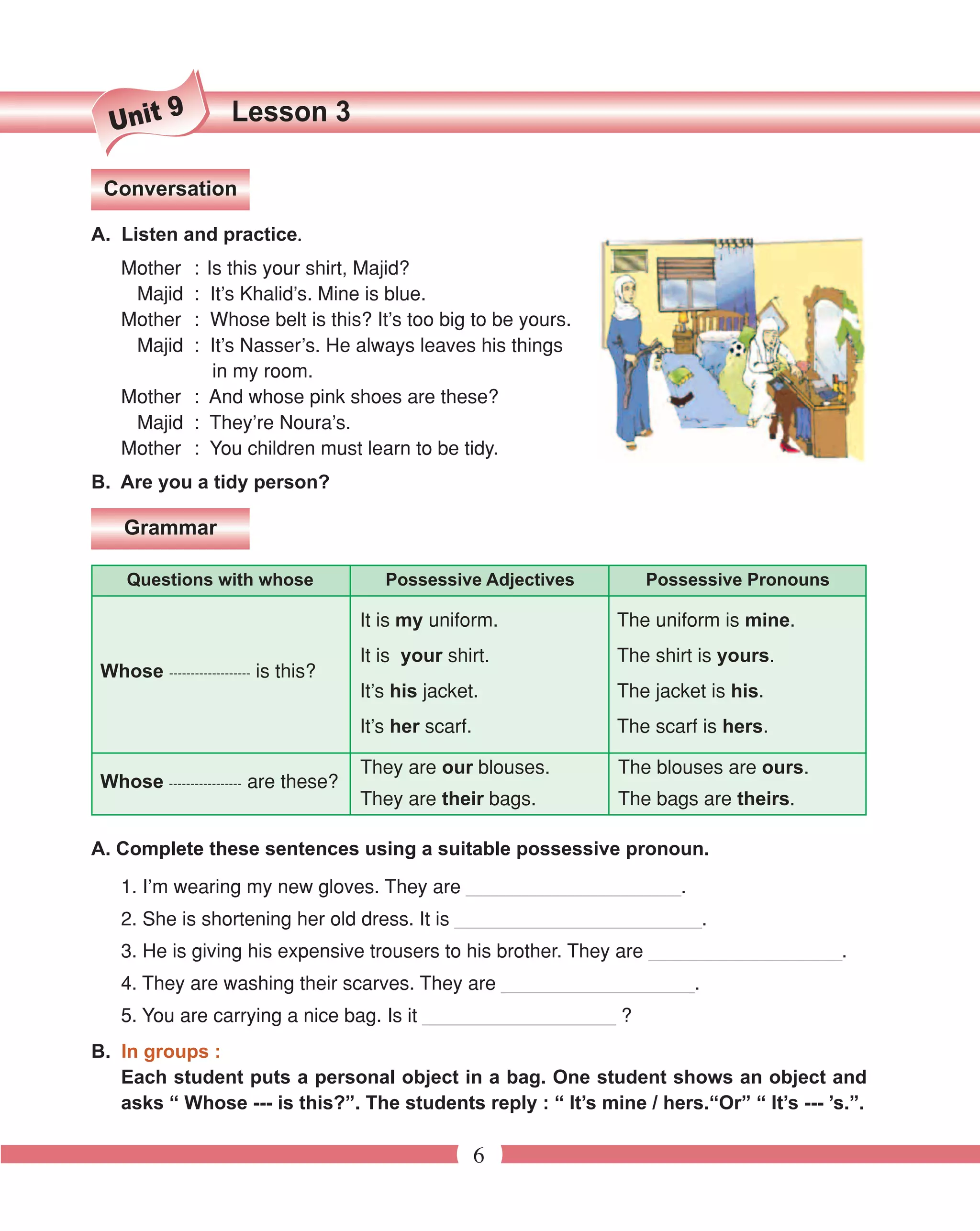
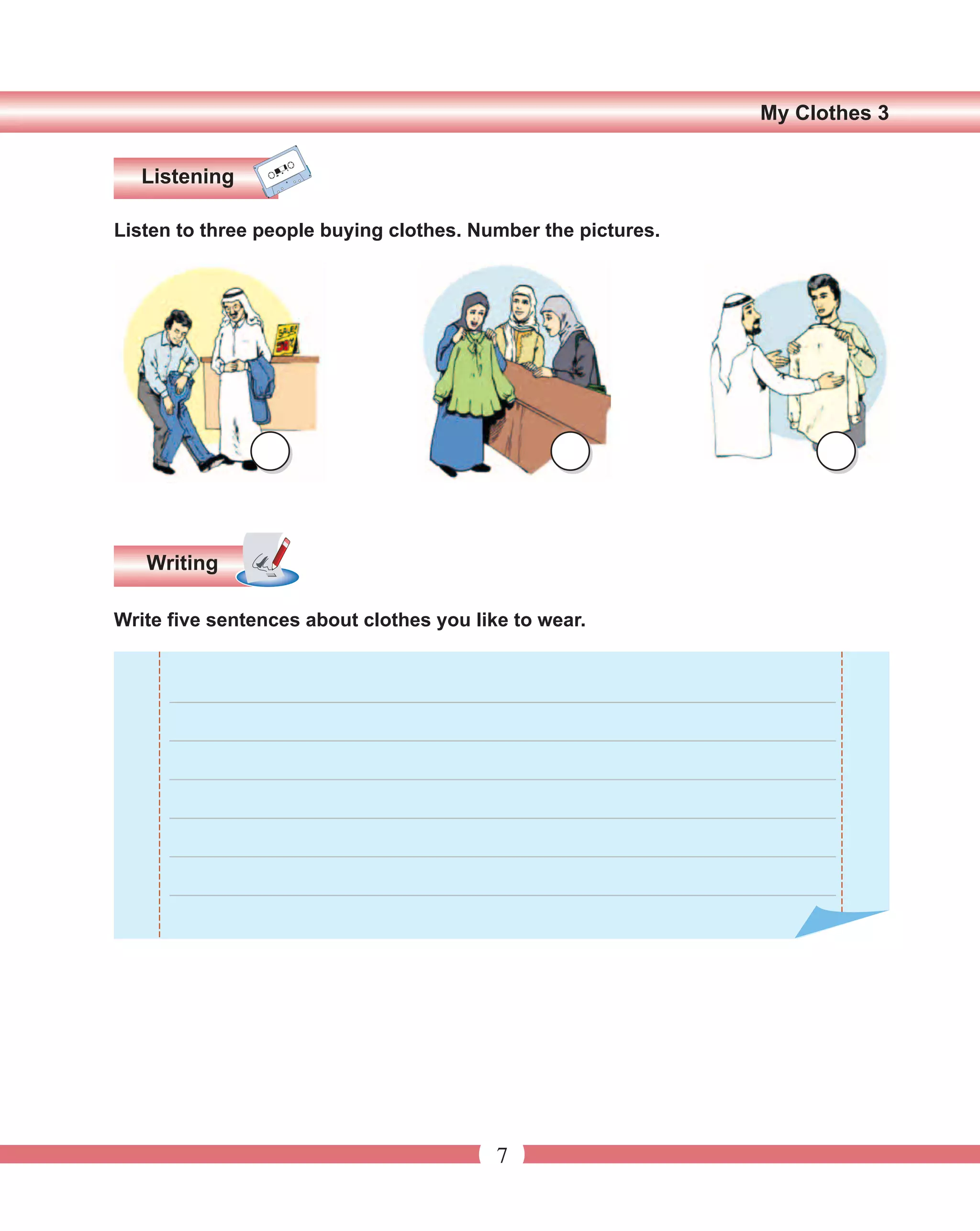


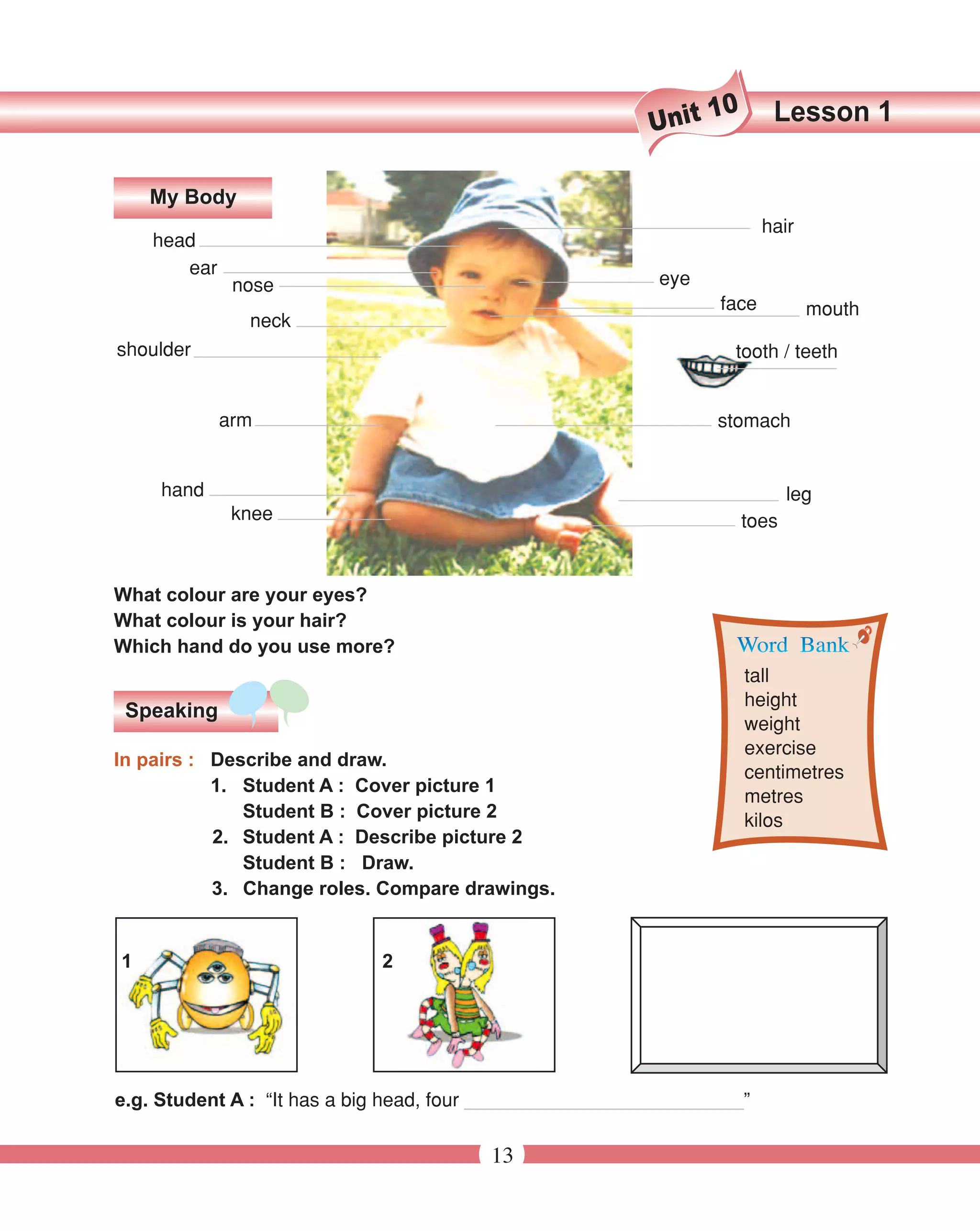
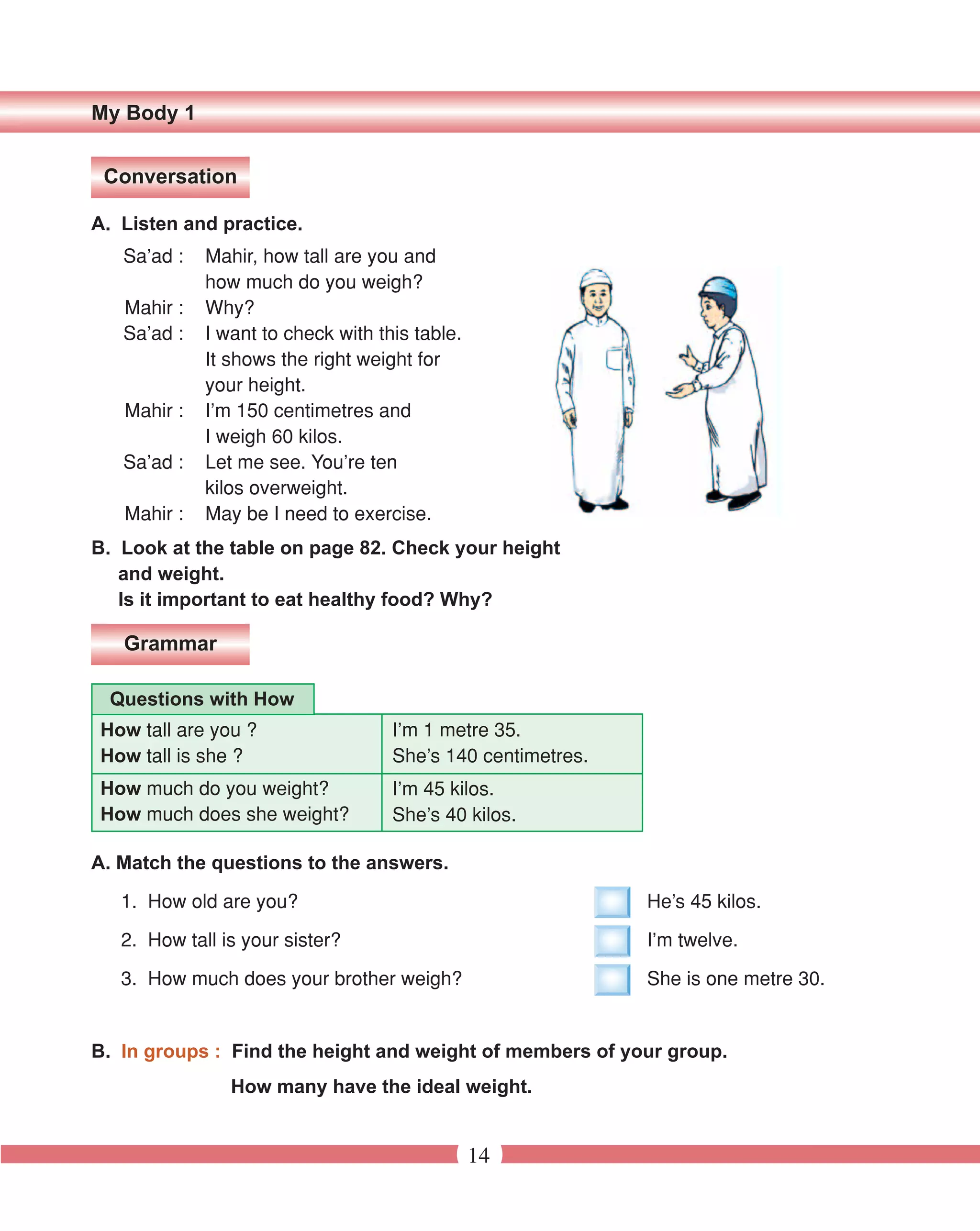




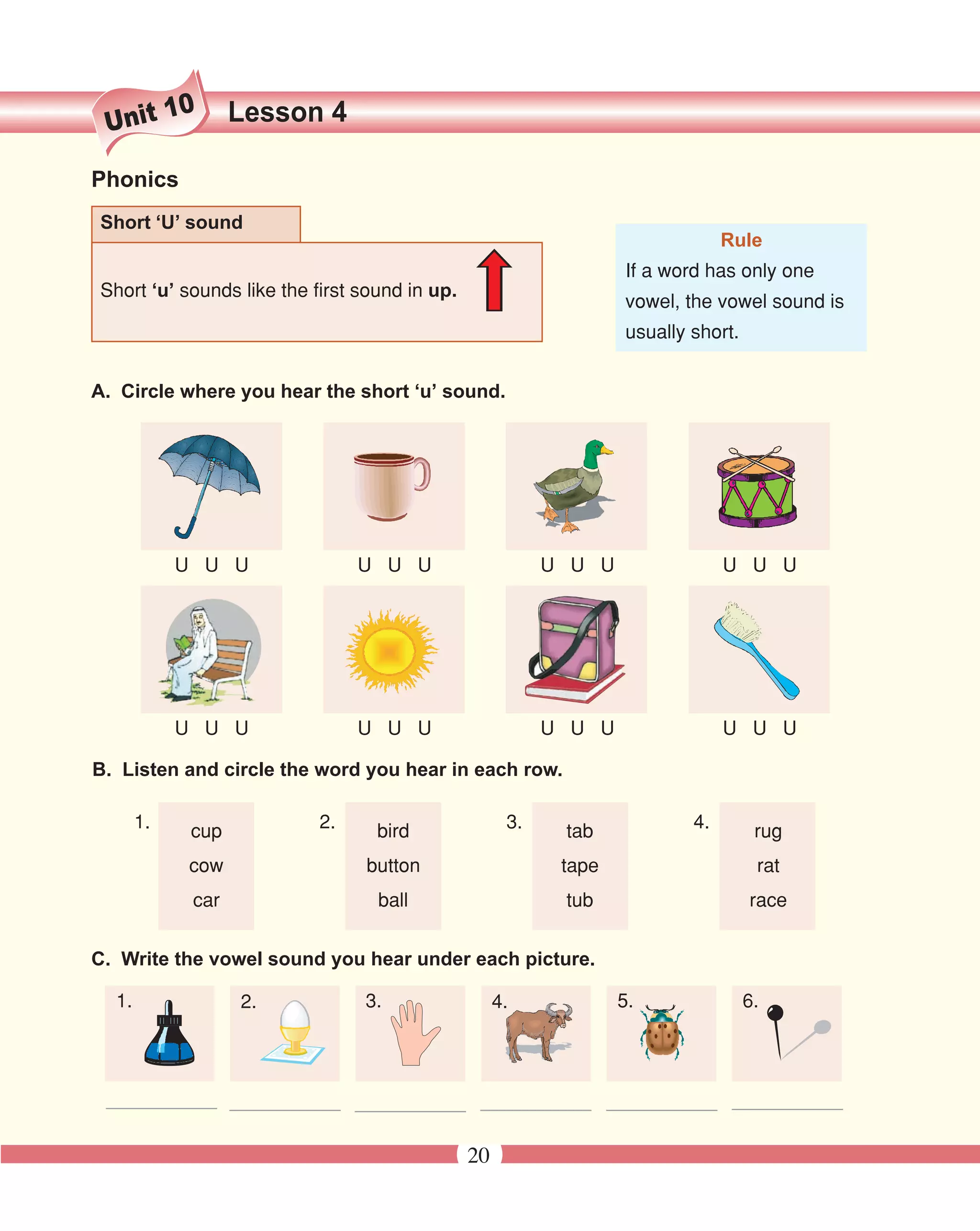


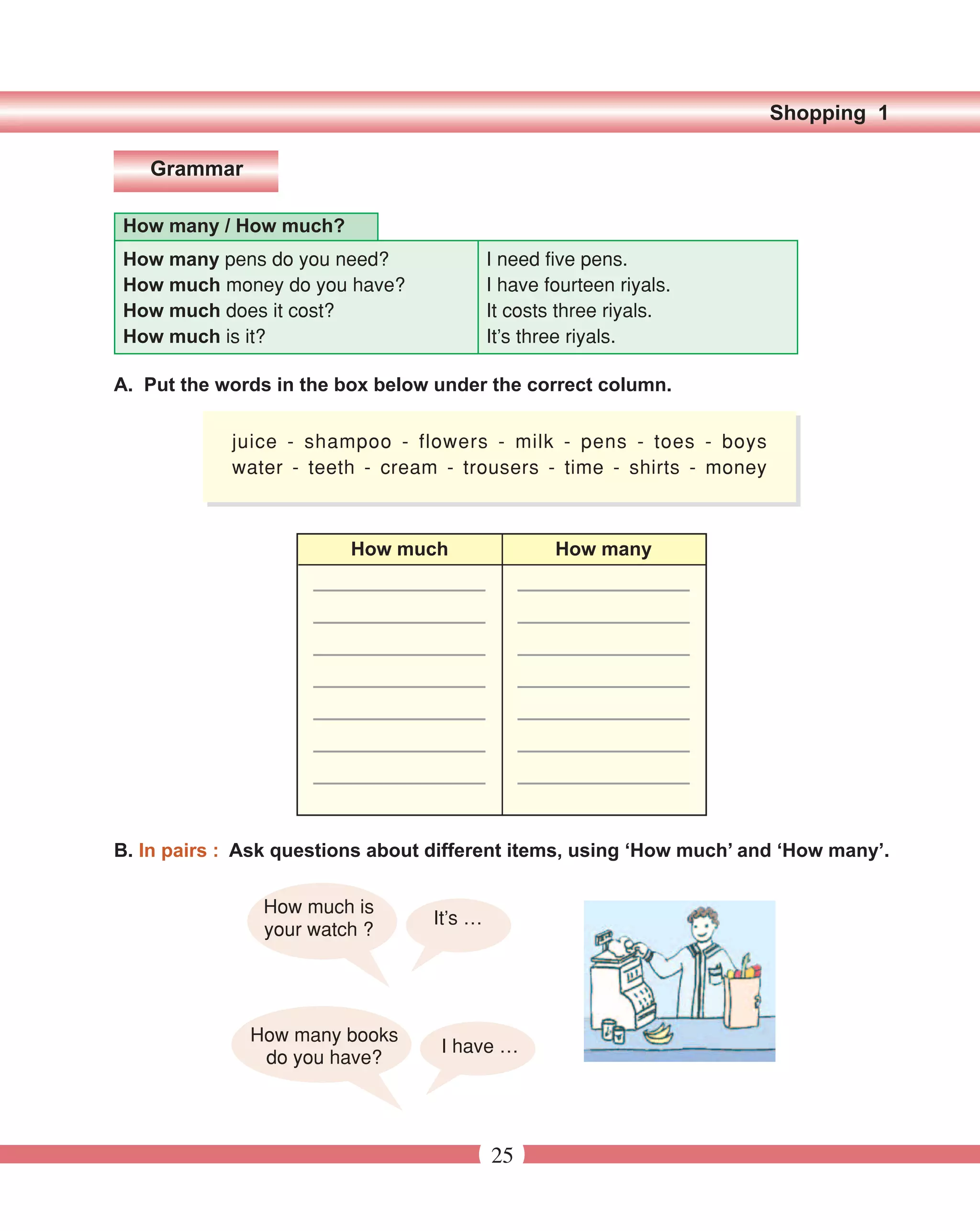
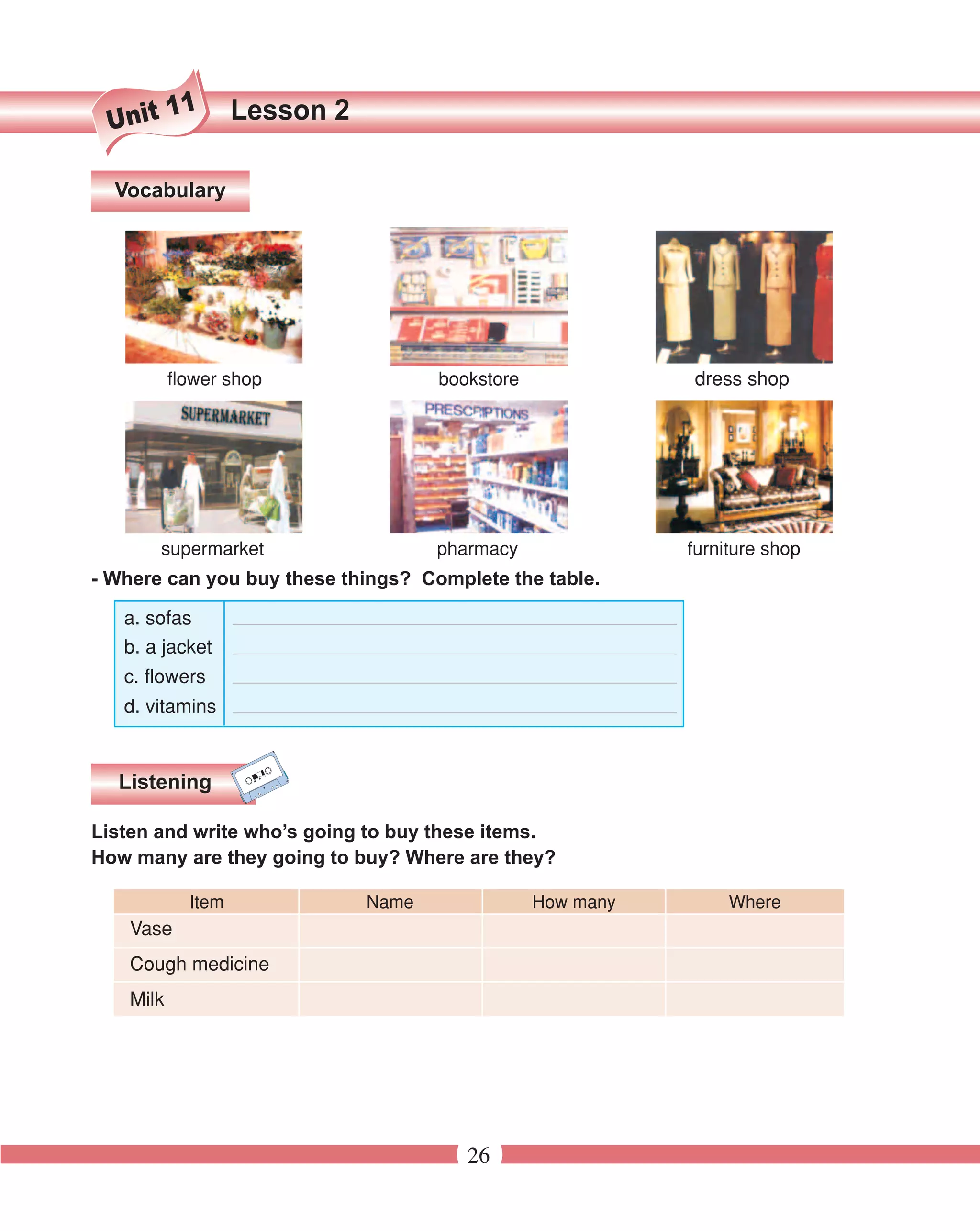
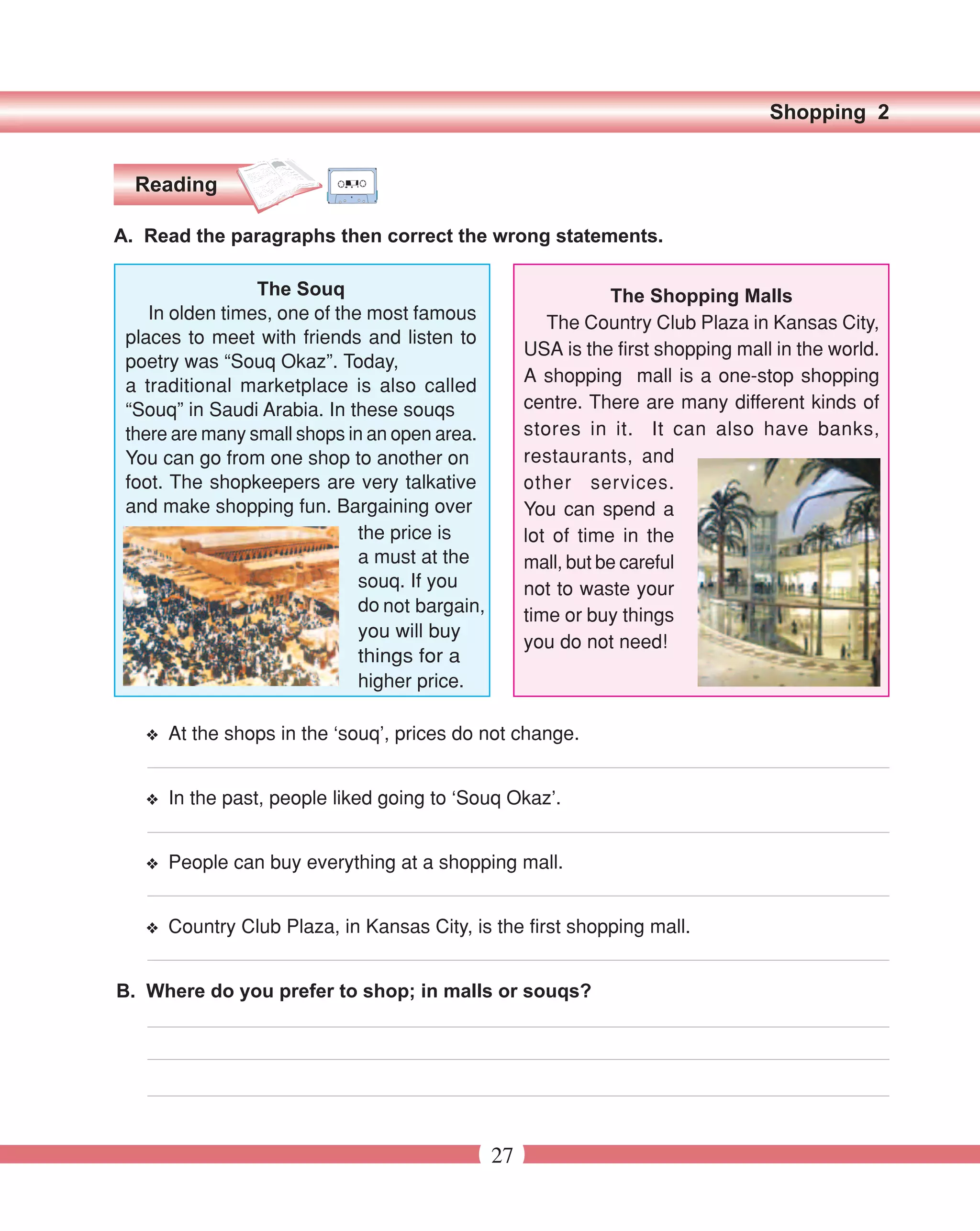


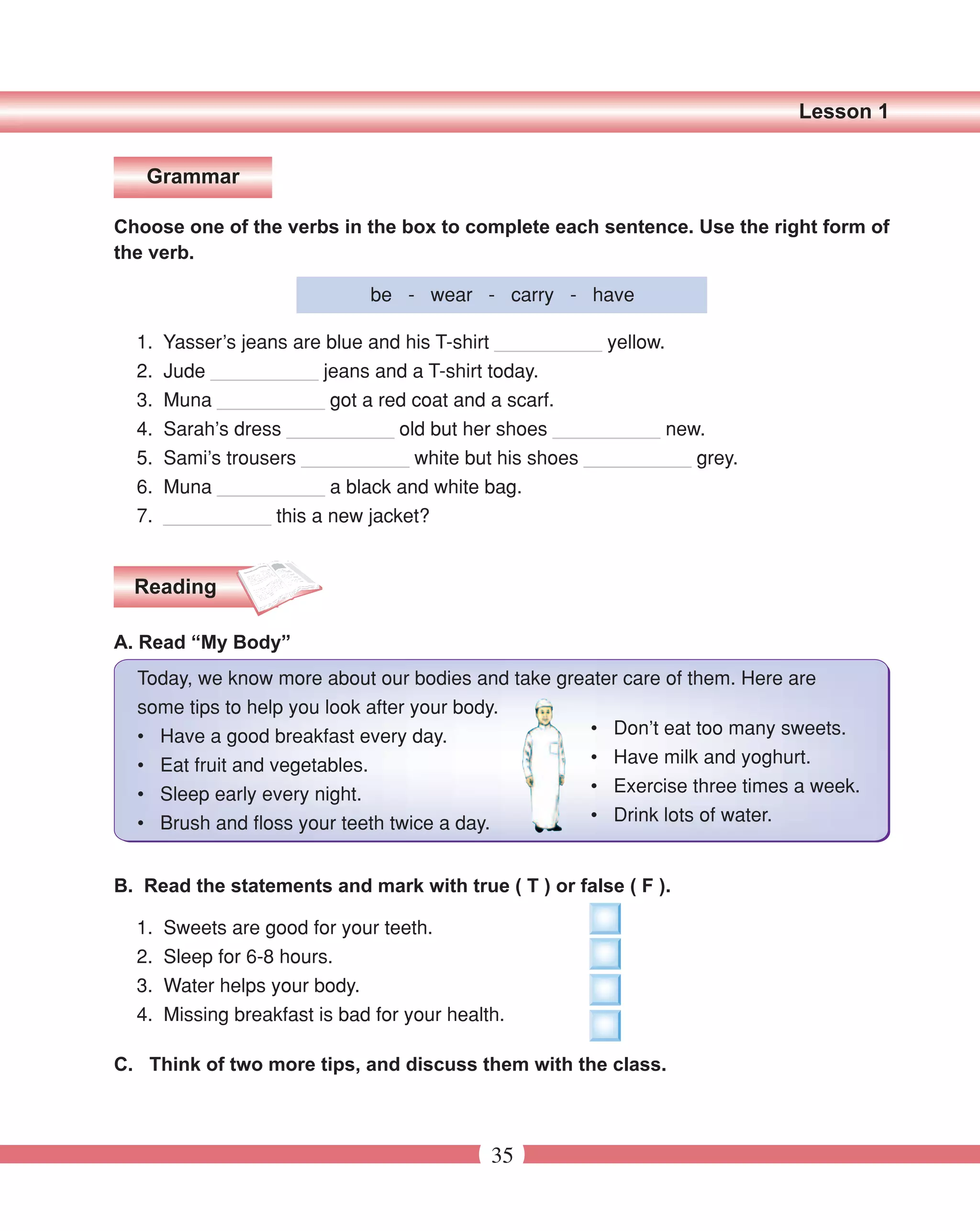



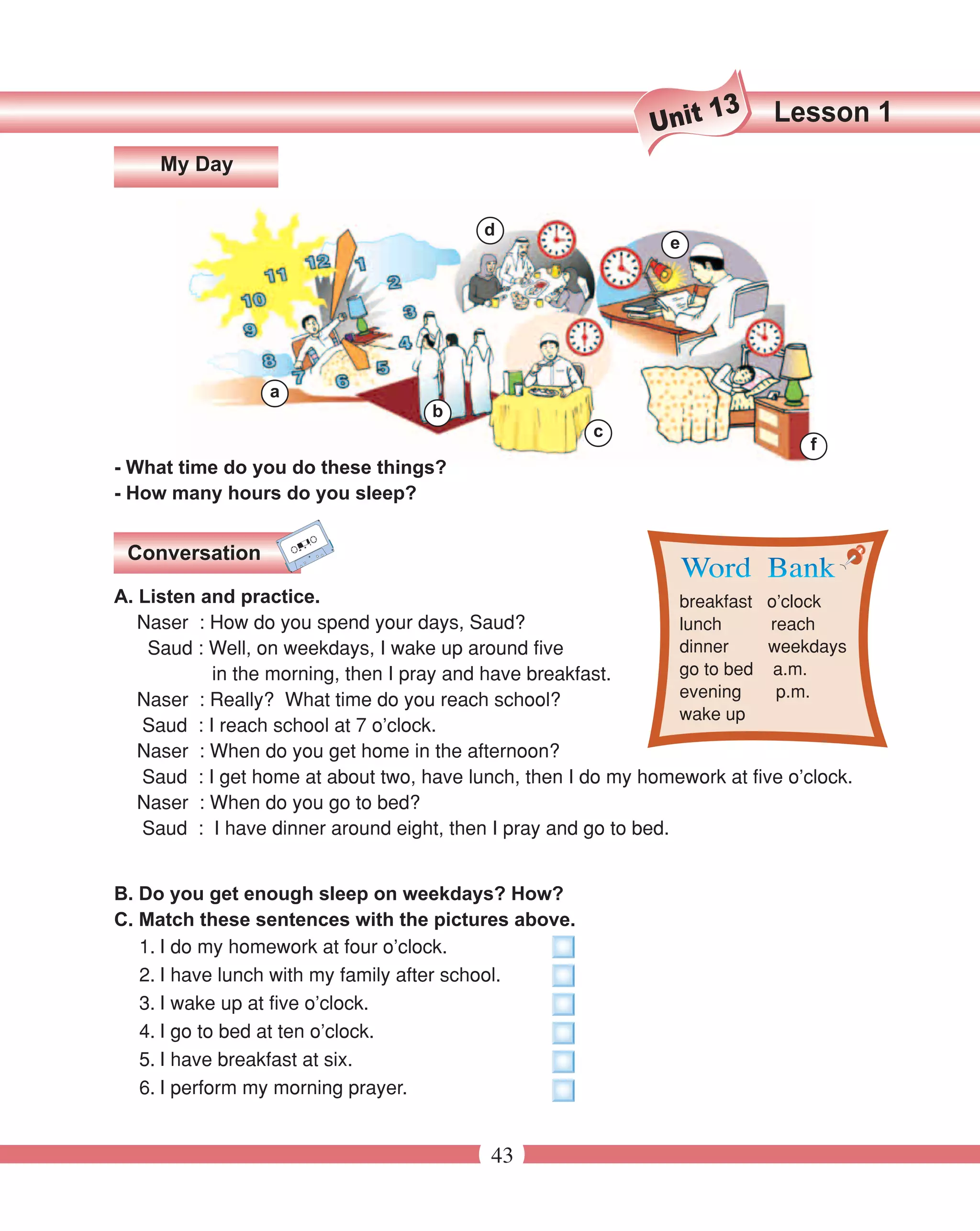

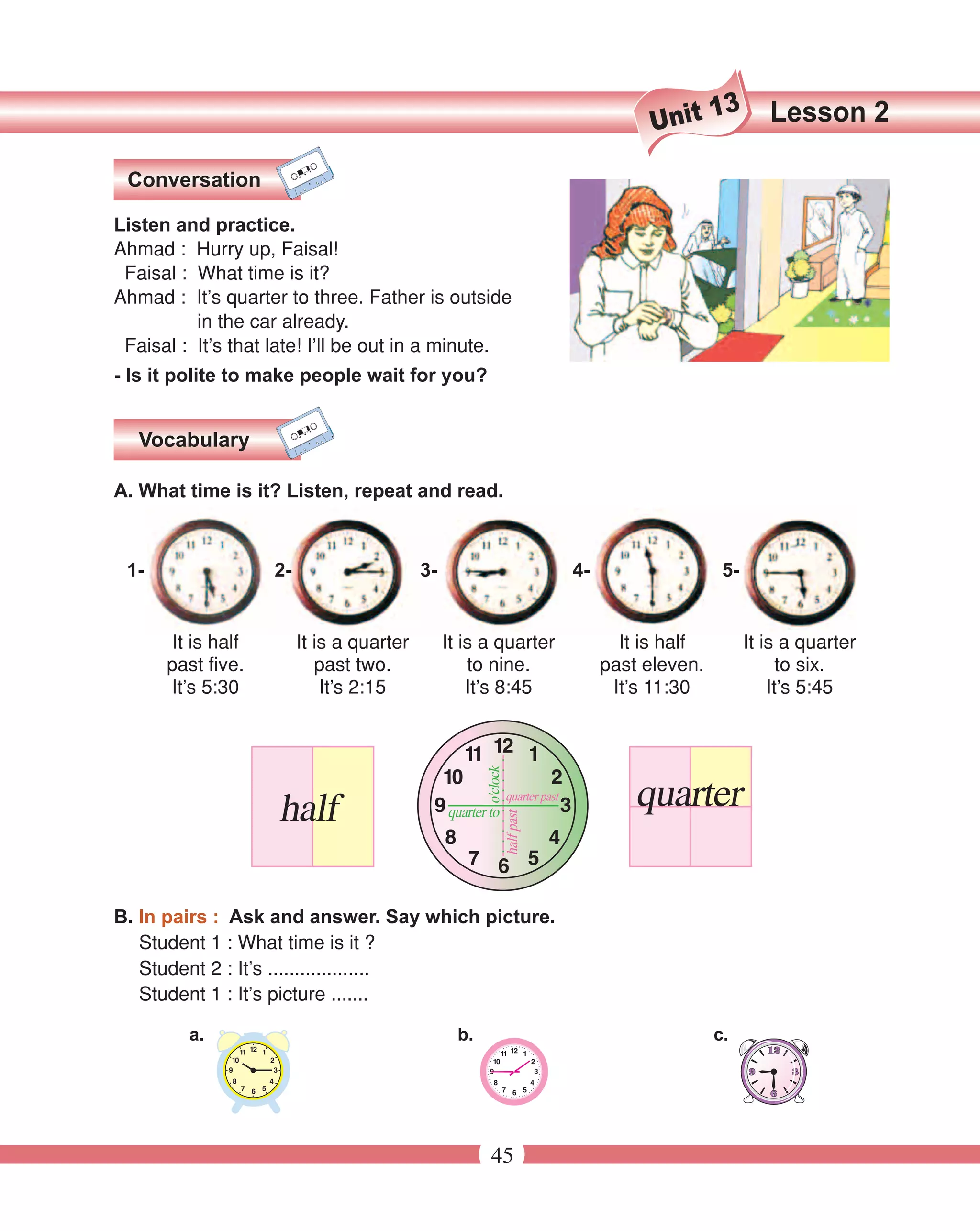


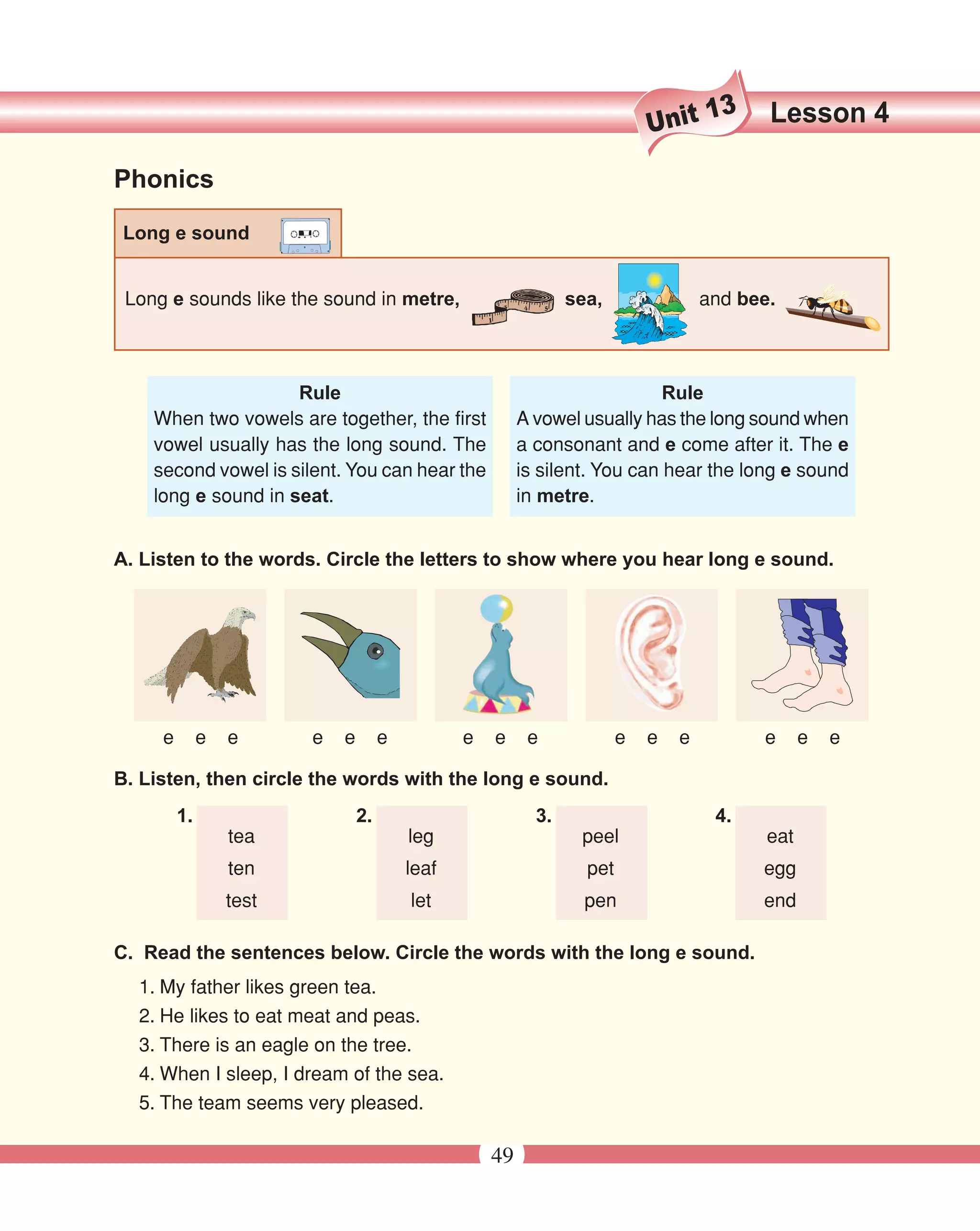


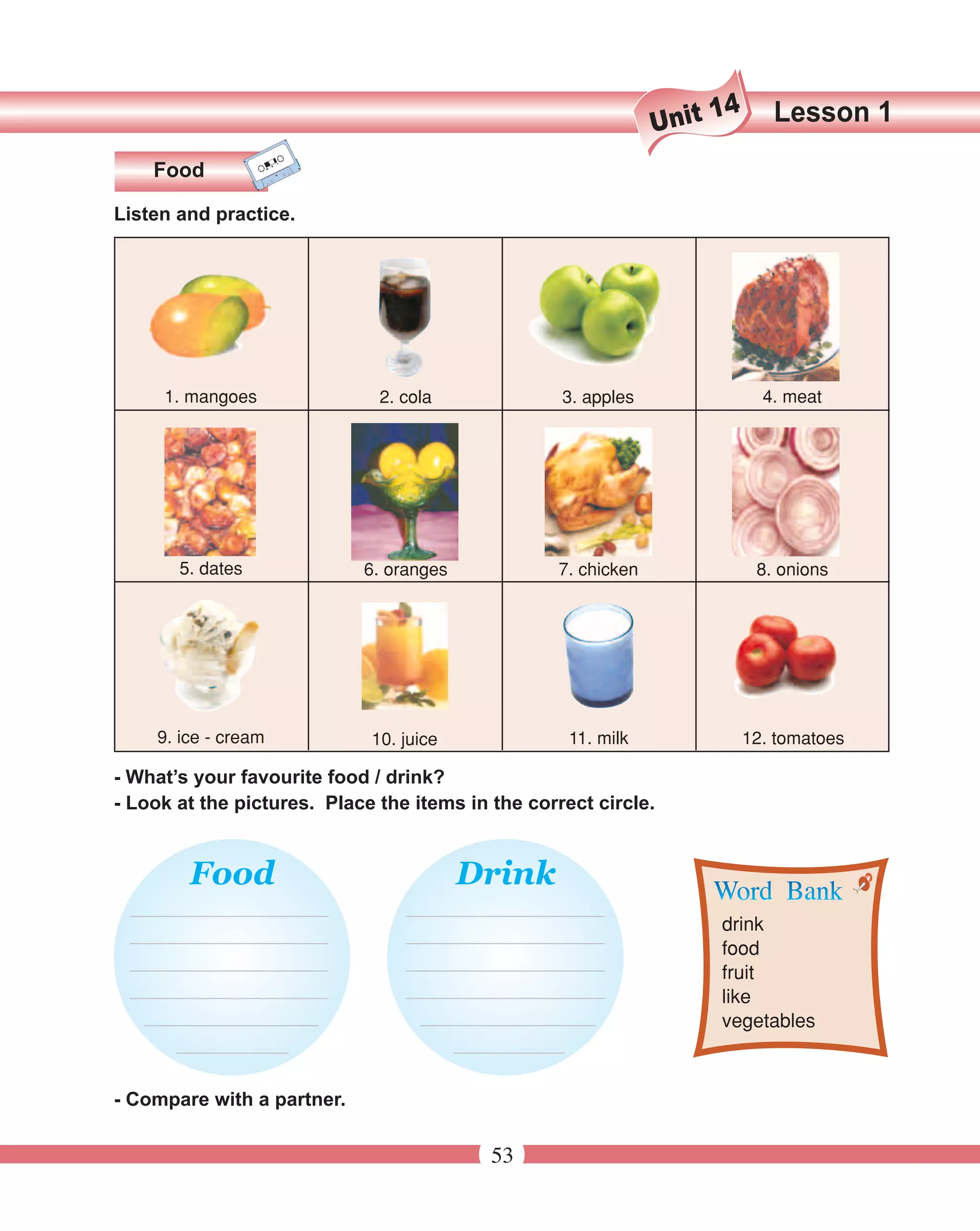

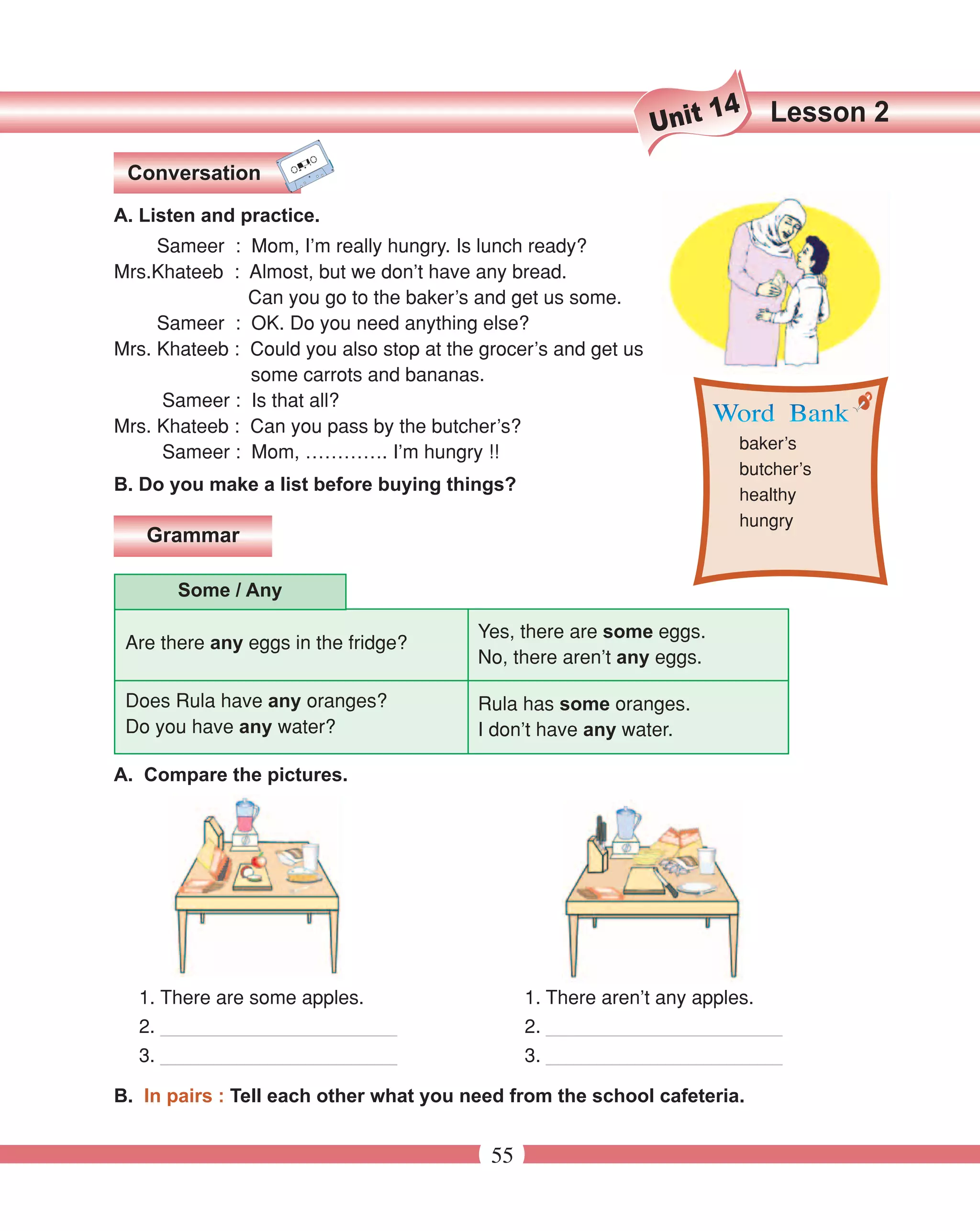
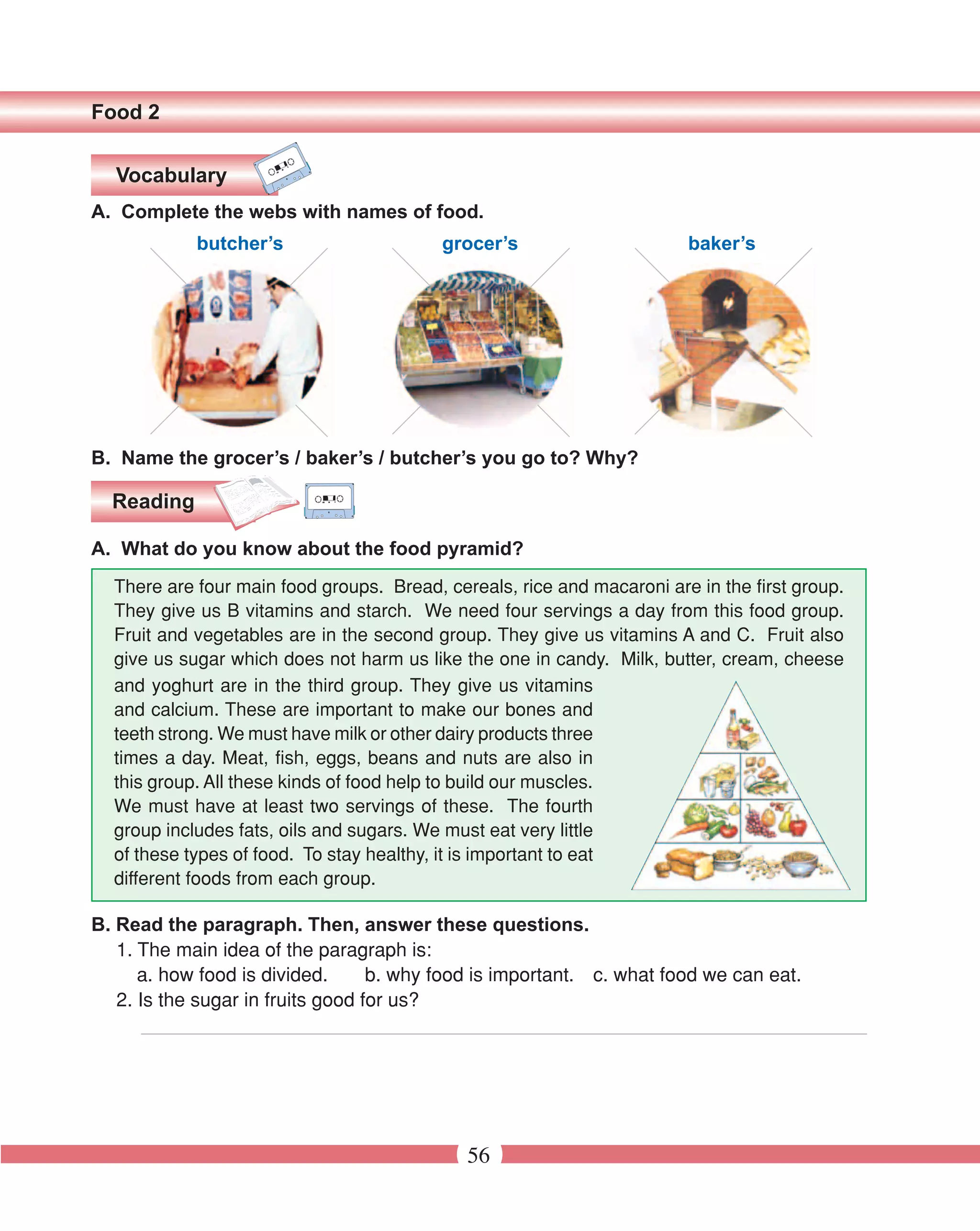
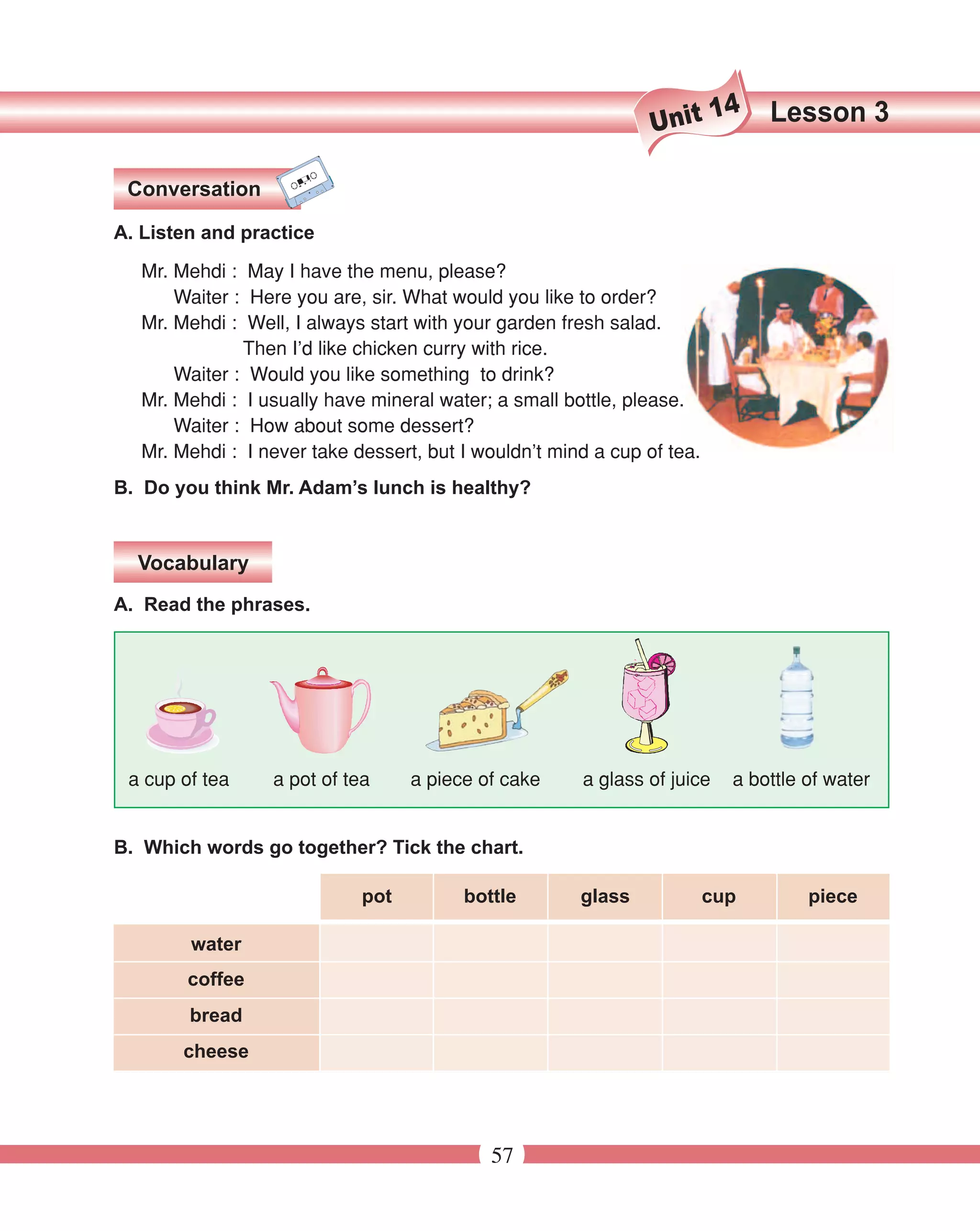
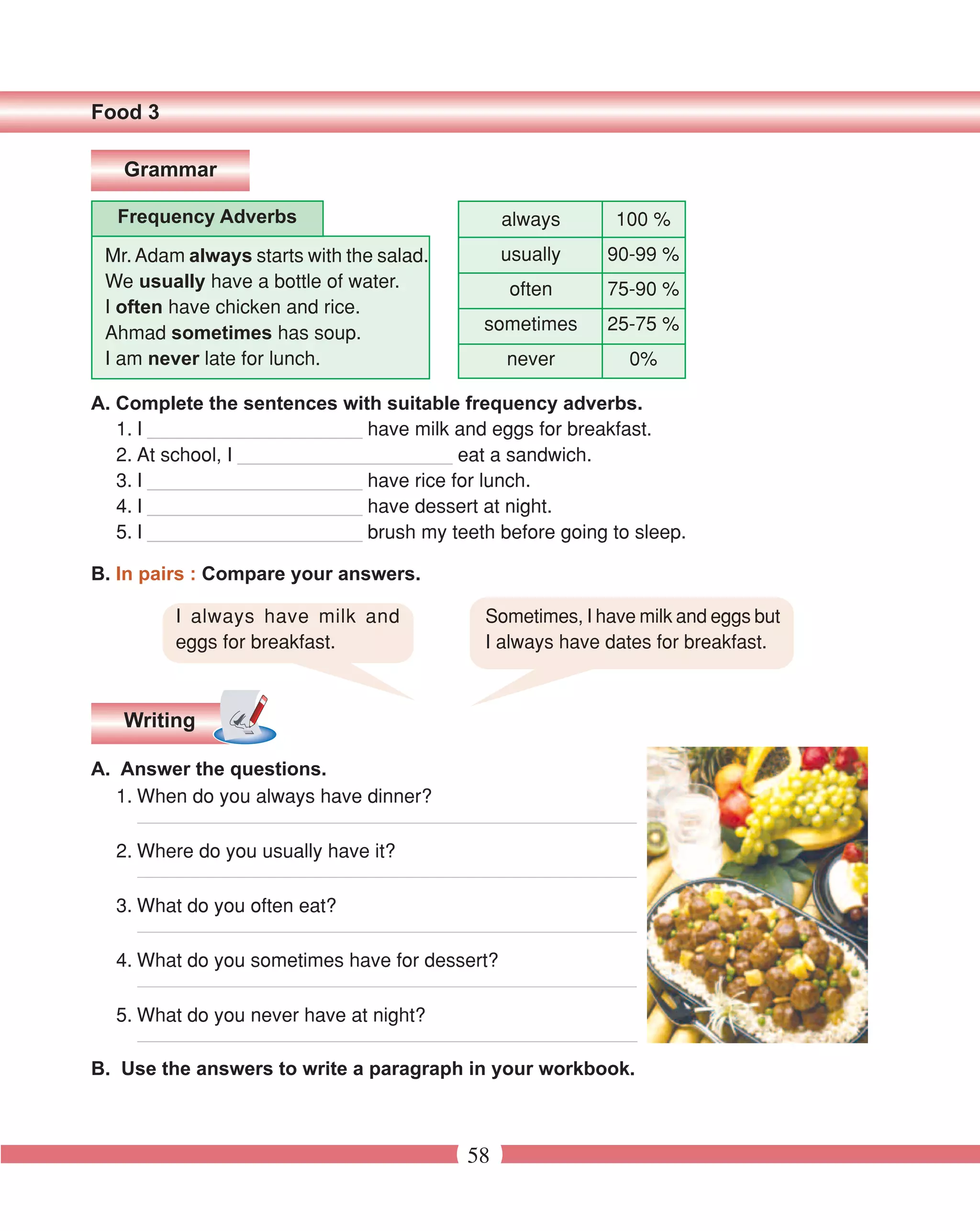




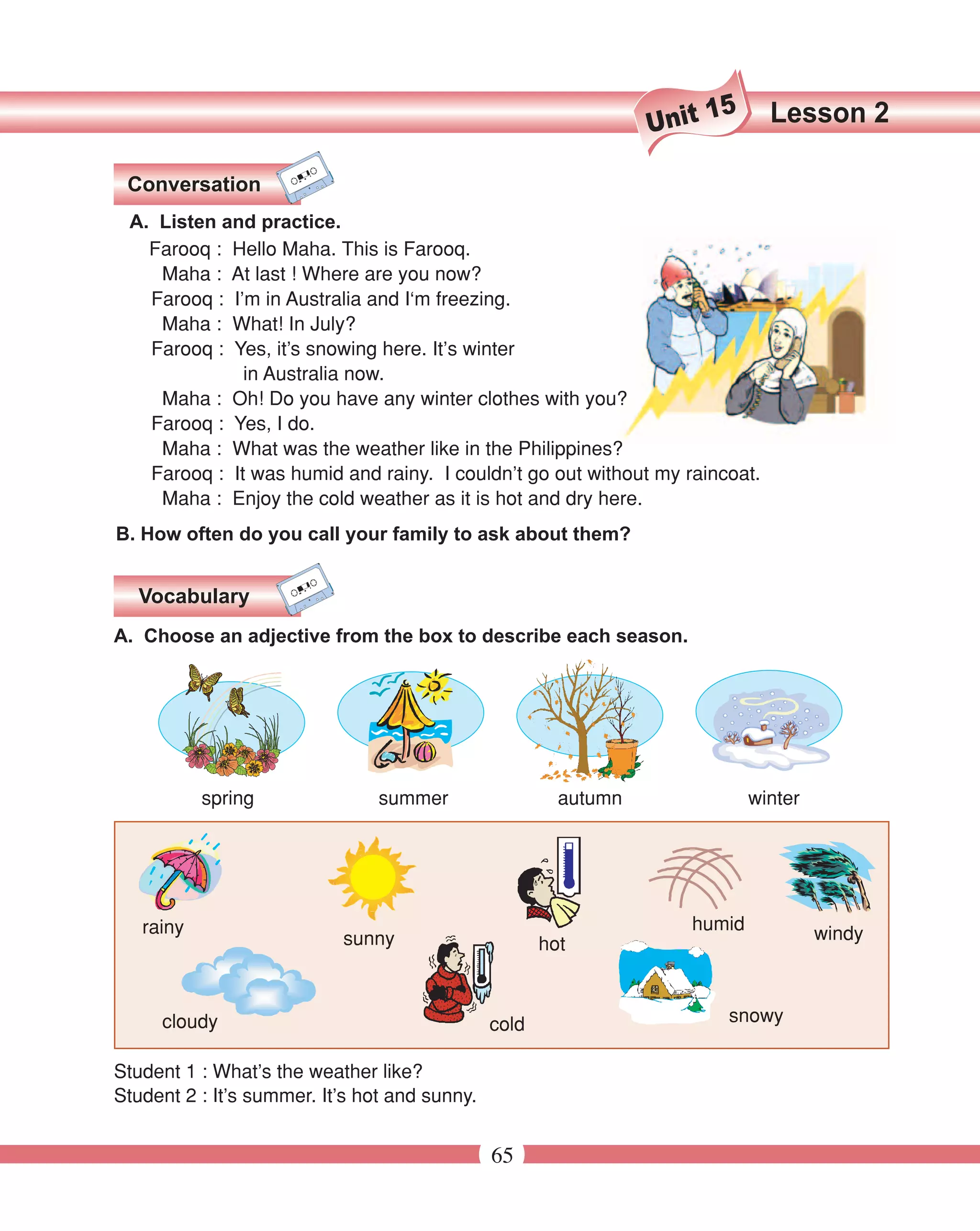


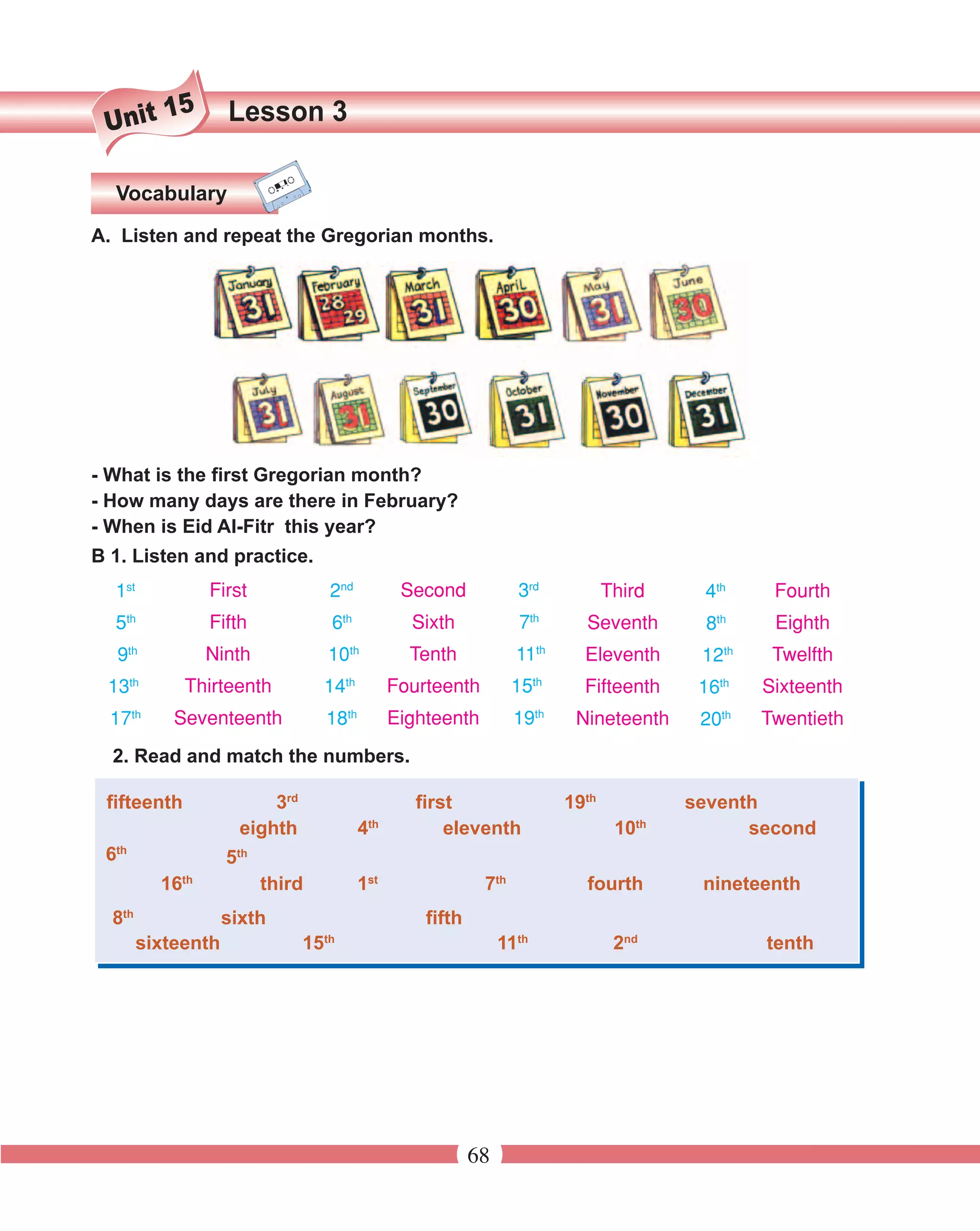
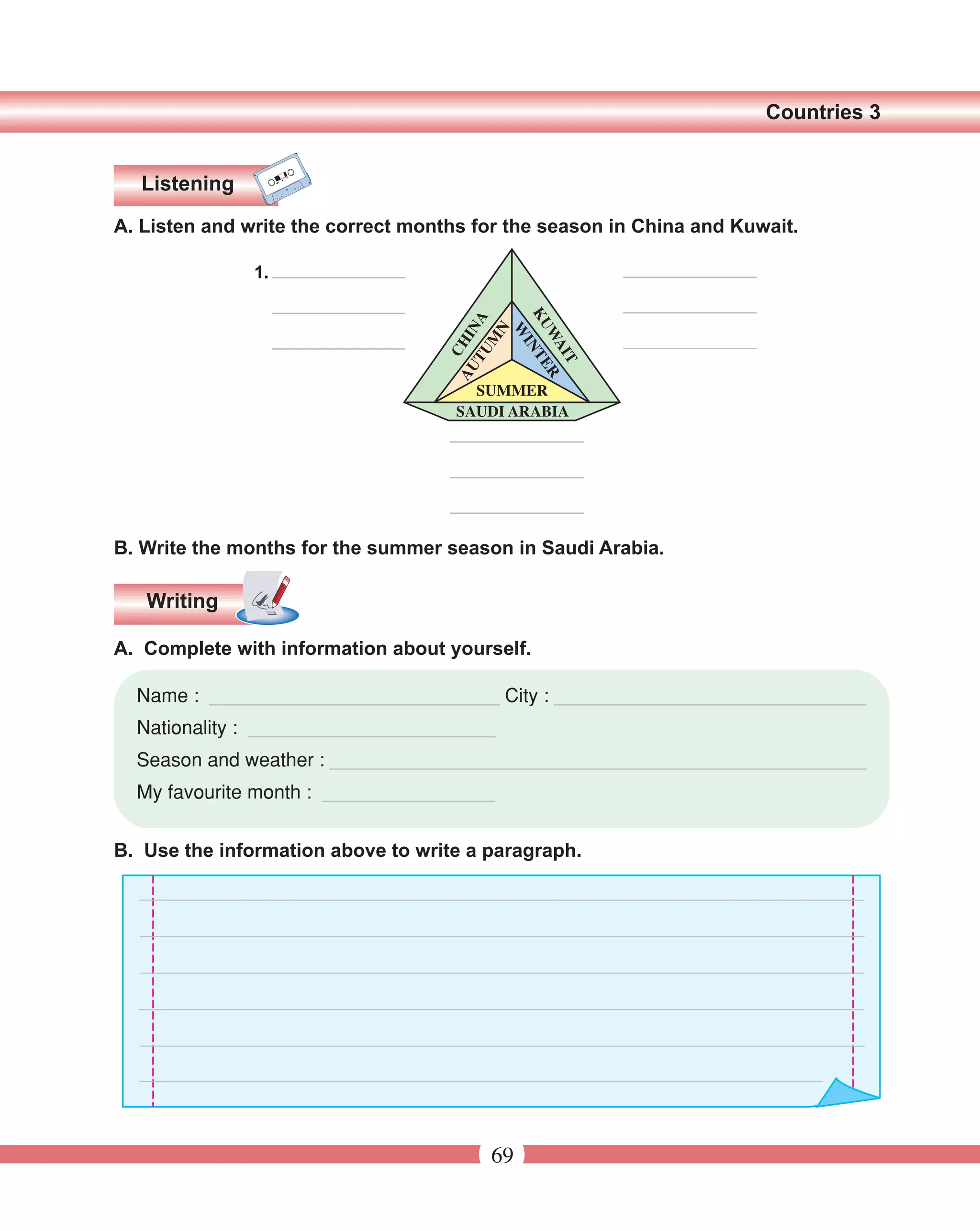


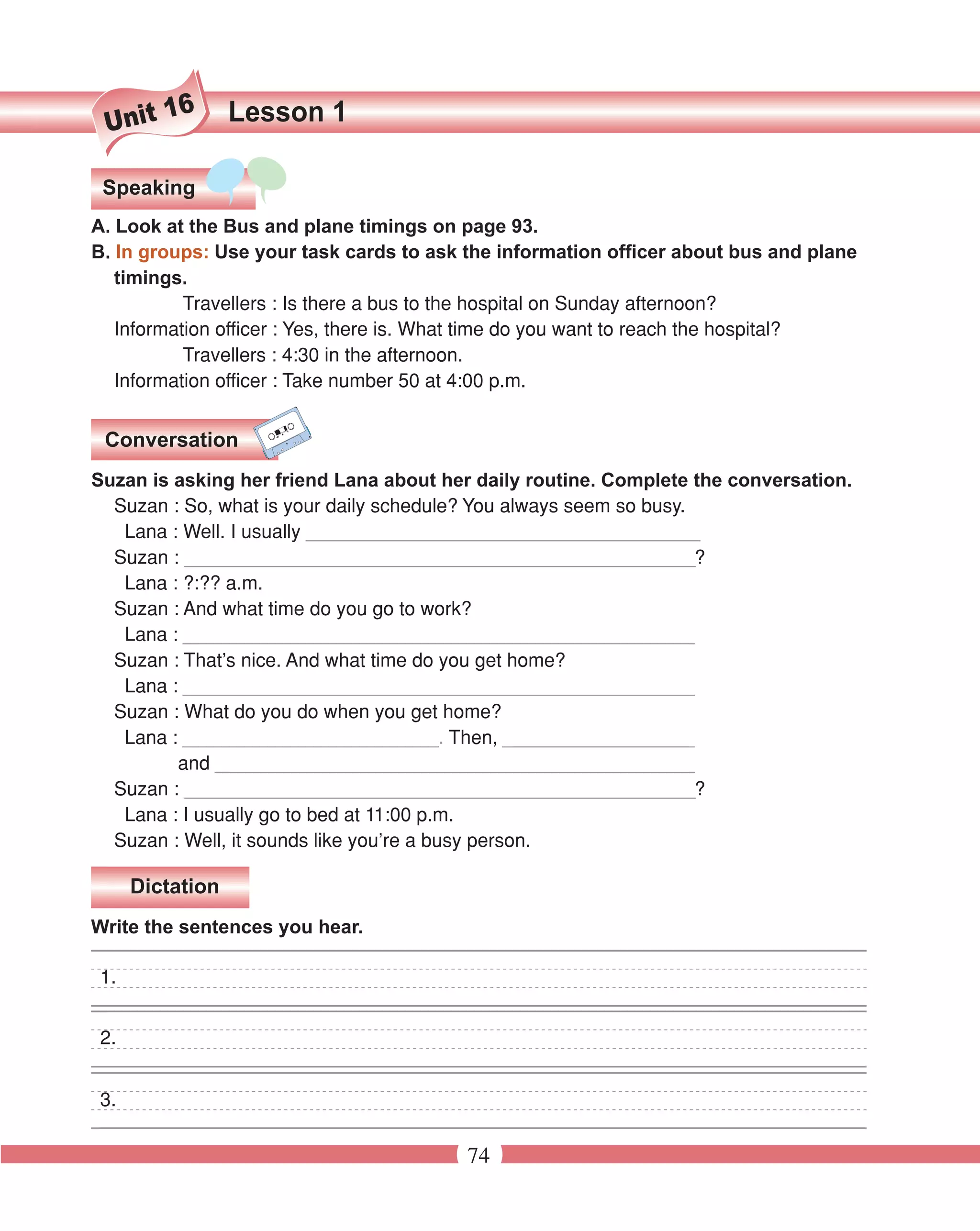
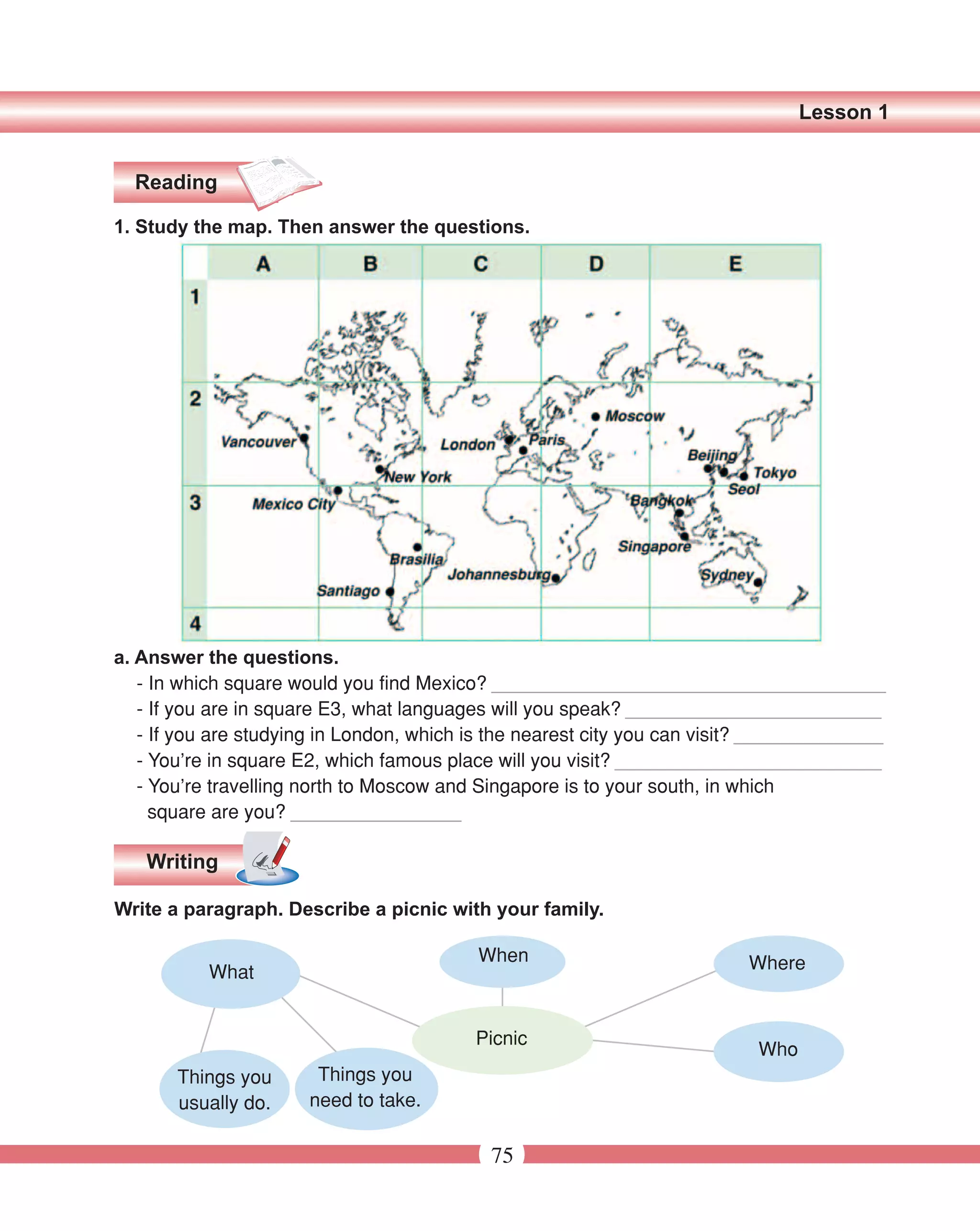


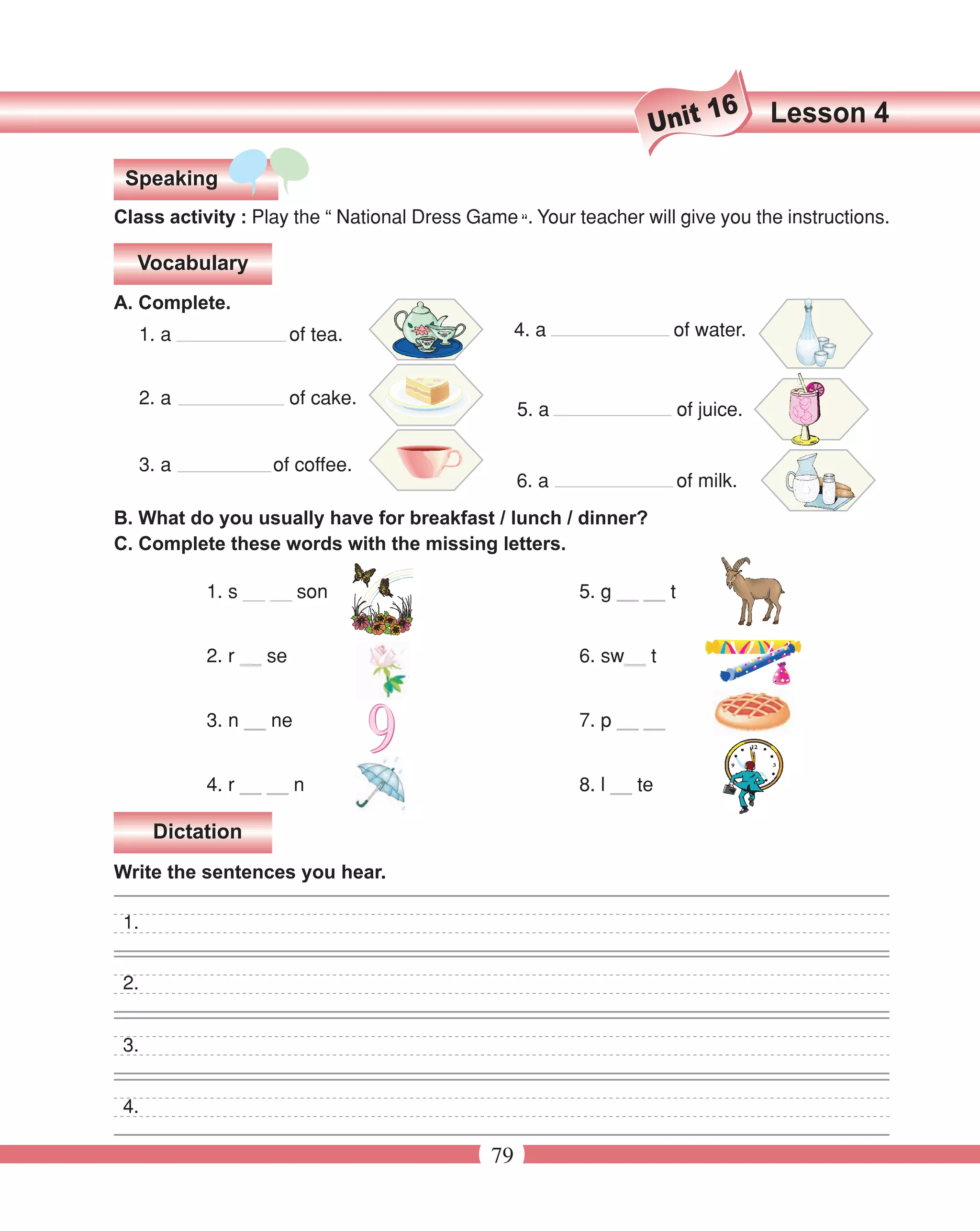

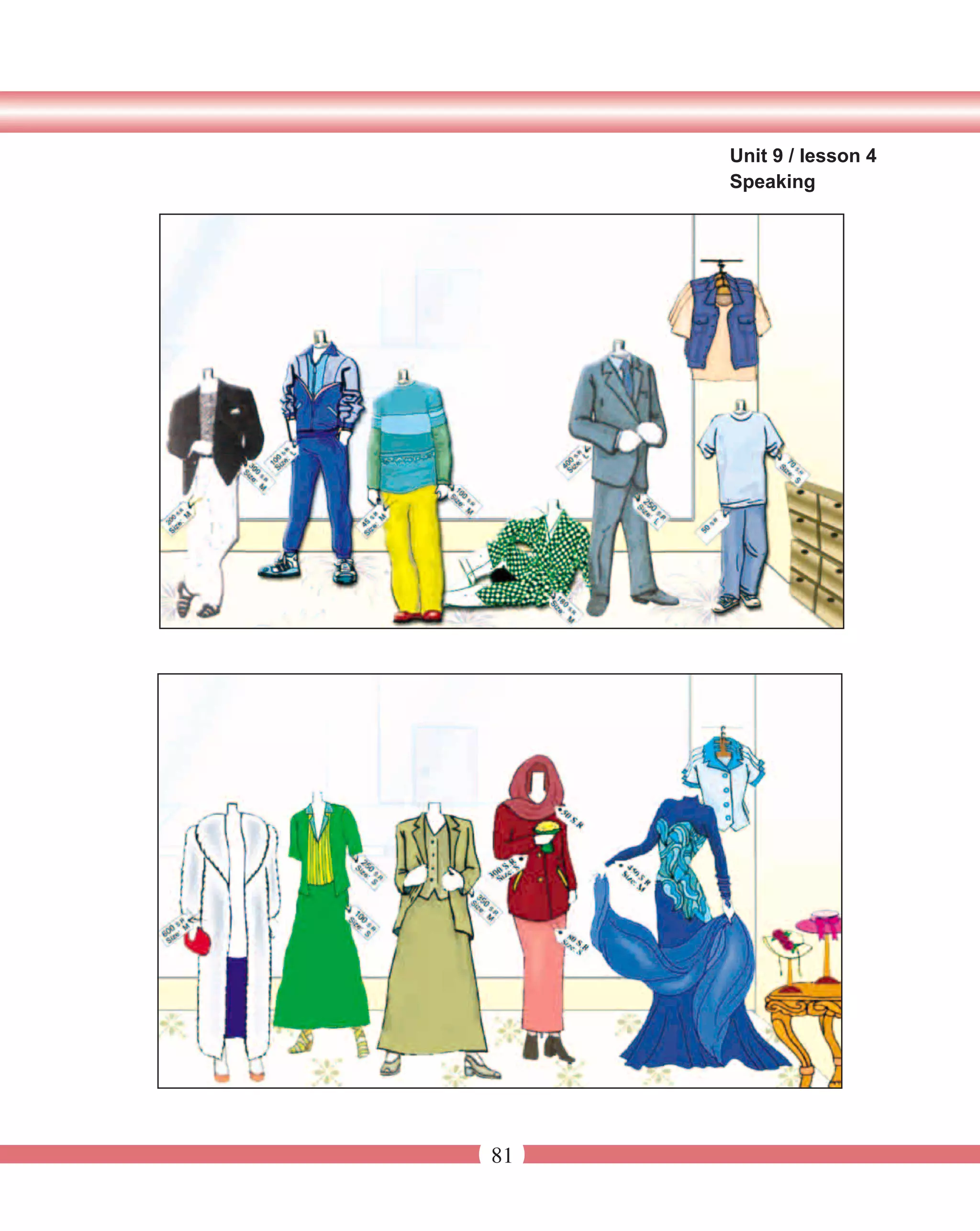


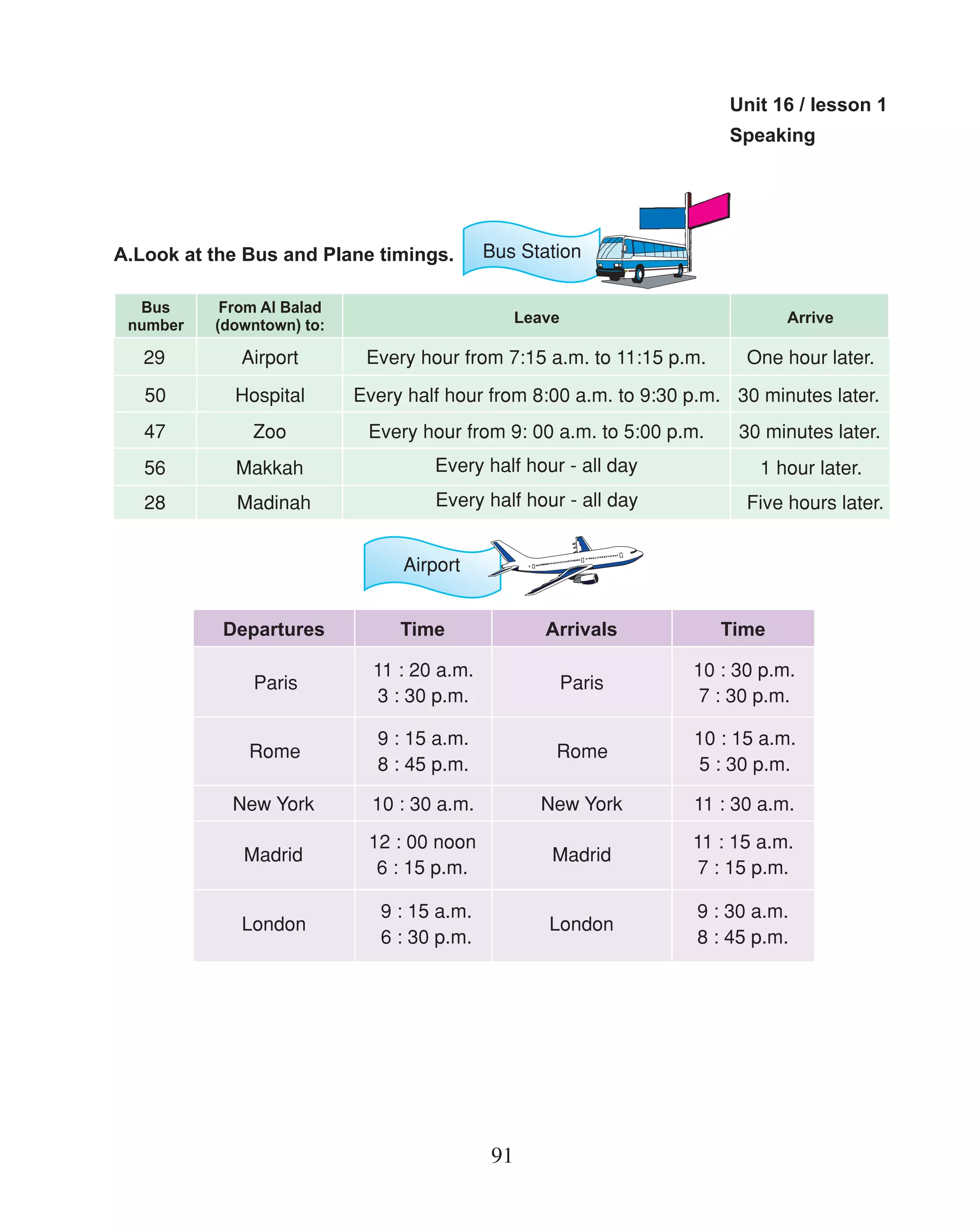


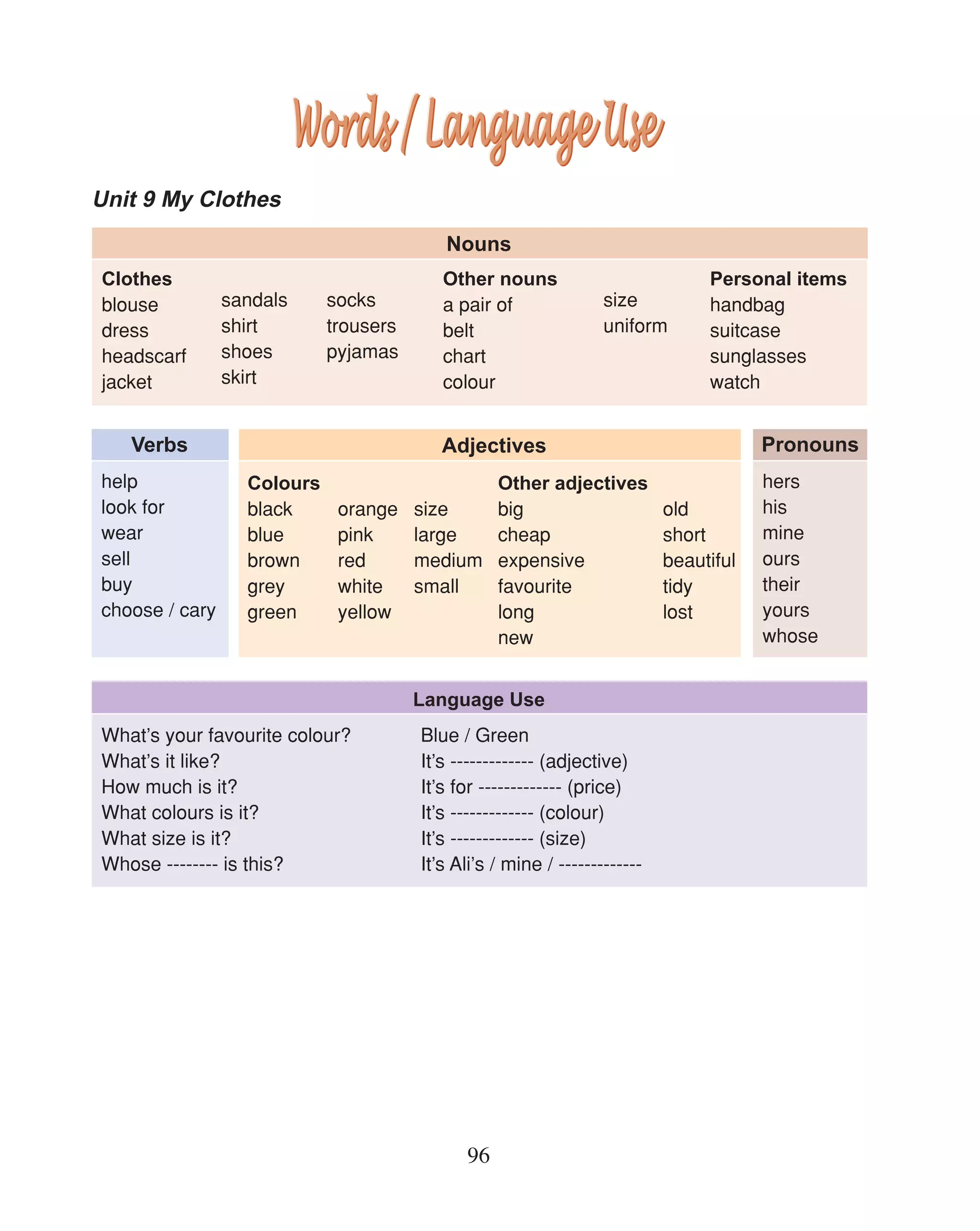
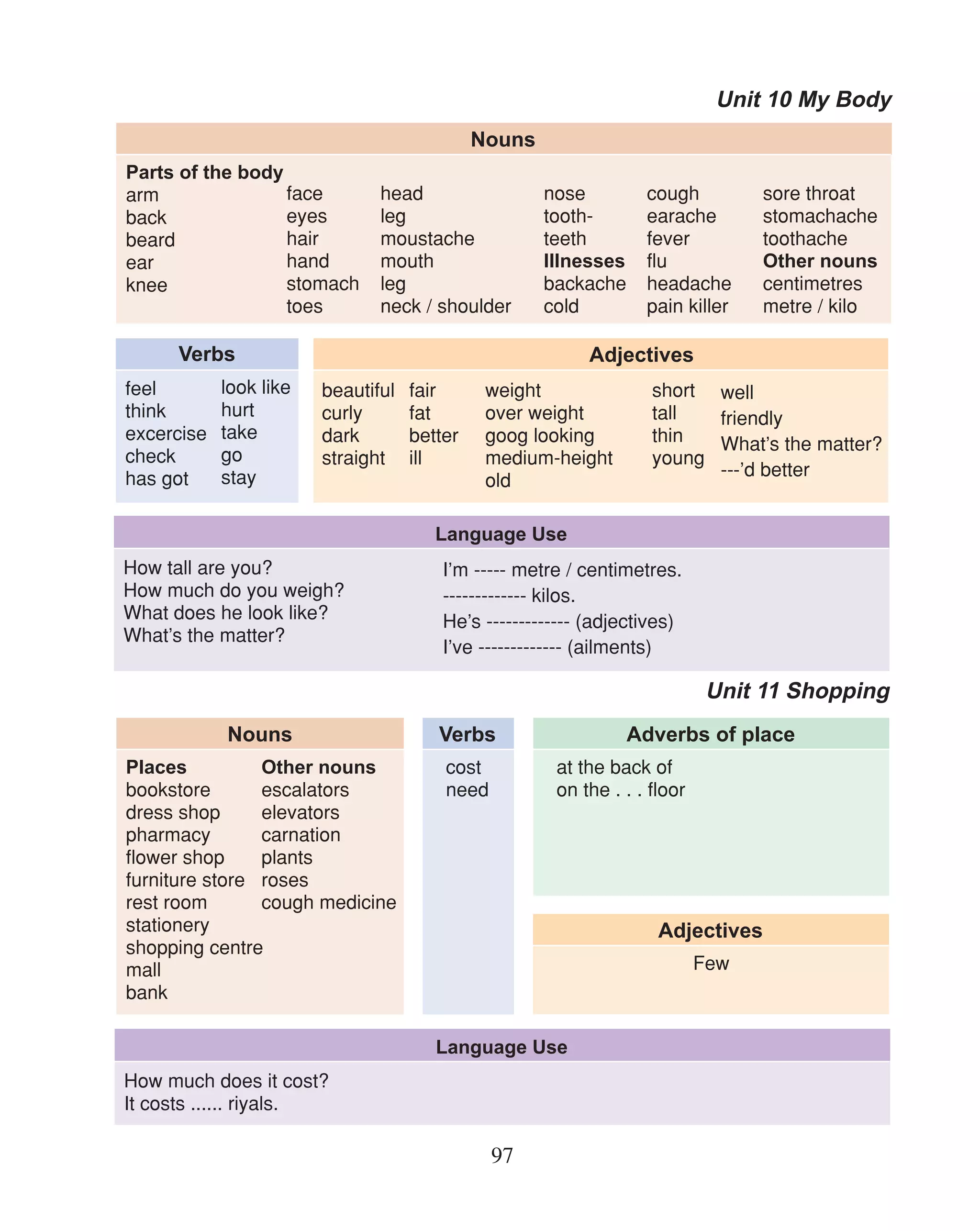

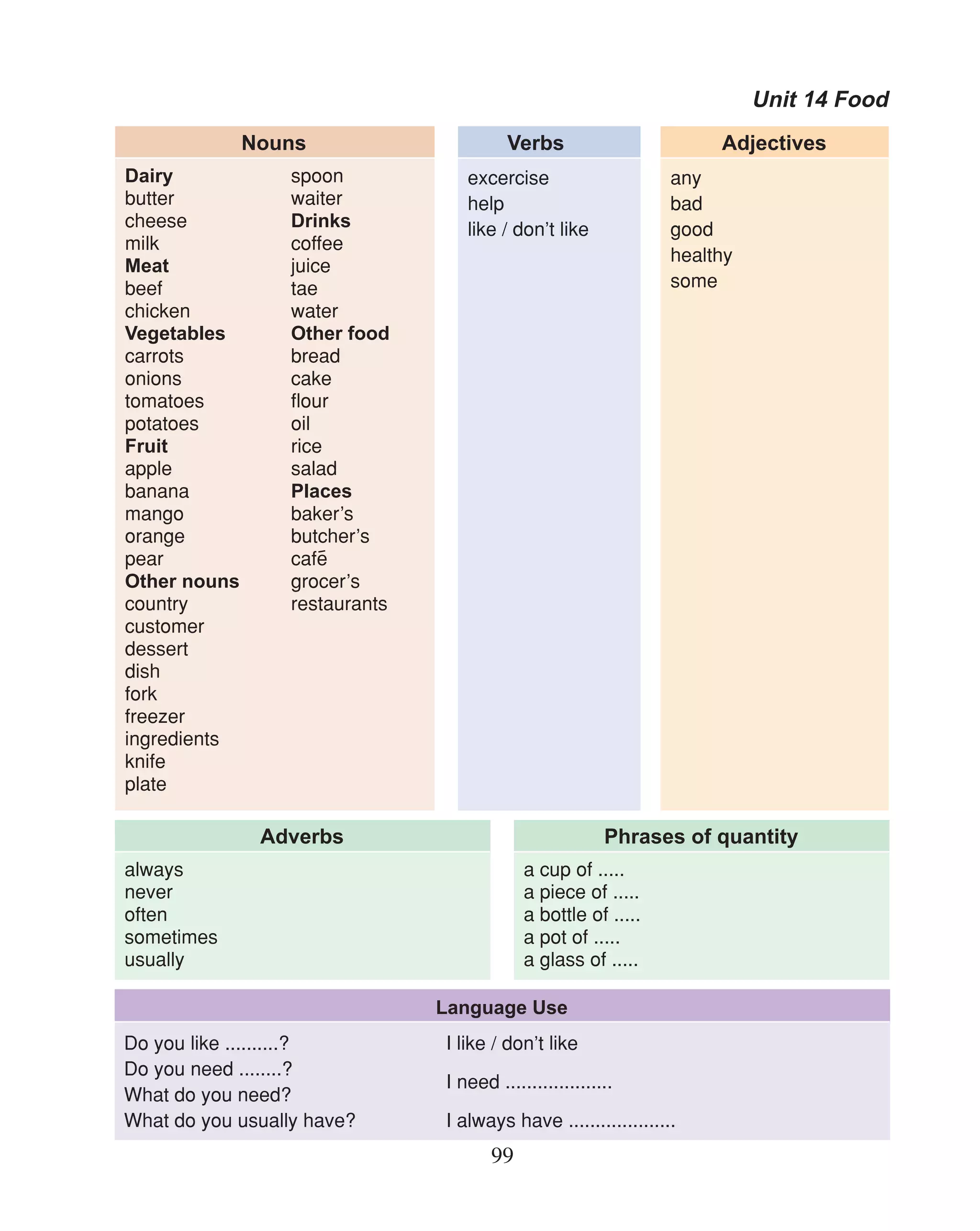
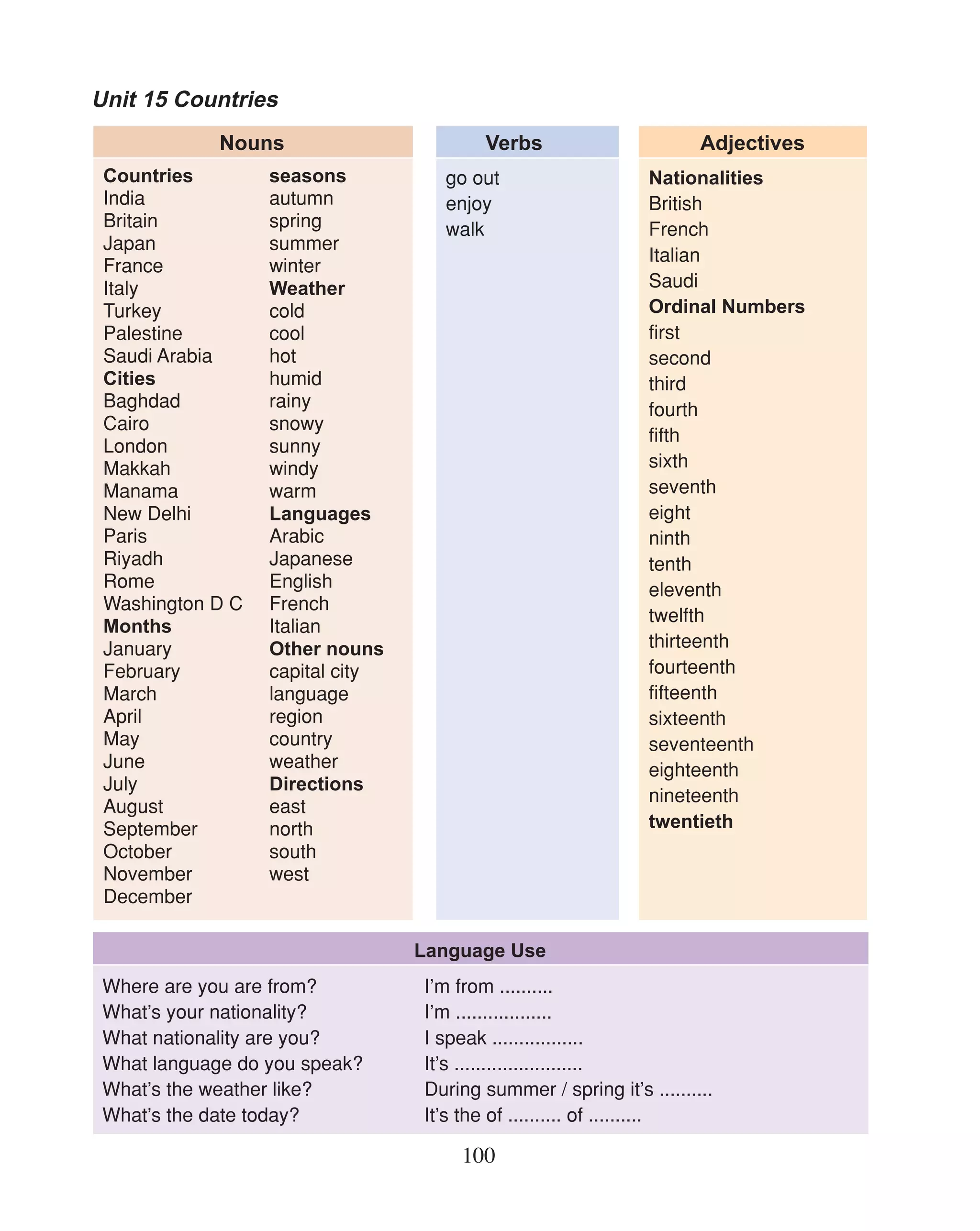

![t‡ðœUÄË »U²Jë Èu‡²×Ä ≠ ôË√
]
¯
¯
¯
¯ ¯
© »U²Jë WK¾Ý√ ® .uI²Ã« ≠ UO½UŁ
Î
¯
¯
¯ ¯
ï ¯
¯ ¯
¯
¯ ¯ ¯](https://image.slidesharecdn.com/y7eng2boys-121225182149-phpapp02/75/Y-7-eng_2_boys-116-2048.jpg)
![t‡ł«dš≈Ë »U‡²Jë q‡Jý ≠ U¦ÃUŁ
Î
¯
¯ ¯
¯
ï ¯
W‡ÄU‡Ž W‡K¾Ý√ ≠ UFЫ—
] Î
? ¯
? ¯ ¯ ¯
?ï ¯
? , ¯
? ¯ ¯
?¯ , ¯
? ¯
?¯ , ¯](https://image.slidesharecdn.com/y7eng2boys-121225182149-phpapp02/75/Y-7-eng_2_boys-117-2048.jpg)