Veggie Bytes 
LSU AgCenter Innovation Grant provides 14 new butterfly 
gardens across the state 
Fourteen agents attended a butterfly 
garden workshop on March 20 with 
the intent of learning about all aspects 
of growing a butterfly garden. 
Agents were provided with the tools 
and knowledge to establish a butterfly 
garden in each of their respective par-ishes. 
These agents are also equipped 
with several butterfly activities to teach 
children about a butterfly’s life cycle, 
insect eating habits and plant propaga-tion 
of butterfly nectar and host plants. 
If you’re interested in starting a butter-fly 
garden and live in one of these par-ishes 
contact these agents, they are the 
experts! 
Agents that attended include: 
Stephanie Gravois (Ascension Parish) 
Betsy Crigler (Tensas Parish) 
Ruby Miller (Cameron Parish ) 
Sandra Benjamin (Tangipahoa Parish) 
Steve Borel (West Baton Rouge Parish) 
Brandon Sostand (East Carroll Parish) 
Monica Laborde (West Feliciana Parish) 
Inside this issue: 
Butterfly Garden 1 
LSU AgMagic 2013 2 
Timber Rot 2 
What’s Growing? 3 
Recipes 4 
Book Recommendation 5 
Terrarium How-to 6 
May-June-July 
2013 
Volume 4 Issue 2 
Growing Gardens! 
Kathryn “KiKi” Fontenot, Ph.D. 
155 JC Miller Hall Baton Rouge, LA 70803 
LSU AgCenter 
Louisiana Agricultural Experiment Station 
Louisiana Cooperative Extension Service 
William B. Richardson, Chancellor 
The LSU AgCenter is a statewide campus of the 
LSU System and provides equal opportunities in 
programs and employment. 
Cathy Judd (Lincoln Parish) 
Carol Sensley (Calcasieu Parish) 
Kenneth Guidry (St. James Parish) 
Andrew Loyd (Orleans Parish) 
Veronica Del Bianco (Orleans Par-ish) 
Natalie Savoy (St. Helena Parish) 
Mark Carriere (Pointe Coupee Par-ish) 
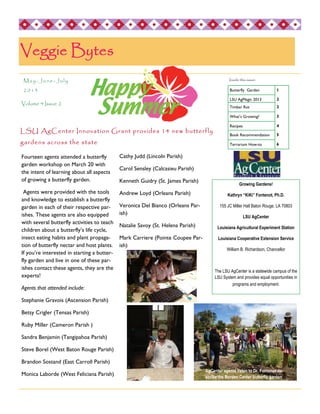
AgCenter agents listen to Dr. Fontenot de-scribe 
the Burden Center butterfly garden
Page 2 Veggie Bytes 
AgMagic at LSU 
The last week of April, LSU hosted 
AgMagic where children from 
around the state were given the 
opportunity to learn about Louisi-ana 
agriculture including alliga-tors, 
crawfish, baby chicks, dig-ging 
for sweet potatoes and so 
much more! 
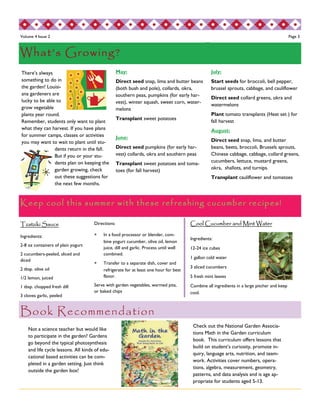
Thanks to Will Afton and Dr. Ed 
Bush for the pictures! 
Hopefully students won’t be yelling TIMBER at your school! 
Oh no school gardeners, timber is falling… in 
the garden! ‘Timber rot’, a disease in toma-toes, 
is showing up in Louisiana. Timber rot is 
caused by the fungus Sclerotinia sclerotiorum. It 
usually occurs in wet, cool conditions like 
we’ve been having this year! Symptoms of 
timber rot are seen when the base of the 
main trunk is girdled or cut. After several 
days the top of the plant will wilt and die; you 
may see white, fluffy mycelium (puffy white 
stuff) growing around the area where the 
base of the tomato trunk has started to rot. If 
you cut the tomato trunk open you’ll see 
hard, black, pea-sized sclerotia (1/4 inch) in-side 
the stem. If you see these symptoms in 
your tomatoes, immediately remove the 
plant and throw it in the trash. Do not place 
these plants in a compost bin as this may 
spread the disease. Rotate your crops. Do 
not grow tomatoes in your garden year 
round as this may increase the likelihood 
of the disease re-occurring in your school 
garden! Scouting for diseases and insects is 
important! Always remove unhealthy plant 
materials from the garden and don’t throw 
rotting fruit into the garden. Let’s hope 
for a clean healthy spring garden! 
We taught the children how plants can 
grow below ground by letting them dig for 
sweet potatoes. 
Eggplant, tomato and cayenne pepper plants were on 
display to show how vegetables grow above ground.
Volume 4 Issue 2 Page 3 
Keep cool this summer with these refreshing cucumber recipes! 
Book Recommendation 
July: 
Start seeds for broccoli, bell pepper, 
brussel sprouts, cabbage, and cauliflower 
Direct seed collard greens, okra and 
watermelons 
Plant tomato transplants (Heat set ) for 
fall harvest 
August: 
Direct seed snap, lima, and butter 
beans, beets, broccoli, Brussels sprouts, 
Chinese cabbage, cabbage, collard greens, 
cucumbers, lettuce, mustard greens, 
okra, shallots, and turnips. 
Transplant cauliflower and tomatoes 
There’s always 
something to do in 
the garden! Louisi-ana 
gardeners are 
lucky to be able to 
grow vegetable 
plants year round. 
Remember, students only want to plant 
what they can harvest. If you have plans 
for summer camps, classes or activities 
you may want to wait to plant until stu-dents 
return in the fall. 
But if you or your stu-dents 
plan on keeping the 
garden growing, check 
out these suggestions for 
the next few months. 
May: 
Direct seed snap, lima and butter beans 
(both bush and pole), collards, okra, 
southern peas, pumpkins (for early har-vest), 
winter squash, sweet corn, water-melons 
Transplant sweet potatoes 
June: 
Direct seed pumpkins (for early har-vest) 
collards, okra and southern peas 
Transplant sweet potatoes and toma-toes 
(for fall harvest) 
Tzatziki Sauce 
Ingredients: 
2-8 oz containers of plain yogurt 
2 cucumbers-peeled, sliced and 
diced 
2 tbsp. olive oil 
1/2 lemon, juiced 
1 tbsp. chopped fresh dill 
3 cloves garlic, peeled 
Directions: 
 In a food processor or blender, com-bine 
yogurt cucumber, olive oil, lemon 
juice, dill and garlic. Process until well 
combined. 
 Transfer to a separate dish, cover and 
refrigerate for at least one hour for best 
flavor. 
Serve with garden vegetables, warmed pita, 
or baked chips 
Not a science teacher but would like 
to participate in the garden? Gardens 
go beyond the typical photosynthesis 
and life cycle lessons. All kinds of edu-cational 
based activities can be com-pleted 
in a garden setting. Just think 
outside the garden box! 
Check out the National Garden Associa-tions 
Math in the Garden curriculum 
book. This curriculum offers lessons that 
build on student’s curiosity, promote in-quiry, 
language arts, nutrition, and team-work. 
Activities cover numbers, opera-tions, 
algebra, measurement, geometry, 
patterns, and data analysis and is age ap-propriate 
for students aged 5-13. 
What’s Growing? 
Cool Cucumber and Mint Water 
Ingredients: 
12-24 ice cubes 
1 gallon cold water 
3 sliced cucumbers 
5 fresh mint leaves 
Combine all ingredients in a large pitcher and keep 
cool.
A terrarium is a contained garden usually grown indoors under indirect light conditions. 
Before planting your terrarium, you first must select a suitable container. 
• Choose a clear container because plants need light to grow. Terrariums are usually glass, 
but they also can be fashioned out of plastic containers such as fish aquariums. 
Step 1. Clean your container. Use a 10 percent bleach solution to remove any bacteria or fungus 
that may be in the container. 
Step 2. Add a layer of gravel or rocks to a depth of at least 1 inch. Among the choices are fish rocks with colors, pea 
gravel and river rocks. Unlike garden beds, terrariums do not have drainage holes, so the rocks serve as a drainage 
layer. 
Step 3. Add soil. You will need to incorporate activated charcoal into the soil to keep out unwanted odors. Some 
growers add the charcoal as a layer between the rocks and the soil or you can mix the two together. Look at the 
root ball of the plants you are using in the terrarium. How deep are those roots? The soil needs to be at least as 
deep as the root ball of the plant. Generally, the drainage material, charcoal and soil take up about a third of the 
container’s space. 
• Remember that different plants have different needs. Succulent plants (cactus) require much 
less water than other plants. Use sand in place of soil if growing succulents. 
Step 4. Choose healthy plants that are free of insects and disease for your terrarium. Group 
similar plants together in the terrarium. For example, don’t mix a cactus with a fern because 
they have totally different water requirements. Place the plants in the soil only as deep as the 
original root ball. Do not plant them too deep. If planting a groundcover or moss, add this last. 
Have fun grouping different plants together to make a miniature garden. 
Visit www.lsuagcenter.com/schoolgardens for more information on terrariums 
and terrarium maintenance 
Planting a Terrarium 
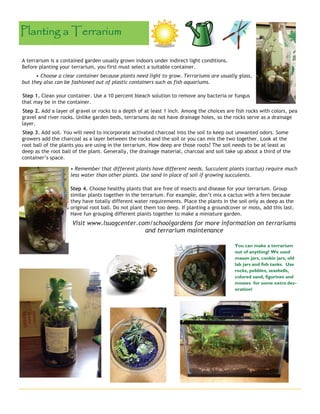
You can make a terrarium 
out of anything! We used 
mason jars, cookie jars, old 
lab jars and fish tanks. Use 
rocks, pebbles, seashells, 
colored sand, figurines and 
mosses for some extra dec-oration!

May 2013 Louisiana School Gardening News

  • 1.
    Veggie Bytes LSUAgCenter Innovation Grant provides 14 new butterfly gardens across the state Fourteen agents attended a butterfly garden workshop on March 20 with the intent of learning about all aspects of growing a butterfly garden. Agents were provided with the tools and knowledge to establish a butterfly garden in each of their respective par-ishes. These agents are also equipped with several butterfly activities to teach children about a butterfly’s life cycle, insect eating habits and plant propaga-tion of butterfly nectar and host plants. If you’re interested in starting a butter-fly garden and live in one of these par-ishes contact these agents, they are the experts! Agents that attended include: Stephanie Gravois (Ascension Parish) Betsy Crigler (Tensas Parish) Ruby Miller (Cameron Parish ) Sandra Benjamin (Tangipahoa Parish) Steve Borel (West Baton Rouge Parish) Brandon Sostand (East Carroll Parish) Monica Laborde (West Feliciana Parish) Inside this issue: Butterfly Garden 1 LSU AgMagic 2013 2 Timber Rot 2 What’s Growing? 3 Recipes 4 Book Recommendation 5 Terrarium How-to 6 May-June-July 2013 Volume 4 Issue 2 Growing Gardens! Kathryn “KiKi” Fontenot, Ph.D. 155 JC Miller Hall Baton Rouge, LA 70803 LSU AgCenter Louisiana Agricultural Experiment Station Louisiana Cooperative Extension Service William B. Richardson, Chancellor The LSU AgCenter is a statewide campus of the LSU System and provides equal opportunities in programs and employment. Cathy Judd (Lincoln Parish) Carol Sensley (Calcasieu Parish) Kenneth Guidry (St. James Parish) Andrew Loyd (Orleans Parish) Veronica Del Bianco (Orleans Par-ish) Natalie Savoy (St. Helena Parish) Mark Carriere (Pointe Coupee Par-ish) AgCenter agents listen to Dr. Fontenot de-scribe the Burden Center butterfly garden
  • 2.
    Page 2 VeggieBytes AgMagic at LSU The last week of April, LSU hosted AgMagic where children from around the state were given the opportunity to learn about Louisi-ana agriculture including alliga-tors, crawfish, baby chicks, dig-ging for sweet potatoes and so much more! Thanks to Will Afton and Dr. Ed Bush for the pictures! Hopefully students won’t be yelling TIMBER at your school! Oh no school gardeners, timber is falling… in the garden! ‘Timber rot’, a disease in toma-toes, is showing up in Louisiana. Timber rot is caused by the fungus Sclerotinia sclerotiorum. It usually occurs in wet, cool conditions like we’ve been having this year! Symptoms of timber rot are seen when the base of the main trunk is girdled or cut. After several days the top of the plant will wilt and die; you may see white, fluffy mycelium (puffy white stuff) growing around the area where the base of the tomato trunk has started to rot. If you cut the tomato trunk open you’ll see hard, black, pea-sized sclerotia (1/4 inch) in-side the stem. If you see these symptoms in your tomatoes, immediately remove the plant and throw it in the trash. Do not place these plants in a compost bin as this may spread the disease. Rotate your crops. Do not grow tomatoes in your garden year round as this may increase the likelihood of the disease re-occurring in your school garden! Scouting for diseases and insects is important! Always remove unhealthy plant materials from the garden and don’t throw rotting fruit into the garden. Let’s hope for a clean healthy spring garden! We taught the children how plants can grow below ground by letting them dig for sweet potatoes. Eggplant, tomato and cayenne pepper plants were on display to show how vegetables grow above ground.
  • 3.
    Volume 4 Issue2 Page 3 Keep cool this summer with these refreshing cucumber recipes! Book Recommendation July: Start seeds for broccoli, bell pepper, brussel sprouts, cabbage, and cauliflower Direct seed collard greens, okra and watermelons Plant tomato transplants (Heat set ) for fall harvest August: Direct seed snap, lima, and butter beans, beets, broccoli, Brussels sprouts, Chinese cabbage, cabbage, collard greens, cucumbers, lettuce, mustard greens, okra, shallots, and turnips. Transplant cauliflower and tomatoes There’s always something to do in the garden! Louisi-ana gardeners are lucky to be able to grow vegetable plants year round. Remember, students only want to plant what they can harvest. If you have plans for summer camps, classes or activities you may want to wait to plant until stu-dents return in the fall. But if you or your stu-dents plan on keeping the garden growing, check out these suggestions for the next few months. May: Direct seed snap, lima and butter beans (both bush and pole), collards, okra, southern peas, pumpkins (for early har-vest), winter squash, sweet corn, water-melons Transplant sweet potatoes June: Direct seed pumpkins (for early har-vest) collards, okra and southern peas Transplant sweet potatoes and toma-toes (for fall harvest) Tzatziki Sauce Ingredients: 2-8 oz containers of plain yogurt 2 cucumbers-peeled, sliced and diced 2 tbsp. olive oil 1/2 lemon, juiced 1 tbsp. chopped fresh dill 3 cloves garlic, peeled Directions:  In a food processor or blender, com-bine yogurt cucumber, olive oil, lemon juice, dill and garlic. Process until well combined.  Transfer to a separate dish, cover and refrigerate for at least one hour for best flavor. Serve with garden vegetables, warmed pita, or baked chips Not a science teacher but would like to participate in the garden? Gardens go beyond the typical photosynthesis and life cycle lessons. All kinds of edu-cational based activities can be com-pleted in a garden setting. Just think outside the garden box! Check out the National Garden Associa-tions Math in the Garden curriculum book. This curriculum offers lessons that build on student’s curiosity, promote in-quiry, language arts, nutrition, and team-work. Activities cover numbers, opera-tions, algebra, measurement, geometry, patterns, and data analysis and is age ap-propriate for students aged 5-13. What’s Growing? Cool Cucumber and Mint Water Ingredients: 12-24 ice cubes 1 gallon cold water 3 sliced cucumbers 5 fresh mint leaves Combine all ingredients in a large pitcher and keep cool.
  • 4.
    A terrarium isa contained garden usually grown indoors under indirect light conditions. Before planting your terrarium, you first must select a suitable container. • Choose a clear container because plants need light to grow. Terrariums are usually glass, but they also can be fashioned out of plastic containers such as fish aquariums. Step 1. Clean your container. Use a 10 percent bleach solution to remove any bacteria or fungus that may be in the container. Step 2. Add a layer of gravel or rocks to a depth of at least 1 inch. Among the choices are fish rocks with colors, pea gravel and river rocks. Unlike garden beds, terrariums do not have drainage holes, so the rocks serve as a drainage layer. Step 3. Add soil. You will need to incorporate activated charcoal into the soil to keep out unwanted odors. Some growers add the charcoal as a layer between the rocks and the soil or you can mix the two together. Look at the root ball of the plants you are using in the terrarium. How deep are those roots? The soil needs to be at least as deep as the root ball of the plant. Generally, the drainage material, charcoal and soil take up about a third of the container’s space. • Remember that different plants have different needs. Succulent plants (cactus) require much less water than other plants. Use sand in place of soil if growing succulents. Step 4. Choose healthy plants that are free of insects and disease for your terrarium. Group similar plants together in the terrarium. For example, don’t mix a cactus with a fern because they have totally different water requirements. Place the plants in the soil only as deep as the original root ball. Do not plant them too deep. If planting a groundcover or moss, add this last. Have fun grouping different plants together to make a miniature garden. Visit www.lsuagcenter.com/schoolgardens for more information on terrariums and terrarium maintenance Planting a Terrarium You can make a terrarium out of anything! We used mason jars, cookie jars, old lab jars and fish tanks. Use rocks, pebbles, seashells, colored sand, figurines and mosses for some extra dec-oration!