The Lean LaunchPad Session 6: Resources and Activities Professors Steve Blank,Jon Feiber,  Jim Hornthal, Oren Jacob https://sites.google.com/site/xmba296t / XMBA296T
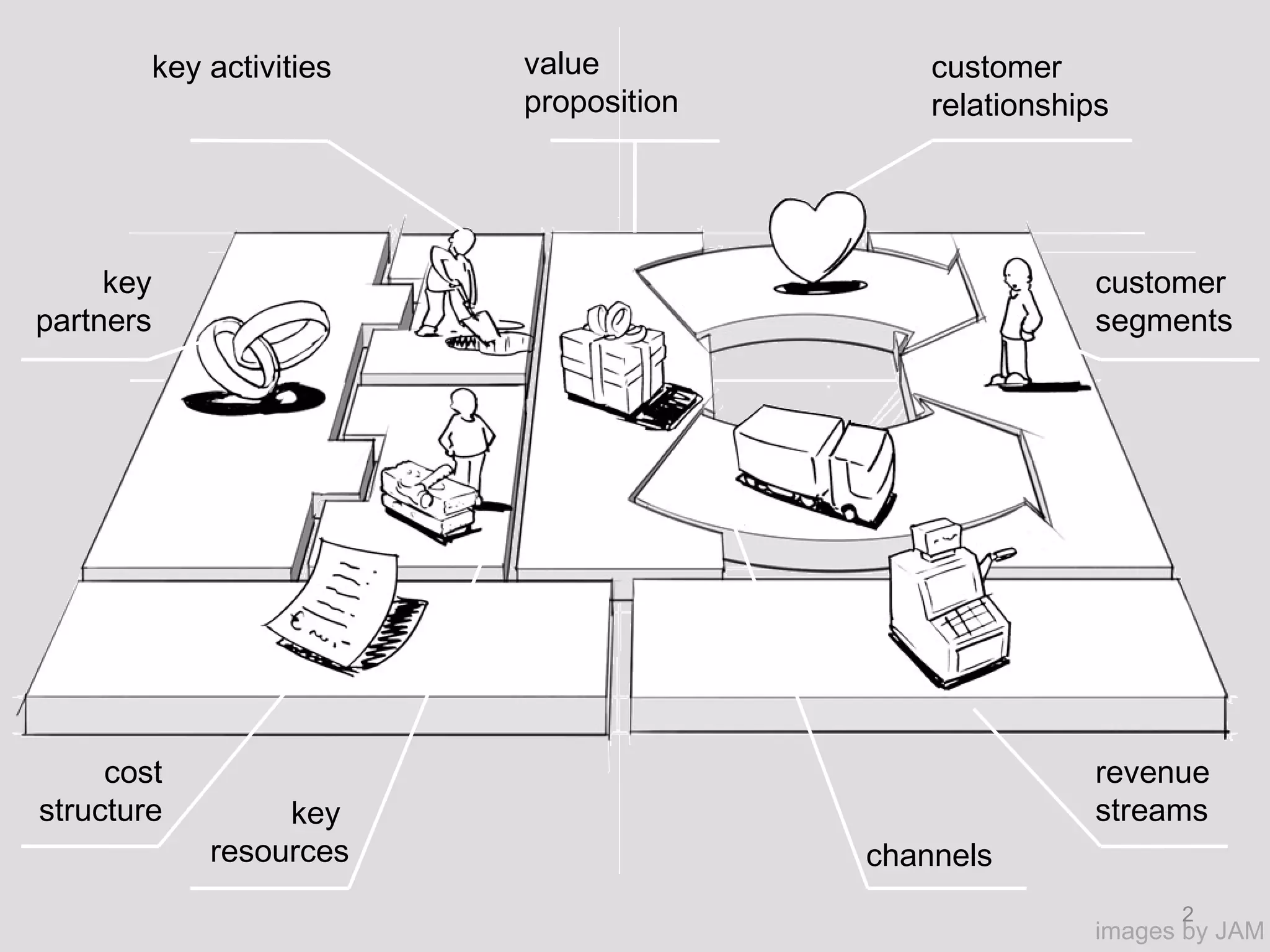
images by JAM customer segments key partners cost structure revenue streams channels customer relationships key activities key  resources value proposition
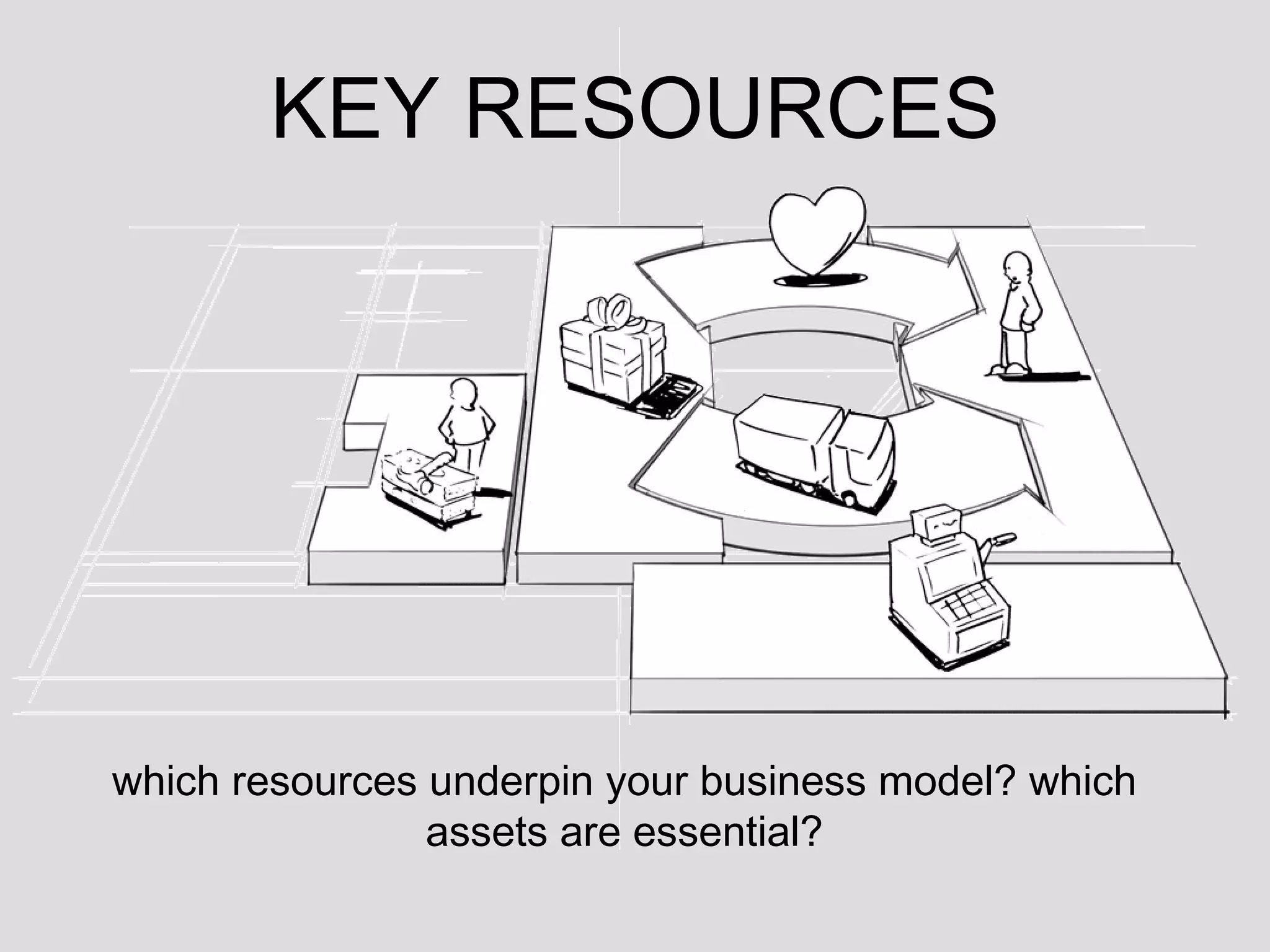
KEY RESOURCES which resources underpin your business model? which assets are essential?
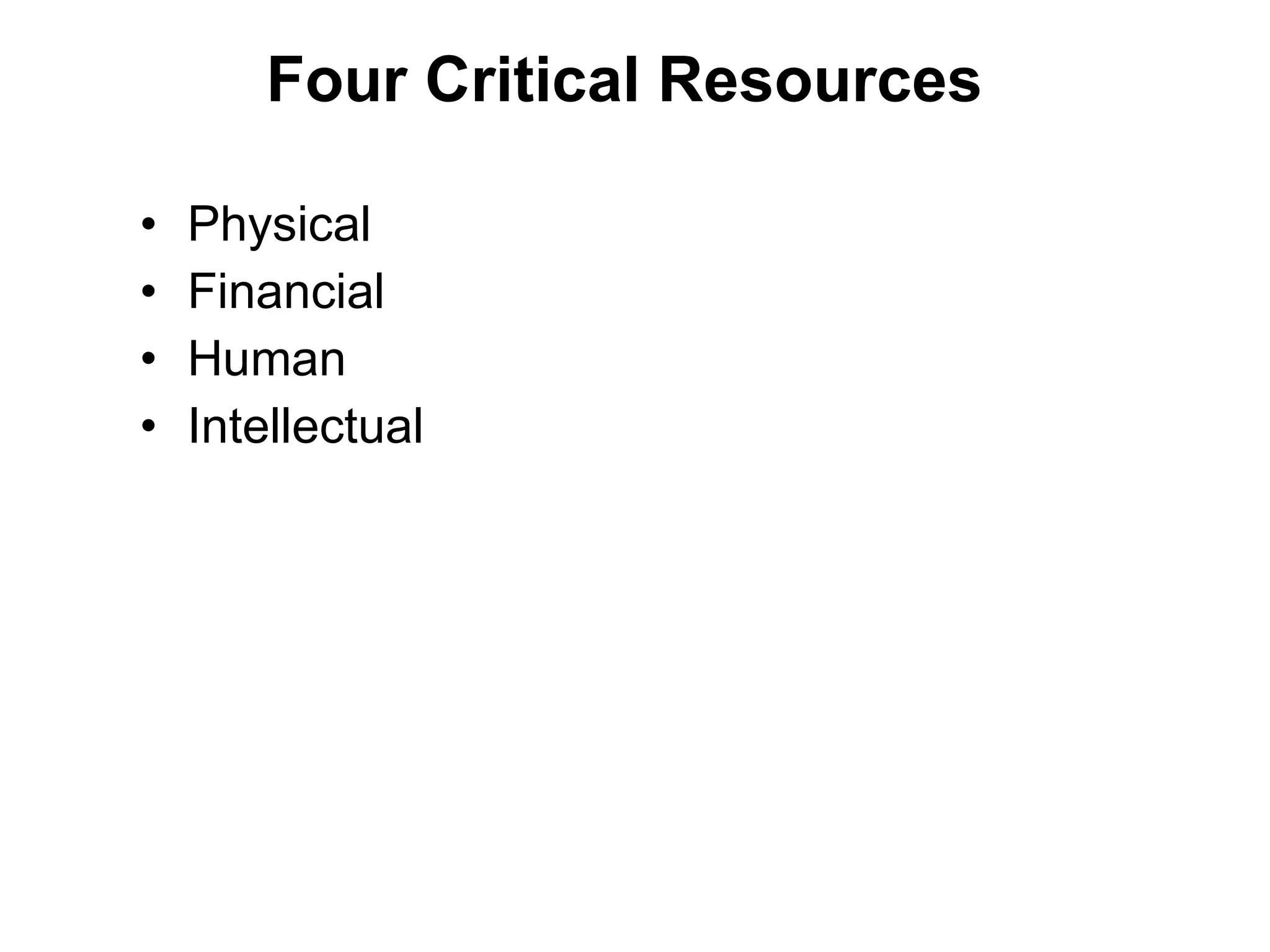
Four Critical Resources Physical Financial Human Intellectual
Physical Resources Two types:  company facilities  product/service resources
Physical Resources company facilities office space, company location  product/services  supply of silicon wafers or iron ore, or thousands of feet of warehouse space?  Many physical goods are capital intensive
Financial Resources Friends and Family Crowdfunding Angels Venture Capital Corporate partners  Others: SBA or SBIR grants Lease-lines Factoring Vendor-financing
Human Resources qualified employees mentors, teachers, coaches, advisors
Mentors, Teachers, Coaches Mentors, teachers, coaches advance your  personal  career If you want to  learn a specific subject  find a teacher If you want to  hone specific skills  or reach an exact goal hire a coach  If you want to get  smarter and better over your career  find someone who cares about you enough to be a mentor
Advisors Advisors are people you need to help advance your  company’s  success Founders fail when they believe their visions are facts Listening to  experienced  advice can help you sort through whether your vision is a hallucination Getting an advisory board (by expanding your circle of accumulated wisdom past their investors) is so important that it’s an explicit step in the Customer Development process
Qualified Employees/Culture Are the difference between a good idea that never went anywhere and a billion dollar firm
 
MBA295F  Customer Development in the High-Tech Enterprise  Spring 2007
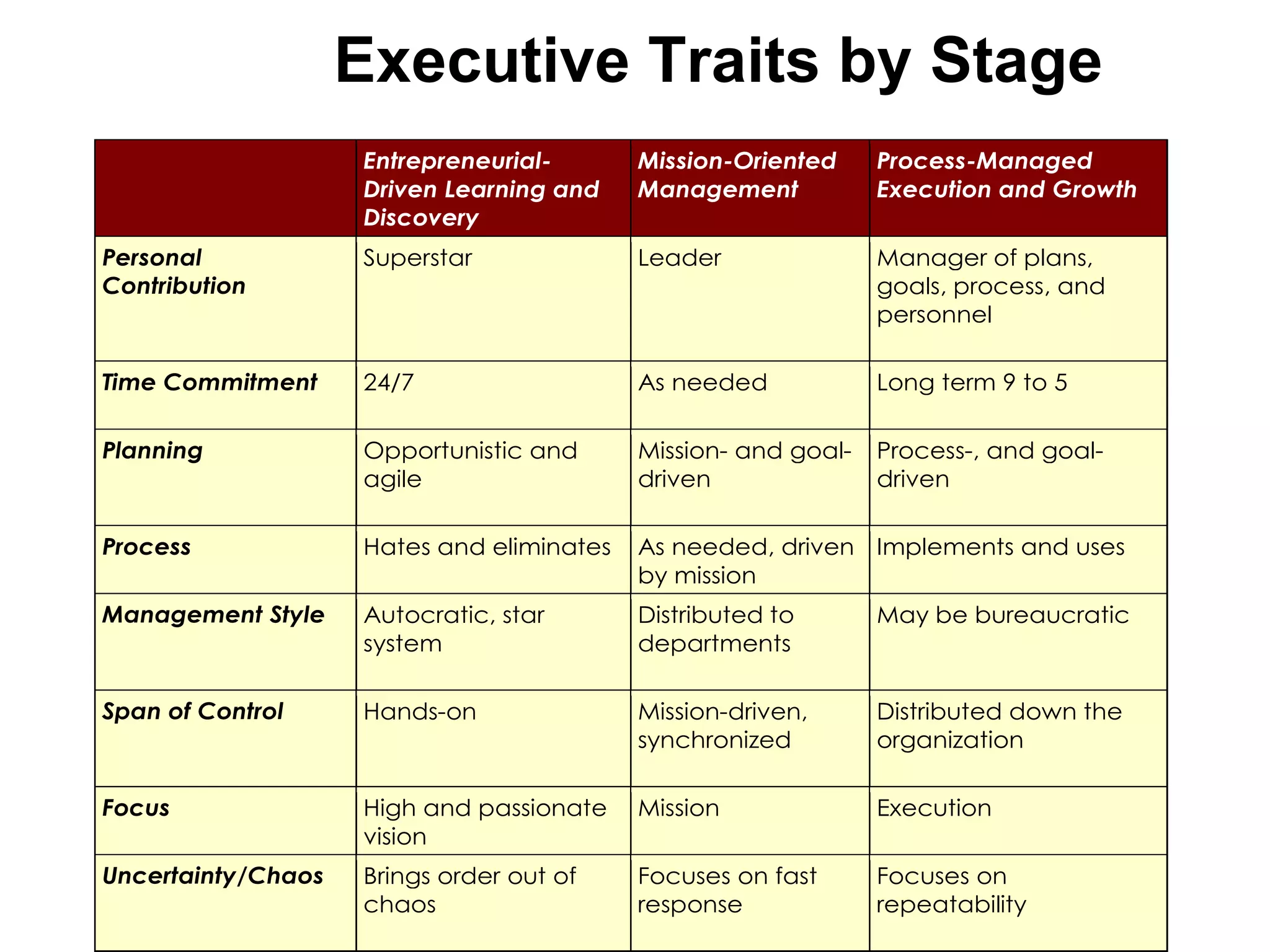
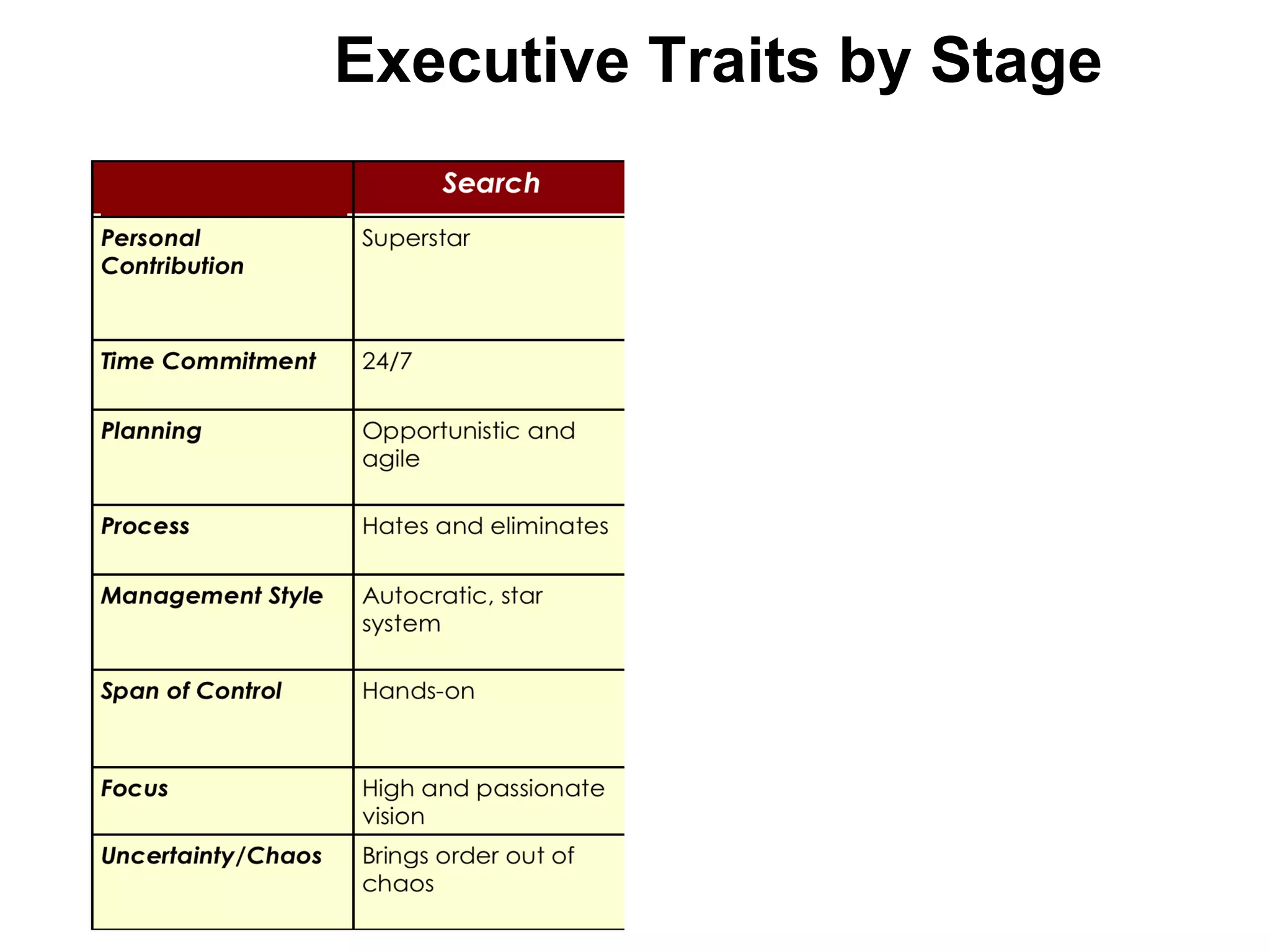
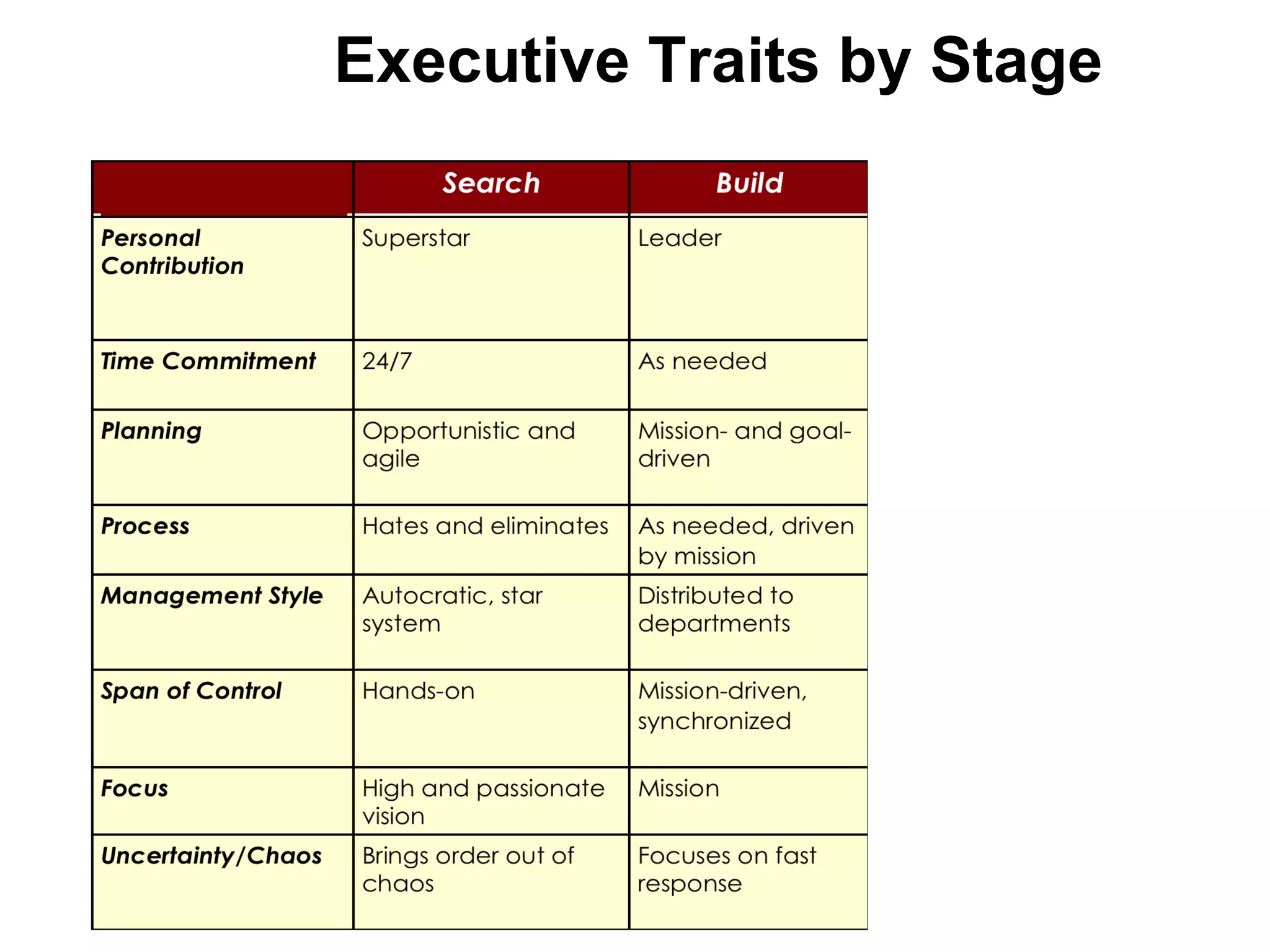
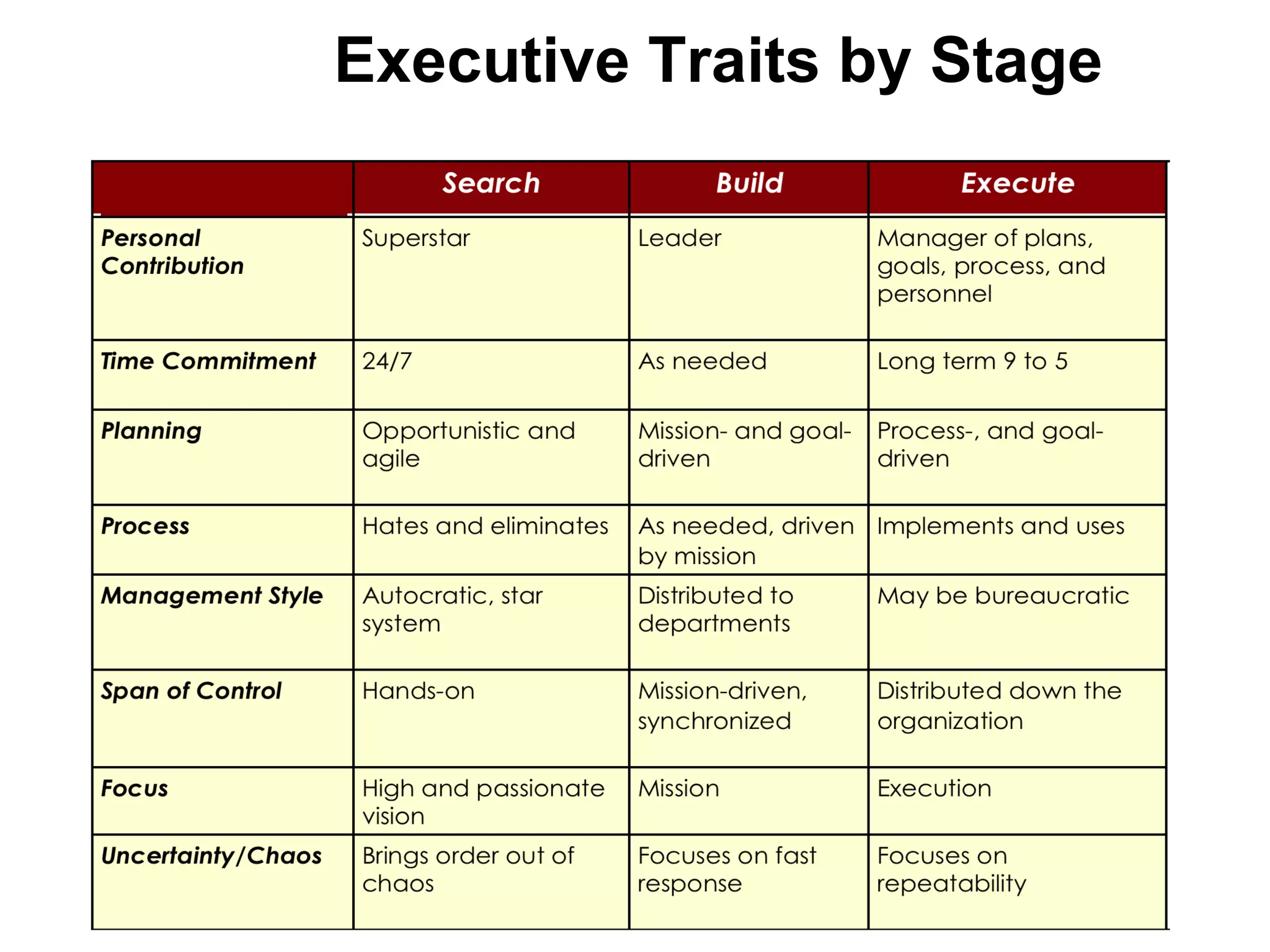
Executive Traits by Stage
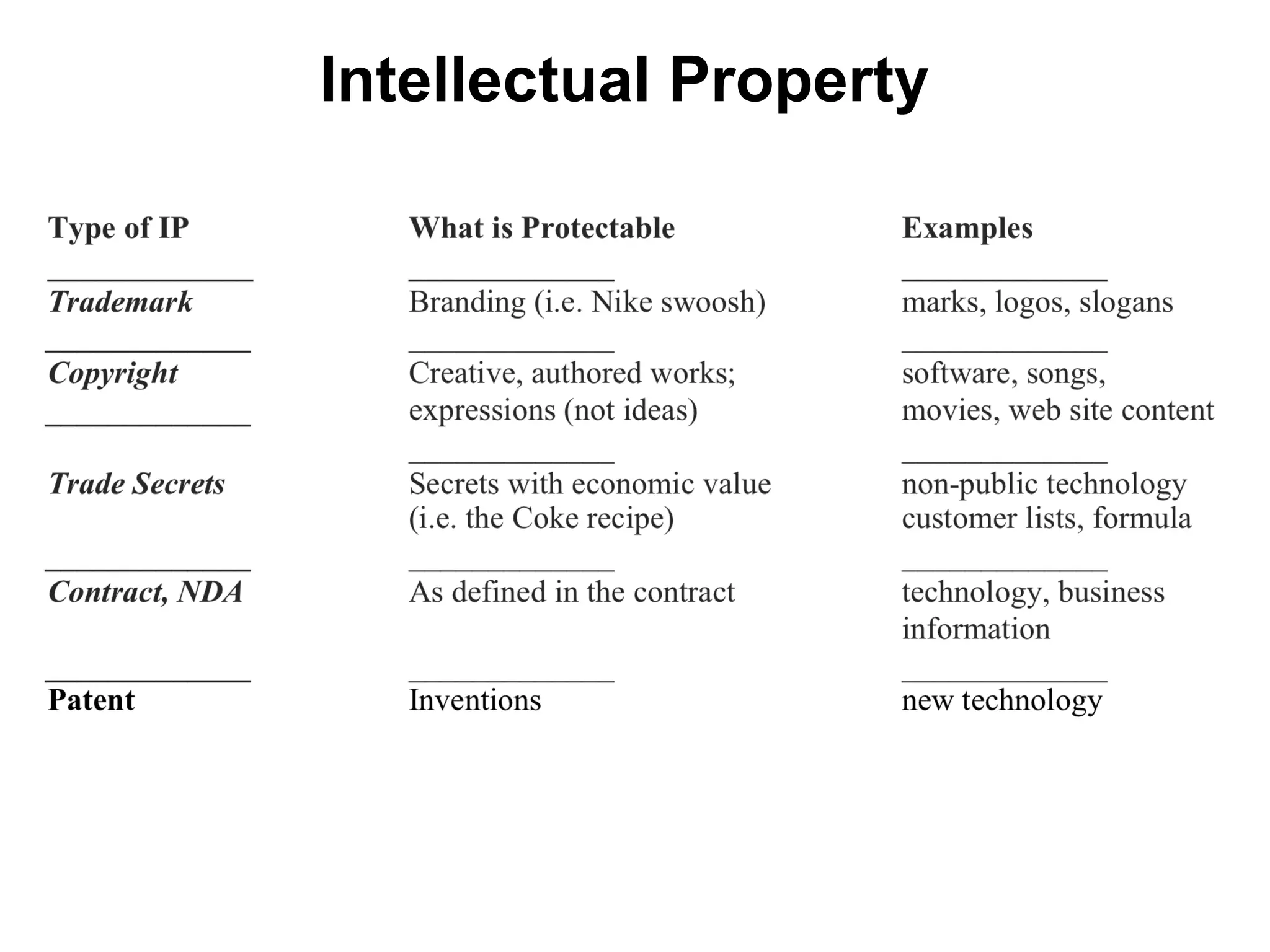
Intellectual Property
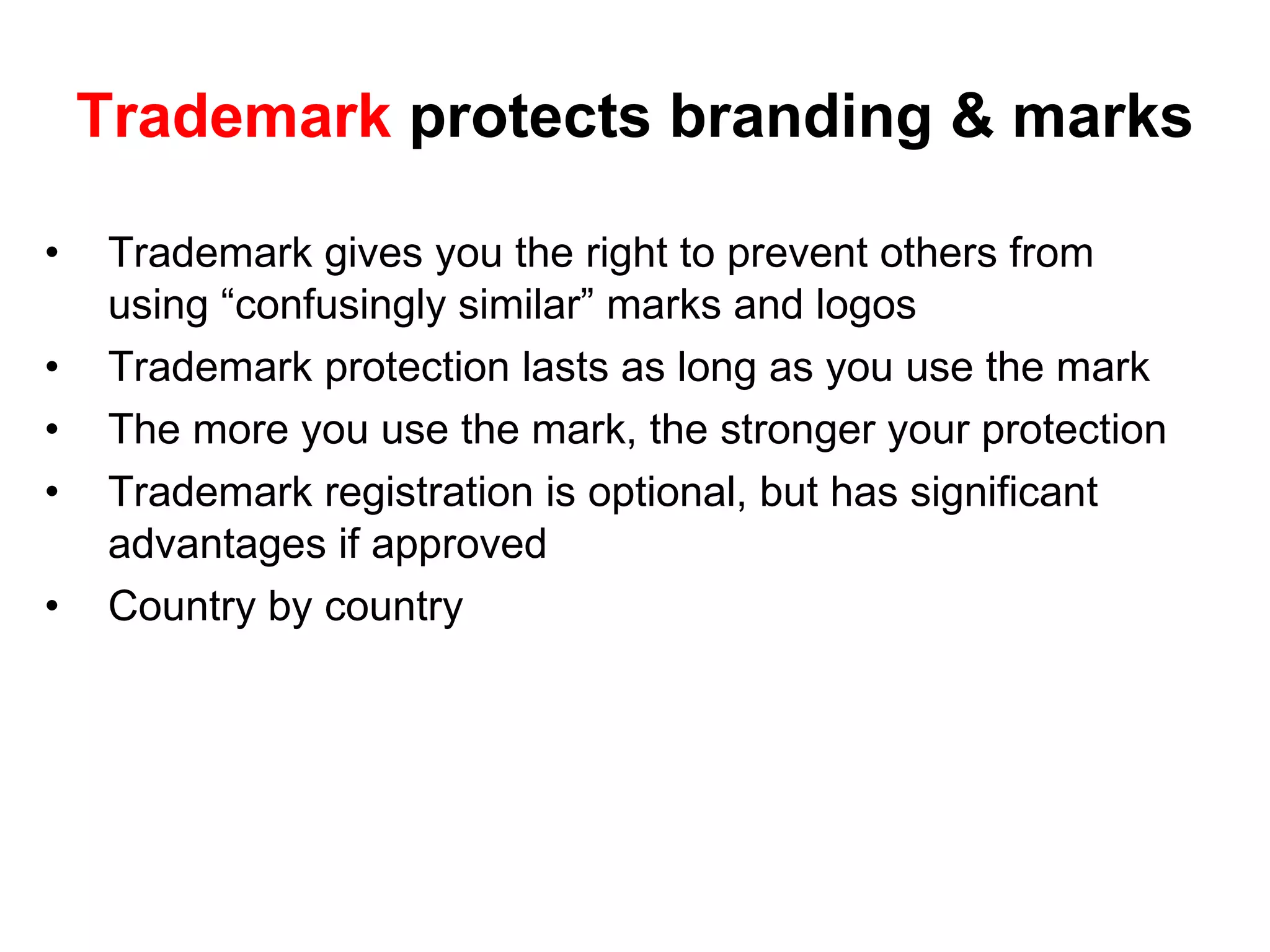
Trademark  protects branding & marks Trademark gives you the right to prevent others from using “confusingly similar” marks and logos Trademark protection lasts as long as you use the mark The more you use the mark, the stronger your protection Trademark registration is optional, but has significant advantages if approved  Country by country
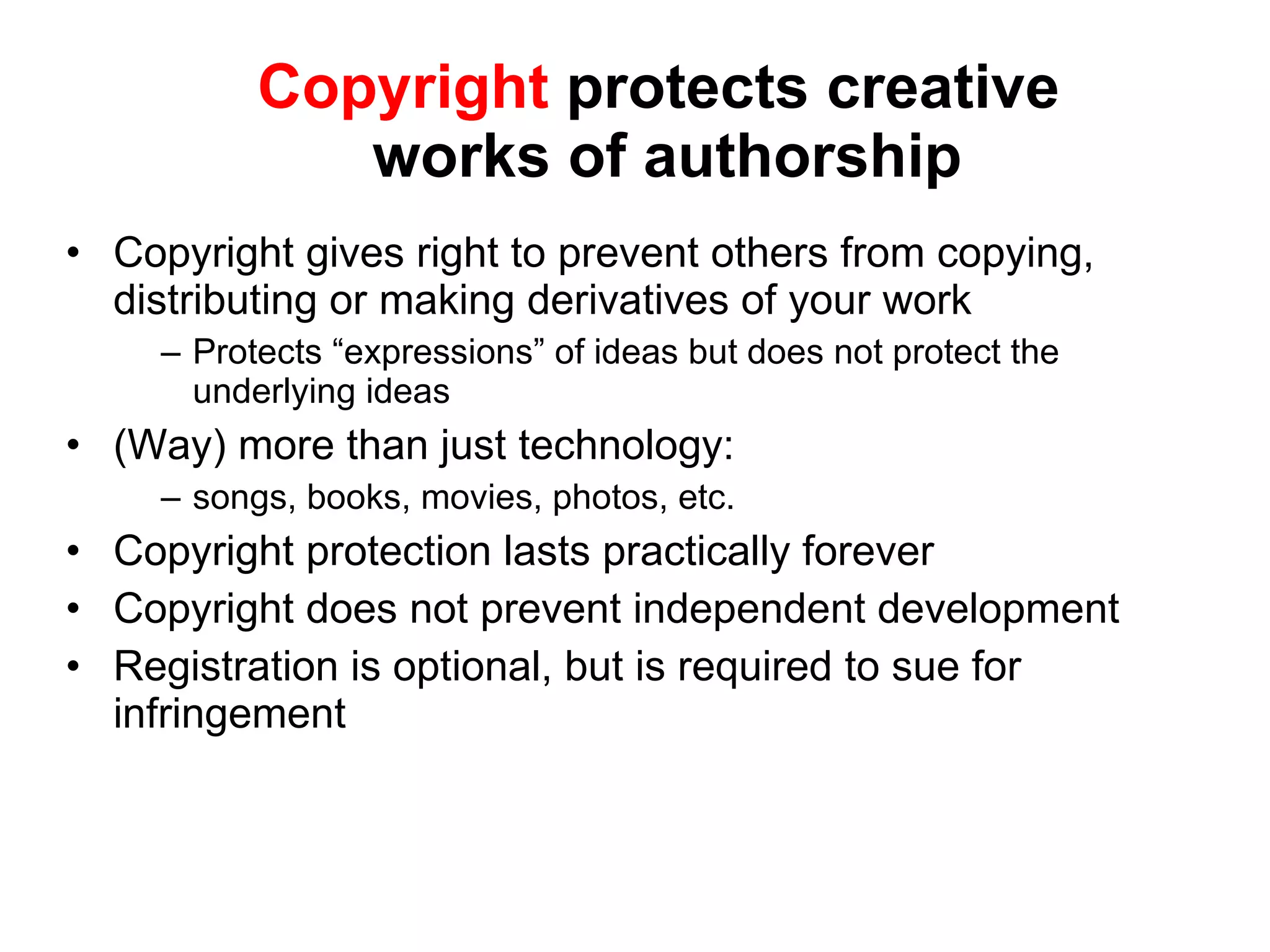
Copyright  protects creative  works of authorship Copyright gives right to prevent others from copying, distributing or making derivatives of your work Protects “expressions” of ideas but does not protect the underlying ideas (Way) more than just technology:  songs, books, movies, photos, etc.  Copyright protection lasts practically forever Copyright does not prevent independent development Registration is optional, but is required to sue for infringement
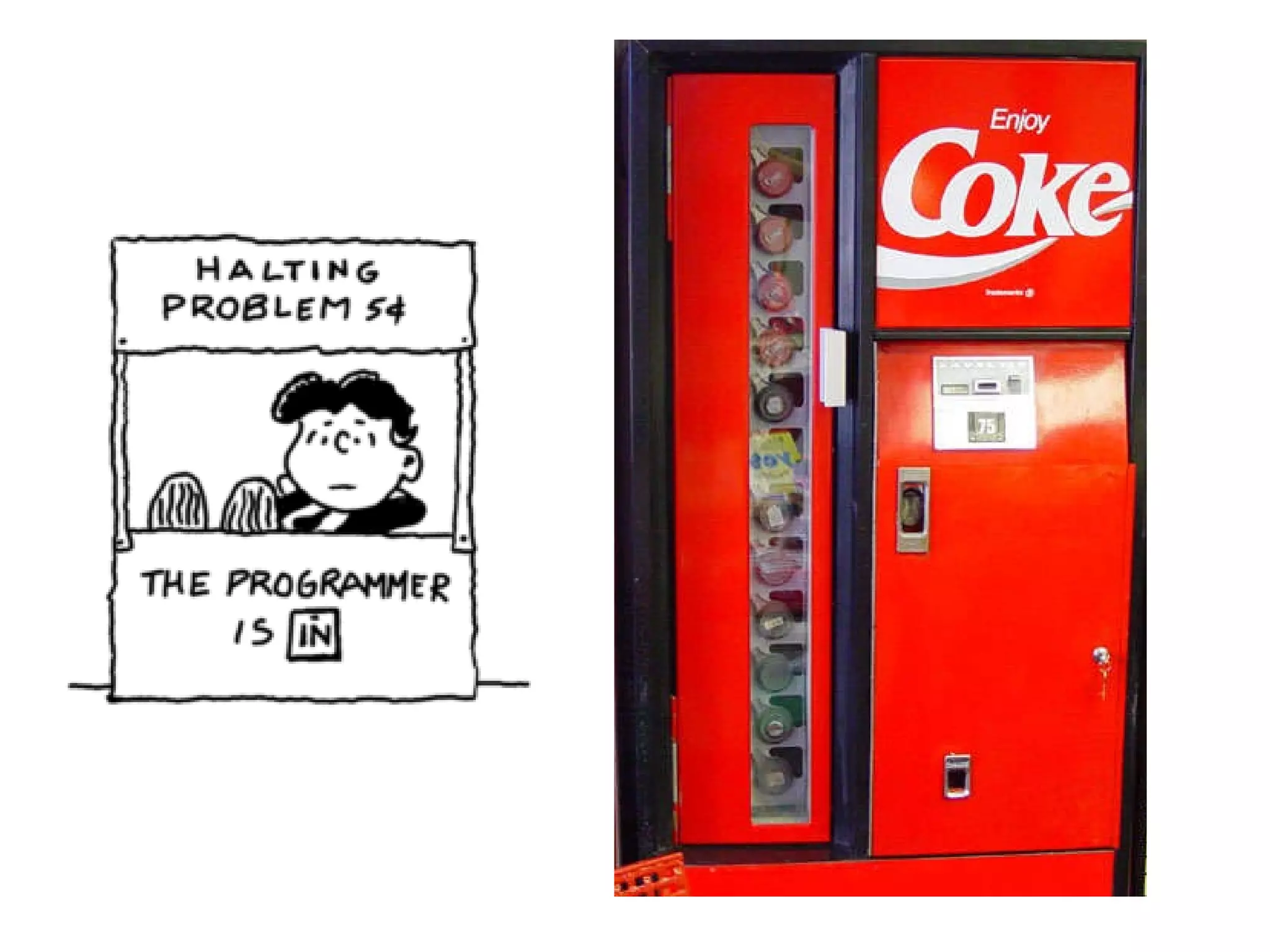
Trade Secrets Information that is kept secret and has economic value to the business Coke recipe, customer lists, product road maps. No registration required Can last for as long as you take reasonable steps to keep confidential
Contract Protection agreed to by contract No registration process You have whatever protection is defined in the contract (e.g., NDA gives you certain rights to protection of your confidential information) The protection lasts for the time period defined in the contract
Patents A government granted monopoly  prevents others from making, using or selling your invention Even if the other’s infringement was innocent or accidental Invention must be non-obvious Protection lasts typically for 15-20 years Application and examination is required  Typical cost for application and exam is $10-30k Typical time for application and exam is 1-4 years Must file in U.S. within one year of sale, offer for sale, public disclosure or public use Provisional application alternative
What Can be Patented? Just about anything . . . Circuits, hardware Software, applied algorithms Formulas, designs User interfaces Applications, systems Business processes (sometimes) But not these . . .  Scientific principles Pure mathematical algorithms And, pending Supreme Court Case raises concerns regarding patentability of “methods” inventions
buzz group
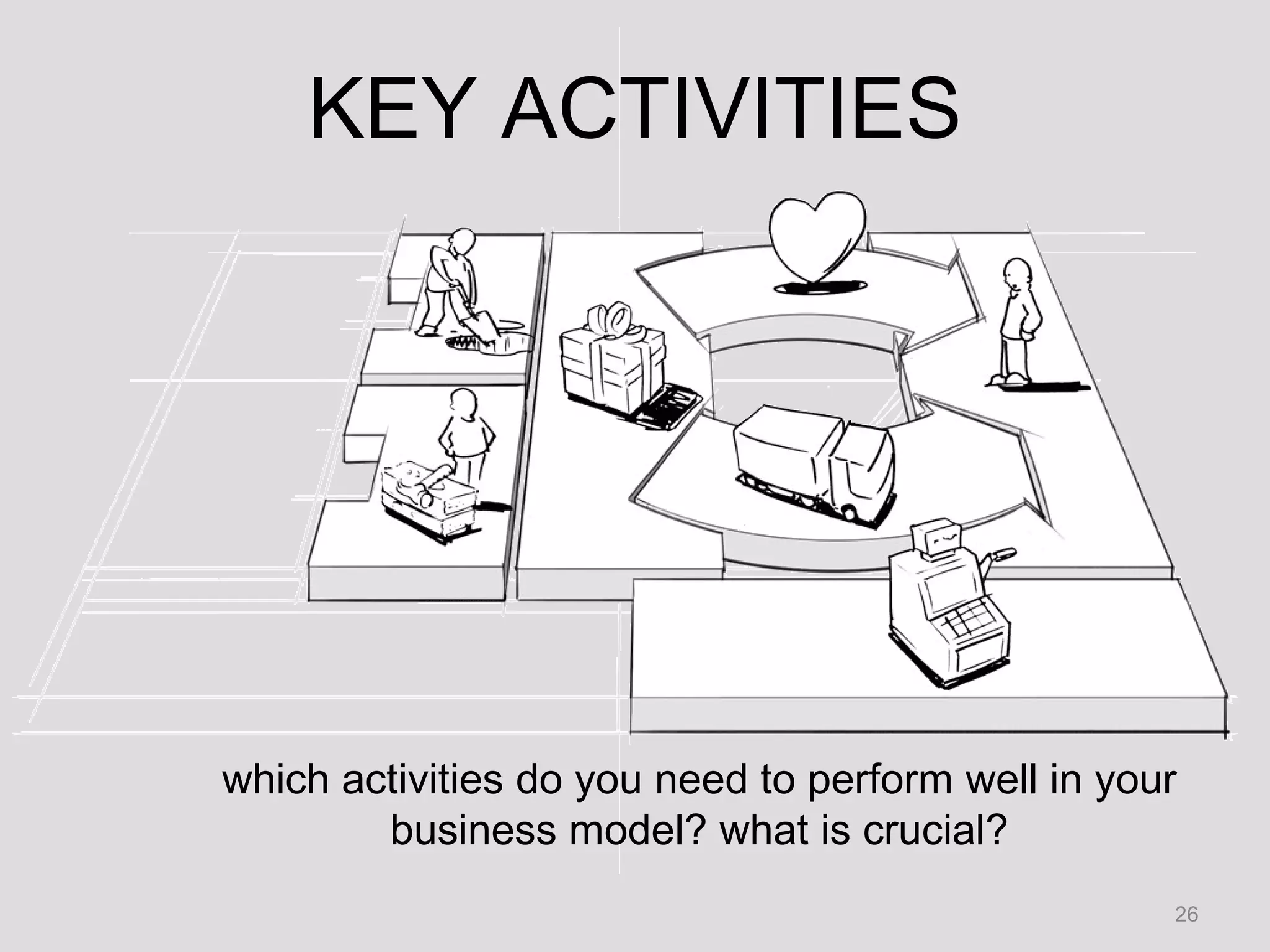
KEY ACTIVITIES which activities do you need to perform well in your business model? what is crucial?
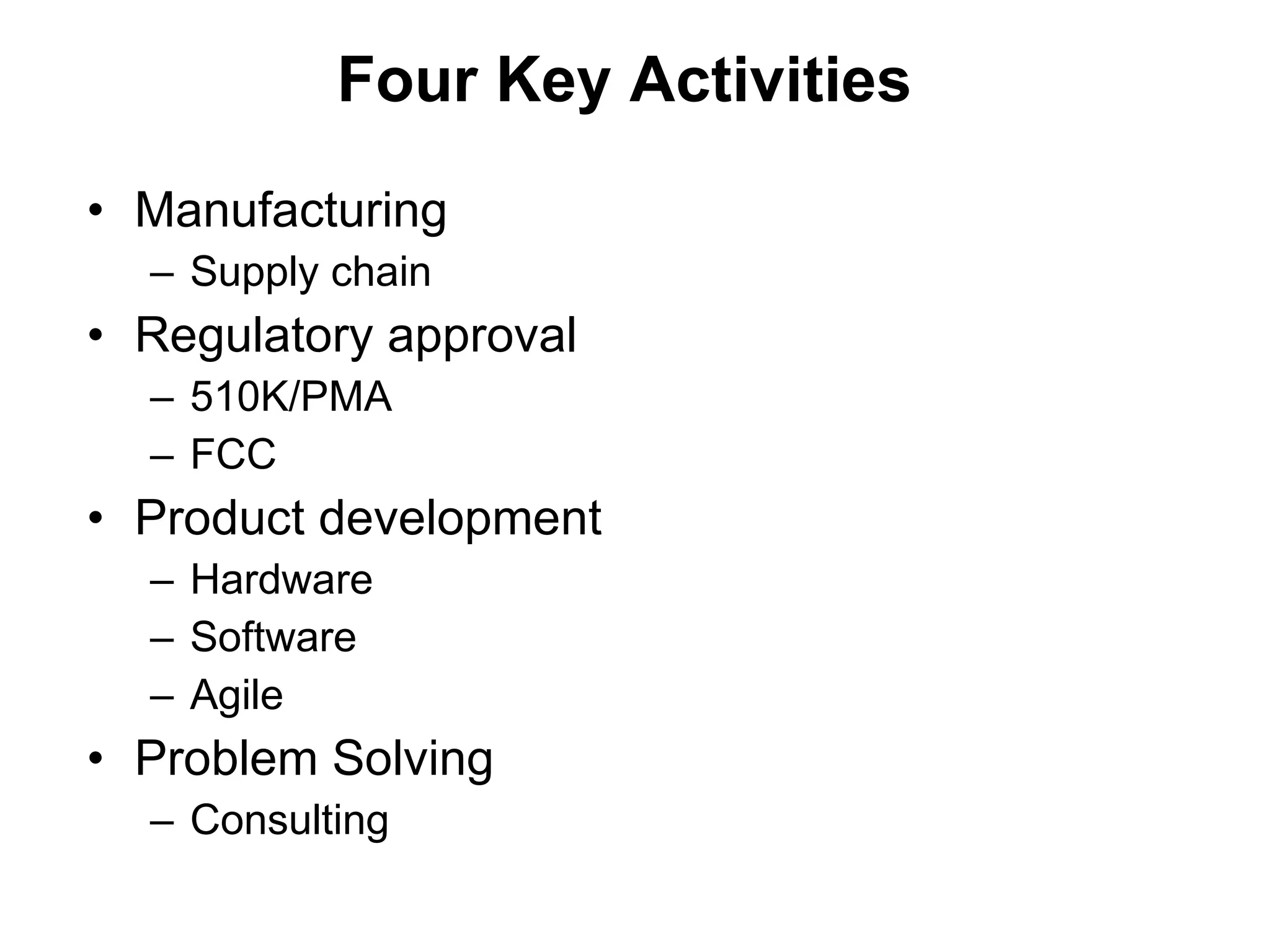
Four Key Activities Manufacturing Supply chain Regulatory approval 510K/PMA FCC Product development Hardware Software Agile Problem Solving Consulting
buzz group

Xmba 296 t lecture 6 resources and activities

  • 1.
    The Lean LaunchPadSession 6: Resources and Activities Professors Steve Blank,Jon Feiber, Jim Hornthal, Oren Jacob https://sites.google.com/site/xmba296t / XMBA296T
  • 2.
    images by JAMcustomer segments key partners cost structure revenue streams channels customer relationships key activities key resources value proposition
  • 3.
    KEY RESOURCES whichresources underpin your business model? which assets are essential?
  • 4.
    Four Critical ResourcesPhysical Financial Human Intellectual
  • 5.
    Physical Resources Twotypes: company facilities product/service resources
  • 6.
    Physical Resources companyfacilities office space, company location product/services supply of silicon wafers or iron ore, or thousands of feet of warehouse space? Many physical goods are capital intensive
  • 7.
    Financial Resources Friendsand Family Crowdfunding Angels Venture Capital Corporate partners Others: SBA or SBIR grants Lease-lines Factoring Vendor-financing
  • 8.
    Human Resources qualifiedemployees mentors, teachers, coaches, advisors
  • 9.
    Mentors, Teachers, CoachesMentors, teachers, coaches advance your personal career If you want to learn a specific subject find a teacher If you want to hone specific skills or reach an exact goal hire a coach If you want to get smarter and better over your career find someone who cares about you enough to be a mentor
  • 10.
    Advisors Advisors arepeople you need to help advance your company’s success Founders fail when they believe their visions are facts Listening to experienced advice can help you sort through whether your vision is a hallucination Getting an advisory board (by expanding your circle of accumulated wisdom past their investors) is so important that it’s an explicit step in the Customer Development process
  • 11.
    Qualified Employees/Culture Arethe difference between a good idea that never went anywhere and a billion dollar firm
  • 12.
  • 13.
    MBA295F CustomerDevelopment in the High-Tech Enterprise Spring 2007
  • 14.
  • 15.
  • 16.
  • 17.
  • 18.
  • 19.
    Trademark protectsbranding & marks Trademark gives you the right to prevent others from using “confusingly similar” marks and logos Trademark protection lasts as long as you use the mark The more you use the mark, the stronger your protection Trademark registration is optional, but has significant advantages if approved Country by country
  • 20.
    Copyright protectscreative works of authorship Copyright gives right to prevent others from copying, distributing or making derivatives of your work Protects “expressions” of ideas but does not protect the underlying ideas (Way) more than just technology: songs, books, movies, photos, etc. Copyright protection lasts practically forever Copyright does not prevent independent development Registration is optional, but is required to sue for infringement
  • 21.
    Trade Secrets Informationthat is kept secret and has economic value to the business Coke recipe, customer lists, product road maps. No registration required Can last for as long as you take reasonable steps to keep confidential
  • 22.
    Contract Protection agreedto by contract No registration process You have whatever protection is defined in the contract (e.g., NDA gives you certain rights to protection of your confidential information) The protection lasts for the time period defined in the contract
  • 23.
    Patents A governmentgranted monopoly prevents others from making, using or selling your invention Even if the other’s infringement was innocent or accidental Invention must be non-obvious Protection lasts typically for 15-20 years Application and examination is required Typical cost for application and exam is $10-30k Typical time for application and exam is 1-4 years Must file in U.S. within one year of sale, offer for sale, public disclosure or public use Provisional application alternative
  • 24.
    What Can bePatented? Just about anything . . . Circuits, hardware Software, applied algorithms Formulas, designs User interfaces Applications, systems Business processes (sometimes) But not these . . . Scientific principles Pure mathematical algorithms And, pending Supreme Court Case raises concerns regarding patentability of “methods” inventions
  • 25.
  • 26.
    KEY ACTIVITIES whichactivities do you need to perform well in your business model? what is crucial?
  • 27.
    Four Key ActivitiesManufacturing Supply chain Regulatory approval 510K/PMA FCC Product development Hardware Software Agile Problem Solving Consulting
  • 28.