Xen PMU
Boris Ostrovsky, Oracle
Xen Developer Summit
Oct 24-25, 2013

1Copyright © 2013, Oracle and/or its affiliates. All rights reserved.
Agenda


Profiling methods



Existing tools



Why perf



Design requirements



High-level design



Status



Next steps

2Copyright © 2013, Oracle and/or its affiliates. All rights reserved.
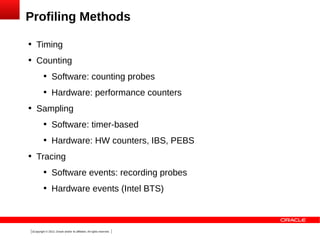
Profiling Methods


Timing



Counting






Software: counting probes
Hardware: performance counters

Sampling






Software: timer-based
Hardware: HW counters, IBS, PEBS

Tracing


Software events: recording probes



Hardware events (Intel BTS)

3Copyright © 2013, Oracle and/or its affiliates. All rights reserved.
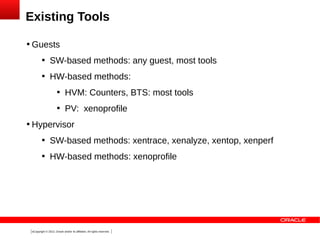
Existing Tools


Guests


SW-based methods: any guest, most tools



HW-based methods:






HVM: Counters, BTS: most tools
PV: xenoprofile

Hypervisor


SW-based methods: xentrace, xenalyze, xentop, xenperf



HW-based methods: xenoprofile

4Copyright © 2013, Oracle and/or its affiliates. All rights reserved.
Why perf


Why not (xen)oprofile






not inthe tree
not in active development

perf


in the tree



active development



lots of features

5Copyright © 2013, Oracle and/or its affiliates. All rights reserved.
Desired Properties


Use HVM VPMU for both PV and HVM



As little as possible non-Xen changes in Linux kernel




Staged development

Possibility of other tools using the same framework

6Copyright © 2013, Oracle and/or its affiliates. All rights reserved.
(Very) High-Level Design Features


Manage PMU in current VPMU






VPMU states
VPMU context (i.e. registers)

On PMU interrupt stop all counters


Emulate PMU in Linux to avoid traps on MSR accesses



Domain re-enables PMU via hypercall when done processing
the interrupt



Global profile mode




Dom0 profiles everyone

APIC and NMI mode

7Copyright © 2013, Oracle and/or its affiliates. All rights reserved.
Status


Limitations




Only profile hypervisor CPUs where dom0 is running



Only counters are supported (no IBS/PEBS)





PV VCPUs should be pinned

No backtrace support (for the hypervisor)

V3 for Xen in progress


4.4 is unlikely



coordinate with Linux patches



perf toolstack changes (not Xen-specific code)

8Copyright © 2013, Oracle and/or its affiliates. All rights reserved.
Future Enhancements


Address limitations from stage 1


No pinning requirement



#PCPUs > #VCPUs in dom0



Tracing multiple guests in global mode



New HW features (PEBS, IBS)



Tracing (xentrace?)

9Copyright © 2013, Oracle and/or its affiliates. All rights reserved.
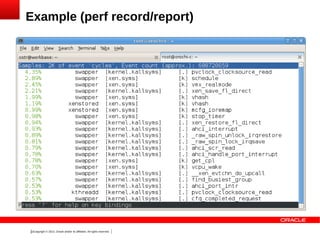
Example (perf record/report)

10Copyright © 2013, Oracle and/or its affiliates. All rights reserved.
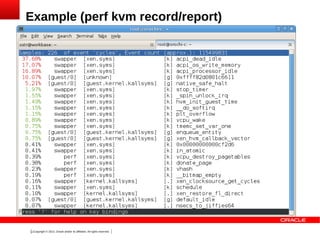
Example (perf kvm record/report)

11Copyright © 2013, Oracle and/or its affiliates. All rights reserved.

XPDS13: Perf Support in Xen - Boris Ostrovsky, Oracle

  • 1.
    Xen PMU Boris Ostrovsky,Oracle Xen Developer Summit Oct 24-25, 2013 1Copyright © 2013, Oracle and/or its affiliates. All rights reserved.
  • 2.
    Agenda  Profiling methods  Existing tools  Whyperf  Design requirements  High-level design  Status  Next steps 2Copyright © 2013, Oracle and/or its affiliates. All rights reserved.
  • 3.
    Profiling Methods  Timing  Counting    Software: countingprobes Hardware: performance counters Sampling    Software: timer-based Hardware: HW counters, IBS, PEBS Tracing  Software events: recording probes  Hardware events (Intel BTS) 3Copyright © 2013, Oracle and/or its affiliates. All rights reserved.
  • 4.
    Existing Tools  Guests  SW-based methods:any guest, most tools  HW-based methods:    HVM: Counters, BTS: most tools PV: xenoprofile Hypervisor  SW-based methods: xentrace, xenalyze, xentop, xenperf  HW-based methods: xenoprofile 4Copyright © 2013, Oracle and/or its affiliates. All rights reserved.
  • 5.
    Why perf  Why not(xen)oprofile    not inthe tree not in active development perf  in the tree  active development  lots of features 5Copyright © 2013, Oracle and/or its affiliates. All rights reserved.
  • 6.
    Desired Properties  Use HVMVPMU for both PV and HVM  As little as possible non-Xen changes in Linux kernel   Staged development Possibility of other tools using the same framework 6Copyright © 2013, Oracle and/or its affiliates. All rights reserved.
  • 7.
    (Very) High-Level DesignFeatures  Manage PMU in current VPMU    VPMU states VPMU context (i.e. registers) On PMU interrupt stop all counters  Emulate PMU in Linux to avoid traps on MSR accesses  Domain re-enables PMU via hypercall when done processing the interrupt  Global profile mode   Dom0 profiles everyone APIC and NMI mode 7Copyright © 2013, Oracle and/or its affiliates. All rights reserved.
  • 8.
    Status  Limitations   Only profile hypervisorCPUs where dom0 is running  Only counters are supported (no IBS/PEBS)   PV VCPUs should be pinned No backtrace support (for the hypervisor) V3 for Xen in progress  4.4 is unlikely  coordinate with Linux patches  perf toolstack changes (not Xen-specific code) 8Copyright © 2013, Oracle and/or its affiliates. All rights reserved.
  • 9.
    Future Enhancements  Address limitationsfrom stage 1  No pinning requirement  #PCPUs > #VCPUs in dom0  Tracing multiple guests in global mode  New HW features (PEBS, IBS)  Tracing (xentrace?) 9Copyright © 2013, Oracle and/or its affiliates. All rights reserved.
  • 10.
    Example (perf record/report) 10Copyright© 2013, Oracle and/or its affiliates. All rights reserved.
  • 11.
    Example (perf kvmrecord/report) 11Copyright © 2013, Oracle and/or its affiliates. All rights reserved.