Extending Service Mesh with API
Management
Nirmal Fernando
Senior Lead Solutions Engineer
Agenda:
• Evolution of Applications
• Why microservice architecture?
• Challenges with microservices?
• Why Service Mesh?
• Why API Management?
• WSO2 API Manager with Istio / Demo
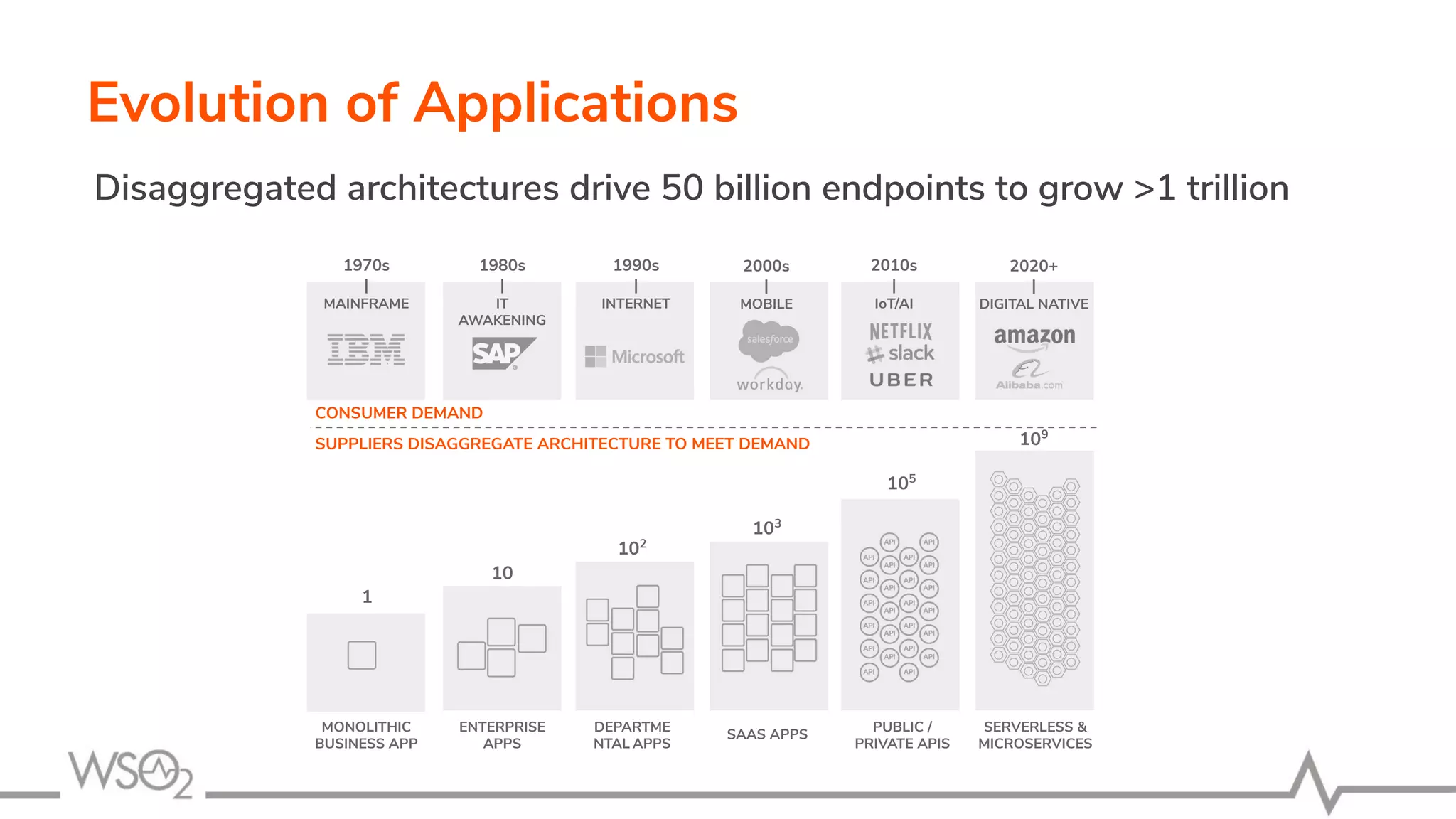
Evolution of Applications
Disaggregated architectures drive 50 billion endpoints to grow >1 trillion
CONSUMER DEMAND
SUPPLIERS DISAGGREGATE ARCHITECTURE TO MEET DEMAND
1
10
102
103
105
109
MONOLITHIC
BUSINESS APP
ENTERPRISE
APPS
DEPARTME
NTAL APPS
SAAS APPS
PUBLIC /
PRIVATE APIS
1970s
|
MAINFRAME
1980s
|
IT
AWAKENING
1990s
|
INTERNET
2000s
|
MOBILE
2010s
|
IoT/AI
2020+
|
DIGITAL NATIVE
SERVERLESS &
MICROSERVICES
What is Microservices Architecture?
● Architectural and organizational approach to software
development
● Designed to speed-up deployment cycles, foster
innovation and ownership, improve maintainability and
scalability
● Composed of small independent services, each of which
is built around a single business capability
● Services are owned by small self-contained teams
Why Microservices Architecture?
● Agility - small independent teams are empowered to work independently
and quickly, thus shortening the cycle times
● Innovation - teams can act autonomously and choose appropriate
technologies, frameworks and low cost of failure
● Quality - dividing into small well-defined modules improves reusability,
composability and maintainability of code
● Scalability - fine-grained decoupling of microservices allows you to
horizontally scale each service independently from each other
● Availability - easier to implement failure isolation, thus improve the overall
availability of your application
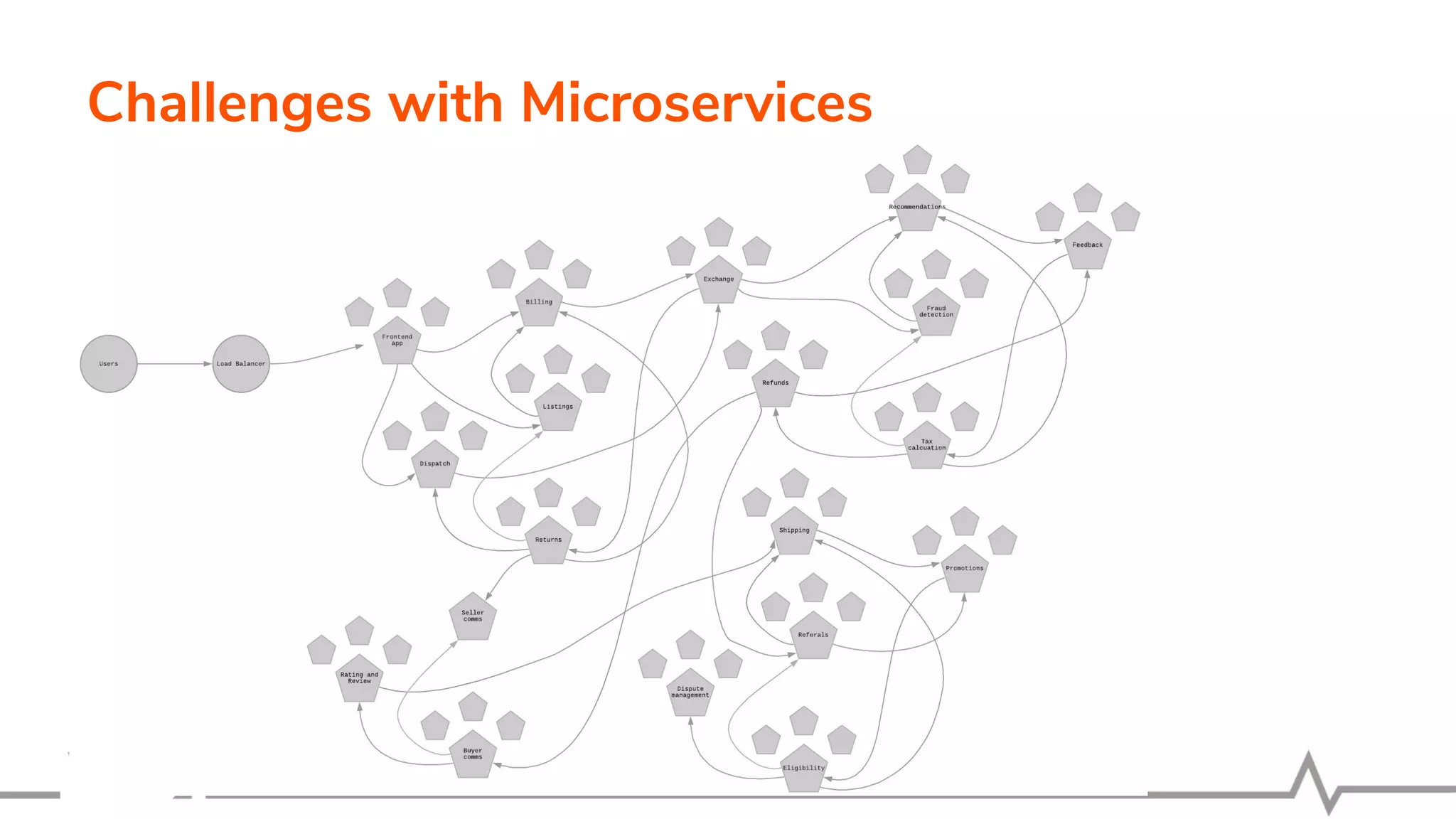
Challenges with Microservices
• Network resiliency (retry, failover, circuit breaker)
• Architectural complexity (complexity in interactions)
– service discovery
– service authentication
• Operational complexity
– Analytics, tracing, monitoring (Observability)
– How to deploy a new version of a service (roll out new
version - Canary deployment)
Challenges with Microservices
How to address these challenges?
Service Mesh
A service mesh is a dedicated infrastructure layer that
controls service-to-service communication over a network.
It provides a method in which separate parts of an
application can communicate with each other.
source:techtarget.com
Istio is an open source service mesh implementation which
provides behavioral insights and operational control over
the service mesh as a whole, offering a complete solution
to satisfy the diverse requirements of microservice
applications.
Istio
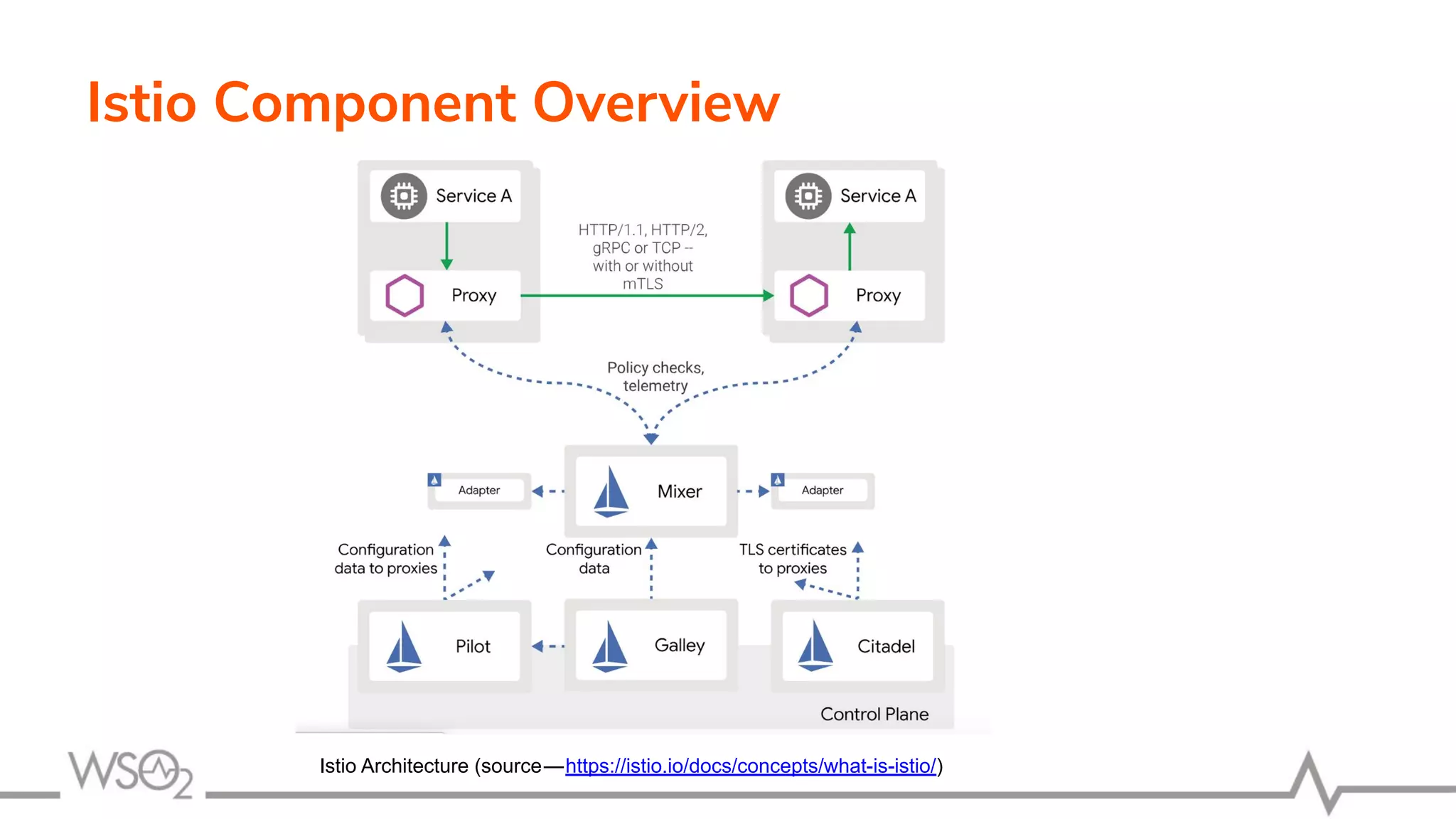
Istio Component Overview
• Pilot is responsible for configuring the data plane, defining basic
proxy behaviour, providing service discovery for the Envoy
sidecars, traffic management capabilities for intelligent routing, and
resiliency.
• Mixer can respond to various queries from the data plane such as
authorization, access control or quota checks, and collects
telemetry data from the Envoy proxy and other services.
• Citadel enables strong service-to-service and end-user
authentication with built-in identity and credential management.
Allows you to build zero-trust environments.
Istio Component Overview
Istio Architecture (source — https://istio.io/docs/concepts/what-is-istio/)
Demo
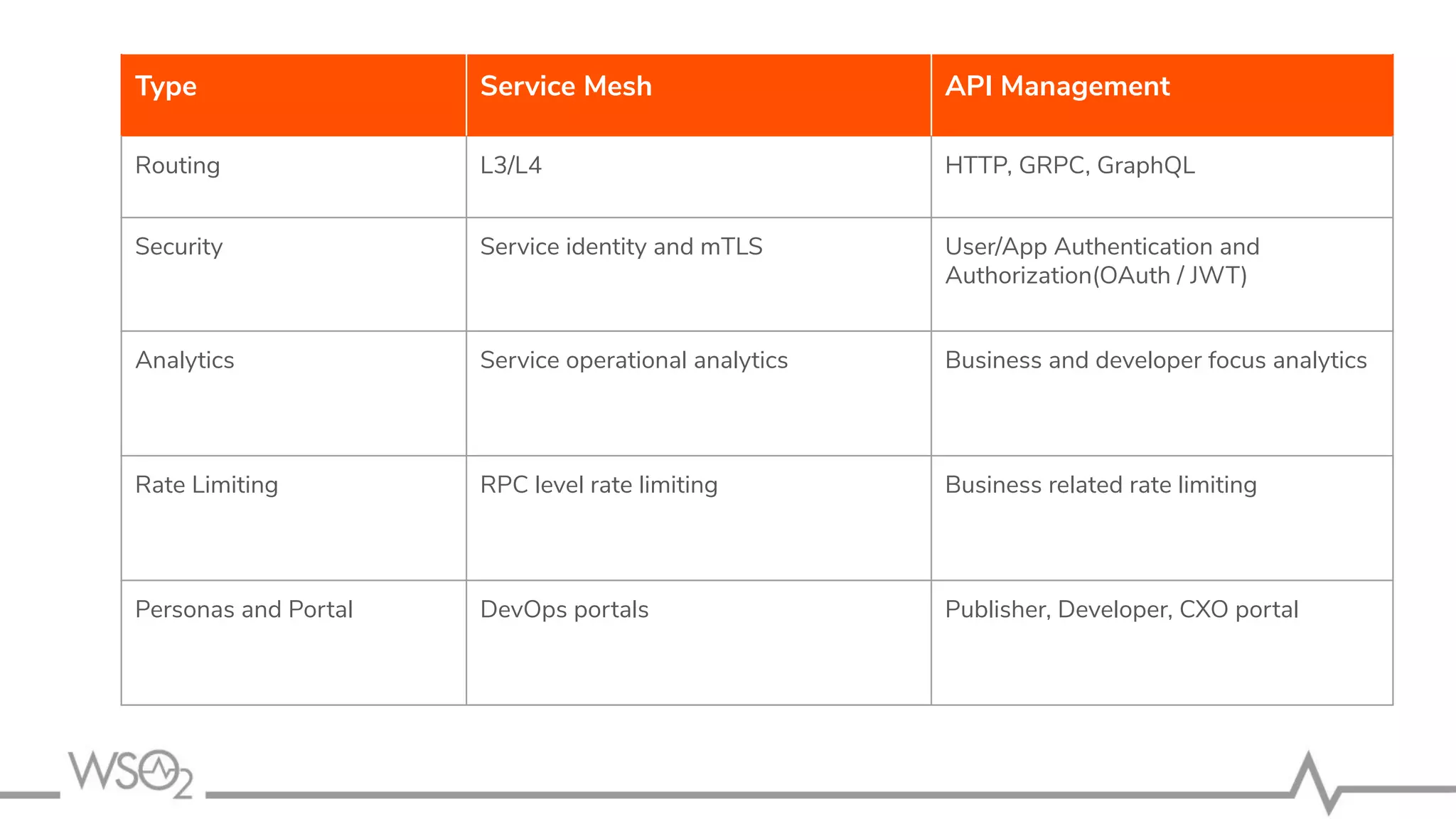
Type Service Mesh API Management
Routing L3/L4 HTTP, GRPC, GraphQL
Security Service identity and mTLS User/App Authentication and
Authorization(OAuth / JWT)
Analytics Service operational analytics Business and developer focus analytics
Rate Limiting RPC level rate limiting Business related rate limiting
Personas and Portal DevOps portals Publisher, Developer, CXO portal
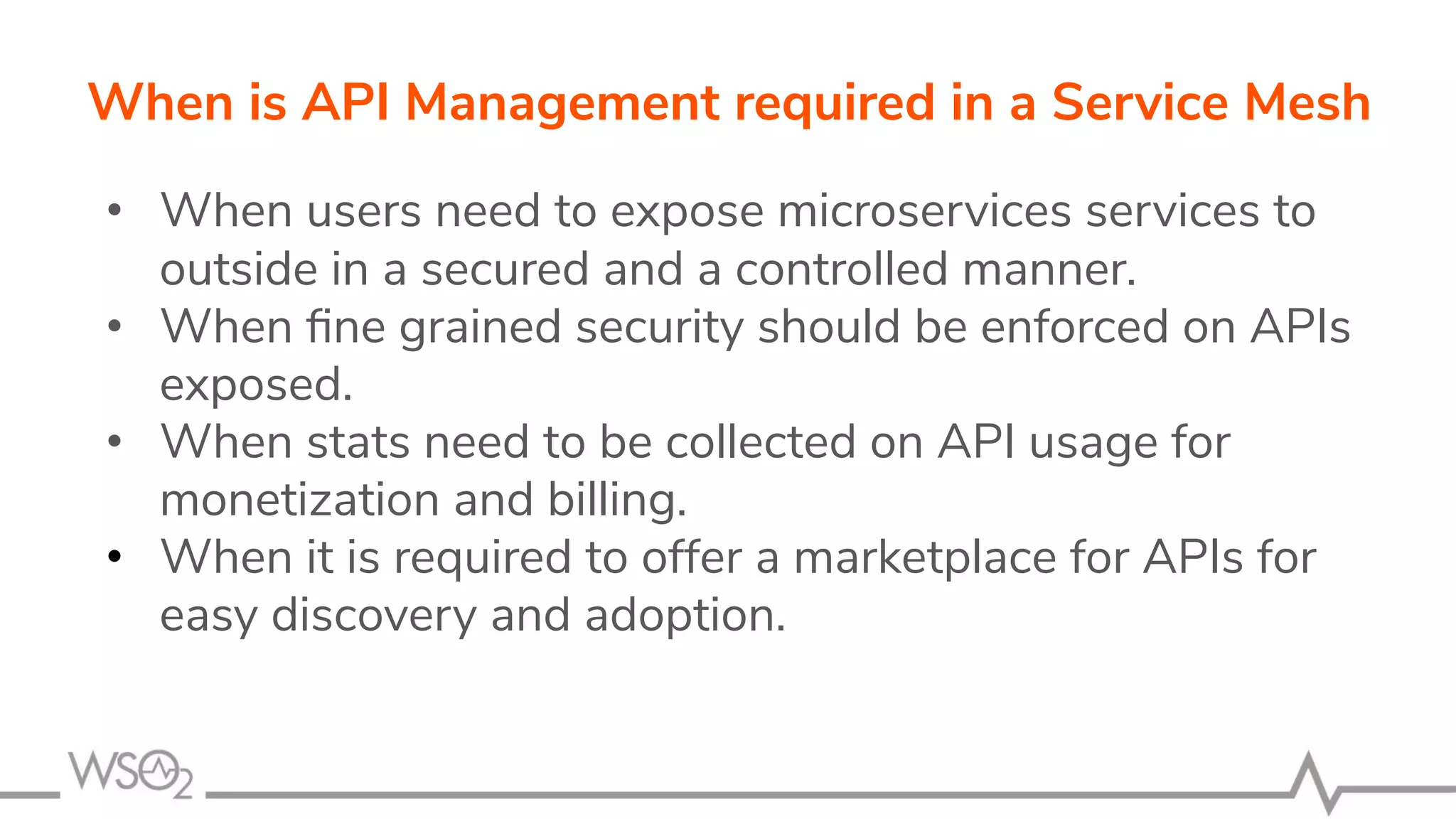
• When users need to expose microservices services to
outside in a secured and a controlled manner.
• When fine grained security should be enforced on APIs
exposed.
• When stats need to be collected on API usage for
monetization and billing.
• When it is required to offer a marketplace for APIs for
easy discovery and adoption.
When is API Management required in a Service Mesh
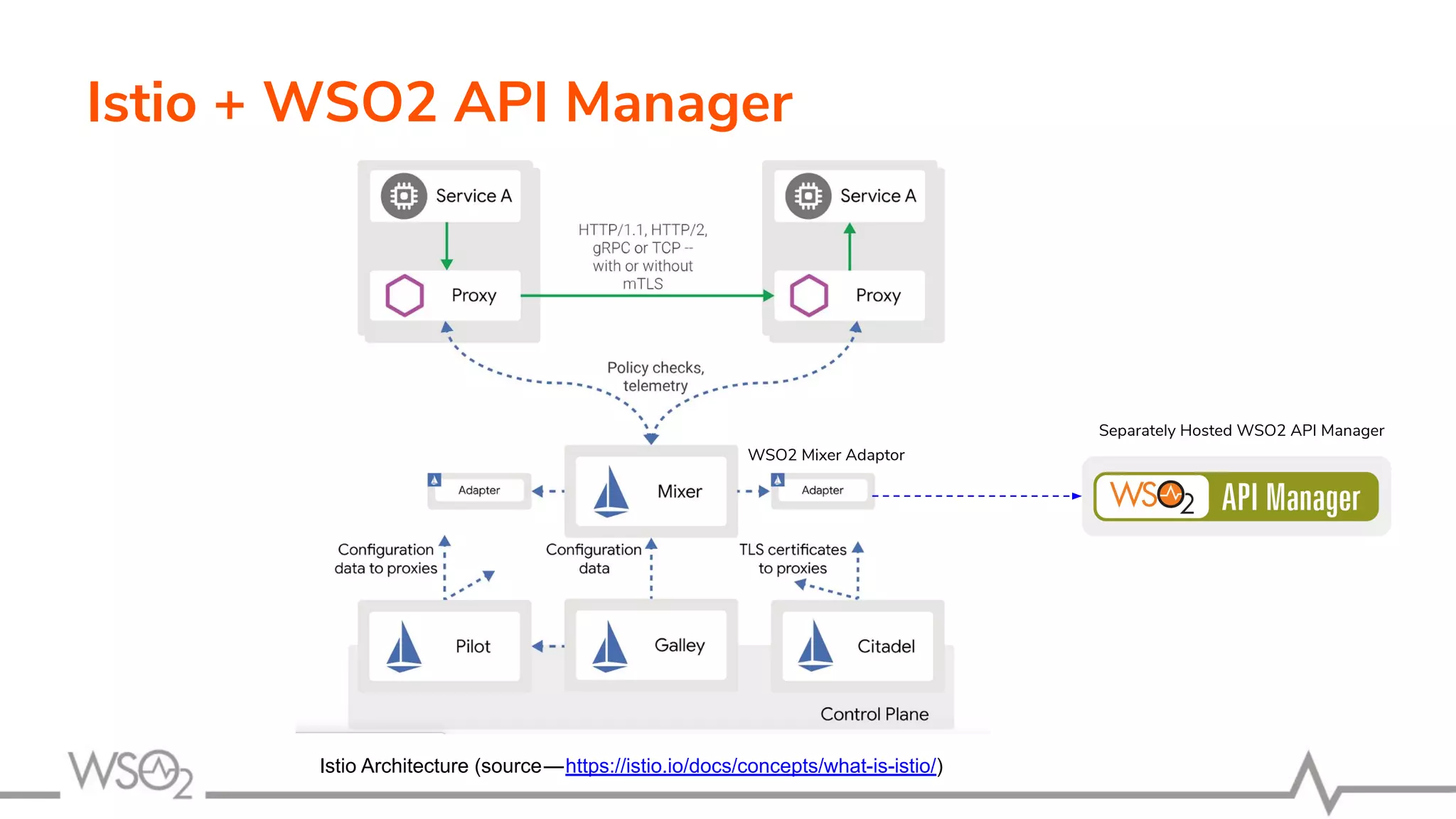
Istio + WSO2 API Manager
Istio Architecture (source — https://istio.io/docs/concepts/what-is-istio/)
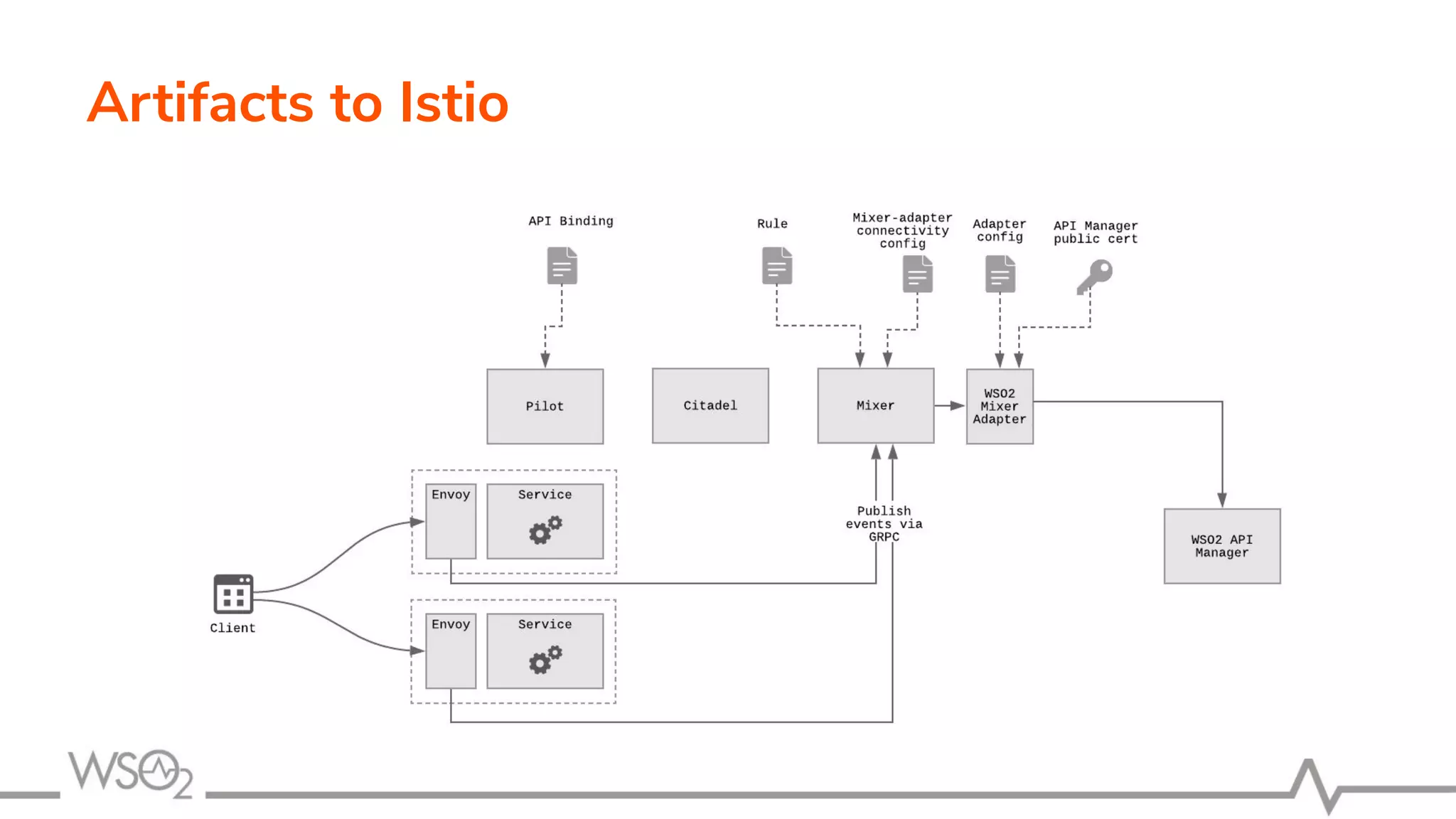
WSO2 Mixer Adaptor
Separately Hosted WSO2 API Manager
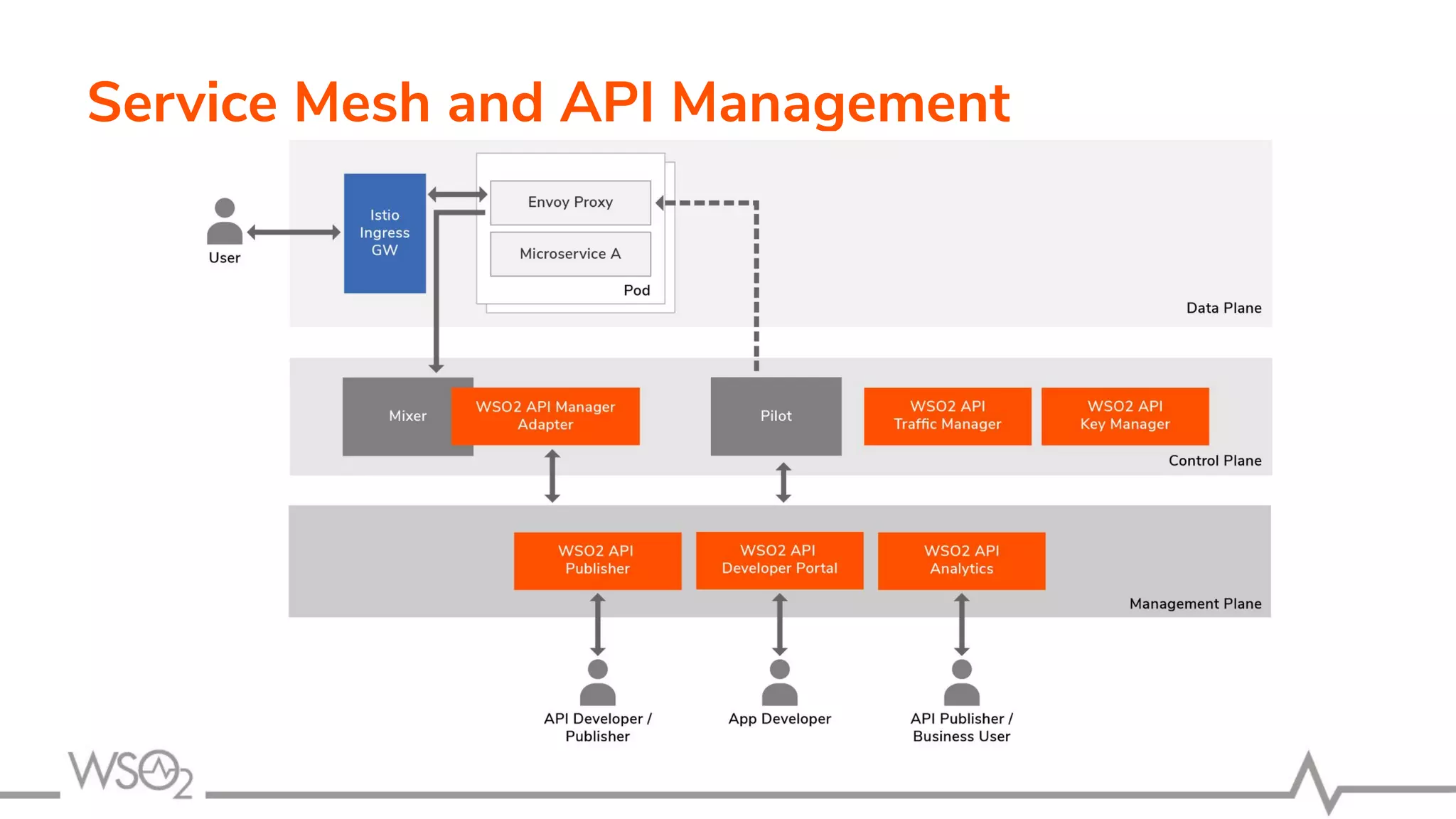
Service Mesh and API Management
Artifacts to Istio
Demo
https://github.com/nirmal070125/istio-ballerina-service-rollout
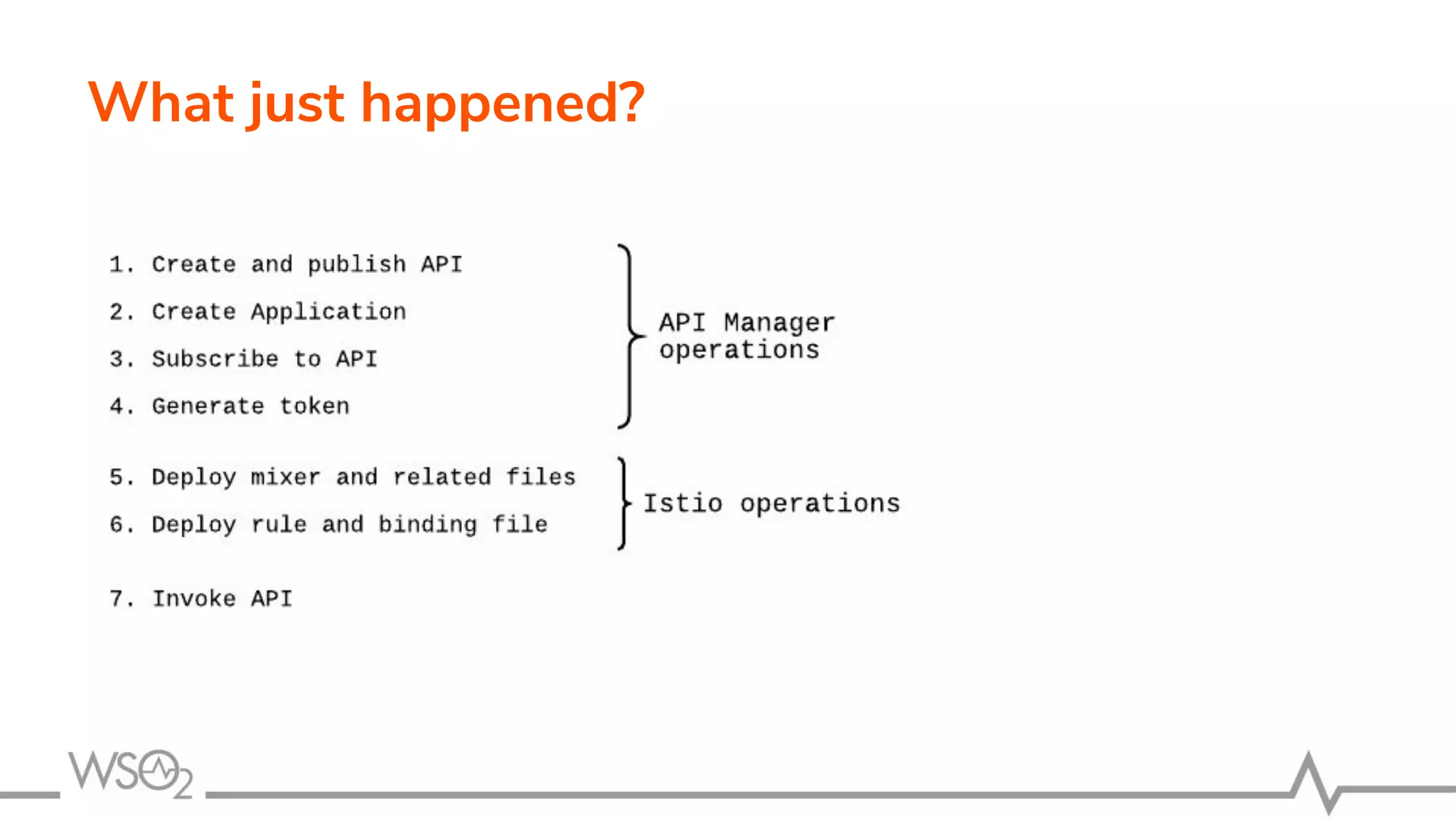
What just happened?
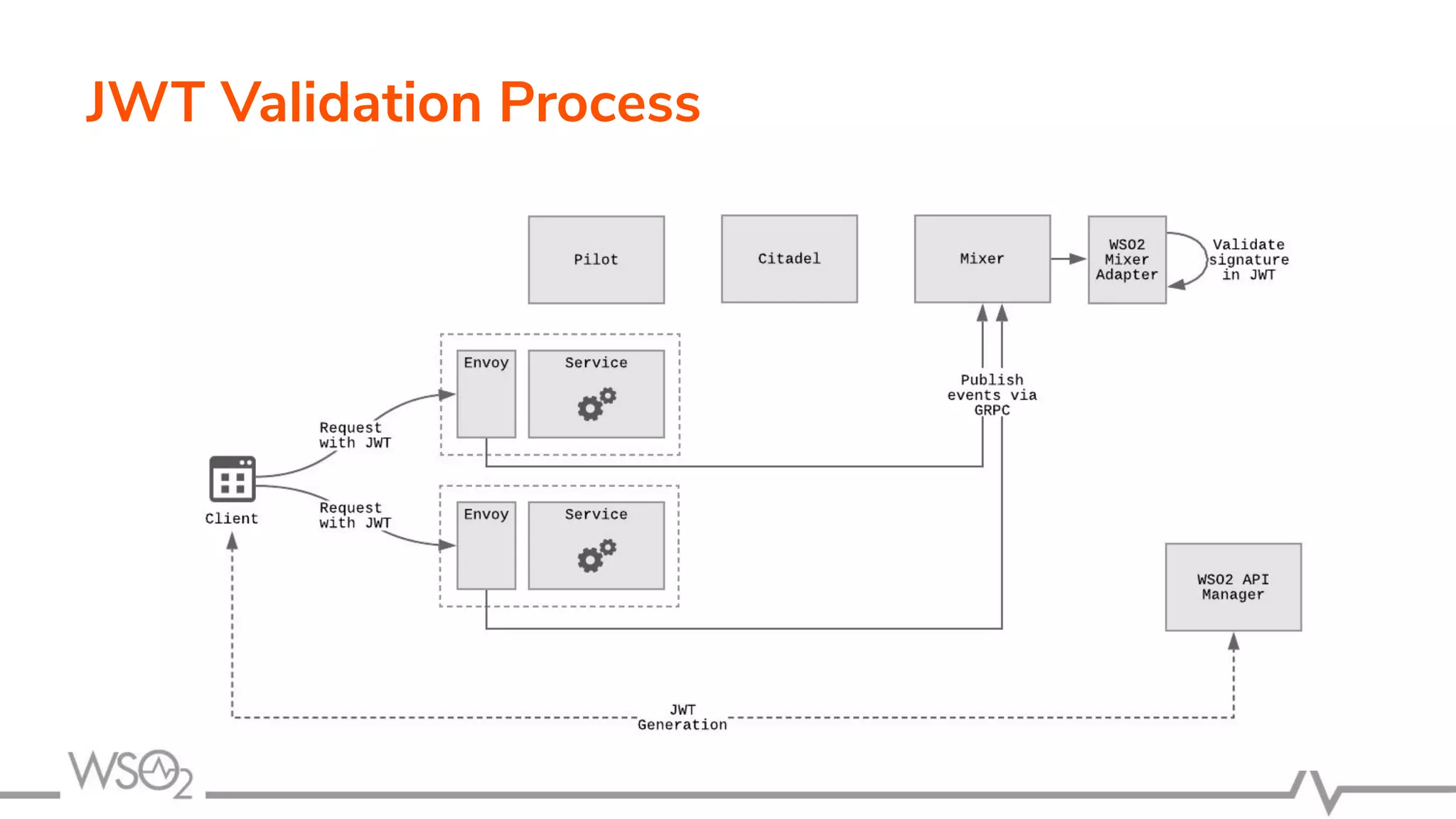
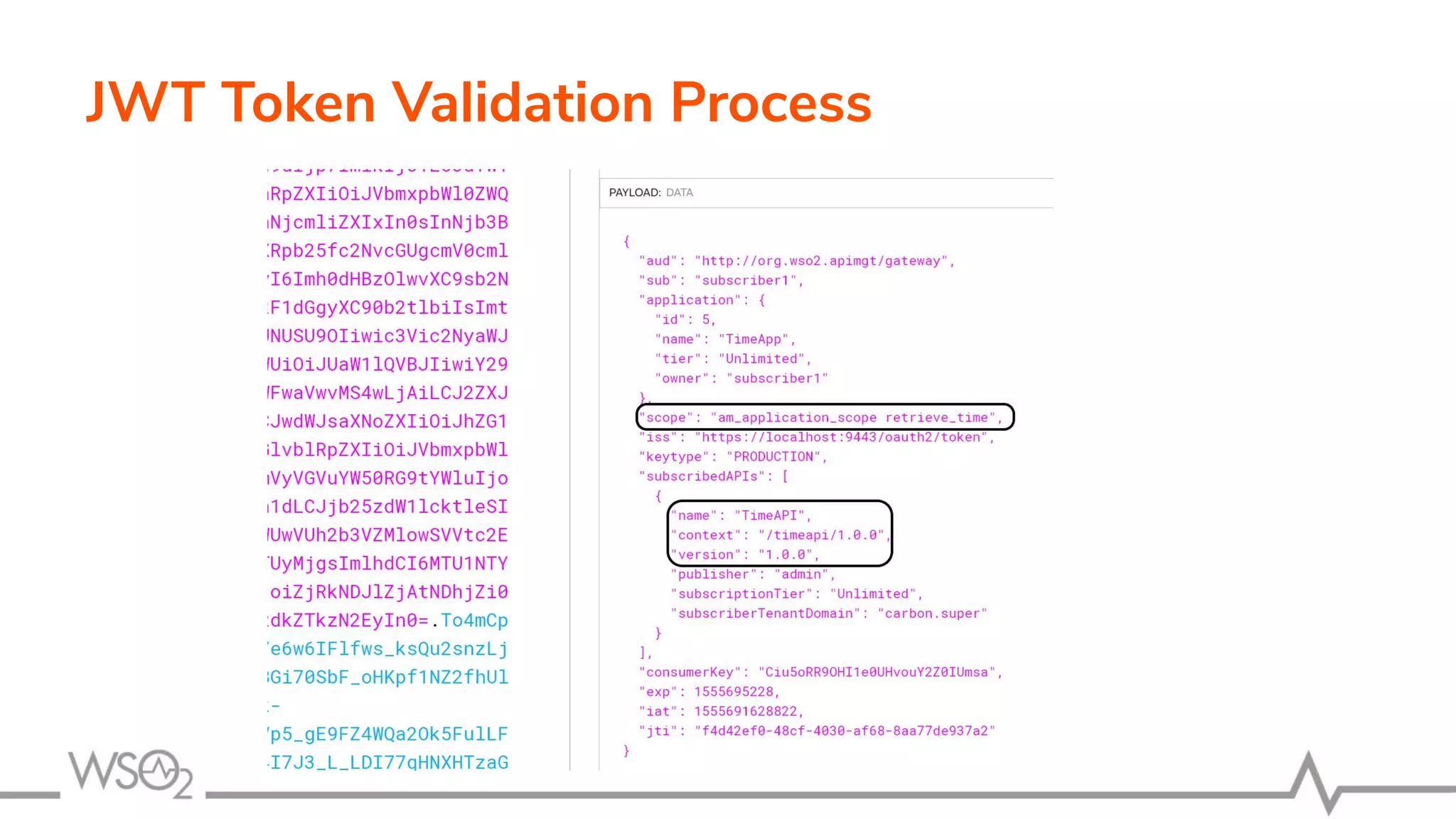
JWT Validation Process
JWT Token Validation Process
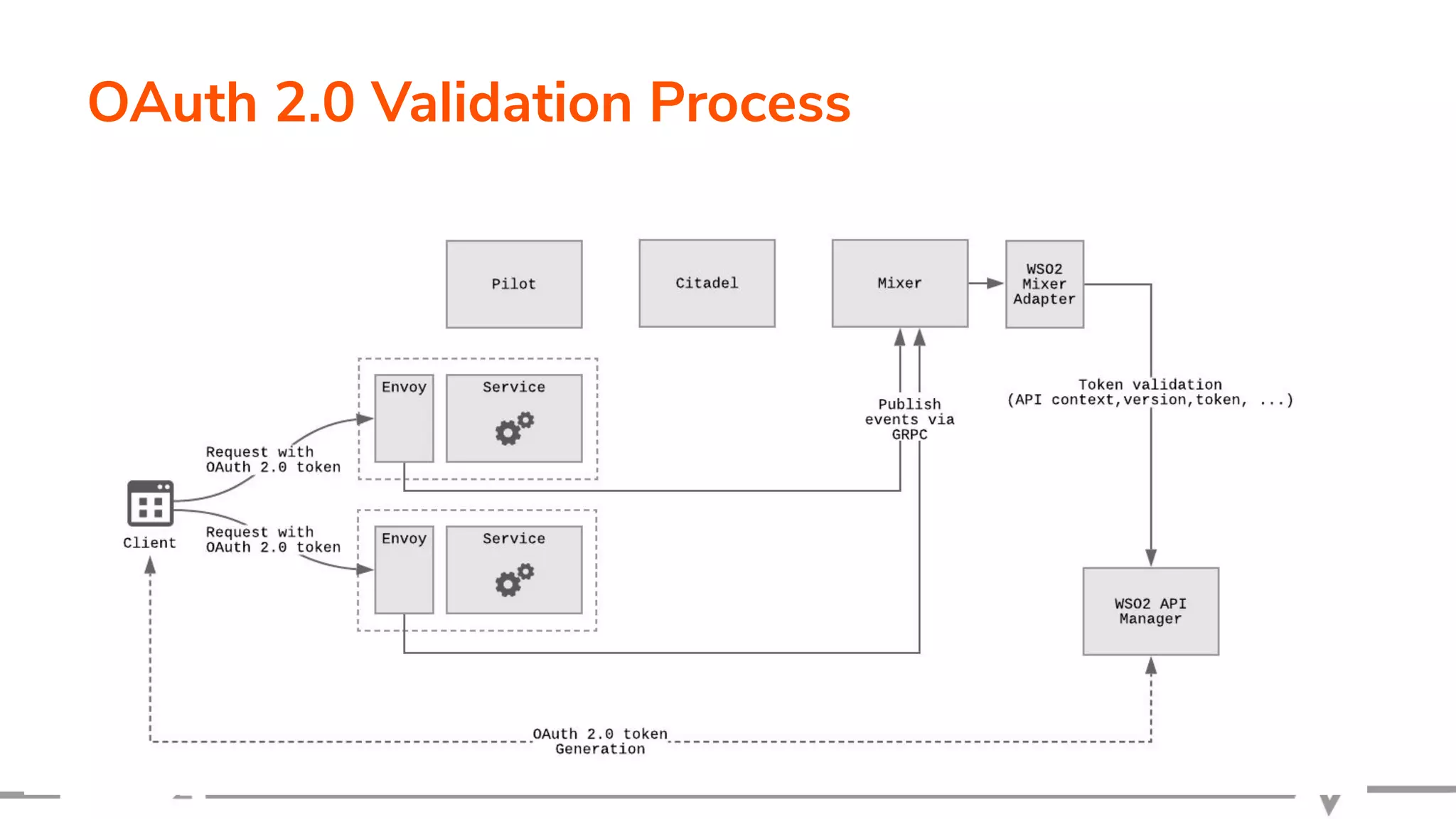
OAuth 2.0 Validation Process
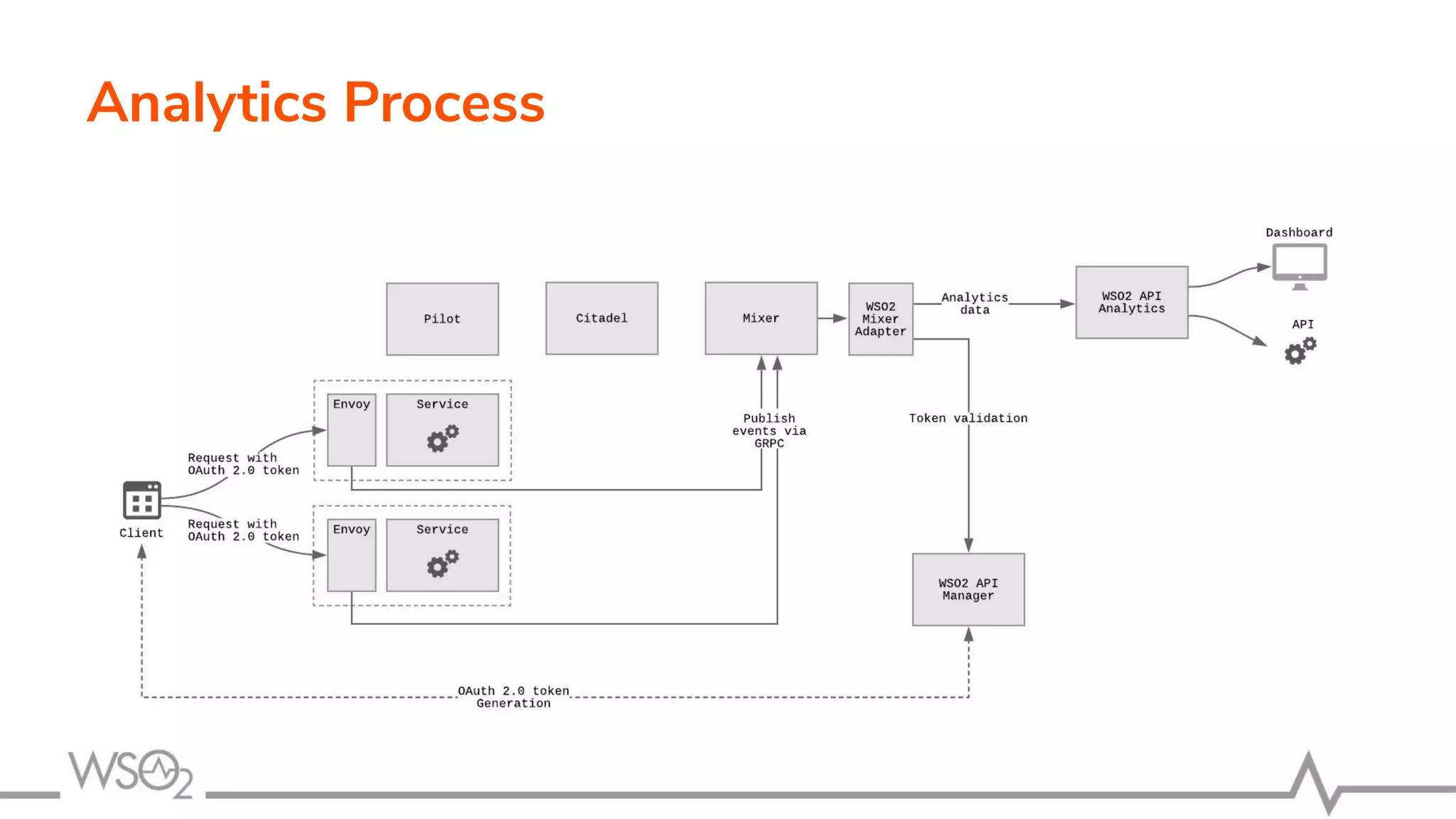
Analytics Process
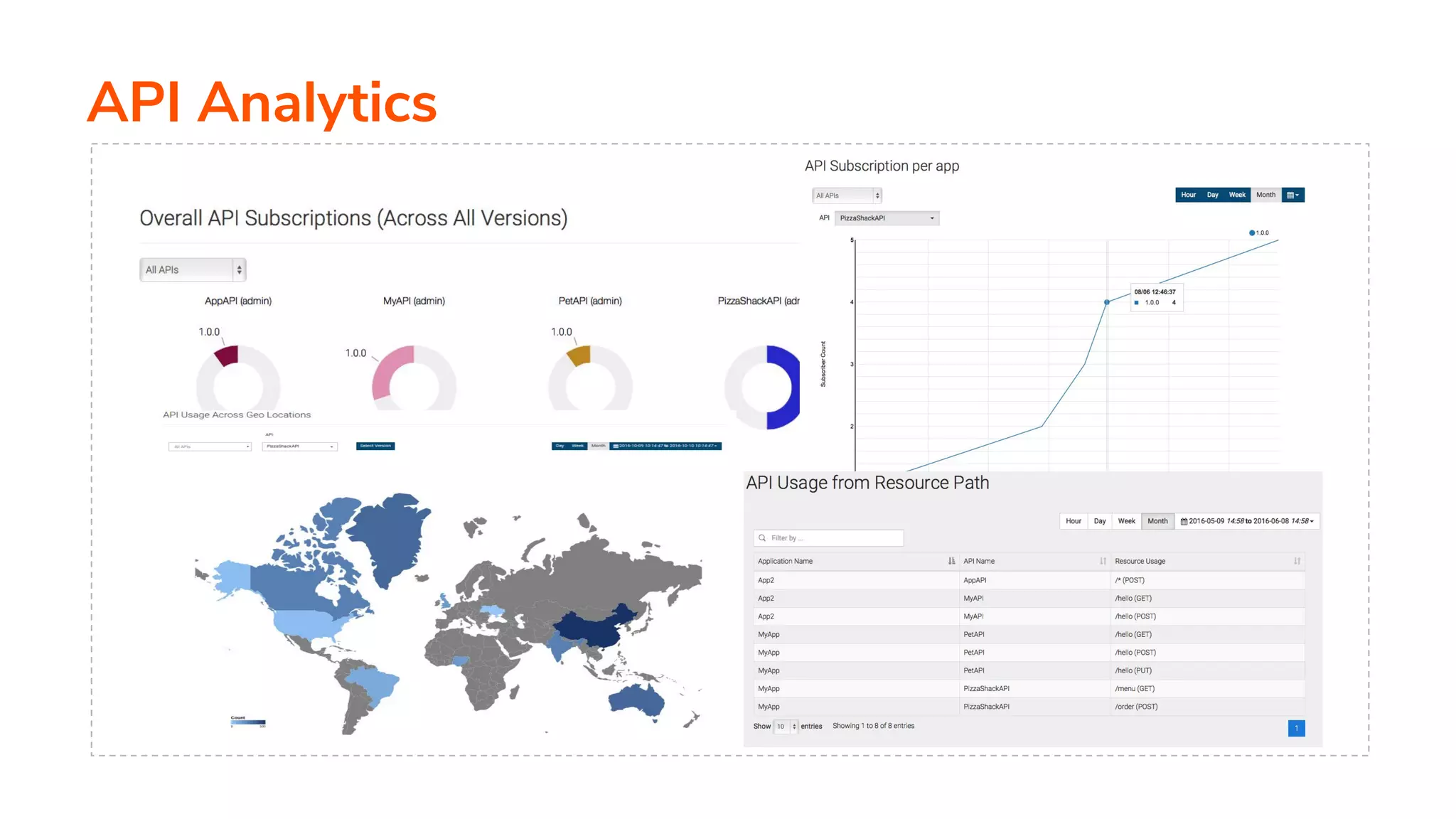
API Analytics
THANK YOU
wso2.com
WSO2 - Istio adapter
https://github.com/wso2/istio-apim/tree/1.0
WSO2 - Istio Web Page
https://wso2.com/api-management/microservices/istio/

[WSO2 API Day Chicago 2019] Extending Service Mesh with API Management

  • 1.
    Extending Service Meshwith API Management Nirmal Fernando Senior Lead Solutions Engineer
  • 2.
    Agenda: • Evolution ofApplications • Why microservice architecture? • Challenges with microservices? • Why Service Mesh? • Why API Management? • WSO2 API Manager with Istio / Demo
  • 3.
    Evolution of Applications Disaggregatedarchitectures drive 50 billion endpoints to grow >1 trillion CONSUMER DEMAND SUPPLIERS DISAGGREGATE ARCHITECTURE TO MEET DEMAND 1 10 102 103 105 109 MONOLITHIC BUSINESS APP ENTERPRISE APPS DEPARTME NTAL APPS SAAS APPS PUBLIC / PRIVATE APIS 1970s | MAINFRAME 1980s | IT AWAKENING 1990s | INTERNET 2000s | MOBILE 2010s | IoT/AI 2020+ | DIGITAL NATIVE SERVERLESS & MICROSERVICES
  • 4.
    What is MicroservicesArchitecture? ● Architectural and organizational approach to software development ● Designed to speed-up deployment cycles, foster innovation and ownership, improve maintainability and scalability ● Composed of small independent services, each of which is built around a single business capability ● Services are owned by small self-contained teams
  • 5.
    Why Microservices Architecture? ●Agility - small independent teams are empowered to work independently and quickly, thus shortening the cycle times ● Innovation - teams can act autonomously and choose appropriate technologies, frameworks and low cost of failure ● Quality - dividing into small well-defined modules improves reusability, composability and maintainability of code ● Scalability - fine-grained decoupling of microservices allows you to horizontally scale each service independently from each other ● Availability - easier to implement failure isolation, thus improve the overall availability of your application
  • 6.
  • 7.
    • Network resiliency(retry, failover, circuit breaker) • Architectural complexity (complexity in interactions) – service discovery – service authentication • Operational complexity – Analytics, tracing, monitoring (Observability) – How to deploy a new version of a service (roll out new version - Canary deployment) Challenges with Microservices
  • 8.
    How to addressthese challenges?
  • 9.
    Service Mesh A servicemesh is a dedicated infrastructure layer that controls service-to-service communication over a network. It provides a method in which separate parts of an application can communicate with each other. source:techtarget.com
  • 10.
    Istio is anopen source service mesh implementation which provides behavioral insights and operational control over the service mesh as a whole, offering a complete solution to satisfy the diverse requirements of microservice applications. Istio
  • 11.
    Istio Component Overview •Pilot is responsible for configuring the data plane, defining basic proxy behaviour, providing service discovery for the Envoy sidecars, traffic management capabilities for intelligent routing, and resiliency. • Mixer can respond to various queries from the data plane such as authorization, access control or quota checks, and collects telemetry data from the Envoy proxy and other services. • Citadel enables strong service-to-service and end-user authentication with built-in identity and credential management. Allows you to build zero-trust environments.
  • 12.
    Istio Component Overview IstioArchitecture (source — https://istio.io/docs/concepts/what-is-istio/)
  • 13.
  • 14.
    Type Service MeshAPI Management Routing L3/L4 HTTP, GRPC, GraphQL Security Service identity and mTLS User/App Authentication and Authorization(OAuth / JWT) Analytics Service operational analytics Business and developer focus analytics Rate Limiting RPC level rate limiting Business related rate limiting Personas and Portal DevOps portals Publisher, Developer, CXO portal
  • 15.
    • When usersneed to expose microservices services to outside in a secured and a controlled manner. • When fine grained security should be enforced on APIs exposed. • When stats need to be collected on API usage for monetization and billing. • When it is required to offer a marketplace for APIs for easy discovery and adoption. When is API Management required in a Service Mesh
  • 16.
    Istio + WSO2API Manager Istio Architecture (source — https://istio.io/docs/concepts/what-is-istio/) WSO2 Mixer Adaptor Separately Hosted WSO2 API Manager
  • 17.
    Service Mesh andAPI Management
  • 18.
  • 19.
  • 20.
  • 21.
  • 22.
  • 23.
  • 24.
  • 25.
  • 26.
  • 27.
    WSO2 - Istioadapter https://github.com/wso2/istio-apim/tree/1.0 WSO2 - Istio Web Page https://wso2.com/api-management/microservices/istio/