Writing Your Research
Proposal
DR. AVASHA RAMBIRITCH
Research Proposal Definition
A research proposal is a document written with the goal of presenting and justifying your
interest and need for conducting research on a particular topic.
It must highlight the benefits and outcomes of the proposed study, supported by
persuasive evidence.
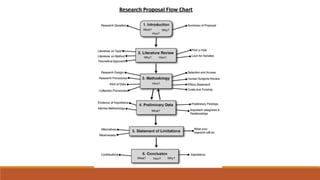
Research Proposal Format
Your proposal should have enough data and information to persuade and convince your
readers regarding the significance of your research. Here is a basic format you can follow
while writing your proposal.
•Title
•Abstract
•Introduction
•Literature Review
•Research Methodology
•Result
•Discussion
•References
Title
Your proposal title should be concise and clear to indicate your research question.
The title is the first thing that your reader is going to read. A catchy yet informative title will
attract readers.
Your readers should know what to expect in the paper after reading the title.
Make it concise and well defined.
Abstract
The abstract is a short summary that is around 100-250 words.
The abstract should include the research question, hypothesis of your research (if there is any),
the research methodology and findings.
If the proposal is detailed then it will require a section of the table of contents after the abstract.
Introduction
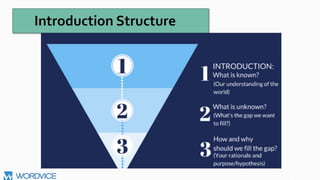
You need to start with a strong introduction. The introduction is written to provide a background
or context related to your research problem. It is important to frame the research question
while writing the proposal.
Your entire proposal will revolve around your research question. If the research question is not
specific and has a very general literature review, then your proposal might seem insignificant. A
specific research question will make your research focused on.
However, there is no one way to frame your research question. Start the introduction with a
general statement related to the problem area you are focusing on and the justification for your
study.
Introduction
The introduction usually covers the following elements.
1. What is the purpose of your research or study?
2. Mention the background information and significance before you introduce your research
question.
3. Introduce your research question in a way that its significance is highlighted by setting the
stage for it.
4. Briefly mention the issues that you are going to discuss and highlight in your study.
5. If there is a hypothesis or a theory related to your research, state it in the introduction.
Elements of an Introduction
1. Background and Context
2. Problem Statement
3. Aims
4. Research Question/Hypotheses
Background and context
• Explain why you are personally interested in this
topic.
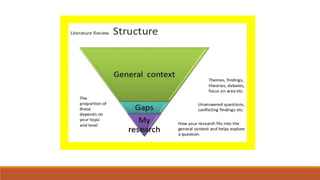
• Briefly summarise how there is a gap in current
knowledge in this
area.
Problem statement
• You are not only conducting this study because the topic is
something that interests you. The goal of research is to solve a
problem. You need to very clearly explain the problem you have
identified (in the ā€œreal worldā€ or theoretically, and how there is a
lack of knowledge regarding this problem).
• Give a clear explanation of the research problem(s).
• Explain why your research is worth doing. In what ways will your
study be significant?
Aims
• After laying a foundation by explaining what the research problem
is, now you can articulate how your study aims to address/explore
this problem.
• State your aim(s) clearly and succinctly to orientate the reader.
• Your aims can be situated in a broader context (how do you hope
that this study will contribute to knowledge/society more broadly?).
Research question(s) or hypotheses
• Questions guide the study. Often, a research study will be guided by
one or two main research questions and a few sub-questions.
• Your questions should not simply be an attempt to ā€œdiscoverā€ what
you have already assumed to be true at the outset. Good research
should surprise you!
• You should also avoid simply ā€œfishingā€ (collecting data just to see
what comes out).
• The wording of your research question needs to be aligned to your
methodology and to your theoretical framework.
• Typically, a qualitative study will be driven by a research question
and a quantitative study will be driven by hypotheses.
Literature Review
The following are the basic purposes of the literature review.
1. To give reference to the researchers whose study has been a part of your research.
2. To help you construct a precise and clear research question.
3. To critically evaluate previous literature information related to your research.
4. To understand research issues relevant to the topic of your research.
5. To convince the reader that your research is an important contribution to the relevant niche.
Literature Review
A literature review is an important component. However, there are some common mistakes that
students make while reviewing the literature.
1. Lack of organization and coherence.
2. No proper structure.
3. Lack of focus on the topic.
4. Not citing the papers and researchers properly.
5. Not including the recent studies relevant to the topic.
6. Trivial citation
References
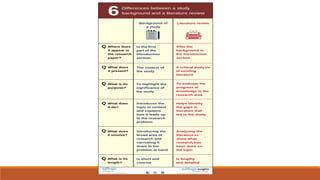
https://www.editage.com/insights/6-differences-between-a-study-background-and-a-literature-
review
https://www.allassignmenthelp.co.uk/blog/structure-of-a-literature-review/
https://www.youtube.com/watch?v=FTC-5P1VFFU&app=desktop

Writing_your_research_proposal__format__by_Dr._Avasha_Rambiritch.pdf

  • 1.
  • 2.
    Research Proposal Definition Aresearch proposal is a document written with the goal of presenting and justifying your interest and need for conducting research on a particular topic. It must highlight the benefits and outcomes of the proposed study, supported by persuasive evidence.
  • 3.
    Research Proposal Format Yourproposal should have enough data and information to persuade and convince your readers regarding the significance of your research. Here is a basic format you can follow while writing your proposal. •Title •Abstract •Introduction •Literature Review •Research Methodology •Result •Discussion •References
  • 5.
    Title Your proposal titleshould be concise and clear to indicate your research question. The title is the first thing that your reader is going to read. A catchy yet informative title will attract readers. Your readers should know what to expect in the paper after reading the title. Make it concise and well defined.
  • 6.
    Abstract The abstract isa short summary that is around 100-250 words. The abstract should include the research question, hypothesis of your research (if there is any), the research methodology and findings. If the proposal is detailed then it will require a section of the table of contents after the abstract.
  • 7.
    Introduction You need tostart with a strong introduction. The introduction is written to provide a background or context related to your research problem. It is important to frame the research question while writing the proposal. Your entire proposal will revolve around your research question. If the research question is not specific and has a very general literature review, then your proposal might seem insignificant. A specific research question will make your research focused on. However, there is no one way to frame your research question. Start the introduction with a general statement related to the problem area you are focusing on and the justification for your study.
  • 8.
    Introduction The introduction usuallycovers the following elements. 1. What is the purpose of your research or study? 2. Mention the background information and significance before you introduce your research question. 3. Introduce your research question in a way that its significance is highlighted by setting the stage for it. 4. Briefly mention the issues that you are going to discuss and highlight in your study. 5. If there is a hypothesis or a theory related to your research, state it in the introduction.
  • 10.
    Elements of anIntroduction 1. Background and Context 2. Problem Statement 3. Aims 4. Research Question/Hypotheses
  • 11.
    Background and context •Explain why you are personally interested in this topic. • Briefly summarise how there is a gap in current knowledge in this area.
  • 12.
    Problem statement • Youare not only conducting this study because the topic is something that interests you. The goal of research is to solve a problem. You need to very clearly explain the problem you have identified (in the ā€œreal worldā€ or theoretically, and how there is a lack of knowledge regarding this problem). • Give a clear explanation of the research problem(s). • Explain why your research is worth doing. In what ways will your study be significant?
  • 13.
    Aims • After layinga foundation by explaining what the research problem is, now you can articulate how your study aims to address/explore this problem. • State your aim(s) clearly and succinctly to orientate the reader. • Your aims can be situated in a broader context (how do you hope that this study will contribute to knowledge/society more broadly?).
  • 14.
    Research question(s) orhypotheses • Questions guide the study. Often, a research study will be guided by one or two main research questions and a few sub-questions. • Your questions should not simply be an attempt to ā€œdiscoverā€ what you have already assumed to be true at the outset. Good research should surprise you! • You should also avoid simply ā€œfishingā€ (collecting data just to see what comes out). • The wording of your research question needs to be aligned to your methodology and to your theoretical framework. • Typically, a qualitative study will be driven by a research question and a quantitative study will be driven by hypotheses.
  • 16.
    Literature Review The followingare the basic purposes of the literature review. 1. To give reference to the researchers whose study has been a part of your research. 2. To help you construct a precise and clear research question. 3. To critically evaluate previous literature information related to your research. 4. To understand research issues relevant to the topic of your research. 5. To convince the reader that your research is an important contribution to the relevant niche.
  • 17.
    Literature Review A literaturereview is an important component. However, there are some common mistakes that students make while reviewing the literature. 1. Lack of organization and coherence. 2. No proper structure. 3. Lack of focus on the topic. 4. Not citing the papers and researchers properly. 5. Not including the recent studies relevant to the topic. 6. Trivial citation
  • 19.