Graduate Writing Skills
Strategies for Success in
Graduate School and Beyond
Session Content
 Undergraduate vs. graduate level writing
 New expectations: student and faculty
 Approaching academic writing
 Resources
Undergraduate vs. Graduate
 Most notable change when writing at the
graduate level versus the undergraduate:
purpose of writing
 Undergraduate writing: Knowledge Telling
 Graduate writing: Knowledge Making
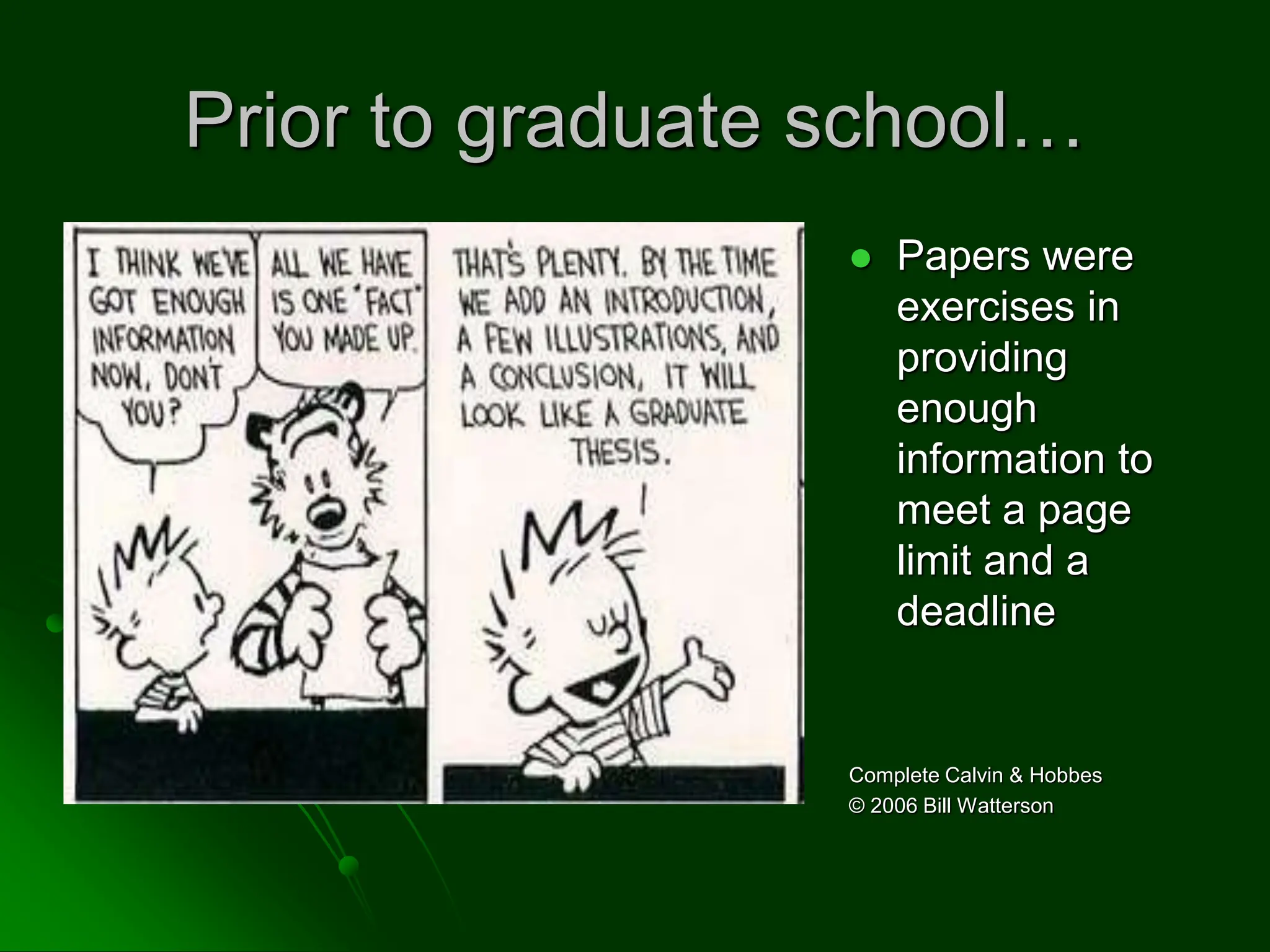
Prior to graduate school…
 Papers were
exercises in
providing
enough
information to
meet a page
limit and a
deadline
Complete Calvin & Hobbes
© 2006 Bill Watterson
Knowledge Telling
 Papers typically
 demonstrate the accumulation of acquired knowledge
 are directed at the teacher as the primary audience
 incorporate direct quotation and paraphrase rather
than summary and synthesis
 include simple argumentation and some analysis
 reduce issues/topics to simplest denominators
 tend towards comprehensive, yet broad, reports
Goal in Graduate Level Writing
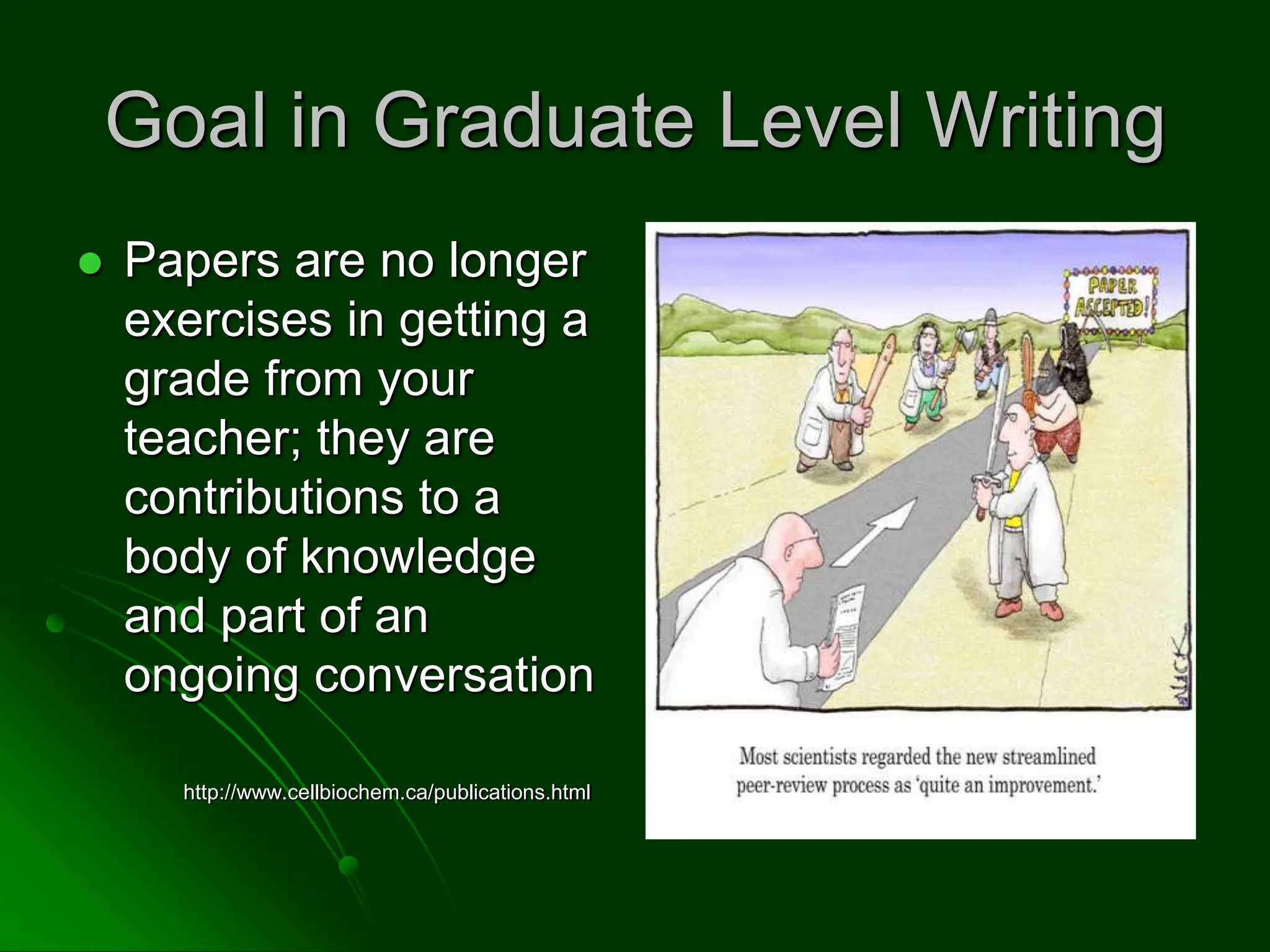
 Papers are no longer
exercises in getting a
grade from your
teacher; they are
contributions to a
body of knowledge
and part of an
ongoing conversation
http://www.cellbiochem.ca/publications.html
Knowledge Making
 Papers typically
 enter an existing conversation
 are aimed at peers in the field
 are submitted for publication or presentation
 utilize summary and synthesis
 use sound argumentation and thorough analysis
 follow disciplinary conventions precisely
 introduce new knowledge and offer meta-commentary
that positions the writer as a scholar/professional peer
New Expectations
 Students responsible for
 Navigating procedures
 Initiating research
 Understanding degree/discipline expectations
 Conferencing with faculty/advisors
 Managing tasks and project timelines
 Establishing writing/research schedule
New Expectations
 Faculty responsible for
 Assigning course work
 may or may not provide detailed, step-by-step
instructions for a paper or presentation
 Reviewing your work
 may or may not offer extensive feedback
 may or may not make corrections
 may only review at pre-determined stages
 Supporting publication/presentation efforts
 may or may not offer info on opportunities
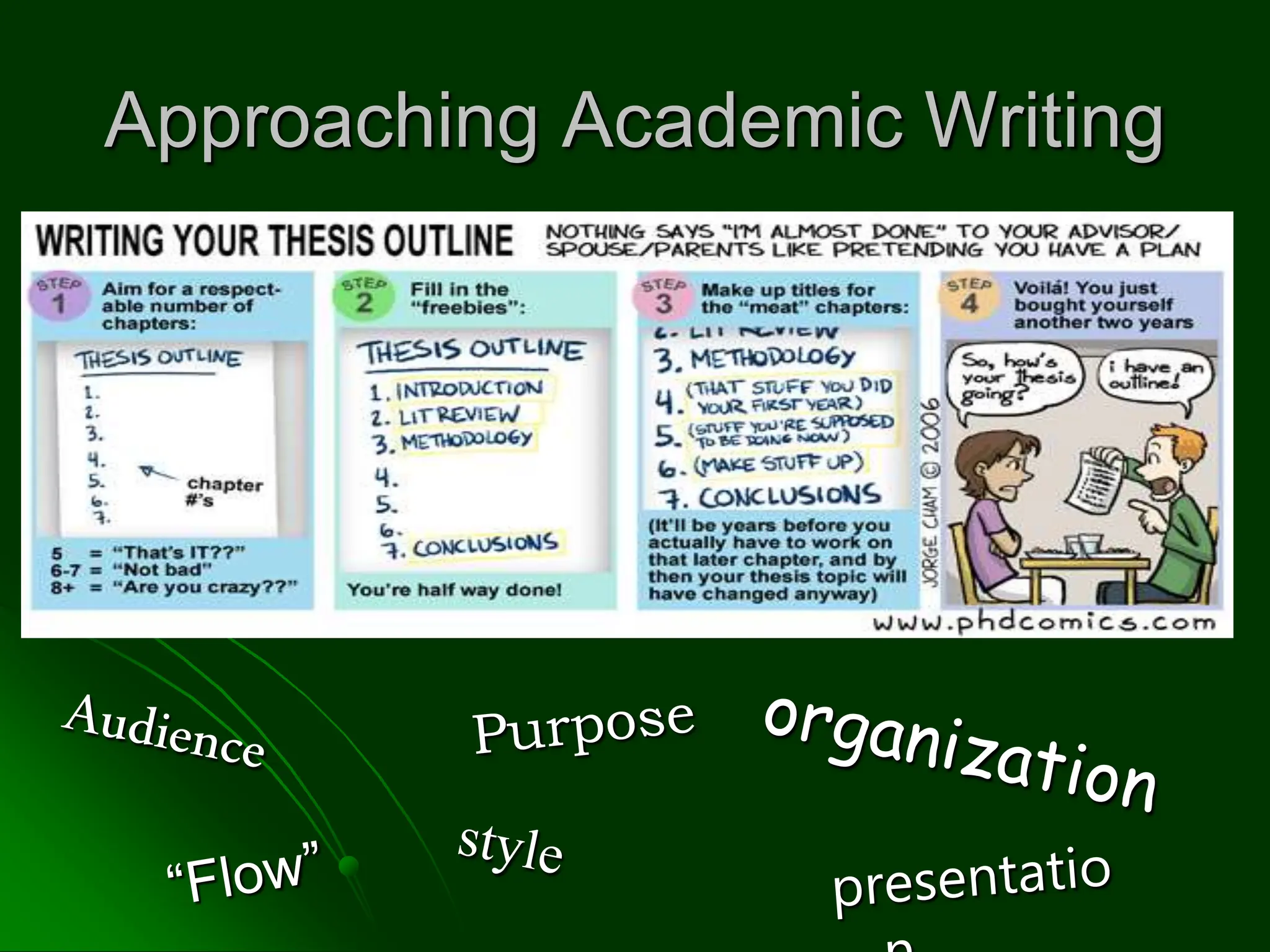
Approaching Academic Writing
Entering the Conversation*
 Audience: peers engaged in a discussion
 Purpose: add to existing knowledge
 Organization: disciplinary conventions
 “Flow”, Style, and Presentation
 accomplished by utilizing rhetorical patterns common
to academic discourse
-OR-
 They Say, I Say, Tying it Together
* Material on the following slides adapted from They Say, I Say: The Moves That Matter in Academic Writing
“They Say”
 Start with what others are saying
 “Her point is” – skillful summarization
 “As Jones herself states” – relevant quotation
One hallmark of writing well is the ability to
enter an important discussion in academic or
public spheres and clearly summarize others
in order to position one’s own argument
“I Say”
 Three responses: Yes. No. Okay, but…
 “And yet” – distinguish their words from yours
 “Skeptics may object” – include a naysayer
 “So what?” – explaining why it matters
Your audience needs to know what is at stake
in order to stay interested in the content of the
paper, yet this crucial question often remains
unanswered, alienating many readers
Tying It All Together
 “As a result” – connecting all the parts
 “Ain’t so / Is not” – finding balance
between a formal voice and your own
 “In Other Words” – Metacommentary
Use metacommentary to tell your reader
how to interpret your claims, as well as
clarify and elaborate your text.
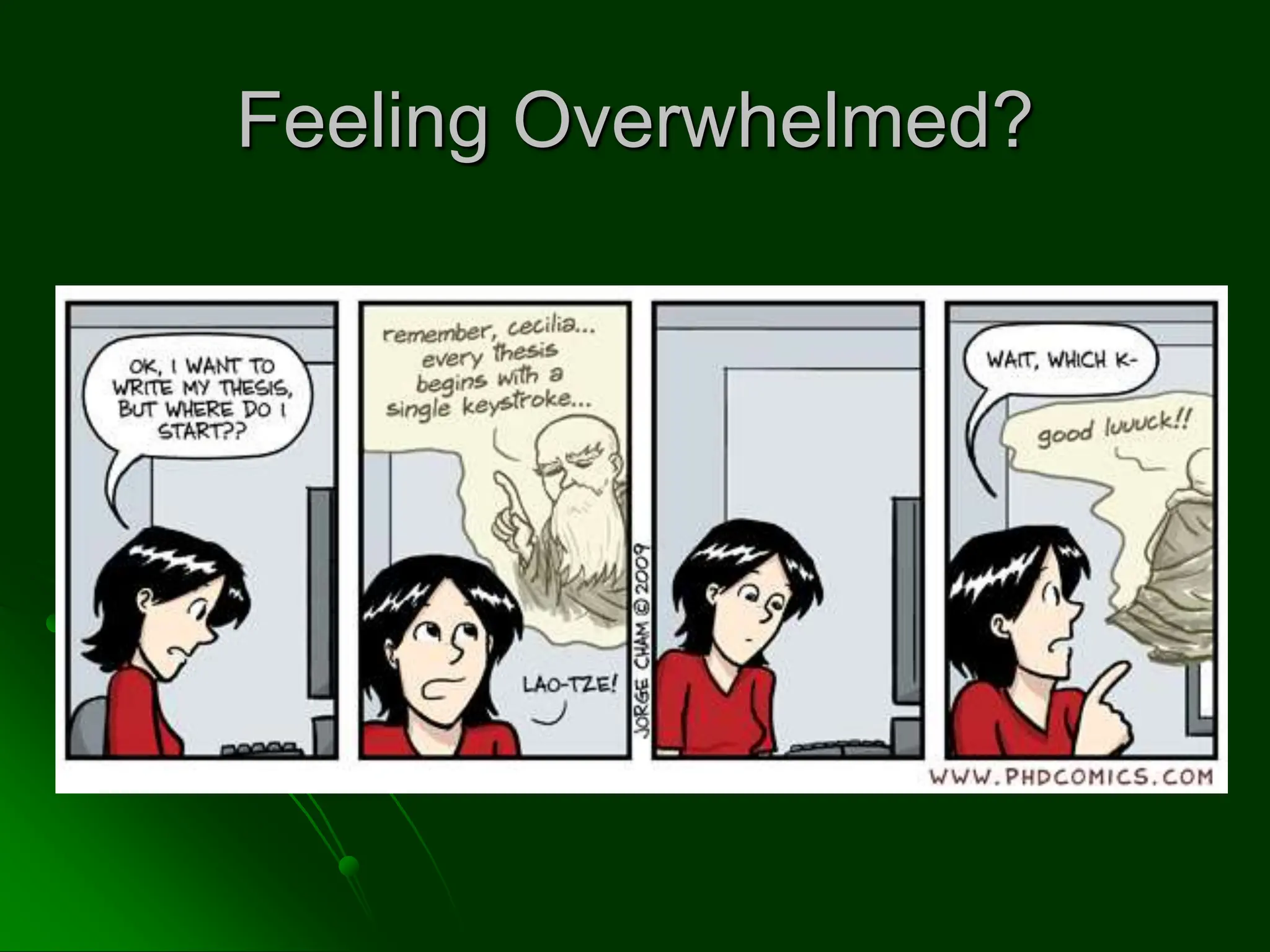
Feeling Overwhelmed?
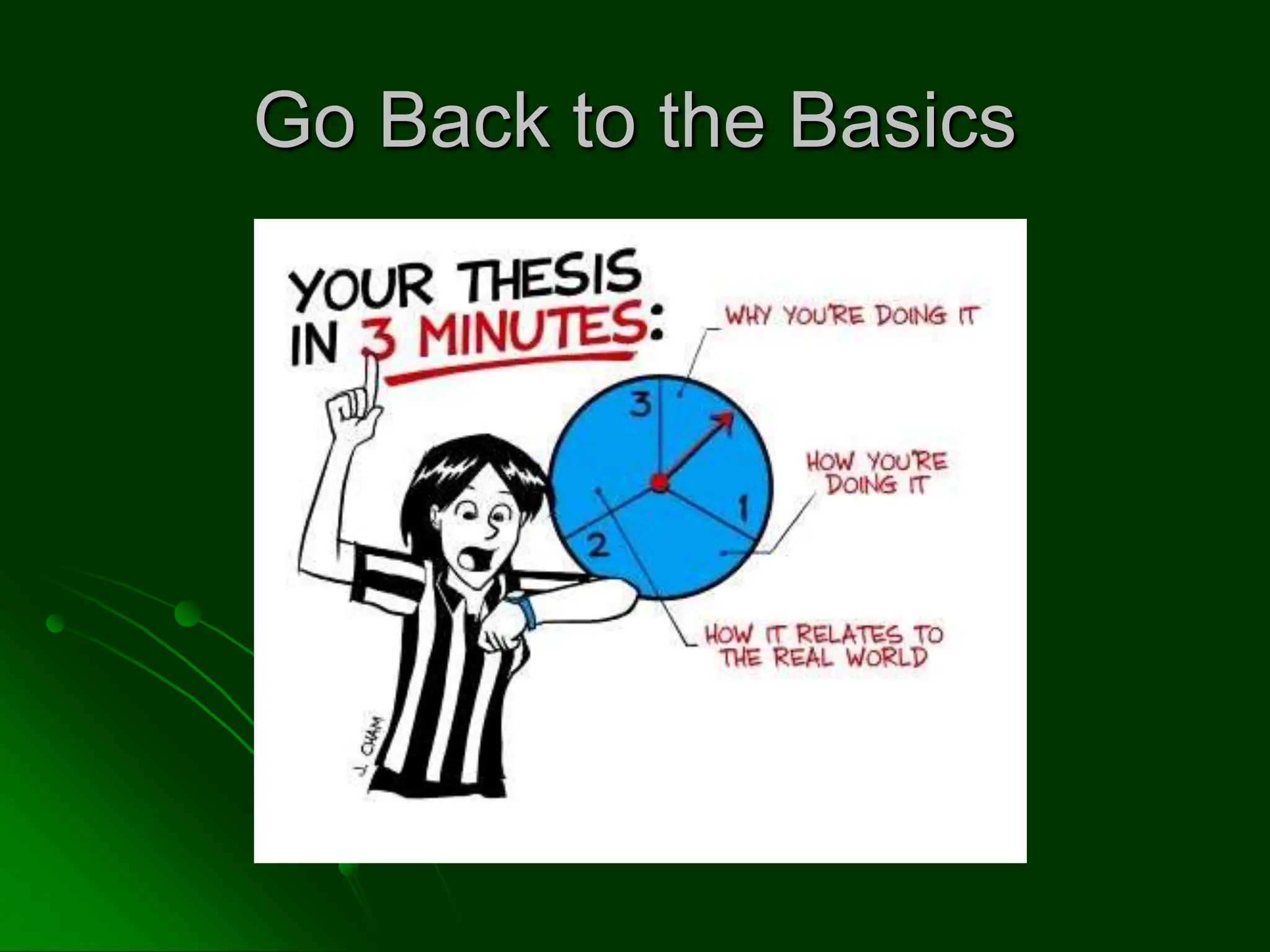
Breaking It Down
 Writing is recursive and filled with stops
and starts
 Multiple drafts are to be expected
 Identify sections of your project so that you
can establish a working timeline
 Work on smaller portions of your project
 Draft every day/week according to finished
length and deadline
Go Back to the Basics
Resources
 College of Graduate Studies
 http://www.utoledo.edu/graduate/
 The Writing Center
 http://www.utoledo.edu/centers/writingcenter/
 University Libraries
 http://www.utoledo.edu/library/
Resources continued…
 They Say, I Say: The Moves That Matter
in Academic Writing by Gerald Graff and
Cathy Birkenstein
 Academic Writing for Graduate Students,
Essential Tasks and Skills, Second Edition
by John M. Swales and Christine B. Feak
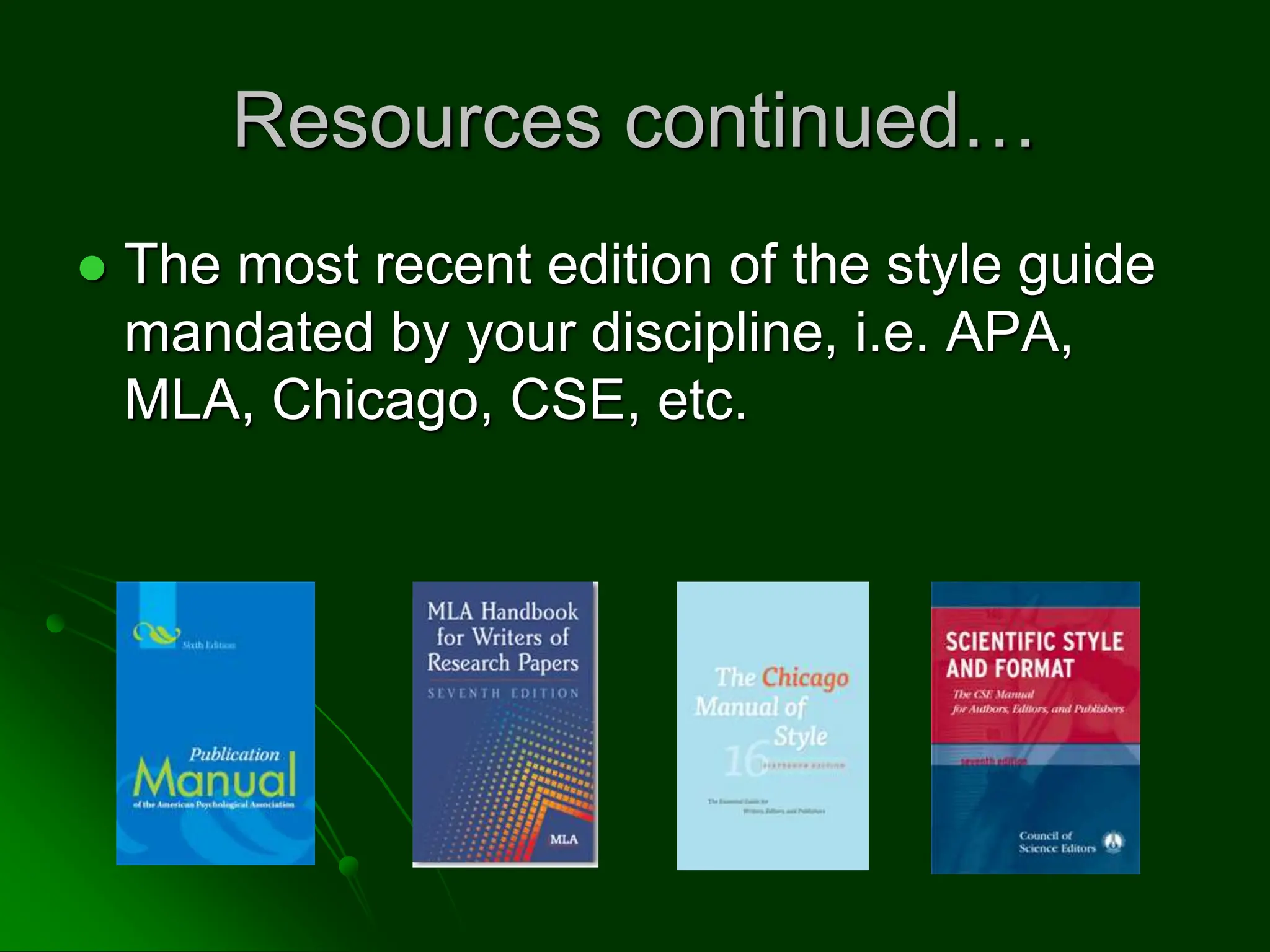
Resources continued…
 The most recent edition of the style guide
mandated by your discipline, i.e. APA,
MLA, Chicago, CSE, etc.
Thank You and Remember…
 Be Proactive
 Communicate early and often
 With faculty / reader / advisor
 With librarian / tutor / co-hort
 Get organized and stay organized
 Seek out and utilize relevant resources
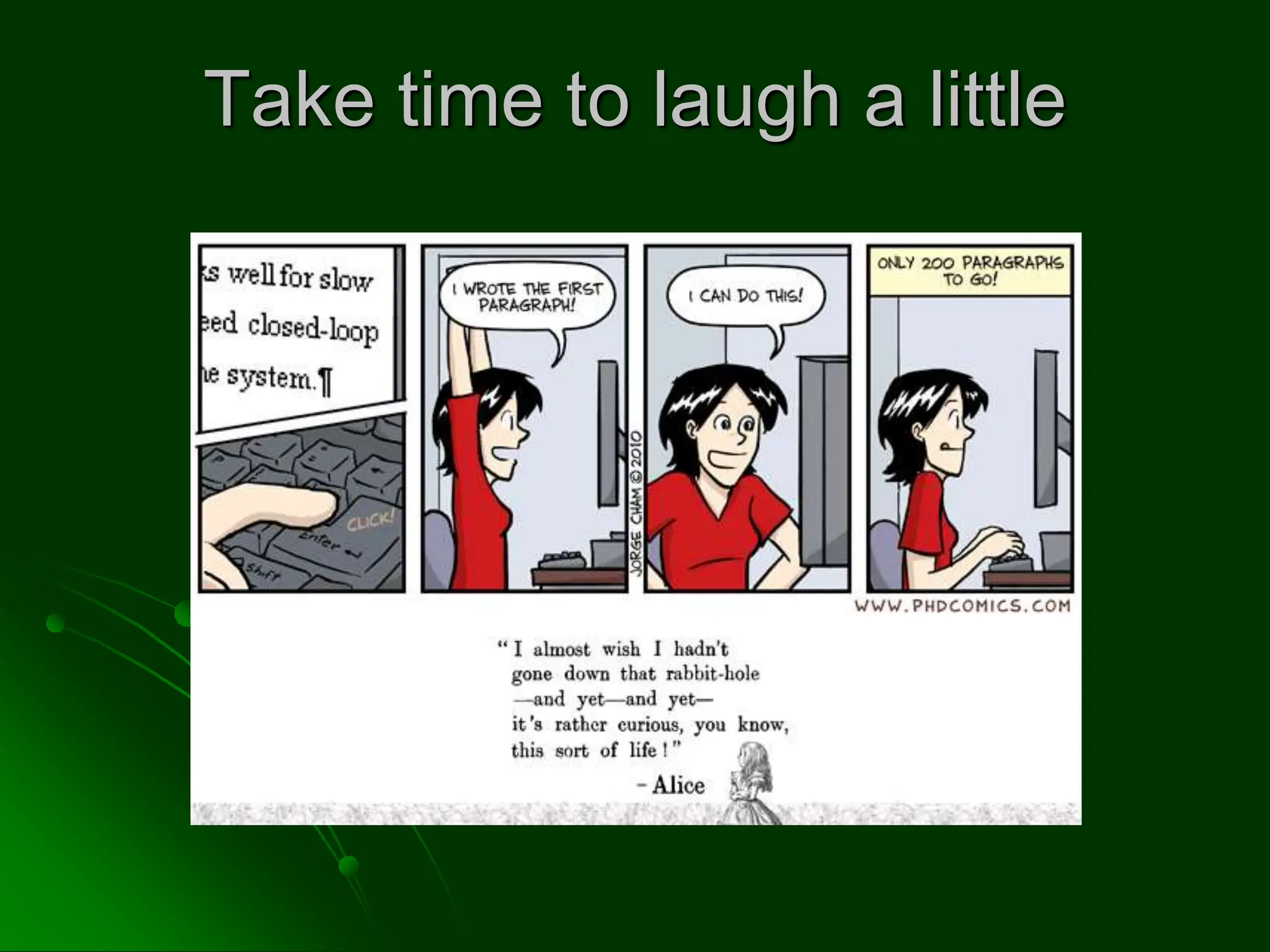
Take time to laugh a little

Writing_in_Grad_School_Orienta.ppt

  • 1.
    Graduate Writing Skills Strategiesfor Success in Graduate School and Beyond
  • 2.
    Session Content  Undergraduatevs. graduate level writing  New expectations: student and faculty  Approaching academic writing  Resources
  • 3.
    Undergraduate vs. Graduate Most notable change when writing at the graduate level versus the undergraduate: purpose of writing  Undergraduate writing: Knowledge Telling  Graduate writing: Knowledge Making
  • 4.
    Prior to graduateschool…  Papers were exercises in providing enough information to meet a page limit and a deadline Complete Calvin & Hobbes © 2006 Bill Watterson
  • 5.
    Knowledge Telling  Paperstypically  demonstrate the accumulation of acquired knowledge  are directed at the teacher as the primary audience  incorporate direct quotation and paraphrase rather than summary and synthesis  include simple argumentation and some analysis  reduce issues/topics to simplest denominators  tend towards comprehensive, yet broad, reports
  • 6.
    Goal in GraduateLevel Writing  Papers are no longer exercises in getting a grade from your teacher; they are contributions to a body of knowledge and part of an ongoing conversation http://www.cellbiochem.ca/publications.html
  • 7.
    Knowledge Making  Paperstypically  enter an existing conversation  are aimed at peers in the field  are submitted for publication or presentation  utilize summary and synthesis  use sound argumentation and thorough analysis  follow disciplinary conventions precisely  introduce new knowledge and offer meta-commentary that positions the writer as a scholar/professional peer
  • 8.
    New Expectations  Studentsresponsible for  Navigating procedures  Initiating research  Understanding degree/discipline expectations  Conferencing with faculty/advisors  Managing tasks and project timelines  Establishing writing/research schedule
  • 9.
    New Expectations  Facultyresponsible for  Assigning course work  may or may not provide detailed, step-by-step instructions for a paper or presentation  Reviewing your work  may or may not offer extensive feedback  may or may not make corrections  may only review at pre-determined stages  Supporting publication/presentation efforts  may or may not offer info on opportunities
  • 10.
  • 11.
    Entering the Conversation* Audience: peers engaged in a discussion  Purpose: add to existing knowledge  Organization: disciplinary conventions  “Flow”, Style, and Presentation  accomplished by utilizing rhetorical patterns common to academic discourse -OR-  They Say, I Say, Tying it Together * Material on the following slides adapted from They Say, I Say: The Moves That Matter in Academic Writing
  • 12.
    “They Say”  Startwith what others are saying  “Her point is” – skillful summarization  “As Jones herself states” – relevant quotation One hallmark of writing well is the ability to enter an important discussion in academic or public spheres and clearly summarize others in order to position one’s own argument
  • 13.
    “I Say”  Threeresponses: Yes. No. Okay, but…  “And yet” – distinguish their words from yours  “Skeptics may object” – include a naysayer  “So what?” – explaining why it matters Your audience needs to know what is at stake in order to stay interested in the content of the paper, yet this crucial question often remains unanswered, alienating many readers
  • 14.
    Tying It AllTogether  “As a result” – connecting all the parts  “Ain’t so / Is not” – finding balance between a formal voice and your own  “In Other Words” – Metacommentary Use metacommentary to tell your reader how to interpret your claims, as well as clarify and elaborate your text.
  • 15.
  • 16.
    Breaking It Down Writing is recursive and filled with stops and starts  Multiple drafts are to be expected  Identify sections of your project so that you can establish a working timeline  Work on smaller portions of your project  Draft every day/week according to finished length and deadline
  • 17.
    Go Back tothe Basics
  • 18.
    Resources  College ofGraduate Studies  http://www.utoledo.edu/graduate/  The Writing Center  http://www.utoledo.edu/centers/writingcenter/  University Libraries  http://www.utoledo.edu/library/
  • 19.
    Resources continued…  TheySay, I Say: The Moves That Matter in Academic Writing by Gerald Graff and Cathy Birkenstein  Academic Writing for Graduate Students, Essential Tasks and Skills, Second Edition by John M. Swales and Christine B. Feak
  • 20.
    Resources continued…  Themost recent edition of the style guide mandated by your discipline, i.e. APA, MLA, Chicago, CSE, etc.
  • 21.
    Thank You andRemember…  Be Proactive  Communicate early and often  With faculty / reader / advisor  With librarian / tutor / co-hort  Get organized and stay organized  Seek out and utilize relevant resources
  • 22.
    Take time tolaugh a little