
Writing Across the
    Curriculum
  DeKalb High/Middle School
Do you use writing in
 your classroom?
Common Core Standards
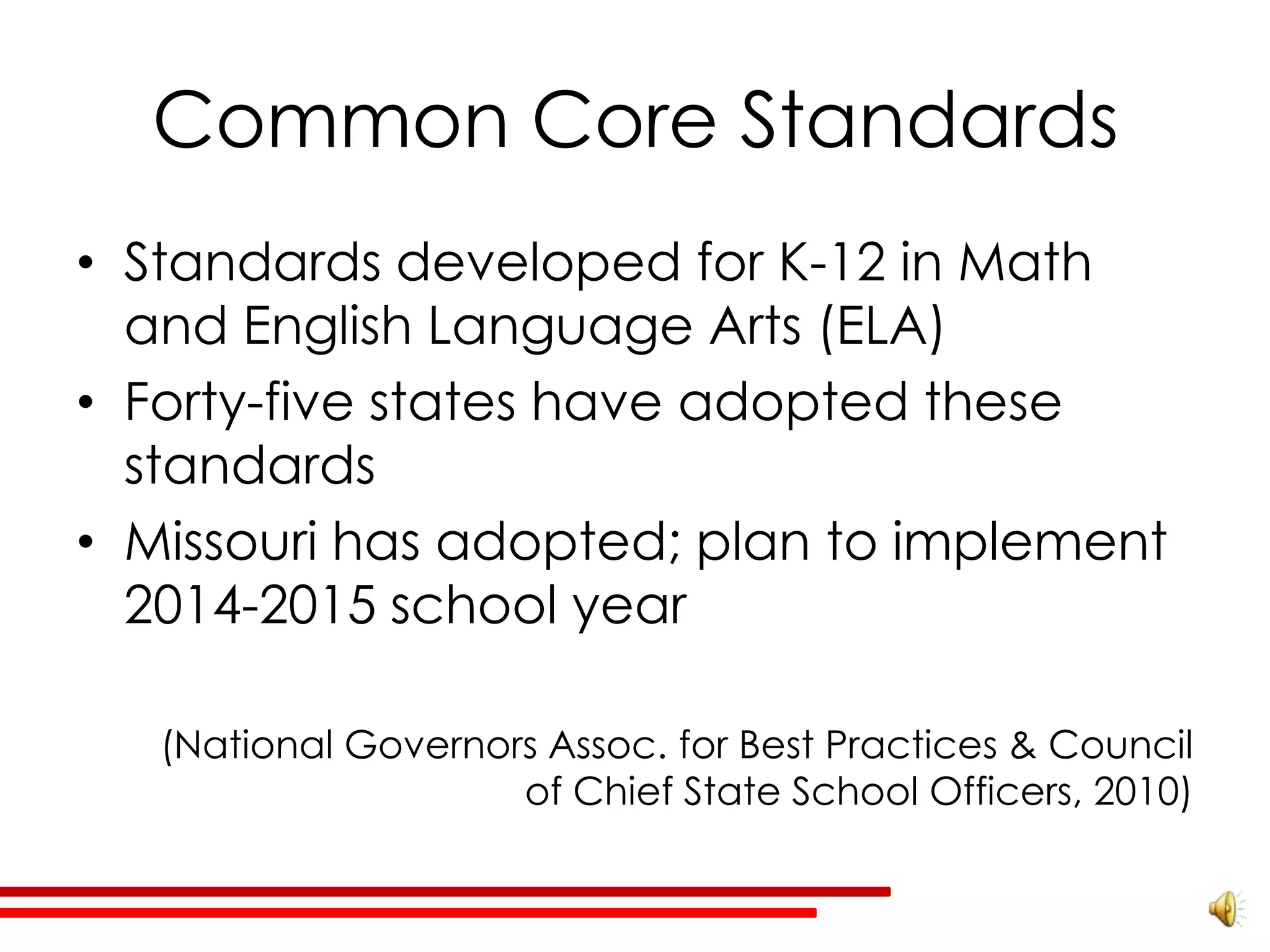
• Standards developed for K-12 in Math
  and English Language Arts (ELA)
• Forty-five states have adopted these
  standards
• Missouri has adopted; plan to implement
  2014-2015 school year

   (National Governors Assoc. for Best Practices & Council
                     of Chief State School Officers, 2010)
Common Core Standards

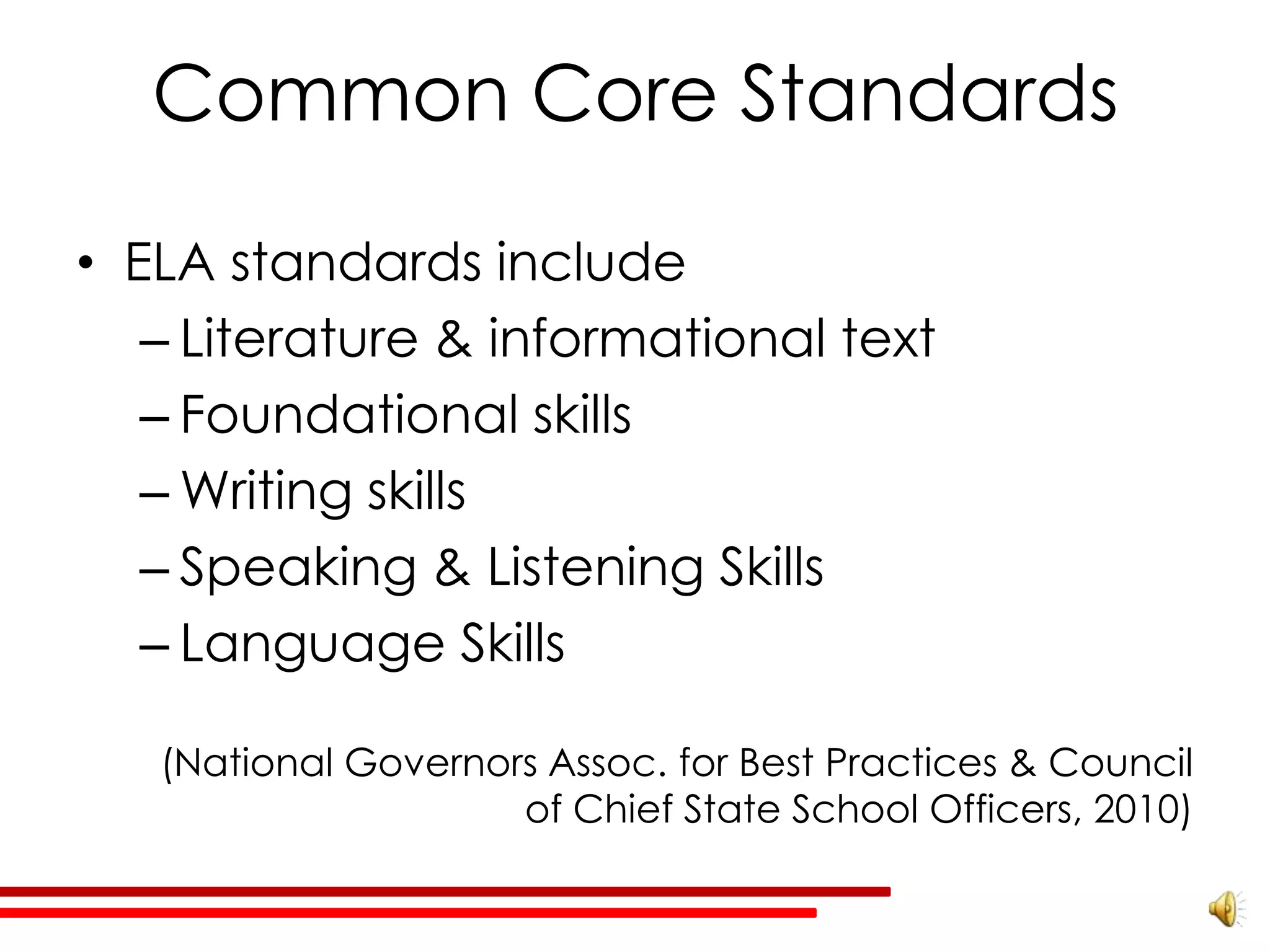
• ELA standards include
   – Literature & informational text
   – Foundational skills
   – Writing skills
   – Speaking & Listening Skills
   – Language Skills

   (National Governors Assoc. for Best Practices & Council
                     of Chief State School Officers, 2010)
Common Core Standards

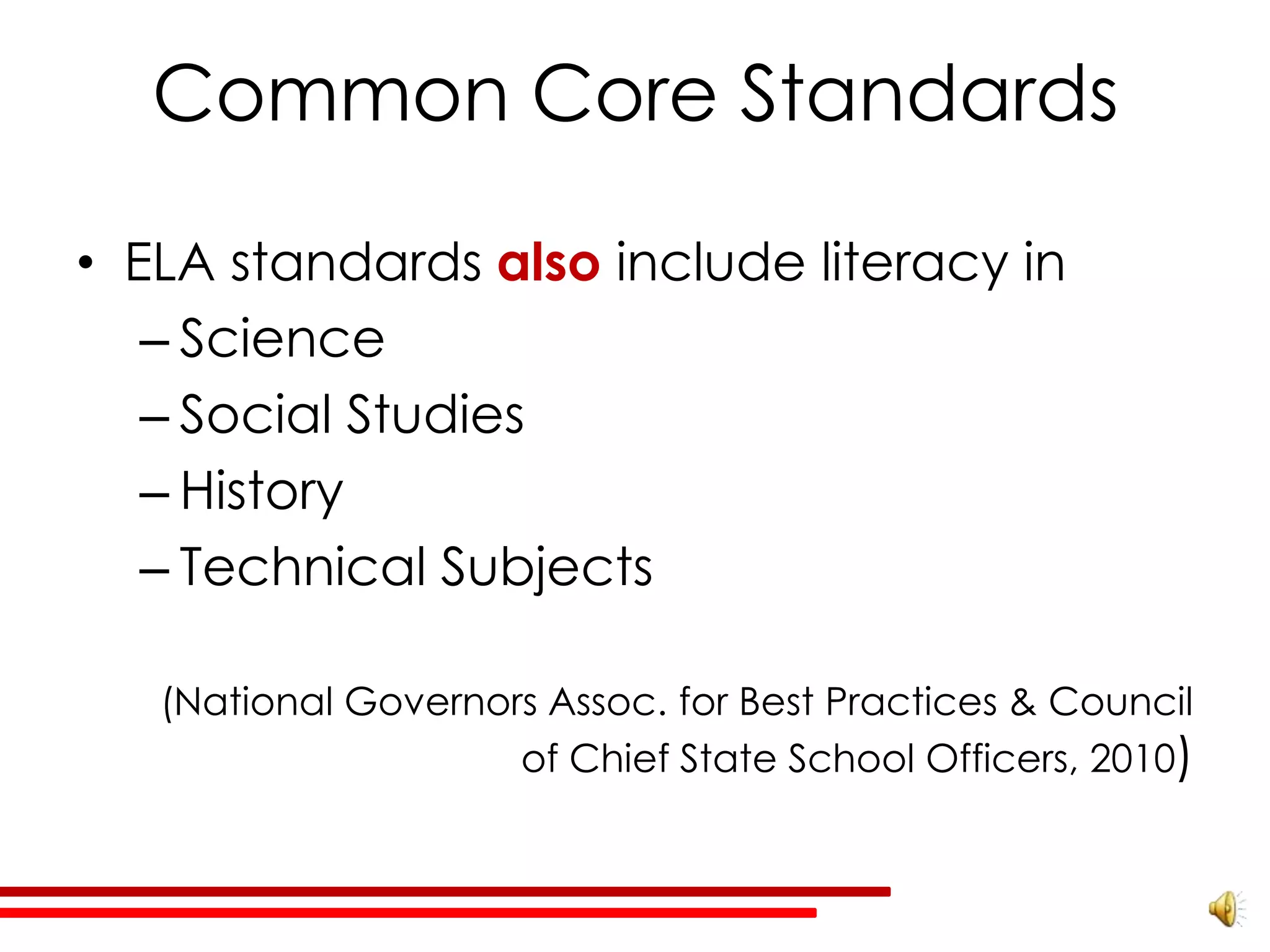
• ELA standards also include literacy in
   – Science
   – Social Studies
   – History
   – Technical Subjects

   (National Governors Assoc. for Best Practices & Council
                     of Chief State School Officers, 2010)
How can we
prepare our students
  for the Common
        Core?
Writing Across the
    Curriculum
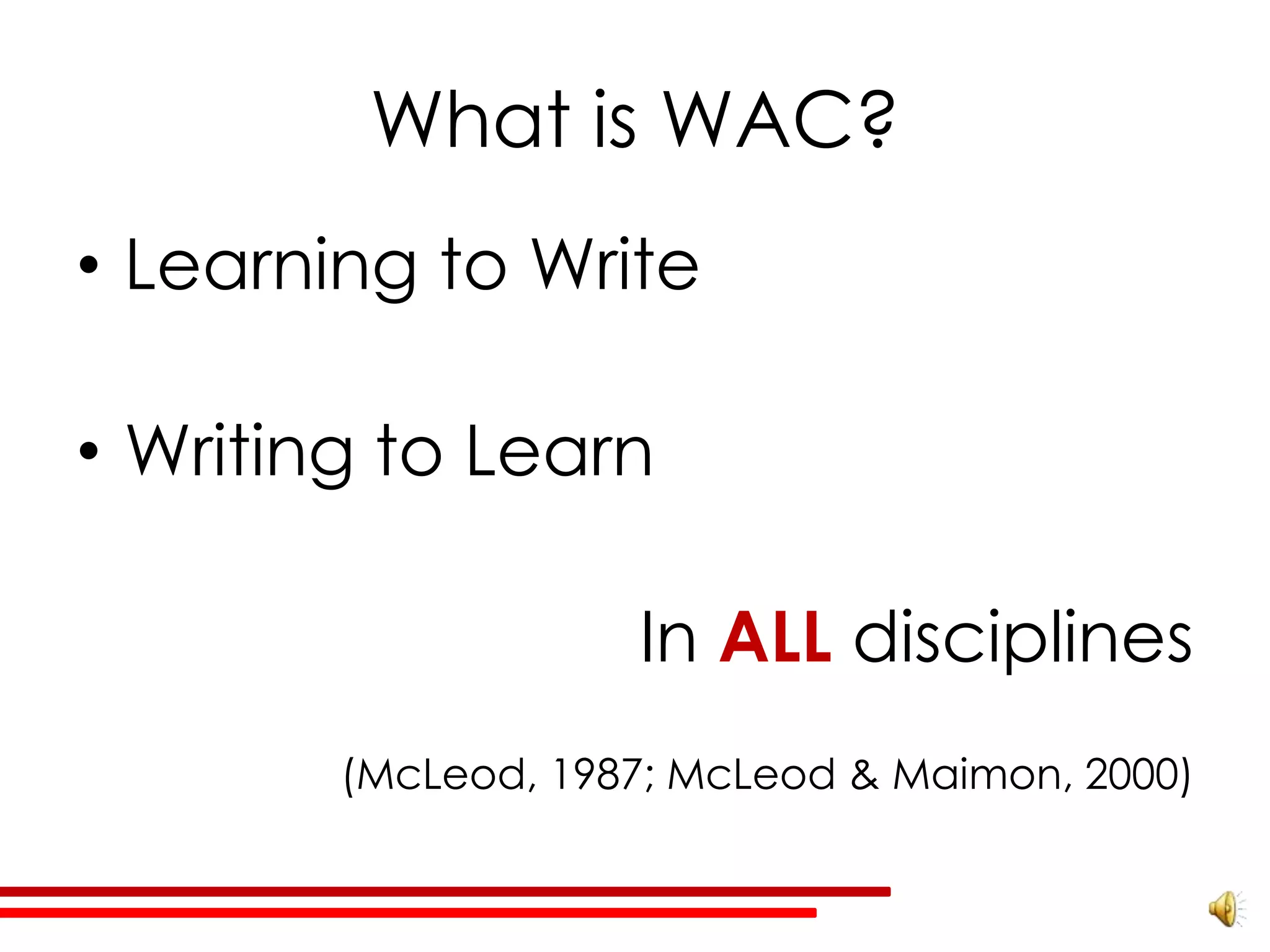
What is WAC?
• Learning to Write

• Writing to Learn

                    In ALL disciplines
        (McLeod, 1987; McLeod & Maimon, 2000)
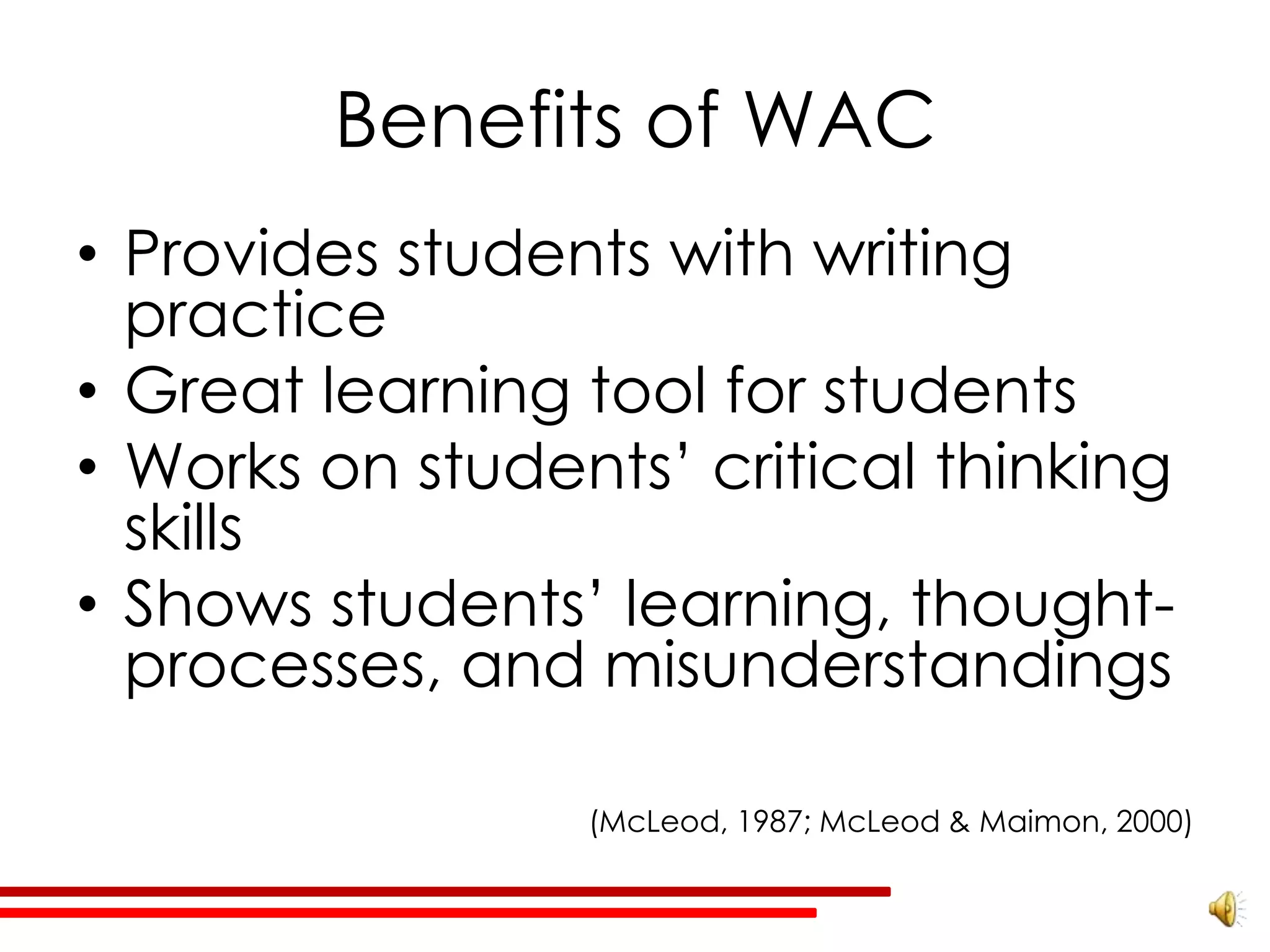
Benefits of WAC
• Provides students with writing
  practice
• Great learning tool for students
• Works on students’ critical thinking
  skills
• Shows students’ learning, thought-
  processes, and misunderstandings

                 (McLeod, 1987; McLeod & Maimon, 2000)
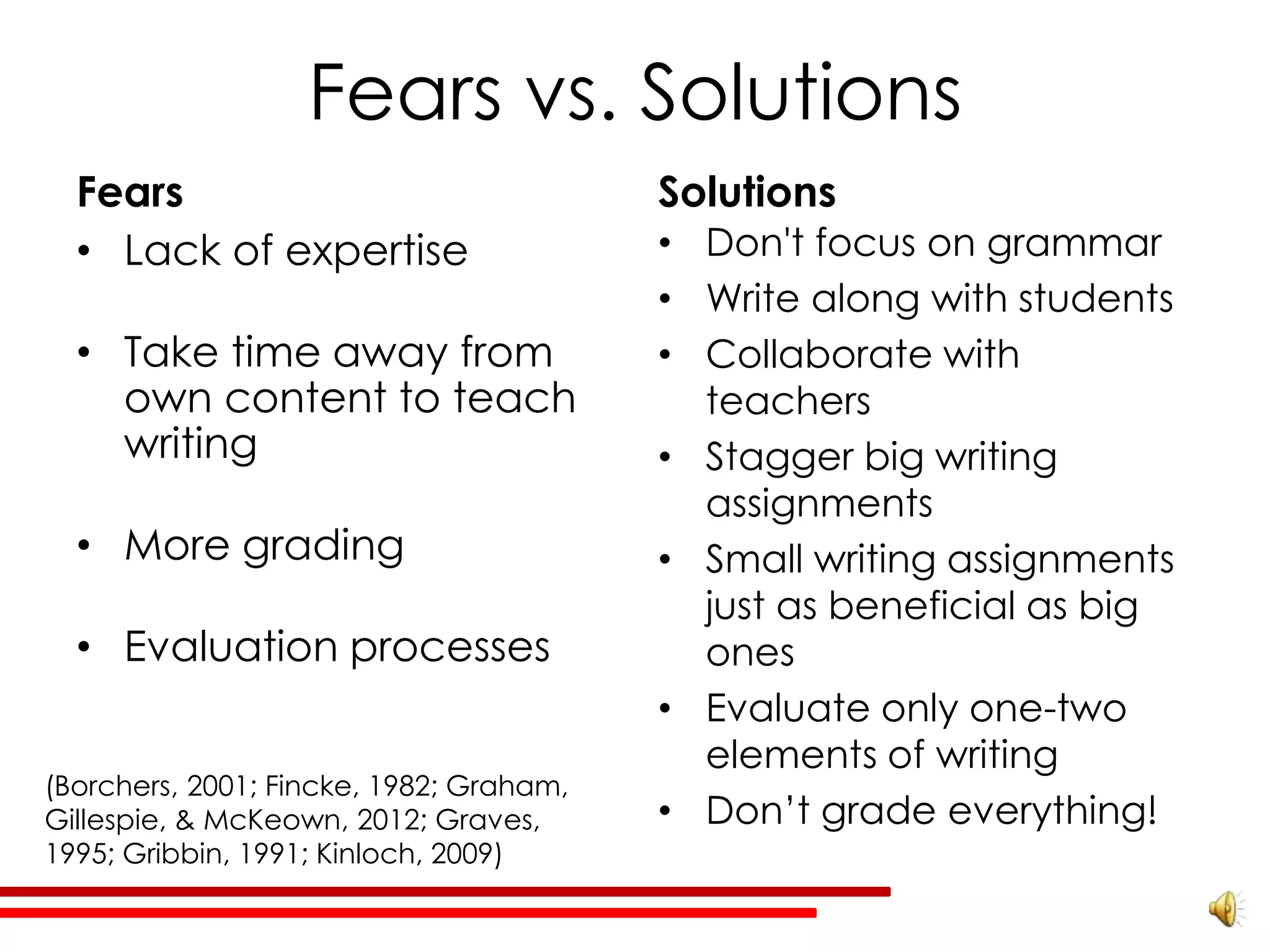
Fears vs. Solutions
  Fears                                  Solutions
  • Lack of expertise                    • Don't focus on grammar
                                         • Write along with students
  • Take time away from                  • Collaborate with
    own content to teach                   teachers
    writing                              • Stagger big writing
                                           assignments
  • More grading                         • Small writing assignments
                                           just as beneficial as big
  • Evaluation processes                   ones
                                         • Evaluate only one-two
                                           elements of writing
(Borchers, 2001; Fincke, 1982; Graham,
Gillespie, & McKeown, 2012; Graves,      • Don’t grade everything!
1995; Gribbin, 1991; Kinloch, 2009)
What are some ways
you can incorporate
  more writing into
  your classroom?
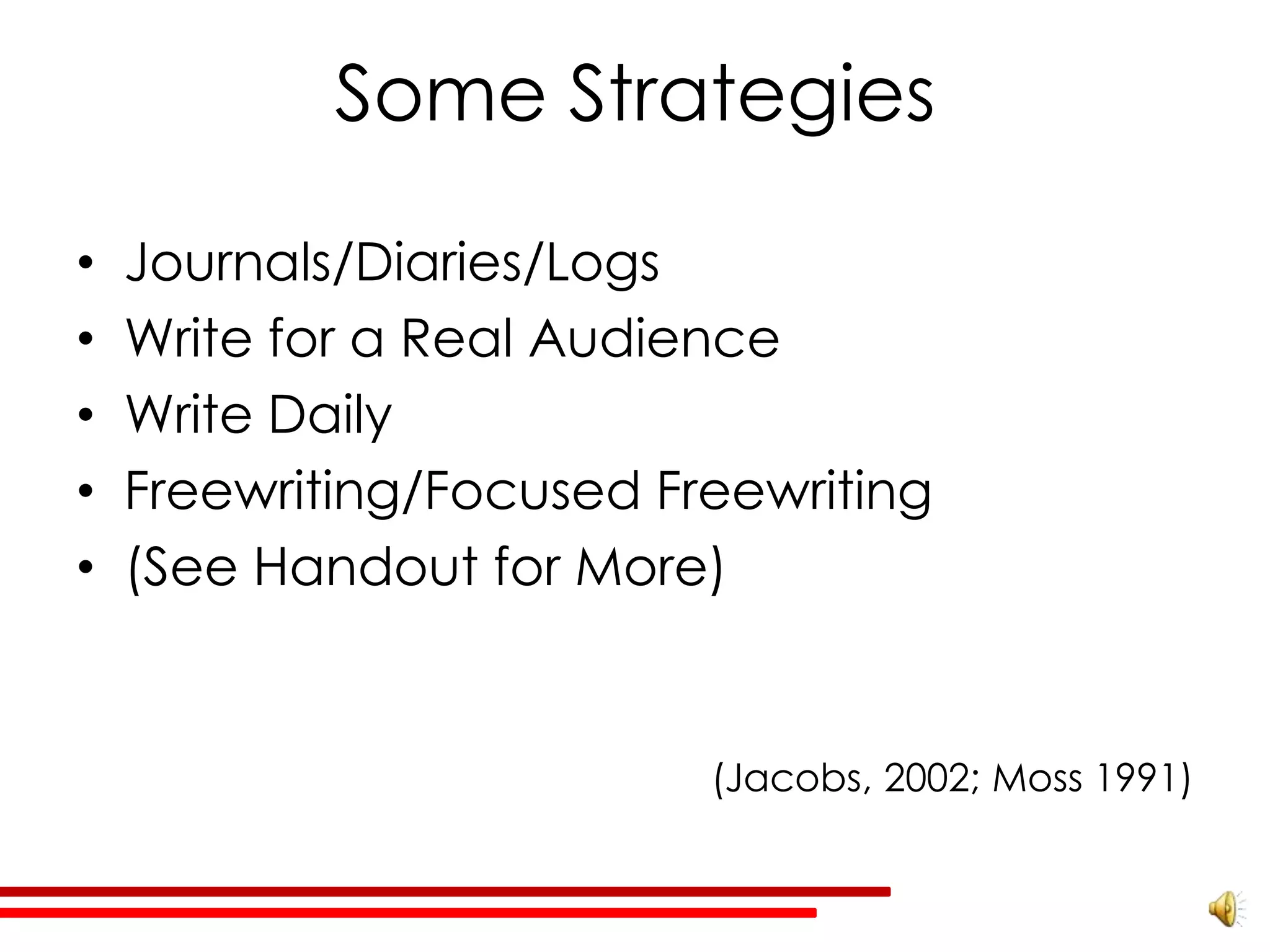
Some Strategies

•   Journals/Diaries/Logs
•   Write for a Real Audience
•   Write Daily
•   Freewriting/Focused Freewriting
•   (See Handout for More)


                          (Jacobs, 2002; Moss 1991)
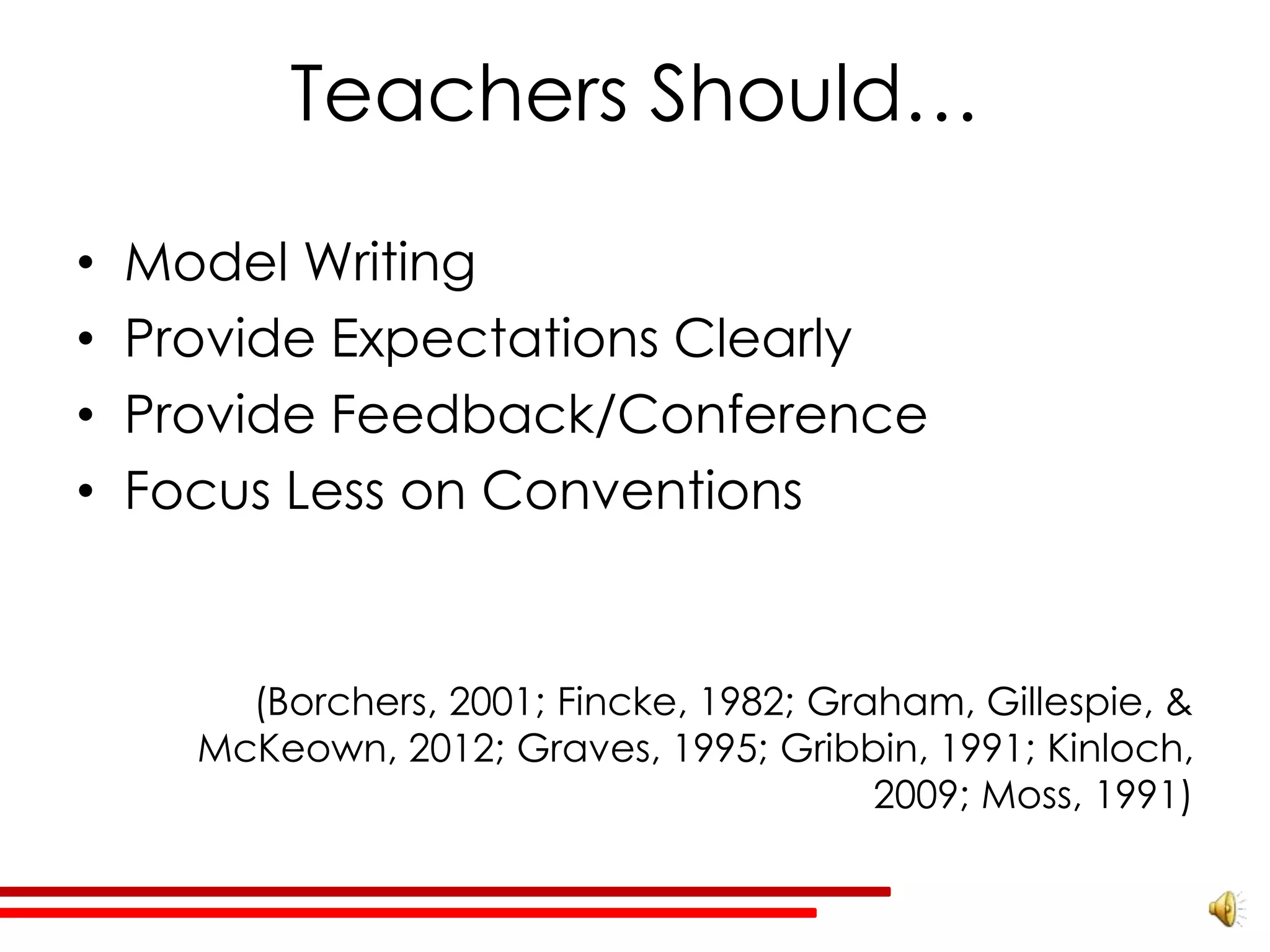
Teachers Should…

•   Model Writing
•   Provide Expectations Clearly
•   Provide Feedback/Conference
•   Focus Less on Conventions


        (Borchers, 2001; Fincke, 1982; Graham, Gillespie, &
      McKeown, 2012; Graves, 1995; Gribbin, 1991; Kinloch,
                                          2009; Moss, 1991)
Bibliography
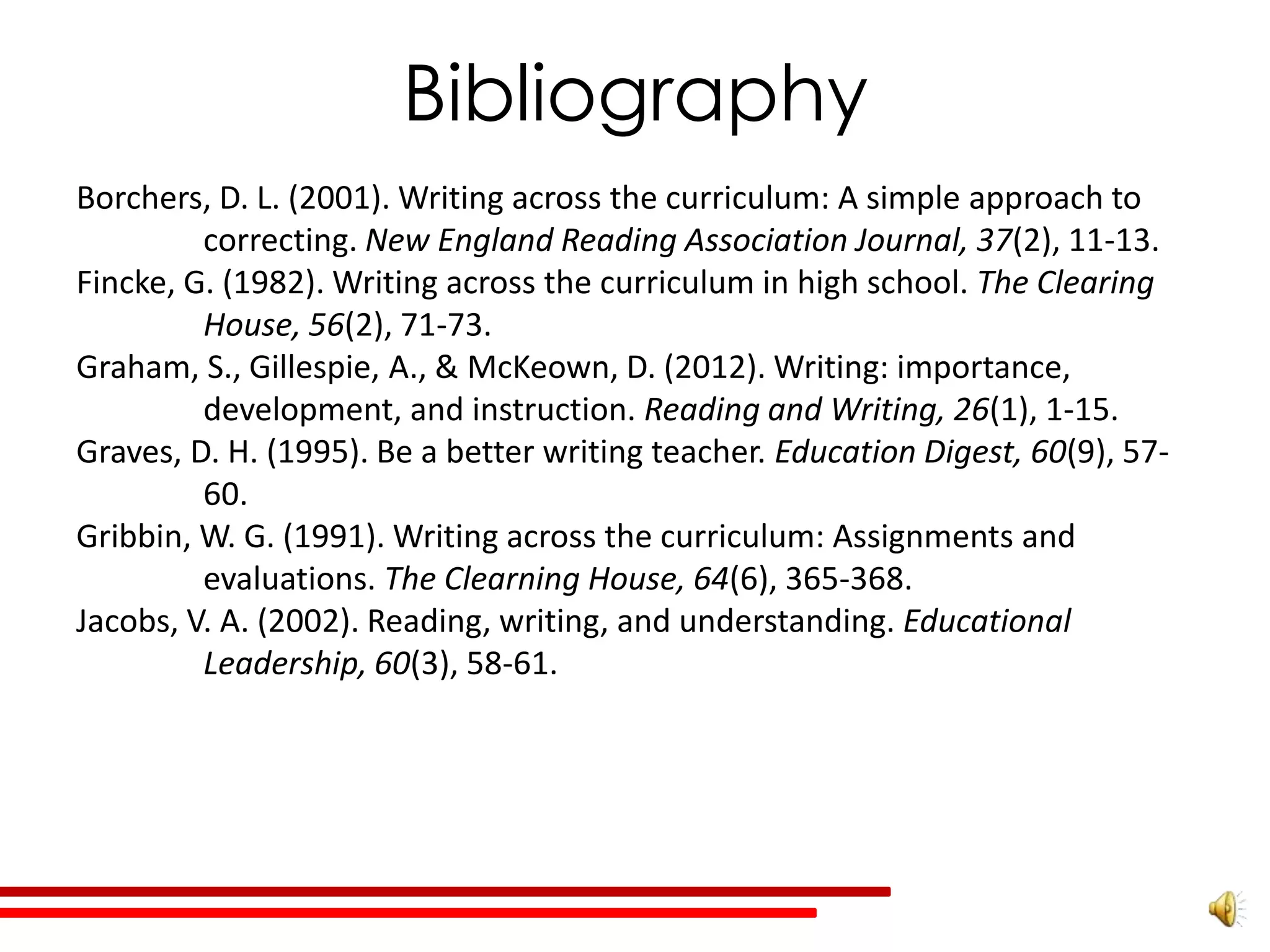
Borchers, D. L. (2001). Writing across the curriculum: A simple approach to
         correcting. New England Reading Association Journal, 37(2), 11-13.
Fincke, G. (1982). Writing across the curriculum in high school. The Clearing
         House, 56(2), 71-73.
Graham, S., Gillespie, A., & McKeown, D. (2012). Writing: importance,
         development, and instruction. Reading and Writing, 26(1), 1-15.
Graves, D. H. (1995). Be a better writing teacher. Education Digest, 60(9), 57-
         60.
Gribbin, W. G. (1991). Writing across the curriculum: Assignments and
         evaluations. The Clearning House, 64(6), 365-368.
Jacobs, V. A. (2002). Reading, writing, and understanding. Educational
         Leadership, 60(3), 58-61.
Bibliography
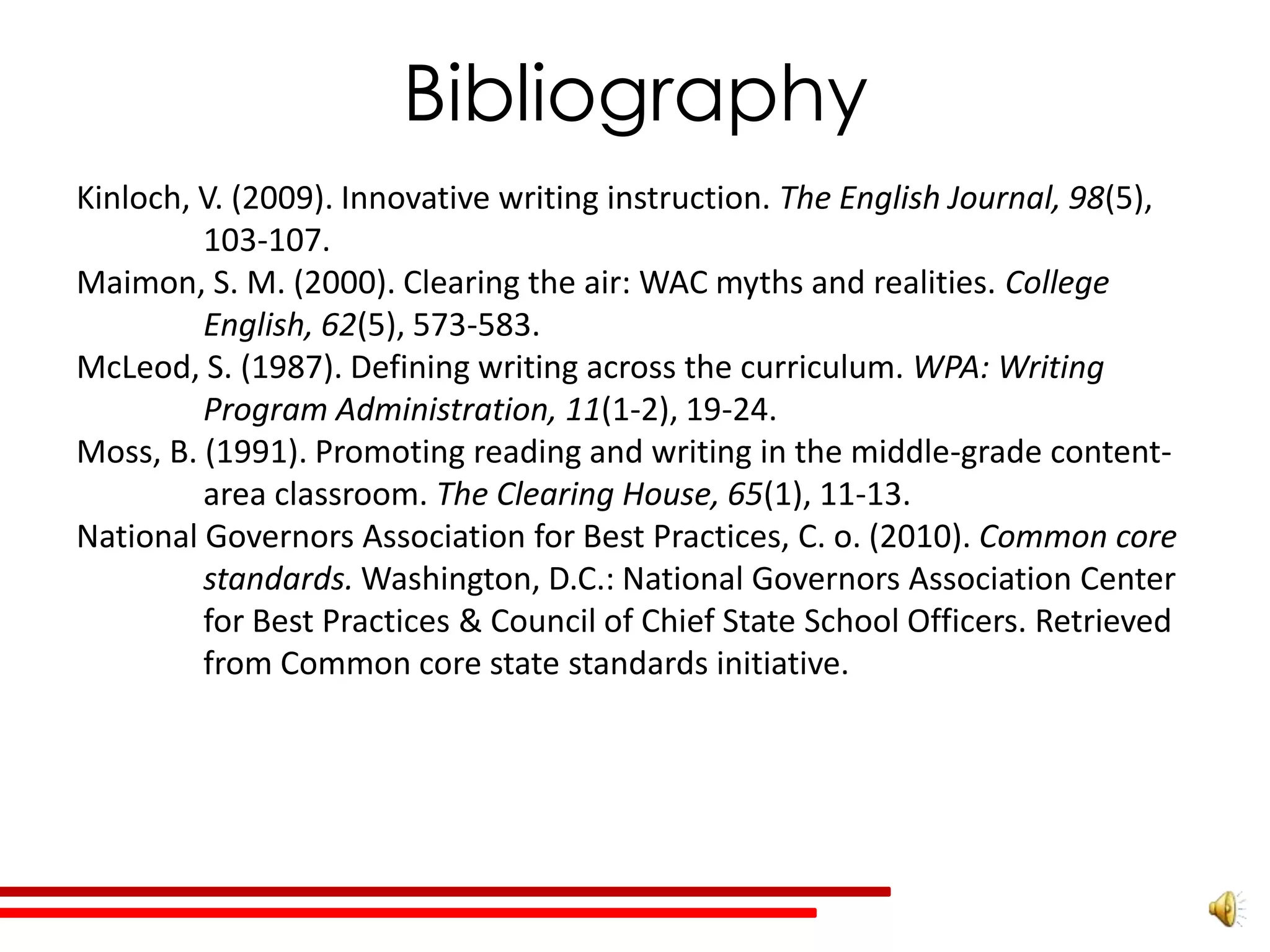
Kinloch, V. (2009). Innovative writing instruction. The English Journal, 98(5),
         103-107.
Maimon, S. M. (2000). Clearing the air: WAC myths and realities. College
         English, 62(5), 573-583.
McLeod, S. (1987). Defining writing across the curriculum. WPA: Writing
         Program Administration, 11(1-2), 19-24.
Moss, B. (1991). Promoting reading and writing in the middle-grade content-
         area classroom. The Clearing House, 65(1), 11-13.
National Governors Association for Best Practices, C. o. (2010). Common core
         standards. Washington, D.C.: National Governors Association Center
         for Best Practices & Council of Chief State School Officers. Retrieved
         from Common core state standards initiative.

Writing across the curriculum

  • 1.
    Writing Across the Curriculum DeKalb High/Middle School
  • 2.
    Do you usewriting in your classroom?
  • 3.
    Common Core Standards •Standards developed for K-12 in Math and English Language Arts (ELA) • Forty-five states have adopted these standards • Missouri has adopted; plan to implement 2014-2015 school year (National Governors Assoc. for Best Practices & Council of Chief State School Officers, 2010)
  • 4.
    Common Core Standards •ELA standards include – Literature & informational text – Foundational skills – Writing skills – Speaking & Listening Skills – Language Skills (National Governors Assoc. for Best Practices & Council of Chief State School Officers, 2010)
  • 5.
    Common Core Standards •ELA standards also include literacy in – Science – Social Studies – History – Technical Subjects (National Governors Assoc. for Best Practices & Council of Chief State School Officers, 2010)
  • 6.
    How can we prepareour students for the Common Core?
  • 7.
  • 8.
    What is WAC? •Learning to Write • Writing to Learn In ALL disciplines (McLeod, 1987; McLeod & Maimon, 2000)
  • 9.
    Benefits of WAC •Provides students with writing practice • Great learning tool for students • Works on students’ critical thinking skills • Shows students’ learning, thought- processes, and misunderstandings (McLeod, 1987; McLeod & Maimon, 2000)
  • 10.
    Fears vs. Solutions Fears Solutions • Lack of expertise • Don't focus on grammar • Write along with students • Take time away from • Collaborate with own content to teach teachers writing • Stagger big writing assignments • More grading • Small writing assignments just as beneficial as big • Evaluation processes ones • Evaluate only one-two elements of writing (Borchers, 2001; Fincke, 1982; Graham, Gillespie, & McKeown, 2012; Graves, • Don’t grade everything! 1995; Gribbin, 1991; Kinloch, 2009)
  • 11.
    What are someways you can incorporate more writing into your classroom?
  • 12.
    Some Strategies • Journals/Diaries/Logs • Write for a Real Audience • Write Daily • Freewriting/Focused Freewriting • (See Handout for More) (Jacobs, 2002; Moss 1991)
  • 13.
    Teachers Should… • Model Writing • Provide Expectations Clearly • Provide Feedback/Conference • Focus Less on Conventions (Borchers, 2001; Fincke, 1982; Graham, Gillespie, & McKeown, 2012; Graves, 1995; Gribbin, 1991; Kinloch, 2009; Moss, 1991)
  • 14.
    Bibliography Borchers, D. L.(2001). Writing across the curriculum: A simple approach to correcting. New England Reading Association Journal, 37(2), 11-13. Fincke, G. (1982). Writing across the curriculum in high school. The Clearing House, 56(2), 71-73. Graham, S., Gillespie, A., & McKeown, D. (2012). Writing: importance, development, and instruction. Reading and Writing, 26(1), 1-15. Graves, D. H. (1995). Be a better writing teacher. Education Digest, 60(9), 57- 60. Gribbin, W. G. (1991). Writing across the curriculum: Assignments and evaluations. The Clearning House, 64(6), 365-368. Jacobs, V. A. (2002). Reading, writing, and understanding. Educational Leadership, 60(3), 58-61.
  • 15.
    Bibliography Kinloch, V. (2009).Innovative writing instruction. The English Journal, 98(5), 103-107. Maimon, S. M. (2000). Clearing the air: WAC myths and realities. College English, 62(5), 573-583. McLeod, S. (1987). Defining writing across the curriculum. WPA: Writing Program Administration, 11(1-2), 19-24. Moss, B. (1991). Promoting reading and writing in the middle-grade content- area classroom. The Clearing House, 65(1), 11-13. National Governors Association for Best Practices, C. o. (2010). Common core standards. Washington, D.C.: National Governors Association Center for Best Practices & Council of Chief State School Officers. Retrieved from Common core state standards initiative.