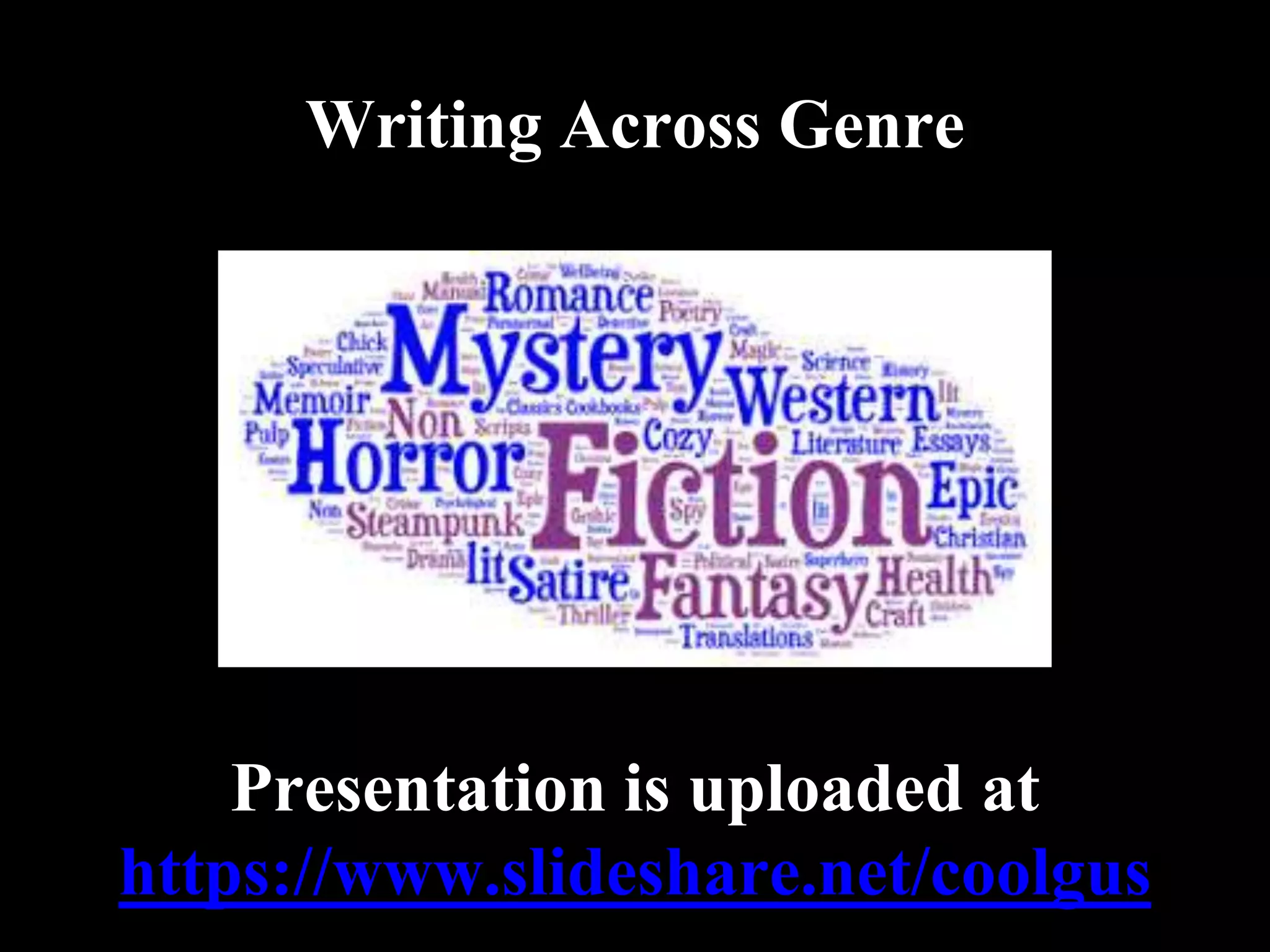
Writing Across Genre
Presentation is uploaded at
https://www.slideshare.net/coolgus
• A category of artistic composition, as in music or
literature, characterized by similarities in form,
style, or subject matter.
What Is Genre
• “I’ve written a mystery but it’s not a mystery.”
• Readers have expectations of genre
• Where the book will be racked in a store
• Where the book will be slotted for search engine
discoverability on-line
Why Is Genre Important?
• Mixing elements of genres
• Almost every novel does it
• You have to consider it in terms of story and
business
What Is Writing Across Genre?
• The essence of story-telling is the same
regardless of genre or mixing genre
• Your IDEA is key
• There are some differences in story depending on
genre, but they are guidelines
• Remember, if you do it like everyone else, you’re
like everyone else
Creatively
The Foundation: One Sentence
Idea
•Can you state the original idea for your book
in 25 words or less?
•Have you written it down?
•Does it bring an emotional reaction?
•Good writing and strong characters are key.
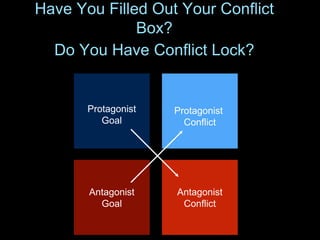
Have You Filled Out Your Conflict
Box?
Do You Have Conflict Lock?
Protagonist
Conflict
Protagonist
Goal
Antagonist
Goal
Antagonist
Conflict
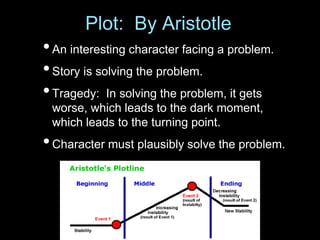
Plot: By Aristotle
•An interesting character facing a problem.
•Story is solving the problem.
•Tragedy: In solving the problem, it gets
worse, which leads to the dark moment,
which leads to the turning point.
•Character must plausibly solve the problem.
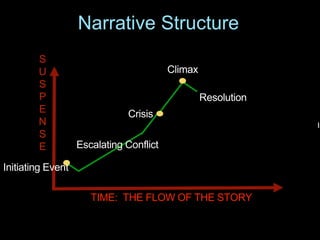
Narrative Structure
Initiating Event
Escalating Conflict
In
Crisis
Climax
Resolution
TIME: THE FLOW OF THE STORY
S
U
S
P
E
N
S
E
• If mixing, which genre supports the main theme?
• You can have a romance in any genre; that
doesn’t make it a romance
• You have suspense in every book, that doesn’t
make it suspense
• You have thrills, etc.
Why Is Genre Important?
• A story is a story
• You write what you want to write
Why Is Genre Not Important?
• Can be a positive or a negative
• Positive= expertise, inside knowledge
• Positive= readers trust the author
• Negative= too close to the subject matter
• Negative= too realistic, can be boring
Your Background
• It’s not just your resume
• It’s your persona; are you writing the book you
should be writing?
• Why are you writing this book?
• Are you positive or negative about your subject
matter?
Your Background
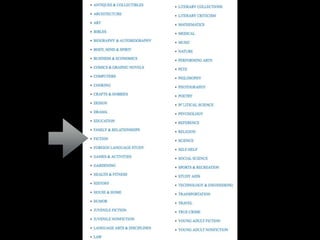
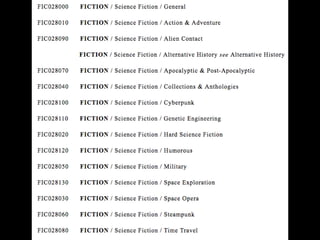
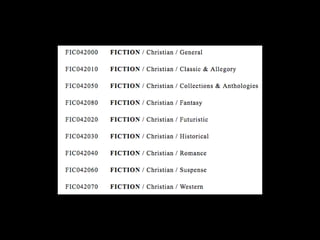
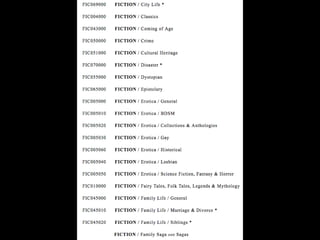
• First breakdown is:
•Fiction
•Nonfiction
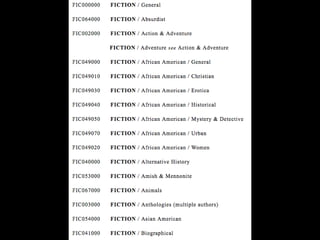
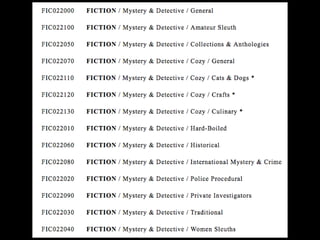
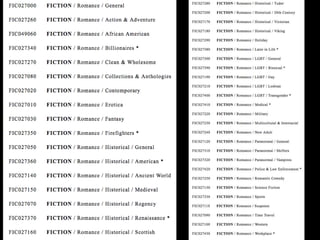
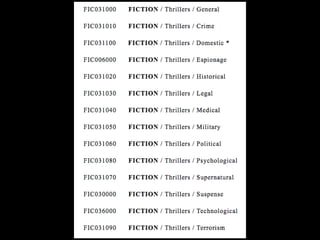
• BISAC codes (Book Industry Subject And Catalog)
• On line platforms also use these
Business: Types of Genre
Amazon: 5 Keywords, 2
Categories
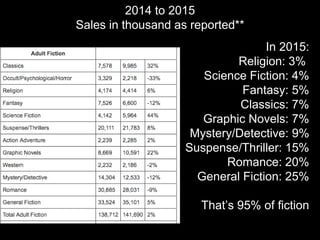
2014 to 2015
Sales in thousand as reported**
In 2015:
Religion: 3%
Science Fiction: 4%
Fantasy: 5%
Classics: 7%
Graphic Novels: 7%
Mystery/Detective: 9%
Suspense/Thriller: 15%
Romance: 20%
General Fiction: 25%
That’s 95% of fiction
• Is there a difference between eBook and print
genres?
Writing Across Genre
• There are two types of readers
•The ‘casual’ reader who read a handful of books
each year (the airport reader)
•The voracious reader who reads at least a book
a week
• Two types of authors
•The ‘airport’ author
•The rest
Reader Expectation
• It’s like X but it’s not X
• Ever read a book or watch a movie that switched
genres?
• Beneath genre there is tone, which needs to be
consistent
Reader Expectation
• Regardless of genre, the key to a good book is
good characters
Writing Across Genre
Difference between fantasy and science fiction
Asimov: SF is grounded in science and possible;
Fantasy has no reality and isn’t
World building has to make sense in both science
fiction and fantasy, or you need to be good enough to
get suspension of disbelief
Science Fiction writers tend to have so many
good ideas, they put them all in the story
Patterns In SF/F Writing
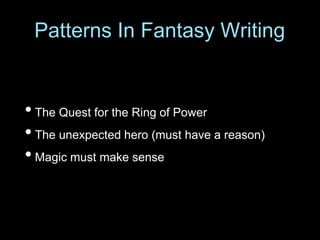
• The Quest for the Ring of Power
• The unexpected hero (must have a reason)
• Magic must make sense
Patterns In Fantasy Writing
• Thrillers usually open with what is at stake
(antagonist action), then go to protagonist
• The all-powerful hero/heroine
• Difference between suspense and thriller
•Care about characters or threat?
Patterns In Thriller Writing
• Is the suspense over “Who-Done-It” or we know
who-done-it; how does protagonist catch the
antagonist?
• Readers want to solve a puzzle— so is DaVinci
Code a mystery or thriller?
Patterns In Mystery/Detective
Writing
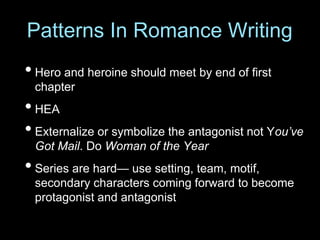
• Hero and heroine should meet by end of first
chapter
• HEA
• Externalize or symbolize the antagonist not You’ve
Got Mail. Do Woman of the Year
• Series are hard— use setting, team, motif,
secondary characters coming forward to become
protagonist and antagonist
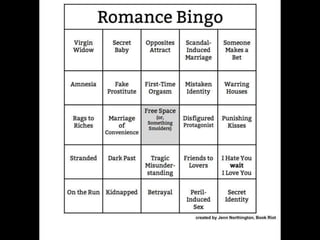
Patterns In Romance Writing
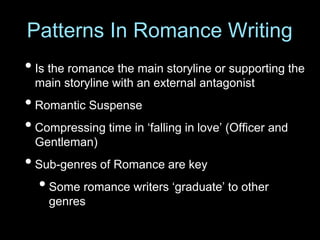
• Is the romance the main storyline or supporting the
main storyline with an external antagonist
• Romantic Suspense
• Compressing time in ‘falling in love’ (Officer and
Gentleman)
• Sub-genres of Romance are key
•Some romance writers ‘graduate’ to other
genres
Patterns In Romance Writing
• Cliches are cliches for a reason
• Motivation and goal are two different things
• Give the character an anomaly that intrigues
• Redemption is the strongest character arc
Patterns In Genre Writing
Characters
• Will you please fans of both genres or lose them?
• Are you inventing a new “genre”? Techno-myth
• Are you rising above genre?
• Do you have a specific reason to mix genres?
Mixing Genre
• Every idea has been done. How are you going to
do it differently?
• You can write in the genre but reverse the
expectations
• You can reverse point of view (Grendel)
• You can write an already told story differently
(Thousand Acres)
• You can reverse genders (Alien)
Mixing Genre
• What is pulling the train?
• You only have one main story line because you
only get one climactic scene
• Remember, though, the resolution provides the
emotion
Mixing Genre
• Write the book, then figure out the genre
• Write what you read and want to read
• Don’t mix genres just for the sake of it
• Don’t write for an audience (?)
• Write your passion
Writing Across Genre
• Should you generalize or specialize?
Is Niche Better?
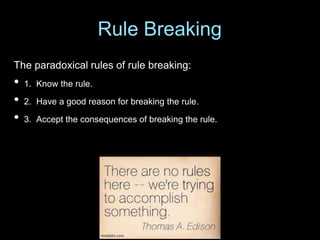
The paradoxical rules of rule breaking:
• 1. Know the rule.
• 2. Have a good reason for breaking the rule.
• 3. Accept the consequences of breaking the rule.
Rule Breaking
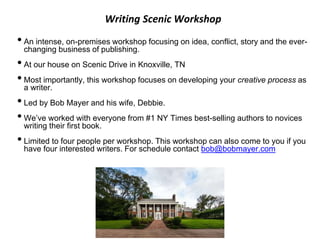
Writing Scenic Workshop
•An intense, on-premises workshop focusing on idea, conflict, story and the ever-
changing business of publishing.
•At our house on Scenic Drive in Knoxville, TN
•Most importantly, this workshop focuses on developing your creative process as
a writer.
•Led by Bob Mayer and his wife, Debbie.
•We’ve worked with everyone from #1 NY Times best-selling authors to novices
writing their first book.
•Limited to four people per workshop. This workshop can also come to you if you
have four interested writers. For schedule contact bob@bobmayer.com
Original Idea
Conflict the Fuel of Your Story and the Conflict Box
Plot I: Research and Narrative Questions
Plot II: Outlining
Plot III: Narrative Structure
Character
Point of View
Write It Forward: From Writer to Bestselling Author
Writers Conference Guide (Free eBook)
Three P’s: Platform, Product, Promotion
Writers’ Block and Rewriting
How to Write the Query/Synopsis
Planning for NaNoWriMo Success
Bob Mayer’s Workshops, Seminars & Presentations
Your Creative Process: How You Write
The Present and Future of Publishing for Writers
Writers Workshop and Retreat
ON WRITING SLIDESHARES
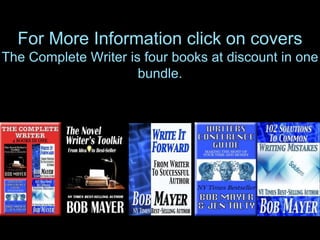
For More Information click on covers
The Complete Writer is four books at discount in one
bundle.
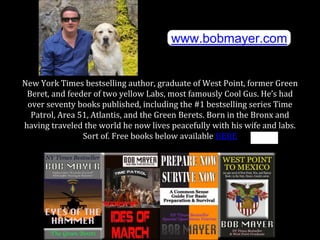
New York Times bestselling author, graduate of West Point, former Green
Beret, and feeder of two yellow Labs, most famously Cool Gus. He’s had
over seventy books published, including the #1 bestselling series Time
Patrol, Area 51, Atlantis, and the Green Berets. Born in the Bronx and
having traveled the world he now lives peacefully with his wife and labs.
Sort of. Free books below available HERE
www.bobmayer.com
“Talent is less important in film-
making than patience. If you
really want your films to say
something that you hope is
unique, then patience and
stamina, thick skin and a kind of
stupidity, a mule-like stupidity, is
what you really need.”
~Terry Gilliam

Writing Across Genre 10-24-17

  • 1.
    Writing Across Genre Presentationis uploaded at https://www.slideshare.net/coolgus
  • 2.
    • A categoryof artistic composition, as in music or literature, characterized by similarities in form, style, or subject matter. What Is Genre
  • 3.
    • “I’ve writtena mystery but it’s not a mystery.” • Readers have expectations of genre • Where the book will be racked in a store • Where the book will be slotted for search engine discoverability on-line Why Is Genre Important?
  • 4.
    • Mixing elementsof genres • Almost every novel does it • You have to consider it in terms of story and business What Is Writing Across Genre?
  • 5.
    • The essenceof story-telling is the same regardless of genre or mixing genre • Your IDEA is key • There are some differences in story depending on genre, but they are guidelines • Remember, if you do it like everyone else, you’re like everyone else Creatively
  • 7.
    The Foundation: OneSentence Idea •Can you state the original idea for your book in 25 words or less? •Have you written it down? •Does it bring an emotional reaction? •Good writing and strong characters are key.
  • 8.
    Have You FilledOut Your Conflict Box? Do You Have Conflict Lock? Protagonist Conflict Protagonist Goal Antagonist Goal Antagonist Conflict
  • 9.
    Plot: By Aristotle •Aninteresting character facing a problem. •Story is solving the problem. •Tragedy: In solving the problem, it gets worse, which leads to the dark moment, which leads to the turning point. •Character must plausibly solve the problem.
  • 10.
    Narrative Structure Initiating Event EscalatingConflict In Crisis Climax Resolution TIME: THE FLOW OF THE STORY S U S P E N S E
  • 11.
    • If mixing,which genre supports the main theme? • You can have a romance in any genre; that doesn’t make it a romance • You have suspense in every book, that doesn’t make it suspense • You have thrills, etc. Why Is Genre Important?
  • 12.
    • A storyis a story • You write what you want to write Why Is Genre Not Important?
  • 13.
    • Can bea positive or a negative • Positive= expertise, inside knowledge • Positive= readers trust the author • Negative= too close to the subject matter • Negative= too realistic, can be boring Your Background
  • 14.
    • It’s notjust your resume • It’s your persona; are you writing the book you should be writing? • Why are you writing this book? • Are you positive or negative about your subject matter? Your Background
  • 15.
    • First breakdownis: •Fiction •Nonfiction • BISAC codes (Book Industry Subject And Catalog) • On line platforms also use these Business: Types of Genre
  • 24.
    Amazon: 5 Keywords,2 Categories
  • 25.
    2014 to 2015 Salesin thousand as reported** In 2015: Religion: 3% Science Fiction: 4% Fantasy: 5% Classics: 7% Graphic Novels: 7% Mystery/Detective: 9% Suspense/Thriller: 15% Romance: 20% General Fiction: 25% That’s 95% of fiction
  • 27.
    • Is therea difference between eBook and print genres? Writing Across Genre
  • 28.
    • There aretwo types of readers •The ‘casual’ reader who read a handful of books each year (the airport reader) •The voracious reader who reads at least a book a week • Two types of authors •The ‘airport’ author •The rest Reader Expectation
  • 29.
    • It’s likeX but it’s not X • Ever read a book or watch a movie that switched genres? • Beneath genre there is tone, which needs to be consistent Reader Expectation
  • 30.
    • Regardless ofgenre, the key to a good book is good characters Writing Across Genre
  • 33.
    Difference between fantasyand science fiction Asimov: SF is grounded in science and possible; Fantasy has no reality and isn’t World building has to make sense in both science fiction and fantasy, or you need to be good enough to get suspension of disbelief Science Fiction writers tend to have so many good ideas, they put them all in the story Patterns In SF/F Writing
  • 34.
    • The Questfor the Ring of Power • The unexpected hero (must have a reason) • Magic must make sense Patterns In Fantasy Writing
  • 35.
    • Thrillers usuallyopen with what is at stake (antagonist action), then go to protagonist • The all-powerful hero/heroine • Difference between suspense and thriller •Care about characters or threat? Patterns In Thriller Writing
  • 37.
    • Is thesuspense over “Who-Done-It” or we know who-done-it; how does protagonist catch the antagonist? • Readers want to solve a puzzle— so is DaVinci Code a mystery or thriller? Patterns In Mystery/Detective Writing
  • 39.
    • Hero andheroine should meet by end of first chapter • HEA • Externalize or symbolize the antagonist not You’ve Got Mail. Do Woman of the Year • Series are hard— use setting, team, motif, secondary characters coming forward to become protagonist and antagonist Patterns In Romance Writing
  • 40.
    • Is theromance the main storyline or supporting the main storyline with an external antagonist • Romantic Suspense • Compressing time in ‘falling in love’ (Officer and Gentleman) • Sub-genres of Romance are key •Some romance writers ‘graduate’ to other genres Patterns In Romance Writing
  • 42.
    • Cliches arecliches for a reason • Motivation and goal are two different things • Give the character an anomaly that intrigues • Redemption is the strongest character arc Patterns In Genre Writing Characters
  • 43.
    • Will youplease fans of both genres or lose them? • Are you inventing a new “genre”? Techno-myth • Are you rising above genre? • Do you have a specific reason to mix genres? Mixing Genre
  • 44.
    • Every ideahas been done. How are you going to do it differently? • You can write in the genre but reverse the expectations • You can reverse point of view (Grendel) • You can write an already told story differently (Thousand Acres) • You can reverse genders (Alien) Mixing Genre
  • 45.
    • What ispulling the train? • You only have one main story line because you only get one climactic scene • Remember, though, the resolution provides the emotion Mixing Genre
  • 46.
    • Write thebook, then figure out the genre • Write what you read and want to read • Don’t mix genres just for the sake of it • Don’t write for an audience (?) • Write your passion Writing Across Genre
  • 47.
    • Should yougeneralize or specialize? Is Niche Better?
  • 48.
    The paradoxical rulesof rule breaking: • 1. Know the rule. • 2. Have a good reason for breaking the rule. • 3. Accept the consequences of breaking the rule. Rule Breaking
  • 50.
    Writing Scenic Workshop •Anintense, on-premises workshop focusing on idea, conflict, story and the ever- changing business of publishing. •At our house on Scenic Drive in Knoxville, TN •Most importantly, this workshop focuses on developing your creative process as a writer. •Led by Bob Mayer and his wife, Debbie. •We’ve worked with everyone from #1 NY Times best-selling authors to novices writing their first book. •Limited to four people per workshop. This workshop can also come to you if you have four interested writers. For schedule contact bob@bobmayer.com
  • 51.
    Original Idea Conflict theFuel of Your Story and the Conflict Box Plot I: Research and Narrative Questions Plot II: Outlining Plot III: Narrative Structure Character Point of View Write It Forward: From Writer to Bestselling Author Writers Conference Guide (Free eBook) Three P’s: Platform, Product, Promotion Writers’ Block and Rewriting How to Write the Query/Synopsis Planning for NaNoWriMo Success Bob Mayer’s Workshops, Seminars & Presentations Your Creative Process: How You Write The Present and Future of Publishing for Writers Writers Workshop and Retreat ON WRITING SLIDESHARES
  • 52.
    For More Informationclick on covers The Complete Writer is four books at discount in one bundle.
  • 53.
    New York Timesbestselling author, graduate of West Point, former Green Beret, and feeder of two yellow Labs, most famously Cool Gus. He’s had over seventy books published, including the #1 bestselling series Time Patrol, Area 51, Atlantis, and the Green Berets. Born in the Bronx and having traveled the world he now lives peacefully with his wife and labs. Sort of. Free books below available HERE www.bobmayer.com
  • 54.
    “Talent is lessimportant in film- making than patience. If you really want your films to say something that you hope is unique, then patience and stamina, thick skin and a kind of stupidity, a mule-like stupidity, is what you really need.” ~Terry Gilliam

Editor's Notes

  • #8 Ever get lost halfway through your book?
  • #49 w
  • #55 Change leads us to Leadership