Writ of Habeas Corpus
   Writ of Amparo
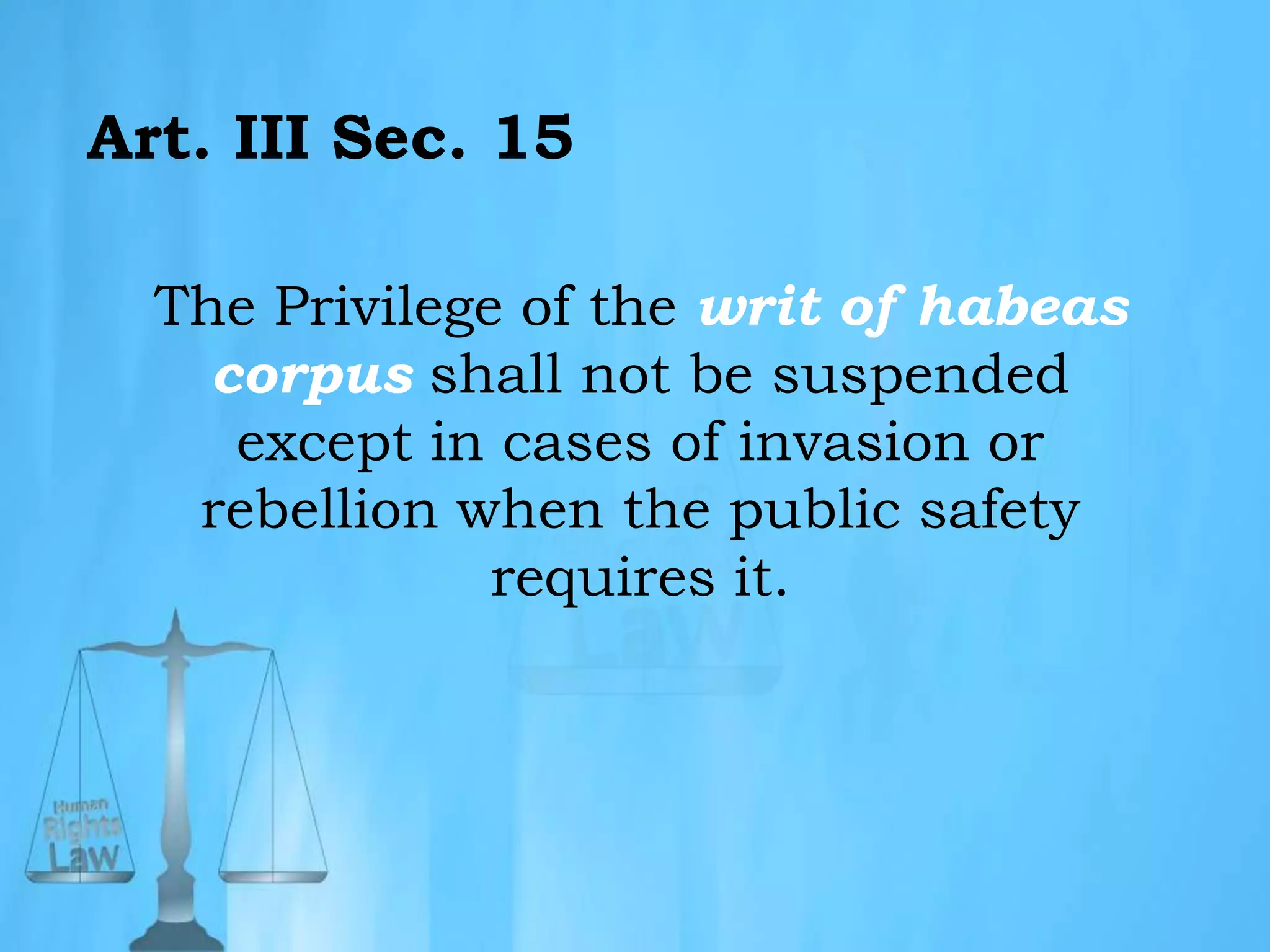
Art. III Sec. 15

  The Privilege of the writ of habeas
    corpus shall not be suspended
     except in cases of invasion or
   rebellion when the public safety
               requires it.
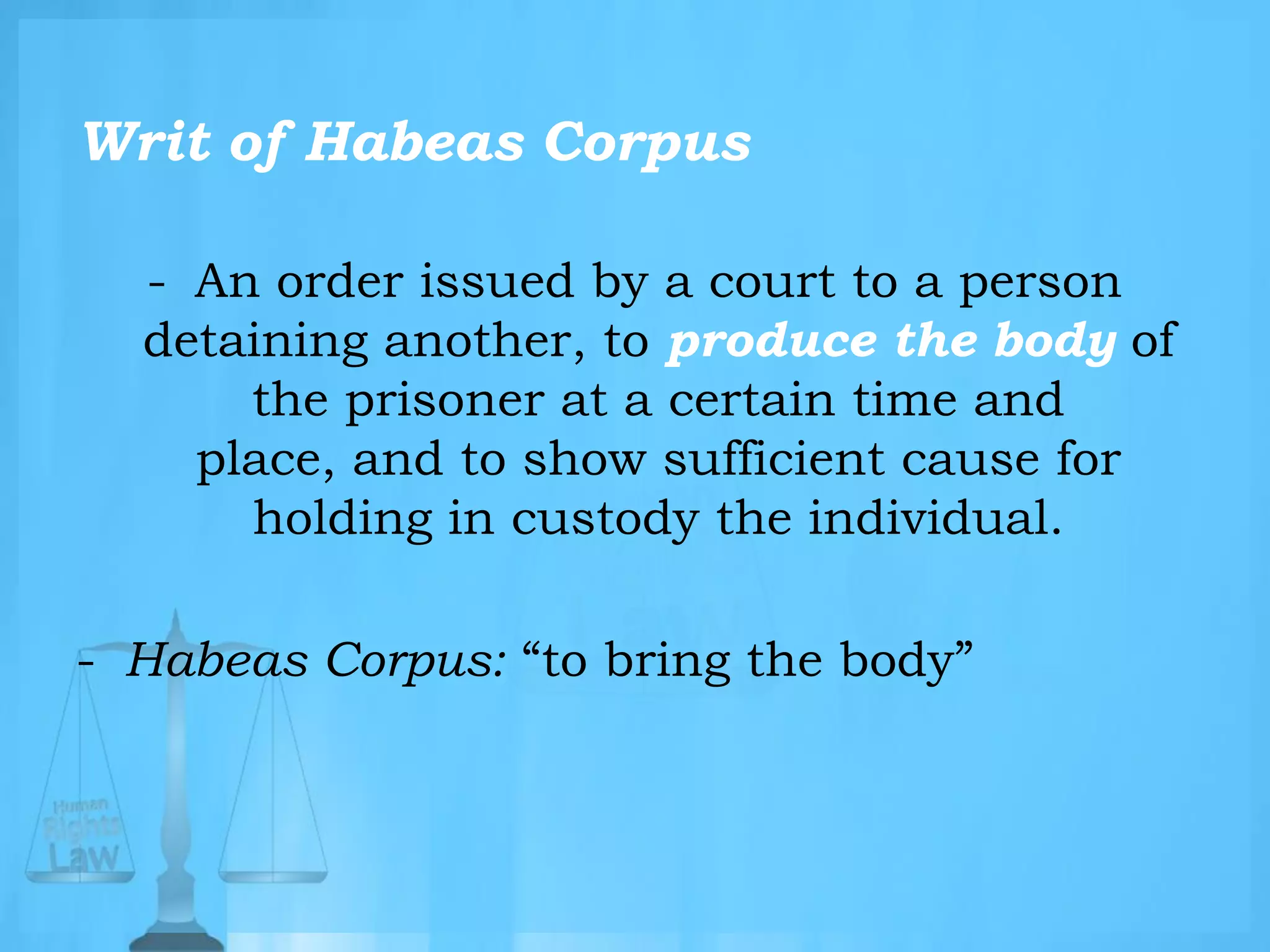
Writ of Habeas Corpus

  - An order issued by a court to a person
  detaining another, to produce the body of
      the prisoner at a certain time and
    place, and to show sufficient cause for
      holding in custody the individual.

- Habeas Corpus: “to bring the body”
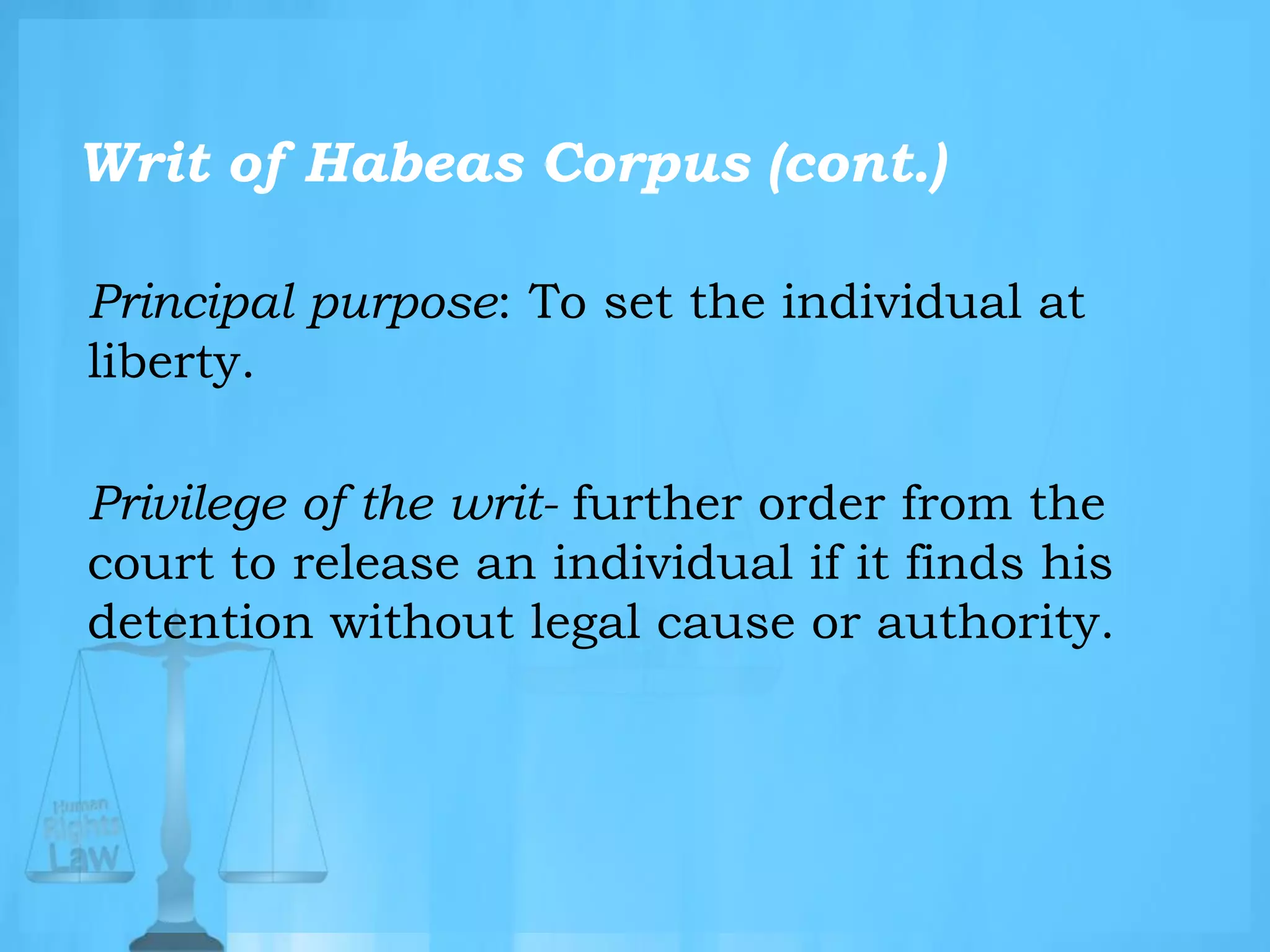
Writ of Habeas Corpus (cont.)

Principal purpose: To set the individual at
liberty.

Privilege of the writ- further order from the
court to release an individual if it finds his
detention without legal cause or authority.
Suspension of the privilege of the writ

• May be suspended by the President in case of:
     -invasion
     -rebellion
     -when the public safety requires it.

• The suspension in effect, allows arrests and seizures
  without warrants issued by the courts.
Writ of Amparo

• Amparo: “protection”

• Can be invoked when the right to
  life, liberty or security of a person is
  violated or threatened with violation by an
  unlawful act of a public official or employee
  or of a private individual or entity.
Writ of Amparo (cont.)
• Prohibits respondents from using the defense of simple
  denial.

• Evidence or documents are needed to support claims
  that they did not violate the rights to life, liberty or
  security of the aggrieved party.

• The court may issue any of the following:
     • Temporary protection order
     • Inspection order
     • Production order
     • Witness protection order

Writ of Habeas Corpus and Amparo-Philippines

  • 1.
    Writ of HabeasCorpus Writ of Amparo
  • 2.
    Art. III Sec.15 The Privilege of the writ of habeas corpus shall not be suspended except in cases of invasion or rebellion when the public safety requires it.
  • 3.
    Writ of HabeasCorpus - An order issued by a court to a person detaining another, to produce the body of the prisoner at a certain time and place, and to show sufficient cause for holding in custody the individual. - Habeas Corpus: “to bring the body”
  • 4.
    Writ of HabeasCorpus (cont.) Principal purpose: To set the individual at liberty. Privilege of the writ- further order from the court to release an individual if it finds his detention without legal cause or authority.
  • 5.
    Suspension of theprivilege of the writ • May be suspended by the President in case of: -invasion -rebellion -when the public safety requires it. • The suspension in effect, allows arrests and seizures without warrants issued by the courts.
  • 6.
    Writ of Amparo •Amparo: “protection” • Can be invoked when the right to life, liberty or security of a person is violated or threatened with violation by an unlawful act of a public official or employee or of a private individual or entity.
  • 7.
    Writ of Amparo(cont.) • Prohibits respondents from using the defense of simple denial. • Evidence or documents are needed to support claims that they did not violate the rights to life, liberty or security of the aggrieved party. • The court may issue any of the following: • Temporary protection order • Inspection order • Production order • Witness protection order