Logo and meaning
 Introduction
 Objectives
 Functions
 Structure
 Agreements and policies
 Ministerial meets
 Impact on economy
 Criticism

• An independent global trade organization
• Promote multilateral trade among member nation
• Replaced GATT
 Location

: Geneva, Switzerland
 Established : 1st January 1995
 Created by : Uruguay Round Negotiation
(1986-94)
 Membership : 160 members
 Budget :197 million Swiss francs for 2013
 Secretariat Staff : 640
 Head : Roberto Azevedo of Brazil (DirectorGeneral)
 Trade

without Discrimination
 Settle disputes over trade among member nation.
 Review national trade policies.
 Co-operate with other international organizations
as IMF, World Bank.
 To take special steps for development of poorest
nations.
 Play active role in trade negotiations between
member nation.
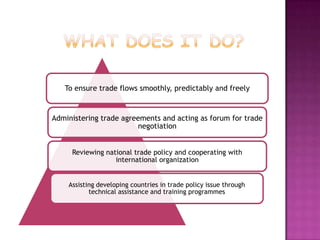
To ensure trade flows smoothly, predictably and freely

Administering trade agreements and acting as forum for trade
negotiation
Reviewing national trade policy and cooperating with
international organization
Assisting developing countries in trade policy issue through
technical assistance and training programmes
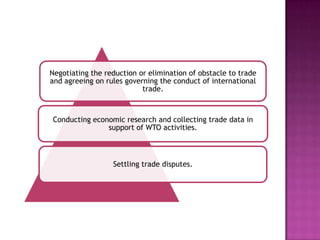
Negotiating the reduction or elimination of obstacle to trade
and agreeing on rules governing the conduct of international
trade.

Conducting economic research and collecting trade data in
support of WTO activities.

Settling trade disputes.
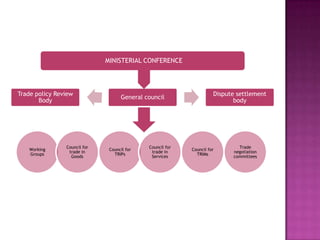
MINISTERIAL CONFERENCE

Trade policy Review
Body

Working
Groups

Council for
trade in
Goods

General council

Council for
TRIPs

Council for
trade in
Services

Dispute settlement
body

Council for
TRIMs

Trade
negotiation
committees
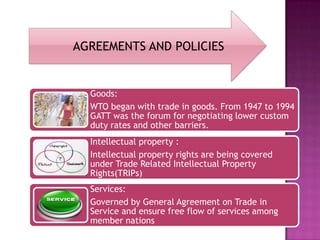
AGREEMENTS AND POLICIES

Goods:
WTO began with trade in goods. From 1947 to 1994
GATT was the forum for negotiating lower custom
duty rates and other barriers.
Intellectual property :
Intellectual property rights are being covered
under Trade Related Intellectual Property
Rights(TRIPs)
Services:
Governed by General Agreement on Trade in
Service and ensure free flow of services among
member nations
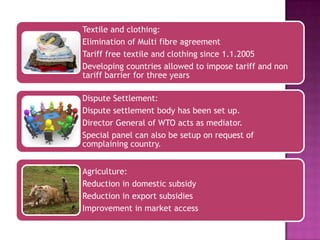
Textile and clothing:
Elimination of Multi fibre agreement
Tariff free textile and clothing since 1.1.2005
Developing countries allowed to impose tariff and non
tariff barrier for three years
Dispute Settlement:
Dispute settlement body has been set up.
Director General of WTO acts as mediator.
Special panel can also be setup on request of
complaining country.
Agriculture:
Reduction in domestic subsidy
Reduction in export subsidies
Improvement in market access
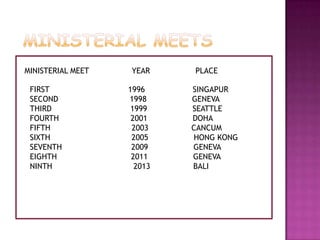
MINISTERIAL MEET
FIRST
SECOND
THIRD
FOURTH
FIFTH
SIXTH
SEVENTH
EIGHTH
NINTH

YEAR
1996
1998
1999
2001
2003
2005
2009
2011
2013

PLACE
SINGAPUR
GENEVA
SEATTLE
DOHA
CANCUM
HONG KONG
GENEVA
GENEVA
BALI
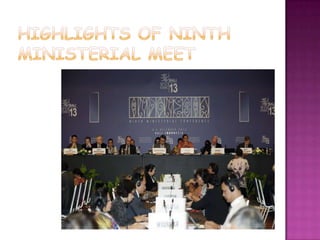
 Held

in Bali, Indonesia, from 3 to 7 December

2013
 Agreed to allow countries to provide subsidy on
staple food crops without any threat of punitive
action.
 Support subsidies to poor farmers across all
developing countries get safeguards against WTO
rule
 Permits countries to store food grains to meet
contingency requirements.
 Yemen got WTO membership
 ..increase

in foreign trade
 …increase in inflow of foreign investment
 …restrict dumping
 …promotion of research because of patent
 …inflow of better technology and quality
products
 …benefit for clothing and textile industry
 …disadvantage

to agriculture sector
 …patent of Indian herbs by foreign
companies
 …loss to regional groupings
 …disadvantage to service sector
 …increase in unemployment
GARIMA BANSAL
ROLL NO. 11020205
B.COM(HONS)

world trade organisation

  • 1.
    Logo and meaning Introduction  Objectives  Functions  Structure  Agreements and policies  Ministerial meets  Impact on economy  Criticism 
  • 2.
    • An independentglobal trade organization • Promote multilateral trade among member nation • Replaced GATT
  • 3.
     Location : Geneva,Switzerland  Established : 1st January 1995  Created by : Uruguay Round Negotiation (1986-94)  Membership : 160 members  Budget :197 million Swiss francs for 2013  Secretariat Staff : 640  Head : Roberto Azevedo of Brazil (DirectorGeneral)
  • 5.
     Trade without Discrimination Settle disputes over trade among member nation.  Review national trade policies.  Co-operate with other international organizations as IMF, World Bank.  To take special steps for development of poorest nations.  Play active role in trade negotiations between member nation.
  • 6.
    To ensure tradeflows smoothly, predictably and freely Administering trade agreements and acting as forum for trade negotiation Reviewing national trade policy and cooperating with international organization Assisting developing countries in trade policy issue through technical assistance and training programmes
  • 7.
    Negotiating the reductionor elimination of obstacle to trade and agreeing on rules governing the conduct of international trade. Conducting economic research and collecting trade data in support of WTO activities. Settling trade disputes.
  • 9.
    MINISTERIAL CONFERENCE Trade policyReview Body Working Groups Council for trade in Goods General council Council for TRIPs Council for trade in Services Dispute settlement body Council for TRIMs Trade negotiation committees
  • 10.
    AGREEMENTS AND POLICIES Goods: WTObegan with trade in goods. From 1947 to 1994 GATT was the forum for negotiating lower custom duty rates and other barriers. Intellectual property : Intellectual property rights are being covered under Trade Related Intellectual Property Rights(TRIPs) Services: Governed by General Agreement on Trade in Service and ensure free flow of services among member nations
  • 11.
    Textile and clothing: Eliminationof Multi fibre agreement Tariff free textile and clothing since 1.1.2005 Developing countries allowed to impose tariff and non tariff barrier for three years Dispute Settlement: Dispute settlement body has been set up. Director General of WTO acts as mediator. Special panel can also be setup on request of complaining country. Agriculture: Reduction in domestic subsidy Reduction in export subsidies Improvement in market access
  • 12.
  • 14.
     Held in Bali,Indonesia, from 3 to 7 December 2013  Agreed to allow countries to provide subsidy on staple food crops without any threat of punitive action.  Support subsidies to poor farmers across all developing countries get safeguards against WTO rule  Permits countries to store food grains to meet contingency requirements.  Yemen got WTO membership
  • 15.
     ..increase in foreigntrade  …increase in inflow of foreign investment  …restrict dumping  …promotion of research because of patent  …inflow of better technology and quality products  …benefit for clothing and textile industry
  • 16.
     …disadvantage to agriculturesector  …patent of Indian herbs by foreign companies  …loss to regional groupings  …disadvantage to service sector  …increase in unemployment
  • 18.
    GARIMA BANSAL ROLL NO.11020205 B.COM(HONS)