-THE WITCHCRAFT TRIALS
● Witchcraft Was Not A New Concept
● There Was A Lot Of Religious Zeal That Led to the
Inquistion and hunt for heretics
● During this time, more than 100,000 people were
charged with witchcraft
● As more people were brought on trial for
witchcraft, more people became afraid of witches
So who were these witches and what happened to
them at court?
● Common people that were usually poor or those
without property
● More than 75% of the accused were women
● Most were single or widowed and over 50 years
old
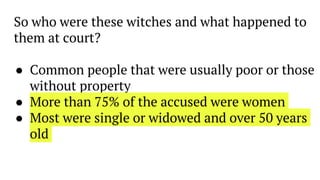
● Subjected to intense torture, the accussed admitted
to all sorts of practices
○ Swearing allegiance to the devil
○ Casting evil spells
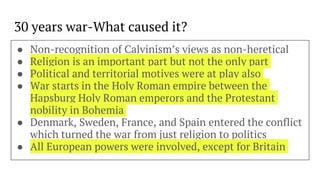
30 years war-What caused it?
● Non-recognition of Calvinism’s views as non-heretical
● Religion is an important part but not the only part
● Political and territorial motives were at play also
● War starts in the Holy Roman empire between the
Hapsburg Holy Roman emperors and the Protestant
nobility in Bohemia
● Denmark, Sweden, France, and Spain entered the conflict
which turned the war from just religion to politics
● All European powers were involved, except for Britain
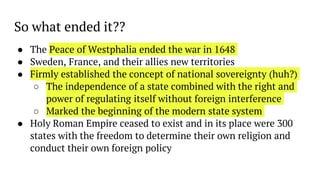
So what ended it??
● The Peace of Westphalia ended the war in 1648
● Sweden, France, and their allies new territories
● Firmly established the concept of national sovereignty (huh?)
○ The independence of a state combined with the right and
power of regulating itself without foreign interference
○ Marked the beginning of the modern state system
● Holy Roman Empire ceased to exist and in its place were 300
states with the freedom to determine their own religion and
conduct their own foreign policy
SECTION 2
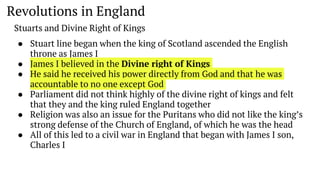
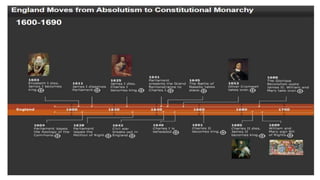
Revolutions in England
Stuarts and Divine Right of Kings
● Stuart line began when the king of Scotland ascended the English
throne as James I
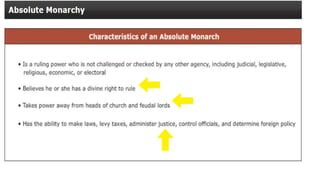
● James I believed in the Divine right of Kings
● He said he received his power directly from God and that he was
accountable to no one except God
● Parliament did not think highly of the divine right of kings and felt
that they and the king ruled England together
● Religion was also an issue for the Puritans who did not like the king’s
strong defense of the Church of England, of which he was the head
● All of this led to a civil war in England that began with James I son,
Charles I
Civil War and the Commonwealth
● Cavaliers-supporters of the king during the Civil War
● Roundheads-supporters of Parliament during the Civil
War
● Commonwealth-a type of republic adopted by the British
Parliament after the civil war
The English Commonwealth
• Charles I was defeated in the English Civil War.
• Charles I was executed.
• The monarchy and the House of Lords were abolished
by the Rump Parliament.
• At the request of Oliver Cromwell, England was
declared a commonwealth.
The English Commonwealth
The Restoration
• Monarchy was reestablished in England.
o The Stuart line was restored, with Charles II, the son of
Charles I, becoming king.
• Parliament retained much of its power.
• Parliament and the king had disagreements involving
Catholicism.
o Charles II tried to suspend some of Parliament’s laws
involving religion but was forced by Parliament to back
down.
o Parliament passed a law that allowed only Church of
England members to hold government and military office.
The Glorious Revolution
• The Dutch leader William of Orange was the husband
of Mary, daughter of King James II of England.
• English nobles invited William to invade England and
take control of the government from James, because
James was Catholic and his Catholic son would inherit
the throne.
• William’s army arrived in England in 1688; many
English soldiers desert to William's side, and James
fled to France.
Who led the revolution and why?
The Glorious Revolution
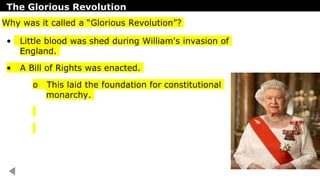
• Little blood was shed during William's invasion of
England.
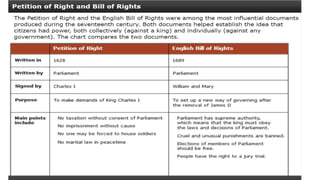
• A Bill of Rights was enacted.
o This laid the foundation for constitutional
monarchy.
Why was it called a “Glorious Revolution”?
SECTION 3
The Wars of Louis XIV
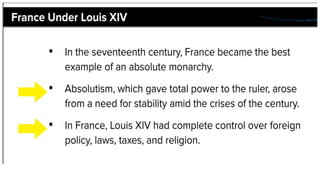
• Kept firm control of foreign policy
o Removed nobles and princes from royal
council
• Subsidized industry and promoted trade to build
France’s wealth and power
Subsidized means supported financially.
• Developed a strong standing army
The Wars of Louis XIV
• Fought multiple wars in an attempt to dominate Europe
and increase France’s territory
o War of Devolution, 1667–1668
o Dutch War, 1672–1678
o War of the League of Augsburg, 1688–1697
o War of the Spanish Succession, 1702–1713
Prussia and Austria
• Built a large and efficient standing army
• Set up the General War Commissariat to levy taxes
• Later used the Commissariat as an instrument to
govern the state
How did Frederick William the Great Elector lay the
foundation for a Prussian state?
Prussia and Austria
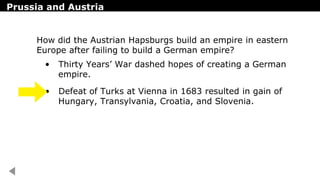
• Thirty Years’ War dashed hopes of creating a German
empire.
• Defeat of Turks at Vienna in 1683 resulted in gain of
Hungary, Transylvania, Croatia, and Slovenia.
How did the Austrian Hapsburgs build an empire in eastern
Europe after failing to build a German empire?
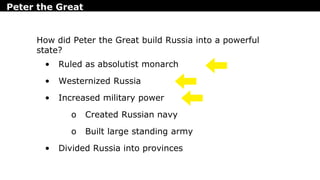
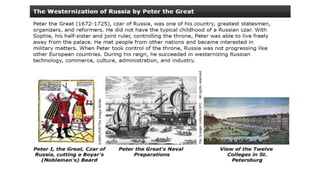
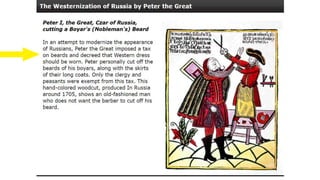
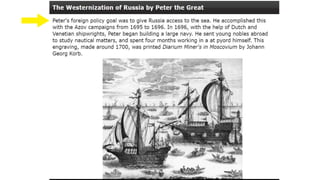
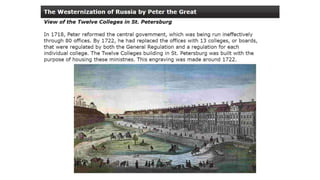
Peter the Great
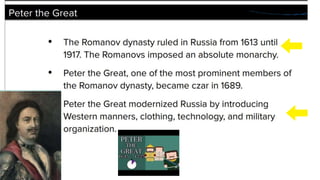
• Ruled as absolutist monarch
• Westernized Russia
• Increased military power
o Created Russian navy
o Built large standing army
• Divided Russia into provinces
How did Peter the Great build Russia into a powerful
state?
World History Absolutism

World History Absolutism

  • 1.
    -THE WITCHCRAFT TRIALS ●Witchcraft Was Not A New Concept ● There Was A Lot Of Religious Zeal That Led to the Inquistion and hunt for heretics ● During this time, more than 100,000 people were charged with witchcraft ● As more people were brought on trial for witchcraft, more people became afraid of witches
  • 2.
    So who werethese witches and what happened to them at court? ● Common people that were usually poor or those without property ● More than 75% of the accused were women ● Most were single or widowed and over 50 years old
  • 3.
    ● Subjected tointense torture, the accussed admitted to all sorts of practices ○ Swearing allegiance to the devil ○ Casting evil spells
  • 4.
    30 years war-Whatcaused it? ● Non-recognition of Calvinism’s views as non-heretical ● Religion is an important part but not the only part ● Political and territorial motives were at play also ● War starts in the Holy Roman empire between the Hapsburg Holy Roman emperors and the Protestant nobility in Bohemia ● Denmark, Sweden, France, and Spain entered the conflict which turned the war from just religion to politics ● All European powers were involved, except for Britain
  • 5.
    So what endedit?? ● The Peace of Westphalia ended the war in 1648 ● Sweden, France, and their allies new territories ● Firmly established the concept of national sovereignty (huh?) ○ The independence of a state combined with the right and power of regulating itself without foreign interference ○ Marked the beginning of the modern state system ● Holy Roman Empire ceased to exist and in its place were 300 states with the freedom to determine their own religion and conduct their own foreign policy
  • 6.
  • 7.
    Revolutions in England Stuartsand Divine Right of Kings ● Stuart line began when the king of Scotland ascended the English throne as James I ● James I believed in the Divine right of Kings ● He said he received his power directly from God and that he was accountable to no one except God ● Parliament did not think highly of the divine right of kings and felt that they and the king ruled England together ● Religion was also an issue for the Puritans who did not like the king’s strong defense of the Church of England, of which he was the head ● All of this led to a civil war in England that began with James I son, Charles I
  • 8.
    Civil War andthe Commonwealth ● Cavaliers-supporters of the king during the Civil War ● Roundheads-supporters of Parliament during the Civil War ● Commonwealth-a type of republic adopted by the British Parliament after the civil war
  • 10.
    The English Commonwealth •Charles I was defeated in the English Civil War. • Charles I was executed. • The monarchy and the House of Lords were abolished by the Rump Parliament. • At the request of Oliver Cromwell, England was declared a commonwealth. The English Commonwealth
  • 11.
    The Restoration • Monarchywas reestablished in England. o The Stuart line was restored, with Charles II, the son of Charles I, becoming king. • Parliament retained much of its power. • Parliament and the king had disagreements involving Catholicism. o Charles II tried to suspend some of Parliament’s laws involving religion but was forced by Parliament to back down. o Parliament passed a law that allowed only Church of England members to hold government and military office.
  • 12.
    The Glorious Revolution •The Dutch leader William of Orange was the husband of Mary, daughter of King James II of England. • English nobles invited William to invade England and take control of the government from James, because James was Catholic and his Catholic son would inherit the throne. • William’s army arrived in England in 1688; many English soldiers desert to William's side, and James fled to France. Who led the revolution and why?
  • 13.
    The Glorious Revolution •Little blood was shed during William's invasion of England. • A Bill of Rights was enacted. o This laid the foundation for constitutional monarchy. Why was it called a “Glorious Revolution”?
  • 16.
  • 20.
    The Wars ofLouis XIV • Kept firm control of foreign policy o Removed nobles and princes from royal council • Subsidized industry and promoted trade to build France’s wealth and power Subsidized means supported financially. • Developed a strong standing army
  • 21.
    The Wars ofLouis XIV • Fought multiple wars in an attempt to dominate Europe and increase France’s territory o War of Devolution, 1667–1668 o Dutch War, 1672–1678 o War of the League of Augsburg, 1688–1697 o War of the Spanish Succession, 1702–1713
  • 23.
    Prussia and Austria •Built a large and efficient standing army • Set up the General War Commissariat to levy taxes • Later used the Commissariat as an instrument to govern the state How did Frederick William the Great Elector lay the foundation for a Prussian state?
  • 24.
    Prussia and Austria •Thirty Years’ War dashed hopes of creating a German empire. • Defeat of Turks at Vienna in 1683 resulted in gain of Hungary, Transylvania, Croatia, and Slovenia. How did the Austrian Hapsburgs build an empire in eastern Europe after failing to build a German empire?
  • 28.
    Peter the Great •Ruled as absolutist monarch • Westernized Russia • Increased military power o Created Russian navy o Built large standing army • Divided Russia into provinces How did Peter the Great build Russia into a powerful state?