Workplace Sensitivity
Presented By: CaLS
TRAINING
TRAINING
Overview
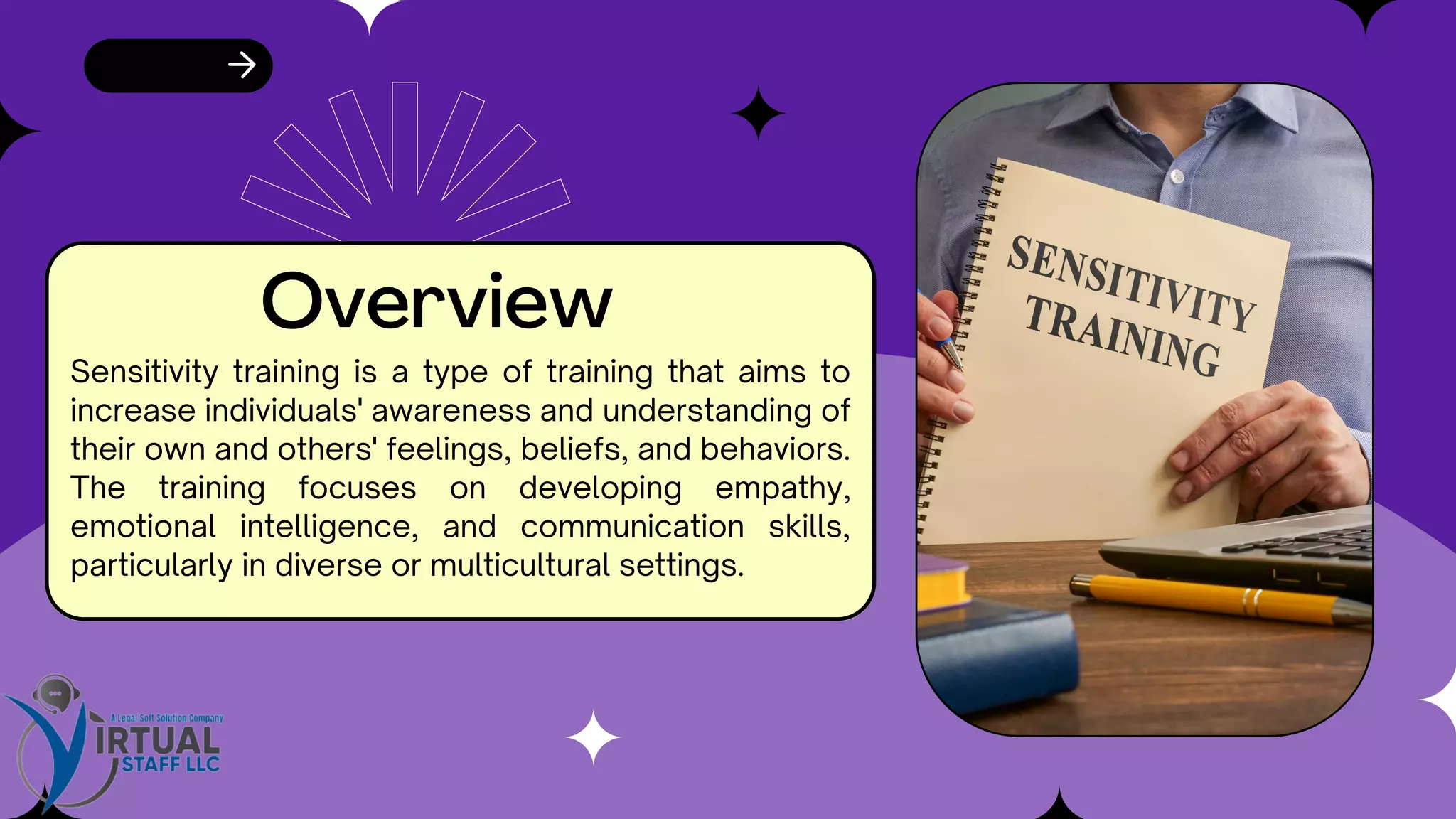
Sensitivity training is a type of training that aims to
increase individuals' awareness and understanding of
their own and others' feelings, beliefs, and behaviors.
The training focuses on developing empathy,
emotional intelligence, and communication skills,
particularly in diverse or multicultural settings.
Overview
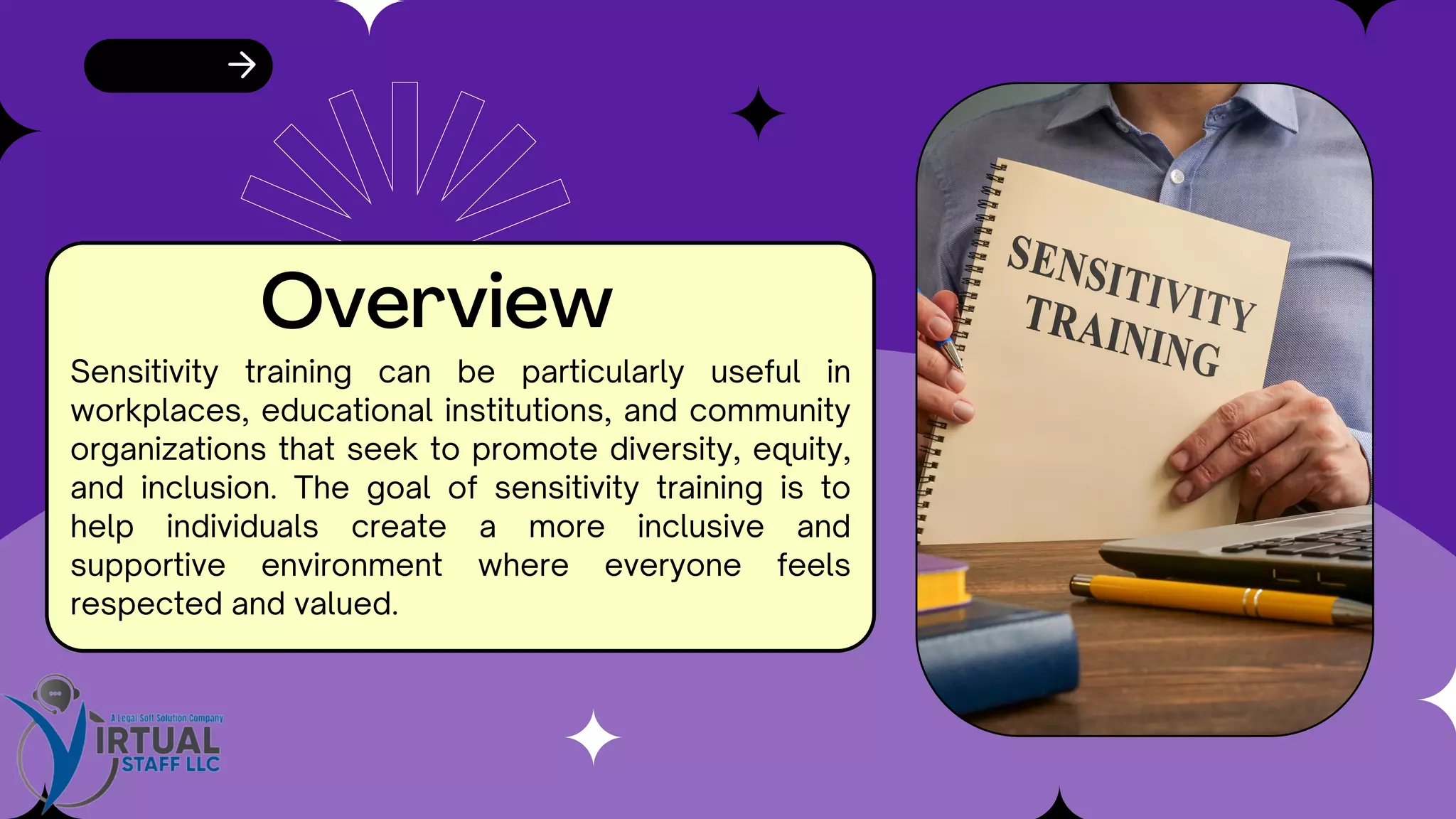
Sensitivity training can be particularly useful in
workplaces, educational institutions, and community
organizations that seek to promote diversity, equity,
and inclusion. The goal of sensitivity training is to
help individuals create a more inclusive and
supportive environment where everyone feels
respected and valued.
Promotes diversity and
inclusion: Sensitivity training
helps individuals develop a
better understanding of
diversity and inclusion. It
encourages individuals to
recognize and appreciate
differences in others, such as
culture, race, ethnicity, gender,
sexual orientation, and religion.
1.
2. Reduces discrimination and
harassment: Sensitivity training
helps individuals recognize and
address unconscious biases and
stereotypes that can lead to
discrimination and harassment. It
promotes respect and
understanding, which can help
prevent discriminatory behavior.
3. Improves communication and
teamwork: Sensitivity training
emphasizes the importance of
effective communication and
teamwork. It provides individuals
with the skills they need to
communicate effectively with
people from different
backgrounds and to work
collaboratively in a diverse team.
Why is Sensitivity
Training In The
Workplace Important?
Sensitivity training in the workplace is important for several
reasons:
4. Increases productivity:
Sensitivity training can improve
productivity by reducing conflict,
improving communication, and
fostering a positive work
environment. It creates a
workplace where individuals feel
valued and respected, which can
lead to increased job satisfaction
and employee engagement.
5. Enhances reputation:
Sensitivity training can enhance
the reputation of an organization
by demonstrating its
commitment to diversity,
inclusion, and respect for all
employees. It can also help
attract and retain top talent who
value a positive and inclusive
workplace culture.
Why is Sensitivity
Training In The
Workplace Important?
Sensitivity training in the workplace is important for several
reasons:
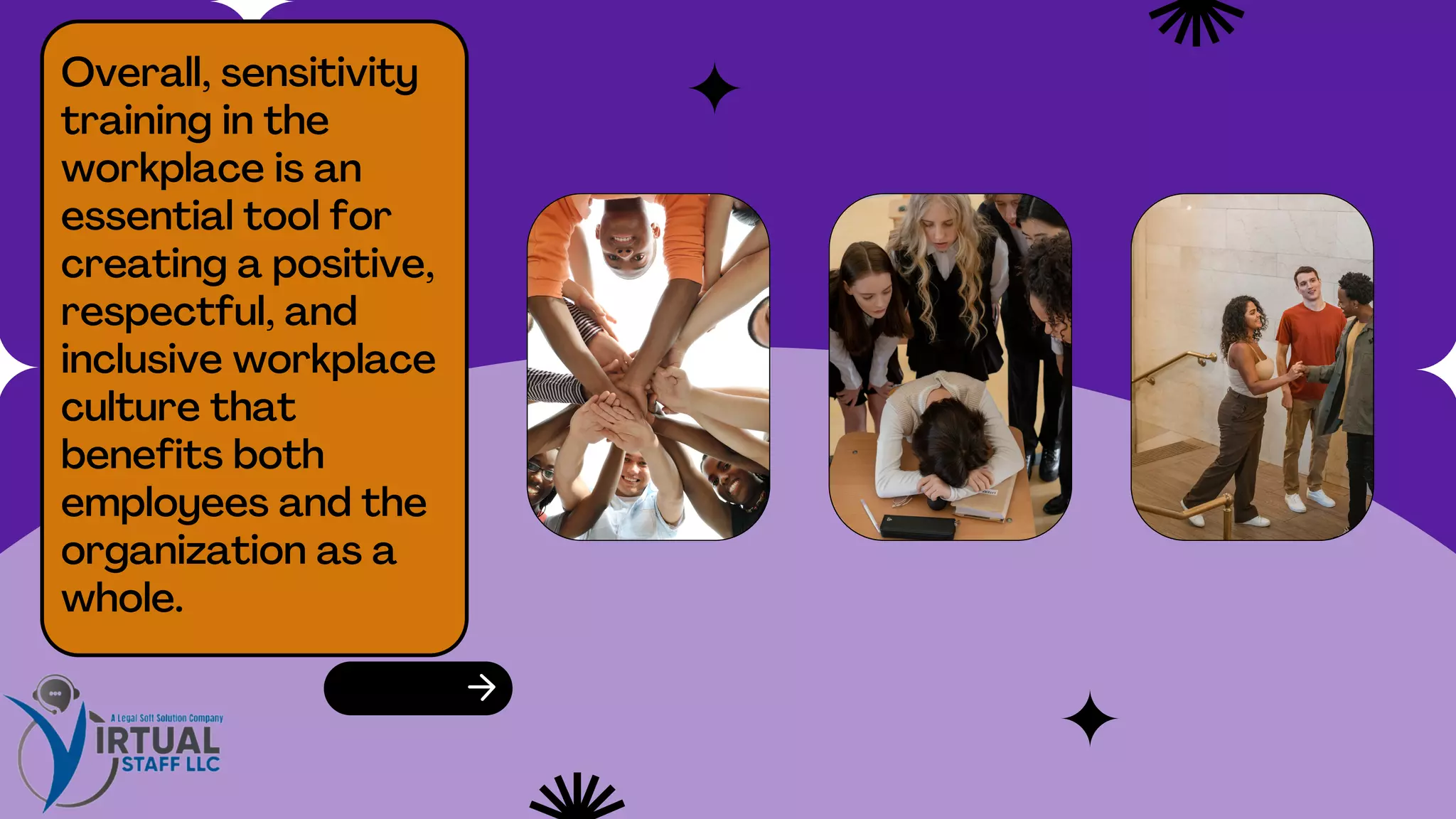
Overall, sensitivity
training in the
workplace is an
essential tool for
creating a positive,
respectful, and
inclusive workplace
culture that
benefits both
employees and the
organization as a
whole.
Examples Of
Workplace
Sensitivity Training
Cultural Competency Training This type of training focuses on increasing
awareness and understanding of different cultures
and their norms, values, and beliefs. It helps
individuals develop the skills they need to work
effectively in diverse settings.
Harassment Prevention Training This type of training educates individuals on what
constitutes harassment, how to recognize it, and
how to respond to it. It also emphasizes the
importance of creating a workplace free from
harassment and discrimination.
Diversity and Inclusion Training:
This type of training helps individuals understand
the importance of diversity and inclusion in the
workplace. It focuses on developing the skills
needed to create a welcoming and inclusive work
environment for all employees.
Examples Of
Workplace
Sensitivity Training
Bias Awareness Training This type of training helps individuals recognize and
address their own unconscious biases. It provides
strategies for reducing the impact of bias in the
workplace and promoting fairness and inclusion.
Communication Skills TrainingThis type of training helps individuals develop
effective communication skills, particularly in
diverse settings. It emphasizes active listening,
empathy, and the importance of understanding
different communication styles.
Team Building Training
This type of training focuses on building strong,
cohesive teams in diverse settings. It provides
individuals with the skills needed to work
collaboratively and effectively with people from
different backgrounds and perspectives.

Workplace Sensitivity Training (1).pdf

  • 1.
  • 2.
    Overview Sensitivity training isa type of training that aims to increase individuals' awareness and understanding of their own and others' feelings, beliefs, and behaviors. The training focuses on developing empathy, emotional intelligence, and communication skills, particularly in diverse or multicultural settings.
  • 3.
    Overview Sensitivity training canbe particularly useful in workplaces, educational institutions, and community organizations that seek to promote diversity, equity, and inclusion. The goal of sensitivity training is to help individuals create a more inclusive and supportive environment where everyone feels respected and valued.
  • 4.
    Promotes diversity and inclusion:Sensitivity training helps individuals develop a better understanding of diversity and inclusion. It encourages individuals to recognize and appreciate differences in others, such as culture, race, ethnicity, gender, sexual orientation, and religion. 1. 2. Reduces discrimination and harassment: Sensitivity training helps individuals recognize and address unconscious biases and stereotypes that can lead to discrimination and harassment. It promotes respect and understanding, which can help prevent discriminatory behavior. 3. Improves communication and teamwork: Sensitivity training emphasizes the importance of effective communication and teamwork. It provides individuals with the skills they need to communicate effectively with people from different backgrounds and to work collaboratively in a diverse team. Why is Sensitivity Training In The Workplace Important? Sensitivity training in the workplace is important for several reasons:
  • 5.
    4. Increases productivity: Sensitivitytraining can improve productivity by reducing conflict, improving communication, and fostering a positive work environment. It creates a workplace where individuals feel valued and respected, which can lead to increased job satisfaction and employee engagement. 5. Enhances reputation: Sensitivity training can enhance the reputation of an organization by demonstrating its commitment to diversity, inclusion, and respect for all employees. It can also help attract and retain top talent who value a positive and inclusive workplace culture. Why is Sensitivity Training In The Workplace Important? Sensitivity training in the workplace is important for several reasons:
  • 6.
    Overall, sensitivity training inthe workplace is an essential tool for creating a positive, respectful, and inclusive workplace culture that benefits both employees and the organization as a whole.
  • 7.
    Examples Of Workplace Sensitivity Training CulturalCompetency Training This type of training focuses on increasing awareness and understanding of different cultures and their norms, values, and beliefs. It helps individuals develop the skills they need to work effectively in diverse settings. Harassment Prevention Training This type of training educates individuals on what constitutes harassment, how to recognize it, and how to respond to it. It also emphasizes the importance of creating a workplace free from harassment and discrimination. Diversity and Inclusion Training: This type of training helps individuals understand the importance of diversity and inclusion in the workplace. It focuses on developing the skills needed to create a welcoming and inclusive work environment for all employees.
  • 8.
    Examples Of Workplace Sensitivity Training BiasAwareness Training This type of training helps individuals recognize and address their own unconscious biases. It provides strategies for reducing the impact of bias in the workplace and promoting fairness and inclusion. Communication Skills TrainingThis type of training helps individuals develop effective communication skills, particularly in diverse settings. It emphasizes active listening, empathy, and the importance of understanding different communication styles. Team Building Training This type of training focuses on building strong, cohesive teams in diverse settings. It provides individuals with the skills needed to work collaboratively and effectively with people from different backgrounds and perspectives.