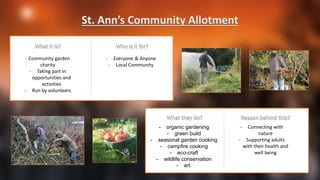
- Everyone & Anyone
- Local Community
- Community garden
charity
- Taking part in
opportunities and
activities
- Run by volunteers
- organic gardening
- green build
- seasonal garden cooking
- campfire cooking
- eco-craft
- wildlife conservation
- art.
- Connecting with
nature
- Supporting adults
with their health and
well being
Conceptually, the approach is predicated on a shift in
pedagogical thinking away from conventional approaches
that work for most learners existing alongside something
additional or different for those (some) who experience
difficulties, towards one that involves providing rich
learning opportunities that are sufficiently made available
for everyone, so that all learners are able to participate.
(Florian, 2015)
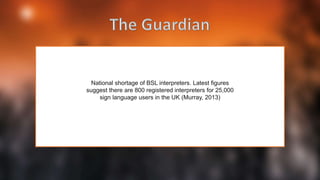
National shortage of BSL interpreters. Latest figures
suggest there are 800 registered interpreters for 25,000
sign language users in the UK (Murray, 2013)
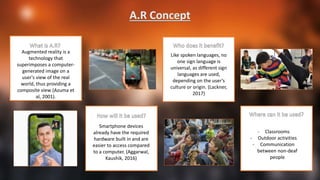
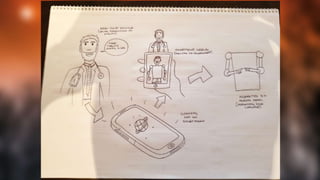
Augmented reality is a
technology that
superimposes a computer-
generated image on a
user's view of the real
world, thus providing a
composite view (Azuma et
al, 2001).
Smartphone devices
already have the required
hardware built in and are
easier to access compared
to a computer. (Aggarwal,
Kaushik, 2016)
Like spoken languages, no
one sign language is
universal, as different sign
languages are used,
depending on the user’s
culture or origin. (Lackner,
2017)
- Classrooms
- Outdoor activities
- Communication
between non-deaf
people
Aggarwal, L. and Kaushik, M. (2016). Android Based Smart Speech Recognition Application to Perform Various Tasks. International Journal on Recent and Innovation Trends in Computing and
Communication, [online] 4(12), pp.83 - 86. Available at: https://www.scribd.com/document/347594518/Android-Based-Smart-Speech-Recognition-Application-to-Perform-Various-Tasks [Accessed
13 Jul. 2019].
Azuma, R., Baillot, Y., Behringer, R., Feiner, S., Julier, S. and MacIntyre, B. (2001). Recent advances in augmented reality. IEEE Computer Graphics and Applications, 21(6), pp.34-47.
Florian, L., (2015), "Conceptualising Inclusive Pedagogy: The Inclusive Pedagogical Approach in Action", Inclusive Pedagogy Across the Curriculum (International Perspectives on Inclusive Education,
Vol. 7), Emerald Group Publishing Limited, pp. 11-24
Lackner, A. (2017). Understanding the amazing complexity of sign language. [online] The Conversation. Available at: https://theconversation.com/understanding-the-amazing-complexity-of-sign-
language-72813 [Accessed 13 Jul. 2019].
Murray, K. (2013). Lack of British Sign Language interpreters putting deaf people at risk. [online] the Guardian. Available at: https://www.theguardian.com/society/2013/may/07/lack-interpreters-
deaf-people-risk [Accessed 14 Nov. 2019].

BA Ed assignment Moe.

  • 3.
    - Everyone &Anyone - Local Community - Community garden charity - Taking part in opportunities and activities - Run by volunteers - organic gardening - green build - seasonal garden cooking - campfire cooking - eco-craft - wildlife conservation - art. - Connecting with nature - Supporting adults with their health and well being
  • 4.
    Conceptually, the approachis predicated on a shift in pedagogical thinking away from conventional approaches that work for most learners existing alongside something additional or different for those (some) who experience difficulties, towards one that involves providing rich learning opportunities that are sufficiently made available for everyone, so that all learners are able to participate. (Florian, 2015)
  • 5.
    National shortage ofBSL interpreters. Latest figures suggest there are 800 registered interpreters for 25,000 sign language users in the UK (Murray, 2013)
  • 6.
    Augmented reality isa technology that superimposes a computer- generated image on a user's view of the real world, thus providing a composite view (Azuma et al, 2001). Smartphone devices already have the required hardware built in and are easier to access compared to a computer. (Aggarwal, Kaushik, 2016) Like spoken languages, no one sign language is universal, as different sign languages are used, depending on the user’s culture or origin. (Lackner, 2017) - Classrooms - Outdoor activities - Communication between non-deaf people
  • 8.
    Aggarwal, L. andKaushik, M. (2016). Android Based Smart Speech Recognition Application to Perform Various Tasks. International Journal on Recent and Innovation Trends in Computing and Communication, [online] 4(12), pp.83 - 86. Available at: https://www.scribd.com/document/347594518/Android-Based-Smart-Speech-Recognition-Application-to-Perform-Various-Tasks [Accessed 13 Jul. 2019]. Azuma, R., Baillot, Y., Behringer, R., Feiner, S., Julier, S. and MacIntyre, B. (2001). Recent advances in augmented reality. IEEE Computer Graphics and Applications, 21(6), pp.34-47. Florian, L., (2015), "Conceptualising Inclusive Pedagogy: The Inclusive Pedagogical Approach in Action", Inclusive Pedagogy Across the Curriculum (International Perspectives on Inclusive Education, Vol. 7), Emerald Group Publishing Limited, pp. 11-24 Lackner, A. (2017). Understanding the amazing complexity of sign language. [online] The Conversation. Available at: https://theconversation.com/understanding-the-amazing-complexity-of-sign- language-72813 [Accessed 13 Jul. 2019]. Murray, K. (2013). Lack of British Sign Language interpreters putting deaf people at risk. [online] the Guardian. Available at: https://www.theguardian.com/society/2013/may/07/lack-interpreters- deaf-people-risk [Accessed 14 Nov. 2019].