

SCOTTISH BORDERS
SAFETY FORUM
WORKING SAFELY WITH
WORK EQUIPMENT
Compiled by Donald A Mackay
Mainetti UK Ltd
Provision and Use of
Work Equipment
Regulations 1998
Background
 The general requirements contained in the
Regulations applied from 1st January 1993 to
all equipment regardless of it’s age.
Objectives of the Regulations
 The regulations provide a set of requirements
ensuring the provision of safe work
equipment and its safe use, irrespective of
age or place of origin.
Definitions
 Work Equipment: This includes any
machinery, appliance, apparatus or tool.
Examples include: Hammers, knives, ladders,
drilling machines, power presses, dumper
truck, computer, lift truck, overhead projector.
 Use: This means any activity involving work
equipment. This includes starting, stopping,
erecting, installing, dismantling,
programming, setting, using, transporting,
repairing, modifying, maintaining, servicing
and cleaning.
Definitions
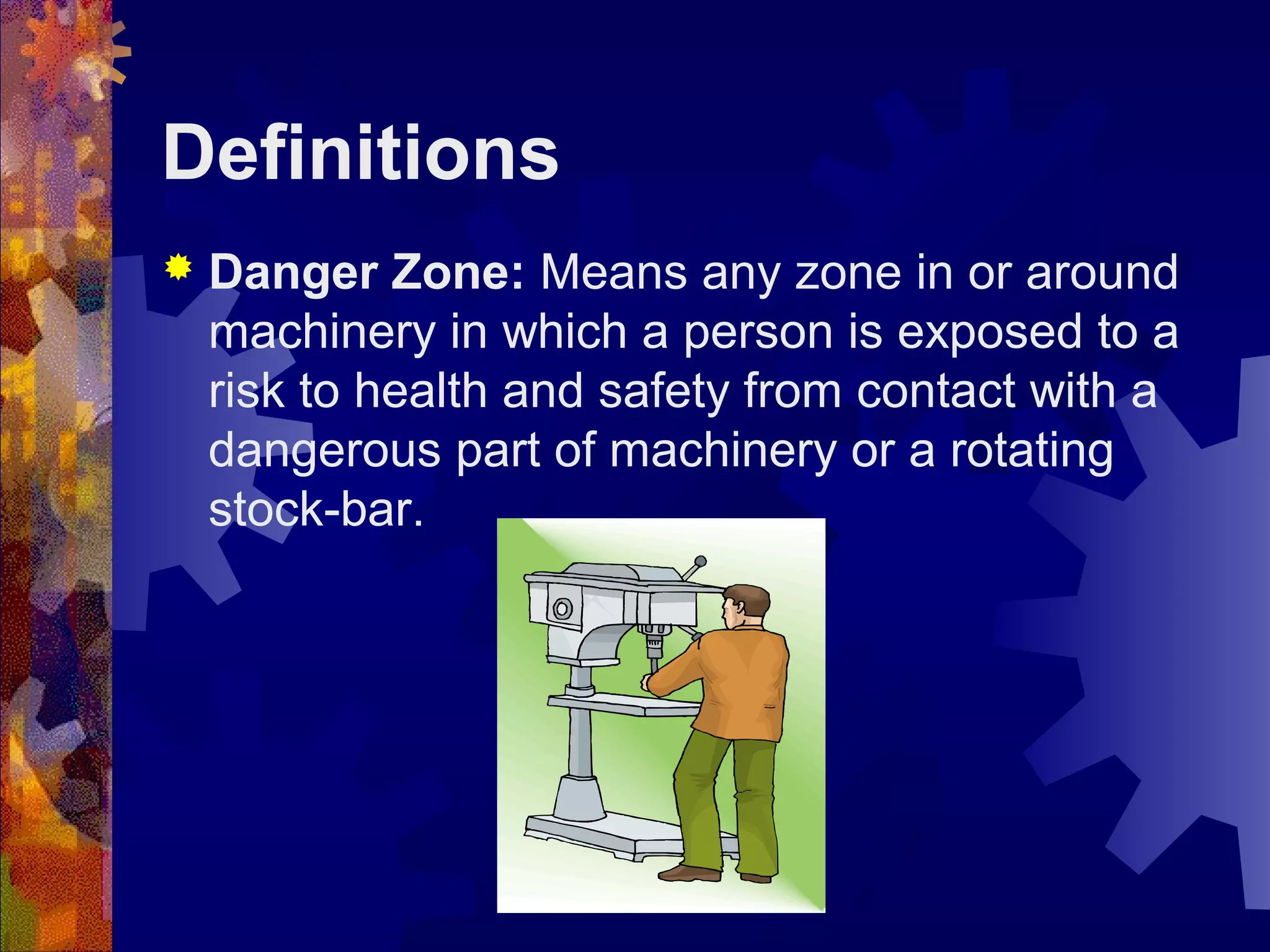
 Danger Zone: Means any zone in or around
machinery in which a person is exposed to a
risk to health and safety from contact with a
dangerous part of machinery or a rotating
stock-bar.
Main Regulations
 Regulation 5: Suitability of work equipment
 Regulation 6: Maintenance
 Regulations 8 & 9: Information, instruction
and training
 Regulation 10: Conformity
 Regulation 11: Dangerous parts of machinery
Main Regulations
 Regulation 12: Protection against specified
hazards
 Regulations 14 -18: Controls and control
systems
 Regulation 22: Maintenance operations
 Regulation 23 & 24: Markings and Warnings
Suitability of Work Equipment
Under Regulation 5 the employer is required
to:
 Ensure that work equipment is suitable for the
purpose for which it is used.
 Selection of work equipment must have
regard to working conditions and any
additional risks posed by the use of work
equipment.
 The equipment must only be used for
operations for which it is suitable.
Maintenance
 Regulation 6 requires the equipment to be
properly maintained, and have an up to date
maintenance log where one is kept.
 Regulation 22 states as far as reasonably
practicable, maintenance operations are to be
done while the work equipment is stopped.
 If not, other protective measures are to be
taken, unless maintenance people can do the
work without exposure to a risk to health and
safety.
Information, Instruction &
Training
 Under Regulation 8 users and supervisors of
equipment must be given adequate health &
safety information, and where appropriate,
specified written instructions relating to the
use of work equipment.
 Regulation 9 covers user and supervisor
training, including work methods, risks and
precautions.
Conformity
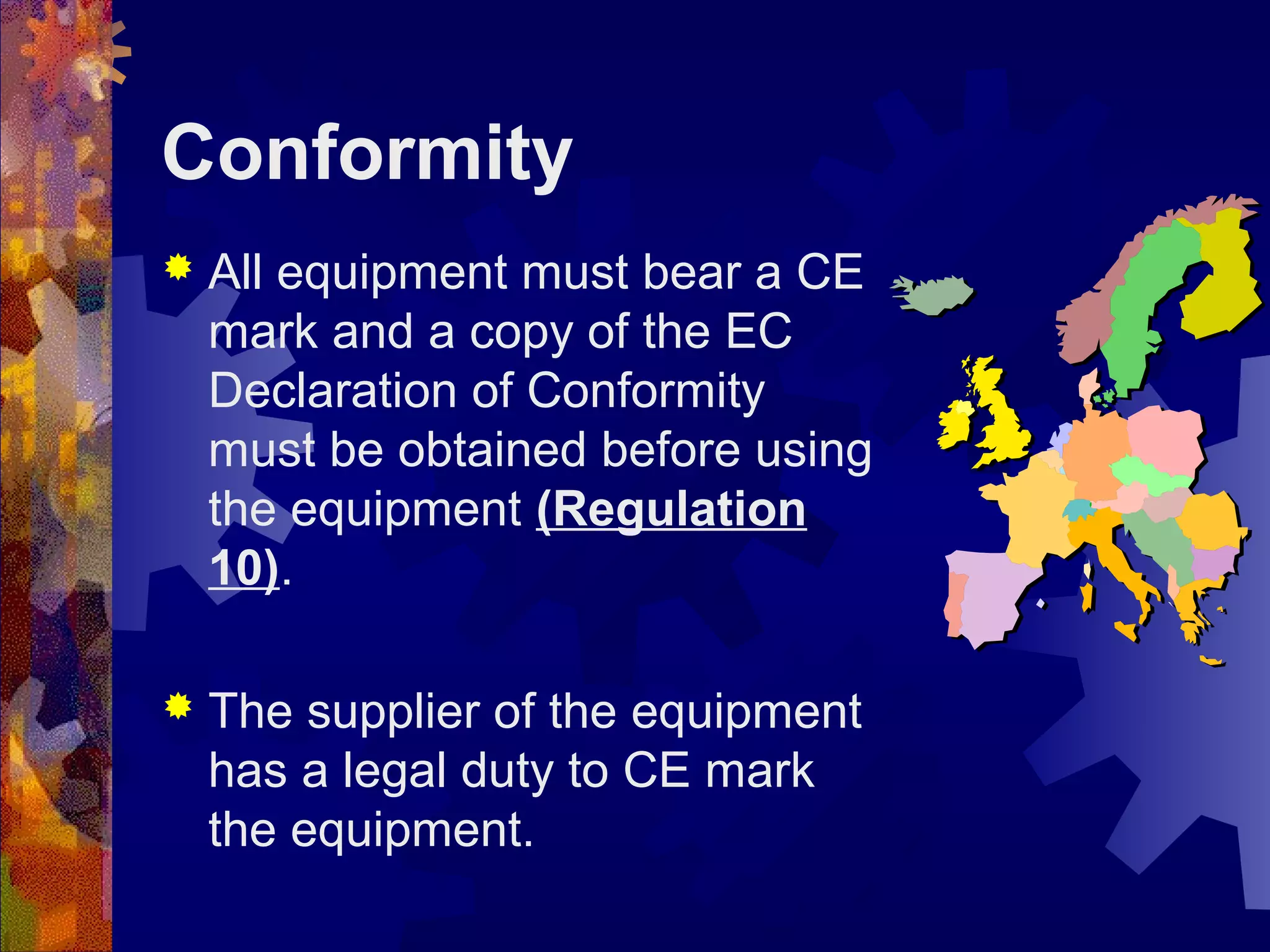
 All equipment must bear a CE
mark and a copy of the EC
Declaration of Conformity
must be obtained before using
the equipment (Regulation
10).
 The supplier of the equipment
has a legal duty to CE mark
the equipment.
Specific Requirements
 Specific requirements are designed to reduce
the risk to employees from dangerous parts
of machinery under Regulation 11. This
includes measures to prevent access to
dangerous parts of machinery and to stop
movement of any dangerous part before
someone enters the danger zone.
 These measures must consist of guards or
protection devices as far as is reasonably
practicable, and detailed requirements
relating to them are established.
Preventative Measures
In selecting preventative measures the
regulations set out a hierarchy on four levels,
these are:
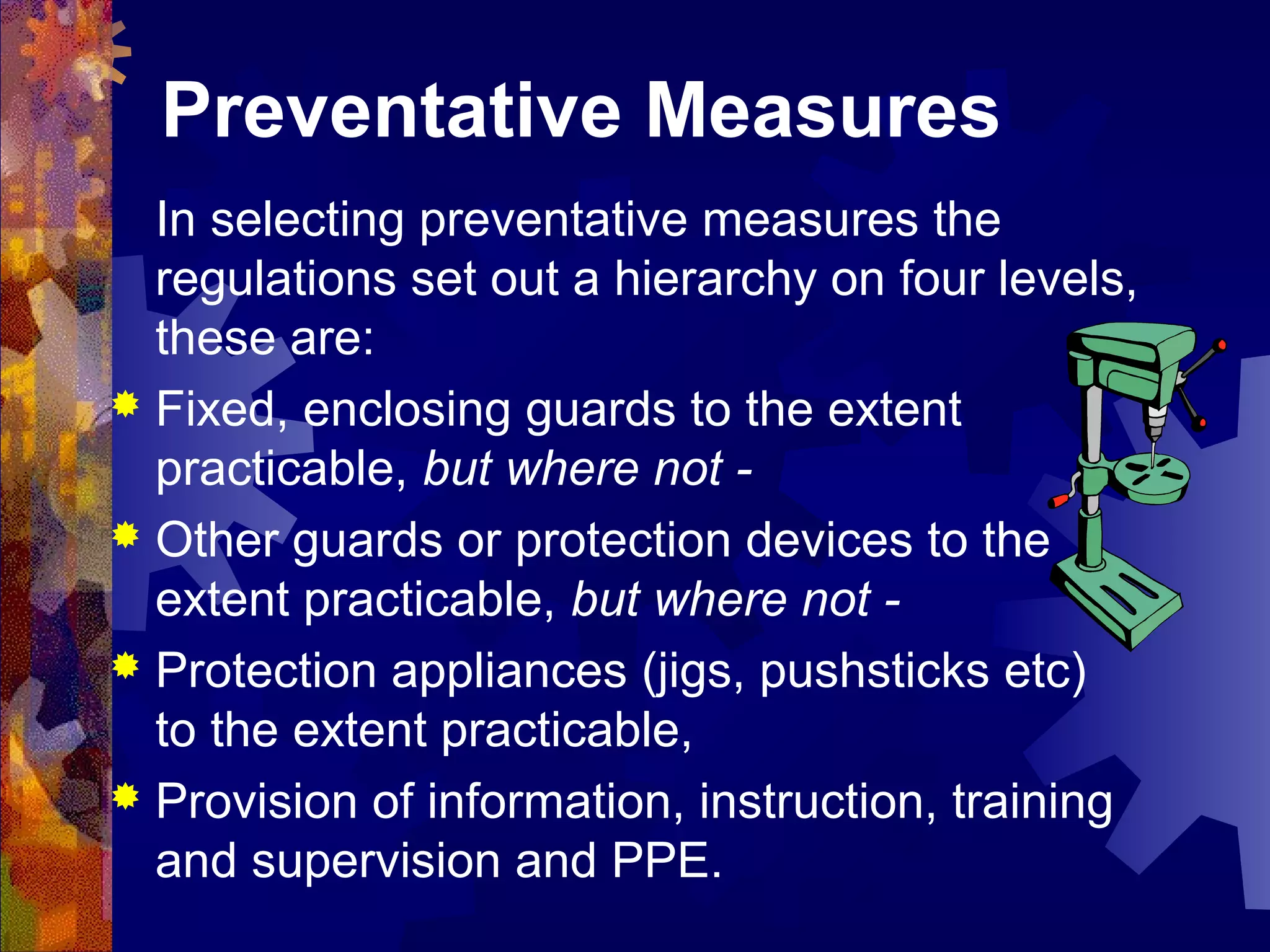
 Fixed, enclosing guards to the extent
practicable, but where not -
 Other guards or protection devices to the
extent practicable, but where not -
 Protection appliances (jigs, pushsticks etc)
to the extent practicable,
 Provision of information, instruction, training
and supervision and PPE.
Machinery Guarding
Guards and devices are to be:
 Suitable for the purpose
 Of good construction, sound material and
adequate strength
 Adequately maintained, in good repair and
efficient working order
 Not the source of additional risk to health &
safety
 Not easily bypassed or disabled
Machinery Guarding
Guards and devices are to be:
 Situated at sufficient distance from the
danger zone
 Not unduly restrictive of any necessary view
of the machine
 Constructed or adapted to allow maintenance
or part replacement without removing them
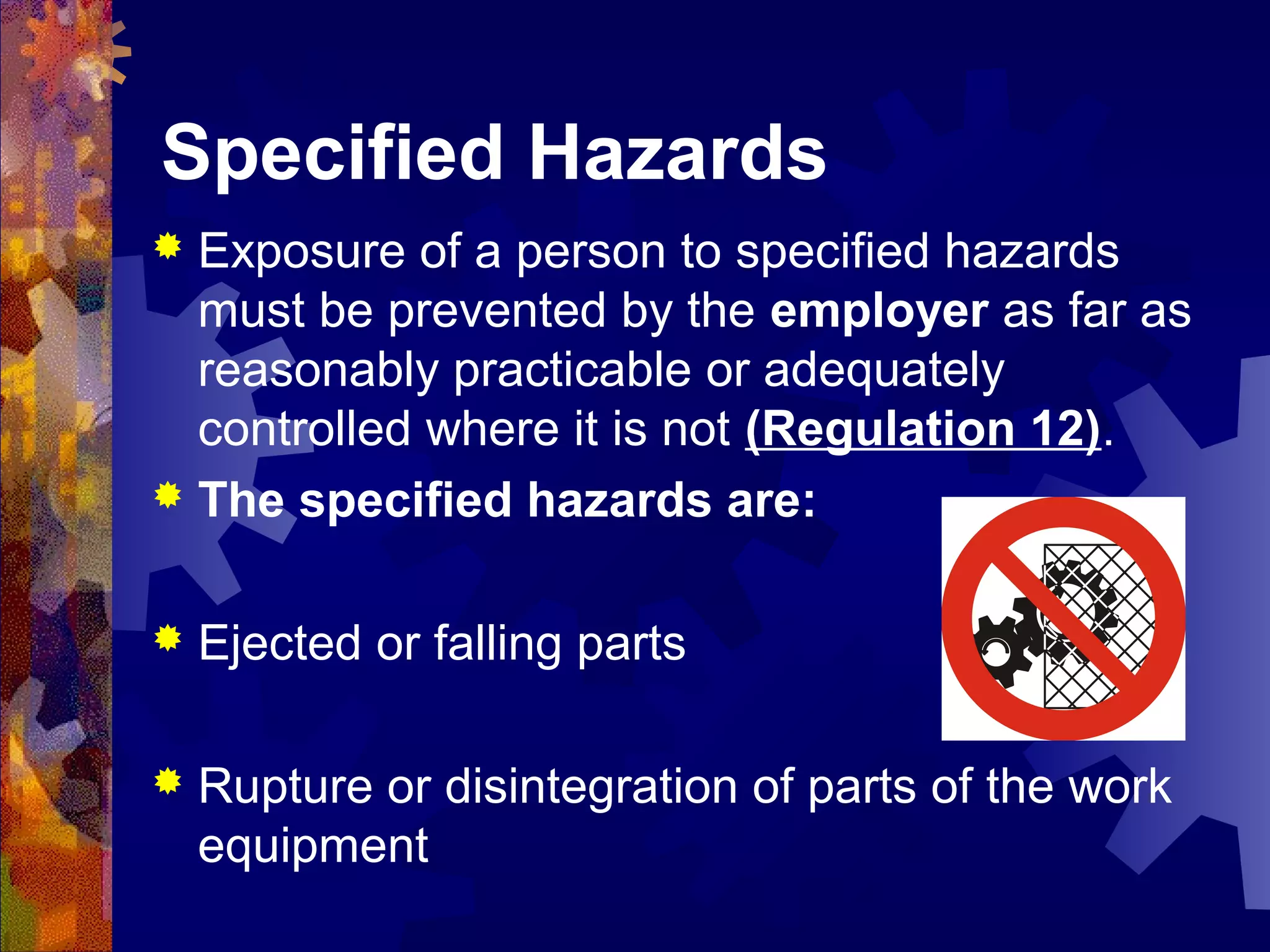
Specified Hazards
 Exposure of a person to specified hazards
must be prevented by the employer as far as
reasonably practicable or adequately
controlled where it is not (Regulation 12).
 The specified hazards are:
 Ejected or falling parts
 Rupture or disintegration of parts of the work
equipment
Specified Hazards
 Fire or overheating of the work equipment
 The unintended or premature discharge or
ejection of any article or any gas, dust,
liquid, vapour or other substance
produced, used or stored in the work
equipment.
 The unintended or premature explosion of
the work equipment or any material
produced, used or stored in it.
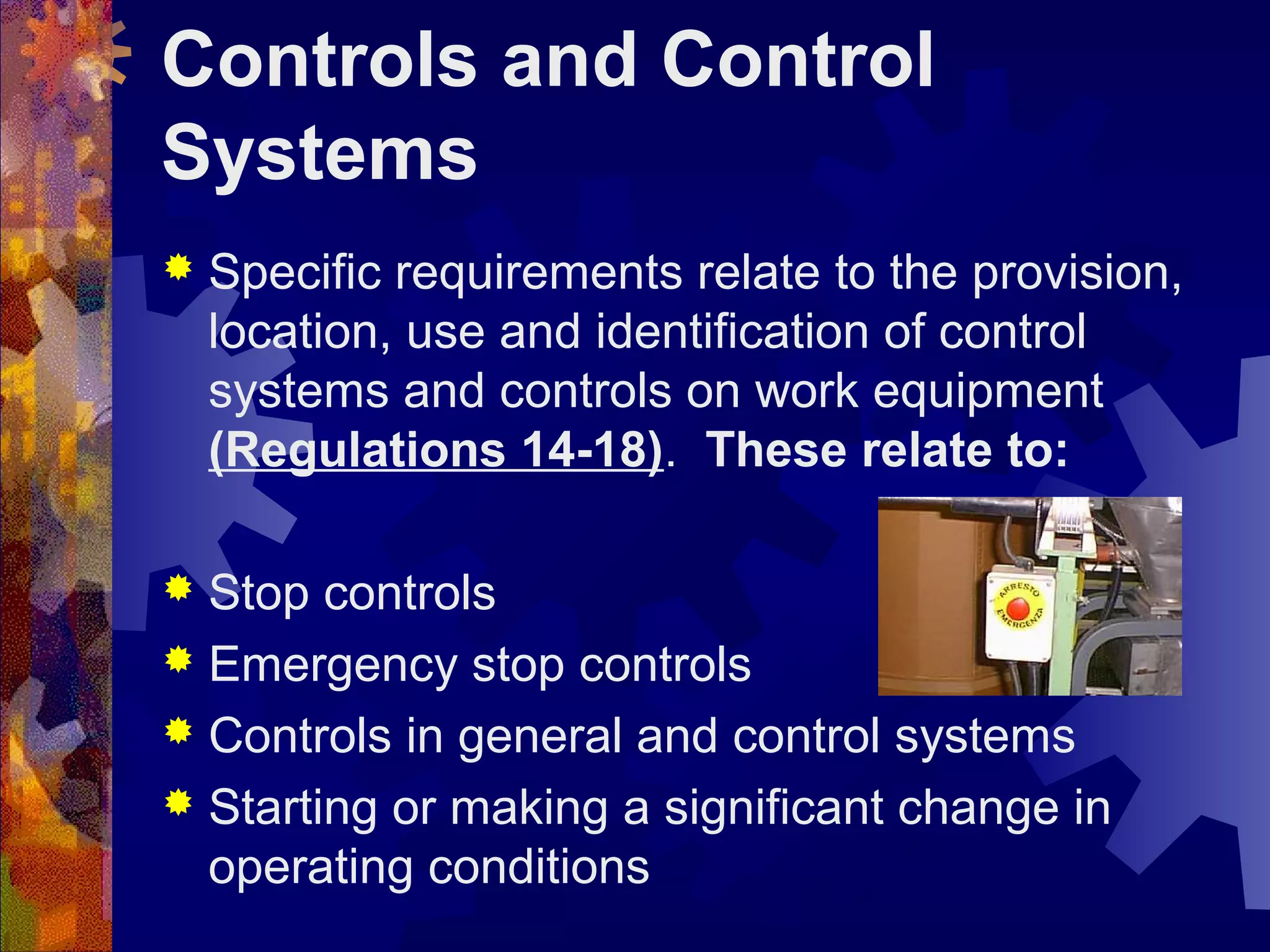
Controls and Control
Systems
 Specific requirements relate to the provision,
location, use and identification of control
systems and controls on work equipment
(Regulations 14-18). These relate to:
 Stop controls
 Emergency stop controls
 Controls in general and control systems
 Starting or making a significant change in
operating conditions
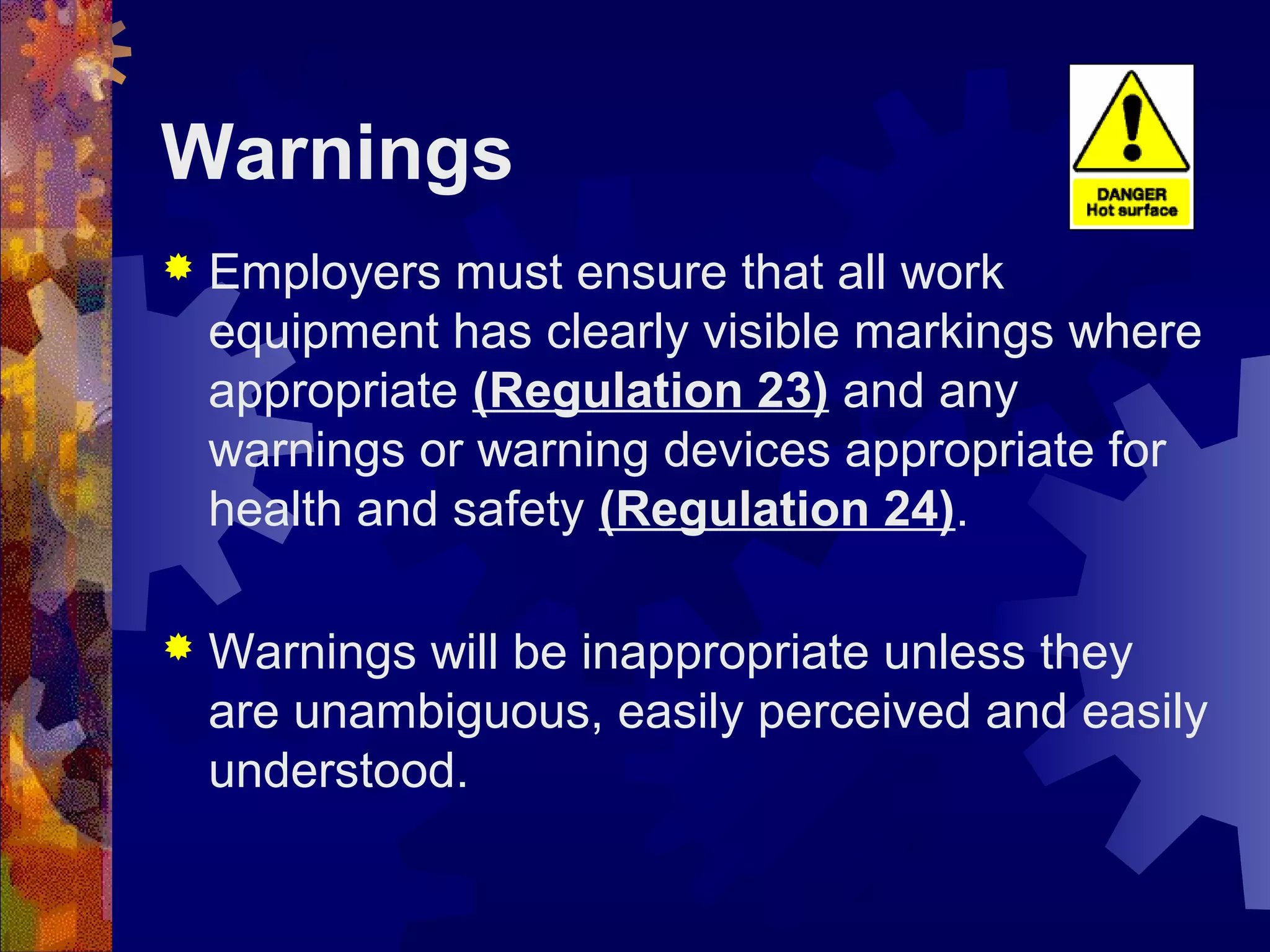
Warnings
 Employers must ensure that all work
equipment has clearly visible markings where
appropriate (Regulation 23) and any
warnings or warning devices appropriate for
health and safety (Regulation 24).
 Warnings will be inappropriate unless they
are unambiguous, easily perceived and easily
understood.
Employees Duties
 Employees should follow a simple system for
checking work equipment before they start
using it. This check will enable them to
ensure that any faults found are rectified
before use.
Summary
 These regulations outline the general
duties that management must comply
with to fulfill health and safety
responsibilities.
 Failure to comply with these regulations
could lead to serious injury to employees
or visitors or damage to machinery or
equipment.
 Failure to comply may also result in
prohibition or improvement notices being
issued, fines and in extreme cases
imprisonment.
Thank you for your attention.
ANY
QUESTIONS?

Working safely with work equipment by donald a mackay

  • 1.
    SCOTTISH BORDERS SAFETY FORUM WORKINGSAFELY WITH WORK EQUIPMENT Compiled by Donald A Mackay Mainetti UK Ltd
  • 2.
    Provision and Useof Work Equipment Regulations 1998
  • 3.
    Background  The generalrequirements contained in the Regulations applied from 1st January 1993 to all equipment regardless of it’s age.
  • 4.
    Objectives of theRegulations  The regulations provide a set of requirements ensuring the provision of safe work equipment and its safe use, irrespective of age or place of origin.
  • 5.
    Definitions  Work Equipment:This includes any machinery, appliance, apparatus or tool. Examples include: Hammers, knives, ladders, drilling machines, power presses, dumper truck, computer, lift truck, overhead projector.  Use: This means any activity involving work equipment. This includes starting, stopping, erecting, installing, dismantling, programming, setting, using, transporting, repairing, modifying, maintaining, servicing and cleaning.
  • 6.
    Definitions  Danger Zone:Means any zone in or around machinery in which a person is exposed to a risk to health and safety from contact with a dangerous part of machinery or a rotating stock-bar.
  • 7.
    Main Regulations  Regulation5: Suitability of work equipment  Regulation 6: Maintenance  Regulations 8 & 9: Information, instruction and training  Regulation 10: Conformity  Regulation 11: Dangerous parts of machinery
  • 8.
    Main Regulations  Regulation12: Protection against specified hazards  Regulations 14 -18: Controls and control systems  Regulation 22: Maintenance operations  Regulation 23 & 24: Markings and Warnings
  • 9.
    Suitability of WorkEquipment Under Regulation 5 the employer is required to:  Ensure that work equipment is suitable for the purpose for which it is used.  Selection of work equipment must have regard to working conditions and any additional risks posed by the use of work equipment.  The equipment must only be used for operations for which it is suitable.
  • 10.
    Maintenance  Regulation 6requires the equipment to be properly maintained, and have an up to date maintenance log where one is kept.  Regulation 22 states as far as reasonably practicable, maintenance operations are to be done while the work equipment is stopped.  If not, other protective measures are to be taken, unless maintenance people can do the work without exposure to a risk to health and safety.
  • 11.
    Information, Instruction & Training Under Regulation 8 users and supervisors of equipment must be given adequate health & safety information, and where appropriate, specified written instructions relating to the use of work equipment.  Regulation 9 covers user and supervisor training, including work methods, risks and precautions.
  • 12.
    Conformity  All equipmentmust bear a CE mark and a copy of the EC Declaration of Conformity must be obtained before using the equipment (Regulation 10).  The supplier of the equipment has a legal duty to CE mark the equipment.
  • 13.
    Specific Requirements  Specificrequirements are designed to reduce the risk to employees from dangerous parts of machinery under Regulation 11. This includes measures to prevent access to dangerous parts of machinery and to stop movement of any dangerous part before someone enters the danger zone.  These measures must consist of guards or protection devices as far as is reasonably practicable, and detailed requirements relating to them are established.
  • 14.
    Preventative Measures In selectingpreventative measures the regulations set out a hierarchy on four levels, these are:  Fixed, enclosing guards to the extent practicable, but where not -  Other guards or protection devices to the extent practicable, but where not -  Protection appliances (jigs, pushsticks etc) to the extent practicable,  Provision of information, instruction, training and supervision and PPE.
  • 15.
    Machinery Guarding Guards anddevices are to be:  Suitable for the purpose  Of good construction, sound material and adequate strength  Adequately maintained, in good repair and efficient working order  Not the source of additional risk to health & safety  Not easily bypassed or disabled
  • 16.
    Machinery Guarding Guards anddevices are to be:  Situated at sufficient distance from the danger zone  Not unduly restrictive of any necessary view of the machine  Constructed or adapted to allow maintenance or part replacement without removing them
  • 17.
    Specified Hazards  Exposureof a person to specified hazards must be prevented by the employer as far as reasonably practicable or adequately controlled where it is not (Regulation 12).  The specified hazards are:  Ejected or falling parts  Rupture or disintegration of parts of the work equipment
  • 18.
    Specified Hazards  Fireor overheating of the work equipment  The unintended or premature discharge or ejection of any article or any gas, dust, liquid, vapour or other substance produced, used or stored in the work equipment.  The unintended or premature explosion of the work equipment or any material produced, used or stored in it.
  • 19.
    Controls and Control Systems Specific requirements relate to the provision, location, use and identification of control systems and controls on work equipment (Regulations 14-18). These relate to:  Stop controls  Emergency stop controls  Controls in general and control systems  Starting or making a significant change in operating conditions
  • 20.
    Warnings  Employers mustensure that all work equipment has clearly visible markings where appropriate (Regulation 23) and any warnings or warning devices appropriate for health and safety (Regulation 24).  Warnings will be inappropriate unless they are unambiguous, easily perceived and easily understood.
  • 21.
    Employees Duties  Employeesshould follow a simple system for checking work equipment before they start using it. This check will enable them to ensure that any faults found are rectified before use.
  • 22.
    Summary  These regulationsoutline the general duties that management must comply with to fulfill health and safety responsibilities.  Failure to comply with these regulations could lead to serious injury to employees or visitors or damage to machinery or equipment.  Failure to comply may also result in prohibition or improvement notices being issued, fines and in extreme cases imprisonment.
  • 23.
    Thank you foryour attention. ANY QUESTIONS?