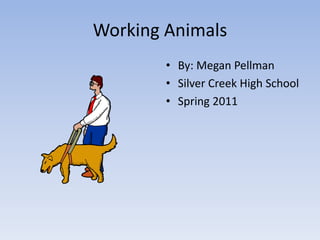
Working Animals
• By: Megan Pellman
• Silver Creek High School
• Spring 2011
History
• Animals used for labor,
hunting, food, clothing,
etc.
• Technology increases
the uses we have for
animals
• Therapy, guide, police,
army, navy, etc.
Therapy
• Dogs, Horses, Dolphins
• No laws
• Motivational, aids muscles and speed of
recovery of mental/emotional and physical
illness
• Mostly children
• Known to relieve stress
Therapy Dogs
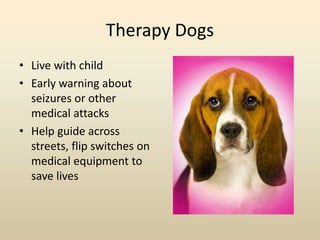
• Live with child
• Early warning about
seizures or other
medical attacks
• Help guide across
streets, flip switches on
medical equipment to
save lives
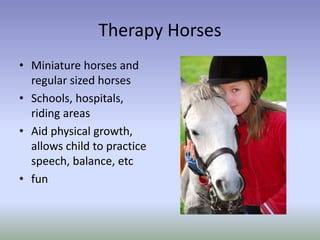
Therapy Horses
• Miniature horses and
regular sized horses
• Schools, hospitals,
riding areas
• Aid physical growth,
allows child to practice
speech, balance, etc
• fun
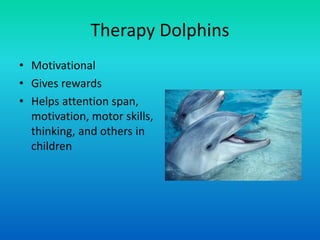
Therapy Dolphins
• Motivational
• Gives rewards
• Helps attention span,
motivation, motor skills,
thinking, and others in
children
Research
• Research has proven
that animals bring
emotional relief,
cheeriness, and overall
better physical health
when they are around
people
Service
• Dogs, Horses, Monkeys, etc.
• Has laws, but people take advantage of them
• Blindness, mental, seizures, etc.
• Helps with basic things: opening doors, fetch
packages, turn lights on or off, call someone
• Animal stays with owner throughout its life
• Extensive training, trained according to owner
Names
• Service-legal term
• Assistance
• Mobility
• Walker
• Support
• Guide
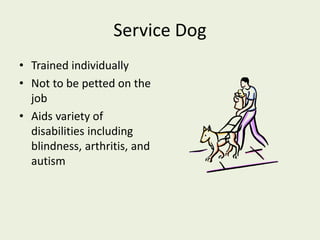
Service Dog
• Trained individually
• Not to be petted on the
job
• Aids variety of
disabilities including
blindness, arthritis, and
autism
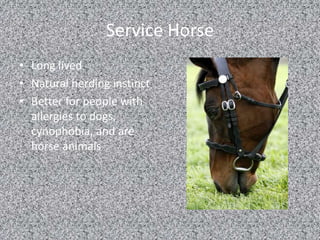
Service Horse
• Long lived
• Natural herding instinct
• Better for people with
allergies to dogs,
cynophobia, and are
horse animals
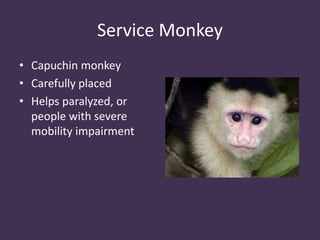
Service Monkey
• Capuchin monkey
• Carefully placed
• Helps paralyzed, or
people with severe
mobility impairment
Against
• Americans with
Disabilities Act (A.D.A.)
requires that service
animals be allowed
wherever their owners
want to go
• Many public places are
refusing service animals
entrance
• People are committing
fraud, they create fake
identification and pass
their animals off as
service animals allowing
them access
• Many people are
attacking diseases that
service animals may
have
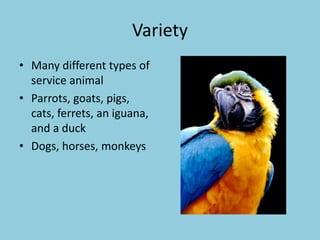
Variety
• Many different types of
service animal
• Parrots, goats, pigs,
cats, ferrets, an iguana,
and a duck
• Dogs, horses, monkeys
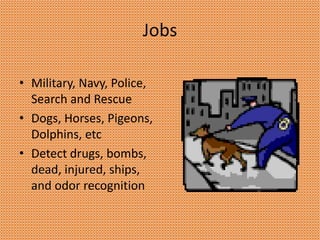
Jobs
• Military, Navy, Police,
Search and Rescue
• Dogs, Horses, Pigeons,
Dolphins, etc
• Detect drugs, bombs,
dead, injured, ships,
and odor recognition
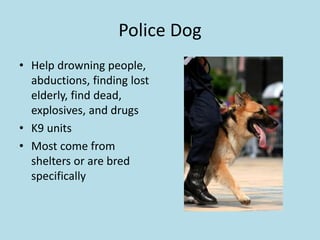
Police Dog
• Help drowning people,
abductions, finding lost
elderly, find dead,
explosives, and drugs
• K9 units
• Most come from
shelters or are bred
specifically
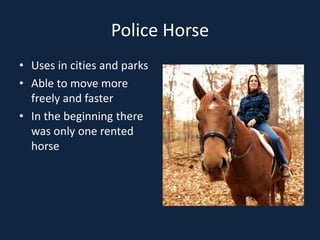
Police Horse
• Uses in cities and parks
• Able to move more
freely and faster
• In the beginning there
was only one rented
horse
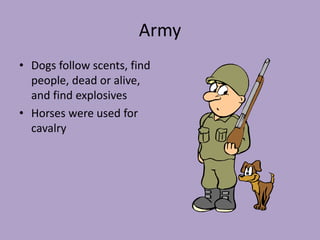
Army
• Dogs follow scents, find
people, dead or alive,
and find explosives
• Horses were used for
cavalry
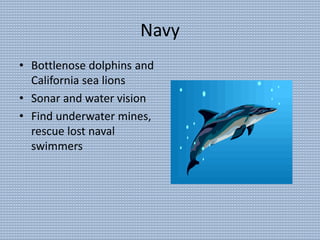
Navy
• Bottlenose dolphins and
California sea lions
• Sonar and water vision
• Find underwater mines,
rescue lost naval
swimmers
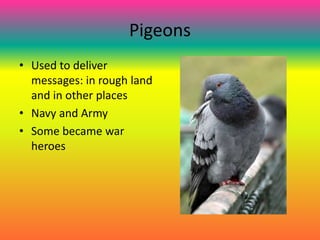
Pigeons
• Used to deliver
messages: in rough land
and in other places
• Navy and Army
• Some became war
heroes
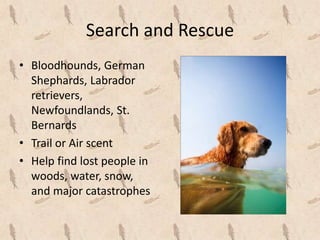
Search and Rescue
• Bloodhounds, German
Shephards, Labrador
retrievers,
Newfoundlands, St.
Bernards
• Trail or Air scent
• Help find lost people in
woods, water, snow,
and major catastrophes
Rescue
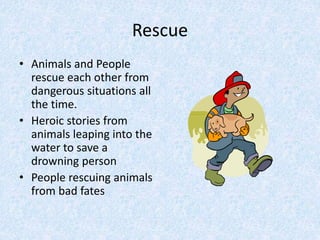
• Animals and People
rescue each other from
dangerous situations all
the time.
• Heroic stories from
animals leaping into the
water to save a
drowning person
• People rescuing animals
from bad fates
hello

Working animals

  • 1.
    Working Animals • By:Megan Pellman • Silver Creek High School • Spring 2011
  • 2.
    History • Animals usedfor labor, hunting, food, clothing, etc. • Technology increases the uses we have for animals • Therapy, guide, police, army, navy, etc.
  • 3.
    Therapy • Dogs, Horses,Dolphins • No laws • Motivational, aids muscles and speed of recovery of mental/emotional and physical illness • Mostly children • Known to relieve stress
  • 4.
    Therapy Dogs • Livewith child • Early warning about seizures or other medical attacks • Help guide across streets, flip switches on medical equipment to save lives
  • 5.
    Therapy Horses • Miniaturehorses and regular sized horses • Schools, hospitals, riding areas • Aid physical growth, allows child to practice speech, balance, etc • fun
  • 6.
    Therapy Dolphins • Motivational •Gives rewards • Helps attention span, motivation, motor skills, thinking, and others in children
  • 7.
    Research • Research hasproven that animals bring emotional relief, cheeriness, and overall better physical health when they are around people
  • 8.
    Service • Dogs, Horses,Monkeys, etc. • Has laws, but people take advantage of them • Blindness, mental, seizures, etc. • Helps with basic things: opening doors, fetch packages, turn lights on or off, call someone • Animal stays with owner throughout its life • Extensive training, trained according to owner
  • 9.
    Names • Service-legal term •Assistance • Mobility • Walker • Support • Guide
  • 10.
    Service Dog • Trainedindividually • Not to be petted on the job • Aids variety of disabilities including blindness, arthritis, and autism
  • 11.
    Service Horse • Longlived • Natural herding instinct • Better for people with allergies to dogs, cynophobia, and are horse animals
  • 12.
    Service Monkey • Capuchinmonkey • Carefully placed • Helps paralyzed, or people with severe mobility impairment
  • 13.
    Against • Americans with DisabilitiesAct (A.D.A.) requires that service animals be allowed wherever their owners want to go • Many public places are refusing service animals entrance • People are committing fraud, they create fake identification and pass their animals off as service animals allowing them access • Many people are attacking diseases that service animals may have
  • 14.
    Variety • Many differenttypes of service animal • Parrots, goats, pigs, cats, ferrets, an iguana, and a duck • Dogs, horses, monkeys
  • 15.
    Jobs • Military, Navy,Police, Search and Rescue • Dogs, Horses, Pigeons, Dolphins, etc • Detect drugs, bombs, dead, injured, ships, and odor recognition
  • 16.
    Police Dog • Helpdrowning people, abductions, finding lost elderly, find dead, explosives, and drugs • K9 units • Most come from shelters or are bred specifically
  • 17.
    Police Horse • Usesin cities and parks • Able to move more freely and faster • In the beginning there was only one rented horse
  • 18.
    Army • Dogs followscents, find people, dead or alive, and find explosives • Horses were used for cavalry
  • 19.
    Navy • Bottlenose dolphinsand California sea lions • Sonar and water vision • Find underwater mines, rescue lost naval swimmers
  • 20.
    Pigeons • Used todeliver messages: in rough land and in other places • Navy and Army • Some became war heroes
  • 21.
    Search and Rescue •Bloodhounds, German Shephards, Labrador retrievers, Newfoundlands, St. Bernards • Trail or Air scent • Help find lost people in woods, water, snow, and major catastrophes
  • 22.
    Rescue • Animals andPeople rescue each other from dangerous situations all the time. • Heroic stories from animals leaping into the water to save a drowning person • People rescuing animals from bad fates
  • 23.