Service Dogs And How They Help Human Beings
ADA Definition Service animals are animals that are individually trained to perform tasks for people with disabilities such as guiding people who are blind, alerting people who are deaf, pulling wheelchairs, alerting and protecting a person who is having a seizure, or performing other special tasks. Service animals are working animals, not pets.
 
ADA “Fine Print” says Businesses may ask if an animal is a service animal or ask what tasks the animal has been trained to perform, but cannot require special ID cards for the animal or ask about the person's disability. Allergies and fear of animals are generally not valid reasons for denying access or refusing service to people with service animals. Violators of the ADA can be required to pay money damages and penalties.
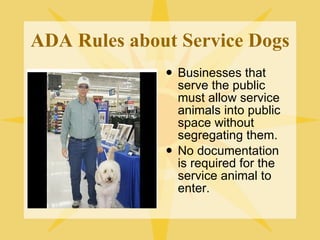
ADA Rules about Service Dogs Businesses that serve the public must allow service animals into public space without segregating them. No documentation is required for the service animal to enter.
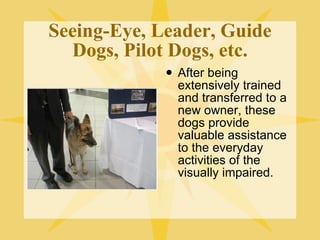
Seeing-Eye, Leader, Guide Dogs, Pilot Dogs, etc. After being extensively trained and transferred to a new owner, these dogs provide valuable assistance to the everyday activities of the visually impaired.
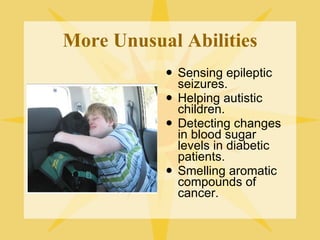
More Unusual Abilities Sensing epileptic seizures. Helping autistic children. Detecting changes in blood sugar levels in diabetic patients. Smelling aromatic compounds of cancer.
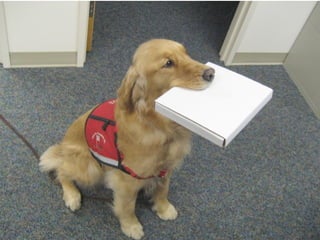
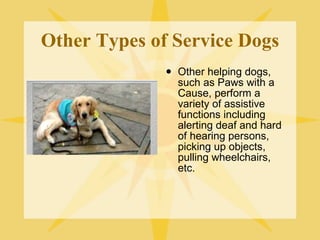
Other Types of Service Dogs Other helping dogs, such as Paws with a Cause, perform a variety of assistive functions including alerting deaf and hard of hearing persons, picking up objects, pulling wheelchairs, etc.
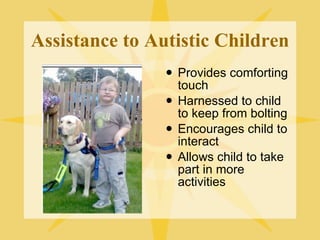
Assistance to Autistic Children Provides comforting touch Harnessed to child to keep from bolting Encourages child to interact Allows child to take part in more activities
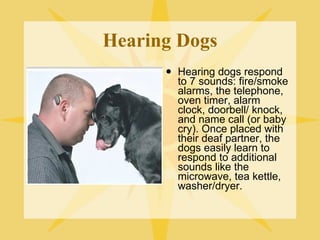
Hearing Dogs Hearing dogs respond to 7 sounds: fire/smoke alarms, the telephone, oven timer, alarm clock, doorbell/ knock, and name call (or baby cry). Once placed with their deaf partner, the dogs easily learn to respond to additional sounds like the microwave, tea kettle, washer/dryer.
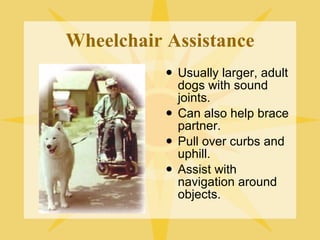
Wheelchair Assistance Usually larger, adult dogs with sound joints. Can also help brace partner. Pull over curbs and uphill. Assist with navigation around objects.
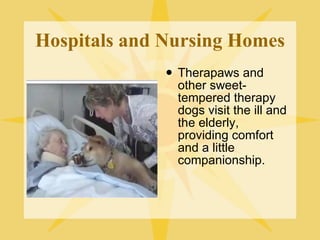
Hospitals and Nursing Homes Therapaws and other sweet-tempered therapy dogs visit the ill and the elderly, providing comfort and a little companionship.
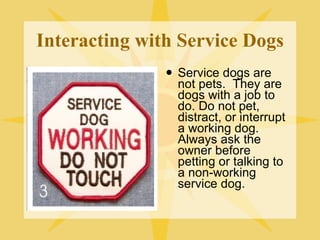
Interacting with Service Dogs Service dogs are not pets.  They are dogs with a job to do. Do not pet, distract, or interrupt a working dog. Always ask the owner before petting or talking to a non-working service dog.
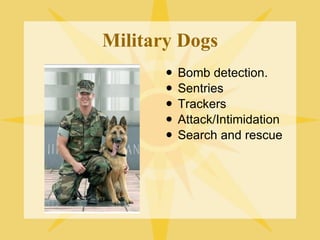
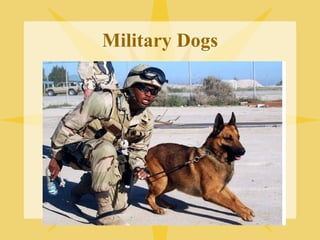
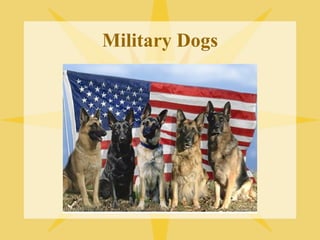
Military Dogs Bomb detection. Sentries Trackers Attack/Intimidation Search and rescue
Military Dogs
Military Dogs
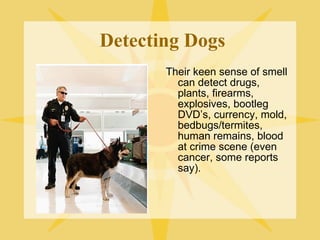
Detecting Dogs Their keen sense of smell can detect drugs, plants, firearms, explosives, bootleg DVD’s, currency, mold, bedbugs/termites, human remains, blood at crime scene (even cancer, some reports say).
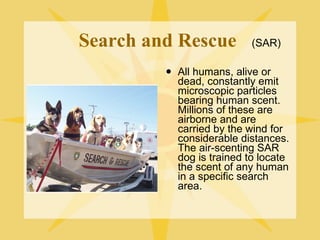
Search and Rescue  All humans, alive or dead, constantly emit microscopic particles bearing human scent. Millions of these are airborne and are carried by the wind for considerable distances. The air-scenting SAR dog is trained to locate the scent of any human in a specific search area. (SAR)
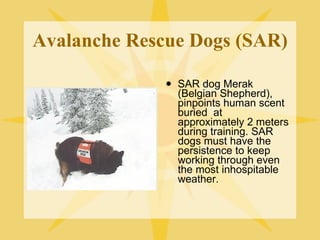
Avalanche Rescue Dogs (SAR) SAR dog Merak (Belgian Shepherd), pinpoints human scent buried  at approximately 2 meters during training. SAR dogs must have the persistence to keep working through even the most inhospitable weather.
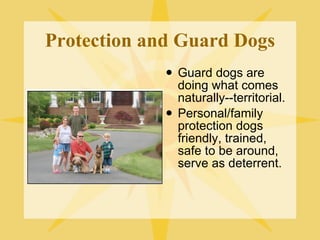
Protection and Guard Dogs Guard dogs are doing what comes naturally--territorial. Personal/family protection dogs friendly, trained, safe to be around, serve as deterrent.
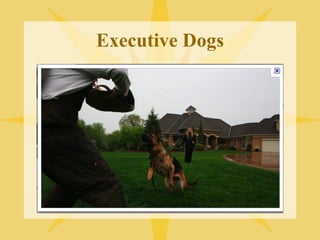
Executive Dogs
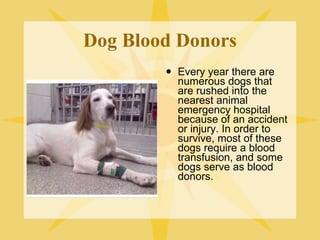
Dog Blood Donors Every year there are numerous dogs that are rushed into the nearest animal emergency hospital because of an accident or injury. In order to survive, most of these dogs require a blood transfusion, and some dogs serve as blood donors.
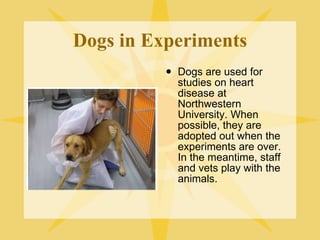
Dogs in Experiments Dogs are used for studies on heart disease at Northwestern University. When possible, they are adopted out when the experiments are over. In the meantime, staff and vets play with the animals.
 
Bonding http://www.youtubefunnyvideoclips.com/dogs/videosoldierreunitedwithdogs.html

Service dogs

  • 1.
    Service Dogs AndHow They Help Human Beings
  • 2.
    ADA Definition Serviceanimals are animals that are individually trained to perform tasks for people with disabilities such as guiding people who are blind, alerting people who are deaf, pulling wheelchairs, alerting and protecting a person who is having a seizure, or performing other special tasks. Service animals are working animals, not pets.
  • 3.
  • 4.
    ADA “Fine Print”says Businesses may ask if an animal is a service animal or ask what tasks the animal has been trained to perform, but cannot require special ID cards for the animal or ask about the person's disability. Allergies and fear of animals are generally not valid reasons for denying access or refusing service to people with service animals. Violators of the ADA can be required to pay money damages and penalties.
  • 5.
    ADA Rules aboutService Dogs Businesses that serve the public must allow service animals into public space without segregating them. No documentation is required for the service animal to enter.
  • 6.
    Seeing-Eye, Leader, GuideDogs, Pilot Dogs, etc. After being extensively trained and transferred to a new owner, these dogs provide valuable assistance to the everyday activities of the visually impaired.
  • 7.
    More Unusual AbilitiesSensing epileptic seizures. Helping autistic children. Detecting changes in blood sugar levels in diabetic patients. Smelling aromatic compounds of cancer.
  • 8.
    Other Types ofService Dogs Other helping dogs, such as Paws with a Cause, perform a variety of assistive functions including alerting deaf and hard of hearing persons, picking up objects, pulling wheelchairs, etc.
  • 9.
    Assistance to AutisticChildren Provides comforting touch Harnessed to child to keep from bolting Encourages child to interact Allows child to take part in more activities
  • 10.
    Hearing Dogs Hearingdogs respond to 7 sounds: fire/smoke alarms, the telephone, oven timer, alarm clock, doorbell/ knock, and name call (or baby cry). Once placed with their deaf partner, the dogs easily learn to respond to additional sounds like the microwave, tea kettle, washer/dryer.
  • 11.
    Wheelchair Assistance Usuallylarger, adult dogs with sound joints. Can also help brace partner. Pull over curbs and uphill. Assist with navigation around objects.
  • 12.
    Hospitals and NursingHomes Therapaws and other sweet-tempered therapy dogs visit the ill and the elderly, providing comfort and a little companionship.
  • 13.
    Interacting with ServiceDogs Service dogs are not pets. They are dogs with a job to do. Do not pet, distract, or interrupt a working dog. Always ask the owner before petting or talking to a non-working service dog.
  • 14.
    Military Dogs Bombdetection. Sentries Trackers Attack/Intimidation Search and rescue
  • 15.
  • 16.
  • 17.
    Detecting Dogs Theirkeen sense of smell can detect drugs, plants, firearms, explosives, bootleg DVD’s, currency, mold, bedbugs/termites, human remains, blood at crime scene (even cancer, some reports say).
  • 18.
    Search and Rescue All humans, alive or dead, constantly emit microscopic particles bearing human scent. Millions of these are airborne and are carried by the wind for considerable distances. The air-scenting SAR dog is trained to locate the scent of any human in a specific search area. (SAR)
  • 19.
    Avalanche Rescue Dogs(SAR) SAR dog Merak (Belgian Shepherd), pinpoints human scent buried at approximately 2 meters during training. SAR dogs must have the persistence to keep working through even the most inhospitable weather.
  • 20.
    Protection and GuardDogs Guard dogs are doing what comes naturally--territorial. Personal/family protection dogs friendly, trained, safe to be around, serve as deterrent.
  • 21.
  • 22.
    Dog Blood DonorsEvery year there are numerous dogs that are rushed into the nearest animal emergency hospital because of an accident or injury. In order to survive, most of these dogs require a blood transfusion, and some dogs serve as blood donors.
  • 23.
    Dogs in ExperimentsDogs are used for studies on heart disease at Northwestern University. When possible, they are adopted out when the experiments are over. In the meantime, staff and vets play with the animals.
  • 24.
  • 25.

Editor's Notes

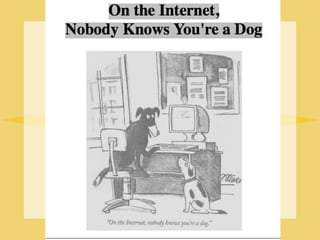
  • #25 Famous “New Yorker” cartoon by Peter Steiner