Working Adolescents
- Why do students have jobs?
- How does it interfere with schoolwork?
- How does it affect their performance in
school?
- What strategies do teachers use in helping
students with jobs?
Why do students have jobs?
 Car payments
 Car insurance
 Gas money
 Spending money
 Party money/Weekend money
 Cell phone
Why do students have jobs?
 Parents made them
 Freedom/Independe
nce from parents
 Spring Break,
Vacations, School
Trips
 Saving for college
 Boredom
 Teenagers want to
have the ability to
buy things they
want… CDs, clothes,
cell phones, etc.
 Some teens work to
get away from a bad
home life, to escape
for a little while.
How much do students work?
 5-35 hours per week
 Students work
according to
financial need, time
allowance, or desire.
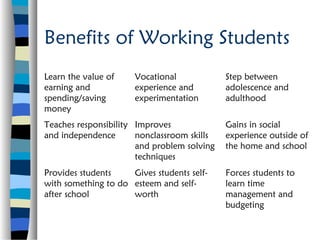
Benefits of Working Students
Learn the value of
earning and
spending/saving
money
Vocational
experience and
experimentation
Step between
adolescence and
adulthood
Teaches responsibility
and independence
Improves
nonclassroom skills
and problem solving
techniques
Gains in social
experience outside of
the home and school
Provides students
with something to do
after school
Gives students self-
esteem and self-
worth
Forces students to
learn time
management and
budgeting
Disadvantages of Working Students
Interferes with social
activities
More likely to abuse
drugs than non-
working teens
More likely to
develop behavioral
problems than non-
working teens
Increased interest
with material goods
and goals
Work becomes a
priority over school
because of monetary
gains
Lack of sleep
Lack of time to
complete school
work and study
Distance created
between working
student and peers
Working students
unable to participate
in school
extracurricular
activities and sports
How does working interfere
with schoolwork?
 Students who work are
either unable to
complete school work
because of lack of time
or lack of sleep.
 They must choose which
is most important:
studying or sleep.
 Working in excess results
in students putting more
effort forth in work than
in school.
How does working affect student
performance in school?
 Students lack of sleep
greatly affects them
in the classroom.
 Students who work
do not always have
the time to complete
homework and may
fall behind in course
content.
 Students become
unmotivated to do
well in school
because they are
more satisfied with
the immediate
paycheck. They
tend not to see the
long-term effects of
school.
Teacher Strategies
 Some programs in schools have made collaborative
efforts with students’ places of employment to benefit
the student. For example, students who do not come
to school may not report to work that same day.
 Allow some in-class time to complete homework.
 Give an outline for total student assignments for
chapter/unit at the beginning of chapter/unit and give
students plenty of time to complete.
 Create an individual contract with students who
work. Teacher and student both have input in the
creation of the contract. They both sign it.
Resources
 Youngworkers.org
http://socrates.berkeley.edu/~safejobs/tc/
 Teenagers and Jobs
http://www.pmct.org/perspectives/teenwork.ht
ml
 Are you helping your teen think about career
options?
http://www.vsb.bc.ca/programs/careerprog/stud
entfamilies/HelpingTeensSucceed.htm
Bibliography
 http://www.inside.bard.edu/academic/s
pecialproj/darling/adwork.htm
 http://www.ed.gov/pubs/USCaseStudy/c
hapte4a.html
 http://www.scienceblog.com/communit
y/older/2002/G/20021591.html

Working Adolescents

  • 1.
    Working Adolescents - Whydo students have jobs? - How does it interfere with schoolwork? - How does it affect their performance in school? - What strategies do teachers use in helping students with jobs?
  • 2.
    Why do studentshave jobs?  Car payments  Car insurance  Gas money  Spending money  Party money/Weekend money  Cell phone
  • 3.
    Why do studentshave jobs?  Parents made them  Freedom/Independe nce from parents  Spring Break, Vacations, School Trips  Saving for college  Boredom  Teenagers want to have the ability to buy things they want… CDs, clothes, cell phones, etc.  Some teens work to get away from a bad home life, to escape for a little while.
  • 4.
    How much dostudents work?  5-35 hours per week  Students work according to financial need, time allowance, or desire.
  • 5.
    Benefits of WorkingStudents Learn the value of earning and spending/saving money Vocational experience and experimentation Step between adolescence and adulthood Teaches responsibility and independence Improves nonclassroom skills and problem solving techniques Gains in social experience outside of the home and school Provides students with something to do after school Gives students self- esteem and self- worth Forces students to learn time management and budgeting
  • 6.
    Disadvantages of WorkingStudents Interferes with social activities More likely to abuse drugs than non- working teens More likely to develop behavioral problems than non- working teens Increased interest with material goods and goals Work becomes a priority over school because of monetary gains Lack of sleep Lack of time to complete school work and study Distance created between working student and peers Working students unable to participate in school extracurricular activities and sports
  • 7.
    How does workinginterfere with schoolwork?  Students who work are either unable to complete school work because of lack of time or lack of sleep.  They must choose which is most important: studying or sleep.  Working in excess results in students putting more effort forth in work than in school.
  • 8.
    How does workingaffect student performance in school?  Students lack of sleep greatly affects them in the classroom.  Students who work do not always have the time to complete homework and may fall behind in course content.  Students become unmotivated to do well in school because they are more satisfied with the immediate paycheck. They tend not to see the long-term effects of school.
  • 9.
    Teacher Strategies  Someprograms in schools have made collaborative efforts with students’ places of employment to benefit the student. For example, students who do not come to school may not report to work that same day.  Allow some in-class time to complete homework.  Give an outline for total student assignments for chapter/unit at the beginning of chapter/unit and give students plenty of time to complete.  Create an individual contract with students who work. Teacher and student both have input in the creation of the contract. They both sign it.
  • 10.
    Resources  Youngworkers.org http://socrates.berkeley.edu/~safejobs/tc/  Teenagersand Jobs http://www.pmct.org/perspectives/teenwork.ht ml  Are you helping your teen think about career options? http://www.vsb.bc.ca/programs/careerprog/stud entfamilies/HelpingTeensSucceed.htm
  • 11.