Wordly Wise Vocab

     Lesson 3
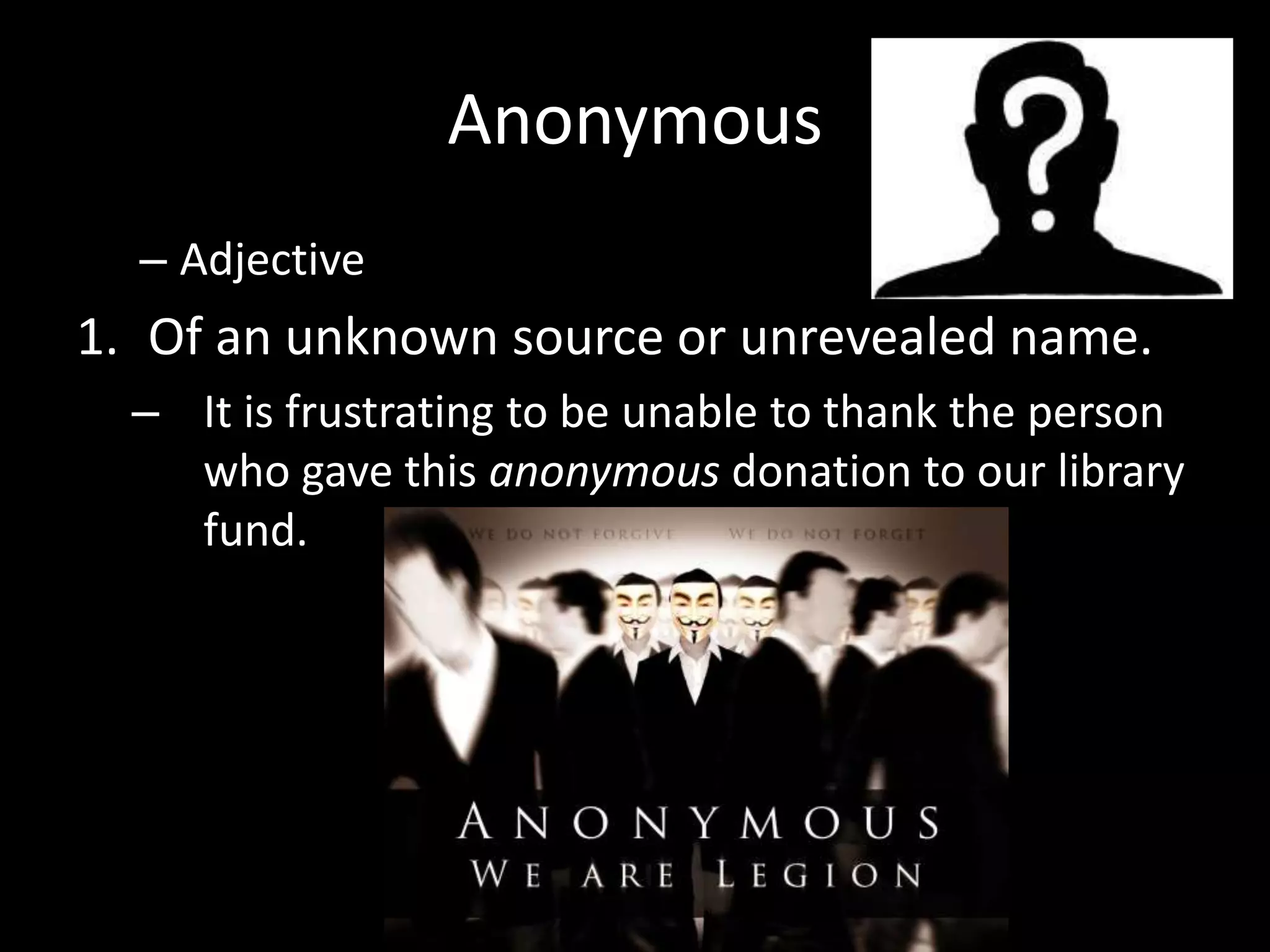
Anonymous
  – Adjective
1. Of an unknown source or unrevealed name.
  – It is frustrating to be unable to thank the person
    who gave this anonymous donation to our library
    fund.
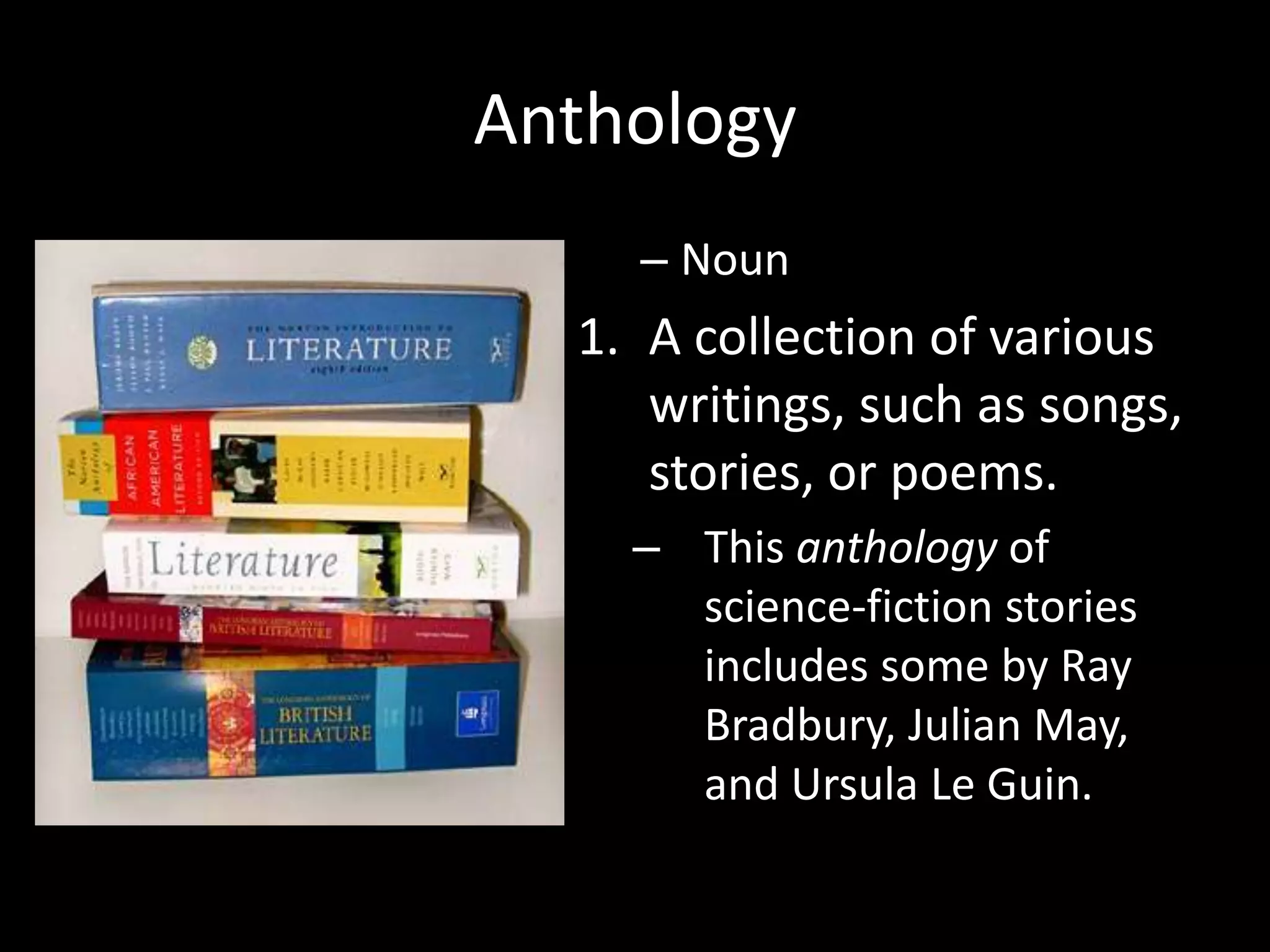
Anthology
    – Noun
  1. A collection of various
     writings, such as songs,
     stories, or poems.
    – This anthology of
      science-fiction stories
      includes some by Ray
      Bradbury, Julian May,
      and Ursula Le Guin.
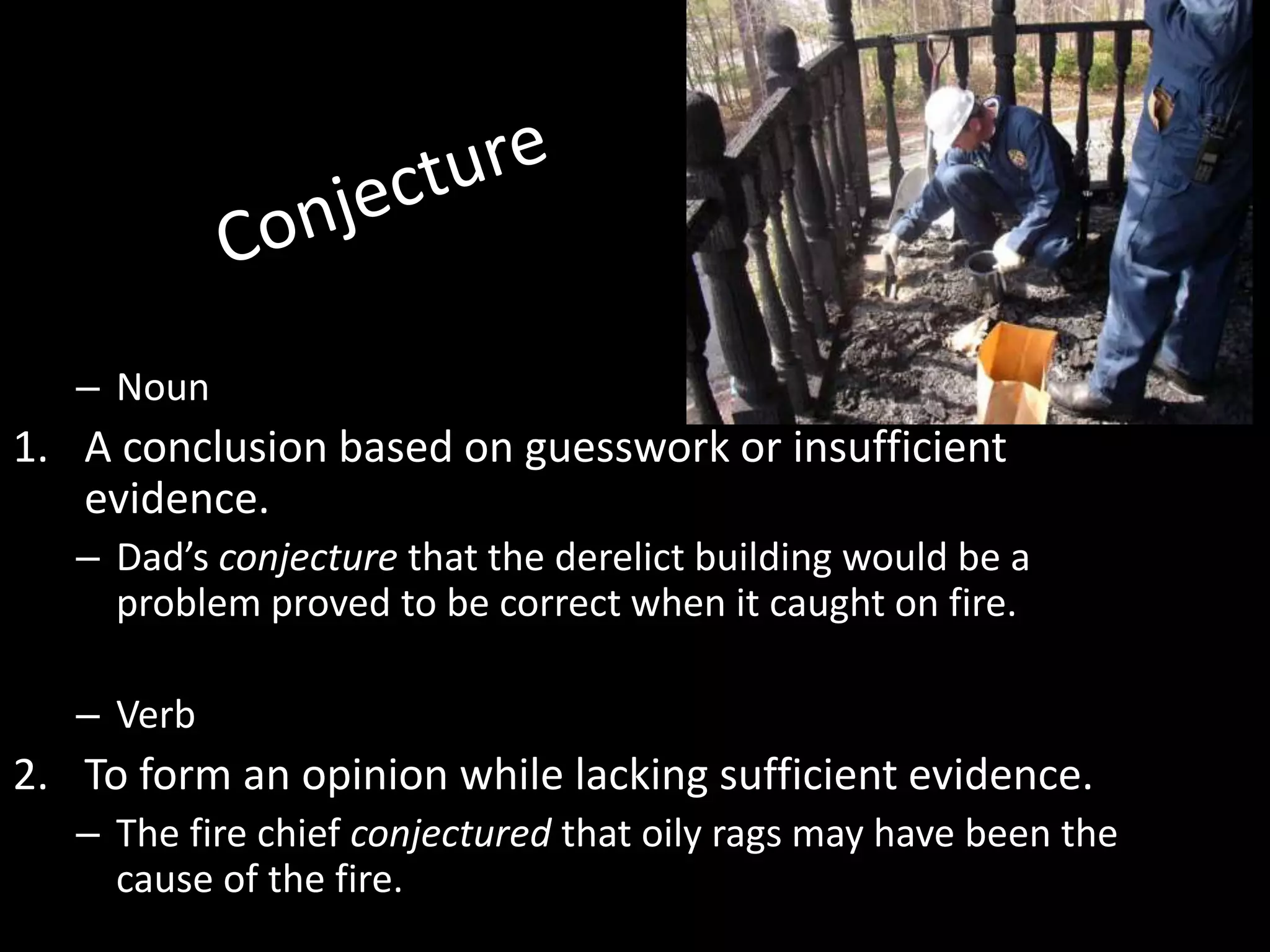
– Noun
1. A conclusion based on guesswork or insufficient
   evidence.
   – Dad’s conjecture that the derelict building would be a
     problem proved to be correct when it caught on fire.

   – Verb
2. To form an opinion while lacking sufficient evidence.
   – The fire chief conjectured that oily rags may have been the
     cause of the fire.
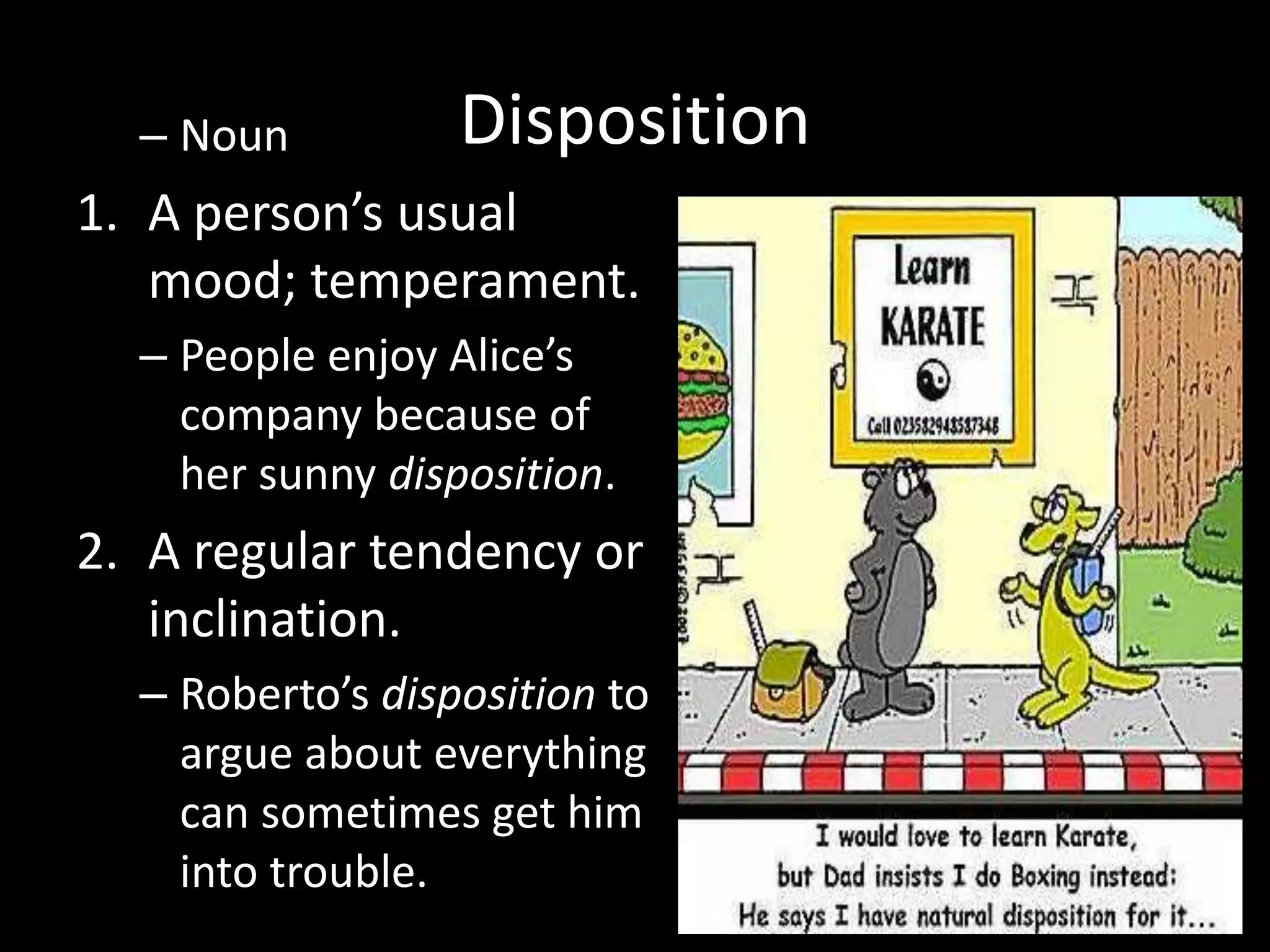
– Noun          Disposition
1. A person’s usual
   mood; temperament.
  – People enjoy Alice’s
    company because of
    her sunny disposition.
2. A regular tendency or
   inclination.
  – Roberto’s disposition to
    argue about everything
    can sometimes get him
    into trouble.
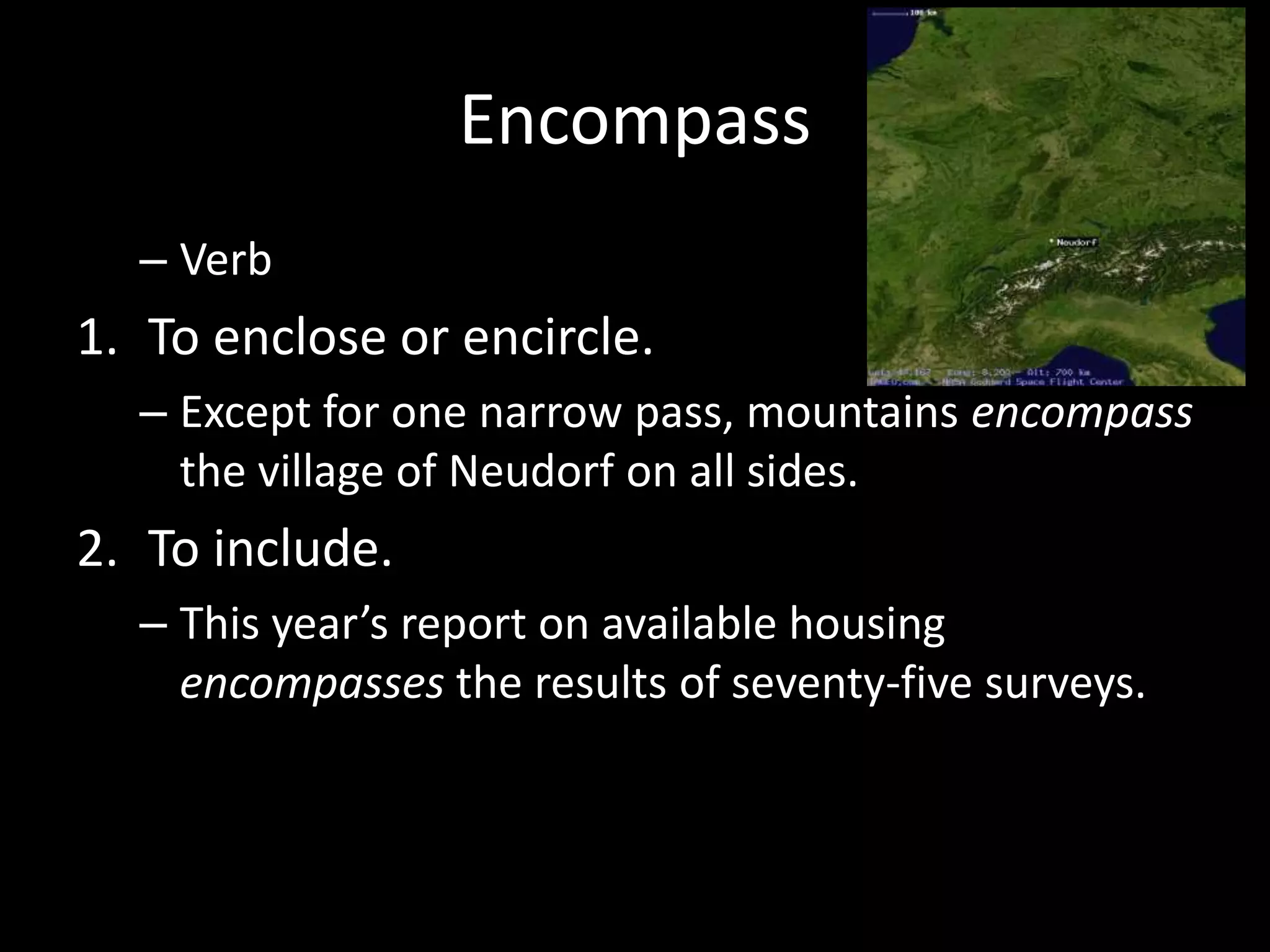
Encompass
  – Verb
1. To enclose or encircle.
  – Except for one narrow pass, mountains encompass
    the village of Neudorf on all sides.
2. To include.
  – This year’s report on available housing
    encompasses the results of seventy-five surveys.
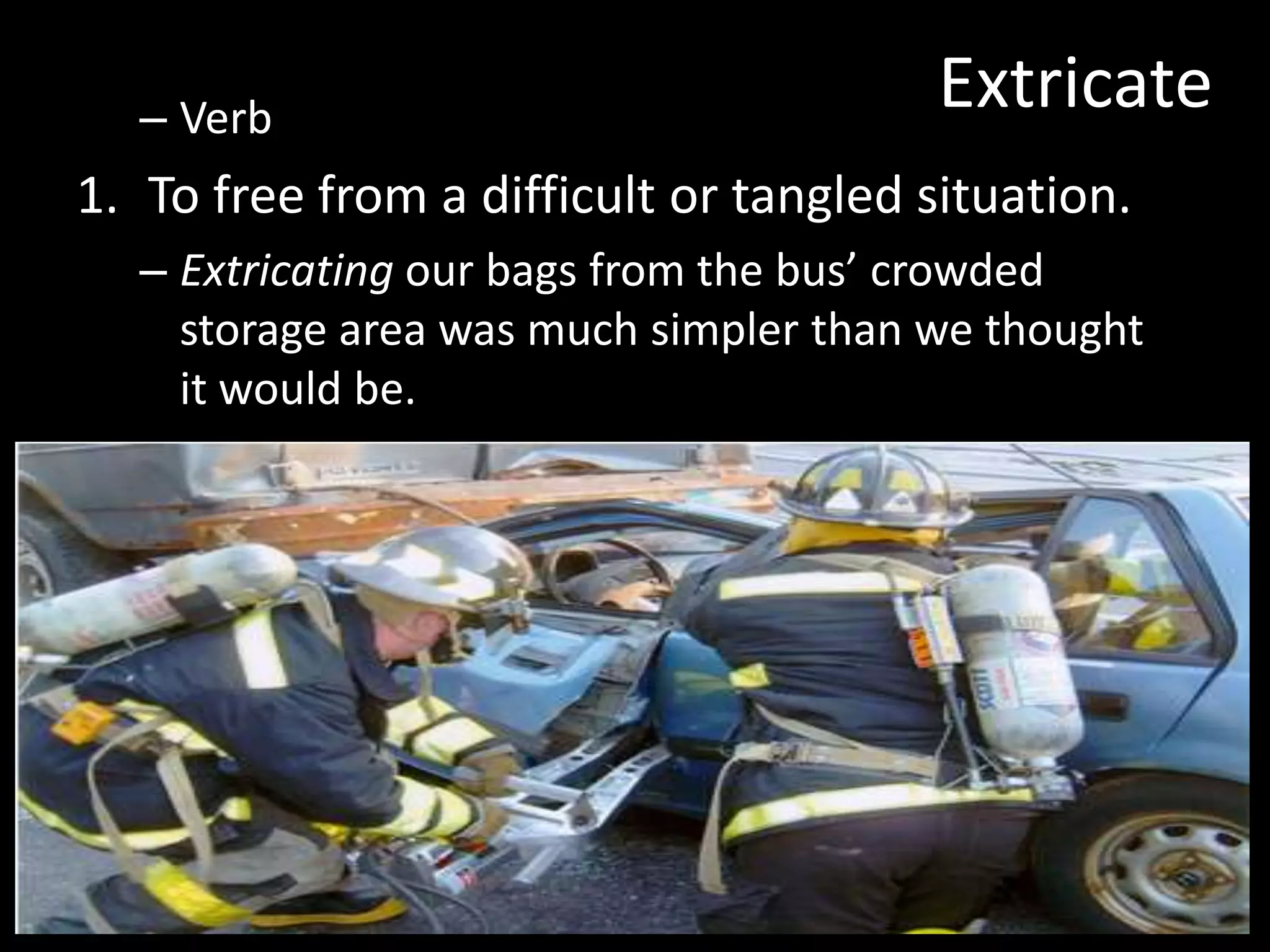
– Verb
                                       Extricate
1. To free from a difficult or tangled situation.
  – Extricating our bags from the bus’ crowded
    storage area was much simpler than we thought
    it would be.
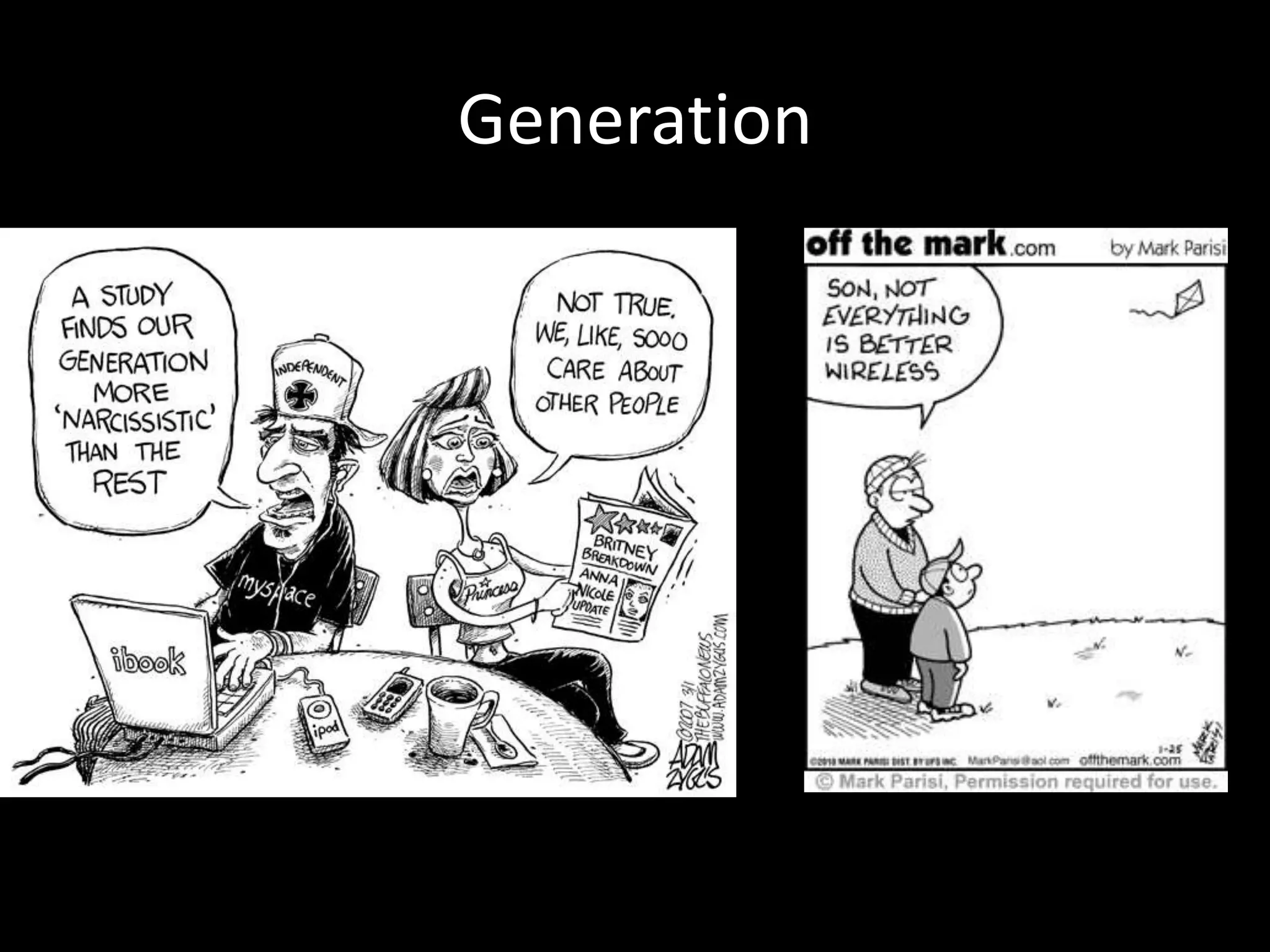
Generation
  – Noun
1. One step in the line of descent of a family.
  – Four generations were represented at Norma’s
    family reunion last summer.
2. All the people born and living about the
   same time.
  – My father’s generation lived through the Civil
    Rights Movement and the Vietnam War.
• Continued…
Generation
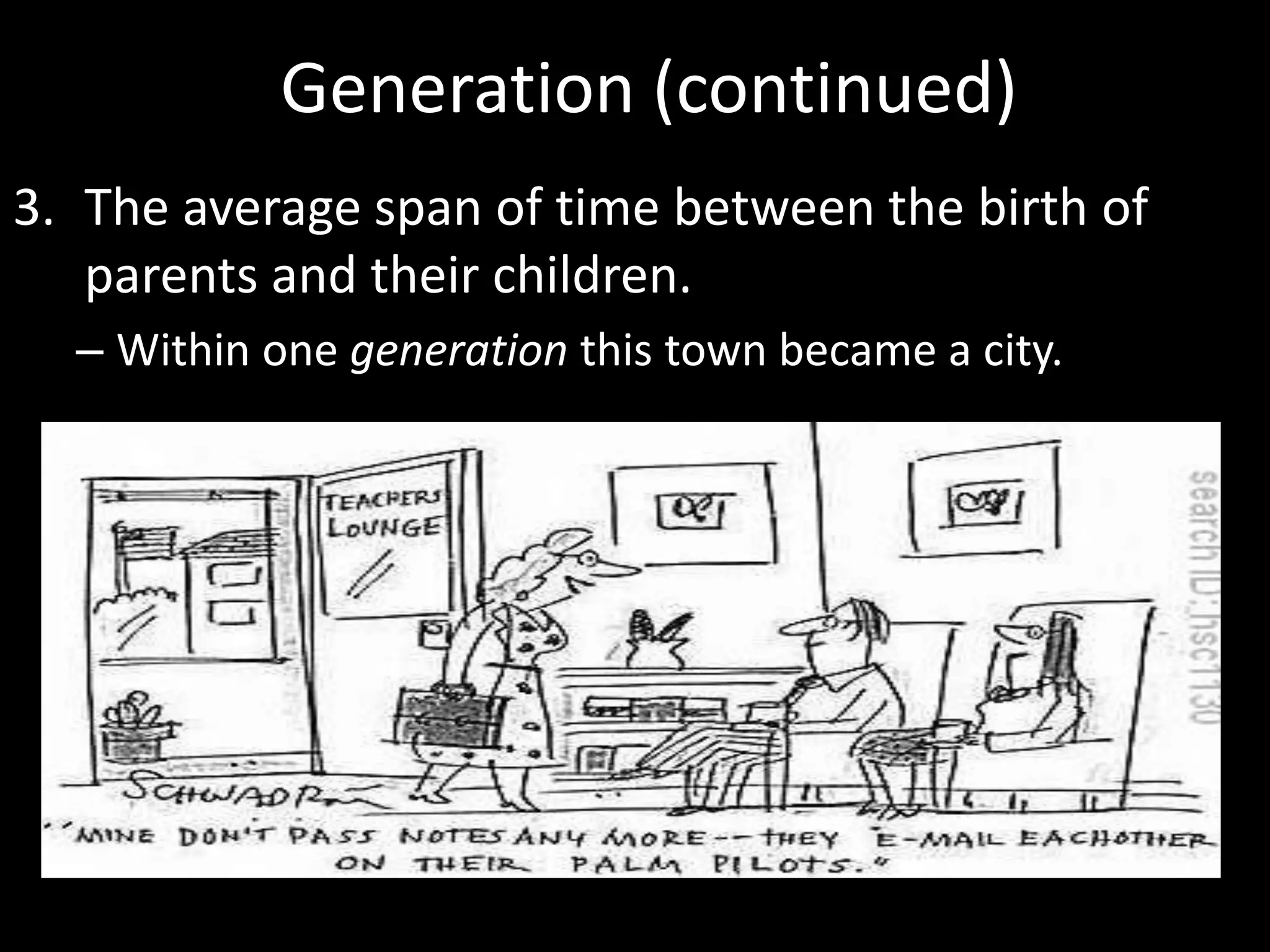
Generation (continued)
3. The average span of time between the birth of
   parents and their children.
  – Within one generation this town became a city.
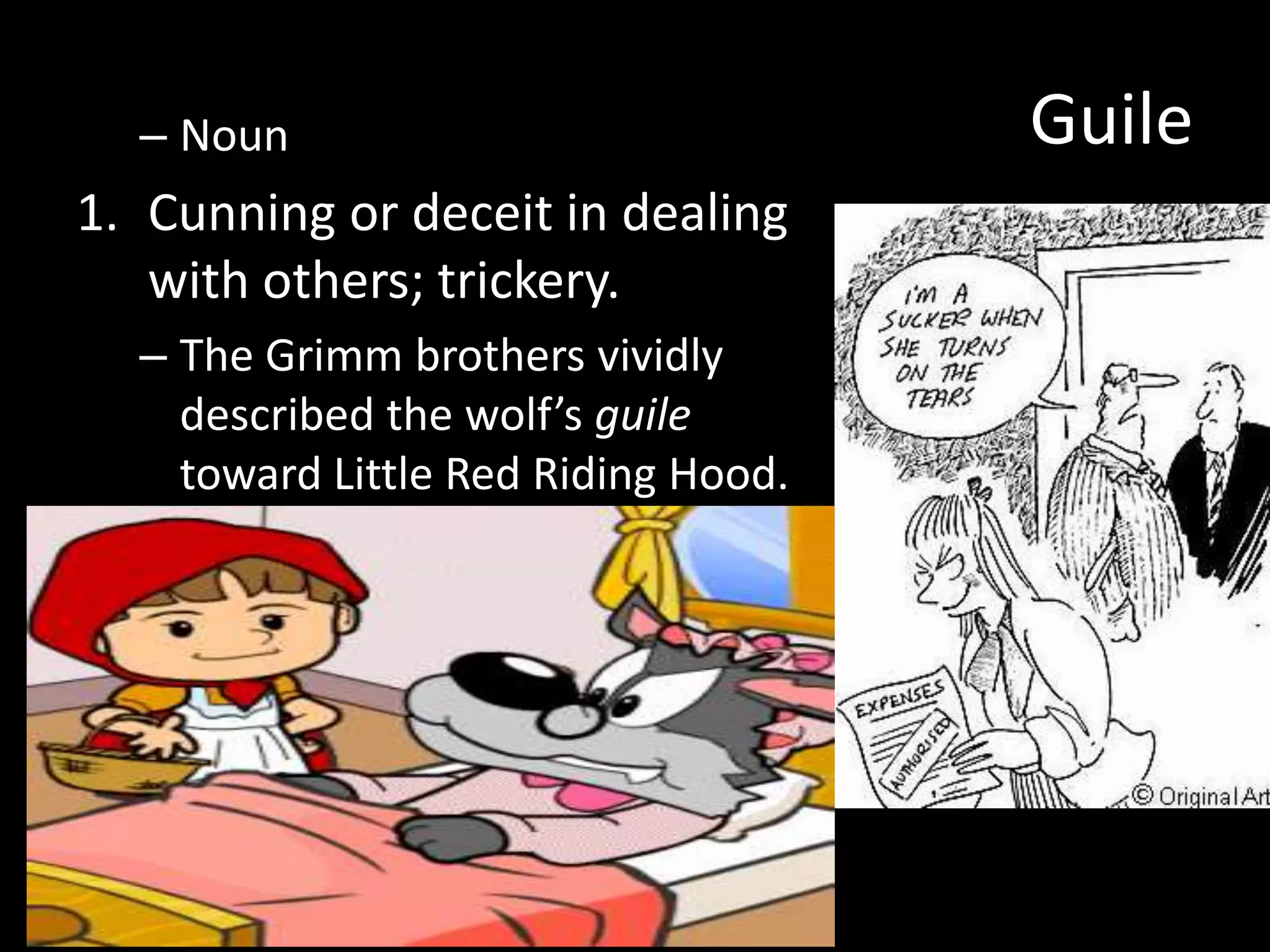
– Noun                             Guile
1. Cunning or deceit in dealing
   with others; trickery.
  – The Grimm brothers vividly
    described the wolf’s guile
    toward Little Red Riding Hood.
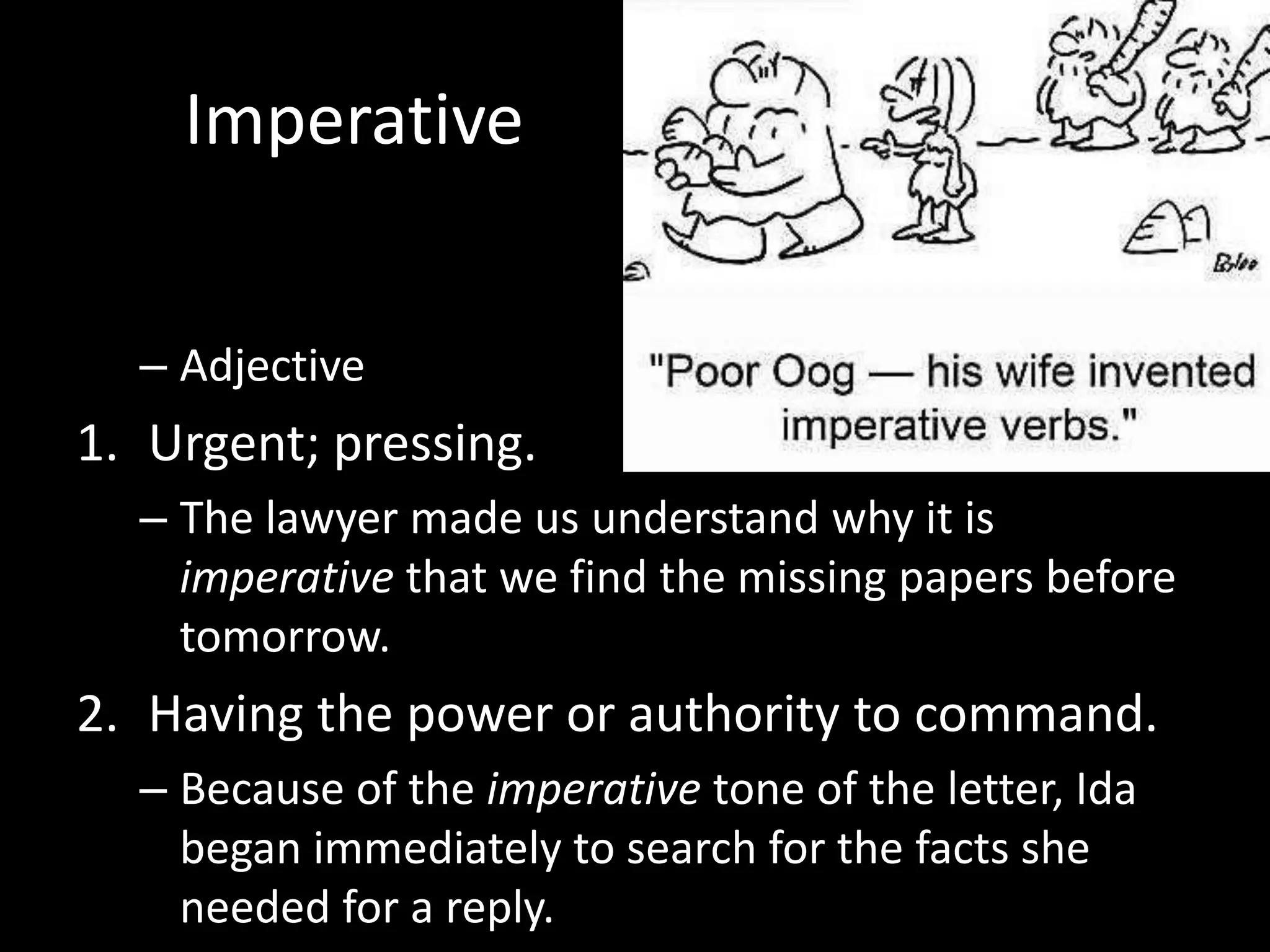
Imperative


  – Adjective
1. Urgent; pressing.
  – The lawyer made us understand why it is
    imperative that we find the missing papers before
    tomorrow.
2. Having the power or authority to command.
  – Because of the imperative tone of the letter, Ida
    began immediately to search for the facts she
    needed for a reply.
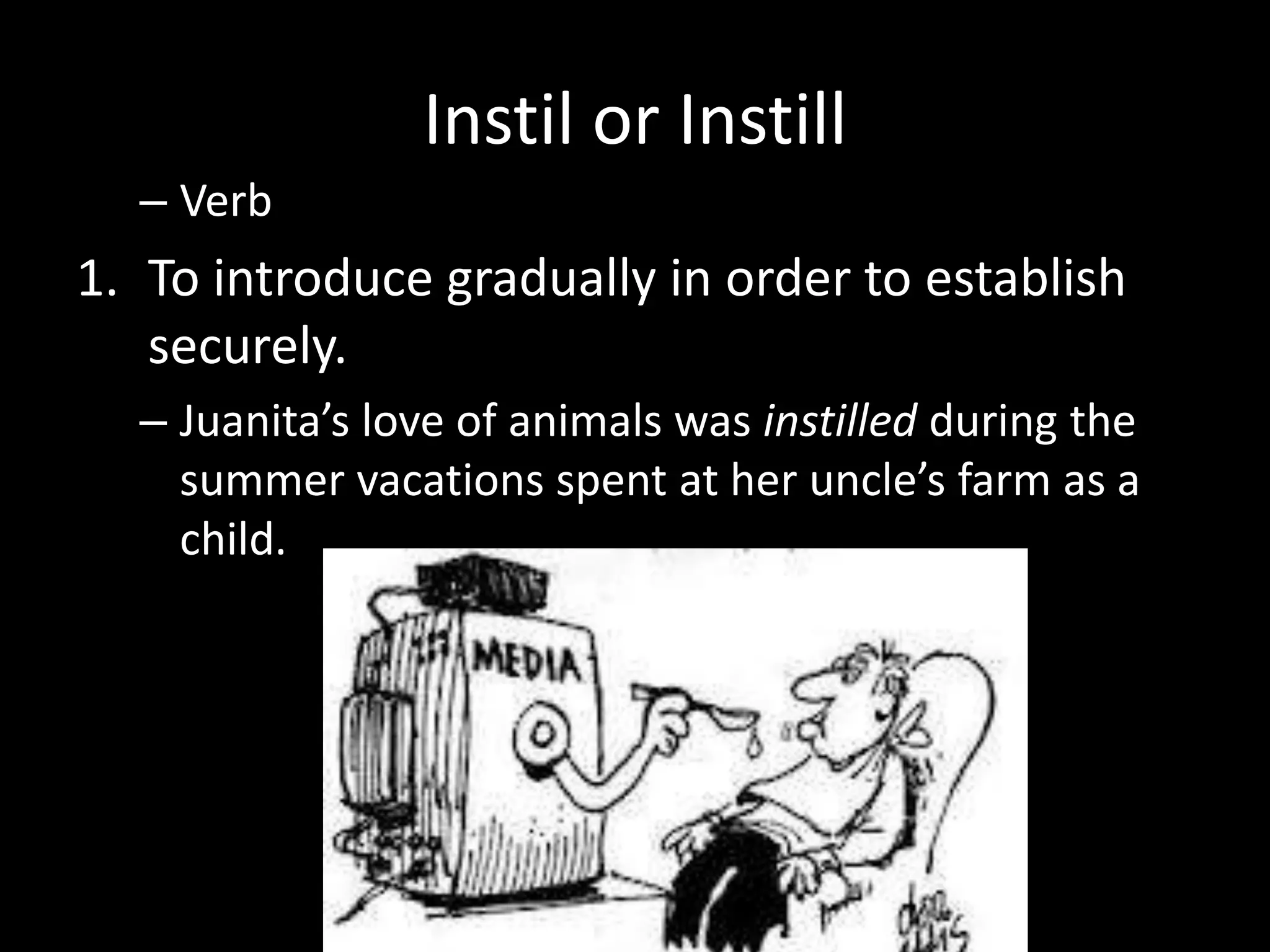
Instil or Instill
  – Verb
1. To introduce gradually in order to establish
   securely.
  – Juanita’s love of animals was instilled during the
    summer vacations spent at her uncle’s farm as a
    child.
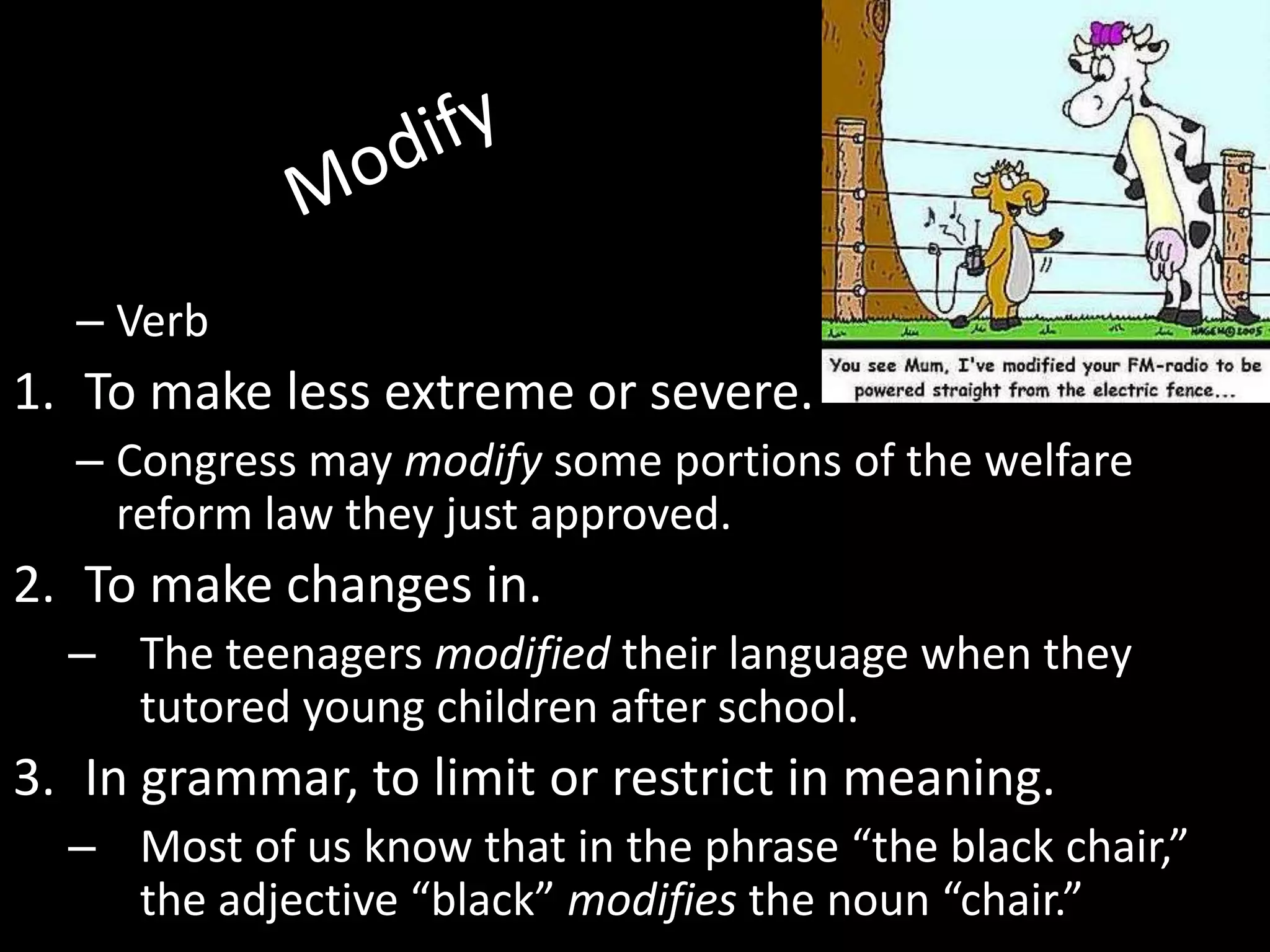
– Verb
1. To make less extreme or severe.
  – Congress may modify some portions of the welfare
    reform law they just approved.
2. To make changes in.
  – The teenagers modified their language when they
    tutored young children after school.
3. In grammar, to limit or restrict in meaning.
  – Most of us know that in the phrase “the black chair,”
    the adjective “black” modifies the noun “chair.”
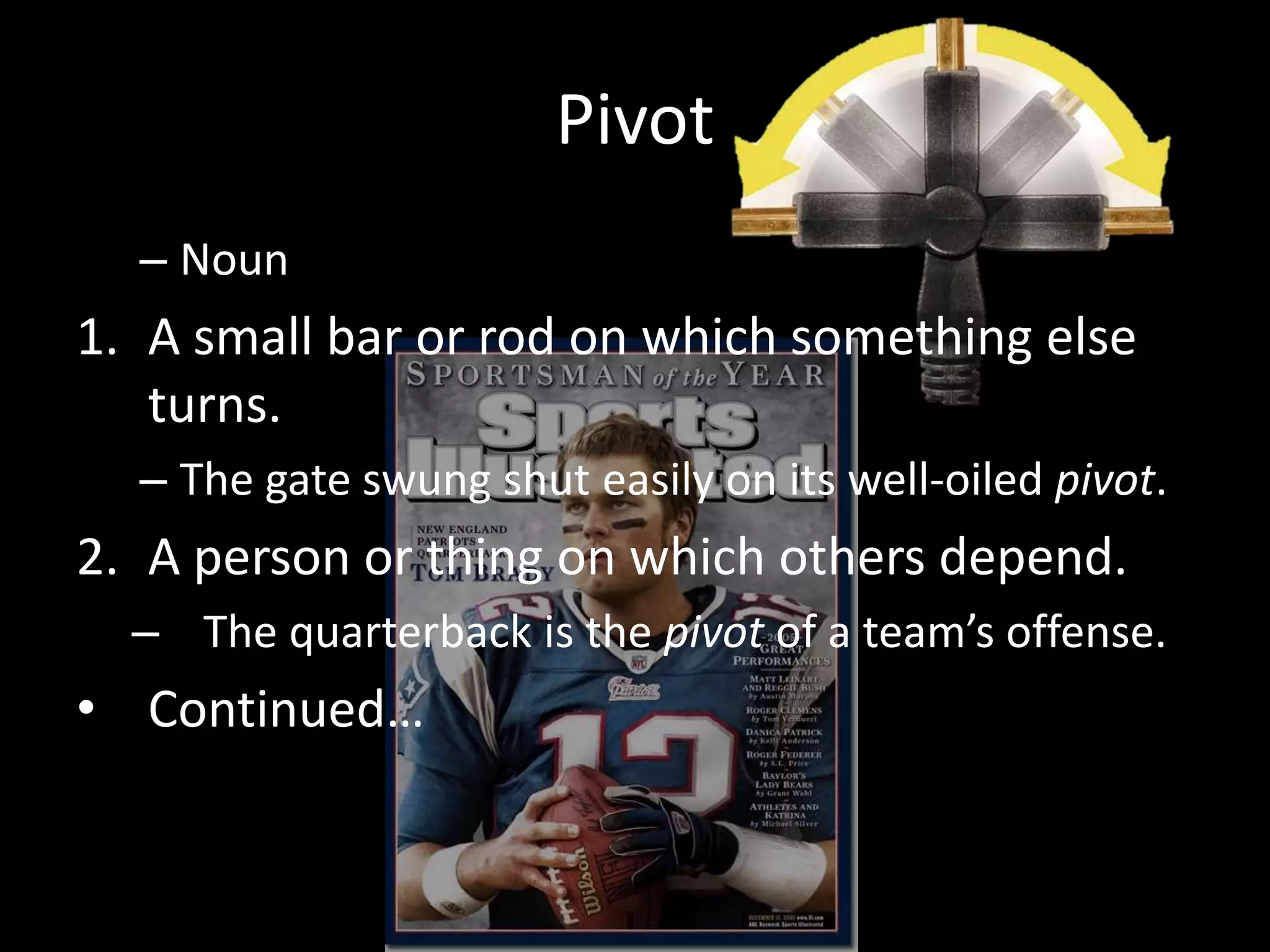
Pivot
  – Noun
1. A small bar or rod on which something else
   turns.
  – The gate swung shut easily on its well-oiled pivot.
2. A person or thing on which others depend.
  – The quarterback is the pivot of a team’s offense.
• Continued…
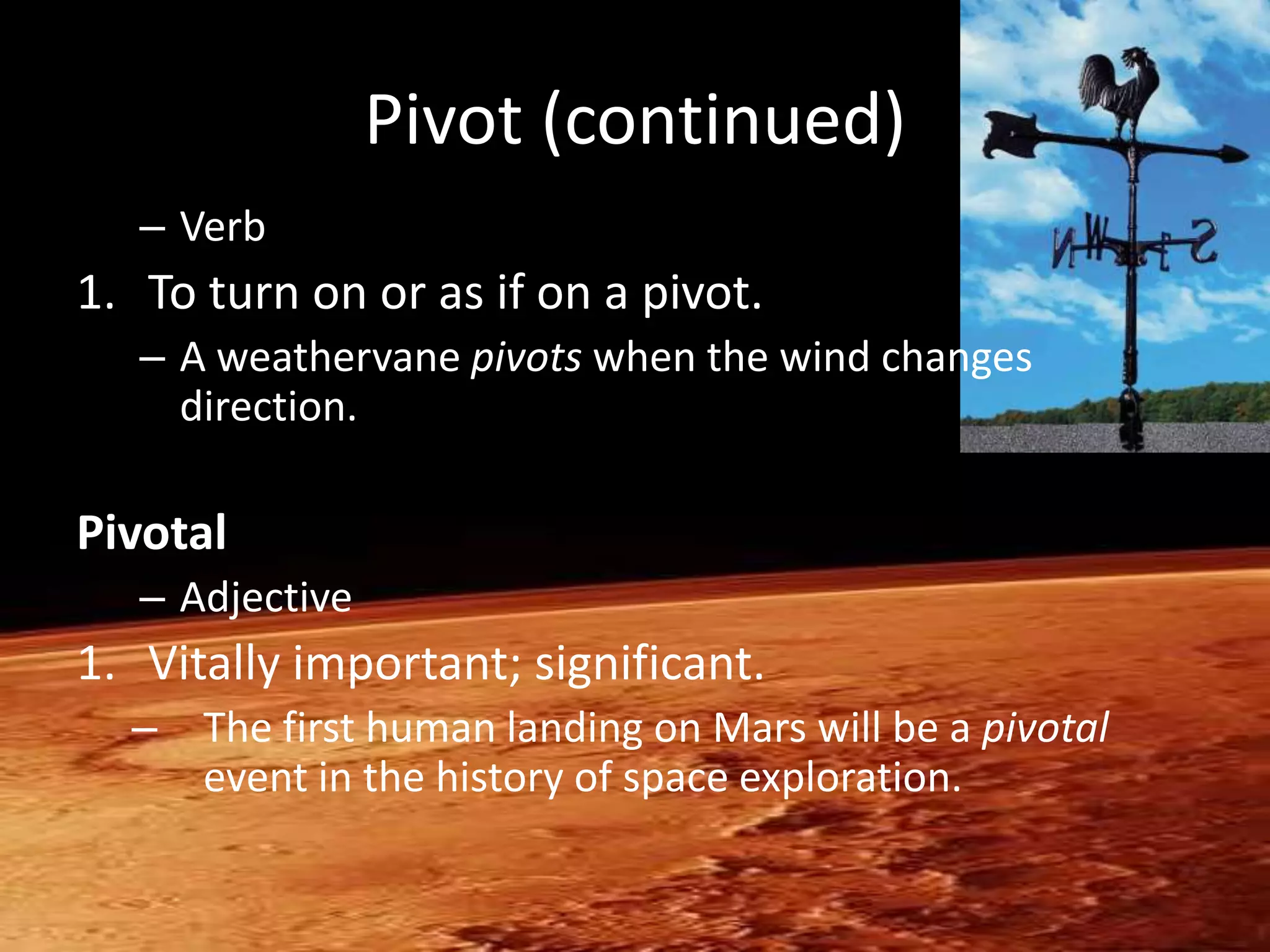
Pivot (continued)
   – Verb
1. To turn on or as if on a pivot.
   – A weathervane pivots when the wind changes
     direction.

Pivotal
   – Adjective
1. Vitally important; significant.
  – The first human landing on Mars will be a pivotal
    event in the history of space exploration.
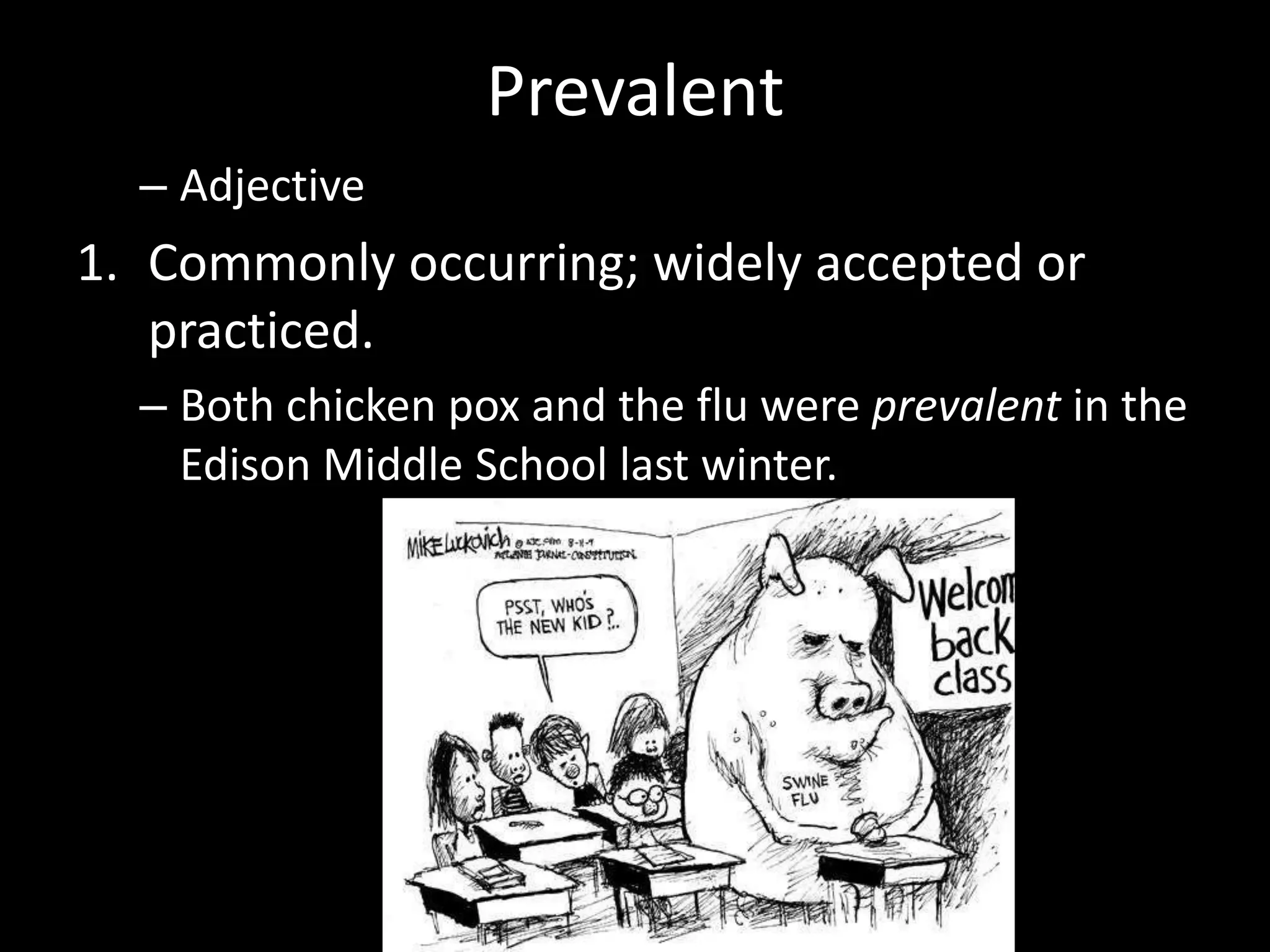
Prevalent
  – Adjective
1. Commonly occurring; widely accepted or
   practiced.
  – Both chicken pox and the flu were prevalent in the
    Edison Middle School last winter.
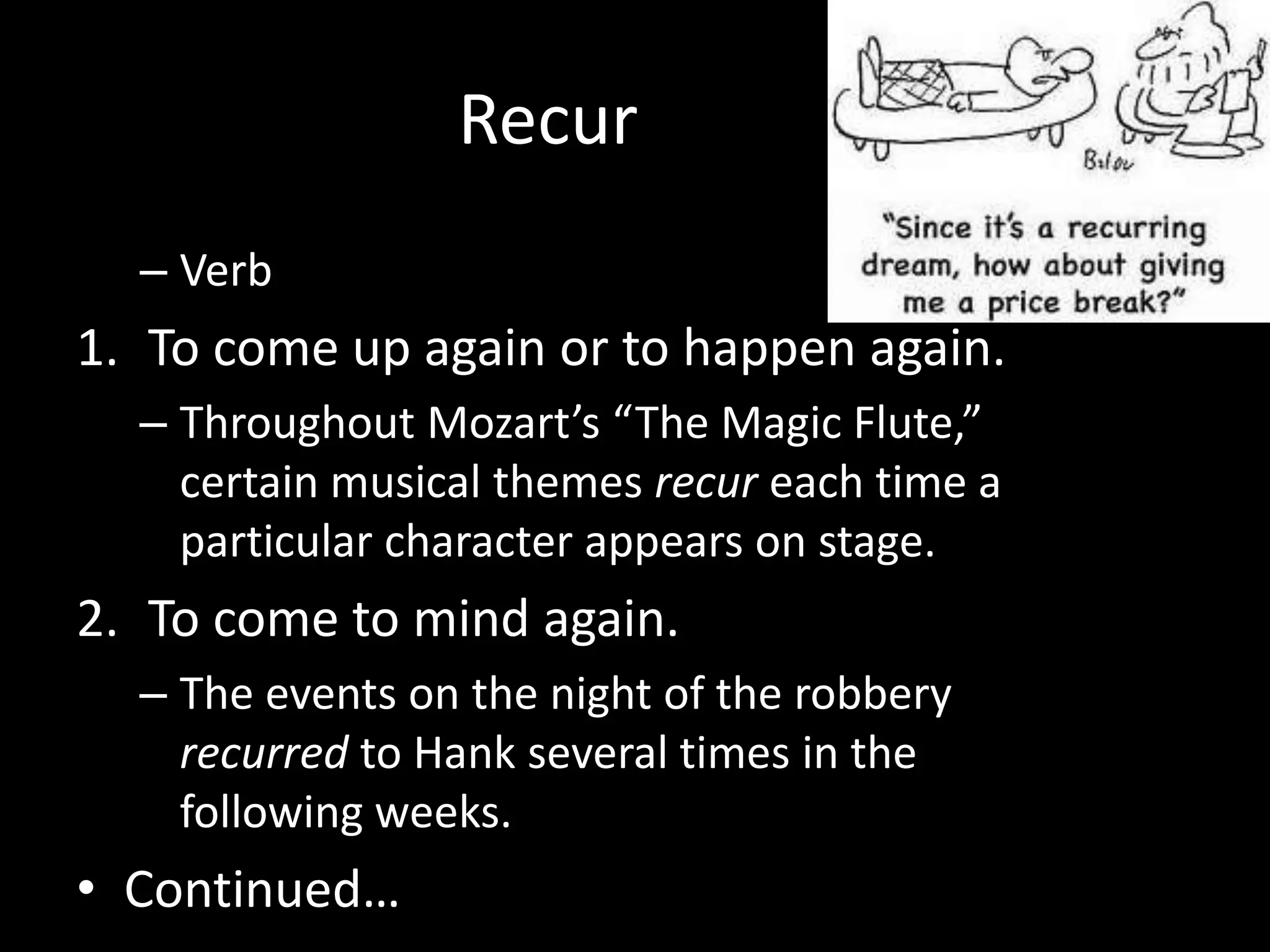
Recur
  – Verb
1. To come up again or to happen again.
  – Throughout Mozart’s “The Magic Flute,”
    certain musical themes recur each time a
    particular character appears on stage.
2. To come to mind again.
  – The events on the night of the robbery
    recurred to Hank several times in the
    following weeks.
• Continued…
Recur (continued)
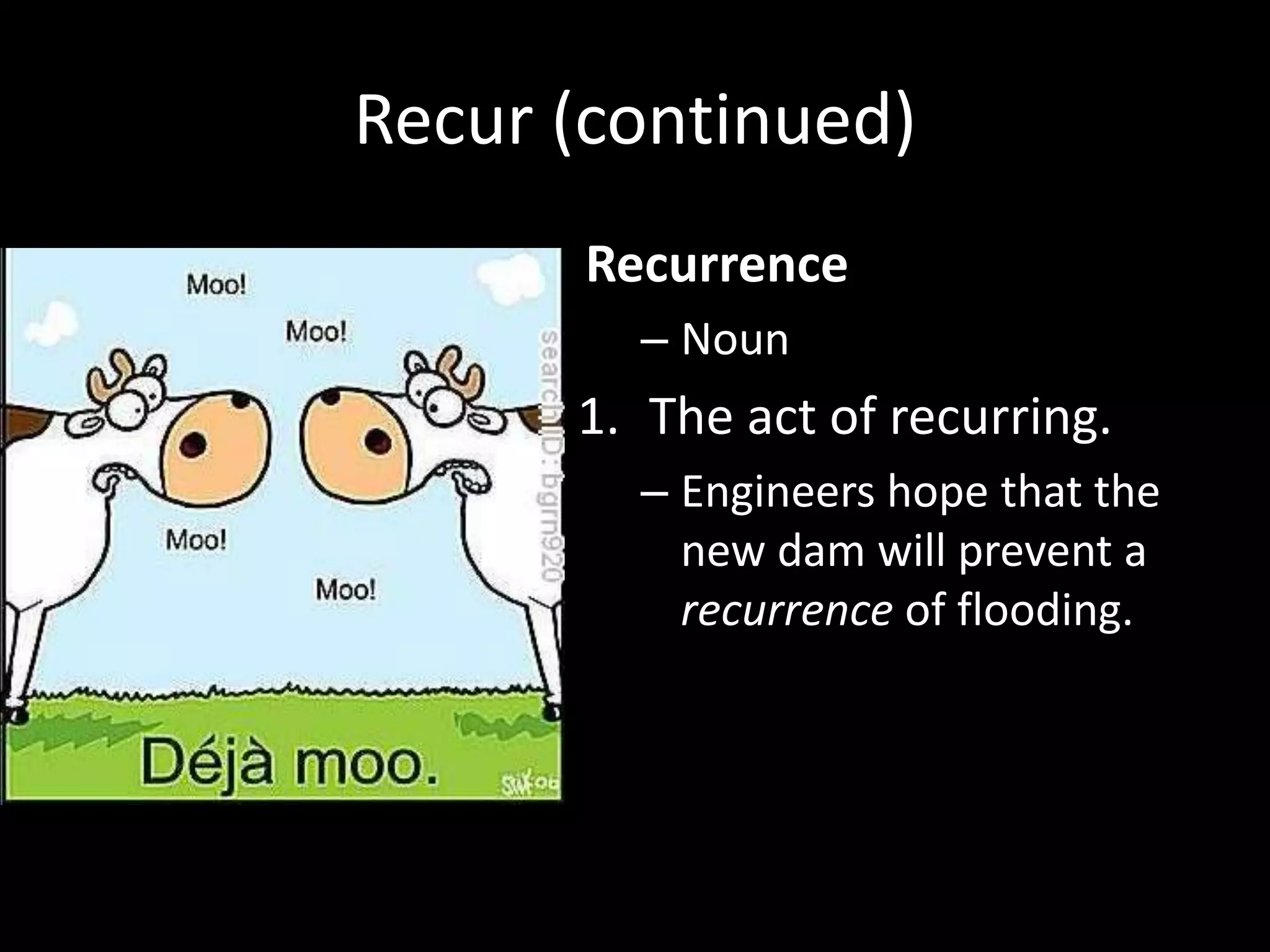
      Recurrence
        – Noun
      1. The act of recurring.
        – Engineers hope that the
          new dam will prevent a
          recurrence of flooding.
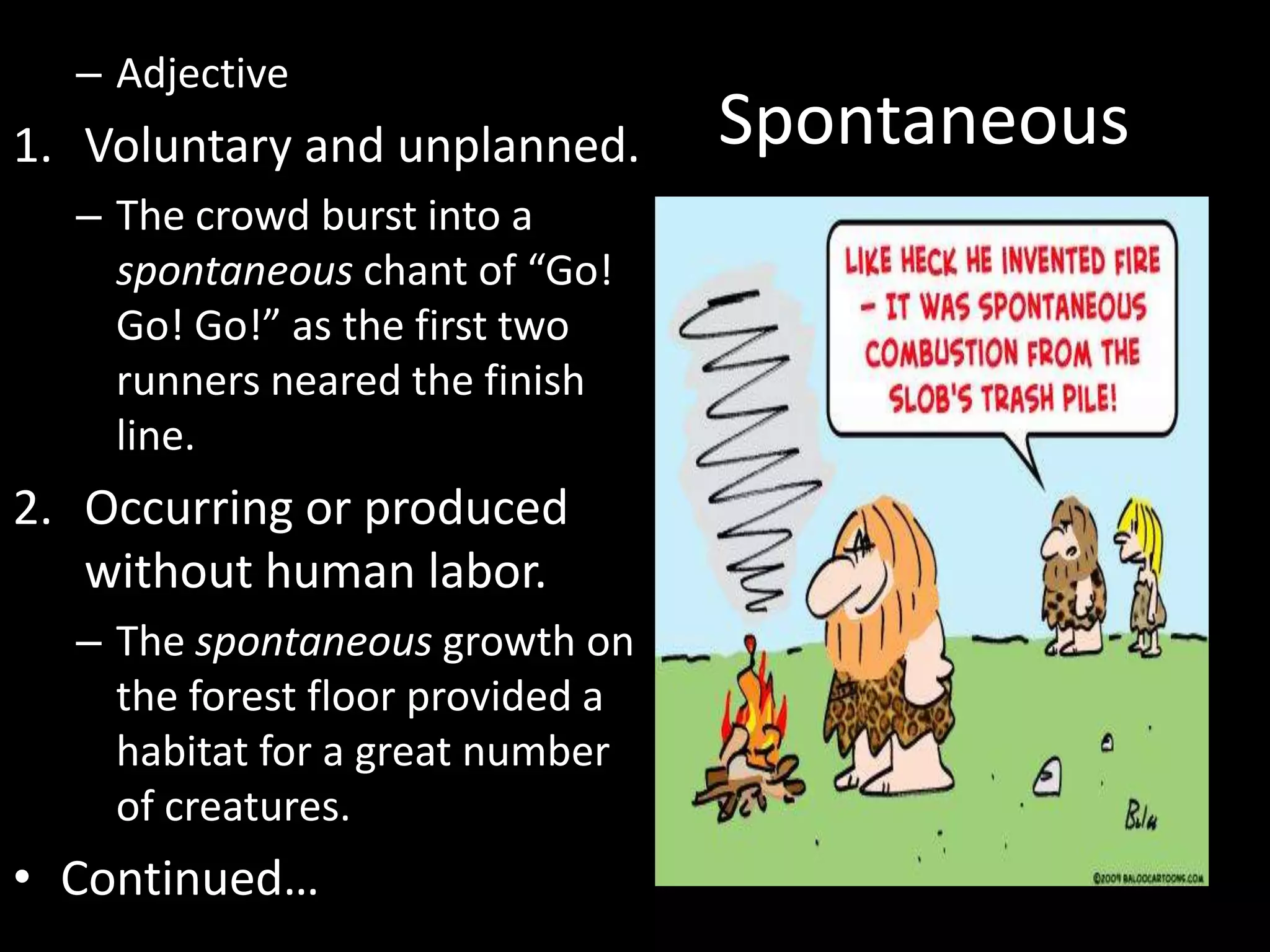
– Adjective
1. Voluntary and unplanned.       Spontaneous
  – The crowd burst into a
    spontaneous chant of “Go!
    Go! Go!” as the first two
    runners neared the finish
    line.
2. Occurring or produced
   without human labor.
  – The spontaneous growth on
    the forest floor provided a
    habitat for a great number
    of creatures.
• Continued…
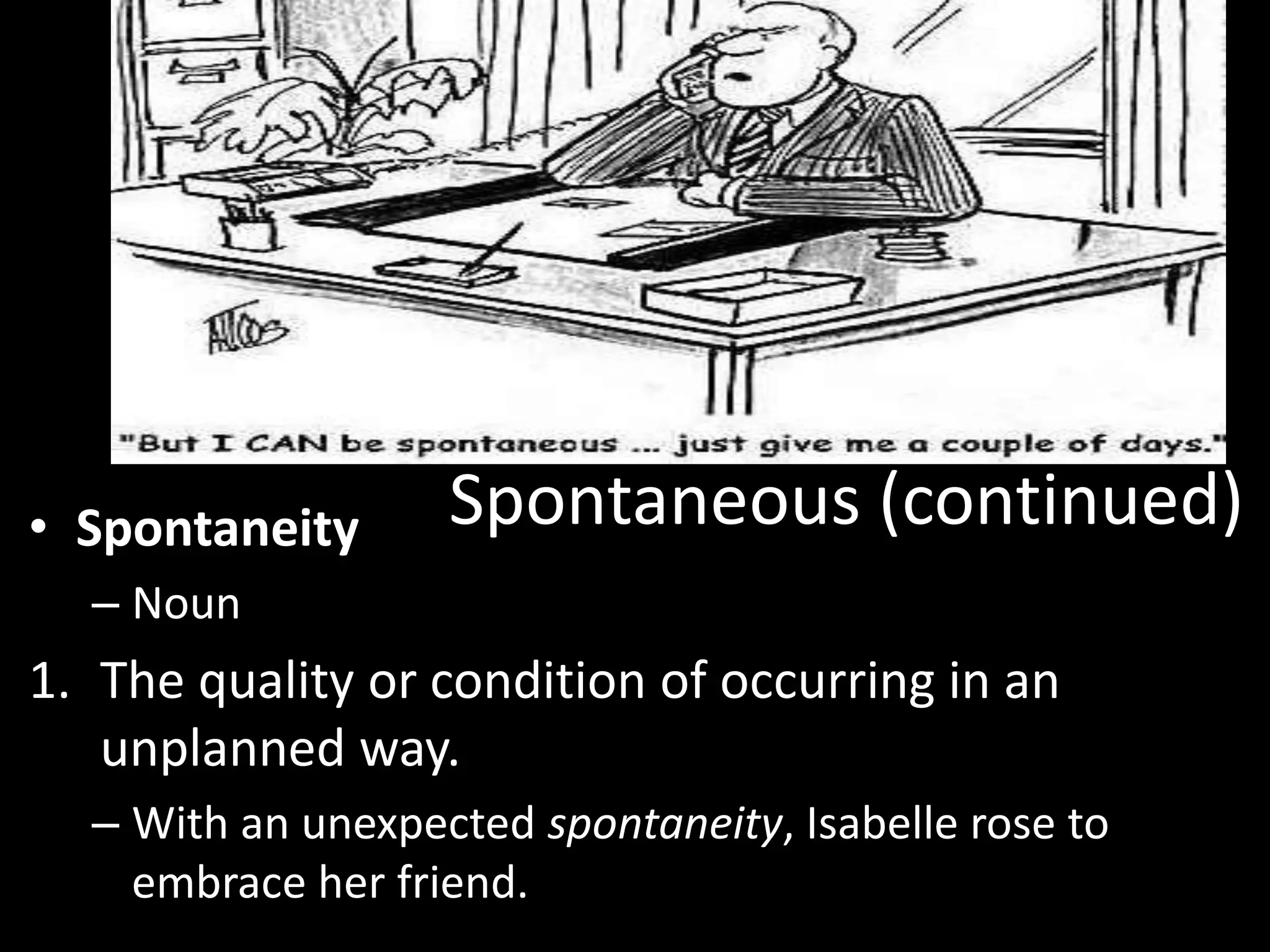
• Spontaneity      Spontaneous (continued)
  – Noun
1. The quality or condition of occurring in an
   unplanned way.
  – With an unexpected spontaneity, Isabelle rose to
    embrace her friend.

Wordly Wise Lesson 3

  • 1.
  • 2.
    Anonymous –Adjective 1. Of an unknown source or unrevealed name. – It is frustrating to be unable to thank the person who gave this anonymous donation to our library fund.
  • 3.
    Anthology – Noun 1. A collection of various writings, such as songs, stories, or poems. – This anthology of science-fiction stories includes some by Ray Bradbury, Julian May, and Ursula Le Guin.
  • 4.
    – Noun 1. Aconclusion based on guesswork or insufficient evidence. – Dad’s conjecture that the derelict building would be a problem proved to be correct when it caught on fire. – Verb 2. To form an opinion while lacking sufficient evidence. – The fire chief conjectured that oily rags may have been the cause of the fire.
  • 5.
    – Noun Disposition 1. A person’s usual mood; temperament. – People enjoy Alice’s company because of her sunny disposition. 2. A regular tendency or inclination. – Roberto’s disposition to argue about everything can sometimes get him into trouble.
  • 6.
    Encompass –Verb 1. To enclose or encircle. – Except for one narrow pass, mountains encompass the village of Neudorf on all sides. 2. To include. – This year’s report on available housing encompasses the results of seventy-five surveys.
  • 7.
    – Verb Extricate 1. To free from a difficult or tangled situation. – Extricating our bags from the bus’ crowded storage area was much simpler than we thought it would be.
  • 8.
    Generation –Noun 1. One step in the line of descent of a family. – Four generations were represented at Norma’s family reunion last summer. 2. All the people born and living about the same time. – My father’s generation lived through the Civil Rights Movement and the Vietnam War. • Continued…
  • 9.
  • 10.
    Generation (continued) 3. Theaverage span of time between the birth of parents and their children. – Within one generation this town became a city.
  • 11.
    – Noun Guile 1. Cunning or deceit in dealing with others; trickery. – The Grimm brothers vividly described the wolf’s guile toward Little Red Riding Hood.
  • 12.
    Imperative –Adjective 1. Urgent; pressing. – The lawyer made us understand why it is imperative that we find the missing papers before tomorrow. 2. Having the power or authority to command. – Because of the imperative tone of the letter, Ida began immediately to search for the facts she needed for a reply.
  • 13.
    Instil or Instill – Verb 1. To introduce gradually in order to establish securely. – Juanita’s love of animals was instilled during the summer vacations spent at her uncle’s farm as a child.
  • 14.
    – Verb 1. Tomake less extreme or severe. – Congress may modify some portions of the welfare reform law they just approved. 2. To make changes in. – The teenagers modified their language when they tutored young children after school. 3. In grammar, to limit or restrict in meaning. – Most of us know that in the phrase “the black chair,” the adjective “black” modifies the noun “chair.”
  • 15.
    Pivot –Noun 1. A small bar or rod on which something else turns. – The gate swung shut easily on its well-oiled pivot. 2. A person or thing on which others depend. – The quarterback is the pivot of a team’s offense. • Continued…
  • 16.
    Pivot (continued) – Verb 1. To turn on or as if on a pivot. – A weathervane pivots when the wind changes direction. Pivotal – Adjective 1. Vitally important; significant. – The first human landing on Mars will be a pivotal event in the history of space exploration.
  • 17.
    Prevalent –Adjective 1. Commonly occurring; widely accepted or practiced. – Both chicken pox and the flu were prevalent in the Edison Middle School last winter.
  • 18.
    Recur –Verb 1. To come up again or to happen again. – Throughout Mozart’s “The Magic Flute,” certain musical themes recur each time a particular character appears on stage. 2. To come to mind again. – The events on the night of the robbery recurred to Hank several times in the following weeks. • Continued…
  • 19.
    Recur (continued) Recurrence – Noun 1. The act of recurring. – Engineers hope that the new dam will prevent a recurrence of flooding.
  • 20.
    – Adjective 1. Voluntaryand unplanned. Spontaneous – The crowd burst into a spontaneous chant of “Go! Go! Go!” as the first two runners neared the finish line. 2. Occurring or produced without human labor. – The spontaneous growth on the forest floor provided a habitat for a great number of creatures. • Continued…
  • 21.
    • Spontaneity Spontaneous (continued) – Noun 1. The quality or condition of occurring in an unplanned way. – With an unexpected spontaneity, Isabelle rose to embrace her friend.