THINGS STRINGS
                   NOT


   by @cyberandy
WORDLIFT 2.0
                           beta preview


    in partnership with:
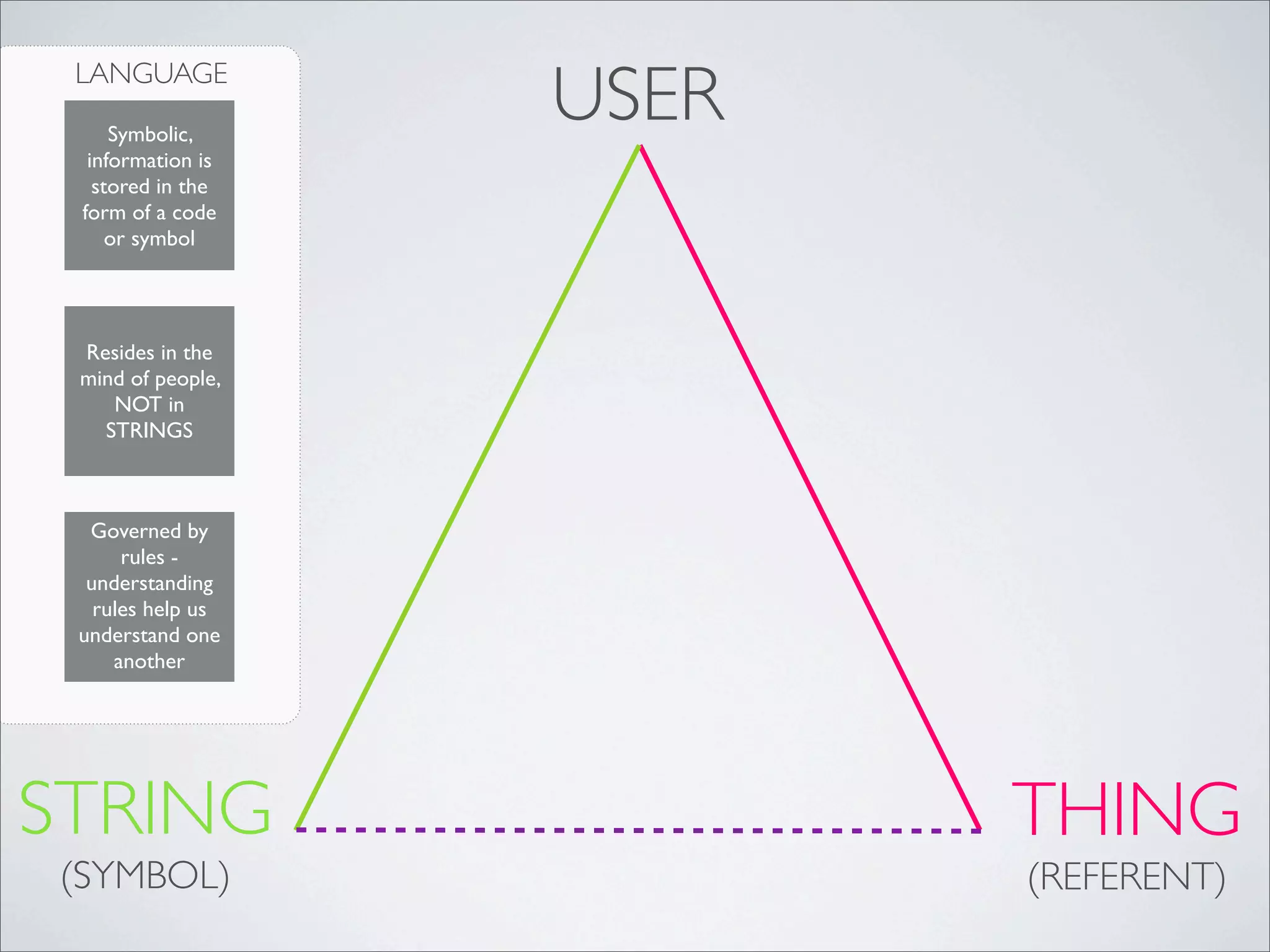
LANGUAGE
     Symbolic,
                   USER
  information is
   stored in the
 form of a code
     or symbol


 Resides in the
 mind of people,
    NOT in
   STRINGS


  Governed by
      rules -
  understanding
   rules help us
 understand one
     another


STRING                    THING
(SYMBOL)                  (REFERENT)
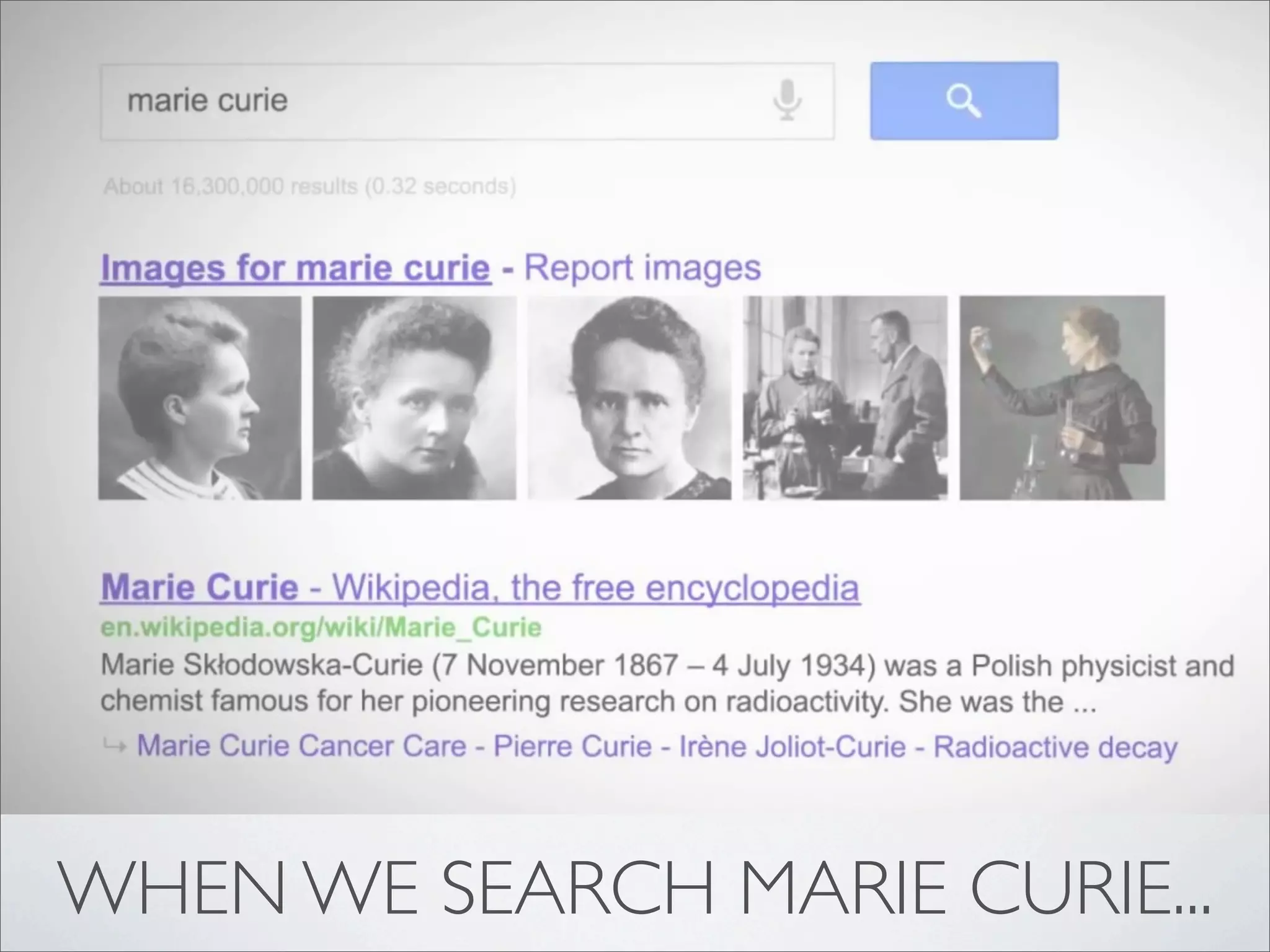
WHEN WE SEARCH MARIE CURIE...
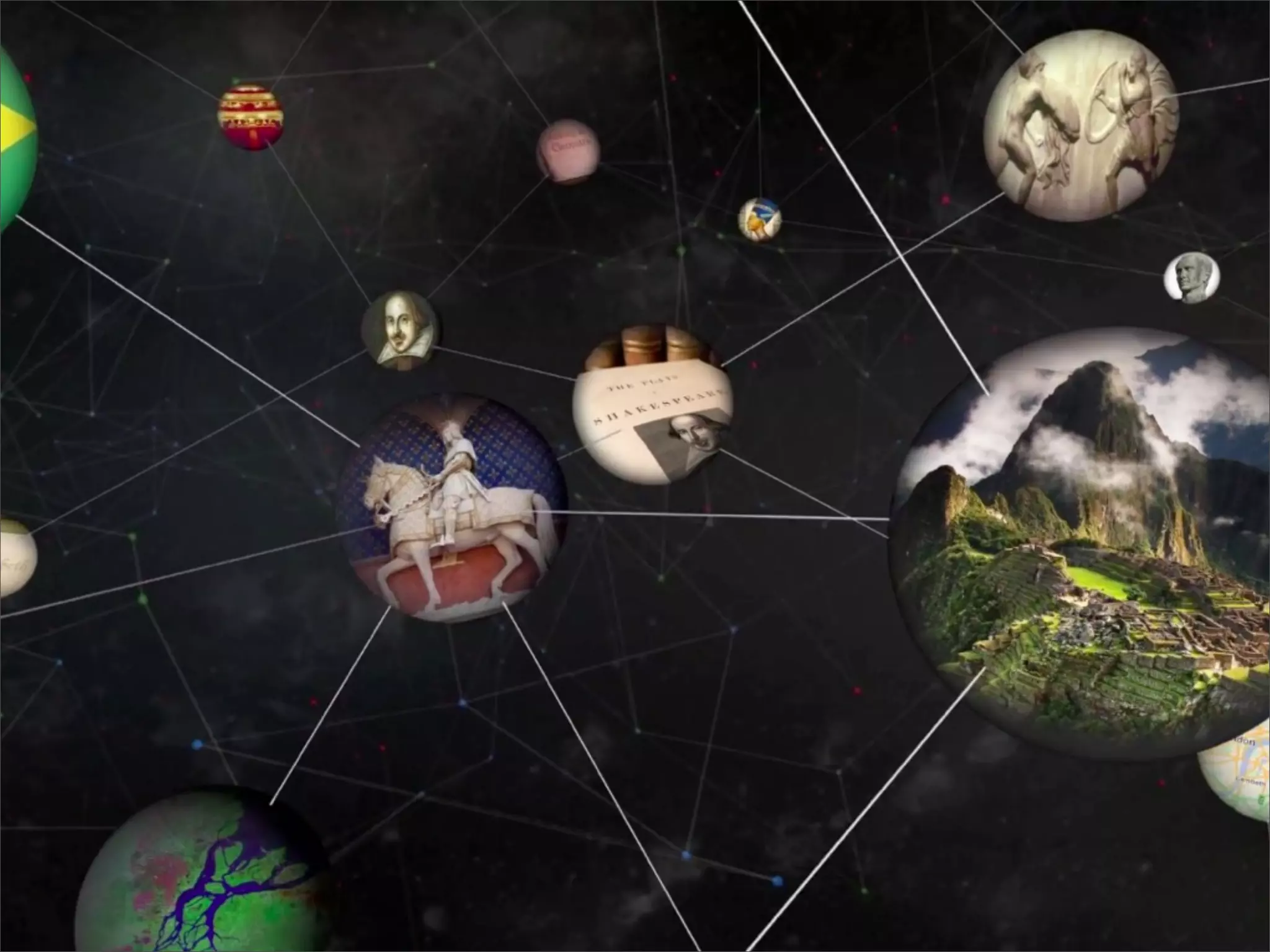
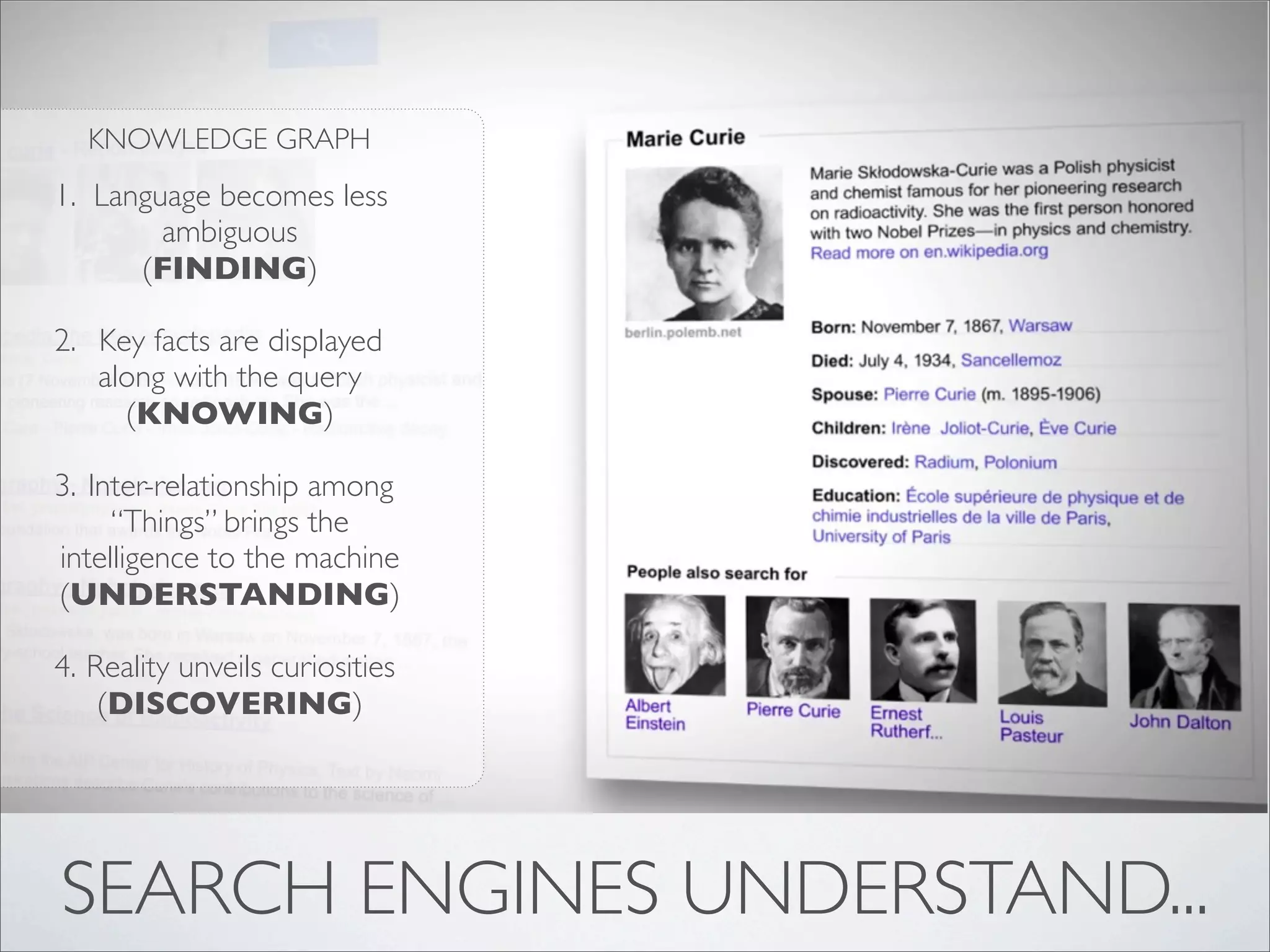
KNOWLEDGE GRAPH
1. Language becomes less
        ambiguous
      (FINDING)

2. Key facts are displayed
   along with the query
     (KNOWING)

3. Inter-relationship among
     “Things” brings the
intelligence to the machine
(UNDERSTANDING)

4. Reality unveils curiosities
    (DISCOVERING)


SEARCH ENGINES UNDERSTAND...
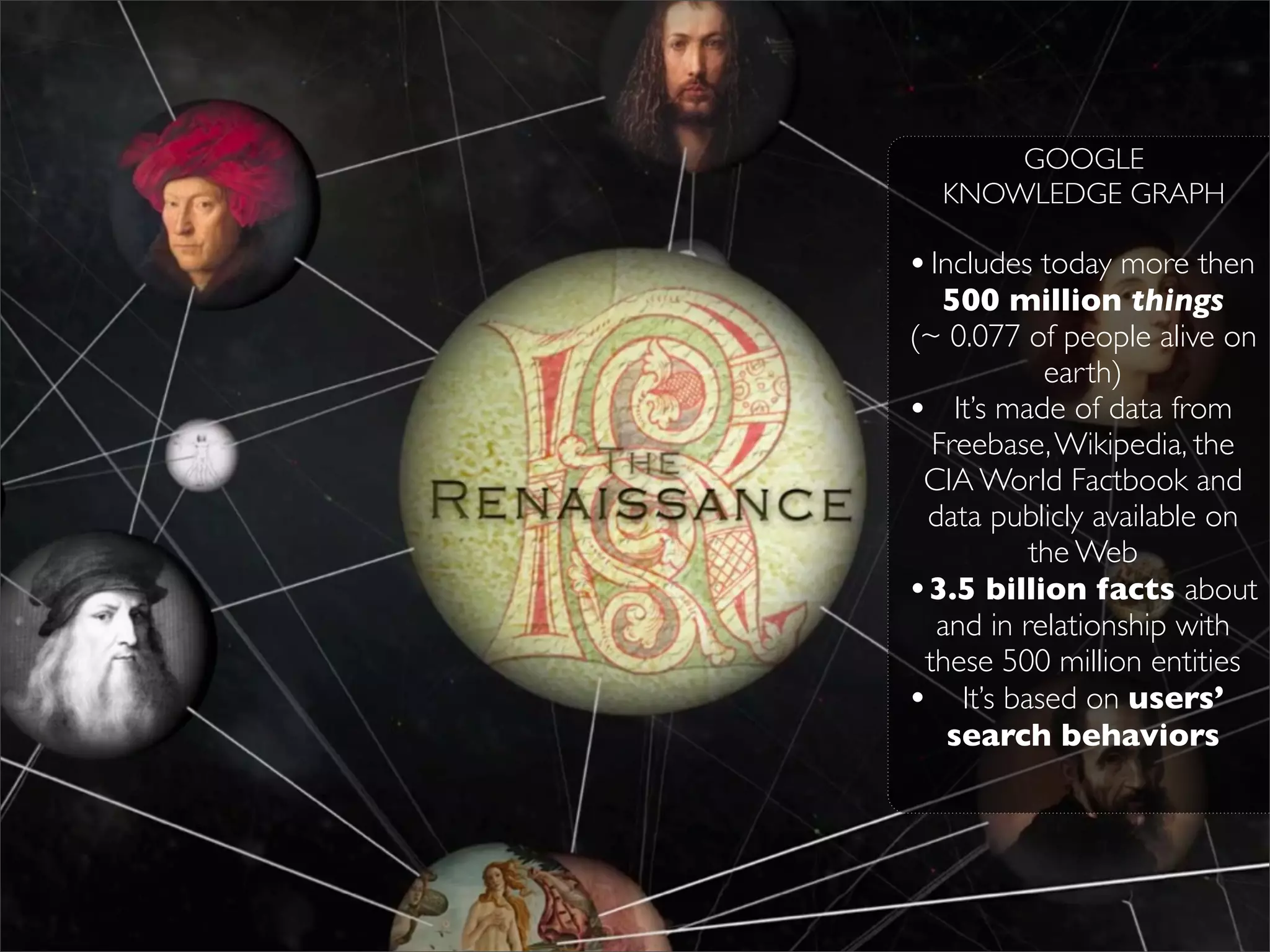
GOOGLE
  KNOWLEDGE GRAPH

• Includes today more then
   500 million things
(~ 0.077 of people alive on
           earth)
• It’s made of data from
  Freebase, Wikipedia, the
 CIA World Factbook and
 data publicly available on
          the Web
•3.5 billion facts about
  and in relationship with
 these 500 million entities
• It’s based on users’
   search behaviors
WHAT ABOUT
WORDLIFT 2.0
     ?
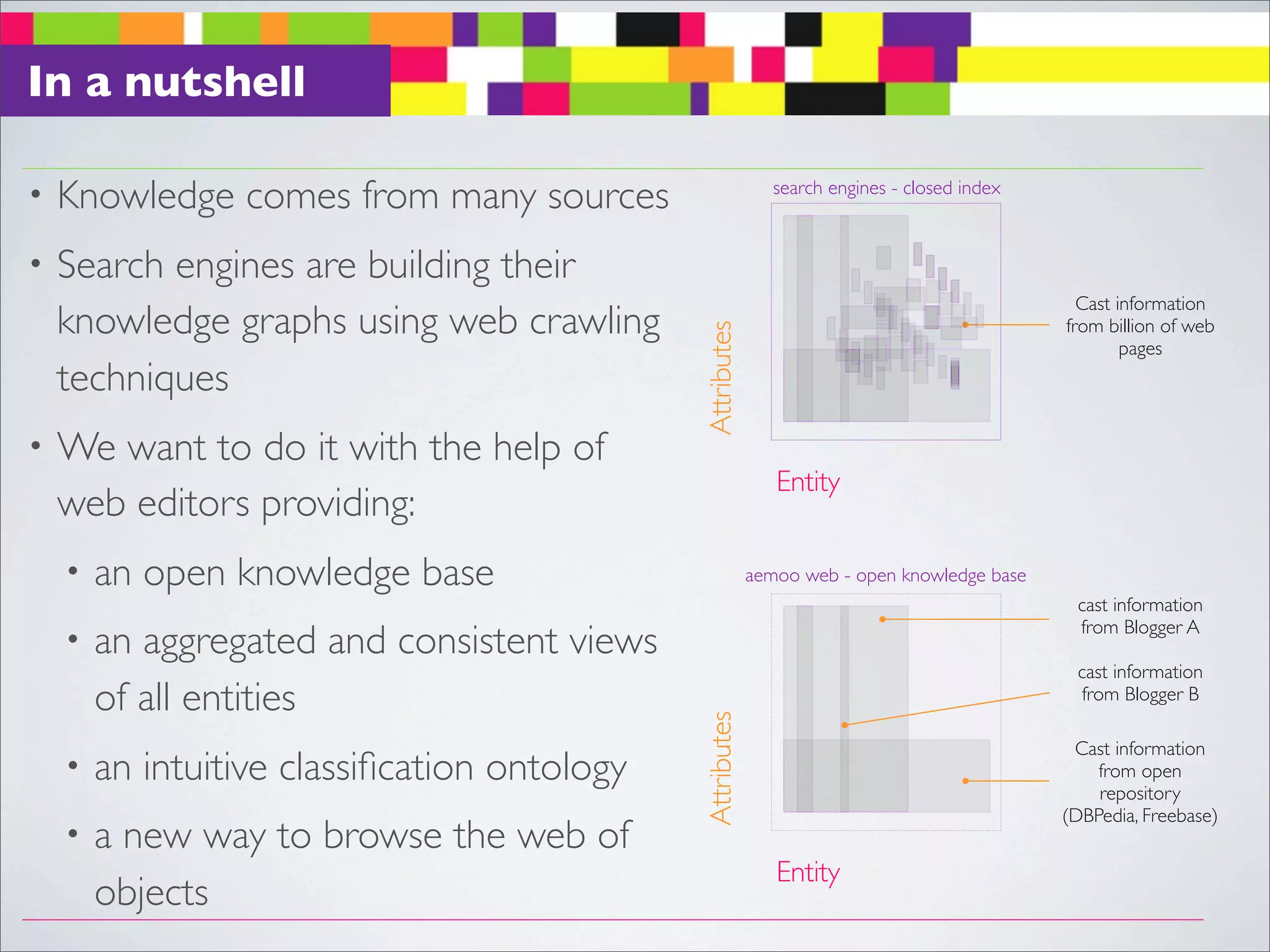
In a nutshell

•   Knowledge comes from many sources                         search engines - closed index


•   Search engines are building their
                                                                                                Cast information
    knowledge graphs using web crawling                                                       from billion of web


                                              Attributes
                                                                                                      pages
    techniques
•   We want to do it with the help of
                                                              Entity
    web editors providing:
    •   an open knowledge base                             aemoo web - open knowledge base
                                                                                               cast information
                                                                                               from Blogger A
    •   an aggregated and consistent views
                                                                                               cast information
        of all entities                       Attributes
                                                                                               from Blogger B

                                                                                               Cast information
    •   an intuitive classification ontology                                                       from open
                                                                                                  repository
                                                                                              (DBPedia, Freebase)
    •   a new way to browse the web of
                                                              Entity
        objects
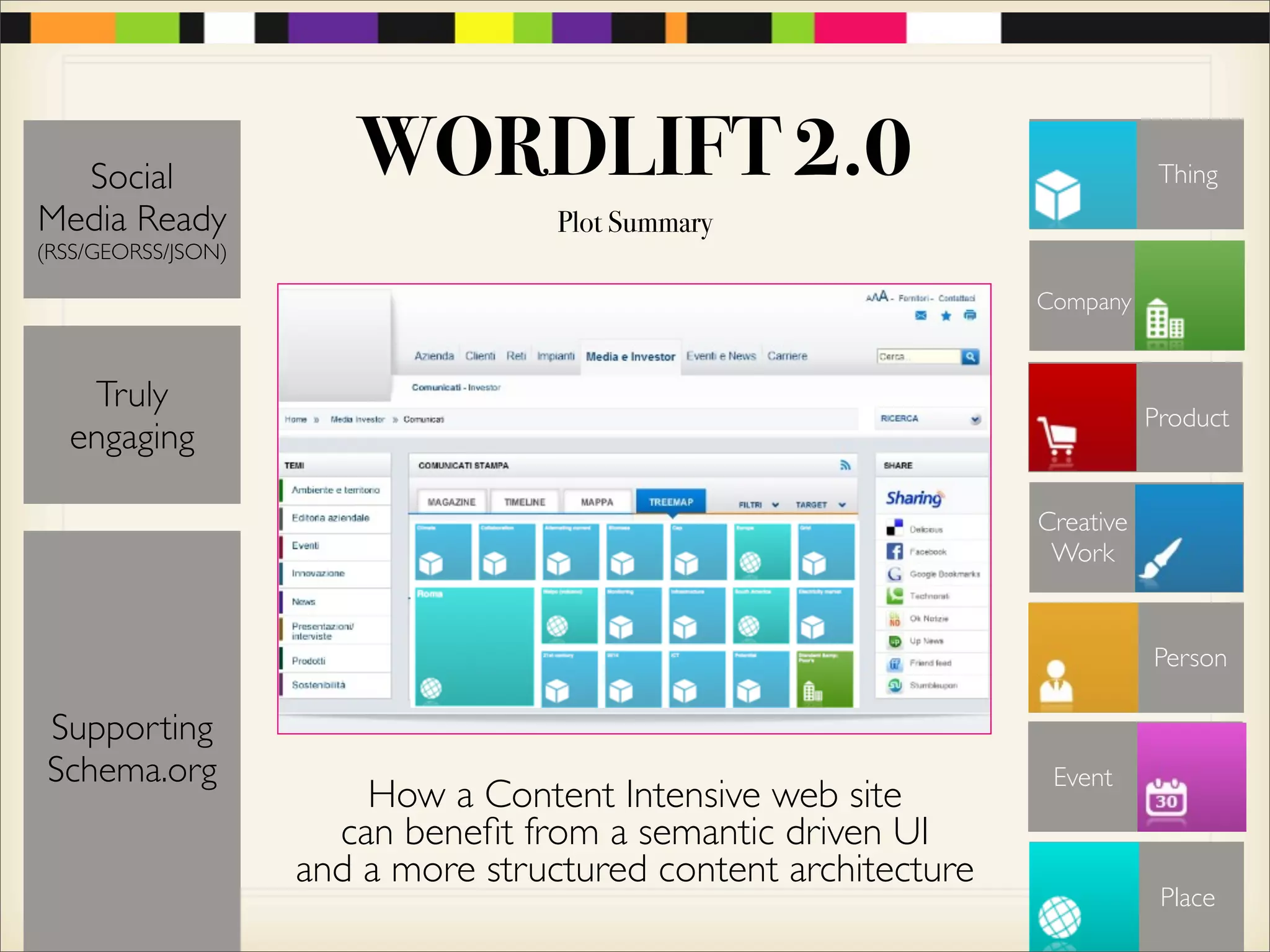
Social               WORDLIFT 2.0                                          Thing
Media Ready                         Plot Summary
(RSS/GEORSS/JSON)

                                                                 Company


   Truly
                                                                            Product
  engaging

                                                                 Creative
                                                                  Work


                                                                            Person

Supporting
Schema.org                                                        Event
                        How a Content Intensive web site
                      can benefit from a semantic driven UI
                    and a more structured content architecture
                                                                             Place
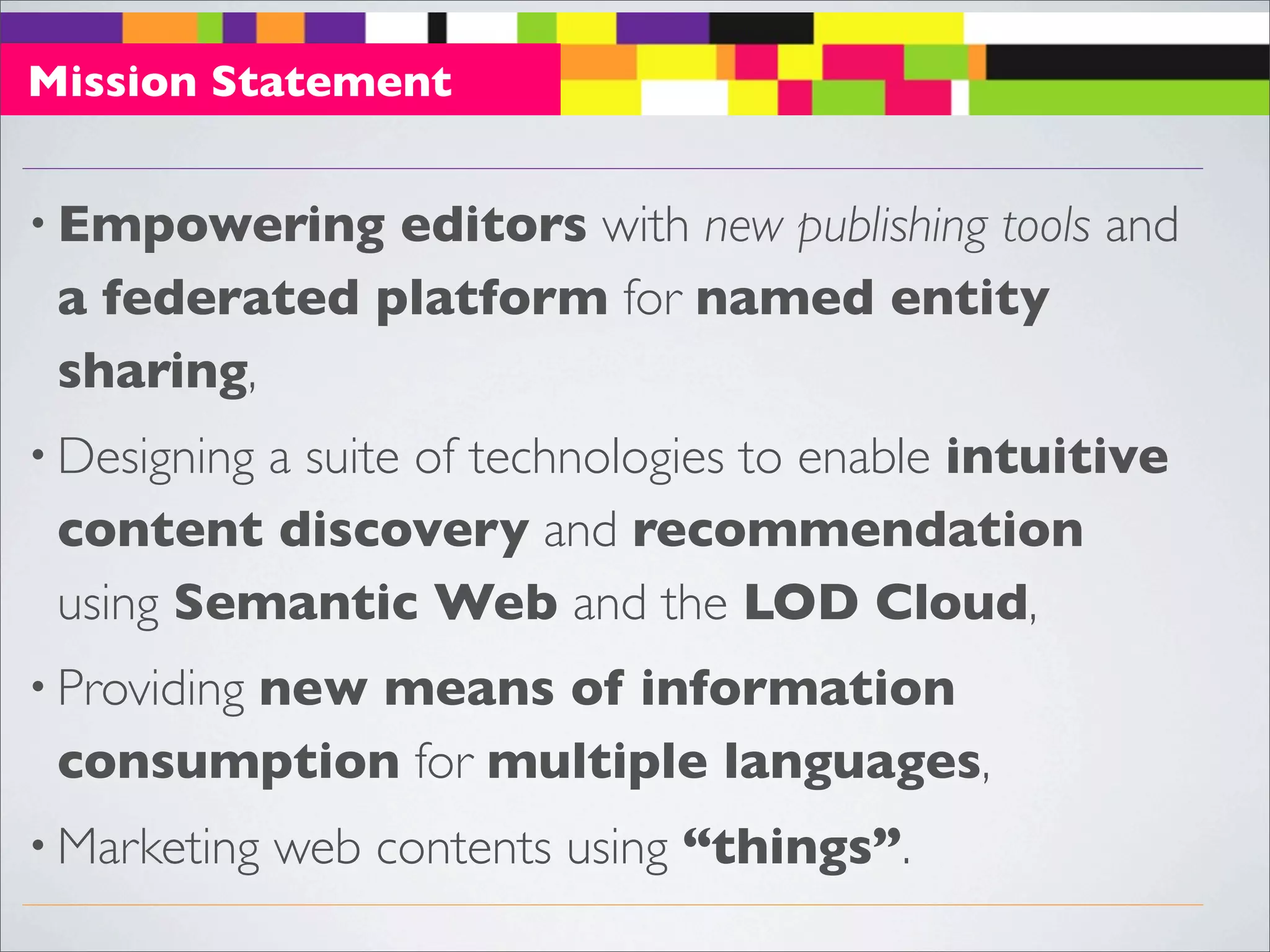
Mission Statement


• Empowering  editors with new publishing tools and
 a federated platform for named entity
 sharing, 
          a suite of technologies to enable intuitive
• Designing
 content discovery and recommendation
 using Semantic Web and the LOD Cloud,
       new means of information
• Providing
 consumption for multiple languages,
• Marketing   web contents using “things”.
Rome, Cairo, Tel Aviv


  Grazie!

InSideOut10
CREDITS
this presentation is the result of many inspiring ideas and world-wide famous memes,
                                     here is the list:


       Amit Singhal, Engineer at Google - http://en.wikipedia.org/wiki/
       Amit_Singhal

       Michael Bergman, Semantic Expert - http://www.mkbergman.com/about-
       mike/


                any idea, graphics or meme belonging to us is available
                       for sharing, copying and re-mixing under
                             creative commons license 3.0

WordLift 2.0 presented on the Semantic Web Meetup in Rome

  • 1.
    THINGS STRINGS NOT by @cyberandy
  • 2.
    WORDLIFT 2.0 beta preview in partnership with:
  • 3.
    LANGUAGE Symbolic, USER information is stored in the form of a code or symbol Resides in the mind of people, NOT in STRINGS Governed by rules - understanding rules help us understand one another STRING THING (SYMBOL) (REFERENT)
  • 5.
    WHEN WE SEARCHMARIE CURIE...
  • 6.
    KNOWLEDGE GRAPH 1. Languagebecomes less ambiguous (FINDING) 2. Key facts are displayed along with the query (KNOWING) 3. Inter-relationship among “Things” brings the intelligence to the machine (UNDERSTANDING) 4. Reality unveils curiosities (DISCOVERING) SEARCH ENGINES UNDERSTAND...
  • 7.
    GOOGLE KNOWLEDGEGRAPH • Includes today more then 500 million things (~ 0.077 of people alive on earth) • It’s made of data from Freebase, Wikipedia, the CIA World Factbook and data publicly available on the Web •3.5 billion facts about and in relationship with these 500 million entities • It’s based on users’ search behaviors
  • 8.
  • 9.
    In a nutshell • Knowledge comes from many sources search engines - closed index • Search engines are building their Cast information knowledge graphs using web crawling from billion of web Attributes pages techniques • We want to do it with the help of Entity web editors providing: • an open knowledge base aemoo web - open knowledge base cast information from Blogger A • an aggregated and consistent views cast information of all entities Attributes from Blogger B Cast information • an intuitive classification ontology from open repository (DBPedia, Freebase) • a new way to browse the web of Entity objects
  • 10.
    Social WORDLIFT 2.0 Thing Media Ready Plot Summary (RSS/GEORSS/JSON) Company Truly Product engaging Creative Work Person Supporting Schema.org Event How a Content Intensive web site can benefit from a semantic driven UI and a more structured content architecture Place
  • 11.
    Mission Statement • Empowering editors with new publishing tools and a federated platform for named entity sharing,  a suite of technologies to enable intuitive • Designing content discovery and recommendation using Semantic Web and the LOD Cloud, new means of information • Providing consumption for multiple languages, • Marketing web contents using “things”.
  • 12.
    Rome, Cairo, TelAviv Grazie! InSideOut10
  • 13.
    CREDITS this presentation isthe result of many inspiring ideas and world-wide famous memes, here is the list: Amit Singhal, Engineer at Google - http://en.wikipedia.org/wiki/ Amit_Singhal Michael Bergman, Semantic Expert - http://www.mkbergman.com/about- mike/ any idea, graphics or meme belonging to us is available for sharing, copying and re-mixing under creative commons license 3.0