WIRELESS VISION (WI-VI) technology 
K.R.SHYAM 
114P1AO438 
ELECTRONICS AND COMMUNICATION ENGINEERING 
YOGANANDA INSTITUTE OF TECHNOLOGY AND SCIENCES 
MOHAN REDDY NAGAR, ELAMANDYAM (V), RENIGUNTA (M), TIRUPATI.
CONTENTS 
• INTRODUCTION 
• HISTORY 
• CONSTRUCTION 
• BASIC PRINCIPLE 
• WORKING 
• APPLICATIONS 
• FUTURE DEVELOPMENTS 
• CONCLUSION
INTRODUCTION 
 Wi-Fi can also extend our senses, enabling us to see moving objects through walls and behind closed 
doors. 
 In particular, we can use such signals to identify the number of people in a closed room and their relative 
locations. 
 We can also identify simple gestures made behind a wall. This is called the Wi-Vi Technology. 
 Wi-Fi signals are typically information carriers between a transmitter and a receiver.
HISTORY 
 MIT researchers have developed a sort of x-ray vision device that can 
detect motion behind walls or other large objects. 
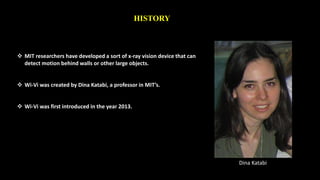
 Wi-Vi was created by Dina Katabi, a professor in MIT’s. 
 Wi-Vi was first introduced in the year 2013. 
Dina Katabi
WHAT CAN WI-VI DO? 
 Detects the number of moving humans in a closed room. 
 Determine the relative locations of moving image. 
 Enable Communication through wall carrying wireless device. 
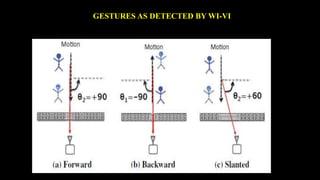
 Identify simple gestures from behind the wall.
WI-VI CONSTRUCTION 
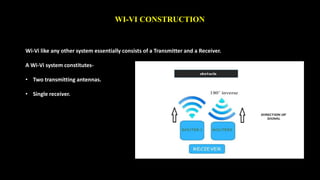
Wi-Vi like any other system essentially consists of a Transmitter and a Receiver. 
A Wi-Vi system constitutes- 
• Two transmitting antennas. 
• Single receiver.
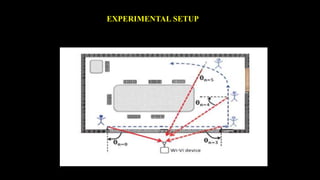
EXPERIMENTAL SETUP
WHY USE WI-FI SIGNALS? 
 Wi-Fi signals can easily penetrate through walls. 
 Wi-Vi relies on a simple hardware of 2.4 GHz Wi-Fi radios 
 Small enough to be portably used. 
 Integrated in hand held devices. 
 Low power Wi-Fi signals are used.
BASIC PRINCIPLE 
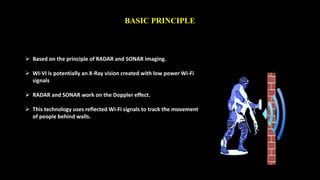
 Based on the principle of RADAR and SONAR imaging. 
 WI-VI is potentially an X-Ray vision created with low power Wi-Fi 
signals 
 RADAR and SONAR work on the Doppler effect. 
 This technology uses reflected Wi-Fi signals to track the movement 
of people behind walls.
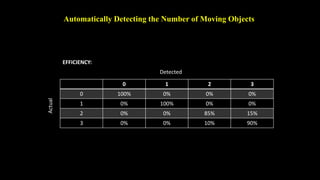
Automatically Detecting the Number of Moving Objects 
Detected 
Actual 
0 1 2 3 
EFFICIENCY: 
0 100% 0% 0% 0% 
1 0% 100% 0% 0% 
2 0% 0% 85% 15% 
3 0% 0% 10% 90%
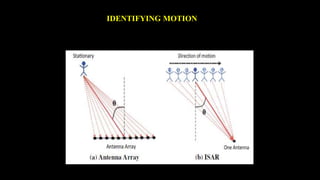
IDENTIFYING MOTION
WORKING 
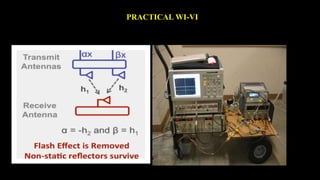
 Wi-Vi uses two transmitting antennas and a single receiver. 
 Transmitting signals are low power Wi-Fi signals 
 Two antennas transmit almost identical signals, except the second antenna’s signal is the inverse of 
the first, resulting in interference. 
 Any static objects that the signals hit including the wall create identical reflections. 
 As the person moves through the room, his or her distance from receiver changes.
GESTURES AS DETECTED BY WI-VI
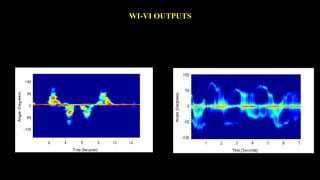
WI-VI OUTPUTS
PRACTICAL WI-VI
ADVANTAGES OF WI-VI 
 Wi-Vi requires only a few MHz of bandwidth and operates in the same range as Wi-Fi. It operates 
in ISM band. 
 Wi-Vi can perform through-wall imaging without access to any device on the other side of the 
wall. 
 Wi-Vi employs signals whose wavelengths are 12.5 cm. 
 Extend human vision beyond the visible electromagnetic range, allowing us to detect object in the 
dark or in smoke.
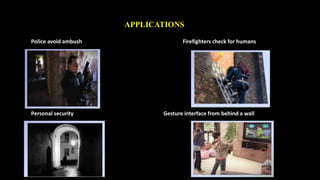
APPLICATIONS 
Police avoid ambush Firefighters check for humans 
Personal security Gesture interface from behind a wall
FUTURE DEVELOPMENTS 
 Wi-Vi technology has just been introduced. 
 It is an emerging technology with a wide range of 
applications. 
 In the possible future we would be able to see through 
solid materials by using smart phones
CONCLUSION 
 The possibilities are numerous and can be explored further. 
 If this technology can be put into practical use, It can be used in a variety of applications. 
 We will proceed toward the cleaner, greener, safer and brighter future. 
 Wi-Vi technology can change our world before we realize it.
REFERENCES 
 http://people.csail.mit.edu/fadel/wivi/design.html 
 http://mcdonnellqumba.blogspot.in/2013/06/get-xray-vision-with-wivi-technology. 
html 
 http://geekshots.in/2013/12/16/wi-vi-wifi-vision-vision-behind-the-walls/ 
 http://www.redorbit.com/news/technology/1112886700/wivi-uses-wifi-to-see-through- 
walls-062813/
ANY QUESTIONS?
Sri Venkateswara University 
Near Sri Padmavati Mahila Visvavidyalayam, Prakasam Nagar Colony, Tirupati, AP 517502

Wi-Vi Technology

  • 1.
    WIRELESS VISION (WI-VI)technology K.R.SHYAM 114P1AO438 ELECTRONICS AND COMMUNICATION ENGINEERING YOGANANDA INSTITUTE OF TECHNOLOGY AND SCIENCES MOHAN REDDY NAGAR, ELAMANDYAM (V), RENIGUNTA (M), TIRUPATI.
  • 2.
    CONTENTS • INTRODUCTION • HISTORY • CONSTRUCTION • BASIC PRINCIPLE • WORKING • APPLICATIONS • FUTURE DEVELOPMENTS • CONCLUSION
  • 3.
    INTRODUCTION  Wi-Fican also extend our senses, enabling us to see moving objects through walls and behind closed doors.  In particular, we can use such signals to identify the number of people in a closed room and their relative locations.  We can also identify simple gestures made behind a wall. This is called the Wi-Vi Technology.  Wi-Fi signals are typically information carriers between a transmitter and a receiver.
  • 4.
    HISTORY  MITresearchers have developed a sort of x-ray vision device that can detect motion behind walls or other large objects.  Wi-Vi was created by Dina Katabi, a professor in MIT’s.  Wi-Vi was first introduced in the year 2013. Dina Katabi
  • 5.
    WHAT CAN WI-VIDO?  Detects the number of moving humans in a closed room.  Determine the relative locations of moving image.  Enable Communication through wall carrying wireless device.  Identify simple gestures from behind the wall.
  • 6.
    WI-VI CONSTRUCTION Wi-Vilike any other system essentially consists of a Transmitter and a Receiver. A Wi-Vi system constitutes- • Two transmitting antennas. • Single receiver.
  • 7.
  • 8.
    WHY USE WI-FISIGNALS?  Wi-Fi signals can easily penetrate through walls.  Wi-Vi relies on a simple hardware of 2.4 GHz Wi-Fi radios  Small enough to be portably used.  Integrated in hand held devices.  Low power Wi-Fi signals are used.
  • 9.
    BASIC PRINCIPLE Based on the principle of RADAR and SONAR imaging.  WI-VI is potentially an X-Ray vision created with low power Wi-Fi signals  RADAR and SONAR work on the Doppler effect.  This technology uses reflected Wi-Fi signals to track the movement of people behind walls.
  • 10.
    Automatically Detecting theNumber of Moving Objects Detected Actual 0 1 2 3 EFFICIENCY: 0 100% 0% 0% 0% 1 0% 100% 0% 0% 2 0% 0% 85% 15% 3 0% 0% 10% 90%
  • 11.
  • 12.
    WORKING  Wi-Viuses two transmitting antennas and a single receiver.  Transmitting signals are low power Wi-Fi signals  Two antennas transmit almost identical signals, except the second antenna’s signal is the inverse of the first, resulting in interference.  Any static objects that the signals hit including the wall create identical reflections.  As the person moves through the room, his or her distance from receiver changes.
  • 13.
  • 14.
  • 15.
  • 16.
    ADVANTAGES OF WI-VI  Wi-Vi requires only a few MHz of bandwidth and operates in the same range as Wi-Fi. It operates in ISM band.  Wi-Vi can perform through-wall imaging without access to any device on the other side of the wall.  Wi-Vi employs signals whose wavelengths are 12.5 cm.  Extend human vision beyond the visible electromagnetic range, allowing us to detect object in the dark or in smoke.
  • 17.
    APPLICATIONS Police avoidambush Firefighters check for humans Personal security Gesture interface from behind a wall
  • 18.
    FUTURE DEVELOPMENTS Wi-Vi technology has just been introduced.  It is an emerging technology with a wide range of applications.  In the possible future we would be able to see through solid materials by using smart phones
  • 19.
    CONCLUSION  Thepossibilities are numerous and can be explored further.  If this technology can be put into practical use, It can be used in a variety of applications.  We will proceed toward the cleaner, greener, safer and brighter future.  Wi-Vi technology can change our world before we realize it.
  • 20.
    REFERENCES  http://people.csail.mit.edu/fadel/wivi/design.html  http://mcdonnellqumba.blogspot.in/2013/06/get-xray-vision-with-wivi-technology. html  http://geekshots.in/2013/12/16/wi-vi-wifi-vision-vision-behind-the-walls/  http://www.redorbit.com/news/technology/1112886700/wivi-uses-wifi-to-see-through- walls-062813/
  • 21.
  • 22.
    Sri Venkateswara University Near Sri Padmavati Mahila Visvavidyalayam, Prakasam Nagar Colony, Tirupati, AP 517502