WIRELESS
SECURITY
SECURING WIRELESS NETWORKS IN THE DIGITAL AGE
INTRODUCTION
What is Wireless Security?
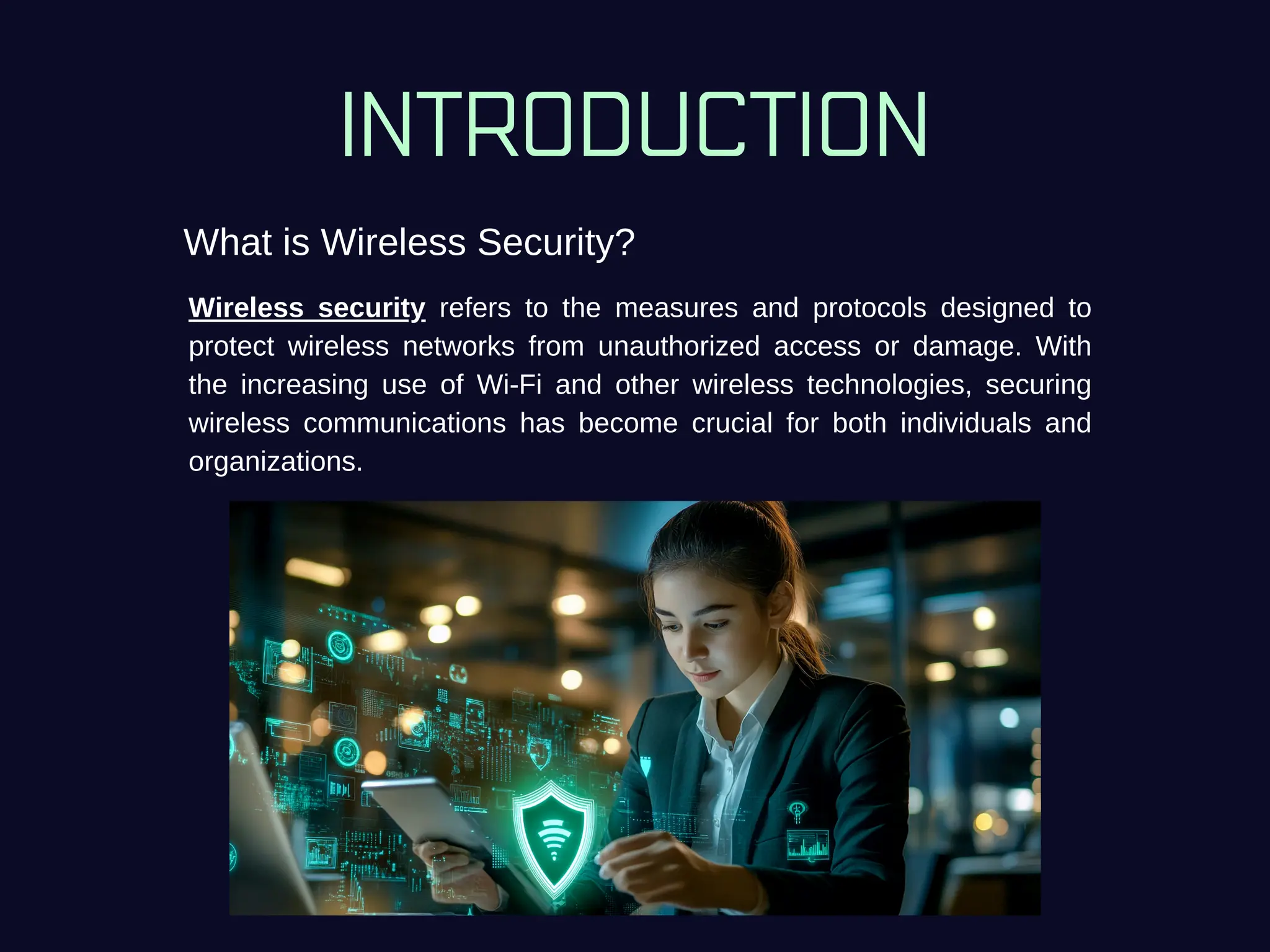
Wireless security refers to the measures and protocols designed to
protect wireless networks from unauthorized access or damage. With
the increasing use of Wi-Fi and other wireless technologies, securing
wireless communications has become crucial for both individuals and
organizations.
IMPORTANCE OF
WIRELESS SECURITY
Protects sensitive data from being intercepted
Prevents unauthorized access to the network
Safeguards against cyberattacks, such as man-in-the-middle attacks
Ensures privacy in personal and business communications
TYPES OF WIRELESS
SECURITY THREATS
Eavesdropping: Intercepting wireless data transmissions.
Unauthorized Access: Gaining entry to a wireless network without
permission.
Rogue Access Points: Fake access points set up to steal information.
Denial-of-Service (DoS) Attacks: Overloading the network to disrupt service.
COMMON WIRELESS
SECURITY PROTOCOLS
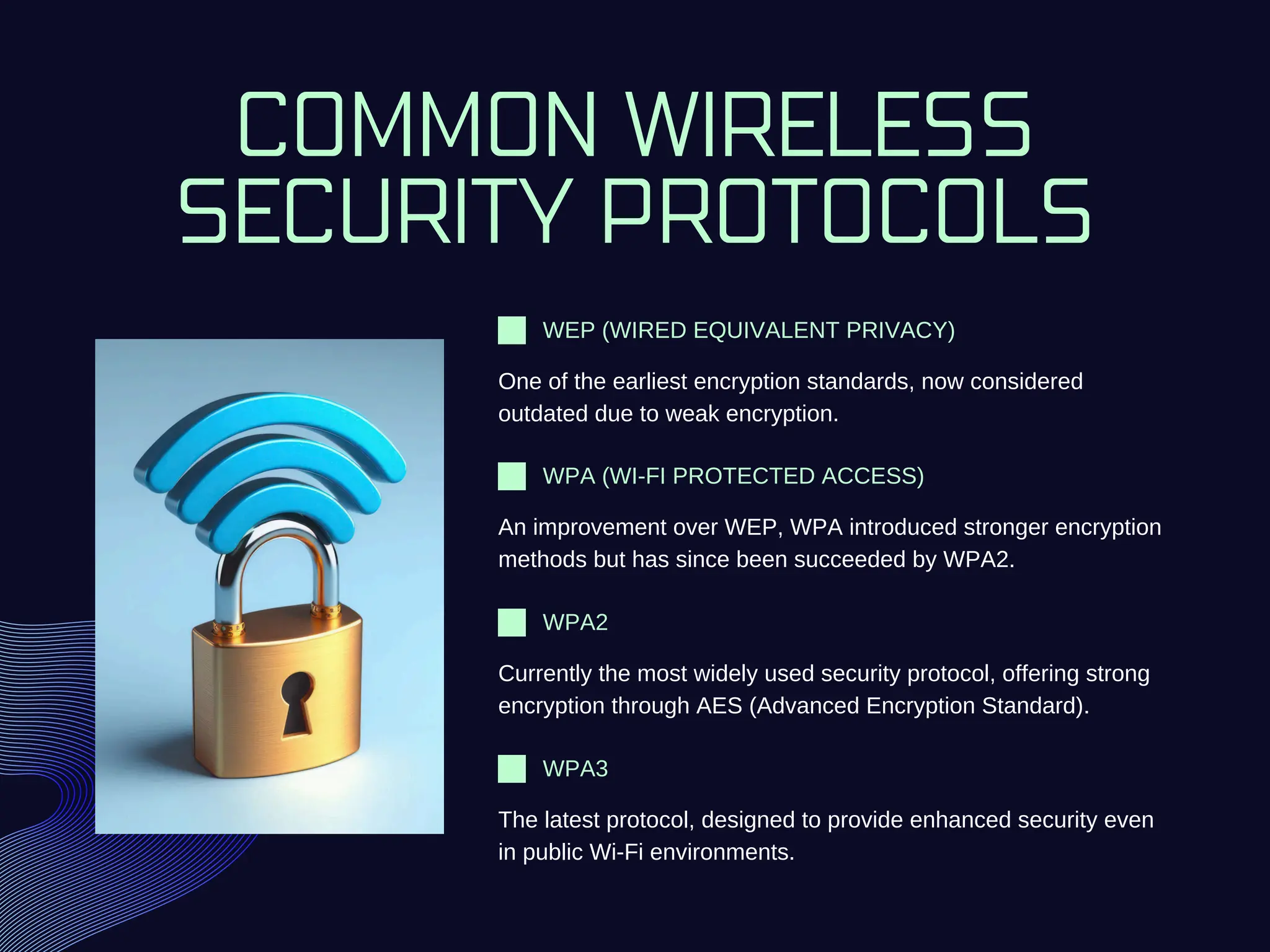
WEP (WIRED EQUIVALENT PRIVACY)
One of the earliest encryption standards, now considered
outdated due to weak encryption.
WPA (WI-FI PROTECTED ACCESS)
An improvement over WEP, WPA introduced stronger encryption
methods but has since been succeeded by WPA2.
WPA2
Currently the most widely used security protocol, offering strong
encryption through AES (Advanced Encryption Standard).
WPA3
The latest protocol, designed to provide enhanced security even
in public Wi-Fi environments.
BEST PRACTICES FOR
WIRELESS SECURITY
Eavesdropping: Intercepting wireless data transmissions.
Unauthorized Access: Gaining entry to a wireless network without
permission.
Rogue Access Points: Fake access points set up to steal information.
Denial-of-Service (DoS) Attacks: Overloading the network to disrupt service.
ADVANCED WIRELESS
SECURITY MEASURES
VPN (VIRTUAL PRIVATE NETWORK)
Encrypts all data traffic, providing an additional layer of security for wireless users.
INTRUSION DETECTION SYSTEMS (IDS)
Monitors for unusual network activity that could indicate a security breach.
FIREWALLS
Helps filter incoming and outgoing traffic to ensure only legitimate data packets are allowed.
WIRELESS SECURITY
IN CORPORATE
ENVIRONMENTS
In a business setting, wireless security is critical to protecting sensitive
company data. Steps such as network segmentation, the use of
enterprise-grade security solutions, and regular audits are essential in
maintaining wireless security.

Wireless Security | Wireless Network Security

  • 1.
  • 2.
    INTRODUCTION What is WirelessSecurity? Wireless security refers to the measures and protocols designed to protect wireless networks from unauthorized access or damage. With the increasing use of Wi-Fi and other wireless technologies, securing wireless communications has become crucial for both individuals and organizations.
  • 3.
    IMPORTANCE OF WIRELESS SECURITY Protectssensitive data from being intercepted Prevents unauthorized access to the network Safeguards against cyberattacks, such as man-in-the-middle attacks Ensures privacy in personal and business communications
  • 4.
    TYPES OF WIRELESS SECURITYTHREATS Eavesdropping: Intercepting wireless data transmissions. Unauthorized Access: Gaining entry to a wireless network without permission. Rogue Access Points: Fake access points set up to steal information. Denial-of-Service (DoS) Attacks: Overloading the network to disrupt service.
  • 5.
    COMMON WIRELESS SECURITY PROTOCOLS WEP(WIRED EQUIVALENT PRIVACY) One of the earliest encryption standards, now considered outdated due to weak encryption. WPA (WI-FI PROTECTED ACCESS) An improvement over WEP, WPA introduced stronger encryption methods but has since been succeeded by WPA2. WPA2 Currently the most widely used security protocol, offering strong encryption through AES (Advanced Encryption Standard). WPA3 The latest protocol, designed to provide enhanced security even in public Wi-Fi environments.
  • 6.
    BEST PRACTICES FOR WIRELESSSECURITY Eavesdropping: Intercepting wireless data transmissions. Unauthorized Access: Gaining entry to a wireless network without permission. Rogue Access Points: Fake access points set up to steal information. Denial-of-Service (DoS) Attacks: Overloading the network to disrupt service.
  • 7.
    ADVANCED WIRELESS SECURITY MEASURES VPN(VIRTUAL PRIVATE NETWORK) Encrypts all data traffic, providing an additional layer of security for wireless users. INTRUSION DETECTION SYSTEMS (IDS) Monitors for unusual network activity that could indicate a security breach. FIREWALLS Helps filter incoming and outgoing traffic to ensure only legitimate data packets are allowed.
  • 8.
    WIRELESS SECURITY IN CORPORATE ENVIRONMENTS Ina business setting, wireless security is critical to protecting sensitive company data. Steps such as network segmentation, the use of enterprise-grade security solutions, and regular audits are essential in maintaining wireless security.