Wireless Mobile
Charging
Using Microwaves
Introduction
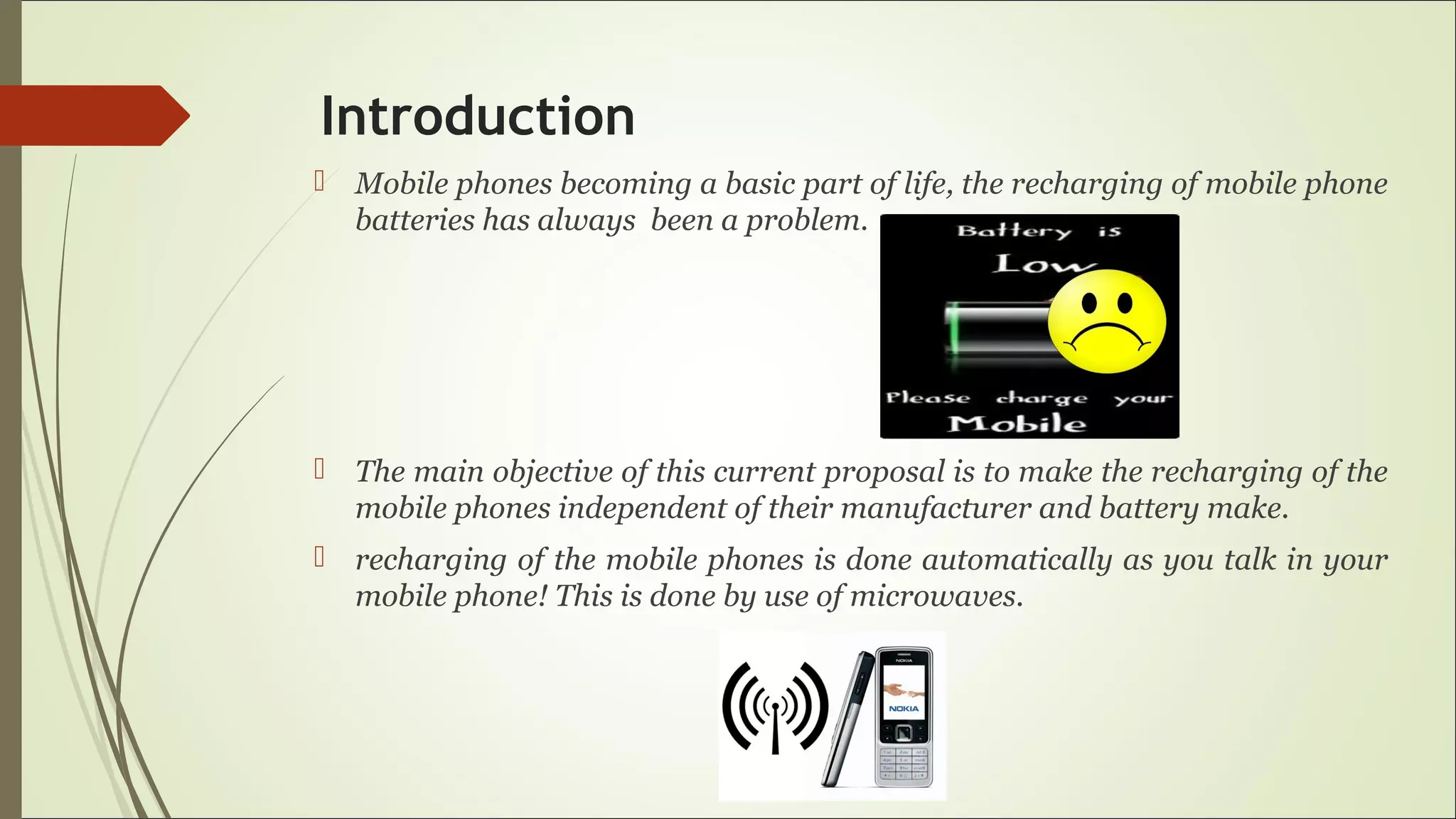
 Mobile phones becoming a basic part of life, the recharging of mobile phone
batteries has always been a problem.
 The main objective of this current proposal is to make the recharging of the
mobile phones independent of their manufacturer and battery make.
 recharging of the mobile phones is done automatically as you talk in your
mobile phone! This is done by use of microwaves.
Electro Magnetic Spectrum
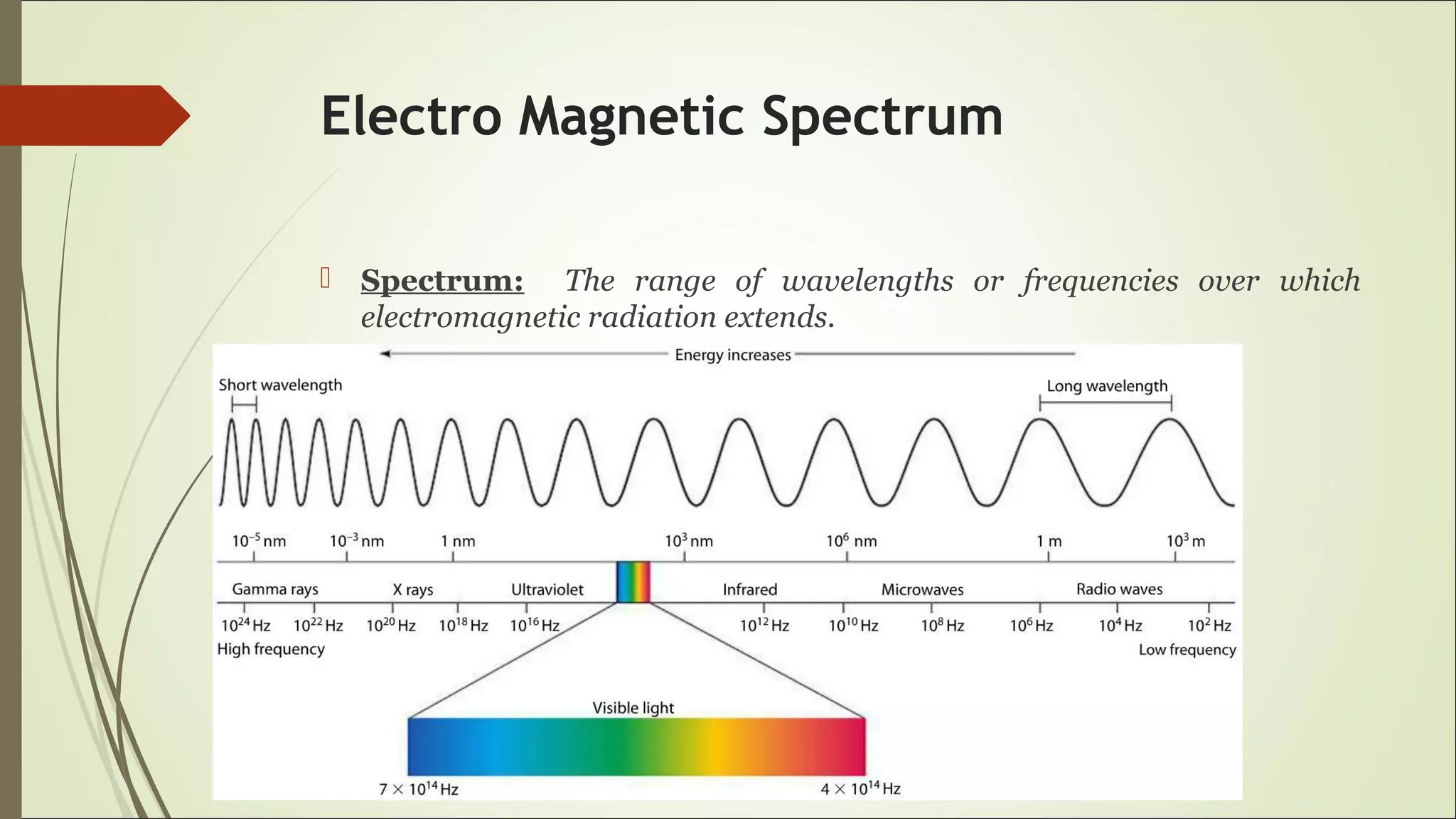
 Spectrum: The range of wavelengths or frequencies over which
electromagnetic radiation extends.
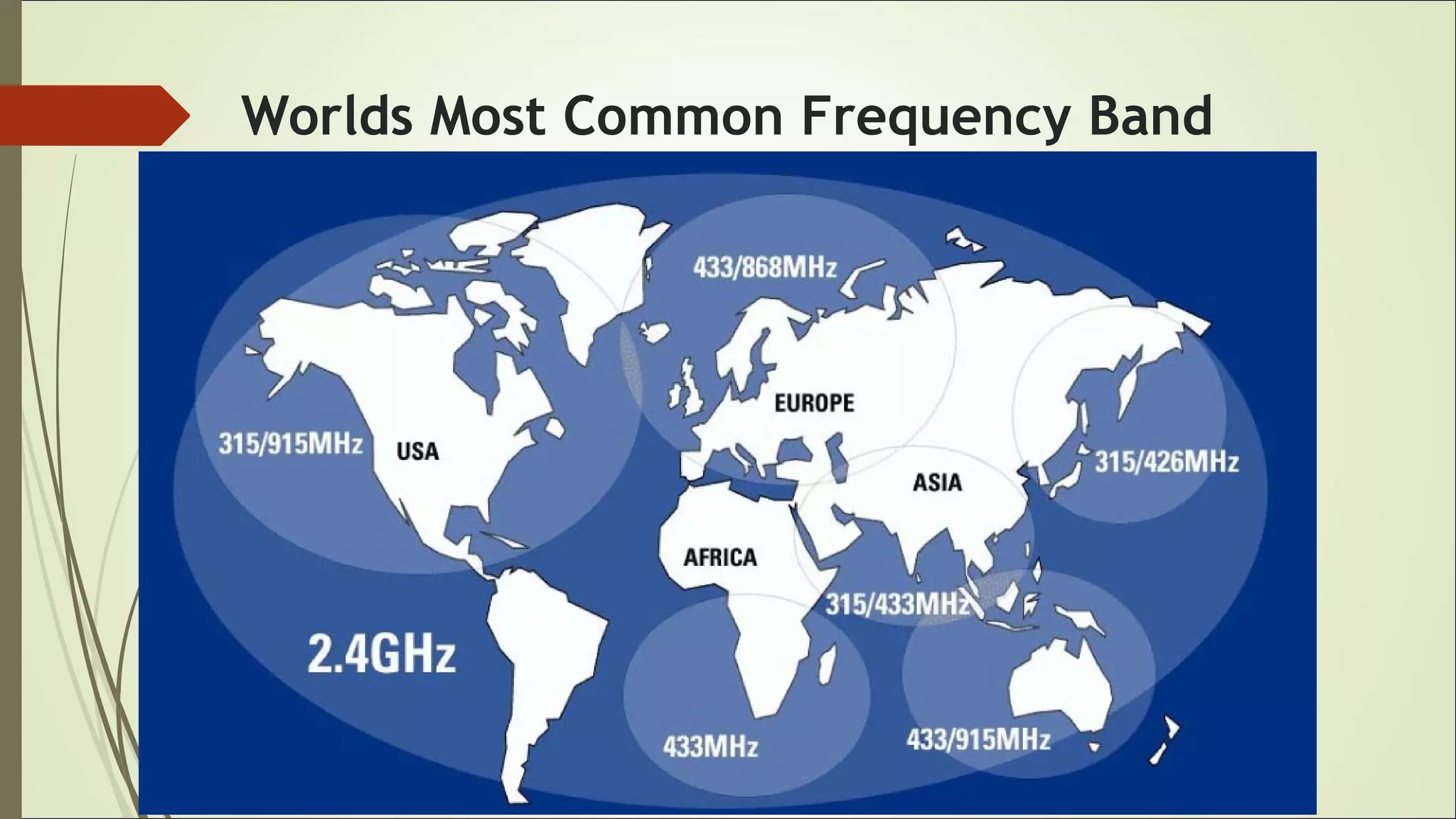
Worlds Most Common Frequency Band
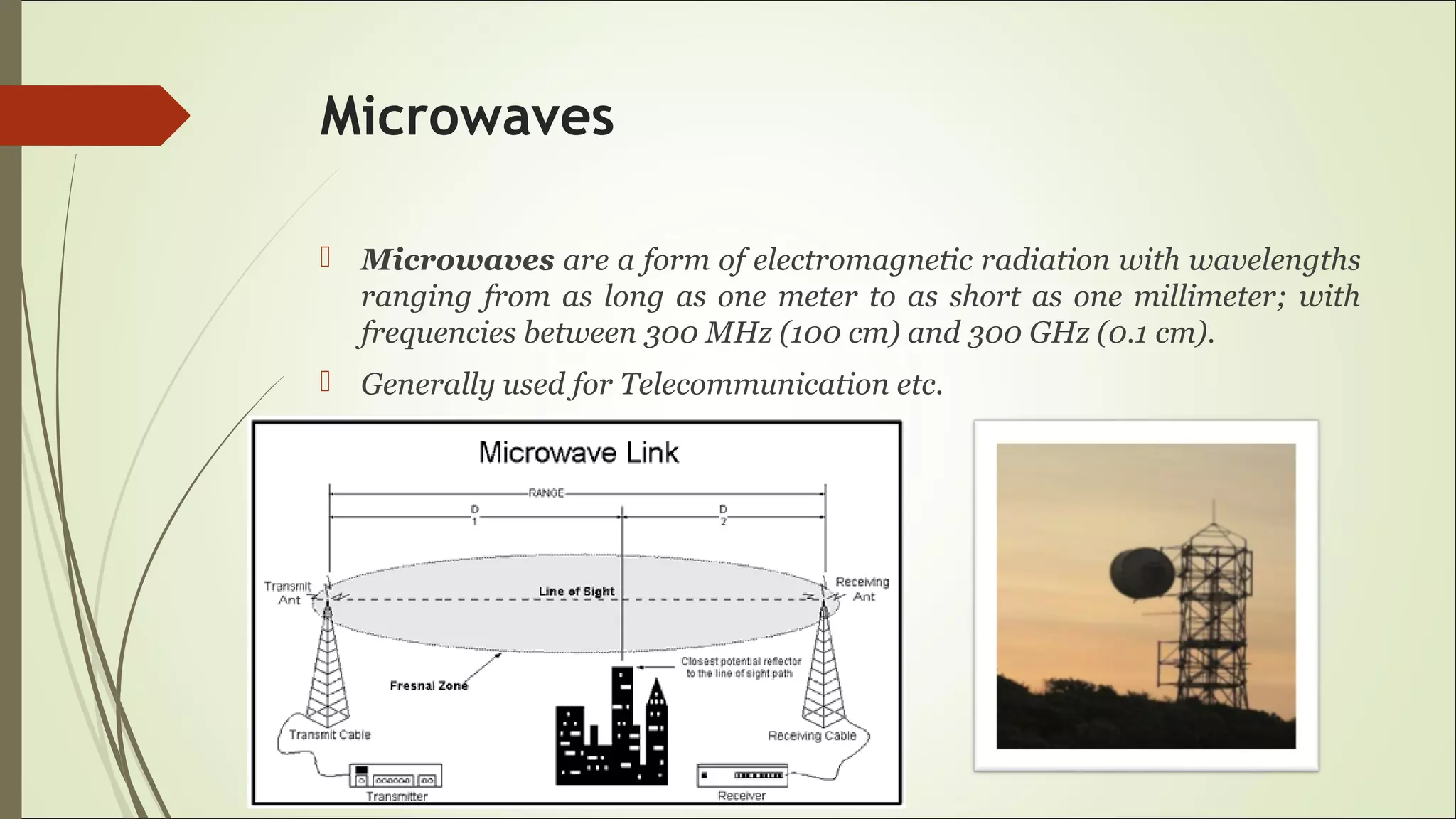
Microwaves
 Microwaves are a form of electromagnetic radiation with wavelengths
ranging from as long as one meter to as short as one millimeter; with
frequencies between 300 MHz (100 cm) and 300 GHz (0.1 cm).
 Generally used for Telecommunication etc.
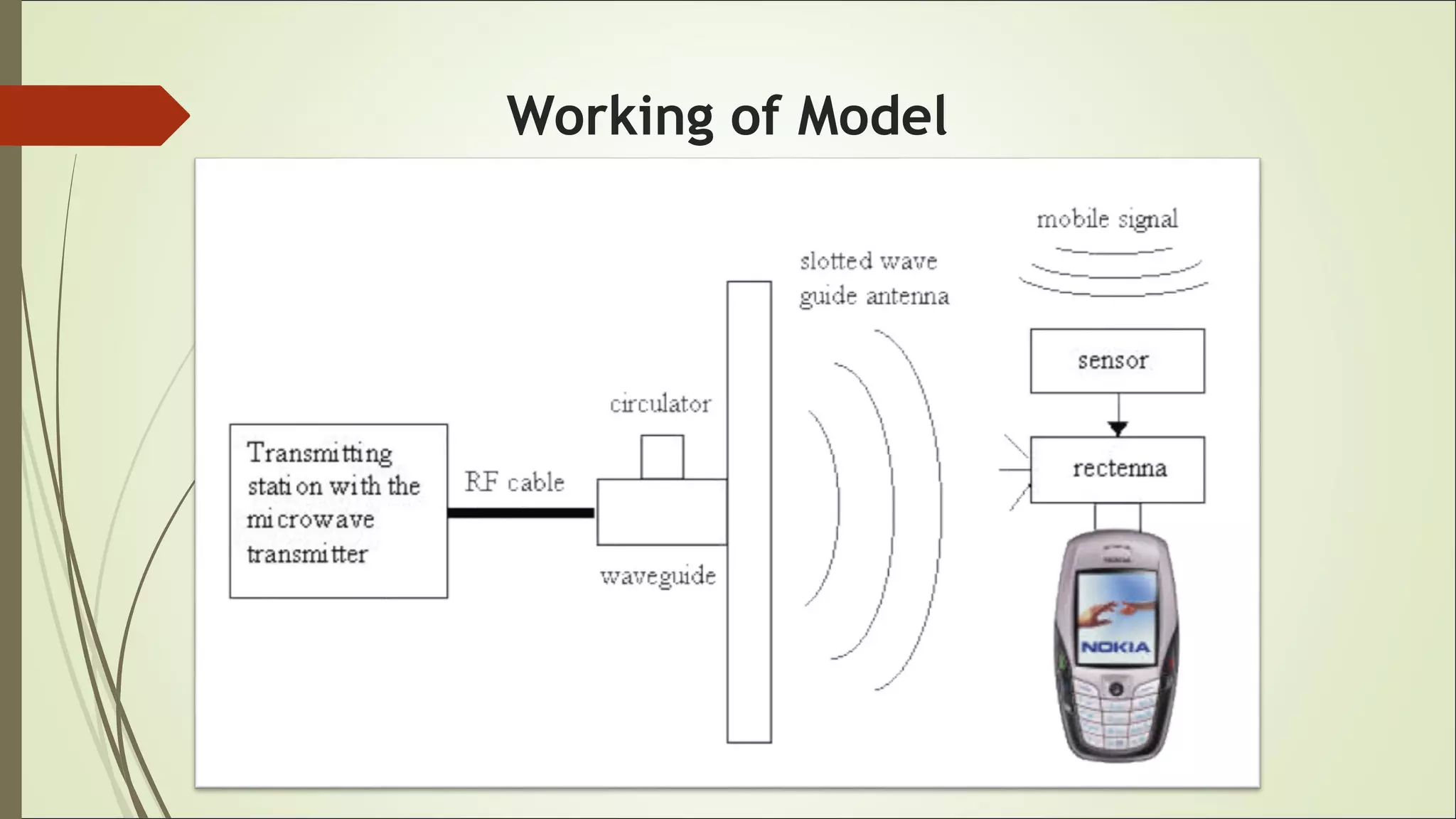
Working of Model
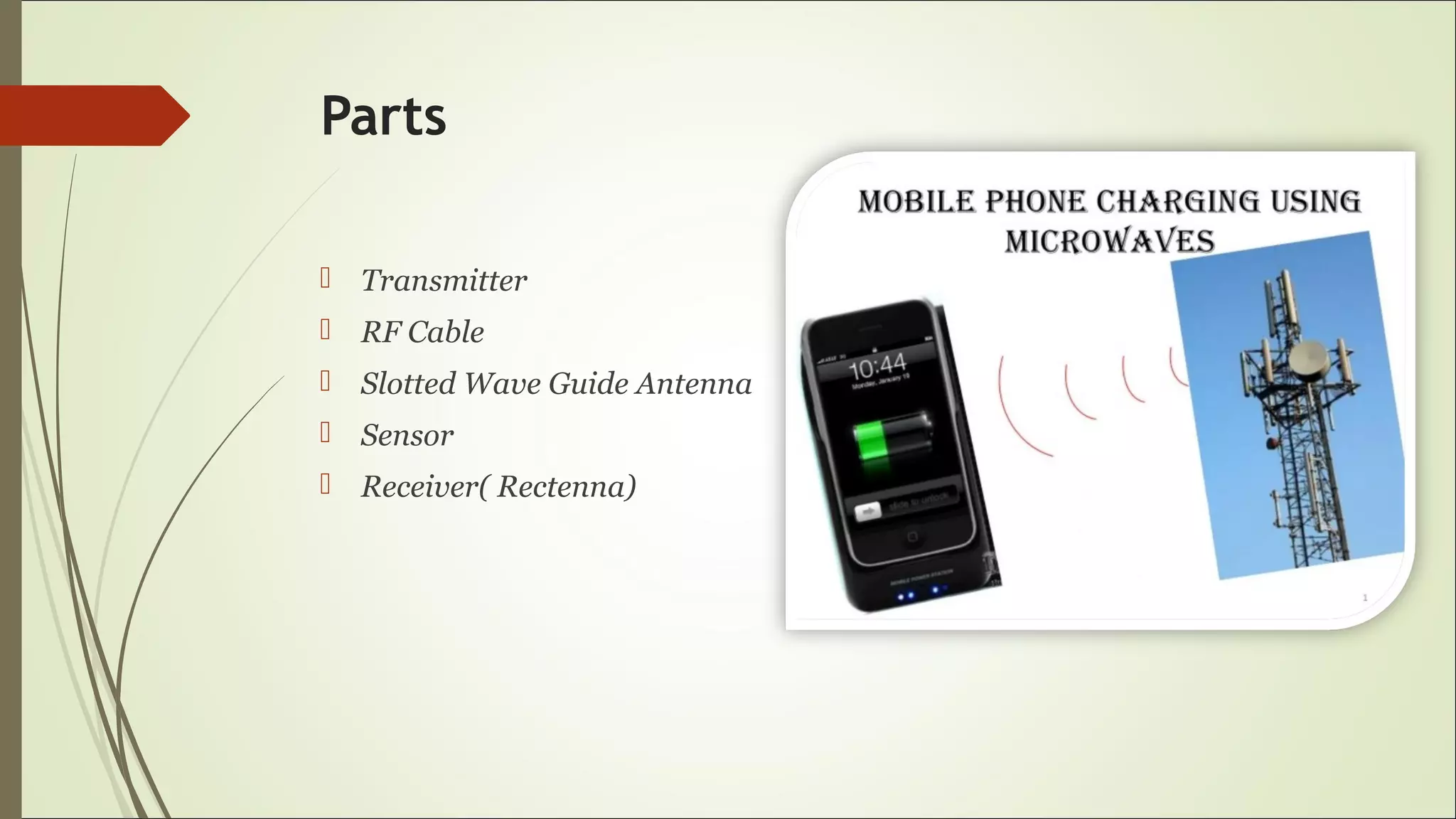
Parts
 Transmitter
 RF Cable
 Slotted Wave Guide Antenna
 Sensor
 Receiver( Rectenna)
Transmitter Section
Transmitter section consist of two parts, They are:
1. Magnetron,
2. Slotted Waveguide antenna.
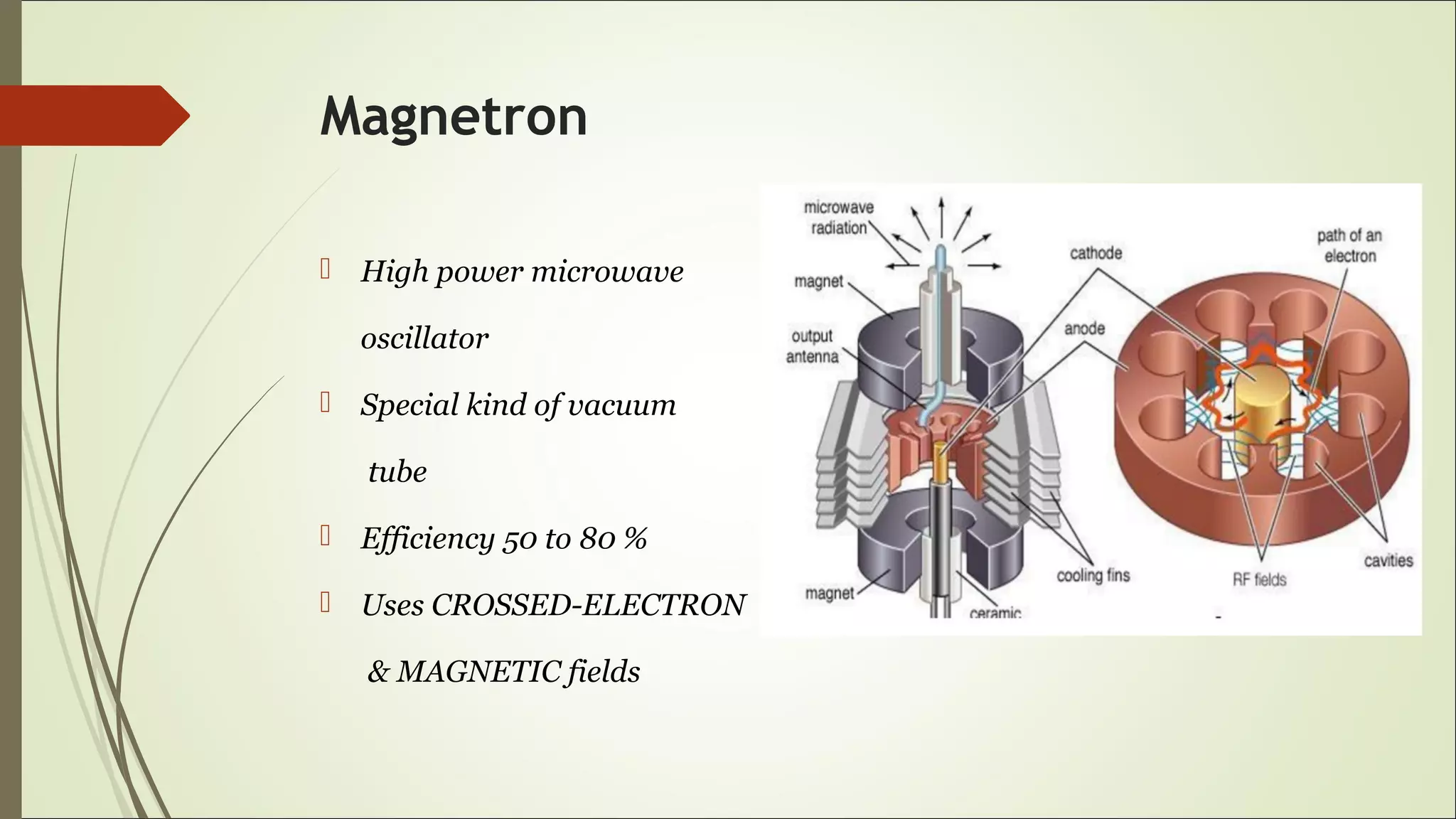
Magnetron
 High power microwave
oscillator
 Special kind of vacuum
tube
 Efficiency 50 to 80 %
 Uses CROSSED-ELECTRON
& MAGNETIC fields
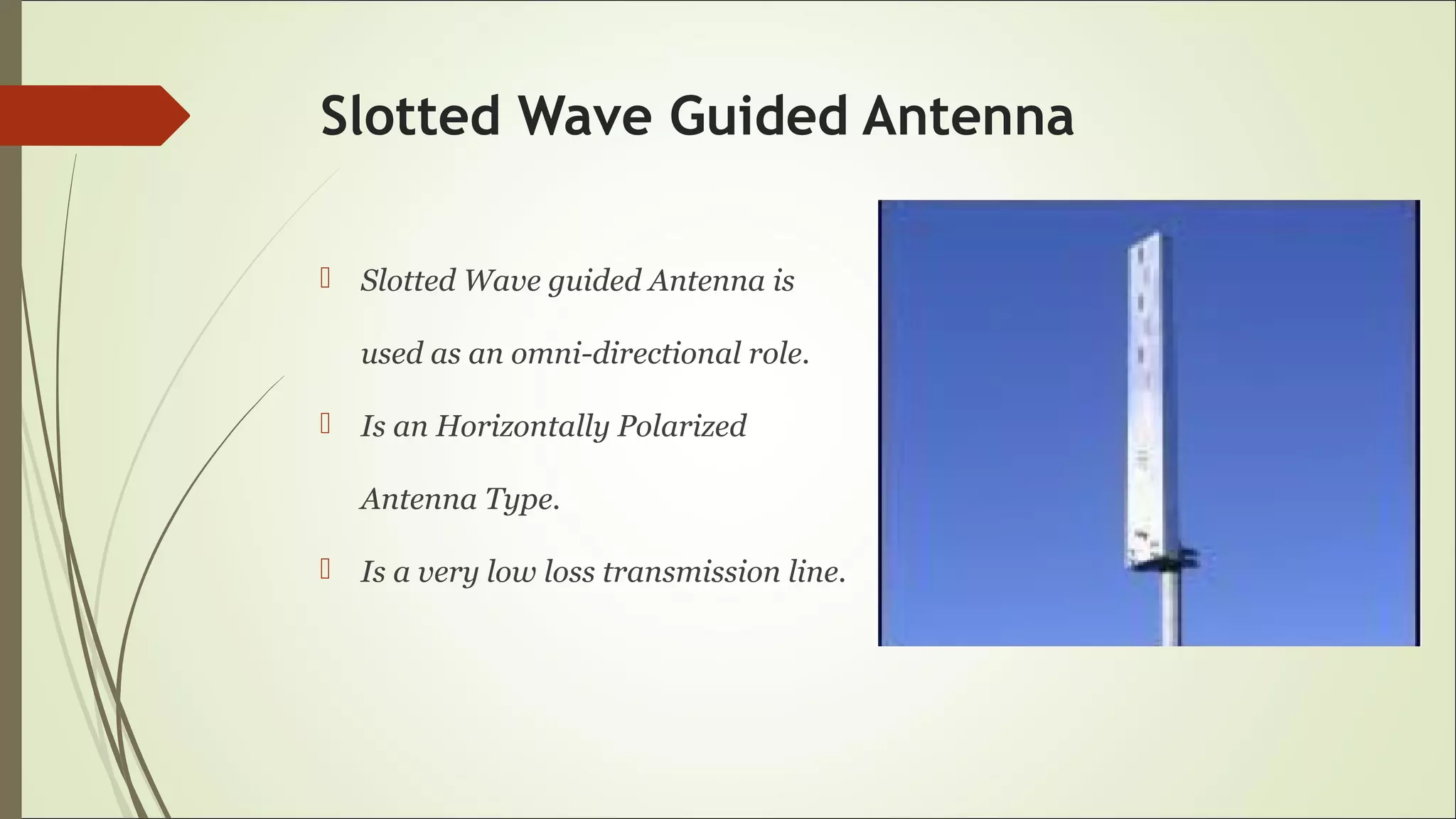
Slotted Wave Guided Antenna
 Slotted Wave guided Antenna is
used as an omni-directional role.
 Is an Horizontally Polarized
Antenna Type.
 Is a very low loss transmission line.
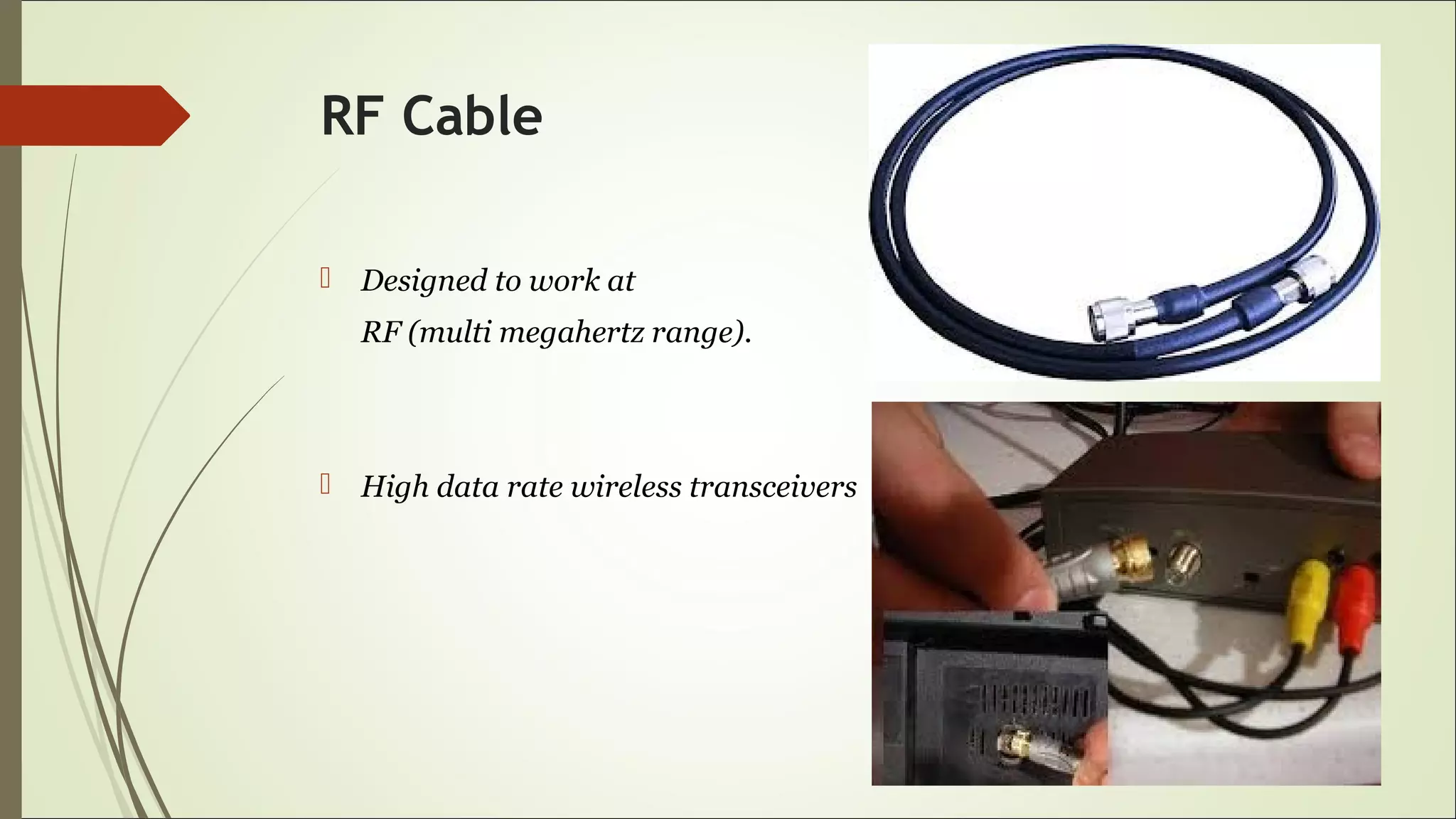
RF Cable
 Designed to work at
RF (multi megahertz range).
 High data rate wireless transceivers
Reciever Section
Receiver section consist of 3 parts, they are:
1. Sensor,
2. Rectenna
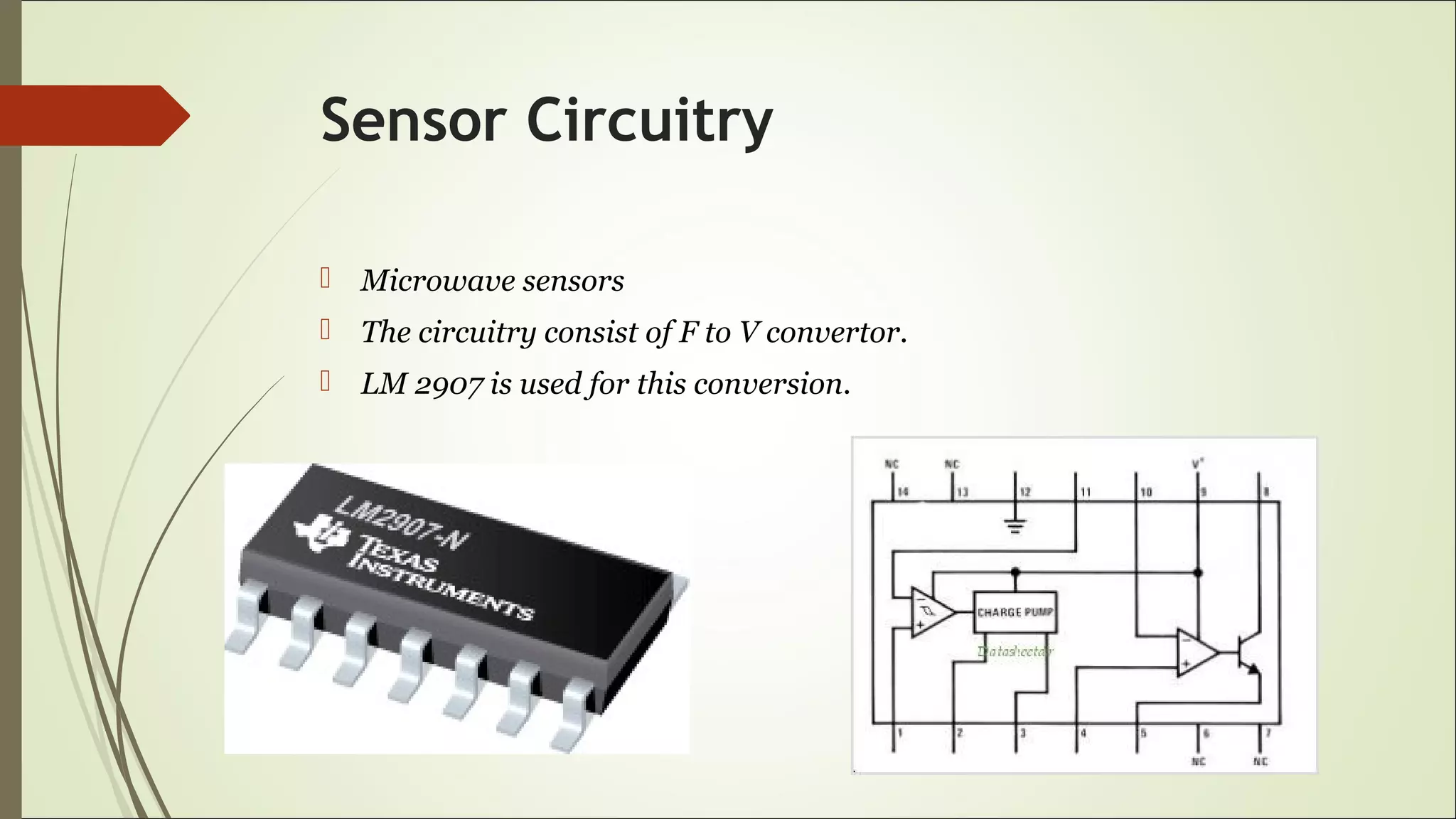
Sensor Circuitry
 Microwave sensors
 The circuitry consist of F to V convertor.
 LM 2907 is used for this conversion.
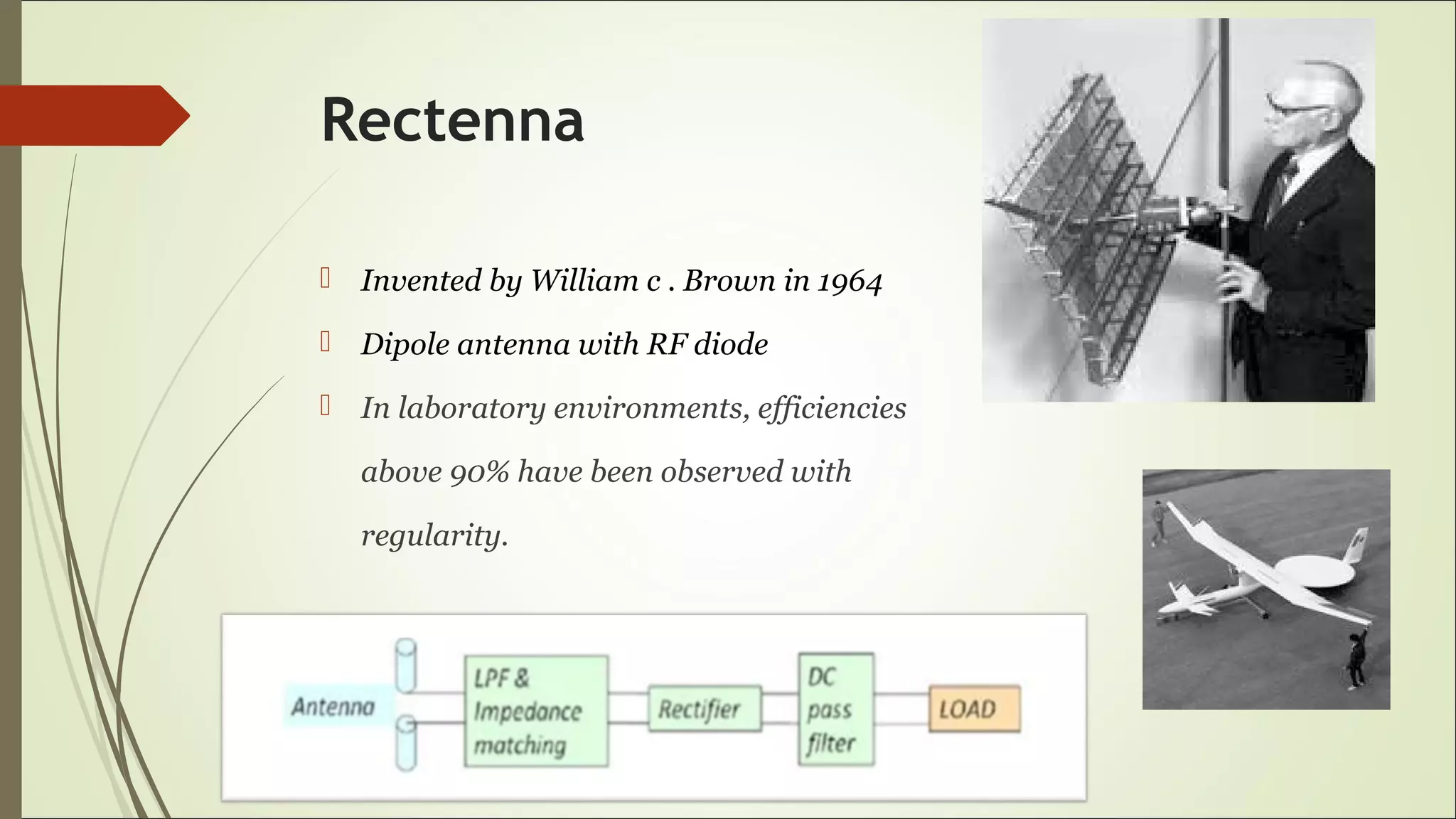
Rectenna
 Invented by William c . Brown in 1964
 Dipole antenna with RF diode
 In laboratory environments, efficiencies
above 90% have been observed with
regularity.
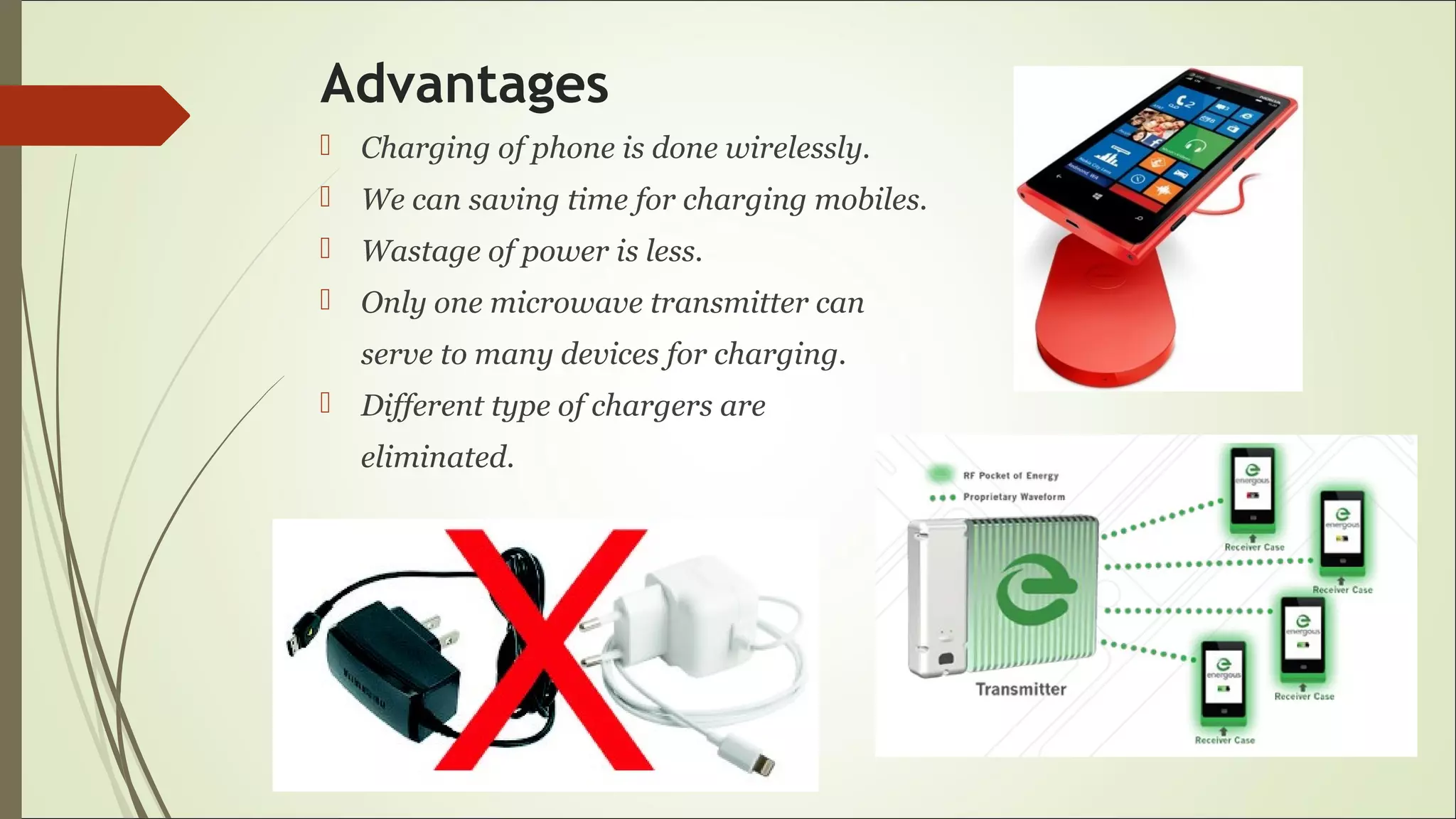
Advantages
 Charging of phone is done wirelessly.
 We can saving time for charging mobiles.
 Wastage of power is less.
 Only one microwave transmitter can
serve to many devices for charging.
 Different type of chargers are
eliminated.
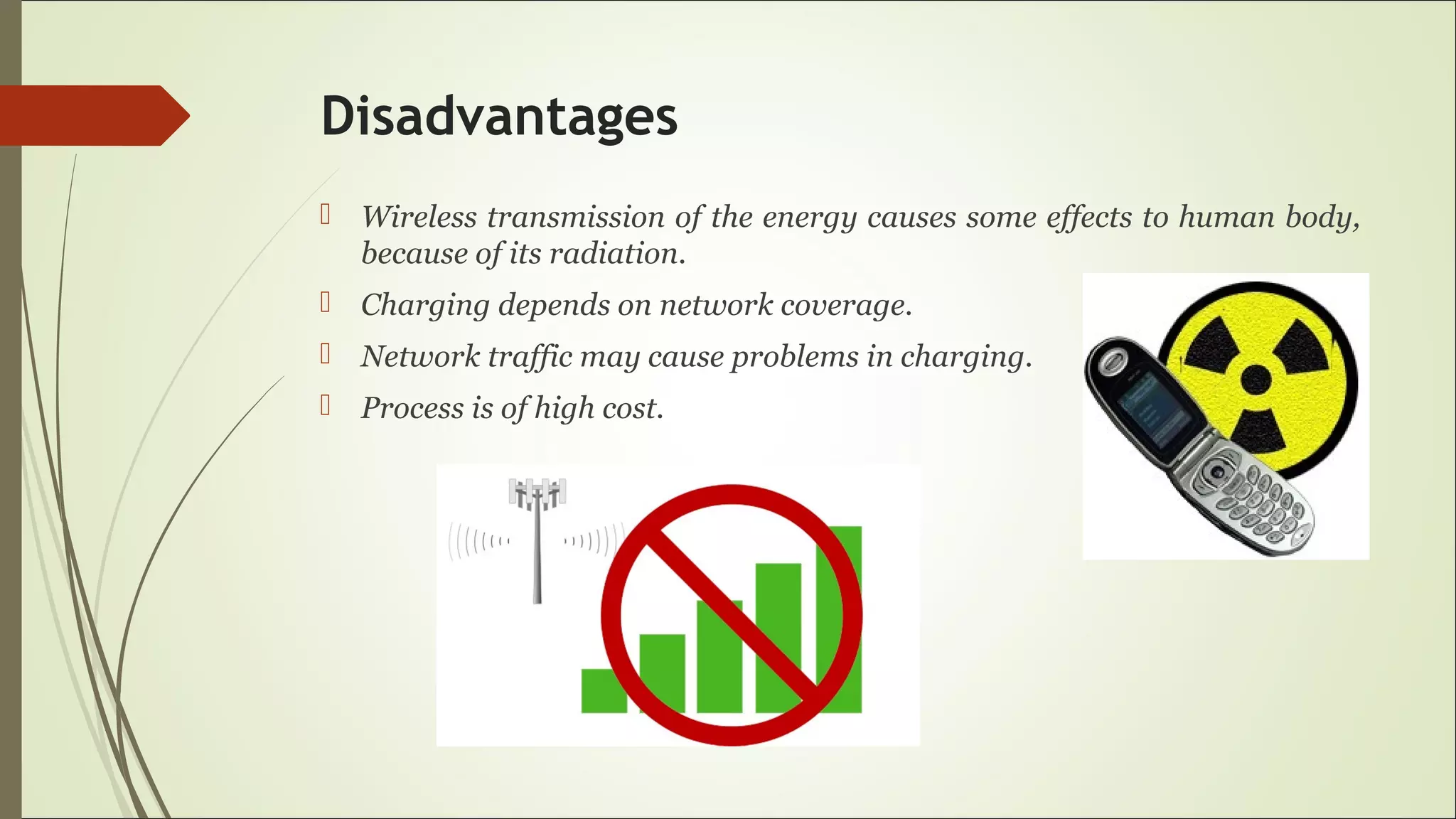
Disadvantages
 Wireless transmission of the energy causes some effects to human body,
because of its radiation.
 Charging depends on network coverage.
 Network traffic may cause problems in charging.
 Process is of high cost.
Conclusion
 Thus this method provides great advantage to the mobile phone
users to carry their phones anywhere even if the place is devoid of
facilities for charging.
“Time is really the only capital that any human being has, and
the only thing he cant afford to lose”
Thank
you

Wireless mobile charging using microwaves

  • 1.
  • 2.
    Introduction  Mobile phonesbecoming a basic part of life, the recharging of mobile phone batteries has always been a problem.  The main objective of this current proposal is to make the recharging of the mobile phones independent of their manufacturer and battery make.  recharging of the mobile phones is done automatically as you talk in your mobile phone! This is done by use of microwaves.
  • 3.
    Electro Magnetic Spectrum Spectrum: The range of wavelengths or frequencies over which electromagnetic radiation extends.
  • 4.
    Worlds Most CommonFrequency Band
  • 5.
    Microwaves  Microwaves area form of electromagnetic radiation with wavelengths ranging from as long as one meter to as short as one millimeter; with frequencies between 300 MHz (100 cm) and 300 GHz (0.1 cm).  Generally used for Telecommunication etc.
  • 6.
  • 7.
    Parts  Transmitter  RFCable  Slotted Wave Guide Antenna  Sensor  Receiver( Rectenna)
  • 8.
    Transmitter Section Transmitter sectionconsist of two parts, They are: 1. Magnetron, 2. Slotted Waveguide antenna.
  • 9.
    Magnetron  High powermicrowave oscillator  Special kind of vacuum tube  Efficiency 50 to 80 %  Uses CROSSED-ELECTRON & MAGNETIC fields
  • 10.
    Slotted Wave GuidedAntenna  Slotted Wave guided Antenna is used as an omni-directional role.  Is an Horizontally Polarized Antenna Type.  Is a very low loss transmission line.
  • 11.
    RF Cable  Designedto work at RF (multi megahertz range).  High data rate wireless transceivers
  • 12.
    Reciever Section Receiver sectionconsist of 3 parts, they are: 1. Sensor, 2. Rectenna
  • 13.
    Sensor Circuitry  Microwavesensors  The circuitry consist of F to V convertor.  LM 2907 is used for this conversion.
  • 14.
    Rectenna  Invented byWilliam c . Brown in 1964  Dipole antenna with RF diode  In laboratory environments, efficiencies above 90% have been observed with regularity.
  • 15.
    Advantages  Charging ofphone is done wirelessly.  We can saving time for charging mobiles.  Wastage of power is less.  Only one microwave transmitter can serve to many devices for charging.  Different type of chargers are eliminated.
  • 16.
    Disadvantages  Wireless transmissionof the energy causes some effects to human body, because of its radiation.  Charging depends on network coverage.  Network traffic may cause problems in charging.  Process is of high cost.
  • 17.
    Conclusion  Thus thismethod provides great advantage to the mobile phone users to carry their phones anywhere even if the place is devoid of facilities for charging. “Time is really the only capital that any human being has, and the only thing he cant afford to lose”
  • 18.