Wire to terminal welding
Sunstone equipmentcaneasilyattachtypical wire gaugesfrom30awg to 14awg. Strandedwire,solid
core wire,tinnedandnickel coatedwires,andmagnetwirescanall be attachedusingthe varioustypes
of systemsavailable.
1. Pulse arc welds(ball andattach) – any of the pulse arc line canperformthese typesof weldsand
the energyisrarelyout of the Nano andMicro range. We prefertouse the Orioni seriesfor
mostapplications,however,due tothe highcustomizabilityof the energydischarge,the
selectable ignitionsequences,andthe NanoMode capability. Forsome of the smallerwire
diametersitcanbe helpful touse the standardignitionmodeonly(nofocusingpre-arc).
The end of the wire isballedusingasingle weldactuation. The size of the ball can be controlled
somewhatbyraisingorloweringthe energylevelaccordingly. Thisstepcansometimesbe
eliminatedbutitisextremelyuseful forkeepingthe strandstogetherduringthe attachment
process.
Once the wire has beenballeditisplacedonthe terminal andthe electrode isaimedona45
degree angle atthe pointof contact betweenthe ball onthe wire andthe terminal. Energy
levelsdependon the gauge of wire,butusuallythe attachmentenergyishigherthanthe setting
usedto ball the wire. A sharp tipis recommendedandslopedagitationisoftenhelpful. Usually
a good settingwill attachthe ball tothe base in a single actuationwithoutnecking.
If the ball can be alignedwiththe edge of the terminal itcanbe easiertoobtainstrong results.
If a hole can be drilledinthe terminal thatwillacceptthe wire diameter,the wire canbe
insertedthroughthe hole andthe ballingoperationwill actuallyattachthe wire at the same
time (onlyone weldactuationforballingandattachingthe wire).
Some wires become brittleonthe opposite sideof the weldandwill experience failure inapeel
testbut exhibitgoodstrengthinapull test.
The pulse arc methodof weldingrequires some practice inattainingthe ideal anglesandsteady
hands.
2. Resistance welds –The capacitive discharge linecanbe usedtoattach wiressuccessfully.An
opposedweldheadisusedwhenthere isaccesstobothsides;ora parallel weldhead forsingle
side access. Notchedtungstenelectrodescanhelpgatherstrandedwires duringthe weld or
minimize solidwire deformation. Tungstenelectrodesare typicallyusedforanycopperor brass
wirestohelpminimizesticking. Steel ornickel wires canbe weldedusingcopperelectrodes.
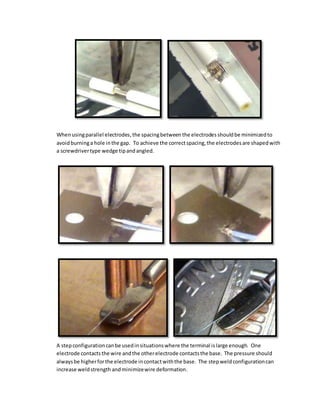
Whenusingparallel electrodes,the spacingbetween the electrodes shouldbe minimizedto
avoidburninga hole inthe gap. To achieve the correctspacing,the electrodesare shapedwith
a screwdrivertype wedge tipandangled.
A stepconfigurationcanbe usedinsituationswhere the terminal islarge enough. One
electrode contactsthe wire andthe otherelectrode contactsthe base. The pressure should
alwaysbe higherforthe electrode incontactwiththe base. The stepweldconfigurationcan
increase weldstrength andminimizewire deformation.
Whenthere isaccess to bothsidesof the terminal itisbestto use the opposedweldhead
configurationforgoodstrength. Usuallyaflattipped lowerelectrode isusedtoactas a flat
supportfor the part. Thisis the ideal configurationforbeststrengthandeasiestwelds.
It ishelpful totryto minimize disparityof thicknessesbetweenthe wire diameterandthe
thicknessof the pad/terminal. The more similarinthicknessthe partsare, the easiertheywill
be to weld. Itis almostalwaysbetterto use a thinnerwire diameterwithathickerpadthan to
attemptweldswith abigwire diameterona thinpad(the heatrequiredtomeltthe copperwire
will evaporate the padorseparate itfrom itssubstrate material).
One of the challengeswithresistance weldingwiresisminimizingthe neckingof the wire atthe
weldspotsince the neckingcancause the wire to breakoff. For thisreasonthe notched
electrodesworkverywell. A slightradiuscanbe groundintothe notch to helpevenmore.
Anotherchallenge withstrandedwireiskeepingthe weldstrengthconsistent. Aspressure is
appliedbythe weldhead,the strandstendtospreadoutand flatten. Dependingonthe
alignmentandpositionof the strands,theymayflattenoutmore orlesseachtime. Thischange
ingeometryleadstoa differenceinenergyrequiredtobond(inotherwords,aperfectsetting
one time will notworkthe nextbecause the wire spreaddifferently). Thisissue canbe
alleviatedslightlybynotchingthe electrodetokeepthe strandstogether,andbykeepingthe
electrode placementasclose tothe wire insulationaspossible.
3. Thermo-compression - UsuallyperformedusingDCD320 and a Parallel microweldhead. the
WH1125 can be usedbyattachinga microweldheadparallel electrodeholder inplace of the
upperelectrode holder,butsmallerapplicationswill require alighterforce thanthe 1125 can
provide. The CD100SP has beensuccessfullyusedaswell butsince the lengthof the weld
discharge cannotbe adjustedusingthe CD100, it isrecommendedtouse the DCD320.
The thermo-compressionelectrodeisatungstenelectrodethatissplitdownthe middle and
joinedatthe verytip. As energypassesthroughone side of the electrode tothe otherside,the
tipexperiencesextremeheatdue tothe resistance of the tungsten. Asthe heatat the tip is
appliedtothe wire,the wire meltsandthere mustbe sufficientforce deliveredbythe selected
weldheadtopressthe moltenwire againstthe terminal toforma bond. Generallyan
MWH2000 isrecommendedforthatreason. Thistechnologyisusuallyusedonfinergauge solid
core wires suchas magnetwire. The benefitisthatitcan burn throughpolyimide coating(no
needforelectrical contactbetweenthe electrode andthe wire). Thistechnologyisalso
beneficial becausethe heatisconcentratedontopof the wire andwill be lesslikelytodamage
fragile substrate material orhave heataffectedzonesonthe backsidesof boards. Mostly used
for small wirestoPCBterminalsandsolderreflow typesof terminals.
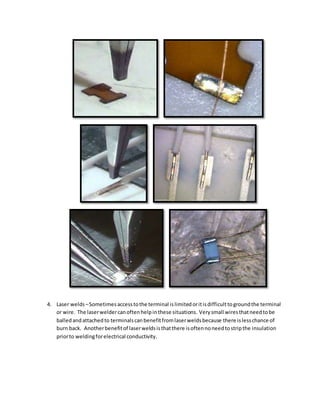
4. Laser welds –Sometimesaccesstothe terminal islimitedoritisdifficulttogroundthe terminal
or wire. The laserweldercanoftenhelpinthese situations. Verysmall wiresthatneedtobe
balledandattachedto terminalscanbenefitfromlaserweldsbecause there islesschance of
burn back. Anotherbenefitof laserweldsisthatthere isoftennoneedtostripthe insulation
priorto weldingforelectrical conductivity.
Wire to terminal welding

Wire to terminal welding

  • 1.
    Wire to terminalwelding Sunstone equipmentcaneasilyattachtypical wire gaugesfrom30awg to 14awg. Strandedwire,solid core wire,tinnedandnickel coatedwires,andmagnetwirescanall be attachedusingthe varioustypes of systemsavailable. 1. Pulse arc welds(ball andattach) – any of the pulse arc line canperformthese typesof weldsand the energyisrarelyout of the Nano andMicro range. We prefertouse the Orioni seriesfor mostapplications,however,due tothe highcustomizabilityof the energydischarge,the selectable ignitionsequences,andthe NanoMode capability. Forsome of the smallerwire diametersitcanbe helpful touse the standardignitionmodeonly(nofocusingpre-arc). The end of the wire isballedusingasingle weldactuation. The size of the ball can be controlled somewhatbyraisingorloweringthe energylevelaccordingly. Thisstepcansometimesbe eliminatedbutitisextremelyuseful forkeepingthe strandstogetherduringthe attachment process.
  • 2.
    Once the wirehas beenballeditisplacedonthe terminal andthe electrode isaimedona45 degree angle atthe pointof contact betweenthe ball onthe wire andthe terminal. Energy levelsdependon the gauge of wire,butusuallythe attachmentenergyishigherthanthe setting usedto ball the wire. A sharp tipis recommendedandslopedagitationisoftenhelpful. Usually a good settingwill attachthe ball tothe base in a single actuationwithoutnecking. If the ball can be alignedwiththe edge of the terminal itcanbe easiertoobtainstrong results.
  • 3.
    If a holecan be drilledinthe terminal thatwillacceptthe wire diameter,the wire canbe insertedthroughthe hole andthe ballingoperationwill actuallyattachthe wire at the same time (onlyone weldactuationforballingandattachingthe wire). Some wires become brittleonthe opposite sideof the weldandwill experience failure inapeel testbut exhibitgoodstrengthinapull test. The pulse arc methodof weldingrequires some practice inattainingthe ideal anglesandsteady hands. 2. Resistance welds –The capacitive discharge linecanbe usedtoattach wiressuccessfully.An opposedweldheadisusedwhenthere isaccesstobothsides;ora parallel weldhead forsingle side access. Notchedtungstenelectrodescanhelpgatherstrandedwires duringthe weld or minimize solidwire deformation. Tungstenelectrodesare typicallyusedforanycopperor brass wirestohelpminimizesticking. Steel ornickel wires canbe weldedusingcopperelectrodes.
  • 4.
    Whenusingparallel electrodes,the spacingbetweenthe electrodes shouldbe minimizedto avoidburninga hole inthe gap. To achieve the correctspacing,the electrodesare shapedwith a screwdrivertype wedge tipandangled. A stepconfigurationcanbe usedinsituationswhere the terminal islarge enough. One electrode contactsthe wire andthe otherelectrode contactsthe base. The pressure should alwaysbe higherforthe electrode incontactwiththe base. The stepweldconfigurationcan increase weldstrength andminimizewire deformation.
  • 5.
    Whenthere isaccess tobothsidesof the terminal itisbestto use the opposedweldhead configurationforgoodstrength. Usuallyaflattipped lowerelectrode isusedtoactas a flat supportfor the part. Thisis the ideal configurationforbeststrengthandeasiestwelds. It ishelpful totryto minimize disparityof thicknessesbetweenthe wire diameterandthe thicknessof the pad/terminal. The more similarinthicknessthe partsare, the easiertheywill be to weld. Itis almostalwaysbetterto use a thinnerwire diameterwithathickerpadthan to attemptweldswith abigwire diameterona thinpad(the heatrequiredtomeltthe copperwire will evaporate the padorseparate itfrom itssubstrate material). One of the challengeswithresistance weldingwiresisminimizingthe neckingof the wire atthe weldspotsince the neckingcancause the wire to breakoff. For thisreasonthe notched electrodesworkverywell. A slightradiuscanbe groundintothe notch to helpevenmore. Anotherchallenge withstrandedwireiskeepingthe weldstrengthconsistent. Aspressure is appliedbythe weldhead,the strandstendtospreadoutand flatten. Dependingonthe alignmentandpositionof the strands,theymayflattenoutmore orlesseachtime. Thischange ingeometryleadstoa differenceinenergyrequiredtobond(inotherwords,aperfectsetting one time will notworkthe nextbecause the wire spreaddifferently). Thisissue canbe
  • 6.
    alleviatedslightlybynotchingthe electrodetokeepthe strandstogether,andbykeepingthe electrodeplacementasclose tothe wire insulationaspossible. 3. Thermo-compression - UsuallyperformedusingDCD320 and a Parallel microweldhead. the WH1125 can be usedbyattachinga microweldheadparallel electrodeholder inplace of the upperelectrode holder,butsmallerapplicationswill require alighterforce thanthe 1125 can provide. The CD100SP has beensuccessfullyusedaswell butsince the lengthof the weld discharge cannotbe adjustedusingthe CD100, it isrecommendedtouse the DCD320. The thermo-compressionelectrodeisatungstenelectrodethatissplitdownthe middle and joinedatthe verytip. As energypassesthroughone side of the electrode tothe otherside,the tipexperiencesextremeheatdue tothe resistance of the tungsten. Asthe heatat the tip is appliedtothe wire,the wire meltsandthere mustbe sufficientforce deliveredbythe selected weldheadtopressthe moltenwire againstthe terminal toforma bond. Generallyan MWH2000 isrecommendedforthatreason. Thistechnologyisusuallyusedonfinergauge solid core wires suchas magnetwire. The benefitisthatitcan burn throughpolyimide coating(no needforelectrical contactbetweenthe electrode andthe wire). Thistechnologyisalso beneficial becausethe heatisconcentratedontopof the wire andwill be lesslikelytodamage fragile substrate material orhave heataffectedzonesonthe backsidesof boards. Mostly used for small wirestoPCBterminalsandsolderreflow typesof terminals.
  • 7.
    4. Laser welds–Sometimesaccesstothe terminal islimitedoritisdifficulttogroundthe terminal or wire. The laserweldercanoftenhelpinthese situations. Verysmall wiresthatneedtobe balledandattachedto terminalscanbenefitfromlaserweldsbecause there islesschance of burn back. Anotherbenefitof laserweldsisthatthere isoftennoneedtostripthe insulation priorto weldingforelectrical conductivity.