Windows Powershell in Action 1st Edition Bruce G. Payette
Windows Powershell in Action 1st Edition Bruce G. Payette
Windows Powershell in Action 1st Edition Bruce G. Payette
Windows Powershell in Action 1st Edition Bruce G. Payette
Windows Powershell in Action 1st Edition Bruce G. Payette
1.
Visit https://ebookultra.com todownload the full version and
explore more ebooks or textbooks
Windows Powershell in Action 1st Edition Bruce G.
Payette
_____ Click the link below to download _____
https://ebookultra.com/download/windows-powershell-in-
action-1st-edition-bruce-g-payette/
Explore and download more ebooks or textbooks at ebookultra.com
2.
Here are somerecommended products that we believe you will be
interested in. You can click the link to download.
Learn Windows PowerShell in a Month of Lunches Don Jones
https://ebookultra.com/download/learn-windows-powershell-in-a-month-
of-lunches-don-jones/
Windows PowerShell 2 0 Bible 1st Edition Thomas Lee
https://ebookultra.com/download/windows-powershell-2-0-bible-1st-
edition-thomas-lee/
Microsoft SQL Server 2008 Administration with Windows
PowerShell 1st Edition Ananthakumar Muthusamy
https://ebookultra.com/download/microsoft-sql-
server-2008-administration-with-windows-powershell-1st-edition-
ananthakumar-muthusamy/
Windows Phone 8 in Action 2nd Edition Timothy Binkley-
Jones
https://ebookultra.com/download/windows-phone-8-in-action-2nd-edition-
timothy-binkley-jones/
3.
SonarQube in Action1st Edition G. Ann Campbell
https://ebookultra.com/download/sonarqube-in-action-1st-edition-g-ann-
campbell/
Integrative Psychotherapy in Action Richard G Erskine
https://ebookultra.com/download/integrative-psychotherapy-in-action-
richard-g-erskine/
iOS 7 in Action 1st Edition Brendan G. Lim
https://ebookultra.com/download/ios-7-in-action-1st-edition-brendan-g-
lim/
Windows PowerShell Cookbook The Complete Guide to
Scripting Microsoft s Command Shell 3rd Edition Holmes
https://ebookultra.com/download/windows-powershell-cookbook-the-
complete-guide-to-scripting-microsoft-s-command-shell-3rd-edition-
holmes/
PowerShell in Depth 2nd Edition Don Jones
https://ebookultra.com/download/powershell-in-depth-2nd-edition-don-
jones/
5.
Windows Powershell inAction 1st Edition Bruce G.
Payette Digital Instant Download
Author(s): Bruce G. Payette
ISBN(s): 9781932394900, 1932394907
Edition: 1
File Details: PDF, 6.83 MB
Year: 2007
Language: english
vii
brief contents
Part 1Learning PowerShell 1
1 Welcome to PowerShell 3
2 The basics 25
3 Working with types 55
4 Operators and expressions 87
5 Advanced operators and variables 115
6 Flow control in scripts 147
7 Functions and scripts 177
8 Scriptblocks and objects 214
9 Errors, exceptions, and script debugging 251
Part 2 Using PowerShell 295
10 Processing text, files, and XML 297
11 Getting fancy—.NET and WinForms 344
12 Windows objects: COM and WMI 392
13 Security, security, security 440
15.
ix
contents
foreword xv
preface xvii
acknowledgmentsxix
about this book xx
Part 1 LEARNING POWERSHELL 1
1 Welcome to PowerShell 3
1.1 What is PowerShell? 5
Shells, command-lines, and scripting languages 5 ✦ Why a new shell?
Why now? 7 ✦ The last mile problem 7
1.2 Soul of a new language 8
Learning from history 8 ✦ Leveraging .NET 9
1.3 Brushing up on objects 10
Reviewing object-oriented programming 11
Objects in PowerShell 12
1.4 Dude! Where’s my code? 13
Installing and starting PowerShell 13 ✦ Command editing 15
Command completion 16 ✦ Evaluating basic expressions 17
Processing data 18
1.5 Summary 23
2 The basics 25
2.1 Command concepts and terminology 27
Commands and cmdlets 27 ✦ Command categories 30
Aliases and elastic syntax 34
2.2 Parsing and PowerShell 37
How PowerShell parses 37 ✦ Quoting 38 ✦ Expression mode and
command mode parsing 41 ✦ Statement termination 43
16.
x CONTENTS
2.3 Pipelinesand commands 45
Pipelines and streaming behavior 46
Parameters and parameter binding 47
2.4 Formatting and output 48
The formatting cmdlets 49 ✦ The outputter cmdlets 51
2.5 Summary 54
3 Working with types 55
3.1 Type management in the wild, wild west 55
PowerShell: a type-promiscuous language 56
The type system and type adaptation 58
3.2 Basic types and literals 60
Strings 60 ✦ Numbers and numeric literals 64 ✦ Collections:
dictionaries and hashtables 66 ✦ Collections: arrays and
sequences 71 ✦ Type literals 75
3.3 Type conversions 79
How type conversion works 79 ✦ PowerShell’s type-conversion
algorithm 82 ✦ Special type conversions in parameter binding 85
3.4 Summary 86
4 Operators and expressions 87
4.1 Arithmetic operators 89
The addition operator 89 ✦ The multiplication operator 92
Subtraction, division, and the modulus operator 94
4.2 The assignment operators 96
Multiple assignments 97 ✦ Multiple assignments with type qualifiers 98
Assignment operations as value expressions 100
4.3 Comparison operators 101
Scalar comparisons 102 ✦ Using comparison operators with collections 105
4.4 The pattern matching operators 107
Wildcard patterns 107 ✦ Regular expressions 108
4.5 Logical and bitwise operators 113
4.6 Summary 113
5 Advanced operators and variables 115
5.1 Operators for working with types 115
5.2 The unary operators 117
5.3 Grouping, subexpressions, and array subexpressions 119
5.4 Array operators 123
The comma operator “,” 123 ✦ The range operator 126
Array indexing 127
17.
CONTENTS xi
5.5 Propertyand method operators 132
The “.” operator 133 ✦ Static methods and the “::” operator 136
5.6 The PowerShell format operator -F 137
5.7 Redirection and the redirection operators 138
5.8 Variables 141
5.9 Summary 145
6 Flow control in scripts 147
6.1 Using the if/elseif/else statement 148
6.2 The while loop 151
6.3 The do/while loop 152
6.4 The for loop 153
6.5 The foreach loop 155
6.6 Labels, break, and continue 159
6.7 The PowerShell switch statement 161
Basic use of the PowerShell switch statement 161 ✦ Using wildcard patterns
with the switch statement 163 ✦ Using regular expressions with the switch
statement 164 ✦ Processing files with the switch statement 167
Using the $switch loop enumerator in the switch statement 168
6.8 Flow control using cmdlets 169
The Foreach-Object cmdlet 170 ✦ The Where-Object cmdlet 173
6.9 The value of statements 175
6.10Summary 176
7 Functions and scripts 177
7.1 Function basics 178
7.2 Formal parameters and the param statement 181
Specifying parameter types 183 ✦ Handling variable numbers of
arguments 185 ✦ Initializing function parameters 186 ✦ Using switch
parameters to define flags 188 ✦ Variables and scoping rules 190
Using variable scope modifiers 193
7.3 Returning values from functions 193
Debugging function output 196 ✦ The return statement 198
7.4 Using functions in a pipeline 199
Filters and functions 201 ✦ Functions as cmdlets 202
7.5 Managing functions 204
18.
xii CONTENTS
7.6 Scriptsat long last 205
Passing arguments to scripts 207 ✦ The param statement 208 ✦ Scopes
and scripts 208 ✦ Exiting scripts and the exit statement 209
Dotting scripts and functions 210
7.7 Summary 212
8 Scriptblocks and objects 214
8.1 Scriptblock basics 215
Invoking commands 216 ✦ Getting CommandInfo objects 217 ✦ The
ScriptBlock literal 219 ✦ Defining functions at runtime 220
8.2 Building and manipulating objects 222
Looking at members 222 ✦ Synthetic members 223 ✦ Using Add-
Member to extend objects 224 ✦ Using the select-object cmdlet 230
8.3 A closer look at the type-system plumbing 233
Adding a property 235 ✦ Shadowing an existing property 236
8.4 Extending the PowerShell language 237
Little languages 237 ✦ Adding a CustomClass keyword to PowerShell 238
8.5 Type extension 243
8.6 Building code at runtime 245
The Invoke-Expression cmdlet 245 ✦ The ExecutionContext variable 246
Creating functions using the function: drive 248
8.7 Summary 249
9 Errors, exceptions, and script debugging 251
9.1 Error handling 252
ErrorRecords and the error stream 253 ✦ The $error variable and
–ErrorVariable parameter 256 ✦ The $? and $LASTEXITCODE
variables 259 ✦ $ErrorActionPreference and the -ErrorAction
parameter 261
9.2 Dealing with errors that terminate execution 265
The trap statement 265 ✦ The throw statement 268
9.3 Script debugging 270
Debugging with the host APIs 270 ✦ The Set-PSDebug cmdlet 271
Tracing statement execution 271 ✦ Stepping through statement
execution 275 ✦ Catching undefined variables with strict mode 276
9.4 Nested prompts and breakpoints 277
Suspending a script while in step-mode 277 ✦ Creating a breakpoint
command 279 ✦ The script call stack, or “How did I get here?” 281
9.5 Low-level tracing 283
The Trace-Command cmdlet 283 ✦ Tracing type conversions 285
Tracing parameter binding 287
19.
CONTENTS xiii
9.6 ThePowerShell event log 291
Examining the event log 291
Exchange 2007 and the PowerShell event log 293
9.7 Summary 293
Part 2 USING POWERSHELL 295
10 Processing text, files, and XML 297
10.1 Processing unstructured text 298
Using System.String to work with text 298
Using regular expressions to manipulate text 304
10.2 File processing 305
Working with PSDrives 307 ✦ Working with paths that contain
wildcards 309 ✦ Reading and writing files 313
Searching files with the Select-String cmdlet 319
10.3 XML processing 322
Using XML as objects 322 ✦ Loading and saving XML files. 326
Processing XML documents in a pipeline 333 ✦ Using XPath 334
The Import-Clixml and Export-Clixml cmdlets 339
10.4 Summary 342
11 Getting fancy—.NET and WinForms 344
11.1 Using .NET from PowerShell 345
.NET basics 345 ✦ Working with assemblies 346 ✦ Finding types 348
Creating instances of types 350 ✦ PowerShell is not C#—A cautionary
tale 353 ✦ Working with generic types 358
11.2 PowerShell and the Internet 361
Example: Retrieving a web page 361 ✦ Example: Processing an RSS
feed 362 ✦ Example: Writing a web server in PowerShell 364
11.3 PowerShell and graphical user interfaces 371
WinForms basics 371 ✦ Example: "My first form" 372 ✦ Example: Simple
dialog 374 ✦ Example: A WinForms library 376 ✦ Example: A simple
calculator 379 ✦ Example: Displaying data 385
Example: Using the GDI+ to do graphics 387
11.4 Summary 391
12 Windows objects: COM and WMI 392
12.1 Working with COM in PowerShell 393
Automating Windows with COM 396 ✦ Networking, applications, and
toys 405 ✦ Using the ScriptControl object 415
Issues with COM 417
20.
xiv CONTENTS
12.2 Workingwith WMI in PowerShell 421
Exploring WMI—what is it, and why do you care? 421 ✦ The Get-
WmiObject cmdlet 422 ✦ The WMI object adapter 423 ✦ WMI
shootout—VBScript versus PowerShell 425 ✦ The WMI type shortcuts 429
Working with WMI methods 432 ✦ Working with WMI events 433
Putting modified WMI objects back 434
12.3 So which object model should I choose? 437
12.4 Summary 437
13 Security, security, security 440
13.1 Introduction to security 441
What security is 441 ✦ What security is not 441
Perception and security 442
13.2 Security modeling 443
Introduction to threat modeling 444 ✦ Classifying threats using the STRIDE
model 444 ✦ Security basics: Threats, assets, and mitigations 445
13.3 Securing the PowerShell environment 449
Secure by default 449 ✦ Managing the command path 450
Choosing a script execution policy 451
13.4 Signing scripts 453
How public key encryption and one-way hashing work 453 ✦ Signing
authorities and certificates 454 ✦ Creating a self-signed certificate 455
Using a certificate to sign a script 458 ✦ Enabling strong private key
protection for your certificate 462
13.5 Writing secure scripts 465
Using the SecureString class 465 ✦ Working with credentials 468
Avoiding Invoke-Expression 471
13.6 Summary 474
appendix A Comparing PowerShell to other languages 476
appendix B Admin examples 499
appendix C The PowerShell grammar 520
index 531
21.
xv
foreword
Windows PowerShell hasthe widest range of any language I know. You can quickly learn the
basic concepts and use it as an interactive command line shell to write simple, ad hoc scripts.
Learn a bit more and you can use it to write rich, sophisticated scripts to manage your most
important production servers. Learn a bit more still, and you can write .NET programs to access
the awesome power of the .NET frameworks.
When we started to develop PowerShell, I was advised to deliver an interactive shell or script-
ing language and to avoid .NET programming, because C# and VB.NET had that covered. This
had been the standard approach of every OS in the last 30 years. I knew that we could do better.
A new architecture based upon a deep rethink of the problem to provide our customers with a
single solution which would do the following:
• Allow beginners a quick start and the ability to become advanced users over time, enhanc-
ing their careers and salary potential.
• Let advanced users use it in lightweight, ad hoc ways for simple problems and in sophisti-
cated, production-oriented ways for complex problems.
• Create a large community of beginners and advanced users to share experiences,
approaches, and scripts.
• Create a large ecosystem which would increase the opportunities for job hunters as well as
increase the hiring pool for employers.
Designing and implementing a solution that could do all that was challenging. At times, we had
to make some difficult choices, but we were on a mission and we stuck to our vision. This is
where Bruce Payette comes in. Bruce is a founding member of the PowerShell team and the
development leader of the PowerShell language. I paired Bruce with Jim Truher, a Program Man-
ager (PM) and another founding member of the team. As a PM, Jim was the advocate for the user
and the voice of sanity. Bruce and Jim worked incredibly well together, producing the PowerShell
language and addressing the many problems that came up. Bruce is a walking encyclopedia of
every good, bad, solid, and wacky language idea that has been tried in the last few decades. As
issues came up, Bruce explained how the different languages addressed similar issues, where and
why they worked well, or failed. Bruce was crucial in solving the problems we encountered and
in fulfilling our ambitious goals.
22.
xvi FOREWORD
Since PowerShellis new, we know that you will have to invest time to learn it. When we added
a new concept, technique, or syntax, we did so in a way that allows you to reuse that element every-
where so you can minimize the number of things to learn and maximize the value of each one.
One of my favorite jokes goes like this: Two guys are in the woods when they encounter a
bear who decides to eat them for lunch. They are about to run away when one of them stops to
put on a pair of running shoes. His buddy informs him that bears can run over 30 mph and that
there is no way he can outrun it, even with running shoes. His friend replies, “I don’t have to out-
run the bear, I just have to outrun you.”
It is often difficult to understand something you see or read until you understand what moti-
vated it. One of reasons I love Bruce’s book is that, in addition to providing a great language ref-
erence, it provides a clear description of the motivations and the thinking behind the language.
This is a book that only Bruce could have written.
JEFFREY SNOVER
Windows PowerShell Architect
23.
xvii
preface
Wow, I wrotea book! How the heck did that happen? One moment you’re a humble program-
ming language designer, and the next you’re up until 2 a.m. every night trying to figure out how
to say “and in the next example” 500 times without being boring.
So why write it? Because of PowerShell. Although PowerShell draws heavily from existing tech-
nologies, it combines them in novel ways. This novelty leads to misunderstandings, which then
turn into urban myths, such as, PowerShell does X because its designers are kitten-eating aliens.
Trust me–we’re not.
As we showed our work to the world (three public betas and two release candidates), I found
that there were a few questions that were being asked over and over again. These questions would
arise as a result of an earlier language experience that the user had had. Typically, a simple expla-
nation was all it took to clear up the confusion (we had a very smart group of beta testers). How-
ever, we couldn’t keep answering these questions one-by-one; that just wouldn’t scale. There
needed to be a way to gather the information in one place. This book is my attempt to do just that.
The other astonishing thing was just how much power comes out of the synergy of the tech-
nologies underlying PowerShell. We saw this in our own internal uses of PowerShell as well as
in some of the community examples. The PowerShell team read people’s blogs and was astonished
by the creativity that was being demonstrated. So the second goal of this book is to foster that
creativity by conveying how capable PowerShell is.
Finally, this is the book I had always wanted to read myself. I love programming languages and
reading about them, and the best programming books I found are the ones that explain not only
“what” but also “why.” Look at the books that continue to sell year after year, like Kernighan and
Ritchie’s The C Programming Language, Stroustrup’s C++ book, and Ousterhout’s TCL book. The
TCL book is a very good example: it describes an early version of the TCL language, it has never
been updated, yet it continues to sell. Why? This book, and others like it, give the reader some-
thing more than just technical detail. They convey a sense of the overall design as well as some
of the intent of the designer. So please let me know if you think I succeed in doing that with this
book, OK?
The very last goal of the book was to help build and maintain momentum around PowerShell.
PowerShell was released around the time of Microsoft’s biggest product release ever: the revamped
operating system Vista together with the new Office suite (with all those wild graphical 3D doo-
hickeys added everywhere). But we’re just a command line. There is a good rule to follow when
24.
xviii PREFACE
planning aproduct launch: never open a lemonade stand next to a Wal-Mart. But we did, and
now…would you care for some lemonade?
Come on in, learn PowerShell, be creative, and, above all, have fun!
25.
xix
acknowledgments
This book isfor my wife, Tina. It literally wouldn’t exist without her patience, support, and
encouragement. She kept me fed, sane, and she even read early drafts of material about which she
knows nothing. Now that’s support! She also contributed the Gnome picture in chapter 13 and
the bird-watching information and pictures in chapter 2.
Thanks to my parents for their love and support over the years. Yes, I am finally done with
the book.
Of course there wouldn’t be a PowerShell book without a PowerShell product in the first place,
and PowerShell wouldn’t exist without the vision of its chief architect, Jeffrey Snover. Special
thanks to Jeffrey for reviewing the mansucript and for agreeing to write the foreword to the book.
Another other major contributor was Jim Truher, my co-conspirator in the PowerShell lan-
guage design. Yes, it’s our fault.
I’d like to thank the rest of PowerShell language team: George Xie, Marcel Ortiz Soto (test-
dude extraordinaire), and Wei Wu, all of whom contributed enormously to the project. Kaushik
Pushpavanam, one of the original PowerShell team members, gets major props for introducing
a unit test framework into the PowerShell development process early and then getting the devel-
opers to use it and write tests. This gave us the freedom and agility to listen to customers and
incorporate changes throughout the development process. Thanks to Hilal Al-Hilali for knowing
how to ship; he’s a mean man with a theme. Thanks to Charlie Chase for winning. PowerShell
team members Arul Kumaravel and Abhishek Agrawal contributed significantly to the COM and
WMI examples in chapter 12. (Arul wrote the COM support, so who could have been better?)
Thanks also to all of the reviewers of the manuscript in its many stages of development: Jeffrey
Copeland, Arul Kumaravel, Rene Gobeyn, Jeffrey Snover, Steve Simmons, Keith Hill, Oliver
Sturm, Thomas Restrepro, Anil Radhakrishna, Alex K. Angelopoulos, David McMahon, Curt
Christianson, Anderson Patricio, Jon Skeet, and Robert. W. Anderson. A special thanks to Alex
Angelopolous who did the final technical review of the book. I’d also like to thank all of the par-
ticipants in the Manning Early Access Program. You guys rock! Much appreciation to everyone
at Manning, starting with my publisher Marjan Bace, my editor Michael Stephens, my develop-
ment editors Betsey Henkels and Jackie Carter, and all the production staff for their hard work
and patience with a new author.
Finally, I want to thank my friend and mentor David Tillbrook for never being satisfied with
the merely adequate. He has a lot to teach us all.
attempted to board.The advance was met by Jones at the head of a
few men, pike in hand, with such firmness that it was not pressed
home, and the men returned to their stations at the guns and
resumed the fight.
Meanwhile, Richard Dale, seconded by his midshipmen, with rare
and never-to-be-undervalued presence of mind, had stopped the
oncoming rush of frightened English prisoners, who now greatly
outnumbered the broken crew of the Richard. He sprang among
them, beating them down, driving them back, menacing them with
the point of the sword, at the same time telling them that the
English ship was sinking, and that they were in the same condition,
and unless they went to the pumps immediately all hands would be
inevitably lost. The audacity of this statement was worthy of Jones
himself. It was a rare action on the part of a boy of twenty-three
years of age. Such a young man under present conditions in the
United States Navy probably would be filling the responsible station
of a naval cadet afloat![16] Instantly divining this new peril, the
commodore himself sprang to the hatchway and seconded Dale's
effort. Incredible as it seems, the two men actually forced the panic-
stricken, bewildered, and terrified English prisoners to man the
pumps, thus relieving a number of the crew of the Richard; and the
singular spectacle was presented of an American ship kept afloat by
the efforts of Englishmen, and thus enabled to continue an almost
hopeless combat. Dale, with imperturbable audacity, remained below
in command of them.
The Richard was a wreck. She had been fought to a standstill. Her
battery was silenced, her decks were filled with released prisoners,
she was making water fast, she was on fire in two or three places;
numbers of her crew had been killed and wounded, the water had
overflowed the cockpit, and the frightened surgeon had been driven
to the deck, where, in conjunction with some of the French officers,
he counseled surrender.
28.
"What!" cried PaulJones, smiling at the surgeon, "What, doctor!
Would you have me strike to a drop of water? Help me to get this
gun over!"
But the doctor, liking the looks of things on deck even less than
below, ran down the hatchway, and, his station untenable, wandered
to and fro and ministered to the wounded on every side as best he
could. Meanwhile Jones had taken the place of the purser, Mr.
Mease, commanding the upper battery, who had been severely
wounded and forced to leave his station. The commodore was
personally directing the fire of the upper deck guns left serviceable
on the Richard, the two 9-pounders on the quarter-deck. With great
exertion another gun was dragged over from the port side, Jones
lending a hand with the rest, and the fire of the three was
concentrated upon the mainmast of the Serapis.
About this time, between half after nine and ten o'clock, a huge
black shadow came darting between the moonlight and the two
frigates grinding against each other. It was the Alliance once more
entering the fray. After running away from the Richard toward the
Scarborough and the Pallas, she hovered about until she found that
the former had capitulated after a gallant defense against the
overwhelming superiority of the French ship. Then Landais headed
once more for the Richard and the Serapis. To reach them, he was
forced to make two tacks. As he approached, a burning anxiety filled
the minds of Jones and the officers who were left on deck with him,
as to what Landais would do. They were soon enlightened.
Sailing across the bow of the Serapis, the Alliance drew past the
stern of the Richard, and when she had reached a position slightly
on the quarter of the latter ship, she poured in a broadside. There
could be no misapprehension on the part of Landais as to which ship
he was firing into. The Richard was a black ship with a high poop,
and the Serapis was painted a creamy white with much lower stern.
The moon was filling the sky with brilliant light. Things were as plain
as if it were daytime. In addition to all this, Jones had caused the
29.
private night signalsto be hung upon the port side of the Richard.
Shouts and cries warned the Alliance that she was firing upon her
own people. These were disregarded. It was the opinion of the
Americans that the English had taken the ship and were endeavoring
to compass the destruction of the Richard. They could not otherwise
explain the astonishing action. Sailing slowly along the starboard
side of the Richard, the Alliance poured in another broadside. Then
she circled the bows of the American ship, and from some distance
away raked her with a discharge of grape which killed and wounded
many, including Midshipman Caswell, in charge of the forecastle. It
was just before ten o'clock when this happened. Some of the shot
from these several broadsides may have reached the Serapis and
possibly have done some damage, but the brunt of the severe attack
fell upon the Richard. Her men, in the face of this awful stab in the
back from a friend, naturally flinched from their guns and ran from
their stations.
All seemed hopeless; but Jones was still left, and while he was
alive he would fight. He and his officers drove the men back to their
guns, and as the Alliance sailed away, for the time being, they forgot
her. The fight went on!
It is greatly to the credit of the men that under such
circumstances they could be induced to continue the contest. But
the men had actually grown reckless of consequences: filled with the
lust of battle, the brute in them was uppermost. They fought where
they stood, with what they had. When the American guns were
silenced, the seamen struck at their British foes over their silent
muzzles with ramrods and sponges. Some endeavored to subdue the
flames which broke out on every side. Others joined the English
prisoners at the pumps. Many ran to the upper deck to replace the
decimated crews of the 9-pounders. Some seized the muskets of the
dead French soldiers and poured in a small-arm fire. They had
grown careless of the fire, indifferent to the progress of the battle,
ignorant of the results of the action. There was but one spirit among
them, one idea possessed them--to fight and to fight on. Both crews
30.
had done theirbest; both had fought as men rarely had fought
before; the battle was still undecided. The issue lay between Jones
and Pearson. What was it to be?
Things on the Richard were hopeless, but things on the Serapis
had not gone much better. She, too, was on fire--in no less than
twelve places at once. The fearful musketry fire from the quarter-
deck and forecastle of the Richard, and from the tops, had
practically cleared her decks of all but Pearson. By Jones' orders the
men in the American tops had made a free use of their hand
grenades. A daring sailor, sent by Midshipman Fanning from the
maintop, ran out upon the main yardarm, which hung over the after
hatch of the Serapis, and began to throw grenades down the
hatchway. On the lower deck of that ship a large pile of powder
cartridges had been allowed to accumulate, for which, on account of
the silencing of a large number of guns, there had been no demand.
With reckless improvidence, in their haste, the powder boys
continued to pile up these unused charges on the deck of the ship
between the batteries. Nobody cautioned them, perhaps nobody
noticed them in the heat of the action. At last a hand grenade struck
the hatch combing, bounded aft, and fell into the midst of the pile of
cartridges. There was a detonating crash, a terrific explosion, which
absolutely silenced the roar of the battle for a moment. The two
ships rolled and rocked from the shock of it. When the smoke
cleared away, the decks were filled with dead and dying. Some
twenty-eight men were killed or desperately wounded by the
discharge; many others on the decks were stunned, blinded, and
thrown in every direction by the concussion. Clothes were ripped
from them, and many of them were severely burned. Lieutenant
Stanhope, in charge of that gun division, his clothing on fire, actually
leaped into the sea to get relief from his agony. Afterward, though
frightfully burned, he regained his station and fought on.
It was this last shock that determined Pearson to surrender. He
had beaten his antagonist a half dozen times, but his antagonist did
not seem to realize it. In the face of such implacable determination
31.
his own nervegave way. He was surrounded by dead and dying, no
human soul apparently fit for duty on his decks but himself, the roar
of his own guns silenced by this terrific explosion. He had fought
through many desperate battles--never one like this. The other
American frigate might come back. His consort had been captured.
His nerve was broken. He turned and walked aft to the flagstaff
raking from the taffrail. To this staff, with his own hand before the
action, he had nailed the English flag.[17] With the same hand he
seized the drooping folds of bunting, and with a breaking heart tore
it from the staff.
CHAPTER XI.
AFTER THE BATTLE REMARKS ON THE ACTION.
"They have struck their flag!" cried Jones, who had witnessed the
action. "Cease firing!" His powerful voice rang through the two ships
with such a note of triumph as has rarely been heard in the fought-
over confines of the narrow seas.
As the little scene transpired above, from the decks beneath them
came the roar of the Serapis' guns. She had resumed her fire. Her
men, too, were of heroic breed! A British ship captain among the
English prisoners, recovering from his panic and noting the
desperate condition of the Richard, had slipped away from the
pumps, and, eluding the observation of Dale and his men, had
crawled through the gaping openings in the sides of the Richard and
the Serapis at the risk of his life--for the first Englishman who saw
32.
him moved tocut him down--and had announced the dreadful plight
of the Richard to the first lieutenant of the Serapis, who had
succeeded in rallying his men and forcing them once more back to
the guns.
But the cry of the American was taken up by the men on the
different ships until Dale came bounding up the hatchway, when
Jones ordered him to board the English frigate and take possession.
Followed by Midshipman Mayrant and a party of boarders with
drawn swords, Dale leaped up on the rail of the Richard, seized the
end of the main brace pennant, swung himself to the lower Serapis,
and jumped down upon her quarter-deck. As Mayrant followed he
was met by an English seaman coming from the waist, pike in hand.
The sailor, ignorant of or disbelieving the surrender, thrust violently
at Mayrant, inflicting a serious wound in the thigh before he could be
stopped.
Aft upon the lee side of the deck, Pearson was standing alone
with bowed head, leaning against the rail, the flag in one hand, his
face being covered by the other. As the Americans clambered over
the rail he raised his head--his hand fell to the breast of his coat.
There was the look of defeat, the saddest aspect humanity can bear,
upon his face. As Dale approached him, the English first lieutenant,
not believing that the ship had struck, also came bounding from
below.
"Have you struck?" cried Dale, stepping before the English
captain.
"Yes, sir," was the reply. The anguish of the broken-hearted sailor
was apparent in his face and in his voice.
"Sir, I have orders to send you on board the ship alongside,"
replied the American.
"Very good, sir," answered Pearson, reaching for his sword and
dropping the flag. Just at this moment his subordinate interrupted
33.
them.
"Has the enemystruck to you, sir?" he asked.
"No, sir; on the contrary, he has struck to us," interposed Dale.
But the English lieutenant refused to believe him.
"A few more broadsides, sir, and they are ours," he persisted.
"Their prisoners have escaped. They are sinking!"
"The ship has struck, sir," Dale burst out hurriedly, scarcely giving
the miserable Pearson an opportunity of replying, "and you are my
prisoner!" Very properly, however, the English officer would take
such news from no one but his own captain.
"Sir!" he cried in astonishment to Pearson, "have you struck?"
"Yes, sir," at last answered Pearson reluctantly.
There was a deadly little pause.
"I have nothing more to say, sir," replied the officer at last,
turning to go below. As Dale interposed, he added, "If you will
permit me to go below I will silence the firing of the lower deck
guns."
"No, sir," answered Dale, "you will accompany your captain on
board our ship at once, by the orders of Commodore Jones. Pass the
word to cease firing. Your ship has surrendered!"
Dale was fearful lest the lieutenant should go below and, refusing
to accept the captain's decision, attempt to resume the conflict. So,
with his usual presence of mind, he sternly insisted upon both
officers proceeding on board the Richard at once. In the face of the
swarming crowd of the Richard's men on the Serapis' quarter-deck
they had, of course, no option but to obey. By the aid of the
dangling ropes they climbed up to the rail of the Indiaman and
34.
thence dropped tothe quarter-deck of the American ship. They
found themselves in the presence of a little man in a blue uniform
which was rent and torn from the labors he had undergone during
the action. He was hatless, and his dark face was grimed with the
smoke and soil of battle. Blood spattering from a slight wound upon
his forehead was coagulated upon his cheek. In the lurid illumination
of the fire roaring fiercely forward, which, with the moon's pallid
irradiation, threw a ghastly light over the scene of horror, he looked
a hideous spectacle--a picture of demoniac war. Nothing but the
fierce black eyes still burning with the awful passions of the past few
hours and gleaming out of the darkness, with the exultant light of
the present conquest proclaimed the high humanity of the man. In
his hand he held a drawn sword. As the English officers stepped
upon the deck he advanced toward them and bowed gracefully.
"You are----" began Pearson interrogatively.
"Commodore John Paul Jones, of the American Continental
squadron, and the ship Bon Homme Richard, at your service,
gentlemen; and you are----"
"Captain Richard Pearson, of His Britannic Majesty's ship Serapis,"
responded the other, bowing haughtily, as he tendered his sword.
Pearson is reputed to have said on this occasion, "I regret at
being compelled to strike to a man who has fought with a halter
around his neck," or words to that effect. He did not utter the
remark at that time, according to Jones' specific statement made
long afterward. The substance of the statement was used, however,
in Pearson's testimony before a court martial subsequently for the
loss of his ship. And the story probably arose from that
circumstance. Jones retained the sword, which was customary at
that period, though different customs obtained later.
As he received the proffered sword the American replied, with a
magnanimity as great as his valor:
35.
"Sir, you havefought like a hero, and I make no doubt that your
sovereign will reward you in the most ample manner."
His countrymen have ever loved Paul Jones for the chivalrous
nobility of this gracious answer. But he wasted no further time in
discussion. There was too much to be done; not a moment could be
lost. It was half after ten o'clock at night; the battle was over, but
their tasks were not yet completed. Both ships were burning
furiously. Their decks were filled with desperately wounded men,
whose agonies demanded immediate attention. Their screams and
groans rose above the sound of the crackling, roaring flames. With
but half a single crew Jones had to man both ships, put out the fires,
force the escaped English prisoners back into the hold, secure the
additional prisoners, and care for the wounded on the Serapis. From
the actions of the Alliance, too, there was no telling what Landais
might take it into his head to do. He had fired twice upon them; he
might do it again, and possibly it might be necessary for Jones to
defend the flagship and her prize from a more determined attack by
Landais than any to which they had yet been subjected.
He turned over the command of the Serapis to Dale, sending him,
as usual, a generous contingent for a prize crew, and then, as a
preliminary to further work, the lashings which had held the two
vessels in their death grapple were cut asunder. The Richard slowly
began to draw past her beaten antagonist. Dale immediately filled
his head sail and shifted his helm to wear ship and carry out his
orders. He was much surprised to find that the Serapis lay still and
did not obey the helm. Fearing that the wheel ropes had been shot
away, he sent a quartermaster to examine them, who reported that
they were intact. At this moment the master of the Serapis, coming
aft and observing Dale's surprise, informed him that the English ship
was anchored, which was the first intimation of that fact the
Americans had received. Dale ordered the cable cut, whereupon the
ship paid off and began to shove through the water, which
fortunately still continued calm. As he spoke, he rose from the
binnacle upon which he had been seated, and immediately fell prone
36.
to the deck.He discovered at that moment, by his inability to stand,
that he had been severely wounded in the leg by a splinter, a thing
which he had not noticed in the heat of the action. As he lay upon
the deck, Mr. Henry Lunt, the second lieutenant of the Richard, came
on board the Serapis at this juncture. This officer had been
dispatched in the afternoon to pursue the brigantine, and had
caused his boat's crew to lay on their oars at a safe distance from
the two ships during the whole of the desperate battle, because, as
he states, he "thought it not prudent to go alongside in time of
action." Mr. Lunt no doubt lived to regret the pusillanimous
"prudence" of his conduct on this occasion, although, if that conduct
be an index to his character, his services would not be of great value
in the battle. Dale turned over the command of the Serapis to Lunt,
and was assisted on board the Richard.
As the Richard cleared the Serapis, the tottering mainmast of that
ship, which had been subjected to a continual battering from the 9-
pounders and which had only been sustained by the interlocking
yards, came crashing down, just above the deck, carrying with it the
mizzen topmast, doing much damage as it fell, and adding an
element of shipwreck to the other evidence of disaster. The frigate
was also on fire, and the flames, unchecked in the confusion of the
surrender, were gaining great headway. Moved by a sense of their
common peril and necessity, the English crew joined with the
Americans in clearing away the wreck and subduing the fire. They
did not effect this without a hard struggle, but they finally succeeded
in saving the ship and following the Richard.
The situation on that ship was precarious in the extreme. She was
very low in the water and leaking like a sieve. She was still on fire in
several places, and the flames were blazing more furiously than ever.
There was not a minute's respite allowed her crew. Having
conquered the English, they turned to fight the fire and water. The
prisoners were forced to continue their exhausting toil at the pumps.
Pressing every man of the crew into service, including the English
officers, except those so badly wounded as to be incapable of
37.
anything, Jones andhis men turned their attention to the fire. They
had a hard struggle to get it under control. At one time the flames
approached so near to the magazine that, fearful lest they should be
blown up, Jones caused the powder to be removed and stowed upon
the deck preparatory to throwing it overboard. For some time they
despaired of saving the ship. Toward daybreak, however, they
managed to extinguish the flames and were saved that danger. In
the morning a careful inspection of the ship was made. A fearful
situation was revealed. She had been torn to pieces. It was hardly
safe for the officers and men to remain on the after part of the ship.
Everything that supported the upper deck except a few stanchions
had been torn away. Her rotten timbers had offered no resistance to
the Serapis' searching shot. Jones writes:
"With respect to the situation of the Bon Homme Richard, the
rudder was cut entirely off, the stern frame and the transoms were
almost entirely cut away; the timbers, by the lower deck especially,
from the mainmast to the stern, being greatly decayed with age,
were mangled beyond my power of description, and a person must
have been an eyewitness to form a just idea of the tremendous
scene of carnage, wreck, and ruin that everywhere appeared.
Humanity can not but recoil from the prospect of such finished
horror, and lament that war should produce such fatal
consequences."
It was evident that nothing less than a miracle could keep her
afloat even in the calmest weather. With a perfectly natural feeling
Jones determined to try it.
A large detail from the Pallas was set to work pumping her out.
Every effort, meanwhile, was made to patch her up so that she could
be brought into the harbor. The efforts were in vain. Owing to the
38.
decayed condition ofher timbers, even the poor remnants of her
frames that were left standing aft could not bear the slightest
repairing. She settled lower and lower in the water, until, having
been surveyed by the carpenters and various men of experience,
including Captain de Cottineau, about five o'clock in the evening it
was determined to abandon her. It was time. She threatened to sink
at any moment--would surely have sunk, indeed, if the pumps had
stopped. She was filled with helpless wounded and prisoners. They
had to be taken off before she went down.
During the night everybody worked desperately transferring the
wounded to the other ships, further details of men from the Pallas
being told off to man the frigate and keep her afloat. Such was the
haste with which they worked that they barely succeeded in trans-
shipping the last of the wounded just before daybreak on the 25th.
Although the sea fortunately continued smooth, the poor wounded
suffered frightfully from the rough handling necessitated by the rapid
transfer.
The removal of the prisoners from the Richard was now begun;
naturally, these men, expecting the ship to sink at any moment,
were frantic with terror. They had only been kept down by the most
rigorous measures. As day broke, the light revealed to them the
nearness of the approaching end of the ship. They also realized that
they greatly outnumbered the Americans remaining on the Richard.
There was a hurried consultation among them: a quick rush, and
they made a desperate attempt to take the ship. Some endeavored
to overpower the Americans, others ran to the braces and wheel and
got the head of the ship toward the land. A brief struggle ensued.
The Americans were all heavily armed, the English had few
weapons, and after two of them had been shot dead, many
wounded, and others thrown overboard, they were subdued once
more and the ship regained. In the confusion some thirteen of them
got possession of a boat and escaped in the gray of the morning to
the shore. By close, quick work during the early morning all the men
alive, prisoners and crew, were embarked in the boats of the
39.
squadron before theRichard finally disappeared.[18] At ten o'clock in
the morning of the 25th she plunged forward and went down bow
foremost. The great battle flag under which she had been fought,
which had been shot away during the action, had been picked up
and reset. It fluttered above her as she slowly sank beneath the sea.
[19]
So filled had been the busy hours, and so many had been the
demands made upon him in every direction, that Jones, ever
careless of himself in others' needs, lost all of his personal wardrobe,
papers, and other property. They went down with the ship. From the
deck of the Serapis, Jones, with longing eyes and mingled feelings,
watched the great old Indiaman, which had earned everlasting
immortality because for three brief hours he and his men had battled
upon her worn-out decks, sink beneath the sea. Most of those who
had given their lives in defense of her in the battle lay still and silent
upon her decks. There had been no time to spare to the dead. Like
the Vikings of old, they found their coffin in her riven sides, and
sleep to-day in the quiet of the great deep on the scene of their
glory. During the interval after the action, a jury rig had been
improvised on the Serapis, which had not been severely cut up
below by the light guns of the Richard, and was therefore entirely
seaworthy, and the squadron bore away by Jones' orders for
Dunkirk, France.
Before we pass to a consideration of the subsequent movements
of the squadron, a further comparison between the Richard and the
Serapis, with some statement of the losses sustained and the
various factors which were calculated to bring about the end, will be
in order, and will reveal much that is interesting. The accounts of the
losses upon the two ships widely differ. Jones reported for the
Richard forty-nine killed and sixty-seven wounded; total, one
hundred and sixteen out of three hundred; but the number is
confessedly incomplete. Pearson, for the Serapis, reported the same
number of killed and sixty-eight wounded, out of a crew of three
hundred and twenty; but it is highly probable that the loss in both
40.
cases was muchgreater. The records, as we have seen, were badly
kept on the Richard, and most of them were lost when the ship went
down. The books of the Serapis seemed to have fared equally ill in
the confusion. The crews of both ships were scattered throughout
the several ships of the American squadron, and accurate
information was practically unobtainable. Jones, who was in a better
position than Pearson for ascertaining the facts, reports the loss of
the Serapis as over two hundred men, which is probably nearly
correct, and the loss of the Richard was probably not far from one
hundred and fifty men. The Countess of Scarborough lost four killed
and twenty wounded. The loss of the Pallas was slight, and that of
the Alliance and Vengeance nothing.
However this may be, the battle was one of the most sanguinary
and desperate ever fought upon the sea. It was unique in that the
beaten ship, which was finally sunk by the guns of her antagonist,
actually compelled that antagonist to surrender. It was remarkable
for the heroism manifested by both crews. It is invidious, perhaps, to
make a comparison on that score, yet, if the contrast can be
legitimately drawn, the result is decidedly in favor of the Richard's
men, for they had not only the enemy to occupy their attention, but
they sustained and did not succumb to the treacherous attack of the
Alliance in the rear. The men of the Serapis were, of course,
disheartened and their nerves shattered by the explosion which
occurred at the close of the action, but a similar and equally dreadful
misfortune had occurred at the commencement of the engagement
on the Richard, in the blowing up of the two 18-pounders. In ninety-
nine cases out of a hundred either of these two terrible incidents
would have caused a prompt surrender of the ship on which they
occurred; but the Richard's men rallied from the former, and it must
not be forgotten that the Serapis' men did the like from the latter, for
they had recommenced the fire of their guns just as Pearson hauled
down his flag.
The officers on the two ships appear to have done their whole
duty, and the difference, as I have said, lay in the relative qualities
41.
of the twocaptains. Jones could not be beaten, Pearson could.
When humanity enters into a conflict with a man like Jones, it must
make up its mind to eventually discontinue the fight or else remove
the man. Fortunately, Jones, though slightly wounded, was not
removed; therefore Pearson had to surrender. Next to Jones, the
most unique personality which was produced by the action was
Richard Dale. I do not refer to his personal courage--he was no
braver than Pearson; neither was Jones, for that matter; in fact, the
bravery of all three was of the highest order--but to his astonishing
presence of mind and resource at that crucial moment which was
the third principal incident of the battle, when the English prisoners
were released. The more one thinks of the prompt, ready way in
which he cajoled, commanded, and coerced these prisoners into
manning the pumps so that his own men could continue the battle,
the result of which, if they succeeded would be to retain the English
still as prisoners, the more one marvels at it. The fame of Dale has
been somewhat obscured in the greater fame of Jones, but he
deserves the very highest praise for his astonishing action. And in
every possible public way Jones freely accorded the greatest credit
to him.
There is one other fact in connection with the battle which must
be mentioned. The English have always claimed that the presence of
the Alliance decided Pearson to surrender. In justice, I have no
doubt that it did exercise a moral influence upon the English captain.
In the confusion of the fight, what damage, whether little or great,
had been done to the Serapis by the fire of the Alliance could not be
definitely ascertained. Again, it would never enter the head of an
ordinary commander that the Alliance was deliberately firing into her
consort. So far as can be determined now, no damage worthy of
account had been done to the English ship by the Alliance; but
Pearson knew she was there, and he had a right to believe that she
would return at any time. When she returned, if she should take
position on the starboard side of the Serapis, the unengaged side,
he would have to strike at once.
42.
Something of thissort may have been in his mind, and it would
undoubtedly contribute to decide him to surrender; but, admitting all
this, he should have delayed the formal surrender until the possible
contingency had developed into a reality, until he actually saw the
Alliance alongside of him again. As a matter of fact, he did not strike
until about thirty minutes after the Alliance had fired the last
broadside and sailed away. The American frigate was out of gunshot
when he surrendered, and going farther from him with every
minute.
Imagine what Jones would have done under similar
circumstances! Indeed, we do not have to imagine what he would
have done, for as it happened the Alliance had on two occasions
fired full upon him, and he was actually in the dilemma which
Pearson imagined he might fall into, and yet it only re-enforced his
already resolute determination to continue the fight more fiercely
than ever. A nice point this: with Pearson the Alliance was an
imaginary danger, with Jones a real one! While the presence of the
Alliance, therefore, explains in a measure Pearson's surrender, it
does not enhance his reputation for dogged determination. The
unheard-of resistance which he had met from the Richard, the
persistence with which the attack was carried on, the apparently
utterly unconquerable nature of his antagonist--of whose difficulties
on the Richard he was not aware, for there was no evidence of
faltering in the battle--the frightful attack he had received, and his
isolation upon the deck filled with dead and dying men, broke his
own power of resistance. There were two things beaten on that day-
-the Richard and Pearson; one might almost say three things: both
ships and the captain of one. It is generally admitted, even by the
English, that the result would have been the same if the Alliance had
never appeared on the scene. No, it was a fair and square stand-up
fight, and a fair and square defeat.[20]
The conduct of Landais has presented a problem difficult of
solution. It has been surmised, and upon the warrant of his own
statement, that he would have thought it no harm if the Richard had
43.
struck to theSerapis, and he could have had the glory of recapturing
her and then forcing the surrender of the English frigate; but
whether he really meant by his dastardly conduct to compel this
situation from which he trusted he could reap so much honor, is
another story. Most of the historians have been unable to see
anything in his actions but jealousy and treachery. The most eminent
critic, however, who has treated of the battle[21] has thought his
actions arose from an incapacity, coupled with a timidity amounting
to cowardice, which utterly blinded his judgment; that he was
desirous of doing something, and felt it incumbent upon him to take
some part in the action and that his firing into the Richard was due
to incompetency rather than to anything else. With all deference, it
is difficult to agree with this proposition. The officers of the
squadron, in a paper which was prepared less than a month after
the action, bore conclusive testimony that while it is true that he was
an incapable coward, he was, in addition, either a jealous traitor, or--
and this is the only other supposition which will account for his
action--that he was irresponsible, in short, insane. This is a
conclusion to which his own officers afterward arrived, and which his
subsequent career seems to bear out. At any rate, this is the most
charitable explanation of his conduct which can be adopted. If he
had been simply cowardly, he could have done some service by
attacking the unprotected convoy, which was entirely at his mercy,
and among which he could have easily taken some valuable prizes.
It is stated to their credit that some of the officers of the Alliance
remonstrated with Landais, and pointed out to him that he was
attacking the wrong ship, and that some of his men refused to obey
his orders to fire.
There is but one other circumstance to which it is necessary to
refer. All the plans of the battle which are extant, and all the
descriptions which have been made, from Cooper to Maclay and
Spears, show that the Richard passed ahead of the Serapis and was
raked; and that the Serapis then ranged alongside to windward of
the American and presently succeeded in crossing the Richard's bow
and raking her a second time. Richard Dale's account, in Sherburne's
44.
Life of PaulJones, written some forty-six years after the action,
seems to bear out this idea. Jones himself, whose report is
condensed and unfortunately wanting in detail, says: "Every method
was practiced on both sides to gain an advantage and rake each
other, and I must confess that the enemy's ship, being much more
manageable than the Bon Homme Richard, gained thereby several
times an advantageous situation, in spite of my best endeavors to
prevent it." Nathaniel Fanning, midshipman of the maintop in the
action, stated in his narrative, published in 1806, twenty-seven years
later, that the Serapis raked the Richard several times.
Notwithstanding this weight of apparent testimony, I must agree
with Captain Mahan in his conclusion that the Serapis, until the ships
were lashed together, engaged the Richard with her port battery
only, and that the plan as given above is correct. In the first place,
Jones' statement is too indefinite to base a conclusion upon unless
clearly corroborated by other evidence. Dale, being in the batteries,
where he could hardly see the maneuvers, and writing from memory
after a lapse of many years, may well have been mistaken. Fanning's
narrative is contradicted by the articles which he signed concerning
the conduct of Landais, in October, 1779, in the Texel, so that his
earliest statement is at variance with his final recollection, and
Fanning is not very reliable at best.
However, we might accept the statements of these men as
decisive were it not for the fact that Pearson, whose report is very
explicit indeed, makes no claim whatever to having succeeded in
raking the Richard, though it would be so greatly to his credit if he
had done so that it is hardly probable he would fail to state it. His
account of the battle accords with the plan of the present work.
Again, when the Serapis engaged the Richard in the final grapple,
she had to blow off her starboard port shutters, which were
therefore tightly closed. If she had been engaged to starboard
(which would necessarily follow if she had been on the port side of
the Richard at any time), the ports would have been opened.[22] This
is not absolutely conclusive, because, of course, it would be possible
45.
that the portsmight have been closed when the men were shifted to
the other battery, but in the heat of the action such a measure
would be so improbable as to be worthy of little consideration. But
the most conclusive testimony to the fact that the Serapis was not
on the port side of the Richard at any time is found in the charges
which were signed by the officers concerning the conduct of
Landais. Article 19 reads: "As the most dangerous shot which the
Bon Homme Richard received under the water were under the
larboard bow and quarter, they must have come from the Alliance,
for the Serapis was on the other side."[23]
Captain Mahan well sums it up: "As Landais' honor, if not his life,
was at stake in these charges, it is not to be supposed that six
officers (besides two French marine officers), four of whom were
specially well situated for seeing, would have made this statement if
the Serapis had at any time been in position to fire those shots."
This consideration, therefore, seems to settle the question. Again,
the maneuvers as they have been described in this volume are the
simple and natural evolutions which, under the existing conditions of
wind and weather and the relative positions of the two ships, would
have been in all human probability carried out. The attempt to put
the ships in the different positions of the commonly accepted plans
involves a series of highly complicated and unnecessary evolutions
(scarcely possible, in fact, in the very light breeze), which no
commander would be apt to attempt in the heat of action unless
most serious contingencies rendered them inevitable.
CHAPTER XII.
46.
UPHOLDING AMERICAN HONORIN THE TEXEL.
After the sinking of the Richard, Jones turned his attention to the
squadron. Those ships which had been in action were now ready for
sea, so far, at least, as it was possible to make them, and it was
necessary to make a safe port as soon as possible. He had now
some five hundred English prisoners, including Captains Pearson and
Piercy and their officers, in his possession. These equaled all the
American seamen held captive by the English, and, with one of the
main objects of his expedition in view, Jones earnestly desired to
make a French port, in which case his prizes would be secure and he
would be able to effect a proper exchange of prisoners. But the
original destination of the squadron had been the Texel. It is evident
that in sending the squadron into the Zuyder Zee Franklin shrewdly
contemplated the possibility of so compromising Holland by the
presence of the ships as to force a recognition from that important
maritime and commercial power of the belligerency of the United
States. This was the real purport of the orders. There was an
ostensible reason, however, in the presence of a large fleet of
merchant vessels in the Texel, which would be ready for sailing for
France in October, and Jones' squadron could give them a safe
convoy.
The events of the cruise had brought about a somewhat different
situation from that contemplated in the original orders, and Jones
was undoubtedly within his rights in determining to enter Dunkirk,
the most available French port; in which event the difficulties which
afterward arose concerning the exchange of prisoners and the
disposition of the prizes would never have presented themselves. In
the latter case, however, the hand of Holland might not have been
so promptly forced, and the recognition accorded this country would
probably have been much longer delayed, although in the end it
would have come. But the balance of advantage lay with Jones'
choice of Dunkirk.
47.
For a weekthe ships beat up against contrary winds, endeavoring
to make that port. Their position was most precarious. Sixteen sail,
including several ships of the line, were seeking the audacious
invaders, and they were likely to overhaul them at any time. The
Frenchmen naturally grew nervous over the prospect. Finally, the
captains, who had been remonstrating daily with Jones, refused to
obey his orders any longer; and, the wind continuing unfavorable for
France, they actually deserted the Serapis, running off to leeward in
a mass and heading for the Texel.
The officers of the American squadron were fully aware of the
assigned destination, although the deep reasons for Franklin's subtle
policy had probably not been communicated to them. In view of this
unprecedented situation, which may be traced distinctly to the
concordat, there was nothing left to Jones but to swallow the affront
as best he might, and follow his unruly squadron.
Landais had not yet been deposed from the command of the
Alliance, because it would have probably required force to arrest him
on the deck of his own ship, and an internecine conflict might have
been precipitated in his command. On the 3d of October, having
made a quick run of it, the squadron entered the Texel.
From the mainland of the Dutch Republic, now the Kingdom of
the Netherlands, the state of North Holland thrusts a bold wedge of
land far to the northward, between the foaming surges of the
German Ocean on the one hand, and the tempest-tossed waters of
the Zuyder Zee on the other. Opposite the present mighty
fortifications of Helder, justly considered the Gibraltar of the North,
which terminate the peninsula, lies a deep and splendid channel,
bounded on the north side by the island of Texel, from which the
famous passage gets its name. Through this ocean gateway, from
time immemorial, a splendid procession of gallant ships and hardy
men have gone forth to discover new worlds, to found new
countries, to open up new avenues of trade with distant empires,
and to uphold the honor of the Orange flag in desperate battles on
48.
the sea. Throughthe pass sailed the first great Christian foreign
missionary expedition of modern times, when in 1624 the Dutchmen
carried the Gospel to the distant island of Formosa, the beautiful.
Brederode and the wild beggars of the sea; Tromp, De Ruyter, van
Heemskerk, De Winter, leading their fleets to battles which made
their names famous, had plowed through the deep channel with
their lumbering keels. Of smaller ships from these familiar shores,
the little Half Moon, of Henry Hudson, and the pilgrim-laden
Mayflower had taken their departure. But no bolder officer nor better
seaman had ever made the passage than the little man on the deck
of the battered Serapis on that raw October morning. It is a rather
interesting coincidence that among the prizes of this cruise was one
which bore the name of the Mayflower.
As the cables of the ships tore through the hawse pipes when
they dropped anchor, Jones may have imagined that his troubles
were over. As a matter of fact, they had just begun, and his stay in
the Texel was not the least arduous nor the least brilliant period in
his life. His conduct in the trying circumstances in which he found
himself was beyond reproach. The instant that he appeared, Sir
Joseph Yorke, the able and influential Minister of England at The
Hague, demanded that the States-General deliver the Serapis and
the Scarborough to him and compel the return of the English
prisoners held by Jones, and that the American "Pirate" should be
ordered to leave the Texel immediately, which would, of course,
result in the certain capture of his ships, for the English pursuing
squadron appeared off the mouth of the channel almost immediately
after Jones' entrance.
Sir Joseph made the point--and it was a pretty one--that by the
terms of past treaties prizes taken by ships whose commanders bore
the commission of no recognized power or sovereign were to be
returned to the English whenever they fell into the hands of Holland.
This placed the States-General in a dilemma. Paul Jones would show
no commission except that of America; indeed, he had no other. In
49.
Sir Joseph's mindthe situation was this: The States-General would
comply with the terms of the treaty or it would not. If it did, he
would get possession of the ships and of Jones as well. If it did not,
the logic of events would indicate that the States-General considered
the commission which Paul Jones bore as being valid, in that it was
issued by a sovereign power. This would be in effect a recognition of
belligerency. In other words, the shrewd British diplomatist was
endeavoring to force the hand of the States-General. To determine
the position of Holland with regard to the revolted colonies of Great
Britain was a matter of greater moment than to secure Paul Jones or
to receive the two ships, the loss of which, except so far as it
affronted the pride of England, was of no consequence whatever.
The States-General, however, endeavored to evade the issue and
postpone the decision, for, while their "High Mightinesses" refused to
cause the ships to be given up, they ordered Jones to leave the
harbor at once, and they earnestly disclaimed any intention of
recognizing the revolted colonies.
As a matter of fact, since there were two parties in the
government of Holland, and two opinions on the subject, they could
come to no more definite conclusion. Jones was intensely popular
with the people, and the democratic opinion favored the immediate
recognition of American independence, and protested against any
arbitrary action toward him and his ships. The Prince of Orange and
the aristocratic party took the contrary view, and they pressed it
upon him as far as they dared. Realizing the precarious nature of his
stay in Holland, Jones immediately set to work with his usual energy
to refit the ships, especially the Serapis. Dispatching a full account of
his cruise and his expedition to Franklin, he went in person to
Amsterdam to facilitate his desire. A contemporary account states
that he was dressed in an American naval uniform,[24] wearing on
his head, instead of the usual cocked hat, a Scotch bonnet edged
with gold lace.
When he appeared in the exchange he received a popular
ovation, which naturally greatly pleased him. However, he modestly
50.
strove to escapethe overwhelming demonstrations of admiration
and approval with which he was greeted, by retiring to a coffee
room, but he was compelled to show himself again and again at the
window in response to repeated demands from crowds of people
assembled in the street who desired a sight of him. He was made
the hero of song and story, and one of the ballads of the time, a
rude, rollicking, drinking song, very popular among sailors, which
celebrates his exploits, is sung to this day in the streets of
Amsterdam.[25] So delighted were the Dutch with the humiliation he
had inflicted upon their ancient enemy that some of the principal
men of the nation, including the celebrated Baron van der Capellen,
subsequently noted for his friendship for America (evidently not in
harmony with the aristocratic party), entered into a correspondence
with him, which must have been highly flattering to him, from the
expressions of admiration and approval with which every letter of
the baron's abounds. They desired to receive at first hand an
account of his exploits. In response to this request Jones had his
report to Dr. Franklin copied and sent to van der Capellen, together
with other documents illustrative of his career, accompanied by the
following letter:
"On Board The Serapis At
The Texel,
"October 19, 1779.
"My Lord: Human nature and America are under a very singular
obligation to you for your patriotism and friendship, and I feel every
grateful sentiment for your generous and polite letter.
"Agreeable to your request I have the honour to inclose a copy of
my letter to his Excellency Doctor Franklin, containing a particular
account of my late expedition on the coasts of Britain and Ireland,
51.
by which youwill see that I have already been praised far more than
I have deserved; but I must at the same time beg leave to observe
that by the other papers which I take the liberty to inclose
(particularly the copy of my letter to the Countess of Selkirk, dated
the day of my arrival at Brest from the Irish Sea), I hope you will be
convinced that in the British prints I have been censured unjustly. I
was, indeed, born in Britain, but I do not inherit the degenerate
spirit of that fallen nation, which I at once lament and despise. It is
far beneath me to reply to their hireling invectives. They are
strangers to the inward approbation that greatly animates and
rewards the man who draws his sword only in support of the dignity
of freedom.
"America has been the country of my fond election from the age
of thirteen, when I first saw it.[26] I had the honour to hoist, with my
own hands, the flag of freedom, the first time that it was displayed
on the Delaware, and I have attended it with veneration ever since
on the Ocean; I see it respected even here, in spite of the pitiful Sir
Joseph, and I ardently wish and hope very soon to exchange a
salute with the flag of this Republick. Let but the two Republicks join
hands, and they will give Peace to the World."
Among the documents transmitted was the famous letter to Lady
Selkirk, of which sententious epistle he evidently remained
inordinately proud. In acknowledging this courtesy van der Capellen
wrote as follows:
"The perusal of the letters with which you have favoured me has
done the very same effect upon me that his Excell. Dr. Franklin
expected they would do on the Countess of Selkirk, as you are
represented in some of our Newspapers as a rough, unpolished
sailor, not only, but even as a man of little understanding and no
52.
morals and sensibility,and as I think the 4 papers extremely fit to
destroy these malicious aspersions, I must take the liberty of asking
your permission to publish them in our gazettes. The public will soon
make this very just conclusion that the man honoured by the
friendship and intimacy of a Franklin can not be such as you have
been represented.[27] There are three points on which you will oblige
me by giving some elucidation, 1st. whether you have any
obligations to Lord Selkirk? 2d. whether Lady Selkirk has accepted
your generous offer? 3d. whether you have a commission of France
besides that of the Congress? 'Tis not a vain curiosity that incites me
to be so importunate; no, sir, the two first questions are often
repeated to me by your enemies, or, at least, by prejudiced people;
and as to the last, a relative of mine, a known friend of America, has
addressed himself to me for information on that subject, which he
will be glad to have before the States of his province, of which he is
a member (but not yet, as I am, expelled the house), be assembled.
"You will greatly oblige me by sending me as soon as possible
such information as you will think proper to grant.
"You may rely on our discretion; we can keep a secret, too. I am
in a great hurry, with the most perfect esteem ..."
The baron's statement gives us a contemporary opinion--one of
entire approbation, by the way--of the letter to Lady Selkirk, and it
shows us that our great-grandfathers looked at things with different
eyes from ours.
In reply, Jones dispatched the following letter a month later:
"Alliance, Texel, November 29,
1779.
53.
"My Lord: SinceI had the honour to receive your second
esteemed letter I have unexpectedly had occasion to revisit
Amsterdam; and, having changed ships since my return to the Texel,
I have by some accident or neglect lost or mislaid your letter. I
remember, however, the questions it contained: 1st, whether I ever
had any obligation to Lord Selkirk? 2dly, whether he accepted my
offer? and 3dly, whether I have a French commission? I answer: I
have never had any obligation to Lord Selkirk, except for his good
opinion, nor does know me nor mine except by character. Lord
Selkirk wrote me an answer to my letter to the Countess, but the
Ministry detained it in the general post office in London for a long
time, and then returned it to the author, who afterward wrote to a
friend of his (M. Alexander), an acquaintance of Doctor Franklin's
then at Paris, giving him an account of the fate of his letter to me &
desiring him to acquaint his Excellency and myself that if the plate
was restored by Congress or by any public Body he would accept it,
but that he would not think of accepting it from my private
generosity. The plate has, however, been bought, agreeable to my
letter to the Countess, and now lays in France at her disposal. As to
the 3rd article, I never bore nor acted under any other commission
than what I have received from the Congress of the United States of
America.[28]
"I am much obliged to you, my Lord, for the honour you do me by
proposing to publish the papers I sent you in my last, but it is an
honour which I must decline, because I can not publish my letter to
a lady without asking and obtaining the lady's consent, and because
I have a very modest opinion of my writings, being conscious that
they are not of sufficient value to claim the notice of the public. I
assure you, my Lord, it has given me much concern to see an
extract of my rough journal in print, and that, too, under the
disadvantage of a translation. That mistaken kindness of a friend will
make me cautious how I communicate my papers.
54.
Welcome to ourwebsite – the ideal destination for book lovers and
knowledge seekers. With a mission to inspire endlessly, we offer a
vast collection of books, ranging from classic literary works to
specialized publications, self-development books, and children's
literature. Each book is a new journey of discovery, expanding
knowledge and enriching the soul of the reade
Our website is not just a platform for buying books, but a bridge
connecting readers to the timeless values of culture and wisdom. With
an elegant, user-friendly interface and an intelligent search system,
we are committed to providing a quick and convenient shopping
experience. Additionally, our special promotions and home delivery
services ensure that you save time and fully enjoy the joy of reading.
Let us accompany you on the journey of exploring knowledge and
personal growth!
ebookultra.com















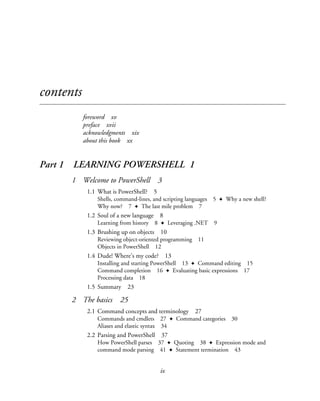





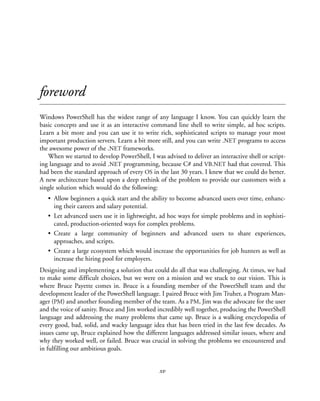
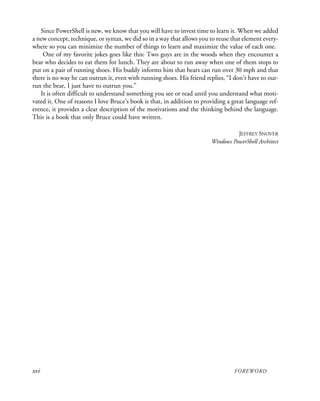
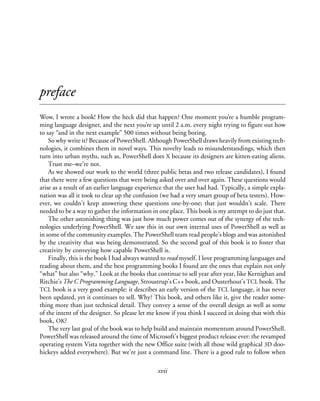


![attempted to board. The advance was met by Jones at the head of a
few men, pike in hand, with such firmness that it was not pressed
home, and the men returned to their stations at the guns and
resumed the fight.
Meanwhile, Richard Dale, seconded by his midshipmen, with rare
and never-to-be-undervalued presence of mind, had stopped the
oncoming rush of frightened English prisoners, who now greatly
outnumbered the broken crew of the Richard. He sprang among
them, beating them down, driving them back, menacing them with
the point of the sword, at the same time telling them that the
English ship was sinking, and that they were in the same condition,
and unless they went to the pumps immediately all hands would be
inevitably lost. The audacity of this statement was worthy of Jones
himself. It was a rare action on the part of a boy of twenty-three
years of age. Such a young man under present conditions in the
United States Navy probably would be filling the responsible station
of a naval cadet afloat![16] Instantly divining this new peril, the
commodore himself sprang to the hatchway and seconded Dale's
effort. Incredible as it seems, the two men actually forced the panic-
stricken, bewildered, and terrified English prisoners to man the
pumps, thus relieving a number of the crew of the Richard; and the
singular spectacle was presented of an American ship kept afloat by
the efforts of Englishmen, and thus enabled to continue an almost
hopeless combat. Dale, with imperturbable audacity, remained below
in command of them.
The Richard was a wreck. She had been fought to a standstill. Her
battery was silenced, her decks were filled with released prisoners,
she was making water fast, she was on fire in two or three places;
numbers of her crew had been killed and wounded, the water had
overflowed the cockpit, and the frightened surgeon had been driven
to the deck, where, in conjunction with some of the French officers,
he counseled surrender.](https://image.slidesharecdn.com/24112-250318033647-8a413fd4/85/Windows-Powershell-in-Action-1st-Edition-Bruce-G-Payette-27-320.jpg)
![his own nerve gave way. He was surrounded by dead and dying, no
human soul apparently fit for duty on his decks but himself, the roar
of his own guns silenced by this terrific explosion. He had fought
through many desperate battles--never one like this. The other
American frigate might come back. His consort had been captured.
His nerve was broken. He turned and walked aft to the flagstaff
raking from the taffrail. To this staff, with his own hand before the
action, he had nailed the English flag.[17] With the same hand he
seized the drooping folds of bunting, and with a breaking heart tore
it from the staff.
CHAPTER XI.
AFTER THE BATTLE REMARKS ON THE ACTION.
"They have struck their flag!" cried Jones, who had witnessed the
action. "Cease firing!" His powerful voice rang through the two ships
with such a note of triumph as has rarely been heard in the fought-
over confines of the narrow seas.
As the little scene transpired above, from the decks beneath them
came the roar of the Serapis' guns. She had resumed her fire. Her
men, too, were of heroic breed! A British ship captain among the
English prisoners, recovering from his panic and noting the
desperate condition of the Richard, had slipped away from the
pumps, and, eluding the observation of Dale and his men, had
crawled through the gaping openings in the sides of the Richard and
the Serapis at the risk of his life--for the first Englishman who saw](https://image.slidesharecdn.com/24112-250318033647-8a413fd4/85/Windows-Powershell-in-Action-1st-Edition-Bruce-G-Payette-31-320.jpg)
![squadron before the Richard finally disappeared.[18] At ten o'clock in
the morning of the 25th she plunged forward and went down bow
foremost. The great battle flag under which she had been fought,
which had been shot away during the action, had been picked up
and reset. It fluttered above her as she slowly sank beneath the sea.
[19]
So filled had been the busy hours, and so many had been the
demands made upon him in every direction, that Jones, ever
careless of himself in others' needs, lost all of his personal wardrobe,
papers, and other property. They went down with the ship. From the
deck of the Serapis, Jones, with longing eyes and mingled feelings,
watched the great old Indiaman, which had earned everlasting
immortality because for three brief hours he and his men had battled
upon her worn-out decks, sink beneath the sea. Most of those who
had given their lives in defense of her in the battle lay still and silent
upon her decks. There had been no time to spare to the dead. Like
the Vikings of old, they found their coffin in her riven sides, and
sleep to-day in the quiet of the great deep on the scene of their
glory. During the interval after the action, a jury rig had been
improvised on the Serapis, which had not been severely cut up
below by the light guns of the Richard, and was therefore entirely
seaworthy, and the squadron bore away by Jones' orders for
Dunkirk, France.
Before we pass to a consideration of the subsequent movements
of the squadron, a further comparison between the Richard and the
Serapis, with some statement of the losses sustained and the
various factors which were calculated to bring about the end, will be
in order, and will reveal much that is interesting. The accounts of the
losses upon the two ships widely differ. Jones reported for the
Richard forty-nine killed and sixty-seven wounded; total, one
hundred and sixteen out of three hundred; but the number is
confessedly incomplete. Pearson, for the Serapis, reported the same
number of killed and sixty-eight wounded, out of a crew of three
hundred and twenty; but it is highly probable that the loss in both](https://image.slidesharecdn.com/24112-250318033647-8a413fd4/85/Windows-Powershell-in-Action-1st-Edition-Bruce-G-Payette-39-320.jpg)
![Something of this sort may have been in his mind, and it would
undoubtedly contribute to decide him to surrender; but, admitting all
this, he should have delayed the formal surrender until the possible
contingency had developed into a reality, until he actually saw the
Alliance alongside of him again. As a matter of fact, he did not strike
until about thirty minutes after the Alliance had fired the last
broadside and sailed away. The American frigate was out of gunshot
when he surrendered, and going farther from him with every
minute.
Imagine what Jones would have done under similar
circumstances! Indeed, we do not have to imagine what he would
have done, for as it happened the Alliance had on two occasions
fired full upon him, and he was actually in the dilemma which
Pearson imagined he might fall into, and yet it only re-enforced his
already resolute determination to continue the fight more fiercely
than ever. A nice point this: with Pearson the Alliance was an
imaginary danger, with Jones a real one! While the presence of the
Alliance, therefore, explains in a measure Pearson's surrender, it
does not enhance his reputation for dogged determination. The
unheard-of resistance which he had met from the Richard, the
persistence with which the attack was carried on, the apparently
utterly unconquerable nature of his antagonist--of whose difficulties
on the Richard he was not aware, for there was no evidence of
faltering in the battle--the frightful attack he had received, and his
isolation upon the deck filled with dead and dying men, broke his
own power of resistance. There were two things beaten on that day-
-the Richard and Pearson; one might almost say three things: both
ships and the captain of one. It is generally admitted, even by the
English, that the result would have been the same if the Alliance had
never appeared on the scene. No, it was a fair and square stand-up
fight, and a fair and square defeat.[20]
The conduct of Landais has presented a problem difficult of
solution. It has been surmised, and upon the warrant of his own
statement, that he would have thought it no harm if the Richard had](https://image.slidesharecdn.com/24112-250318033647-8a413fd4/85/Windows-Powershell-in-Action-1st-Edition-Bruce-G-Payette-42-320.jpg)
![struck to the Serapis, and he could have had the glory of recapturing
her and then forcing the surrender of the English frigate; but
whether he really meant by his dastardly conduct to compel this
situation from which he trusted he could reap so much honor, is
another story. Most of the historians have been unable to see
anything in his actions but jealousy and treachery. The most eminent
critic, however, who has treated of the battle[21] has thought his
actions arose from an incapacity, coupled with a timidity amounting
to cowardice, which utterly blinded his judgment; that he was
desirous of doing something, and felt it incumbent upon him to take
some part in the action and that his firing into the Richard was due
to incompetency rather than to anything else. With all deference, it
is difficult to agree with this proposition. The officers of the
squadron, in a paper which was prepared less than a month after
the action, bore conclusive testimony that while it is true that he was
an incapable coward, he was, in addition, either a jealous traitor, or--
and this is the only other supposition which will account for his
action--that he was irresponsible, in short, insane. This is a
conclusion to which his own officers afterward arrived, and which his
subsequent career seems to bear out. At any rate, this is the most
charitable explanation of his conduct which can be adopted. If he
had been simply cowardly, he could have done some service by
attacking the unprotected convoy, which was entirely at his mercy,
and among which he could have easily taken some valuable prizes.
It is stated to their credit that some of the officers of the Alliance
remonstrated with Landais, and pointed out to him that he was
attacking the wrong ship, and that some of his men refused to obey
his orders to fire.
There is but one other circumstance to which it is necessary to
refer. All the plans of the battle which are extant, and all the
descriptions which have been made, from Cooper to Maclay and
Spears, show that the Richard passed ahead of the Serapis and was
raked; and that the Serapis then ranged alongside to windward of
the American and presently succeeded in crossing the Richard's bow
and raking her a second time. Richard Dale's account, in Sherburne's](https://image.slidesharecdn.com/24112-250318033647-8a413fd4/85/Windows-Powershell-in-Action-1st-Edition-Bruce-G-Payette-43-320.jpg)
![Life of Paul Jones, written some forty-six years after the action,
seems to bear out this idea. Jones himself, whose report is
condensed and unfortunately wanting in detail, says: "Every method
was practiced on both sides to gain an advantage and rake each
other, and I must confess that the enemy's ship, being much more
manageable than the Bon Homme Richard, gained thereby several
times an advantageous situation, in spite of my best endeavors to
prevent it." Nathaniel Fanning, midshipman of the maintop in the
action, stated in his narrative, published in 1806, twenty-seven years
later, that the Serapis raked the Richard several times.
Notwithstanding this weight of apparent testimony, I must agree
with Captain Mahan in his conclusion that the Serapis, until the ships
were lashed together, engaged the Richard with her port battery
only, and that the plan as given above is correct. In the first place,
Jones' statement is too indefinite to base a conclusion upon unless
clearly corroborated by other evidence. Dale, being in the batteries,
where he could hardly see the maneuvers, and writing from memory
after a lapse of many years, may well have been mistaken. Fanning's
narrative is contradicted by the articles which he signed concerning
the conduct of Landais, in October, 1779, in the Texel, so that his
earliest statement is at variance with his final recollection, and
Fanning is not very reliable at best.
However, we might accept the statements of these men as
decisive were it not for the fact that Pearson, whose report is very
explicit indeed, makes no claim whatever to having succeeded in
raking the Richard, though it would be so greatly to his credit if he
had done so that it is hardly probable he would fail to state it. His
account of the battle accords with the plan of the present work.
Again, when the Serapis engaged the Richard in the final grapple,
she had to blow off her starboard port shutters, which were
therefore tightly closed. If she had been engaged to starboard
(which would necessarily follow if she had been on the port side of
the Richard at any time), the ports would have been opened.[22] This
is not absolutely conclusive, because, of course, it would be possible](https://image.slidesharecdn.com/24112-250318033647-8a413fd4/85/Windows-Powershell-in-Action-1st-Edition-Bruce-G-Payette-44-320.jpg)
![that the ports might have been closed when the men were shifted to
the other battery, but in the heat of the action such a measure
would be so improbable as to be worthy of little consideration. But
the most conclusive testimony to the fact that the Serapis was not
on the port side of the Richard at any time is found in the charges
which were signed by the officers concerning the conduct of
Landais. Article 19 reads: "As the most dangerous shot which the
Bon Homme Richard received under the water were under the
larboard bow and quarter, they must have come from the Alliance,
for the Serapis was on the other side."[23]
Captain Mahan well sums it up: "As Landais' honor, if not his life,
was at stake in these charges, it is not to be supposed that six
officers (besides two French marine officers), four of whom were
specially well situated for seeing, would have made this statement if
the Serapis had at any time been in position to fire those shots."
This consideration, therefore, seems to settle the question. Again,
the maneuvers as they have been described in this volume are the
simple and natural evolutions which, under the existing conditions of
wind and weather and the relative positions of the two ships, would
have been in all human probability carried out. The attempt to put
the ships in the different positions of the commonly accepted plans
involves a series of highly complicated and unnecessary evolutions
(scarcely possible, in fact, in the very light breeze), which no
commander would be apt to attempt in the heat of action unless
most serious contingencies rendered them inevitable.
CHAPTER XII.](https://image.slidesharecdn.com/24112-250318033647-8a413fd4/85/Windows-Powershell-in-Action-1st-Edition-Bruce-G-Payette-45-320.jpg)
![Sir Joseph's mind the situation was this: The States-General would
comply with the terms of the treaty or it would not. If it did, he
would get possession of the ships and of Jones as well. If it did not,
the logic of events would indicate that the States-General considered
the commission which Paul Jones bore as being valid, in that it was
issued by a sovereign power. This would be in effect a recognition of
belligerency. In other words, the shrewd British diplomatist was
endeavoring to force the hand of the States-General. To determine
the position of Holland with regard to the revolted colonies of Great
Britain was a matter of greater moment than to secure Paul Jones or
to receive the two ships, the loss of which, except so far as it
affronted the pride of England, was of no consequence whatever.
The States-General, however, endeavored to evade the issue and
postpone the decision, for, while their "High Mightinesses" refused to
cause the ships to be given up, they ordered Jones to leave the
harbor at once, and they earnestly disclaimed any intention of
recognizing the revolted colonies.
As a matter of fact, since there were two parties in the
government of Holland, and two opinions on the subject, they could
come to no more definite conclusion. Jones was intensely popular
with the people, and the democratic opinion favored the immediate
recognition of American independence, and protested against any
arbitrary action toward him and his ships. The Prince of Orange and
the aristocratic party took the contrary view, and they pressed it
upon him as far as they dared. Realizing the precarious nature of his
stay in Holland, Jones immediately set to work with his usual energy
to refit the ships, especially the Serapis. Dispatching a full account of
his cruise and his expedition to Franklin, he went in person to
Amsterdam to facilitate his desire. A contemporary account states
that he was dressed in an American naval uniform,[24] wearing on
his head, instead of the usual cocked hat, a Scotch bonnet edged
with gold lace.
When he appeared in the exchange he received a popular
ovation, which naturally greatly pleased him. However, he modestly](https://image.slidesharecdn.com/24112-250318033647-8a413fd4/85/Windows-Powershell-in-Action-1st-Edition-Bruce-G-Payette-49-320.jpg)
![strove to escape the overwhelming demonstrations of admiration
and approval with which he was greeted, by retiring to a coffee
room, but he was compelled to show himself again and again at the
window in response to repeated demands from crowds of people
assembled in the street who desired a sight of him. He was made
the hero of song and story, and one of the ballads of the time, a
rude, rollicking, drinking song, very popular among sailors, which
celebrates his exploits, is sung to this day in the streets of
Amsterdam.[25] So delighted were the Dutch with the humiliation he
had inflicted upon their ancient enemy that some of the principal
men of the nation, including the celebrated Baron van der Capellen,
subsequently noted for his friendship for America (evidently not in
harmony with the aristocratic party), entered into a correspondence
with him, which must have been highly flattering to him, from the
expressions of admiration and approval with which every letter of
the baron's abounds. They desired to receive at first hand an
account of his exploits. In response to this request Jones had his
report to Dr. Franklin copied and sent to van der Capellen, together
with other documents illustrative of his career, accompanied by the
following letter:
"On Board The Serapis At
The Texel,
"October 19, 1779.
"My Lord: Human nature and America are under a very singular
obligation to you for your patriotism and friendship, and I feel every
grateful sentiment for your generous and polite letter.
"Agreeable to your request I have the honour to inclose a copy of
my letter to his Excellency Doctor Franklin, containing a particular
account of my late expedition on the coasts of Britain and Ireland,](https://image.slidesharecdn.com/24112-250318033647-8a413fd4/85/Windows-Powershell-in-Action-1st-Edition-Bruce-G-Payette-50-320.jpg)
![by which you will see that I have already been praised far more than
I have deserved; but I must at the same time beg leave to observe
that by the other papers which I take the liberty to inclose
(particularly the copy of my letter to the Countess of Selkirk, dated
the day of my arrival at Brest from the Irish Sea), I hope you will be
convinced that in the British prints I have been censured unjustly. I
was, indeed, born in Britain, but I do not inherit the degenerate
spirit of that fallen nation, which I at once lament and despise. It is
far beneath me to reply to their hireling invectives. They are
strangers to the inward approbation that greatly animates and
rewards the man who draws his sword only in support of the dignity
of freedom.
"America has been the country of my fond election from the age
of thirteen, when I first saw it.[26] I had the honour to hoist, with my
own hands, the flag of freedom, the first time that it was displayed
on the Delaware, and I have attended it with veneration ever since
on the Ocean; I see it respected even here, in spite of the pitiful Sir
Joseph, and I ardently wish and hope very soon to exchange a
salute with the flag of this Republick. Let but the two Republicks join
hands, and they will give Peace to the World."
Among the documents transmitted was the famous letter to Lady
Selkirk, of which sententious epistle he evidently remained
inordinately proud. In acknowledging this courtesy van der Capellen
wrote as follows:
"The perusal of the letters with which you have favoured me has
done the very same effect upon me that his Excell. Dr. Franklin
expected they would do on the Countess of Selkirk, as you are
represented in some of our Newspapers as a rough, unpolished
sailor, not only, but even as a man of little understanding and no](https://image.slidesharecdn.com/24112-250318033647-8a413fd4/85/Windows-Powershell-in-Action-1st-Edition-Bruce-G-Payette-51-320.jpg)
![morals and sensibility, and as I think the 4 papers extremely fit to
destroy these malicious aspersions, I must take the liberty of asking
your permission to publish them in our gazettes. The public will soon
make this very just conclusion that the man honoured by the
friendship and intimacy of a Franklin can not be such as you have
been represented.[27] There are three points on which you will oblige
me by giving some elucidation, 1st. whether you have any
obligations to Lord Selkirk? 2d. whether Lady Selkirk has accepted
your generous offer? 3d. whether you have a commission of France
besides that of the Congress? 'Tis not a vain curiosity that incites me
to be so importunate; no, sir, the two first questions are often
repeated to me by your enemies, or, at least, by prejudiced people;
and as to the last, a relative of mine, a known friend of America, has
addressed himself to me for information on that subject, which he
will be glad to have before the States of his province, of which he is
a member (but not yet, as I am, expelled the house), be assembled.
"You will greatly oblige me by sending me as soon as possible
such information as you will think proper to grant.
"You may rely on our discretion; we can keep a secret, too. I am
in a great hurry, with the most perfect esteem ..."
The baron's statement gives us a contemporary opinion--one of
entire approbation, by the way--of the letter to Lady Selkirk, and it
shows us that our great-grandfathers looked at things with different
eyes from ours.
In reply, Jones dispatched the following letter a month later:
"Alliance, Texel, November 29,
1779.](https://image.slidesharecdn.com/24112-250318033647-8a413fd4/85/Windows-Powershell-in-Action-1st-Edition-Bruce-G-Payette-52-320.jpg)
!["My Lord: Since I had the honour to receive your second
esteemed letter I have unexpectedly had occasion to revisit
Amsterdam; and, having changed ships since my return to the Texel,
I have by some accident or neglect lost or mislaid your letter. I
remember, however, the questions it contained: 1st, whether I ever
had any obligation to Lord Selkirk? 2dly, whether he accepted my
offer? and 3dly, whether I have a French commission? I answer: I
have never had any obligation to Lord Selkirk, except for his good
opinion, nor does know me nor mine except by character. Lord
Selkirk wrote me an answer to my letter to the Countess, but the
Ministry detained it in the general post office in London for a long
time, and then returned it to the author, who afterward wrote to a
friend of his (M. Alexander), an acquaintance of Doctor Franklin's
then at Paris, giving him an account of the fate of his letter to me &
desiring him to acquaint his Excellency and myself that if the plate
was restored by Congress or by any public Body he would accept it,
but that he would not think of accepting it from my private
generosity. The plate has, however, been bought, agreeable to my
letter to the Countess, and now lays in France at her disposal. As to
the 3rd article, I never bore nor acted under any other commission
than what I have received from the Congress of the United States of
America.[28]
"I am much obliged to you, my Lord, for the honour you do me by
proposing to publish the papers I sent you in my last, but it is an
honour which I must decline, because I can not publish my letter to
a lady without asking and obtaining the lady's consent, and because
I have a very modest opinion of my writings, being conscious that
they are not of sufficient value to claim the notice of the public. I
assure you, my Lord, it has given me much concern to see an
extract of my rough journal in print, and that, too, under the
disadvantage of a translation. That mistaken kindness of a friend will
make me cautious how I communicate my papers.](https://image.slidesharecdn.com/24112-250318033647-8a413fd4/85/Windows-Powershell-in-Action-1st-Edition-Bruce-G-Payette-53-320.jpg)