Windows Operating System
Presented by
Shovan Prita Paul
Introduction to Windows Operating System
Understanding Windows Operating System
Definition: An operating system (OS) is a software that manages
computer hardware and software resources and provides common
services for computer programs.
History: Windows OS, developed by Microsoft Corporation in 1985
with Windows 1.0. It has become one of the most widely used operating
systems worldwide
Introduction to Windows Operating System
Figure1.1.Logo of Windows OS
Importance: Windows OS plays a crucial role in modern computing,
providing users with a user-friendly interface, multitasking capabilities,
and compatibility with a wide range of software and hardware.
Evolution of Windows Operating System
Key Releases
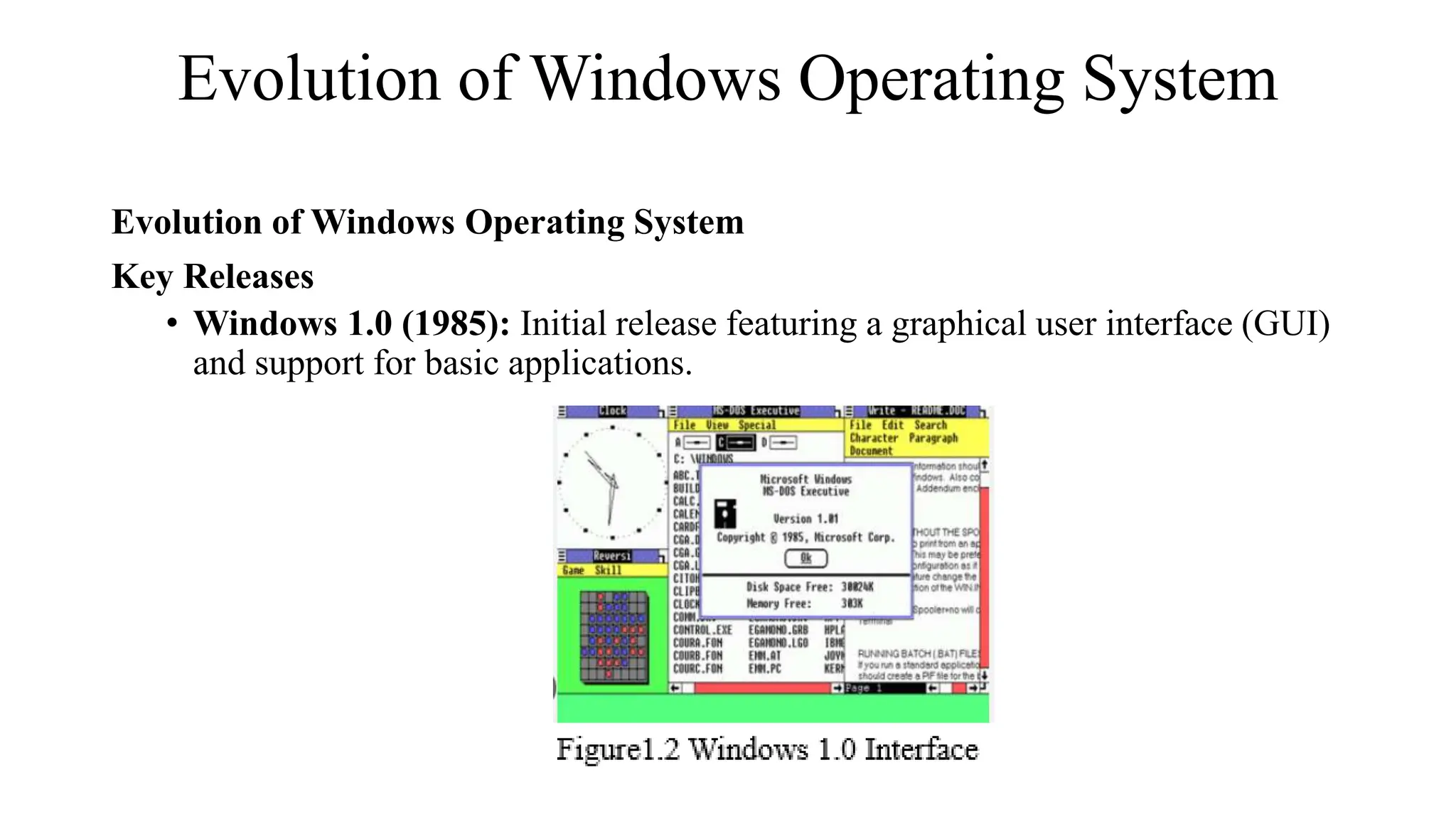
• Windows 1.0 (1985): Initial release featuring a graphical user interface (GUI)
and support for basic applications.
Evolution of Windows Operating System
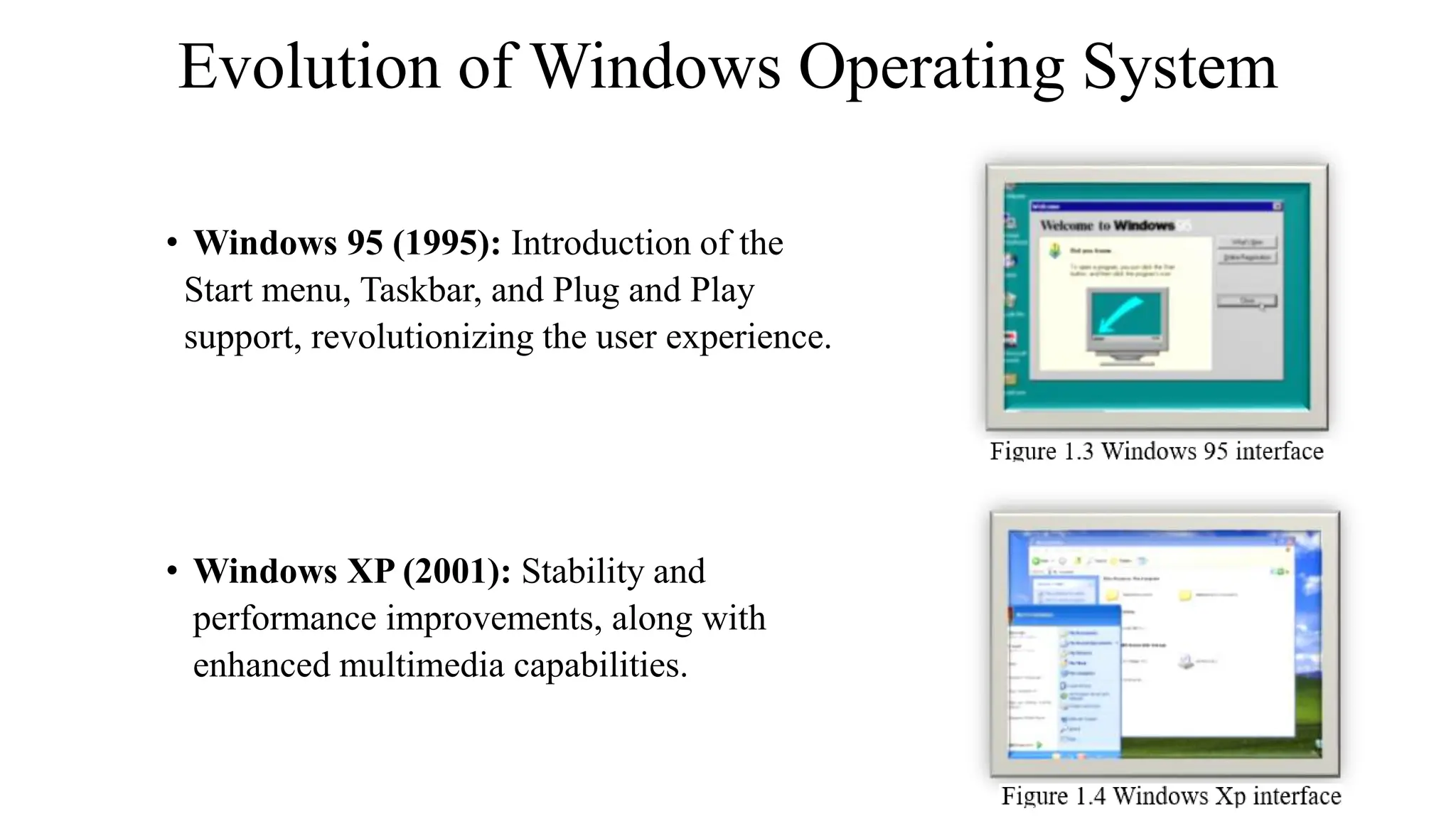
• Windows 95 (1995): Introduction of the
Start menu, Taskbar, and Plug and Play
support, revolutionizing the user experience.
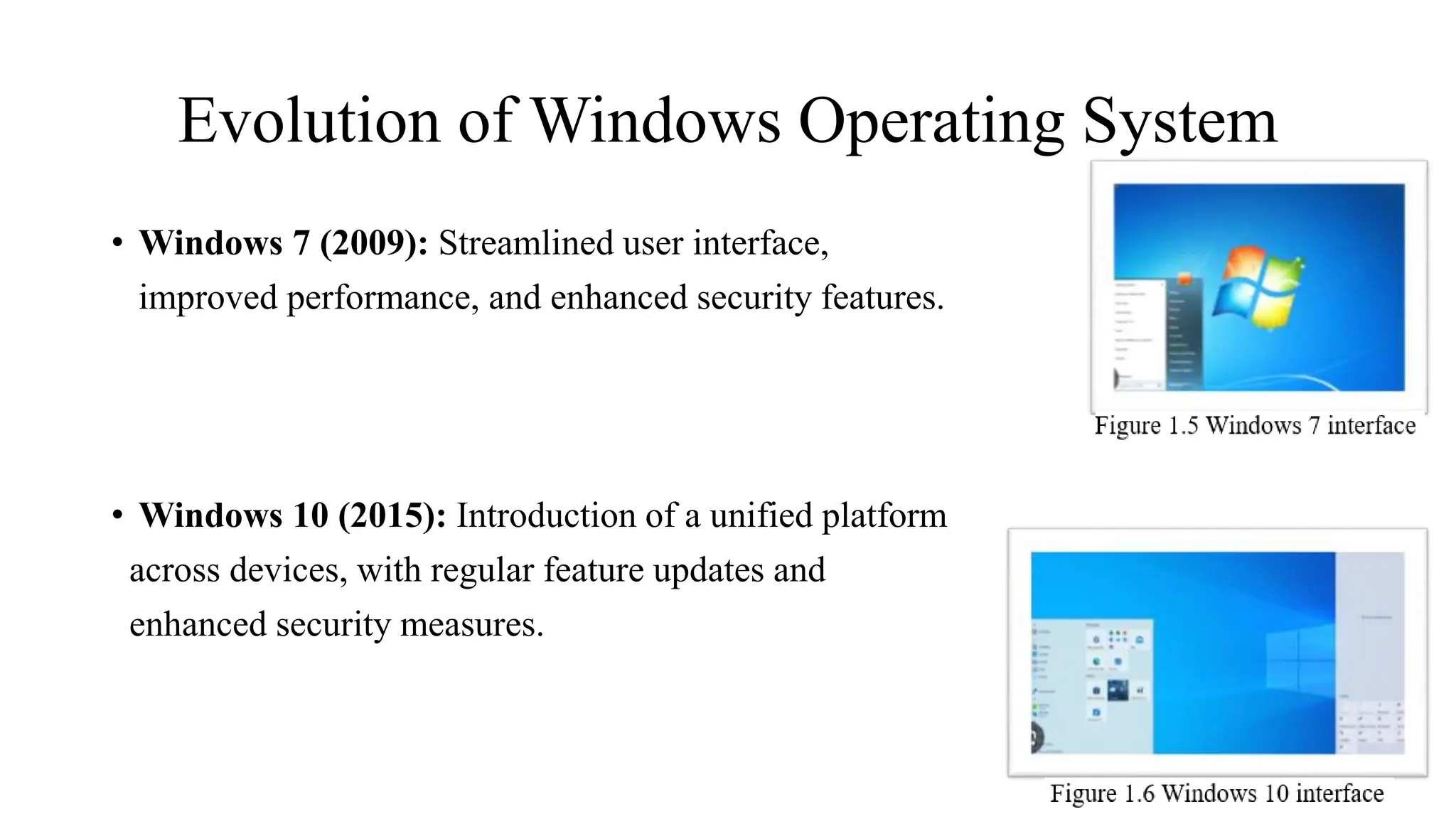
• Windows XP (2001): Stability and
performance improvements, along with
enhanced multimedia capabilities.
Evolution of Windows Operating System
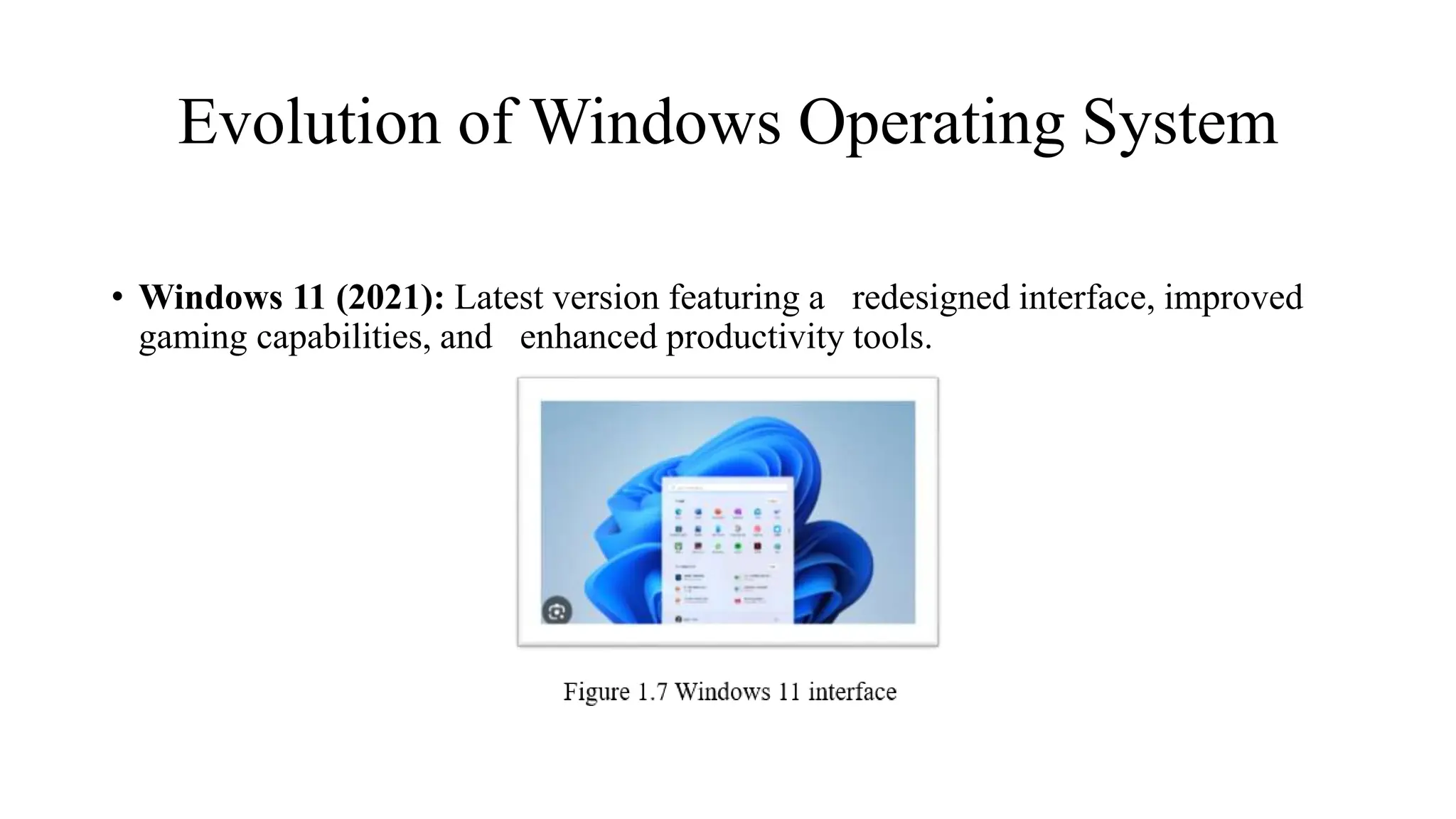
• Windows 7 (2009): Streamlined user interface,
improved performance, and enhanced security features.
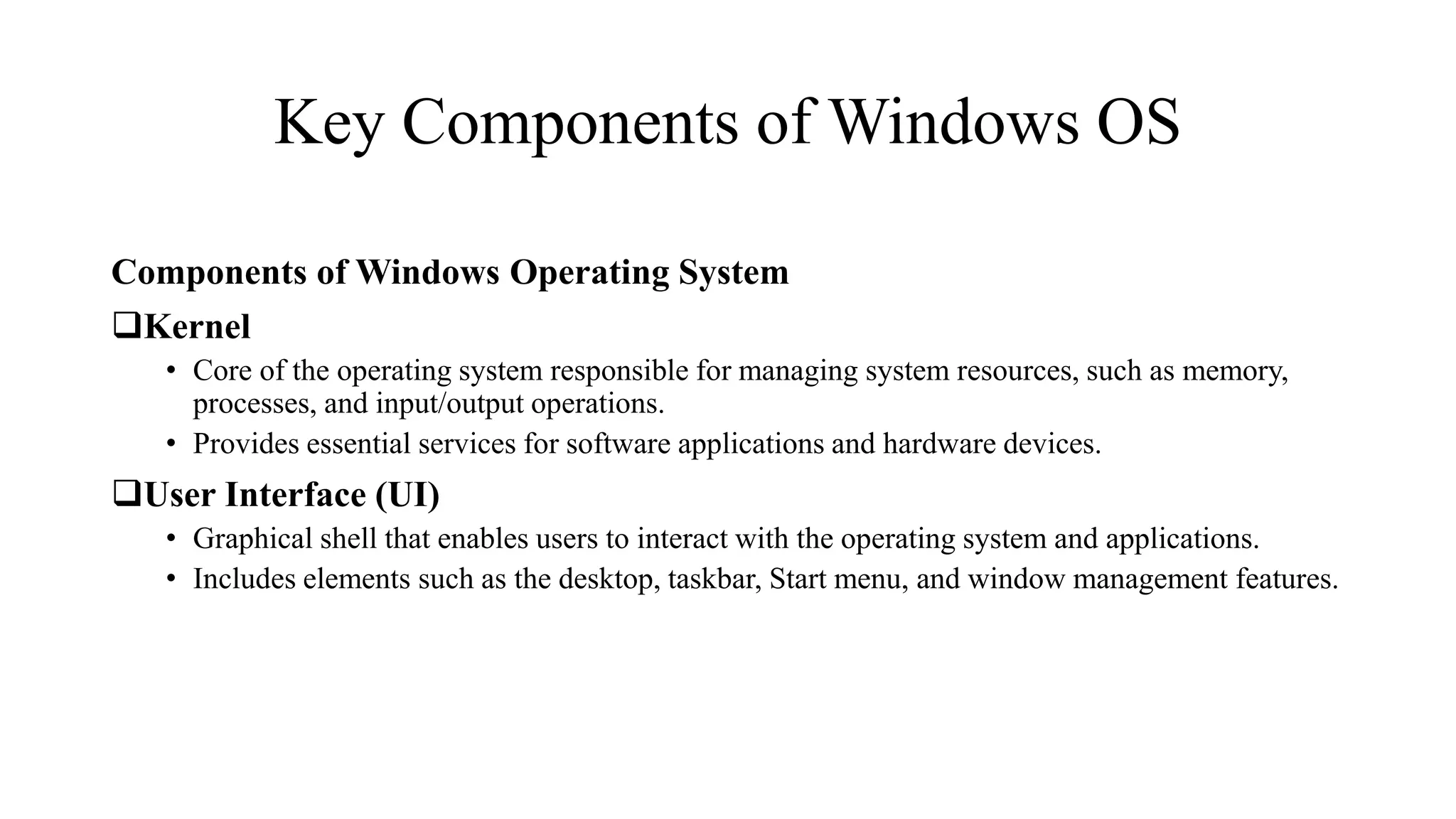
• Windows 10 (2015): Introduction of a unified platform
across devices, with regular feature updates and
enhanced security measures.
Evolution of Windows Operating System
• Windows 11 (2021): Latest version featuring a redesigned interface, improved
gaming capabilities, and enhanced productivity tools.
Key Components of Windows OS
Components of Windows Operating System
Kernel
• Core of the operating system responsible for managing system resources, such as memory,
processes, and input/output operations.
• Provides essential services for software applications and hardware devices.
User Interface (UI)
• Graphical shell that enables users to interact with the operating system and applications.
• Includes elements such as the desktop, taskbar, Start menu, and window management features.
Key Components of Windows OS
File System
• NTFS (New Technology File System) is the primary file system used by
Windows OS.
• Manages storage, file organization, and access control for files and directories.
Device Drivers
• Software components that facilitate communication between the operating
system and hardware devices, such as printers, graphics cards, and network
adapters.
• Ensures compatibility and proper functioning of hardware peripherals.
Key Components of Windows OS
Security Subsystem
• Includes features such as User Account Control (UAC), Windows Defender
Antivirus, Firewall, and BitLocker encryption.
• Protects the system against security threats, unauthorized access, and data
breaches.
User Account Control (UAC)
Definition
• User Account Control (UAC) is a security feature introduced in Windows
Vista and later versions.
• It helps prevent unauthorized changes to the system by prompting users for
permission or elevation of privileges when attempting to perform certain tasks.
Purpose
• Enhancing security by limiting the impact of malware and unauthorized
actions on the system.
• Protecting critical system settings and resources from unintended
modifications or access.
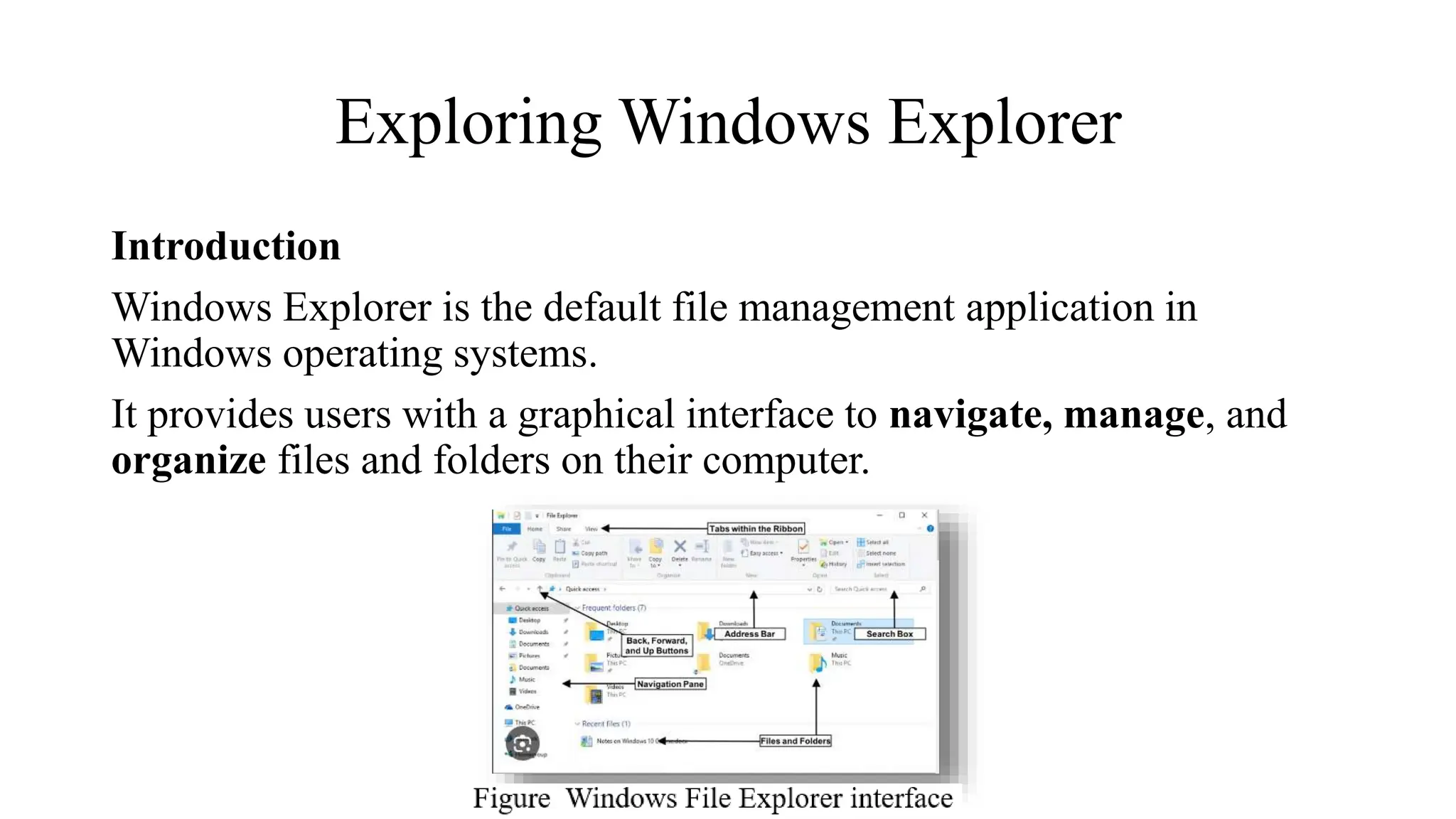
Exploring Windows Explorer
Introduction
Windows Explorer is the default file management application in
Windows operating systems.
It provides users with a graphical interface to navigate, manage, and
organize files and folders on their computer.
Exploring Windows Explorer
File Management Functionalities
Browse: Navigate through drives, folders, and files using the hierarchical
folder structure.
Copy and Paste: Duplicate files or folders within the same directory or across
different locations.
Move: Transfer files or folders from one location to another.
Delete: Permanently remove files or folders from the system.
Control Panel and Settings
Control Panel: Traditional interface for accessing system settings and configurations
in older versions of Windows.
Settings: Modern interface introduced in Windows 8 and later versions, providing a
simplified and unified approach to system customization.
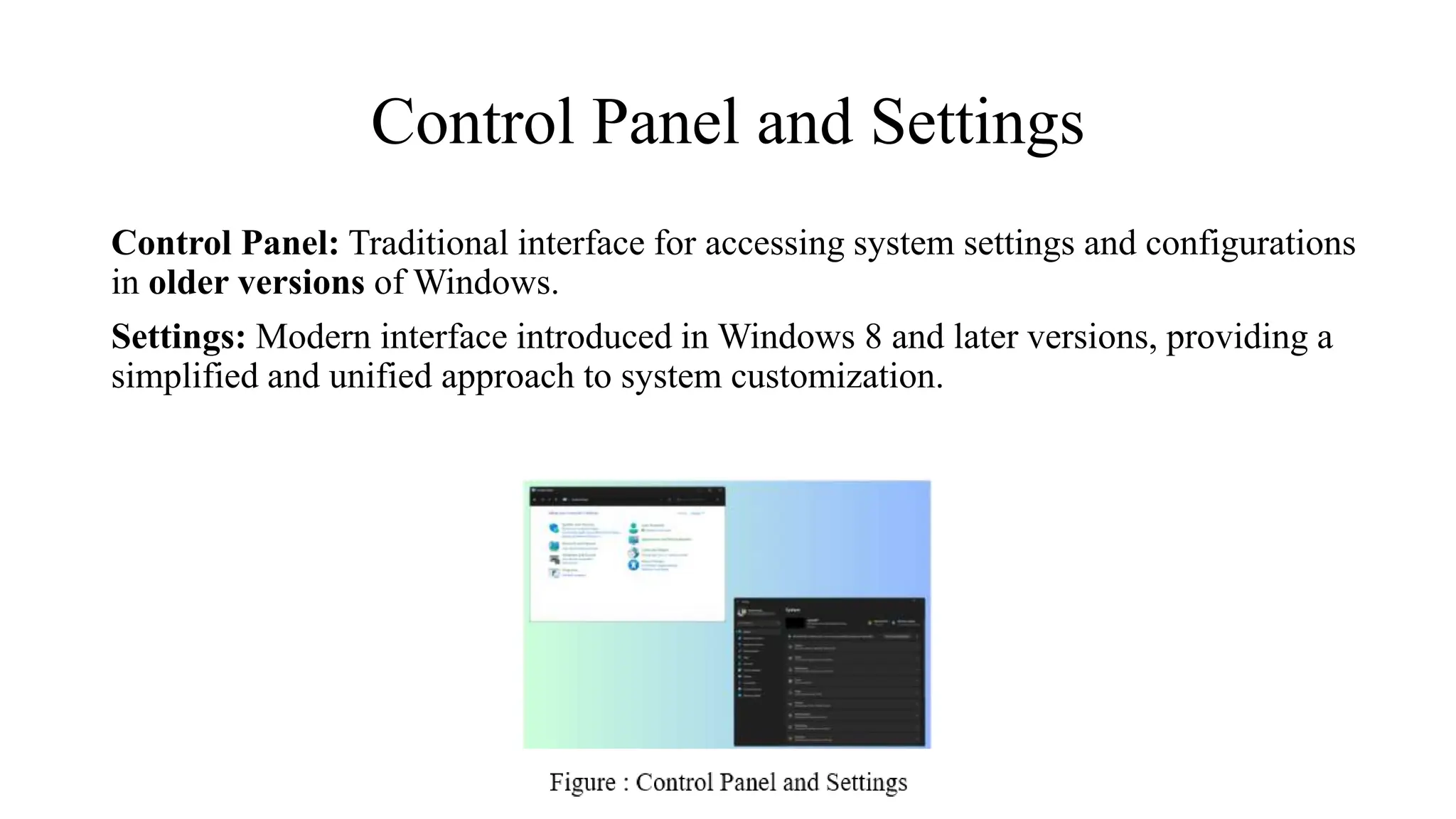
Task Manager
Task Manager is a system monitoring utility in Windows OS that provides real-
time information about running processes, performance metrics, and system
resource usage.
It enables users to monitor and manage applications, processes, and services, as well
as troubleshoot system performance issues.
Windows Update
 Windows Update is a critical component of Windows OS that provides regular
updates, patches, and security fixes from Microsoft.
 Ensures the operating system, drivers, and software remain up-to-date with the
latest features, performance improvements, and security enhancements.
 Helps protect against malware by patching known security flaws.
Advantages and Disadvantages of Windows OS
Advantages
Unser Friendly Interface and Easy to Use
Support Plug and Play Feature
Provide Software Development Support
Have Both Desktop and Touch Screen Support
Advantages and Disadvantages of Windows OS
Disadvantages
Security Concerns: Windows operating system is relatively unsafe against
security threats.
Paid Software: The application software run on windows operating system
are paid.
Expensive: To use Windows operating system on the computer, we have to
purchase license from Microsoft
References
•
Thank You

Presentation on Windows Operating System ||pptx || created by Shovan Prita Paul

  • 1.
  • 2.
    Introduction to WindowsOperating System Understanding Windows Operating System Definition: An operating system (OS) is a software that manages computer hardware and software resources and provides common services for computer programs. History: Windows OS, developed by Microsoft Corporation in 1985 with Windows 1.0. It has become one of the most widely used operating systems worldwide
  • 3.
    Introduction to WindowsOperating System Figure1.1.Logo of Windows OS Importance: Windows OS plays a crucial role in modern computing, providing users with a user-friendly interface, multitasking capabilities, and compatibility with a wide range of software and hardware.
  • 4.
    Evolution of WindowsOperating System Evolution of Windows Operating System Key Releases • Windows 1.0 (1985): Initial release featuring a graphical user interface (GUI) and support for basic applications.
  • 5.
    Evolution of WindowsOperating System • Windows 95 (1995): Introduction of the Start menu, Taskbar, and Plug and Play support, revolutionizing the user experience. • Windows XP (2001): Stability and performance improvements, along with enhanced multimedia capabilities.
  • 6.
    Evolution of WindowsOperating System • Windows 7 (2009): Streamlined user interface, improved performance, and enhanced security features. • Windows 10 (2015): Introduction of a unified platform across devices, with regular feature updates and enhanced security measures.
  • 7.
    Evolution of WindowsOperating System • Windows 11 (2021): Latest version featuring a redesigned interface, improved gaming capabilities, and enhanced productivity tools.
  • 8.
    Key Components ofWindows OS Components of Windows Operating System Kernel • Core of the operating system responsible for managing system resources, such as memory, processes, and input/output operations. • Provides essential services for software applications and hardware devices. User Interface (UI) • Graphical shell that enables users to interact with the operating system and applications. • Includes elements such as the desktop, taskbar, Start menu, and window management features.
  • 9.
    Key Components ofWindows OS File System • NTFS (New Technology File System) is the primary file system used by Windows OS. • Manages storage, file organization, and access control for files and directories. Device Drivers • Software components that facilitate communication between the operating system and hardware devices, such as printers, graphics cards, and network adapters. • Ensures compatibility and proper functioning of hardware peripherals.
  • 10.
    Key Components ofWindows OS Security Subsystem • Includes features such as User Account Control (UAC), Windows Defender Antivirus, Firewall, and BitLocker encryption. • Protects the system against security threats, unauthorized access, and data breaches.
  • 11.
    User Account Control(UAC) Definition • User Account Control (UAC) is a security feature introduced in Windows Vista and later versions. • It helps prevent unauthorized changes to the system by prompting users for permission or elevation of privileges when attempting to perform certain tasks. Purpose • Enhancing security by limiting the impact of malware and unauthorized actions on the system. • Protecting critical system settings and resources from unintended modifications or access.
  • 12.
    Exploring Windows Explorer Introduction WindowsExplorer is the default file management application in Windows operating systems. It provides users with a graphical interface to navigate, manage, and organize files and folders on their computer.
  • 13.
    Exploring Windows Explorer FileManagement Functionalities Browse: Navigate through drives, folders, and files using the hierarchical folder structure. Copy and Paste: Duplicate files or folders within the same directory or across different locations. Move: Transfer files or folders from one location to another. Delete: Permanently remove files or folders from the system.
  • 14.
    Control Panel andSettings Control Panel: Traditional interface for accessing system settings and configurations in older versions of Windows. Settings: Modern interface introduced in Windows 8 and later versions, providing a simplified and unified approach to system customization.
  • 15.
    Task Manager Task Manageris a system monitoring utility in Windows OS that provides real- time information about running processes, performance metrics, and system resource usage. It enables users to monitor and manage applications, processes, and services, as well as troubleshoot system performance issues.
  • 16.
    Windows Update  WindowsUpdate is a critical component of Windows OS that provides regular updates, patches, and security fixes from Microsoft.  Ensures the operating system, drivers, and software remain up-to-date with the latest features, performance improvements, and security enhancements.  Helps protect against malware by patching known security flaws.
  • 17.
    Advantages and Disadvantagesof Windows OS Advantages Unser Friendly Interface and Easy to Use Support Plug and Play Feature Provide Software Development Support Have Both Desktop and Touch Screen Support
  • 18.
    Advantages and Disadvantagesof Windows OS Disadvantages Security Concerns: Windows operating system is relatively unsafe against security threats. Paid Software: The application software run on windows operating system are paid. Expensive: To use Windows operating system on the computer, we have to purchase license from Microsoft
  • 19.
  • 20.