Managing Climate Change across the Enterprise


          EUEC – Track G – Session 4
              February 2, 2010

        Matthew A. Wilson PhD. CH2M HILL, Englewood CO.
Overview for Today’s Panel


 Introduction

 Business Drivers for Integrated Climate Change
 Management

 Challenges and Opportunities

 Overview of Today’s Panel
 • Panelists and Topics
 • Agenda
Converging Trends Across the Enterprise: Sustainability,
Climate Change, and Energy
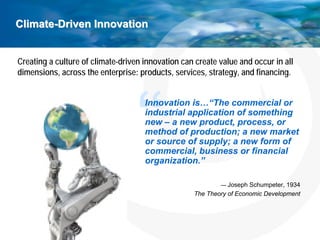
Climate-Driven Innovation


Creating a culture of climate-driven innovation can create value and occur in all
dimensions, across the enterprise: products, services, strategy, and financing.


                                     Innovation is…“The commercial or
                                     industrial application of something
                                     new – a new product, process, or
                                     method of production; a new market
                                     or source of supply; a new form of
                                     commercial, business or financial
                                     organization.”

                                                           — Joseph Schumpeter, 1934
                                                   The Theory of Economic Development
Business Drivers of Integrated Climate Change
                Management
The Magnitude of the Challenge in the U.S.


                                  7,000                                                                                                                                                       500


                                                                                                                                                                                              450
                                  6,000
                                                                                                                                                                                              400
     Million Metric Tons of CO2


                                  5,000                                                                                                                                                       350


                                                                                                                                                                                                    Population in Millions
                                                                                                                                                                                              300
                                  4,000

                                                                                                                                                                                              250

                                  3,000
                                                                                                                                                                                              200

                                                                                                                                                           Targeted                           150
                                  2,000

                                                                                                                                                                                              100
                                  1,000                                                                  History
                                                                                                                                                                                              50


                                     0                                                                                                                                                        -
                                          1850
                                                 1860
                                                        1870
                                                               1880
                                                                      1890
                                                                             1900
                                                                                    1910
                                                                                           1920
                                                                                                  1930
                                                                                                          1940
                                                                                                                 1949
                                                                                                                        1959
                                                                                                                               1969
                                                                                                                                      1979
                                                                                                                                             1989
                                                                                                                                                    1999
                                                                                                                                                           2009
                                                                                                                                                                  2019
                                                                                                                                                                         2029
                                                                                                                                                                                2039
                                                                                                                                                                                       2049
                                                                                    CO2 Emissions                                     Population

    Sources: EIA (2009); Pew Foundation Research (2008)                                                                                                                                                                      6
Business Drivers


                Economics, Compliance, and Brand
Energy demand and price volatility, regulation of carbon, brand protection,
     and effects of climate change are creating the “perfect storm”


     Driver                   Changes and Events
     Regulatory Risk          International Trends
                              New GHG legislation
                              New rules and regulation (MRR, Cap and Trade)
     Scientific Trends and    Scientific Consensus on GHG effect
     Physical Risk             Intense Storm Events
                               Energy demand and delivery

     Financial Risk           Redefining “materiality” to include CC
                              Availability of insurance and investment capital
                              Fiduciary responsibility

     New Market Opportunity   Growth in offset markets and carbon credit trading
                              Building a “green energy” economy
Integrated Climate Change Program Management:
          Challenges and Opportunities
The Business Challenge


Current Organizational Discontinuity
Removing Organizational Barriers


Knowledge and Information Connect the Organization


                           ACTION
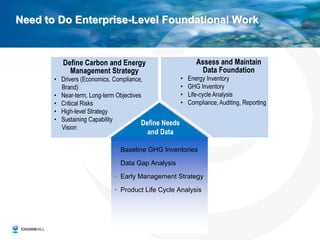
Need to Do Enterprise-Level Foundational Work


                  • Baseline GHG Inventories

                  • Data Gap Analysis

                  • Early Management Strategy

                  • Product Life Cycle Analysis
…And Leverage Information to Enable Decisions and
Actions
Actions

                  • Strategy Execution and
                    Project Delivery Excellence
                  • Corporate Reporting
                  • Supply Chain Life Cycle
                    Inventories
                  • Forecasting and Scenario
                    Development
                  • Carbon Monetization
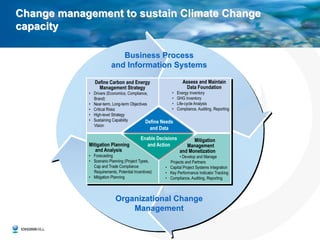
Change management to sustain Climate Change
capacity

                   Business Process
                and Information Systems


                 Organizational Change
                     Management
Can it Really Work? Overview of Today’s Panel
Presentations


Presentations
• Dane Honrado, Dominion Resources—Establishing a GHG Inventory, An Integrated
  Approach
• Brian Sloof, Transcanada—Climate Change Emissions Management: Company
  Implementation Issues
• Joel Swisher, Camco--Carbon Management in Utility Resource Planning and Procurement
• Jessica Wollmuth, CH2M HILL—A Methodology for Prioritizing Carbon Offset Investment
• Miles Mahoney, Evergreen Energy—Environmental Intelligence
• Dave McCurdy, Enviance—Carbon Accounting and Organizational Change

**PLEASE HOLD QUESTIONS TILL THE PANEL!

Panel Discussion (25minutes)
• Audience Q&A for Panelists
Thank You!

Wilson Euec 2010

  • 1.
    Managing Climate Changeacross the Enterprise EUEC – Track G – Session 4 February 2, 2010 Matthew A. Wilson PhD. CH2M HILL, Englewood CO.
  • 2.
    Overview for Today’sPanel Introduction Business Drivers for Integrated Climate Change Management Challenges and Opportunities Overview of Today’s Panel • Panelists and Topics • Agenda
  • 3.
    Converging Trends Acrossthe Enterprise: Sustainability, Climate Change, and Energy
  • 4.
    Climate-Driven Innovation Creating aculture of climate-driven innovation can create value and occur in all dimensions, across the enterprise: products, services, strategy, and financing. Innovation is…“The commercial or industrial application of something new – a new product, process, or method of production; a new market or source of supply; a new form of commercial, business or financial organization.” — Joseph Schumpeter, 1934 The Theory of Economic Development
  • 5.
    Business Drivers ofIntegrated Climate Change Management
  • 6.
    The Magnitude ofthe Challenge in the U.S. 7,000 500 450 6,000 400 Million Metric Tons of CO2 5,000 350 Population in Millions 300 4,000 250 3,000 200 Targeted 150 2,000 100 1,000 History 50 0 - 1850 1860 1870 1880 1890 1900 1910 1920 1930 1940 1949 1959 1969 1979 1989 1999 2009 2019 2029 2039 2049 CO2 Emissions Population Sources: EIA (2009); Pew Foundation Research (2008) 6
  • 7.
    Business Drivers Economics, Compliance, and Brand Energy demand and price volatility, regulation of carbon, brand protection, and effects of climate change are creating the “perfect storm” Driver Changes and Events Regulatory Risk International Trends New GHG legislation New rules and regulation (MRR, Cap and Trade) Scientific Trends and Scientific Consensus on GHG effect Physical Risk Intense Storm Events Energy demand and delivery Financial Risk Redefining “materiality” to include CC Availability of insurance and investment capital Fiduciary responsibility New Market Opportunity Growth in offset markets and carbon credit trading Building a “green energy” economy
  • 8.
    Integrated Climate ChangeProgram Management: Challenges and Opportunities
  • 9.
    The Business Challenge CurrentOrganizational Discontinuity
  • 10.
    Removing Organizational Barriers Knowledgeand Information Connect the Organization ACTION
  • 11.
    Need to DoEnterprise-Level Foundational Work • Baseline GHG Inventories • Data Gap Analysis • Early Management Strategy • Product Life Cycle Analysis
  • 12.
    …And Leverage Informationto Enable Decisions and …And Leverage Information to Enable Decisions and Actions Actions • Strategy Execution and Project Delivery Excellence • Corporate Reporting • Supply Chain Life Cycle Inventories • Forecasting and Scenario Development • Carbon Monetization
  • 13.
    Change management tosustain Climate Change capacity Business Process and Information Systems Organizational Change Management
  • 14.
    Can it ReallyWork? Overview of Today’s Panel
  • 15.
    Presentations Presentations • Dane Honrado,Dominion Resources—Establishing a GHG Inventory, An Integrated Approach • Brian Sloof, Transcanada—Climate Change Emissions Management: Company Implementation Issues • Joel Swisher, Camco--Carbon Management in Utility Resource Planning and Procurement • Jessica Wollmuth, CH2M HILL—A Methodology for Prioritizing Carbon Offset Investment • Miles Mahoney, Evergreen Energy—Environmental Intelligence • Dave McCurdy, Enviance—Carbon Accounting and Organizational Change **PLEASE HOLD QUESTIONS TILL THE PANEL! Panel Discussion (25minutes) • Audience Q&A for Panelists
  • 16.