W I L L T H E S M A R T P H O N E B E
O B S O L E T E I N F I V E Y E A R S ?
STEVE MOYE
On January 9, 2007, a revolutionary device was unveiled at
a tech conference in California, effectively changing the
face of everyday technology as we knew it. Naturally, this
is in reference to Steve Jobs’ introduction of the iPhone.
Although this first model was, in retrospect,
extraordinarily basic, it shattered consumers’
expectations and subsequently changed the way everyday
people viewed developing technology.
Now, 10 years after the release of the iPhone, our
smartphones are only getting smarter, with features such
as fingerprint and facial recognition, voice control, a
variety of touch-based commands, and enhanced
functionality and user experience across all apps
becoming the norm.
However, it is important to
note that as these devices
have become increasingly
sophisticated, many
suspect that these tech
companies have nowhere
else to go. This is mostly
because it seems there are
no more groundbreaking
developments to unveil
and shock the public with,
nor any more unique
features to market.
So, it appears that the relevance of
smartphones is now hanging in the
balance, causing some to question
whether or not these currently-integral
devices will stand the test of time.
Remember, though, that this is nothing
new. Many of the technological
advancements that were once the staples
of society have fallen by the wayside —
just look at the radio, landline telephone,
and perhaps even the modern computer.
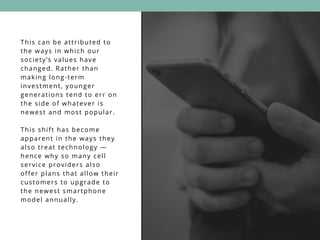
This can be attributed to
the ways in which our
society’s values have
changed. Rather than
making long-term
investment, younger
generations tend to err on
the side of whatever is
newest and most popular.
This shift has become
apparent in the ways they
also treat technology —
hence why so many cell
service providers also
offer plans that allow their
customers to upgrade to
the newest smartphone
model annually.
Taking all of this information into consideration, it is
becoming increasingly understandable why tech experts
and tech-lovers alike are questioning the long-term
viability of the smartphone.
What is your opinion? Feel free to leave a comment
below, or start a conversation with Steve Moye on
Twitter!
F O R M O R E
V I S I T S T E V E M O Y E . C O M

Will the Smartphone Be Obsolete in Five Years?

  • 1.
    W I LL T H E S M A R T P H O N E B E O B S O L E T E I N F I V E Y E A R S ? STEVE MOYE
  • 2.
    On January 9,2007, a revolutionary device was unveiled at a tech conference in California, effectively changing the face of everyday technology as we knew it. Naturally, this is in reference to Steve Jobs’ introduction of the iPhone. Although this first model was, in retrospect, extraordinarily basic, it shattered consumers’ expectations and subsequently changed the way everyday people viewed developing technology. Now, 10 years after the release of the iPhone, our smartphones are only getting smarter, with features such as fingerprint and facial recognition, voice control, a variety of touch-based commands, and enhanced functionality and user experience across all apps becoming the norm.
  • 3.
    However, it isimportant to note that as these devices have become increasingly sophisticated, many suspect that these tech companies have nowhere else to go. This is mostly because it seems there are no more groundbreaking developments to unveil and shock the public with, nor any more unique features to market.
  • 4.
    So, it appearsthat the relevance of smartphones is now hanging in the balance, causing some to question whether or not these currently-integral devices will stand the test of time. Remember, though, that this is nothing new. Many of the technological advancements that were once the staples of society have fallen by the wayside — just look at the radio, landline telephone, and perhaps even the modern computer.
  • 5.
    This can beattributed to the ways in which our society’s values have changed. Rather than making long-term investment, younger generations tend to err on the side of whatever is newest and most popular. This shift has become apparent in the ways they also treat technology — hence why so many cell service providers also offer plans that allow their customers to upgrade to the newest smartphone model annually.
  • 6.
    Taking all ofthis information into consideration, it is becoming increasingly understandable why tech experts and tech-lovers alike are questioning the long-term viability of the smartphone. What is your opinion? Feel free to leave a comment below, or start a conversation with Steve Moye on Twitter!
  • 7.
    F O RM O R E V I S I T S T E V E M O Y E . C O M