Surface Recontamination Shielding
From Patient to worker… Exams Rooms to MRI’s
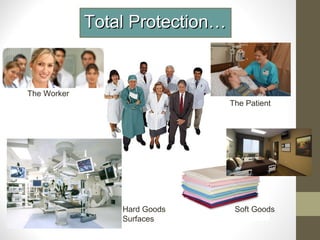
Total Protection…Total Protection…
The Worker
The Patient
Soft GoodsHard Goods
Surfaces
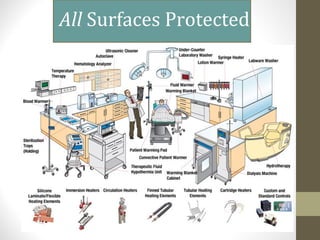
All Surfaces Protected
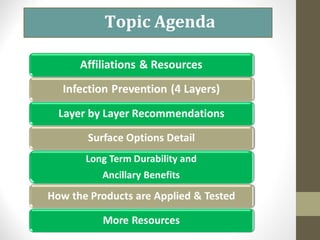
Topic Agenda
Surface Recontamination Shield
(SRS) Certifier
Affiliations & Resources
CLEANING PROTOCOLS
• Antimicrobials are designed to enhance cleaning protocols not
replace them.
• The technology allows for protection between cleanings.
• Environmentally safe providing a “GREEN” application and
removing the need for chemical cleaning. (soap and water)
• Cost effective, reduces the need to buy expensive chemicals
and decreased cleaning time for staff (as much as 66%).
Wilkins
Solutions
NEW Technology Enables this Anti-Microbial
to be applied via a Electro Static System
that is TRULY Remarkable
It’s Delivery System
http;//www.youtube.com/watch?v=pn0J05v1Jzk
NANO Technology
Mark Shaw ‘s Demonstration at
TED Forum in Long Beach CA
February 2013
WARNING: This Video my inspire thoughts of the
multitude of ways this product can be used…
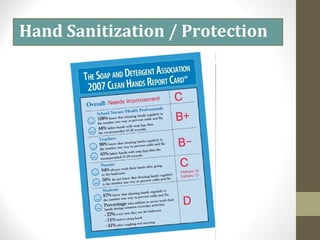
Hand Sanitization / Protection
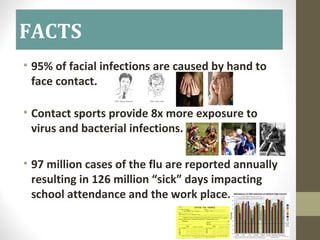
FACTS
• 95% of facial infections are caused by hand to
face contact.
• Contact sports provide 8x more exposure to
virus and bacterial infections.
• 97 million cases of the flu are reported annually
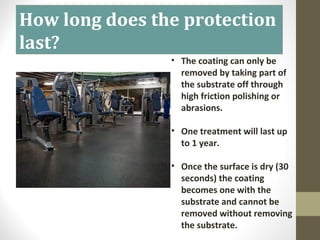
resulting in 126 million “sick” days impacting
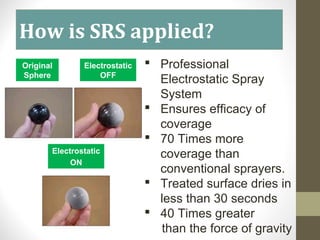
school attendance and the work place.
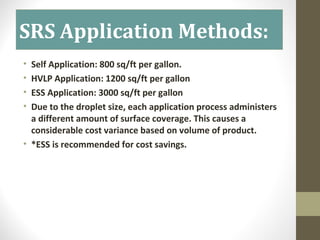
FACTS
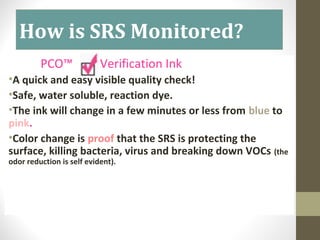
• Infection control in public venues
is people dependent. Only 48% of people wash
their hands after using the restroom.
• In the USA currently, 271 people per day, will
die from healthcare-associated infections (HAIs)
such as Methicillin-resistant Staphylococcus
aurous (MRSA) infections.
4 Layers of Infection
Prevention
1. Hand Sanitization / 24 hour Continuous Protection
2. Clothing Disinfection / 100 washings or 90 days of
Protection
3. Surface Cleaning / Disinfection
4. Surface Continuous Protection
Not all Non-Alcohol based sanitizers are the
same…
•The Active Ingredient in many other Non-Alcohol based sanitizers is
Triclosan which is rated as a level 7 high hazard in the Safety Database
•Triclosan has been shown to accumulate biosolids in the
environment, one of the top seven organic contaminants in waste
water according to the National Toxicology Program. Triclosan
leads to various problems with natural biological systems.
Triclosan, when combined with chlorine e.g. from tap water,
produces dioxins, a probable carcinogen in humans.
•Triclosan is currently under review by the FDA due to possible
health hazards.
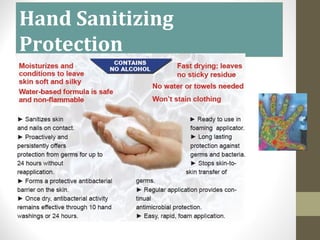
Hand Sanitizing
Protection
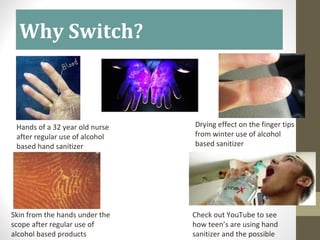
Why Switch?
Drying effect on the finger tips
from winter use of alcohol
based sanitizer
Skin from the hands under the
scope after regular use of
alcohol based products
Check out YouTube to see
how teen’s are using hand
sanitizer and the possible
Hands of a 32 year old nurse
after regular use of alcohol
based hand sanitizer
Hand Sanitizer: Benefits
• Cutting edge technology for personal health
protection…. schools, fitness gyms, offices, anywhere.
• Cost effective protection: .005 cents per application.
With budgets deciding how many employees it takes to
perform a job, being healthy and able to work is more
important then ever.
• NON-TOXIC: Does not require poison control reporting.
• NON-FLAMMABLE: does not pose a safety risk
• WATER BASED: NO ALCOHOL; No drying out of skin
• LONGEST LASTING: 24 hour protection sanitizer longest
on the market.
Hand Sanitizer: Benefits
• NON-DRYING: promotes healthy skin care
• Kills 99.9% of Germs (Including Staph, MRSA, C
Diff, influenza, H1N1, etc…)
• Mechanical compound (nano technology
creates microscopic 2nd
skin)
• Tests show a 72% decrease in absence of Pre
School Students.
• Germ free protection for cuts, scrapes and
abrasions.
Clothing & Soft Goods
Protection
• Antimicrobial technology provides a high
performance, non-leaching, proactive and continual
prevention of odor, staining and fabric deterioration.
• Application must be done separately from normal
washing. Do not mix with regular detergent or bleach.
New model washing machines have the capacity to
integrate solutions.
• Creates and environmentally friendly, Invisible,
hypoallergenic and non-toxic antimicrobial coating on
fabrics.
• Will not create adaptive organisms or “super bugs”.
• One application lasts 90 days.
Surface Disinfectant
• Hospital Grade Disinfectant is part ONE of the Cleaning
System
• 3 minute kill time
• Antibiotic-Resistant Bactericidal
• Tuberculocidal
• Virucide
• Bactericidal
• Mildew stat/Fungicide
• Eliminates odors
• Cuts Grease & Grime
• Meets OSHA Blood borne Pathogen Standard for HIV,
HBV & HCV
Surface Cleaning /
Disinfection
• Antibiotic-Resistant Bactericidal Activity:
• Community Associated Methicillin Resistant Staphylococcus aureus (CA-MRSA) (NRS 123) Genotype USA
400 (NRS384) Genotype USA 300, Methicillin resistant staphylococcus aureus (MRSA), (ATCC 33593),
Vancomycin resistant Enterococcus faecalis (VRE), (ATCC 51575), Vancomycin intermediate resistant
Staphylococcus aureus (VISA), (CDC Isolate 99287), Methicillin resistant Staphylococcus epidermidis
(MRSE), (ATCC 51625)
• Bactericidal Activity:
• Staphylococcus aureus, (ATCC 6538), Pseudomonas aeruginosa, (ATCC 15442), Salmonella choleraesuis,
(ATCC 10708), Escherichia coli, (ATCC 11229), Escherichia coli O157:H7, (ATCC 43895), Listeria
monocytogenes, (ATCC 35152), Salmonella typhi, (ATCC 6539), Streptococcus pyogenes (Necrotizing
Fasciitis-Group A) (V.A. Medical Center Isolate 04001), Yersinia enterocolitica, (ATCC 23715), Enterococcus
faecium, (ATCC 6569), Corynebacterium ammoniagenes, (ATCC 6871)
• Virucidal Activity:
• Avian Influenza A Virus (H3N2), (Avian Reassortant) (ATCC VR-2072), Avian Influenza Virus Type A
(Turkey/WIS/66), (H9N2), SARS Associated Coronavirus (ZeptoMetrix), Paramyxovirus (Mumps) (ATCC VR-
1438), Hepatitis A Virus (HAV), Rhinovirus Type 39 (ATCC VR-340), Rotovirus
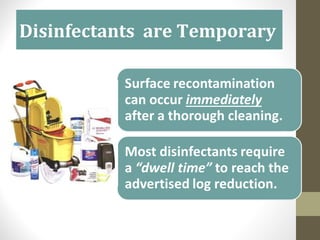
Disinfectants are Temporary
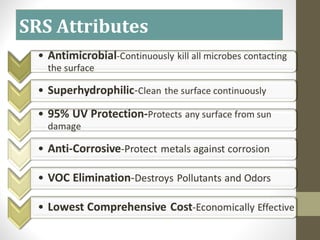
SRS Attributes
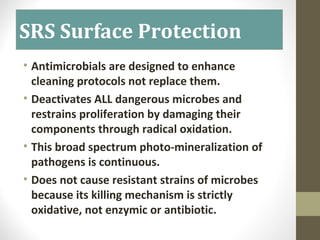
SRS Surface Protection
• Antimicrobials are designed to enhance
cleaning protocols not replace them.
• Deactivates ALL dangerous microbes and
restrains proliferation by damaging their
components through radical oxidation.
• This broad spectrum photo-mineralization of
pathogens is continuous.
• Does not cause resistant strains of microbes
because its killing mechanism is strictly
oxidative, not enzymic or antibiotic.
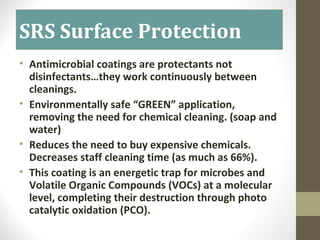
SRS Surface Protection
• Antimicrobial coatings are protectants not
disinfectants…they work continuously between
cleanings.
• Environmentally safe “GREEN” application,
removing the need for chemical cleaning. (soap and
water)
• Reduces the need to buy expensive chemicals.
Decreases staff cleaning time (as much as 66%).
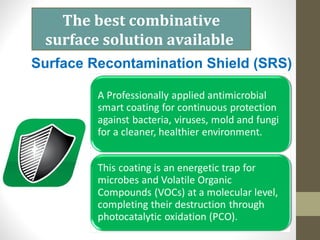
• This coating is an energetic trap for microbes and
Volatile Organic Compounds (VOCs) at a molecular
level, completing their destruction through photo
catalytic oxidation (PCO).
What is the residual kill time of
most disinfectants?
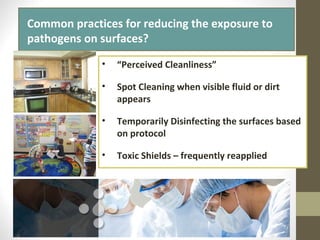
• “Perceived Cleanliness”
• Spot Cleaning when visible fluid or dirt
appears
• Temporarily Disinfecting the surfaces based
on protocol
• Toxic Shields – frequently reapplied
Common practices for reducing the exposure to
pathogens on surfaces?
What is the residual kill time of
most disinfectants?
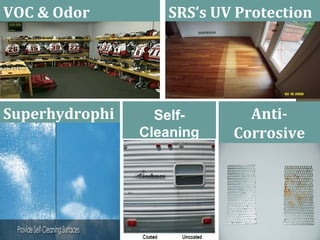
Anti-
Corrosive
Superhydrophi
lic
Self-
Cleaning
SRS’s UV ProtectionVOC & Odor
Reduction
Antifouling and anti-adhesive surface
coatings
• Poly(ethylene glycol) coatings (PEG)
• Self-Assembled Monolayer (SAM)
• Diamond-like carbon (DLC) films
• Easy clean surfaces
• Pilkington Active <10 degrees contact angle
• Pilkington Hydrotech >130 degrees contact angle
• BUT: It merely moves them elsewhere, where they will have to
be dealt with by other microbicidal techniques.
Zwitterionic polymer
biomimetic surfaces
• Mimic properties found in the lipid bilayers of biological
membranes
• Zwitterionic surfaces are biocompatible and non-thrombogenic
discouraging adhesion of cells, both mammalian and microbial
• BUT: Still do not fully address the problem of microbial
contamination as they have no antimicrobial functionality.
Antimicrobial coatings and
surface technologies
• The 6 core technologies are:
1.Microbicide-releasing surfaces
2.Silver and silver-containing surfaces
3.Copper and copper alloy surfaces
4.Bacteriophage-modified surfaces
5.Polycationic antimicrobial surfaces
6.Light Activated Antimicrobial Agents (LAAAs)
1. Microbicide-releasing
surfaces
• The most well known is Microban
• Microban incorporates Triclosan (chloro-dichlorophenoxy-
phenol) a broad spectrum phenolic antimicrobial.
• BUT: It is only active against Bacteria, not virus, spores, or
Volitile Organic Compounds (VOCs). It is toxic in aquatic
systems and is an endocrine disruptor. Most concerning is
that it degrades to Dioxin which is extremely hazardous to
man.
2. Silver and
silver-containing surfaces
• To date, few organisms have developed resistance towards
the silver ion as an antimicrobial.
• BUT besides “expense” there are a couple of drawbacks:
1. They are non-permanent (leaching), relying on diffusible
antimicrobials to which microbes can develop resistance.
2. Possible Ag ion cytotoxicity towards mammalian cells
3. Copper and
copper alloy surfaces
• Brass is less effective than pure copper but still exhibits
antimicrobial activity
• Alloys have improved aesthetic and mechanical properties
and may be more suited to real world applications
• Door plates, handles and other surfaces could employ copper
alloys, but it’s a relatively expensive solution
4. Bacteriophage-modified
surfaces
• Bacteriophages are viruses that infect prokaryotic cells.
• Phages usually target individual species of bacteria, bind to
their surface, inject their genetic material and replicate
within the bacterial host.
• BUT they are not practical in general settings where specific
targets may not be few enough and viruses, spores etc. are
not addressed at all. Also of concern is Phage resistant
strains.
5. Polyatomic Antimicrobial Surfaces
• Polyethyleneimines (PEIs)
• A positively charged moiety is required—this keeps the
hydrophobic chains separated and erect from the surface,
and also electrostatically attracts microbes, due to the net
negative charge on their surface.
• BUT, their mechanical stability and longevity have not been
described and it is still yet to be seen how well they might
respond to the rigors of use and indeed cleaning in a clinical
setting.
6. Light Activated Antimicrobial Agents (LAAAs)
• Photosensitiser (PDT Refinement)
• PDT is a form of indirect phototherapy, in which light is used as a
means of activating the curative agent.
• Titanium Dioxide Photocatalysis
• (Effective with UV or visible spectrum though doping. eg. With
Nitrogen or Tungsten oxide)
• Shown to be benign to the environment and humans, animals, birds,
and aquatic systems. (No Toxicity)
• Highest binding, permanent, unless removed through abrasion
• Active against: Bacteria, Viruses, Spores (i.e. mold, mildew), VOCs and
odors!
What is the residual kill time of
most disinfectants?
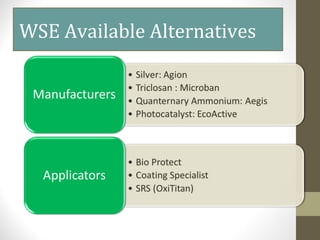
WSE Available Alternatives
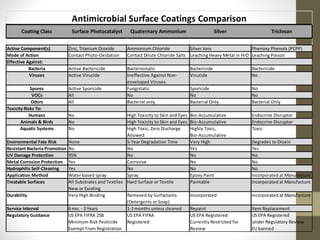
Active Component(s) Zinc, Titanium Dioxide Ammonium Chloride Silver Ions Phenoxy Phenols (PCPP)
Mode of Action Contact Photo-Oxidation Contact Dilute Chloride Salts Leaching Heavy Metal in H2O Leaching Poison
Effective Against:
Bacteria Active Bactericide Bacteriostatic Bactericide Bactericide
Viruses Active Virucide Ineffective Against Non-
enveloped Viruses
Virucide No
Spores Active Sporicide Fungistatic Sporicide No
VOCs All No No No
Odors All Bacterial only Bacterial Only Bacterial Only
Toxicity Risks To:
Humans No High Toxicity to Skin and Eyes Bio-Accumulative Endocrine Disruptor
Animals & Birds No High Toxicity to Skin and Eyes Bio-Accumulative Endocrine Disruptor
Aquatic Systems No High Toxic, Zero Discharge
Allowed
Highly Toxic,
Bio-Accumulative
Toxic
Environmental Fate Risk None 5-Year Degradation Time Very High Degrades to Dioxin
Resistant Bacteria Promotion No No Yes Yes
UV Damage Protection 95% No No No
Metal Corrosion Protection Yes Corrosive No No
Hydrophilic Self-Cleaning Yes No No No
Application Method Water based spray Spray Epoxy Paint Incorporated at Manufacture
Treatable Surfaces All Substrates and Textiles
New or Existing
Hard Surface or Textile Paintable Incorporated at Manufacture
Durability Very High Binding Removed by Surfactants
(Detergents or Soap)
Incorporated Incorporated at Manufacture
Service Interval 6 mo. - 3 Years 1-3 months unless cleaned Repaint Item Replacement
Regulatory Guidance US EPA FIFRA 25B
Minimum Risk Pesticide
Exempt From Registration
US EPA FIFRA
Registered
US EPA Registered
Currently Restricted for
Review
US EPA Registered
Under Regulatory Review
EU banned
Antimicrobial Surface Coatings Comparison
Surface Photocatalyst Quaternary Ammonium Silver TriclosanCoating Class
What is the residual kill time of
most disinfectants?
The best combinative
surface solution available
Surface Recontamination Shield (SRS)
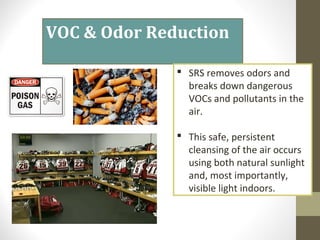
 SRS removes odors and
breaks down dangerous
VOCs and pollutants in the
air.
 This safe, persistent
cleansing of the air occurs
using both natural sunlight
and, most importantly,
visible light indoors.?
VOC & Odor Reduction
How long does the protection
last?
• The coating can only be
removed by taking part of
the substrate off through
high friction polishing or
abrasions.
• One treatment will last up
to 1 year.
• Once the surface is dry (30
seconds) the coating
becomes one with the
substrate and cannot be
removed without removing
the substrate.
How is SRS applied?
Original
Sphere
 Professional
Electrostatic Spray
System
 Ensures efficacy of
coverage
 70 Times more
coverage than
conventional sprayers.
 Treated surface dries in
less than 30 seconds
 40 Times greater
than the force of gravity
Electrostatic
OFF
Electrostatic
ON
SRS Application Methods:
• Self Application: 800 sq/ft per gallon.
• HVLP Application: 1200 sq/ft per gallon
• ESS Application: 3000 sq/ft per gallon
• Due to the droplet size, each application process administers
a different amount of surface coverage. This causes a
considerable cost variance based on volume of product.
• *ESS is recommended for cost savings.
How is SRS Monitored?
PCO™ Verification Ink
•A quick and easy visible quality check!
•Safe, water soluble, reaction dye.
•The ink will change in a few minutes or less from blue to
pink.
•Color change is proof that the SRS is protecting the
surface, killing bacteria, virus and breaking down VOCs (the
odor reduction is self evident).
Messaging your facility:
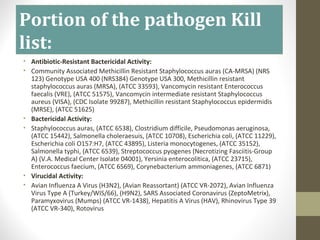
Portion of the pathogen Kill
list:
• Antibiotic-Resistant Bactericidal Activity:
• Community Associated Methicillin Resistant Staphylococcus auras (CA-MRSA) (NRS
123) Genotype USA 400 (NRS384) Genotype USA 300, Methicillin resistant
staphylococcus auras (MRSA), (ATCC 33593), Vancomycin resistant Enterococcus
faecalis (VRE), (ATCC 51575), Vancomycin intermediate resistant Staphylococcus
aureus (VISA), (CDC Isolate 99287), Methicillin resistant Staphylococcus epidermidis
(MRSE), (ATCC 51625)
• Bactericidal Activity:
• Staphylococcus auras, (ATCC 6538), Clostridium difficile, Pseudomonas aeruginosa,
(ATCC 15442), Salmonella choleraesuis, (ATCC 10708), Escherichia coli, (ATCC 11229),
Escherichia coli O157:H7, (ATCC 43895), Listeria monocytogenes, (ATCC 35152),
Salmonella typhi, (ATCC 6539), Streptococcus pyogenes (Necrotizing Fasciitis-Group
A) (V.A. Medical Center Isolate 04001), Yersinia enterocolitica, (ATCC 23715),
Enterococcus faecium, (ATCC 6569), Corynebacterium ammoniagenes, (ATCC 6871)
• Virucidal Activity:
• Avian Influenza A Virus (H3N2), (Avian Reassortant) (ATCC VR-2072), Avian Influenza
Virus Type A (Turkey/WIS/66), (H9N2), SARS Associated Coronavirus (ZeptoMetrix),
Paramyxovirus (Mumps) (ATCC VR-1438), Hepatitis A Virus (HAV), Rhinovirus Type 39
(ATCC VR-340), Rotovirus
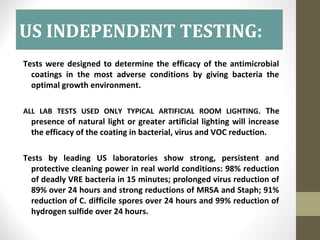
US INDEPENDENT TESTING:
Tests were designed to determine the efficacy of the antimicrobial
coatings in the most adverse conditions by giving bacteria the
optimal growth environment.
ALL LAB TESTS USED ONLY TYPICAL ARTIFICIAL ROOM LIGHTING. The
presence of natural light or greater artificial lighting will increase
the efficacy of the coating in bacterial, virus and VOC reduction.
Tests by leading US laboratories show strong, persistent and
protective cleaning power in real world conditions: 98% reduction
of deadly VRE bacteria in 15 minutes; prolonged virus reduction of
89% over 24 hours and strong reductions of MRSA and Staph; 91%
reduction of C. difficile spores over 24 hours and 99% reduction of
hydrogen sulfide over 24 hours.
More Information on
Selecting Antimicrobials:
• Household Cleaning - University of Nebraska- Lincoln
• Selecting an Appropriate Sanitizer or Disinfectant - National
Resource Center for Health and Safety in Child Care and Early
Education
• Cleaning Up Antimicrobial Hand Soaps - Johns Hopkins School
of Public Health
• Disinfection and Remediation Guidelines for Pools and Spas -
Centers for Disease Control and Prevention
• Healthy Swimming - Centers for Disease Control and
Prevention
• Cleaning, Sanitizing, and Disinfecting in Child Care Settings -
National Resource Center for Health and Safety in Child Care
and Early Education
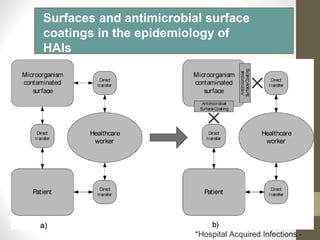
Surfaces and antimicrobial surface
coatings in the epidemiology of
HAIs
*Hospital Acquired Infections -
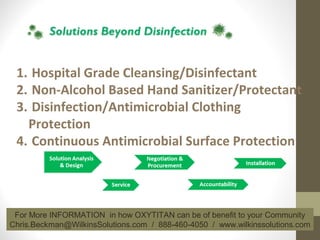
1. Hospital Grade Cleansing/Disinfectant
2. Non-Alcohol Based Hand Sanitizer/Protectant
3. Disinfection/Antimicrobial Clothing
Protection
4. Continuous Antimicrobial Surface Protection
For More INFORMATION in how OXYTITAN can be of benefit to your Community
Chris.Beckman@WilkinsSolutions.com / 888-460-4050 / www.wilkinssolutions.com
ForFor
InformationInformation
ContactContact
Chris BeckmanChris Beckman
Commercial AccountCommercial Account
ManagerManager
615-669-3481615-669-3481
www.wilkinssolutions.com
Email: Chris.Beckman@wilkinssolutions.com

Wilkins Solutions Surface Recontaminaion Shielding 2014

  • 1.
    Surface Recontamination Shielding FromPatient to worker… Exams Rooms to MRI’s
  • 2.
    Total Protection…Total Protection… TheWorker The Patient Soft GoodsHard Goods Surfaces
  • 3.
  • 4.
  • 5.
    Surface Recontamination Shield (SRS)Certifier Affiliations & Resources
  • 6.
    CLEANING PROTOCOLS • Antimicrobialsare designed to enhance cleaning protocols not replace them. • The technology allows for protection between cleanings. • Environmentally safe providing a “GREEN” application and removing the need for chemical cleaning. (soap and water) • Cost effective, reduces the need to buy expensive chemicals and decreased cleaning time for staff (as much as 66%).
  • 7.
  • 8.
    NEW Technology Enablesthis Anti-Microbial to be applied via a Electro Static System that is TRULY Remarkable It’s Delivery System http;//www.youtube.com/watch?v=pn0J05v1Jzk NANO Technology Mark Shaw ‘s Demonstration at TED Forum in Long Beach CA February 2013 WARNING: This Video my inspire thoughts of the multitude of ways this product can be used…
  • 9.
  • 10.
    FACTS • 95% offacial infections are caused by hand to face contact. • Contact sports provide 8x more exposure to virus and bacterial infections. • 97 million cases of the flu are reported annually resulting in 126 million “sick” days impacting school attendance and the work place.
  • 11.
    FACTS • Infection controlin public venues is people dependent. Only 48% of people wash their hands after using the restroom. • In the USA currently, 271 people per day, will die from healthcare-associated infections (HAIs) such as Methicillin-resistant Staphylococcus aurous (MRSA) infections.
  • 12.
    4 Layers ofInfection Prevention 1. Hand Sanitization / 24 hour Continuous Protection 2. Clothing Disinfection / 100 washings or 90 days of Protection 3. Surface Cleaning / Disinfection 4. Surface Continuous Protection
  • 13.
    Not all Non-Alcoholbased sanitizers are the same… •The Active Ingredient in many other Non-Alcohol based sanitizers is Triclosan which is rated as a level 7 high hazard in the Safety Database •Triclosan has been shown to accumulate biosolids in the environment, one of the top seven organic contaminants in waste water according to the National Toxicology Program. Triclosan leads to various problems with natural biological systems. Triclosan, when combined with chlorine e.g. from tap water, produces dioxins, a probable carcinogen in humans. •Triclosan is currently under review by the FDA due to possible health hazards.
  • 14.
  • 15.
    Why Switch? Drying effecton the finger tips from winter use of alcohol based sanitizer Skin from the hands under the scope after regular use of alcohol based products Check out YouTube to see how teen’s are using hand sanitizer and the possible Hands of a 32 year old nurse after regular use of alcohol based hand sanitizer
  • 16.
    Hand Sanitizer: Benefits •Cutting edge technology for personal health protection…. schools, fitness gyms, offices, anywhere. • Cost effective protection: .005 cents per application. With budgets deciding how many employees it takes to perform a job, being healthy and able to work is more important then ever. • NON-TOXIC: Does not require poison control reporting. • NON-FLAMMABLE: does not pose a safety risk • WATER BASED: NO ALCOHOL; No drying out of skin • LONGEST LASTING: 24 hour protection sanitizer longest on the market.
  • 17.
    Hand Sanitizer: Benefits •NON-DRYING: promotes healthy skin care • Kills 99.9% of Germs (Including Staph, MRSA, C Diff, influenza, H1N1, etc…) • Mechanical compound (nano technology creates microscopic 2nd skin) • Tests show a 72% decrease in absence of Pre School Students. • Germ free protection for cuts, scrapes and abrasions.
  • 18.
    Clothing & SoftGoods Protection • Antimicrobial technology provides a high performance, non-leaching, proactive and continual prevention of odor, staining and fabric deterioration. • Application must be done separately from normal washing. Do not mix with regular detergent or bleach. New model washing machines have the capacity to integrate solutions. • Creates and environmentally friendly, Invisible, hypoallergenic and non-toxic antimicrobial coating on fabrics. • Will not create adaptive organisms or “super bugs”. • One application lasts 90 days.
  • 19.
    Surface Disinfectant • HospitalGrade Disinfectant is part ONE of the Cleaning System • 3 minute kill time • Antibiotic-Resistant Bactericidal • Tuberculocidal • Virucide • Bactericidal • Mildew stat/Fungicide • Eliminates odors • Cuts Grease & Grime • Meets OSHA Blood borne Pathogen Standard for HIV, HBV & HCV
  • 20.
    Surface Cleaning / Disinfection •Antibiotic-Resistant Bactericidal Activity: • Community Associated Methicillin Resistant Staphylococcus aureus (CA-MRSA) (NRS 123) Genotype USA 400 (NRS384) Genotype USA 300, Methicillin resistant staphylococcus aureus (MRSA), (ATCC 33593), Vancomycin resistant Enterococcus faecalis (VRE), (ATCC 51575), Vancomycin intermediate resistant Staphylococcus aureus (VISA), (CDC Isolate 99287), Methicillin resistant Staphylococcus epidermidis (MRSE), (ATCC 51625) • Bactericidal Activity: • Staphylococcus aureus, (ATCC 6538), Pseudomonas aeruginosa, (ATCC 15442), Salmonella choleraesuis, (ATCC 10708), Escherichia coli, (ATCC 11229), Escherichia coli O157:H7, (ATCC 43895), Listeria monocytogenes, (ATCC 35152), Salmonella typhi, (ATCC 6539), Streptococcus pyogenes (Necrotizing Fasciitis-Group A) (V.A. Medical Center Isolate 04001), Yersinia enterocolitica, (ATCC 23715), Enterococcus faecium, (ATCC 6569), Corynebacterium ammoniagenes, (ATCC 6871) • Virucidal Activity: • Avian Influenza A Virus (H3N2), (Avian Reassortant) (ATCC VR-2072), Avian Influenza Virus Type A (Turkey/WIS/66), (H9N2), SARS Associated Coronavirus (ZeptoMetrix), Paramyxovirus (Mumps) (ATCC VR- 1438), Hepatitis A Virus (HAV), Rhinovirus Type 39 (ATCC VR-340), Rotovirus
  • 21.
  • 22.
  • 23.
    SRS Surface Protection •Antimicrobials are designed to enhance cleaning protocols not replace them. • Deactivates ALL dangerous microbes and restrains proliferation by damaging their components through radical oxidation. • This broad spectrum photo-mineralization of pathogens is continuous. • Does not cause resistant strains of microbes because its killing mechanism is strictly oxidative, not enzymic or antibiotic.
  • 24.
    SRS Surface Protection •Antimicrobial coatings are protectants not disinfectants…they work continuously between cleanings. • Environmentally safe “GREEN” application, removing the need for chemical cleaning. (soap and water) • Reduces the need to buy expensive chemicals. Decreases staff cleaning time (as much as 66%). • This coating is an energetic trap for microbes and Volatile Organic Compounds (VOCs) at a molecular level, completing their destruction through photo catalytic oxidation (PCO).
  • 25.
    What is theresidual kill time of most disinfectants? • “Perceived Cleanliness” • Spot Cleaning when visible fluid or dirt appears • Temporarily Disinfecting the surfaces based on protocol • Toxic Shields – frequently reapplied Common practices for reducing the exposure to pathogens on surfaces?
  • 26.
    What is theresidual kill time of most disinfectants? Anti- Corrosive Superhydrophi lic Self- Cleaning SRS’s UV ProtectionVOC & Odor Reduction
  • 27.
    Antifouling and anti-adhesivesurface coatings • Poly(ethylene glycol) coatings (PEG) • Self-Assembled Monolayer (SAM) • Diamond-like carbon (DLC) films • Easy clean surfaces • Pilkington Active <10 degrees contact angle • Pilkington Hydrotech >130 degrees contact angle • BUT: It merely moves them elsewhere, where they will have to be dealt with by other microbicidal techniques.
  • 28.
    Zwitterionic polymer biomimetic surfaces •Mimic properties found in the lipid bilayers of biological membranes • Zwitterionic surfaces are biocompatible and non-thrombogenic discouraging adhesion of cells, both mammalian and microbial • BUT: Still do not fully address the problem of microbial contamination as they have no antimicrobial functionality.
  • 29.
    Antimicrobial coatings and surfacetechnologies • The 6 core technologies are: 1.Microbicide-releasing surfaces 2.Silver and silver-containing surfaces 3.Copper and copper alloy surfaces 4.Bacteriophage-modified surfaces 5.Polycationic antimicrobial surfaces 6.Light Activated Antimicrobial Agents (LAAAs)
  • 30.
    1. Microbicide-releasing surfaces • Themost well known is Microban • Microban incorporates Triclosan (chloro-dichlorophenoxy- phenol) a broad spectrum phenolic antimicrobial. • BUT: It is only active against Bacteria, not virus, spores, or Volitile Organic Compounds (VOCs). It is toxic in aquatic systems and is an endocrine disruptor. Most concerning is that it degrades to Dioxin which is extremely hazardous to man.
  • 31.
    2. Silver and silver-containingsurfaces • To date, few organisms have developed resistance towards the silver ion as an antimicrobial. • BUT besides “expense” there are a couple of drawbacks: 1. They are non-permanent (leaching), relying on diffusible antimicrobials to which microbes can develop resistance. 2. Possible Ag ion cytotoxicity towards mammalian cells
  • 32.
    3. Copper and copperalloy surfaces • Brass is less effective than pure copper but still exhibits antimicrobial activity • Alloys have improved aesthetic and mechanical properties and may be more suited to real world applications • Door plates, handles and other surfaces could employ copper alloys, but it’s a relatively expensive solution
  • 33.
    4. Bacteriophage-modified surfaces • Bacteriophagesare viruses that infect prokaryotic cells. • Phages usually target individual species of bacteria, bind to their surface, inject their genetic material and replicate within the bacterial host. • BUT they are not practical in general settings where specific targets may not be few enough and viruses, spores etc. are not addressed at all. Also of concern is Phage resistant strains.
  • 34.
    5. Polyatomic AntimicrobialSurfaces • Polyethyleneimines (PEIs) • A positively charged moiety is required—this keeps the hydrophobic chains separated and erect from the surface, and also electrostatically attracts microbes, due to the net negative charge on their surface. • BUT, their mechanical stability and longevity have not been described and it is still yet to be seen how well they might respond to the rigors of use and indeed cleaning in a clinical setting.
  • 35.
    6. Light ActivatedAntimicrobial Agents (LAAAs) • Photosensitiser (PDT Refinement) • PDT is a form of indirect phototherapy, in which light is used as a means of activating the curative agent. • Titanium Dioxide Photocatalysis • (Effective with UV or visible spectrum though doping. eg. With Nitrogen or Tungsten oxide) • Shown to be benign to the environment and humans, animals, birds, and aquatic systems. (No Toxicity) • Highest binding, permanent, unless removed through abrasion • Active against: Bacteria, Viruses, Spores (i.e. mold, mildew), VOCs and odors!
  • 36.
    What is theresidual kill time of most disinfectants? WSE Available Alternatives
  • 37.
    Active Component(s) Zinc,Titanium Dioxide Ammonium Chloride Silver Ions Phenoxy Phenols (PCPP) Mode of Action Contact Photo-Oxidation Contact Dilute Chloride Salts Leaching Heavy Metal in H2O Leaching Poison Effective Against: Bacteria Active Bactericide Bacteriostatic Bactericide Bactericide Viruses Active Virucide Ineffective Against Non- enveloped Viruses Virucide No Spores Active Sporicide Fungistatic Sporicide No VOCs All No No No Odors All Bacterial only Bacterial Only Bacterial Only Toxicity Risks To: Humans No High Toxicity to Skin and Eyes Bio-Accumulative Endocrine Disruptor Animals & Birds No High Toxicity to Skin and Eyes Bio-Accumulative Endocrine Disruptor Aquatic Systems No High Toxic, Zero Discharge Allowed Highly Toxic, Bio-Accumulative Toxic Environmental Fate Risk None 5-Year Degradation Time Very High Degrades to Dioxin Resistant Bacteria Promotion No No Yes Yes UV Damage Protection 95% No No No Metal Corrosion Protection Yes Corrosive No No Hydrophilic Self-Cleaning Yes No No No Application Method Water based spray Spray Epoxy Paint Incorporated at Manufacture Treatable Surfaces All Substrates and Textiles New or Existing Hard Surface or Textile Paintable Incorporated at Manufacture Durability Very High Binding Removed by Surfactants (Detergents or Soap) Incorporated Incorporated at Manufacture Service Interval 6 mo. - 3 Years 1-3 months unless cleaned Repaint Item Replacement Regulatory Guidance US EPA FIFRA 25B Minimum Risk Pesticide Exempt From Registration US EPA FIFRA Registered US EPA Registered Currently Restricted for Review US EPA Registered Under Regulatory Review EU banned Antimicrobial Surface Coatings Comparison Surface Photocatalyst Quaternary Ammonium Silver TriclosanCoating Class
  • 38.
    What is theresidual kill time of most disinfectants? The best combinative surface solution available Surface Recontamination Shield (SRS)
  • 39.
     SRS removesodors and breaks down dangerous VOCs and pollutants in the air.  This safe, persistent cleansing of the air occurs using both natural sunlight and, most importantly, visible light indoors.? VOC & Odor Reduction
  • 40.
    How long doesthe protection last? • The coating can only be removed by taking part of the substrate off through high friction polishing or abrasions. • One treatment will last up to 1 year. • Once the surface is dry (30 seconds) the coating becomes one with the substrate and cannot be removed without removing the substrate.
  • 41.
    How is SRSapplied? Original Sphere  Professional Electrostatic Spray System  Ensures efficacy of coverage  70 Times more coverage than conventional sprayers.  Treated surface dries in less than 30 seconds  40 Times greater than the force of gravity Electrostatic OFF Electrostatic ON
  • 42.
    SRS Application Methods: •Self Application: 800 sq/ft per gallon. • HVLP Application: 1200 sq/ft per gallon • ESS Application: 3000 sq/ft per gallon • Due to the droplet size, each application process administers a different amount of surface coverage. This causes a considerable cost variance based on volume of product. • *ESS is recommended for cost savings.
  • 43.
    How is SRSMonitored? PCO™ Verification Ink •A quick and easy visible quality check! •Safe, water soluble, reaction dye. •The ink will change in a few minutes or less from blue to pink. •Color change is proof that the SRS is protecting the surface, killing bacteria, virus and breaking down VOCs (the odor reduction is self evident).
  • 44.
  • 45.
    Portion of thepathogen Kill list: • Antibiotic-Resistant Bactericidal Activity: • Community Associated Methicillin Resistant Staphylococcus auras (CA-MRSA) (NRS 123) Genotype USA 400 (NRS384) Genotype USA 300, Methicillin resistant staphylococcus auras (MRSA), (ATCC 33593), Vancomycin resistant Enterococcus faecalis (VRE), (ATCC 51575), Vancomycin intermediate resistant Staphylococcus aureus (VISA), (CDC Isolate 99287), Methicillin resistant Staphylococcus epidermidis (MRSE), (ATCC 51625) • Bactericidal Activity: • Staphylococcus auras, (ATCC 6538), Clostridium difficile, Pseudomonas aeruginosa, (ATCC 15442), Salmonella choleraesuis, (ATCC 10708), Escherichia coli, (ATCC 11229), Escherichia coli O157:H7, (ATCC 43895), Listeria monocytogenes, (ATCC 35152), Salmonella typhi, (ATCC 6539), Streptococcus pyogenes (Necrotizing Fasciitis-Group A) (V.A. Medical Center Isolate 04001), Yersinia enterocolitica, (ATCC 23715), Enterococcus faecium, (ATCC 6569), Corynebacterium ammoniagenes, (ATCC 6871) • Virucidal Activity: • Avian Influenza A Virus (H3N2), (Avian Reassortant) (ATCC VR-2072), Avian Influenza Virus Type A (Turkey/WIS/66), (H9N2), SARS Associated Coronavirus (ZeptoMetrix), Paramyxovirus (Mumps) (ATCC VR-1438), Hepatitis A Virus (HAV), Rhinovirus Type 39 (ATCC VR-340), Rotovirus
  • 46.
    US INDEPENDENT TESTING: Testswere designed to determine the efficacy of the antimicrobial coatings in the most adverse conditions by giving bacteria the optimal growth environment. ALL LAB TESTS USED ONLY TYPICAL ARTIFICIAL ROOM LIGHTING. The presence of natural light or greater artificial lighting will increase the efficacy of the coating in bacterial, virus and VOC reduction. Tests by leading US laboratories show strong, persistent and protective cleaning power in real world conditions: 98% reduction of deadly VRE bacteria in 15 minutes; prolonged virus reduction of 89% over 24 hours and strong reductions of MRSA and Staph; 91% reduction of C. difficile spores over 24 hours and 99% reduction of hydrogen sulfide over 24 hours.
  • 47.
    More Information on SelectingAntimicrobials: • Household Cleaning - University of Nebraska- Lincoln • Selecting an Appropriate Sanitizer or Disinfectant - National Resource Center for Health and Safety in Child Care and Early Education • Cleaning Up Antimicrobial Hand Soaps - Johns Hopkins School of Public Health • Disinfection and Remediation Guidelines for Pools and Spas - Centers for Disease Control and Prevention • Healthy Swimming - Centers for Disease Control and Prevention • Cleaning, Sanitizing, and Disinfecting in Child Care Settings - National Resource Center for Health and Safety in Child Care and Early Education
  • 48.
    Surfaces and antimicrobialsurface coatings in the epidemiology of HAIs *Hospital Acquired Infections -
  • 49.
    1. Hospital GradeCleansing/Disinfectant 2. Non-Alcohol Based Hand Sanitizer/Protectant 3. Disinfection/Antimicrobial Clothing Protection 4. Continuous Antimicrobial Surface Protection For More INFORMATION in how OXYTITAN can be of benefit to your Community Chris.Beckman@WilkinsSolutions.com / 888-460-4050 / www.wilkinssolutions.com
  • 50.
    ForFor InformationInformation ContactContact Chris BeckmanChris Beckman CommercialAccountCommercial Account ManagerManager 615-669-3481615-669-3481 www.wilkinssolutions.com Email: Chris.Beckman@wilkinssolutions.com

Editor's Notes

  • #5 Infection Control for your home or place of work from the spreading all forms of microbes, including disease causing germs! OxiArmor an oxidizing coating providing continuous protection against bacteria, viruses, mold and mildew, while also eliminating odors. One application by OxiArmor will fight germs for up to 2 years. The OxiArmor applied coating has been extensively lab and field tested to prove it non-toxic, non-leaching and completely safe for humans, pets and the environment. The solution consists of titanium dioxide and zinc Nano crystals in a water based solution. Unlike some other coatings, OxiArmor provides a “Green” Technology which contains no poisons or heavy metals. Our technicians will apply a safe, transparent, and odorless coating to surfaces in the home or place of business. The coating attracts, traps and kills bacteria and viruses (including infectious strains) using photo catalytic oxidation. OxiArmor’s applied coating provides ongoing germ protection for up to 2 years. Germ Prevention 24/7 through Surface Protection!
  • #14 Not all Non-Alcohol based sanitizers are the same… Active Ingredient in many other Non-Alcohol based sanitizers is Triclosan which is rated as a level 7 high hazard in the Cosmetics Safety Database [3] Triclosan has been shown to accumulate biosolids the in environment, one of the top seven organic contaminants in waste water according to the National Toxicology Program[46] Triclosan leads to various problems with natural biological systems,[47] and triclosan, when combined with chlorine e.g. from tap water, produces dioxins, a probable carcinogen in humans.[48] However, 90-98% of triclosan in waste water biodegrades by both photolytic or natural biological processes or is removed due to sorption in waste water treatment plants. Numerous studies show that only very small traces are detectable in the effluent water that reaches rivers. Triclosan is currently being reviewed by the FDA due to possible health hazards.
  • #31 It acts like a disinfectant i.e. killing outside in, rather than an antibiotic, i.e. inside out. With a Microban product, the antimicrobial leaches from the surface of the product to perform the antimicrobial function. This means that effectively they are non-permanent. There has also been significant concern about possible development of Triclosan resistance; furthermore some studies suggest that Triclosan can, under the action of UV light, produce dioxins, which are extremely hazardous to man.
  • #34 Phages usually target individual species of bacteria, bind to their surface, inject their genetic material and replicate within the bacterial host. If the replication of the phage is by what is known as a ‘‘lytic’’ process the eventual result is the lysis of the host cell, and the release of more phages. The replication process is self propagating until there is no more host organism available. As a result of this, lytic bacteriophages make interesting candidates for antimicrobial is specific settings. There are a number of potential problems with Phages. The first is the inherent specificity of the phage for individual bacterial species. Whilst this is excellent for a targeted in vivo therapy, it is less useful for a surface, where a number of different organisms, not may be present. A combination of phages would have to be used to increase the spectrum of activity, but this may leave out potentially harmful organisms. One other area of concern is that of phage resistance—bacteria can become resistant to a phage through mutations which change the susceptibility of the cell wall to the phage enzymes used to enable injection of genetic material.
  • #36 The Doping creates: 1. More efficient harvesting of energy from absorbed photons, in effect enabling more energy to be absorbed. 2. Expansion of the wavelength range over which photons can be harvested, so that visible light energy can be used. 3. Maintain separation of charges in the semiconductor, thereby preventing electron-hole recombination and amplifying the photo-redox processes at the catalyst surface
  • #49 Remember, while a critical path to be controlled Surfaces are only one of the 4 layers needing to be addressed. Without a strict hygiene regime, and the continuous protection of hands and clothing as transport mechanisms, these measures will have limited benefit.